• By Donald Zuhn

    PPH Logo

    Earlier this month, the U.S. Patent and Trademark Office announced that the Office and eight other patent offices had agreed to implement an enhanced Patent Prosecution Highway (PPH) pilot program.  The new pilot builds off an enhanced PPH framework that went into effect in July (see "USPTO Expands Patent Prosecution Highway").

    The enhanced PPH pilot program implemented last summer has been called PPH MOTTAINAI, for the Japanese term meaning "a sense of regret concerning waste when the intrinsic value of an object or resource is not properly utilized."  Under the PPH MOTTAINAI pilot program, eight patent offices — the USPTO, Canadian Intellectual Property Office (CIPO), Japan Patent Office (JPO), IPAustralia, National Board of Patents and Registration of Finland (NBPR), Federal Service on Intellectual Property, Patents & Trademarks of Russia (Rospatent), Spanish Patent and Trademark Office (SPTO), and United Kingdom Intellectual Property Office (UKIPO) — implemented enhanced PPH programs in which the requirements for participation were modified to make the programs easier to use and more widely available to a greater number of applicants.  In particular, participation in the PPH MOTTAINAI program could be requested on the basis of results available on any patent family member from any office participating in the pilot, regardless of whether it was the office where the priority application was filed.  In addition, the enhanced program utilized a new definition of claim correspondence, which the USPTO indicated would make the system more flexible and user-friendly without compromising efficiency or quality.

    Under the new version of the PPH MOTTAINAI program, which is being called PPH 2.0, the European Patent Office (EPO) has joined the original MOTTAINAI offices, bringing the total number of participating offices to nine.  The PPH 2,0 program, which commenced on January 29, will run until January 28, 2013 (although the program could be extended for one additional year, if needed, or terminated early if, for example, the volume of participation were to exceed a manageable level).

    In order to participate in the PPH 2.0 program in the USPTO, applicants must satisfy the following requirements:

    1.  One of the other PPH 2.0 participating offices has determined that at least one claim is allowable/patentable (under the PPH 2.0 program, applicants no longer need to submit a copy of the allowed claim or any English translation thereof).

    2.  The application before the PPH 2.0 participating office (i.e., containing the allowable/patentable claim) and the U.S. application for which participation in the PPH 2.0 program is being requested must have the same priority/filing date (the Annex to the USPTO's notice on the PPH 2.0 program provides fifteen schematics outlining situations in which this requirement would be satisfied).

    3.  All claims on file, as originally filed, or as amended in the U.S. application must sufficiently correspond to one or more of the claims indicated as allowable in the application filed in the PPH 2.0 participating office (the USPTO notice states that "[a] claim is considered to 'sufficiently correspond' where, accounting for differences due to translations and claim format, the claim in the U.S. application is of the same or similar scope as a claim indicated as allowable in the application filed in the PPH 2.0 participating office").  Under the PPH 2.0 program, applicants must submit a claims correspondence table (in English), indicating how all the claims in the U.S. application correspond to the allowable/patentable claims in the application filed in the PPH 2.0 participating office.

    4.  Examination of the U.S. application for which participation in the PPH 2.0 program is being requested has not yet begun.

    5.  The applicant has filed a request to participate in the PPH 2.0 program.

    6.  The applicant must submit a copy of the office action issued just prior to the "Decision to Grant a Patent" (along with an English translation, which may be a machine translation) for the application before the PPH 2.0 participating office (under the PPH 2.0 program, applicants no longer need to submit a statement that the English translation is accurate).

    7.  The applicant must submit an information disclosure statement listing all documents cited in the office action of the PPH 2.0 participating office.

    8.  All of the documents described above must be filed via the EFS-Web and indexed using the document description:  "Petition to make special under Patent Pros Hwy."

    Additional information regarding the enhanced framework may be found here.

  • By Donald Zuhn

    Seal-presidential

    Last week, President Obama unveiled his 2013 budget, and at least with respect to aspects of the budget proposal that would impact drugmakers, the President's 2013 proposal looks a lot like his 2012 proposal.  In a section of the budget proposal entitled "Health Savings," the Administration sets forth eighteen proposals, the final two of which concern pay-for-delay agreements and the biosimilar regulatory pathway.  With respect to pay-for-delay agreements, the budget seeks to:

    Prohibit "Pay for Delay" Agreements to Increase the Availability of Generic Drugs and Biologics.  The high cost of prescription drugs places a significant burden on Americans today, causing many to skip doses, split pills, or forgo needed medications altogether.  The Administration proposes to increase the availability of generic drugs and biologics by authorizing the Federal Trade Commission to stop companies from entering into anti-competitive deals, known also as "pay for delay" agreements, intended to block consumer access to safe and effective ge­nerics.  Such deals can cost consumers billions of dollars because generic drugs are typically priced significantly less than their branded counter­parts.  These agreements reduce competition and raise the cost of care for patients both directly, through higher drug and biologic prices, and indi­rectly through higher health care premiums.  The Administration's proposal facilitates greater ac­cess to lower-cost generics and will generate $11 billion over 10 years in savings to Federal health programs including Medicare and Medicaid.

    As for biosimilars, the budget proposes to: 

    Modify the Length of Exclusivity to Facili­tate Faster Development of Generic Biolog­ics.  Access to affordable lifesaving medicines is essential to improving the quality and efficiency of health care.  The Administration’s proposal ac­celerates access to affordable generic biologics by modifying the length of exclusivity on brand name biologics.  Beginning in 2013, this proposal would award brand biologic manufacturers seven years of exclusivity rather than 12 years under current law and prohibit additional periods of ex­clusivity for brand biologics due to minor changes in product formulations, a practice often referred to as "evergreening."  Reducing the exclusivity pe­riod increases the availability of generic biolog­ics by encouraging faster development of generic biologics while retaining appropriate incentives for research and development for the innovation of breakthrough products.  The Administration's proposal strikes a balance between promoting affordable access to medications and encourag­ing innovation to develop needed therapies.  The proposal will result in $4 billion in savings over 10 years to Federal health programs including Medicare and Medicaid.

    The Administration's 2013 proposals remain unchanged from its 2012 proposals (see "President's Budget Proposal Increases Funding for Basic Research But Seeks to 'Trim' Data Exclusivity Period and Pay-for-Delay Agreements").  Of the 2012 budget, a document posted on the White House website at the time noted that:

    The Administration is proposing to give consumers more access to affordable pharmaceuticals by: 1) reducing the exclusivity period for brand biologics to encourage faster development of generic biologics; and 2) giving the Federal Trade Commission the authority to prohibit brand and generic drug companies from entering into anticompetitive or "pay-for-delay" agreements intended to keep more generics off the market.

    The Administration attempted to justify its proposals as follows: 

    Generic Biologics.  Under current law, innovator brand biologics have 12 years of exclusivity and broad "evergreening" authority, whereby innovator manufacturers are able to make relatively minor changes to the "potency, purity, and safety" of their products to receive an additional 12 years of exclusivity.

    Under the Administration proposal, beginning in 2012, innovator brand biologic manufacturers would have 7 years of exclusivity and would be prohibited from receiving additional exclusivity by "evergreening" their products.  According to the Federal Trade Commission, 12-year exclusivity is unnecessary to promote innovation by brand biologic drug manufacturers and can potentially harm consumers by directing scarce research and development funding toward developing low-risk clinical data for drug products with proven mechanisms of action rather than toward new products to address unmet medical needs.  The Administration policy strikes a balance between promoting affordable access to medication while at the same time encouraging innovation to develop needed therapies.

    Pay-for-Delay.  In these agreements, a brand name company settles its patent law suit by paying the generic firm to delay entering the market.  Such deals can cost consumers billions of dollars because generic drugs are typically priced significantly less than their branded counterparts.  The Administration proposal would give the Federal Trade Commission the authority to prohibit pay-for-delay agreements in order to facilitate access to lower-cost generics.

    With respect to the specific savings that would be derived from each of the renewed proposals, the Administration predicts in the 2013 budget that by "[p]rohibiting brand and generic drug companies from delaying the availability of new generic drugs and biologics," $4.333 billion and $10.991 billion would be saved over the next five and ten years, and that if the Administration were to "[m]odify [the] length of exclusivity to facilitate faster development of generic biologics," $667 million and $3.825 billion would be saved over the next five and ten years.  The Administration's predicted cost savings this time around are higher than its 2012 budget projections — when it estimated 10-year savings of $8.79 billion for eliminating pay-for-delay agreements and $2.34 billion for reducing the data exclusivity period — which is perhaps not too surprising given that the Administration was unable to realize either objective last year.

  • By Kwame Mensah

    Castle Biosciences

    Last month, Castle Biosciences Inc., a Friendswood, Texas-based corporation specializing in rare cancer molecular diagnostics, announced that it had acquired an exclusive worldwide license to intellectual property covering a gene expression profiling test for thymoma, which is a rare tumor derived from the epithelial cells of the thymus gland.  Castle Biosciences acquired intellectual property rights from Indiana University Research and Technology Corp., a non-profit technology transfer group associated with the university which discovered the gene profile signature that facilitates Castle Biosciences' DecisionDx-Thymoma test.

    Castle Biosciences stated that the test has displayed accurate prediction of metastatic risk in patients with thymoma, while also accurately confirming the disease stage at diagnosis.  Castle Biosciences continues to work with Indiana University to complete clinical validation and is aiming to have the test clinically available by the end of this quarter.  Patrick Loehrer, director of the Indiana University Melvin and Bren Simon Cancer Center in Indianapolis, stated that "[t]he ability to accurately assess metastatic risk based upon the thymoma's molecular signature will enable personalizing therapeutic options and assist in deciding which patients should receive post-operative therapy."

    In addition to its new DecisionDx-Thymoma test, Castle Biosciences also markets tests for diagnosis of uveal melanoma, gliomas and glioblastoma.

  • By Kevin E. Noonan

    Dr. Ellen Jorgensen of Genspace, one of the witnesses at the U.S. Patent and Trademark Office's first hearing regarding the advisability of permitting "second opinions" for patented genetic diagnostic tests without patent infringement liability, advocated "at-home" or "do-it-yourself" DNA testing as a solution (see "USPTO Holds First Hearing on 'Second Opinion' Genetic Testing").  This proposal raises a significant number of questions, particularly with regard to the potential for harm to the public due to errors that might arise from such "at-home" genetic diagnostic testing or whether precautions in interpreting results would be taken concerning the emotional consequences of finding a genetic mutation in an individual's BRCA genes.

    image from www.nanotech-now.com

    However, the saliency of any technical objections to the idea must be considered to be significantly reduced by an announcement from Oxford Nanopore Technologies at the Advances in Genome Biology and Technology Conference at Marco Island, FL last week:  a disposable gene sequencing machine the size of a standard USB thumb drive and capable of providing a complete genomic sequence for about $900.  Terming the business model for the device "pay-as-you-go" sequencing, the chief technology officer of the company, Clive G. Brown stated that the new device eliminates the need for expensive ($50,000 – $750,000) machines currently in use for gene sequencing, and touted the use of the device for bedside genetic testing, biological field work, and food safety (e.g., for identifying pathogens in situ in real time).

    Images

    The basis of the device is so-called "nanopore" sequencing (explained in greater detail for the interested in "The $1,000 Genome: The revolution in DNA sequencing and the new era of personalized medicine" by Kevin Davies).  Briefly, the technology employs alpha-hemolysin, a bacterial membrane "pore" protein, stabilized with cyclodextrin, to measure changes in electrical current as each base moves through the pore after exonuclease cleavage.  The devices take advantage of parallel processing on a chip and computer analysis of the data to create the linear sequence.  Initially each chip will contain 2,000 pores with machines using chips having 8,000 pored being developed for release in 2013.  While the sequencing capacity ("tens of thousands bases per read") is higher than with competing machines, so is its error rate (4%).  This level of error would preclude use of the device for genetic diagnostic sequencing, for example.

    But machines and methodologies will get better, which raises the possibility that DNA sequencing soon may be within the reach of the consumer (much like accurate blood glucose determinations are now done with devices requiring nothing more than a pinprick of blood).  Under these circumstances, much of the current patent protection (and the IP protection model underlying it) for genetic diagnostic testing may become obsolete.  First, determination of an entire sequence does not per se infringe gene-specific DNA or method claims unless gene-specific primers are used (and even these claims are subject to some reevaluation; see "Caught in a Time Warp: the (In)validity of BRCA1 Oligonucleotide Claims").  This is one reason why the majority of the claims at issue in the Myriad case (i.e., claims to isolated genes) are not infringed by the practice of genetic diagnostic methods and why even if the plaintiffs and their ACLU masters prevail, the women will have no remedy.  Thus, the only direct infringer using these "mini-sequencer" devices would be the consumer, and unlike situations where suing consumers has been successful (like music file-sharing), the individual damage from any specific consumer defendant's infringement would be minimal.  While the damage to the patent-holder might be large cumulatively, it is unlikely that a patentee could successfully sue consumers as a class.  Inducement to infringe might also be challenging to prove since it is unlikely that Oxford Nanopore Technologies will provide instructions relating to any particular gene with specificity.  In any event, the identity of disease-related mutations is (and might continue to be) in the public record and so the consumer herself would remain the only infringer.

    It may also be expected that Oxford Nanopore Technologies will provide information on genetic counselors to be consulted to assist the consumer to interpret the meaning of her deduced nucleotide sequence.  These genetic counselors will be practicing a method involving comparing the deduced consumer sequence with the canonical "normal" sequence, and should not be infringing any valid claims.  This is because the Federal Circuit unanimously held in AMP v. USPTO (the "Myriad" case) that mere "comparison" claims do not satisfy the Bilski test and are thus invalid.  In addition, under this scenario the issue of "joint infringement" would arise, because the consumer would produce the sequence and its interpretation relating to inherited propensity for disease would be performed by the genetic counselor.  Unless the Federal Circuit dramatically changes the jurisprudential landscape in deciding the McKesson and Akamai cases en banc, infringement would not lie against either Oxford Nanopore Technologies or the genetic counselors.

    The development of such an eventuality provides yet one more impetus for genetic diagnostic testing to avoid patents as a protection for the technology, and to use instead trade secret protection and other means that avoid disclosure.  These prospects make it even more imperative, perhaps, that whatever actions are taken by the Office, Congress, or the courts regarding genetic diagnostic testing be done cautiously and in a limited fashion.  Otherwise, we may find that we have imposed impediments to future technologies, just as progress in the technologies we intend to regulate make the regulation obsolete.  Certainly this can't be the kind of progress the Founders had in mind.

    An Oxford Nanopore Technologies video showing on the company's technology works can be viewed below:


  • By Donald Zuhn

    USPTO Leadership to Host Webinar on Tuesday

    image from patentdocs.typepad.com

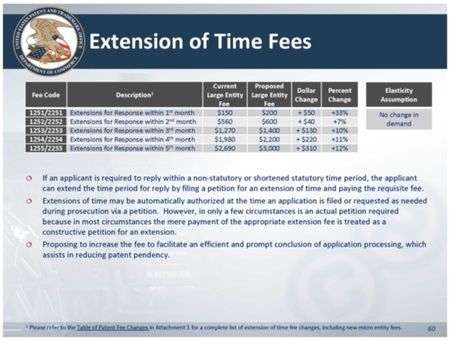
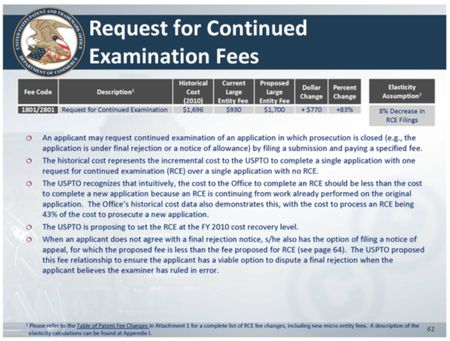
    The U.S. Patent and Trademark Office announced last week that senior agency officials would be hosting a free public webinar on Tuesday, February 21 at 4:30 pm (ET).  The webinar will be moderated by Peter Pappas, Chief of Staff for the Office of the Director, and will feature Director David Kappos, Deputy Director Teresa Stanek Rea, Commissioner for Patents Peggy Focarino, USPTO General Counsel Bernard Knight, and BPAI Chief Administrative Patent Judge James D. Smith.  The agency leaders will outline proposals for new patent fees and discuss other issues related to implementation of the Leahy-Smith America Invents Act.  In addition, the group will answer selected questions, which may be submitted in advance to webinar@uspto.gov.  The webinar can be viewed here (the event number is 998 930 187, and the event password is 123456).  Those wishing to listen in can do so by calling 408-600-3600, and using the access code 998 930 187.


    Webcast for First PPAC Fees Hearing Now Available

    The U.S. Patent and Trademark Office has made the webcast for the first of two public hearings on fees available.  As the Office indicated in a Federal Register notice issued last month, the Patent Public Advisory Committee (PPAC) is to hold two public hearings this month regarding proposed patent fees (see "PPAC to Hold Public Hearings on Proposed Fee Schedule").  The first hearing took place on February 15 in Alexandria, Virginia, and the second is scheduled to take place from 8:00 am to 3:00 pm (PST) on February 23 at the Sunnyvale Public Library, 665 W. Olive Avenue, Sunnyvale, California 94086.

    The public hearings are being held pursuant to § 10 of the Leahy-Smith America Invents Act, which concerns the Office's fee setting authority.  Under that section, the Director is permitted to set or adjust any fee established, authorized, or charged under Title 35 (but "only to recover the aggregate estimated costs to the Office for processing, activities, services, and materials relating to patents").  Pursuant to § 10 of the AIA, the Director must submit a proposed fee change to the PPAC not less than 45 days before publishing the proposed fee in the Federal Register, after which the PPAC shall have 30 days to deliberate, consider, and comment on the proposal as well as hold a public hearing on the proposal.  The Director shall then consider and analyze the PPAC's comments, advice, or recommendations before setting or adjusting the fee.  AIA § 10 also requires that the Director provide the public with a 45-day period in which to comment on any fee change, and specifies that fee changes shall not become effective until 45 days after the final rule regarding such change is published in the Federal Register (in order to give Congress an opportunity to enact a law disapproving of the fee change).

    The first hearing, which ran for 2 hours and 11 minutes, can be viewed or downloaded here.


    House Prior User Rights Testimony Available

    On February 1, U.S. Patent and Trademark Office Director David Kappos appeared before the Subcommittee on Intellectual Property, Competition and the Internet of the House of Representatives Committee on the Judiciary to give testimony on prior user rights.  A webcast of the hearing on "Prior User Rights: Strengthening U.S. Manufacturing and Innovation" has been made available at the House Judiciary Committee website.  The written testimony for the five witnesses that appeared before the Subcommittee has also been made available on the website.  In addition to Director Kappos, the witnesses included Robert A. Armitage, Senior Vice President and General Counsel for Eli Lilly and Company; Dan Lang, Vice President, Intellectual Property for Cisco Systems; Dr. John C. Vaughn, Executive Vice President for the Association of American Universities; and Prof. Dennis Crouch, Associate Professor of Law at the University of Missouri School of Law (the written testimony for each witness can be obtained by clicking on the witness' name).

  • By Sherri Oslick

    Gavel About Court Report:  Each week we will report briefly on recently filed biotech and pharma cases.

    Merck & Cie et al. v. Watson Pharmaceuticals, Inc. et al.
    2:12-cv-00223; filed February 13, 2012 in the District Court of Nevada

    • Plaintiffs:  Merck & Cie; Bayer Pharma AG; Bayer Healthcare Pharmaceuticals Inc.
    • Defendants:  Watson Pharmaceuticals, Inc.; Watson Laboratories Inc.

    Merck & Cie et al. v. Watson Pharmaceuticals Inc. et al.
    1:12-cv-00161; filed February 10, 2012 in the District Court of Delaware

    • Plaintiffs:  Merck & Cie; Bayer Pharma AG; Bayer HealthCare Pharmaceuticals Inc.
    • Defendants:  Watson Pharmaceuticals Inc.; Watson Laboratories Inc.

    The complaints in these cases are substantially identical.  Infringement of U.S. Patent No. 6,441,168 ("Stable Crystalline Salts of 5-methyltetrahydrofolic Acid," issued August 27, 2002) following a Paragraph IV certification as part of Watson's filing of an ANDA to manufacture a generic version of Merck's Beyaz® (drospirenone, 17α-ethinyl estradiol, and levomefolate calcium, used for oral contraception).  View the Delaware complaint here.


    Senju Pharmaceutical Co. Ltd. et al. v. Apotex Inc. et al.

    1:12-cv-00159; filed February 10, 2012 in the District Court of Delaware

    • Plaintiffs:  Senju Pharmaceutical Co. Ltd.; Kyorin Pharmaceutical Co. Ltd.; Allergan Inc.
    • Defendants:  Apotex Inc.; Apotex Corp.

    Infringement of U.S. Patent Nos. 6,333,045 ("Aqueous Liquid Pharmaceutical Composition Comprised of Gatifloxacin," issued December 25, 2001) and 5,880,283 ("8-Alkoxyquinolonecarboxylic Acid Hydrate With Excellent Stability and Process for Producing the Same," issued March 9, 1999) following a Paragraph IV certification as part of Apotex's filing of an ANDA to manufacture a generic version of Allergan's Zymaxid® (gatifloxacin ophthalmic solution, used to treat bacterial conjunctivitis).  View the complaint here.


    Panagene, Inc. v. Bio-Synthesis, Inc.

    2:12-cv-00067; filed February 10, 2012 in the Eastern District of Texas

    Infringement of U.S. Patent Nos. 6,395,474 ("Peptide Nucleic Acids," was issued May 28, 2002) and 7,378,485 ("Peptide Nucleic Acids with Polyamide-Containing Backbones," issued May 27, 2008) based on Biosyn's manufacture, use, and sale of  Peptide Nucleic Acid compounds.  View the complaint here.

  • Calendar

    February 21, 2012 – The New Inter Partes Proceedings at the USPTO — The Preliminary Phase: Filing a Petition, the Preliminary Response, and Institution of Review (Intellectual Property Owners Association) – 2:00 – 3:00 pm (ET)

    February 21-22, 2012 – Biotech & Pharmaceutical Patenting*** (IBC Legal) – Munich, Germany

    February 21, 2012 – The New Inter Partes Proceedings at the USPTO — The Trial Phase: Discovery, Testimony, Challenging Testimony, Use of Experts, Estoppel (Intellectual Property Owners Association) – 2:00 – 3:00 pm (ET)

    February 22-23, 2012 – EU Pharma Law & Regulation*** (C5) – London, England

    February 22-24, 2012 – Intensive Patent Law Training Seminar (Chisum Patent Academy) – New York, NY

    February 23, 2012 – Impact of the America Invents Act on Patent Litigation Strategy (McDonnell Boehnen Hulbert & Berghoff LLP) – 10:00 – 11:15 am (CT)

    February 23, 2012 – Gene Patenting in the U.S. after Myriad (Navigant) – Chicago, IL

    February 24, 2012 – 56th Annual Intellectual Property Law Conference (John Marshall Law School Center for Intellectual Property Law) – Chicago, IL

    February 27-29, 2012 – Life Sciences Collaborative Agreements and Acquisitions*** (American Conference Institute) – New York, NY

    February 28-29, 2012 – Medical Device Patents*** (American Conference Institute) – Boston, MA

    March 6, 2012 – Biotechnology/Chemical/Pharmaceutical (BCP) Customer Partnership Meeting (U.S. Patent and Trademark Office) – 9:30 am – 4:00 pm (ET)

    March 14-15, 2012 – Biotech Patenting (C5) – Munich, Germany

    March 20-21, 2012 – FDA Boot Camp*** (American Conference Institute) – New York, NY

    March 26-27, 2012 – PTO Procedures under the America Invents Act*** (American Conference Institute) – New York, NY

    March 28-30, 2012 – 27th Annual Intellectual Property Law Conference (American Bar Association (ABA) Section of Intellectual Property Law) – Arlington, VA

    April 24-25, 2012 – Paragraph IV Disputes*** (American Conference Institute) – New York, NY

    ***Patent Docs is a media partner of this conference or CLE

  • New York #1

    American Conference Institute (ACI) will be holding its next Paragraph IV Disputes conference on April 24-25, 2012 in New York, NY.  The conference will allow attendees to:

    • Assess how Patent Reform will influence Orange Book Patent challenges and pre-suit considerations;
    • Refine Markman hearing strategies in view of the Federal Circuit split on claim construction;
    • Understand how the Supreme Court's pending ruling in Caraco will redefine the relationship between a drug's patent, label and use code;
    • Comprehend how Global Tech, Akamai and McKesson will influence inducement of infringement and divided infringement allegations relative to method of treatment claims for pharmaceutical patents;
    • Explore new threats to 180-day exclusivity and the repercussions of a possible extension of NCE exclusivity; and
    • Evaluate the use of parallel proceedings before the ITC and/or PTO.

    870L12-NYC-1

    In particular, ACI's faculty will offer presentations on the following topics:

    • Anticipating and reassessing Paragraph IV challenges in the era of the patent cliff;
    • Invalidity and non-infringement post-Microsoft: Reaffirmation of the ANDA applicant's pre-litigation obligations and assertions;
    • The throwing of the gauntlet: The Paragraph IV notice letter;
    • New claim construction considerations in Paragraph IV litigation;
    • Prior art obviousness and obvious-type double patenting: Legal analysis and practical applications for brand names and generics;
    • And they're off: The start of the Paragraph IV law suit — pleadings and other initial considerations and analyses;
    • A view from the bench;
    • Of labels, patents and use codes: The significance and possible repercussions of Novo Nordisk v. Caraco to Hatch-Waxman challenges;
    • Reassessing Paragraph IV strategies for method treatment patents in view of recent and pending decisions regarding inducement and divided infringement;
    • Exclusivities and forfeitures: New developments, controversies and concerns relative to Paragraph IV litigation;
    • Pay-for-delay update;
    • New standards in inequitable conduct post-Therasense: Ethical considerations for Paragraph IV cases;
    • New controversies surrounding damages and injunctions relative to at risk launches; and
    • Parallel proceedings in Paragraph IV disputes: Strategies for balancing and streamlining proceedings before the federal courts, PTO and ITC.

    In addition, two pre-conference workshops will be offered on April 23, 2012.  The first, entitled "Hatch-Waxman and BPCIA 101 — A Primer on IP Basics and regulatory Fundamentals" will take place from 9:00 am to 12:30 pm, and the second, entitled "Working Group Session: Assessing The Impact of new PTO Procedures Under the AIA on Paragraph IV Litigation" will take place from 2:00 pm to 5:30 pm.  A post-conference master class entitled "The Master Class on Settling Paragraph IV Disputes: Drafting and Negotiating Strategies for Brand-Names and Generic — A Hands-On, Practical Approach" will be offered from 9:00 am to 12:30 pm on April 26, 2012.

    The agenda for the Paragraph IV Disputes conference can be found here.  More information regarding the workshops and master class can be found here.  A complete brochure for this conference, including an agenda, detailed descriptions of conference sessions, list of speakers, and registration form can be obtained here.

    ACI - American Conference Institute

    The registration fee for the conference is $2,395 (conference alone), $2,995 (conference and one workshop/master class), $3,595 (conference and two workshops/master class), or $4,195 (conference, both workshops, and master class).  Those registering by March 2, 2012 will receive a $400 discount and those registering by April 5, 2012 will receive a $200 discount.  Patent Docs readers who reference the discount code "PD 200" will receive $200 off the current price tier when registering.  Those interested in registering for the conference can do so here, by calling 1-888-224-2480, or by faxing a registration form to 1-877-927-1563.

    Patent Docs is a media partner of the Paragraph IV Disputes conference.

  • IPO #2

    The Intellectual Property Owners Association (IPO) will offer a two one-hour webinars on "The New Inter Partes Proceedings at the USPTO" on Wednesday, February 21, 2012 and Thursday, February 22, 2012, with each session beginning at 2:00 pm (ET).  On February 21, a panel consisting of the Hon. Michael Tierney of the U.S. Patent & Trademark Office; Jack Barufka of Pillsbury Winthrop Shaw Pittman, LLP; and W. Karl Renner of Fish & Richardson, PC will give a presentation on "The Preliminary Phase: Filing a Petition, the Preliminary Response, and Institution of Review," and on February 22, a panel consisting of the Hon. Michael Tierney; Scott Daniels of Westerman, Hattori, Daniels & Adrian, LLP, and Anthony Gutowski of Finnegan, Henderson, Farabow, Garrett & Dunner, LLP will give a presentation on "The Trial Phase: Discovery, Testimony, Challenging Testimony, Use of Experts, Estoppel."

    The two webinars will focus on the two new proceedings that are expected to be the most widely used:  Post-Grant Review and Inter Partes Review.  The first webinar will deal with the preliminary phase of the proceedings that ends when the USPTO either grants or denies review.  The second webinar will examine the rules for trial at the Patent Trial and Appeal Board (PTAB), a hybrid of district court and USPTO practice.

    The registration fee for each webinar is $120 (government and academic rates are available upon request).  Those interested in registering for the webinar can do so here.

  •     By Kevin E. Noonan

    USPTO Seal

    The U.S. Patent and Trademark Office held the first of two planned hearings aimed at fulfilling one of the reporting provisions of the Leahy-Smith America Invents Act (see "USPTO to Hold Hearing on Genetic Diagnostic Testing").  Section 27 of the Act requires the Office to conduct a study regarding the advisability of permitting "second opinions" for patented genetic diagnostic tests without patent infringement liability:

    SEC. 27. STUDY ON GENETIC TESTING.

    (a) IN GENERAL.—The Director shall conduct a study on effective ways to provide independent, confirming genetic diagnostic test activity where gene patents and exclusive licensing for primary genetic diagnostic tests exist.

    (b) ITEMS INCLUDED IN STUDY.—The study shall include an examination of at least the following:

    (1) The impact that the current lack of independent second opinion testing has had on the ability to provide the highest level of medical care to patients and recipients of genetic diagnostic testing, and on inhibiting innovation to existing testing and diagnoses.

    (2) The effect that providing independent second opinion genetic diagnostic testing would have on the existing patent and license holders of an exclusive genetic test.

    (3) The impact that current exclusive licensing and patents on genetic testing activity has on the practice of medicine, including but not limited to: the interpretation of testing results and performance of testing procedures.

    (4) The role that cost and insurance coverage have on access to and provision of genetic diagnostic tests.

    (c) CONFIRMING GENETIC DIAGNOSTIC TEST ACTIVITY DEFINED.—For purposes of this section, the term ''confirming genetic diagnostic test activity'' means the performance of a genetic diagnostic test, by a genetic diagnostic test provider, on an individual solely for the purpose of providing the individual with an independent confirmation of results obtained from another test provider's prior performance of the test on the individual.

    (d) REPORT.—Not later than 9 months after the date of enact- ment of this Act, the Director shall report to the Committee on the Judiciary of the Senate and the Committee on the Judiciary of the House of Representatives on the findings of the study and provide recommendations for establishing the availability of such independent confirming genetic diagnostic test activity.

    In acting to satisfy this Congressional mandate, the Office invited public testimony and published in the Federal Register a list of questions to be addressed by such testimony (77 Fed. Reg. 3748).

    At the hearing, the Patent Office was represented by Deputy Director Teresa Stanek Rea; Janet Gongola, Patent Reform coordinator; Stuart Graham, Chief Economist (who has taken responsibility for preparing the Report) and George Elliot, Group 1600 (Biotechnology) Director.  Deputy Director Rea opened the proceedings, setting forth the overarching goal of the undertaking:  trying to find a balance between protecting innovation through the patent system and providing the "best" patient care possible.  Janet Gongola next explained the structure of the meeting, and introduced a video welcome from Congresswoman Debbie Wasserman Schultz (D-FL), the author of the AIA provision introduced in lieu of a more extensive draft provision she introduced and then withdrew after furious opposition by the ACLU and others (see "House Judiciary Committee Approves H.R. 1249").  Rep. Wasserman Schultz explained her personal involvement with this issue, being both a cancer survivor and someone who bears one of the BRCA2 mutations.  Although for her the test was definitive, in doing her research Rep. Wasserman Schultz became aware that not all instances of the Myriad test were as unambiguous as her mutation, and because of its patent position, Myriad could (and generally did) prevent any other testing lab from performing its patented test.  The significance of BRCA gene mutation detection (and the extensive surgical prophylaxis recommended for BRCA mutation bearers) convinced Rep. Wasserman Schultz that women should have the opportunity to obtain a "second opinion."  (While generally not an unreasonable position, it is unclear whether the basis for any diagnostic ambiguity is how Myriad performs the test or that certain mutations/variants found in the BRCA gene sequence are "polymorphisms of uncertain significance," i.e., nucleotide sequence polymorphisms not yet unambiguously associated with disease — in the latter case, of course, no number of "second," "third," or "nth" opinions would provide any greater degree of diagnostic certainty.)

    After Rep. Wasserman Schultz's video, the first witness offering testimony was Thomas Kowalski of Vedder Price LLP.  Mr. Kowalski provided the most extensive testimony, referencing the AMP v. USPTO (Myriad) case and the deficiencies in the plaintiffs' arguments (and the wisdom of the Federal Circuit's opinion), saying that the study mandated by § 27 of the AIA was in the nature of a "do-over," a legislative attempt to avoid patent infringement for BRCA testing that the plaintiffs had not been able to obtain in the lawsuit.  He also contended that any legislative action to provide a patent infringement exemption for "second opinion" genetic diagnostic testing would be an "unconstitutional, unrecompensed taking" of the patentee's property right.  It perhaps goes without saying that Mr. Kowalski urged the Office to provide Congress with a report that did not recommend such an exemption.

    The panel next heard from Mercedes Meyer, a member of the Board of Directors of the American Intellectual Property Law Association.  Like Mr. Kowalski, Dr. Meyer urged the Office to carefully consider the risks to innovation that could arise from passage of an patent infringement exemption for "second opinion" testing.

    The first witness to speak in favor of such an exemption was Mary Williams, Executive Director of the Association of Molecular Pathologists.  Ms. Williams repeated most of the arguments advanced by the ACLU in the Myriad case, reminding the Office that her Association was the lead plaintiff in the case; these arguments included AMP's position that neither genes nor genetic diagnostic tests should be patented.  She also noted that the Secretary's Advisory Committee on Genetics, Health and Society (SACGHS) of the Department of Health and Human Services had produced an extensive (~400 page) Report in April 2010 (see "BIO Comes out Swinging against SACGHS Report").  She urged the Office to consider that Report in preparing its own, citing the four years the Committee spent in producing the Report and the limited time Congress provided the Office to do its work.  She also urged the Office to adopt the SACGHS Report's recommendation, failing to mention that the recommendations of the SACGHS Report were in many instances either unsupported by or contradictory to the evidence set forth in the body of the Report.

    Lori Pressman, an independent technology transfer consultant testified next.  She referenced her own studies on the effects of patents on technology transfer and providing diagnostic testing to patients, and suggested that patent protection would be more important for future testing that it had been in the past.  Like other witnesses, she did not recommend legislation providing an infringement liability exemption for "second opinion" genetic diagnostic testing.

    Hans Sauer, Associate General Counsel for IP for the Biotechnology Industry Organization (BIO) spoke next.  Dr. Sauer provided the Office with some demographic information about BIO (including the fact that Myriad is not a member) and explained the frustration of BIO's members who see a threat to their intellectual property (in agricultural genetics, for example) in the ACLU's lawsuit that many feel was prompted (and has been somewhat successful if only in the court of public opinion) due to Myriad's aggressive assertion of its patent rights.  Interestingly, Dr. Sauer told the Office panel that anecdotal reports from physicians were that patients don't want a "second opinion" on the test as much as they want a second opinion on their medical options (which of course is not impacted by the Myriad patents).

    Lisa Schlager, Vice President for Community Affairs and Public Policy of FORCE, a cancer patient advocacy group, testified regarding the need for patient access to their genetic information and opposed patents on human genes, genetic information (which is not patented), and genetic diagnostic testing.

    The next witness, Kristin Neuman, Executive Director of Librassay, a division of MPEG LA, testified that MPEG LA (which began in response to establishment of the MPEG2 video program/playback standard) has established a "clearinghouse" for licensing rights to patented genetic sequences.  This clearinghouse, named Librassay, will provide a "one stop shop" for obtaining rights to include patented sequences, for example, on a gene chip.  She said the Internet interface was undergoing beta testing and that the company was working to obtain sublicensing rights for university-owned gene sequence IP.

    Ellen Jorgensen then testified regarding her organization, Genspace.  She advocated "at-home" or "do-it-yourself" DNA testing, asserting that individuals could perform their own testing much more inexpensively.  Genspace provides the technology and the lab space for performing such tests, and she suggested that soon performing whole genome sequencing would be as common in high school laboratories as dissecting a frog had been in earlier, simpler times.  She did not discuss any dangers in errors that might arise from such "at-home" genetic diagnostic testing, nor precautions in interpreting results (especially concerning the emotional consequences of finding a genetic mutation in an individual's BRCA genes).

    [Patent Docs author Kevin Noonan of McDonnell Boehnen Hulbert & Berghoff LLP concluded the scheduled testimony portion of the hearing.  Dr. Noonan's testimony can be found hereEd.]

    After taking one comment from the audience (from another patient advocacy group opposed to gene patenting and patented genetic diagnostic assays), Ms. Gongola thanked the witnesses and informed the audience that a transcript of the hearing would be available on the USPTO AIA microsite.  The second hearing on genetic diagnostic testing will be held in San Diego on March 9, 2012.  The Office will accept written comments until March 26, 2012, and the Report is due on June 16, 2012.

    Although this was just the first hearing, the panel of Office officials and their questions provided a few indications of the direction of their inquiry.  First, Stuart Graham is in charge of the exercise, and asked many of the witnesses for further information, statistics and other evidence supporting their testimony.  His questions seemed directed to garnering hard evidence (which may not exist in some instances) on the effects of patents on innovation and patient access to testing.  Several witnesses mentioned the interaction with the healthcare system and the role of public and private insurance in promoting or hindering access to genetic diagnostic testing (and the likelihood that second opinion testing would not be reimbursed in many cases because it would be deemed to be duplicative).  But it may be safe to presume that Dr. Graham will bring an economist's objectivity to his work, and thus that the testimony and written comments should include as much evidence as possible in support of the advocated position.  It would be prudent that those who advocate the position that patenting supports innovation in genetic diagnostic testing make the Office aware not only of their views but the factual grounds for them.

    It is also reasonable to presume that the Office will be sensitive to Rep. Wasserman Schultz's passion for this issue and will be certain that whatever its recommendations they include the possibility for some accommodation to "second opinion" genetic diagnostic test providers.  The form and extent of this accommodation will depend on the strength of the evidence pro and con regarding the need and wisdom of "second opinion" genetic diagnostic testing.