• IPWatchdogIPWatchdog and IP.com will be offering a webinar entitled "Future-Proofing IP Workflows in the Face of Economic Headwinds" on November 17, 2022 at 12:00 pm (ET).  Gene Quinn of IPWatchdog, Inc., Sivon Kalminov of Canon, and Chris Irick of IP.com will discuss proven strategies for navigating difficult economic climates and future-proofing IP workflows to make sure the pipeline stays full even while budgets must become more frugal.

    There is no registration fee for this webinar.  However, those interested in registering for the webinar, should do so here.

  • The U.S. Patent and Trademark Office and High Tech Law Institute (HTLI) of the Santa Clara University School of Law will be hosting an Innovator Diversity Pilots Conference on November 18, 2022 from 9:00 am to 5:00 pm (PT) at the Santa Clara University School of Law in Santa Clara, CA.  The conference will focus on innovator diversity pilot projects and effective practices to increase participation in innovation.  Conference participants will:

    • Share with peers and learn from others' practices for increasing diversity and inclusion in invention and innovation and hear evidence of their effectiveness.
    • Hear from leading academics and the USPTO about how to run pilot programs and quantify their impact using best practices as documented in the IPO Diversity Toolkit and High Tech Law Institute's Best Practices in Diversity Guide.
    • Join a community of leaders exploring novel ways to increase the participation of women and underrepresented groups in innovation and inventing.

    Registration is free for remote attendees, and $55 for in-person attendance for members of the corporate sector only.  There is no charge to attend for persons from the nonprofit sector (academics, government employees, and non-governmental organizations), whether in-person or online.  Those interested in registering for the webinar can do so here.

    Htli-conference-graphic

  • By Kevin E. Noonan –

    Federal Circuit SealEarly last month, a group of scientists* filed an amici curiae brief in support of the appeal by Junior Party the University of California/Berkeley, the University of Vienna, and Emmanuelle Charpentier (collectively, "CVC") of the Patent Trial and Appeal Board's decision to award priority to Broad Institute, Harvard University, and MIT (collectively, "Broad") as Senior Party for claims reciting eukaryotic embodiments of CRISPR-Cas9 (see "PTAB Grants Priority for Eukaryotic CRISPR to Broad in Interference No. 106,115").

    The scientists state in preface:

    Science is not perfect.  A perfectly designed experiment can fail for a host of reasons before subsequent experiments vindicate the underlying theories.  Likewise, experiments may succeed (or appear to succeed) even when they are designed using incorrect or incomplete theories.  Luck, human error, and unaccounted-for variables all play a role in determining the results of an experiment.  It is impossible to control for all of these factors.

    This reality has led to development of the scientific method, wherein "scientists have developed rigorous procedures for testing their initial results and moving past initial failures."  And these failures are of two types, the scientists argue:  one, mundane failures arising from biological variability, experimental imprecision, and the play of chance; and two, fundamental failures, where "well-designed and well-executed series of experiments fails to support a scientist's expectations despite efforts to optimize or improve the experimental design and execution, suggesting the scientist has not actually made a discovery."

    With these principles as backdrop, the scientists argue that the PTAB "fundamentally misunderstood how skepticism and failure operate within the scientific method."  For inventions like CRISPR that "involve[] complex biological systems with many variables," the scientists maintain that "experimental failures are common and are not necessarily indicative of a problem in the underlying theories or experimental design."  After all, the scientists note, "Broad Institute reported only two positive results out of 265 sequencing reads in its first 'successful' use of the CRISPR-Cas9 system to cleave DNA in eukaryotic cells, a gene modification rate of less than one percent."  The PTAB's mistake was to take the CVC scientists' "ordinary skepticism" (that is a part of how experimental scientists evaluate their results and ensure they are reliable) with doubt regarding the experimental data (and hence whether the CVC inventors had conceived of operable embodiments for practicing CRISPR in a eukaryotic cell).

    The scientists' brief then recites some of this skepticism (in their view) that the PTAB misinterpreted, from the evidence Broad asserted in arguing incomplete conception from statements by the CVC inventors.  These statements, coupled with the five- to eight-month delay in getting eukaryotic embodiments of CRISPR to cleave target DNA effectively, convinced the Board that CVC's conception was incomplete.  This was error, according to the scientists, because the Board "mistakes mundane failures—part of everyday lab work—for fundamental failures—which might suggest the inventive idea is inoperative or incomplete."  Contrary to an admission of defeat, the scientists identify these statements to indicate that "the CVC inventors remained objective and open-minded in considering whether they needed to tweak their experimental design."

    And of course, "despite initial setbacks, the inventors eventually reduced to practice their invention—in the form in which they had conceived of it—using only those routine materials and techniques known to persons of ordinary skill in the art."  This is evidence that "the CVC inventors never fundamentally doubted their invention; their expression of uncertainty was just ordinary scientific skepticism," according to the scientists.  The brief hammers home the scientists' fundamental message that "scientific skepticism is not fundamental doubt" with regard to the PTAB's acceptance of Broad's expert witness, Dr Mirkin, on the potential reasons "why a person of ordinary skill in the art (i.e., a skeptical scientist) might have believed, prior to the successful implementation of CRISPR-Cas9 systems in eukaryotic cells, that routine laboratory techniques might not work due to theoretical obstacles such as RNA degradation in eukaryotic cells, differences in the environment of eukaryotic and prokaryotic cells, and toxic effects of prokaryotic RNAs on eukaryotic cells."  The PTAB's error, the brief argues, was to misunderstand the scientists' skepticism regarding the absence of empirical data.  This was just a scientist's prudent practice, CVC argues, that "[w]hen presented with a discovery (such as the use of CRISPR-Cas9 to cleave eukaryotic DNA in vitro, as disclosed in P1), responsible scientists will reserve judgment that the discovery works in other slightly different situations (such as eukaryotic cells) until experimental results demonstrate that it actually works."  This just reflected the requirement for "tough, sustained scrutiny" that the scientific method requires, the scientists argue.  While it is easy for the skilled worker to "come up with a list of any number of theoretical obstacles to reducing to practice an invention . . . that does not mean that clearing those obstacles requires additional disclosures or anything more than routine methods."

    Turning to the putative consequences of the PTAB's decision in this interference, the scientists predict that if upheld the Board's decision will "discourage collaboration, slow scientific progress, and reward confirmation bias."  In view of the collaborative nature in modern scientific labs, the scientists argue, the Board's decision to deny CVC's scientists with priority benefit to their invention will "discourage the free flow of communication between collaborators."  Prudently, future scientists "may choose not to speculate openly with their colleagues about why an experiment failed or brainstorm next steps" and, should this closed mouth behavior extend to students, cripple scientific education.  These concerns apply with at least equal risk to communication with the scientific community as a whole, the scientists argue.  As they put it, "[s]cience is a conversation: an iterative process that allows for one idea to build and shape the next through refinement of the last.  Sharing experimental results with the wider scientific community can launch a slew of new research."  But the lesson from the PTAB's decision against CVC will encourage future scientists "to secret away their inventions until they can muster enough evidence to convince others that their inventions will work."  Proposing the hypothetical, the scientists argue that the CVC inventors could have keep secret the discovery that CRISPR-Cas9 could be used to cleave DNA in vitro, waiting for the in vivo data to be later produced.  This would have delayed the progress of CRISPR research with deleterious effects on progress.

    The broader picture painted in the scientists' brief is that "the PTAB's decision will encourage bad science."  This means that:

    If the minor missteps and changes in strategy characteristic of routine bench work can later be used as evidence that an inventor lacked a definite and permanent idea of the invention, as the PTAB found here, scientists will avoid rigorously testing their own settled expectations.  Instead, they will be tempted to look for evidence that supports their view, building a case in favor of their invention for fear that proceeding objectively will result in denial of valuable intellectual property rights.  Such confirmation bias is antithetical to the very core of the scientific method, which demands steadfast skepticism.

    It is hard to say what the effects of this amicus brief will be.  But what the scientists provide for the Court is context for the statements, e-mails, and other evidence Broad adduced during the interference that proved persuasive to the PTB in awarding priority to the Broad due to perceived failures of the CVC inventors to have had complete conception of eukaryotic CRISPR.

    * The scientists on the brief are Thomas Cech (Nobel Prize winner, Chemistry, 1989), Titia de Lange, Michael Levine, David Jay Segal, and Jack Szostak (Nobel Prize Winner, Physiology/Medicine, 2009).

  • High Court Will Tackle Proper Enablement Standard

    By Kevin E. Noonan –

    Supreme Court Building #2Constituting something of a surprise, the Supreme Court on Friday, November 3rd granted Amgen's petition for certiorari on the second of the Questions Presented in its petition:

    2.  Whether enablement is governed by the statutory requirement that the specification teach those skilled in the art to "make and use" the claimed invention, 35 U.S.C. §112, or whether it must instead enable those skilled in the art "to reach the full scope of claimed embodiments" without undue experimentation—i.e., to cumulatively identify and make all or nearly all embodiments of the invention without substantial "'time and effort,'" Pet.App. 14a [emphasis added].

    (The Court did not deign to consider the first Question, regarding whether enablement should be a question of law for the court, as it is under current Federal Circuit precedent, or a question of fact for the jury.)

    This Question, and how the Court has been petitioned to address it, directly concerns the scope of disclosure necessary to satisfy the statutory requirements of 35 U.S.C. § 112(a), a question of particular importance for genus claims in pharmaceutical and biotechnology patents (see, D. Karshtedt, M. Lemley & S. Seymore, The Death of the Genus Claim,  35 Harv. J.L. & Tech. (forthcoming 2021) (rev. Apr. 19, 2021), 30 15 21 30 16 https://ssrn.com/abstract= 366801)*.

    To recap, the petition was filed after en banc review was denied by the Federal Circuit after the Court affirmed the District Court's grant of JMOL below, overturning a jury's decision that the asserted claims were not invalid for non-enablement.  The case arose when Amgen sued Sanofi and Regeneron over sales of Praluent® (alirocumab), which allegedly competes with Amgen's Repatha™ (evolocumab) product; Amgen's asserted patents, U.S. Patent Nos. 8,829,165 ("'165 patent") and 8,859,741 ("'741 patent"), claim a genus of antibodies that encompass Praluent®.  As background, blood plasma contains low-density lipoproteins that bind cholesterol and are associated with atherosclerotic plaque formation.  Liver cells express receptors for LDL (LDL-R) wherein binding thereto reduces the amount of LDL cholesterol in blood and reduces the risk of plaque formation and cardiovascular disease.  PCSK9 (proprotein convertase subtilisin kexin type 9) is a molecule that binds to and causes liver cell LDL-R to be destroyed, thus reducing the capacity and effectiveness of the liver cell's ability to reduce serum LDL-cholesterol.  The antibodies at issue in this suit bind to PCSK9 and prevent PCSK9 from binding to LDL-R, preventing their destruction and resulting in lower serum cholesterol.  It is important to note that, while reciting the structure of the residues on PCSK9 (the antigen) that are bound by the claimed antibody, the claim does not recite any structural limitations of the antibody.  The only antibody characteristics recited as limitation are functional, i.e., the ability to bind (and not even specifically bind) to at least one of the recited PCSK9 residues and block PCSK9's interaction with the LDL-R.

    The Federal Circuit's decision affirming the District Court's JMOL of non-enablement was based on its determination that "[t]he claimed antibodies are defined by their function: binding to a combinations of sites (residues) on the PCSK9 protein, in a range from one residue to all of them; and blocking the PCSK9/LDLR interaction."  The panel relied on its decision in In re Wands (and its famous "Wands factors"), the dispositive factor in the Court's decision being the amount of experimentation required to encompass the full scope of the claims at issue.  Calling In re Wands the Court's "go to" precedent, the opinion stated that while itself a monoclonal antibody case, "Wands did not proclaim that all broad claims to antibodies are necessarily enabled" because "[f]acts control."  The panel considered the facts (and the findings of invalidity) in more recent cases, including Wyeth & Cordis Corp. v. Abbott LaboratoriesEnzo Life Sciences, Inc. v. Roche Molecular Systems, Inc., and Idenix Pharmaceuticals LLC v. Gilead Sciences Inc.  In all these cases, of course, the Federal Circuit found that the claims were not enabled, due to the broad scope of embodiments the claims in these cases encompassed and the amount of undue experimentation required to satisfy the enablement requirement throughout its full scope.  The panel set forth its synthesis of the Federal Circuit's analysis regarding satisfaction of the enablement requirement arising from these cases:

    What emerges from our case law is that the enablement inquiry for claims that include functional requirements can be particularly focused on the breadth of those requirements, especially where predictability and guidance fall short.  In particular, it is important to consider the quantity of experimentation that would be required to make and use, not only the limited number of embodiments that the patent discloses, but also the full scope of the claim.

    This precedent is well grounded in the Federal Circuit's concern that a patentee must satisfy the quid pro quo of the patent grant, so that the specification supports its claims throughout their entire scope, whether on enablement or written description grounds.

    In its petition for certiorari, Amgen's argument regarding the second Question Presented was that it was contrary to ancient Supreme Court precedent, citing Mowry v. Whitney, 81 U.S. 620, 644-645 (1871); The Telephone Cases, 126 U.S. 1, 536 (1888); Minerals Separation, Ltd. v. Hyde, 242 U.S. 261, 271 (1916); Schriber-Schroth Co. v. Cleveland Tr. Co., 305 U.S. 47, 57 (1938); and Universal Oil Prods. Co. v. Globe Oil & Refin. Co., 322 U.S. 471, 484 (1944).  Amgen argued that the Federal Circuit's standard for statutorily compliant enablement, what it termed cumulative disclosure that reached the full scope (even to the most remote corners of the claimed invention), is "a standard of its own devising" that is "impossible to satisfy" citing the Karshtedt paper.  This standard requires the claims to be enabled throughout their full scope even if there is no evidence that there is any particular species that would require undue experimentation to achieve, Amgen argued.  The proper standard, according to Amgen, consistent with the statutory text, the history of how enablement has been considered, and Supreme Court precedent, is disclosure sufficient to be able to make and use the invention, which does not require disclosure throughout entire scope of the claim.  "The Federal Circuit identified no reason why patent validity should depend on the cumulative effort required to ferret out every conceivable implementation of the invention," Amgen argued in its petition, asserting that the requirement was contrary to Minerals Separation, Ltd. v. Hyde, 242 U.S. 261, 271 (1916).  The test creates an impossibility that prevents a patentee from protecting her invention because a claim can be avoided by an infringer who makes a minor (structural) change, according to Amgen.  And as a consequence, "[t]he Federal Circuit routinely lays waste to innovative patents that juries upheld at trial" by imposing its test, according to the petition.

    The Solicitor General presented the government's views that the Court should not grant certiorari in this case.  The SG's brief argued that this case is not an appropriate vehicle for Supreme Court review (being limited to its narrow factual predicate) and that Amgen is wrong in its legal arguments because what must be enabled is the invention (which necessitates disclosure throughout its full scope).  The brief in particular cited Consolidated Electric Light Co. v. McKeesport Light Co., 159 U.S. 465, 476 (1895), wherein the Court rejected the proposition "that one, who had discovered that a certain fibrous or textile material answered the required purpose, should obtain the right to exclude everybody from the whole domain of fibrous and textile materials."  And with regard to Amgen's reliance on Minerals Separation, the SG stated that the principle enunciated in that case was merely that "the need to tweak an invention to accommodate differing circumstances—without changing the basic principles on which the invention operates—does not render a patent claim invalid for lack of enablement," which is not the situation in this case.

    As always, it is impossible to discern the Court's reasoning for granting certiorari, particularly when it is against the recommendations of the SG.  (The last patent case where these circumstances arose was in LabCorp v. Metabolite; in that case the Court ultimately decided certiorari had been improvidently granted and after oral argument dismissed the writ.)  Here the Court will wade into a question that involves balancing the scope of genus claims and their preclusive preemptive effect on future development of related but not expressly disclosed species, on one hand, and the need for a patentee of an invention capable of a multiplicity of (relatively) minor structural changes to be able to protect her invention from trivial infringers, on the other hand.  One alternative to restricting the scope of genus claims can be appreciated by recognizing that the law leaves room for others to patent independently non-obvious (and not expressly disclosed) species falling within the scope of a claimed genus (thus protecting future innovation while permitting the genus patentee to protect against infringers).  The doctrine of equivalents provides perhaps a less certain but not entirely toothless weapon against trivial changes in undisclosed species claims (e.g., substituting a valine for a leucine in the amino acid sequence of a claimed protein).  It is undoubtedly the case that the briefing in this case will provoke a broad range of amici curiae on both sides of the question, and ultimately that the Court will have the opportunity to stimulate the patent community on an issue that isn't subject matter eligibility under Section 101.  Which in some ways is in itself blessing (at least until the decision is rendered).

    *Sadly, the first author, Professor Dmitriy Karshtedt, died recently and suddenly; see D. Kass, "'Brilliant' GW Law Patent Scholar Dmitriy Karshtedt Dies at 45," IPLaw 360 November 2, 2022.

  • By Kevin E. Noonan –

    University of California-BerkleyThe Patent Trial and Appeal Board (like its predecessor, the Board of Patent Appeals and Interferences or BPAI) occasionally renders an opinion having the tendency to raise an eyebrow or two, which on occasion has led the Federal Circuit, like its predecessor the Court of Claims and Patent Appeals, to offer a correction (the exercise of such tendencies no doubt leading to the vigor with which the Patent and Trademark Office pursued correction of the Federal Circuit by the Supreme Court, in Dickenson v. Zurko).  The Board's recent decision in Interference No. 106,115 between the Broad Institute, Harvard University, and MIT (collectively, "Broad") as Senior Party against Junior Party the University of California/Berkeley, the University of Vienna, and Emmanuelle Charpentier (collectively, "CVC") (see "PTAB Grants Priority for Eukaryotic CRISPR to Broad in Interference No. 106,115") has raised more than a few eyebrows, and CVC's brief on appeal to the Federal Circuit seeks to convince the Court that once again correction is in order.

    To recap, the Board was convinced by Broad's arguments that CVC's attempts to reduce eukaryotic CRISPR to practice were unavailing until after Broad's reduction to practice as evidenced by a manuscript submitted on October 5, 2012.  Operating on the legal principle that "priority of invention goes to the first party to reduce an invention to practice unless the other party can show that it was the first to conceive of the invention and that it exercised reasonable diligence in later reducing that invention to practice," Cooper v. Goldfarb, 154 F.3d 1321, 1327 (Fed. Cir. 1998), the Board was unconvinced that CVC's March 1, 2012 conception satisfied the requirements of "complete" conception.  Using much of the same argument (albeit for different purposes) as it had to prevail in Interference No. 106,048 (see "PTAB Decides CRISPR Interference in Favor of Broad Institute — Their Reasoning"), the Broad persuasively argued that the evidence of CVC's attempts to reduce eukaryotic CRISPR to practice showed sufficient uncertainty and failures for the Board to conclude that CVC did not satisfy the requirements for conception.  On this evidence the Board was unpersuaded that all that had been needed was the application of routine experimentation using the sgRNA detailed in CVC's March 1st priority statement.  Nor was the Board convinced that Broad derived the embodiments of eukaryotic CRISPR that they reduced to practice embodying sgRNA only after Dr. Marraffini obtained it from CVC and disclosed it to the Broad inventors (see "CVC Files Reply to Broad's Opposition to CVC's Priority Motion").

    CVC begins its brief by asserting that its inventors, Professors Doudna and Charpentier invented CRISPR:

    This case concerns who is entitled to patents for using that system to edit genes in eukaryotic (e.g., plant or animal) cells: Doudna and Charpentier, who invented the technology, announced it to the world, and received the Nobel Prize for it; or a scientist at the Broad Institute who took their design and then (along with many others) promptly reduced it to practice using routine methods.

    On the contrary, they assert, the PTAB "awarded priority to Broad because it purportedly reduced the invention to practice first—even though the PTAB never identified any inventive contribution Broad made," and that this result was "backward" and arrived at through "multiple legal errors."  This last assertion is intentional and critically important, because if the Federal Circuit is convinced that such errors were legal and not factual in nature then the Board's decision will be entitled to no deference and CVC may avoid another affirmance (the result of Federal Circuit review of the Board's decision in Broad's favor in Interference No. 106,048; see "Regents of the University of California v. Broad Institute, Inc.").

    The legal errors asserted by CVC include:  1) that the Board improperly did not use an objective standard to judge CVC's conception, but rather required evidence that CVC inventors knew CRISPR would work in eukaryotic cells; 2) that the Board awarded priority to Broad without there being anything inventive done by Broad that they didn't get from CVC; and 3) requiring that the written description of CVC's applications in suit were sufficient to "persuade skeptical artisans the invention would overcome various imagined hurdles to reduction to practice in eukaryotic cells" rather than merely allowing them to identify the invention, which was contrary to the Court's instruction that written description ""is not about whether the patentee has proven to the skilled reader that the invention works," citing Alcon Rsch. Ltd. v. Barr Labs., Inc., 745 F.3d 1180, 1190 (Fed. Cir. 2014).

    These assertions are distilled into three Issues Presented for the Court:

    1. Whether the PTAB legally erred by failing to apply an objective standard for conception, and/or impermissibly awarded priority without identifying any inventive contribution by the purported inventor.

    2. Whether the PTAB's analysis is arbitrary and capricious.

    3. Whether the PTAB applied an erroneous legal standard to conclude that CVC's first and second provisional applications lacked written description.

    After a factual background, the brief reaches the legal arguments CVC relies upon to support its earlier assertions regarding the PTAB's decision.  These are generally aimed at supporting CVC's assertions that how to deliver CRISPR-Cas9 complexes was known in the art from earlier work with zinc-finger nucleases (ZFN) and transcription activator-like effector nucleases (TALENs).  Adapting the CRISPR-Cas9 system to cleave DNA (any DNA) was, according to the brief, a consequence of the CVC inventors recognizing that a combination of Cas9, crRNA, and tracrRNA was enough to effect cleavage, and their further ("crucial") recognition that the crRNA and tracrRNA could be combined into a single-guide, chimeric RNA (sgRNA), illustrated by this figure:

    Image 1
    And this copy of the laboratory notebook page where sgRNA was first conceived by CVC:

    Image 2
    In addition to citing contemporary statements from the CVC inventors regarding how their CRISPR-Cas9 system could be used, the brief also walks through the disclosures of CVC's first provisional application (P1, USSN 61/652,086, filed May, 2012) and mentions summarily the other two provisionals (P2, filed October 19, 2012 and P3, filed January 28, 2013, the latter being the only provisional to which the Board ruled CVC was entitled to priority), illustrating the disclosure that supported their priority entitlement arguments and specific disclosure related to CRISPR-Cas9 cleavage in eukaryotic cells.  (The brief also follows the consistent pattern of CVC mentioning the acclaim its inventors experienced upon their disclosure of CRISPR-Cas9 up to and including the Nobel Prize.)

    These encomiums provided a basis for CVC to make its next argument, that the scientific community appreciated the significance of CVC's CRISPR-Cas9 and rapidly applied it to eukaryotic cells because it was evident that it could be so applied.  "The question 'was not whether the CRISPR-Cas9 system would work in eukaryotes'—skilled artisans 'all expected it would,'" they state, "but whether it would 'outcompete the existing genome-editing technologies, such as TALENs and ZFNs.'"

    As for CVC's own efforts (the success, confidence in, and putative failures entailed were argued successfully by Broad as evidence of failure to achieve complete conception), the brief sets forth its planned activities (in some detail) to show actual reduction to practice during the summer and fall of 2012.  These plans included using expression vectors to introduce nucleic acids encoding Cas9 and sgRNA under control of transcription promoters by which the CRISPR-Cas9 components would be expressed in the cell, and microinjection techniques where the pre-formed CRISPR-Cas9 complex would be directly introduced into the cell nucleus.

    Having shown CVC's own plans, the brief sets forth examples of many other laboratories showing CRISPR-Cas9 activity in eukaryotic cells.  One of these was the Broad itself, which CVC's explains with the preface "After Obtaining CVC's Chimera A Before Publication, Broad Promptly Reports Reduction to Practice," reciting the tale of Dr. Marraffini's "improper" disclosure of this aspect of CVC's invention to Broad inventors.  In this telling, however, CVC emphasizes Broad's putative record of failures, due to (according to CVC) that those inventors' "did not understand that mature tracrRNA was a necessary third component of the final DNA-cleavage complex" and thus they had "no idea that mature tracrRNA and crRNA could be linked to form sgRNA."  "All that changed on June 26, 2012," CVC asserts, which is the day Dr. Marraffini disclosed sgRNA to the Broad inventors by sending this e-mail containing the drawing (that at the time was under confidential review) showing the sgRNA structure (something CVC asserts Broad never disclosed until discovery in this interference):

    Image 3
    (CVC also showed a comparison (substantial identity) between its sgRNA structure and the one disclosed in a scientific paper from the Broad group, Cong 2013, published in January 2013).

    And as it had before the Board, CVC sets forth the results reported from four other groups during this period, with the following comparison of the methods, reagents, and techniques used:

    Image 4
    At the same time CVC set forth its history of reduction to practice (although all but the most casual of readers would note that the first such reduction was achieved in October 2012, 4 months after CVC's disclosure of sgRNA in June).  One explanation for this delay recited obliquely in the brief was that "Doudna's laboratory was ill-equipped for human-cell experiments" and thus had to rely on someone not having ordinary skill in the art (a graduate student "from a neighboring lab") to perform the experiments that turned out to be crucial to Broad's ability to convince the Board of CVC's failures of achieving complete conception.  (In addition, this narrative casts in perhaps their best light the history of difficulties experienced by CVC in obtaining actual reduction to practice; for example, in describing the experiments that ultimately did show CRISPR-Cas9 mediated cleavage the brief notes that they employed "the same basic vectors Jinek designed by June: an sgRNA vector with a U6 promoter, and a codon-optimized Cas9 vector with a CMV promoter and an NLS.")  For the microinjection-based experiments, the brief chalks up their less than stellar results not as failures but the consequence of having fewer resources than other labs and the decision not to publish having to do more with no opportunity to publish in a "high impact" journal than a perception of failure by CVC's inventors and collaborators.

    After setting forth its explication of the course of proceedings below (including the '048 Interference) CVC sets forth its legal arguments.  First, CVC argues that the Board erred by departing from the legal standard of conception, which they argue is objective — was conception complete enough for the skilled worker to put the invention into practice (wherein the success of other labs, including at the Broad, should have been sufficient evidence of complete conception that any purported difficulties the CVC inventors and collaborator encountered would not be dispositive)?  Second, CVC asserts that "[t]he PTAB erroneously rejected CVC's originality challenge" (that sgRNA was CVC's invention that Broad used in its practice of CRISPR in eukaryotic cells).  This error arose because:

    The PTAB identified nothing [Broad inventor] Zhang added that CVC had not already conceived, much less anything in the count.  For good reason: Zhang obtained the blueprint for CVC's invention—including CVC's chimera A sequence and the use of the invention in eukaryotes—from CVC's unpublished manuscript.  Zhang cannot be the inventor when he added nothing but instead (improperly) obtained every limitation of the count from CVC.

    Third, CVC asserts the Board's decision was contrary to the standards under the Administrative Procedures Act imposed on administrative agencies, because "[i]t failed to connect its conclusions to its findings, and repeatedly ignored relevant evidence."  Finally, CVC argues that the Board applied the wrong legal standard for written description (a question of fact) by imposing the requirement that CVC demonstrate with experimental evidence that CRISPR would work in eukaryotic cells (which requirement was dependent on the Board being convinced by Broad's arguments to the contrary and abetted by CVC's purported failure to so demonstrate, at least not satisfactorily).  In CVC's view, "[t]he inventor's obligation is to tell artisans what she invented, not convince skeptics the invention will work."

    In support of their first argument CVC cites Cameron & Everett v. Brick, 1871 C.D. 89, 90 (Comm'r Pat.), Amgen, Inc. v. Chugai Pharm. Co., 927 F.2d 1200, 1206 (Fed. Cir. 1991), and Sewall v. Walters, 21 F.3d 411, 415 (Fed. Cir. 1994), for the proposition that the Board committed two legal errors.  First, conception must be "definite and permanent," which CVC maintains it was because it satisfied the standard that its CRISPR invention could be (and was) disclosed in its priority documents (specifically P1), illustrating "possession of an operative method of making it."  The evidence CVC relies upon in this part of its argument is the success of others skilled in the art, and the Board's error CVC asserts is in relying on its own difficulties and purported failures in reducing eukaryotic CRISPR to practice.  "Whether the inventor succeeds promptly is irrelevant when the evidence shows the invention is sufficiently firm, definite, and developed that skilled mechanics can do so—and the evidence [here] shows they did," the brief argues.  And the subjective requirement imposed by the Board, that the CVC inventors knew the invention would work is contrary to Federal Circuit precedent, which contains no requirement of either expectation not knowledge that a completely conceived invention would work, CVC citing Burroughs Wellcome Co. v. Barr Labs., Inc., 40 F.3d 1223, 1228 (Fed. Cir. 1994); and Univ. of Pittsburgh of Commonwealth Sys. of Higher Educ. v. Hedrick, 573 F.3d 1290, 1299 (Fed. Cir. 2009).  Their argument hies back to Mergenthaler v. Scudder, 11 App. D.C. 264, 276 (1897), for the well-worn aphorism of patent law that "[c]onception is the 'formation, in the mind of the inventor, of a definite and permanent idea of the complete and operative invention, as it is thereafter to be applied in practice,'" wherein "[t]he 'true date' of conception is 'the point where the work of the inventor ceases and the work of the mechanic begins.'"  Put succinctly in CVC's brief, conception is complete under this precedent "'when one of ordinary skill in the art could construct the apparatus without unduly extensive research or experimentation,'" citing Sewall and Burroughs (emphasis in brief).  This is precisely the case here, according to CVC, based on the success of others, including Broad, once the sgRNA component of the CRISPR-Cas9 complex had been disclosed by CVC.  And the fact that "much patience and mechanical skill, and perhaps a long series of experiments" might have been necessary to reduce the invention to practice doesn't negate conception, CVC argued, citing Barba v. Brizzolara, 104 F.2d 198, 202 (C.C.P.A. 1939); and Acromed Corp. v. Sofamor Danek Group, Inc., 253 F.3d 1371, 1380 (Fed. Cir. 2001).  Included in this litany is Dolbear v. American Bell Telephone Co., 126 U.S. 1 (1888) (the Bell patent case, reminding the Court that Alexander Graham Bell "could not himself construct a telephone that transmitted spoken words" (emphasis in brief)), as well as the Wright brothers who applied for their airplane patent almost a year before Kitty Hawk and the patent on using AZT to treat AIDS.

    The reason for this wrong result by the Board, CVC argues, is that they asked the wrong question, focusing on whether the CVC inventors were able to reduce the invention to practice without experimentation.  Encouraged by Broad the Board was led to their conclusion by the "failure" of the CVC inventors, as individuals of greater than ordinary skill in the art, to indicate incomplete conception, ignoring the success by others of ordinary skill in the art.  "It is hard to imagine more powerful, objective, real-world evidence that conception was 'complete,'" they argue, "than the fact that so many actually did "construct the apparatus without unduly extensive research or experimentation," citing Sewall.  This willful ignorance of the evidence by the Board asserted by CVC included evidence of the response of the conference attendees where Doudna disclosed sgRNA, the response of Dr. Marraffini himself, and "significance of [Broad inventor] Zhang's alleged conception on June 26, 2012, the very day he learned of CVC's invention" (emphasis in brief), followed by a litany of all the ways Broad's reduction to practice mimicked CVC's conception.

    As to CVC's purported failings, the brief argues the Board was "doubly wrong" first for relying on the necessity for experimentation per se to prove incomplete conception rather than whether these experiments required more than routine skill, citing Rey-Bellet v. Engelhardt, 493 F.2d 1380, 1387 (C.C.P.A. 1974).  And second, in relying on "how the inventors or their collaborators fared, or what they said along the way" rather than "whether the inventors' idea was sufficiently firm and definite that reduction to practice could be performed by "one skilled in the art without the exercise of invention," illustrated by several examples including Bell's telephone, Sewall and Acromed.  And CVC contends that the case law relied upon by the Board (Alpert v. Slatin, 305 F.2d 891 (C.C.P.A. 1962)) can be distinguished here because in that case the only evidence was of the inventor's failure to reduce to practice, whereas here several other laboratories were able to do so contemporaneously (which CVC argues the Board improperly characterized as nunc pro tunc conception).

    Finally, in this portion of their argument, CVC addresses the subjective test for reduction to practice they allege the Board employed as being improper under City of Elizabeth v. Nicholson Pavement, 97 U.S. 126 (1877), Applegate v. Scherer, 332 F.2d 571, 573 (C.C.P.A. 1964); Dana-Farber Cancer Inst., Inc. v. Ono Pharm. Co., 964 F.3d 1365, 1372 (Fed. Cir. 2020), and in particular Burroughs, where the Court held the inventors did not need to know whether the invention worked to have complete conception.  CVC distinguished Hitzeman, relied upon by the Board, on the basis that in that case the Court merely held that for claims to a compound to be conceived the inventor must expect to be able to "produce" the composition (something CVC contends its inventors had done here, at least in vitro).

    Next, CVC's brief turns to the issue of originality and the evidence and argument asserted before the Board that Broad had merely reduced to practice eukaryotic CRISPR using CVC's sgRNA after it was (improperly) disclosed to Broad's inventors by Dr. Marraffini (an argument that loses some equitable force because the disclosure was public).  According to CVC, the Board granted Broad priority without identifying any aspect of the invention original to their inventors.  CVC points out that the Board presumed Broad made an inventive contribution ("there must have been differences") (emphasis in brief) because the Broad inventors succeeded in reducing the invention to practice while CVC's inventors had not (what CVC terms the "ipse dixit" determination).  This conclusion, CVC maintains, was arrived at by the Board without considering much less determining "whether Zhang added anything inventive or was just a more efficient (or luckier) mechanic " (emphasis in brief).  The reason for this situation is clear to CVC: the Board did not make findings of anything inventive by the Broad inventors because they could not — "[Broad inventor] Zhang got the invention from CVC."  For CVC, the Board's decision "flouts the requirement that patents be awarded to an 'original inventor'—not a 'borrower or a copyist,'" citing 1 W. Robinson, The Law of Patents for Useful Inventions § 58 (1890) (as well as the U.S. Constitution) and Applegate.  Ironically, CVC argues that, had CVC hired Broad's inventor to reduce the invention to practice under these circumstances it would be beyond dispute that CVC's inventors would have prevailed.

    The brief then sets forth CVC's argument that the Board violated the provisions of the APA for reasoned decision making and should be considered "arbitrary and capricious," "otherwise not in accordance with law," or "unsupported by substantial evidence," giving the Federal Circuit several ways to at least vacate the Board's decision for remand.  These arguments rely for their facts on what CVC set forth above:  for example, that the Board found in favor of the Broad inventors without any evidence of inventive contribution to CVC's conception (the ipse dixit, "there must have been differences" standard).  CVC contends that the APA requires that "[a]gency decisions must be grounded in evidence," citing Morall v. DEA, 412 F.3d 165, 178 (D.C. Cir. 2005), and evidence CVC contends was lacking for this conclusion (and in at least one instance involving use of the U6 promoter to make sgRNA CVC contends the Board committed a mistake of fact).  CVC cites the principle that "[c]ourts cannot 'uphold agency action if' the agency decision 'fails to consider "significant and viable and obvious alternatives,'" citing Dist. Hosp. Partners, L.P. v. Burwell, 786 F.3d 46, 59 (D.C. Cir. 2015), which "precisely describes the situation here" according to CVC.  Moreover, CVC asserts that the frequency of Broad's successes (0.75%) was sufficiently low that "many experiments may fail to demonstrate cleavage due to random chance" or "human error," "equipment quality," or "measurement failures" (or the fact that CVC's experiments were performed initially by a graduate student and CVC achieved success when a more experienced experimentalist took up the task, without and change in the protocol).  And some of those "failures" were attempts at CRISPR reactions that were outside the scope of the Count and thus should not have been applied to the Board's calculus.  The Board ignored "rafts" of evidence contrary to its conclusions, CVC states, including contemporaneous encomiums by scientists like Dr. Marraffini about sgRNA-based CRISPR; the timing of other laboratories successes relative to CVC's inventors' disclosure of sgRNA-based CRISPR; the persistence ("stability") of CVC's protocol, which did not change throughout its attempts to produce actual reduction to practice; and with regard to the subjective standard, that CVC's inventors never believed the protocols would not be successful despite the highly touted expressions of doubt asserted by Broad to support its incomplete conception narrative.  And CVC brings forth an argument it made during Final Hearing to the effect that the four months it took for CVC to reduce the invention to practice was not a significant delay (the Wright brothers took almost a year to achieve powered human flight, for example).  In some ways playing their trump card, CVC states that "[n]owhere did the PTAB explain why the inventors awarded the Nobel Prize for probably the most stunning advance of the century should be disqualified because their graduate students initially stumbled but ultimately succeeded in just four months."  CVC makes similar arguments regarding CVC's microinjection experiments and accuses the Board of conflating the requirements of these experiments with vector-based expression of CRISPR-Cas9 in eukaryotic cells.

    Finally, the brief addresses the Board's decision to deny priority benefit to CVC's earlier P1 provisional application based on lack of written description, saying the Board applied the wrong standard once again.  In interferences, CVC states, all that is required is that a priority document describe one embodiment falling within the scope of the Count, citing Falkner v. Inglis, 448 F.3d 1357, 1362 (Fed. Cir. 2006).  Because the P1 provisional described a protocol for eukaryotic CRISPR that others (including Broad) followed to achieve the result and that protocol was what CVC's inventors ultimately themselves reduced to practice CVC's P1 application satisfied the standard.  The brief sets forth in detail (as CVC has done throughout the interference before the Board) what is disclosed in P1 and how the methods for practicing CRISPR in eukaryotic cells were conventional techniques used in earlier cleavage regimes like ZFN and TALENs.  The Board in error, CVC maintains, applied a "burden to convince," contrary to the Court's instructions in Alcon that:

    Written description "is about whether the skilled reader of the patent disclosure can recognize that what was claimed corresponds to what was described."  . . .  Consequently, this Court has warned, it "is not about whether the patentee has proven to the skilled reader that the invention works, or how to make it work."

    Written description does not require that the person of ordinary skill be persuaded that an invention works, nor does delay during the application of diligence negate the existence of an adequate written description, CVC asserts, citing BASF Plant Sci., LP v. Commonwealth Sci. & Indus. Rsch. Org., 28 F.4th 1247, 1267 (Fed. Cir. 2022) — again stating that the Board applied the wrong standard regarding what is required to provide an adequate written description under the statute.  What is required, CVC argues, is a description, not evidence that the described invention works, and here the successes of other labs, including Broad's, and the CVC inventors' eventual success establishes that CVC's P1 priority document contained the required description.  While possession is required proof is not, according to the brief, and the Board's imposition of the proof requirement was another error CVC lays at the Board's doorstep.  CVC cites the Board's differential treatment of P1 (not adequately described) and P3 (satisfies written description requirement) to illustrate the point, because the only difference between these two priority documents is that the P3 application included a working example of CRISPR in eukaryotic cells.  CVC closes this portion of the brief by reminding the Court that an inventor could never foreclose the possibility that an invention might not work, because: 

    No inventor can anticipate and preempt with instructions every single litigation-inspired hypothetical problem that can be conjured.  Lawyers can always imagine 1,001 reasons an invention might not work.  Paid experts can invent still more.

    "Possession" in this context, CVC asserts, means possession of the idea, the conception of the invention, nor "construction of a working example."  This is because, as CVC concludes its brief, the controlling principle is that "[t]he patent system does not punish inventors of breathtaking innovations by saddling them with the burden of convincing putative skeptics their invention will work."


  • By Kevin E. Noonan –

    USPTO SealOn September 28, 2022, the Patent Trial and Appeal Board denied all preliminary motions by Junior Party the University of California, the University of Vienna, and Emmanuelle Charpentier (collectively, "CVC") and Senior Party ToolGen in Interference No. 106,127.

    On the same day, the Board suspended further proceedings in this interference (and in Interference No. 106,126 between Junior Party the Broad Institute, Harvard University and MIT (collectively, "Broad") and Senior Party ToolGen) "in the interest of not wasting resources" (see "PTAB Suspends ToolGen Interferences"), reasoning foreshadowed in the first portion of their decision on motions which notes that the Board's judgment in the '115 Interference is binding for the purposes of this interference even though the decision is on appeal.  But because the Federal Circuit has not overturned the Board's earlier judgment, the panel continues (again "in the interests of efficiency") in preparation for the now-suspended priority phase of this interference.

    As a reminder, the parties had filed the following motions:

    • For CVC, Substantive Motion No. 1 for priority benefit to U.S. Provisional Application No. 61/652,086, filed May 25, 2012 ("P1"), U.S. Provisional Application No. 61/716,256, filed October 19, 2012, ("P2"), and U.S. Provisional Application No. 61/757,640, filed January 28, 2013 ("Provisional 3"); Substantive Motion No. 2 to deny ToolGen benefit of priority to U.S. Provisional Application No. 16/717,324, filed October 23, 2012 ("P1"); Substantive Motion No. 3 asking the Patent Trial and Appeal Board to add claims in ToolGen's U.S. Patent No. 10,851,380 to this interference; and Contingent Responsive Motion No. 1 to be accorded benefit of priority to U.S. Patent Application No. 13/842,859, filed March 15, 2013, or in the alternative U.S. Patent Application No. 14/685,504, filed April 7, 2015, or U.S. Patent Application No. 15/138,604, filed April 26, 2016.

    • ToolGen filed Substantive Motion No. 1 for priority to later-filed U.S. Provisional Application No. 61/837,481, filed June 20, 2013 ("P3" or "ToolGen P3"), or alternatively, International Application No. PCT/KR2013/009488, filed Oct. 23, 6 2013 ("PCT"), contingent on the Board granting CVC Substantive Motion No. 2 to deny ToolGen benefit of priority to U.S. Provisional Application No. 61/717,324, filed October 23, 2012 ("P1"), and Substantive Motion No. 2 to deny CVC priority to its U.S. Provisional Application No. 61/757,640, filed January 28, 2013 ("Provisional 3").

    The Board's opinion does not address the parties' motions in order but starts with Junior Party CVC's Motion No. 1 to be accorded benefit to the P1 and/or P2 provisional applications.  The Board denied this motion based on its decision in Interference No. 106,115 on a related motion and the principle of issue preclusion based inter alia on the identify in scope of the interference count in this interference with the scope of the interference count in the '115 Interference, citing Lawlor v. National Screen Serv. Corp., 349 U.S. 322, 326 (1955).  Citing Parklane Hosiery Co. v.  Shore, 439 U.S. 322, 329 (1979), the Board asserts that ToolGen being CVCs opponent in this interference does not negate their application of the issue preclusion doctrine, which is based on "whether an issue of law or fact has been previously litigated," citing International Order of Job's Daughters v. Lindeburg & Co., 727 F.2d 1087, 1091 (Fed. Cir. 1984), and as it did in the '126 interference under similar circumstances, Mother's Restaurant, Inc. v. Mama's Pizza, Inc., 723 F.2d 1566, 1569 (Fed. Cir. 1983).  Because CVC's Motion No. 1 satisfies all the requirements for the Board to apply issue preclusion in this instance, citing A.B. Dick Co. v. Burroughs Corp., 713 F.2d 700, 702 (Fed. Cir. 1983), the Board denied this motion, with the opinion addressing and rejecting CVC's arguments to the contrary (e.g., that the determination of priority is distinct from determination of benefit and thus the principle is not applicable because the earlier decision was not necessary for the earlier judgment; the Board asserted that the issue before it here is the same as the issue before the Board in the '115 Interference and thus the principle was properly applied).

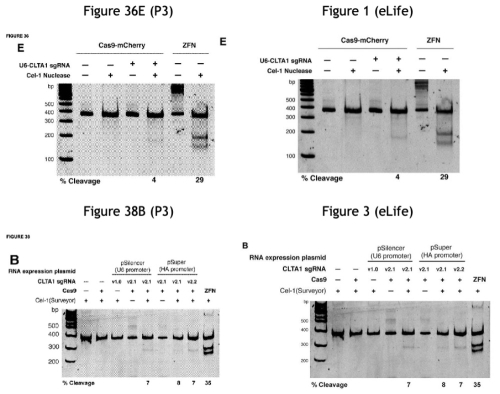
    The opinion next addressed ToolGen Motion No. 2 to deny CVC benefit of its P3 provisional application.  ToolGen's argument as understood by the Board was that CVC did not show in P3 that its CRISPR-Cas9 system was "capable of cleaving or editing the target DNA molecule or modulating transcription of at least one gene encoded by the target DNA molecule" or that "meditate[s] double stranded cleavage at the [DNA] target sequence."  Citing its decision denying priority benefit to CVC's P1 and P2 provisional applications, the Board notes that it provided two alternatives regarding possession sufficient to support priority benefit: "experimental evidence of possession of an embodiment of Count 1" or in the alternative "instructions or discussion of conditions that would have been considered to hinder activity in eukaryotic cells."  ToolGen's arguments were unpersuasive for the Board because they focused only on the first alternative according to the opinion.  The question for the Board was whether a person of ordinary skill would have considered CVC's P3 provisional application to show possession of an embodiment of Count 1 under the second alternative basis.  Regarding this the Board performed a comparison of the P3 disclosure with what CVC's inventors (Jinek et al.) disclosed in a contemporaneous scientific publication.  This comparison was directed to Example 2 of the P3 application (which ToolGen specifically argued was insufficient, supported by expert testimony) and associated Figure 36E and 38B (the latter being particularly called out by ToolGen for having bands significantly differing in size or position from what was expected if cleavage had been successful).  While CVC countered with its own expert, what was ultimately persuasive to the Board (and fatal to ToolGen's motion) was this comparison between Figure 36E and Figure 38B in the P3 provisional application with figures in a paper published in eLife on January 29, 2013 ("the day after CVC P3 was filed" according to the opinion):

    Image
    To the Board, "[t]he bands in Figure 36E of CVC P3 and Figure 1E of the e-Life manuscript appear to be at least similar" and "[a]s with Figure 36E of CVC P3 and Figure 1E of the e-Life manuscript, the bands of each figure [38B and 3] appear to be similar."  Further, the Board considered the opinion of the peer reviewers of the eLife manuscript, that:

    This excellent paper demonstrates the capability of a method based on the bacterial CRISPR-Cas system to introduce targeted, mutagenic double-strand breaks into human chromosomal DNA.  This system could become a powerful alternative to protein-based targeting reagents, because it is based on simple Watson-Crick recognition and no protein design is required.  To put this into perspective, the first proof-of concept study with zinc finger nucleases (ZFNs) in human cells targeted plasmid, not chromosomal DNA [emphasis in opinion].

    The Board concludes that "[t]hus, the reviewers, persons of ordinary skill in the art at the time CVC P3 was filed, considered the gels depicted in Figures 38B and 36E to contribute to evidence of a CRISPR-Cas9 system that successfully cleaved DNA within eukaryotic cells, noting 'the paper demonstrates' this and the study 'show[s]' it.  While agreeing with ToolGen that Ariad Pharmaceuticals, Inc. v. Eli Lilly & Co., 598 F.3d 1336, 19 1357–58 (Fed. Cir. 2010), requires an applicant to show possession of the claimed invention, the Board emphasizes that the possession test requires "an objective inquiry into the four corners of the specification from the perspective of a person of ordinary skill in the art" (emphasis in opinion).  The similarity of the disclosure in P3 and the eLife publication, and the publication reviewer's assessment of the science disclosed therein, was sufficient to convince the Board that the CVC inventors possessed the invention and were entitled to priority benefit to the P3 provisional application.  Accordingly the Board denied ToolGen's Motion No. 2.

    The Board dismissed CVC's Responsive Motion No. 2 because it was contingent on the Board granting ToolGen's Motion No. 2 and in view of its denial the Board dismissed this motion as moot.

    Turning to CVC Substantive Motion No. 2, to deny ToolGen priority benefit to its P1 provisional (in some ways the most significant motion, because grant of this motion would make CVC the Senior Party) the Board denied the motion because while ToolGen did not provide a constructive reduction to practice of an embodiment of a eukaryotic CRISPR Cas9 system encoded by a codon-optimized Cas9 protein-encoding nucleic acid (as recited in ToolGen's half of MacKelvey Count 1 as declared), the CVC half of the Count had no such requirement.  The legal basis for this decision, as set forth by the Board, was that "priority of the filing date of a prior application in an interference is granted with respect to counts not claims; all that is necessary for a party to be entitled to benefit of an earlier filed application for priority purposes is compliance with 35 U.S.C. § 112 with respect to at least one embodiment within the scope of 22 the count"  (emphasis in opinion), citing Falko-Gunter Falkner v. Inglis, 448 F.3d 1357, 1362 (Fed. Cir. 23 2006), and Hunt v. Treppschuh, 523 F.2d 1386, 1389 (C.C.P.A. 1975).  The Board rejected CVC's reliance on "judicial estoppel" (based on positions ToolGen had taken during ex parte prosecution of ToolGen's utility application involved in this interference) because the standard is whether ToolGen showed reduction to practice of an embodiment within the Count, and here the Count included a portion that did not require codon-optimized Cas9 protein-encoding nucleic acid.  As stated in the opinion, "[t]he purpose of an interference count is to provide the description of the interfering subject matter that sets the scope of admissible proofs on priority," citing 37 C.F.R. § 41.201 and Slip Track Sys., Inc. v. Metal-Lite, Inc., 304 F.3d 1256, 2 1263 (Fed. Cir. 2002).  As a practical matter, the Board recognized that "[i]f the parties were limited to their own 'half' of a count, the scope of admissible proofs could differ for each, making a determination of priority for a common invention problematic."  To CVC's accusations of unfairness, the Board stated that "CVC did not request authorization to argue that Count 1 should be changed to refine the boundaries of the parties' commonly invented subject matter[, n]or did CVC request authorization to argue that the parties' claims do not interfere."  Except for these arguments, the opinion notes, "CVC does not argue that the ToolGen P1 application fails to describe an embodiment within the scope of Count 1" and further rejected CVC's argument that ToolGen should be estopped from asserting a constructive reduction to practice.  Accordingly, the Board denied CVC's Motion No. 2, leaving the status of the parties undisturbed.

    As it had for CVC's Responsive Motion No. 2, the Board dismissed as moot ToolGen's Motion No. 1 for priority benefit to applications later-filed than its P1 provisional application because it was contingent on grant of CVC's Substantive Motion No. 2 (which the Board denied).

    The Board also denied CVC's Motion No. 3 to add claims of ToolGen Patent No. 10,851,380 to the interference.  The only distinction between these claims and the Count was the addition of two guanine residues ("GG") at the 5' end of the guide RNA, and CVC argued that this difference would be obvious in view of the Jinek reference.  The Board rejected many of ToolGen's arguments, particularly with regard to uncertainty in the art regarding eukaryotic CRISPR on the grounds that the Count recites eukaryotic CRISPR and the analysis here considers whatever is recited in the Count to be prior art.  Nevertheless, CVC's arguments attempting to rebut ToolGen's evidence of unexpected results (regarding decrease in off-target effects) were equally unavailing and the Board accordingly denied CVC's motion in view of that evidence.  And while ToolGen's evidence is somewhat thin ("a bare assertion that one of ordinary skill in the art would have found the results to be surprising and/or unexpected"), the Board finds that "CVC had an opportunity to put forth and cite contradictory evidence of how one of ordinary skill in the art would have understood the results reported in the '308 patent, including from the cross-examination of [ToolGen's expert witness]" which it did not do ("Rather, CVC presents arguments about the nature of the comparison presented in the '308 patent, its nexus to the claims, and whether ToolGen appropriately relied on these results.  As explained above, we are not persuaded by these arguments.")  On these grounds the Board denied CVC's Motion No. 3.

    Finally, the Board dismissed as moot the parties' various motions to exclude or concluded it has no need to address parties' objections to admissibility in view of their decisions to deny the parties' motions.

    The interference thus remains in the same posture between the parties as it was when declared, and the parties must await the outcome of CVC's appeal in the '115 Interference.  Unless the Supreme Court deigns to review the Federal Circuit's judgment (which is very unlikely regardless of the substance of that judgment) the suspension will not be lifted until sometime next spring, and a decision reversing the Board's awarding priority to Broad should result in the priority phase here ensuing.

  • CalendarOctober 25, 2022 – "China IP: Quarterly Legislation and Case Law Update" (U.S. Patent and Trademark Office) – 10:00 am to 11:00 am (ET)

    October 27, 2022 – "siRNA inventions at the EPO" (J A Kemp) – 16:00 pm to 17:00 pm (GMT)

    October 27, 2022 – "UPC: The Countdown Begins!" (Intellectual Property Owners Association) -11:00 am to 12:00 pm (ET)

    November 15-16, 2022 – Summit on Life Sciences IP Due Diligence (American Conference Institute) – Boston, MA

    December 1-2, 2022 – International Summit on Biosimilars and Originator Biologics (American Conference Institute) – Munich Germany,

  • China_WebinarAs part of its series of quarterly updates on IP developments in China, the U.S. Patent and Trademark Office will offer a webinar entitled "China IP: Quarterly Legislation and Case Law Update" on October 25, 2022 from 10:00 am to 11:00 am (ET).  The webinar will feature presentations by senior U.S. Patent and Trademark Office IP attorneys with extensive China IP experience regarding recently enacted IP policies, legislation, and regulations, and court decisions on key IP cases.

    Those interested in registering for the webinar can do so here

  • J A KempJ A Kemp will be offering a webinar entitled "siRNA inventions at the EPO" on October 27, 2022 from 16:00 pm to 17:00 pm (GMT).  Ian MacLeod and Tanja Preissner of J A Kemp will explore how the European Patent Office (EPO) views inventions in the field of small interfering RNAs (siRNAs) and discuss obstacles innovators are likely to face when protecting their inventions.  The webinar will address the following topics:

    • Patent landscape
    • Challenges
    • How shall we claim it, and when?
    • Where is practice going next?
    • Is practice diverging in EP and US?

    There is no registration fee for this webinar.  However, those interested in registering for the webinar, should do so here.

  • IPO #2The Intellectual Property Owners Association (IPO) will offer a one-hour webinar entitled "UPC: The Countdown Begins!" on October 27, 2022 from 11:00 am to 12:00 pm (ET).  Jakob Kellenberger of Procter & Gamble, Boris Kreye of Bird & Bird, and Bettina Wanner of Bayer Intellectual Property GmbH will focus on the Unified Patent Court and how it will change the way businesses operate in this new world.

    The registration fee for the webinar is $150 for non-members or free for IPO members (government and academic rates are available upon request).  Those interested in attending the webinar should register here.