• New York #2American Conference Institute (ACI) will be holding the next session of its FDA Boot Camp conference on March 12-13, 2014 in New York, NY.  ACI faculty will help attendees:

    • Master the basics of the application and approval processes for drugs, biologics, and devices;
    • Comprehend the structure of the FDA and the roles of the three major agency centers:  CDER, CBER, and CDHR;
    • Develop a practical working knowledge of clinical trials for drugs and biologics and the clearance process for devices;
    • Learn how devices are classified, monitored, and regulated;
    • Appreciate the complexities of pharmaceutical IP and the regulatory balance between brand name and generic products;
    • Recognize the pivotal role of labeling in the drug and biologics approval process;
    • See the importance of cGMPs to the post-approval regulatory process; and
    • Navigate the protocols of adverse events monitoring, signal detection, product withdrawals, and recalls.

    FDA Boot CampIn particular, ACI's faculty will offer presentations on the following topics:

    • The Basics: Understanding and Working with the FDA — Jurisdiction, Organization, and Operations
    • The Nature of the Approval Process
    • Understanding the Clinical Trial Process for Drugs and Biologics
    • Patent and IP Overview for Drugs and Biologics: Understanding The Connection Between FDA Regulation and IP and Related Mechanisms Under Hatch-Waxman and BPCIA
    • Part 1 — Patents, Trademarks and Other IP Protections and Mechanisms
    • Part 2 — Hatch-Waxman and BPCIA Overview
    • Drugs and Biologics: Labeling
    • cGMPs: Drugs and Biologics (Current Good Manufacturing Practices)
    • Medical Devices: Classifications, the Essentials of the Premarket Review Process, and Post-Market Requirements and Concerns
    • Recall Guidance for Drugs, Biologics, and Medical Devices: What You Need to Know
    • Adverse Events Monitoring, Pharmacovigilance and Risk Management

    A pre-conference workshop on the "Fundamentals of FDA Regulatory Law" and "Resolving Ethical Challenges Encountered During the Drug Approval Process" will be offered on March 11, 2014 from 1:00 to 5:00 pm.  The first part of the workshop will provide a basic overview of FDA regulations and will prepare attendees for the in-depth discussions that will take place throughout the conference, and explore ethical issues that may arise in the context of communications with FDA on behalf of clients.  The second part of the workshop will explore ethical issues that may arise in the context of communications with FDA on behalf of clients.

    Two post-conference master classes will be offered on March 13, 2014.  The first master class, entitled "Hatch-Waxman and BPCIA: Overview of Biosimilars and Life Cycle Planning for Drugs and Biologics," will provide an in-depth overview of biosimilars as well as analyses of bioequivalence and exclusivities and their role in patent and product life cycle management.  The second master class, entitled "Post-Approval Marketing Guidance and Preemption Protocols," will address issues that arise post-approval, including advertising, promotion, and off-label promotion and enforcement, as well as preemption fundamentals.

    An agenda for the conference can be found here, and additional information regarding the workshop and master classes can be found here.  A complete brochure for this conference, including an agenda, detailed descriptions of conference sessions, list of speakers, and registration form can be obtained here.

    ACI - American Conference InstituteThe registration fee is $2,295 (conference alone), $2,895 (conference and workshop or conference and one master class), or $3,295 (conference, workshop, and one master class).  Those registering by February 13, 2014 will receive a $200 discount.  Those interested in registering for the conference can do so here, by e-mailing CustomerService@AmericanConference.com, by calling 1-888-224-2480, or by faxing a registration form to 1-877-927-1563.

    Patent Docs is a media partner of ACI's FDA Boot Camp conference.

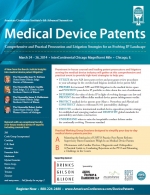
  • Chicago #1American Conference Institute (ACI) will be holding its 4th Advanced Summit on Medical Device Patents on March 24-26, 2014 in Chicago, IL.  The conference will allow attendees to:

    • Utilize the new AIA inter partes review and post-grant review procedures to your advantage in the crowded and litigious medical device patent field;
    • Prepare for increased NPE and PAE litigation in the medical device space and position your device IP portfolio to drive down the cost of settlements;
    • Determine the value of device IP in light of evolving damages case law and prevent the next billion dollar medical device patent infringement verdict;
    • Protect medical device patents post-Mayo v. Prometheus and Myriad and construct claims to withstand § 101 patentability challenges;
    • Execute a cohesive international medical device opposition practice strategy for established and emerging markets and demystify global standards for patentability and claim construction; and
    • Understand when to raise the inequitable conduct defense under the continually evolving Therasense standard.

    Medical Device PatentsIn particular, ACI's faculty will offer presentations on the following topics:

    • Keynote: USPTO Update on Patent Reform: Statistical Breakdown and Best Practices Learned from the First Year of Implementation
    • Examining the Impact of AIA Post-Grant Review and Inter Partes Review Procedures on Traditional Medical Device Patent Litigation
    • Setting the Stage Pre-Trial: Mock Markman Hearing and Claim Construction Strategy Session
    • The Incredible Shrinking Patent World: Protecting Medical Device Patents in Light of Increasingly Strict § 101 Patentability Standards
    • The In-House Perspective on Medical Device Patent Litigation: Limiting Liability and Managing and Reducing Costs
    • Bracing for the Impact of NPEs and PAEs in the Medical Device Space: How to Defend Against These Entities and What We Can Learn from Them
    • Joint Indirect Infringement Post-Akamai: Bracing for the Fallout on Prosecution and Litigation Strategies
    • Case Spotlight on Medtronic v. Boston Scientific: Determining Who Bears the Burden of Proof in a Declaratory Judgment Action
    • View From the Bench: The Judicial Perspective on Medical Device Patent Litigation
    • Rethinking Medical Device Damages: Updated Strategies for Calculating Damages and Determining Valuation in Light of Evolving Federal Circuit Case Law
    • Focus on Bard v. Gore: Exploring the Evolution of the Law of Willful Infringement and Enhanced Damages
    • Developing a Global Patent Strategy to Protect Medical Device IP in Emerging and Established Markets
    • Ethics and Medical Device IP: An Update on the Continued Evolution of Inequitable Conduct and Overview of the New PTO Ethical Rules

    In addition, a pre-conference interactive working group session entitled "Mastering the Intricacies of USPTO Practice Post-Patent Reform: Supervisory Patent Examiners Weigh In on Medical Device Patents" will be offered from 8:30 am to 12:00 pm on March 24, 2014, and a post-conference master class entitled "Obviousness with Cardiac Devices, Diagnostics and Orthopedics: A Practical Guide to Combating Rejections at the PTO and Mounting a Challenge in the Courts" will be offered from 9:00 am to 12:00 pm on March 26, 2014.

    The agenda for the Medical Device Patents conference can be found here, and the agenda for the pre-conference interactive working group session and post-conference master class can be found here.  A complete brochure for this conference, including an agenda, detailed descriptions of conference sessions, list of speakers, and registration form can be obtained here.

    ACI - American Conference InstituteThe registration fee for the conference is $2,295 (conference alone), $2,895 (conference and pre-conference session or post-conference master class), or $3,295 (conference, pre-conference session, and post-conference master class).  Those registering by January 31, 2014 will receive a $300 discount, and those registering by February 28, 2014 will receive a $200 discount.  Those interested in registering for the conference can do so here, by e-mailing CustomerService@AmericanConference.com, by calling 1-888-224-2480, or by faxing a registration form to 1-877-927-1563.

    Patent Docs is a media partner of ACI's Medical Device Patents conference.

  • Strafford #1Strafford will be offering a webinar/teleconference entitled "Proactive Patent Procurement and Prosecution Strategies: Minimizing the Threat of Post-Grant Challenges — Insulating Your Patent Portfolio From New Threats" on February 13, 2014 from 1:00 to 2:30 pm (EST).  Christopher A. Bullard of Oblon Spivak McClelland Maier & Neustadt and Scott A. McKeown of Oblon Spivak McClelland Maier & Neustadt will provide an overview of the current USPTO's Patent Trial & Appeal Board (PTAB) and patent litigation landscape with an eye toward emerging trends and challenges for patents owners, and offer best practices to minimize the threat of post-grant patent challenges as well as prosecution strategies to strengthen and/or insulate patent portfolios from PTAB attack.

    The webinar will review the following questions:

    • What are the emerging challenges for patent owners under the current PTAB landscape?
    • What is the PTAB's impact on patent portfolios and what steps can counsel take to strengthen portfolios?
    • What proactive steps in patent procurement and prosecution can counsel take to minimize the threat of post-grant challenges?

    The registration fee for the webinar is $297 ($362 for registration and CLE processing).  Those interested in registering for the webinar, can do so here.

  • Strafford #1Strafford will be offering a webinar/teleconference entitled "Protecting IP Rights in Joint Development Agreements and Strategic Alliances — Structuring JDAs to Apportion Contributed, Joint and Derivative IP; Planning for Involuntary Early Endings; and Avoiding Unintended Consequences" on February 20, 2014 from 1:00 to 2:30 pm (EST).  Sharon Tasman Prysan of Health & Technology Law Group will provide guidance to counsel on the negotiation of and structuring joint development agreements (JDAs) to allocate IP ownership, and discuss the key provisions of the JDA to protect IP rights and avoid unintended consequences.  The webinar will review the following questions:

    • What considerations should counsel keep in mind when negotiating the JDA?
    • What issues must be addressed by the JDA regarding IP ownership?
    • What obligations will the parties have in protecting the other party's preexisting IP once the JDA is expired or terminated?

    The registration fee for the webinar is $297 ($362 for registration and CLE processing).  Those registering by January 24, 2014 will receive a $50 discount.  Those interested in registering for the webinar, can do so here.

  • FDCA Does Not Preempt State Unfair Competition Laws

    By Kevin E. Noonan —

    AllerganIf you have ever wondered how popular eyelash enhancers like RevitaLash and Latisse produce their effects, Allergan, Inc. v. Athena Cosmetics, Inc. provides the answer:  these products comprise prostaglandin derivatives.  The questions raised in this case involved whether these products were regulated as drugs or cosmetics, and whether Athena's sales of its RevitaLash product in California violated that state's unfair competition law "by marketing, distributing and selling, without regulatory approval, products that qualify as drugs."

    RevitalashThe case arose when Allergan, whose Latisse product is approved by the FDA, sued Athena (whose RevitaLash product is not) under California's UCL.  The violation of California law underlying the suit was that Athena's sales of RevitaLash contravened the provisions of California's Health and Safety Code (California Health Code) § 1115501 by "marketing, selling, and distributing [its] hair and/or eyelash growth products without [a new drug] application approved by the FDA or California State Department of Health Services."  The District Court denied Athena's motion for judgment on the ground that Federal Law (specifically, the Food, Drug and Cosmetic Act) preempted California state law, and granted summary judgment to Allergan.  The Court also entered a permanent injunction having nationwide scope, precluding Athena from selling RevitaLash throughout the U.S.

    The Federal Circuit affirmed summary judgment (although it lifted the injunction with instructions to limit it to California) in an opinion by Judge Moore, joined by Chief Judge Rader and Judge Wallach.  Before reaching the substantive issues, the panel first considered whether it had jurisdiction over the appeal, because there were no patent issues presented (although Allergan had asserted a patent infringement allegation in an amended complaint, the District Court had dismissed these allegations in the complaint without prejudice after entering summary judgment of noninfringement based on claim construction).  The Court resorted to the principle that the Federal Circuit has exclusive appellate jurisdiction "when 'patent law is a necessary element of one of the well-pleaded claims' in the complaint," citing Christianson v. Colt Indus. Operating Corp., 486 U.S. 800, 809 (1988), and 28 U.S.C. § 1295(a)(1).  The opinion further applied the rubric that the Federal Circuit maintains jurisdiction when "the parties were not left in the same legal position as if the [] patent claim had never been filed."  Here, dismissal of the patent infringement allegations "without prejudice" satisfied this criterion, according to the opinion, because the District Court did not vacate summary judgment of non-infringement which would bind the parties should Allergan reassert the patent infringement allegations.

    Turning to the issue of preemption, the Court noted that, while the California Health Code contained several provisions also found in the FDCA it also provided for private cause of action not available under Federal law.  Moreover, the panel's assessment was limited to what it termed "implied preemption," because the parties agreed that the FDCA did not "expressly preempt Allergan's claim."  The legal basis for implied preemption was set forth in Buckman Co. v. Plaintiffs' Legal Committee, 531 U.S. 341 (2001), requiring that the claim does not "implicate a traditional state law tort principle and exists solely by virtue of a federal statute."  Here, Athena argued that California law was preempted because permitting Allergan to pursue its state law claim would "interfere[] with the FDA's discretionary authority whether to regulate an article in interstate commerce as a drug."  Allergan countered that when the FDCA preempts state law it does do expressly (and only for "certain narrow topics" not relevant here), and that the preemption issue is governed by Wyeth v. Levine, 555 U.S. 555 (2009), insofar as "simultaneous compliance with state and federal law is possible, and the state law is not an obstacle to the realization of federal goals."

    The Federal Circuit agreed with Allergan, based on the presumption that "the historic police powers of the States were not to be superseded by the Federal Act unless that was the clear and manifest purpose of Congress," citing Medtronic, Inc. v. Lohr, 518 U.S. 470, 485 (1996).  The panel cites the language from the Buckman decision concerning "the historic primacy of state regulation of matters of health and safety," and the need for "a clear purpose by Congress" to preempt which the panel does not find under these facts.

    The panel then addressed Athena's argument that its RevitaLash product does not fall within the scope of the California Health Code because it is not a drug.  The state law defines a drug as "any article other than food that is used or intended to affect the structure . . . of the body of human beings," Cal. Health Code § 109925(c), and that the "intended use" was determined based on "the objective intent of the persons legally responsible for the labeling of drugs," citing 21 C.F.R. § 201.128.  The evidentiary basis for making such a determination of "objective intent" to be considered include "labeling claims, advertising matter, or oral or written statements by such persons or their representatives."  Because the District Court granted summary judgment against Athena the Federal Circuit assessed whether there was any genuine issue of material fact regarding whether Athena's conduct demonstrated objective intent.  The District Court considered Athena's marketing behavior, which the panel characterizes as marketing its RevitaLash product "to affect the structure of the eyelashes" and that this evinced an objective intent to market the product as a drug:

    The court found that Athena's founder, a physician, developed an initial formulation using a prostaglandin derivative with the intent to cause users' eyelashes to grow longer and fuller.  It found that Athena's marketing of subsequent formulations containing different derivatives continued to discuss eyelash growth.  The court acknowledged that Athena's marketing of the most recent formulation discussed eyelash appearance, but concluded this did not negate an objective intent to cause growth.

    (Emphasis in opinion)

    Athena conceded that earlier marketing efforts could be so construed, but that it had changed its marketing to be limited to eyelash appearance and not to be directed to improved eyelash growth.  Athena also alleged that it instructed resellers that its RevitaLash product should be sold as a cosmetic and not marketed for its eyelash growth promoting properties.

    The Federal Circuit was not impressed by these arguments, based on Athena's marketing behavior and materials:

    Athena's marketing of the products at issue consistently discusses physical changes to eyelashes.  There is no dispute that Athena made drug-related claims about an early formulation — and it never expressly disavowed such claims as it reformulated its products.  Instead, the company continued to suggest that the products at issue change eyelash structure.  For example, the company's website contained a message from the founder referring to his wife's "fragile, sparse and thin" eyelashes, and his development of a formula to achieve "the look of renewed health, strength and beauty."  (emphasis added).  An advertisement about the most recent formulation states that the product is "both dermatologist and ophthalmologist reviewed," and describes "improved appearance" of eyelashes in the context of a "clinical study."

    (citations to the record omitted)

    The panel also cited evidence on Athena's instructions to resellers that are contrary to its representations that those instructions focused on the cosmetic aspects of its product, saying "Athena's claims invariably link eyelash appearance to physical changes caused by the products at issue."  Accordingly, the Court affirmed summary judgment that Athena violated the relevant provisions of the California Health Code and that this violation constituted a violation of California's UCL.

    Finally, the Federal Circuit panel vacated the permanent injunction as an abuse of discretion based on its nationwide scope.  The District Court justified this scope based inter alia on evidence that California residents could obtain the RevitaLash product from Internet sales.  The panel held that this extraterritorial assertion of California law violated both the Commerce Clause of the U.S. Constitution as well as other states' sovereignty.  The panel illustrated the impermissible scope of the injunction by example:  "[t]his injunction is so broad that it would bar Athena from making its product in Idaho, distributing it from a facility in Nevada, and selling it to Connecticut consumers."  This power resides in "[t]he FDA – and the FDA alone" in enforcing the FDCA, and "California does not have the authority to stand in the shoes of the FDA to determine whether Athena's sale of the products at issue amounts to the sale of an unapproved drug under the FDCA.  This enforcement authority relies exclusively with the FDA."  And if the District Court was concerned that Athena would use out-of-state sources to continue to sell RevitaLash in California, "Allergan's remedy lies in a contempt proceeding" not the exercise of the Court's injunction power to extraterritorial effect.

    The Federal Circuit finding no other defect in the injunction, the opinion contains an instruction to "limit the scope of the injunction to regulate conduct occurring within California."

    Allergan, Inc. v. Athena Cosmetics, Inc. (Fed. Cir. 2013)
    Panel: Chief Judge Rader, and Circuit Judges Moore and Wallace
    Opinion by Circuit Judge Moore

  • By Donald Zuhn —

    NovartisIn an opinion issued earlier today, the Federal Circuit affirmed a determination by the District Court for the District of Columbia that challenges of patent term adjustment (PTA) determinations by the U.S. Patent and Trademark Office for fifteen patents were untimely asserted by Novartis AG, Novartis Vaccines and Diagnostics, Inc., and Novartis Corporation ("Novartis").  The Federal Circuit also reversed the District Court's ruling that the Patent Office's interpretation of 35 U.S.C. § 154(b)(1)(B) was contrary to law, and remanded for a redetermination of proper PTA determinations.

    As we noted in our summary of the District Court's November 2012 decision, the lower court determined that Novartis had not satisfied the 180-day limitation of 35 U.S.C. § 154(b)(4)(A) for timely challenging PTA determinations by the Office with respect to nineteen of twenty-three patents at issue, and further, that the 180-day limitation should not be equitably tolled.  For three of the four patents for which Novartis had timely challenged the Office's PTA determinations, the District Court adopted the rationale in Exelixis, Inc. v. Kappos, and for the lone remaining patent, the Court determined that the Office erred in not applying the Federal Circuit's decision in Wyeth v. Kappos.

    Novartis originally brought suit against the U.S. Patent and Trademark Office Director in July 2010 under 35 U.S.C. § 154 and the Administrative Procedure Act (APA), alleging that the Office improperly determined the amount of PTA to which eleven of Novartis' patents were entitled by improperly refusing to apply the Federal Circuit's decision in Wyeth v. Kappos to patents granted prior to September 2, 2009.  Novartis also challenged the Patent Office's interpretation of the effect of filing a Request for Continued Examination (RCE) on the determination of B Delay.  The District Court subsequently consolidated that case with three other Novartis cases that raised similar issues, bringing the number of Novartis patents at issue in the consolidated action to twenty-three.

    In assessing the Office's determination of PTA for each of the twenty-three Novartis patents at issue, the District Court noted that challenges to Office PTA determinations were governed by 35 U.S.C. § 154(b)(4)(A), which provided that:

    An applicant dissatisfied with a determination made by the Director under paragraph (3) shall have remedy by a civil action against the Director filed in the United States District Court for the District of Columbia within 180 days after the grant of the patent.

    For all but three of the twenty-three Novartis patents at issue, the Office argued that Novartis' complaints were filed more than 180 days after those patents were issued, and therefore, that Novartis was foreclosed from seeking additional PTA for those patents.  Novartis countered that the 180-day limitation of § 154(b)(4)(A) did not apply to its claims because that statute applied to determinations "under paragraph (3)," and therefore only applied to determinations of A Delay.

    While the District Court sided with the Patent Office with respect to the 180-day limitation of § 154(b)(4)(A), the lower court disagreed with the Office that Novartis was foreclosed on all of the patents at issue.  In particular, the Court noted that Novartis had filed a petition for PTA reconsideration for one of the patents within two months of its issuance (as required under the applicable rules at the time), and had filed a complaint within 180 days of the Office's denial of reconsideration (but more than 180 days after the patent issued).  However, with respect to Novartis' argument that the 180-day limitation of § 154(b)(4)(A) should be equitably tolled for nineteen other patents, the District Court found Novartis' arguments to be unpersuasive, noting that "Novartis was free to raise the same issues that Wyeth and Abbott Laboratories raised in their lawsuits within the 180 days after their patents were granted."

    Regarding the patents for which Novartis had timely challenged the Office's PTA determinations, the District Court noted that those patents concerned the same issue decided by the Eastern District of Virginia in Exelixis, Inc. v. Kappos, namely "whether § 154(b)(1)(B) requires that, or even addresses whether, any PTA be reduced by time attributable to an RCE where, as here, the RCE is filed after the expiration of the three year guarantee period specified in that statute."  After discussing the decision in Exelixis, the Court noted that it found "Judge Ellis' well-reasoned opinion to be persuasive," and "therefore adopt[ed] his rationale for concluding that the PTO's interpretation [of the statute] is contrary to the plain and unambiguous language of § 154(b)(1)(B), and that it contravenes the structure and purpose of the statute."

    On appeal, Novartis challenged the District Court's ruling with respect to eighteen of the twenty-three patents that were before the lower court.  The District Court had dismissed Novartis' claims for fifteen of these patents as untimely asserted, and had rejected the Office's construction of § 154(b)(1)(B) for the remaining three patents.

    With respect to the District Court's dismissal of Novartis' claims as untimely under the versions of 35 U.S.C. § 154(b)(3) and § 154(b)(4)(A) that applied to the patents at issue, the Federal Circuit notes that "[i]t is . . . undisputed that, for the fifteen patents, Novartis did not file suit within 180 days of denial of reconsideration [of the Office's PTA determination]."  Novartis argued, however, that the 180-day period was inapplicable because § 154(b)(4)(A) only applies to "a determination made by the Director under paragraph (3) — or, as Novartis contended, only to the provisional PTA determination that the Office made at the time of allowance" (under the applicable rules at the time).

    Finding Novartis' interpretation of § 154(b)(4)(A) to be "unreasonable," the Federal Circuit states that "[t]he applicable version of paragraph (b)(3) . . . addresses all patent term adjustment determinations, not just some."  According to the Court, Novartis' reading of the statute:

    [W]ould use one provision to contradict the broad language of several other provisions and produce the senseless result that the detailed judicial-review provision of paragraph (b)(4) — with its 180-day rule and its confinement of venue to one district court — would apply to review only of provisional, but not final, adjustment determinations.  In the end, the statutory language on which Novartis relies is a flaw in drafting that cannot reasonably support the construction Novartis advances.

    In addition to rejecting Novartis' construction of § 154(b)(4), the Court also determined that Novartis had failed to demonstrate why the 180-day rule should be equitably tolled, stating that "[a]t a minimum, nothing stood in the way of Novartis's timely pressing the very claim Wyeth pressed," adding that "[a] fortiori equitable tolling is unavailable where, as here, there is no reason even to doubt that the litigant knew the legal theory, but just waited until another person secured a favorable ruling on the theory in another case."  The Court further found no merit to Novartis' argument that its property was taken, in violation of the Fifth Amendment, stating that "[f]or the patents as to which it did not timely file suit under § 154(b)(4), it was only Novartis's failure to comply with reasonable filing deadlines that prevented it from securing any patent term adjustment authorized by Wyeth."

    As for the three patents at issue for which Novartis timely challenged the Office's PTA determinations, and which involved the impact of an RCE filing on the calculation of B Delay, the Federal Circuit agreed with the Office that "no [patent term] adjustment time is available for any time in continued examination, even if the continued examination was initiated more than three calendar years after the application's filing" (in other words, for an RCE filed more than three years after the application filing date).  However, the Court agreed with Novartis "that the 'time consumed by continued examination' should be limited to the time before allowance, as long as no later examination actually occurs."  As a result of the Court's determination that the Office's interpretation of § 154(b)(1)(B) was only partly correct, the Court remanded for a redetermination of proper PTA determinations in accordance with the Court's opinion.

    In view of its decision in Novartis AG v. Lee, the Federal Circuit also issued an opinion in Exelixis, Inc. v. Lee, vacating judgments by the District Court for the Eastern District of Virginia as to PTA determinations for two Exelixis patents, and remanding for a redetermination of the proper adjustments in accordance with the Court's Novartis decision.

    Novartis AG v. Lee (Fed. Cir. 2014)
    Panel: Circuit Judges Newman, Dyk, and Taranto
    Opinion by Circuit Judge Taranto

    Exelixis, Inc. v. Lee (Fed. Cir. 2014)
    Panel: Circuit Judges Newman, Dyk, and Taranto
    Per curiam opinion

  • By Donald Zuhn —

    USPTO SealIn a Federal Register notice published last week (79 Fed. Reg. 642), the U.S. Patent and Trademark Office announced that the Extended Missing Parts Pilot Program that was implemented three years would be extended for another year.  The pilot program allows applicants to request a twelve-month extension to pay the search fee, examination fee, any excess claim fees, and surcharge for late submission of the search and examination fees in a nonprovisional application.  The notice indicates that the pilot program benefits applicants by providing additional time to determine if patent protection should be sought and focus on commercialization efforts, benefits the public by adding publications to the prior art, and benefits the Office by removing nonprovisional applications that applicants decline to pursue from its workload.  The pilot program has been extended through December 31, 2014.

    In December 2010, the Office implemented the Extended Missing Parts Pilot Program, noting that it would "effectively provide a 12-month extension to the existing 12-month provisional application period, providing applicants additional time to find financial help, evaluate a product's worth in the marketplace or further develop the invention for commercialization" (see "USPTO Implements Pilot Program Extending Provisional Application Period").  The Office initially sought comments regarding the program in April 2010 (see "USPTO Seeks to Effectively Double Provisional Application Period").  Under the pilot program, the Office modified its missing parts practice — which permits an applicant to pay the filing fees and submit an executed oath or declaration after the filing of a nonprovisional application within a two-month time period that is extendable for an additional five months on payment of extension of time fees — such that applicants would file a nonprovisional application with at least one claim within the 12-month statutory period after the provisional application was filed (as well as pay the basic filing fee, submit an executed oath or declaration, and not file a nonpublication request) and then be given a 12-month period within which to decide whether the nonprovisional application should be completed by paying the required surcharge and the search, examination, and any excess claim fees.

    Applicants wishing to participate in the pilot program must satisfy the following requirements, which remain unchanged under the extension of the pilot program:

    (1) submit a certification and request to participate in the program at the time of filing of a nonprovisional application (preferably using Form PTO/AIA/421);
    (2) the application must be an original (not reissue) nonprovisional utility or plant application filed under 35 U.S.C. 111(a);
    (3) the nonprovisional application must directly claim the benefit under 35 U.S.C. § 119(e) and 37 C.F.R. § 1.78 of a prior provisional application filed within the previous twelve months, with the specific reference to the provisional application being made in an application data sheet; and
    (4) the applicant must not have filed a nonpublication request.

    In last week's notice regarding the extension of the pilot program, the Office once again:

    [C]autions all applicants that, in order to claim the benefit of a prior provisional application, the statute requires a nonprovisional application filed under 35 U.S.C. 111(a) to be filed within twelve months after the date on which the corresponding provisional application was filed.  See 35 U.S.C. 119(e).  It is essential that applicants understand that the Extended Missing Parts Pilot Program cannot and does not change this statutory requirement.

    However, in view of the changes in the rules of practice made pursuant to title II of the Patent Law Treaties Implementation Act of 2012 (PLTIA), which amends U.S. Patent Law to implement the provisions of the Patent Law Treaty (PLT), the Office notes that an applicant may now file a petition to restore the benefit of a provisional application filed up to fourteen months earlier.  More importantly, the notice indicates that "if a petition to restore the benefit claim of a prior provisional application is required, the application is not eligible for participation in the Extended Missing Parts Pilot Program."

    The form for requesting participation in the program (PTO/AIA/421) also outlines the PTA effects of participation in the program, stating that:

    Any patent term adjustment (PTA) accrued by applicant based on certain administrative delays by the USPTO is offset by a reduction for failing to reply to a notice by the USPTO within three months.  See 37 CFR 1.704(b).  Thus, if applicant replies to a notice to file missing parts more than three months after the mailing date of the notice, the additional time that applicant takes to reply to the notice will be treated as an offset to any positive PTA accrued by the applicant.

    In addition, under the pilot program, nonprovisional applications are still published according to the existing eighteen-month publication provisions.  More importantly, the Office "advises" that:

    [T]he extended missing parts period does not affect the twelve-month priority period provided by the Paris Convention for the Protection of Industrial Property (Paris Convention).  Accordingly, any foreign filings must still be made within twelve months of the filing date of the provisional application if applicant wishes to rely on the provisional application in the foreign-filed application or if protection is desired in a country requiring filing within twelve months of the earliest application for which rights are left outstanding in order to be entitled to priority.

    In the notice regarding the most recent extension of the pilot program, the Office notes that applications that are not filed electronically will still be assessed a $400 additional fee (or $200 for small entities) pursuant to the AIA, that this fee will be due within the two-month (extendable) time period to reply to the Notice to File Missing Parts of Nonprovisional Application, and that applicants will not be given the 12-month time period under the pilot program to pay this fee.

  • By Gary Cox, Craig Humphris and Donna Meredith —

    Australia Coat of ArmsIn the decision of Apotex Pty Ltd v Sanofi-Aventis Australia Pty Ltd [2013] HCA 50 (order), the High Court of Australia, Australia's supreme court, confirmed that methods of medical treatment are a "manner of manufacture" and therefore represent a patentable invention in Australia.  Although Australia's Patent Office (IP Australia) and the Australian Federal Courts have previously determined and held that such claims are patentable, the matter has never been tested before Australia's supreme appellate court, the High Court of Australia.  The decision is significant because it now provides certainty to both innovators and generics alike, that such claims are patentable.  The decision also provides guidance on what might constitute indirect infringement of a second medical use claim by the supply of a product for a first off-patent medical use.

    BACKGROUND

    In 2008, Sanofi commenced first instance proceedings in the Australian Federal Court against Apotex claiming that Apotex's supply of leflunomide to treat psoriatic arthritis would infringe Sanofi's Australian Patent No 670491 ("the Patent"), which covers a method of using leflunomide to treat psoriasis.  It is well known that in the majority of cases, patients with psoriatic arthritis have, or will, develop psoriasis and Sanofi claimed that Apotex's product used on psoriatic arthritic patients would also treat psoriasis.  Importantly, in their product information sheet, Apotex included a statement expressly excluding the use of their product for the treatment of psoriasis that is not associated with manifestations of arthritic disease.

    Apotex responded by filing: (1) a defence that its product did not infringe the Patent; and (2) a cross-claim, asserting that the Patent is invalid, claiming that a method for treating the human body was not a patentable invention.

    In 2011, the Federal Court dismissed Apotex's cross-claim and found that Apotex had threatened to infringe Sanofi's patent.  On appeal to the Full Federal Court in July 2012, the Full Court upheld the trial judge's decision.  Apotex applied for special leave from the High Court to appeal from the decision of the Full Federal Court.  Special leave was granted in December 2012.

    THE DECISION

    The High Court (which, at the time, comprised French CJ, Hayne, Crennan, Kiefel and Gageler JJ) was asked to answer the following two questions:

    Question 1: Is a method of medical treatment a "manner of manufacture" and therefore a patentable invention?

    Question 2: If an existing patent is directed to a method of treating a particular disease by the administration of a known drug, does a third party infringe that patent by supplying the same product for the purpose of treating a different disease not covered by the patent?

    (a)    Question 1 – Patent Validity

    In delivering their judgement, the Court considered the body of case law in both Australia and the United Kingdom relating to manner of manufacture.  Consideration was also given to the positions held in other major jurisdictions.  The High Court ultimately reduced the debate down to two fundamental questions:

    1.  Is a process a proper subject for the grant of a patent under the 1990 Act only if it results in a product (a result, outcome or effect) which can be exploited commercially?

    2.  If yes to the above, does a method of prevention or treatment of human disease meet that requirement?

    In Australia, the boundaries of the definition of "manner of manufacture" are broad and constantly evolving and it is identified in the Explanatory Memorandum to the Patents Bill 1990 as meaning:

    "little more than that an invention must belong to the useful arts rather than the fine arts."

    In their judgement, the majority placed emphasis on the following excerpt from the judgment of Lockhart J in the Australian Federal Court (Full Court) decision of Anaesthetic Supplies Pty Ltd v Rescare Ltd (1994) 50 FCR 1 at 19:

    "If a process which does not produce a new substance but nevertheless results in 'a new and useful effect' so that the new result is 'an artificially created state of affairs' providing economic utility, it may be considered a 'manner of new manufacture' within s 6 of the Statute of Monopolies."

    In consolidating the views of the majority, Chief Justice French of the present case stated:

    "The exclusion from patentability of methods of medical treatment represents an anomaly for which no clear and consistent foundation has been enunciated.  Whatever views may have held in the past, methods of medical treatment, particularly the use of pharmaceutical drugs, cannot today be conceived as 'essentially noneconomic'."

    The majority of the High Court (Hayne J dissenting) therefore answered in the affirmative to the patent validity question, confirming that methods of medical treatment of the human body are valid patentable subject matter in Australia.  This is consistent with long-standing practice in Australia and is in line with the decision of the High Court of Australia in Bernhard Joos v Commissioner of Patents (1972) 126 CLR 611, which held that cosmetic processes or methods for improving or changing the appearance of the human body, which could be considered economically beneficial, were proper subject matter for the grant of patents.

    (b)    Question 2 – Patent Infringement

    While the majority of the High Court finding that the Patent was valid, their Honours found that Apotex's leflunomide product did not infringe the patent.

    According to s117(1) of the Patents Act, if the use of a product by a person would infringe a patent, then supply of the product can also infringe a patent.  Sanofi's primary argument relied on section 117(2)(c), which states:

    "(2)     A reference in subsection (1) to the use of a product by a person is a reference to:

    (c) . . . the use of the product in accordance with any instructions for the use of the product, or any inducement to use the product, given to the person by the supplier or contained in an advertisement published by or with the authority of the supplier."

    In the alternative, Sanofi contended that Apotex was indirectly infringing their patent pursuant to section 117(2)(b), which states that:

    "(2)     A reference in subsection (1) to the use of a product by a person is a reference to:

    (b) if the product is not a staple commercial product – any use of the product, if the supplier had reason to believe that the person would put it to that use."

    Since Apotex's instructions specifically excluded the use of their product for non-arthritic psoriasis, the court found that Apotex was not liable for contributory infringement and that the product information sheet does not engage section 117(2)(c) of the Act.  The court held that it could not be inferred that Apotex had any reason to believe that their product would be used according to Sanofi's patented method, given that this would have been contrary to the stated indication on the product information sheet provided by Apotex.

    In light of this decision, it now appears that in cases where an off-patent pharmaceutical is the subject of a second medical use patent, supply of the pharmaceutical for the purpose of the first medical use might not be considered an infringement of the second medical use patent, provided express instructions are provided by the supplier that the product is only to be used for the off-patent use.  Generic suppliers might ultimately avoid being liable for contributory infringement in cases where the end user has used the product for the patented second medical use "off label", despite instructions to the contrary from the generic supplier.  However, the outcome may be very different if there was evidence to suggest that the generic knew, or ought to have known, that their product might be used in a way that would infringe the innovator's patent.

  • By Josh Bosman —

    Duke UniversityLast week, the U.S. Patent and Trademark Office issued U.S. Patent No. 8,623,601, which is entitled "Methods of diagnosing cancer."  The '601 patent, which is assigned to Duke University and Cognosci, Inc. (out of the Research Triangle Park in North Carolina), contains claims to a method of predicting or assessing the level of severity of cancer or cancer progression in a patient diagnosed with chronic lymphocytic leukemia or B-cell non-Hodgkin's lymphoma.

    The claimed method is based on the discovery that the levels of SET present in a biological sample and the ratio of SET protein isoforms SET α and SET β in the biological sample can be measured and are prognostic indicators of cancer severity or progression.  More specifically, the claimed method relies on measuring the levels of SET α and SET β protein or RNA in B lymphocytes isolated from a blood sample of a patient diagnosed with chronic lymphocytic leukemia or B-cell non-Hodgkin's lymphoma where the inventor learned that CLL patients with high α/β ratios had significantly shorter overall survival (~4 years shorter) than did patients with low α/β ratios.

    CognosciThe SET protein is a multitasking protein, involved in apoptosis, transcription, nucleosome assembly, and histone chaperoning, and is known to be a potent physiological inhibitor of protein phosphatase 2A.  The expression of the α and β isoforms is driven by distinct promoters, and the isoforms differ only in the N-terminal portion of the protein in which the α-isoform has a 37 amino acid N-terminal region that arises from Exon 1 of the SET gene while the β-isoform has a 24 amino acid N-terminal region that arises from Exon 2 of the SET gene.  As the SET protein was isolated from a chromosomal rearrangement at 9q34 in a patient with acute undifferentiated leukemia, it makes sense that it can now be used in methods to predict the level of severity of some types of leukemia.

    The patent has one independent claim that recites:

    1.  A method of predicting or assessing the level of severity of cancer or cancer progression in a patient diagnosed with chronic lymphocytic leukemia or B-cell non-Hodgkin's lymphoma comprising determining the ratio of SET alpha isoform to SET beta isoform in B lymphocytes isolated from the patient and  comparing the ratio of SET alpha isoform to SET beta isoform to the ratio in a control sample or a standard value, wherein an increase in the ratio of SET alpha isoform to SET beta isoform relative to the ratio in the control sample or standard value is indicative of a more severe form of cancer or later stage of cancer progression in the patient.

    As cancer is predicted to overtake heart disease as the leading cause of death, there is a continued need for advancing methods for predicting the severity of cancers.  The '601 patent provides a method that would allow physicians to determine whether a particular leukemia patient would benefit from aggressive treatment or whether a less aggressive form of treatment is appropriate, which could improve the treatment strategy for the leukemia patient and may improve survival.

  •         By Sherri Oslick —

    Gavel About Court Report:  Each week we will report briefly on recently filed biotech and pharma cases.

    Alcon Research Ltd. v. Micro Labs Ltd. et al.
    1:14-cv-00014; filed January 9, 2014 in the District Court of Delaware

    • Plaintiff:  Alcon Research Ltd.
    • Defendants:  Micro Labs Ltd.; Micro Labs USA Inc.

    Infringement of U.S. Patent Nos. 8,268,299 ("Self Preserved Aqueous Pharmaceutical Compositions," issued September 18, 2012), 8,323,630 (same title, issued December 4, 2012), and 8,388,941 (same title, issued March 5, 2013) following a Paragraph IV certification as part of Micro Lab's filing of an ANDA to manufacture a generic version of Alcon's Travatan Z® (travoprost ophthalmic solution, used to reduce elevated intraocular pressure in patients with open-angle glaucoma or ocular hypertention).  View the complaint here.

    Microbix Biosystems, Inc. v. Novartis Vaccines and Diagnostics, Inc.
    6:14-cv-00003; filed January 6, 2014 in the Eastern District of Texas

    Infringement of U.S. Patent No. 7,270,990 ("Virus Production," issued September 18, 2007) based on Novartis' manufacture overseas and importation into the U.S. of its Agriflu product.  View the complaint here.

    Everett Laboratories, Inc. v. Acella Pharmaceuticals, LLC
    1:14-cv-00011; filed January 2, 2014 in the District Court of New Jersey

    Infringement of U.S. Patent Nos. 8,617,617 ("Methods and Kits for Co-Administration of Nutritional Supplements," issued December 31, 2013) and 7,390,509 (same title, issued June 24, 2008) based on Acella's manufacture and sale of its PNV – OB with DHA product, an alleged copy of Everett's Vitafol®-OB+DHA (prescription prenatal nutritional supplement).  View the complaint here.