• By Andrew Williams

    Senate Committee RoomOn Tuesday, December 17, 2013, the Senate Committee on the Judiciary took up the issue of abusive patent litigation.  In a hearing entitled "Protecting Small Businesses and Promoting Innovation by Limiting Patent Troll Abuse," the Committee heard from stakeholder witnesses on three pending bills.  The hearing focused on S. 1720 (the "Patent Transparency and Improvements Act of 2013"), a bill introduced by Sens. Leahy, Lee, and Whitehouse.  However, there are at least two other still-pending bills that were discussed:  S. 1612, introduced by Sen. Hatch (see "Trolls Better Watch Out This Halloween — Senator Hatch Introduces Patent Litigation Integrity Act"), and S. 1013, introduced by Sen. Cornyn, which also has provisions related to fee-shifting and heightened pleading standards.

    Sen. Leahy opened the proceedings by noting that the last session of Congress passed the historic America Invents Act ("AIA"), which, among other things, allowed outsiders easier access to challenge the validity of patents at the Patent Office.  Nevertheless, he believed that bad actors are still abusing the patent system.  Sen. Leahy highlighted the practice of targeting small businesses by "so-called Patent Trolls" by using his own state of Vermont as an example.  Like most individuals that believe there is a problem with the patent system, he pointed to the aggressive demand letters sent by PAEs related to such practices as the scanning of documents and the offering of "wi-fi" in commercial establishments.  In fact, Sen. Leahy went as far as to say that this practice "is a close to robbery as you can think of."  He expressed his hope that meaningful and targeted reform could be achieved, reform that would strike a balance between protecting the rights of legitimate patent holders while at the same time stopping litigation abuses.
    Senate SealThe ranking minority member of the Committee, Sen. Grassley, also pointed out in his opening statement that the patent system is important, but that innovation is being harmed by abusive demand letters and litigation practices.  He provided statistics related to the extent of the problem, but it was unclear from where these statistics were obtained, or just how accurate they are.  Sen. Grassley focused on personal accounts from constituents in his state of Iowa.  He made the interesting observation that contracts between suppliers or manufacturers and their customers are now beginning to include an allocation of liability for patent trolls.  This would appear to be one way to overcome the end-user issue, provided of course that the customer has bargaining power.  The two parties could therefore take into account the risk posed by a potential blocking patent, and reflect it in the agreed-upon price between the parties.  Ultimately, the content and tone of the comments of Sens. Leahy and Grassley were very similar to each other, as opposed to the differences seen between the senior Republicans and Democrats on the equivalent House committee.

    The witnesses testifying before this committee were divided into two panels.  The first panel consisted of four witnesses, two of which represented groups targeted by so-called trolls, and two of which represented companies or coalitions that utilize the patent system, but who nevertheless recognize that some reform is necessary.  The first witness was John J. Dwyer, Jr., President and CEO of the New England Federal Credit Union of Vermont.  He told the personal account of troll victimization — his receipt of demand letters related to ATM technology.  He complained that these demand letters were vague, misleading, and lacked specificity.  To bring home the point that these patent trolls were randomly sending these letters, he pointed out that one of the credit unions targeted did not even own any ATMs.  Mr. Dwyer stressed the need for demand letter reform, and encouraged the use of the Federal Trade Commission ("FTC") to enforce any enacted laws.  Also, he noted that a registry should be created for any entity that sends more than 10 demand letters a year.  According to Mr. Dwyer, this would assist accused infringers in forming joint defense coalitions.

    Mr. Dwyer's testimony was followed by Micheal Makin, President and CEO of the Printing Industries of America.  Mr. Makin provided the most vitriolic testimony of the hearing.  He suggested that, before 2013, it was "unheard of" for someone in the printing industry to be sued for patent infringement.  Now, because of the "thuggish" acts of patent trolls, Mr. Makin pointed out that people in the printing industry must expend tens of thousands of dollars to ward them off.  However, it is more likely that he just was not aware of any such patent suits — it seems unlikely that the printing industry has not benefited from the patent system.  Mr. Makin warned that "patent trolls do not innovate, they do not promote economic growth, they do not contribute to the good of education or scientific research, and most importantly, patent trolls do not create jobs — our businesses do."  Mr. Makin concluded by hoping that a common sense, practical solution could be found, but he urged the committee to take definitive action now.

    Dana Rao, vice-president and associate general counsel for intellectual property litigation at Adobe Systems, Inc., testified next, expressing his views representing a company on both sides of the issue.  On the one hand, Adobe is an innovative company that has around 3,000 patents and application to protect its technology.  On the other hand, Adobe has been the victim of these so-called patent trolls.  When it came to defining a patent troll, Mr. Rao simply suggested that they were "bad actors" in the system.  In his view, the most important provision being considered was fee shifting.  Currently, the standards of § 285 are too high for many parties to meet it.  Instead, he urged Congress to give Courts the clarity to solve problems.  He believes that this can be done by shifting fees unless the loser has a substantially justified position.  Interesting, Mr. Rao specifically pointed out that software patents were not the issue, contrary to the position taken by many in the community.  He pointed out how such patents were essential for companies such as his.  Instead, he urged that any legislation should focus the bad actors, not on the types of applications or patents.

    The last witness of the first panel was Philip S. Johnson, senior vice president and chief intellectual property counsel at Johnson & Johnson.  Even though he often represents or is involved with several different organizations, including IPO and BIO, Mr. Johnson was representing the Coalition for 21st Century Patent Reform at the hearing.  During the course of his testimony, he provided one of the best definitions of "patent troll" to date:  "troll abuse is the misuse of a court proceeding or the threat thereof to press specific patent claims or defenses for the sole purpose of coercing an opponent to settle a dispute to avoid otherwise inevitable litigation cost."  Interestingly, this definition applies to any litigant, and is therefore based less on who the party is and more on how they behave.  Mr. Johnson expressed support for several provisions, including the customer stay provisions, the change in the claim construction standard for post-issuance review of patents, and providing the FTC with power to enforce demand letter reform (because providing authority to the FTC will circumvent a lot of the free-speech concerns expressed by opponents of this provision).  However, Mr. Johnson urged caution when it came to the fee-shifting provision and software patent reform, because both of these issues are currently being considered by the Supreme Court.  Finally, he expressed concern about dictating actions to Federal Court or to the Federal Judicial Conference, because any such reforms will only serve to encourage copyists.

    The second panel began with the testimony of Steve Bossone, vice president for intellectual property for Alnylam Pharmaceuticals in Boston, MA.  He expressed the point of view of the biotech industry, which he described as an investment-intensive sector.  Because drug development is high risk, he urged caution related to the interplay of various proposed reforms with the currently delicate patent ecosystem.  Any small perturbation, he warned, could have real health consequences.  As such, Dr. Bossone was neither defending nor attacking trolls, but rather he was urging caution to consider the consequences of the changes for which everyone is clamoring.  Particularly alarming for the biotech industry is any change that would strip courts of their discretion.  Dr. Bossone did express approval for the customer stay provisions, but only if the Senate considers the views of universities and the venture capital community before enacted them.  He concluded by pointing out that the long term cost of these reforms might be greater than the short term impact they will have on only a few sectors.

    The next witness was Harry Wolin, Senior Vice President, General Counsel, and Secretary of Advanced Micro Devices, Inc.  He also expressed the point of view of a company that relies heavily on research and development and the patent system, but one that has also found itself defending against abusive patent litigation.  He was of the opinion that the courts do not have the tools to address this problem.  That is why he urged the committee to include in the Leahy bill provisions on heightened pleading standards, discovery reform, and fee shifting.  It is these, he suggested, that distinguishes the Leahy bill from the Innovation Act that recently passed the House.  He concluded by urging quick and decisive action.

    Finally, the Honorable Q. Todd Dickinson testified on behalf of the AIPLA as its executive director.  As time was running short, he sped through his opening statement.  Nevertheless, his testimony was well focused.  After all, Mr. Dickinson was involved in helping develop the AIA.  In general, he believed that it was too soon to begin experimenting again.  Mr. Dickinson provided three suggestions.  First, the Senate should allow more time to let the AIA work as intended.  The results of the first post-issuance review procedures are just beginning to come it.  Also, any attempt at judicial reform should be surgical and deliberate.  In fact, Mr. Dickinson noted that the judicial conference have already gotten the message.  Finally, he pointed out that more reliable data is need before any real change is enacted.  More empirically based studies are needed to understand the scope of the problem.  In concluding, he echoed the concerns of many others that these changes will impact all patent holders, not just the bad actors.  It is the unintended consequences that we need to be concerned about, he stated.

    In all, the tenor of this Senate hearing was much more measured than the hearings held in the House on the same subject.  Even though there were some passionate witnesses that urged immediate reform, many of the witnesses suggested that caution was more appropriate.  It will be interesting to see what legislative efforts move forward from this committee after this hearing.  We will, of course, continue to monitor the efforts of Congress, and report any significant activity in the future.


  •         By Sherri Oslick

    Gavel About Court Report:  Each week we will report briefly on recently filed biotech and pharma cases.

    Alcon Research Ltd. v. Wockhardt Ltd. et al.
    1:13-cv-02040; filed December 19, 2013 in the District Court of Delaware

    • Plaintiff:  Alcon Research Ltd.
    • Defendants:  Wockhardt Ltd.; Wockhardt Bio AG; Wockhardt USA LLC

    Infringement of U.S. Patent Nos. 8,268,299 ("Self Preserved Aqueous Pharmaceutical Compositions," issued September 18, 2012), 8,323,630 (same title, issued December 4, 2012), and 8,388,941 (same title, issued March 5, 2013) following a Paragraph IV certification as part of Wockhardt's filing of an ANDA to manufacture a generic version of Alcon's Travatan Z® (travoprost ophthalmic solution, used to reduce elevated intraocular pressure in patients with open-angle glaucoma or ocular hypertention).  View the complaint here.

    Gilead Sciences Inc. et al. v. Abbott Laboratories Inc. et al.
    1:13-cv-02034; filed December 18, 2013 in the District Court of Delaware

    • Plaintiffs:  Gilead Sciences Inc.; Gilead Pharmasset LLC; Gilead Sciences Ltd.
    • Defendants:  Abbott Laboratories Inc.; AbbVie Inc.

    Declaratory judgment of invalidity and unenforceability of U.S. Patent Nos. 8,466,159 ("Methods for Treating HCV," issued June 18, 2013) and 8,492,386 (same title, issued July 23, 2013) based on Gilead's anticipated manufacture and sale of its combination therapy for the treatment of HCV using sofosbuvir and ledipasvir.  Also, various claims sounding in state law, including deceptive trade practices, slander of title/injurious falsehood, and tortious interference with prospective business relations.  View the (redacted) complaint here (original filed under seal).

    Warner Chilcott Co. LLC et al. v. Torrent Pharmaceuticals Ltd. et al.
    1:13-cv-02039; filed December 18, 2013 in the District Court of Delaware

    • Plaintiffs:  Warner Chilcott Co. LLC; Warner Chilcott (US) LLC
    • Defendants:  Torrent Pharmaceuticals Ltd.; Torrent Pharma Inc.

    Infringement of U.S. Patent No. 6,106,864 ("Pharmaceutical Formulations Containing Darifenacin," issued August 22, 2000) following a Paragraph IV certification as part of Torrent's filing of an ANDA to manufacture a generic version of Warner Chilcott's Enablex® (darifenacin, used to treat symptoms of overactive bladder).  View the complaint here.

    Everett Laboratories, Inc. v. Acella Pharmaceuticals, LLC
    1:13-cv-07603; filed December 17, 2013 in the District Court of New Jersey

    Infringement of U.S. Patent No. 8,609,629 ("Kits and Methods for Nutrition Supplementation," issued December 17, 2013) based on Acella's manufacture, use, marketing, offering for sale, selling, and/or importing of its prescription-only nutritional supplement "Choice-OB + DHA," an alleged exact copy of Everett's "Select-OB® + DHA."  View the complaint here.

    Genetic Veterinary Sciences Inc. v. VetGen LLC
    2:13-cv-00415; filed December 13, 2013 in the Eastern District of Washington

    Declaratory judgment of U.S. Patent Nos. 6,040,143 ("DNA Encoding Von Willebrand Factor and Methods of Use," issued March 21, 2000), 6,074,832 ("DNA Encoding Canine Von Willebrand Factor and Methods of Use," issued June 13, 2000), 6,767,707 (same title, issued July 27, 2004), 6,780,583 (same title, issued August 24, 2004), and 6,410,237 ("DNA Encoding Von Willebrand Factor and Methods of Use," issued June 25, 2002) based on PPG's genetic screening service for canine von Willebrand's disease.  View the complaint here.

  • CalendarJanuary 8-12, 2014 – National CLE Conference (Law Education Institute, Inc.) – Vail, CO

    January 21, 2014 – "Top Patent Law Stories of 2013" (McDonnell Boehnen Hulbert & Berghoff LLP) – 10:00 am to 11:15 am (CT)

    January 22-23, 2014 – Patent Reform*** (American Conference Institute) – New York, NY

    March 5-7, 2014 – Advanced Patent Law Seminars (Chisum Patent Academy) – Cincinnati, OH

    August 13-15, 2014 – Advanced Patent Law Seminars (Chisum Patent Academy) - Seattle, WA

    August 18-20, 2014 – Advanced Patent Law Seminars (Chisum Patent Academy) - Seattle, WA

    ***Patent Docs is a media partner of this conference or CLE

  • By Kevin E. Noonan

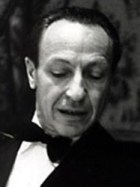
    Machlup, FritzFritz Machlup (at right), an economist, once said that if we didn't have a patent system it would be irresponsible to recommend one, but since we have one, it would be irresponsible to abolish it.  An Economic Review of the Patent System (Subcomm. on Patents, Trademarks, and Copyrights of the S. Comm. on the Judiciary, Study No. 15, 85th Cong., 2d Sess. (Comm. Print 1958)).  Today, we are in the interesting position of having many groups, from high tech companies and industry to non-governmental organizations, both foreign and domestic arguing for policies that would diminish if not abolish the patent system.  This is ironic, because the U.S. over the past thirty years has made the patent system more transparent, uniform and in harmony with other nations' patent systems, and both the economy and society have benefited.

    Which is not to say that the system is perfect — far from it.  As a human institution perfection is impossible.  But the motivations of many challenging the patent system should also be open to critical review, if only to establish that the alternatives, and the presumptions upon which they are built are in fact legitimate and entitled to the deference they frequently demand.

    These questions are important because we live in a deeply technological age.  The amount of innovation, in biology, chemistry, telecommunications, computing, and many other fields is unprecedented.  Innovation does not depend on patenting per se; particularly in the life sciences, people will innovate, and discover, and invent, regardless of what Lincoln called the "fuel of interest," because researchers (and, indeed, human beings generally) have a deep desire to understand how the world works, particularly our corner of it, and to alleviate disease when we can.  Where patenting comes in has been in commercialization, getting products to market, and doing so in a way that they are safe, effective, and with a minimum of significant side effects.

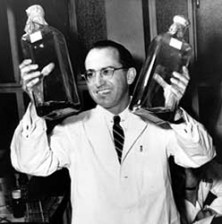
    Salk, JonasWe have achieved these societal benefits and safeguards by increasing the regulatory environment from the days when Jonas Salk (at left) developed his polio vaccine.  Salk famously did not patent his vaccine (not necessarily from altruism, there being serious doubts about whether prior art prevented patenting).  But Salk also did not need to endure the extensive regulatory burden required today (and, according to the book Patenting the Sun availed himself of test populations that would not be permitted today).  That is true in large part because Salk worked before the thalidomide disaster, which caused reform in how drugs were tested and increased their costs by requiring more extensive pre-market testing to ensure safety as well as efficacy.  In addition, as Richard Epstein has written, most of the low hanging fruit of pharmaceutical research has been plucked and drug development has increased in cost.  And these features of the current innovation landscape include not only the drugs themselves but the diseases they treat; we have moved from a past where simple bacterial infections were treated to developing drugs for the diseases of aging (cancer, diabetes, and Alzheimer's, and Parkinson's diseases) that are treated by drugs (biologic drugs) vastly more complex in structure and more difficult to produce.  All this has led to increased costs that invoke an increased need for patent exclusivity to ensure sufficient return on investment to justify those costs.

    MyriadIn addition, our age is characterized by innovation being harnessed not just by companies but by universities, whereby scientific discoveries are protected by patents and licensed to industry under the auspices of the Bayh-Dole Act rather than being expropriated by companies, foreign, or domestic.  This also increases costs and can result in reduced efficiency (economic and industrial), but also results in significant benefits to universities and the return on public investment.  For example, Myriad Genetics has paid $57 million in royalties to the University of Utah and other research institutions for licensing the patents on the BRCA breast and ovarian cancer tests, and those monies in large part have been reinvested by the universities to fund further research and the capital investment (in laboratory facilities, instruments as well as manpower) needed for that research.

    Part of the backlash against patents comes from political disagreements over the role of universities in this process.  Another part stems from high tech companies who view patents as tools that are used against them in litigation, either by smaller companies or companies that have licensed these patents from such small companies.  These companies generally do not use patents the way life sciences companies do, to protect their investment, bur rather as negotiating tools for obtaining cross licenses from competitors.  And some of that has to do with the differences in development costs and obsolescence timelines.  A drug can cost $1 billion to bring to market but has a long time to obsolescence; indeed, drug and other life sciences patents are frequently most valuable in the last few years of their term (which is one reason Myriad continues to sue alleged infringers of their cancer testing patents).  Computer and other high tech inventions have much shorter timelines (would you want to use a phone from 1995?) and lower development costs (perhaps as little as a bright 17 year old working on a computer in his garage).  These differences have been translated into political differences between life sciences companies that need patents for investment, and high tech companies that fight "patent wars" over cell phone technology on the business pages of the Wall Street Journal.  One size does not fit all.

    WTO logoAnother aspect of the patent challenge is internationally, particularly in developing countries.  In the mid-1990's, a part of the GATT treaty termed TRIPS was ratified by most countries around the world, mostly for the benefit of joining the World Trade Organization with concomitant reductions in tariffs between countries.  As part of these agreements, signatory countries had to agree to respect intellectual property rights, primarily as a way for pharmaceutical and biotech patenting to be available in countries like Brazil and India that had traditionally nor permitted such subject matter to be patented.  Unfortunately, these agreements did not take into account the justifiable concerns of developing countries over the cost of patented drugs, and the agreements began to have reduced effectiveness almost immediately.  First, while membership in the WTO was immediate, requirements to change an individual country's patent laws were delayed up to six years after signing.  Next, the Doha declaration was enacted by the WTO, which permitted member countries to impose compulsory licenses or otherwise ignore pharmaceutical patent rights for medical emergencies and other reasons, which reasons have expanded to include almost anything since the declaration's enactment.  This resulted in a trend in Brazil, India, South Africa, and other countries to impose such licenses, or to demand local "working" of patents, or otherwise reduce patent protection in these countries, until today the situation is pretty much the same as it was before TRIPS was enacted.

    In the U.S., a rising chorus of members of the IT community, academics, NGOs, courts, and government officials concerned about the high cost of drugs and patent litigation has changed the zeitgeist, with the common perception being that the patent system is broken.  The culprits are putatively the PTO and the Federal Circuit, where the PTO allegedly was granting too many "bad" patents and the Federal Circuit culpable for upholding them.  This political climate resulted in a large-scale reduction in patents in the middle part of the past decade and increased Supreme Court review of Federal Circuit decisions.  While the rate of patent grant has returned to its historical averages lately (about 60%) the refusal to grant patents created a balloon of pending applications, and the sequester and other budgetary limitations have blunted the Office's ability to address the backlog effectively.

    Supreme Court Building #1There has also been a large amount of skepticism by the Supreme Court about both the Office and the Federal Circuit.  Justice Kagan has termed the PTO "patent happy" and Justice Scalia has called the concept of obviousness "gobbledegook."  Supreme Court review of Federal Circuit decisions has clarified the law in many respects, but recent decisions regarding diagnostic method patents and patents on natural products have the potential to reduce patenting in the life sciences for largely philosophical reasons not aligned with the practical realities of commercialization.

    Concerns about cost and access motivate much of the debate.  But it is important to recognize that some of this debate stems from a classic contest between producers and consumers of technology:  consumers (physicians and patients, and increasingly payors like insurance companies and governments) always want technology quicker, cheaper, easier, and this can be and frequently is contrary to the reality of providing drugs and diagnostics that are efficacious and reliable.

    The fact is that technology has three ways to be commercialized:  supported by patenting, wherein investors produce new industries as the result in "creative destruction" of old paradigms.  Or by corporate expropriation, where inventions are taken by large corporations and then brought to market under circumstances where creative destruction is prevented or retarded by established products.  Or by trade secret protection, where efforts are made to increase the difficulty in reverse engineering a product and the inability to patent results in non-disclosure of the invention (with concomitant reduction in the public's body of knowledge).

    We also need to be cognizant of myths that arise around efforts to disparage patents.  Myriad again provides a good illustration.  For example, the ACLU and their friends promulgated the myth that patents impede basic research.  This is a myth started by speculation in an article by Rebecca Eisenberg and Mike Heller published in 1998 in Science and entitled "Can Patents Deter Innovation?  The Anticommons in Biomedical Research" containing the concept that there could be a "tragedy of the anti-commons."  As it has turned out, no tragedy has ariseng — the overwhelming weight of the evidence is that patenting does not affect basic genetic research.  In the case of the BRCA genes, for example, there have been more than 10,000 scientific journal articles published since the BRCA gene patents were granted.  There is simply no empirical evidence of tragedy, from the BRCA gene patents or any others.

    Another myth is that gene patents mean someone "owns" you.  First, the 13th Amendment prevents a property ownership right in a human being, so that possibility is eliminated.  But moreover, claims to genes are specific to sequence, and the chance that any individual's genes are identical to any other is very small, due to natural, neutral variation in the population.  Gene patents don't impede anyone's right to their own genetic information, because the information isn't patented.  Methods for determining that information may be, but the information itself is not.

    There needs to be a recognition once again of some fundamental truths behind innovation and the role of the patent system in increasing innovation.  First, patents are limited in term — like a bottle of milk they have an expiration date and when they expire the invention is freely available to anyone.  Second, patents require disclosure, in many cases greater disclosure than a scientific paper.  Two examples illustrate this point.  In the Nature paper disclosing the analytical technique of sodium dodecyl sulfate-polyacrylamide gel electrophoresis (SDS-PAGE), which illustrated the process by separating the dozen or so proteins that made up a bacterial virus, and in the legend of the figure showing this separation was the footnote that said that details of the SDS-PAGE technique were in a manuscript in preparation to be published later.  Such a paper was never published; while there were later book chapters and other detailed descriptions of the technique they were by others who had adopted the technique, and in addition to being secondary from the scientist who "invented" it, these references were much later in time after the publication announcing the technique.  In contrast, a patent on that method would have required a written description of how to practice the invention in such "full, clear, concise, and exact" terms that could be understood by the person skilled in the relevant art, as well as describing the usefulness of the technique.

    As another example, when the results of the Human Genome Project were published, many in the scientific community were content with publication of a sequence and a description of how similar in sequence the "new" gene was to other known genes.  That was not good enough to get a patent, however.  The PTO required that an applicant disclose at least one specific, substantial, and credible utility for the protein encoded by the new gene, which resulted in immediate, practical disclosure.  This meant that when those patents expired the public would be in possession not only of the gene but would know what the gene was useful for, and arguably accelerated the speed with which the fruits of the HGP were appreciated.

    Third, the consequence of reducing the effectiveness of patents will be that innovation will not suffer but commercialization will.  Myriad once again provides an example.  Myriad has stated in court papers that it spent about $500 million to bring its BRCA tests to market, after it had identified the genes.  These monies were needed to establish a laboratory with the proper controls that minimized false results, something no one has ever accused Myriad of producing.  (For those who point to the absence of "second opinion" testing, there is no reason to think that false positives are more frequent than false negatives, which means an error-prone test would produce results indicating the absence of a BRCA mutation in women having it, and these women should have developed BRCA-specific breast or ovarian cancer.  There are no reports that this has happened, suggesting that Myriad established sufficiently robust procedures, which we can expect were part of its investment costs.)  Myriad also incurred the costs of informing ob/gyn physicians of the test and convincing them it was useful, at a time when genetic diagnostic testing was still considered experimental and where the type of genetic determinants for cancer like BRCA were considered extremely rare.  In addition, Myriad needed to set up a network of genetic counselors, since the diagnosis that a woman carried a BRCA mutation, in a family context of breast cancer in mothers, grandmothers, aunts, etc. was understandably terrifying.  Myriad also needed to convince public and private payors that its tests were reliable and effective and, most importantly, could justify the cost of the test by the savings resulting from reduction in breast cancer frequency.

    Myriad did none of this solely from altruism, of course.  But Iit is unlikely that the number of women receiving the test would have been significantly higher if the Utah researchers had made the test freely available, if only for reasons of demographics.  If provided by university hospitals, for example, women in New York, or Chicago, or Boston, or San Francisco certainly would have been able to get the test.  But it is much less likely that women in rural Appalachia, or the Four Corners region of the southwest, or in Idaho would have had access to the test.  These are economic realities that have had no place in the public debate over gene patenting.

    There is also a risk in giving courts the power to subjectively decide the proper "balance" between too much and too little patents, particularly on categorical grounds like subject matter eligibility.  Courts are particularly unlikely to have the scientific understanding to apply the law to new technologies; that's the Patent Office's job, and the law gives the agency a broad scope ("anything under the sun made by man").  There is no way a priori to decide what "too much" patenting is, and the question is fraught with the politics of competition:  of course a company might think that its competitor's patents are "bad" because they block the company from commercializing a product (disregarding the potential for licensing that the patent system intends to promote).  The Supreme Court has recently given the impression that they have a Goldilocks role in deciding the proper balance of patent eligibility.  This thinking is illustrated by the fact that, until now, there was not Supreme Court precedent supporting a "product of nature" ban on patent eligibility.  One of the consequences of the Myriad decision is that it has put into question the patent eligibility of claims to natural products that are isolated and otherwise unchanged.  The logical fallacy of this decision can be appreciated by this hypothetical:  if a scientist discovered a protein produced in a human that regulated blood pressure, the closer the drug developed by the scientist was to the natural protein (and hence the more like the native molecule the drug was, in turn being closest to the protein's natural properties of half-life, potency, etc.) the less patent eligible the molecule would be.  That can't be right.

    Think about the following inventions and whether they should be patent eligible (and why):

    • Isolated chemical compound from crude oil useful as a lubricant
    • Isolated antibiotic produced by bacteria
    • Isolated chemical compound from a plant useful as a drug
    • Isolated protein from an animal useful to cure/ameliorate human disease
    • Isolated cucumber gene that extends freshness
    • Isolated Human gene (erythropoietin)

    Deciding that some or none of these inventions deserve patent protection has consequences, and there is a need to balance any philosophical bases for excluding any of them from patent eligibility with the practical effects of doing so.

    We live in a technological age, and part of the success of that age stems from the capacity of patent exclusivity to encourage investment and bring products to market.  For the past thirty years this has created a society of economic growth and the capability to better diagnose and treat disease unknown in the past.  Patents are not the only reason but they have played their part.  In our efforts to address patenting's shortcomings, it is important that we do not overly diminish their proper role.

  • Historically, it was widely thought that it was possible to obtain a separate supplementary protection certificates (SPC) for each product covered by a patent.  However, in its judgment in Medeva in 2011, the Court of Justice of the European Union (CJEU) held that where a patent protects a product, only one SPC may be granted per patent.  This judgement caused uncertainty and controversy particularly as to whether multiple SPCs could be granted on a patent which covers multiple products.

    The CJEU have recently issued a judgement in Georgetown University v Dutch Patent Office which attempts to clarify these issues.

    Georgetown LogoGeorgetown University is the proprietor of European Patent 0 647 140, which is directed to 'Papillomavirus vaccines'.  The patent included separate claims to various types of recombinant L1 protein of human papillomavirus (HPV).  Having already obtained two SPCs based on this patent, Georgetown filed a further application for an SPC directed to recombinant L1 protein HPV type 16.

    The application for the SPC was refused by the Dutch Patent Office on several grounds including that the SPC regulation prohibited the grant of more than one SPC per patent regardless of the number of products claimed in the patent.  This case was appealed to the District Court of The Hague which referred five questions to the CJEU seeking guidance on whether multiple SPCs can be granted on a basic patent which covers multiple products.

    In answer to the first question, which related to whether the SPC regulation precludes the proprietor of the basic patent being issued a certificate for each of the products protected, the CJEU confirmed the Medeva decision that only one SPC may be granted per patent.

    The second and third questions asked whether an Applicant having several SPC applications pending at the same time on the same patent can choose which one takes priority, or whether the national authorities take that decision.  Clearly it would be desirable for the patentee to be able to make this choice and the CJEU held that it should be the applicant who decides which of his SPC applications proceeds.  However, in the absence of the patentee making a choice, it was noted that it is up to the national authorities to resolve the matter under national law.

    The remaining questions related to whether the holder of a granted SPC may surrender it with retroactive effect so that he may pursue an alternative SPC on the same patent.  While the SPC regulation does include a provision for surrender of SPC rights, the CJEU found that such surrender is unlikely to have a retroactive effect and thus the earlier right would still have existed at the time the subsequent application was filed.  The CJEU reasoned that if the SPC holder could retroactively cancel the SPC to substitute it with an SPC of different subject-matter or duration, the legal certainty of the SPC Regulation would be compromised.

    It is therefore imperative that patentees give careful thought as to which product they would like to be the subject of an SPC before any application is filed.

    This report comes from European Patent Attorneys at WP Thompson & Co., 55 Drury Lane, London UK.  Further details and commentary can be obtained from Gill Smaggasgale, a partner at the firm.

  • By Andrew Williams

    GaldermaWhen does a prior art disclosure of a concentration range of a medicament render obvious the use of a species that falls within that range, when that same use was also known in the prior art?  After all, common sense should dictate that if the same drug were used in the prior art at a different concentration, and the claimed concentration was part of a previously disclosed concentration range, than the claimed use at that concentration should have been obvious.  The Federal Circuit came to such a conclusion last week in Galderma Laboratories, L.P. v. Tolmar, Inc., when it determined that if the claimed concentration falls within a prior-art disclosed range, the burden shifts to the patentee to present evidence of non-obviousness.  However, Judge Newman, in dissent, complained that the majority distorted the burdens of proof and production, and ignored the presumption of validity.  She warned that this opinion forecloses patentability for a large number of improvement patents, which will lead to disincentives to the developments of such improvements.  "The losers," she concludes "are those afflicted with disease."

    This was a Hatch-Waxman case involving Galderma's Differin® Gel, 0.3% drug product, which contains 0.3% by weight of the retinoid adapalene as the active ingredient, and which was approved for the treatment of acne.  This composition was covered by several Orange Book listed patents, including U.S. Patent Nos. 7,579,377, 7,373,181, 7,834,060, 7,838,558 ("the '558 patent"), and 7,868,044.  Claim 5 of the '558 patent is representative:

    5.  A topically applicable pharmaceutical composition comprising 0.3% by weight of 6-[3-(1-adamantyl)-4-methoxyphenyl]-2-naphthanoic acid (adapalene) relative to the total weight of the composition, effective for the treatment of acne, formulated into a topically applicable, pharmaceutically acceptable medium therefor, said composition being in the form of a topically applicable, pharmaceutically acceptable aqueous gel comprising at least one carbomer gelling agent and wherein the sole anti-acne ingredient is adapalene.

    Before the invention that led to this drug product, Galderma marketed and sold Differin® 0.1% Gel.  In fact, the only difference between these two formulations, other than the concentration of the active ingredient, was the use of "poloxamer 182" in the prior art composition, and "poloxamer 184" in the 0.3% product.  Galderma had asserted that this newly claimed composition was not obvious because a dose-dependent increase in side-effects would have a taught away from the claimed concentration.  This is because the prior art had shown that higher concentrations of adapalene were unduly irritative to acne-ridden skin.

    TolmarTolmar filed an Abbreviated New Drug Application ("ANDA") seeking approval to market a generic version of this composition.  In turn, Galderma sued Tolmar in the United States District Court for the District of New Jersey.  The lower court ruled against Tolmar after a bench trial on the merits.  The only issue appealed by Tolmar was whether the asserted claims were obvious because they claimed "nothing more than the use of an old compound for a known purpose in a concentration that falls within a range disclosed in the prior art as preferred for that purpose."

    One of the primary explanations provided for the Court's reversal of the lower court holding was a perceived misallocation of the burdens between the parties.  As the basis of its obviousness rejection, Tolmar cited to three pieces of prior art, two patents by Shroot, U.S. Patent No. 4,717,720 ("the Shroot '720 patent) and U.S. Reissue No. RE34,440 ("the Shroot '440 patent), and the Differin® 0.1% Gel Data Sheet.  According to the Federal Circuit, the District Court had improperly "framed the obviousness inquiry as requiring Tolmar to provide motivation in the prior art to triple the concentration of adapalene from 0.1% to 0.3%."  Instead, the Federal Circuit rephrased the question as "whether there was motivation to select the claimed 0.3% adapalene composition in the disclosed range."  As a result, in cases like this (where the claimed invention falls within a range disclosed in the prior art), "the burden of production falls upon the patentee to come forward with evidence that (1) the prior art taught away from the claimed invention; (2) there were new and unexpected results relative to the prior art; or (3) there are other pertinent secondary considerations."  In dissent, Judge Newman thought the Court was ignoring the presumption of validity of the patents-in-suit, and instead was presuming "that the prior art established invalidity," and placing "the burden of establishing patentability based on 'secondary considerations'" on the patentee.

    Teaching Away

    In finding that the patentee could not establish that prior art taught away from the claimed invention, the Court accepted the lower court's factual findings.  Specifically, the lower court had found that the prior art taught away from a concentration of 0.3% because of a dose-dependent increase in the side-effects of the drug.  The prior art and the expert testimony had shown that when increasing from 0.03% to 0.1%, there was increased irritation on the faces of patients with acne, such that it would have taught away from tripling the concentration of adapalene to 0.3%.  In addition, the lower court had found that the prior art taught the optimal concentration of adapalene for the treatment of acne was 0.1%.  The Federal Circuit, instead, explained that a reference does not teach away if it merely expressed a general preference, but did "not criticize, discredit, or otherwise discourage investigation into the invention claimed," citing Depuy Spine, Inc. v. Medtronic Sofamor Danek, Inc., 567 F.3d 1314 (Fed. Cir. 2009).  Because the art cited by the parties did not mention 0.3% adapalene compositions, it did not teach away from this concentration.

    Judge Newman pointed out, however, that the lower court had determined that the evidence as a whole had taught away from increasing the concentration of adapalene above 0.1%.  She meticulously walked through the art cited by the lower court.  For example, the Shroot patents were found to provide a broad disclosure regarding adapalene, but provided no motivation or suggestion to select 0.3% for the treatment of acne.  An article by Verschoore (1991) had shown the results of a Phase II clinical trial in which adapalene was tested on the faces of acne patients.  This trial showed the increase in irritation in moving from 0.03% to 0.1%, and the expert testimony had suggested that those skilled in the art would understand that the irritation would significantly increase as the concentration increased.  These findings were confirmed in a paper by Alirezai (1996), in which it was found that despite no patients treated with 0.03% adapalene having had "severe burning," 13% of patients treated with 0.1% adapalene did.  Finally, the Allec (1997) article discussed 0.1% as being the optimal concentration of adapalene, balancing efficacy with safety and potential for compliance (patients tend not to be compliant when their skin is burning).  Judge Newman pointed out that the other articles cited by the majority as suggesting that concentrations above 0.1% adapalene might be well tolerated either involved healthy patients, the use on less sensitive body parts, or with patients suffering from skin problems that does not make the skin as sensitive as acne.  Judge Newman complained that the Court did not generally disagree with the findings of the lower court, and yet it substituted its own judgment for that of the lower court's without considering the prior art as a whole.

    Unexpected Results

    The lower court had found that it would have been unexpected that 0.3% adapalene would have been comparably tolerable as the 0.1% concentration in view of the prior art.  However, the Federal Circuit again criticized this approach, in this case because the unexpected nature of the results should be "'different in kind and not merely in degree from the results of the prior art,'" citing Iron Grip Barbell Co. v. USA Sports, Inc., 392 F.3d 1317 (Fed. Cir. 2004).  The differences in percentage, the Court explained, are differences in degree, especially where the skilled artisan is capable of adjusting these percentages.  Judge Newman disagreed.  She pointed out that the District Court considered the issue, and concluded that a difference in degree occurs when an "invention is merely a continuation of a trend previously described in the prior art."  Instead, here, the invention achieved a difference in kind because it discontinued the trend that was seen from 0.03% to 0.1%.  Judge Newman did not believe that clear error had been shown, and chastised the panel majority for discounting or ignoring the lower court's finding.

    Commercial Success

    It seems in almost every Hatch–Waxman case that commercial success can be assumed, because otherwise, why would the ANDA filer seek to market a generic version of the drug.  The panel majority dismissed such an argument, however, because of the lack of nexus with the patent claims.  In perhaps the strongest statement on the subject that the Court has made, the Federal Circuit stated that "[t]he mere fact that generic pharmaceutical companies seek approval to market a generic version of a drug, without more, is not evidence of commercial success that speaks to the non-obviousness of patent claims."  Apparently, all a generic company needs to do is make a profit selling a generic version of the drug.  However, in this case, Tolmar could have chosen to seek approval of only the 0.1% version of the drug.  Instead, by seeking approval of the 0.3% adapalene gel, it must have recognized its success.

    The Federal Circuit also did not think that commercial success was demonstrated for the patented invention because the 0.3% adapalene gel was already blocked by the Shroot patents.  The assumption that makes this secondary consideration work is that if a commercially successful invention was obvious, it would have been brought to the market sooner.  However, when there are other barriers to entry, such as blocking patents, this logic breaks down.  Therefore, as the Federal Circuit put it, in such a case as this, the commercial success is of minimal probative value.  Judge Newman disagreed.  She pointed out that the Differin® 0.3% gel quickly gained market share, despite the fact that the overall market was declining.  Customers preferred this version over the 0.1% gel, she observed, which is exactly why Tolmar is seeking to market it.  However, Judge Newman appears to ignore the majority opinion's criticism regarding blocking patents.  It may be true that the market preferred the 0.3% gel, but no one other than Galderma could have sold it at the time.

    In the end, the majority did not find that Galderma had presented evidence sufficient to demonstrate that the claimed concentration not obvious.  Therefore, the Court reversed the finding of validity.  Judge Newman, instead, would have focused on the presumption of validity and the allocation of the burden of production and proof, and would therefore have affirmed the lower court's validity determination.

    Galderma Laboratories, L.P. v. Tolmar, Inc. (Fed. Cir. 2013)
    Panel: Circuit Judges Newman, Bryson, and Prost
    Opinion for the court by Circuit Judge Prost; dissenting opinion by Circuit Judge Newman

  • By Donald Zuhn

    FedReg CoverOn October 21, the U.S. Patent and Trademark Office issued a final rule (78 Fed. Reg. 62368) revising the rules of practice pursuant to title II of the Patent Law Treaties Implementation Act of 2012 (PLTIA), which amends U.S. Patent Law to implement the provisions of the Patent Law Treaty (PLT).  The final rule takes effect on Wednesday, December 18.  With the exception to the changes to 37 C.F.R. §§ 1.16, 1.53(b) and (c), 1.57(a), 1.76(b)(3), and 1.81, which apply to patent applications filed under 35 U.S.C. § 111 on or after December 18, 2013; the changes to 37 C.F.R. §§ 1.53(f) and 1.495, which apply to patent applications filed under 35 U.S.C. §§ 111(a) or 363 on or after September 16, 2012; and the changes to 37 C.F.R. §§ 1.55(f) and 37 CFR 1.704, which apply to patent applications filed under 35 U.S.C. § 111 on or after December 18, 2013, and international patent applications in which the national stage commenced under 35 U.S.C. § 371 on or after December 18, 2013, all other changes apply to any patent application filed before, on, or after December 18, 2013, to any patent resulting from an application filed before, on, or after December 18, 2013, and to any reexamination proceeding and any request for supplemental examination filed before, on, or after December 18, 2013.  However, the notice indicates that "the changes to Office practices do not affect the requirements for replies to Office notices and actions issued prior to December 18, 2013."  The specific changes to the rules can be found on pages 62393-62409 of the 42-page Federal Register notice containing the final rule.

    While the PLT was concluded on June 1, 2000, and entered into force (outside the U.S.) on April 28, 2005, the United States Senate did not ratify the PLT until December 7, 2007.  Because the PLT is not a self-executing treaty, the PLT did not enter into force in the United States until legislation implementing the PLT (title II of the PLTIA), and amending the provisions of Title 35, was enacted on December 18, 2012 (with the amendments made by the PLTIA taking effect one year after enactment).

    As a result of U.S. ratification of the PLT and enactment of the PLTIA, the rules of practice are being revised to:

    • Change the filing date requirements for a patent application,

    • Allow for the restoration of patent rights via the revival of abandoned applications and acceptance of delayed maintenance fee payments, and

    • Permit the restoration of the right of priority to a foreign application or the benefit of a provisional application in a subsequent application filed within two months of the expiration of the twelve-month period for filing the subsequent application.

    In response to the changes resulting from the PLT and PLTIA, the Office is also revising the patent term adjustment provisions to provide for a reduction of any patent term adjustment if an application is not in condition for examination within eight months of its filing date or date of commencement of national stage in an international application.

    USPTO SealWith respect to the filing date requirements, the final rule notes that a claim will no longer be required for a nonprovisional application (other than for a design patent) to be entitled to a filing date.  Applicants will also be allowed to file a nonprovisional application "by reference" to a previously filed application in lieu of filing the specification and drawings.  Applicants who file a nonprovisional application without a claim or by reference to a previously filed application will receive a notice of the missing application components and be given a period of time within which to supply at least one claim or a copy of the specification and drawings of the previously filed application.  The Office notes that "the ability to file an application without a claim or drawing should be viewed as a safeguard against the loss of a filing date due to a technicality and not as a best practice."  Applicants should also note that PLT does not apply to design applications, so a design application must contain a claim and any required drawings to be entitled to a filing date.  Nevertheless, the notice states that "[t]he changes in the PLTIA and this final rule to implement the PLT . . . are applicable to design, plant, provisional, and reissue applications, except that PLTIA 35 U.S.C. 171 and 37 CFR 1.53(b) as adopted in this final rule require that a design application contain a claim and any required drawings to be entitled to a filing date."

    In the final rule, the Office also indicates that PLT Article 6 standardizes application format requirements by prohibiting PLT signatories from imposing form or content requirements that are different from or in addition to the form and content requirements provided for in the PCT, or permitted by the PCT for international applications during national processing or examination, or as prescribed in the PLT Regulations.  The Office points out that the U.S. has taken a reservation with respect to any requirement relating to the unity of invention standard, and notes that the Office is in the process of studying the changes to the patent statute, regulations, examination practices, and filing fees that would be necessary to move from the "independent and distinct" restriction standard of 35 U.S.C. § 121 to the "unity of invention" standard of PCT Rule 13.

    With respect to the revival of abandoned applications and acceptance of delayed maintenance fee payments, the final rule indicates that the PLTIA eliminates the provisions of U.S. Patent Law for revival or acceptance on the basis of "unavoidable" delay, retaining only the basis of "unintentional" delay.  The twenty-four month time limit for making an unintentionally delayed maintenance fee payment has also been deleted by the PLTIA.

    With respect to the restoration of the right of priority, the final rule notes that if a subsequent application is filed after the expiration of the twelve-month period set forth in 35 U.S.C. § 119(a) or (e), but within two months from the expiration of the twelve-month period, the right of priority in the subsequent application may be restored upon petition and payment of the applicable fee if the delay in filing the subsequent application within the twelve-month period was unintentional.

    Finally, the final rule indicates that the patent term adjustment provisions are being revised to provide for a reduction of any patent term adjustment if an application is not in condition for examination within eight months of its filing date or date of commencement of national stage in an international application.  The notice explains that:

    The PLT and PLTIA provide applicants with additional opportunities to delay the examination process (e.g., the ability to file an application without any claims and to file an application merely by reference to a previously filed application).  This change to the patent term adjustment rules is to avoid the situation in which an applicant obtains patent term adjustment because the applicant takes advantage of the additional opportunities to delay the examination process provided by the PLT and PLTIA.

    As for the meaning of phrase "condition for examination," the notice states that:

    Section 1.704(f) as adopted in this final rule provides that an application filed under 35 U.S.C. 111(a) is in condition for examination when the application includes a specification, including at least one claim and an abstract (§ 1.72(b)), and has papers in compliance with § 1.52, drawings in compliance with § 1.84, any English translation required by § 1.52(d) or § 1.57(a), a sequence listing in compliance with §§ 1.821 through 1.825 (if applicable), the inventor’s oath or declaration or application data sheet containing the information specified in § 1.63(b), the basic filing fee (§ 1.16(a) or § 1.16(c)), the search fee (§ 1.16(k) or § 1.16(m)), the examination fee (§ 1.16(o) or § 1.16(q)), any certified copy of the previously filed application required by § 1.57(a), and any application size fee required by the Office under § 1.16(s). Section 1.704(f) as adopted in this final rule provides that an international application is in condition for examination when the application has entered the national stage as defined in § 1.491(b), and includes a specification, including at least one claim and an abstract (§ 1.72(b)), and has papers in compliance with § 1.52, drawings in compliance with § 1.84, a sequence listing in compliance with §§ 1.821 through 1.825 (if applicable), the inventor’s oath or declaration or application data sheet containing the information specified in § 1.63(b), the search fee (§ 1.492(b)), the examination fee (§ 1.492(c)), and any application size fee required by the Office under § 1.492(j).

    Among the miscellaneous changes to the rules of practice resulting from the final rule are:

    • A person may give a power of attorney that is not specific to an application or patent, similar to the General Power of Attorney used in PCT practice (general power of attorney), and a practitioner having authority from such person may submit a copy of the general power of attorney in any application or patent of that person.

    • The PLT provides that extensions of time must not be for less than two months from the date of the expiration of the unextended time period.  The notice indicates that shorter one-month periods will still be used in the pre-appeal brief conference program and the pre-first Office action on the merits interview program, but that Office is revising the Accelerated Examination program to provide that Office actions (other than a notice of allowance) will set a reply of at least two months.

    • The charge for filing a petition for the revival of an abandoned application for a patent, delayed payment of the fee for issuing each patent, delayed response by the patent owner in any reexamination proceeding, delayed payment of the fee for maintaining a patent in force, delayed submission of a priority or benefit claim, or extension of the twelve-month period for filing a subsequent application will be $1,700.

    • The Director may refund any part of the above fee in exceptional circumstances as determined by the Director (e.g., widespread disaster, such as a hurricane, earthquake, or flood).

    • Because the PLTIA changes 35 U.S.C. § 151 such that the Office will proceed to issue a patent when the applicant pays the issue and publication fees specified in the notice of allowance, regardless of the issue fee and/or publication fee in effect on the date the sum specified in the notice of allowance is paid, the final rule notes that for notices of allowance mailed between October 1, 2013, and December 31, 2013, applicants may pay the lower of: (1) the issue fee plus publication fee in effect on the date the notice of allowance is mailed; or (2) the issue and publication fee in effect on the date the issue and publication fee is paid in order to take advantage of the reduced issue and publication fee that goes into effect on January 1, 2014.

    In response to the Office's notice of proposed rulemaking published in April (see "USPTO Proposes Rules Changes to Implement Patent Law Treaty"), the Office received nine written submissions containing comments on the proposal.  The comments and the Office's responses to those comments can be found on pages 62386-62391 of the notice.  In its responses, the Office clarified the meaning of § 1.704(f) by noting that:

    Section 1.704(f) as adopted in this final rule provides that an application shall be considered as having papers in compliance with § 1.52, drawings (if any) in compliance with § 1.84, and a sequence listing in compliance with § 1.821 through § 1.825 (if applicable) for purposes of § 1.704(f) on the filing date of the latest reply (if any) correcting the papers, drawings, or sequence listing that is prior to the date of mailing of either an action under 35 U.S.C. 132 or a notice of allowance under 35 U.S.C. 151, whichever occurs first. Thus, the patent term adjustment reduction provision of § 1.704(c)(12) would not apply to a correction of the application papers, drawings, or sequence listing that is required by an examiner (i.e., would not apply to corrections that take place after the date of mailing of either an action under 35 U.S.C. 132 or a notice of allowance under 35 U.S.C. 151).

  •         By Sherri Oslick

    Gavel About Court Report:  Each week we will report briefly on recently filed biotech and pharma cases.

    Pfizer Inc. et al. v. Hetero USA Inc. et al.
    1:13-cv-02021; filed December 11, 2013 in the District Court of Delaware

    • Plaintiffs: Pfizer Inc.; UCB Pharma GmbH
    • Defendants: Hetero USA Inc.; Hetero Labs Ltd.

    Pfizer Inc. et al. v. Apotex Inc.
    1:13-cv-02022; filed December 11, 2013 in the District Court of Delaware

    • Plaintiffs: Pfizer Inc.; UCB Pharma GmbH
    • Defendant: Apotex Inc.

    The complaints in these cases are substantially identical.  Infringement of U.S. Patent Nos. 6,858,650 ("Stable Salts of Novel Derivatives of 3,3-Diphenylpropylamines," issued February 22, 2005), 7,384,980 ("Derivatives of 3,3-Diphenylpropylamines," issued June 10, 2008), 7,855,230 (same title, issued December 21, 2010), 7,985,772 (same title, issued July 26, 2011), and 8,338,478 (same title, issued December 25, 2012) following a Paragraph IV certification as part of defendants’ filing of an ANDA to manufacture a generic version of Pfizer's Toviaz® (fesoterodine fumarate, used to treat the symptoms of overactive bladder).  View the Delaware Hetero complaint here.

    MUSC Foundation for Research Development et al. v. AstraZeneca Pharmaceuticals LP
    2:13-cv-03438; filed December 9, 2013 in the District of South Carolina

    • Plaintiffs:  MUSC Foundation for Research Development; Charleston Medical Therapeutics Inc.
    • Defendant:  AstraZeneca Pharmaceuticals LP

    Infringement of U.S. Patent No. 8,507,219 (“Use of Statins to Inhibit Inflammation and Vascular Disease,” issued August 13, 2013) based on AstraZeneca’s manufacture and sale of its Crestor® product (rosuvastatin calcium, used to treat high cholesterol). View the complaint here.

    Reckitt Benckiser Pharmaceuticals Inc. et al. v. Alvogen Pine Brook Inc. et al.
    1:13-cv-02003; filed December 6, 2013 in the District Court of Delaware

    • Plaintiffs:  Reckitt Benckiser Pharmaceuticals Inc.; RB Pharmaceuticals Limited; MonoSol Rx LLC
    • Defendants:  Alvogen Pine Brook Inc.; Alvogen Group Inc.

    Infringement of U.S. Patent Nos. 8,475,832 ("Sublingual and Buccal Film Compositions," issued July 2, 2013) and 8,017,150 ("Polyethylene Oxide-Based Films and Drug Delivery Systems Made Therefrom," issued on September 13, 2011) following a Paragraph IV certification as part of Alvogen’s filing of an ANDA to manufacture a generic version of Reckitt Benckiser's Suboxone® (buprenorphine hydrochloride and naloxone hydrochloride sublingual film, used for the maintenance treatment of opioid dependence).  View the complaint here.


    Teva Pharmaceuticals USA Inc. et al. v. Forest Laboratories Inc.
    1:13-cv-02002; filed December 5, 2013 in the District Court of Delaware

    • Plaintiffs:  Teva Pharmaceuticals USA Inc.; Mayne Pharma International Pty Ltd.
    • Defendant:  Forest Laboratories Inc.

    Infringement of U.S. Patent No. 6,194,000 (“Analgesic Immediate and Controlled Release Pharmaceutical Composition,” issued February 27, 2001) based on Forest’s manufacture and sale of its Namenda XR® (memantine hydrochloride, used for the treatment of moderate to severe dementia of the Alzheimer's type).  View the complaint here.

    Endo Pharmaceuticals Inc. v. Ranbaxy Laboratories Ltd. et al.
    1:13-cv-08597; filed December 3, 2013 in the Southern District of New York

    • Plaintiff:  Endo Pharmaceuticals Inc.
    • Defendants:  Ranbaxy Laboratories Ltd.; Ranbaxy Inc.; Ranbaxy Pharmaceuticals Inc.

    Infringement of U.S. Patent Nos. 7,851,482 ("Method for Making Analgesics," issued December 14, 2010), 8,309,122 ("Oxymorphone Controlled Release Formulations," issued November 13, 2012), and 8,329,216 (same title, issued December 11, 2012) following a Paragraph IV certification as part of Ranbaxy’s filing of an ANDA to manufacture a generic version of Endo's Opana® ER CRF (oxymorphone hydrochloride, crush-resistant formulation, used to treat moderate to severe pain in patients requiring continuous, around-the-clock opioid treatment for an extended period of time).  View the complaint here.

    Biogen Idec MA Inc. v. Japanese Foundation for Cancer Research et al.
    1:13-cv-01489; filed December 3, 2013 in the Eastern District of Virginia

    • Plaintiff:  Biogen Idec MA Inc.
    • Defendants:  Japanese Foundation for Cancer Research; Kyowa Hakko Kirin Co., Ltd.; Toray Industries, Inc.; Bayer Pharma AG

    Review of the decision of the Patent Trial and Appeal Board awarding priority of invention to the Japanese Foundation for Cancer Research in the interference between U.S. Patent Application No. 08/253,843 ("DNA Sequences, Recombinant DNA Molecules and Processes for Producing Human Fibroblast Interferon-like Polypeptides," filed June 3, 1994), assigned to Biogen Idec and U.S. Patent Application No. 08/463,757 (filed June 5, 1995), assigned to Japanese Foundation for Cancer Research.  View the complaint here.

  • CalendarDecember 16, 2013 – "Means-Plus-Function Patent Claims After the AIA — Assessing Benefits and Risks, Surviving AIA's PGRs, IPRs and Reissue" (Strafford) – 1:00 to 2:30 pm (EST)

    January 8-12, 2014 – National CLE Conference (Law Education Institute, Inc.) – Vail, CO

    January 21, 2014 – "Top Patent Law Stories of 2013" (McDonnell Boehnen Hulbert & Berghoff LLP) – 10:00 am to 11:15 am (CT)

    January 22-23, 2014 – Patent Reform*** (American Conference Institute) – New York, NY

    March 5-7, 2014 – Advanced Patent Law Seminars (Chisum Patent Academy) – Cincinnati, OH

    August 13-15, 2014 – Advanced Patent Law Seminars (Chisum Patent Academy) - Seattle, WA

    August 18-20, 2014 – Advanced Patent Law Seminars (Chisum Patent Academy) - Seattle, WA

    ***Patent Docs is a media partner of this conference or CLE

  • By Donald Zuhn

    Brookings InstitutionA paper released by the Center for Technology Innovation at the Brookings Institution asserts that by relying on a technology transfer model based on patent licensing, only a few universities have been able to generate significant revenues, and in fact, most university technology transfer offices do not generate enough income to even cover their operating expenses ("University Start-Ups: Critical for Improving Technology Transfer").  The paper, authored by Brookings fellow Walter D. Valdivia, instead favors a new model of technology transfer involving the creation of incentives and organizational capacity within universities to support the entrepreneurial efforts of faculty.  The paper also proposes an expansion of funding for the Small Business Technology Transfer (STTR) program designating funds for university start-ups, Congressional authorization of a patent use exemption for non-profit research organizations for the purpose of exclusive experimental use, and that the executive branch empower federal agencies to use march-in rights provided under the Bayh-Dole Act to extend non-exclusive licenses for research tool patents that have been subjected to pricing excesses.

    The paper explains that the Bayh-Dole Act created a uniform rule of patent ownership which made its transfer administratively efficient, and that to implement this policy, universities created small bureaucracies on their campuses — technology transfer offices (TTOs) — to manage their intellectual property.  While only 30 universities had TTOs in 1979, the paper notes that two decades later the number of TTOs had grown to 174.  Despite the rapid increase in their numbers, only a few TTOs raised significant income licensing their patents.  As the paper points out, the top 5% of revenue-generating TTOs (8 universities) in 2012 collected 50% of the total licensing income of the university system, and the top 10% (16 universities) collected nearly three-quarters of the system's income.  Moreover, because the top earning TTOs rely on blockbuster patents to generate licensing revenue, not surprisingly, the paper reports that the highest earners have become a select club with a stable membership.  In particular, only 37 universities have been able to reach the top 20 of licensing revenue in any given year over the last decade (as shown in Table 1 from paper; click on image to enlarge):

    Table 1
    Because universities generally split licensing revenue equally among faculty-inventors, the departments or labs of the faculty-inventors, and the university, universities collect only one third of the licensing revenues raised by their TTOs while shouldering all of their operating costs.  Thus, the paper states that "[i]t would be of little surprise to find out that the vast majority of university TTOs will function at an operational loss."  In fact, an Association of University Technology Managers (AUTM) study reported that 130 of 155 universities surveyed indicted that they did not generate enough licensing revenue in 2012 to cover the wages of their technology transfer staff and the legal costs of the patents they file.  The paper notes that over the past twenty years, 87% of TTOs did not break even.

    Instead of focusing on a technology transfer model based on patent licensing, which produces significant revenue for only a select group of universities, the paper proposes a new technology transfer model based on the creation of university start-ups.  The paper explains that:

    TTOs have realized that many university patents are embryonic applications and at that point only a small group of people, including the inventor, can understand the technical potential and even less the commercial potential.  It is there where TTOs have spotted a business opportunity because they can provide services to faculty-inventors who want to pursue their ideas into commercial products but have little experience in starting up a firm.  By "nurturing start-ups," TTOs can add the most economic value to an invention disclosure.

    And as the paper notes, universities are making great strides in start-up creation.  For example, while universities initiated 330 start-ups in 2003, the paper indicates that they initiated 647 in 2012.

    In addition to moving the focus from licensing patents to creating start-ups, the paper also proposes some additional changes that would help nurture the technology transfer start-up model.  Among these proposals is Congressional enactment of an experimental use exception.  As the paper suggests, such an exception would "allow[] universities, laboratories, and other non-profit research centers to use patents for research and teaching purposes without risking infringement and with clear limits on ulterior commercial uses."  The paper proposes that the exception extend to research conducted by start-ups up until the point that the start-up places a product in the market.

    The paper concludes by stating that "[b]y nurturing start-ups, universities are taking on a more robust approach to technology transfer as they implicitly challenge the view that patents are the only or even the most important catalyst of university-industry cooperation," and declaring that while "[t]he innovation deficit will be closed by a sustained government commitment to foster innovation . . . greater emphasis must be placed on fostering the entrepreneurial spirit of universities."