• CalendarMarch 5, 2014 – Ninth Annual Federal Judicial Panel (Intellectual Property Law Association of Chicago) – 5:30 to 7:30 pm (CT)

    March 5-7, 2014 – Advanced Patent Law Seminars (Chisum Patent Academy) – Cincinnati, OH

    March 6, 2014 – "Doctrine of Equivalents: Latest on Patent Prosecution and Litigation" (Intellectual Property Owners Association) – 2:00 to 3:00 pm (ET)

    March 12-13, 2014 – FDA Boot Camp*** (American Conference Institute) – New York, NY

    March 13, 2014 – "Patent Term Adjustments and Extensions: Leveraging Exelixis, Novartis, Other Decisions, and USPTO Rule Changes" (Strafford) – 1:00 to 2:30 pm (EST)

    March 20, 2014 – "Parallel Patent Proceedings Before the PTAB and Federal Court Post-AIA — Navigating Litigation Stays, Discovery and Settlements Concurrent with PTAB Review" (Strafford) – 1:00 to 2:30 pm (EST)

    March 24-26, 2014 – Medical Device Patents*** (American Conference Institute) – Chicago, IL

    March 25, 2014 – 24th Annual Conference on USPTO Law and Practice (PTO Day) (Intellectual Property Owners Association and U.S. Patent and Trademark Office) – Washington, D.C.

    March 26, 2014 – "Trade Secret vs. Patent Protection After AIA: Making the Choice — Understanding AIA's Impact on Trade Secrets, Evaluating the Protection Options, Weighing the Benefits and Risks" (Strafford) – 1:00 to 2:30 pm (EDT)

    March 26-27, 2014 – Biotech Patenting*** (C5) – Munich, Germany

    March 31 to April 2, 2014 - Life Sciences Collaborative Agreements and Acquisitions*** (American Conference Institute) - New York, NY

    April 23-25, 2014 – 2014 Spring Intellectual Property Counsels Committee (IPCC) Conference (Biotechnology Industry Organization) – Palm Springs, CA

    April 28-29, 2014 – Paragraph IV Disputes*** (American Conference Institute) – New York, NY

    August 13-15, 2014 – Advanced Patent Law Seminars (Chisum Patent Academy) - Seattle, WA

    August 18-20, 2014 – Advanced Patent Law Seminars (Chisum Patent Academy) - Seattle, WA

    ***Patent Docs is a media partner of this conference or CLE

  • Biotechnology Industry Organization (BIO)The Biotechnology Industry Organization (BIO) will be holding its 2014 Spring Intellectual Property Counsels Committee (IPCC) Conference on April 23-25, 2014 in Palm Springs, CA.

    The conference will offer presentations on the following topics:

    Wednesday, April 23:

    • Facing the Future of Biotech Patenting: How to Satisfy the Supreme Court and Have Valuable Claims, Too (Pre-Conference Workshop) — Patent Docs author Donald Zuhn of McDonnell Boehnen Hulbert & Berghoff LLP will moderate a panel consisting of Patent Docs author Kevin Noonan of McDonnell Boehnen Hulbert & Berghoff LLP; David Hoffman, Senior Corporate Counsel, IP & Transactions, Genomic Health; Laurie Hill, Vice President & Deputy General Counsel, MedImmune; and Remy Yucel, Director, Central Reexamination Unit, U.S. Patent & Trademark Office (workshop sponsored by McDonnell Boehnen Hulbert & Berghoff LLP)

    Thursday, April 24:

    • Breakfast with Judge Gajarsa
    • Patent Reform is Calling! Who's Answering: Congress or the Courts?
    • Biosimilars and Declaratory Judgments: When Should the BPCIA Trump?
    • The Great Divide: Induced Infringement of Method/Process Claims- An Industry Divide on What's at Stake in Limelight v. Akamai (working lunch)
    • Section 112 – It's Baaack!
    • Shedding Light on Claim Construction: Lighting Ballast and Trends in Managing Claim Construction

    Friday, April 25:

    • The English Rule (Loser Pays): Will Biotech Get Burned?
    • Case Law Updates

    In addition, there will be a welcome reception at the Bellatrix Restaurant from 5:30 pm to 7:30 pm on April 23, and a dinner reception at The Living Desert from 5:30 pm to 9:30 pm on April 24.

    A program agenda for this conference, including a list of speakers and descriptions of the presentations and events can be obtained here.

    Registration information can be found here.  Additional information regarding the conference can be found at the conference website.

    BIO IPCC

  • BrochureAmerican Conference Institute (ACI) will be holding its 8th Annual Paragraph IV Disputes conference on April 28-29, 2014 in New York, NY.  The conference will offer presentations on the following topics:

    • On the 30th Anniversary of the Drug Price Competition and Patent Term Restoration Act:
    Understanding Hatch-Waxman's Transformative Impact on the Pharmaceutical Industry
    • Assessing Pharmaceutical Patent Sustainability and Vulnerability: Strategies and Considerations for Brand Names and Generics in Anticipating, Identifying and Determining Which Patents Will Be Ripe for Challenges of Invalidity and Non-Infringement
    • Use of IPR and Other PTO Proceedings in a Paragraph IV Challenge: Strategies for Brand Names and Generics in Navigating PTO Proceedings in ANDA Litigation
    • The Gauntlet Rethrown: The Paragraph IV Certification and Notice Letter
    • Of Prior Art and Double Patenting: Exploring the Dichotomy between the Federal Circuit and PTO on Obvious Findings and the Potential Impact of the Goodlatte Bill on Double-Patenting Type Obviousness
    • Let the Games Begin: Advanced Strategies for Drafting and Perfecting Pleadings and Effectively Using Dispositive Motions in Paragraph IV Disputes
    • Working With Local Counsel and within Local Rules: Magistrate and Local Counsel Roundtable
    • A View from the Bench
    • Claim Construction and Markman Hearings: Standards, Jurisprudential Splits and Strategies for Paragraph IV Litigation
    • FTC Keynote: Reverse Payment Settlements and Other Antitrust Concerns Impacting Paragraph IV Litigation in the Wake of Actavis — to be presented by Markus H. Meier, Assistant Director, Health Care Division, Bureau of Competition, Federal Trade Commission
    • Perils of the Safe Harbor: Understanding How the Resetting of the Boundaries of 271 (e)(1) In the Aftermath of Classen and Momenta is Impacting Paragraph IV Litigation Strategies
    • In the Limelight: Strategies and Theories of Inducement, Contributory and Divided Infringement in Paragraph IV Litigation Concerning Method of Treatment Patents
    • Assessing GDUFA Implementation and Additional Regulatory Developments at FDA Which Impact Paragraph IV Litigation
    • Looking Beyond 180 Days: New Exclusivity Challenges for Brand Names and Generics and Related Implications for Paragraph IV Challenges
    • A Pros and Cons Analysis of Launching At Risk and Survey of New Developments in Seeking Injunctive Relief and Damages
    • Ethical Considerations for Paragraph IV Matters before the PTO and District Courts: Inequitable Conduct and More

    In addition, a post-conference workshop, entitled "The Master Class on Settling Paragraph IV Disputes: Drafting and Negotiating Strategies for Brand-Names and Generics — A Hands-On, Practical Approach in the Aftermath of Actavis" will be offered from 9:00 am to 4:00 pm on April 30, 2014.

    The agenda for the Paragraph IV Disputes conference can be found here.  More information regarding the workshop can be found here.  A complete brochure for this conference, including an agenda, detailed descriptions of conference sessions, list of speakers, and registration form can be obtained here.

    ACI - American Conference InstituteThe registration fee for the conference is $2,295 (conference alone), $3,110 (conference and workshop), or $1,395 (workshop alone).  Those registering by March 14, 2014 will receive a $300 discount for the conference or a $220 discount for the conference and workshop.  Those registering by April 11, 2014 will receive a $200 discount for the conference or a $120 discount for the conference and workshop.  Those interested in registering for the conference can do so here, by e-mailing CustomerService@AmericanConference.com, by calling 1-888-224-2480, or by faxing a registration form to 1-877-927-1563.

    Patent Docs is a media partner of the Paragraph IV Disputes conference.

  • IPO #2The Intellectual Property Owners Association (IPO) will offer a one-hour webinar entitled "Doctrine of Equivalents: Latest on Patent Prosecution and Litigation" on March 6, 2014 beginning at 2:00 pm (ET).  A panel consisting of Daniel McDonald of Merchant & Gould, Andrew Shyjan of MedImmune, and Judith Szepesi of Blakely Sokoloff Taylor & Zafman LLP will analyze recent case law involving the doctrine of equivalents and extract lessons for clearance and freedom-to-operate practice, patent prosecutors, patent owners and defendants.

    The registration fee for the webinar is $130 (government and academic rates are available upon request).  Those interested in registering for the webinar can do so here.

  • IPLACThe Intellectual Property Law Association of Chicago (IPLAC) will be holding its Ninth Annual Federal Judicial Panel from 5:30 to 7:30 pm on March 5, 2014 at the Illinois Institute of Technology Chicago-Kent College of Law in Chicago, IL.  Margaret M. Duncan of McDermott, Will & Emery will moderate a panel consisting of The Honorable Sharon Johnson Coleman, The Honorable John W. Darrah, and The Honorable Virginia M. Kendall.  The panel will discuss the following topics:

    • N.D. Illinois 2013-2014 IP Litigation Trends
    • The Supreme Court's IP docket
    • Patent Office Litigation and Its Effect on District Courts
    • Electronic Discovery

    The registration fee for the panel is $30 (IPLAC members) or $35 (non-members).  Those interested in registering can do so here.

  • By Andrew Williams

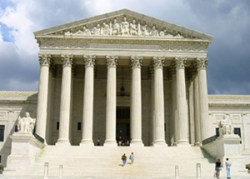
    Supreme Court Building #3On February 26, 2014, the Supreme Court heard oral arguments in two cases dealing with the attorney fee-shifting provision of 35 U.S.C. § 285.  In the first case, Octane Fitness, LLC v. ICON Health & Fitness, Inc. (Supreme Court docket number 12-1184), the issue on appeal was what constitutes an "exceptional case" such that attorney fees can be awarded to the prevailing party.  The Federal Circuit had developed a two-part test, which included both an objective component ("objectively baseless") and a subjective component ("subjective bad faith").  Except for a few questions from the Justices that would suggest some deference to the Federal Circuit, no one appeared to be advocating for maintaining this test.  Instead, the Justices seemed to struggle with what the appropriate standard should be — as Justice Kennedy put it "this is a search for adjectives."  The choices for when a case could be considered exceptional seemed to range from "frivolousness," to "objectively baseless," to "gross injustice," to "objectively reasonable," to "just let the District Court decide."  There was no clear indication from the questioning where the Court as a whole was leaning on the issue.

    Rudolph Telscher, on behalf of Octane Fitness, summed the issue up in his rebuttal as:  "What we're all really talking about here is how extreme should the test be for an exceptional case.  I mean, that's what this boils down to."  However, just what the test should be turned out to be a moving target.  Mr. Telscher began by asserting that the test should be whether the case was "meritless."  Justice Scalia challenged him on this standard, because in his mind, every non-prevailing case is meritless ("Don't you have to add something to meritless?  I mean, every time you win the summary judgment motion, that's a determination that the claim is without merit.").  However, he didn't like Mr. Telscher's proffered alternative, "unreasonably weak," either ("[Y]ou realize how differently various District Courts would operate if you just say, what was your phrase?  Unreasonably week?").  Mr. Telscher then settled on "objectively unreasonable," which he explained was something less than frivolous.  In response to a question by Justice Sotomayor about what the difference would be between his test and the Federal Circuit's "objectively baseless" test, he responded that "baseless" connotes "absolutely no foundation or zero merit," while he believes that the test should be "something less than frivolous."  Mr. Telscher also indicted that "without substantial merit" or "low likelihood of success" would be two additional ways to articulate his proffered standard.

    Justice Alito challenged Mr. Telscher on whether they should incorporate a subjective standard into the test.  Of course, Mr. Telscher did not think that bad faith was required, but that it could be considered in conjunction with a weak case on the merits.  The problem Justice Alito had with such a determination was how to articulate it to the district courts ("How am I supposed to determine whether the case is exceptional if the standard is, take everything into account, litigation misconduct, the strength of the case, any indication of bad faith, and decide whether it exceptional?  Exceptional compared to what?").  He was concerned that lower court judges might not have the requisite experience with patent attorneys, and after all, "[t]hey are different from other attorneys."  This discussion actually appeared to clear things up for Justice Scalia, because he stated that "you really cannot answer the question of what adjectives should be attached to 'meritless,' . . . [because] it is a totality of the circumstances test, that is only one factor and it doesn't have to be an absolute degree of meritlessness."  Of course, when pushed by Justice Kagen for all the factors that can be considered in this "totality-of-the-circumstances" test, Mr. Telscher suggested that it should be a non-exhaustive list — "anything that bears on the gross injustice and the uncommon nature of the case."

    Carter Phillips argued the case on behalf of ICON Health and Fitness.  Of course, he was mainly playing prevent defense, suggesting that whatever standard the Court settled upon, the actions of ICON would not fall within that standard.  Nevertheless, he advocated for the "objectively baseless" standard, with or without a subjective component.  He got some of his toughest questioning from Justice Breyer, who was silent during Octane Fitness' presentation.  Justice Breyer made clear his concerns about the patent system, and the quality of patents that were being issued by the Patent Office (especially with regard to software patents).  In fact, it appeared to be the opinion of Justice Breyer that if the test was "objectively baseless," it could never be met ("[W]hy cannot I, the district judge, say, I've seen all these things, taken together they spell serious injustice, and therefore I'm shifting the fees.  Okay?  Why can I not do that even though, as I've just said and repeat, I cannot in honesty say it's frivolous given the standard for patenting that seem to be administered?").  And, echoing a comment made in the Prometheus decision, Justice Breyer suggested that that patent attorneys seem to have the ability to get anything patented ("Patent attorneys are very brilliant at figuring out just how to do this.").

    To be fair, Mr. Phillips did not define "objectively baseless" as "frivolous."  Instead, it was Mr. Phillips's impression that that "baseless" meant "unjustified and vexatious," which in turn meant that the case had "to have enough merit to be — to satisfy the standards of probable cause" (meaning in this context that the case had to have enough merit to go forward).  Nevertheless, Justice Breyer seemed to want to just let the district court decide when a case was "exceptional" — "[w]ell, let's send it back and tell them that they were imposing a standard that was too narrow, that didn't take account of all the circumstances where something could be unusually unjust, and then let them, no clear and convincing, but it's up to you, district judge.  You're the expert on litigation.  You decide."  Mr. Phillips did not like this approach because he was concerned that what would be considered an "exceptional" case would be unevenly applied ("There are lots of disincentives for plaintiffs to bring this case.  And at the end of the process, based on a completely indeterminate standard, the district court would then retain authority to say, I conclude what you did here is unreasonable.").

    Justice Ginsburg asked why the Court should not just use the same standard as that in the Lanham Act, after all, both statutes use the same language.  In Lanham Act cases, an exceptional case is one that is not run of the mill, or uncommon, as Justice Ginsburg suggested.  Mr. Phillips had a couple of reasons why this would be inappropriate.  First, the two statutes have had two entirely different histories, and therefore two entirely different sets of case-law interpreting them.  Second, Mr. Phillips suggested that if the two statutes were to be reconciled, it should be the Lanham Act that should be made to comport with the Patent Act, because the Patent Act came first.

    Roman Martinez, Assistant to the Solicitor General, argued on behalf of the United States.  It was the United States' opinion that the test should revert back to the understanding of the law back when the 1952 Patent Act was enacted — "to prevent gross injustice."  However, with the connotation that "gross injustice" has today, this sounds like a very high barrier to an award of fees, and the Court seemed to struggle with this.  As Justice Kagen put it, "[g]ross injustice, I mean that's really really exceptional.  That sounds like 'shocks the conscience.'"  However, Mr. Martinez assured the Court that the "gross injustice" standard was not so difficult to meet, and that, in the end, it essentially comes down to a totality-of-the-circumstances test, with a list of non-exclusive factors to consider.

    It is often difficult to determine the outcome of a case based on the questioning from the bench.  This case is no exception, although it is highly unlikely that the Federal Circuit two-part test will stand.  We will provide an analysis of the Highmark oral hearing in a future post, and we will, of course, provide an analysis of both opinions when the Court issues them, which should occur before the end of June, 2014.

  • By Kevin E. Noonan

    GlaxoSmithKline - GSKThe Federal Circuit issued an opinion on Monday in GlaxoSmithKline LLC v. Banner Pharmacaps, Inc. illustrating how difficult it can be to overturn a district court determination based on a question of fact, at least when the question involves a chemical compound defined by structural properties supported by a description of how such a compound can be made.

    The lawsuit involved the drug dutasteride, sold by GSK under the brand names Avodart®and Jalyn™ for the treatment of "androgen responsive diseases," and GSK brought suit under the provisions of 35 U.S.C. § 271(e)(2) following ANDA filings by defendants Banner Pharmacaps, Inc., Impax Laboratories, Inc., Mylan, Inc., Mylan Pharmaceuticals, Inc., and Watson Laboratories, Inc.  The claim at issue, from Orange Book listed U.S. Patent No. 5,565,467, recited in its entirety "17β-N-(2,5-bis (trifluoromethyl)) phenylcarbamoyl-4-aza-5α-androst-1-en-3-one or a pharmaceutically acceptable solvate thereof."  The District Court rendered judgment against all defendants, who had stipulated infringement, ruling that defendants failed to establish by clear and convincing evidence that this claim was invalid for "anticipation, lack of utility, lack of enablement, and inadequacy of the written description."

    On appeal, Defendants challenged the District Court's claim construction with regard to the scope and meaning of the term "a pharmaceutically acceptable solvate thereof" as that construction was relevant to their written description defense.  The Federal Circuit affirmed, in an opinion by Judge Taranto joined by Judges O'Malley and Wallach.  Curiously, the opinion did not resolve defendants' challenge to the District Court's interpretation of the term "solvate."  Instead, the Court set forth its understanding of the meaning of the term, specifically that a solvate "is something that originates in a 'solution,' which is a mixture of two substances: a 'solute' dissolved in a 'solvent.'"  This definition is consistent with the positions of both parties, according to the opinion, and in addition that the parties agree that a solvate can be in the form of a crystal.  The disagreement between the parties concerned whether a solvate must be in a crystalline form (defendants' position) or not (GSK's position.  While there was "considerable extrinsic evidence" supporting defendants' position, the District Court relied upon the express teachings in the '467 patent specification in deciding that the claimed solvates were not limited to crystalline forms, wherein a solvate was defined as:

    A complex formed by dutasteride with a solvent in which dutasteride is reacted or from which it is precipitated or crystallized.

    Solvates according to the specification can be produced "by a reaction of dutasteride with a solvent; by precipitation of a complex from a solution of dutasteride and a solvent; by crystallization of a complex from a solution of dutasteride and a solvent," without a requirement that the solvate produced by any of these methods be in the crystalline form.

    Adequacy of a specification's written description is a question of fact (reviewed for clear error by the Federal Circuit), and accordingly the Federal Circuit's opinion set forth the District Court's factual findings in support of its decision that defendants had failed to establish invalidity on these grounds.  Specifically, the opinion set forth the District Court's findings that methods for producing solvates of steroid compounds (like dutasteride) were well known in the art and that the "universe of solvents thought to be pharmaceutically acceptable was well-known and relatively small."  While it was impossible to predict whether any particular solvate produced according to these well-known methods would be pharmaceutically acceptable, the District Court found that methods for determining pharmaceutical acceptability were also well known in the art.  Regarding the adequacy of defendants' challenge, the District Court found that:

    There is no reason why a person skilled in the art would not credit a patentee with possession of a solvate merely because the patentee did not disclose solvates formed by each solvation process, i.e., reaction, precipitation, crystallization.

    In the Federal Circuit's opinion, Judge Taranto noted the limited scope of the issue on appeal, and that defendants had not properly included a challenge on whether the specification adequately described the range of pharmaceutically acceptable solvates encompassed by the '467 patent claim.  Under either plaintiff's or defendants' claim construction, the Court found that the term "solvate" was one "defined by structure and by the process of creating it" rather than by its function.  The Federal Circuit recognized that the District Court construed the term to comprise "any complex of dutasteride and solvent" that resulted from any of the described methods:

    In either event [plaintiff's or defendants' claim interpretation], the written description, which presents materially the same interpretive choice, describes the same class by identifying a particular structure obtained by particular processes.  No matter which construction is adopted, the term "solvate" involves no performance property (the claimed compound need not perform an identified function or produce an identified result) and hence raises no issue of insufficient structural, creation-process, or other descriptions to support such a property.

    Turning to the specification, the opinion asserts that the language defines the genus of pharmaceutically acceptable solvates as "a complex of dutasteride molecules and solvent molecules, with dutasteride being, as the district court found, 'the key structural component'" and "one that is created by an identified process — specifically, by dissolving dutasteride (the solute) in a solvent."  Noting the parties dispute the meaning of these teachings from the specification, the opinion states that "under each side's construction and reading of the specification, the description matches the claim, and regardless of which side is right, the description remains entirely based on structure of the compound and its process of creation."  Citing Ariad v. Eli Lilly & Co., 598 F.3d 1336, 1351 (Fed. Cir. 2010) (en banc), Regents of the Univ. of California v. Eli Lilly & Co., 119 F.3d 1559, 1568 (Fed. Cir. 1997), and Boston Scientific Corp. v. Johnson & Johnson, 647 F.3d 1353, 1366-67 (Fed. Cir. 2011), the opinion notes that this structural description is consistent with the Court's written description jurisprudence.  Here, the Court finds that claim scope is "no broader" than what is described in the specification, "whether [that scope] is narrow or broad, as the parties dispute," and that the term "solvate" is structural nor functional in nature (a "critical" distinction according to the opinion, albeit a sentiment followed by statements regarding the adequacy of the description to "make and use" the invention that seemingly introduces questions of enablement into the written description analysis).  The Court draws this "structural vs. functional" difference in distinguishing case law cited by defendants in support of their position, because "[h]ere, []under any of the parties' preferred claim constructions, 'solvates' of dutasteride are not distinguished by a particular performance property."  Accordingly, the panel could find "no basis" for overturning the District Court's finding that the claims were adequately described.

    GlaxoSmithKline LLC v. Banner Pharmacaps, Inc. (Fed. Cir. 2014)
    Panel: Circuit Judges O'Malley, Wallach, and Taranto
    Opinion by Circuit Judge Taranto

  • By Andrew Williams

    Supreme Court Building #2As we have reported over the past couple of weeks, the Supreme Court will hear arguments in two cases involving the attorney fees provision of 35 U.S.C. § 285 on Wednesday, February 26.  That statute provides that a "court in exceptional cases may award reasonable attorney fees to the prevailing party."  These cases will be heard shortly after the Court convenes at 10:00 A.M. Eastern.  The first of the cases listed on the Hearing List, Highmark Inc. v. Allcare Management Sys., Inc., relates to whether the lower court's determination regarding attorney fees is entitled to deference.  Specifically, the question presented was: whether a district court's exceptional-case finding under 35 U.S.C. § 285, based on its judgment that a suit is objectively baseless, is entitled to deference.  The second listed case, Octane Fitness v. Icon Health and Fitness, involves how a court is to determine when a case is exceptional.  The specific question presented was:

    [W]hether the Federal Circuit's promulgation of a rigid and exclusive two-part test for determining whether a case is 'exceptional' under 35 U.S.C. § 285 improperly appropriates a district court's discretionary authority to award attorney fees to prevailing accused infringers in contravention of statutory intent and this Court's precedent, thereby raising the standard for accused infringers (but not patentees) to recoup fees and encouraging patent plaintiffs to bring spurious patent cases to cause competitive harm or coerce unwarranted settlement from defendants.

    We have already explained the factual and procedural history of both cases, and highlighted the arguments presented in the briefs submitted by the Petitioners and Respondents in both cases (see "Supreme Court Preview — Octane Fitness, LLC v. ICON Health & Fitness, Inc." and "Supreme Court Preview — Highmark Inc. v. Allcare Health Mgmt. Sys., Inc.").  The amicus curiae briefs in the Octane Fitness case unanimously supported a change in the standard for an exceptional-case determination (even though some of them filed briefs in support of neither party).  They also almost all supported a standard that applies equally to plaintiff patent holders and defendant accused infringers.  In addition, almost all recognized the incentives that the current Federal Circuit standard provides for patent holders to assert their patents abusively (although they portrayed very different pictures of the state of the problem).  What was interesting, however, was the different approaches and alternatives suggested for what the standard should be.  For example, should the district court only look to whether the position of the non-prevailing party was "objectively baseless," or can the subjective intent of the party ever be considered.  Because it is very possible that the Court will adopt one of these new standards, it is worthwhile to review some of the suggestion and arguments presented in these briefs.  This post addresses a selection of the amicus curiae briefs.

    United States Amicus Curiae Brief

    It is generally advisable when reviewing various amicus curiae briefs for a given case to begin with the brief for the United States.  This is because not only is the Solicitor General provided special attention by the Court, but in this case, Roman Martinez, Assistant to the Solicitor General, is scheduled to argue for the United States.  In this case, the United States is advocating a totality of the circumstances test.  Specifically, according to the United States, the lower court should be able to consider whether the losing party had inflicted "gross injustice" on the prevailing party before or during the case.

    To support its position, the United States looked to the history of 35 U.S.C. § 285, including its adoption in 1952.  This statute was based on one that was introduced in 1946, but did not include the "exceptional case" limitation.  Nevertheless, the legislative history suggested that the new provision was not intended to change the substantive standards for granting fee awards.  Therefore, according to the United States, the standard should be the same as that used between 1946 and 1952.  During this time, "grossly unjust" conduct could support a fee award, and such conduct included fraud on the Patent Office, willful infringement, harassing tactics during litigation by either party, or untenable legal or factual theories.  This standard did not have to rise to the level of objective baselessness, because fee awards were made when the theories were "unjustified," "wholly unjustified," "unwarranted," "unreasonable," or "groundless."  Also, "subjective bad faith" was not required, although the United States argued that it could be highly relevant to the Section 285 analysis.  Finally, the United States urged that "clear and convincing" evidence should not be required for an accused infringer to be awarded fees.  The United States did not take a position on whether the present case was an exceptional case under the proffered standard, but instead requested that the case be vacated and remanded.

    Amicus Curiae Briefs From Participants in the Patent System

    Several different companies that own and assert patents filed amicus curiae briefs, either alone or as part of a collection.  In general, they pointed out that as owners of intellectual property and as frequent targets of abusive litigation tactics, they have a balanced perspective and unique insights into the issue.  For example, a collection of seven intellectual property owners, Yahoo!, the New York Times, NetApp, Medtronic, General Mills, EMC, and Boston Scientific, filed a brief in support of petitioners in both cases.  This collection of companies is somewhat interesting, because it includes two (Medtronic and Boston Scientific) that were on opposing sides of a recently decided Supreme Court case.  In an articulated standard much like the one proffered by the United States, this collection urged the adoption of a test that would "afford[] a district court discretion to enter a fee award in favor of a plaintiff or defendant whenever it would be grossly unjust or inequitable for the prevailing party to bear its own costs."  Brief at 5.  And, just like the United States, this collection pointed to the period just before the enactment of 35 U.S.C. § 285 for support.  However, they also pointed to the statute itself as giving three "guideposts" for a district court to follow.  These are that "exceptional" cases are meant to be those that are "uncommon" or "extraordinary," that prevailing plaintiffs and defendants are to be treated equally, and the trial court should have discretion to make the grant determination, as well as the amount.

    Another collection of intellectual property owners, 3M Co., General Electric Co., The Procter & Gamble Company, and Johnson & Johnson, also filed a brief advocating a flexible standard.  Specifically, they urged the "adoption of a flexible standard that permits 'district courts in patent cases to consider traditional equitable factors, guided by the purposes of patent law, in granting fee awards' under Section 285."  Brief and 4.  This collection also acknowledged that there is a problem of abusive patent litigation, but they went out of their way to defend patent assertion entities, explaining that they serve a valuable purpose in the patent system.  For example, they pointed out that the U.S. patent system has always been based on a disclosure system, and that patent holders have never been requirement to practice the invention.  In fact, this collection stressed that greater than 60% of the inventors of the Industrial Revolution sold or licensed at least some of their patents, including Thomas Edison and Charles Goodyear.

    Another collection of "leading providers of high-technology products and services" filed anamicus curiae brief supporting a flexible standard.  This collection included Google, Cisco Systems, Facebook, HTC, Intel, LinkedIn, Motorola Mobility, Netflix, Newegg, Rackspace, salesforce.com, T-Mobile, Verizon, and Vizio.  Specifically, they asserted that there should be no exclusive list of factors that can make a case exceptional under § 285, but that these factors should all be considered together.  Importantly, they requested a disjunctive approach in which subjective bad faith and objective reasonableness can either be used as an independent bases for fee-shifting.  Therefore, bad faith alone can support an award of attorney fees.  Another collection, this one entitled BSA | The Software Alliance, disagreed, and instead asserted that "objectively unreasonable" should be the standard.  The standard was summarized as "[a] losing litigant that persists in advocating a claim or defense lacking an objective basis in law or fact should pay the winning party's fees."  Brief at 2.  BSA | The Software Alliance did not think that a subjective component should be included because common law already allows for fee-shifting when the lower litigates in bad faith.

    The final participant in the patent system to file an amicus curiae brief (not including the Intellectual Property Owners Association), and the only one to do it on its own, was Apple.  Apple's brief was in support of the patent system, but it came out strong against so-called "patent trolls."  It advocated a flexible standard that would look to a host of factors relevant to the particular litigation.  Specifically, Apple advocated for the inclusion of such factors as "the nature of the parties, the motivations underlying the parties' positions, the objective merit of both parties' claims and the particular arguments advanced in court, and the parties' conduct."  Brief at 9.  Only then, according to Apple, will the fee-shifting provision of § 285 function properly to deal with "patent assertion entities that thrive on strike suits, nuisance suits, and in terrorem demands."  Brief at 7.

    Amicus Curiae Briefs From "Anti-Troll" Representatives

    There were several briefs that were filed for organizations and individuals that focused more on the so-called "patent troll" problem then on what the appropriate standard should be for what an exceptional case should be.  For example, the Electronic Frontier Foundation, et al., ("EFF") spent almost its entire brief explaining how the current standard was allowing patent trolls to thrive, and therefore harming small businesses, start-ups, and American innovation.  Only near the end of its brief did the EFF advocate for a flexible test that considers the totality of the circumstances.  The EFF would look to whether the "Plaintiff brings an objectively weak case or uses the cost of defense as a weapon."  Brief at 17.  Not surprisingly, the EFF focused almost exclusively on when the non-prevailing party is the patent holder.  Therefore, it did not address the sort of factors one would look when the accused infringer was the non-prevailing party, if they would even be entitled to an award under the EFF's scheme in the first place.

    To their credit, however, the EFF did provide a somewhat workable test, even if it was one-sided.  Professor Robin Feldman and the U.C. Hastings Institute for Innovation Law filed an amicus brief urging the Court to adopt a standard which would "empower courts to remedy schemes that exploit the patent system."  Instead of articulating a standard, Prof. Feldman railed against the Federal Circuit's standard and the abuses that have stemmed from it.  One of the "abuses" that she cites is that of reverse payments in Hatch-Waxman litigations.  However, she does not explain how section 285 could be used to stop such "abusive schemes."

    As a final example of the "anti-troll" amicus briefs, a collection of thirty (30) states, including Vermont and Nebraska (but not Illinois), filed a brief advocating overturning the Federal Circuit's precedent.  Like the other "anti-troll" parties, these states urge a standard that does not provide for a shift of fees when the accused infringer is the non-prevailing party.  Instead, the states submit that the district courts should "have discretion to award fees where the patentee's claim had an objectively low likelihood of success and a fee award is otherwise appropriate."  Brief at 27.  They also urged the Court to consider the broader context – and unfortunately they asserted that this broader context was that the patent system is broken.  For example, in addition to addressing the "attorney fee" problem, the collective states extoll the other problems of the patent system, including the Federal Circuit's test for personal jurisdiction, the lenient pleading standards allowed by Form 18, and the cost of litigating vague and ambiguous patent claims caused by the Federal Circuits "insolubly ambiguous" test for 35 U.S.C. § 112, ¶ 2.  Of course, the Supreme Court is taking up this last issue in the Biosig Instruments, Inc. v. Nautilus, Inc. case, but it is unclear how the Court is supposed to "take into account" these other problems to address how an "exceptional case" is determined.


  • By Donald Zuhn

    Washington - White House #2Last week, the Obama Administration announced "major progress on a series of initiatives designed to combat patent trolls and further strengthen our patent system and foster innovation" (see "The White House Releases Update on 'Protecting American Inventors and Innovators'").  In addition to a number of executive actions discussed in our earlier report, the White House also announced delivery on its commitment of "Promoting Transparency" concerning patent ownership.  In particular, a White House Fact Sheet states that:

    • Promoting Transparency — The United States Patent and Trademark Office (USPTO) recently published a draft rule to ensure patent owners accurately record and regularly update ownership information when they are involved in proceedings before the USPTO.  This effort is aimed at improving the quality of patents issued, enhancing competition, facilitating technology transfer, and making it harder to hide abusive litigation tactics behind shell companies.  After receiving input from the public, the USPTO aims to issue a final rule in the coming months.

    The White House Fact Sheet can also be accessed from the USPTO homepage by clicking on the heading "Driving Innovation, Not Litigation"

    USPTO SealThe draft rule discussed in the Administration's Fact Sheet, which was published as a notice of proposed rulemaking in the Federal Register (79 Fed. Reg. 4105) on January 24, would change the rules of practice to require that the "attributable owner" be identified at the time an application is filed (or shortly thereafter), during the pendency of an application when there is a change in the attributable owner (within three months of such change), at the time the issue fee is paid, when maintenance fee payments are made, and if a patent becomes involved in supplemental examination, ex parte reexamination, or a trial proceeding before the Patent Trial and Appeal Board (see "USPTO Proposes Rules Changes to Require Identification in Applications and Patents of Attributable Owners" for more infoirmation regarding the proposed rules changes).  The Office indicated that comments on the notice of proposed rulemaking could be sent by e-mail to AC90.comments@uspto.gov, by regular mail addressed to:  Mail Stop Comments-Patents, Commissioner for Patents, P.O. Box 1450, Alexandria, VA 22313–1450, marked to the attention of James Engel, Senior Legal Advisor, Office of Patent Legal Administration, Office of the Deputy Commissioner for Patent Examination Policy, or via the Federal eRulemaking Portal, with the deadline for submitting comments initially set for March 25, 2014.

    The link embedded in the White House Fact Sheet's paragraph on "Promoting Transparency" takes readers to a webpage on "Attributable Ownership" at the USPTO website (which as new USPTO webpages goes is far less controversial than the Office's "Beta" webpage entitled "Been Sued or Gotten a Demand Letter?  Answers To Common Questions About Abusive Patent Litigation," and in particular, certain links that can be found in the "Resources and Glossary" page; for more information, see our report on the Office's new "on-line toolkit").  The Attributable Ownership webpage provides a few interesting announcements.  First, the page indicates that the March 25 comment deadline has been extended to April 24, 2014.  The page also indicates that the two public meetings described in the notice of proposed rulemaking will be held on March 13 from 1:00 to 4:00 pm (ET) at the USPTO Madison Auditorium North in the Madison Building, 600 Dulany Street, Alexandria, VA 22314, and on March 26 from 9:00 am to 12:00 pm (PT) at the U.C. Hastings College of the Law, Louis B. Mayer Lounge, 198 McAllister Street, San Francisco, CA 94102.  Both meetings will be accessible via WebEx, with access information to be provided closer to the meeting dates.

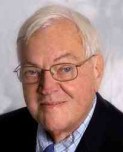
    WegnerWith respect to the White House's efforts to promote transparency concerning patent ownership, Hal Wegner (at right) stated in his e-mail newsletter on February 18 that while "attempts to minimize comment have involved suppression of existing comments as if this will perhaps lead to the public falling asleep at the comment switch," "the leadership of the Patent Office has been sheltered from questioning by the public, while the Administration’s lobbyist group, 'Business Forward', continues to have access to PTO leadership" (emphasis in original).  With respect to the Office's attempts to minimize comments on the proposed Attributable Ownership rules, Mr. Wegner noted that as of his e-mail above, no comments had been posted on the USPTO comments webpage.  As of this post, four comments have been posted in response to the notice of proposed rulemaking on Attributable Ownership, with one comment coming from a law firm and three comments coming from individuals.  With regard to the Office's meetings with the group Business Forward, Mr. Wegner noted that a closed door luncheon for selected members of the group and USPTO Deputy Director Michelle Lee had to be postponed as it was set to take place on the same day that the White House announced progress on its patent initiatives.  According to the Business Forward website:

    Members include Aetna, American Airlines, AT&T, CIT, Citi, Comcast, Dow, Duke Energy, Fidelity, Ford, Hilton Worldwide, Intuit, Lockheed Martin, McDonald's, Microsoft, Qualcomm, Time Warner, Time Warner Cable, Verizon, Visa, and Walmart.

    These corporations work with Business Forward to identify, recruit and brief small business owners, venture capitalists and entrepreneurs of all kinds who are looking for a meaningful way to participate in policy debates.

  •         By Sherri Oslick

    Gavel About Court Report:  Each week we will report briefly on recently filed biotech and pharma cases.

    AbbVie Inc. et al. v. Aurobindo Pharma Ltd. et al.
    1:14-cv-00215; filed February 19, 2014 in the District Court of Delaware

    • Plaintiffs:  AbbVie Inc.; Wisconsin Alumni Research Foundation
    • Defendants:  Aurobindo Pharma Ltd.; Aurobindo Pharma USA Inc.

    Infringement of U.S. Patent Nos. 5,597,815 ("Prevention of Hyperphosphatemia in Kidney Disorder Patients," issued January 28, 1997) 6,136,799 ("Cosolvent Formulations," issued October 24, 2000), and 6,361,758 (same title, issued March 26, 2002), following a Paragraph IV certification as part of Aurobindo's filing of an ANDA to manufacture a generic version of AbbVie's Zemplar® (paricalcitol, used to treat secondary hyperparathyroidism in patients with kidney failure).  View the complaint here.

    AbbVie Inc. v. Gilead Sciences Inc. et al.
    1:14-cv-00209; filed February 18, 2014 in the District Court of Delaware

    • Plaintiff:  AbbVie Inc.
    • Defendants:  Gilead Sciences Inc.; Gilead Pharmasset LLC; Gilead Sciences Ltd.

    Infringement of U.S. Patent Nos. 8,466,159 ("Methods for Treating HCV," issued June 18, 2013) and 8,492,386 (same title, issued July 23, 2013) based on Gilead's anticipated manufacture and sale of its combination therapy for the treatment of HCV using sofosbuvir and ledipasvir.  View the (redacted) complaint here (original filed under seal).

    Salix Pharmaceuticals Inc. et al. v. Novel Laboratories Inc.
    1:14-cv-00213; filed February 18, 2014 in the District Court of Delaware

    • Plaintiffs:  Salix Pharmaceuticals Inc.; Dr. Falk Pharma GmbH
    • Defendant:  Novel Laboratories Inc.

    Infringement of U.S. Patent Nos. 6,551,620 ("Pellet Formulation for the Treatment of the Intestinal Tract," issued April 22, 2003), 8,337,886 (same title, issued December 25, 2012), and 8,496,965 (same title, issued July 30, 2013) following a paragraph IV certification as part of Novel's filing of an ANDA to manufacture a generic version of Salix's Apriso® (mesalamine, used for the maintenance of remission of ulcerative colitis in adults).  View the Delaware complaint here.

    Otsuka Pharmaceutical Co., Ltd. v. Torrent Pharmaceuticals Ltd. et al.
    1:14-cv-01078; filed February 18, 2014 in the District Court of New Jersey

    • Plaintiff:  Otsuka Pharmaceutical Co., Ltd.
    • Defendants:  Torrent Pharmaceuticals Ltd.; Torrent Pharma Inc.

    Infringement of U.S. Patent Nos. 8,017,615 ("Low Hygroscopic Aripiprazole Drug Substance and Process for the Preparation Thereof," issued September 13, 2011) and 8,580,796 (same title, issued November 12, 2013) following a Paragraph IV certification as part of Torrent's filing of an ANDA to manufacture a generic version of Otsuka's Abilify® (aripiprazole, used to treat bipolar disorder and schizophrenia).  View the complaint here.

    Merck Sharp & Dohme Corp. v. Xellia Pharmaceuticals ApS
    3:14-cv-00124; filed February 18, 2014 in the Western District of Wisconsin

    Merck Sharp & Dohme Corp. v. Xellia Pharmaceuticals ApS
    1:14-cv-00199; filed February 14, 2014 in the District Court of Delaware

    The complaints in these cases are substantially identical.  Infringement of U.S. Patent No. 5,952,300 ("Antifungal Compositions," issued September 14, 1999) following a Paragraph IV certification as part of Xellia's filing of an ANDA to manufacture a generic version of Merck's Cancidas® (caspofungin acetate, used to treat presumed fungal infections in febrile, neutropenic patients, candidemia and certain Candida infections, esophageal candidiasis, and invasive aspergillosis in patients who are refractory to or intolerant of other therapies).  View the Delaware complaint here.

    Forest Laboratories Inc. et al. v. Apotex Corp. et al.
    1:14-cv-00200; filed February 14, 2014 in the District Court of Delaware

    • Plaintiffs:  Forest Laboratories Inc.; Forest Laboratories Holdings Ltd.; Adamas Pharmaceuticals Inc.
    • Defendants:  Apotex Corp.; Apotex Inc.; Zydus Pharmaceuticals (USA) Inc.; Cadila Healthcare Ltd. d/b/a/ Zydus Cadila; Par Pharmaceutical Inc.; Anchen Pharmaceuticals Inc.; Watson Laboratories Inc. – Florida

    Infringement of U.S. Patent Nos. 8,039,009 ("Modified Release Formulations of Memantine Oral dosage Forms," issued October 18, 2011), 8,168,209 ("Method and Composition for Administering an NMDA Receptor Antagonist to a Subject," issued May 1, 2012), 8,173,708 (same title, issued May 8, 2012), 8,283,379 ("Method and Compositions for the Treatment of CNS-Related Conditions," issued October 9, 2012), 8,329,752 ("Composition for Administering an NMDA Receptor Antagonist to a Subject," issued December 11, 2012), 8,362,085 ("Method for Administering an NMDA Receptor Antagonist to a Subject," issued January 29, 2013), and 8,598,233 (same title, issued December 3, 2013) following a Paragraph IV certification as part of defendants' filing of an ANDA to manufacture a generic version of Forest's Namenda XR® (memantine hydrochloride extended release, used for the treatment of moderate to severe dementia of the Alzheimer's type).  View the complaint here.

    Teijin Ltd. et al. v. Roxane Laboratories Inc.
    1:14-cv-00189; filed February 12, 2014 in the District Court of Delaware

    • Plaintiffs:  Teijin Ltd.; Teijin Pharma Ltd.; Takeda Pharmaceuticals USA Inc.
    • Defendant:  Roxane Laboratories Inc.

    Infringement of U.S. Patent No. 6,225,474 ("Polymorphs of 2-(3-cyano-4-isobutyloxyphenyl)-4-methyl-5-thiazolecarboxylic acid and Method of Producing the Same," issued May 1, 2001) following a Paragraph IV certification as part of Roxane's filing of an ANDA to manufacture a generic version of Takeda's Uloric® (febuxostat, used for the chronic management of hyperuricemia in patients with gout).  View the complaint here.