By Kevin E. Noonan —
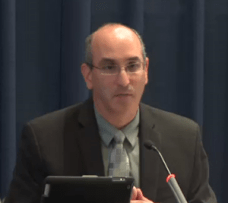
 On April 30th, Ambassador Michael B.G. Froman, U.S. Trade Representative (USTR) issued the 2014 Special 301 Report. According to the USTR website, the "USTR is fully committed to unlocking opportunity for those Americans to share their inventions and creations with people all over the world without their work being infringed or misappropriated." Further, "[t]he Obama Administration is committed to meaningful and sustained engagement with trading partners — from China to India to Canada — with the goal of resolving intellectual property-related concerns so that Americans and American firms can compete on a level playing field in those markets," according to USTR Froman. The Report hails Italy, the Philippines, and Israel "on their removal from the Watch List."
The Report notes that the USTR has been issuing Reports for 25 years, and that over this time there has been "significant progress in a variety of countries." The Report highlights Korea as a country that went from the Watch List to being one with "a reputation for cutting-edge innovation as well as high-quality, high-tech manufacturing" having "state-of-the-art standards of intellectual property rights protection and enforcement." Italy and the Philippines, newly off the Watch List are also mentioned for their improvements in IP protection over the past year, and the Report also calls out Australia, Israel, Japan, Qatar, Spain, Taiwan, the United Arab Emirates, and Uruguay as countries that have made "important advances in many other markets over the past 25 years."
 The Report is promulgated pursuant to Section 182 of the Trade Act of 1974, as amended by the Omnibus Trade and Competitiveness Act of 1988 and the Uruguay Round Agreements Act (enacted in 1994). The Trade Representative is required under the Act to "identify those countries that deny adequate and effective protection for IPR or deny fair and equitable market access for persons that rely on intellectual property protection." The Trade Representative has implemented these provisions by creating a "Priority Watch List" and "Watch List." Placing a country on the Priority Watch List or Watch List is used to indicate that the country exhibits "particular problems . . . with respect to IPR protection, enforcement, or market access for persons relying on intellectual property." These watch lists are reserved for countries having "the most onerous or egregious acts, policies, or practices and whose acts, policies, or practices have the greatest adverse impact (actual or potential) on the relevant U.S. products."
This Report, on the state of intellectual property rights worldwide, identifies ten countries on a "Priority Watch List" and another 26 countries on the "Watch List," all relating to deficiencies in intellectual property protection in these countries. The Priority Watch List in the 2014 Report cites Algeria, Argentina, Chile, China, India, Indonesia, Pakistan, Russia, Thailand, and Venezuela, countries that were also on the list last year. Countries on this list "do not provide an adequate level of IPR protection or enforcement, or market access to persons relying on intellectual property protection." On the Watch List this year are Barbados, Bolivia, Brazil, Bulgaria, Canada, Columbia, Costa Rica, Dominican Republic, Ecuador, Egypt, Finland, Greece, Guatemala, Jamaica, Kuwait, Lebanon, Mexico, Paraguay, Peru, Romania, Tajikstan, Trinidad and Tobago, Turkey, Turkmenistan, Uzbekistan, and Vietnam; compared to last year, Belarus, Israel, Italy, and the Philippines have been removed from the list. The Report lists a "wide range of concerns, including "(a) the deterioration in IPR protection, enforcement, and market access for persons relying on IPR in a number of trading partners; (b) reported inadequacies in trade secret protection in China, India, and elsewhere, as well as an increasing incidence of trade secret misappropriation; (c) troubling "indigenous innovation" policies that may unfairly disadvantage U.S. rights holders in China; (d) the continuing challenges of copyright piracy over the Internet in countries such as Brazil, China, India, and Russia; (e) market access barriers, including nontransparent, discriminatory or otherwise trade-restrictive measures, that appear to impede access to healthcare; and (f) other ongoing, systemic IPR enforcement issues in many trading partners around the world."
The Report notes the USTR's continued efforts to enhance public engagement, "to facilitate sound, well-balanced assessments of IPR protection and enforcement efforts of particular trading partners, and to help ensure that the Special 301 review is based on a full understanding of the various IPR issues in trading partner markets." In addition to written comments ("from over 100 interested parties, including 21 trading partner governments"), there was a public hearing on February 24, 2014 that heard testimony from "representatives of foreign governments, industry, and non-governmental organizations" (where the comments, video, and transcript of the hearing are available on the USTR website).
The Report accentuates coordination between "all relevant agencies within the [Federal] government, informed by extensive consultation with" stakeholders, foreign governments, the Congress and "other interested parties." The assessment of compliance from the countries listed in the Report were conducted on a "case-by-case" basis that "tak[es] into account diverse factors such as a trading partner's level of development, its international obligations and commitments, the concerns of rights holders and other interested parties, and the trade and investment policies of the United States." The Special 301 Subcommittee received input from stakeholders and close to 100 trading partners, selecting the 10 Priority Watch List and 27 Watch List countries from this group.
The Report contains two Sections (on "Developments in Intellectual Property Rights Protection and Enforcement" and "Country Reports") and several Annexes on particular issues (the statutory bases of the Report, government technical assistance an capacity building efforts and WIPO Internet treaties issues). The Report notes some "positive developments" in the past year, including accession by Algeria to the WIPO Internet Treaties, amendments to China's trademark laws (the Report calling these "long-sought reforms"), enhancement of trade secret protection in the European Union, and the creation in Paraguay of the National Directorate of Intellectual Property, responsible for "the administration of copyrights, trademarks, patents, industrial designs, and geographic indications." Other positive developments included actions by the governments of Israel, Italy, and the Philippines resulting in removal of these countries from the Watch List in 2014.
The Report contains a subsection on "best practices" among U.S. trading partners, including "encourag[ing] trading partners to work with the United States to develop mutually agreed-upon action plans to advance the protection and enforcement of IPR," specifically noting the actions in Bulgaria and Pakistan. Cooperation between governments is also mentioned, specifically with regard to Paraguay, Algeria, and the Philippines, as well as "innovative mechanisms that enable government and private sector rights holders to voluntarily donate or license IPR on mutually-agreed terms and conditions." These include the use of existing IPR to advance policy goals and innovation, specific examples of which are the Medicines Patent Pool under the auspices of the World Health Organization and the WIPO Re:Search Consortium among the U.S., Brazil, and South Africa.
Several initiatives were also mentioned. As in the Reports from the last two years, these included the Trans-Pacific Partnership Agreement, between the U.S. and Australia, Brunei Darussalam, Chile, Malaysia, New Zealand, Peru, Singapore, and Vietnam, and in addition, Canada, Mexico, and Japan; the Transatlantic Trade and Investment Partnership between the U.S. and the EU; actions by the World Trade Organization in support of IP rights; the Anti-Counterfeiting Trade Agreement (ACTA) between the U.S. and Australia, Canada, Japan, South Korea, Mexico, Morocco, New Zealand, Singapore; that has been signed by Australia, Canada, Japan, South Korea, Mexico, Morocco, New Zealand, Singapore, and the United States (and was signed by the EU but not ratified by the European Parliament), with Japan becoming the first signatory to deposit its instrument of acceptance; bilateral and regional initiatives, including free trade agreements and Trade and Investment Framework Agreements; and the USTR Trade Preference Program Reviews such as the Generalized System of Preferences (GSP) program relating to Russia, Lebanon, and Uzbekistan, and regional programs including the Caribbean Basin Economic Recovery Act (CBERA). Finally, the Representative "looks forward to continuing engagement with trading partners in bilateral, regional, and multilateral fora to improve the global IPR environment"; including the U.S.-EU Summit, and in the Asia Pacific Economic Cooperation (APEC) forum, and the Organization for Economic Cooperation and Development (OECD).
Once again this year the Report contains a subsection on trade secrets and forced technology transfer identified as problems in "a wide variety of industry sectors" that include "information and communication technologies, services, biopharmaceuticals, manufacturing, and environmental technologies." The threat of trade secret misappropriation is "escalating," and "imposes significant costs on U.S. companies and threatens the security of the United States," "threatens to diminish U.S. competitiveness around the globe, and puts American jobs at risk." Particularly noted in the Report in this regard is China, with trade secret theft being reported by "various sources," including in a publication entitled Foreign Spies Stealing U.S. Economic Secrets in Cyberspace, by the Office of the National Counterintelligence Executive (ONCIX) which stated that "Chinese actors are the world's most active and persistent perpetrators of economic espionage." Theft was cited as involving "departing employees, failed joint ventures, cyber intrusion and hacking, and misuse of information submitted to government entities for purposes of complying with regulatory obligations," with remedies in China being "difficult to obtain." The Report cited a publication by the U.S. Intellectual Property Enforcement Coordinator on February 20, 2013 of "Administration Strategy on Mitigating the Theft of U.S. Trade Secrets," which "highlights U.S. efforts to combat the theft of trade secrets that could be used by foreign governments or companies to gain an unfair economic advantage by harming U.S. innovation and creativity." These include:
• "Focusing diplomatic efforts to protect trade secrets overseas;
• Promoting voluntary best practices by private industry to protect trade secrets, including information security, physical security, and human resources policies;
• Enhancing domestic law enforcement operations, especially through the activities of the Department of Justice, Federal Bureau of Investigations, Department of Defense, and the National IPR Coordination Center;
• Improving domestic legislation to protect against trade secret theft, [and]
• Conducting public awareness campaigns and stakeholder outreach to encourage all stakeholders to be aware of the dangers of trade secret theft."
The Report also notes that "[t]rade secret theft can be viewed as a form of forced technology transfer that foreign actors may use to undermine U.S. competitive advantage." Certain foreign governments, under the guise of promoting "indigenous innovation" can adopt "trade-distortive policies," citing as examples:
• Requiring the transfer of technology as a condition for allowing access to a market, or for allowing a company to continue to do business in the market;
• Directing state-owned enterprises in innovative sectors to seek non-commercial terms from their foreign business partners, including with respect to the acquisition and licensing of IPR;
• Failing to effectively enforce IPR, including patents, trademarks, trade secrets, and copyrights, thereby allowing firms to gain competitive advantages from their misappropriation or infringement of another's IPR;
• Failing to take meaningful measures to prevent or deter cyber intrusions;
• Requiring use of, or providing preferences to, products or services in which IPR is either developed or owned locally, including with respect to government procurement;
• Manipulating the standards development process to create unfair advantages for domestic firms, including with respect to the terms on which IPR is licensed;
[and]
• Requiring unnecessary disclosure of confidential business information for regulatory approval, or failing to protect such information.
New this year is a subsection on IPR and the environment, the Report stating that "[s]trong IPR protection is vital for development, and is critical to responding to environmental challenges, including climate change." Examples include generally promoting investment in "green" technologies and promoting jobs in the green sector, and that "businesses are reluctant to invest or enter into technology transfer arrangements in countries that lack effective IPR protection and enforcement." Cited as examples of governmental actions and activities that "may have the unintended effect of undermining national and global efforts to address serious environmental challenges" are India's National Manufacturing Policy requiring compulsory licensing and its advocacy to "multilateralize" this approach through the UN Framework Convention on Climate Change which will "discourage rather than promote the investment in, and dissemination of, green technologies, including those technologies that contribute to climate change adaptation and mitigation." The Report also reiterates the U.S. government's commitment to "ensure robust IP protection and enforcement [] as an environmental as well as economic imperative."
A significant part of the Report focuses on "trends" in counterfeiting and copyright piracy, as it has in other years. This area "continue[s] on a global scale," according to the Report, "involving the mass production and far-reaching sales of a vast array of fake goods, including counterfeit semiconductors, medicines, health care products, food and beverages, automobile parts, such as air bags, aircraft parts, apparel and footwear, toothpaste, shampoos, razors, electronics, batteries, chemicals, sporting goods, motion pictures, and music." The Report asserts that "consumers, legitimate producers, and governments are harmed by rampant trademark counterfeiting and copyright piracy," accentuating harm to the public "by fraudulent and potentially dangerous counterfeit products, including medicines, auto and airplane parts, and semiconductors." Used as an example is a report from the International Chamber of Commerce and the Federation of Indian Chambers of Commerce and Industry "analyzing seven key industry sectors vulnerable to counterfeiting, piracy, and smuggling, e.g., automotive parts, alcohol, computer hardware, mobile phones, packaged foods, personal goods, and tobacco products." This study showed losses in India alone of $11.9 billion and a loss to the Indian government of $4.26 billion. The Report also sets forth the following specific trends:
• Sustained growth in the piracy of copyrighted products in virtually all formats as well as counterfeiting of trademarked goods. The involvement of criminal enterprises continues to rise, often because piracy and counterfeiting offer enormous profits and little risk. Such enterprises require little up-front capital investment, and even when they are detected and prosecuted, the penalties imposed on them in many countries are very low and therefore offer little or no deterrence against further infringements. Instead, the penalties are viewed merely as a cost of doing business;
• Continued growth in the online sale of pirated and counterfeit hard goods that will soon surpass the volume of such goods sold by street vendors and in other physical markets. Enforcement authorities, unfortunately, face difficulties in responding to this trend. Online advertisements for the sale of illicit physical goods that are delivered through express mail shipments or by small consignments are found in many places;
• A continued increase in the use of legitimate services to deliver infringing goods, making it more difficult for enforcement officials to detect these goods;
• An increase in the practice of shipping counterfeit products separately from labels and packaging in order to evade enforcement efforts; and
• The emergence of Media Box piracy, whereby those boxes, often with capability to play high definition content, are loaded with large quantities of pirated works or are configured to facilitate the user's access to websites featuring unlicensed content. This problem has been reported in China (including Hong Kong), Indonesia, Malaysia, Taiwan, Thailand, and Vietnam.
The Report calls for "more effective criminal and border enforcement" to reverse these trends. Another "growing" problem is counterfeit pharmaceuticals, either final drug product or active pharmaceutical ingredients (API); Brazil, China, India, Indonesia, Lebanon, Peru, and Russia are cited as countries where the former type of counterfeiting is a problem; from 10-40% of the drugs made in India are counterfeit and represent "a serious threat to patient health and safety." China is cited as being a "major source" of counterfeit APIs.
Another subsection of the Report is concerned with digital piracy, particularly over the Internet, which is "a significant concern in many U.S. trading partners." The "increased availability of broadband Internet connections around the world . . . has [] made the Internet an extremely efficient vehicle for disseminating copyright-infringing products, replacing legitimate markets for rights holders," according to the Report. "The U.S. Government's 2013 Notorious Markets List includes examples of online marketplaces reportedly engaging in commercial-scale IPR infringement, including sites hosted in or operated by parties located in Canada, China, the Netherlands, Russia, Sweden, Ukraine, and elsewhere," according to this subsection of the Report.
Piracy is a "significant" concern, "using mobile telephones, tablets, flash drives, and other mobile technologies," including some countries where "these devices are pre-loaded with illegal content even before they are sold." Specifically mentioned as an additional threat is "the emergence of pirate servers, or 'grey shards,'" unauthorized servers that enable access to copyrighted material from "the cloud." Also mentioned is the development of software that enables technological protection measures to be circumvented, particularly as applied to games. In this regard, the Report specifically calls out SlySoft, "a company headquartered and operating in Antigua, which developed and sells a program called 'Any DVD HD' enabling the user to defeat the encryption technology embedded in Blu-ray Discs that prevents unauthorized reproduction and distribution," operating despite an Antiguan law prohibiting "manufacture or import for sale or rental any such circumvention device." As the result of cooperation between the Antiguan government and a "consortium of electronic manufacturers, software companies, and motion picture studios that developed these technological protection measures," the owner (and operator) of SlySoft was fined $30,000 after an April 2014 trial, but whether the Antiguan government shuts down the site now deemed illegal under their law is at present unclear according to the Report.
Somewhat surprisingly, the "system of online copyright protection and enforcement in Switzerland" is also noted as an area of "serious concern."
The Report asserts that the U.S. "encourages trading partners to adopt appropriate measures where needed to address the unauthorized camcording of motion pictures in theaters." Losses of $1.1 billion are reported in India from such practices, and "[t]he effects of [such] conduct are not always limited to the market in which unauthorized recording occurs" due to distribution over the Internet. Specific measures comprising the U.S. government's "encouragement" against this form of piracy include "establishing deterrent penalties against camcording; strengthening enforcement against major channels of piracy over the Internet, including with respect to notorious markets; and creating specialized, trained enforcement units and undertaking special initiatives against Internet piracy." These new avenues for copyright infringement exist side-by-side with older forms, such as CD and optical disk piracy; government actions in Czech Republic, Poland, Romania, and Russia have "made progress" while China, India, Paraguay, and Vietnam are cited as countries still needing to improve their efforts with regard to "physical" piracy of copyrighted materials. Finally, the Report contains a new subsection directed to copyright infringement in Caribbean countries (including Anguilla, Antigua and Barbuda, Barbados, Belize, the Cayman Islands, Dominica, Grenada, Guyana, Jamaica, Montserrat, St. Kitts and Nevis, St. Lucia, Saint Maarten, St. Vincent, Trinidad and Tobago, the Turks and Caicos Islands, and the Grenadines).
As it has for the past few years, the Report contains a subsection on "Intellectual Property and Health Policy," again specifically mentioning the 2001 Doha Declaration on the TRIPS Agreement. The Report states that the Declaration "recognized the gravity of the public health problems afflicting many developing and least-developed countries, especially those resulting from HIV/AIDS, tuberculosis, malaria, and other epidemics," and that the U.S. "respects a trading partner's right to protect public health and, in particular, to promote access to medicines for all, and supports the vital role of the patent system in promoting the development and creation of new and innovative lifesaving medicines." Accordingly, the Report states that the U.S. "respects our trading partners' rights to grant compulsory licenses in a manner consistent with the provisions of the TRIPS Agreement, and encourages its trading partners to consider ways to address their public health challenges while maintaining intellectual property systems that promote investment, research, and innovation." The U.S. "strongly supports" the WTO General Council Decision on the Implementation of Paragraph 6 of the Doha Declaration on the TRIPS Agreement and Public Health. The Report, in a subsection relating to "pharmaceutical and medical device innovation" cites "the policies of several developed trading partners, including Finland, Germany, Greece, Hungary, Italy, Korea, New Zealand, Poland, Portugal, Romania, Spain, Turkey, and Taiwan, on issues related to innovation in the pharmaceutical sector and other aspects of health care goods and services," specifically calling out "serious" (with respect to New Zealand's Pharmaceutical management agency) and "significant" (concerning Turkey's "lack of fairness and the slow pace of pharmaceutical manufacturing inspections") concerns. The U.S. is "seeking to establish or continue dialogues with relevant trading partners to address these and other concerns, and encourage a common understanding on questions related to innovation in the pharmaceutical and medical device sectors," specifically regarding China and India in this regard.
The Report contains additional subsections including a review of U.S. activities in the WTO to resolve disputes with countries such as China and the EU over trade issues and the establishment of the Interagency Trade Enforcement Center by Executive Order, to "take a whole-of-the-government approach to monitoring and enforcing Americans' trade rights around the world.
Section II of the Report is a detailed, country-by-country discussion for each country on the Priority Watch List and the Watch List, relating to the activities (or lack thereof) of each country that results in placement of that country on these lists.
As it has for the past several years (and across otherwise very different Administrations), the U.S. Trade Representative Report provides insights into both the concerns of U.S. IP rights holders and the Administration's intentions to work with, cajole, coerce, or threaten other countries to increase protection for IP rights of U.S. IP rights holders. The Report seems to revert to earlier attempts, generally no more than partially successful, by the U.S. and other Western governments to implement international trade treaties designed to increase IP rights protection. But by including subsections on the importance of IPR for the environment, and the negative effects of piracy in the pharmaceutical and other areas, the Report seems less focused on mere threats of enforcement and more on developing a global consensus that protection of IPR is an important component of world economic progress for all.
For additional information regarding this and other related topics, please see:
• "U.S. Trade Representative Issues 2013 Special 301 Report," May 30, 2013
• "U.S. Trade Representative Issues 2012 Special 301 Report," May 1, 2012
• "U.S. Trade Representative Releases Special 301 Report on Global IPR," May 4, 2011
• "U.S. Trade Representative Releases Special 301 Report on Global IPR," May 19, 2010
• "New Administration, Same Result: U.S. Trade Representative's Section 301 Report," May 6, 2009
• "Congressmen Criticize U.S. Trade Representative over Special 301 Report," July 1, 2008
• "U.S. Continues Efforts to Protect Patent Rights Abroad," April 29, 2008

 Strafford will be offering a webinar/teleconference entitled "Drafting Patent Claims After In re Packard: Navigating the New PTO Regime for Evaluating Indefiniteness" on June 30, 2014 from 1:00 to 2:30 pm (EDT). Erika H. Arner of Finnegan Henderson Farabow Garrett & Dunner; John J. Cheek, Senior Corporate Counsel for Caterpillar; and Thomas L. Irving, Partner of Finnegan Henderson Farabow Garrett & Dunner will provide patent counsel with an examination of the In re Packard majority decision, which concluded that the standard for indefiniteness in pre-issuance claims at the PTO does not have to be as stringent as that for issued patents; discuss the decision, the concurrence, and the new regime for evaluating indefiniteness; and analyze the impact of the decision on patent claim drafting and challenging claims, and offer best practices for patent counsel going forward. The webinar will review the following questions: