• IPO #2The Intellectual Property Owners Association (IPO) will offer a one-hour webinar entitled "The Future of IP Operations and Technology" on December 13, 2022 from 12:00 pm to 1:00 pm (ET).  Mehrdad Assadi of Patrix IP Helpware, Steven Lundberg of Schwegman Lundberg & Woessner, and Thomas Marlow of Black Hills IP will provide an overview of the evolving technical and service landscapes and introduce attendees to new, cutting-edge solutions to simplify their IP back office that are increasing accuracy and efficiency while simultaneously reducing cost, headcount, and risk.

    The registration fee for the webinar is $150 for non-members or free for IPO members (government and academic rates are available upon request).  Those interested in attending the webinar should register here.

  • OxFirstOxFirst Limited will be offering a webinar entitled "Some Novel, Non-obvious and (Hopefully) Useful Views on IPRs, Open Innovation and Licensing" on December 15, 2022 from 15:00 to 16:00 (GMT).  Ove Granstrand, Professor in Industrial Management and Economics at Chalmers University of Technology in Sweden and visiting professor at Stanford University and Cambridge University, will discuss the fairness principles, different bargaining outcomes, and value capture distributions associated with IPRs and patents and open innovation via partnering, venturing, licensing or technology intelligence.

    While there is no cost to participate in the program, those interested in attending the webinar should register here.

  • IPO #2The Intellectual Property Owners Association (IPO) will offer a one-hour webinar entitled "DocX Filing at the USPTO" on December 15, 2022 from 12:00 pm to 1:00 pm (ET).  Bradley Forrest and Kasie Grover of Schwegman Lundberg & Woessner, and Richard Seidel, Deputy Commissioner for Patents, U.S. Patent and Trademark Office will discuss the USPTO's Patent Center platform, the platforms being replaced by Patent Center, and the various features of Patent Center, as well as the new DOCX patent filing requirements and the related pros and cons, and offer best practice tips associated with DOCX filings.

    The registration fee for the webinar is $150 for non-members or free for IPO members (government and academic rates are available upon request).  Those interested in attending the webinar should register here.

  • Strafford #1Strafford will be offering a webinar entitled "Advice of Counsel Defense in Patent Litigation and Protecting Attorney-Client Privilege" on December 15, 2022 from 1:00 to 2:30 pm (EST).  Monte Cooper of Goodwin Procter, Azra Hadzimehmedovic of Tensegrity Law Group, and Lionel M. Lavenue of Finnegan Henderson Farabow Garrett & Dunner will examine the issues of privilege in the context of opinions of counsel and the use of the advice of counsel defense, and will review recent decisions and offer best practices for limiting the scope of discovery of communications and work product related to the advice of counsel defense and protecting the privilege.  The webinar will review the following issues:

    • What is the practical impact of recent decisions on utilizing opinions of counsel in defense of willful infringement while protecting privileged communications and attorney work product?
    • What considerations regarding possible waiver of the attorney-client privilege and work product immunity should counsel consider before asserting the advice of counsel defense in patent infringement litigation?
    • What are the best practices for counsel and corporations to preserve the attorney-client privilege and work product immunity?

    The registration fee for the webcast is $347.  Those interested in registering for the webinar, can do so here.

  • By Kevin E. Noonan –
    WTO logoIt is often observed (or asserted) that a fair compromise in a dispute has likely been reached when both sides are not particularly happy about it.  This is not always the case, of course, and is more likely not to be the case the more complex the dispute and disparate the parties' perspectives, prejudices, and goals.  These principles may explain the status of the current proposal to extend the COVID pandemic-created (or at least justified) waiver in the World Trade Organization (WTO) of patenting provisions under the TRIPS provisions that the WTO was created in part to enforce.

    It will be recalled that the initial proposal by South Africa and India was focused on vaccines and preventing the purported, expected, or apprehended impediments to development or distribution of vaccines for SARS-CoV-2 during the COVID-19 pandemic.  U.S. support for the initial waiver was surprising (see "Biden Administration Supports Waiver of IP Protection for COVID-19 Vaccines"), particularly in view of opposition by IP groups (see "IP Associations "Concerned" by Reports of TRIPS Waiver Compromise") and members of Congress (particularly Senator Thom Tills; see "Sen. Tillis Asks Biden Administration to Oppose WTO Waiver Proposal" and "Sen. Tillis Writes to U.S. Trade Representative (Again) Regarding TRIPS Waiver").  And when agreement was reached on the waiver (see "Compromise Reportedly Reached on COVID-19 Vaccine Patent Waiver"), its provisions raised additional concerns, particularly to the extent they could encompass not only patents but trade secrets and other intellectual property (see "If the Devil of the WTO IP Waiver Is in the Details, What Are the Details?" and "The Proposed WTO IP Waiver: Just What Good Can It Do? — An Analysis").

    The original waiver agreement contained a provision that a decision on whether to extend the waiver to diagnostic methods and therapeutic agents useful against SARS-CoV-2 and COVID-19 would be reached within six months, which deadline falls on December 17th.

    On December 6th, the U.S. Trade Representative joined the growing international chorus at the WTO supporting delay for making a decision on extending the waiver, which includes the UK, the EU, Japan, South Korea, Singapore and most recently Mexico and Switzerland.  In addition, the USTR asked the International Trade Commission (ITC) to open an investigation to assess the extent to which "supply and demand, price points, the relationship between testing and treating, and production and access" affect market dynamics for COVID-19 diagnostics and therapeutics.  The ITC request includes specifics on what products would the proposed extension affect, the global market for these products and the extent to which there is an unmet demand for them or shortfalls in supply or distribution, as well as a report on the countries that have used the existing waiver versus countries using other options like the UN Medicine Patent Pool.  This inquiry could take up to nine months according to some estimates.

    This decision raised an expected outcry from groups in favor of the original waiver as well as the extension.  Most vocal in decrying the decision to support delay were representatives from the People's Vaccine Alliance (who termed the decision "heartbreaking") and the Trade Justice Education Fund, who noted the 290,000 COVID-related deaths globally since the WTO decided not to grant a waiver for diagnostics and therapeutics in the initial vaccine waiver earlier this year.  Commentators also cited WHO statistics revealing that 2% (one in 50) COVID tests were administered in low- and middle-income countries (which make up 84% of the global population), and a recent Oxfam analysis estimated that only a quarter of the Paxlovid supply had been sent to developing countries (although under an agreement with the UN Medicines Patent Pool drugmaker Pfizer has licensed generic companies to make the drug in 95 countries).

    On the other hand, the U.S. Chamber of Commerce, the Biotechnology Innovation Organization (BIO) and PhARMA have characterized the extension as unnecessary in view of the failure of the initial waiver, which has not been used by any country to increase access to vaccines.  In a talk sponsored by IP advocacy group C4IP last week (see "C4IP Presents Webinar on COVID Waiver Extension"), former U.S. Patent and Trademark Office Directors Andre Iancu and David Kappos and former U.S. Secretary of Commerce Gary Locke were in agreement that the waiver has had no effect, because problems with vaccine access have little to do with IP protection and were caused by logistical and supply chain limitations and failures.

    The COVID 19 pandemic provided an opportunity for those opposing patent rights to medicines and vaccines to achieve their goals to turn back the clock on global acceptance of IP that reached its zenith with the TRIPS agreement and establishment of the WTO.  The latest delay in extending the patent (really, IP) waiver in the face of the declining pandemic may thwart these efforts for now, but inherent disparities in global access to medicines is a problem exacerbated although not created by the pandemic and one for which the need for a solution remains.

  • By Kevin E. Noonan –

    Henrik Ibsen's 1882 play, An Enemy of the People, engendered an aphorism having a longer lifetime than the play itself (except amongst the literati) which is unfortunate, because the play has some lessons about human nature that arise frequently, particularly in politics.

    The play begins in an idyllic (albeit chilly) Norwegian town where the proprietor of a spa popular with tourists (and himself a physician) Dr. Stockmann finds that the spa is contaminated with bacteria.  It is well to remember that in 1882 Pasteur's germ theory of disease and Koch's famous postulates were new (indeed, Koch "discovered" the microorganism responsible for tuberculosis that same year) and that bacterial infections were serious health risks (for anyone wanting to get a feeling for how serious and who has a lot of time on their hands, Mann's The Magic Mountain illustrates the situation marvelously).  The doctor in a spirit of concern for the public's health informs the local newspaper which intends to run the story.  In the second act, the Mayor (the doctor's brother) urges the doctor to retract the story lest it be the (financial) ruin of the town, advocating for a "quieter" way of handling the problem and convinces the newspaper to print his own statement, extoling the safety of the baths.  The doctor calls a town meeting about the problem but is shouted down; this is the first instance in the play where he is called an enemy of the people.  The consequences of the doctor's attempt to "do the right thing" are evident in the final act, where his family's possessions are smashed, they are being evicted from their home, his wife has been fired from her job as a schoolteacher, and the doctor is blackballed from ever working in the town again.  This being Ibsen, the doctor stands firm on his principles and refuses to renounce his findings that the spa is unsafe.

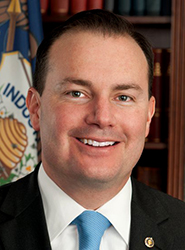
    Lee  MikeThis story comes to mind with the introduction in the Senate of Sen. Mike Lee's (R-UT; at right) bill entitled the Biosimilar Red Tape Elimination Act" (S.6), which in less purple prose is intended to permit biosimilar drugs to have the benefits of being interchangeable with the reference biologic product without the safety studies proscribed in the Biologics Price Competition and Innovation Act (BPCIA), enacted as part of "Obamacare" in 2010.  Sen. Lee's bill is short and to the point; after changing some of the language in Section 351(k) of the Public Health Service Act (codified in 42 U.S.C. § 262(k)) for consistency the bill provides that:

    The Secretary may not require, for a determination of interchangeability described in subparagraph (A), that a biological product undergo studies that assess the risks of alternating or switching between use of the biological product and the reference product.

    The statutory genesis of the need for this change is Sec. 7002(a)(2)(B) of the BPCIS, which added Section 351(k) to the PHSA and specifically in Sec. 351(k)(2)(B) the requirement that:

    INTERCHANGEABILITY.—An application (or a supplement to an application) submitted under this subsection may include information demonstrating that the biological product meets the standards described in paragraph (4)[, i.e.,] that

    (4) SAFETY STANDARDS FOR DETERMINING INTERCHANGEABILITY.—Upon review of an application submitted under this subsection or any supplement to such application, the Secretary shall determine the biological product to be interchangeable with the reference product if the Secretary determines that the information submitted in the application (or a supplement to such application) is sufficient to show that— ''(A) the biological product— ''(i) is biosimilar to the reference product; and ''(ii) can be expected to produce the same clinical result as the reference product in any given patient; and ''(B) for a biological product that is administered more than once to an individual, the risk in terms of safety or diminished efficacy of alternating or switching between use of the biological product and the reference product is not greater than the risk of using the reference product without such alternation or switch.

    One of the hallmarks of the BPCIA generally was that the Secretary of Health and Human Services, through the Food and Drug Administration (FDA) was given a great deal of leeway in deciding the standards upon which a determination of biosimilarity would be made.  This section is thus something of an anomaly, prescribing with particularity the need for the very switching studies that Sen. Lee's bill excoriates as "red tape" and in his rhetoric says are unnecessary.  It should be recalled that in addition to the strictures imposed by the statute (and consistent with the concerns motivating them) was a fear that switching could cause harm to individual patients.  In addition, there was an apprehension that clinical failures or deleterious outcomes occasioned by the FDA improvidently designating a biosimilar to be interchangeable with the reference biologic product would have a negative effect on patients and physicians towards using biosimilar products, particularly in view of the usual severity of the illnesses these drugs are used to treat.

    The motivation for Sen Lee's bill is economic and aimed at reducing drug costs.  Biologic drugs are among the most expensive and are usually prescribed for chronic or serious diseases (or both).  In addition to this being a time where the mantra "drugs cost too much" is one that politicians of every stripe can recite (and expect to garner political capital from doing so), in the ten years since passage of the BPCIA, 38 biosimilar drugs have been approved, four of which are interchangeable with the reference biological drug product.  The FDA has promulgated several Guidances for Industry on the standards and requirements for biosimilarity and in 2019 set out a Guidance on interchangeability (see "FDA Issues Final Guidance Regarding Biosimilar Interchangeability").

    Interchangeability is important for a variety of reasons, particularly with regard to biosimilar drug acceptance and the ability for the interchangeable biosimilar to be substituted for a reference biologic drug product without intervention or approval of a health care provider.  Accordingly, such drugs are rewarded with additional layers of exclusivity (indeed, the only exclusivity for biosimilar drugs contained in the statute, as set forth in the PHSA under § 351(k)(6)), wherein the FDA shall not grant interchangeability status for any second biosimilar drug until the later of:

    (A) 1 year after the first commercial marketing of the first interchangeable biosimilar biological product to be approved as interchangeable for that reference product; [or]
    (B) 18 months after –
        (i) a final court decision on all patents in suit in an action instituted under subsection (l)(6) against the applicant that submitted the application for the first approved interchangeable biosimilar biological product; or
        (ii) the dismissal with or without prejudice of an action instituted under subsection (l)(6) against the applicant that submitted the application for the first approved interchangeable biosimilar biological product; or
    (C)(i) 42 months after approval of the first interchangeable biosimilar biological product if the applicant that submitted such application has been sued under subsection (l)(6) and such litigation is still ongoing within such 42-month period; or
        (ii) 18 months after approval of the first interchangeable biosimilar biological product if the applicant that submitted such application has not been sued under subsection (l)(6).

    So the incentive has been there for biosimilar drug makers to obtain the interchangeability designation but in practice only four interchangeable drugs have been approved.  And Sen. Lee would have the public believe that this is due to the proverbial "pointy headed bureaucrats" at the FDA holding back approval that would economically benefit the public.

    Before being washed away in this latest tide of populism, it might be well to at least inquire whether the switching studies required under current law are (in addition to being more costly and retarding the progress of biosimilar to market as a drug interchangeable with the reference biologic product) necessary to protect public health.  These are scientific questions, not political or economic ones, and like Dr. Stockmann it may be the principled course to at least establish whether switching studies are necessary  (or at least prudent).  As recently as this past September 19, the European Medicines Agency (EMA) and Heads of Medicines Agencies (HMA) enunciated a joint "Statement on the scientific rationale supporting interchangeability of biosimilar medicines in the EU" that declared that a biosimilar drug approved by the EMA should be considered to be interchangeable (noting however that the definition of interchangeable use in Europe "does not include automatic substitution at the pharmacy level," leaving that to each member state).  Context is everything, however; the Statement notes that "[t]he EU regulatory network has been assessing, authorising and monitoring biosimilars for over 15 years and has gained very profound understanding of biosimilars after reviewing more than one hundred biosimilar candidate submissions, and monitoring their safety once they are placed onto the market," considerably longer than the U.S. experience (where the first biosimilar, Zarxio™, was approved in 2015; see "FDA Approves Sandoz Filgrastim Biosimilar").  Moreover, "interchangeability of EU-licensed biosimilars has been confirmed," evidenced by published studies, including Ebbers et al., 2012, The safety of switching between therapeutic proteins, Expert Opinion Biol Ther. 12:1473-85; Kurki et al., 2017, Interchangeability of Biosimilars: A European Perspective, BioDrugs 31(2):83-91; Kurki et al., 2021, Safety, Immunogenicity and Interchangeability of Biosimilar Monoclonal Antibodies and Fusion Proteins: A Regulatory Perspective, Drugs 81:1881-1896; and Barbier et al., 2022, Regulatory Information and Guidance on Biosimilars and Their Use Across Europe: A Call for Strengthened One Voice messaging, Frontiers in Medicine 9: 820755.  These studies have resulted in the conclusion that "when approval for a biosimilar is granted in the EU, additional systematic switch studies are not required to support the interchangeability at prescriber level" (see "Biosimilars in the EU – Information guide for healthcare professionals (europa.eu)").

    And a recent study of 25 members of European national medicines agencies and pharmaceutical companies (both originator and biosimilar) agreed that "interchangeability was more than a scientific question of likeness between biosimilar and reference products: it also pertained to regulatory practices and trust."  Also, these participants were overall confident in the science behind exchanging biosimilar products for the reference products via switching, i.e., with physician involvement."

    So it seems that there is a strong consensus building that the FDA's position on the requirements for interchangeability may need reconsideration and that the law may need to be changed to give the agency the needed flexibility.  But perhaps the better path than a rigid prohibition against switching studies or other methodologies to properly evaluate risk is one espoused by Daniel Alvarez and colleagues in a 2020 paper on interchangeability, where they write:

    Interchangeability should be assessed on a case-by-case basis, considering the "totality of the evidence" and biologic plausibility.  Alternative approaches to statistical analysis (e.g., use of asymmetric rather than symmetric margins to test equivalence) and study designs that meet the FDA's expectations for demonstration of interchangeability should be considered.

    (these comments coming in the context of a discussion of the potential for differing interchangeability requirements for insulin and monoclonal antibody therapies).

    There are many good reasons for making available biosimilar alternatives to biologic drugs to as broad a segment of the public as possible.  But doing so merely for economic benefit without ensuring that the cost savings won't exact alternative costs in patient morbidity or mortality seems imprudent and suggests a more measured approach might meet economic goals without sacrificing human ones.

  • By Kevin E. Noonan –

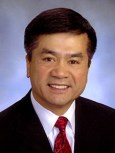
    Locke  GaryLast week, the Council 4 Innovation Promotion (C4IP) put on a webinar entitled "Unpacking the Proposed TRIPS Waiver Expansion: A Conversation with Gary Locke."  Gary Locke (at right) was the Secretary of Commerce during the Obama Administration and later Ambassador to China, and he was joined in conversation with David Kappos, Undersecretary of Commerce and Director of the U.S. Patent and Trademark Office while Secretary Locke served as Secretary.  The conversation was moderated by Andrei Iancu, himself a former Undersecretary of Commerce and Director of the U.S. Patent and Trademark Office during the Trump administration.*

    The conversation focused on the proposed expansion of the TRIPS waiver adopted as a reaction to the COVID-19 pandemic (see "The Proposed WTO IP Waiver: Just What Good Can It Do? — An Analysis").  That waiver, "limited" to vaccines against the SARS-CoV-2 virus, itself was fraught with risk that the scope of the waiver could be expanded beyond patents (see "If the Devil of the WTO IP Waiver Is in the Details, What Are the Details?").  But the new proposal expressly extends into therapeutic drugs and diagnostic assays relevant to the pandemic and accordingly poses a much greater risk to the international innovation regime.

    Director Kappos began the discussion after an introduction by Director Iancu, with Ambassador Locke speaking about his involvement in the waiver issue.  He noted the bipartisan opposition to the TRIPS waiver and that even the original waiver had not achieved its goal of getting vaccines to less developed countries that needed them.  This was because he explained the problem was not intellectual property but rather was a confluence of logistics and the need for example for the vaccines to be refrigerated.  The risk, the Ambassador stated, was that actions like this are precedent-making without the justification of improving global health or response to the pandemic.  In addition, even in instances where vaccines supplies were available many of the countries used to illustrate the need for the waiver did not accept them, for historical and cultural reasons for example (Director citing the statistic of 100 million discarded doses).  The waiver was particularly troubling in view of the need for patent protection to provide necessary incentives to address unmet and unsolved disease treatment needs.  Ambassador Locke illustrated these concerns as follows:

    The evidence is overwhelming that IP protections have not impeded people's access to treatment and did not in any way impede the development of vaccines.  Drug companies have been voluntarily licensing their technology to accelerate global manufacturing and distribution of treatments.  . . .  Pfizer and Merck have signed hundreds of agreements to allow generic versions of their medicines to be manufactured all around the world, they've worked with the UN Medicines and Patent Pool to allow generics to be manufactured by approx.  200 companies worldwide and many other companies have entered into voluntary licensing agreements . . . .  India actually threw out 100 million doses of vaccines that expired . . . [and] South Africa is trying to cancel the contract [with Johnson & Johnson] for over 10 million doses of the vaccine.  And so not a single country took advantage of the waiver for IP protections . . . to increase the supply of vaccines and [that's because] so many [generic] companies from around the world . . . had agreements with companies like Moderna and Pfizer to produce generic versions, but the problem in many of these developing countries was they couldn't refrigerate it . . . [or ] had distribution problems.  . . .  There is no evidence that there is a problem with getting access to the medicines to treat people who come down with COVID.  So, I fear we're creating a precedent that will eventually weaken the U.S. innovation economy, which is so important if we want to look at developing cures for some of the most dreaded diseases out there.

    Ambassador Locke also noted the impetus for some countries in favor of waivers as being a desire to get access to the "secret sauce" of these technologies to obtain economic and competitive benefits.  Director Kappos mentioned the consequence of the waiver as being a "free giveaway" of the mRNA vaccine platform, and how this was particularly troubling because as a platform it implicates more than just SARS-CoV-2 and COVID-19.  Also discussed was the support from the Biden Administration (at least for the initial waiver) as showing evidence of a disconnect between treatment of medicines and biopharmaceuticals when compared with other Administration initiatives like the CHIPS Act and imposing restrictions on hi-tech materials to China and other countries.

    On the bright side, the Ambassador and Director discussed rising opposition ("starting to ask the tough questions," according to Director Kappos) to the new waiver from Mexico, Switzerland, the UK, the EU, Japan, South Korea, and Singapore, but (regrettably) not the U.S., and that U.S. labor unions (a source of support for the Administration) oppose the waiver on economic grounds as a "jobs issue."  More significantly noted was the December 17th target date for the proposal to be formally considered by the WTO is likely to be deferred.  But despite these glimmers of silver lining both the Ambassador and the Director emphasized the continuing need to "get the message" to policymakers (both on the Hill and in the Administration) of the disincentives to innovation in medicine and the pharmaceutical industry that the waiver is certain to produce.

    Director Iancu discussed with the speakers the policymaking and political realities of how a cabinet member like the Secretary of Commerce can influence the discussion in the Administration, supported by input from constituents like pharmaceutical companies and other innovation stakeholders.  But "if people are silent," the Ambassador noted, then the Administration might conclude the waiver was not an issue with these constituencies.  And Director Iancu noted that such waivers (although being prominent in the biopharma industry today) may be proposed for other technologies (such as climate change), with results negative to innovation in these technologies.

    Director Kappos also mentioned that WTO is "wasting its time" on the waiver in view of more pressing international trade issues.  Director Iancu stated that the U.S. has a leadership role to play in persuading other countries about the real IP issues in view of international pressure on WTO and World Health Organization generated by the pandemic.  Ambassador Locke raised the issue of future pandemics and the need to build and maintain infrastructure to be ready for them.  Director Kappos noted that IP was particularly important for biopharma innovation because they were "risky, failure-prone" technologies.  And Director Iancu noted the need to achieve the long-term goal of building local capabilities, and that these will not develop unless there is adequate patent and other IP protection.

    Ambassador Locke noted in conclusion that there needs to be a climate that enables R&D to address these challenges and that strong industry is required to achieve these goals, both in the U.S. and in countries like China (which he says recognizes these needs).  There is no basis or reason for waiving IP rights and protections ("we cannot just give [our technology] away"), he said in bringing the discussion to a close.

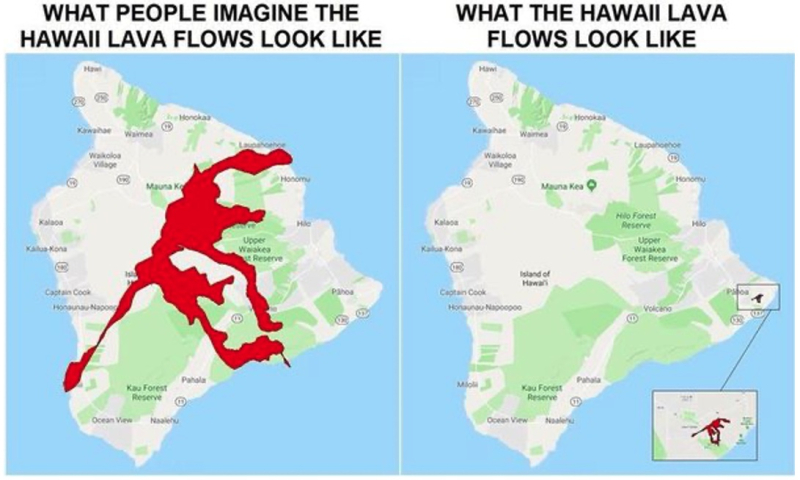
    It is impossible not to have a feeling of déjà vu listening to these erudite and experienced speakers discuss these issues.  They are reminiscent of the arguments involved in gene patenting and more currently arguments about drug costs and the relevance of patents (actually almost none, in the popular mind almost entirely).  The 2018 volcano on the Big Island and public perception of it provides a vivid analogy:

    ImageWhich is not to say that the only rational response is despair at the ability for those like Ambassador Locke and Directors Kappos and Iancu to cut through the misperceptions and misinformation now rampant to explain the objective reality and the consequences of proposals like the extension of the TRIPS waiver.  It is to say however than we must recognize how difficult the task may be, and also directly proportional to its importance.

    *Aphorisms about broken clocks and blind squirrels can be applied according to the reader's political proclivities.

  • By Kevin E. Noonan –

    FDAOn November 18th, the U.S. Food and Drug Administration (FDA) announced its approval of Eli Lilly's Rezvoglar (insulin glargine-aglr) product as an interchangeable biosimilar to Sanofi's Lantus (insulin glargine).  Both the reference product and the interchangeable biosimilar are "long-acting human insulin analog[s] indicated to improve glycemic control in adults and pediatric patients with diabetes mellitus" according to FDA's press release.  Rezvoglar had been approved on December 17, 2021 as a biosimilar, and with this approval joins Semglee (insulin glargine-yfgn), which was the first approved Lantus-interchangeable biosimilar.  The Rezvoglar product will be marketed as 3 mL prefilled injectable pens.

    This approval brings to four the number of approved interchangeable biosimilar products; in addition to Semglee, these include Cyltezo (adalimumab-adbm), an interchangeable biosimilar to AbbVie's Humira (adalimumab) and Cimerli™ (ranibizumab-eqrn), an interchangeable biosimilar to Genentech/Roche's Lucentis® (ranibizumab).

  • By Kevin E. Noonan –

    Federal Circuit SealOn November 15th, the Federal Circuit handed down its opinion affirming all aspects of the District Court's decision in Pharmacyclics LLC v. Alvogen, Inc.  The case illustrates once more the importance of the clear error standard in support of factual aspects of a district court's decision, even regarding ultimate questions of law, such as enablement and obviousness that are based on factual considerations.

    The case arose as ANDA litigation between Pharmacyclics LLC and Janssen Biotech, Inc., whose patents for the compound ibrutinib (an inhibitor of Burton's tyrosine kinase (BTK) and the basis for their Imbruvica Product) was challenged by Alvogen and Natco Pharma Ltd.  The drug is used for treatment of immune system cancer, specifically relapsed/refractory mantle cell lymphoma (RR/MCL).  At trial, Pharmacyclics asserted five claims:

    Claim 10, U.S. Patent No. 8,008,309 ("the '309 patent"):

    10.  The compound of claim 1 [which claims a genus of BTK inhibitor compounds] having the formula 1-((R)-3-(4-amino-3-(4-phenoxyphenyl)-1H-pyrazolo[3,4-d]pyrimidin-1-yl)piperidin-1-yl)prop-2-en-1-one.

    Claim 2, U.S. Patent No. 8,754,090 ("the '090 patent"):

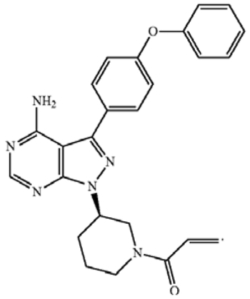
    1.  A method for treating mantle cell lymphoma in an individual who has already received at least one prior therapy for mantle cell lymphoma comprising administering to the individual once per day be- tween about 420 mg to about 840 mg of an oral dose of an inhibitor of Bruton's tyrosine kinase (Btk) having the structure:
    2022-11-27 Image
    2.  The method of claim 1, wherein the once per day oral dose is about 560 mg.

    Claim 5, U.S. Patent No. 9,725,455 ("the '455 patent") :

    1.  A crystalline form A of [ibrutinib] that has an X-ray powder diffraction (XRPD) pattern comprising 2-Theta peaks at 5.7±0.1o, 18.9±0.1o, and 21.3±0.1o.

    5.  The crystalline form of claim 1, wherein the X- ray powder diffraction (XRPD) pattern further comprises 2-Theta peaks at 13.6±0.1o, 16.1±0.1o, and 21.6±0.1o.

    Claim 30, U.S. Patent No. 9,655,857 ("the '857 patent"):

    30.  The high-load solid tablet formulation of claim 1 [which recites a genus tablet formulation for ibrutinib], consisting essentially of:
        a)  about 70% w/w of ibrutinib,
        b)  about 14% w/w of lactose monohydrate,
        c)  about 5% w/w of microcrystalline cellulose,
        d)  about 2% w/w of polyvinylpyrrolidone,
        e)  about 7% w/w of croscarmellose sodium,
        f)  about 1% w/w of sodium lauryl sulfate,
        g)  about 0.5% w/w of colloidal silicon dioxide, and
        h)  about 0.5% w/w of magnesium stearate.

    Claim 37, the '857 patent:

    37.  The solid tablet formation of claim 27 [which recites a genus tablet formulation for ibrutinib in an amount of about 70 mg to about 840 mg] consisting essentially of
        a)  about 69% w/w to about 71% w/w of ibrutinib,
        b)  about 13% w/w to about 15% w/w of lactose monohydrate,
        c)  about 2% w/w to about 5% w/w of microcrystalline cellulose,
        d)  about 1% w/w to about 3% w/w of polyvinylpyrrolidone,
        e)  about 6% w/w to about 8% w/w of croscarmellose sodium,
        f)  about 1% w/w to about 4% w/w of sodium lauryl sulfate,
        g)  about 0.4% w/w to about 0.6% w/w of colloidal silicon dioxide, and
        h)  about 0.4% w/w to about 0.6% w/w of magnesium stearate.

    The parties stipulated to infringement of the asserted '309, '090, and '455 patent claims and the District Court found Alvogen's proposed generic ibrutinib would infringe the asserted claims of the '857 patent.  The District Court found against Alvogen on all arguments of invalidity (only some of which were the subject of this appeal, and none of these other arguments raised any additional significant issues).  Alvogen and Natco appealed.

    The Federal Circuit affirmed, in an opinion by Judge Bryson joined by Judges Hughes and Chen.  The opinion addressed each ground of appeal raised against each asserted claim seriatim, noting initially that in an appeal from a bench trial the Court reviews factual determinations for clear error, citing UCB, Inc. v. Watson Lab'ys Inc., 927 F.3d 1272, 1286 (Fed. Cir. 2019), for the principle and Biogen Int'l GmbH v. Mylan Pharms. Inc., 18 F.4th 1333, 1341 (Fed. Cir. 2021), for the standard (i.e., that the Court finds clear error only when it has a "definite and firm conviction that a mistake has been made").

    Regarding claim 2 of the '090 patent, the opinion addresses the District Court's finding that this claim was supported by an adequate written description, with an enabling specification, and was not obvious.  The basis for the Court's affirmance of an adequate written description was that the '090 specification disclosed two related clinical trial protocols for using a BTK inhibitor to treat R/R MCL.  The first of these taught using a variety of such inhibitors at dosages based on patient weight, and the other used a broader range of such inhibitors as a specific dosage ("about 560 mg/day).  In addition, the Summary of the Invention section of the patent expressly disclosed ibrutinib for treating R/R MCL.  Applying its "blazemarks" analysis (see Novozymes A/S v. DuPont Nutrition Biosciences APS, 723 F.3d 1336, 1346 (Fed. Cir. 2013) (quoting In re Ruschig, 379 F.2d 990, 994–95 (C.C.P.A. 1967)), the Court held it was not clearly erroneous for the District Court to find an adequate written description where ibrutinib was "'the only BTK inhibitor identified by name in the Summary of the Invention and is the only BTK [inhibitor] identified for the treatment of R/R MCL' in the '090 patent."  The Court expressly distinguished the circumstances here from its decision in Biogen (a failure to satisfy the written description requirement) because there the only disclosure of the claimed dosage was as one end of a broader disclosed range (in the context of "a long series of ranges") whereas here the claimed dosage was "expressly recited by itself" both in the claim and the specification as filed.  (Undiscussed were the decidedly different circumstances arising during prosecution of the patent-in-suit in Biogen supporting the Court's opinion.)  Regarding Alvogen's similar arguments on enablement, that the specification disclosed exactly 560 mg/d and claimed "about" 560 mg/d, the Federal Circuit found no clear error in the District Court's determination that there was sufficient disclosure in the specification for the skilled artisan to follow the disclosed protocol and practice the claimed method.

    As for obviousness, the Federal Circuit rejected Alvogen's argument that the District Court incorrectly determined that the skilled worker would not have been motivated to treat R/R MCL with ibrutinib from prior art references teaching treatment of MCL with the drug, in light of the District Court's finding of fact that disclosure of treating MCL would not be interpreted by the skilled worker as evidence of effective treatment of RR/ MCL.  The panel also refused to find error in the District Court's finding that disclosure of two R/R MCL patients having experienced a "partial response" to ibrutinib in a press release, in view of the small sample size and the propensity for oncology drugs to have a low frequency of receiving FDA approval ("less than five percent of oncology drugs that enter a Phase I trial ultimately receive FDA approval").  Another asserted and rejected obviousness argument was that the skilled worker was capable of finding the recited dose (560 mg/d) as a therapeutically effective amount by routine experimentation, based on evidence that "typical" dose escalation studies would have involved dosages greater than 560 mg/d and would require "a study using pharmacodynamic endpoints" that was not disclosed in Alvogen's combination of references.  With regard to the motivation to combine, the panel recognized that Alvogen's expert testified to safety concerns in 2006 rather than 2010 (when the application was filed) and Pharmacyclics asserted contrary expert testimony that the District Court found persuasive.  The panel also affirmed the District Court's decision regard a "presumption of obviousness" from the cited prior art teachings, on two grounds.  The first was that such a presumption is proper "when the only difference from the prior art is a difference in the range or value of a particular variable," citing In re Kumar, 418 F.3d 1361, 1366 (Fed. Cir. 2005), which was not the case here, and second that Pharmacyclics "would have rebutted any [such] presumption."  Finally, the Court did not reach the question of secondary considerations because the District Court's non-obviousness determination made this argument unnecessary.

    Turning to claim 5 of the '455 patent, the Federal Circuit affirmed the District Court's determination that the claim was neither inherently anticipated nor obvious over the cited art.  Alvogen's inherent anticipation argument was grounded in an assertion that the Form A polymorph of ibrutinib (recited in claim 5) was the only polymorph used in clinical trials disclosed in the art, wherein Alvogen relied upon Abbott Laboratories v. Geneva Pharmaceuticals, Inc., 182 F.3d 1315 (Fed. Cir. 1999) (an on-sale bar case).  The Federal Circuit distinguished the circumstances here from those in the Abbott case, and cited Schering Corp. v. Geneva Pharms., 339 F.3d 1373, 1377 (Fed. Cir. 2003), as the more apt precedent.  According to the opinion, the circumstances before the District Court in this case were more analogous to those in Endo Pharms. Sols., Inc. v. Custopharm Inc., 894 F.3d 1374, 1382 (Fed. Cir. 2018), upon which the District Court relied, there being no evidence in this case that the only therapeutically effective polymorph of ibrutinib was Form A, and that the District Court's factual determinations in this regard were not clearly erroneous.  As for Alvogen's obviousness arguments, the Federal Circuit affirmed the District Court based on, inter alia, there being no clear error in that court's reliance on Pharmacyclics' expert over one of Alvogen's experts (another one agreeing with Pharmacyclics), based on the District Court's appreciation that production of polymorphs and their physical properties was unpredictable.  The panel held as not clearly erroneous the District Court's finding that "given the lack of teaching in the art regarding crystalline forms of ibrutinib and the expert testimony that polymorph screening can produce unpredictable results, a skilled artisan would not have reasonably expected success in producing Form A of ibrutinib," citing Grunenthal GmbH v. Alkem Lab'ys Ltd., 919 F.3d 1333, 1344 (Fed. Cir. 2019).

    Next, the Federal Circuit held as not clearly erroneous the District Court's finding that claims 30 and 37 of the '875 patent were adequately supported by the written description.  Alvogen's argument was that the specification of the '875 patent disclosed one species in a range of species recited in these claims.  Alvogen's "problem," according to the Federal Circuit, was that "the precise ranges recited in the claims are found in formulations disclosed in the specification," and on this basis the Federal Circuit affirmed the District Court's determination that these claims were adequately described.

    Finally, the Federal Circuit affirmed the District Court's decision that claim 10 of the '309 patent was not anticipated by the cited art, Alvogen arguing that a skilled worker could not have synthesized a needed intermediate without undue experimentation and accordingly the '309 patent was not entitled to its earliest priority date.  Alvogen's assertion of error in this regard was that the District Court should not have relied upon Pharmacyclics' testimony that his undergraduate students could have produced the intermediate without undue experimentation based on the disclosure in the priority documents.  The District Court also relied upon the intermediate having been known in a prior art reference upon which the skilled artisan could have relied, and Alvogen argued that the District Court did not apply the proper legal standard for incorporating this document by reference.  The panel found this argument not dispositive because "a skilled artisan could have synthesized Intermediate 2 and thus ibrutinib" without reference to the reference.  Moreover, the opinion states that "formal incorporation by reference is not necessary if the material being incorporated is background art," citing Falko-Gunter Falkner v. Inglis, 448 F.3d 1357, 1365 (Fed. Cir. 2006).  On these grounds, the Federal Circuit held that the District Court committed no clear error in rejecting Alvogen's argument.

    To the extent there is any question about the importance of the standard of review in the Federal Circuit's opinion, mere casual perusal thereof finds 15 instances of some version of "clear error" and "clearly erroneous" recited by the Court.  A cautionary tale indeed.

    Pharmacyclics LLC v. Alvogen, Inc. (Fed. Cir. 2022)
    Panel: Circuit Judges Chen, Bryson, and Hughes
    Opinion by Circuit Judge Bryson

  • CalendarNovember 28, 2022 – "UPC Judges Released — A Conversation on the Unified Patent Court" (OxFirst Limited) – 15:30 to 16:30 (GMT)

    November 29, 2022 – Eligibility requirements of patents for inventions, under title 35 U.S.C. § 101 (U.S. Patent and Trademark Office Stakeholder Offerings and Resources (SOaR) virtual training series) – 9:00 to 10:00 am

    November 29, 2022 – "Ethics Issues in IP: Transactions, Prosecution, and Litigation" (Intellectual Property Owners Association) – 11:00 am to 12:00 pm (ET)

    November 30, 2022 – "AI and Machine Learning for Effective IP Protection" (Intellectual Property Owners Association Anticounterfeiting & Antipiracy and AI & New Emerging Technologies Committees) – 12:30 pm to 1:30 pm (ET)

    November 30, 2022 – Eligibility requirements of patents for inventions, under title 35 U.S.C. § 101 (U.S. Patent and Trademark Office Stakeholder Offerings and Resources (SOaR) virtual training series) – 1:00 to 2:00 pm ET

    November 30, 2022 – "End-Loading at the USPTO: Will Examiner Procrastination Impact Your Practice?" (Juristat) – 1:00 pm (ET)

    November 30, 2022 – Women's Entrepreneurship (WE) initiative (U.S. Patent and Trademark Office) – 1:00 pm (ET) – Alexandria, VA

    December 1, 2022 – "Key Considerations in Valuing Intellectual Property" (Fox Forensic Accounting) – 12:00 pm (CT)

    December 1, 2022 – "Enablement and Written Description in the Spotlight" (Intellectual Property Owners Association) – 12:00 pm to 1:00 pm (ET)

    December 1, 2022 – "PTAB Ten Years After: Where Are We Now and Where are We Going?" (Federal Circuit Bar Association PTAB/TTAB Committee) – 3:00 pm to 4:00 pm (ET)

    December 1, 2022 – Eligibility requirements of patents for inventions, under title 35 U.S.C. § 101 (U.S. Patent and Trademark Office Stakeholder Offerings and Resources (SOaR) virtual training series) – 3:00 to 4:00 pm ET

    December 1-2, 2022 – International Summit on Biosimilars and Originator Biologics (American Conference Institute) – Munich Germany,