• Judge Randall Rader Says Goodbye at BIO

    By Kevin E. Noonan

    BIO International ConventionLast week, Judge Randall R. Rader, until recently Chief Judge of the Court of Appeals for the Federal Circuit, opened a day-long session on Intellectual Property Law by saying farewell.  In a speech at varying times passionate and wistful, the Judge (who is widely viewed as a strong proponent of patent law and thus appreciated by many in the biotechnology community) spoke at length about the Court and his involvement in it, and its unique place in this country and the world regarding its signal influence on U.S. patent law.
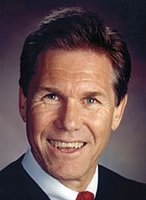
    Judge RaderEschewing the podium for a handheld microphone and the floor in front of the audience, Judge Rader started his talk by "confessing" that in thinking about his speech (beginning "ten minutes" before he began speaking) he couldn't think of any jokes from his repertoire that were appropriate (indicating, as he said, that he would have to dive into his remarks "humorless" and that "maybe I am the joke").  He then recounted at length the day more than thirty years ago when he met with Howard Markey, then Chief Judge of the Court of Customs and Patent Appeals, in his Senate office.  The topic: the Federal Courts Improvement Act, the bill that would establish the Federal Circuit.  The Judge remembered the "passion and vigor" with which Chief Judge Markey advocated for the new Circuit Court, and his belief that U.S. patent law needed to be "invigorated" to enable patents to "work uniformly across the nation" in stimulating the economy by encouraging and protecting innovation.  From that day to this Judge Rader confessed to being a convert to Judge Markey's vision.

    Turning from the Court of Chief Judge Markey to the Court as it is, Judge Rader engaged in a little institutional "psychoanalysis," saying that the Court has a dual personality with regard to patent law.  On the one hand, the Judge said, the Court was established and has the characteristics of a court of special expertise in patent law.  In what was perhaps a nuanced reference to Seventh Circuit Chief Judge Woods comments last year that the other Circuits were just as capable of deciding patent law cases as the Federal Circuit (based on the judges' technical expertise or lack of it), Judge Rader admitted that many judges are not patent law experts when they join the Court but "hearing 5-10 cases a month" quickly engenders expertise.  This forms the Court's "mission" or "agenda" or "responsibility" to ensure uniformity in the law geographically and strength of innovation policy.  This mission was something Judge Markey believed in, and Judge Rader and other members of the Court continue to do so.  In this regard the Judge mentioned a study by Professor Rebecca Eisenberg at NYU that showed that, of the twenty most influential cases decided in the Court's first decade, Judge Markey wrote eighteen of them.  On the other hand, according to Judge Rader there are members of the Court who believe that the Federal Circuit should decide cases more dispassionately without any particular concern for the development or consistency of patent law itself; he invited audience members "who know the judges" to draw up their own lists regarding into which camp the current judges fall.

    Judge Rader then spent a few minutes discussing the consequences of the Federal Circuit's special focus on patent law and that having such dedicated subject matter jurisdiction created a "great responsibility" of patent appeals, that make this Court different from the other Circuit Courts and mitigates against the Federal Circuit just being a "decisional body" that handles these questions like other courts.  He pointed out that the position of the Court in the judicial hierarchy is unique — the U.S., in creating the Federal Circuit made a policy choice to place expertise on technology in the intermediate appellate court level.  This is different than the case in Great Britain, he said, where that role is at the trial court level, consistent with the common law model that appellate courts are intended to correct errors not to make decisions in the first instance.  In contrast, in Germany the final decision is made by a court with expertise at the top of the judicial foodchain.  One advantage of the German model, he noted, was that it does not occasion some of the tensions between a court having expertise (the Federal Circuit) that is then reviewed by a court without expertise (the Supreme Court), which he acknowledges is "doing its best within a different culture" to apply the law but that it occasionally leads to "contradictory" results (which was the closest the Judge came to criticizing the Supreme Court or its recent spate of "contradictory" decisions).  And, exhibiting his intellectual breadth, the Judge noted the difference between the French Revolution (where the outcome was to kill all the judges with ties to the overthrown monarchy and structure a government where no one "with significant decisional authority" was placed over the people so that the legislature makes policy) with the American Revolution (which elevated judges to equal authority with the other branches of government so they can "overrule" the other branches when necessary, although the Judge did caution that he might not have said "overrule").  By "historical accident," Judge Rader said, the U.S. created a system where patent expertise was placed with the appellate court, leaving another review level above them without such expertise that creates tension between the two courts, making it sound almost inevitable that the current situation between the two Courts would eventually arise.

    Finally, with regard to the Court's unique qualities and characteristics, Judge Rader cited its national jurisdiction, where the Federal Circuit "speaks in review and enunciates principles that are applied nationally."  This is a "vast responsibility" imposed on the Court, in view of the impact of its decisions on "in every similar factual situation" that may occur for each case it decides, in view of how the law the Federal Circuit enunciates affects "the largest economy in the world" and hence the global economy.  Judge Rader also noted that the Court's expertise and influence extends to all district court judges in the nation, and cited the interest among seventy-five district court judges who have "stepped forward" to be involved in programs to strengthen their skills in presiding over patent litigation, and the influence of the Court in this process.

    With respect to patent litigation Judge Rader encouraged the lawyers making up the majority of the audience to address the system's "greatest weakness" that could be "potentially fatal":  the expense of a patent trial.  He asserted that any good trial lawyer will say that within a very short time after litigation commences she would be able to identify "95%" or even "98%" of the documents and other evidence needed to make her case.  Instead, the Judge accused the bar of looking for the smoking gun e-mail where the plaintiff admits to defects in her patent or the defendant admits to having to copy the patented invention.  This turns trials into "passion plays," according to Judge Rader, and greatly increases the costs of all patent trials despite the non-existence of such evidence in most cases.

    Judge Rader took no questions; instead, be ended his remarks by exhorting members of the bar to "assume a role" and exercise "leadership" in improving the patent system.  He said that he believed that the bar is "just as important as the courts in addressing the problems of cost and complexity," and that "we are in this together."  "May you be up to your responsibility as I know the Federal Circuit judges will be up to theirs" was how he ended his talk, to a standing ovation and great well-wishes for his future.

    Unless Judge Rader's significance on the Court, and the significance of his departure are not appreciated, a few quotes from his remarks in a recent case (when it had become evident that the zeitgeist had turned against patenting and patent law) should serve as a bittersweet reminder:

    Too often patent law is misunderstood as impeding more than promoting innovation.  This academic proposition, called the tragedy of the Anti-commons in some scholarly presentations, suggests that exclusive rights impede the flow of information and limit experimentation that might lead to the next generation of technological advance.  Michael A. Heller & Rebecca S. Eisenberg, Can Patents Deter Innovation? The Anticommons in Biomedical Research, 280 SCIENCE 698 (1998).

    In the first place, in an era of empirical research, one might ask the reason that this academic notion has never actually been verified.  Although studied, no research has substantiated this alleged attack on the patent system.  In fact, "the effects predicted by the anti-commons hypothesis are not borne out in the available data."  Timothy Caulfield, Human Gene Patents: Proof of Problems?, 84 Chi.-Kent L. Rev. 133, 137 (2009); see also American Association for the Advancement of Science, INTERNATIONAL INTELLECTUAL PROPERTY EXPERIENCES: A REPORT OF FOUR COUNTRIES 12 (2007) (finding the results of a 2006 survey of U.S. and Japanese researchers "offer very little evidence of an 'anticommons problem'" and that "IP-protected technologies remain relatively accessible to the broad scientific community").  Surveys of academic researchers have revealed that "only 1 percent . . . report having to delay a project, and none abandoned a project due to others' patents."  Wesley M. Cohen & John P. Walsh, Real Impediments to Academic Biomedical Re-search, in 8 INNOVATION POLICY AND THE ECONOMY 1, 10-11 (Adam B. Jaffe, Josh Lerner, & Scott Stern eds. 2008), available at http://www.nber.org/~marschke/mice/Papers/cohenwalsh.pdf (citing John P. Walsh et al., The View from the Bench: Patents, Material Transfers and Biomedical Research, 309 SCIENCE 2002 (2005)).  In other words, patents on research tools and biomedical innovations do not significantly slow the pace of research and do not deter researchers from pursuing promising projects.

    The reason that patents have not been proven to impede more than stimulate technological advance is simple:  it does not happen.  It does not happen for several reasons.  First, experiments advancing technology rarely, if ever, generate commercial value.  Thus patent owners have little, if any, incentive to license or inhibit research.  Stated otherwise, even if a patent owner wanted to sue or license potential researchers, experiments do not produce income or a source of damages.  See id. at 12.

    Second, in the modern age of technology, the character of technological advance has changed.  The era when the Bell Labs or some other tech center could hire the most promising engineers and essentially invent everything for the world has passed.  With the vast specialization of all fields of research, advances in technology require great cooperation.  A new product or a new direction in biotechnology or electronics will be produced by cooperation between a professor in Chengdu, China, a young programmer in Bangaluru, India, an engineer at a large corporation in Munich, Germany, a graduate student at Tokyo University, and a team at a small start-up company in Silicon Valley.  The patent system can help inform each of them of the other and bring together their incremental advances to achieve the next generation of progress in some tiny corner of human progress.

    Thus, patents properly remain a tool for research and experimentation because the system encourages publication and sharing of research results.  Disclosure of how to make and use the invention is the "quid pro quo" of the patent grant.  See JEM Ag Supply, Inc. v. Pioneer Hi-Bred Int'l, Inc., 534 U.S. 124, 142 (2001).  In exchange for disclosure, the inventor receives a limited term of exclusivity to benefit from commercialization of his invention.  Without this promise of exclusivity, researchers at corporations would be forced to turn to secrecy as the best protection for their inventions.  Even academic researchers may delay publication of results in order to maintain an edge over the competition, Cohen & Walsh, supra at 14, and the race to the patent office helps counteract this tendency toward secrecy by rewarding earlier disclosure.  "The information in patents is added to the store of knowledge with the publication/issuance of the patent.  . . .  [It] is not insulated from analysis, study, and experimentation for the twenty years until patent expiration."  Classen, 659 F.3d at 1072.  Rather, information shared through patent applications is immediately available for others to build upon.  It speeds the progress of scientific endeavor.  In other words, the patent system's modern benefits facilitate experimentation far more than any hypothetical inhibition.

    Momenta v. Amphastar (Fed. Cir. 2012) (see "Momenta Pharmaceuticals Inc. v. Amphastar Pharmaceuticals, Inc.: 'The Rest of the Story'").

    Judge Rader was a Senate staffer and as Chief Counsel or Minority Chief Counsel for the Senate Subcommittee on the Constitution and the Subcommittee on Patents, Trademarks, and Copyrights.  He was appointed to the Court of Claims by President Reagan in 1988.  Elevated to the Federal Circuit in 1990 by President George H.W. Bush, Judge Rader served as Chief Judge from September 2010 until a few weeks ago.  In addition to his judicial role, the Judge has been an active teacher both in the U.S. and abroad and is one of the authors of the most widely used casebook for U.S. patent law, entitled Cases and Materials on Patent Law.
  • By Donald Zuhn

    BIO International ConventionAt last week's BIO International Convention in San Diego, Andrew Hirshfeld, USPTO Deputy Commissioner for Patent Examination Policy, and June Cohan, a Legal Advisor with the USPTO's Office of Patent Legal Administration, took part in a BIO session that provided some of the Office's initial observations regarding written comments submitted to date on the MyriadMayo guidance memorandum that was issued on March 4, 2014.  Mr. Hirshfeld began the presentation by noting that the Office was eager to receive public feedback on the Guidance, including examples of claims that might be presented in supplemental guidance the Office expected to issue after the July 31 deadline for submitting comments.

    USPTO SealBefore turning to several additional exemplary claims for which the Office was seeking public input, Mr. Hirshfeld addressed several issues involving the Guidance that had been raised in comments already received by the Office.  First, in response to comments that suggested the Guidance be limited to Myriad, he noted that while the Office had considered limiting the Guidance to Myriad, it instead responded to requests from examiners for more comprehensive guidance.  Despite the negative response to the Guidance from the patent community, Mr. Hirshfeld still felt that the Office's approach was the right one.  He also explained that the Office's intent in the Guidance was to inform examiners that terms such as "isolated" did not have a per se meaning.  In other words, the recitation of, for example, an "isolated nucleic acid molecule" conveyed neither per se patent eligibility nor per se patent ineligibility on the "nucleic acid molecule."

    In response to comments suggesting that the Office had created a new legal standard with its use of a "significantly different" requirement in the Guidance, Mr. Hirshfeld noted that this was not the Office's intent.  Instead, he explained that the "significantly different" standard in the Guidance was only a teaching tool for examiners.

    Finally, with respect to comments that were critical of the Guidance for overlooking the importance of functional differences in establishing patent eligibility, Mr. Hirshfeld pointed out that this was an area where there was a lot of common ground between the Office and critics of the Guidance.  He noted that the Office had received significant feedback on this issue and that the Office agreed that functional differences need to be taken into account when assessing patent eligibility, stating that "there is room between Funk Brothers and Chakrabarty."  However, Mr. Hirshfeld admitted that the Office has been struggling with claims reciting a single product (as opposed to combinations) in which the product differs functionally, but not structurally, from a naturally occurring product.  As for combination claims, Mr. Hirshfeld noted that significant public feedback had been received and that much of it disagreed with the Office's handling of such claims.  He acknowledged that the Office "could be doing more on our end."  Finally, with respect to derivatives of natural products, Mr. Hirshfeld indicated that it was not the Office's intent to render all derivatives patent ineligible, and he suggested that "a lot of clarity was needed on this."

    Mr. Hirshfeld closed his portion of the presentation by pointing out that the Office had received a lot of feedback criticizing Funk Brothers and Mayo as not being good law, and asking the Office to not apply these cases.  In response, he noted that Office did not intend to ignore any cases, and suggested that "we need to draw the right lines" instead.

    Ms. Cohan followed Mr. Hirshfeld's presentation by providing seven exemplary claims "for discussion purposes."  The exemplary claims that were presented are as follows:

    1.  Isolated nucleic acid comprising a sequence that has at least 90% identify to SEQ ID NO: 1 and contains at least one sequence modification relative to SEQ ID NO: 1.

    2.  Polypeptide comprising an amino acid sequence that has at least 90% identity to SEQ ID NO: 2 and contains at least one sequence modification relative to SEQ ID NO: 2.

    3.  A nucleic acid comprising SEQ ID NO: 1 and a fluorescent label attached to the nucleic acid.

    4.  A chimeric or humanized antibody to Antibiotic L.

    5.  Purified Antibiotic L.

    6.  Antibiotic L, which is expressed by recombinant yeast.

    7.  A human or fully human antibody to Antibiotic L.

    During her presentation, Ms. Cohan noted that the Office was trying to resolve how applicants could establish patent eligibility by showing differences in function or use (as opposed to the Guidance's focus on structural differences).  In particular, she posed the question of whether a difference in function or use would by itself constitute a marked difference, and invited public comment on the issue.

    Following Ms. Cohan's presentation, Mr. Hirshfeld opened the floor for questions.  In response to a question about whether a course correction was needed, Mr. Hirshfeld noted that the Office would be issuing iterations to the guidance, and whether such iterations could be considered a course correction would be in the eye of the beholder.  He reiterated, however, that clarity was needed with respect to derivatives of natural products, functional language, and combination claims.  Mr. Hirshfeld also stated that "no one should leave here today thinking we are not making changes," declaring that "we will be making changes."

    Another attendee asked the Office to consider taking a different approach with the Guidance.  Noting that the patent community is dealing with a negative Supreme Court, she suggested that the Office "push back wherever you can," adding that if the Office "buy[s] into what the Supreme Court says, then you're going to damage the biotech industry."  Those in attendance responded with a round of applause.

    In a post-Convention discussion with Mr. Hirshfeld and Ms. Cohan, Patent Docs was informed that the claims presented at the BIO Convention have now been posted on the Guidance webpage as part of seven-slide PowerPoint presentation.  Mr. Hirshfeld explained that the Office posted the claims on the Guidance webpage in order to obtain feedback from the public.  Slide 3 of the presentation provides the following factual assumptions for the seven claims that were presented at BIO:

    • Antibiotic L is a naturally occurring protein produced by a particular bacterial species.  It exhibits antibiotic activity in nature (e.g., it kills other bacterial species in its natural environment).

    • SEQ ID NO: 1 is the naturally occurring DNA sequence that encodes Antibiotic L.

    • SEQ ID NO: 2 is the naturally occurring amino acid sequence of Antibiotic L.

    • Some "fluorescent labels" are naturally occurring.

    • Antibodies to Antibiotic L are naturally occurring in wild coyotes, but not in humans or mice.

    Mr. Hirshfeld noted that the Office's inclination was that the seven claims presented at the BIO Convention were examples of things that, in the right context, would be patent eligible.  He indicated that the Office was now tasked with formulating supplemental guidance that provided the right context for these claims (provided that these claims make it into the supplemental guidance) as well as any other claims that might make it into the supplemental guidance.

    For additional information regarding this topic, please see:

    • "USPTO Extends Deadline for Providing Feedback on Myriad-Mayo Guidance," June 27, 2014
    • "BIO International Convention 2014 Preview — Part II," June 22, 2014
    • "Guest Post: USPTO Public Forum on Patent Guidance: My Thoughts as a Speaker and Attendee," June 11, 2014
    • "Guest Post: Myriad — An Obvious and Patent-Friendly Interpretation," June 4, 2014
    • "USPTO Holds Forum on Subject Matter Eligibility — Part IV," May 22, 2014
    • "USPTO Holds Forum on Subject Matter Eligibility — Part III," May 15, 2014
    • "USPTO Holds Forum on Subject Matter Eligibility — Part II," May 14, 2014
    • "Guest Post: How to Patent Grapefruit Juice — The New USPTO Guidance for Patent Eligible Subject Matter Is Both Sticky and Sour," May 13, 2014
    • "USPTO Holds Forum on Subject Matter Eligibility — Part I," May 11, 2014
    • "USPTO Tries to Address Public Misunderstandings Regarding Myriad-Mayo Guidance," April 16, 2014
    • "Thoughts on the USPTO's Patent Eligibility Guidelines (and What to Do About Them)," March 18, 2014
    • "USPTO Issues Guidance for Analyzing Subject Matter Eligibility of Claims Reciting Laws of Nature/Natural Principles, Natural Phenomena or Natural Products," March 4, 2014

  • By Kevin E. Noonan

    Bloomberg BNASounding an appropriately alarmist note, Bloomberg BNA has issued the results of a study on how the U.S. Patent and Trademark Office is administering its March 4, 2014 Guidance on subject matter patent eligibility developed in view of the Supreme Court's decisions in Mayo v. Prometheus and AMP v. Myriad Genetics.  Entitled "Stopped at the Threshold: The Practical Implications of the Supreme Court's Mayo and Myriad Decisions on Biotechnology Patent Practices" (an executive summary of this Report can be found here), and written by Matthew McFarlane, Tara Guffrey Sharp, and John T. Aquino, the byword of the report is that there will be continued uncertainty in subject matter eligibility under these guidances unless and until the Office corrects them (which while unlikely it may ultimately do; the deadline for providing comments on the guidance has been extended to July 31, 2014; see "USPTO Extends Deadline for Providing Feedback on Myriad-Mayo Guidance").  But with Legal Department member June Cohan calling these cases a "game changer" and the guidance a "course correction," it is not hyperbole for the report to state that the guidance has "rewritten the playbook," that "[t]he decisions and the guidance appear to have shaken the life sciences industry at its roots" and that "[the decisions and guidance] could affect the public's access to new and effective medicines and therapeutic approaches in the future."

    BIO International ConventionSection I of the Report provides a brief introduction on the history of biotechnology and its relationship to patenting that should be familiar to anyone in the industry and provides a succinct synopsis for the newcomer.  It also discusses relevant Supreme Court precedent related to the question of patent eligibility, up to and including the Mayo and Myriad decisions.  This section also includes a Table of "Notable Biological Product Patents" spanning almost 100 years between 1903 (adrenaline) and 2001 (human embryonic stem cells) as well as a Table on Supreme Court and other opinions addressing the patent-eligibility question.  Finally, the Section contains a discussion of Congressional actions related to biotechnology, including passage of 35 U.S.C. §§ 103(b), 287(c) and portions of the Leahy-Smith America Invents Act that preclude patenting of a human being.  These actions amount to inaction with regard to forbidding "gene patents" and patenting of other naturally occurring compounds (the several failed attempts of Rep. Xavier Becerga to have Congress consider a bill banning human gene patenting; see "He's Baaack!", is relegated to a footnote).  In this regard the Report states that:

    Congress therefore would appear to have appreciated that it could have restricted patenting for isolated DNA molecules corresponding to human genes such as those claimed [in the Myriad case], yet specifically chose to permit such patents to preserve "economic viability of the biotechnology industry."

    The final portion of this Section is a description of the Guidance document itself, with examples from the guidance and PTO materials (PowerPoint presentations, etc.) issued by the Office to help examiners and the public to understand the guidance; the Report notes that "some attorneys felt [that these slides] made the situation more confusing."

    Section II shows the results of the survey of PTO actions with regard to "product of nature" claims.  The authors reviewed 5,200 applications filed "on or after" April 1, 2011 from about 1,500 "unique [patent] families."  Of these, about 1,000 prosecution file histories were reviewed and about 35% of these contained subject matter-eligibility rejections based on Mayo and 23% contained such rejections based on Myriad.  The Mayo-based rejections generally involved claims to "measurement of biologically-relevant (sic) molecules in a biological sample" that "will correlate with a definable aspect of patient care."  Examples provided in the Report include the existence of a cell-surface marker on a tumor cell that "could identify a patient who would benefit from [a particular] treatment" and other measurements relating to "susceptibility to disease, abnormal genetic sequences, [and] concentrations of relevant metabolites."  The bases for rejection is that claims to such methods rely on a "law of nature," based on Mayo.  In order to overcome such a rejection an applicant must establish that the claims recite "something more" than the law of nature that is not "conventional or obvious."  In the survey, the authors found that making the required showing was not a typical outcome.  Using a hypothetical claim directed to a method for detecting a genotype associated with susceptibility to a drug (one of the bases for so-called "personalized medicine"), the Report states that "claims of this type are almost always rejected" on the grounds that the applicant has not supplied that ineluctable "something more" the PTO discerns is mandated by the Mayo decision.  Examples of limiting amendments found sufficient to overcome these rejections are provided in this Section of the Report but, as noted by the authors, these "cures" are often worse than the purported "disease," because they involve introducing limitations that can raise validity (under Section 103 or 112) and enforcement (divided infringement) concerns.

    With regard to rejections based on Myriad, as is clear from the Guidance, the Office has expanded the scope of Section 101-based rejections far beyond the borders of the Court's decision related to human genomic DNA.  Under current Office practice, all "naturally occurring" compounds are presumptively patent-ineligible (in contrast to earlier PTO practice; elsewhere in the Report the authors note that the Office just recently issue its 50,000th "DNA-related patent").  The Report further notes that while many of the claims of these patents were invalidated by the Court's Myriad decision, the timing of the decision (well after the time of "relatively old" biotech patenting involving cloning genes encoding known proteins having particular desirable functions, such as erythropoietin and tissue plasminogen activator) made its effects (if cabined to genomic DNA) minimal and the effect on non-DNA biotechnology patents would be "minor or non-existent."  But that isn't how the Office has applied the Myriad decision, and this policy decision impacts (negatively) the protection available to "proteins, antibodies and polypeptides" (sic), as well as "plants, bacteria and many bacterial compounds [such as antibiotics], and chemical and metallic compounds."  While the Report focuses on the biotechnology industry, in principle the Office would find a claim to a purified component of crude oil useful as a lubricant to be patent-ineligible under its interpretation of the Myriad decision.

    The Report also notes that combinations of naturally occurring compounds may also not be patentable even if the combination does not occur in nature (based, no doubt, on Funk Bros. v. Kalo Inoculants and the Office's gunpowder example, where the combination of charcoal, sulfur and saltpeter is not patent eligible as a mere combination).  This subject matter encompassed by the Office's interpretation of the proper standards for patent eligibility is "vast," according to the Report and puts many if not almost all composition of matter claims claiming a "product of nature" at risk.  In a series of "horror stories," the Report outlines the type of mischief eminently predictable from the Court's decision; in one, the Examiner refused to acknowledge any difference between a claim that encompassed isolated genomic DNA versus one limited to cDNA (in clear contradiction to the Court's instructions provided that the genomic DNA comprised even one intron), while in other cases kits were deemed not patent-eligible.  On the other hand, trivial modifications to natural products, such as attaching a detectable label have been deemed enough to pass Section 101 muster.  This Section ends with a Table comprising "thumbnail" analyses of the grounds of rejection in the file histories of patents containing Section 101 rejections based on Myriad or Mayo; these sketches contained several examples of claims otherwise allowable were later rejected under Section 101.

    Section III contains "comments" from selected patent practitioners, the comments reflecting varying levels of disdain, disgust, despair, and dread over the Supreme Court decisions and how the Office has decided to implement them.  These practitioners note several instances where the Office has applied these decisions to subject matter (such as methods for manufacture and methods of treatment) far outside the scope of the judicial exceptions to patent eligibility.  Several of them note the practical consequences of the Office's actions, including protracted prosecution and appeal to the Patent Trial and Appeal Board (and, it must be contemplated, eventually to the Federal Circuit).  Some practitioners note that individual examiners have shown "greater openness" and more "flexibility" than the guidances would suggest.  One practitioner recalled the tendency for companies to "vote with their feet" over the Bush Administration's stem cell restrictions and relocate to "other jurisdictions" (i.e., abroad), taking those jobs and that innovation with them.  There is also some justified grumbling about the subjectivity the current guidance introduces into the law and that the guidance (as do the Court's decisions) impermissibly "read out" the word "discoveries" from the statute.  But at least one practitioner thought the problem would resolve itself, because what is now "state of the art" in biotechnology is no longer monoclonal antibodies and isolated nucleic acids but compounds that have been sufficiently modified that they should qualify even under the guidance's rigid standard.

    Section IV contains a synopsis of the comments elicited by the Office in its April 16th Biotechnology/Chemical/Pharmaceutical Customer Partnership Meeting and its May 9th forum on the guidance.

    The Report ends with the following conclusions (entitled "What's Next"):

    The PTO's guidance to examiners based on the Myriad and Mayo decisions confirms a shrinking scope of patent-eligible subject matter relating to life sciences and biotechnology concerns.  It also establishes a disparity in substantive patent law that moves patent examination in the PTO away from the standards that are accepted under the patent laws of virtually all major U.S. trading partners.  Life sciences companies, facing the possibility that U.S. patent law will not allow them to recoup the millions of dollars and years of research spent on getting a life-changing therapy from lab to market, may be less likely to pursue innovative technology or may take it to other countries where the technology more easily could find patent protection.

    The Supreme Court decisions and PTO guidance have prompted a re-look at the issues of Chakrabarty, reflecting decades of case law, regulatory decisions and scientific advances.

    The PTO has acknowledged that more clarity is needed.  It also may be that this reconsideration is a natural progression towards a new standard that appropriately promotes further investment in innovation.

    It remains to be seen how future action in the PTO and litigation in the courts will alter the situation, or whether, as the U.S. Constitution provides, Congress will step in to further ''promote the progress of science and useful arts'' relating to valuable innovation in biotechnology and life sciences.

    The Report provides important information for anyone thinking of submitting comments to the PTO or trying to overcome a Section 101 ground of rejection (but in truth it is more a case of "misery loves company" than any practical advice).  It also is solid evidence that the Office has fatally overreached with this guidance, and as with the infamous "claims and continuation" rules needs to be challenged until the Office realizes how complicit it is being with the Supreme Court in negating the Constitutional mandate that the patent laws "promote the progress . . . of the useful arts."

  •         By Sherri Oslick

    Gavel About Court Report:  Each week we will report briefly on recently filed biotech and pharma cases.

    Novartis Pharmaceuticals Corp. et al. v. Mylan Inc. et al.
    1:14-cv-00777; filed June 19, 2014 in the District Court of Delaware

    • Plaintiffs:  Novartis Pharmaceuticals Corp.; Novartis AG; Novartis Pharma AG; LTS Lohmann Therapie-Systeme AG
    • Defendants:  Mylan Inc.; Mylan Pharmaceuticals Inc.

    Infringement of U.S. Patent Nos. 6,316,023 ("TTS Containing an Antioxidant," issued November 13, 2001) and 6,335,031 (same title, issued January 1, 2002) following a Paragraph IV certification as part of Mylan's filing of an ANDA to manufacture a generic version of Novartis' Exelon® Patch (rivastigmine tartrate, used to treat mild to moderate dementia of the Alzheimer's type, and mild to moderate dementia associated with Parkinson's disease).  View the complaint here.

    Allos Therapeutics Inc. et al. v. Teva Pharmaceuticals USA Inc. et al.
    1:14-cv-00778; filed June 19, 2014 in the District Court of Delaware

    • Plaintiffs:  Allos Therapeutics Inc.; Sloan-Kettering Institute for Cancer Research; Southern Research Institute; SRI International Inc.
    • Defendants:  Teva Pharmaceuticals USA Inc.; Sandoz Inc.; Fresenius Kabi USA LLC; Dr Reddy's Laboratories Ltd; Dr Reddy's Laboratories Inc.

    Infringement of U.S. Patent Nos. 6,028,071 ("Purified Compositions of 10-propargyl-10-deazaaminopterin and Methods of Using Same in the Treatment of Tumors," issued February 22, 2000), 7,622,470 ("Treatment of T-cell Lymphoma Using 10-porpargyl-10-deazaaminopterin," issued November 24, 2009), and 8,200,078 (same title, issued October 30, 2012) following a Paragraph IV certification as part of defendants' filing of an ANDA to manufacture a generic version of Allos' Folotyn® (pralatrexate, used to treat patients with relapsed or refractory peripheral T-cell lymphoma).  View the complaint here.

    Pfizer Inc. et al. v. CFT Pharmaceuticals LLC
    1:14-cv-00781; filed June 19, 2014 in the District Court of Delaware

    • Plaintiffs:  Pfizer Inc.; Wyeth LLC; Pfizer Pharmaceuticals LLC; PF Prism C.V.; Pfizer Manufacturing Holdings LLC
    • Defendant:  CFT Pharmaceuticals LLC

    Infringement of U.S. Patent Nos. 7,879,828 ("Tigecycline Compositions and Methods of Preparation," issued February 1, 2011) and 8,372,995 ("Crystalline Solid Forms of Trigecycline and Methods of Preparing Same," issued February 12, 2013), licensed to Pfizer, following a Paragraph IV certification as part of CFT's filing of an ANDA to manufacture a generic version of Pfizer's Tygacil® (tigecycline injectible, used for the treatment of complicated skin and skin structure infections, complicated intra-abdominal infections, and community-acquired bacterial pneumonia).  View the complaint here.


    Janssen Pharmaceuticals, Inc. et al. v. Roxane Laboratiores, Inc.
    2:14-cv-03941; filed June 19, 2014 in the District Court of New Jersey

    • Plaintiffs:  Janssen Pharmaceuticals, Inc.; Grunenthal GmbH
    • Defendant:  Roxane Laboratiores, Inc.

    Infringement of U.S. Patent Nos. RE39,593 ("1-Phenyl-3-Dimethylaminopropane Compounds With a Pharmacological Effects," issued April 24, 2007), 7,994,364 ("Crystalline Forms of (-)-(1R,2R)-3-(3-Dimethylamino-1-Ethyl-2-Methylpropyl)-Phenol Hydrochloride," issued August 9, 2011), and 8,536,130 (""Use of 1 Phenyl-3-Dimethylamino-Propane Compounds for Treating Neuropathic Pain," issued September 17, 2013), licensed to Janssen, following a Paragraph IV certification as part of Roxane's filing of an ANDA to manufacture a generic version of Janssen's Nucynta® (tapentadol hydrochloride, used for the management of moderate to severe acute pain in adults).  View the complaint here.


    Cephalon, Inc. v. Actavis Laboratories FL, Inc. et al.
    2:14-cv-03936; filed June 19, 2014 in the District Court of New Jersey

    • Plaintiff:  Cephalon, Inc.
    • Defendants:  Actavis Laboratories FL, Inc.; Actavis Inc.; Actavis Pharma, Inc.; Watson Laboratories, Inc.

    Infringement of U.S. Patent Nos. 6,200,604 ("Sublingual Buccal Effervescent," issued March 13, 2001), 6,264,981 ("Oral Transmucosal Drug Dosage Using Solid Solution," issued July 24, 2001), and 8,119,158 ("Effervescent Oral Fentanyl Dosage Form and Methods of Administering Fentanyl," issued February 21, 2012) following a Paragraph IV certification as part of Actavis' filing of an ANDA to manufacture a generic version of Cephalon's Fentora® (fentanyl citrate buccal tablets, used to treat breakthrough pain in adult patients with cancer).  View the complaint here.


    Teva Women's Health, Inc. et al. v. Watson Laboratories, Inc. et al.
    1:14-cv-04439; filed June 19, 2014 in the Southern District of New York

    • Plaintiffs:  Teva Women's Health, Inc.; Teva Branded Pharmaceutical Products R&D, Inc.
    • Defendants:  Watson Laboratories, Inc.; Actavis Pharma, Inc.; Actavis, Inc.

    Infringement of U.S. Patent Nos. 8,415,332 ("Methods of Hormonal Treatment Utilizing Ascending-Dose Extended Cycle Regimens," issued April 9, 2013) and 8,450,299 (same title, issued May 28, 2013) following a Paragraph IV certification as part of Watson's filing of an ANDA to manufacture a generic version of Teva's Quartette® (levonorgestrel/ethinyl estradiol and ethinyl estradiol, used for oral contraception).  View the complaint here.

  • CalendarJune 30, 2014 – "Drafting Patent Claims After In re Packard: Navigating the New PTO Regime for Evaluating Indefiniteness" (Strafford) – 1:00 to 2:30 pm (EDT)

    July 9, 2014 – "Nautilus and Limelight: The Supreme Court Keeps Chipping Away at Patentees" (McDonnell Boehnen Hulbert & Berghoff LLP) – 10:00 to 11:15 am (CT)

    July 9-11, 2014 – Fundamentals of Patent Prosecution 2014: A Boot Camp for Claim Drafting & Amendment Writing (Practising Law Institute) – San Francisco, CA

    July 20-22, 2014 – 2014 Annual Meeting & Conference (National Association of Patent Practitioners) – Alexandria, Virginia.

    August 13-15, 2014 – Advanced Patent Law Seminars (Chisum Patent Academy) - Seattle, WA

    August 18-20, 2014 – Advanced Patent Law Seminars (Chisum Patent Academy) - Seattle, WA

    ***Patent Docs is a media partner of this conference or CLE

  • By Donald Zuhn

    USPTO SealAs we reported earlier this week, the period for submitting written comments to the U.S. Patent and Trademark Office regarding the Office's MyriadMayo guidance memorandum has been extended to July 31, 2014.  The Office initially announced a soft deadline of the end of June for submitting written comments at its May 9th forum on the guidance memorandum (officially entitled "Guidance For Determining Subject Matter Eligibility Of Claims Reciting Or Involving Laws of Nature, Natural Phenomena, & Natural Products").  On the USPTO webpage regarding the guidance, the Office noted that "[i]n response to several requests from our stakeholders for additional time to submit comments, the Office has extended the period for submission of public comments until July 31, 2014" (emphasis in original).  At the 2014 BIO International Convention, which took place this week in San Diego, Drew Hirshfeld, USPTO Deputy Commissioner for Patent Examination Policy, and June Cohan, a Legal Advisor with the USPTO's Office of Patent Legal Administration, took part in a BIO session that provided some initial observations regarding the written comments that have been submitted to date.  Patent Docs will provide a report on that session in our "Docs @ BIO" series, which continues next week.

    For additional information regarding this topic, please see:

    • "BIO International Convention 2014 Preview — Part II," June 22, 2014
    • "Guest Post: USPTO Public Forum on Patent Guidance: My Thoughts as a Speaker and Attendee," June 11, 2014
    • "Guest Post: Myriad — An Obvious and Patent-Friendly Interpretation," June 4, 2014
    • "USPTO Holds Forum on Subject Matter Eligibility — Part IV," May 22, 2014
    • "USPTO Holds Forum on Subject Matter Eligibility — Part III," May 15, 2014
    • "USPTO Holds Forum on Subject Matter Eligibility — Part II," May 14, 2014
    • "Guest Post: How to Patent Grapefruit Juice — The New USPTO Guidance for Patent Eligible Subject Matter Is Both Sticky and Sour," May 13, 2014
    • "USPTO Holds Forum on Subject Matter Eligibility — Part I," May 11, 2014
    • "USPTO Tries to Address Public Misunderstandings Regarding Myriad-Mayo Guidance," April 16, 2014
    • "Thoughts on the USPTO's Patent Eligibility Guidelines (and What to Do About Them)," March 18, 2014
    • "USPTO Issues Guidance for Analyzing Subject Matter Eligibility of Claims Reciting Laws of Nature/Natural Principles, Natural Phenomena or Natural Products," March 4, 2014

  • By Andrew Williams

    BIO International ConventionEarlier today, BIO 2014 presented a session entitled "Navigating Patent Challenges Under the America Invents Act" during which the presenters analyzed the differences between patent challenges in Federal District Court and before the Patent Trial and Appeals Board ("PTAB").  The panelists that discussed this issue were Judge Dana Sabraw of the U.S. District Court for the Southern District of California; Lead Administrative Patent Judge Michael Tierney of the PTAB, Trial Section; and Cliff Ford, Executive Director and Senior Patent Counsel at Isis Pharmaceuticals, Inc.  Meaghan Kent of Venable LLP moderated the event.

    Ms. Kent began by providing some interesting statistics.  As of June 18, 2014, there have been 1,542 Inter Partes Review ("IPR") petitions filed, and of those, 87 related to biotechnology and pharmaceutical patents.  Even though this only represents 6% of the total, it is much more than anyone expected when the America Invents Act ("AIA") was passed.  In addition, the statistics suggest that IPRs are becoming more popular every month.  IPR petitions make up about 88% of all post-grant patent challenges, while the Transitional Program for Covered Business Method Patents ("CBM") constitutes about 12%.  There have been no Post-Grant Review ("PGR") petitions to date, most likely due to the fact that they are only available to patents issuing from applications filed since March 16, 2013.

    Judge Tierney then provided an overview of the IPR and PGR proceedings.  As readers of this blog are likely aware, IPR petitions can only include challenges under 35 U.S.C. §§ 102 and 103, and be based only on patents, published applications, and printed publications.  The legal standard for institution is a "reasonable likelihood" that the petitioner would prevail with respect to at least one of the claims.  As Judge Tierney explained, if the decision maker is on the fence (50%), the case should be instituted.  This is in contrast to the standard for PGR, which is "more likely than not" that at least one claim is unpatentable.  This is a higher threshold, because if the decision maker is on the fence (50%), the proceeding should not be instituted.  Instead, it is a greater than 50% standard.  In addition, unlike IPRs, PGR challenges can be based on 35 U.S.C. §§ 101, 102, 103, and 112 (except for best mode), and the 102 and 103 references are not as limited as for IPRs.  Judge Tierney noted that PGR might prove valuable for challenging biotechnology patents because of the section 112 issues that they can present.

    Judge Tierney than answered a series of questions from the audience.  One participant inquired whether the denial of a PGR petition would estop a challenger from filing an IPR.  The simple answer was that if the review was not instituted, there would be no final written decision, and therefore estoppel would not apply.  The next question dealt with whether the PTAB has ever proceeded to a hearing despite a settlement agreement by the parties.  Judge Tierney explained that such a circumstance is rare, but it has happened in at least one CBM review in which the parties settled on the eve of the hearing.  Interestingly, because of the settlement agreement, when the case went forward, the petitioner did not participate.  Therefore, only the patent holder was present at the hearing.  There was question whether the Board has every handled section 112 issues in IPR proceedings.  Even though it is very rare, it has come up in the context of claim construction.  For example, Judge Tierney described a case in which a district court had already determined that the claims did not satisfy 35 U.S.C. § 112, ¶ 6 because of a lack of structure in the specification.  Even though that court's determination was not binding on the PTAB because of the different standards used by the two institutions, the PTAB also found it could not construe the claims, and therefore could not apply it to the prior art.  Finally, someone asked if the Myriad guidelines would be controlling on the PTAB.  Judge Tierney explained that the guidelines were just interpretations of case law, so they might be persuasive, but they would not be binding.  Whereas those in attendance appeared to approve of this answer, it is unclear if it will be any solution to the problem.  After all, eligibility challenges are not permitted in IPRs.

    Judge Tierney next outlined the IPR proceeding.  With regard to whether a patent owner should file a response before institution, he explained that there were reasons for either strategy.  For example, if the patent owner didn't want to tip his hand, he might not want to file a response.  On the other hand, if there were serious holes in a petitioners challenge, it might be beneficial to point this out to the Board.  Judge Tierney also explained that the institution was on a claim by claim basis and that the PTAB was not required to institute the proceedings based on all ground found in the petition.  Part of the reason is because of the short timeframe to resolution – one year.  Someone in the audience asked whether there would be estoppel to the grounds not instituted.  Judge Tierney admitted that this has not come up yet, but that it would probably be dealt with on a case-by-case basis.  Judge Sabraw, however, indicated that district courts would probably apply the estoppel because the entire point of the IPRs is to streamline litigation, and therefore estoppel will likely be liberally applied.  A discussion about whether the PTAB was a "death squad" followed.  Judge Tierney stated that he believed that, even though initially the PTAB appeared pro-petitioner, things were getting better for the patent owner.  For example, IPRs are being instituted less, and the patent owners are winning more often – 8 final written decisions have now left the patent unscathed.

    The topic then switched to pending legislation.  Judge Sabraw was asked about the 60-70% pass rate to grant motions to stay.  He pointed out that in his approximately 10 years on the bench, these new proceedings are a "game changer."  In determining whether the institute a stay, Judge Sabraw explained that district courts previously looked to three factors; whether it will streamline the issues in the case, the status of the case, and the prejudice to the parties.  In the case of IPRs, he indicated that the streamlining factor was neutral, and required a prediction of whether the PTAB would alter the patent.  As for the status of the case, Judge Sabraw pointed out that it was important to bring the petition early.  If there has been no claim construction and minimal discovery, the chance of a stay would be significantly higher.  With regard to the impact on the non-moving party, he pointed out that in the case of non-practicing entities ("NPEs"), there would generally be no real prejudice.  Finally, Judge Sabraw explained that the AIA required a fourth factor when considering a stay – whether the stay will reduce the burden of litigation.  This is always "yes," according to the judge, because the litigants will not need to proceed in two forums, and it will decrease the resources required by the district courts.  On the subject of stays, Mr. Ford explained that defendants will almost always want a stay, because all of the focus for the next year will be on the validity of the patent, and not on infringement.  He did, however, admit that there were cases in which the defendant might not want a stay, such as when inventorship was an issue, so that the notebooks of the patent owner might be desired, or when the accused infringer has deep pockets and wants to keep the pressure on the patent owner.

    When asked which forum is better, Judge Sabraw acknowledged that the courts could improve, but that there were already signs that they were.  For example, his court in San Diego strives to complete trial in 18 months.  This includes streamlining discovery to avoid the proverbial "David and Goliath" effect.  Also, the introduction of the patent pilot program and the proliferation of local patent rules were cited as a positive step by the judge.  In response to the same question, Judge Tierney explained that the PTAB was meant to be an alternative to litigation.  Even though the reports are currently only anecdotal, he believes that IPRs must be cheaper than litigation, and they certainly are timelier.  Mr. Ford hypothesized that the accused infringer would almost always prefer the PTAB.  This is because the preponderance standard is much easier to meet, and the use of the broadest reasonable interpretation for claim construction is advantageous.  However, there are times where presenting the issues to a jury might be advantageous over the patent judges.  The only real concern is the estoppel concern, but as Mr. Ford pointed out, it a petitioner loses at the PTAB, they were likely going to have lost at the district court also.

    In making the case for who is better suited to review the validity of a patent, Judge Tierney pointed to the patent judges years of experience reviewing patents, which makes them well suited to make these determinations.  Judge Sabraw acknowledged that district court judges were not specialists, but that they bring their own skills to bear on the issue.  For example, even though trials may be longer and more expensive, both sides have an adequate opportunity to make their case.  Also, federal judges are able to use the skills that they have obtained hearing the various cases that they do.  Finally, when asked whether these new post-grant review proceedings were good for patents, Mr. Ford pointed out that they were meant to troll-busting provisions, and so they have been successful.  However, it was the high tech sector that wanted these procedures, but the problem is that the biotech and pharmaceutical community is stuck with them now also.

  •     By Michael Borella

    USPTO SealThe U.S. Patent and Trademark Office (USPTO) wasted no time providing guidance to its examining corps regarding the recent Supreme Court decision in Alice Corp. v. CLS Bank International.  Just one week after the Justices struck down all of Alice's method, device, and system claims as being patent-ineligible under 35 U.S.C. § 101, the USPTO has published a memorandum with its preliminary examination instructions.

    As an initial matter, the memorandum makes it clear that the decision "neither creates a per se excluded category of subject matter, such as software or business methods, nor imposes any special requirements for eligibility of software or business methods."  Instead, examiners are now to apply the framework set forth in Mayo Collaborative Services v. Prometheus Laboratories, Inc., "to analyze all claims directed to laws of nature, natural phenomena, and abstract ideas for subject matter eligibility under 35 U.S.C. § 101."

    This unifies the analysis in two ways.  First, the same standard is applied to claims with abstract ideas and laws of nature.  Previously, the former was evaluated under Bilski and the latter under Mayo.  Second, the same standard is to be used for all statutory classes of claims, not just method claims.  Before CLS Bank, it wasn't clear that the holdings of Bilski, Mayo, and their § 101 predecessors impacted more than just method claims.

    The memorandum reiterates the two-part Mayo test with examples.  For the first prong, "determine whether the claim is directed to an abstract idea," the memorandum indicates that abstract ideas include:

    • Fundamental economic practices;
    • Certain methods of organizing human activities;
    • An idea of itself; and,
    • Mathematical relationships / formulas.

    Such an abstract idea would then be further considered under the second prong, "determine whether any element, or combination of elements, in the claim is sufficient to ensure that the claim amounts to significantly more than the abstract idea itself."  Examples of types of limitations that may lift the claim up to meet the § 101 bar include:

    • Improvements to another technology or technical fields;
    • Improvements to the functioning of the computer itself; and
    • Meaningful limitations beyond generally linking the use of an abstract idea to a particular technological environment.

    Claims that do not include such limitations should be rejected as being directed to non-statutory subject matter.  Of note is that the USPTO does not address whether prior art should be used to establish that an abstract idea is "fundamental" or to determine that an addition limitation is more than routine or conventional.

    This brief memorandum provides a glimpse of the immediate impact of CLS Bank in the USPTO — applicants are likely to have software and business method claims scrutinized carefully in light of these guidelines.  For applications already under examination, an applicant's options may be limited.

    However, for new applications, the USPTO has provided something of a roadmap with which one can try to avoid CLS Bank rejections.  To the extent possible, draft claims to avoid reciting any of the examples of abstract ideas given above.  If that is not possible, include limitations that clearly demonstrate how the claimed invention improves a technological process, device or system.  Doing so may result in more focused claims, but this approach may be necessary to avoid § 101 roadblocks during prosecution.

  •         By Sherri Oslick

    Gavel About Court Report:  Each week we will report briefly on recently filed biotech and pharma cases.

    Cephalon Inc. v. Actavis Laboratories FL Inc. et al.
    1:14-cv-00776; filed June 19, 2014 in the District Court of Delaware

    • Plaintiff:  Cephalon Inc.
    • Defendants:  Actavis Laboratories FL Inc.; Actavis Inc.; Actavis Pharma Inc.; Watson Laboratories Inc.

    Infringement of U.S. Patent Nos. 6,200,604 ("Sublingual Buccal Effervescent," issued March 13, 2001), 6,974,590 (same title, issued December 13, 2005), and 8,119,158 ("Effervescent Oral Fentanyl Dosage Form and Methods of Administering Fentanyl," issued February 21, 2012) following a Paragraph IV certification as part of Actavis’ filing of an ANDA to manufacture a generic version of Cephalon's Fentora® (fentanyl citrate buccal tablets, used to treat breakthrough pain in adult patients with cancer).  View the complaint here.

    Novartis AG et al. v. Glenmark Pharmaceuticals Ltd. et al.
    1:14-cv-00771; filed June 18, 2014 in the District Court of Delaware

    • Plaintiffs:  Novartis AG; Novartis Pharmaceuticals Corp.
    • Defendants:  Glenmark Pharmaceuticals Ltd.; Glenmark Generics Ltd.; Glenmark Generics Inc.

    Infringement of U.S. Patent Nos. 6,025,391 ("Enteric-Coated Pharmaceutical Compositions of Mycophenolate," issued February 15, 2000), 6,172,107 ("Entric-Coated Pharmaceutical Compositions," issued January 9, 2001), and 6,306,900 (same title, issued October 23, 2001) following a Paragraph IV certification as part of Glenmark’s filing of an ANDA to manufacture a generic version of Novartis' Myfortic® (mycophenolate sodium, used for the prophylaxis or prevention of organ rejection in patients receiving allogeneic renal transplants, administered in combination with cyclosporine and corticosteroids).  View the complaint here.

    Merck Sharp & Dohme Corp. v. Fresenius Kabi USA, LLC
    3:14-cv-03917; filed June 18, 2014 in the District Court of New Jersey

    Infringement of U.S. Patent No. 5,691,336 ("Morpholine Compounds Are Prodrugs Useful As Tachykinin Receptor Antagonists," issued November 25, 1997) following a Paragraph IV certification as part of Fresenius’ filing of an ANDA to manufacture a generic version of Merck's Emend® (fosaprepitant dimeglumine for injection, used in the prevention of acute and delayed nausea and vomiting associated with initial and repeat courses of highly emetogenic cancer chemotherapy including high-dose cisplatin, and to prevent nausea and vomiting associated with initial and repeat courses of moderately emetogenic cancer chemotherapy).  View the complaint here.

    Amarin Pharma, Inc. et al. v. Andrx Labs, LLC et al.
    3:14-cv-03924; filed June 18, 2014 in the District Court of New Jersey

    • Plaintiffs: Amarin Pharma, Inc.; Amarin Pharmaceuticals Ireland Ltd.
    • Defendants: Andrx Labs, LLC; Andrx Corporation; Actavis, Inc.

    Infringement of U.S. Patent Nos. 8,293,728 ("Methods of Treating Hypertriglyceridemia," issued October 23, 2012), 8,318,715 (same title, issued November 27, 2012), 8,357,677 (same title, issued January 22, 2013), 8,367,652 (same title, issued February 5, 2013), 8,377,920 (same title, issued February 19, 2013), 8,399,446 (same title, issued March 19, 2013), 8,415,335 (same title, issued April 9, 2013), 8,426,399 (same title, issued April 23, 2013), 8,431,560 (same title, issued April 30, 2013), 8,440,650 (same title, issued May 14, 2013), 8,501,225 ("Stable Pharmaceutical Composition and Methods of Using Same," issued August 6, 2013), 8,518,929 ("Methods of Treating Hypertriglyceridemia," issued August 27, 2013), 8,524,698 (same title, issued September 3, 2013), 8,546,372 (same title, issued October 1, 2013), 8,551,521 ("Stable Pharmaceutical Composition and Methods of Using Same," issued October 8, 2013), and 8,617,594 (same title, issued December 31, 2013) following a Paragraph IV certification as part of Andrx’s filing of an ANDA to manufacture a generic version of Amarin's Vascepa® (icosapent ethyl, used as an adjunct to diet to reduce triglyceride levels in adult patients with severe hypertriglyceridemia).  View the complaint here.

    Spectrum Pharmaceuticals, Inc. et al. v. Ben Venue Laboratories, Inc.
    2:14-cv-00980; filed June 18, 2014 in the District Court of Nevada

    • Plaintiffs:  Spectrum Pharmaceuticals, Inc.; University of Strathclyde
    • Defendant:  Ben Venue Laboratories, Inc.

    Infringement of U.S. Patent No. 6,500,829 ("Substantially Pure Diastereoisomers of Tetrahydrofolate Derivatives," issued December 31, 2002) following a Paragraph IV certification as part of Ben Venue’s filing of an ANDA to manufacture a generic version of Spectrum's Fusilev® (levoleucovorin, used to treat advanced metastatic colorectal cancer).  View the complaint here.

    Vanda Pharmaceuticals Inc. v. Roxane Laboratories Inc.
    1:14-cv-00757; filed June 16, 2014 in the District Court of Delaware

    Infringement of U.S. Patent No. 8,586,610 (“Methods for the Administration of Iloperidone,” issued November 19, 2013) in conjunction with Roxane's filing of an ANDA to manufacture a generic version of Novartis' Fanapt® (iloperidone, used for the acute treatment of adults with schizophrenia).  View the complaint here.

    ALZA Corp. et al. v. Sandoz Inc.
    1:14-cv-03838; filed June 16, 2014 in the District Court of New Jersey

    • Plaintiffs:  ALZA Corp.; Janssen Pharmaceuticals Inc.
    • Defendant:  Sandoz Inc.

    ALZA Corp. et al. v. Sandoz Inc.
    1:14-cv-00744; filed June 13, 2014 in the District Court of Delaware

    • Plaintiffs:  ALZA Corp.; Janssen Pharmaceuticals Inc.
    • Defendant:  Sandoz Inc.

    The complaints in these cases are substantially identical.  Infringement of U.S. Patent Nos. 8,163,798 ("Methods and Devices for Providing Prolonged Drug Therapy," issued April 24, 2012) 8,629,179 (same title, issued January 14, 2014) following a Paragraph IV certification as part of Sandoz’s filing of an ANDA to manufacture a generic version of Alza's Concerta® (methylphenidate hydrochloride, used to treat attention deficit hyperactivity disorder).  View the Delaware complaint here.

    University of Utah Research Foundation et al. v. Pathway Genomics
    2:14-cv-00442; filed June 13, 2014 in the District Court of Utah

    • Plaintiffs:  University of Utah Research Foundation; Trustees of the University of Pennsylvania; HSC Research and Development Limited Partnership; Endorecherche; Myriad Genetics
    • Defendant:  Pathway Genomics

    Infringement of U.S. Patent Nos. 5,709,999 ("Linked Breast and Ovarian Cancer Susceptibility Gene," issued January 20, 1998), 5,747,282 ("17Q-Linked Breast and Ovarian Cancer Susceptibility Gene," issued May 5, 1998), 5,753,441 (same title, issued May 19, 1998), 5,837,492 ("Chromosome 13-Linked Breast Cancer Susceptibility Gene," issued November 17, 1998), 6,033,857 (same title, issued March 7, 2000), 6,051,379 ("Cancer susceptibility mutations of BRCA2," issued April 18, 2000), 6,951,721 ("Method for determining the haplotype of a human BRCA1 gene," issued October 5, 2005), 7,250,497 ("Large deletions in human BRCA1 gene and use thereof," issued July 31, 2007), 7,470,510 ("Methods for Diagnosing Cancer and Determining a Susceptibility for Developing Cancer," issued December 30, 2008), 7,622,258 ("Screening Methods and Sequences Relating Thereto," issued November 24, 2009), 7,838,237 (same title, issued November 23, 2010), 7,670,776 ("MYH Gene Variants and Use Thereof," issued March 2, 2010), 7,563,571 (same title, issued July 21, 2009), based on Pathway Genomic’s manufacture, sale, and offer for sale of its BRCATrue and ColoTrue products and services.  View the complaint here.

    University of Utah Research Foundation et al. v. Counsyl
    2:14-cv-00443; filed June 13, 2014 in the District Court of Utah

    • Plaintiffs:  University of Utah Research Foundation; Trustees of the University of Pennsylvania; HSC Research and Development Limited Partnership; Endorecherche; Myriad Genetics
    • Defendant:  Counsyl

    Infringement of U.S. Patent Nos. 5,747,282 ("17Q-Linked Breast and Ovarian Cancer Susceptibility Gene," issued May 5, 1998), 5,753,441 (same title, issued May 19, 1998), 6,033,857(same title, issued March 7, 2000), 6,051,379 ("Cancer susceptibility mutations of BRCA2," issued April 18, 2000), 6,951,721 ("Method for determining the haplotype of a human BRCA1 gene," issued October 5, 2005), and 7,250,497 ("Large deletions in human BRCA1 gene and use thereof," issued July 31, 2007) based on Counsyl’s Inherited Cancer Screen, Inherited Cancer Screen, Counsyl Inherited Jewish Screen, Comprehensive BRCA Test, and BRCA1/2 Sequencing Test offerings.  View the complaint here.


    Vivus, Inc. v. Actavis Laboratories FL, Inc. et al.
    2:14-cv-03786; filed June 12, 2014 in the District Court of New Jersey

    • Plaintiff: Vivus, Inc.
    • Defendants: Actavis Laboratories FL, Inc.; Actavis, Inc.; Actavis PLC

    Infringement of U.S. Patent Nos. 7,056,890 (“Combination Therapy for Effecting Weight Loss and Treating Obesity, issued June 6, 2006), 7,553,818 (same title, issued June 30, 2009), 7,659,256 (same title, issued February 9, 2010), 7,674,776 (same title, issued March 9, 2010), 8,580,298 (“Low Dose Topiramate/Phentermine Composition and Methods of Use Thereof,” issued November 12, 2013), and 8,580,299 (“Escalating Dosing Regimen for Effecting Weight Loss and Treating Obesity,” issued November 12, 2013) following a Paragraph IV certification as part of Actavis’ filing of an ANDA to manufacture a generic version of Vivus’ Qsymia® (phentermine and topiramate extended-release capsules, used as an adjunct to a reduced-calorie diet and increased physical activity for chronic weight management).  View the complaint here.

  • Post-Grant Patent Challenges and Biosimilar Regulatory Pathways

    By Andrew Williams

    BIO International ConventionThe 2014 BIO International Convention has already begun in San Diego, but most of the sessions and forums get underway beginning on Tuesday, June 24, 2014.  Patent Docs has been highlighting a few sessions or other opportunities, in thematic fashion, to help you navigate your way through the convention.  For example, today, we focus on issues surrounding post-grant challenges of patents, both in the U.S. and Europe, and on the issues surrounding the regulatory approval of biosimilars.  Of course, Patent Docs authors and contributors will be present at BIO as part of the MBHB contingent, and Patent Docs readers are encouraged to stop by the MBHB booth to discuss these sessions (or whatever other topic is of interest to you) (#1337).

    Today we highlight two distinct topics that may be of interest to readers of this blog.  The first involves the ability to challenge issued patents at the U.S. Patent Office or EPO instead of in the court system.  Many detractors of the U.S. patent system have blamed the Patent Office for issuing too many vague or allegedly invalid patents.  The AIA set up new and improved mechanisms allowing potential or alleged infringers to request another look by the Office.  Of course, EPO has already had a lot of experience with opposition proceedings.  A couple of panels will look at the challenges and considerations involving these mechanisms.  The second topic does not necessarily implicate intellectual property, but patent attorneys are certainly paying close attention to regulatory approval pathways for biosimilars.  All eyes have been focused on the FDA, but so far the mechanisms established for the approval of biosimiars have not been sufficiently utilized.  It is therefore useful to look at the scientific and regulatory issues faced by countries outside the U.S.

    With regard to post-grant challenges, we first note that Donald Zuhn of Patent Docs fame will be moderating a panel on opposition proceedings at the European Patent Office on Wednesday, June 25, at 4:15 PM to 5:15 PM.  The title of this session is "'Chairman, That Patent Should be Revoked!' — Join the EPO Opposition Mock Workshop and Help Argue the Case."  As the name suggests, representatives of the EPO are scheduled to conduct a realistic opposition proceeding to decide the fate of a contested illustrative patent.  Both the proprietor and defendant will be represented by European patent attorneys, but attendees are invited to join either party and help debate the case.  The session promises to elucidate how opposition proceedings are conducted within the EPO, explore how the validity of patents are determined, and compare the differences with comparable proceedings in the U.S.  The speakers for this session are Siobhán Yeats, Director of Biotechnology at the European Patent Office; Reuben Jacob, partner at RGC Jenkins & Co.; and Aylsa Williams, Partner at D Young & Co LLP.

    In addition to hearing the comparisons between the EPO and US systems in the previous session, attendees will also be able to hear an in-depth presentation on post-issuance challenges at the United States Patent Office.  On Wednesday, June 25, at 10:15 AM to 11:30 AM, the Intellectual Property track will be feature "Navigating Patent Challenges Under the America Invents Act."  Biotechnology and pharmaceutical companies are not immune to such challenges, so it is important to understand the intricacies of these relevantly new procedures.  Moreover, the Federal Circuit's Fresenius v. Baxter International decision has made the timing of such a challenge an important consideration.  Of course, which process is used and how it is defended can affect not only whether suitable patent protection can be maintained, but can limit or expand defenses available either in court or at the Office.  This session will assess the risks and benefits associated with the available actions for challenging patent validity at the Office, in the courts, and at the International Trade Commission.  The speakers for this session will be Lead Administrative Patent Judge Michael Tierney, Patent Trial and Appeal Board; Judge Dana Sabraw, U.S. District Court for the Southern District of California; and Cliff Ford, Executive Director and Senior Patent Counsel at Isis Pharmaceuticals, Inc.  The session will be moderated by Meaghan Kent from Venable LLP.

    With regard to the two sessions we are highlighting with regard to the regulation of biosimilars, unfortunately their times overlap (likely because they are in different tracks/forums).  First, the Regulatory Review & Approval track will present "Ensuring the Safety and Commercial Success of Biosimilars in the United States" on Tuesday at 1:45 PM to 2:45 PM.  The description of the session notes that there is a debate over what approach the FDA and the industry should take to ensure patient safety on one hand, and promoting market competition and continued biomedical innovation on the other.  The session promises to explore several critical issues related to safety, naming and traceability, substitution, product drift, and comparability and similarity.  There will be a focus on the lessons learned from Europe in the launch of the new class of biosimilar monoclonal antibodies.  With regard to issues of naming products, the "unknown" differences between an approved treatment with known process histories and a new product being studied for biosimilarity will be discussed.  The speakers for the session are Marcia Horn, President and CEO of ICAN (the International Cancer Advocacy Network), Phillip Schneider, Associate Dean and Professor at the University of Arizona College of Pharmacy; and Robert Yapundich, Board Certified Neurologist with the Neurology Associates, P.A.

    At about the same (1:30 PM to 3:30 PM on June 24), the Emerging Opportunities in Global Markets Forum will present "Biosimilars Regulations: A Perspective from Influential Global Regulators."  This session will feature regulatory agency officials from around the globe to discuss both scientific and regulatory issues for biosimilars, especially with regard to the WHO draft guidelines.  For example, the discussion of approval requirements will address clinical trials, extrapolation of data, and immunogenicity, among other topics.  The session promises to also address issues surrounding naming, labeling, and pharmacovigilance.  The panel will include Lic. Mikel Arriola, Commissioner at COFEPRIS; and Dirceu Barbano, President of ANVISA; and will be moderated by Christian Lopez-Silva, Partner with Baker & McKenzie, S.C. in Mexico.

    We look forward to seeing you at BIO 2014!