• CalendarMarch 3, 2015 – "Patent Eligibility Requirements in Life Sciences" (Maschio & Soames) – 2:00 pm CST (Chicago)

    March 3, 2015 – "Hatch-Waxman and Biologic Strategies at the PTAB" (Intellectual Property Owners Association) – 2:00 to 3:00 pm (ET)

    March 3, 2015 – "Best Practices to Secure Allowance of Patent Application Claims Using Evidence" (American Intellectual Property Law Association) – 12:30 – 2:00 pm (ET)

    March 4, 2015 – "Patent Eligibility Requirements in Life Sciences" (Maschio & Soames) – 12:00 noon AEDT (Melbourne) and 12:00 noon GMT (London)

    March 4, 2015 – "The New Patent Litigation: Litigating Before the Patent Trial And Appeal Board" (American University Washington College of Law) – Washington, DC

    March 4-5, 2015 – Medical Device Patents*** (American Conference Institute) – Chicago, IL

    March 5, 2015 – "Drafting and Prosecuting Patent Applications to Withstand PTAB Scrutiny — Building Reasonable Claim Construction to Avoid Unpatentability and Using Declarations to Survive Post Grant Proceedings" (Strafford) – 1:00 to 2:30 pm (EST)

    March 5-6, 2015 – Advanced Patent Law Seminar (Chisum Patent Academy) – Cincinnati, OH

    March 6, 2015 – Twenty-Fifth Annual Trade Secrets Seminar (Intellectual Property Law Association of Chicago) – Chicago, IL

    March 10, 2015 – 25th Annual Conference on USPTO Law and Practice (PTO Day) (Intellectual Property Owners Association & U.S. Patent and Trademark Office) – Washington, D.C.

    March 10-11, 2015 – FDA Boot Camp*** (American Conference Institute) – New York, NY

    March 18, 2015 – "Professionalism, Privilege, and Duty of Candor before the USPTO" (American Intellectual Property Law Association) – 12:30 – 2:15 pm (ET)

    March 19, 2015 – "Abstract Ideas after Alice Corp. v. CLS Bank Int'l: The USPTO Issues Interim Guidance and Examples" (McDonnell Boehnen Hulbert & Berghoff LLP) – 10:00 am to 11:15 am (CT)

    March 19, 2015 – "Parallel Patent Proceedings Before the PTAB and Federal Court Post-AIA — Navigating Litigation Stays, Discovery and Settlements Concurrent With PTAB Review" (Strafford) – 1:00 to 2:30 pm (EDT)

    March 25-26, 2015 – Post-Grant PTO Proceedings*** (American Conference Institute) – New York, NY

    March 30-31, 2015 – Post-Grant Patent Challenges at the PTAB*** (Momentum) – San Jose, CA

    April 27-29, 2015 – M&A and Strategic Alliances in the Life Sciences Industries*** (American Conference Institute) – New York, NY

    ***Patent Docs is a media partner of this conference or CLE

  • AIPLA #1The American Intellectual Property Law Association (AIPLA) will be offering a webinar entitled "Professionalism, Privilege, and Duty of Candor before the USPTO" on March 18, 2015 from 12:30 – 2:15 pm (ET).  William R. Covey, Director of Office of Enrollment & Discipline, U.S. Patent & Trademark Office; Honorable Thomas L. Giannetti, Administrative Patent Judge, U.S. Patent & Trademark Office; Mercedes K. Meyer of Drinker Biddle & Reath, LLP; and ​William F. Smith of BakerHostetler will address the following:  (1) ex parte communications, (2) how to approach the bench or the examiner, (3) conflicts of interest, how they arise and how to handle them in a professional manner, (4) duty of candor to the USPTO and fixing your mistakes, (5) keeping current, and (6) fraud.

    The registration fee for the program is $145 (AIPLA member rate) or $175 (non-member rate).  Those interested in registering for the program, can do so here.

  • Strafford #1Strafford will be offering a webinar/teleconference entitled "Parallel Patent Proceedings Before the PTAB and Federal Court Post-AIA — Navigating Litigation Stays, Discovery and Settlements Concurrent With PTAB Review" on March 19, 2015 from 1:00 to 2:30 pm (EDT).  Michael L. Kiklis and Eric W. Schweibenz of Oblon Spivak McClelland Maier & Neustadt will provide guidance to patent counsel involved in challenging or defending patent validity on the impact of concurrent proceedings at the USPTO and in the courts on stays, discovery and settlements, and offer best practices for dealing with concurrent litigation and USPTO proceedings.  The webinar will review the following questions:

    • What litigation tactics can counsel employ to challenge or defend patent validity?
    • What are the implications for discovery and settlement when patents are challenged in concurrent proceedings?
    • What challenges do counsel face when challenging or defending patent validity in concurrent proceedings?

    The registration fee for the webinar is $297 ($362 for registration and CLE processing).  Those interested in registering for the webinar, can do so here.

  • IPLACThe Intellectual Property Law Association of Chicago (IPLAC) will be offering its Twenty-Fifth Annual Trade Secrets Seminar on March 6, 2015 from 1:300 to 4:30 pm (Central) at The John Marshall Law School in Chicago, IL.  R. Mark Halligan of Fisher Broyles, LLP and Kyle Gilster of Husch Blackwell LLP will discuss current trends and recent trade secrets case law as well as federal trade secret legislation.  The registration fee for the program is $20 for IPLAC members, $30 for non-members, and $5 for students.  Those interested in registering for event can do so by here.  Additional information regarding the event can be found here.

  • American University Washington College of Law #1The American University Washington College of Law will be hosting its fourth annual Patent Law Symposium on "The New Patent Litigation: Litigating Before the Patent Trial And Appeal Board" on March 4, 2015 at the American University Washington College of Law in Washington, DC.  The program will offer the following panel sessions:

    • The New Patent Litigation: Practice at the Patent Trial and Appeal Board
    • The PTAB, by the Numbers: Statistical Analyses of Inter Partes Reviews — panel includes Patent Docs author Kevin Noonan
    • Claim Deconstruction: Claim Construction at the Board after Cuozzo

    In addition, David Kappos, Former Director, U.S. Patent and Trademark Office will provide a video introduction, and the symposium will conclude with a presentation by Teresa Stanek Rea, Former Director & Undersecretary of Commerce, U.S. Patent and Trademark Office.

    Additional information about the symposium can be found here.  There is no registration fee for the symposium, but those interested in attending must register (the fee for CLE accreditation is $165).  Those interested in registering, can do so here.

  • IPO #2The Intellectual Property Owners Association (IPO) and U.S. Patent and Trademark Office will be co-sponsoring the 25th Annual Conference on USPTO Law and Practice (PTO Day) on March 10, 2015 in Washington, D.C.

    The PTO Day program includes patent general sessions on the following topics:

    • Recent Patent Case Law Developments — How Does It Affect You?
    • Section 101 — What's Left of Life Sciences and Software Patentability, and How to Maximize Success in the New Normal

    And breakout sessions on the following topics:

    • Tips and Pitfalls for Foreign Applicants
    • The PTAB — Understanding the Odds and How to maximize Them
    • Oral Advocacy
    • IPR

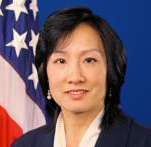
    USPTO SealIn addition, USPTO Deputy Director Michelle Lee will provide a luncheon address.  A copy of the program, including an agenda, can be found here.

    The registration fee for the conference ranges from $225 (government/academic registration) to $700 (general registration).  Those interested in registering can do so here.

  • IPO #1The Intellectual Property Owners Association (IPO) will offer a one-hour webinar entitled "Hatch-Waxman and Biologic Strategies at the PTAB" on March 3, 2015 beginning at 2:00 pm (ET).  Cynthia Hardman of Goodwin Procter, LLP; Gerald Flattmann Jr. of Paul Hastings; and Teresa Stanek Rea of Crowell & Moring, LLP will analyze how inter partes review and other post-grant proceedings should influence Hatch-Waxman/small molecule and biologic litigation strategies.

    The registration fee for the webinar is $130 (government and academic rates are available upon request).  Those interested in registering for the webinar can do so here.

  • AIPLA #1The American Intellectual Property Law Association (AIPLA) will be offering a webinar entitled "Best Practices to Secure Allowance of Patent Application Claims Using Evidence" on March 3, 2015 from 12:30 – 2:00 pm (ET).  Courtenay Brinckerhoff of Foley & Lardner; Matthew Dowd of Wiley Rein, LLP; and Mary Till, USPTO Office of Patent Legal Administration will cover evidentiary declarations under the First Inventor to File (FITF) system, including declarations relating to the 1-year grace period under the new section 102(b), explain Rule 132 declarations and other evidence to overcome obviousness rejections, and demonstrate how to avoid common pitfalls that can sink a patent during litigation.

    The registration fee for the program is $95 (AIPLA member rate) or $135 (non-member rate).  Those interested in registering for the program, can do so here.

  • New York #2American Conference Institute (ACI) will be holding its 6th Advanced Forum on M&A and Strategic Alliances in the Life Sciences Industries from April 27-29, 2015 in New York, NY.  The conference will allow attendees to:

    • Develop a strategic plan of action based on your organizations' business goals;
    • Understand what investors are looking for and their role in the deal;
    • Decipher which route gets you the desired outcome with the least cost and risk;
    • Structure deals that meet the objectives of both sides;
    • Gain Antitrust insights from government insiders on enforcement and policy initiatives;
    • Quantify the costs and benefits of inversions in light of tax code changes;
    • Facilitate a thorough yet cost effective due diligence; and
    • Navigate the increasing regulatory requirements of the global market.

    Brochure_M&AIn particular, ACI's faculty will offer presentations on the following topics:

    • Developing a Strategic Plan of Action Based on What Fits with Your Organization's Business Growth Goals
    • Insights from the Investors Table: An Overview of the Current Climate of the Life Sciences Industries from Those Backing the Deals
    • Traditional M&A v. an Option Deal: Weighing Control and Risk, and Playing the Price Game
    • Collaborations and Partnerships in the Commercial Sector
    • Licensing: Whether for a Product or a Market, New Structures and Opportunities for Revitalizing Licensing Deals
    • Academic Institutions — A Roadmap for Partnering with Higher Education Institutions
    • Antitrust Pitfalls and the Priorities of Antitrust Enforcers
    • An Analysis of Recent M&A Trends and Lessons Learned from this Year's Biggest Deals
    • Expanding Your Horizons — Specific Concerns for Global Pursuits
    • Giving Diligence Its Due: Conducting a Thorough Yet Cost Effective Analysis
    • Inversions: Shifting Strategies in Global M&A in Response to Recent Tax Code Changes

    In addition, two post-conference workshops will be held on April 29, 2015.  The first, entitled "After the Ink has Dried ~ Best Practices in Alliance Management and Integration," will be offered from 9:00 am to 12:00 pm, and the second, entitled "Collaboration and Licensing Agreement Boot Camp: An Interactive and In-Depth Review of Related Contracts for Strategic Alliance Professionals," will be offered from 1:00 to 4:00 pm.

    An agenda for this conference can be found here (Day 1) and here (Day 2), and an agenda for the post-conference workshops can be found here.  A complete brochure for this conference, including an agenda, detailed descriptions of conference sessions, list of speakers, and registration form can be obtained here.

    ACI - American Conference InstituteThe registration fee for the conference is $2,195 (conference alone), $2,795 (conference and one workshop), or $3,295 (conference and both workshops).  Patent Docs readers who reference the discount code "PDMA1" will receive $100 off the current price tier when registering.  Those interested in registering for the conference can do so here, by e-mailing CustomerService@AmericanConference.com, by calling 1-888-224-2480, or by faxing a registration form to 1-877-927-1563.

    Patent Docs is a media partner of ACI's M&A and Strategic Alliances in the Life Sciences Industries conference.

  • By Andrew Williams

    GenzymeEarlier this week, the Patent Trial and Appeal Board ("PTAB" or "Board") handed down what is thought to be the first set of inter partes review ("IPR") Final Written Decisions ("FWDs") in the biopharmaceutical industry.  And unlike the case of the first set of Orange-Book related FWDs (see "PTAB Update — Hatch-Waxman-Watch Edition"), the Board determined that all challenged claims were unpatentable.  The drug that these patents covered is Myozyme, or alglucosidase alfa, which is an enzyme replacement therapy for treating Pompe disease (or glycogen storage disease type II).  This disease is caused by a deficiency of the lysosomal enzyme acid α-glucosidase ("GAA"), resulting in an accumulation of glycogen in tissues such as the heart and skeletal muscle.  Pompe disease is treated by administering to the patient a therapeutically effective amount of the protein.  Myozyme is a recombinant human version of this protein (rhGAA), and is produced in precursor form in Chinese hamster ovary (CHO) cell cultures.  The drug is marketed by Genzyme, the patent owner of two related patents involved in these IPR proceedings.  The third related to an unrelated patent, which is owned by Duke University.  BioMarin Pharmaceutical Inc. filed the three petitions in 2013.  The PTAB determined that the claims of the two Genzyme patents were obvious in view of various combinations of references, including a Duke Press Release announcing the FDA's approval of an application for Orphan Drug Designation, a PCT application disclosing the production of phosphorylated lysosomal proteins using transgenic mammals, and three other references reporting research related to GAA.  In addition, the PTAB determined that the claims of the Duke patent were either obvious in view of similar cited art, or were anticipated by the oldest Genzyme patent involved in these proceedings.  It is unclear if there are other patents that cover this product, but Genzyme has at least one continuing application pending at the Office.  In today's post, we will take a closer look at these first two IPR proceedings related to the Genzyme patents.

    IPR2013-00534 and IPR2013-00537

    The patents related to the first two IPR petitions related to methods of treating human patients afflicted with Pompe disease by intravenously administering a therapeutically effective amount of Human GAA in order to reduce and/or arrest further accumulation of glycogen.  The patents at issue were U.S. Patent Nos. 7,351,410 and 7,655,226.  The '410 patent only has one claim:

    1.  A method of treating a human patient with Pompe's disease, comprising intravenously administering biweekly to the patient a therapeutically effective amount of human acid alpha glucosidase, whereby the concentration of accumulated glycogen in the patient is reduced and/or further accumulation of glycogen is arrested.

    Claim 1 of the '226 patent is similar, except it does not contain the limitation for biweekly administration.

    The '410 patent was invalidated on two separate obviousness grounds.  The first was in view of the combination of Reuser (WO 97/05771), Barton (a New England Journal of Medicine article from 1991), and Van der Ploeg (a Pediatric Research journal article from 1988).  Reuser was described as teaching "the production of phosphorylated lysosomal proteins using transgenic nonhuman mammals for use in enzyme replacement therapy as treatment for lysosomal enzyme deficiencies."  This reference mentioned that a Pompe disease treatment in mice had been tested with a purified GAA, and that pharmaceutical compositions for intravenous administration were contemplated by the reference.  Barton was cited as teaching a clinical trial with Gaucher Disease (another lysosomal enzyme deficiency disease), wherein patients received enzyme replacement therapy on a biweekly intravenous administration schedule.  Finally, van der Ploeg allegedly described "an in vitro study using cultured skeletal muscle cells from a patient with Pompe disease."  The Patent Owner argued that "a person of ordinary skill in the art would not have had a reasonable expectation of success for a method of treating a human patient with Pompe disease using GAA administered biweekly . . . ."  Moreover, it argued that there would have been no motivation to combine because of the differences between Gaucher disease and Pompe disease.  Finally, the Patent Owner alleged that the objective indicia of non-obviousness supported the patentability of the claim.

    The Board did agree that as of the priority date, it could not have been predicted with "absolute certainty" that Pompe disease could be treated safely and effectively using GAA.  However, they also concluded that there was sufficient motivation to pursue the clinical development of treatment as disclosed in Reuser.  The only missing element was the biweekly dosing schedule.  But, because the experimentation needed to achieve this treatment regime was "nothing more than" routine, it required skills more akin to an artisan rather than an inventor.  Important in the Board's analysis was that the prior art did not merely teach a promising field of experimentation with numerous parameters to try, but instead provided sufficient motivation to select a suitable dose and dosing schedule.  And, because the enzyme replacement therapy would have needed to be administered for life, a repeated spaced administration of GAA would have been understood.

    With regard to the secondary considerations, the Board found a nexus lacking between the evidence related to long-felt but unmet need, skepticism, praise, and commercial success.  This was because the Board characterized the invention as limited to the biweekly administration feature.  Therefore, because the secondary considerations related to the merits of the therapeutic compositions of GAA, they were inapplicable to the present invention.  This seems to be an unfair characterization of the invention, however, because even if such compositions were known, they were not being used as a safe and effective treatment of Pompe disease (including the biweekly administration schedule).

    The other obviousness argument combined Barton and Van der Ploeg with a Duke Press Release announcing the approval of an Orphan Drug application for the GAA drug.  This release is described as providing "details [of] a proposed FDA clinical trial study in which infants with Pompe disease would be injected with recombinant GAA to evaluate the safety and efficacy of the recombinant enzyme treatment."  Genzyme had argued that the Press Release was silent as to the dosing regimen, and therefore the cited art did not contain all of the limitations of the claim.  However, the Board found the use of the term "injected" to teach "intravenous administration."  Also, the Press Release did not disclose the source of the enzyme, but the Board found this was cured by Van der Ploeg.  In other words, "the concept of using human GAA to treat Pompe disease was known in the art."  And, even if clinical trials were unpredictable, their design was essentially routine to those skilled in the art.

    The IPR related to the '226 patent was similar in nature.  In fact, it was essentially easier to establish the obviousness of the claims because they did not contain the limitation related to the dosing regimen.  Therefore, because this important impediment was removed, institution was only sought and granted on obviousness challenges incorporating the Duke Press Release.  And, not surprising in view of the other IPR FWD, all challenged claims were found to be unpatentable.

    In a future post, we will analyze the FWD related to the Duke patent.