• By Joseph Herndon —

    District Court for the Eastern District of TexasGenband US LLC sued Metaswitch for infringement of claims of U.S. Patent No. 6,772,210 ("the '210 Patent") and U.S. Patent No 7,047,561 ("the '561 Patent") in the U.S. District Court for the Eastern District of Texas (Marshall Division), each of which arguably includes software patent claims.  On January 6, 2016, the District Court denied a Motion for Summary Judgment filed by Metaswitch that asserted claims of the '210 Patent and the '561 Patent are invalid under 35 U.S.C. § 101 for failure to claim patent-eligible subject matter.  The District Court's decision found that claims of both patents recite patent-eligible subject matter.

    The District Court followed the now traditional two-step test for distinguishing patents that claim laws of nature, natural phenomena, and abstract ideas from those that claim patent-eligible applications of those concepts.  The first step requires a court to determine if the claims are directed to a law of nature, natural phenomenon, or abstract idea.  If not, the claims pass muster under § 101.  The second step is applied only if the court finds in the first step that the claims are directed to a law of nature, natural phenomenon, or abstract idea.  The second step requires the court to determine if the elements of the claim individually, or as an ordered combination, transform the nature of the claim into a patent-eligible application.  This second step has come to be known as a search for an "inventive concept".

    The '210 Patent

    The '210 Patent is entitled "Method and Apparatus for Exchanging Communications Between Telephone Number Based Devices in an Internet Protocol Environment."  Claim 1 is reproduced here:

    1.  In an Internet Protocol (IP) communication system having a first network coupled to a second network through a gateway, wherein the first network and the second network are both IP networks, a method for exchanging communication messages between a first telephone number based device in the first network and a second telephone number based device in the second network, the first telephone number based device having a first address for use in the first network, the method comprising:
        allocating a second address for the first telephone number based device for use in the second network; and
        performing address translation on communication messages so that the first address for the first telephone number based device is used in the first network and the second address for the first telephone number based device is used in the second network.

    After analyzing the preamble of claim 1 and determining that it was abundantly clear that the preamble of claim 1 is limiting and required to be considered for patentability, the District Court worked through the two-part subject matter eligibility test.

    The Defendant Metaswitch argued that the claims of the '210 Patent were invalid because they are directed to an abstract idea of "allocating" (or mapping) an address within a communication message to another address and then performing "address translation" on the message without any reference to material (i.e., physical) objects.  Metaswitch contended that this is mere manipulation of binary data within abstractions called IP packets.

    The District Court first noted that the fact that a claim involves the manipulation of binary data does not inherently render it abstract.  If that were the case, no claim drawn to data processing on a digital device could ever survive § 101.  The important question is whether the claimed "manipulation of binary data" is merely a computerized implementation of an abstract concept.

    The District Court further noted that the law does not support a rule that the presence or absence of "concrete or material objects" defines the boundary between eligible and ineligible subject matter.

    Looking at claim 1 of the '210 Patent, the District Court found that it was not directed to an abstract idea.  The District Court found that claim 1 is directed to a specific set of operations ("allocating a second address" and "performing address translation") which are confined to a particular context (two different telephone number based devices in two different networks using two different addresses, connected by a gateway).  The utility associated with the claimed method is specific to the context recited in the claims — the need to translate message addresses between two different IP networks containing two different telephone number based devices.

    In addition, the District Court noted that the claims of the '210 Patent, like the claims at issue in DDR Holdings, LLC v. Hotels.com, L.P., address a problem "specifically arising in computer networks."  The District Court further stated that the claim recites a first and second "telephone number based device" operating in two different connected "IP networks," and the claim delimits the context in which the two claimed addresses are used.  This reasoning was used by the District Court to conclude that claim 1 is implemented in the context of a non-generic computer system, and "improve[s] the functioning of the computer itself."

    The '561 Patent

    The '561 Patent, is entitled "Firewall for Real-Time Internet Applications."  Claim 12 is reproduced here:

    12.  A method of protecting a computer network transmitting and receiving Internet protocol packets formatted in accordance with a real-time Internet protocol, each of said Internet protocol packets being associated with any one of a signaling channel, a control channel, or a bearer channel, the method comprising the steps of:
        i.  receiving a stream of Internet protocol packets
        ii.  applying the Internet protocol packets associated with the signaling channel and the control channel to an application proxy, and
        iii. applying the Internet protocol packets associated with the bearer channel to a packet filter.

    Here, the Defendant Metaswitch contended that claim 12 is invalid because it is directed to the abstract idea of classifying packets based on their channel (bearer, signaling, or control) and then applying the packets to one of two abstract components (either an application proxy or packet filter) of a firewall.

    As with the '210 Patent, the District Court found that claim 12 of the '561 Patent was not directed to an abstract idea.  The District Court found that claim 12 of the '561 Patent attempts to "overcome a problem specifically arising in the realm of computer networks" and recites a specific type of data structure unique to a specific class of computer networks (i.e., Internet protocol packets formatted in accordance with a real-time Internet protocol) that requires the packets be associated with one of three types of network channels, and also requires that the packets be applied to a different firewall component depending on packet type.

    The District Court noted that the recited operations in claim 12 are meaningless outside the context of a computer network using specific types of data packets and specific channels defined by particular protocols.

    Interestingly, the District Court noted that even though the claim terms "an application proxy" and "a packet filter" are broad types or classes of firewall components that do not recite or connote any specific structure, the claims still satisfy section 101.  The District Court noted an odd hypothetical claim limitation that could be directed to "a cup" might encompass an extensive class of objects of varying shapes, sizes, materials, and functions (a coffee mug, a champagne flute, a disposable paper cup), and thus the word "cup" is abstract in the sense that it spans many different structures.  But a cup is not an "abstract idea" in the sense meant by Alice, and neither are the "application proxy" and "packet filter" components recited in the claims.  The reasoning supplied for this conclusion is that these components are not "building blocks of human ingenuity," "a method of organizing human activity," a "fundamental truth," an "idea of itself," or the like.  The "application proxy" and "packet filter" terms refer to specific components that have been construed to perform specific functions within a network.

    The District Court strengthened its conclusion by noting that the language of claim 12 also recites "significantly more," rendering it patent eligible.  The significantly more is found in that Claim 12 of the '561 Patent is implemented in the context of a specific, non-generic computer system, and "improve[s] the functioning of the computer itself."

    With these two patents, the District Court seemed to have in mind that the claims should be held to satisfy section 101, and then forced the conclusion through somewhat of a conclusory opinion.  Most helpful to the claims was likely that they are necessarily rooted in computer technology, and arguably would improve functioning of computer networks within some examples, and thus, these claims should be found to satisfy section 101.

  • By Claire Gregg & Martin O'Brien —

    Following the recent public consultation in view of the Australian High Court's decision in D'Arcy v Myriad Genetics ("Myriad"), IP Australia has released new Examination Guidelines for applications which may be affected by the decision.

    The full Examination Guidelines, which can be found here, apply immediately to pending applications, and will be incorporated into the Examiner's Manual of Practice and Procedure on 11 January 2016.

    IP Australia received and considered a broad range of submissions on the issue of patentability of nucleic acids, and has ultimately maintained a fairly narrow interpretation of the High Court's decision.

    Blanket exclusions from patentability apply to isolated naturally occurring DNA and RNA, whether human, non-human, coding or non-coding.

    Synthetic nucleic acids (including cDNA), probes, primers and isolated interfering/inhibitory nucleic acids are only excluded where they "merely replicate the genetic information of a naturally occurring organism".

    In circumstances where subject matter which may be affected by the decision is not expressly excluded from patentability, the new Guidelines call for a case by case consideration of the following factors:

    1. What is the substance of the claim (not merely its form)?
    2. Has the substance of the claim been "made" or changed by man, or is "artificial"?
    3. Does the invention have economic utility?
    4. Does the invention as claimed represent a new class of claim?

    The Guidelines elaborate on the application of these factors, but ultimately, in the absence of legislative changes, it will be up to the courts to determine the breadth of the ramifications of the Myriad decision. In the meantime, the Guidelines have indicated that the following remain patentable subject matter:

    • Recombinant or isolated proteins;
    • Pharmaceuticals and other chemical substances;
    • Methods of treatment;
    • Methods of applying herbicides; and
    • Applications of computer technology.

    Substance of the Claim

    In Myriad, the High Court expressed concern that the claims at issue elevated form over substance in that "the information stored in the sequence of nucleotides coding for the mutated or polymorphic BRCA1 polypeptide is the same information as that contained in the DNA of the person from which the nucleic acid was isolated".

    The Examination Guidelines set out a number of factors to be taken into account in determining the substance of the claim:

    • The form of words and breadth of the claim;
    • The size of the class of compounds covered by the claim;
    • Does the compound embody or convey genetic information that is of importance to the utility of the claimed invention;
    • The emphasis of the claim; and
    • What did the applicant invent, is the product a step along the way to a process or method that is the real invention.

    "Made" vs "Artificial"

    The High Court in National Research Development Corporation v Commissioner of Patents (NRDC) stipulated that, in determining whether a claim relates to a manner of manufacture, consideration must be given to whether that claim relates to an artificially created state of affairs.  The High Court in Myriad clarified that artificiality per se is not sufficient — the substance of the claim must have been created or "made" by human action.

    The factors to be considered during examination include:

    • Whether the substance of the claim was '"made" (i.e., created or modified, by human action).  It is not enough that the subject matter of the claim is artificial;
    • What are the physical differences between the claim and the natural state;
    • What was the labour required to produce the product;
    • "Made" can include created or modified but not merely through replication; and
    • Isolation or purification can represent making or modification when the substance of a claim is properly directed to a chemical product.

    New Class of Claim

    The High Court in Myriad indicated that the principles laid down in NRDC are only two of the relevant considerations before the Court when determining whether a claim relates to patentable subject matter.  NRDC requires consideration of the following:

    1. Whether the invention as claimed is for a product made, or a process producing an outcome as a result of human action; and
    2. Whether the invention as claimed has economic utility.

    However, when a new class of claim involves "a significant new application or extension of the principles of patentability", the following must also be taken into account:

    1. Whether patentability would be consistent with the purposes of the Act;
    2. Whether to accord patentability to the invention as claimed would enhance or detract from the coherence of the law relating to inherent patentability;
    3. Relevancy to Australia's place in the international community of nations; and
    4. Whether to accord patentability to the class of invention as claimed would involve law-making of a kind which should be done by the legislature.

    Examiners will look to Myriad and other established case law to determine whether a claim represents a new class and, under the new Examination Guidelines, raise an objection where "the substance of the invention lies outside an established category of patent eligible subject matter".  No doubt this will lead to significant judicial consideration of the above factors in relation to new classes of claims in the future.

    Dr. Gregg is a Patent Scientist and Dr. O'Brien is a Principal of Spruson & Ferguson in Sydney, Australia.

    This article was reprinted with permission from Spruson & Ferguson.

  •         By Sherri Oslick —

    Gavel About Court Report:  Each week we will report briefly on recently filed biotech and pharma cases.

    Sage Labs Inc. v. Transposagen Biopharmaceuticals Inc.
    1:15-cv-00791; filed September 9, 2015 in the District Court of Delaware

    Declaratory judgment of non-infringement and invalidity of U.S. Patent Nos. 8,558,055 ("Genetically Modified Rat Comprising a Cytokine Gene Disruption and Exhibiting a Greater Susceptibility to a Cytokine-Mediated Autoimmune and/or Inflammatory Disease," issued October 15, 2013) and 8,722,964 ("Genetically Engineered or Transgenic Rats Exhibiting a Cancer Phenotype Due to a Disruption of Germline Tumor Suppression Genes," issued May 13, 2014) based on Sage's manufacture and sale of transgenic rates for animal research. View the complaint here. [NB: The complaint was later voluntarily dismissed.]


    Eaton Veterinary Pharmaceutical, Inc. v. Wedgewood Village Pharmacy, Inc.
    4:15-cv-00687; filed September 9, 2015 in the Western District of Missouri

    Infringement of U.S. Patent No. 6,930,127 ("Veterinary Treatment of Ophthalmic Disease in Animals Using Topical Tacrolimus," issued August 16, 2005) based on Wedgewood's manufacture and sale of compounded ophthalmic products containing tacrolimus for veterinary use. View the complaint here.


    Meda Pharmaceuticals Inc. et al. v. Teva Pharmaceuticals USA, Inc.et al.
    1:15-cv-00785; filed September 8, 2015 in the District Court of Delaware

    • Plaintiffs:  Meda Pharmaceuticals Inc.; Cipla Ltd.
    • Defendants:  Teva Pharmaceuticals USA, Inc.; Teva Pharmaceutical Industries Ltd.

    Infringement of U.S. Patent Nos. 8,163,723 ("Combination of Azelastine and Steroids," issued April 24, 2012) and 8,168,620 (same title, issued May 1, 2012), licensed to Meda, following a Paragraph IV certification as part of Teva's filing of an ANDA to manufacture a generic version of Meda's Dymista® (azelastine hydrochloride and fluticasone prioionate combination nasal spray. View the complaint here.


    Allergan, Inc. v. InnoPharma, Inc. et al.
    2:15-cv-01504; filed September 8, 2015 in the Eastern District of Texas

    • Plaintiff:  Allergan, Inc.
    • Defendants:  InnoPharma, Inc.; Pfizer, Inc.

    Infringement of U.S Patent Nos. 8,629,111 ("Methods of Providing Therapeutic Effects Using Cyclosporine Components," issued January 14, 2014), 8,633,162 (same title, issued January 21, 2014), 8,642,556 (same title, issued February 4, 2014), 8,648,048 (same title, issued February 11, 2014), and 8,685,930 (same title, issued April 1, 2014) following a Paragraph IV certification as part of InnoPharma's filing of an ANDA to manufacture a generic version of Allergan's Restasis® (cyclosporine ophthalmic emulsion, 0.05%, used to treat dry eye). View the complaint here.


    Purdue Pharma L.P. v. Alvogen Pine Brook LLC et al.
    1:15-cv-00784; filed September 4, 2015 in the District Court of Delaware

    • Plaintiff:  Purdue Pharma L.P.
    • Defendant:  Alvogen Pine Brook Inc.; Alvogen Pine Brook LLC

    Infringement of U.S. Patent Nos. 9,056,052 ("Controlled Release Hydrocodone Formulations," issued June 16, 2015) and 9,060,940 ("Controlled Release Hydrocodone," issued June 23, 2015) following a Paragraph IV certification as part of Alvogen's filing of an ANDA to manufacture a generic version of Purdue's Hysingla® (hydrocodone bitartrate, used for the management of pain severe enough to require daily, around-the-clock, long-term opioid treatment and for which alternative treatment options are inadequate). View the complaint here.

  • Maling v. Finnegan, Henderson, Farabow, Garrett & Dunner, LLP

    By Andrew Williams —

    Massachusetts Court SystemIn a case that was watched by the entire patent law community with some fascination, the Supreme Judicial Court of Massachusetts concluded on December 23, 2015 "that the simultaneous representation by a law firm in the prosecution of patents for two clients competing in the same technology area for similar inventions is not a per se violation of" Rule of Professional Conduct 1.7.  Moreover, because the Plaintiff, Chris E. Maling, did not allege facts sufficient to demonstrate that the Finnegan law firm violated its ethical obligations, the dismissal of the action was affirmed.  Although this certainly came as a relief to almost every attorney working in private practice, the Court warned about the significant financial and reputational risks of violating Rule 1.7:  "Nothing we say here today, however, should be construed to absolve law firms from the obligation to implement robust processes that will detect potential conflicts."  Slip opinion at 23.

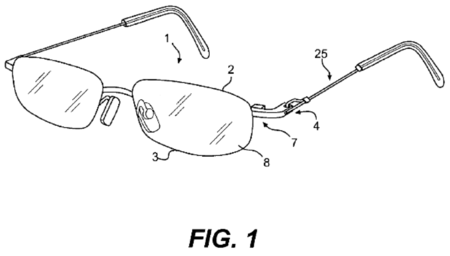
    This case stems from Finnegan's representation of Mr. Maling related to screwless eyeglasses, and specifically the eyeglass hinge block design.  Presumably, this design did not result in breaking glass.  Figure 1 of U.S. Patent 7,101,039 illustrates a pair of glasses containing the rim and temple arm of at least one aspect of Mr. Maling's invention:

    FIG1
    According to the opinion, attorneys in Finnegan's Boston office represented Mr. Maling for more than five years, from April, 2003 to May, 2009.  At the same time, attorneys in Finnegan's Washington, D. C. office represented Masunaga Optical Manufacturing Co., Ltd. in the same subject matter space.  Apparently Mr. Maling had engaged Finnegan to prepare and prosecute a patent for his invention, including conducting a related prior art search.  In fact, according to the Patent Office database, Finnegan obtained three related patents for Mr. Maling (Mr. Maling obtained a fourth patent, but Finnegan was not listed as attorney on its face).  However, in 2008, when Mr. Maling asked Finnegan for a legal opinion addressing the similarities between some Masunga patents and his own, Finnegan declined (the opinion noted that the record did not provide Finnegan's rationale for this decision, but if they had provided the legal opinion, that could possibly have been an ethical violation).  Mr. Maling alleged that Finnegan's refusal to provide this opinion resulted in his inability to obtain funding.  Mr. Maling therefore contended that Finnegan's simultaneous representation of both clients and its failure to disclose the alleged conflict resulted in "great harm" and "tremendous financial hardship."

    The Court in this case was looking at Rule 1.7 as it is applied in Massachusetts, but the rule is almost identical every other jurisdiction in which it was adopted.  This rule has two parts.  The first, Rule 1.7(a)(1), proscribes representing two parties that are directly adverse.  ("A concurrent conflict of interest exists if . . . the representation of one client will be directly adverse to another client.").  Even though this conflict can be waived by both parties with informed consent as long as the attorney or firm is not representing both parties against each other in the matter, it exists to safeguard the sense of loyalty found in the attorney-client relationship (as well as to serve as a prophylactic measure to protect confidences).  Maling did not claim that he was directly adverse to Masunaga in the traditional sense.  Rather, he alleged that this case fell under the scope of this rule because he competed in the same patent space as Masunaga.  However, the Court noted that the comments to this Rule make clear that economical adversity is not sufficient.

    For the patent context, the Court looked to the FCC case of Curtis v. Radio Representatives, Inc., 696 F. Supp. 729 (D.D.C. 1988).  In that case, the U.S. District Court for the District of Columbia had held that the same firm could simultaneously represent more than one client seeking to obtain radio broadcast licenses from the FCC.  It is only when the possibility of "objectionable electrical interference exist[s] between" station to station that a conflict of interest could develop.  By analogy, if the same attorney can obtain patents in the same "subject matter" space, without the scope of the claims overlapping, there would be no conflict.  Maling in this case did not allege such an overlap of space (oddity?).

    Before we move on, it is useful to consider how such an overlap might be a candidate for direct adversity?  The Court had one answer — interferences.  If the patents covered identical or obvious variants of each other, an interference proceeding could have been declared (at least for pre-AIA patents and applications), which certainly would have been adverse.  If an interference proceeding had been called, "or if Finnegan, acting as a reasonable patent attorney, believed such a proceeding was likely, the legal rights would have been in conflict . . . ."  The opinion suggests that such a conflict could be waivable, but it unclear if this would pass the requirements of Rule 1.7(b)(3).

    Rule 1.7(a)(2) also defines a concurrent conflict of interest where "there is a significant risk that the representation of one or more clients will be materially limited by the lawyer's responsibilities to another client, a former client or a third person or by a personal interest of the lawyer."  As the opinion makes clear, this can occur when an attorney engages in "claim shaving," which is making changes to the claim scope to avoid the conflict.  "Altering the claims in one client's application because of information contained in a different client's application at least creates a question of fact as to whether 'courses of action that reasonably should be pursued on behalf of the client' were foreclosed."  Slip Op. at 18.  Again, Maling did not allege such facts.

    The Court did address the requested "opinion" regarding the Masunaga patents, finding that if Finnegan had conducted this work, it likely could have violated both Rule 1.7(a)(1) and (2).  Of course, because Finnegan had not conducted this work, it did not correspondingly violate the ethics rules.  But, the Court warned that the scope of representation at the outset can define what might or might not be a violation.  If Finnegan had only agreed to file and prosecute a patent application, there would likely have been no issue.  However, if "Finnegan should have reasonably anticipated that Maling would need a legal opinion," then conflict liability could have been created.  Nevertheless, because there was simply too few facts alleged in this case, all of this discussion essentially amount to dicta.  Regardless, it would be wise to pay attention so as to not end up the subject of an opinion in which sufficient facts are alleged.

    To be clear, this case involves the Massachusetts Supreme Judicial Court's application of Rule 1.7 of the Massachusetts Rules of Professional Conduct, and therefore is not binding but only persuasive authority in every other jurisdiction that has adopted Rule 1.7 of the Model Rules.  Nevertheless, had this decision come out differently, it would have had a chilling effect on all intellectual property law firm practices.  In the first place, in most cases it is unreasonable to expect your patent attorney to only represent one client.  After all, most clients look to the experience and technical expertise of the patent attorneys they hire.  It would be unrealistic to allow this experience to give rise to a per se "subject matter" ethical violation.  In addition, it would be difficult to draw the line as to what "subject matter" would give rise to such an ethical violation.  To use the Maling case as an example, would the subject matter be limited to "eyeglass hinge block designs" or "screwless eyeglasses," or could it be interpreted more broadly to be all eyeglass technology or fashion in general.  Instead, the use of the Curtis case as analogous is useful.  As long as the scope of patent protection being sought for both clients is sufficiently distinct as to not cause any "electrical interference" between the two, there should no sense of doubt that this is not a conflict issue.  However, as the differing claim scope gets closer to overlapping, there is an increased risk of getting "shocked."

  • By Michael Borella —

    District Court for the Eastern District of TexasThe fallout from the Supreme Court's Alice Corp. v. CLS Bank Int'l case continues to reshape the landscape of patent-eligibility.  Despite guidance from the USPTO, patentees still struggle with what exactly is patent-eligible under Alice.  Federal Circuit jurisprudence has proven helpful in teaching what is not eligible, but has been less effective in teaching what is eligible.  Particularly, the appeals court has found exactly one set of claims challenged under 35 U.S.C. § 101 to be patentable post-Alice, while finding many such claims unpatentable.

    Therefore, when a case comes along in which a district court finds claims to pass muster under § 101, that case deserves attention.

    Motio sued BSP Software and other defendants in the Eastern District of Texas alleging infringement of U.S. Patent No. 8,285,678.  The patent is related to providing automatic version control in a business intelligence software system.

    As explained in the background of the patent:

    Business intelligence systems are used in substantially all industries to gather, store, analyze, and report on business data or business intelligence.  For example, manufacturing facilities use business intelligence systems to evaluate and report on factory production and personnel productivity as well as other critical metrics.  Retailers use business intelligence systems to analyze trends in sales and to prepare reports for upper management.

    The defendants filed a motion for judgment on the pleadings, contending that the claims were invalid under § 101.

    Claim 1 of the '678 patent recites:

    1.  In a general purpose computer, a method for providing automatic version control to a business intelligence system, comprising:
        creating an initial version of a business intelligence artifact in the business intelligence system, wherein the business intelligence artifact is a user-authored object that produces output when the business intelligence artifact is executed in the business intelligence system, and wherein the business intelligence artifact is selected from the group consisting of: a report specification and an analysis cube;
        providing an automated agent that interfaces with the business intelligence system to provide automated version control to the business intelligence artifact; the automated agent independently performing the steps of:
        automatically storing the initial version of the business intelligence artifact with a version control system;
        detecting a request to the business intelligence system to modify the initial version of the business intelligence artifact to create a subsequent version of the business intelligence artifact that includes the requested modification; and
        automatically storing the subsequent version of the business intelligence artifact in the version control system.

    The Court began its analysis by reviewing the two-prong eligibility framework set forth in Alice.

    One must first determine whether the claim at hand is directed to a judicially-excluded law of nature, a natural phenomenon, or an abstract idea.  If so, then one must further determine whether any element, or combination of elements, in the claim is sufficient to ensure that the claim amounts to something more than the judicial exception.  Notably, generic computer implementation of an otherwise abstract process does not qualify as "something more."

    With respect to the first prong, the Court concluded that the claims were "directed to the abstract idea of maintaining versions of electronic documents."  The Court explained that "[w]hile the claims are directed toward a particular technological environment — a computer — a particular type of electronic document — report specifications and analysis cubes — and an application in business intelligence systems, this does not change the underlying abstract idea of maintaining versions, or version control, of electronic documents."

    The Court also relied in the Federal Circuit's opinion in Content Extraction and Transmission LLC v. Wells Fargo Bank, Nat. Ass'n for the premise that claims involving collecting, recognizing, and storing data are abstract.  Particularly, the Court determined that the claimed embodiments for maintaining electronic documents also require these three elements.

    Turning to the second prong, the Court quickly disposed with the notions that the claimed features of taking actions automatically and report specifications lent patentability to the claims.  The defendants further argued that "the computer-implemented limitations of the patent merely draw on the generic functionality of pre-existing computer systems" which are conventional.

    But the Court also relied on its own construction of the claim term "automated agent" as "software that interfaces with a business intelligence system to provide automated version control to a business intelligence artifact."  This agent solves the problem of version control in business intelligence systems, which, according to the Court, is "significantly more than a patent on the idea of maintaining versions of electronic documents itself."  Particularly, the claims "describe an invention that serves as an addition to a business intelligence system rather than claiming a monopoly on all version control systems, particularly version control native to a business intelligence system."

    Comparing the claims to those determined to be eligible in DDR Holdings, LLC v. Hotels.com, L.P., the Court found, similar to that case, that "the invention does not simply use a computer to automate was done previously, but rather improves upon what was previously done with computers, solving a computer specific problem."  Specifically, the claimed invention "expands the functionality of existing computer software, local or on a computer network, by addressing a problem specific to the realm of computers."

    Turning to preemption, the Court also observed that the patent "does not claim version control generally, but rather a specific method, using an automated agent distinct from a business intelligence system to improve the functionality of a business intelligence system."  Consequently, the claims do not preempt all ways of performing version control in a business intelligence system.

    Thus, the Court found that the defendants had failed to establish that the claims were patent-ineligible.

    This case is yet another example of the outcome of the Alice test being based not only on the language of the claims themselves, but also on the reviewer's perspective.  The Court could have easily viewed the invention as being directed to version control, but with the software-based elements of the claims all performing conventional computational activities that do not provide the needed "something more."  While the Court seemed to reject the argument that the claims were a mere automation of human activity, if the Federal Circuit reviews this case, it could go the other way based on this premise.

    What seemed to win the day was that the claimed invention, with its automated agent in software, effectively requires computer implementation.  In other words, computer technology (the automated agent and its functionality) is being used to solve a problem in computing (version control in business intelligence systems).  Without computers, the problem, and thus this invention, would not exist.

    Further, the fact that the Court performed claim construction on critical claim terms may have played a significant role in the outcome.  Rather than viewing the term "automated agent" in a vacuum, the Court defined what it was, and used this definition in its § 101 analysis.

  • By Donald Zuhn —

    FireworksAfter reflecting upon the events of the past twelve months, Patent Docs presents its ninth annual list of top patent stories.  For 2015, we identified twenty stories that were covered on Patent Docs last year that we believe had (or are likely to have) the greatest impact on patent practitioners and applicants.  In previous posts, we counted down stories #20 to #16, stories #15 to #11, and stories #10 to #6, and today we count down the top five stories of 2015.  As with our other lists (2014, 2013, 2012, 2011, 2010, 2009, 2008, and 2007), links to our coverage of these stories (as well as a few links to articles on related topics) have been provided in case you missed the articles the first time around or wish to go back and have another look.  As always, we love to hear from Patent Docs readers, so if you think we left something off the list or disagree with anything we included, please let us know.  In addition, we will be offering a live webinar on the "Top Patent Law Stories of 2015" on January 21, 2016 from 10:00 am to 11:15 am (CT).  Details regarding the webinar, which will focus on a handful of the most important stories, can be found here.


    5.  Federal Circuit Decides Akamai v. Limelight on Remand

    Nearly ten years ago, Akamai Technologies, Inc. sued Limelight Networks, Inc. in the U.S. District Court for the District of Massachusetts, alleging infringement of U.S. Patent No. 6,108,703.  The claimed invention of the '703 patent is directed to delivering electronic data using a content delivery network (CDN), the CDN purporting to facilitate faster delivery of the data by separating the content of a website onto multiple servers.  The content that requires greater network capacity (such as photos and videos) can be assigned to servers (be "tagged") that provide this content at faster speeds.  Limelight operates a CDN, with Limelight carrying out three of the four claimed steps (i.e., distributing, resolving, and returning) and contractually requiring its customers to carry out the fourth claim step (i.e., tagging).  At trial, the District Court granted Limelight's motion for judgment of non-infringement as a matter of law (in view of the Federal Circuit's decision in Muniauction, Inc. v. Thomson Corp., where the Court held that direct infringement of a claimed method requires that a single entity perform every step of the claim (the single entity rule), which requirement could be satisfied if the steps of the claimed method are performed by multiple parties provided that a single defendant exercises "control or direction" over the entire process).  On appeal, a Federal Circuit panel affirmed, but the en banc Court reversed and remanded for further proceedings.  In a June 2014 appeal, the Supreme Court reversed the Federal Circuit finding that Limelight had infringed the '703 patent, holding that a defendant is not liable for inducing infringement under 35 U.S.C. § 271(b) when no one party has directly infringed the patent under § 271(a).  In June of 2015, the Federal Circuit, hearing Akamai on remand, decided that "because Limelight . . . did not perform all of the steps of the asserted method claims . . . and because the record contains no basis on which to impose liability on Limelight for the actions of its customers who carried out the other steps, Limelight has not directly infringed the '703 patent under § 271(a)."  In dissent, Judge Moore opined that the single entity rule "is a recent judicial creation inconsistent with statute, common law, and common sense."  In August, the en banc Court decided that there was substantial evidence to support the jury finding that Limelight directly infringed the '703 patent, and therefore the Court reversed the District Court's grant of Limelight's motion for judgment of non-infringement as a matter of law.  The en banc opinion signals a move away from the restrictive Muniauction joint infringement framework to something that resembles a "totality of the circumstances" test.  However, the en banc decision is not the end of the line for the parties, since the en banc Court noted that there were remaining issues in both the appeal and cross-appeal.  Another trip back to the Supreme Court for Akamai may be in the offing.

    For information regarding this and other related topics, please see:

    • "Eli Lilly and Company v. Teva Parenteral Medicines, Inc. (S.D. Ind. 2015)," September 1, 2015
    • "Federal Circuit Delivers En Banc Opinion in Akamai v. Limelight," August 13, 2015
    • "Akamai Technologies, Inc. v. Limelight Networks, Inc. (Fed. Cir. 2015)," June 21, 2015


    4.  Hi-Tech Fallout from Alice Corp. v. CLS Bank Int'l

    As the fallout from the Supreme Court's Alice Corp. v. CLS Bank Int'l case makes its way through the federal courts and the U.S. Patent and Trademark Office, applicants and patentees continue to struggle with the implications of the decision.  Alice provided a two-part test for patent-eligibility under 35 U.S.C. § 101, requiring that one first determine whether the claim at issue is directed to a judicially-excluded law of nature, a natural phenomenon, or an abstract idea.  If so, then one must further determine whether any element, or combination of elements, in the claim is sufficient to ensure that the claim amounts to something more than the judicial exclusion.  Notably, generic computer implementation of an otherwise abstract process does not qualify as "something more."  Notoriously unclear and difficult to apply in practice, when employed by courts, the Alice test has resulted in the vast majority of claims under review being found patent-ineligible under § 101.  Similar statistics are the case for the Patent Trial and Appeal Board (PTAB).  As a result, any court or PTAB decisions finding that claims meet the requirements of Alice are useful clues for applicants and patentees.  For instance, drawing analogies between one's claims that those that a judicial body has found patent-eligible can be persuasive to patent examiners in the USPTO, as well as to other judicial bodies.  In addition, since late last year, a theme of many 35 U.S.C. § 101 disputes has been whether claims under review are more like those in Ultramercial Inc. v. Hulu LLC or DDR Holdings, LLC v. Hotels.com.  In Ultramercial, the Federal Circuit held that claiming a disembodied method that merely uses general-purpose technology (i.e., the Internet) fails to meet the requirements of § 101, while in DDR Holdings, the Court stated that claims that are necessarily rooted in computer technology (e.g., one that changes the technology itself rather than just using it) are patent-eligible.  Patentees attempt to draw analogies between their claims and those of DDR, while defendants attempt the same with those of Ultramercial.

    For information regarding this and other related topics, please see:

    • "01 Communique Laboratory, Inc. vs. Citrix Systems, Inc. (N.D. Ohio 2015)," December 30, 2015
    • "Vehicle Intelligence and Safety LLC v. Mercedes-Benz USA, LLC (Fed. Cir. 2015)," December 29, 2015
    • "'Software' Claims Reciting No Structural Components and Having Questionable Novelty Struck Down under 35 U.S.C. § 101," November 23, 2015
    • "MacroPoint, LLC v. FourKites, Inc. (N.D. Ohio 2015)," November 10, 2015
    • "PTAB Issues Questionable 101 Decision," October 26, 2015
    • "PTAB Finds Two Sets of Claims to Be Not Abstract," September 24, 2015
    • "Versata Development Group, Inc. v. SAP America, Inc. (Fed. Cir. 2015)," July 15, 2015
    • "Internet Patents Corp. v. Active Network, Inc. (Fed Cir. 2015)," June 23, 2015
    • "OIP Technologies, Inc. v. Amazon.com, Inc. (Fed. Cir. 2015)," June 12, 2015
    • "Ultramercial v. WildTangent — Petition for Writ of Certiorari," June 3, 2015
    • "Allvoice Developments US, LLC v. Microsoft Corp. (Fed. Cir. 2015)," May 15, 2015
    • "Ultramercial Requests En Banc Review," January 19, 2015


    3.  Federal Circuit Decides Amgen v. Sandoz

    In July, the Federal Circuit, in a seriously fractured decision, construed the provisions of the Biologics Price Control and Innovation Act (BPCIA) in Amgen v. Sandoz.  In doing so, the Court limited the information available to biologic drug makers regarding a competitor's application for a biosimilar product (adopting Sandoz's argument).  On the other hand, the decision extended the statutory exclusivity period enjoyed by innovator biologic drug makers relating to when the biosimilar applicant can enter the marketplace (as Amgen argued).  In October, the Federal Circuit denied petitions for rehearing and rehearing en banc filed by both parties.  Amgen had petitioned for rehearing on the panel's decision that the District Court correctly determined that the provisions of the BPCIA requiring disclosure to the reference product sponsor of a biosimilar applicant's application and relevant manufacturing information was optional rather than mandatory.  Sandoz petitioned for rehearing on the panel's decision that the District Court had erred in deciding that the 180-day notice of commercial marketing for the biosimilar product could not be given to the reference product sponsor prior to FDA approval of their biosimilar application.

    For information regarding this and other related topics, please see:

    • "Federal Circuit Denies En Banc Petition in Amgen v. Sandoz," October 16, 2015
    • "Amgen v. Sandoz Update — En Banc Rehearing Petitions Filed," September 10, 2015
    • " Federal Circuit Lifts Injunction Against Sandoz," September 2, 2015
    • ""Don't Stop the Dance"[*] — The Dissents-in-Part from Amgen v. Sandoz," July 23, 2015
    • "Amgen v. Sandoz (Fed. Cir. 2015)," July 22, 2015
    • "Federal Circuit Decides Amgen v. Sandoz (in an opinion that will make neither party happy)," July 21, 2015
    • "Amgen v. Sandoz — Federal Circuit Oral Argument," June 7, 2015
    • "Amgen Wins Injunction against Neupogen® Biosimilar Pending Appeal," May 6, 2015
    • "Amgen v. Sandoz Update — Amgen's Continuing Efforts to Obtain Preliminary Injunction," April 28, 2015
    • "Amgen v. Sandoz Update — BIO Files an Amicus Brief at the Federal Circuit," April 21, 2015
    • "Amgen Receives No Help from the FDA — A Biosimilar Update," April 15, 2015
    • "The Tyranny of the Judiciary," March 23, 2015
    • "Gotta Dance? Apparently Not — A Biosimilar Update," March 19, 2015


    2.  USPTO Expands on Subject Matter Eligibility Guidance

    In December 2014, the U.S. Patent and Trademark Office published Interim Guidance regarding the examination of claims for subject matter eligibility under 35 U.S.C. § 101.  Early last year, the USPTO provided a promised set of examples of patent-eligible and patent-ineligible claims relating to the abstract idea exception to 35 U.S.C. § 101, in light of Alice Corp. v. CLS Bank.  Some of the new examples are hypothetical claims designed to illustrate the contours of § 101.  The USPTO also kicked off 2015 by holding a forum on the Office's Alexandria campus, where Office representatives discussed the Interim Guidance and received additional input from the public regarding that guidance.  In July, the Office updated its subject matter eligibility guidance, with the update providing recommendations and resources for examiners in addition to those in the Interim Guidance.  In the update, the Office also addressed several broad themes from comments it received on the Interim Guidance.  The update did not, however, provide any materials related to interpreting the metes and bounds of § 101 with regard to natural products or diagnostic methods.

    For information regarding this and other related topics, please see:

    • "Comments on the USPTO's Subject Matter Eligibility Guidance — BSA," November 5, 2015
    • "Comments on the USPTO's Subject Matter Eligibility Guidance — The ABA," November 3, 2015
    • "July 2015 Update on Subject Matter Eligibility," August 25, 2015
    • "Biotech-specific Subject Matter Eligibility Materials Delayed," July 30, 2015
    • "New Update on Subject Matter Eligibility to be Published on July 30th," July 29, 2015
    • "Interim Guidance Status Check," June 15, 2015
    • "A Modest Proposal (or Two)," April 22, 2015
    • "Microorganisms, Funk Brothers, Chakrabarty and TRIPS," April 7, 2015
    • "USPTO Holds Forum on Interim Guidance — Part III," February 19, 2015
    • "USPTO Holds Forum on Interim Guidance — Part II," February 18, 2015
    • "USPTO Holds Forum on Interim Guidance — Part I," February 3, 2015
    • "USPTO Issues Post-Alice Abstract Idea Examples," January 28, 2015


    1.  Federal Circuit Decides Ariosa v. Sequenom and Denies Rehearing En Banc

    In June, the Federal Circuit decided Ariosa Diagnostics, Inc. v. Sequenom, Inc., affirming the District Court's decision granting Ariosa's summary judgment motion for invalidity on the grounds that the claims of of U.S. Patent No. 6,258,540 were patent ineligible.  Although the Federal Circuit appreciated that the inventors had found cell-free fetal DNA (cffDNA) in maternal plasma or serum "that other researchers had previously discarded as medical waste," the panel stated that "[a]pplying a combination of known laboratory techniques to their discovery," the inventors "implemented a method for detecting the small fraction of paternally inherited cffDNA in maternal plasma or serum to determine fetal characteristics, such as gender."  In affirming the District Court decision, the opinion concluded that "[t]he method . . . begins and ends with a natural phenomenon," and "[t]hus, the claims are directed to matter that is naturally occurring."  Judge Linn noted in his concurring opinion, which in a rational world would have been a dissent, that he joined the majority "only because [he is] bound by the sweeping language of the test set out in Mayo Collaborative Services v. Prometheus Laboratories, Inc."  Sequenom responded to the decision by filing a petition for rehearing en banc in August, arguing that the panel's decision was inconsistent with the Supreme Court's decisions in Diamond v. Diehr, 450 U.S. 175 (1981), Mayo v. Prometheus Laboratories, 132 S. Ct. 1289 (2012), and Association for Molecular Pathology v. Myriad Genetics, 133 S. Ct. 2107 (2013, and that the panel's decision poses a threat to patent protection in multiple fields of invention.  However, despite the filing of twelve amicus curiae briefs in support of Sequenom's petition, the Federal Circuit declined to rehear en banc the panel decision in December.  The patent community now awaits the deadline for petitioning for certiorari.

    For information regarding this and other related topics, please see:

    • "Ariosa v Sequenom — A Path to the Supreme Court?" December 14, 2015
    • "Federal Circuit Denies Rehearing En Banc in Ariosa v. Sequenom," December 2, 2015
    • "Natera Responds to Sequenom's Petition for Rehearing En Banc," October 25, 2015
    • "Ariosa Diagnostics Responds to Sequenom's Petition for Rehearing En Banc," October 21, 2015
    • "Amicus Briefs in Support of Sequenom's Petition for Rehearing En Banc: JYANT Technologies, Inc.," September 29, 2015
    • "Amicus Briefs in Support of Sequenom's Petition for Rehearing En Banc: NYIPLA," September 28, 2015
    • "On Ariosa and Natural Products," September 27, 2015
    • "Amicus Briefs in Support of Sequenom's Petition for Rehearing En Banc: Novartis AG," September 23, 2015
    • "Amicus Briefs in Support of Sequenom's Petition for Rehearing En Banc: Paul Gilbert Cole," September 22, 2015
    • "Amicus Briefs in Support of Sequenom's Petition for Rehearing En Banc: Bioindustry Association," September 20, 2015
    • "Amicus Briefs in Support of Sequenom's Petition for Rehearing En Banc: WARF, Marshfield Clinic, and MCIS, Inc.," September 17, 2015
    • "Amicus Briefs in Support of Sequenom's Petition for Rehearing En Banc: BIO and PhRMA," September 16, 2015
    • "Amicus Briefs in Support of Sequenom's Petition for Rehearing En Banc: Amarantus Bioscience Holdings, Personalis, Inc., and Population Diagnostics, Inc.," September 15, 2015
    • "Amicus Briefs in Support of Sequenom's Petition for Rehearing En Banc: Coalition for 21st Century Medicine," September 14, 2015
    • "Amicus Briefs in Support of Sequenom's Petition for Rehearing En Banc: IPO," September 8, 2015
    • "Amicus Briefs in Support of Sequenom's Petition for Rehearing En Banc: Professors Lefstin and Menell," September 6, 2015
    • "Amicus Briefs in Support of Sequenom's Petition for Rehearing En Banc: 23 Law Professors," September 3, 2015
    • "Amici Support Sequenom's Petition for Rehearing En Banc," August 28, 2015
    • "Sequenom Requests Rehearing En Banc," August 18, 2015
    • "Ariosa Diagnostics V Sequenom and Isis Innovation — A European View," July 2, 2015
    • "Ariosa Diagnostics, Inc. v. Sequenom, Inc. (Fed. Cir. 2015)," June 22, 2015

  • Strafford #1Strafford will be offering a webinar/teleconference entitled "Evolving PTAB Trial Practice: Navigating Complex Procedural Rules — Strategically Using Routine and Additional Discovery, Requests for Joinder, and Motions to Amend" on February 4, 2016 from 1:00 to 2:30 pm (EST).  Greg H. Gardella and Scott A. McKeown of Oblon McClelland Maier & Neustadt will provide guidance to counsel on trends in Patent Trial and Appeal Board (PTAB) trial practice, focusing on motion opportunities, amendment, concurrent reissue/reexamination, evidentiary opportunities, and petition missteps.

    The registration fee for the webinar is $297.  Those registering by January 15, 2016 will receive a $100 discount.  Those interested in registering for the webinar, can do so here.

  • AIPLA #1The American Intellectual Property Law Association (AIPLA) will be offering a webinar entitled "Caught in a web — how the court in Kimble v. Marvel ruled on whether payment of royalties for an expired patent in unlawful per se" on February 9, 2016 from 12:30 – 1:30 pm (Eastern).  Courtenay C. Brinckerhoff of Foley & Lardner, LLP; Ronald J. Kamis of Prismatic Law Group, PLLC; Mita Mukherjee of MedImmune, LLC; and Kimberly Wade of Freeman Wade, LLP will discuss the case law leading up to the Kimble v. Marvel decision, the decision itself, what royalty strategies to pursue, as well as what remedies are available post Kimble v. Marvel.

    The registration fee for the program is $35.  No CLE credit available.  Those interested in registering for the program, can do so here.

  • Strafford #1Strafford will be offering a webinar/teleconference entitled "NPE Patent Litigation: Latest Developments — Leveraging Alice, Federal Rules Amendments, and Patent Office Proceedings in Defending Infringement Disputes" on January 27, 2016 from 1:00 to 2:30 pm (EST).  R. David Donoghue of Holland & Knight and Dana M. Herberholz of Parsons Behle & Latimer will provide guidance to IP counsel on recent developments that impact how companies deal with non-practicing entities (NPEs, and also discuss settlement and defense strategies in patent suits with NPEs.  The webinar will review the following issues:

    • What impact have the AIA and the Supreme Court decision in Alice had on NPEs?
    • How have practitioners leveraged strategic motions practice in NPE litigation?
    • What strategies can be employed to minimize the threat of NPE patent litigation?

    The registration fee for the webinar is $297.  Those interested in registering for the webinar, can do so here.

  • By Donald Zuhn —

    FireworksAfter reflecting upon the events of the past twelve months, Patent Docs presents its ninth annual list of top patent stories.  For 2015, we identified twenty stories that were covered on Patent Docs last year that we believe had (or are likely to have) the greatest impact on patent practitioners and applicants.  In two prior posts, we counted down stories #20 to #16 and stories #15 to #11, and today we count down stories #6 to #10 as we work our way towards the top five stories of 2015.  As with our other lists (2014, 2013, 2012, 2011, 2010, 2009, 2008, and 2007), links to our coverage of these stories (as well as a few links to articles on related topics) have been provided in case you missed the articles the first time around or wish to go back and have another look.  As always, we love to hear from Patent Docs readers, so if you think we left something off the list or disagree with anything we included, please let us know.  In addition, we will be offering a live webinar on the "Top Patent Law Stories of 2015" on January 21, 2016 from 10:00 am to 11:15 am (CT).  Details regarding the webinar, which will focus on a handful of the most important stories, can be found here.


    10.  USPTO Electronic Systems Go Dark

    On December 22, a major power outage at the U.S. Patent and Trademark Office headquarters in Alexandria, VA significantly damaged the Office's electronic systems and required the shutdown of the Office's online and IT systems.  At the end of the day on December 23, the Office declared the three days from December 22 through December 24 to be "Federal holiday[s] within the District of Columbia" under 35 U.S.C. § 21 and 37 C.F.R. §§ 1.6, 1.7, 1.9, 2.2(d), 2.195, and 2.196, and as a result, any action or fee due on those days would be considered as timely if the action was taken, or the fee was paid, on the next succeeding business day on which the USPTO is open.  By Christmas Eve, the Office had restored its fax line, and by December 27, the Office had restored access to the EFS-Web and Private Patent Application Information Retrieval (PAIR) system.  Six days after the power outage, the Office's electronic systems were once again functional enough that the Office did not have to declare December 28 a Federal holiday.  Some issues, however, have persisted even into this week, e.g., filed documents may not appear on PAIR for some time, and a colleague was unable to access the payment system when filing applications on January 5.  Interestingly enough, the Office noted in August that it would begin implementing a new system in the summer of 2016 that would eventually replace the EFS-Web, Public PAIR, and Private PAIR.

    For information regarding this and other related topics, please see:

    • "Breaking News: USPTO Restores EFS-Web and Private PAIR," December 26, 2015
    • "USPTO Restores Fax Line," December 24, 2015
    • "Major Power Outage Causes Shutdown of USPTO Online and IT Systems — USPTO to Consider December 22-24 to be 'Federal Holidays'," December 23, 2015
    • "USPTO News Briefs," November 30, 2015
    • "USPTO News Briefs," August 9, 2015


    9.  Federal Circuit and USPTO Clarify PTA Rule
    s

    The Federal Circuit issued several decisions during the year that will have an impact on future Patent Term Adjustment determinations.  In Gilead Sciences, Inc. v. Lee, the Court affirmed a decision by the District Court for the Eastern District of Virginia that the Office had properly calculated the PTA for one of Gilead's patents.  In that case, the Office determined that the applicant's submission of an Information Disclosure Statement 57 days after a response to a restriction requirement had been filed, and 27 days before a non-final rejection had been issued, constituted a failure to engage in reasonable efforts to conclude prosecution of the application.  In Mohsenzadeh v. Lee, the Court affirmed a decision by the District Court for the Eastern District of Virginia that the Office had properly calculated the PTA for two patents.  In that case, the Court determined that two divisional applications were not entitled to the Office's 1,476-day delay in issuing a restriction requirement in the application from which both divisional applications were filed.  Finally, in Daiichi Sankyo Co. v. Lee, the Court affirmed a decision by the District Court for the District of Columbia that two of Daiichi's patents, which had issued prior to August 5, 2009, were not entitled to a corrected PTA determination under the Optional Interim Procedure, which the Office adopted following the Federal Circuit's decision in Wyeth v. Kappos (the Office made the Optional Interim Procedure available only for patents that issued between August 5, 2009 and March 1, 2010).  The Office also revised the rules of practice last year to implement the Federal Circuit's decision in Novartis AG v. Lee.  In Novartis, the Federal Circuit agreed with the USPTO that the filing of an RCE tolls the B Delay clock even if the RCE was filed more than three years after the application was filed.

    For information regarding this and other related topics, please see:

    • "Daiichi Sankyo Co. v. Lee (Fed. Cir. 2015)," July 20, 2015
    • "Mohsenzadeh v. Lee (Fed. Cir. 2015)," July 8, 2015
    • "USPTO Issues Final Rule in View of Novartis v. Lee," March 16, 2015
    • "Gilead Sciences, Inc. v. Lee (Fed. Cir. 2015)," March 2, 2015


    8.  Federal Circuit Decides First PTAB Appeal

    In February, in In re Cuozzo Speed Technologies, LLC, the Federal Circuit decided the first appeal of the first inter partes review Final Written Decision for the first IPR ever filed.  The decision was significant not only because it was the Court's first PTAB appeal, but also because the Court affirmed the Board's use of the Broadest Reasonable Interpretation (BRI) standard for claim construction and agreed with the Office that any aspect of the decision to institute the IPR is not reviewable.  In July, the Court denied a petition for rehearing en banc in the case, and in September, in Achates Reference Publishing, Inc. v. Apple Inc., the Court reaffirmed its In re Cuozzo holding that the Court could not review any decision by the PTAB related to the institution of an IPR, including a determination whether the decision was time-barred according to the AIA.

    For information regarding this and other related topics, please see:

    • "Achates Reference Publishing, Inc. v. Apple Inc. (Fed. Cir. 2015)," October 1, 2015
    • "No Rehearing En Banc for In re Cuozzo Speed Technologies — PTAB Update," July 9, 2015
    • "In re Cuozzo Speed Technologies, LLC (Fed. Cir. 2015)," February 4, 2015


    7.  Supreme Court Decides Teva v. Sandoz

    In January, the Supreme Court held in Teva Pharmaceuticals USA, Inc. v. Sandoz Inc. that an "appellate court must apply a 'clear error,' not de novo, standard of review" to the evidentiary underpinnings of a district court's claim construction determination.  Unlike some of the Court's recent patent decisions, Teva was not decided by a 9-0 vote, with the majority constituting only seven Justices.  The Teva majority had determined that claim construction was ultimately a question of law but one that could depend on "subsidiary" fact-finding by the district court.  According to Justice Breyer's majority opinion, Federal Rule of Civil Procedure 52(a)(6) mandates that an appellate court give substantial deference to district court fact finding and to contravene the lower court's factual determinations only if there was "clear error."  In addition, the Court majority asserted jurisprudential policy grounds for its decision, including that the district court was in the best position to assess (expert) witness credibility and to become familiar with the technology involved in the invention.  Justices Thomas and Alito disagreed, taking the position that while Justice Breyer and his brethren would have applied the law correctly if there were underlying facts to be determined, in the context of claim construction there are no "subsidiary facts" to be determined and that Teva and the Court misapplied the law in arriving at this conclusion.  Simply stated, in Justice Thomas's opinion, Rule 52(a)(6) simply did not apply in Teva.  In June, the Federal Circuit decided Teva on remand, once again reversing the District Court's holding with regard to claim 1 of U.S. Patent No. 5,800,808, with a split panel deciding that the claim was indefinite notwithstanding the District Court's factual determinations about how one skilled in the art would understand the claim.

    For information regarding this and other related topics, please see:

    • "Federal Circuit Tackles Claim Construction Review under New Standard," June 25, 2015
    • "What's Next? Some Consequences of the Teva v. Sandoz Decision," January 22, 2015
    • "Teva v. Sandoz: The Dissent," January 21, 2015
    • "Teva Pharmaceuticals USA, Inc. v. Sandoz Inc. (2015)," January 20, 2015
    • "Teva Pharmaceuticals USA, Inc. v. Sandoz Inc. – 'Evidentiary Underpinnings' of Claim Construction: Supreme Court Holds Findings of Fact Require Deference," January 20, 2015


    6.  Supreme Court Decides Commil v. Cisco Systems

    In May, the Supreme Court handed down its decision in Commil USA, LLC v. Cisco Systems, Inc., vacating the Federal Circuit's reversal of the District Court's ruling that Cisco's evidence that it had a "good faith belief" that Commil's claims were invalid was inadmissible for rebutting liability for inducing infringement.  The Supreme Court held that "[a] defendant's belief regarding patent validity is not a defense to an induced infringement claim."  In the process of deciding Commil, the Court chastised the Federal Circuit for misinterpreting both patent law and the Court's decision in Global-Tech Appliances, Inc. v. SEB S.A. (2014).

    For information regarding this and other related topics, please see:

    • "Commil USA, LLC v. Cisco Systems, Inc. (2015)," May 26, 2015