• By Anthony D. Sabatelli* —

    Federal Circuit SealIn an interesting case decided last month, the Federal Circuit ruled that it cannot address whether the U.S. Patent and Trademark Office's 2014 Interim Guidance on Patent Subject Matter Eligibility exceeds the scope of the Supreme Court's decisions in this area.

    This case was an appeal from a final decision of the PTO's Patent Trial and Appeal Board denying a patent application directed to a card game variant of blackjack.  The Board ruled that the patent application was nothing more than an attempt to cover patent ineligible subject matter.  The Circuit Court agreed, reasoning that "the claims cover only the abstract idea of rules for playing a wagering game and use conventional steps of shuffling and dealing a standard deck of cards" (see In re: Ray Smith, Amanda Tears Smith).

    Whether the Section 101 patent eligibility question was properly decided is almost irrelevant — although, from my read of the case I do agree with the holding.  The much more interesting aspect of the case is the question not addressed by the Court, namely whether the USPTO's 2014 Guidance exceeds the scope of Section 101 and the Supreme Court's controversial 2014 Alice Corp. decision.  In refusing to address this important question, was the deck unfairly stacked against the patent Applicants?

    The Court bluntly stated that "Applicants' challenge to the Guidelines is not properly before us in this appeal."  The Court also referred to language in the Guidance itself stating that it "is not intended to create any right or benefit, substantive or procedural, enforceable by any party against the [Patent] Office.  Rejections will continue to be based upon the substantive law, and it is these rejections that are appealable" (emphasis added by Court).  However, this reasoning seems a bit circular — almost like a card game of clock solitaire.  The Court then went on to reveal its final trump card by concluding that "even if the Applicants had properly challenged the Guidance, we have previously determined that such Guidance is 'not binding on this Court'."  Is the Court telling the unlucky inventors to "Go fish?"

    Although the decision does not bode well for future appellants attempting to challenge the Guidance, at least the Court did indicate that not all inventions in the gaming arts would be foreclosed from patent protection under Section 101.

    In re Smith (Fed. Cir. 2016)
    Panel: Circuit Judges Moore, Hughes, and Stoll
    Opinion by Circuit Judge Stoll

    * Dr. Sabatelli is a Partner with Dilworth IP

  • By Kevin E. Noonan —

    FDAThe Biologic Price Control and Innovation Act (BPCIA), enacted as part of President Obama's Affordable Care Act (better known as "Obamacare," Public Law 111-148), provided for the first time in the U.S. a path for FDA approval of biosimilar drugs, i.e., "generic" versions of biologic drugs that, unlike generic versions of conventional small molecule drugs are not identical but similar.  Congress did not, however, prescribe the standards for establishing biosimilarity or other aspects of the biosimilar pathway, leaving the details up to the FDA.  As part of fulfilling its mandate under the BPCIA, the FDA has issued a series of Guidances (both in draft and final form) with respect to the procedural and scientific protocols to be followed in filing and pursuing a biosimilar drug application (see "FDA Releases 'Final' Guidances for Industry regarding the Biosimilar Approval Pathway").  On Friday, the FDA issued its latest Guidance, which has to do with labeling of biosimilar drugs.  Far from being merely a technical aspect of the biosimilar program, this Guidance has been subject to pressures from both the innovator biologic drug makers and companies pursuing (or planning to pursue) their own biosimilar drugs.  These pressures have everything to do with the hoped-for acceptance of these drugs (particularly by the U.S. government, the biggest payor for biologic drugs) and fears by innovator biologic drug companies that their drugs might be mistaken for a biosimilar version (especially in the event that a biosimilar is associated with an adverse event).

    The Guidance (which is but a draft Guidance for now) on its face is being distributed "for comment only" and in this way reflects the manner in which the FDA has approached its task of implementing the Act, by soliciting public and industry feedback by issuing draft Guidances and holding hearings and other meetings.  In a "black box" at the beginning of the document it states:

    This draft guidance, when finalized, will represent the current thinking of the Food and Drug Administration (FDA or Agency) on this topic.  It does not establish any rights for any person and is not binding on FDA or the public.  You can use an alternative approach if it satisfies the requirements of the applicable statutes and regulations.  To discuss an alternative approach, contact the FDA staff responsible for this guidance as listed on the title page.

    There are eight sections, providing the Background, General Principles, Specific Recommendations, FDA-approved Patient Labeling, Revised Biosimilar Product Labeling, instructions on how to submit initial and revised labeling, and a short section on Interchangeable Biological Products that does not provide labeling recommendations for interchangeable products (consistent with the agency's refusal to provide Guidance on obtaining approval for interchangeable versions of biologic drugs).  In the short Background the agency explains the context of the biosimilar provisions of the Act and then moves immediately to the General Principles.  There the FDA notes that the biosimilars pathway is provided "to demonstrate biosimilarity between the proposed [biosimilar] product and the reference product, not to independently establish safety and effectiveness of the proposed [biosimilar] product."  Accordingly, the information on the biosimilar label should be the "relevant data and information from the reference product labeling, with appropriate product-specific modifications."  Indeed, "[i]nformation and data from a clinical study of a proposed biosimilar product should be described in its labeling only when necessary to inform safe and effective use by a health care practitioner" and should not include "a description of these data," on the grounds that any clinical study undertaken by the biosimilar applicant should be aimed at establishing biosimilarity (defined as there being no clinically meaningful differenced between the biosimilar product and the reference product) and not at assessing the safety and efficacy of the biosimilar per se.  The Guidance also recites several other labeling rules not limited to the biosimilar context that a biosimilar label is required to follow (see, 21 CFR 201.56(c)(1), 201.56(d) and 201.57, and 21 CFR 201.57(c)(9)(i) through (iii)).

    With regard to the Specific Recommendations for biosimilar products, the Guidance accommodates circumstances where the biosimilar product label differs from the reference product label (for example, depending on whether the biosimilar applicant is seeking approval for all or just a subset of indications for which the reference product has been approved).  The Guidance reaches the crux of the matter with regard to product identification; an earlier version of the agency's thinking in this regard was disclosed previously.  The agency recommends using the biosimilar product name "[i]n sections where the information described is specific to the biosimilar product" and "[f]or directive statements and recommendations for preventing, monitoring, managing, or mitigating risks."  The reference product name should be used "[w]hen clinical studies or data derived from studies with the reference product are described in biosimilar product labeling," particularly with regard to clinical studies and adverse reactions.  The "core" name (which is the nonproprietary name without the source-specific suffix) should be used when the property or risk applies to both the reference and biosimilar products (exemplified in the Guidance as "BOXED WARNING, CONTRAINDICATIONS, WARNINGS AND PRECAUTIONS, ADVERSE REACTIONS (Postmarketing Experience)" which would reflect the commonality of these properties for both products.  The FDA also apprehends situations where "[t]here may be text appropriately based on the reference product labeling where more than one of these product identification approaches should be used to accurately convey information."  For instances where a biosimilar has sought (and been approved for) fewer than all the indications approved for the reference product, information relating to these indications should not be included unless it is necessary for safety or efficacy (whilst ensuring that it is clear that the biosimilar is not approved for such uses).

    The Guidance then recites the recommendation for specific language regarding a biosimilar:

    [BIOSIMILAR PRODUCT'S PROPRIETARY NAME (biosimilar product's proper name)] is biosimilar* to [REFERENCE PRODUCT'S PROPRIETARY NAME  (reference product's proper name)] for the indications listed.

    The INDICATIONS AND USAGE section of the label "should be specific to the approved indications for the biosimilar product and should be consistent with language previously approved for the reference product for those indications" including text from the reference product related to Limitations of Use.  The FDA also recommends specific language related to immunogenicity:

    As with all therapeutic proteins, there is potential for immunogenicity.  The detection of antibody formation is highly dependent on the sensitivity and specificity of the assay.  Additionally, the observed incidence of antibody (including neutralizing antibody) positivity in an assay may be influenced by several factors, including assay methodology, sample handling, timing of sample collection, concomitant medications, and underlying disease.  For these reasons, comparison of the incidence of antibodies to [reference product's proper name] in the studies described below with the incidence of antibodies in other studies or to other products may be misleading.

    Not surprisingly, the agency recommends that Patient Labeling follow the reference product except when differences are necessary to properly describe the biosimilar product.

    The agency also recognizes that changes may arise during the life cycle of a biosimilar product and provides mechanisms for updating safety information, particularly when "new information" relating to use of the product under "more widely or [] diverse conditions."  Specifically, "[a]s with any biological product, a biosimilar product application holder must promptly review all adverse drug experience information obtained or otherwise received from any source, foreign or domestic, including information derived from commercial marketing experience, postmarketing clinical investigations, postmarketing epidemiological studies/ postmarketing adverse event surveillance, reports in the scientific literature, and  unpublished scientific papers; and the biosimilar product application holder," citing 21 CFR 600.80.  And if any information is found to be inaccurate, prompt correction is mandated by the statute (see, 21 CFR 601.12).  The Guidance also provides for post-approval licensure for additional indications for which the reference product has been approved.

    How such labeling information should be submitted is set out as requiring:

    • A clean version of reference product labeling that was used to develop the biosimilar product labeling

    • A tracked changes and annotated version of proposed biosimilar product labeling explaining the differences from the reference product labeling

    • A clean version of the proposed biosimilar product labeling

    Finally, the Guidance indicates that, while "FDA continues to consider the types of data and information that would support a demonstration that a biological product is interchangeable with a reference product" that Guidance will not be found here.

    As noted above the FDA is soliciting comments; as the face of the Guidance states, "[c]omments and suggestions regarding this draft document should be submitted within 60 days of publication in the Federal Register of the notice announcing the availability of the draft guidance," with electronic copies to be sent to http://www.regulations.gov and questions to Sandra Benton at 301-796-1042 or (CBER) Office of Communication, Outreach and Development, 800-835-4709 or 240-402-8010.

  • By Andrew Williams —

    FDAEarlier today, the U.S. Food and Drug Administration approved Celltrion's application to market Inflectra, a biosimilar to Janssen Biotech Inc.'s REMICADE (infliximab) anti-TNF-α antibody.  This marks only the second biosimilar approved by the FDA pursuant to the BPCIA, and only the first to approve a therapeutic monoclonal antibody.  Biologics License Application ("BLA") 125544 was submitted by Celltrion, Inc. on August 8, 2014, and the FDA's Arthritis Advisory Committee recommended its approval on February 9, 2016 (see "Celltrion's Proposed REMICADE® Biosimilar Recommended for Approval").  Of course, the date on which Celltrion will be able to market this drug is unclear, because of the uncertainty surrounding the Notice-of-Commercial-Marketing provision of the BPCIA.  Because the Amgen v. Sandoz case suggested that this provision is mandatory in all cases, it may be at least 180 days before Inflectra will hit the market.

    According to a press release on the FDA website, Inflectra is approved to be prescribed for the treatment of the following conditions:

    • adult patients and pediatric patients (ages six years and older) with moderately to severely active Crohn's disease who have had an inadequate response to conventional therapy;
    • adult patients with moderately to severely active ulcerative colitis who have had an inadequate response to conventional therapy;
    • patients with moderately to severely active rheumatoid arthritis in combination with methotrexate;
    • patients with active ankylosing spondylitis (arthritis of the spine);
    • patients with active psoriatic arthritis;
    • adult patients with chronic severe plaque psoriasis.

    The FDA indicated in this press release that its approval was:

    [B]ased on review of evidence that included structural and functional characterization, animal study data, human pharmacokinetic and pharmacodynamics data, clinical immunogenicity data and other clinical safety and effectiveness data that demonstrates Inflectra is biosimilar to Remicade.  Inflectra has been approved as biosimilar, not as an interchangeable product.

    Much like Sandoz's experience last year with Zarxio, Celltrion certainly benefited from the fact that its biosimilar antibody had already been approved outside the U.S. for similar indications.  For example, in the EU, South Korea, Japan, and India, it has been approved for all US-approved indications under either the trade name Inflectra and Remsima.  It has also been approved in Canada for all indications except ulcerative colitis and Crohn's Disease.

    CelltrionNevertheless, even though the biosimilar was approved by the FDA today, Celltrion represented to the U.S. District Court for the District of Massachusetts on March 22, 2016 that it would "not sell in the United States a proposed biosimilar version of Janssen's Remicade for use by doctors or patients before June 30, 2016," the date on which one of the asserted patents will expire.  Moreover, a motion for a preliminary and permanent injunction is still pending in that Court, which could delay the sale of the drug even longer.  Celltrion had initially served a notice of commercial marketing on February 5, 2015, indicating that it would begin selling the product as early as August 4, 2015 (which it obviously did not do).  Celltrion did provide Janssen with its aBLA after it was accepted by the FDA, but (according to Janssen's Complaint) Celltrion refused to provide the requisite "other information" required by the BPCIA, which would have described the manufacturing process.  In addition, Celltrion has taken a similar position as Apotex in the Amgen v. Apotex case that the Notice-of-Commercial-Marketing provision of the BPCIA is not a stand-alone provision.  Therefore, according to Celltrion, because it took part in the "Patent Dance," it is not required to give such notice.  The Federal Circuit heard oral argument in the Amgen v. Apotex case yesterday, so if a decision comes out in the next six months, it could be determinative in this case.  We will report on the Amgen v. Apotex oral argument in an upcoming post.

  • U.S. Patent to Consumer Marketing, Based on Avatar Choices, Survives § 101 Challenge

    By Joseph Herndon —

    District Court for the District of DelawareOn March 22, 2016, the U.S. District Court for the District of Delaware issued a Memorandum Opinion in a case captioned Treehouse Avatar LLC v. Valve Corp., in which software patent claims survived a patent eligibility challenge.

    Treehouse Avatar sued Valve Corp. for infringement of U.S. Patent No. 8,180,858.  Valve Corp filed a Motion to Dismiss alleging that the asserted claims did not satisfy 35 U.S.C. § 101 as being directed to an abstract idea.

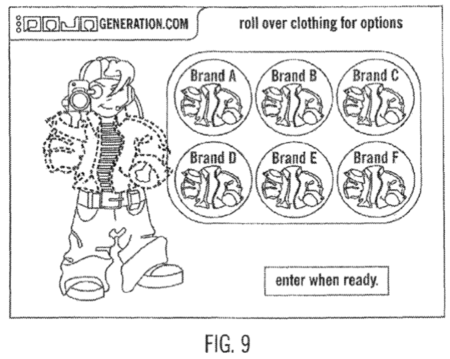
    The '858 patent, titled "Method and System for Presenting Data Over A Network Based On Network User Choices and Collecting Real-Time Data Related To Said Choices," was filed on November 30, 2010 and issued on May 15, 2012.  The invention increases network site loyalty by presenting to network users audio data and visual image data that is indicative of the individuality of the network user (by allowing a user to create an avatar), and also collects market research data in real-time.  The method presents data to a network user based on choices made by the user while the user is within a character-enabled network site.  For instance, a user may select a "character" or avatar and then select "character attributes", such as clothing using the interface shown in Figure 9, which is reproduced below.

    FIG9
    As to the market research capabilities, the site program/data of a character-enabled site may be designed to provide a means of capturing data related to the identity, tastes, preferences and opinions of site users.  For example, if a selected character is female or appears to be of a certain age, these attributes are likely indicative of the user.

    Claim 1 recites:

    A method of collecting data from an information network in response to user choices of a plurality of users made while accessing said information network and navigating character-enabled (CE) network sites on said information network, said method comprising:
        storing a plurality of character data in a database accessible by said CE network site;
        storing a plurality of character attribute data in said database;
        linking the character attribute data with one or more of the character data;
        presenting to a user interface, one or more character data defining one or more characters for selection by the user;
        upon selection of a character by the user, presenting in real time to the user interface, the selected character along with at least one of the character-attribute data linked to the selected character for selection by the user;
        upon selection of a character attribute by the user, presenting in real time to the user interface, the selected character including the selected character attribute; and
        tallying the number of times the selected character attribute has been selected by a plurality of users.

    Patent-Eligible Subject Matter?

    The District Court followed the Supreme Court's framework for distinguishing patents that claim laws of nature, natural phenomena, and abstract ideas from those that claim patent-eligible applications of those concepts.  First, it is determined whether the claims at issue are directed to one of those patent-ineligible concepts.  If so, then it is determined what else is there in the claims before us to determine whether the additional elements transform the nature of the claim into a patent-eligible application.

    The District Court noted that because computer software comprises a set of instructions, the first step of Alice is, for the most part, a given; i.e., computer-implemented patents generally involve abstract ideas.  The more difficult part of the analysis is subsumed in the second step of determining whether the claims "merely recite the performance of some business practice known from the pre-Internet world along with the requirement to perform it on the Internet," or whether the claims are directed to "a problem specifically arising in the realm of computer technology" and the claimed solution specifies how computer technology should be manipulated to overcome the problem.

    The District Court offered comments, echoed by many practitioners today, that the evolution of § 101 jurisprudence has gone from the complete rejection of patentability for computer programs to the almost complete acceptance of such, to the current (apparent) requirements that the patent claims in suit (1) disclose a problem "necessarily rooted in computer technology," and (2) claim a solution that (a) not only departs from the "routine and conventional" use of the technology, but (b) is sufficiently specific so as to negate the risk of pre-emption.  In other words, even though most of the patent claims now being challenged under § 101 would have survived such challenges if mounted at the time of issuance, these claims are now in jeopardy under the heightened specificity required by the Federal Circuit post-Alice.

    The District Court further highlighted that it is less than clear how a § 101 inquiry that is focused through the lens of specificity can be harmonized with the roles given to other aspects of the patent law (such as enablement under § 112 and non-obviousness under § 103).

    The District Court concluded a rant on § 101 jurisprudence by stating that at their broadest, the various decisions of the Federal Circuit would likely ring the death-knell for patent protection of computer-implemented inventions.  The District Court settled on DDR as a benchmark; i.e., the claims (informed by the specification) must describe a problem and solution rooted in computer technology, and the solution must be (1) specific enough to preclude the risk of pre-emption, and (2) innovative enough to "override the routine and conventional" use of the computer.

    The defendant attempted to summarize the claims of the patent as the abstract concept of allowing a customer or potential customer to customize a character by selecting character attributes and then to keep a tally of character/attributes that have been selected.  Defendant then analogized this concept to a "human" counterpart, namely participating in a mall focus group, wherein a person presents choices of brands or products to potential customers and tallies the choices.

    The District Court rejected such a characterization because it does not embody the Internet centric concept of the claims.  Because the claims are directed to users selecting and modifying customizable characters (avatars) in real time on character-enabled (CE) sites, as well as storing and retrieving such characters within an information network, the human analogy is not representative of the claims as a whole which describe more than the pre-Internet business concept of "tallying" choices applied in a computer setting.  The District Court found that the claims are more like those in DDR, to wit, "necessarily rooted in computer technology in order to overcome a problem specifically arising in the realm of computer networks."

    The District Court also found that the claims satisfy step two of the Alice analysis because they provide a specific series of steps used to customize a character to users' choices in real time.  For example, claim 1 seeks to collect data in response to users' choices made on CE sites by having character data and character attribute data in a database; linking the character attribute data with character data; having a user select a character and character attribute data; updating the selections in real time; and tallying the selected character attributes.  The District Court concluded that the claims are innovative, and do not represent the routine and conventional use of a computer.  Thus, the defendant's motion to dismiss was denied because the claims were found to satisfy 35 U.S.C. § 101.

    Whether claims satisfy § 101 is becoming a very subjective analysis.  How the claims at issue here are not "a conventional use of a computer" is hard to see considering that the method includes storing data, linking data, presenting data to a user, and tallying data.  Certainly, such functions are basic and routine computer functions.  The District Court's analysis lacks any factual determinations for what in the claims is actually "innovative", and rather simply makes the statement that the claim limitations are innovative.  Such a subjective analysis is problematic.

    The District Court here, as well as many other district courts, emphasized the Federal Circuit's decision in DDR and placed great weight on whether the challenged claims are necessarily rooted in computer technology, and recite steps in detail for how to overcome a problem arising in computer networks.  This seems to be a safe way to hedge bets for the chances that the Federal Circuit would reverse the District Court on appeal.

    Treehouse Avatar LLC v. Valve Corp. (D.C. Del. 2016)
    Memorandum Opinion by District Judge Sue L Robinson

  • By Coalition for 21st Century Medicine* —

    Coalition for 21st Century MedicineThe collective experience of the Members of the Coalition for 21st Century Medicine in trying to obtain much needed patent protection for their novel, life-saving technologies has led to one inescapable conclusion:  It is critical to the future of precision medicine that the Supreme Court review the Federal Circuit's decision in Ariosa Diagnsotics, Inc. v. Sequenom, Inc.

    When Mayo Collaborative Servs. v. Prometheus Labs, Inc. first came down from the Court, after the initial shock wore off, some in the innovation community were optimistic any problems could be corrected through district court and Federal Circuit cases.  While some of the dicta in Mayo was sweeping, the facts of the case and the holding were quite narrow.  After all, the claims literally "told" doctors about what the Court deemed a law of nature without incorporating that law into the claimed process.  Thus, there was reason to hope that the higher number of "shots on goal" in the lower courts and the Patent Office would lead to an appropriately measured application of Mayo.

    This optimism proved to be correct but very short-lived.  In Ass'n for Molecular Pathology v. Myriad Genetics, Inc., the Federal Circuit twice upheld the patent eligibility of a biotech invention even in view of a Supreme Court GVR based on Mayo.  And the Supreme Court's decision in Myriad was even narrower than in Mayo, including the Court going out of its way to emphasize its limits ("We merely hold . . .").  But like a high-stakes version of the children's game "telephone," the lower courts and the U.S. Patent and Trademark Office apparently received a very different message from what the Supreme Court transmitted.

    Rather than engaging in a careful study of the facts in Mayo and Myriad and a principled, contextual application of these to new facts, former Federal Circuit champions of the narrow application of § 101 started expanding on isolated commentary from these cases.  Then Judge Rader, one of the other primary defenders against the evisceration of the patent system by metastasizing application of § 101, stepped down as Chief Judge of the Federal Circuit.  The Federal Circuit has now ruled against eligibility in every case where § 101 was at issue except one.

    District courts in turn appear to have amplified the Federal Circuit's signal to a troubling extent.  They began not only invalidating nearly everything that came before them, but invalidating at the pleadings stage.  Thus, in the space of a couple years we went from the Federal Circuit upholding the Mayo claims to a patent statutorily presumed valid being struck down on a 12(b)(6) motion.

    Completing the circle of feedback distortion, the USPTO has gone even further by issuing examination guidance that significantly expands on Mayo and its progeny such that obtaining meaningful patent protection in molecular diagnostics has become nearly impossible.  Though the USPTO facially retreated from some of the more controversial elements of its first round of guidance, the reality is that examiners steadfastly reject nearly all diagnostic claims and the atmosphere feels to stakeholders like one of "reject first, ask questions later."

    In short, optimism that the lower courts and the USPTO could or would correct any problems in Mayo was misplaced.  The natural question, then, is what else can be done.  The opposite approach now appears to be our best bet—i.e., appeal to the Supreme Court to reiterate the narrow nature of its § 101 jurisprudence and direct lower courts and the USPTO to faithfully interpret such.  The primary cause of the devastation of life science patenting over the last few years is the failure of these lower courts and the USPTO to correctly interpret the Supreme Court's decisions.  But the Court must be helped to see the role its broad statements of general principles have played in this tragedy.  We must move the Court not to abandon its recent decisions, since this is not necessary.  We must instead urge the Court to mandate a course correction in the application of those decisions.

    Ariosa may offer the best chance to do this for the foreseeable future.  First, Ariosa is cleaner and more sympathetic than past cases and other current cases.  Sequenom's invention represents a profound innovation in molecular diagnostics that gave rise to a whole new type of diagnostic activity.  Of course, so did the discovery of the BRCA genes at issue in the Myriad case.  But Sequenom does not have a history that can be twisted by anti-patent folks so as to turn the Ariosa case into a referendum on breast cancer or patenting "the blueprint of life" (Myriad) or on patent trolls (the up and coming Genetic Technologies Limited v. Merial L.L.C. case).  Prenatal testing has had its share of controversy, but the controversy is unrelated to the patents or Sequenom.

    Second, Ariosa has been served up as best as can be hoped to maximize the odds that the Supreme Court both takes the certiorari petition and dials back Mayo and the devastation it has wrought in diagnostic patents.  The panel decision itself in Ariosa begs to be overturned due to its lack of clear or convincing reasoning alone.  The chances of the Supreme Court taking notice are further increased by Ariosa's frightening implications and the Federal Circuit commentary surrounding it.

    As to implications, Ariosa shows the Supreme Court just how broadly and badly Mayo has been interpreted and expanded.  The innovation in Ariosa is not an example of what the courts have accepted as implicitly excluded from the patent system for over a hundred years.  It is instead precisely the kind of technical advance the patent system was intended to protect.  Ariosa takes the Supreme Court's loose language from Mayo regarding "well understood, routine and conventional" and extends it to convert § 101 eligibility into a bizarre obviousness test that, taken to its logical conclusion, virtually every claim could fail.  The Ariosa panel decision thus effectively requires two independent inventions in the life sciences, the discovery of a new biomarker or a new utility for a known biomarker coupled to an independent advance in the technical art of assaying biomarkers that is unrelated to the specific biomarker at issue.

    Perhaps more influential in spurring Supreme Court review, however, are the Federal Circuit voices who practically beg the Court to take up Ariosa.  At least three and arguably four Federal Circuit judges were quite vocal in expressing their concern over Ariosa as an indicator of just how far afield we have been driven by Mayo and its down-stream interpretation.  In the original panel decision, Judge Linn bemoaned the pernicious effects of Mayo and the fact that, in his view, it required him to reject what he felt was clearly patent eligible.  En banc, Judge Lourie returned to defend innovation by echoing Judge Linn's sentiment.  Even Judge Dyk, who has done at least as much damage to life science patenting as any other Federal Circuit judge through his opinions in In re BRCA1- & BRCA2-Based Hereditary Cancer Test (improperly extending Mayo and Myriad) and In re Roslin Inst. (improperly extending Myriad), admitted in Ariosa:

    I worry that method claims that apply newly discovered natural laws and phenomena in somewhat conventional ways are screened out by the Mayo test.  In this regard I think that Mayo may not be entirely consistent with the Supreme Court's decision in Myriad.

    Many in the life science community have for years suffered with the same worries at which Judge Dyk appears to have finally arrived.

    Judge Newman's en banc opinion in Ariosa may have set up the case best for Supreme Court review.  While she was critical of Mayo, she astutely and forcefully argued that Sequenom's claims are patent eligible in full view of Mayo and Myriad.

    I agree with my colleagues that this case is wrongly decided.  However, I do not share their view that this incorrect decision is required by Supreme Court precedent.  The facts of this case diverge significantly from the facts and rulings in [Mayo] and in [Myriad].  […]  Precedent does not require that all discoveries of natural phenomena or their application in new ways or for new uses are ineligible for patenting; the Court has cautioned against such generalizations.  (Emphasis added.)

    It is not necessarily Mayo itself, but judicial interpretation of Mayo that has swept away Sequenom's claims and those of dozens of other issued patents.  Likewise the USPTO's application of Mayo has categorically excluded thousands of meritorious technological advances from the patent system specifically designed to protect them.  Ariosa, with its relatively clean profile, sub-par panel decision, and coalition of dissenting voices at the Federal Circuit, presents what may well be the best chance we will ever have to correct the damage done to life science innovation by errant lower court and USPTO application of Mayo and its progeny.

    * According to the group's website, the Coalition for 21st Century Medicine represents more than two dozen of the world's most renowned diagnostic technology companies, clinical laboratories, researchers, physicians, venture capitalists, and patient advocacy groups.  The Coalition works to ensure that high quality, innovative diagnostic tests — necessary to assure that timely and accurate information is available when diagnosis, prognosis, and therapy decisions need to be made — are available to patients and their physicians.  To that end, the Coalition works with policymakers to maintain the balance between regulation and innovation and to ensure that regulatory policy promotes rapid access to new diagnostic information.

  • CalendarApril 5, 2016 – "Two Views of the U.S. Patent and Trademark Office" (John Marshall Law School Center for Intellectual Property, Information & Privacy Law) – Chicago, IL

    April 5, 2016 – "Patents After the AIA: Evolving Law and Practice – Part 1" (American Intellectual Property Law Association) – 12:30 to 2:00 pm (Eastern)

    April 5-7, 2016 – IP Strategy, Patent Portfolio Development and Innovation*** (Fleming) – Boston, MA

    April 7, 2016 – "Redundant Grounds in Post-Grant Proceedings" (Intellectual Property Owners Association) – 2:00 to 3:00 pm (ET)

    April 12, 2016 – "A Federal Trade Secrets Act? The Defend Trade Secrets Act of 2016" (McDonnell Boehnen Hulbert & Berghoff LLP) – 10:00 am to 11:15 am (CDT)

    April 13, 2016 – "Protecting Your IP Overseas: WIPO Services and Initiatives" (World Intellectual Property Organization, American Intellectual Property Law Association, and U.S. Patent and Trademark Office) – Nashville, TN

    April 14, 2016 – "Building a Winning Evidentiary Record at the PTAB (and Surviving Appeal) — Selecting and Tailoring Evidence, Timing of Submission by Petitioner and Patent Owner, and Best Practices for Challenging Evidence" (Strafford) – 1:00 to 2:30 pm (EDT)

    April 15, 2016 – "Protecting Your IP Overseas: WIPO Services and Initiatives" (World Intellectual Property Organization, American Intellectual Property Law Association, and U.S. Patent and Trademark Office) – Atlanta, Georgia

    April 20, 2016 – "Patents After the AIA: Evolving Law and Practice – Part 2" (American Intellectual Property Law Association) – 12:30 to 2:00 pm (Eastern)

    April 21, 2016 – 32nd Annual Joint Patent Practice Seminar (Connecticut, New Jersey, New York, and Philadelphia Intellectual Property Law Associations) – New York, NY

    May 11, 2016 – "Patents After the AIA: Evolving Law and Practice – Part 3" (American Intellectual Property Law Association) – 12:30 to 2:00 pm (Eastern)

    ***Patent Docs is a media partner of this conference or CLE

  • AIPLA #1The American Intellectual Property Law Association (AIPLA) will be offering a three-part webinar series that will further expand upon the forthcoming publication "Patents After the AIA: Evolving Law and Practice" on April 5, April 20, and May 11, 2016.

    In part 1 of the series, to be held from 12:30 to 2:00 pm (Eastern) on April 5, 2016, Alan J. Kasper of Sughrue Mion, PLLC, Brad D. Pedersen of Patterson Thuente Pedersen, PA, Gregory D. Allen of 3M Innovative Properties Company, and Brian R. Stanton of Stanton Consulting Services will address some of the more than 350 practice tips from the treatise, and highlight aspects of preparing, filing, and prosecuting applications after the AIA and challenging or defending patents in post-issuance procedures and proceedings.

    In part 2 of the series, to be held from 12:30 to 2:00 pm (Eastern) on April 20, 2016, Brad D. Pedersen and Ann M. Mueting of Mueting Raasch & Gebhardt will cover a number of the timeline scenarios discussed in the treatise, which aid in understanding and analyzing the consequences and results of different exemplary fact patterns after the AIA.

    In part 3 of the series, to be held from 12:30 to 2:00 pm (Eastern) on May 11, 2016, Brian R. Stanton, Gregory D. Allen, and James Crowne, AIPLA's Deputy Executive Director of Legal Affairs, will provide a high-level review of the USPTO's purpose and process for establishing rules and regulations implementing the AIA, the ability of the public or interested parties to comment on and even challenge them, and the deference afforded to them by the courts. The panel will also touch on the various types of executive and quasi-judicial actions used in governmental administration, and the overlay that must be applied under the Administrative Procedures Act (APA) in effecting such actions, particularly as used by the USPTO.

    The registration fee for each webinar is $145 (AIPLA member rate) or $195 (non-member rate).  Those interested in registering for any of the webinars, can do so here (part 1), here (part 2), or here (part 3).

  • IPO #2The Intellectual Property Owners Association (IPO) will offer a one-hour webinar entitled "Redundant Grounds in Post-Grant Proceedings" on April 7, 2016 from 2:00 to 3:00 pm (ET).  David Cavanaugh of WilmerHale, Grant Ritz of Hewlett Packard Enterprise, and Dorothy Whelan of Fish & Richardson will discuss the recent Federal Circuit decision in Shaw Industries v. Automated Creel Systems and what happens to claims and prior art references that are left on the cutting room floor after the PTAB institutes a review on just some of the issues raised in a petition.

    The registration fee for the webinar is $135 (government and academic rates are available upon request).  Those interested in registering for the webinar can do so here.

  • After Multiple CBM Petitions, Motorola Invalidates Software Patent

    By Joseph Herndon —

    USPTO SealOn March 21, 2016, the USPTO Patent Trial and Appeal Board (PTAB) issued a final written decision in the Covered Business Method (CBM) patent review between Motorola Mobility, LLC and Intellectual Ventures I, LLC, in which challenged claims were found to be unpatentable under 35 U.S.C. § 101 as being directed to non-statutory subject matter.  This is another CBM decision in which the claims do not recite anything even remotely close to some kind of financial product or service, but since the specification has examples focused on Tax Filings and Financial Planning, the patent was doomed.

    Jurisdictional Termination Request

    Intellectual Ventures asserted U.S. Patent No. 6,658,464 against Motorola, and Motorola responded by requesting CBM review of claims 1, 8, 16, and 17 of the '464 patent.  As an initial matter, Motorola previously filed a request for CBM review of the '464 patent, and the PTAB determined that Motorola had not demonstrated adequately that the '464 patent is a CBM patent.  Intellectual Ventures asked the Board to terminate this second proceeding for lack of jurisdiction because Motorola should not be allowed to re-litigate whether the '464 patent qualifies as a CBM patent after fully litigating that issue in the earlier CBM petition and losing.

    The Board, however, noted that there is no authority supporting a lack of jurisdiction in these circumstances, nor does Intellectual Ventures explain persuasively why a prior petition denies the Board jurisdiction.  Consequently, the Board allowed Motorola a second chance.

    Covered Business Method (CBM) Patent?

    Whether a patent is a CBM patent is a two-part inquiry: (1) whether the patent "claims a method or corresponding apparatus for performing data processing or other operations used in the practice, administration, or management of a financial product or service," and (2) whether the patent is a technological invention (technological inventions are not covered business methods patents).

    The '464 patent is entitled "User Station Software that Controls Transport, Storage, and Presentation of Content from a Remote Source," and relates to a method and corresponding software for operating a user station for communications with a multiplicity of independently-operated data sources via a non-proprietary network.  Of the challenged claims, claim 1 is the sole independent claim, and claims 8, 16, and 17 depend from independent claim 1.  Claim 1 is reproduced below:

    1.  A software product for use at a user station, the user station including a processor and a storage device, the software product comprising computer executable instructions that, when executed by the processor:
        (a) enable a user at the user station to select content from each of a plurality of independent publishers;
        (b) effect transport of the selected content from each of the plurality of publishers to the user station over a communications network and, without user intervention,
        (c) effect storage of the transported content to the storage device such that the content is retained on the storage device upon shutting down of the user station and/or deactivation of the software product; and
        (d) effect presentation of the stored content to the user at the user station with a user interface that is customized to the respective publishers.

    1.  Financial Product or Service

    Intellectual Ventures argued that the challenged claims recite electronic content distribution operations and have no direct or indirect relationship to financial products or services.  But the Board noted that while the focus is on the claims, a financial product or service need not be explicitly recited in the claims, and thus, the Specification must not be ignored.

    Here, while the claims do not expressly refer to financial activity, the Specification discloses an application to financial activities.  The Specification notes that the claimed invention is useful "for providing financial planning and portfolio management systems, enabling electronic tax and government filings, or to obtain current statistics, place stock orders, and the like."  Thus, the Board found that Motorola demonstrated that at least one claim of the '464 patent covers data processing or other operations used in the practice, administration, or management of a financial service (e.g., tax filing and financial planning).

    2.  Technological Invention

    To determine whether a patent is directed to a technological invention, and therefore ineligible for CBM patent review, the Board considers: (1) whether the claimed subject matter as a whole recites a technological feature that is novel and unobvious over the prior art; and (2) solves a technical problem using a technical solution.

    Here, claim 1 recites the use of known prior art technology (a user station that includes a processor and a storage device, a communications network, and a user interface).  Intellectual Ventures attempted to show that the claimed subject matter recites more than known technology in that it recites "a sequence of four detailed steps, implemented by a computer processor and using computer storage, unknown in the prior art."  But the Board noted that even if this is true that the sequence of four steps was unknown in the prior art, claim 1 does not avoid classification as a CBM patent.  The Board noted that the Federal Circuit in Versata clarified that whether the claimed subject matter as a whole recites a technological feature that is novel and unobvious over the prior art for purposes of CBM patent eligibility is not the same inquiry as determining if the claimed subject matter is anticipated or obvious under 35 U.S.C. § 102 or § 103.

    Because the steps of claim 1 provide a very general description of how components carry out instructions there was no technological invention exception found.  Thus, the '464 patent was considered a CBM patent.

    Challenge under 35 U.S.C. § 101

    Motorola challenged the claims as being directed to ineligible patent subject matter under 35 U.S.C. § 101.  The Board followed the Supreme Court's Alice Corp. and Mayo framework to (i) first determine whether the claims at issue are directed to a patent-ineligible concept, and then (ii) consider whether the elements of each claim both individually and as an ordered combination transform the nature of the claim into a patent-eligible application.

    1.  Abstract Idea

    Motorola contended that the '464 patent claims the abstract concept of selecting, transporting, storing, and displaying content, and these steps were well-known in the art, and are analogous to the processes of purchasing a book from a bookstore, purchasing a record by mail order, or renting a VHS tape from a video rental store.  Motorola argued that the mere presence of a computer (user station) to carry out these steps is inconsequential.  In fact, the '464 patent describes that electronic publications were commonly replicated in computer-readable form on magnetic or optical storage diskettes and distributed to retail stores or by direct mail sales.  Thus, the concept of distributing electronic information products (content) was known prior to the '464 patent.

    The Board noted that the '464 patent does not describe solving a problem necessarily rooted in computer technology, and that the claims are directed to the idea of distributing content, which was a longstanding commercial practice.  Thus, the finding of the claims being directed to an abstract concept of distributing electronic content was easily found.

    2.  Inventive Concept

    The Board also easily found that the challenged claims utilize conventional components to carry out conventional instructions, thus, lacking any inventive concept.

    The claims provide a very general description of how the components carry out the instructions.  For example, the instructions: are "executed by" the processor, "effect transport" of the selected content over a communications network, "effect storage", etc.  The challenged claims do nothing more than automate the process of selecting content and presenting it in a format with some similarity to the original format.

    The Board admitted that to some extent, the claims limit the abstract idea to a particular technological environment.  But, this alone, is not sufficient to demonstrate an inventive concept.  The claimed subject matter does not "improve the functioning of the computer itself," or "effect an improvement in any other technology or technical field," as there is no recitation in the claims of improved computer technology or advanced programming techniques.

    The Board confirmed this determination by reference to the machine or transformation test.  The steps of the challenged claims are well-known, conventional, and routine and do not transform a general purpose computer (user station comprised of a processor and storage device) into a specific machine.  Rather, the claimed instructions are the normal basic functions of a computer.

    Thus, the Board found that claims 1, 8, 16, and 17 are directed to patent-ineligible subject matter under 35 U.S.C. § 101.

    This decision follows a trend by the PTAB of instituting CBM review of challenged claims, despite no recitation of anything remotely financial in the claims, when the Specification describes that the invention has use in some financial sector.  And, once the CBM is instituted, section 101 challenges are allowed and easily invalidate generic software claims.

    Motorola Mobility, LLC, v. Intellectual Ventures I, LLC (PTAB 2016)
    Before Jameson Lee, Phillip J. Kauffman, and Jo-Anne M. Kokoski, Administrative Patent Judges.
    Final Written Decision by Phillip J. Kauffman

  •         By Sherri Oslick —

    Gavel About Court Report:  Each week we will report briefly on recently filed biotech and pharma cases.

    Fresenius Kabi USA, LLC et al. v. Mylan Laboratories Ltd. et al.
    1:15-cv-00942; filed October 19, 2015 in the District Court of Delaware

    • Plaintiffs:  Fresenius Kabi USA, LLC; Fresenius Kabi Deutschland GmbH
    • Defendants:  Mylan Laboratories Ltd.; Mylan Inc.; Agila Specialties Inc.; Mylan Pharmaceuticals Inc.

    Fresenius Kabi USA, LLC et al. v. Mylan Laboratories Ltd. et al.
    1:15-cv-00185; filed October 19, 2015 in the Northern District of West Virginia

    • Plaintiffs:  Fresenius Kabi USA, LLC; Fresenius Kabi Deutschland GMBH
    • Defendants:  Mylan Laboratories Ltd.; Mylan Inc.; Agila Specialties Inc.; Mylan Pharmaceuticals Inc.

    The complaints in these cases are substantially identical.  Infringement of U.S. Patent Nos. 7,828,787 ("Connector for Packaging Containing Medical Fluids and Packaging for Medical Fluids," issued November 9, 2010), 7,857,802 ("Connector for Medical Liquid-Containing Packages and Medical Liquid-Containing Packages," issued December 28, 2010), 8,118,802 ("Connector for Packaging Containing Medical Fluids and Packaging for Medical Fluids," issued February 21, 2012), and 8,162,915 ("Connector for Packings Containing Medical Liquids, and Corresponding Packing for Medical Liquids," issued April 24, 2012) following Mylan's filing of an ANDA to manufacture a generic version of Fresenius' Naropin® (ropivacaine hydrochloride injection product, used for the production of regional or local anesthesia for surgery and for acute pain management).  View the Delaware complaint here.


    Jazz Pharmaceuticals, Inc. et al. v. Par Pharmaceutical, Inc.
    2:15-cv-07580; filed October 19, 2015 in the District Court of New Jersey

    • Plaintiffs:  Jazz Pharmaceuticals, Inc.; Jazz Pharmaceuticals Ireland Ltd.
    • Defendant:  Par Pharmaceutical, Inc.

    Infringement of U.S. Patent No. 9,050,302 ("Method of Administration of Gamma Hydroxybutyrate with Monocarboxylate Transporters," issued June 9, 2015) following a Paragraph IV certification as part of Par's filing of an ANDA to manufacture a generic version of Jazz's Xyrem® (sodium oxybate, used to treat narcolepsy).  View the complaint here.


    Horizon Therapeutics, Inc. v. Lupin Ltd. et al.
    1:15-cv-07624; filed October 19, 2015 in the District Court of New Jersey

    • Plaintiff:  Horizon Therapeutics, Inc.
    • Defendants:  Lupin Ltd.; Lupin Pharmaceuticals Inc.

    Infringement of U.S. Patent Nos. 8,404,215 ("Methods of Therapeutic Monitoring of Nitrogen Scavenging Drugs," issued March 26, 2013), 8,642,012 ("Methods of Treatment Using Ammonia-Scavenging Drugs," issued February 4, 2014), and 9,095,559 ("Methods of Therapeutic Monitoring of Nitrogen Scavenging Drugs," issued August 4, 2015) following Lupin's filing of an ANDA to manufacture a generic version of Horizon's Ravicti® (glycerol phenylbutyrate oral liquid, used as a nitrogen binding agent for chronic management of adult and pediatric patients ≥ 2 years of age with urea cycle disorders that cannot be managed by dietary protein restriction and/or amino acid supplementation alone).  View the complaint here.


    Otsuka Pharmaceutical Co., Ltd. v. Aurobindo Pharma Ltd. et al.
    1:15-cv-07584; filed October 19, 2015 in the District Court of New Jersey

    • Plaintiff:  Otsuka Pharmaceutical Co., Ltd.
    • Defendants:  Aurobindo Pharma Ltd.; Aurobindo Pharma USA, Inc.; Aurolife Pharma LLC

    Infringement of U.S. Patent No. 9,089,567 ("Method of Treating Cognitive Impairments and Schizophrenias," issued July 28, 2015) following Aurobindon's filing of an ANDA to manufacture a generic version of Otsuka's Abilify® (aripiprazole, used to treat bipolar disorder and schizophrenia).  View the complaint here.  [NB: The complaint was later voluntarily dismissed.


    Purdue Pharma LP et al. v. Alvogen Pine Brook LLC et al.
    1:15-cv-00940; filed October 16, 2015 in the District Court of Delaware

    • Plaintiffs:  Purdue Pharma LP; Purdue Pharmaceuticals LP
    • Defendant:  Alvogen Pine Brook Inc.; Alvogen Pine Brook LLC

    Infringement of U.S. Patent Nos. 9,084,816 ("Tamper Resistant Dosage Forms," issued July 21, 2015), 9,095,614 (same title, issued August 4, 2015), and 9,095,615 (same title, issued August 4, 2015) following a Paragraph IV certification as part of Alvogen's filing of an ANDA to manufacture a generic version of Purdue's Hysingla® ER (hydrocodone bitartrate, used for the management of pain severe enough to require daily, around-the-clock, long-term opioid treatment and for which alternative treatment options are inadequate). View the complaint here.


    Astrazeneca Pharmaceuticals LP et al. v. Mylan Pharmaceuticals Inc. et al.
    1:15-cv-00183; filed October 15, 2015 in the Northern District of West Virginia

    • Plaintiffs:  Astrazeneca Pharmaceuticals LP; Astrazeneca UK Ltd.; AstraZeneca AB
    • Defendants:  Mylan Pharmaceuticals Inc.; Mylan Laboratories Ltd.; Mylan Inc.

    Infringement of U.S. Patent Nos. 6,774,122 ("Formulation," issued August 10, 2004), 7,456,160 (same title, issued November 25, 2008), 8,329,680 (same title, issued December 11, 2012), and 8,466,139 (same title, issued June 18, 2013) following a Paragraph IV certification as part of Mylan's filing of an ANDA to manufacture a generic version of AstraZeneca's Faslodex® (fulvestrant injection, used to treat hormone receptor positive metastatic breast cancer in postmenopausal women with disease progression following antiestrogen therapy).  View the complaint here.