 The authors and contributors of Patent Docs wish their readers and families a Happy Thanksgiving. Publication of Patent Docs will resume on November 25th.

Patent Law Weblog
recent posts
- Ex parte Chowdhury (PTAB 2026)
- Biofer S.P.A. v. Vifor (International) AG (Fed Cir. 2026)
- Exelixis, Inc. v. MSN Laboratories Private Ltd. (Fed. Cir. 2026)
- Patentees File Claim under 28 U.S.C. § 1498 before Court of Federal Claims, and Federal Government Files Motion to Dismiss under 28 U.S.C. § 1500
- Amici Address Section 1498 Scope in Moderna COVID-19 Infringement Appeal: In Favor of Reversal
about
-
-
By Kevin E. Noonan –
 Last Friday, the Federal Circuit granted a writ of mandamus to Micron Technology, Inc. involving their motion challenging venue in a patent infringement lawsuit brought by The President and Fellows of Harvard University. In granting the writ, the panel stated that the Federal Circuit intended to "clarify the basic legal framework governing determinations of forfeiture of a venue defense" in patent cases in the wake of the Supreme Court's decision last term in TC Heartland LLC v. Kraft Foods Group Brands LLC, 137 S. Ct. 1514 (2017).
The case arose when Harvard filed suit in the District of Massachusetts against Micron for infringement of U.S. Patent Nos. 6,969,539 and 8,334,016, related to "novel processes and materials for deposition of thin [metallic] films" in components of computers and cell phones. Harvard's basis for its venue choice was 28 U.S.C. §§ 1391(b) and 1400, as those statures had been interpreted by the Federal Circuit. Although Micron moved to dismiss under Fed. R. Civ. P. 12(b)(6) for failure to state a claim, it did not move to change venue under Rule 12(b)(3). After TC Heartland was decided, however, Micron filed motion to dismiss or transfer for improper venue under 28 U.S.C. § 1406(a), asking the District Court to dismiss or in the alternative to transfer the lawsuit to District of Delaware (where Micron is incorporated) or the District of Idaho (Micron's principle place of business). The District Court denied Micron's motion on grounds that objection to venue had been waived, and that the Supreme Court's TC Heartland decision was not a "intervening change in the law" that excused Micron's failure to move earlier. Micron then petitioned the Federal Circuit for a writ of mandamus to require the District Court to transfer venue.
For context, the relevant statutes and Federal Rules of Civil Procedure are:
28 U.S.C. §1406(a):
The district court of a district in which is filed a case laying venue in the wrong division or district shall dismiss, or if it be in the interest of justice, transfer such case to any district or division in which it could have been brought.
Fed R Civ Pro 12(g)(2):
(g) Joining Motions.
. . .
(2) Limitation on Further Motions. Except as provided in Rule 12(h)(2) or (3), a party that makes a motion under this rule must not make another motion under this rule raising a defense or objection that was available to the party but omitted from its earlier motion.Fed R Civ Pro 12(h)(1)(A):
(h) Waiving and Preserving Certain Defenses.
(1) When Some Are Waived. A party waives any defense listed in Rule 12(b)(2)–(5) by:
(A) omitting it from a motion in the circumstances described in Rule 12(g)(2); or . . .The Federal Circuit issued the writ, in a form slightly less than Micron requested, in an opinion by Judge Taranto, joined by Judges Chen and Hughes. The opinion notes "widespread disagreement" in the district courts regarding whether the TC Heartland case changed the law sufficiently that venue motions should be considered (either anew or reconsidered if previously proffered) and that this opinion is intended to provide clarity on venue transfer matters in patent cases. Succinctly put:
We conclude that TC Heartland changed the controlling law in the relevant sense: at the time of the initial motion to dismiss, before the Court decided TC Heartland, the venue defense now raised by Micron (and others) based on TC Heartland's interpretation of the venue statute was not "available," thus making the waiver rule of Rule 12(g)(2) and (h)(1)(A) inapplicable.
This conclusion comes with a general caveat (that applies in many instances): a district court retains the right to assess whether the motion is timely and for other reasons, which the opinion characterizes as "[a] less bright-line, more discretionary framework" that applies even where the Federal Rules at issue do not.
As noted in the opinion the standards for having a writ of mandamus granted are high: only "exceptional circumstances" will suffice. The opinion sets out three general requirements for obtaining a writ:
• The Petitioner must have no other "adequate means of obtaining the relief petitioned for (Cheney v. U.S. Dist. Court for Dist. of Columbia, 542 U.S. 367, 380 (2004))
• The Petitioner's right to the writ (and the relief petitioned for) must be "clear and indisputable" (Id., citing Kerr v. U.S. Dist. Court for N. Dist. of Cal., 426 U.S. 394, 403 (1976))
• The Court issuing the writ must be "satisfied that the writ is appropriate under the circumstances."
According to the panel opinion, venue is such a circumstance and appropriate to address the "basic, undecided question" of whether the TC Heartland case has given rise to circumstances where a writ is necessary to provide an answer to the status of venue issues arising in its aftermath. Generally, according to the opinion, writs involving venue transfer cases address important issues outside the immediate case before the Court, which the panel found apply here, there being "certain basic, unsettled, recurring legal issues over which there is considerable litigation producing disparate results." The District Court provided examples of these disparate results; in a representative sample, the court surveyed 17 decisions wherein the majority (12) found that TC Heartland not to have occasioned an intervening change in the law and thus not excusing defendants like Micron for not raising the venue challenge earlier.
The opinion set forth its own further justifications for its decision:
Answering the fundamental change-of-law question regarding the applicability of Rule 12(g)(2) and (h)(1)(A)—as well as the equally fundamental question whether those provisions provide the only basis for finding that a defendant can no longer make a venue objection—is important to proper judicial administration. Doing so would reduce the widespread disparities in rulings on the fundamental legal standards, while leaving the exercise of such discretion as is available in applying those standards subject to case-by-case review.
With regard to waiver, the opinion states that "one crucial condition" imposed on the application of Rule 12(h)(1)(A) is that the venue defense had to be available to a defendant when the defendant made its original motion to dismiss under Rule 12. Here, Micron's Rule 12(b)(6) motion to dismiss was undisputedly made prior to the Supreme Court's TC Heartland decision. Under these facts the Federal Circuit decided as a matter of law that the defense was not available prior to the Supreme Court's decision and thus Micron could not be held to have waived.
The panel characterized this as a "common sense" application of the waiver rule — after all, had Micron made the motion with its Rule 12(b)(6) motion, the District Court would have been required to deny it, based on how the Federal Circuit had interpreted 35 U.S.C. § 1400(b) (the opinion characterizes such a motion as "futile" at that time). This interpretation is also consistent with Supreme Court precedent on the impact of intervening law the opinion citing Blonder-Tongue Labs., Inc. v. Univ. of Ill. Found., 402 U.S. 313, 350 (1971), and copious other Supreme Court and Circuit Court precedent in support of its decision. And because § 1400(b) is specific for patent cases the opinion notes that the District Court was bound by that (now erroneous) precedent, particularly V.E. Holding Corp. v. Johnson Gas Appliance Co., 917 F.2d 1574, 1575 (Fed. Cir. 1990).
The Federal Circuit explains its decision to vacate and remand, rather than order venue transfer, based on its appreciation that "Rule 12(h)(1) is not the sole basis on which a district court might, in various circumstances, rule that a defendant can no longer present a venue defense that might have succeeded on the merits." And the basis for that understanding is that Rule 12(h)(1) is not exhaustive of the reasons that a District Court might deny a venue transfer motion. Examples set forth by the opinion include "timely and adequate preservation [of the venue issue]" in a case of an intervening change in the law. The panel also finds solace in this view, that there are other considerations that a District Court can take into account than just the Federal Rules of Civil Procedure, based on similar sentiments from the Supreme Court in Dietz v. Bouldin, Inc., 136 S.Ct. 1885, 1891 (2016):
"[A] district court possesses inherent powers that are 'governed not by rule or statute but by the control necessarily vested in courts to manage their own affairs so as to achieve the orderly and expeditious disposition of cases,' citing Link v. Wabash R. Co., 370 U.S. 626, 630–631 (1962); see also United States v. Hudson, 7 Cranch 32, 34 (1812).
But even these considerations have standards the Supreme Court finds compelling:
First, the exercise of an inherent power must be a "reasonable response to the problems and needs" confronting the court's fair administration of justice. Degen v. United States, 517 U.S. 820, 823– 824 (1996). Second, the exercise of an inherent power cannot be contrary to any express grant of or limitation on the district court's power contained in a rule or statute. See id., at 823; Fed. Rule Civ. Proc. 83(b) (districts courts can "regulate [their] practice in any manner consistent with federal law"); see, e.g., Bank of Nova Scotia v. United States, 487 U.S. 250, 254 (1988) (holding that a district court cannot invoke its inherent power to circumvent the harmless-error inquiry prescribed by Federal Rule of Criminal Procedure 52(a)).
The opinion distills these principles into two: that the inherent power of a district court must be "a reasonable response to a specific problem" and that the exercise of judicial power cannot be contrary to "an express rule or statute." Timeliness (or lack of it) and consent are the bases for losing a venue challenge most readily accommodated in the Court's exemplars, there being numerous examples cited in the opinion where lack of one or the presence of the other precluded a venue challenge. While "leav[ing] to future cases the task of elaborating on when such determinations may soundly be reached and what other considerations, if any, might be relevant within the Dietz framework," the opinion did observe that the Federal Circuit has denied writs of mandamus on venue transfers where the motion to transfer was presented "close to trial," citing cases where the motion was filed from two weeks to three months before trial was set to commence. The panel also noted instances (not exemplified) where a defendant used (or attempted to use) venue challenges strategically, but here the panel did not set forth any exemplary analysis of how courts should judge such behavior.
The panel granted Micron's mandamus petition, vacating the District Court's order denying Micron's transfer motion, and remanded to the District Court for a determination whether there were any other factors that needed to be considered.
In re Micron Technology, Inc. (Fed. Cir. 2017)
Panel: Circuit Judges Taranto, Chen, and Hughes
Opinion by Circuit Judge Taranto -
By Andrew Williams —
 Last week, we provided a preview of the Supreme Court case Oil States Energy Services, LLC. v. Greene's Energy Group, LLC. that will be argued on November 27, 2017. The underlying case has received a lot of attention, so it is not surprising that the post generated a lot of interest and discussion in the comments. And while the remarks were well-reasoned (and much appreciated), it was interesting that essentially diametrically opposed views could be generated from the exact same language from the cited Supreme Court precedent. To say that the Oil States case has generated a lot of interest would be an understatement. Fifty-eight amicus briefs were filed on behalf of even more unique parties — 21 in support of petitioner, 25 in support of the respondent, and 12 in support of neither party. In fact, at least 110 separate law professors filed or joined various amicus briefs on both sides (with more than two-thirds supporting the constitutionality of IPRs). There were several arguments asserted by Petitioner and its supporting amici as to why patents represent private property rights and, as a result, cannot be canceled by an adversarial process at the Patent Office. However, the argument as to the unconstitutionality of IPR proceedings appears to grounded in what the Supreme Court said about patent rights in the 1898 case McCormick Harvesting Machine v. Aultman, 169 U.S. 606 (1898). Therefore, we thought it useful to take a closer look at this case and whether it conclusively answers the question presented in Oil States.
McCormick Harvesting stemmed from an 1870 change to the patent laws as they related to reissue applications. Prior to that change, the reissue statute required a patent owner to surrender its patent when filing for a reissue, which the prior Supreme Court case of Peck v. Collins, 103 U.S. 660 (1881), had held "absolutely extinguished the original patent." McCormick Harvesting, 169 U.S. at 610-611. The 1870 version shifted when the surrender of the patent took effect, changing it to the issuance of the amended patent. As a result, the applicant could chose to abandon the reissue application and have the original patent returned. However, Peck and other contemporary Supreme Court cases did not consider, and therefore took no position, on what would happen if an examiner determined that an original claim in a reissue application (as opposed to a newly added claim) was invalid. Would the Patent Office have the ability to cancel such a claim if the patent owner had requested the return of the patent? This was the question decided by McCormick Harvesting.
The patent at question in McCormick Harvesting was U.S. Patent No. 159,506, issued to Marquis L. Gorham on February 9, 1875 and covered automatic twine binders for harvesting machines. The patent owner had filed a reissue application that included several original claims and many new ones. The Examiner rejected claims 3, 10, 11, 25, and 26 of the original patent for lack of novelty. This decision was not appealed, but instead the patent owner (then McCormick Harvesting) requested return of the patent. McCormick Harvesting subsequently sued C. Aultman and the Aultman-Miller Company in the U.S. District Court for the Northern District of Ohio. Subsequently, the Circuit Court of Appeals determined that claims 3, 10, and 11 of the original patent were infringed "unless it should be determined that they were invalidated by their being rejected by the examiner upon an application for a reissue of the same . . . ." Id. at 607. Therefore, the question presented to the Supreme Court was:
If the owner of a patent applies to the patent office for a reissue of it, and includes among the claims in the application the same claims as those which were included in the old patent, and the primary examiner rejects some of such claims for want of patentable novelty, by reference to prior patents, and allows others, both old and new, does the owner of the patent, by taking no appeal and by abandoning his application for reissue, hold the original patent, the return of which he procures from the patent office, invalidated as to those of its claims which were disallowed for want of patentable novelty by the primary examiner in the proceeding for reissue?
Id. at 607-08. In other words, did the Examiner have the authority to reject the original claims in a reissue application that was abandoned and returned?
The Court answered the question in the negative. In doing so, it never specifically evoked the Constitution, nor did it specifically state that Congress could never provide the Patent Office with the authority to cancel a claim in an issued patent. Nevertheless, the Court did cite to cases whose resolutions were grounded in the Constitution. Moreover, it did use language that is often associated with constitutional violations:
Had the original patent been procured by fraud or deception, it would have been the duty of the commissioner of patents to have had the matter referred to the attorney general with the recommendation that a suit be instituted to cancel the patent; but to attempt to cancel a patent upon an application for reissue when the first patent is considered invalid by the examiner would be to deprive the applicant of his property without due process of law, and would be in fact an invasion of the judicial branch of the government by the executive.
Further, the Court stated that "[t]he only authority competent to set a patent aside, or to annul it, or to correct it for any reason whatever, is vested in the courts of the United States, and not in the department which issued the patent." The difficulty, of course, is that there was no statutory authority for the Patent Office to act in such a manner at this time. In fact, before the 1870 change to the reissue process, an examiner had absolute discretion to cancel any reintroduced original claim (because the original patent had already been surrendered). Nevertheless, without that grant of authority from Congress, an examiner's cancellation of the original claims after 1870 would have certainly been a violation of due process and an invasion on the then-exclusive jurisdiction of the judicial branch by the executive. As a result, we are left with language in McCormick Harvesting that can be used to support either interpretation, whether alleging the case refines the constitutional limits of Congress with regard to issued patent rights, or whether alleging that McCormick Harvesting case rests solely on the lack of statutory authority at the time.
So how will the current Supreme Court interpret McCormick Harvesting? It's unclear. Cynically, using the above reasoning, the Court could cite to McCormick Harvesting as supporting its opinion in Oil States regardless of what the Court's conclusion turns out to be. And, somewhat unsatisfyingly, we will only truly find out what McCormick Harvesting means if and when the Court tells us when it resolves Oil States. Until then, hopefully the Court will give us some clue during the oral hearing next Monday.
-
By Michael Borella —
 Mastermine brought a patent infringement action against Microsoft in the District of Minnesota. At issue were four claims of U.S. Patent No. 7,945,850 and three claims of U.S. Patent No. 8,429,518. After claim construction and indefiniteness rulings came down unfavorably for Mastermine, the parties agreed to a stipulated judgment of non-infringement and invalidity of the patents. Mastermine appealed.
As explained by the Federal Circuit on review:
The patents describe a process by which an electronic worksheet is automatically created. Within this electronic worksheet, a multi-dimensional analysis table, known as a pivot table, allows the user to quickly and easily summarize or view large amounts of CRM data. For example, the user can rotate the rows and columns of a pivot table to see different summaries of the CRM data, filter the data by displaying different pages, or display the details for [an] area of interest.
The District Court held that several of the asserted claims were invalid for claiming both a system and method steps. While the Federal Circuit eventually reversed this holding, its review of the relevant case law is instructive for understanding the claim drafting nuances at hand.
The Court began by noting that a claim covering both an apparatus and a method of using that apparatus is indefinite under 35 U.S.C. § 112, paragraph 2. According to the Court, the concern is that doing so "within a single claim can make it unclear whether infringement occurs when one creates an infringing system, or whether infringement occurs when the user actually uses the system in an infringing manner." However, "apparatus claims are not necessarily indefinite for using functional language," as means-plus-function language is explicitly permitted by statute.
In order to further illustrate the differences between permissible and impermissible functional language in apparatus claims, the Court reviewed its recent cases addressing this matter.
In IPXL Holdings, L.L.C. v. Amazon.com, Inc., the claim at issue recited:
The system of claim 2 [including an input means] wherein the predicted transaction information comprises both a transaction type and transaction parameters associated with that transaction type, and the user uses the input means to either change the predicted transaction information or accept the displayed transaction type and transaction parameters.
The problem with this claim is whether infringement occurs "when one creates a system that allows the user to change the predicted transaction information or accept the displayed transaction, or whether infringement occurs when the user actually uses the input means to change transaction information or uses the input means to accept a displayed transaction." Thus, the claim was held indefinite.
In In re Katz Interactive Call Processing Patent Litigation, a claim recited:
[A] system with an interface means for providing automated voice messages . . . to certain of said individual callers, wherein said certain of said individual callers digitally enter data.
Even though the active step of individual callers digitally entering data appears in a wherein clause, this claim exhibited the same problem as that of In re Katz — is the claim infringed when the system is made or when the active step occurs? This claim was held indefinite as well.
In Rembrandt Data Techs., LP v. AOL, LLC, a challenged claim recited:
A data transmitting device for transmitting signals corresponding to an incoming stream of bits, comprising:
first buffer means . . . ;
fractional encoding means . . . ;
second buffer means . . . ;
trellis encoding means for trellis encoding the frames from said second buffer means; and
transmitting the trellis encoded frames.Here, there was little controversy. The apparatus claim clearly includes a method step, rendering it indefinite.
On the other hand, a number of cases have found functional language in apparatus claims to be definite due to how the functional language is drafted. In HTC Corp. v. IPCom GmbH & Co., KG, the claim recited:
A mobile station for use with a network including a first base station and a second base station that achieves a handover from the first base station to the second base station by:
storing link data for a link in a first base station,
holding in reserve for the link resources of the first base station, and
when the link is to be handed over to the second base station:
initially maintaining a storage of the link data in the first base station,
initially causing the resources of the first base station to remain held in reserve, and
at a later timepoint determined by a fixed period of time predefined at a beginning of the handover, deleting the link data from the first base station and freeing up the resources of the first base station, the mobile station comprising:
an arrangement for reactivating the link with the first base station if the handover is unsuccessful.According to the Court, this claim "does not recite a mobile station and then have the mobile station perform the six enumerated functions, but rather . . . claim merely establishes those functions as the underlying network environment in which the mobile station operates." Thus, infringement only occurs when one makes, offers to sell, or sells the mobile station, or uses it in this network environment. Therefore, the claim is valid.
In Microprocessor Enhancement Corp. v. Tex. Instruments Inc., the claim in question recited:
A pipelined processor for executing instructions comprising:
a conditional execution decision logic pipeline stage . . . ;
* * *
the conditional execution decision logic pipeline stage performing a boolean algebraic evaluation of the condition code and said conditional execution specifier and producing an enable-write with at least two states, true and false;
said enable-write when true enabling and when false disabling the writing of instruction results at said write pipeline stage;
the conditional execution decision logic pipeline stage, when specified by the conditional execution specifier, determining the enable-write using the boolean algebraic evaluation.Here, the Court held that the claim is "clearly limited to a pipelined processor possessing the recited structure and capable of performing the recited functions, and is thus not indefinite."
In UltimatePointer, L.L.C. v. Nintendo Co., a claim recited "a handheld device including: an image sensor, said image sensor generating data' and other similar 'generating data' limitations." This claim was definite because "the 'generating data' limitation reflects the capability of that structure rather than the activities of the user, and do not reflect an attempt to claim both an apparatus and a method, but instead claim an apparatus with particular capabilities."
Turning to the case at hand, claim 8 of the '850 patent recites in relevant part:
A system comprising:
a reporting module installed within the CRM software application . . . wherein the reporting module installed within the CRM software application presents a set of user-selectable database fields as a function of the selected report template, receives from the user a selection of one or more of the user-selectable database fields, and generates a database query as a function of the user selected database fields.The Court observed that the active verbs therein — presents, receives, and generates — are used to describe the capabilities of the system, and therefore the system "possesses the recited structure which is capable of performing the recited functions." Furthermore, claim 8 is unlike that of In re Katz, because the activities of the user are not actually being claimed. Instead, the claim focuses on the system's capability to interact with a user. Additionally, unlike Rembrandt, "the functional language here does not appear in isolation, but rather, is specifically tied to structure: the reporting module installed within the CRM software application."
Thus, claim 8 does not attempt to cover both an system and the use of that system, and infringement occurs when one makes, uses, offers to sell, or sells the claimed system. Accordingly, the claim was ruled to be definite, and the District Court was reversed on this issue.
The take home from all of this is that when you draft an apparatus claim with functional language, make sure that the verbs of functional language recite actions that are carried out by the apparatus. For instance, the apparatus might receive input, respond to that input in some fashion, and provide output. Avoid claiming actions of a user or even those of another device (in fact, best practice in many situations is to avoid reciting a user at all, if possible).
Mastermine Software, Inc. v. Microsoft Corp. (Fed. Cir. 2017)
Panel: Circuit Judges Newman, O'Malley & Stoll
Opinion by Circuit Judge Stoll -
By Kevin E. Noonan –
 Last month, the Federal Circuit rendered a decision in Amgen Inc. v. Sanofi that brought clarity to how the Court (and U.S. Patent and Trademark Office) should apply the written description requirement in 35 U.S.C. § 112(a) to properly circumscribe the scope of claims to monoclonal antibodies. As a bonus, the panel opined on the relationship between the various requirements for a court to grant a permanent injunction when the infringing article comprises a medicine or other therapeutic agent.
Prior to the Supreme Court's recent focus on patent law questions (and the uncertainty and jurisprudential chaos that has arisen as a consequence), the Federal Circuit spent almost a decade refining the application of the written description requirement to biotechnology patent claims. Arguably beginning with Amgen v. Chugai and Fiers v. Revel, the Court spoke most clearly in University of California v. Eli Lilly & Co.; this jurisprudence matured in University of Rochester v. G.D. Searle and Enzo Biochem v. GenProbe, culminating in the Court's Ariad v. Eli Lilly en banc decision that the written description and enablement requirements of 35 U.S.C. § 112, first paragraph (now, 35 U.S.C. § 112(a)), were separate and distinct and could be differentially satisfied on the same disclosure (i.e., enablement could be satisfied even though the written description requirement was not).
These cases arose from the complexities of assessing the sufficiency of disclosure for claims to isolated nucleic acids (including cDNA molecules that remain patent-eligible after AMP v. Myriad Genetics). Another complex class of important biomolecules, antibodies and, in particular, monoclonal antibodies, have had a more murky course through § 112 jurisprudence; the issue in the few decided cases related to the requirements for producing humanized and ultimately human antibodies from (typically) mouse monoclonal progenitors rather than the scope of antibody claims as they relate to antigenic specificity. The Federal Circuit's decision in this case provides some clarity in this regard.
 The case arose when Amgen sued Sanofi over its sales of Praluent® (alirocumab) in competition with Amgen's Repatha™ (evolocumab); Amgen's asserted patents, U.S. Patent Nos. 8,829,165 ("'165 patent") and 8,859,741 ("'741 patent"), claim a genus of antibodies that encompass Sanofi's Praluent® product. As background, blood plasma contains low-density lipoproteins that bind cholesterol and are associated with atherosclerotic plaque formation. Liver cells express receptors for LDL (LDL-R) wherein binding thereto reduces the amount of LDL cholesterol in blood and reduces the risk of plaque formation and cardiovascular disease. PCSK9 (proprotein convertase subtilisin kexin type 9) is a molecule that binds to and causes liver cell LDL-R to be destroyed, thus reducing the capacity and effectiveness of the liver cell's ability to reduce serum LDL-cholesterol. The antibodies at issue in this suit bind to PCSK9 and prevent PCSK9 from binding to LDL-R, causing their destruction.
Claim 1 of the '165 patent is representative:
An isolated monoclonal antibody, wherein, when bound to PCSK9, the monoclonal antibody binds to at least one of the following residues: S153, I154, P155, R194, D238, A239, I369, S372, D374, C375, T377, C378, F379, V380, or S381 of SEQ ID NO:3, and wherein the monoclonal antibody blocks binding of PCSK9 to LDL[-]R.
It is important to note that, while reciting the structure of the residues on PCSK9 that are bound by the claimed antibody, the claim does not recite any structural limitations of the antibody. The only antibody characteristic recited as a limitation is a functional one, i.e., the ability to bind (and not even specifically bind) to at least one of the recited PCSK9 residues.
Evidence at trial showed that Amgen had produced a plurality of anti-PCSK9 antibodies and screened them for the ability to inhibit PCSK9 binding to LDL-R in liver. This screening was done using a "trial and error" process that reduced 3,000 human monoclonal antibodies down to 85 antibodies that "blocked interaction between the PCSK9 . . . and the LDLR [at] greater than 90%," of which the specification illustrated the three-dimensional binding arrangement for two (one of which became the Repatha™ antibody) by x-ray crystallography. The specification of the Amgen patents in suit disclose amino acid sequence information for twenty-two human anti-PCSK9 antibodies able to compete for PCSK9 binding with these two more fully characterized antibodies. Regeneron's patents (not at issue here) recited antibody-specific amino acid sequences for its claimed anti-PCSK9 antibodies.
The jury found Amgen's patents not to be invalid; Sanofi stipulated to infringement. The District Court excluded Sanofi evidence relating to written description and enablement based on Praluent® and other post-priority-date antibodies (i.e., that were produced after Amgen's earliest priority date). The District Court, relying on Noelle v. Lederman as precedent, instructed the jury that an applicant can be entitled to claim scope encompassing generically described antibodies (as was the case for Amgen's claims) provided that the applicant provided a full characterized, novel antigen:
In the case of a claim to antibodies, the correlation between structure and function may also be satisfied by the disclosure of a newly characterized antigen by its structure, formula, chemical name, or physical properties if you find that the level of skill and knowledge in the art of antibodies at the time of filing was such that production of antibodies against such an antigen was conventional or routine.
The District Court denied Sanofi's post-trial motion for judgment as a matter of law (JMOL) that Amgen's claims were invalid for failing the written description and enablement requirements of 35 U.S.C. § 112(a), and granted Amgen's motion for JMOL that the claims were non-obvious. On this record, the District Court also granted Amgen a permanent injunction preventing Sanofi from selling Praluent® (which was stayed pending Sanofi's appeal).
 The Federal Circuit reversed in part, affirmed in part, vacated in part, and remanded, in an opinion by Chief Judge Prost, joined by Judges Taranto and Hughes. The opinion distinguishes two bases for a court to consider post-priority date evidence of failure to satisfy the written description requirement, and finds that the District Court misapplied the law in excluding Sanofi's evidence. The first basis for considering evidence regarding written description is when the evidence is proffered to show whether there was sufficient disclosure in the specification as filed and for this purpose the panel states that post-priority date evidence is improper. Here, Sanofi's evidence was proffered under the second basis, which is whether the specification discloses a representative number of species in a claimed genus. For such purposes, the opinion held that post-priority evidence is admissible, because such evidence can show that the genus is sufficiently diverse that the number of species disclosed in the specification is not representative. As set forth in Ariad, an adequate written description of a genus requires the specification to disclose "a representative number of species falling within the scope of the genus or structural features common to the members of the genus so that one of skill in the art can 'visualize or recognize' the members of the genus." The panel distinguished prior precedent cited by Amgen, including In re Koller, 613 F.2d 819, 825 (CCPA 1980), and In re Hogan, 559 F.2d 595, 605 (CCPA 1977), because those cases were directed to the first basis for evaluating whether a specification satisfies the written description requirement. (Another reason is that the second basis recognized by the opinion is arguably a creation of the Federal Circuit's more recent written description jurisprudence.)
The opinion acknowledges that the Court has not directly addressed this application of the law to date, but finds it to be consistent with the Court's earlier decision in AbbVie Deutschland GmbH & Co. v. Janssen Biotech, Inc., 759 F.3d 1285 (Fed. Cir. 2014). In AbbVie, the accused infringer used evidence from its own, later-developed antibodies to show that patentee AbbVie's claims were not supported by an adequate written description of a representative number of species within the claimed antibody genus (although, as the opinion admits, defendant's antibody "was a basis for the unrepresentativeness ruling without regard to whether it postdated the patent's priority date"). With regard to the Hogan precedent (which is binding on Federal Circuit panel opinions unless overturned by the en banc Court), the opinion states that "Appellees misread In re Hogan by conflating the difference between post-priority-date evidence proffered to illuminate the post-priority-date state of the art, which is improper, with post-priority-date evidence proffered to show that a patent fails to disclose a representative number of species. In re Hogan prohibits the former but is silent with respect to the latter." Hogan was based on the USPTO requiring an applicant to disclose at an application's filing date species that did not exist at that time. The panel understood that not to be analogous to the case before it, and stated that as a consequence, the District Court's exclusion of Sanofi's evidence relating to whether Amgen's specification disclosed a representative number of species was error. The Court remanded the matter to the District Court for a new trial on this issue.
The Court also found it to be error for the District Court to have excluded evidence regarding enablement on the same grounds. This evidence related to the "lengthy and potentially undue experimentation" Amgen needed to employ to arrive at its antibodies that fell within the scope of the claims of the '165 and '741 patents. This was relevant evidence not barred by its post-priority date origins, and the panel remanded for a new trial on enablement in light of this evidence.
Perhaps the most significant portion of the opinion involves the jury instructions, which relied on Noelle v. Lederman for the proposition that characterizing a new antigen was sufficient to satisfy the statute for claims encompassing a broad genus of antibodies that could bind to the new antigen. The panel found that this instruction "is not legally sound and [] not based on any binding precedent" and then provided its legal analysis of Enzo Biochem, Inc. v. Gen-Probe Inc., 323 F.3d 956 (Fed. Cir. 2002), Noelle v. Lederman, 355 F.3d 1343 (Fed. Cir. 2004), and Centocor Ortho Biotech, Inc. v. Abbott Labs., 636 F.3d 1341 (Fed. Cir. 2011) in support of its conclusion.
The basis for the instruction, according to the opinion, is in Guidelines from the USPTO discussed by the Court in the Enzo opinion. There, the Court noted (in dicta, as characterized in this opinion), that the PTO would find claims to an antibody in compliance with Section 112 "notwithstanding the functional definition of the antibody, in light of the well-defined structural characteristics for the five classes of antibody, the functional characteristics of antibody binding, and the fact that the antibody technology is well developed and mature." The decision in Noelle was actually contrary (the claims were not entitled to priority to an earlier application because that application did not disclose "the structural elements of the antibody or antigen") but (again in dicta) stated that "as long as an applicant has disclosed a 'fully characterized antigen,' either by its structure, formula, chemical name, or physical properties, or by depositing the protein in a public depository, the applicant can then claim an antibody by its binding affinity to that described antigen" based on the Court's Enzo decision. Finally, in Centocor, the Court questioned the interpretation of its precedent that, as Amgen did here, an applicant was entitled to a broad claim based solely on functional properties (e.g., binding affinity or specificity) provided that the applicant provided a fully characterized, novel antigen. As expressed in Centocor, one basis for skepticism over the "fully characterized antigen" test advocated there and here (by Amgen) was that instead of "analogizing the antibody-antigen relationship to a 'key in a lock,' it was more apt to analogize it to a lock and 'a ring with a million keys on it" (italics in opinion). The panel emphasized that because the written description requirement is a question of fact, the value of these cases as precedent is "extremely limited."
The panel held this instruction to be improper because it effectively eliminated the written description requirement from the statute in favor of enablement, contrary to the Court's en banc Ariad decision, stating that "[b]y permitting a finding of adequate written description merely from a finding of ability to make and use, the challenged sentence of the jury instruction in this case ran afoul of what is perhaps the core ruling of Ariad." And the panel found that whether the relationship between the structure of the antigen, no matter how fully characterized, and any of its cognate antibodies is (here and hitherto) "hotly contested" which precluded the Court from making any definitive finding. The panel recited its abrogation of the "fully characterized antigen" test more directly:
Further, the "newly characterized antigen" test flouts basic legal principles of the written description requirement. Section 112 requires a "written description of the invention." But this test allows patentees to claim antibodies by describing something that is not the invention, i.e., the antigen. The test thus contradicts the statutory "quid pro quo" of the patent system where "one describes an invention, and, if the law's other requirements are met, one obtains a patent." Indeed, we have generally eschewed judicial exceptions to the written description requirement based on the subject matter of the claims [citations omitted].
For the same reasons the opinion affirmed the District Court's denial of JMOL that Amgen's claims lack written description and enablement, in favor of those questions being decided on remand based on the facts properly permitted to be considered by the jury.
Turning to the grounds for granting Amgen a permanent injunction, the panel found error in how the District Court applied the standards enunciated by the Supreme Court in eBay, Inc. v. MercExchange, L.L.C., 547 U.S. 388 (2006):
[A] plaintiff seeking a permanent injunction must satisfy a four-factor test before a court may grant such relief. A plaintiff must demonstrate: (1) that it has suffered an irreparable injury; (2) that remedies available at law, such as monetary damages, are inadequate to compensate for that injury; (3) that, considering the balance of hardships between the plaintiff and defendant, a remedy in equity is warranted; and (4) that the public interest would not be disserved by a permanent injunction. Id. at 391 (emphases added).
Here, the District Court granted the injunction despite finding that an injunction would "disserve" the public interest in the absence of plaintiff Amgen refuting this conclusion. The panel's plain reading of the Supreme Court's mandate held this to be error. In addition, the panel held to be error the District Court's finding that the public interest would be disserved because the effect of the injunction would be to ""tak[e] an independently developed, helpful drug off the market." According to the opinion, using this standard a court would never be able to enjoin an infringing drug product because that would always involve taking a helpful drug off the market, contrary to both eBay and 35 U.S.C. § 271(e)(4)(B), citing WBIP, LLC v. Kohler Co., 829 F.3d 1317 (Fed. Cir. 2016).
This case is the latest application of the Federal Circuit's written description doctrine, which is one of the few areas that the Supreme Court has not found it fit to question the Court's application of U.S. patent law. On the one hand this is curious, because written description is perhaps the preeminent example of the Federal Circuit exercising its special expertise and Congressional mandate to provide a harmonized interpretation of patent law. On the other hand, how the Federal Circuit has developed this area of the law has (generally) limited the scope of biotechnology patent claims, consistent with the Supreme Court's penchant for treating the patent grant parsimoniously. In any case, this decision makes the application of the written description requirement as applied to antibody claims more consistent with how the Court has applied § 112 to other biotechnological inventions and thus is in keeping with past twenty years of the Court's jurisprudence. It is also more congruent with how the technology has developed since monoclonal antibodies were first disclosed (but not patented) by Kohler and Milstein in 1973. If such consistency is the proper role of the Federal Circuit, then this decision is an exemplar of it fulfilling that role.
Amgen Inc. v. Sanofi (Fed. Cir. 2017)
Panel: Chief Judge Prost and Circuit Judges Taranto and Hughes
Opinion by Chief Judge Prost -
 November 27, 2017 – Post-argument discussion on SAS Institute Inc. v. Matal (American University Washington College of Law Program on Information Justice & Intellectual Property) – 4:00 pm (Eastern), Washington, DC.
November 27, 2017 – Post-argument discussion on Oil States Energy Services, LLC v. Greene's Energy Group, LLC (American University Washington College of Law Program on Information Justice & Intellectual Property) – 5:00 pm (Eastern), Washington, DC
November 30, 2017 – "Eligibility, Obviousness & Prior Art: Strategies for Responding to Rejections at the USPTO"(CPA Global) – 12:00 am (ET)
December 4, 2017 – "Aqua Products, Inc. v. Matal, Answers or More Questions?" – Part II (Federal Circuit Bar Association) – 1:00 to 2:00 pm
***Patent Docs is a media partner of this conference or CLE
-
 CPA Global will hosting a webinar entitled "Eligibility, Obviousness & Prior Art: Strategies for Responding to Rejections at the USPTO" on November 30, 2017 beginning at 12:00 am (ET). Gene Quinn of IPWatchdog, Inc.; Stephen G. Kunin of Oblon McClelland, Maier & Neustadt, L.L.P; and Peter G. Thurlow of Polsinelli will discuss techniques and strategies for responding to rejections raised by patent examiners at the USPTO, and address the following topics:
• Responding to 101 rejections that sometimes seem logically circular.
• Is there really a grace period under 102 for secret sales?
• Inherency: Combat inherent obviousness rejections.
• Arguing to overcome KSR rejections: Do secondary considerations help?Those interested in registering for the webinar can do so here.
-
 As part of its ongoing Supreme Court series, the American University Washington College of Law Program on Information Justice & Intellectual Property will be hosting a post-argument discussion on the Oil States Energy Services, LLC v. Greene's Energy Group, LLC case beginning at 5:00 pm (Eastern) on November 27, 2017 at the American University Washington College of Law in Washington, DC. The panel discussion will be moderated by Prof. Michael Carroll, American University Washington College of Law, with a panel including Erik C. Hawes of Morgan, Lewis & Bockius LLP, representing Petitioner Oil States; and Ginger Anders of Munger, Tolles & Olson LLP, representing Amici Intel et al. The Federal Circuit Bar Association is co-sponsoring the panel discussion.
Additional information about the post-argument discussion, including registration/CLE information, can be found here.
-
 As part of its ongoing Supreme Court series, the American University Washington College of Law Program on Information Justice & Intellectual Property will be hosting a post-argument discussion on the SAS Institute Inc. v. Matal case beginning at 4:00 pm (Eastern) on November 27, 2017 at the American University Washington College of Law in Washington, DC. The panel will include Counsel for Respondent Matthew Topic of Loevy & Loevy. The Federal Circuit Bar Association is co-sponsoring the panel discussion.
Additional information about the post-argument discussion, including registration/CLE information, can be found here.
-
By Nicole Grimm, Brett Scott, and George "Trey" Lyons, III —
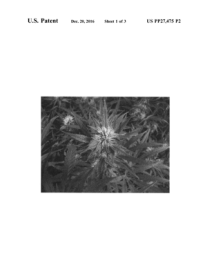 As with any billion dollar market, patents are an important consideration for the cannabis industry. Despite its current classification as a Schedule I drug under the Controlled Substances Act, however, the U.S. Patent and Trademark Office has issued hundreds of patents on cannabis to date. These patents cover a range of cannabis-related inventions, including methods of treatment with cannabinoids, cannabis-infused edible products, cannabis consumption methods and devices, and methods of growing Cannabis plants. Even the Cannabis plant itself is fair game for patenting via both utility and plant patents.[1]
However, one family of utility patents, in particular, entitled "Breeding, Production, Processing, and Use of Specialty Cannabis" (collectively, the "Biotech cannabis patents"), has many in the cannabis industry concerned. This patent family is owned by Biotech Institute LLC of Westlake, California, and provides, according to the abstract: "compositions and methods for the breeding, production, processing and use of specialty cannabis." The over-250-page specification (as filed) contains 43 examples directed to a host of embodiments including:
• chemical analysis of cannabinoids and terpenes of the Cannabis plants described in the specification (Examples 1, 7, 13, and 17);
• parental classes of Cannabis varieties (Example 2);
• Cannabis varieties with high THC content or non-THC content and terpene profiles to meet specific aroma/flavor or medicinal needs (Examples 3 and 4);
• breeding programs (Example 5);
• strains producing both THC and CBD or CBD alone (Example 6);
• tracking the Cannabis plants during production, processing, and use (Example 21);
• feedback-based cultivation systems (Example 23);
• packaging single-dose units in a bubble pack (Example 25);
• use as a vaporized expectorant (Example 26);
• use of specialty cannabis in edibles (Example 29);
• use of multiplexed cannabis mixtures to treat brachial plexus avulsion, arthritis, motion sickness, seizures, neuropathic pain, depression, irritable bowel syndrome, pain from cancer, psychosis-related diseases (g., schizophrenia) as well as to aid in weight loss and improve cholesterol levels (Examples 31-41); and
• zero-point delivery devices and doses (Examples 42 and 43).Although the specification contains extensive tables showing cannabinoid and terpene profiles of the Cannabis varieties described in the specification, as well as actual data from volunteer trials using the Cannabis plants, many of the examples are prophetic and aspirational.
Claiming priority to U.S. provisional applications that were filed on March 15, 2013, and October 29, 2013, this family currently contains three granted U.S. patents and two pending continuation applications. The first patent in this family was granted as U.S. Patent No. 9,095,554 ("the '554 patent") on August 4, 2015.
Claim 1 of the '554 patent recites:
1. A hybrid cannabis plant, or an asexual clone of said hybrid cannabis plant, or a plant part, tissue, or cell thereof, which produces a female inflorescence, said inflorescence comprising:
a) a BT/BD genotype;
b) a terpene profile in which myrcene is not the dominant terpene;
c) a terpene oil content greater than about 1.0% by weight; and
d) a CBD content greater than 3%;
wherein the terpene profile is defined as terpinolene, alpha phelladrene, beta ocimene, careen, limonene, gamma terpinene, alpha pinene, alpha terpinene, beta pinene, fenchol, camphene, alpha terpineol, alpha humulene, beta caryophyllene, linalool, cary oxide, and myrcene, and wherein the terpene oil content is determined by the additive content of the terpenes in the terpene profile; and wherein the terpene contents and CBD content are measured by gas chromatography-flame ionization detection (GC-FID) and calculated based on dry weight of the inflorescence; wherein a representative sample of seed producing said plants has been deposited under NCIMB Nos. 42246, 42247, 42248, 42249, 42250, and 42254.The dependent claims of the '554 patent cover methods of breeding and producing chemotype II Cannabis plants with a non-myrcene dominant terpene profile, a cannabis extract, and an edible product using the Cannabis plant described in claim 1.
The next to issue in the Biotech cannabis patents was U.S. Patent No. 9,370,164 ("the '164 patent") on June 21, 2016. Like the '554 patent, the '164 patent covers Cannabis plants with particular cannabinoid content and terpene profile.
Claim 1 of the '164 patent recites:
1. A Cannabis plant, or an asexual clone of said Cannabis plant, or a plant part, tissue, or cell thereof, which produces a female inflorescence, said inflorescence comprising:
a) a tetrahydrocannabinol (THC) content that is at least 3%;
b) a cannabidiol (CBD) content that is at least 3%;
c) a terpene profile in which myrcene is not the dominant terpene; and
d) a terpene oil content greater than about 1%;
wherein the contents of THC and CBD comprise acidic and decarboxylated cannabinoids as measured by high performance liquid chromatography (HPLC) and calculated based on dry weight of the inflorescence; wherein the terpene profile is defined as terpinolene, alpha phellandrene, beta ocimene, carene, limonene, gamma terpinene, alpha pinene, alpha terpinene, beta pinene, fenchol, camphene, alpha terpineol, alpha humulene, beta caryophyllene, linalool, caryophyllene oxide, and myrcene, and wherein the terpene oil content is the additive content of the terpenes in the terpene profile;
wherein the terpene contents are measured by gas chromatography-flame ionization detection (GC-FID) and calculated based on dry weight of the inflorescence; wherein a representative sample of seed producing said plants has been deposited under NCIMB Nos. 42254, 42255, 42256, and 42258.More recently, the third of the Biotech cannabis patents issued on May 9, 2017, as U.S. Patent No. 9,642,317 ("the '317 patent"). Like the '554 and '164 patents, the '317 patent has an independent claim directed to a Cannabis plant with particular cannabinoid and terpene characteristics, but further claims strains containing specific content ratios of THC:CBD (see claims 18 and 19).
Currently, there is one published pending continuation application in this family — U.S. Patent Application No. 15/400,277, which was filed on January 6, 2017, and published as US 2017/0202170 on July 20, 2017. This case has not yet been picked up for examination, but the pending claims appear to be directed to additional Cannabis varieties. Another application in this family was recently filed and assigned U.S. Patent Application No. 15/795,904; however, this application is currently unpublished. Thus, given the plethora of embodiments disclosed in the specification, Biotech Institute will almost certainly continue to file continuation applications to pursue additional subject matter and to keep an application in the family pending.
Additionally, Biotech Institute has also sought international protection of this family. International Application PCT/US2014/030267 was filed in parallel with the U.S. application that led to the '554 patent and has entered national stage in Mexico. Furthermore, International Application PCT/US2014/046694 was filed on July 15, 2014, and claims priority to the same family. This application entered national phase in Europe and Canada.
So, considering the reach of the Biotech cannabis patents so far, why has this family caused such a stir in the cannabis industry? At first glance, the independent claims of the '554, '164, and '317 patents seem limited in that they require that the Cannabis plants to contain certain percentages of THC and/or CBD and a terpene profile of more than 15 specific terpenes. Some of the independent claims additionally require that myrcene is not the dominant terpene. The independent claims also recite specific deposit numbers of seeds that are representative of the strains described by the independent claims.
However, despite these limitations, commentators have speculated that Biotech Institute's patents may cover anywhere from 50-70% of all Cannabis plants that are currently on the market, which could pose a serious threat to many Cannabis growers.[2] Unlike plant patents, which are narrow and cover a particular, well-defined new plant variety, utility patents directed to plants have the potential to claim a much broader range of varieties.
Further, the potential sweeping scope of these patents, specifically, highlights a couple of issues with prosecuting and challenging patents on Cannabis plants, generally. For example, there would seem to be a lack of prior art available showing the particular chemotypes of strains that are currently in use. Without this information, Examiners are unable to accurately determine whether a Cannabis plant with a particular chemotype is novel and nonobvious. Moreover, the lack of publications or information on the Cannabis varieties currently available to the public may pose similar challenges for third parties seeking to initiate certain post-grant review proceedings before the USPTO of patents covering Cannabis plants. Indeed, perhaps unsurprisingly, none of the patents in this family have yet been subjected to an IPR proceeding.
Regardless of this lack of post-grant challenges or proceedings for the Biotech cannabis patents, however, these concerns have become apparent by other market reactions in the industry. For example, in direct response to these issues and Biotech Institute's patents in particular, groups such as the Open Cannabis Project ("OCP")[3] are working to catalog and publish the chemotype data of cannabis strains that are currently in the public domain. OCP's mission, in part, is to prevent broad utility patent protection of Cannabis plants. Having such a database will help ensure that patents on Cannabis plants are properly limited in scope to cover novel and nonobvious varieties.
For now, it is uncertain whether Biotech Institute's patents are enforceable given the current federal climate. However, as this family of patents is not set to expire until March 2034, the cannabis industry will have to remain careful, diligent, and concerned over Biotech Institute's growing patent family.
[1] Importantly, the USPTO recently issued the first plant patent on December 20, 2016, PP27,475, entitled "Cannabis plant named 'Ecuadorian Sativa.'"
[2] See, e.g., https://hightimes.com/business/patented-pot-a-multimillion-dollar-battle-looms/.
[3] http://opencannabisproject.org/

