By Kevin E. Noonan –
 The Supreme Court today considered the question of whether the inter partes review process established by the U.S. Patent and Trademark Office in implementing portions of the Leahy-Smith America Invents Act or 2012 violates the Constitution by permitting a non-Article III court to deprive patentees of property rights, in Oil States Energy Services, LLC v. Greene's Energy Group, LLC. The Federal Circuit ruled against patentee/Petitioner Oil States on the grounds that patents are public rights rather than private rights, and the Constitution does not require public rights to be adjudicated before Article III courts, pursuant inter alia to Stern v. Marshall, 564 US 462, 489-490 (2011).
The Court had before it the merits briefs from the parties as well as the Federal Government; the subject matter of these briefs have been discussed previously (see "Supreme Court Preview — Oil States Energy Services, LLC v. Greene's Energy Group, LLC and Oil States Preview Take II — Just What Did the Supreme Court Hold in McCormick Harvesting Machine v. Aultman?" — as noted therein, there were "several" amicus briefs filed; specifically, 21 briefs were filed in support of Petitioner, 25 briefs in support of Respondent, and 12 briefs in support of nether party — however, most of these briefs took a position that favored either Petitioner or Respondent). The positions taken by these amici were in some ways as expected: the brief from 39 Affected Patent Owners favored finding IPRs to be unconstitutional, while the brief from BSA: The Software Alliance urged the Court to uphold the constitutionality of IPRs.
It would be difficult, perhaps impossible, and certainly imprudent to post on all these amicus briefs. Here we provide a synopsis of four briefs favoring the Petitioner, three favoring the Respondent, and three favoring neither party.
Petitioner
The Pharmaceutical Research and Manufacturers of America (PhRMA)
This brief argues that patents have long been held to be private not public rights, supporting this legal conclusion by "precedent, practice, common sense," and by analogy to other areas of the law. The brief cites 35 U.S.C. § 261 as reciting that patents have "all the attributes of personal property" and analogizes the private property character of patents to Federal land grants and mining rights. The brief, no doubt fully cognizant of the role the Supreme Court has played in identifying error by the Federal Circuit in almost every case where the Court has granted certiorari (even in those cases where it has affirmed the decision of its appellate inferior court) notes that it was the Federal Circuit's failure to recognize a patent as a private right rather than a public right that was the source of the error below.
The brief draws a bright line between the power of the USPTO over patents at the grant date: Congress can impose whatever requirements it wants prior to grant but once the patent is granted it becomes private property that can only be rescinded by a court. The Supreme Court's decision in Florida Prepaid Postsecondary Education Expense Board v. College Savings Bank (1999) is cited frequently in this brief for this proposition, but the argument also contains broad citation to 19th and 20th Century Supreme Court precedent on this point, as well as patent law treatises. The brief also argues that acknowledging the status of a patent as a private property right is also consistent with a patentee's right to recompense from the government itself (albeit in the Court of Federal Claims) if the government infringes a patent.
The brief analogizes a patent's status as a private property right to copyright, which is expressly a private property right (because it stems from a common law right), recognizing that patents and copyrights are contained in the same section of Article I enumerating Congress's powers (and that the Court has just last term used such analogies itself in deciding patent law questions; see Impression Products v. Lexmark Int'l.). The brief also illustrates the consequences that could be implicated by a contrary decision for farmers on land granted by the Federal government (reminiscent of Chief Justice Roberts' illustration in Lexmark using an automobile repair shop).
The brief also makes a distinction with ex parte and inter partes reexamination by noting that those were reexamination proceedings not frankly adversarial proceedings as IPRs were clearly intended by Congress to be. The brief urges the Court to consider the history of the right and its status as a private property right and identifies yet another case (involving ex parte reexamination; Patlex Corp. v. Mossinghoff (Fed. Cir. 1985)) where the Federal Circuit erred in not recognizing that patents are private not public rights.
The Biotechnology Innovation Organization and the Association of University Technology Managers
The Biotechnology Innovation Organization (BIO) and the Association of University Technology Managers (AUTM) filed a joint brief in which they argued that patents are private rights, a conclusion which in their opinion was supported by ample precedent. The brief also points out in particular that the government's position is contrary to precedent, on historical grounds, and as a practical matter how the U.S. patent system functions — all arguments clearly intended to reduce the effectiveness the Solicitor General may have before the Court. The brief also argues that the IPR regime is constitutionally flawed because the Court has permitted non-Article III adjudication only in limited circumstances. In addition, amici argue that the Patent Trial and Appeal Board (PTAB) does not satisfy the Court's criteria under its precedent for Article I adjudication; specifically the brief argues that the Board operates "more broadly, and with less independence," than the Court requires; that the PTAB's procedures are not fair (essentially a due process argument); that the IPR regime has raised the possibility of "reverse trolling" (e.g., by "financial speculators" who use the threat of IPR institution to wrest financial compensation from patent holders); that how the PTAB operates is not fair and valid even when compared with the PTO's own procedures; and that these deleterious effects are even worse for patents (as is the one at issue) granted prior to passage of the AIA, because those patentees cannot be said to have acquiesced to the current situation. The current IPR system is "imbalanced, expensive, and lacking in finality to the detriment of patent holders," according to the brief. Moreover, the brief alleges that APJs lack independence from the (political appointee) Director and USPTO administration (and hence from the administration in charge of the Executive branch) and cites instances of "panel packing" (where the Director can and has changed the composition of a PTAB panel to increase (almost to certainty) how the Board will decide an IPR). Exacerbating this opportunity for politically motivated mischief is the non-renewability of institution decisions by the (political appointee) Director.
The brief contains an interesting argument about securing a pre-existing right to property; in this view obtaining a patent doesn't create the right it but rather secures it. Although not expressly argued, this raises an analogy to trade secret, where the undisclosed secret is plainly private property and both Federal and state laws protect said property. The analogy regarding preexisting rights to an inventor's invention is bolstered in the brief with reference to the Court's decision in Board of Trustees of the Leland Stanford Junior University v. Roche Molecular Systems, Inc., wherein the Court held that ownership of an invention (as personal property) resided in the inventor, and Congress via the Bayh-Dole Act could not provide automatic assignment to universities by their researcher employees.
This brief contains some 19th Century precedential counterweight to historical arguments made in other briefs. In particular, in this regard is McKeever v. U.S. from the Court of Claims, contrasting the American version of patenting with the British version (as a grant from the sovereign that the sovereign could revoke). 18th century writings from the Founders were cited for this principle.
The brief emphasized the Court's precedent limiting the scope of Article I adjudications, citing (as has other briefs) Crowell v Benson (1932), Thomas v Union Carbide Ag Prods. Co. (1985), and Commodities Future Trading Comm'n v Schor (1986). Using this precedent, the brief argues that IPRs fall outside the scope of the instances where the Court has permitted Article I courts to adjudicate property rights, inter alia wherein they are not held by consent of the parties or limited to ministerial actions.
With regard to the issue of "reverse trolling," the brief with some irony argues that "[t]he end result is that patent owners are threatened with the very abuses that the AIA was enacted to remedy."
Finally, the brief includes arguments regarding the policy issues surrounding drug development costs.
AbbVie, Inc, Allergan, Inc., and Celgene Corp.
This brief provides further explication on public/private rights question, citing Murray's Lessee v Hoboken Land & Improvement Co. (1855), and Granfinanciera S.A. v Nordberg (1989), in support. The historical development of the patent system is emphasized, acting as somewhat of a rebuttal to some of the law professsors' arguments in other briefs (see below). The brief also takes an almost academic tone in explicating the 18th century meaning of the words in the Constitution and contemporaneous writings of Founders to support its arguments, and sets forth a survey of 19th century case law in support of the notion that patents are a private property right.
Brief of 27 Law Professors
This brief, filed by Professor Adam Mossoff of the Antonin Scalia Law School at George Mason University on behalf of 26 of his colleagues, cites a recent case, Horne v Dept. of Agriculture (2015), for the proposition that the Court has treated patents as a private property right (supported of course by ample 19th century case law). And in keeping with the theme that the Court is more than willing to correct error by the Federal Circuit, the brief reminds the Justices that "[t]o reverse the Federal Circuit in this case would not be the first time this Court has stopped the Federal Circuit in ignoring settled legal doctrine," citing (parsimoniously) Festo Corp. v. Shoketsu Kinzoku Kogyo Kabushiki (2002), and eBay v. MercExchange (2006).
Respondents
72 Professors of Intellectual Property Law
This brief, submitted by Professor Mark Lemley from Stanford Law School, Professor Arti Rai from Duke Law School, and Professor Greg Reilly from IIT Chicago-Kent College of Law on behalf of 69 of their colleagues, argues that Article I courts are empowered to correct administrative errors in granting invalid patent claims. Such correction is "integrally related" to the USPTO's administrative activity of granting patents, according to the professors, and that Congress has discretion to permit IPRs that do not threaten Article III prerogatives. To the argument that private patent rights are put at risk without due process protections guaranteed by the Bill of Rights, the professors argue that the Federal Circuit provides the Article III check on Article I overreach (perhaps a risky argument before the Justices in view of recent trends in the Court engaging in a certain amount of correction of its own, with regard to the Federal Circuit). In light of these arguments, the professors conclude that there is no Seventh Amendment violation. Certain statements raise something of an eyebrow ("PTAB error correction . . . [is] targeted towards bad patents that district court litigation would not address" seems to overstate the issue; there is no reason given why a court would refuse to consider an invalidity contention), but as with many briefs in this case, this one cited Stern v. Marshall (2011), which in their view permits non-Article III courts to adjudicate claims arising from Federal statutory regimes ("when the right [at issue] is integrally related to particular government action"). The brief also characterizes IPRs as one of the conditions for patentability within Congress's power to enact.
The professors argue (as several of them have argued in their professional writings) that it is almost inevitable that the USPTO will grant patents erroneously, if only because of the number of applications received by the Office each year ("[s]uch high-throughput processing will inevitably produce error"). While undoubtedly true that the examining corps is busy, there is not only no pressure on the examiners to grant patents improvidently, those who understand how the Office operates know that an examiner gets equal "credit" for an allowance or an abandonment. The brief also provides broad citation to the lack of Seventh Amendment right to jury trial in administrative proceedings, in an argument that these Justices are likely to gratefully receive as having greater affinity if not knowledge regarding administrative rather than patent law.
On a policy level the brief argues (echoing Justice Breyer's sentiments in this regard in his Mayo v. Prometheus decision, unlikely done accidentally) that patents involve a delicate balance between encouraging and stifling innovation.
Professors of Administrative Law, Federal Courts, and Intellectual Property Law
These professors (only nine on this brief) argue that the patent right is a sovereign grant of the right to exclude, not a common law property right, and thus IPRs provide no violation of Article III. Like the brief from the Intellectual Property Lawyers Association of Chicago (see below), these professors draw a bright line between those patents that should fall within the ambit of IPRs (the America Inventors Protection Act of 1999, AIPA) (patents issuing from applications filed after passage of the AIPA) and those that should not (patents issuing from applications filed prior to enactment of the AIPA).
The brief asserts that IPRs were a way for the USPTO to adapt to the influx of patent applications in recent years, as well as "a choking multitude of issued patents" (which appropriately sets forth their biases). These professors apparently believe that examiners are too overburdened to do their job properly ("the almost inevitable granting of invalid patent claims"), in common with arguments made in the 72 Law Professors brief.
These professors base their argument that patents are public rights falling within the scope of the exception to Article III adjudication requirement as set forth by the Supreme Court in Stern v. Marshall (2011). And these professors trace the genesis of U.S. patents to the tradition of a letters patent as a grant from the sovereign that could be revoked by the sovereign. As in other briefs, these professors make the comparison with land grants, saying that these land grants can be distinguished from patents because the land grant is a permanent right wherein the patent grant, which is of limited duration and for limited purpose. Historically the brief reminds the Court that the British practice was the Privy Council to be able to revoke patents, and argues that in the U.S. practice of involving Article III courts in invalidating patents in then early days of the Republic stemmed from an overburdened Executive Branch rather than a doctrinal or philosophical determination that patents were private property rights that required an Article III court to decide whether the right could be taken from a patentee.
The brief makes the further argument that invalidating improvidently granted patents returns to the public rights to do what they could have had the right to do in the first place (ignoring the disclosure benefit the patentee gives the public in the first place).
Knowledge Ecology International
Andrew Goldman of KEI, writing for his organization, identifies their interest as social justice; in this vein the brief asserts the organization's belief that patents are public not private rights. The brief argues that IPRs provide an "important corrective mechanism" and are only one way the USPTO implements its delegated responsibilities (mentioning Patent Term Extensions under 35 U.S.C. § 156 by illustration). The brief identifies as "mistakes" the ~11% frequency of the USPTO issuing certificates of correction, and argue that the higher rate (about 2-fold higher, to around 25%) of these certificates in patents related to medical subject matter is significant. (Unmentioned in the brief is the reality that certificates of correction are limited to ministerial corrections like typographical errors and errors that occur during printing the patent, whereas substantive corrections must be made by reissue.)
The brief also argues that patent thickets are a problem but illustrates this with aviation (~1910's) and, of course, the Court's Myriad decision (arguing that this decision resulted in increased innovation, but showing no evidence of anything other than copying). The brief's argument in this regard is more cogent making the case for the potential for patent thickets to arise over CRISPR and CAR-T technology but shows no evidence and makes no persuasive argument either that there is a patent thicket or that IPRs can solve this problem should it arise. Indeed, this portion of the brief is a good example of the rhetorical error of begging the question, because there is no indication that these patents have or will be challenged under the IPR regime.
The brief also argues that patents are only one factor for innovation and other incentives should be considered and promoted, and advocates that patents should be "delinked" from innovation by relying on other means for providing the patent incentive. These other incentives include the Orphan Drug Act, the Hatch-Waxman Act, and the Biologics Price Control and Innovation Act (BPCIA) as examples of these alternative forms of incentivizing innovation.
Briefs in support of neither party
Association for Accessible Medicines (previously known as the Generic Pharmaceutical Association)
This brief argues that patents are part of a federal regulatory scheme (which is the standard under Stern v Marshall for permitting Article I courts to adjudicate property rights) and that IPRs are "essential" (another Stern requirement) for the "limited regulatory objective" of eliminating invalid patents. As in other briefs, this one argues that the overburdened USPTO results in the grant of invalid patents (saying this is "inevitable) but provides neither evidence nor argument that said "invalid" patents arise at any particular frequency. The brief argues that the existence of interferences and ex parte and inter partes reexamination is sufficient to validate Congress's actions in creating the PTAB and the IPR regime, and makes the further argument that IPRs are necessary because invalid patents block generic and biosimilar copies of patented medicines, using the example of ANDA litigation over the small molecule drug omeprazole for "delaying" generic entry into the market by three years.
Intellectual Property Lawyers Association of Chicago (IPLAC)
IPLAC, in a brief by its President Paul Kitch, argues that the Supreme Court should draw a distinction between patents granted on applications filed prior to enactment of the AIA and those filed after AIA passage. The brief argues that the Court can hold that IPRs are constitutional for post-AIA granted patents because Congress has the right to provide for IPRs under its Article I powers and applicants have consented to the IPR regime by filing applications knowing that they would be subject to this means of invalidation. This argument would redefine the process of getting a patent to include IPRs, and thus for grant to be subject to revocation at any time during a patent's term (which was not understood at the time an applicant filed a patent for pre-AIA patents). The brief argues that this would be within the scope of Congressional rights, perhaps better stated as being within the proper scope of Congress's powers under the Constitution.
Shire Pharmaceuticals LLC
Shire's brief, submitted by its Chief Patent Counsel James Harrington, is nominally filed on behalf of neither party. However, it should be kept in mind that Shire was the target of activities by non-practicing financial entities who filed an IPR petition against patents protecting an important Shire product, wherein said financial entities were cognizant of the short term advantages that could accrue to an entity aware beforehand that an IPR petition would be filed. Understandably, both the tenor and the substance of Shire's brief reflect these experiences.
The brief begins by making the policy argument that patent rights are important for new drug research and development, particularly for drugs for rare diseases that is the company's focus. The brief argues that patent rights are a "vested private property right" (VPPR) and can only be taken away by the legitimate actions of an Article III court. IPR proceedings "unduly harm" innovator biotechnology companies when it takes such VPPRs "in a forum statutorily designed to be subject to political influence," according to the brief, and in view of the importance of patent rights as VPPRs, political influence permitted by the IPR regime "unconstitutionally destabilizes innovator patent rights." The brief gives little credence to the argument that judicial review of Final Written Decisions from the PTAB provide an avenue for rectifying these structural liabilities, due to "very deferential standards of review."
The brief further argues that IPRs are subject to undue "political influence" as being designed to implement executive branch policy goals, and that VPPRs can be and are subject to these policy decisions without due process, being subject to "shifting political winds" as administrations change. The brief argues that not only does the Director (a political appointee) decide which IPRs to institute and choose the judges, but can and does add to the panel to achieve uniformity by "fluid, case-based interpretations of its regulations."
The brief cites plentiful Supreme Court precedent to the effect that patent rights are private property vested in the patentee upon grant, and makes an explicit analogy with land grants and how the Court has adjudicated these rights. While many of the arguments hint at the possibility for corruption in the process, the brief is careful to note that they are not arguing corruption but rather the proper allocation of power between the three branches of government. The brief supports this argument with regard to the Federal Circuit having voiced concerns regarding this potential for due process violations.
The brief argues that the PTAB is capable of and actually uses a flexible standard for making law that is the opposite of stare decisis, using statistics that of 1,577 Final Written Decisions promulgated by the PTAB, only 37 of these decisions are precedential and only 11 of these are in IPR proceedings. In addition the brief argues that the procedural limitations regarding discovery, cross-examination, and claim amendments prevent patentees from having their patent rights properly adjudicated.
Regarding appellate review, the brief cited Administrative Procedures Act § 706 that limits overturning PTAB decisions to those that are "arbitrary, capricious, and abuse of discretion or otherwise not in accordance with law" and reviews factual determinations for substantial evidence. As a result, the Federal Circuit issued summary affirmances 49.11% of the time; affirmed on every issue 75.62% of the time, and reversed or vacated on every issue 9.95% of the time.
The brief also cites instances where the PTAB came to a different conclusion than the Federal Circuit regarding validity, and as a result, the agency decision then trumped a decision by an Article III court, and the portion of the statute that makes the Director's decision whether or not to institute not appealable, and can continue the IPR even when the parties have settled, all as evidence that the IPR regime exceeds Constitutional limits on Congressional power.
The brief also points out that the Director has the ability to intervene in an appeal of an IPR decision, which makes the USPTO an interested party, and that the possibility for political influence on PTAB decisions arises in part because Administrative Patent Judges (APJs) are not the USPTO equivalent of Administrative Law Judges (ALJs) because ALJs are protected by statute in pay and job security and are permitted ex parte communication with USPTO officials about cases before them. According to the brief, by design in the statute, the PTAB lacks procedural safeguards to protect patent property right owners from aforesaid political influence. For the reasons set forth above, safeguards in other Article I court settings deemed "important" by the Supreme Court are absent in the PTAB (wherein the PTAB is under the political influence of the Executive Branch).

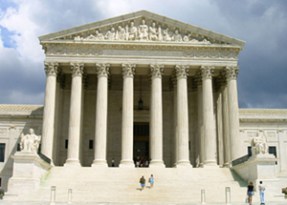 Leading up to the Supreme Court oral argument for Oil States Energy Services, LLC. v. Greene's Energy Group, LLC on November 27, 2017, there was a lot of discussion regarding whether patents were a private or public right. Of course, that question is relevant to whether the Patent Office as an administrative agency can be given the authority to cancel a patent after it has issued, or whether the Constitution requires that the validity of an issued patent be determined by an Article III court. If patents are indeed private rights, then IPRs and related proceedings are likely unconstitutional grants of authority to the executive branch from Congress. As we had been reporting for the weeks leading up to the argument, the arguments that patents are private rights appear to be grounded in what the Supreme Court said in the 1898 case McCormick Harvesting Machine v. Aultman, 169 U.S. 606 (1898). We presented an analysis of that case and concluded that the language in McCormick Harvesting can be used to support both interpretations, whether alleging that the case refines the Constitutional limits of Congress with regard to issued patent rights, or whether alleging that McCormick Harvesting rests solely on the lack of statutory authority at the time. That post generated a lot of debate, with many well-reasoned (and much appreciated) viewpoints. Did the Justices see McCormick Harvesting to be as clear-cut as some of the comments to our post suggested it was? Justice Gorsuch certainly thought that McCormick Harvesting already settled the issue. But many of the other Justices that asked questions on this topic did not seem to share this view. If the questions that the Justices asked are any indication, it seems unlikely that a majority will find IPR proceedings per se unconstitutional. Instead, if the Supreme Court finds any fault with the current system, it will likely base that on due process considerations.