• By John Cravero

    USPTO SealAbout the PTAB Life Sciences Report:  Each month we will report on developments at the PTAB involving life sciences patents.

    Pfizer Inc. v. Biogen, Inc and Genentech, Inc.

    PTAB Petition:  IPR2017-02126; filed October 6, 2017.

    Patent at Issue:  U.S. Patent No. 7,682,612 ("Treatment of hematologic malignancies associated with circulating tumor cells using chimeric anti-CD20 antibody," issued March 23, 2010) claims a method of treating chronic lymphocytic leukemia (CLL) in a human patient, comprising administering rituximab to the patient in an amount effective to treat the CLL, wherein the rituximab is administered to the patient at a dosage of 500 mg/m2.

    Petitioner Pfizer Inc. is challenging the '612 patent on three grounds as obvious under 35 U.S.C. § 103(a).  View the petition here.

    Related Matters:  According to the petiton, the '612 patent is involved in inter partes review IPR2017-01227 (Celltrion, Inc.; filed 03/31/2017; institution denied 10/12/2017) and IPR2017-01230 (Celltrion, Inc.; filed 03/31/2017; institution denied 10/12/2017).


    Pfizer Inc. v. Biogen, Inc and Genentech, Inc.

    PTAB Petition:  IPR2017-02127; filed October 6, 2017.

    Patent at Issue:  U.S. Patent No. 8,206,711 ("Treatment of chronic lymphocytic leukemia using anti-CD20 antibodies," issued June 26, 2012) claims a method of treating chronic lymphocytic leukemia (CLL) in a human patient, comprising administering rituximab to the patient in an amount effective to treat the CLL, wherein the rituximab is administered to the patient at a dosage of 500 mg/m2.

    Petitioner Pfizer Inc. is challenging the '711 patent on three grounds as obvious under 35 U.S.C. § 103(a).  View the petition here.

    Related Matters:  According to the petiton, the '711 patent is involved in inter partes review IPR2017-01229 (Celltrion, Inc.; filed 03/31/2017; institution denied 10/23/2017).


    Actavis LLC v. Abraxis Bioscience, LLC

    PTAB Petition:  IPR2017-01101; filed April 4, 2017.

    Institution of Inter Partes Review; entered October 10, 2017.

    Patent at Issue:  U.S. Patent No. 7,820,788 ("Compositions and methods of delivery of pharmacological agents," issued October 26, 2010) claims a pharmaceutical composition for injection comprising paclitaxel and a pharmaceutically acceptable carrier, wherein the pharmaceutically acceptable carrier comprises albumin, wherein the albumin and the paclitaxel in the composition are formulated as particles, wherein the particles have a particle size of less than about 200 nm, and wherein the weight ratio of albumin to paclitaxel in the composition is about 1:1 to about 9:1.

    Petitioner Actavis LLC is challenging the '788 patent on two grounds as being anticipated under 35 U.S.C. § 102(b) (ground 1) or obvious under 35 U.S.C. § 103(a) (ground 2).  View the petition here.  Administrative Patent Judges Jeffrey N. Fredman, Rama G. Elluru, and Susan L. Mitchell (author) issued a decision instituting inter partes review of whether claims 1-9, 11, and 12 of the '788 patent are anticipated by Desai; claims 1-12 of the '788 patent are obvious over Desai; and claims 1-12 of the '788 patent are obvious over the combination of Desai, Kadima, and Liversidge.

    Related Matters:  According to the petition, the '788 patent was asserted in Abraxis BioScience, LLC v. Actavis LLC, Case No. 2:16-cv-09074-JMV-MF (D.N.J. April 6, 2016), and in Abraxis BioScience, LLC v. Cipla Ltd., Case No. 2:16-cv-09074 (D.N.J. Dec. 7, 2016).  Also, Petitioners filed petitions for inter partes review of related U.S. Patent Nos. 8,853,260 (IPR2017-01100; filed 04/04/2017; institution denied 10/11/2017); 7,923,536 (IPR2017-00804; filed 01/30/2017; instituted 07/27/2017; pending); and 8,138,229 (IPR2017-01104; filed 04/04/2017; instituted 10/10/2017; pending).


    Actavis LLC v. Abraxis Bioscience, LLC

    PTAB Petition:  IPR2017-01104; filed April 4, 2017.

    Institution of Inter Partes Review; entered October 10, 2017.

    Patent at Issue:  U.S. Patent No. 8,138,229 ("Compositions and methods of delivery of pharmacological agents," issued October 26, 2010) claims a liquid pharmaceutical composition for injection comprising paclitaxel and a pharmaceutically acceptable carrier, wherein the pharmaceutically acceptable carrier comprises albumin, wherein the albumin and the paclitaxel in the composition are formulated as particles, wherein the particles have a particle size of less than about 200 nm, wherein the weight ratio of albumin to paclitaxel in the composition is about 1:1 to about 9:1, wherein the liquid pharmaceutical composition comprises about 0.5% to about 5% by weight of albumin, and wherein the liquid pharmaceutical composition further comprises saline.

    Petitioner Actavis LLC is challenging the '229 patent on two grounds as being anticipated under 35 U.S.C. § 102(b) (ground 1) or obvious under 35 U.S.C. § 103(a) (ground 2).  View the petition here.  Administrative Patent Judges Jeffrey N. Fredman (author), Rama G. Elluru, and Susan L. Mitchell issued a decision instituting inter partes review of whether claims 1-19 and 21-48 of the '229 patent are anticipated by Desai; claims 1-19 and 21-48 of the '229 patent are obvious over Desai; claims 1-19 and 21-48 of the '229 patent are obvious over the combination of Desai, Kadima, and Liversidge; claim 20 of the '229 patent are obvious over the combination of Desai and Taxol label; and claim 20 of the '229 patent is obvious over the combination of Desai, Taxol label, Kadima, and Liversidge.

    Related Matters:  According to the petition, the '229 patent was asserted in Abraxis BioScience, LLC v. Actavis LLC, Case No. 2:16-cv-09074-JMV-MF (D.N.J. April 6, 2016), and in Abraxis BioScience, LLC v. Cipla Ltd., Case No. 2:16-cv-09074 (D.N.J. Dec. 7, 2016).  Also, Petitioners filed petitions for inter partes review of related U.S. Patent Nos. 8,853,260 (IPR2017-01100; filed 04/04/2017; institution denied 10/11/2017); 7,923,536 (IPR2017-00804; filed 01/30/2017; instituted 07/27/2017; pending); and 7,820,788 (IPR2017-01101; filed 04/04/2017; instituted 10/10/2017; pending).


    Samsung Bioepis Co., Ltd. v Genentech, Inc.

    PTAB Petition:  IPR2017-01960; filed August 25, 2017

    Institution of Inter Partes Review; entered October 13, 2017.

    Patent at Issue:  U.S. Patent No. 7,892,549 ("Treatment with anti-ErbB2 antibodies," issued February 22, 2011) claims a method for the treatment of a human patient with breast cancer that overexpresses ErbB2 receptor, comprising administering a combination of an antibody that binds ErbB2, a taxoid, and a further growth inhibitory agent to the human patient in an amount effective to extend the time to disease progression in the human patient, wherein the antibody binds to epitope 4D5 within the ErbB2 extracellular domain sequence.

    Petitioner Samsung Bioepis Co., Ltd is challenging the '549 patent on six grounds as obvious under 35 U.S.C. § 103(a).  Petitioners also seek joinder with IPR2017-00737 through Motions for Joinder under 35 U.S.C. § 315(c), and 37 C.F.R. §§ 42.22 and 42.122(b).  View the petition here.  Administrative Patent Judges Zhenyu Yang, Christopher G. Paulraj, and Robert A. Pollock (author) issued a decision instituting inter partes review of whether 1–11 and 14–17 are obvious over the combination of Baselga '97 and Gelmon; claim 12 is obvious over the combination of Baselga '97, Gelmon, and Drebin; claim 13 is obvious over the combination of Baselga '97, Gelmon, and Presta; claims 1–11 and 14–17 are obvious over the combination of Baselga '96, Baselga '94, and Gelmon; claim 12 is obvious over the combination of Baselga '96, Baselga '94, Gelmon, and Drebin; and claim 13 is obvious over the combination of Baselga '96, Baselga '94, Gelmon, and Presta.  The Judges also ordered that IPR2017-01960 and IPR2017-00737 be joined and administratively terminated IPR2017-01960 under 37 C.F.R. § 42.72, and all further filings in the joined proceedings shall be made in IPR2017-00737 (Petitioners, Hospira, Inc.; filed 01/20/2017; instituted 07/27/2017; pending).

    Related Matters:  According to the petition, the '549 patent is involved in inter partes reviews IPR2017-00737 (Hospira, Inc.; filed 01/20/2017; instituted 07/27/2017; pending); IPR2017-00739 (Hospira, Inc.; filed 01/20/2017; institution denied 07/27/2017); and IPR2017-01122 (Celltrion, Inc.; filed 03/21/2017; instituted 10/04/2017; pending).

  • By Michael Borella

    Federal Circuit SealTwo-Way Media brought an action against Comcast in the District of Delaware, claiming infringement of U.S. Patent Nos. 5,778,187, 5,983,005, 6,434,622, and 7,266,686.  The District Court dismissed the case on the pleadings, finding that all of the claims were ineligible under 35 U.S.C. § 101.  Two-Way Media appealed, and the Federal Circuit affirmed.

    The Supreme Court's Alice Corp. v. CLS Bank Int'l case set forth a two-part test to determine whether claims are directed to patent-eligible subject matter under § 101.  One must first decide whether the claim at hand is directed to a judicially-excluded law of nature, a natural phenomenon, or an abstract idea.  If so, then one must further decide whether any element or combination of elements in the claim is sufficient to ensure that the claim amounts to significantly more than the judicial exclusion.  But generic computer implementation of an otherwise abstract process does not qualify as "significantly more."  On the other hand, a claimed improvement to a computer or technological process is typically patent-eligible.

    The Claimed Inventions

    The four patents-in-suit share a substantially common specification, and are directed to transmission of multimedia information over a network such as the Internet.  Claim 1 of the '187 patent was deemed representative of all claims of the '187 and '005 patents.  It recites:

    A method for transmitting message packets over a communications network comprising the steps of:
        converting a plurality of streams of audio and/or visual information into a plurality of streams of addressed digital packets complying with the specifications of a network communication protocol,
        for each stream, routing such stream to one or more users,
        controlling the routing of the stream of packets in response to selection signals received from the users, and
        monitoring the reception of packets by the users and accumulating records that indicate which streams of packets were received by which users, wherein at least one stream of packets comprises an audio and/or visual selection and the records that are accumulated indicate the time that a user starts receiving the audio and/or visual selection and the time that the user stops receiving the audio and/or visual selection.

    Claim 29, representative of the '622 patent, recites:

    A method for forwarding real-time information to one or more users having access to a communications network comprising:
        processing one or more streams of audio or visual information into one or more streams of packets for forwarding over the communications network, wherein at least one stream of packets comprises audio or video information,
        forwarding the digital packets to the users in response to information selection signals received from the users,
        verifying the operational status of the users' access to the communications network during delivery of the real-time information, and
        updating a database with indications of: (i) which streams of packets were received by which users, (ii) the time when delivery of each stream to each user commenced, and (iii) the time when delivery of each stream to each user terminated.

    Claim 30, representative of the '686 patent, recites:

    A method for metering real-time streaming media for commercial purposes, said method comprising:
        selecting an intermediate server from multiple intermediate servers;
        forwarding at least one copy of a real-time media stream from said intermediate server toward a user device;
        detecting a termination of said forwarding;
        after said termination, determining an extent of said real-time media stream forwarded toward said user device; and
        logging said extent for commercial purposes.

    The patents describe a problem related to transmission of packet data on the Internet.  Most of these transmissions are point-to-point, otherwise known as unicast.  In other words, there is one transmitting device and one receiving device.  Such mechanisms work well for certain types of communication, such as email or web transactions, but are inefficient for the distribution of multimedia, such as live video or audio streams, to many recipients.  There is no way for one device on the Internet to transmit a message addressed to all others.  And this limitation is by design — such broadcasts would rapidly overwhelm the capacity of the Internet as a whole.

    Internet multicasting, however, allows so-called multicast groups to be defined, and recipient devices may join these groups.  The transmitting device then sends a single copy of the packets through a series of one or more multicasting routers, each of which replicates the incoming stream of packets into two or more streams as needed to reach the recipient devices in the group.  When multicasting is functioning properly, a single transmission can reach multiple recipient devices without using significantly more network capacity that is absolutely needed.

    According to the Court:

    The patents describe the invention as an improved scalable architecture for delivering real-time information.  Embedded in the architecture is a control mechanism that provides for the management and administration of users who are to receive real-time information.

    In this system, the Primary Servers and Media Servers are interconnected by the internet.  The Control Servers connect users with Media Servers using a series of message exchanges.  The patents also describe monitoring network conditions and generating records about the real-time streams.

    Notably, the claims do not specifically mention multicasting.

    District Court Proceedings

    The District Court applied the Alice test first to claim 1 of the '187 patent.  It concluded that, under part one:

    The '187 and '005 patents are directed to the abstract idea of (1) sending information, (2) directing the sent information, (3) monitoring receipt of the sent information, and (4) accumulating records about receipt of the sent information.  The claims are thus directed to methods of sending and monitoring the delivery of audio/visual information.

    Under part two, the District Court found no evidence that the claims actually recite the architecture described in the patents' specification.  Accordingly, the District Court found that the claims did not include significantly more than this abstract idea, and therefore the'187 and '005 patents were ineligible under § 101.

    Regarding the remaining patents, the District Court found that "the '622 patent was directed to the abstract idea of monitoring the delivery of real-time information to a user or users, and the '686 patent was directed to the abstract idea of measuring the delivery of real-time information for commercial purposes."  Further, the additional elements in the representative claims were only generic computer components being used for their ordinary functionality.  As a result, these two patents were also found ineligible under § 101.

    Federal Circuit Review

    The Court began its analysis of the District Court decision by noting that, under part one of Alice, the claims should be considered as a whole.  Nonetheless, the Court wrote that "[w]e look to whether the claims in the patent focus on a specific means or method, or are instead directed to a result or effect that itself is the abstract idea and merely invokes generic processes and machinery."

    Addressing claim 1 of the '187 patent, the Court criticized its "result-based functional language."  Particularly, "[t]he claim requires the functional results of converting, routing, controlling, monitoring, and accumulating records, but does not sufficiently describe how to achieve these results in a non-abstract way."  Making an analogy to the claims found ineligible in the Court's Electric Power Group decision from last year, "claim 1 manipulates data but fails to do so in a non-abstract way."

    Even when presented with claim constructions proposed by Two-Way Media, the Court found that they did not "indicate how the claims are directed to a scalable network architecture that itself leads to an improvement in the functioning of the system."  Thus, the claim was deemed abstract.

    Regarding the part two analysis, the Court took issue with the apparent disparity between what the claim actually recited and the improvements that Two-Way Media alleged that it provided.  The Court asserted that "[t]he main problem that Two-Way Media cannot overcome is that the claim—as opposed to something purportedly described in the specification—is missing an inventive concept."  Thus, even if the specification described an inventive concept in the disclosed architecture, this architecture was not claimed.  For instance:

    Two-Way Media asserts that the claim solves various technical problems, including excessive loads on a source server, network congestion, unwelcome variations in delivery times, scalability of networks, and lack of precise recordkeeping.  But claim 1 here only uses generic functional language to achieve these purported solutions . . . .  Nothing in the claims or their constructions, including the use of intermediate computers requires anything other than conventional computer and network components operating according to their ordinary functions.

    The Court also found no inventive concept in the ordered combination of claim 1's limitations.  Instead, "[t]he claim uses a conventional ordering of steps—first processing the data, then routing it, controlling it, and monitoring its reception—with conventional technology to achieve its desired result."

    Consequently, the Federal Circuit agreed with the District Court that the '187 and '005 patents were ineligible.

    Turning to the '622 and '686 patents, Two-Way Media complained that the District Court had "erred by oversimplifying the claims down to merely their preamble and failing to recognize the claims solve technical problems."  But the Court found no problem with citing to a preamble as the distillation of a claim.  Under prong one of Alice, according to the Court, it is appropriate to determine the "focus" of the claim.  Regardless, the Court rapidly dismissed Two-Way Media's arguments, concluding that "the claims here—directed to monitoring the delivery of real-time information to user(s) or measuring such delivery for commercial purposes—are similar to other concepts found to be abstract."

    With respect to part two of Alice, the Court found the claims lacking for the same reasons as claim 1 — "nothing in these claims requires anything other than conventional computer and network components operating according to their ordinary functions."  Therefore, the '622 and '686 patents were also found ineligible.

    Analysis

    At first blush, it may seem as if this case is in tension with Enfish v. Microsoft.  In Enfish, the claims at issue recited a self-referential database, and the Court looked to the specification to determine whether this invention engendered a technical improvement.  Notably, the Court wrote in Enfish:

    The specification also teaches that the self-referential table functions differently than conventional database structures.  According to the specification, traditional databases, such as those that follow the relational model and those that follow the object oriented model, are inferior to the claimed invention.  While the structural requirements of current databases require a programmer to predefine a structure and subsequent data entry must conform to that structure, the database of the present invention does not require a programmer to preconfigure a structure to which a user must adapt data entry.  Moreover, our conclusion that the claims are directed to an improvement of an existing technology is bolstered by the specification's teachings that the claimed invention achieves other benefits over conventional databases, such as increased flexibility, faster search times, and smaller memory requirements.

    Thus, one may refer to the specification in order to determine the improvements provided by the claims.  In contrast, Two-Way Media asked the Court to look to the specification to further flesh out the details of the invention that were not actually claimed.  This distinction should be appreciated before sounding the alarm regarding the Federal Circuit's § 101 consistency (or lack thereof).

    Having said that, the Federal Circuit certainly can be schizophrenic when applying § 101.  Different panels have reviewed claims at different levels of detail under part one of Alice.  These panels have also varied with respect to part two, with some looking to the specification for guidance while others mostly ignoring it.  As a result, it is still very difficult to predict whether any given set of claims will be found patent-eligible.

    So the Federal Circuit can be criticized for failing to provide a consistent interpretation of the Alice test.  But this case exhibits less inconsistency with prior cases than meets the eye.

    Two-Way Media Ltd. v. Comcast Cable Communications, LLC (Fed. Cir. 2017)
    Panel: Circuit Judges Lourie, Reyna, and Hughes
    Opinion by Circuit Judge Reyna

  • CalendarNovember 6, 2017 – Biotechnology/Chemical/Pharmaceutical (BCP) Customer Partnership Meeting (U.S. Patent and Trademark Office) – Alexandria, VA

    November 7, 2017 – "Personal Jurisdiction After Bristol-Myers Squibb: Unresolved Issues, Shifting Plaintiff Strategies" (Strafford) – 1:00 to 2:30 pm (EST)

    November 9, 2017 – "Leveraging USPTO Examiner Count System: Efficiently Prosecuting Patents, Lowering Prosecution Costs" (Strafford) – 1:00 to 2:30 pm (EST)

    November 9, 2017 – "Patent Drafting: Trends, Reality and Avoiding Rejections" (LexisNexis) – 2:00 pm (ET)

    December 4, 2017 – "Aqua Products, Inc. v. Matal, Answers or More Questions?" – Part II (Federal Circuit Bar Association) – 1:00 to 2:00 pm

    ***Patent Docs is a media partner of this conference or CLE

  • USPTO Building FacadeThe U.S. Patent and Trademark Office will be holding its next biotechnology/chemical/pharmaceutical (BCP) customer partnership meeting on November 6, 2017 at the USPTO Headquarters (Alexandria, VA).  The agenda for the meeting is as follows:

    • Welcoming and Opening Remarks (10:00 – 10:10 am EDT) — Daniel Sullivan, Wanda Walker, and Andrew Wang, Directors, TC1600, USPTO

    • Application Readiness (10:10 – 14:40 am) — Martin Rater, Senior Statistician USPTO

    • 112(b)- Practitioners' Perspective (10:40 – 11:40 am) — Melissa Brand, IP Policy Director, BIO; Rachel Elsby of Akin Gump

    • Lunch (11:40 am – 12:10 pm)

    • 112(b) Discussion Panel (12:10 – 1:30 pm) — Bennett Celsa, QAS, TC1600 (moderator); Melissa Brand, IP Policy Director, BIO; Jessica Marks of Finnegan; Jeffrey Fredman, APJ, PTAB; Jean Witz, SPE, CRU; Mary Till, Senior Legal Advisor, OPLA; Janet Andres, SPE, TC1600; and Zachariah Lucas, QAS, TC1600

    • Break (1:30 – 1:40 pm)

    • Personalized Medicine (1:40 – 2:40 pm) — Bruce Kisliuk of Wilson Sonsini Goodrich & Rosati, P.C.

    • Prosecution Tips and Traps for Patent Applications Examined Under the AIA (2:40 – 3:30 pm) — Kathleen Fonda, Senior Legal Advisor, Office of Patent Legal Administration (OPLA), USPTO

    • Break (3:30 – 3:40 pm)

    • Tips on Filing Reissue Applications (3:40 – 4:30 pm) — Jean Witz, SPE, CRU

    • Closing Remarks (4:40 – 5:00 pm) – Directors, TC1600, USPTO

    Additional information regarding the BCP customer partnership meeting, including registration information for those wishing to attend the meeting or register for online participation, can be found here.

  • Strafford #1Strafford will be offering a webcast entitled "Leveraging USPTO Examiner Count System: Efficiently Prosecuting Patents, Lowering Prosecution Costs" on November 9, 2017 from 1:00 to 2:30 pm (EST).  Adriana L. Burgy, Christopher C. Johns, and Kai Rajan of Finnegan Henderson Farabow Garrett & Dunner will provide guidance on leveraging the United States Patent & Trademark Office (USPTO) Examiner Count System to prosecute patents more effectively, provide insight into the count system, and offer strategies for interacting with patent examiners.  The webinar will review the following issues:

    • What impact does the number of claims in the application have on the quality of examination in the first office action?
    • How can patent counsel use the incentives of the count system to the client’s advantage?
    • How and when should patent counsel interact with examiners for effective and efficient prosecution?

    The registration fee for the webcast is $297.  Those interested in registering for the webinar, can do so here.

  • Strafford #1Strafford will be offering a webcast entitled "Personal Jurisdiction After Bristol-Myers Squibb: Unresolved Issues, Shifting Plaintiff Strategies" on November 7, 2017 from 1:00 to 2:30 pm (EST).  Wystan M. Ackerman of Robinson & Cole and Leah Kelman of Herrick Feinstein will discuss the issue of personal jurisdiction over corporate defendants in light of the Supreme Court's recent Bristol-Myers Squibb v. Superior Ct. and BNSF Railway Co. v. Tyrrell rulings, review the progression of the Court's prior decisions on corporate jurisdiction, as well as lower court decisions issued since the BMS/BNSF rulings, and discuss key unresolved legal issues and expected litigation tactics by plaintiffs.  The webinar will review the following issues:

    • What are the implications of Bristol-Myers Squibb v. Superior Court for litigation proceeding in states where the defendant is not subject to general jurisdiction?
    • Does the Fifth Amendment similarly restrict personal jurisdiction by a federal court that the Fourteenth Amendment imposes on state courts?
    • How have plaintiffs adjusted their litigation strategies in response to prior Supreme Court cases restricting corporate personal jurisdiction and what might we expect to see post-Bristol-Myers Squibb?

    The registration fee for the webcast is $197.  Those interested in registering for the webinar, can do so here.

  • LexisNexisLexisNexis will be offering a webinar on "Patent Drafting: Trends, Reality and Avoiding Rejections" on November 9, 2017 at 2:00 pm (ET).  Gene Quinn, founder of IPWatchdog.com; Todd Van Thomme of Nyemaster Goode; Cynthia Gilbert of Blueshift IP, LLC; and Dave Stitzel, IP Solutions Consultant at LexisNexis® IP will discuss the following:

    • Nautilus versus In re Packard.
    • Identifying the invention/improvement versus KSR 103 concerns.
    • Best practices for ensuring a complete and thorough specification.
    • Means-plus-function and other 112 matters.

    Those interested in registering for the webinar, can do so here.

  • By Kevin E. Noonan –

    Late this summer, Allergan entered into an agreement with the St. Regis Mohawk Nation to assign its rights in several Orange Book-listed patents involved in inter partes review proceedings, with the aim of having those proceedings dismissed based on the tribe's invoking sovereign immunity (see "Allergan Avails Itself of Sovereign Immunity").

    To recap, the 11th amendment to the Constitution reads:

    The judicial power of the United States shall not be construed to extend to any suit in law or equity, commenced or prosecuted against one of the United States by citizens of another state, or by citizens or subjects of any foreign state.

    The concept of sovereign immunity stems from British common law, banning lawsuits against the king.  Although not explicitly stated in the Amendment, the Supreme Court has interpreted 11th Amendment immunity to extend to actions of a citizen against the state in which she resides.  Hans v. Louisiana, 134 U.S. 1 (1890).  The rationale behind the immunity conferred by the Amendment is that the "States entered the federal system with their sovereignty intact," Blatchford v. Native Village of Noatak, 501 U.S. 775 (1991), and that "the sovereign immunity of the States neither derives from nor is limited by the terms of the Eleventh Amendment.  Rather, . . . the States' immunity from suit is a fundamental aspect of the sovereignty which the States enjoyed before the ratification of the Constitution, and which they retain today," Alden v. Maine, 527 U.S. 706 (1999).  However, the immunity is not absolute.  It can be waived, and many states (as well as the federal government) have waived sovereign immunity in suits for tort and contract.  Certain U.S. Constitutional provisions trump the immunity, such as the Bankruptcy Clause and the 14th Amendment.  However, patent law does not fall within any federal law exemption, and the Supreme Court has decided expressly that States enjoy sovereign immunity against suits for patent infringement.  Florida Prepaid Postsecondary Education Expense Board v. College Savings Bank, 527 U.S. 627 (1999).

    This type of immunity has been determined to be available to the various tribes of Native Americans, which have also been held to enjoy sovereign immunity, albeit with certain limitations that do not apply to the States.  The immunity stems from common law rather than by statute or Act of Congress, Turner v. United States, 28 U.S. 354 (1919), and has been applied both to state action and private suit.  United States v. United States Fidelity & Guaranty Co., 309 U.S. 506 (1940); Puyallup Tribe, Inc. v. Department of Game of State of Washington, 433 U.S. 165 (1977); and Kiowa Tribe of Oklahoma v. Mfg. Technologies, Inc., 523 U.S. 751, 755 (1998).

    Allergan has not been alone in entering into such arrangements; on August 1st, SRC (Cray) Labs LLC transferred patent rights to the tribe, and on October 18th the tribe (with SRC named a co-plaintiff as exclusive licensee of the asserted patents) filed a patent infringement lawsuit in the Eastern District of Virginia against Amazon.com, Inc., Amazon Web Services, and VADATA, claiming infringement of the following patents:

    U.S. Patent No. 6,434,687 (System and method for accelerating web site access and processing utilizing a computer system incorporating reconfigurable processors operating under a single operating system image);

    U.S. Patent No. 7,149,867 (System and method of enhancing efficiency and utilization of memory bandwidth in reconfigurable hardware);

    U.S. Patent No. 7,225,324 (Multi-adaptive processing systems and techniques for enhancing parallelism and performance of computational functions);

    U.S. Patent No. 7,620,800 (Multi-adaptive processing systems and techniques for enhancing parallelism and performance of computational functions); and

    U.S. Patent No. 9,153,311 (System and method for retaining DRAM data when reprogramming reconfigurable devices with DRAM memory controllers)

    The subject matter claimed in these patents(as disclosed to defendants) is shown in the following illustrations, included in the complaint:

    Image 1

    Image 2
    According to the complaint, the Tribe granted SRC an exclusive license with the right to sue third parties for infringement.  Paragraph 31 of the complaint includes an important cavet relevant to the question of sovereign immunity;

    Para. 31. By filing this lawsuit, the Tribe has not expressly or impliedly waived its sovereign immunity to any inter partes review proceeding involving the patents asserted in this case or any other patent assigned to the Tribe.

    The complaint also provides justifications, based on lack of taxing power and "disproportionately high levels of unemployment and poverty, not to mention a severe lack of employment opportunities" for the assignment and licensing arrangement, consistent with the arguments made to the PTAB and the District Court in the Allergan case (see "Mohawk Nation Exercises Sovereign Immunity in Inter Partes Review").

    Defendants' accused infringing devices include SCR's Field Programmable Gate Arrays ("FPGAs").  The complaint alleges three meetings between SRC and Amazon without the parties coming to an agreement.

    Published reports inform that "dozens and dozens of tribes" are pursuing such arrangements, according to David Pridham, chief executive of Dominion Harbor Group as quoted by Reuters (see "Tech entity has tribal patent deal similar to Allergan's").  One example of tribes other than the St. Regis Mohawk Nation is the Mandan, Hidatsa and Arikara Nation, that sued Apple on patents licensed to Prowire and MEC Resources.  The patent-in-suit is U.S. Patent No. 6,137,390 ("Inductors with Minimized EMI Effect and the Method of Manufacturing the Same"); Claims 1 and 11 are representative:

    1.  An inductor with enhanced inductance comprising:
        (a) a magnetic core;
        (b) an electrically conducting coil wound about said magnetic core;
        (c) a magnetic resin layer compression-molded to embed at least a portion of an outer periphery of said electrically conducting coil;
        (d) wherein said magnetic resin layer contains a magnetic powder dispersed in a polymer resin.

    11.  A method for making inductors with enhanced inductance comprising the steps of:
        (a) winding an electrically conducting coil about a magnetic core;
        (b) forming a magnetic resin layer by compression molding to embed at least a portion of an outer periphery of said electrically conducting coil;
        (c) wherein said magnetic resin matrix contains a magnetic powder dispersed in a polymer resin.

    Prowire owns the '390 patent by assignment from Fuco Technology Co., Ltd., which obtained the patent from Industrial Technology and Research Institute of Taiwan, and itself assigned to MEC Resources, which is owned by the tribe.  Prowire alleged in its complaint (filed before transfer of patent ownership to the tribe) that Apple products, including its iPad line, infringed claims 1 and 11 of the '390 patent.  The procedural posture of this case is slightly different than the Mohawk cases; litigation was on-going between Apple and Prowire, with the District Court granting Prowire's unopposed motion to substitute parties to name MEC Resources, on August 29th.  Two weeks later, on September 15th, the Delaware court transferred the case to the Northern District of California, saying:

    Parsing through sworn facts, we carefully consider whether another venue is more appropriate to timely resolve a dispute over property created in California or Taiwan between citizens from states other than Delaware.  While this Court welcomes the chance to resolve complex patent disputes with proper venue, when a Californian asks to transfer venue in a case brought by a Texan, we carefully evaluate the facts and apply our court of appeals' guidance.  Having applied this guidance and rejecting the claim the California citizen waived the convenience of venue argument by waiting until after we ruled on dispositive motions, we enter the accompanying Order granting the California citizen's motion to transfer to the far more convenient district court in the Northern District of California.

    The basis for transfer was the District Court's application of Third Circuit law, specifically Jumara v. State Farm Ins. Co., 55 F.3d 873, 879 (3d Cir. 1995), and its balance of private and public factors regarding venue:

    Private interests are "the plaintiffs choice of forum; the defendant's preference; whether the claim arose elsewhere; the convenience of the parties; the convenience of the expected witnesses; and the location of the books and records.  The relevant public interests are: 'the enforceability of the judgment; practical considerations that could make the trial easy, expeditious, or inexpensive; the relative administrative difficulty in the two fora resulting from court congestion; the local interest in deciding local controversies at home; [and] the public policies of the fora.'"  Applying these factors to the sworn facts, we are compelled to transfer venue.

    These cases are on-going, and to date none of the patents in either lawsuit have been challenged before the PTAB by inter partes review or otherwise.

  • By Donald Zuhn

    BioquarkLast year, two biotech companies announced that they had received institutional review board (IRB) approval for a study focused on the clinical intervention of brain death in humans.  The study, entitled "Non-randomized, Open-labeled, Interventional, Single Group, Proof of Concept Study With Multi-modality Approach in Cases of Brain Death Due to Traumatic Brain Injury Having Diffuse Axonal Injury" (ClinicalTrials.gov Identifier NCT02742857), brought together Bioquark Inc., a Philadelphia-based life sciences company that develops proprietary combinatorial biologic products for both the regeneration and repair of human organs and tissues, as well as the reversion of a range of chronic degenerative diseases, and Revita Life Sciences, an Indian biotechnology company that develops stem cell therapies targeting areas of significant unmet or poorly met medical need.

    The trial is part of Bioquark's ReAnima Project, which is described in the following video:

    As initially posted on ClinicalTrials.gov (and as updated last June), the study was expected to enroll an initial 20 subjects, declared to be brain dead from a traumatic brain injury having diffuse axonal injury on MRI, and be conducted at Anupam Hospital in Rudrapur, Uttarakhand India, where Revita is headquartered.  The study, which was expected to be initiated in July 2017 and completed in July 2018, had as its primary outcome the reversal of brain death as noted in clinical examination or electroencephalography (EEG).  A report on STAT last summer, however, indicated that the study was experiencing some difficulties due to lack of regulatory approval in India, and that Bioquark may be looking for a new study location in Latin America.

    In the press release announcing the study's approval, Bioquark and Revita noted that while human beings lack substantial regenerative capabilities in the central nervous system, many non-human species, such as amphibians, planarians, and certain fish, can repair, regenerate, and remodel substantial portions of their brain and brain stem even after critical life-threatening trauma.  In addition to providing insight into human brain death, Bioquark President Dr. Sergei Paylian expects the study to "have important connections to future therapeutic development for other severe disorders of consciousness, such as coma, and the vegetative and minimally conscious states, as well as a range of degenerative CNS conditions, including Alzheimer's and Parkinson's disease."

    A check of the U.S. Patent & Trademark Office patent application full text (AppFT) database identified one published application assigned to Bioquark, U.S. Patent Application Publication No. US 2014/0030244, entitled "Extracts Isolated From Electroporated Amphibian Oocytes And Use Thereof In Treating Diseases And Disorders."  However, the published application, which is directed to a method for preparing a pharmaceutical composition comprising extracts of activated amphibian oocytes that can be used, inter alia, for the treatment of traumatic brain injury, was abandoned for failure to pay the issue fee.  No other Bioquark or ReAnima Advanced Biosciences published U.S. applications or issued U.S. patents were identified.

  • By Kevin E. Noonan –

    The Federal Circuit continues its explication of the law of obviousness post-KSR Int'l. v. Teleflex Inc. (and Judge Pauline Newman continues to disagree with her brethren in some regards) in a decision handed down last Friday, in Merck Sharp & Dohme Corp. v. Hospira, Inc.

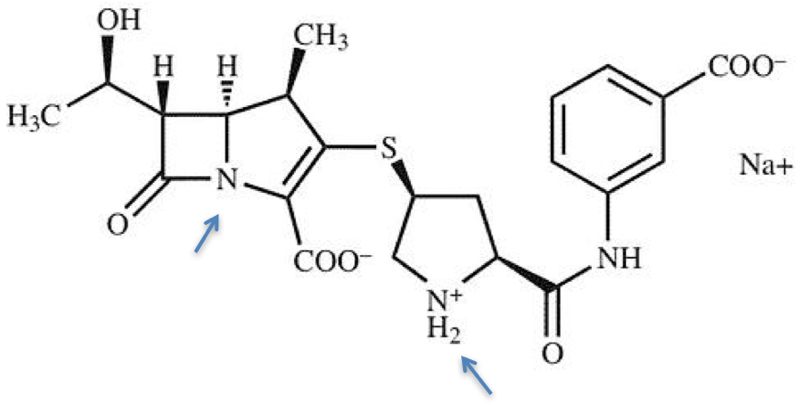
    The case arose in an ANDA litigation between innovator Merck and generic drug manufacturer Hospira over the antibiotic ertapenem, sold by Merck under the brand name Invanz®.  The drug, known to be chemically unstable, has the following structure:

    Image 1
    The molecule's instability arises from two aspects and from two different chemical reactions:  hydrolysis of the beta-lactam nitrogen indicated by the arrow on the left, and dimerization of the pyrrolidine nitrogen on the right.  The prior art taught that the dimerization reaction could be inhibited and the molecule stabilized by forming a carbon dioxide adduct after reaction with carbon dioxide under basic conditions.

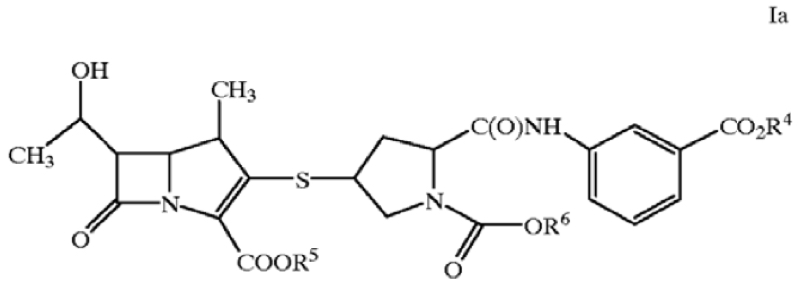
    The claimed invention is directed to minimizing both dimerization and hydrolysis, resulting in the stabilized form of ertapenem sold by Merck as its Invanz® product.  One of the patents-in-suit (and the subject of this appeal) is U.S. Patent No. 6,486,150; claim 21 is representative of the asserted claims:

    21.  A process for preparing a final formulation product of a compound of formula Ia,

    Image 2
    or its pharmaceutically acceptable salt, or hydrates wherein, R4, R5, and R6 are independently:
        (a) hydrogen
        (b) (C1–C6)-alkyl, or
        (c) alkali-metal or alkali earth-metal
    wherein the alkali-metal or alkali earth metal is sodium, potassium, lithium, cesium, rubidium, barium, calcium or magnesium;
    comprising the steps of:
        (1) charging a solution of carbon dioxide source having a pH range of about 6.0 to about 12.0 into a reaction vessel;
        (2) adding an effective amount of a mole ratio of a base and an active ingredient into the reaction vessel containing the solution of carbon dioxide source to maintain pH at about 6.0 to about 9.0 and a temperature range of about –3° C. to about 15° C.; [and]
        (3) lyophilizing the solution of Step (2) to yield the final formulation product of a compound of formula Ia with less than about 10% of moisture content.

    MerckMerck asserted claims 21-34 of the '150 patent and U.S. Patent No. 5,952,323; the District Court found the asserted claims of the latter patent not invalid and infringed.  The District Court found the asserted claims of the '150 patent would also be infringed but were invalid for obviousness over the '323 patent in combination with PCT publication WO 98/18800.  According to the District Court, although none of the three recited steps of the claimed process were disclosed in the prior art, the "recipe" for the final stabilized ertapenem formulation was disclosed, and the three recited steps were conventional manufacturing steps that were the product of routine experimentation.  Specific conditions known in the prior art were:

    • That formation of a carbon dioxide adduct is pH dependent and occurs between pH 6.0 and pH 9.0;
    • That the pH could be adjusted using sodium hydroxide; and
    • The adduct could be produced by lyophilization.

    Although the temperature range limitation was not expressly taught by the cited art, the District Court found that it was known in the art that low temperatures minimized degradation, and as a consequence the skilled worker would want to keep the temperature as low as possible without freezing.

    With regard to the objective indicia of non-obvious, the District Court held that although there was evidence of commercial success and copying, the evidence was not strong enough to overcome the "strong prima facie case of obviousness" established by the defendant.  With regard to commercial success, the strength of the evidence was diminished because Merck was the exclusive licensee of the patent on ertapenem itself — US. Patent No. 5,478,820.  And with regard to copying, Hospira adduced evidence that it attempted five different processes to produce stabilized ertapenem before choosing the method that, if valid, would have infringed the '150 patent.

    The Federal Circuit affirmed in an opinion by Judge Lourie joined by Judge Hughes, Judge Newman dissenting, setting forth a pithy statement of what constitutes obviousness:

    Obviousness is a question of law, based on underlying factual findings, including what a reference teaches, whether a person of ordinary skill in the art would have been motivated to combine references, and any relevant objective indicia of nonobviousness.  Apple Inc. v. Samsung Elecs. Co., 839 F.3d 1034, 1047–48, 1051 (Fed. Cir. 2016) (en banc).

    The District Court, according to Merck, based its decision on the grounds that the skilled worker would have relied on "knowledge, creativity, and common sense" to arrive at the claimed invention, which considerations, according to Merck, should be limited to the question of whether there was a motivation to combine prior art references and not the ultimate question of whether an invention is obvious.  As Merck explained the prior art, It was focused on the dimerization basis for instability, not hydrolysis, and "pH values favorable for reducing dimerization result in increased hydrolysis, and vice versa," thus precluding the required reasonable expectation of success.

    HospiraHospira argued that the skilled worker would have performed adduct formation as recited in the claims, to minimize subjecting the unstable ertapenem compound to conditions that would cause it to degrade.  The panel majority found no clear error in the District Court's finding that the prior art taught:  1) minimizing dimerization by forming the carbon dioxide adduct of ertapenem at pH 6.0–9.0; 2) that sodium hydroxide could be used to adjust the pH; and 3) that the final adduct was to be obtained using "standard lyophilization techniques" (the claim recites no particular lyophilization methods or conditions).

    The fact that the prior art was silent as to methods for minimizing hydrolysis was not persuasive because the solution recited in the claims "constitutes nothing more than conventional manufacturing steps that implement principles disclosed in the prior art."

    It was undisputed that the combination of the '323 patent and the '800 PCT publication taught exposing ertapenem to carbon dioxide in a solution having pH between 6.0 and 9.0 followed by lyophilization, and that minimizing the temperature would have been a routine precaution.  The opinion states the majority's basis for finding deficient Merck's arguments against its claims being obvious:

    Merck's purported solution for minimizing both hydrolysis and dimerization was to create the carbon dioxide solution first, at the pH range disclosed in the prior art; then simultaneously add the ertapenem and a base to the solution, in order to maintain the pH range taught by the prior art; maintain a low temperature during the process; and lyophilize the final product to contain less than 10% moisture content.  The only elements of that process that were not expressly disclosed in the prior art are emphasized in italics above—namely, the order of the steps, the simultaneous addition of base, the specific temperature range, and a final moisture content of less than 10%.  But, as the court found, those are all experimental details that one of ordinary skill would have utilized via routine experimentation, armed with the principles disclosed in the prior art.

    The panel majority found no error with regard to the District Court's determination that the objective indicia did not rebut obviousness as found based on the asserted references.  Nevertheless, the opinion states that just because there was another patent for which Merck was the exclusive licensee wasn't enough to properly discount evidence of commercial success.  As the opinion explains, there are frequently a bundle of patents protecting a commercial product, due in part to USPTO decisions during prosecution (restriction requirements, for example), as well as improvements in a product or process.  Thus, the existence of "multiple patents do not necessarily detract from evidence of commercial success of a product or process, which speaks to the merits of the invention, not to how many patents are owned by a patentee."  But here, the panel majority did not understand there to be clear error in the District Court's determination that the evidence of commercial success was not sufficient to overcome Hospira's prima facie case of obviousness.

    On the question of evidence of copying, neither the District Court nor the panel majority was persuaded by Hospira's contention that copying was not relevant in the ANDA litigation context (because the FDA requires a generic drug manufacturer to copy an approved drug).  In this case, the panel majority noted that the FDA does not "require the generic manufacturer to copy the NDA holder's process of manufacturing the drug."  But the panel agreed with the District Court that Merck's evidence of copying did not overcome Hospira's prima facie case of obviousness.

    Judge Newman dissented, saying that "[i]t is time to remedy our inconsistent treatment of the procedures and burdens in applying the evidentiary factors of obviousness" by returning to the "statutory rigor" imposed by the Supreme Court in Graham v. John Deere Co., 383 U.S. 1 (1966).  In her view, the Court mandated in Graham that all of the Graham factors ("(1) the scope and content of the prior art; (2) the differences between the claimed invention and the prior art; (3) the level of ordinary skill in the field of the invention; and (4) objective ("secondary") considerations such as commercial success, failure of others, and long-felt need") are to be considered, particularly with regard to their effect on the analysis of the other factors.  Judge Newman appreciates that the Federal Circuit has "properly" applied the Graham factors in certain cases (including Apple Inc. v. Samsung Electronics Co., 839 F.3d 1034, 1048 (Fed. Cir. 2016) (en banc); In re Cyclobenzaprine Hydrochloride, 676 F.3d 1063, 1077 (Fed. Cir. 2012); and Leo Pharmaceutical Products, Ltd. v. Rea, 726 F.3d 1346, 1357–58 (Fed. Cir. 2013), and in her view this approach was validated by the Supreme Court in KSR International Co. v. Teleflex Inc., 550 U.S. 398, 399 (2007).  But she recognizes that some Federal Circuit cases have adopted the position used by the District Court and the panel majority here, that the objective indicia are to be used to rebut a prima facie obviousness determination based on consideration of the other three factors.  Doing so shifted "the placement and [] burden of proof" improperly according to Judge Newman's dissent.

    The proper role of the objective indicia, according to Judge Newman, was to be used as "independent evidence of non-obviousness," citing Ortho-McNeil Pharm., Inc. v. Mylan Labs., Inc., 520 F.3d 1358, 1365 (Fed. Cir. 2008), and reiterates the Federal Circuit's earlier observation that the "objective indicia 'may often be the most probative and cogent evidence in the record," and are 'to be considered as part of all the evidence, not just when the decision-maker remains in doubt after reviewing the art,'" citing Stratoflex, Inc. v. Aeroquip Corp., 713 F.2d 1530, 1538–39 (Fed. Cir. 1983).  Judge Newman cites several cases to illustrate her point that the Federal Circuit has strayed from this proper use of the objective indicia, including Cubist Pharmaceuticals, Inc. v. Hospira, Inc., 805 F.3d 1112, 1130 (Fed. Cir. 2015); Novo Nordisk A/S v. Caraco Pharmaceutical Laboratories, Ltd., 719 F.3d 1346, 1353 (Fed. Cir. 2013); Wm. Wrigley Jr. Co. v. Cadbury Adams USA LLC, 683 F.3d 1356, 1364 (Fed. Cir. 2012); Otsuka Pharmaceutical Co. v. Sandoz, Inc., 678 F.3d 1280, 1296 (Fed. Cir. 2012); Tokai Corp. v. Easton Enterprises, Inc., 632 F.3d 1358, 1370 (Fed. Cir. 2011); Wyers v. Master Lock Co., 616 F.3d 1231, 1246 (Fed. Cir. 2010); Muniauction, Inc. v. Thomson Corp., 532 F.3d 1318, 1327 (Fed. Cir. 2008); Aventis Pharma Deutschland GmbH v. Lupin, Ltd., 499 F.3d 1293, 1302 (Fed. Cir. 2007); and Ormco Corp. v. Align Tech., Inc., 463 F.3d 1299, 1311 (Fed. Cir. 2006).

    While consistent with earlier application of the Graham factors, Judge Newman somewhat ironically neglected to mention the Federal Circuit's decision (from which she also dissented) in Pharmastem Therapeutics, Inc. v. Viacell, Inc. (Fed. Cir. 2007), a case decided close upon the Supreme Court's KSR decision.  In that case, the panel majority (Judges Proust and Bryson) ignored exceptionally strong evidence on objective reasons for finding the claimed invention nonobvious, similarly relying on "strong prima facie" evidence that the prior art (which did not disclose the claimed methods or hematopoietic stem cell compositions) rendered the claims obvious.

    This practice needs reform, because in Judge Newman's view:

    It is time to restore conformity to precedent, in the interest of stability of practice and procedure, and predictability and fairness of result.  I would reestablish the proper analytic criteria under the four Graham factors, and would remand to the district court to apply the correct law.

    Merck Sharp & Dohme Corp. v. Hospira, Inc. (Fed. Cir. 2017)
    Panel: Circuit Judges Newman, Lourie, and Hughes
    Opinion by Circuit Judge Lourie; dissenting opinion by Circuit Judge Newman