• By Michael Borella

    Federal Circuit SealIntellectual Ventures (IV) sued Symantec in the District of Delaware, alleging infringement of U.S. Patent No. 5,537,533.  The District Court invalidated the '533 patent on a summary judgment motion as being directed to patent-ineligible subject matter.  IV appealed.

    Claim 25 of the '533 patent recites:

    25.  A method for remote mirroring of digital data, said method comprising the steps of:
        copying the data from a primary network server to a nonvolatile data buffer in a data transfer unit which is digitally connected to the primary network server, the primary network server including an operating system which is capable of accessing a nonvolatile server store, the data copied to the data transfer unit being a substantially concurrent copy of data which is being stored by the operating system in the nonvolatile server store of the primary network server;
        copying the data from the data transfer unit to an input end of a communication link which has an output end physically separated from its input end;
        generating and sending a spoof packet to the operating system of the primary network server; and
        copying the data from the output end of the communication link to a nonvolatile server store on a remote network server.

    Essentially, the claimed invention is a fairly straightforward backup process with the possible exception of the spoof packet, which is used to speed up the transaction.

    The Supreme Court's Alice Corp. v. CLS Bank Int'l case set forth a test to determine whether claims are directed to patent-eligible subject matter under 35 U.S.C. § 101.  One must first decide whether the claim at hand is directed to a judicially-excluded law of nature, a natural phenomenon, or an abstract idea.  If so, then one must further decide whether any element or combination of elements in the claim is sufficient to ensure that the claim amounts to "significantly more" than the judicial exclusion.  But generic computer implementation of an otherwise abstract process does not qualify as significantly more.  On the other hand, a claimed improvement to a computer or technological process is typically patent-eligible.

    Here, the Federal Circuit rapidly disposed of the matter:

    [W]e conclude the district court did not err in finding claims 25 and 33 of the '533 patent ineligible under 35 U.S.C. § 101.  The district court correctly found that the claims were directed to the abstract idea of backing up data, and that the claim limitations lacked an inventive concept as they invoke conventional computer components that do not function in combination in an inventive manner.

    Once again, we have a § 101 case in which a broad, vague claim that likely would not be novel or non-obvious is disposed of under § 101 instead of § 102 or § 103.  The District Court even performed a de facto prior art analysis, stating that "[i]t is undisputed that institutions have long backed up data in general, and the specification even describes long-practiced methods of backing up digital data."  Nonetheless, despite IV's contention that the specification of the '533 patent described an improvement over the prior art, the District Court observed that "[t]he claims do not provide any concrete details that limit the claimed invention to a specific solution to the problem of remote back-up of digital data."  In other words, if there is a disclosed improvement, it is not in the claims.  Regarding sending the spoof packet, Symantec offered evidence that such an activity was conventional, and IV did not make a rebuttal.

    Recently, the Federal Circuit's Berkheimer v. HP Inc. case held that when there is a material issue of fact over whether claims provide such an improvement, summary judgment is improper.  But here, the Court did not find such an issue:

    Our recent decision in Berkheimer v. HP Inc. does not compel a different conclusion.  IV filed a notice of supplemental authority arguing that Berkheimer compels reversal and remand of the district court's judgment because "there is a genuine issue of material fact as to whether the '533 claims improve remote data mirroring in 'an inventive manner' or perform 'well-understood, routine, and conventional activities to a skilled artisan.'"  But, as the district court explained in detail, "the claims invoke conventional computer components that do not supply an inventive concept," and "[t]he specification confirms that the individual components . . . are conventional, generic, and operate as expected."  Moreover, the district court found that IV failed to offer evidence to show that the order of the steps was unconventional.  IV also acknowledged at oral argument that it did not offer expert testimony to show the lack of conventionality of its components.

    As such, the Federal Circuit concluded that the District Court did not err in finding the '533 patent invalid under § 101.  And as an aside, anyone who thinks that backing up their data is an abstract concept should keep that in mind when their primary computer is lost, stolen, or crashes.

    Intellectual Ventures I LLC v. Symantec Corp. (Fed. Cir. 2018)
    Nonprecedential disposition
    Panel: Circuit Judges O'Malley, Schall, and Wallach
    Opinion by Circuit Judge O'Malley

  • By Kevin E. Noonan

    DrugsIncreased drug costs have been a political and economic target for more than the past generation, being one of the motivations for the Hatch-Waxman Act in 1984.  Drug costs were a big part of Ross Perot's campaign in 1992, Hillary Clinton's ill-fated healthcare plans when she was First Lady, and President George W. Bush's changes to Medicare/Medicaid during his second term.  Negotiating drug prices was also a lynchpin of President Obama's Affordable Care Act, and the high cost of biologic drugs created the political climate for the Biologic Price Competition and Innovation Act in 2011.

    GENThe continuing relevance of high drug costs to most Americans is illustrated by the resonance the issue had for Senator Sanders in 2016 and is likely to have for a variety of politicians of all stripes in 2020.  And this concern is well founded as shown by increase in drug prices for the top 15 drugs by revenue as reported recently in Genetic Engineering and Biotechnology News ("The Top 15 Best-Selling Drugs of 2017: Amid Talk of Curbing Prices, Most Treatments Show Sales Gains," by Alex Phillipidis).  As quoted in the article, drug spending is projected to reach almost $600 billion by 2020, which is almost double drug spending costs in 2015 ($337 billion), according to America's Health Insurance Programs (AHIP).  Of the top fifteen drugs for 2017, two-thirds (9/15) of these drugs are biologic drugs, and nine drugs showed sales gains greater than 50%, with five of these nine showing double-digit growth.  And the drugs ranked #16-#20 (Victoza®/liralutide (Novo Nordisk); Stelara®/ustekinamab (J&J); Tecfidera®/dimethyl fumarate (Biogen); Advair®/fluticasone and Seretide®/ salmeterol (GSK); and Harvoni®/ ledipasvir + sofosbuvir (Gilead)) each had sales of between $3.9 billion and $4.4 billion in 2017.  Those drugs showing sales declines were most likely due to generic competition and/or insurer discounts, according to GEN.  Treatment targets for these drugs include diseases of aging such as cancer (6 drugs), arthritis (4), and diabetes (1), and chronic illnesses like Crohn's disease (2).

    Perhaps as a counterweight this trend, UnitedHealthcare announced on March 6th that it would expand discounts to more than seven million individuals enrolled in commercial group health insurance plans.

    The data reported in the article is tabulated below (click on table to expand).

    Table

  • By Michael Borella

    In Franz Kafka's novel The Trial, a man is accused of a non-specified crime by a shadowy governmental agency.  The man repeatedly attempts to understand the nature of his alleged wrongdoing and his accusers.  Ultimately, he is executed without these questions being answered.

    Under current Supreme Court and Federal Circuit rulings (Alice Corp. v. CLS Bank Int'l and its progeny), a patent can be invalidated or an application can be rejected simply by (i) making a high-level analogy between the claimed invention and one that has been previously found to be directed to a patent-ineligible law of nature, natural phenomena, or abstract idea, and (ii) stating in a purely conclusory fashion that the additional elements of the claim are well-understood, conventional, and routine.  Kafka might crack a sardonic smile at this situation.

    One might presume that to establish that claim elements are well-understood, conventional, and routine, a challenger must undertake a factual inquiry.  But this is not the case.  Instead, a form of judicial notice is used to declare claims invalid based on mere contention — because patent eligibility has been treated as if it is purely a matter of law.  While in some cases, those who employ this short cut are undoubtedly correct (e.g., a general purpose processor certainly is a conventional component of a computer), it has also been used extensively in a questionable manner.

    As an example, a challenger (a USPTO patent examiner, for instance) states:  "The claim elements are well-understood, conventional, and routine — no patent for you!"  In response, the applicant rebuts the examiner both procedurally and substantively:  "Examiner, your conclusory statements do nothing to establish that the claim elements are well-understood, conventional, and routine, and here is some evidence that they are not."  The examiner replies:  "I don't care, eligibility is a matter of law and I am not required to provide factual evidence to support my reasoning, nor do I have to consider any factual evidence that might suggest that I am wrong."  And MPEP § 2106 supports the examiner's position.  Thus, the Kafkaesque irony of patent-eligibility in 2018.

    Federal Circuit SealBut the times may be a-changing.  Last month, in Berkheimer vs. HP Inc., the Federal Circuit stated:

    The question of whether a claim element or combination of elements is well-understood, routine and conventional to a skilled artisan in the relevant field is a question of fact.  Any fact . . . that is pertinent to the invalidity conclusion must be proven by clear and convincing evidence.  Like indefiniteness, enablement, or obviousness, whether a claim recites patent eligible subject matter is a question of law which may contain underlying facts [emphasis added].

    The Court noted that some § 101 disputes may be resolved as a matter of law when there is no material issue of fact regarding whether one or more claim elements, or combination thereof, are well-understood, routine, or conventional to a person of ordinary skill in the art.  Based on this reasoning, HP's summary judgment motion for ineligibility was reversed and remanded to the District Court for further proceedings.  The Court reiterated this position a few days later in Aatrix Software Inc. v. Green Shades Software, Inc. and three times since then in nonprecedential decisions.

    This line of cases, all but one involving Judge Moore in the majority opinion, has sent patentees, practitioners, and commentators into a minor tizzy.  And certainly it has opened the door for a number of interesting questions:  What does it take for a patentee to establish that there is a material issue of fact?  Will § 101 disputes become a battle of experts?  Will § 101 issues now need to be explained to a jury?  How "understood" does a claim element need to be in order to qualify as "well understood?"

    HPIn a move that surprised absolutely nobody, HP filed for en banc rehearing of the appeal.  HP starts off its argument with a strong statement:

    Under the panel decision in this case, the crucial, threshold determination of patent eligibility under Section 101 is predominantly a question of fact.  That result is inconsistent with the Supreme Court's decisions in Bilski, Mayo, and Alice, with this Court's own precedent, and with the need to resolve issues of patent eligibility as a question of law early in the litigation process to avoid unnecessary, costly, and protracted litigation.

    The problem with this proclamation is that HP stretches the truth in at least three ways.  First, the panel did not state nor did it imply that the § 101 inquiry is "predominantly a question of fact" — if anything, the panel merely held that in some cases, it will involve questions of fact.  Second, this result is quite consistent with Mayo, where Justice Breyer wrote that the § 101 inquiry may overlap with fact-sensitive inquiries such as novelty under § 102.  Third, while incorporating a factual analysis into § 101 disputes could increase the cost and length of litigation, it is far from unnecessary.

    To that latter point, the Alice decision has been post-hoc justified due to its ability to rapidly dispose of so-called "bad" patents.  Nobody will argue that "bad" patents don't exist, though a better term for them might be "patents that the USPTO should not have granted."  In practice, however, Alice allows the USPTO and courts to throw the proverbial baby out with the bathwater.  Given its broad scope and sweeping application, § 101 has been used in a questionable fashion to invalidate patents that could have easily been viewed as technical inventions that offer advances over the status quo (see Recognicorp, LLC v. Nintendo Co., Ltd., Smart Systems Innovations, LLC v. Chicago Transit Authority, Two-Way Media Ltd. v. Comcast Cable Communications, LLC, and Move, Inc. v. Real Estate Alliance Ltd. as recent examples).  Many times, claims shot down under Alice are not "good" but their not-goodness would have been properly addressed under §§ 102, 103, and/or 112.

    HP goes on to note correctly that many, if not all, previous § 101 appeals were decided as a matter of law, and that the Berkheimer panel deviated from this trend.  Nonetheless, neither the Supreme Court nor the Federal Circuit ever mandated that all § 101 analyses must ignore facts — only that eligibility decisions could be ripe for judgment on the pleadings or summary judgment when facts are not in dispute.  HP attempts to make hay of the extent that the courts (and the USPTO) may have carried out the analysis otherwise.

    HP also states that asking "whether the invention describes well-understood, routine, and conventional activities" is the wrong question.  HP does have a point that "[a] claim that merely applies a new abstract idea . . . might not describe well-understood, routine, and conventional activities."  (For instance, a newly-discovered equation is abstract, but by definition not conventional).

    Nonetheless, HP is misconstruing the Alice test.  In the words of the Supreme Court, Alice requires that one first consider the claim to determine whether it is directed to an abstract idea (or other judicial exception).  If this is the case, then one must "consider the elements of each claim both individually and as an ordered combination to determine whether the additional elements transform the nature of the claim into a patent-eligible application."  Well-understood, routine, and conventional elements do not (unless the combination thereof is innovative).  Thus, the well-understood, routine, and conventional question is appropriate once an abstract idea is identified in a claim that has additional elements.  HP's hypothetical does not provide any additional elements.

    HP further raises an alarm over a patent owner being able to use "an expert to testify to some 'inventive concept' captured by a patent or to testify that the claim limitations, although known and disclosed in the prior art, were not 'routine and conventional.'"  Rather than addressing the substantive issue — that in fact, there is a difference between a claim limitation that is disclosed and one that is conventional and routine — HP merely points out that rapid litigation victories will be harder for defendants.  This will be the effect of the Berkheimer panel decision, of course, when such easy wins are not actually justified.

    HP's next issue in the parade of horribles is that:

    Under the panel's analysis, a fact issue will arise in any case where the specification recites that the claims do not describe "well-understood, routine, and conventional activities."  That means a fact issue will arise in virtually every case, because for a patent to issue in the first place, every claim should at least allegedly recite something new.

    HP points out that this could have resulted in the Alice and Mayo claims surviving summary judgment.  Perhaps.  According to Rule 56, "[t]he court shall grant summary judgment if the movant shows that there is no genuine dispute as to any material fact and the movant is entitled to judgment as a matter of law."  Is HP attempting to shift this burden to the patentee?  Furthermore, if the claims do recite something new, then why should this be ignored when the goal of the statute is to define the scope of patentable innovation?

    HP's final point is that if the panel decision holds, litigation will be "more complex, expensive, and lengthy," in comparison to the common practice of applying § 101 early in a case to dispose of a patent.  HP points out that at least one Federal Circuit judge (Judge Mayer for those of you keeping track) has lauded this early dismissal practice because "[p]atent eligibility issues can often be resolved without lengthy claim construction."  But the notion of invalidating a patent without determining the meaning of the claims seems antithetical to the constitutional mandate of promoting "the progress of science and useful arts, by securing for limited times to authors and inventors the exclusive right to their respective writings and discoveries."

    While HP is not wrong to state that litigation will be more complex when issues of fact are part of the eligibility inquiry, its justification for supporting the pre-Berkheimer status quo is shaky, and there is nothing in any of the recent cases that suggest one cannot still obtain an early dismissal under § 101.  In fact, that is exactly what happened in Automated Tracking Solutions, LLC v. Coca-Cola Co. and the recent Intellectual Ventures I v. Symantec Corp.

    If anything, HP lost an opportunity to invoke fear, uncertainty, and doubt by asking the unanswered questions that the panel did not address:  What is required for the patentee to establish that there is a material issue of fact?  How does one explain § 101 issues to a jury?  How "understood" does a claim element need to be in order to qualify as "well understood?"  The Federal Circuit needs to flesh out these issues in order to fully develop the factual inquiry.

    If the Court does grant en banc review, we will find out how much of this recent jurisprudence is a Judge Moore thing.  Judge Moore wrote the majority opinions of the Berkheimer panel decision, as well as those of Aatrix and Exergen Corp. v. Kaz USA, Inc.  All three decisions applied a factual analysis to a § 101 dispute.  Joining her across these opinions were Judges Taranto, Stoll, and Bryson.  Dissenting from this view was Judge Reyna.  Judge Hughes' dissent in Exergen was directed to the majority's outcome rather than the process they employed to arrive at it.

    Applying some educated guesswork based on past § 101 opinions, Judge Newman is likely to side with Judge Moore, while Judge Lourie is likely to go the other way.  The positions of Judges Prost, Linn, Dyk, O'Malley, Wallach, and Chen are unknown.  Thus, the probable Federal Circuit math puts 5 judges in favor of the factual inquiry, 2 against, and 7 (including Judge Hughes) up in the air.

  • Video Doorbell Patent Found to Be Patent Eligible

    By Joseph Herndon

    District Court for the District of NevadaPlaintiff Eyetalk365, LLC sued Defendant Zmodo Technology Corp. for infringement of U.S. Patent No. 9,432,638, entitled "Communication and Monitoring System," which issued on August 30, 2016.  Zmodo moved to dismiss for failure to state a claim under 35 U.S.C. § 101.

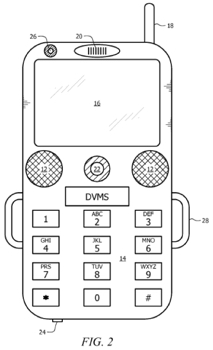
    The patent is directed to an audio-video doorbell system.  The patent describes that the invention enables secure and effective monitoring and interacting with a visitor at a residence or business, including, detection of the presence of a visitor at the exterior of the home or office via a proximity sensor, the interactive communication with the visitor, whether an occupant is present or absent from the home or office, the enablement of automated entry into the home or office by the visitor, and personalization of the process of receiving a visitor.  Such actions are permitted through use of a cell phone app that receives information from the doorbell system, and enables the user to communicate with a person at their home even when absent from their home.

    A transceiver, shown in Figure 2 of the patent reproduced below, may be mounted at the front door of a home and used to provide these features. Image
    Claims 1 and 6 of the patent are asserted, of which claim 1 is representative and reproduced below.

    1.  A method for receiving a person at an entrance, comprising the steps of:
        (a) detecting the presence of a person at the entrance;
        (b) transmitting, to a computerized controller running a software application, video of the person at the entrance recorded using a camera located proximate the entrance; and
        (c) providing, with the software application running at the computerized controller, a graphical user interface to a remote peripheral device by which a user of the remote peripheral device, which comprises a cell phone, may view the video of the person at the entrance;
        wherein said detecting of step (a) comprises using a wireless video camera comprising a microphone, a speaker, an RF receiver, an RF transmitter, a proximity sensor and uses a keypad comprising one or more buttons to determine that the person is present at the entrance wherein said transmitting of step (b) comprises transmitting digital streaming video wirelessly using the video camera;
        (d) sending an alert to the cell phone that the person is present at the entrance after the keypad is pressed by the person at the entrance;
        (e) speaking with the person at the entrance through the graphical user interface on the cell phone after the keypad is pressed by the person at the entrance; and
        (f) listening to the person at the entrance via the cell phone through use of the graphical user interface after the keypad is pressed by the person at the entrance.

    Patentability under 35 U.S.C. § 101

    The Court was quick to note that there is a lack of clarity in the test for abstractness challenges under § 101.  Applying the two-step test under Alice Corp., the Court noted that the best test for abstractness under the first Alice Corp. step is whether the invention can be practiced entirely in the mind of a sufficiently intelligent person.

    Namely, citing CyberSource, the Court noted that such a method that can be performed by human thought alone is merely an abstract idea and is not patent-eligible under § 101.  Methods which can be performed entirely in the human mind are unpatentable not because there is anything wrong with claiming mental method steps as part of a process containing non-mental steps, but rather because computational methods which can be performed entirely in the human mind are the types of methods that embody the "basic tools of scientific and technological work" that are free to all men and reserved exclusively to none.

    Zmodo argued that claim 1 is directed to an abstract idea under the first Alice Corp. step, but the Court disagreed.  Detecting the presence of a person at a door, sending a video of the person to be viewed, and speaking with the person at the door are all concrete steps requiring more than the abstract thinking capabilities of a person or a computer.

    Zmodo further argued that claim 1 did not recite anything new or useful, and attempted to prove that elements of claim 1 were all directed to old technology.  However, the Court noted that regardless of anticipation or nonobviousness under §§ 102 and 103 — neither of which is at issue in the present motion or for consideration under § 101 — the Court found claim 1 to be patent-eligible under § 101.

    The Court clearly set out that the "novelty" of any element or steps in a process, or even of the process itself, is of no relevance in determining whether the subject matter of a claim falls within the § 101 categories of possibly patentable subject matter.

    A contrary approach would judicially rewrite the statutory framework for patent validity established by Congress by invalidating a patent not under §§ 101 or 102 but rather under a hybrid of §§ 101 and 102 that Congress has never adopted.  The Supreme Court has declined to do so and has made clear that patent claims must be tested against the statutory requirements for validity as a whole.  That is because it is patent claims, i.e., inventions, to which a patentee is granted exclusive rights, not the elements of a claim.

    Thus, the Court denied the motion to dismiss.

    This is a short Order, but positive from a patent owner's viewpoint in that not all Courts use § 101 erroneously to invalidate claims.  It would seem that clearly steps of "transmitting, to a computerized controller running a software application, video . . .", and "detecting . . . using a wireless video camera comprising a microphone, a speaker, an RF receiver, an RF transmitter, a proximity sensor and uses a keypad comprising one or more buttons to determine that the person is present at the entrance . . ." include features that qualify as patentable subject matter.

    Other features in claim 1 of "(e) speaking with the person . . ." and "(f) listening to the person . . ." would be examples, however, of features covering patent ineligible subject matter since these actions are capable of being performed by a human alone.  This was the distinction that the Court relied upon in its decision.

    Order by District Judge Robert C. Jones

  • By Andrew Williams

    USPTO SealWe recently noted that the U.S. Patent and Trademark Office appears to have taken the position that neither party has the burden of persuasion with regard to Motions to Amend after the Aqua Products v. Matal decision.  Certainly, the Patent Owner no longer has the burden, as that is one of the only conclusions that can be ascertained from that en banc decision.  However, in no circumstance has the Board expressed the opposite conclusion that the burden falls on the petitioner.  Instead, everything that has come from the Chief Judge or the Board suggests that the Patent Office has taken a third approach — that neither party currently has the burden.  As a case in point, the Patent Office filed its Intervenor's Petition for Panel Rehearing last month in Bosch Automotive Service Solutions, LLC v. Matal.  As we noted at the time, the Office was not asking the Federal Circuit to alter its judgment in that case.  Rather, it believed that the panel decision incorrectly stated the holding of Aqua Products.  The Federal Circuit last week granted the petition for the limited purpose of amending the earlier opinion.  However, the new opinion still might not be completely to the Patent Office's liking.

    Before granting the petition for this limited purpose, the Federal Circuit had requested a response from Bosch Automotive, to which Bosch asserted that the petition should be denied.  In so doing, it said that "[t]o the extent some of the judges [in Aqua Products] found 35 U.S.C. Section 316(e) ambiguous, the panel opinion in this matter resolved the ambiguity."  The Federal Circuit took this as evidence that the original "opinion could be improperly misread."  Therefore, it amended the sentence:

    Rather, the petitioner bears the burden of proving that the proposed amended claims are unpatentable "by a preponderance of the evidence."  35 U.S.C. § 316(e).

    to read instead:

    Rather, the petitioner bears the burden of proving that the proposed amended claims are unpatentable "by a preponderance of the evidence."

    Obviously, this still is a pronouncement from the Federal Circuit that the petitioner now bears the burden in Motions to Amend, and any suggestion from the Office to the contrary will need to be revised.  However, it does remove the citation to the statute.  As such, it removes any suggestion that the Court believes that the statute is unambiguous.  Correspondingly, should the Office choose to promulgate rules to shift the burden back to the Patent Owner (as Aqua Products suggests it can), then it could be entitled to Chevron deference (which wouldn't be the case if the statute were unambiguous).

    As a result, we are still left guessing whether the Patent Office intends to promulgate such a rule, but the pathway forward appears clearer than it did (if the Office show chooses).  Perhaps newly confirmed Director Iancu will provide some insight during his "Fireside Chat" at the 2018 PTAB Bar Association Conference in Washington D.C. on March 22, 2018.  According to the PTAB Bar, this will be the first time since he was named as Director that he addresses a formal gathering of lawyers who appear before the PTAB.  This author will be in attendance at the Conference, and looks forward to any clue that the new Director might suggest.  We will, of course, continue to monitor developments and report any updates in this space as warranted.

  • District Court Throws Out Haptic Feedback Claims on Grounds of Patent Ineligible Subject Matter

    By James Korenchan

    District Court for the Northern District of CaliforniaLast week, Judge Koh of the U.S. District Court for the Northern District of California deemed claims relating to transmission of haptic messages to be directed to an abstract idea and therefore invalid under 35 U.S.C. § 101.

    The Plaintiff, Immersion Corp., alleged that Fitbit's wearable health and fitness devices infringe three of Immersion's patents, each of which involve "haptic" feedback technology — namely, technology that provides forces, vibrations, or other motion feedback that recreates a sense of touch for a user.  Fitbit filed a motion to dismiss contending that the asserted claims of each patent are patent ineligible under § 101.  The District Court denied Fitbit's motion on two of the three patents, but granted the motion with respect to U.S. Patent No. 8,638,301 (the '301 patent).

    The two patents at issue that survived the motion, U.S. Patent No. 8,059,105 (the '105 patent) and U.S. Patent No. 8,351,299 (the '299 patent), are directed to having touchscreens and touchpads provide haptic feedback in response to user input received via such touchscreens and touchpads, and having a toothbrush or other device provide haptic feedback in response to a mechanism sensing a condition (e.g., a threshold number of brush strokes being met, or a time period expiring), respectively.  Claims that Immersion asserted as representative of the eligibility of each of these two patents are produced below:

    U.S. Patent No. 8,059,105:

    19.  A haptic feedback device, comprising:
        one or more processors configured to receive an input signal and generate a force signal based on the input signal, wherein the input signal is associated with a user-independent event, the user-independent event comprising one or more of a reminder event, an initiation of a task, a processing of the task, a conclusion of the task, a receipt of an email, or an event occurring in a game; and
        one or more actuators configured to receive the force signal and impart a haptic effect based on the force signal.

    U.S. Patent No. 8,351,299:

    20.  An apparatus comprising:
        a housing;
        a sensor coupled to the housing that senses motion of the housing and provides a sensor output based on if the sensed motion exceeds a predetermined threshold;
        a timer coupled to the housing that measures at least one time period and provides a timer output on expiration of the at least one time period; and
        a vibrotactile device that provides a haptic output based on the sensor output if the vibrotactile device receives the sensor output before the timer output and provides the haptic output based on the timer output if the vibrotactile device receives the timer output before the sensor output.

    In contending the validity of the '105 patent, Fitbit argued that "[t]here is no purpose for the haptic effect beyond simply communicating to the user" (i.e., providing a notification to the user) that the claimed "user-independent" event occurred.  Fitbit also argued that Immersion attempted to frame an abstract idea as a device claim, citing Alice in that "the mere presence of physical components in the claims is insufficient to confer patent eligibility."

    But the District Court did not ignore the physical components of the claims, and in applying step one of the Alice framework, found the U.S. Supreme Court's Diehr decision and the Federal Circuit's Thales Visionix decision to be instructive.  In particular, the District Court stated that characterizing claim 19 as being directed to the abstract idea of providing a notification (e.g., a haptic notification) "strays too far from the weight of the claim," and went on to give reasons why containing such an abstract idea was not enough to elevate the claim to a level of ineligibility:

    The weight of the claim clearly focuses on a tangible, non-abstract device as the invention which, through the allegedly unconventional combination of components, contains the new and useful feature of notifying the device's user of independent events through vibration.  See Thales Visionix, 850 F.3d at 1348-49; '105 patent at col. 1:64-col. 2:3 (noting that touchpads of the prior art lack haptic feedback); '105 patent at col. 12:61-67 (discussing scenario in which a user is notified of an event by vibration after having looked away from the screen).  Indeed, a significant majority of the specification details various physical features of the claimed inventions, including different types of actuators and how an actuator can be coupled to the housing of the device.  See '105 patent at col. 5:5-col. 12:49, col. 15:1-col. 16:17.  The fact that part of the claim contains an abstract idea does not make the claim patent-ineligible under § 101.  See Alice, 134 S. Ct. at 2354 ("[A]n invention is not rendered ineligible for patent simply because it involves an abstract concept.").

    Further, the District Court found that "Immersion's invention of a touchpad or other similar device that provides haptic feedback is a new arrangement of known components that solves the problem of how to provide non-audio, non-visual notification to a user," and is thus patent-eligible.  Finding step one of the Alice framework to be met, the District Court did not proceed to step two.

    Next, the District Court addressed the '299 patent and again stopped their analysis after step one.  Fitbit's arguments here were similar to the notification and physical component arguments noted above with respect to the '105 patent, but Fitbit also argued that providing a notification when a threshold has been reached is a well-known, fundamental practice.  The District Court found these arguments to be unpersuasive for nearly the same reasons as the '105 patent, and analogized to Core Wireless in support of its conclusion:

    Namely, characterizing claims 14 and 20 as directed to the abstract idea of [haptic] notification based on motion or a timer ignores the fact that the claimed invention is a tangible device comprising a new and useful arrangement of components that solves the problem of how to notify a user that a predetermined number of motions have occurred in an environment where audio or visual alerts would not be effective.  See Thales Visionix, 850 F.3d at 1348-49.  . . .  Thus, because claim 14 and claim 20 disclose improvements in motion tracking devices, they are not directed to an abstract idea at step one, and the Court need not reach Alice step two.  See Core Wireless, 880 F.3d at 1363; Thales Visionix, 850 F.3d at 1348-49.

    The District Court then addressed the patent ineligibility of the '301 patent, whose claimed invention involves a mobile device transmitting a "haptic message" to another mobile device.  The patent describes haptic messages as a useful form of non-linguistic communication that tie physical effects to a message, contrasting with more conventional messaging systems that may provide less or no contextual information associated with received and sent messages.  For example, the patent describes a scenario in which one user appends a haptic signal simulating a heartbeat to a message, sends the message to the other user along with the haptic signal, which causes the other user's phone to vibrate in a manner that simulates the heartbeat pattern.

    As a representative example of the asserted claims of the '301 patent, claim 27 is produced below:

    27.  A system comprising:
        a processor configured to:
            receive a first sensor signal from a first sensor, the first sensor configured to detect a movement of a first mobile device;
            receive a second sensor signal from a second sensor, the second sensor configured to detect an interaction with the first mobile device;
            receive a first data signal from a network interface, the network interface configured to receive signals transmitted by a second mobile device;
            determine a change in a display signal based at least in part on the first data signal and the second sensor signal;
            determine a haptic effect based at least in part on the first data signal; and
            outputting the haptic effect.

    Immersion asserted claim 27 as representative of the eligibility of this patent, but the District Court did not agree, finding the asserted claims of the patent invalid after addressing both steps of the Alice framework.

    In addressing step one, the District Court concluded that claim 27 is directed to "receiving sensor and data signals, analyzing those signals, and outputting other signals in response," and therefore falls well within the Federal Circuit's abstract idea category of gathering and processing information.  The District Court walked through the steps of the claim and cited primarily to the decisions in both Electric Power Group and West View Research, in each of which the Federal Circuit found claims to be directed to some form of receiving data, analyzing data, and generating a visual or audio response to the data.  Ultimately, the District Court's decision on step one appeared to rest on how claim 27 did not recite more details regarding how to receive the signals, determine a change in display, and determine the haptic effect, and also did not recite more-detailed physical components involved in carrying out the recited acts.

    The District Court's step one conclusion here is an interesting point of both contrast and comparison with the step one conclusions reached for the other two patents.  All three patents more or less involve a haptic effect, though in contrast to claim 27, the eligible claims of the other two patents recited not only specific physical components (e.g., an actuator) included in the system, but also more detail as to how that system and its specific components processed the data and performed other acts that lead to deliverance of the haptic effect.  Despite acknowledging that the act of the processor "outputting the haptic effect" likely involves transmitting a signal to an actuator to cause the actuator to output the haptic effect, the District Court still found claim 27 to be directed to the abstract idea noted above:

    Transmitting a signal to an actuator does not make the focus of the claim any less abstract because outputting a signal is no more than the transmission of data.  Similarly, the Federal Circuit has held that displaying the results of collecting and analyzing information, without more, "is abstract as an ancillary part of such collection and analysis." [citations omitted]

    With respect to step two, Immersion contended that the claim's inventive aspects include generating graphical and haptic feedback in response to exchanged messages was inventive, but the District Court disagreed, emphasizing again the lack of inventive detail in the claims:

    The mobile devices, network interface, processor, and haptic feedback system are, in broad terms, generic, conventional components.  The specification confirms that these are generic components.  . . .  Nothing about the claim or specification suggests that the way these steps are accomplished are anything but generic — as explained above, the claims recite these steps only functionally and require no inventive algorithm or data structure for performing them.

    Finally, the District Court distinguished claim 27 from the claim the Federal Circuit addressed in BASCOM, and instead analogized to the Federal Circuit decisions in both Electric Power Group and TDE Petroleum in finding that the ordered combination of elements did not bring the claim out of the realm of data collection/analysis and was recited no differently than the "ordinary order" in which data collection/analysis elements would appear.

    Given the state of the asserted claims — especially that of claim 27, compared with the other two patents — the District Court's finding here is relatively unsurprising.  Again, it appears as though the lack of detailed physical components and detailed algorithms is what doomed the '301 patent.

  • CalendarMarch 20, 2018 – "How to Secure and Exploit Patents for Combination Therapies" (J A Kemp) – 3:30 to 4:30 pm (GMT)

    March 20, 2018 – Technology Center 1700 Customer Partnership meeting (U.S. Patent and Trademark Office) – 12:00 to 2:00 pm (ET), Alexandria, VA

    March 20, 2018 – "USPTO Examiner Interview Strategies: Preparing for and Conducting Interviews to Advance Patent Prosecution" (Strafford) – 1:00 to 2:30 pm (EDT)

    March 22, 2018 – Biotechnology/chemical/pharmaceutical (BCP) customer partnership meeting (U.S. Patent and Trademark Office) – Alexandria, VA

    March 28, 2018 – "Patent Infringement: Structuring Opinions of Counsel — Leveraging Opinion Letters to Reduce the Risks of Liability and Enhanced Damages" (Strafford) – 1:00 to 2:30 pm (EDT)

    March 29, 2018 – "The Evolving Scope of IPR Estoppel" (Federal Circuit Bar Association) – 1:00 pm to 2:00 pm (EST), Washington, DC

    March 29, 2018 – "Patent Prosecution Estoppel from PTAB Proceedings" (Intellectual Property Owners Association) – 2:00 to 3:00 pm (ET)

    April 5, 2018 – "Paragraph IV Litigation and IPRs — Interplay Between Paragraph IV Litigation and IPRs, Multiple Generic Challengers, Key Issues in IPRs" (Strafford) – 1:00 to 2:30 pm (EDT)

    April 6, 2018 – "Are Patents Under Attack?" (Federal Circuit Bar Association and Center for Innovation Policy at Duke Law) – 8:00 am to 4:45 pm (ET), Duke University School of Law, Durham, NC

    April 7, 2018 – "Court of Appeals for the Federal Circuit Practice & Procedure" (John Marshall Law School Center for Intellectual Property, Information & Privacy Law) – 9:00 am to 4:30 pm (CT), John Marshall Law School, Chicago, IL

    April 9, 2018 – "The Patent System: Transformative Times" (Federal Circuit Bar Association and Boston Patent Law Association) – 2:30 pm to 5:30 pm (ET), Northeastern University, Boston, MA

    April 10, 2018 – "Federal Circuit Practice & Insights: A Townhall with Federal Circuit Judge Kara Stoll" (Federal Circuit Bar Association and Michigan IP Inn of Court) – 4:30 pm to 6:30 pm (ET), University of Detroit Mercy School of Law, Detroit, MI

    April 12, 2018 – "Protecting Software as a Medical Device With Patents, Design Patents and Trade Secrets" (Strafford) – 1:00 to 2:30 pm (EDT)

    April 14, 2018 – "Court of Appeals for the Federal Circuit Practice & Procedure" (John Marshall Law School Center for Intellectual Property, Information & Privacy Law) – 9:00 am to 4:30 pm (CT), John Marshall Law School, Chicago, IL

  • IPO #2The Intellectual Property Owners Association (IPO) will offer a one-hour webinar entitled "Patent Prosecution Estoppel from PTAB Proceedings" on March 29, 2018 from 2:00 to 3:00 pm ET.  Jeff Hohenshell of Medtronic, Inc., Stephen Kunin of Oblon, and Scott McKeown of Ropes & Gray LLP will discuss why patent prosecutors should be worried about estoppel arising from PTAB proceedings.  Such concern was made clear in the latest version of the USPTO's Manual of Patent Examining Procedure, which states that, "[PTAB] trial proceedings yield information that may be considered material to pending related patent applications . . . .  [An] example of such material information is any assertion that is made during litigation and/or trial proceeding which is contradictory to assertions made to the examiner."  This sweeping requirement for additional disclosure signals a big change that can create issues for those prosecuting patent applications.  The panel will discuss:

    • The USPTO program run every two weeks that creates links between filed petitions for AIA trials and the related applications, which is not accessible to the public or to the attorney of record.
    • How standard operating procedure for patent prosecutors must now change. The MPEP states that the prosecutor is in danger of violating his or her duty of disclosure if anything in the PTAB record known to be material to the patentability of any claim in an application is not submitted to the USPTO. What are the patent prosecutor's responsibilities and how should they be fulfilled?
    • Some commenters have questioned whether the PTAB has authority to issue its estoppel rule, 37 CFR § 42.73(d)(3)(i). Should this have any impact on prosecutors' behavior?

    The registration fee for the webinar is $135 (government and academic rates are available upon request).  Those interested in registering for the webinar can do so here.

  • Federal Circuit Bar AssociationThe Federal Circuit Bar Association and Michigan IP Inn of Court will be hosting a program entitled "Federal Circuit Practice & Insights: A Townhall with Federal Circuit Judge Kara Stoll" from 4:30 pm to 6:30 pm ET on April 10, 2018 at the University of Detroit Mercy School of Law in Detroit, MI.  Attendees will be able to gain new insights and enhance their advocacy skills in patent appeals by hearing directly from Judge Kara Stoll of the U.S. Court of Appeals for the Federal Circuit, and also learn best practices for presenting argument in briefs and at oral argument and how to avoid the most common mistakes and pitfalls that hinder the likelihood of success.

    Additional information regarding the program can be found here.  The program is complimentary for FCBA members and students, and $150 for non-members.  Those interested in registering for the conference can do so here.

  • JMLSThe John Marshall Law School Center for Intellectual Property, Information & Privacy Law will be hosting Donald Dunner of Finnegan, Henderson, Farabow, Garrett & Dunner, LLP, who will be presenting a CLE course entitled "Court of Appeals for the Federal Circuit Practice & Procedure" from 9:00 am to 4:30 pm on April 7, 2018 and April 14, 2018 at the John Marshall Law School in Chicago, IL.  The course will provide a comprehensive study of the U.S. Court of Appeals for the Federal Circuit (CAFC) and its jurisdiction over patent cases from the perspective of an appellate practitioner.  The course will also cover litigation strategies and the process of guiding a client through an appeal.

    Tuition for the course is $1,565.  Those interested in registering for the conference can do so here.