• By Kevin E. Noonan –

    FDAEver since Watson and Crick ended their seminal Nature paper in 1953 by saying that:  "It has not escaped our notice that the specific pairing we have postulated immediately suggests a possible copying mechanism for the genetic material," James Watson & Francis Crick, "Molecular Structure of Nucleic Acids; A Structure for Deoxyribose Nucleic Acid," Nature 171: 737-38 (April 25, 1953), it has been envisioned that identification of genetic mutations causing disease would someday provide a way to repair them to achieve a cure.  Those hopes have only increased over the years since then, particularly in light of the ever-increasing genetic information that arose from cloning specific human genes in the late 1970's and the 1980's and even more so with the crowning achievement of the Human Genome Project at the turn of the century.  Unfortunately, these hopes have not been fulfilled, in large part due to failures in successful introduction of unmutated genes into appropriate cells in patients suffering from genetic diseases.  The causes for these failures are many, ranging from delivery of intact genetic constructs into these cells to stable insertion of the genes into the genome at a chromosomal location capable of efficient transcription under circumstances that did not result in inappropriate or disease-causing) expression of endogenous genes.

    On October 31st, the U.S. Food and Drug Administration's Cellular, Tissue, and Gene Therapies Advisory Committee announced its recommendation that exagamglogene autotemcel (exa-cel) is safe for clinical use.  This drug is the subject of biologics license application (BLA) 125787 from Vertex Pharmaceuticals, Inc. in collaboration with CRISPR Therapeutics (Zug, Switzerland) and provides for the first time gene therapy for sickle cell anemia.  Sickle cell anemia was the first known human disease associated with a genetic polymorphism (an A→T single nucleotide polymorphism, or SNP), resulting in the substitution of a valine residue (encoded by a GTG codon) for a glutamic acid residue (encoded by a GAG codon) in the beta chain of human hemoglobin.*  The Advisory Committee's announcement followed the FDA's earlier announcement on October 27th that exagamglogene autotemcel is effective, having 29 of 30 patients stay pain-free for 18 months.

    The CRISPR-mediated effect on sickle cell disease from exa-cel is mediated by targeting the binding site of an inhibitor (BCL11a) of the gamma-globulin gene, which results in fetal globin expression that alleviates the symptoms of the disease.  While there remains the possibility in some patients for "off-target" effects (some of which have been predicted by scanning human genomic DNA for such targets), the expected frequencies are low (1.6% according to David Altshuler MD, Vertex's Chief Science Officer).  Scot Wolfe, PhD (UMass Chan Medical School), a member of the FDA advisory committee, voiced the sentiment that:

    We don't want to let perfect be the enemy of the good.  At some point we have to try things out in patients.  There is a huge unmet need for sickle cell disease.  It's important to advance therapies.  I certainly think that this is one of them.

    The FDA is scheduled to decide whether to approve the drug at a meeting scheduled for December 8th.

    * The work, by Linus Pauling and colleagues at Cal Tech was published in the November 25, 1949 issue of the journal Science, about three and a half years before Watson and Crick deciphered the structure of DNA. 

  • By Michael Borella

    Washington - White House #2On October 30, President Biden signed a sprawling executive order governing the development, testing, and use of artificial intelligence (AI).  Formally titled, "Executive Order on the Safe, Secure, and Trustworthy Development and Use of Artificial Intelligence," the order sets forth guiding principles and actions to be taken by federal agencies.  These actions include research, coordination with industry, academia, and the international community, promulgation of regulations, publication of reference materials, and establishment of a White House Artificial Intelligence Council to assist the administration with all of the above.

    The order does not have the staying power of legislation, as it may effectively expire or be revoked after Biden leaves office.  Nonetheless, it touches on a significant number of areas relating to AI and may serve to kick-start a regulatory framework for these advancing technologies.

    The motivation behind the order is undoubtedly the recent emergence of generative AI that has been rapidly adopted by businesses and the public.  This includes well-known large language models (LLMs) and image generation models, as well as newer and still-evolving video generation and music generation models.  Generative AI has proven to be revolutionary compared to traditional machine learning techniques, most of which are focused on accurate classification of information.  It is also has been developing very quickly, as the LLMs and image generation models of 2023 are notably better than those of 2022.

    This has led to a number of concerns regarding the training and use of generative AI, such as deepfakes, discrimination, job displacement, intellectual property infringement, privacy violations, misinformation, and weapons development, just to name a few.  Popular media of the last several decades has mostly emphasized AI's potential for harm rather than its beneficial uses.  Consequently, a natural response to these risks is to catastrophize.  That said, anyone who is not feeling anxiety of the potential misuses of AI has probably not thought about them thoroughly.  On the other hand, AI has great potential to cure diseases, simplify artistic processes, democratize education, offload boring and mundane manual tasks from humans, adapt content for disabled individuals, and advance science and technology across the board.

    Thus, the order was probably inevitable and should be viewed as a positive first step.  Of course, the devil is in the details and the order is lengthy.  The purpose of this article is to introduce the content of the order by focusing on its eight partially-overlapping guiding principles and briefly touch on how they are intended to be applied.

    Safety and security: The order states that "[m]eeting this goal requires robust, reliable, repeatable, and standardized evaluations of AI systems, as well as policies, institutions, and, as appropriate, other mechanisms to test, understand, and mitigate risks from these systems before they are put to use."  These risks include those related to "biotechnology, cybersecurity, critical infrastructure, and other national security dangers."  The order proposes to establish testing, evaluation, and performance monitoring standards and practices, as well as "effective labeling and content provenance mechanisms, so that Americans are able to determine when content is generated using AI and when it is not."

    Promoting responsible innovation, competition, and collaboration: The goal of this principle is to facilitate the United States being a leader in all things AI.  "This effort requires investments in AI-related education, training, development, research, and capacity, while simultaneously tackling novel [IP] questions and other problems to protect inventors and creators."  The order also emphasizes a need for fairness and competition by "stopping unlawful collusion and addressing risks from dominant firms' use of key assets such as semiconductors, computing power, cloud storage, and data to disadvantage competitors, and . . . supporting a marketplace that harnesses the benefits of AI to provide new opportunities for small businesses, workers, and entrepreneurs."

    Support of American workers: The order indicates that the administration "will seek to adapt job training and education to support a diverse workforce and help provide access to opportunities that AI creates."  However, "AI should not be deployed in ways that undermine rights, worsen job quality, encourage undue worker surveillance, lessen market competition, introduce new health and safety risks, or cause harmful labor-force disruptions."

    Equity and civil rights: The order recognizes that "[AI] systems deployed irresponsibly have reproduced and intensified existing inequities, caused new types of harmful discrimination, and exacerbated online and physical harms."  Being able to trust that new AI systems are treating individuals fairly is critical to its growth and adoption.  Thus, Biden seeks to "promote robust technical evaluations, careful oversight, engagement with affected communities, and rigorous regulation."

    Consumer protection: Continuing on the goal of trust, the order states that the government will "enforce existing consumer protection laws and principles and enact appropriate safeguards against fraud, unintended bias, discrimination, infringements on privacy, and other harms from AI."  It notes that these laws and safeguards are particularly relevant to "critical fields like healthcare, financial services, education, housing, law, and transportation" where unregulated use of AI could cause great harm to individuals and society.

    Privacy and civil liberties: A further goal is to combat the risk that sensitive "personal data could be exploited and exposed."  Here, the order instructs agencies to "use available policy and technical tools, including privacy-enhancing technologies (PETs) where appropriate, to protect privacy and to combat the broader legal and societal risks — including the chilling of First Amendment rights — that result from the improper collection and use of people's data."

    The Federal Government's use of AI: The order seeks to "attract, retain, and develop public service-oriented AI professionals, including from underserved communities, across disciplines . . . and ease AI professionals' path into the Federal Government to help harness and govern AI."  This would also involve training the federal workforce to "understand the benefits, risks, and limitations of AI for their job functions, and . . . ensure that safe and rights-respecting AI is adopted, deployed, and used."

    International leadership: Finally, the order points to the importance of working with the international community on issues of AI development as well as safeguards.  Thus, the administration intends to "engage with international allies and partners in developing a framework to manage AI's risks, unlock AI's potential for good, and promote common approaches to shared challenges."  Particular emphasis is on promoting "responsible AI safety and security principles and actions with other nations."

    The meat of the order focuses on initial steps to be taken in these directions, with many including particular requirements and timelines.  For example, the order instructs the Secretary of Energy to develop a plan for "tools to evaluate AI capabilities to generate outputs that may represent nuclear, nonproliferation, biological, chemical, critical infrastructure, and energy-security threats or hazards" within 270 days.

    A type of AI model that the order specifically addresses is a so-called "dual-use foundation model", defined as "an AI model that is trained on broad data; generally uses self-supervision; contains at least tens of billions of parameters; is applicable across a wide range of contexts; and that exhibits, or could be easily modified to exhibit, high levels of performance at tasks that pose a serious risk to security, national economic security, national public health or safety."  Currently, generative AI models would likely fall into this category.  The order requires that companies developing or planning on developing dual-use foundational models to periodically report to the government on:

    • "any ongoing or planned activities related to training, developing, or producing dual-use foundation models, including the physical and cybersecurity protections taken to assure the integrity of that training process against sophisticated threats;"

    • "the ownership and possession of the model weights of any dual-use foundation models, and the physical and cybersecurity measures taken to protect those model weights;" and

    • "the results of any developed dual-use foundation model's performance in relevant AI red-team testing."  To this end, the order also instructs the National Institute of Standards and Technology (NIST) to develop red-team testing standards that evaluate to what extent an AI model can be used for harmful purposes.

    Additional reporting requirements include divulging the existence, locations, and ownership of large-scale computing clusters — arguably, those that can be used to train and execute dual-use foundation models.

    Thus, the order requires that the government know what entities are doing, where they are doing it, and how they are doing it with regard to such dual use models.  The Biden administration appears to be viewing generative AI like a dangerous munition that cannot be developed under the veil of secrecy by a non-governmental entity.

    In the past, Silicon Valley's response to the government attempts to rein it in has been along the lines of "Don't regulate us, bro!"  So far, reaction to the order has been largely positive.  The major players may have realized that an absence of regulation in this area could ultimately slow AI adoption by businesses and the public due to a lack of trust.  If the framework set forth in the order is intelligently implemented, these concerns may be largely assuaged, allowing AI to continue its remarkable growth but with many of its inherent risks understood, limited, or mitigated.

  • By Donald Zuhn

    Patent Center to Replace EFS-Web and Private PAIR in November

    In a press release issued last month, the U.S. Patent and Trademark Office announced that the Patent Center system will fully replace the EFS-Web system and the Private Patent Application Information Retrieval (Private PAIR) tool for the electronic filing and management of patent applications beginning on November 8, 2023.  The Office noted that since the launch of Patent Center six years ago, the system has undergone rigorous user testing and iterative improvements, based largely on public feedback, and that the Office would continue to use the feedback it receives from stakeholders to further refine Patent Center to meet stakeholder needs.  The Office also noted that suggestions and ideas for improvements to the Patent Center system can be submitted by contacting emod@uspto.gov.

    Patent Center

    USPTO to Use Applicant-Suggested Figure in Patent Application Publications

    In a notice published in the Official Gazette (1514 OG 107) last month, the U.S. Patent and Trademark Office announced that the Office will begin exclusively using the drawing figure suggested by an Applicant for the front page of a patent application publication when the suggestion is included on a compliant Application Data Sheet (ADS) that has been timely filed before the application publication process has begun.  Prior to this change in procedure, which took effect earlier this month, the Office had not been bound by an Applicant's suggestion.  If an Applicant does not include a figure suggestion in a compliant ADS filed before the publishing process begins, the Office will select a figure.

    The Office noted that the publication process typically begins about fourteen weeks before the projected publication date listed on the filing receipt.  The OG notice also indicates that although the Office will make every effort to use the figure selected by an Applicant, the Office "continues to not be bound by the applicant's figure suggestion," and the Office "will not treat its failure to use the figure suggested by the applicant for the first page of the pre-grant publication as a material mistake in the publication for purposes of a corrected patent application publication under 37 CFR 1.221(b)."

    ADS

    USPTO Eliminates e-Office Action Postcard

    E-Office ActionIn a notice published in the Federal Register (88 Fed. Reg. 64899) last month, the U.S. Patent and Trademark Office announced the elimination of the courtesy postal postcard that the Office had been sending to stakeholders participating in the Electronic Office (e-Office) Action program.  The Office had been sending postal postcards to e-Office Action users as a reminder when communications that were available had not been viewed or downloaded within seven calendar days after the date of the notification and at least one of the listed Office communications required an Applicant's reply.  The Office will still offer e-postcards (courtesy postcards sent by email).  The Office noted that it had sought public comment on the elimination of the postal postcards and had received a single comment, which expressed views on Patent Center and not on the postal postcard.


    USPTO Virtual Assistant Now Available to Users

    In a notice published on the Office's website earlier this month, the U.S. Patent and Trademark Office announced that it had launched the USPTO Virtual Assistant on selected Patents webpages.  The Virtual Assistant will provide answers to common customer questions and make it easier to determine the status of patent applications.  Users can simply type "What is the status of my application?" into the chat box and enter the application number when prompted.  The Office noted that the Virtual Assistant is an example of its efforts to leverage machine learning to offer improved services, and that the Office expected to expand the Virtual Assistant's knowledge base and improve its ability to recognize and answer user questions as the tool is further developed.

    Virtual Assistant

  • By Kevin E. Noonan –

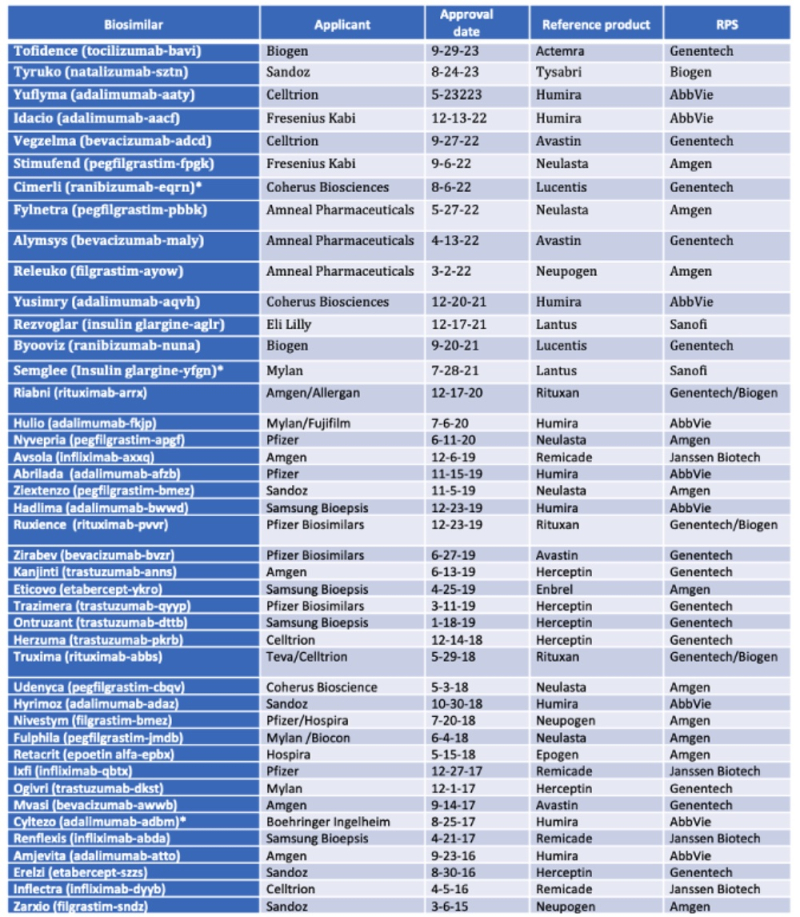
    FDAOn September 29, the U.S. Food and Drug Administration announced approval of Biogen's Tofidence® (tocilizumab-bavi) as a biosimilar to Genentech's Actemra®, a drug approved for treating COVID-19, rheumatoid arthritisgiant cell arteritisscleroderma, polyarticular or systemic juvenile idiopathic arthritis, and severe cytokine release syndrome.  Tofidence® is the first Actemra biosimilar, and was approved as an intravenous formulation for treatment of moderately to severely active rheumatoid arthritis, polyarticular juvenile idiopathic arthritis and systemic juvenile idiopathic arthritis.

    This approval brings to 44 the number of approved biosimilar products.

    Table

  • By Kevin E. Noonan

    In view of the unprecedented uncertainty in patent law generated by counter-doctrinal Supreme Court decisions over the past decade or so and a cowed Federal Circuit relegated to complaining that their hands are tied on most matters (even when acknowledging that the decisions they are rendering do violence to the U.S. patent system; see now-Chief Judge Moore's dissent in Athena Diagnostics, Inc. v. Mayo Collaborative Services, LLC), an occasional clear decision that establishes a bright line in the law (once the Court's stock in trade) is refreshing even if the clarity comes with unwanted consequences.  The Court's recent In re Cellect is one of those decisions, which held (as "once-and-for-all" as can be expected for the Court in its current incarnation) that the primary concern when assessing the interplay between obviousness-type double patenting (ODP) and patent term adjustment (PTA) is whether a patentee can obtain claim term that extends past 20 years from its earliest priority date for any reason (other than patent term extension under 35 U.S.C. § 156 for FDA delay in approving a patented drug, a small and unique subset of all granted patents) in favor of the public's right to having the patented invention freely available upon expiration of the earliest to expire patent claiming patentably indistinguishable embodiments of the invention.

    The issue, of course, is ODP and the extent to which terminal disclaimers are required under circumstances where a patent is entitled by statute to patent term adjustment (PTA) under circumstances where the claims in such a patent is deemed to be an obvious variant of claims in a related, earlier-expiring patent.  To recap, the issue arose in a series of ex parte reexaminations over five patents owned by Cellect, U.S. Patent Nos. 6,424,369; 6,452,626; 6,982,742; and 7,002,621, that involve "solid state image sensors which are configured to be of a minimum size and used within communication devices specifically including video telephones" according to the '621 patent (only four of these patents were invalidated, the fifth, U.S. Patent No. 6,862,036 not having any PTA that raised the issue).  The chronological situation is set forth in an exhibit from Cellect's Federal Circuit appeal brief and reproduced in modified form in the opinion:

    Image
    There was no dispute that the claims in these applications were patentably indistinct.  The Board issued four Decisions on Appeal affirming the reexamination division's invalidation of the '369, '626, '621, and '742 patents, all on the grounds that the provisions of 35 U.S.C. § 154(b)(2)(B) mandated that a terminal disclaimer be filed under circumstances where obviousness-type double patenting arose due to extension of patent term as PTA, i.e., that ODP must be determined after application of PTA.  (The Federal Circuit reached a different conclusion with regard to patent term extension (PTE) under 35 U.S.C. § 156 in Novartis AG v. Ezra Ventures LLC, the Court expressly refusing to permit "a judge-made doctrine to cut off a statutorily-authorized time extension.")  In its consolidated decision, the Board emphasized the potential inequities to the public due to the possibility of harassment by different parties owning patents to obvious variants of one another (in the absence of a terminal disclaimer preventing this potentiality) as representing an unjust extension of patent term to the public's detriment; see In re Fallaux, 564 F.3d 1313 (Fed. Cir. 2009)).  The Board further held that under In re Longi, the public was entitled to the assumption that it is free to practice what is claimed in the patent and obvious modifications and variants thereof once the patent has expired.  759 F.2d 887 (Fed. Cir. 1985).

    The Federal Circuit affirmed the Board's judgment in these re-examinations in an opinion by Judge Lourie joined by Judges Dyk and Reyna.  The primary basis for the Court's decision was that it is inequitable to the public that a second, later-expiring patent should be obtained ("an unjustified timewise extension of patent term") on an obvious variant of a patented invention, based on AbbVie Inc. v. Mathilda & Terence Kennedy Inst. of Rheumatology Tr., 764 F.3d 1366, 1373 (Fed. Cir. 2014).  The panel's opinion found support in the statute (as had the Board), wherein application of PTA was limited under circumstances where there was or should have been a terminal disclaimer filed, which stated that "no patent the term of which has been disclaimed beyond a specified date may be adjusted under this section beyond the expiration date specified in the disclaimer."  35 U.S.C. § 154(b)(2)(B)*  This conclusion was based in part by the Court's precedent, particularly AbbVie, and by the panel's determination that the overriding policy consideration is the need to "ensure that the applicant does not receive an unjust timewise extension of patent term" (as it has for over a decade; see "In re Janssen Biotech, Inc.G.D. Searle LLC v. Lupin Pharmaceuticals, Inc."; "AbbVie Inc."; "Gilead Sciences, Inc. v. Natco Pharma Ltd."; "Eli Lilly & Co. v. Teva Parenteral Medicines, Inc."; and "Sun Pharmaceutical Industries, Ltd. v. Eli Lilly & Co.").

    Having spoken plainly (and seeing that the likelihood the Supreme Court will weigh in is substantially zero), the question is what prosecution stratagems can be devised to permit maximizing patent term by (at a minimum) having a patent receive its statutory PTA without running afoul of concerns over public expectations.  Some have argued that filing "preemptive" terminal disclaimers would at least prevent patents from being invalidated on ODP grounds after the exclusivity of such patents has been relied upon to protect investment in drugs and other inventions requiring exclusivity terms that provide a sufficiently robust return on investment (see, for example, Mitra et al., 2023, In re Cellect: The Federal Circuit Alters Terminal Disclaimer Strategy; Huis et al., 2023, Patent Owners Must Consider New Terminal Disclaimer Strategies in View of the Federal Circuit's Decision in In re Cellect).  The drawback of these strategies is that by definition they relinquish PTA even before entitlement to such PTA has been challenged and thus such terminally disclaimed patents may not provide the requisite exclusivity to support investment in the claimed technology.

    There are, however, several alternative approaches.  The most direct is to take advantage of the safe harbor provisions of 35 U.S.C. § 121 for claims subject to a restriction requirement.  Particularly for inventions having claims encompassing several statutory categories under 35 U.S.C. § 101 (compositions, methods of making, methods of using, etc.) having a restriction requirement issued can provide a basis to avoid having to file a terminal disclaimer because the various claim groupings have been judged by the patent examiner to be patentably distinct.  While not immune from later challenge, the presumption is that the Office's determination was correct and thus will be subject to the clear and convincing standard for invalidating patents for ODP.  This tactic carries the responsibility to make certain that claims in the various groups are kept within their patentably distinct "silos" to maintain the safe harbor (see Boehringer Ingelheim Int'l. v. Barr Laboratories, Inc. (Fed. Cir. 2010); Obviousness-type Double Patenting after Amgen v. F. Hoffmann-LaRoche), a concept termed "consonance" in this regard.  And it can also be prudent to avoid taking the opportunity to request rejoinder under M.P.E.P. § 821.04 of certain otherwise patentably distinct groups of claims (such as method claims being rejoined to allowed composition claims) which has the effect of having these patentably distinct claims issued in the same granted patent and thus having the same expiration date (which could in some instances be less than could be obtained under the PTA statute).

    Substantively, assertion of ODP can be addressed as with any other obviousness rejection, by challenging motivation-to-combine disclosure of related applications with other prior art references, or whether species encompassed by ODP-rejected claims have features (like unexpected results) not shared with earlier claimed embodiments.  Other objective indicia (like commercial success) may be available for species claims to the eventual commercial embodiment.  Such strategies will require more careful consideration of what claims are pursued and in what order, which in turn will benefit from close coordination between business development actors and patent prosecutors that, while always recognized as being beneficial has not always been pursued with sufficient diligence.  In this regard, it is important to remember that "the patent disclosure [of an earlier related patent asserted in an ODP rejection] is not 'prior art' and cannot be looked to for what it teaches," In re Baird, 348 F.2d 974, 979 (C.C.P.A. 1965), which renders such patents much more limited than prior art to another (which can be considered for obviousness purposes for all that it teaches and is not limited to whether the reference is enabling, see Amgen Inc. v. Hoechst Marion Roussel Inc., 314 F.3d 1313, 1357 (Fed. Cir. 2003) ("Under [§]103, however, a reference need not be enabled; it qualifies as a prior art, regardless, for whatever is disclosed therein) (emphasis added).  Moreover, a species claim is not necessarily obvious over an earlier genus claim and can be found to be patentably distinct using the analytical rubrics contemplated herein.  In re Sarett, 327 F.2d 1004 (C.C.P.A. 1964); an illustrative example is In re Vogel, where the Court of Customs and Patent Appeals held that claims to a method of preparing a beef product in a later application was patentably distinct from claims to a similar but not identical method for preparing a pork product but claims to a similar method for making a meat product were not patentably distinct.  422 F.2d 438 (C.C.P.A. 1970).  This is also true for distinguishing claims to compositions and methods for using them.  In re Boylan, 392 F.2d 1017, 1022-23 (C.C.P.A. 1968).

    Implementing these various ways of avoiding ODP rejections and the need for PTA-destroying terminal disclaimers takes intentional planning when drafting claims and assessments that heretofore have not had compelling reasons to be performed for time-saving and drafting-efficiency reasons.  In view of the Federal Circuit's decisions precluding any consideration of what is fair to the patentee (as opposed to the public), making the effort to avoid the need for filing a terminal disclaimer seems worth doing to the broadest extent possible.

    * There is no such limitation in 35 U.S.C. § 156, even though both statutes recite that an extension of the term shall be granted.

  • By Kevin E. Noonan

    Section 112 of the patent statute, which in earlier years was something of a backwater in patent law, has had a tumultuous quarter century beginning with the Federal Circuit decision in Regents of the University of California v. Eli Lilly & Co., which (in the view of many) heightened the written description requirement for biotechnology inventions.  This was particularly true more generally for inventions directed to isolated nucleic acids (those were the days!) and proteins, based on the principle that the complexity of such molecules required disclosure of more than a recitation of the expected product (in Lilly, human cDNA encoding insulin) and methods for making/obtaining it.  This decision led to a series of cases from that Court, including Enzo Biochem. v. Gen-Probe, University of Rochester v. G.D. Searle, Carnegie Mellon University v. Hoffman LaRoche, and culminating in the en banc Ariad v. Eli Lilly & Co. decision that imposed the interpretation that written description and enablement in 35 U.S.C. § 112(a) (then, first paragraph) were separate requirements.  The enablement requirement in this regime had the steadier interpretation, being a question of law grounded in the factual determinants of the In re Wands factors, so much so that the isolation, discovery, and characterization of a novel antigen was enough for an applicant to be granted a patent for antibodies specific for that antigen without actually disclosing said antibodies, under the Court’s 2004 Noelle v. Ledermann decision.  Many recognized that this decision was contrary to the Ariad decision but that apprehension was grounded in the written description rather than enablement requirement.

    That situation began to change during the tenure of Chief Judge Prost, who wrote the first Federal Circuit Amgen v. Sanofi opinion harmonizing the Court's precedent by overruling on written description grounds the Ledermann decision.  But lurking in the Court's consideration of that case was an inkling that the enablement requirement also contained a limitation, based on the principle of "no undue experimentation" from the Wands decision that bore fruit in several other cases, including Wyeth & Cordis Corp. v. Abbott LaboratoriesEnzo Life Sciences, Inc. v. Roche Molecular Systems, Inc., Pacific Biosciences of California, Inc. v. Oxford Nanopore Technologies, Inc., and Idenix Pharmaceuticals LLC v. Gilead Sciences Inc. (the latter being a conventional chemical compound/genus case that, it had been presumed, encompassed molecules of sufficient predictability that did not implicate the complexity issues of biological molecules).  This trend reached its apogee (for now) in the Supreme Court's Amgen v. Sanofi decision, where the Court approved the limiting principle that the enablement requirement was satisfied if (but only if) the claims were commensurate in scope with what was disclosed in the specification.  The Federal Circuit has applied the Supreme Court's reasoning (and their own) since the Amgen decision, in Baxalta Inc. v. Genentech, Inc.

    In the wake of this decision (once one gets beyond the weeping and gnashing of teeth that accompany most Supreme Court forays into patent law) there have been a number of views asserted about how (if at all) biological molecules (and their chemical counterparts) could be protected with claims of sufficient scope not to be easily designed around.  An intriguing one has been (independently) promulgated by Bob Armitage and Tom Irving, who have suggested that "means-plus-function" (MPF) claims under  35 U.S.C. § 112(f) would provide a way to expand the scope of claims having great sequence or other complexity while avoiding the conundrum created by (or more accurately, affirmed by) the Amgen decision.  As a reminder this provision of the patent statute provides:

    An element in a claim for a combination may be expressed as a means or step for performing a specified function without the recital of structure, material, or acts in support thereof, and such claim shall be construed to cover the corresponding structure, material, or acts described in the specification and equivalents thereof.

    Under this proposal,* exemplified with regard to Amgen's antibody claims, the stratagem would be implemented as follows:

    A pharmaceutical composition of an isolated monoclonal antibody preparation comprising a pharmaceutically acceptable excipient and an antibody means that specifically binds to [a particular antigen/epitope/pathogen/etc.].

    The specification would then provide (as did Amgen's) expressly disclosed antibodies as exemplars.

    Reservations arise regarding this approach because MPF claims are limited to the species expressly disclosed ("the corresponding structure [or] material") and equivalents thereof.  For antibodies (as in Amgen) this would have been the about two dozen expressly disclosed antibodies plus "equivalents."  But this begs the question because what is an "equivalent" will need to be experimentally determined and thus be subject to the same "undue experimentation" objections that forms the basis for both the Supreme Court's Amgen decision and the several Federal Circuit decisions in recent years limiting their scope even in conventional small molecule/chemical claims.  And while the doctrine of equivalents is a thin reed to rely upon to police, at best, "trivial" modifications (like substituting an isoleucine residue with an valine residue, or vice versa, insofar as the difference in these amino acids is one methylene (-CH3-) group) the scope of MPF claims is also more limiting in this regard.

    A possibly more fruitful course (which has the benefit of also providing an argument for satisfying the written description requirement) would be the alternative ways of providing a sufficient disclosure first enunciated by Judge Lourie in California v. Eli Lilly & Co. and later in Ariad (v. Eli Lilly & Co.):

    • Rely on species and subgenus claims as much as possible, while avoiding broad genus claims, to provide a "representative number" of species

    • Focus on structure/function relationships and properties of antibodies (CDRs, for example) not antigens

    (or a combination of these).  There has been a convergence in the relationship between claim scope and the amount of disclosure supporting claims required for satisfaction of the written description and enablement requirements that can be addressed using Judge Lourie's rubrics.

    Another approach would be to align the CDR sequences in expressly disclosed antibodies and provide a sequence alignment that could be used to identify a consensus sequence having three types of alignment.  Specifically, there would be 1) invariant amino acids at some positions (which would indicate that these are important for antigenic specificity or structural stability or both); 2) positions having amino acids of related chemical properties (basic, acidic, aliphatic, etc.) that provide more structural variability/scope; and 3) positions having little consistency, except most likely not having proline or glycine which are known to disrupt protein secondary or tertiary structure.  The number of variants for such consensus sequence CDRs, while large, would then have a more limited and scientifically rational basis resulting from evolution and would not involve the "trial and error" characteristics that raised judicial disparagement at both the Federal Circuit and Supreme Court.

    There is no magic wand that can ensure that a claim will not be found wanting by a court in satisfying the disclosure requirements of Section 112.  And of course, sound patent claiming strategies (having claims of varying scope, including genus, subgenus, and species, for example) are useful in reducing the likelihood that a competitor will be able to practice an invention with impunity by clever designing around schemes.  The Amgen claims (as well as the claims in Baxalta) were prosecuted under interpretations of the enablement requirement that have now been abrogated by the courts.  While it is likely that patents having similar claims will be subject to invalidation if asserted the benefit of decisions like Amgen is that the standard, having been established by the Supreme Court is less likely to change in future, as not relying on the Federal Circuit's recent uncertain precedential value.

  • By Kevin E. Noonan

    Washington - Capitol #2Over the past few years the drumbeat regarding the cost of healthcare in general and drugs in particular has steadily mounted (see "Faux-Populist Patent Fantasies from The New York Times").  Patents are often (and quite wrongly) blamed for the purported high costs, despite the crucial role patents play in spurring innovation; indeed, some advocates have been accused of skewing their statistics to make their arguments appear plausible (see "Unreliable Data Have Infected the Policy Debates Over Drug Patents"; "Tillis Wants More Info on I-MAK and Other Data Driving Anti-Patent Narratives Around Drug Pricing"; and "I-MAK Defends Integrity of Its Patent Data in Response to Tillis Letter").  But a recent tactic is for many, including members of Congress, to argue that the Bayh-Dole Act, and in particular the so-called “march-in rights” provisions (Bayh-Dole Act, Pub. L. No. 96–517 (1980), Section 203) entitle the Federal government to set drug prices, at least for those drugs developed using Federal grant money for their discovery or development (and despite valiant efforts by Joe Allen and the Bayh-Dole Coalition to explain how their reading of the Act is in error; see www.bayhdolecoalition.org).  Alternatively, the provisions outlining the jurisdiction of the Court of Federal Claims in cases involving patents and copyrights (28 U.S.C. § 1498) have been similarly invoked as giving the Federal government the right to set drug prices because the drugs in question are patent-protected.

    Today, a letter was sent by 25 scholars, former judges, and former government officials to the Senate Health, Education, Labor and Pensions Committee, the Chair and Ranking Member of the House Ways and Means Committee, and to Secretary of Health and Human Services Xavier Becerra "correcting false claims that the federal government can use the Bayh-Dole Act or § 1498 to impose price controls on prescription drugs."  That letter is set forth below and deserves serious consideration by the Biden Administration, Congress, and the rest of us to prevent unwise attempts to misapply the Bayh-Dole Act, as set forth eloquently and specifically in the letter.

  • By Kevin E. Noonan

    Federal Circuit SealThere has been, since the turn of the century, a steady, seemingly inexorable trend towards limiting patent rights and focusing the application of U.S. patent law towards an emphasis on preventing innovators from obtaining patent rights broader than the minimum to which they may be entitled.  This focus puts putative interests the public may have in reducing present patent rights in favor of future ones, where granting such rights to present inventors (limited as they are in time) is more important that providing sufficient patent protection to permit exploitation and commercialization of the innovations disclosed in their patents.  Examples of this trend can be seen in the loss of patent term adjustment awarded by statute due to Patent Office delay on the principle that the public has the right to freely used a patented invention including obvious variations thereof upon earliest patent expiry, the principle being found in Federal Circuit decisions from AbbVie Inc. v. Mathilda & Terence Kennedy Institute of Rheumatology Trust and Gilead Sciences, Inc. v. Natco Pharma Ltd. and culminating in the Federal Circuit's recent In re Cellect decision.  In this climate concerns quickly arose regarding how the recent Supreme Court decision in Amgen v. Sanofi would be interpreted by the Federal Circuit.  The Court did not disappoint, in its decision handed down in Baxalta Inc. v. Genentech, Inc.

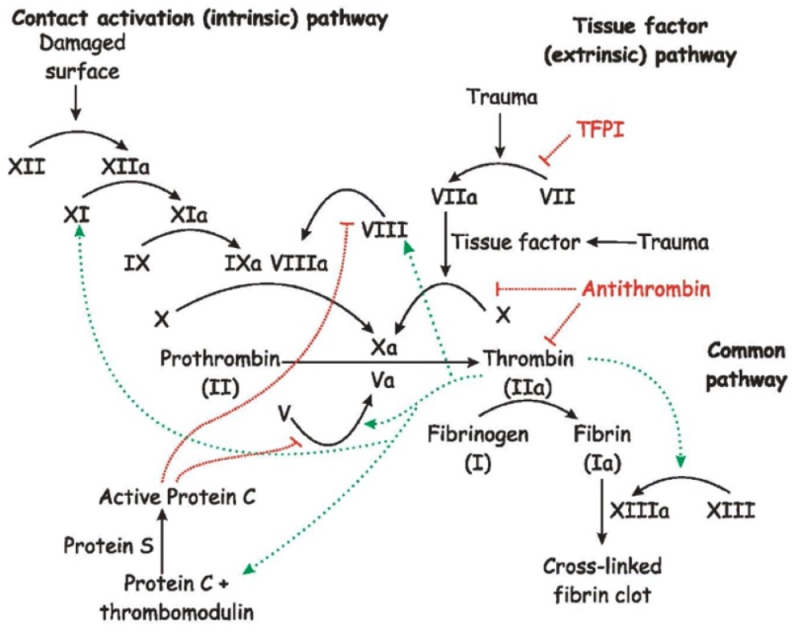
    The case arose in litigation over U.S. Patent No. 7,033,590 (having an earliest priority date of September 14, 2000, the significance of which will become readily apparent).  The claims of this patent were directed to monoclonal antibodies that could provide an alternative treatment for Hemophilia A, being immunologically specific for human blood clotting factor IX and its activated form Factor IXa that would activate Factor X in the coagulation pathway in the absense of Factor VIII lacking in these hemophiliacs.  The coagulation pathway is set forth here for clarification:

    Image
    In the opinion, claim 1 of the '590 patent was set forth as being representative:

    1.  An isolated antibody or antibody fragment thereof that binds Factor IX or Factor IXa and increases the procoagulant activity of Factor IXa.

    By eliminating the need for Factor VIII these antibodies overcame the limitation of treatment by recombinant human Factor VIII (one of the triumphs of the application of recombinant DNA technology and transformation of cells to make useful amounts of the protein), wherein patients developed antibodies against the Factor that disabled its ability to support coagulation and treat patients' disease.

    As discussed in the opinion, the specification of the '590 patent disclosed use of hybridoma technology to produce such antibodies, which technology was considered sufficiently robust and predictable that it was the basis for the Federal Circuit's opinion in Noelle v. Lederman (wherein the mere isolation of a novel antigen or epitope thereof was considered sufficient to enable claims directed to antibodies to that antigen or epitope with no demonstration of actual production of any such antibodies).  Indeed, until recently the vulnerability of such claims was considered to be a failure to satisfy the written description requirement in light of the Federal Circuit's en banc decision in Ariad v. Eli Lilly & Co.

    Here, however, the matter was before the District Court on remand from an earlier Federal Circuit decision, wherein Baxalta sued Genentech over the latter's Hemlibra® (emicizumb-kxwh) product and the Court reversed based on the District Court's incorrect claim construction (ironically, by Judge Dyk who was sitting by designation in the District of Delaware).  Judge Dyk, again sitting by designation granted Genentech summary judgment that the asserted claims of the '590 patent were invalid for lack of enablement in view of the Supreme Court's intervening Amgen v. Sanofi decision.

    The Federal Circuit affirmed, in an opinion by Chief Judge Moore joined by Judges Clevenger and Chen.  The Court's basis for its decision, recited more than once, is that "[t]he facts of this case are materially indistinguishable from those in Amgen" (which was not strictly speaking true; the Amgen claims recited producing antibodies based on their function of PCSK9 binding that prevented PCSK9 binding to LDL receptors, which is what elicited the blood cholesterol-reducing effect rather than, as here, antibodies directed to the target itself, a distinction without a difference to the Court).  Sufficiently significant for the Court to recite in the opinion were the facts that the hybridoma methods disclosed in the specification expressly disclosed eleven antibodies by amino acid sequence having the claimed binding properties, and that such functional antibodies amounted to only 1.6% of the "thousands" of screened antibodies resulting from the Kohler and Milstein hybridoma protocol employed by the inventors.  The panel interpreted the Supreme Court's Amgen decision to require enablement of "the full scope of the invention as defined by its claims," allowing for "a reasonable amount of experimentation."  As in Amgen, the Federal Circuit appreciated the asserted claims of the '590 patent to likewise encompass millions of potential candidate monoclonal antibodies, the screening of which itself amounted to undue experimentation.  The Court considered the circumstances here to be "materially indistinguishable" from those in Amgen, including reliance on an experimental "roadmap" (here) that required the skilled artisan to "(1) immunize mice with human Factor IX/IXa; (2) form hybridomas from the antibody-secreting spleen cells of those mice; (3) test those antibodies to determine whether they bind to Factor IX/IXa; and (4) test those antibodies that bind to Factor IX/IXa to determine whether any increase procoagulant activity."

    Moreover the panel discerned that the specification provides no disclosure regarding "a quality common to every functional embodiment" that would permit the skilled worker to predict which of these potential millions of antibodies would have the claimed function.  This deficiency included no disclosure of a comparison of the eleven disclosed antibodies that would provide such a structural key to identifying functional species.  Rather, the person of ordinary skill in the art would (as in Amgen) need to produce a surfeit of antibodies and then screen them for the desired activity.  This amounted, in the panel's view, to no more than the type of "trial and error" disclosure found wanting for satisfying the enablement requirement in Amgen.

    More than ten years ago Judge Lourie set forth rubrics that could satisfy that other aspect of Section 112, the written description requirement, in the Federal Circuit's en banc Ariad opinion:

    [A] description of a claimed genus disclosing either (1) "a representative number of species falling within the scope of the genus," . . . or (2) "structural features common to the members of the genus," either of which must enable "one of skill in the art [to] 'visualize or recognize' the members of the genus" [emphasis in opinion].

    The current emphasis on undue experimentation resonates with these requirements, which formed the reasoned basis for the Federal Circuit's decision in this case:

    Moreover, it is undisputed the '590 patent contains no disclosures—such as "a quality common to every functional embodiment," Amgen, 598 U.S. at 614—that would allow a skilled artisan to predict which antibodies will perform the claimed functions.  The patent does not disclose any common structural (or other) feature delineating which antibodies will bind to Factor IX/IXa and increase procoagulant activity from those that will not.  Nor does the patent describe why the eleven disclosed antibodies perform the claimed functions, or why the other screened antibodies do not.  The only guidance the patent provides is "to create a wide range of candidate antibodies and then screen each to see which happen to bind" to Factor IX/IXa and increase procoagulant activity.  Id.  Amgen makes clear that such an instruction, without more, is not enough to enable the broad functional genus claims at issue here.  Id. at 614–15 ("[T]he . . . problem we see [is that] Amgen offers persons skilled in the art little more than advice to engage in 'trial and error.'").

    For anyone looking for a rationale that supports a broader disclosure of biological molecules than a recitation limited to the expressly disclosed species, it seems Judge Lourie's suggestions would be a good place to start.

    Baxalta Inc. v. Genentech, Inc. (Fed. Cir. 2023)
    Panel: Chief Judge Moore and Circuit Judges Clevenger and Chen
    Opinion by Chief Judge Moore

  • By Kevin E. Noonan

    Judge NewmanIn a decision that will surprise no one who has followed the situation in the past six months (see "Federal Circuit Special Committee Recommends One-Year Suspension of Judge Newman"), the Judicial Council of the Federal Circuit has ordered Judge Pauline Newman to be suspended from the court for one year.

    Despite beginning the Order with reference to prior ecomiums from at least two of her judicial brethren, the 72-page Order repeats the allegations made previously against Judge Newman, supplemented with 16 (sometimes) heavily redacted Exhibits and notations that some other supporting exhibits have been redacted in their entirety for confidentiality purposes.  Nevertheless, these arguments and supporting exhibits are apparently provided to justify the grounds for the decision, which remain Judge Newman's purported refusal to cooperate with the Special Committee's investigation into her competency (despite the Judge having provided medical and psychological results from her own doctors rather than the Committee's hand-picked ones).

    While Judge Newman has shown remarkable stamina and "stating power," at 96 this suspension could be an effective ban from her ever again serving on the bench.  This suspension remains subject of course to her on-going lawsuit in the D.C. District Court asserting that the Council's suspension is unconstitutional and a violation of her due process rights (see "Judge Newman and the On-Going Attempts to Remove Her from the Federal Circuit").

    A sad day for the Federal Circuit and the U.S. patent system.

  • By Kevin E. Noonan

    Federal Trade Commission (FTC) SealA decade ago the Federal Trade Commission engaged in a crusade against reverse settlement payment agreements in ANDA litigation (which they termed, Madison Avenue-like, "pay for delay" settlements), arguing that such agreements were per se antitrust violations, despite almost universal rejection of their position by most Courts of Appeal prior to the Supreme Court's decision in Actavis v FTC.  While failing to convince the Court to give its imprimatur to a complete ban, the Commission did persuade the Justices that because such agreements could raise antitrust concerns they should be reviewed under the rule of reason (a more fulsome account of these cases can be found in earlier Patent Docs posts and in Antitrust Issues in Intellectual Property Law, The Intellectual Property Law Association of Chicago Antitrust Committee, Lyerla, B., ed., American Bar Association Publishing Co., 2016).

    The FTC's latest foray into policing pharmaceutical companies and their patent behavior was set forth in a policy statement promulgated earlier this month, entitled "Statement Concerning Brand Drug Manufacturers' Improper Listing of Patents in the Orange Book," in a classic example of begging the question and one viewed through the Commission's prism of purported patent malfeasance by branded drug companies.

    As it did with the reverse settlement issue, the Commission's attitude seems to be that something might be happening and then to proceed as if it is.  This is evident from the first sentence, where the statement asserts that "[b]rand drug manufacturers may be harming generic competition through the improper listing of patents in the Food and Drug Administration's ("FDA") Approved Drug Products with Therapeutic Equivalence Evaluations, known as the 'Orange Book'" (emphasis added).  The statement then extols the benefits of generic competition (which is fine as far as it goes, but of course there needs to be something to copy in the first place for generic copiers to have anything to copy that can be sold at lower prices due to the benefits of their copying).  There is a generic allegation in the midst of this rhetoric — the statement asserts that "certain manufacturers have submitted patents for listing in the Orange Book that claim neither the reference listed drug nor a method of using it" (and if so of course the Commission is empowered to and intends to pursue such manufacturers who are indeed "abus[ing] the regulatory processes set up by Congress to promote generic drug competition" under the power to investigate unfair trade practices under 15 U.S.C. §§ 45(a), (n)).

    The justification for the Commission's concerns stems apparently from the results of a 2002 study (FED. TRADE COMM'N., GENERIC DRUG ENTRY PRIOR TO PATENT EXPIRATION: AN FTC STUDY 39-52 (2022), that purportedly involved improper listing, further citing an enforcement action in that year against Biovail (In re Biovail Corp., FTC Dkt. No. C-4060 (Oct. 2, 2002)).  Also cited are a total of four instances where the Commission filed amicus briefs in cases where there may have been improper listing, such as patents for a system to implement a REMS.  The consequence of such a listing, the statement asserts, is to invoke the 30-month stay in approval attendant upon the NDA holder (or her licensee) filing suit against an ANDA applicant, because "even small delays in generic competition can generate substantial additional profits for brand companies at the expense of patients."  Patients would be harmed because they would be "deprived of the ability to choose between competing products and may be forced to pay inflated prices."  Of course the 30-month stay while statutory is not mandatory; should the infringement action be dismissed (for example, on motion that the patent asserted were improperly listed in the Orange Book), the FDA would be able to expeditiously approve the ANDA and the generic company enter the marketplace (with its own 180-day exclusivity if a first filer; under these circumstances the extent to which patients would pay deflated prices would be itself delayed).

    Having established at least to its own satisfaction the basis for the Commission's attention to this issue, the statement then announced the FTC's intention to "enforce the law against those companies and individuals who continue to improperly list patents in the Orange Book" using "its full legal authority to protect patient and payors . . . from business practices that tend to negatively affect competitive conditions."  This threatened exercise of the Commission's legal authority finds its basis in "the FTC's historical use of Section 5" based on improperly listing a patent in the Orange Book being an unfair method of competition.  The statement goes on to speculate that improperly listing a patent in the Orange Book "may . . . constitute illegal monopolization," perhaps evincing a recognition that agency overreach was not greeted warmly by the Supreme Court in Actavis with regard to the FTC's position that reverse settlement agreements were a per se antitrust violation.  Treading cautiously, the statement further warns that "improperly listing patents in the Orange Book may also be worthy of enforcement scrutiny from government and private enforcers under a monopolization theory" and calls out the possibility (or likelihood) that it "may also scrutinize a firm's history of improperly listing patents during merger review" (emphasis added).  Finally, the statement suggests that "individuals" (presumably corporate officers) who "submit or cause the submission" of patents improperly to the Orange Book may be held liable individually, and that a finding of a false certification under 21 C.F.R. § 314.53(c)(2)(ii)(R) could be sent to the Department of Justice for investigation of criminal liability.  Should all else fail, the Commission also states that it "may" dispute individual Orange Book listings through the FDA process set forth in 21 C.F.R. § 314.53(f)(1) that permits "any interested person" to request patent information in the Orange Book be corrected.

    Mostly in footnotes, the statement identifies no more than 10 cases in support of the statement (and one of those, Fed. Trade Comm'n v. Shkreli, 581 F. Supp. 3d 579, 637 (S.D.N.Y. 2022), involved the infamous "Pharma Bro" whose shenanigans can hardly be held up as a standard under which ethical branded drug companies conduct their businesses).  In view of the powers the Commission can wield, the assertions, allegations, and promises of future activities set forth in the statement cannot be ignored, but it also cannot help but raise the question of whether this tempest should not have remained in the teapot from whence it sprung, at least without further evidence that improper listing occurs frequently enough to significantly impact drug prices paid by the patients and payors the FTC is attempting to serve and protect from (in the Commission's view, apparently) predatory branded drug companies.