• By Kevin E. Noonan

    Federal Circuit SealOne of the limitations of our judicial system is that it is inefficient in overcoming error.  This drawback is most pronounced at the Federal Circuit, where precedential decisions can only be overcome by en banc reconsiderations, which (perhaps rightly) occur infrequently (and are not a guarantee that error will be rectified).  Among the several Circuits there is at least the possibility of a Circuit split that will be resolved by the Supreme Court; while this may result in a remedy worse than the disease, at least the Court has the benefit of fully developed appellate decision making to provide context and legal argument in addition to the supplications of the parties (which necessarily and correctly are focused on their own interests).

    At the Federal Circuit, in contrast, two judges can effectively produce a precedential decision binding on all future panels, unless and until the decision is reconsidered en banc.  That is the situation with the Court's decision in In re BRCA1- & BRCA2-Based Hereditary Cancer Test Patent Litig., 774 F.3d 755, 760 (Fed. Cir. 2014), an immediately post-Myriad decision unduly restrictive of the scope of patent eligibility (as illustrated in Judge O'Malley's concurrence).  That case involved the subject matter eligibility of oligonucleotide primers (for practicing the polymerase chain reaction or PCR) and methods for detecting BRCA gene mutations using these techniques.  And the Court's decision was an almost knee-jerk application of the Supreme Court's decisions in AMP v. Myriad Genetics and Mayo Collaborative Services v. Prometheus Laboratories, creating (as is the Federal Circuit's wont) a bright line rule that nucleic acids were ineligible as natural products and diagnostic methods ineligible as natural laws (despite lip service to a mythic "something more" that would distinguish a patent-eligible method).

    This situation made the decision in Roche Molecular Systems, Inc. v. Cepheid a foregone conclusion.  The case arose in Roche's infringement case against Cepheid over U.S. Patent No. 5,643,723.  The invention was directed to methods for detecting Mycobacterium tuberculosis in a human, and in particular rifampin-resistant variants thereof.  The claimed methods were recognized in the art and by the Court as an improvement on prior art methods, which involved in vitro culture of sputum specimens, which took several (3-8) weeks to produce a result, and could not specifically detect either M. tuberculosis cells or rifampin-resistant variants.  The opinion notes, but does not expressly rely on, evidence that genotypic detection of a specific gene, rpoB, was a target for research by others at the time the invention was made.  Researchers working for Roche and Mayo identified eleven "position-specific 'signature nucleotides'" by comparison of the gene sequence over several bacterial species, including M. tuberculosis.

    Method and composition of matter (primer) claims were at issue; claims 1 and 17 are representative of each:

    1.  A method for detecting Mycobacterium tuberculosis in a biological sample suspected of containing M. tuberculosis comprising:
        (a) subjecting DNA from the biological sample to polymerase chain reaction [PCR] using a plurality of primers under reaction conditions sufficient to simplify a portion of a M. tuberculosis rpoB [gene] to produce an amplification product, wherein the plurality of primers comprises at least one primer that hybridizes under hybridizing conditions to the amplified portion of the [gene] at a site comprising at least one position-specific M. tuberculosis signature nucleotide selected, with reference to FIG. 3 (SEQ ID NO: 1), from the group consisting
            a G at nucleotide position 2312,
            a T at nucleotide position 2313,
            an A at nucleotide position 2373,
            a G at nucleotide position 2374,
            an A at nucleotide position 2378,
            a G at nucleotide position 2408,
            a T at nucleotide position 2409,
            an A at nucleotide position 2426,
            a G at nucleotide position 2441,
            an A at nucleotide position 2456, and a T at nucleotide position 2465; and
        (b) detecting the presence or absence of an amplification product, wherein the presence of an amplification product is indicative of the presence of M. tuberculosis in the biological sample and wherein the absence of the amplification product is indicative of the absence of M. tuberculosis in the biological sample.

    17.  A primer having 14–50 nucleotides that hybridizes under hybridizing conditions to an M. tuberculosis rpoB [gene] at a site comprising at least one position-specific M. tuberculosis signature nucleotide selected, with reference to FIG. 3 (SEQ ID NO: 1), from the group consisting of [the same 11 nucleotides at the positions disclosed in claim 1].

    The District Court granted summary judgment of invalidity for both types of claims for patent-ineligibility, and the Federal Circuit affirmed, in an opinion by Judge Reyna, joined by Judges Hughes and O'Malley (who wrote a perceptive concurring opinion).  Judge Reyna, who also wrote the opinion in Ariosa v. Sequenom, substantially mimicked Judge Dyk's reasoning found in In re BRCA1, rejecting any distinction drawn by patentee Roche between the oligonucleotide primers and DNA as it occurs in nature; in this reasoning he cited Justice Thomas's conclusion that "mere isolation" did not change isolated DNA from naturally occurring DNA in the absence of a change in sequence.  The opinion is careful to mention, in a footnote, that "[w]e do not address the subject matter eligibility of primers that have been altered—e.g., investigator-induced mutation(s) such that their nucleotide sequences are not found in nature, or primers which are chemically modified or labeled by investigators such that they cannot be isolated directly from naturally occurring DNA," citing Myriad.  Nor did the synthetic nature of the oligos matter, a view consistent not only with the Court's decision in Myriad but also in cases that harken back to Cochrane v. Badische Anilin & Soda Fabrik (1877).  And the eleven "position-specific 'signature nucleotides'" were also non-availing for eligibility, the opinion holding:

    The eleven position-specific signature nucleotides on the MTB rpoB gene that Roche's primers are designed to hybridize to are naturally occurring; the Roche inventors identified these eleven positions after sequencing MTB DNA.  . . .  In other words, Roche identified these pre-existing position-specific signature nucleotides; it did not create them.  There is no doubt that Roche's discovery of these signature nucleotides on the MTB rpoB gene and the designing of corresponding primers are valuable contributions to science and medicine, allowing for faster detection of MTB in a biological sample and testing for rifampin resistance.  However, "[g]roundbreaking, innovative, or even brilliant discovery does not by itself satisfy the § 101 inquiry," [citing Myriad].

    Regarding the method claims, the Court used the "plain meaning" of the claim language to conclude that the claims were "directed to" the natural law that M. tuberculosis could be detected by PCR amplification of the sequence, stating that "[t]his relationship between the signature nucleotides and MTB is a phenomenon that exists in nature apart from any human action, meaning the method claims are directed to a natural phenomenon, which itself is ineligible for patenting."  Having crossed the threshold of step 1 of the Mayo/Alice test for ineligibility, the opinion effortlessly satisfies the step 2 by finding PCR amplification to be "conventional, routine, and well-understood" and thus that the claims do not contain an "inventive concept."  Mayo/Alice calculus complete, the Court holds the method claims to be patent-ineligible.  And at least because this patent was written long before the current judicial regime antithetical to certain types of patents almost per se, it is easy for the panel to identify language in the specification supporting its conclusion:

    This invention involves a comparative analysis of the rpoB sequences in MTB, other mycobacteria and related . . . bacteria . . . demonstrating the heretofore undiscovered presence of a set of MTB- specific position-specific "signature nucleotides" that permits unequivocal identification of MTB . . . [emphasis added].

    (It should be noted if only for the record that this application of the law ignores the requirement from Diamond v. Diehr that the claims be considered as a whole.  It was not "conventional, routine, and well-understood" to perform PCR amplification to detect the "position-specific 'signature nucleotides'" identified by these inventors, and thus at least one avenue for a court open to applying the law consistent with Diehr is once again avoided in this decision.  Roche gamely made this argument, which the panel reduces to a mere "discovery" of a law of nature that is, per se, ineligible.)

    In a pattern established by Judge Linn in Ariosa, Judge O'Malley penned a concurrence that reads more like a dissent, and contains one procedural and one substantive rebuttal of the Court's opinion.  First, Judge O'Malley notes that the precedent upon which the Court relies, In re BRCA1, does not stand for the firmly established proposition that oligonucleotide primers and PCR amplification for diagnostic purposes are per se patent ineligible.  She reminds her brethren that the question in In re BRCA1 was whether the District Court had abused its discretion in denying Myriad's motion for a preliminary injunction, not whether oligonucleotides are per se patent ineligible:

    This procedural context in BRCA1 is important.  We have routinely recognized that the question of whether an accused infringer has raised a substantial question of invalidity in the context of a motion for a preliminary injunction—such as the question before the district court in BRCA1—presents a different type of inquiry than the question of whether an asserted claim is invalid—such as the question that was before the district court on summary judgment in this case.  Indeed, "[w]hile the evidentiary burdens at the preliminary injunction stage track the burdens at trial, importantly the ultimate question before the trial court is different" because "[i]nstead of the alleged infringer having to persuade the trial court that the patent is invalid, at [the preliminary injunction] stage[,] it is the patentee, the movant, who must persuade the court that, despite the challenge presented to validity, the patentee nevertheless is likely to succeed at trial on the validity issue."  Titan Tire Corp. v. Case New Holland, Inc., 566 F.3d 1372, 1377 (Fed. Cir. 2009).  Significantly, "the trial court 'does not resolve the validity question, but rather must . . . make an assessment of the persuasiveness of the challenger's evidence, recognizing that it is doing so without all of the evidence that may come out at trial."  Id. (emphasis added) (citations omitted).

    This recognition significantly reduces the precedential effect of the BRCA1 decision and provides, perhaps, a way for a future panel to distinguish claims to primers from this precedent.  Judge O'Malley reminds her colleagues and us that the BRCA1 decision did not rule on the patent eligibility of PCR primer claims and does not compel the result the Court announced here.

    Judge O'Malley's concurrence also notes that this case, unlike the BRCA1 case, contains unresolved questions of material fact that, while disregarded by the Court may provide another basis for distinguishing the BRCA1 decision.  Citing the distinctions drawn by the Supreme Court in Myriad between genomic DNA and cDNA, Judge O'Malley opines that while the BRCA1 opinion sets forth the basis for finding the PCR primer claims to be patent ineligible, "it is not clear from the BRCA1 opinion or record why we reached this conclusion.  The lack of record evidence underlying BRCA1's conclusion on this point is important in light of the record in this case."  She then goes on to recite the factual distinctions argued by Roche regarding the differences between the claimed primers and the sequences as they occur in nature (including the differences in strandedness, complementarity ("a primer comprising a nucleotide sequence of ATCG is complementary to, but unquestionably different from, a natural DNA strand comprising a sequence of TAGC"), the presence of a 3' hydroxyl group, the linearity of the primers versus the circular nature of bacterial DNA, and that natural "primers" comprise RNA and not DNA).  All these facts were adduced from expert testimony and thus for Judge O'Malley raise "genuine issue of material fact" that are not appropriate for summary judgment.  Judge O'Malley also notes that the claimed primers here have a markedly different function, unlike the genomic DNA in Myriad, due to the presence of the 3' hydroxyl group which permits PCR amplification to occur.  Judge O'Malley apprehends that the patentee in this case raised factual issues not addressed in the Court's BRCA1 decision, and thus, "unlike the appellants in Myriad and in BRCA1, here, Roche submitted evidence of record that, at the very least, raises genuine issues of material fact as to whether there exists anything in nature that both has the structure and performs the function of the claimed primers."  Accordingly, she believes not only that the BRCA1 decision does not compel the Court's conclusion here, but that the question should be taken up en banc to clarify the law regarding the patent eligibility of oligonucleotide primers and perhaps methods of using such primers to amplify targeted portions of DNA.

    While this concurring opinion is a welcome ray of sunshine on a cloudy day, the practical effects of this, like so many Federal Circuit decisions on eligibility, is to incentive non-disclosure of inventions such as these, with the concomitant injury to progress that trade secret protection of diagnostic methods is almost certain to create.  It should be self-evident that this outcome is contrary to the Constitutional mandate underlying the patent system, but it appears the current constitution of the Court is unconcerned with this outcome.  Perhaps Chief Judge Woods of the Seventh Circuit was right after all.

    Roche Molecular Systems, Inc. v. Cepheid (Fed. Cir. 2018)
    Panel: Circuit Judges O'Malley, Reyna, and Hughes
    Opinion by Circuit Judge Reyna; concurring opinion by Circuit Judge O'Malley

  • By Donald Zuhn

    Federal Circuit SealLast week, in Natural Alternatives International, Inc. v. Iancu, the Federal Circuit affirmed a determination by the U.S. Patent and Trademark Office Patent Trial and Appeal Board in an inter partes reexamination affirming the Examiner's rejection of the challenged claims of U.S. Patent No. 8,067,381 as being anticipated or obvious over the cited prior art, as well as the Board's denial of the patentee's request for rehearing.  The '381 patent is owned by Appellant Natural Alternatives International, Inc. ("NAI").

    The inter partes reexamination was requested by Woodbolt Distributors, LLC, which had been involved in district court litigation with NAI concerning the '381 patent.  In its request, Woodbolt asserted that the priority claim of the '381 patent was defective because NAI "deliberately and expressly terminated" its claim to the benefit of the first four priority applications by breaking the chain of priority between the fourth and fifth priority applications.

    The opinion notes that between 1997 and 2011, NAI filed a chain of eight U.S. patent applications.  The first four continuing applications each included a priority benefit statement under 35 U.S.C. § 120 claiming priority back to the filing date of the first U.S. application.  In 2003, NAI filed a provisional application during the pendency of the fourth application, and when filing the fifth application in the chain, a continuation-in-part application, claimed the benefit of both the provisional application and the first four continuing applications.  NAI then filed a sixth application claiming priority to first five applications and to the provisional application filing date through the fifth application.  Four days after filing the sixth application, NAI amended the Cross Reference of Related Applications section of the fifth application to delete the benefit claim to the first four continuing applications leaving only the benefit claim to the provisional application.  The sixth through eighth applications contained priority statements seeking the benefit of the first five applications as well as the provisional application.  The '381 patent issued from the eighth application.

    In the inter partes reexamination, NAI argued that it was irrelevant what happened to the fifth application once the sixth application became entitled to the first application's filing date.  The Examiner nevertheless issued a final rejection of the reexamined claims in view of prior art including U.S. Patent No. 5,965,596, which issued from the first continuing application.  The Board affirmed the Examiner's rejection, finding that the eighth application was not entitled to the benefit of the first four continuing applications because when the eighth application was filed "[t]he fifth application [was] not entitled to the benefit of the fourth application since the specific reference to the fourth application was deleted in the fifth."  The Board subsequently denied NAI's request for rehearing.

    On appeal, NAI argued that (1) priority to the first application "vested" with the sixth application once the sixth application met all the criteria of § 120; (2) waiver of priority is limited to the application in which priority was waived (i.e., the fifth) and does not extend to subsequent applications; (3) the Board erroneously viewed priority as a single growing chain rather than multiple fixed chains; and (4) the Board's view of priority claims limits an applicant's ability to amend a priority claim to gain patent term.  With regard to NAI's first argument, the Federal Circuit explained that "NAI's 'vesting' argument conflates properly claiming priority and demonstrating entitlement to priority," noting that "[p]atent claims 'are not entitled to an earlier priority date merely because the patentee claims priority,'" citing In re NTP, Inc., 654 F.3d 1268, 1276 (Fed. Cir. 2011).  As the opinion points out, "claims in a patent or patent application are not entitled to priority under § 120 at least until the patent owner proves entitlement to the PTO, the Board, or a federal court" (emphasis in opinion).

    The Court also noted that its decision in In re Janssen Biotech, Inc., 880 F.3d 1315 (Fed. Cir. 2018), was instructive.  In that case, the patentee attempted during reexamination to amend its patent to delete a benefit claim to a parent application.  In view of Janssen (and other decisions), the Court indicated that it had "previously acknowledged that amending an earlier-filed parent application may affect the priority of its child applications."  The Court therefore concluded that "[t]he Board . . . did not err in determining that the ʼ381 patent was not entitled to claim the benefit of the filing date of the first application under § 120, as the priority claim in the ʼ381 patent was defective from the start."

    With regard to NAI's second argument, NAI asserted that MPEP § 201.11 (now § 211) permitted an applicant to change a benefit claim in a pending application, but that such "alteration applies only to the instant application—not other, . . . applications."  The Court, however, pointed to the USPTO's argument (the Director had intervened in the appeal) that NAI was reading MPEP § 201.11 "too narrowly," arguing that "the [MPEP] passage does not state that cancellation of a benefit claim may be considered a waiver in only the instant application," and that "the intentional cancellation of a benefit claim pursuant to MPEP § 201.11 can similarly affect another application's entitlement to a benefit claim" (emphasis in USPTO brief).  Agreeing with the USPTO, the Court stated that "we have reviewed MPEP § 201.11 and find that nothing in its text limits the scope of waiver to only the instant application" (emphasis in opinion).

    With regard to NAI's third argument, the Court noted that NAI failed to "provide any argument to undermine the long-standing interpretation of priority as a single chain, growing with each additional Continuation," adding that "[t]he Supreme Court has previously explained that under § 120, parent and continuing applications 'are to be considered as parts of the same transaction, and both as constituting one continuous application, within the meaning of the law,'" citing Godfrey v. Eames, 68 U.S. 317, 326 (1863).  The Court therefore declined to adopt NAI's interpretation of chain of priority.

    Finally, with regard to NAI's fourth argument, the Court noted that "NAI's argument suggests that NAI need not trade the benefit of an earlier filing date in order to gain patent term."  The Court explained that "[u]nder NAI's theory of priority . . . NAI could gain patent term on its fifth application while simultaneously shielding its child applications (including the eighth application) from their former parents."  Rejecting NAI's argument, the Court indicated that "NAI cannot have it both ways."

    Finding NAI's arguments to be unpersuasive, the Court affirmed the Board's final decision invalidating the challenged claims of the '381 patent.

    In a companion opinion, the Federal Circuit affirmed the Board's final determination affirming the Examiner's rejection of the claims of U.S. Patent No. 8,129,422, which issued from the seventh application in the chain, for the reasons stated in its opinion on the '381 patent.

    Natural Alternatives International, Inc. v. Iancu (Fed. Cir. 2018)
    Panel: Chief Judge Prost and Circuit Judges Moore and Reyna
    Opinion by Chief Judge Prost

  • By Kevin E. Noonan

    Supreme Court Building #2Last week, the Supreme Court denied certiorari to Regeneron Pharmaceuticals in its appeal of the Federal Circuit's decision in Regeneron Pharmaceuticals v. Merus that affirmed the District Court's decision that the claims of Regeneron's patent-in-suit were unenforceable due to inequitable conduct in the patent's procurement.  In so doing the Court passed up the opportunity to consider whether the split panel's decision was consistent with the Federal Circuit's own inequitable conduct jurisprudence, most recently handed down en banc in Therasense, Inc. v. Becton, Dickinson and Co., 649 F.3d 1276 (Fed. Cir. 2011) (en banc).  The Court also deigned not to consider for the first time in over 70 years a doctrine stemming directly from a trio of its own decisions (specifically, Hazel-Atlas Glass Co. v. Hartford-Empire Co., 322 U.S. 238, 250-51 (1944); Precision Instrument Mfg. Co. v. Auto. Maint. Mach. Co., 324 U.S. 806, 814 (1945); and Keystone Driller Co. v. General Excavator Co., 290 U.S. 240 (1933)).  Under the circumstances it is prudent for patent practitioners (prosecutors as well as litigators) to consider the lessons of the Federal Circuit's Regeneron decision.

    To recap, the case arose over Regeneron's infringement suit against Merus involving U.S. Patent No. 8,502,018, which is directed to transgenic mice expressing human variable domain immunoglobulin (Ig) genes.  Claim 1 is representative:

    A genetically modified mouse, comprising in its germline human unrearranged variable region gene segments inserted at an endogenous mouse immunoglobulin locus.

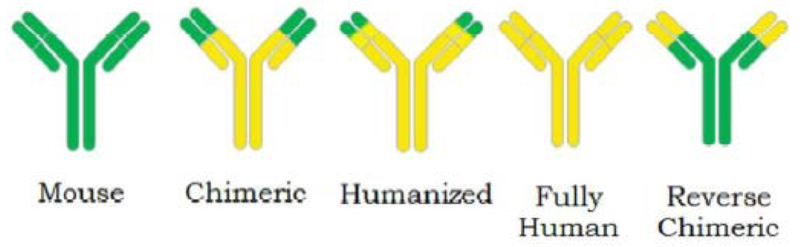
    As explained in the Federal Circuit's opinion, the types of antibody molecules that can be produced in mice using modern immunological and molecular biological techniques ranges from completely murine to completely human, and also include chimeric antibodies (encoded by human constant region genes and mouse variable domain genes) and "reverse" chimeric antibodies (encoded by human variable region genes and mouse constant region genes).  These possibilities are illustrated in the brief by a diagram (where green portions of the antibodies are encoded by mouse genes and yellow portions are encoded by human genes):

    2017-07-27 Figure
    Relevant to the issues before the Court was construction of the proper scope and meaning of the term "comprising in its germline human unrearranged variable region gene segments."  Regeneron argued that this term was limited to inserting only human unrearranged variable regions genes, and thus only reverse chimeric antibodies encoded in the recombinant mouse genome; Regeneron argued its construction was supported by the plain meaning of the term and the '018 patent specification.  Merus, on the other hand, argued that the word "comprising" in the claim made the proper construction broader than just insertion of human unrearranged variable region gene segments, but also encompassed humanized, fully human, and reverse chimeric antibody embodiments.  The District Court adopted Merus' construction, and the Federal Circuit agreed.

    This leads to the first lesson from the case:  with regard to the "but-for" materiality prong of the Therasense test, the issue arises whether the standard of claim construction used by the Examiner, broadest reasonable interpretation or BRI, is sufficient to prevent the district court from applying its own claim construction, consistent with Phillips v. AWH Corp., 415 F.3d 1303 (Fed. Cir. 2005) (en banc), to arrive at a different conclusion.  Here, whether the withheld references were "but-for" material depended on whether the interpretation of the phrase "comprising [human variable chain immunoglobulin genes]" was at least as broad before the U.S. Patent and Trademark Office as it was before the District Court.  (It is an unstated assumption that it should be, because the possibility that an applicant can amend the claims under the BRI test should make this the broadest construction.)  If, as Regeneron contended, the claim language precluded embodiments wherein all or part of the human constant region genes were included, then the materiality of the undisclosed references may not have been as apparent to Regeneron or the Examiner as it was to the District Court and a majority of the Federal Circuit panel.  This raises a serious issue of whether a district court must (or at least should) be bound by evidence of the context of prosecution to determine whether the Examiner would have considered an uncited reference to satisfy the but-for materiality test (which reasonably should be the standard for whether an applicant or applicant's counsel withheld material references during prosecution).  Under the Federal Circuit's Regeneron opinion the answer is no; this suggests that a patent prosecutor has two options for prudent practice:  either make explicit (even if only by repeating any claim construction assertions made by the Examiner) what the claims terms mean (contemporary practice avoids anything so potentially limiting) or expanding the scope of disclosure beyond either the applicant's or the Examiner's understanding to preclude any interpretation from being broader that the one before the Examiner.

    Turning to the references, it was undisputed that during prosecution of the '018 patent, four references were known to Regeneron and its counsel that were not cited to the U.S. Patent and Trademark Office.  These references are:

    1.  Marianne Brüggemann & Michael S. Neuberger, "Strategies for Expressing Human Antibody Repertoires in Transgenic Mice," 17(8) Review Immunology Today 391 (1996) ("Brüggemann");

    2.  Shinsuke Taki et al., "Targeted Insertion of a Variable Region Gene into the Immunoglobulin Heavy Chain Locus," 262 Science 1268 (1993) ("Taki");

    3.  Yong–Rui Zou et al, "Cre-lox P-mediated Gene Replacement: A Mouse Strain Producing Humanized Antibodies," 4(12) Current Biology 1099 (1994) ("Zou"); and

    4.  WIPO Patent Publication No. WO 91/00906 entitled "Chimeric and Transgenic Animals Capable of Producing Human Antibodies," credited to Clive Wood et al. ("Wood").

    These references were cited by a third party during prosecution of a related application after Regeneron received a Notice of Allowance for the '018 patent.  Regeneron did not submit these references to the Office in the application that was granted as the '018 patent but did cite these references in all other pending related applications.

    This leads to the second lesson:  cite everything, particularly references that are genuinely unknown to anyone under a Rule 56 duty, and when that art becomes known before allowed patent claims are permitted to issue.  Any such reference will need to be cited, as Regeneron did, in all further related applications, and compliance with the duty of candor in those cases can be used (as it was here) as evidence supporting the materiality of the references.  (These actions can also be used to support an inference of an intent to deceive; the District Court's application of an adverse inference, infra, prevented its decision from being an issue on appeal.)

    The District Court made the following findings of fact regarding the uncited references:

    • Brüggemann was a review article that suggested replacing mouse Ig genes with human Ig genes in the mouse Ig locus.  This specific "swapping" of the mouse and human genes would be an improvement over random integration (this was an argument Regeneron had made in support of its own invention).  Regeneron's basis for distinguishing this reference was that it does not teach reverse chimeric antibodies, but the District Court's claim construction vitiated whatever force that argument may have had (or the significance of that argument on the materiality of the reference).

    • The Wood reference (according to the District Court) also disclosed Ig locus targeting, based on expert testimony.  The materiality of this reference was also based on its teaching that the constant region can be exogenous or endogenous, and thus encompasses insertion into the mouse Ig locus.

    • The Taki reference disclosed insertion of variable region genes from one mouse into another mouse, but the District Court found the relevant consideration to be targeting exogenous Ig genes into an endogenous mouse Ig locus, not the mouse-human distinction.  However, neither the District Court nor the Federal Circuit addressed the distinction with the '018 patent claims that Taki discloses introduction of rearranged variable region genes and the '018 patent claims introduction of unrearranged human variable region genes.

    • The Zou reference disclosed modifying mouse constant region not variable region genes; but here again, the District Court found the salient disclosure was targeting exogenous Ig genes into the mouse Ig locus.

    Although neither the District Court nor the Federal Circuit found these references, alone or in combination, satisfied the requirements in the statute for invalidating the '018 patent claims (a fact noted in Judge Newman's dissent), the District Court found that these references were "but for" material and this satisfied the first prong of the Therasense test for finding inequitable conduct.

    The District Court also found that these references were not cumulative over the cited prior art, in particular U.S. Patent No. 6,114,598 to Kucherlapati, and a reference to Lonberg that had been overcome during prosecution of the '018 patent.  Regeneron argued that the Brüggemann reference was cumulative over Kucherlapati; the Wood reference was cumulative over Lonberg; and the Taki reference was cumulative over the combination of Kucherlapati and Lonberg.  Specifically, Regeneron argued that Kucherlapati taught substitution of an exogenous ("xenogeneic") locus at an endogenous target locus in the mouse genome, and that Lonberg taught a "knockout plus transgene" model, where the human antibody-encoding sequences are randomly inserted and the endogenous mouse Ig genes are disabled.  The District Court distinguished the Kucherlapati reference from the Brüggemann reference by finding that Kucherlapati taught wholesale replacement of exogenous Ig for the endogenous mouse Ig locus, and that such a replacement included mouse regulatory sequences whose removal could interfere with normal B-cell development and antibody production.  With regard to the Lonberg reference, the District Court found that the Wood reference taught targeted insertion (as recited in the '018 patent claims) while Lonberg taught insertion at random sites in the mouse genome.  And the District Court found that the combination of Kucherlapati and Lonberg was not cumulative to the Taki reference because Taki taught targeted insertion and neither Kucherlapati nor Lonberg have these teachings.

    This is the third lesson:  there is no way to apprehend the decisions a district court judge may make regarding whether uncited references are cumulative.  A Defendant's expert will likely be the vehicle for introducing such evidence, which is directed to questions of fact, and the District Court will be entitled to deference regarding not only the ultimate decision but also the credibility of contending expert witnesses.  Thus, the only prudent course is to consider all references not to be cumulative unless they are different versions of the same reference (for example, a PCT/WIPO published application and its counterpart EPO publication of the same application).

    With regard to the second prong of the Therasense test, intent to deceive, the Federal Circuit found (and the Supreme Court will not disturb) the District Court's drawing of an adverse inference based on the litigation misconduct catalogued by the District Court in its opinion was not an abuse of discretion.  The panel majority's decision was supported by Regeneron's failure to "meaningfully dispute[d] any of the factual findings underlying the district court's decision," which included improperly withholding and citing on privilege logs documents clearly not privileged (such as experimental data); withholding as privileged information where the privilege had been waived; and withholding evidence of patent prosecution counsels' reasoning and state of mind relevant to whether counsel had an intent to deceive.  The latter included, inter alia, the following cited in the Court's opinion:

    • "I firmly believed—and still believe today— that Brüggemann, Taki, Zou and Wood were not material to patentability because they were substantially different from the mice claimed in the '176 application . . . and were cumulative of other information before the Patent Examiner."

    • Counsel's description of his understanding of what a materiality analysis for inequitable conduct involves:  "Regardless of whether I satisfied the minimum requirements of being an ordinary skilled artisan, I felt comfortable evaluating the art from that perspective during the prosecution of the '176 application.  When I did have questions, however, I did not hesitate to reach out to those with more experience and knowledge."

    • "I routinely made Regeneron inventors aware of the foregoing obligations when providing them with invention declarations."

    • With regard to Brüggemann and Zou, "I was generally familiar with the subject matter of those two references . . . [a]t no time did I consider these references to be material to patentability to the claims pending in the '176."

    • "Because of this experience [prosecuting the '176 application as well as the '287 Patent], I was readily familiar with both prior art that was before the Examiner in the '176 application and the pending claims of the '176 application."

    • "I viewed the analysis [relating to the Withheld References] as straightforward."

    • "I concluded that [the Withheld References], alone or combined with other prior art of which I was aware, were cumulative of information already before the Examiner.  Furthermore, it was my view that the skilled artisan would not have viewed them as teaching the reverse chimeric inventions that the Examiner had allowed in the '176 application."

    The tragedy for the patent prosecutors in this case is that this evidence, not considered by the District Court, is the kind of evidence those prosecutors had a firm basis for believing they would be able to present at trial, and that it provided powerful, exculpatory evidence regarding their subjective intent at the time they made the decision not to submit the references.  Thus, the fourth lesson:  a patent prosecutor cannot have any reasonable basis for believing that they will have an absolute right, protected by due process, to present the evidence of their actual intent as a defense to an inequitable conduct charge.  The extent to which the purported litigation misconduct deserved the sanction of an adverse inference is not the issue; what is important it that whether a patent prosecutor is exposed to an inequitable conduct determination can be, under the precedent established in this case, totally devoid of any deceptive intent on their part, no matter what evidence the prosecutor may have that would excuse a failure to disclose material prior art.

    The Supreme Court's decision leaves a "split" between this decision and the pre-Therasense case, Aptix Corp. v. Quickturn Design Systems, Inc., 269 F.3d 1369 (Fed. Cir. 2001), cited by Judge Newman in her dissent.  In that case, according to Judge Newman, "[e]ssentially, we held that courts may not punish a party's postprosecution misconduct by declaring the patent unenforceable" and cited multiple cases applying the principle that litigation misconduct can bar a litigant but does not render a patent unenforceable.  Yet that is what happened here, and thus any comfort Therasense may have given the patent bar regarding the need for evidence, inferential or otherwise, of a patent prosecutor's intent to deceive is greatly diminished by this decision.

    Finally, because intent to deceive is personal (insofar as it applies only to those individuals who have a Rule 56 duty to disclose), it seems inequitable to draw such an inference against the attorneys who prosecuted the '018 patent based on the conduct (bad or just misunderstood) of litigation counsel who did not have a Rule 56 duty of candor and were not involved in prosecuting the '018 patent to allowance.  Inequitable conduct based on a practitioner's intent to deceive is a serious allegation having deleterious consequences to a patent prosecutor's reputation and can also have as negative repercussions an ethics inquiry by the PTO's disciplinary officials.  Accordingly, it is not unreasonable for patent prosecutors to be placed in such jeopardy solely due to their own mis- or malfeasance rather than to be at the whim of conduct by litigation counsel taken for strategic reasons at trial (as the District Court's decision and Federal Circuit opinion alleged here) that are found to be subject to sanction.  The decision also perhaps raises questions of whether improperly rendering a patent unenforceable for inequitable conduct by a misapplication of the Therasense standard may amount to a 14th Amendment violation for taking property rights without due process.  These issues were not enough for the Court to consider them worthy of its review, and thus remain.

  • MBHB Logo 2McDonnell Boehnen Hulbert & Berghoff LLP and Patent Docs will be hosting a CLE program on Biopharma Patent Law from 9:30 am to 1:00 pm on October 24, 2018 at the Boston Marriott Cambridge in Cambridge, MA.  MBHB attorneys and Patent Docs authors Kevin Noonan and Donald Zuhn, and MBHB attorneys Josh Rich, Lisa Hillman, Sarah Fendrick, John Conour, and Nate Chongsiriwatana will provide presentations on the following topics:

    • Updates on Subject Matter Eligibility Analysis
    • Patenting Repurposed Drugs
    • Antibody Patenting after Amgen v. Sanofi
    • The State of Biotech Patenting: Challenges
    • Maximizing Patent Term for Products Subject to Regulatory Review
    • Impact of Secondary Patents on Market Exclusivity
    • Strategies for Post-Grant Proceedings for Generics and Biosimilars

    There is no registration fee for the program.  However, because space is limited, those interested in attending the program must register by contacting Susan Hall at hall@mbhb.com.

  • CalendarOctober 9, 2018 – "Avoiding and Utilizing Prosecution History Traps: Litigation, Prosecution, and Due Diligence" (Intellectual Property Owners Association) – 2:00 to 3:00 pm (ET)

    October 9, 2018 – "Leveraging a Harmonized Patent Classification System" (U.S. Patent and Trademark Office) – 12:00 to 1:00 pm (ET) on 

    October 11, 2018 – "Patent Term Adjustments and Extensions: Leveraging Recent Decisions and USPTO Rule Changes" (Strafford) – 1:00 to 2:30 pm (EDT)

    October 12, 2018 – "Standard Essential Patents: What Every IP Attorney and In-house Counsel Should Know" (John Marshall Law School Center for Intellectual Property, Information & Privacy Law) – 9:00 am to 4:30 pm, Chicago, IL

    October 16, 2018 – "Negotiating IP Rights in Industry Sponsored Research Agreements — Structuring Ownership, Licensing, Assignment, Confidentiality, Publication and Use Provisions" (Strafford) – 1:00 to 2:30 pm (EDT)

    October 16, 2018 – "Patenting Machine Learning and AI Innovations: Strengthen Your Claims to Avoid Rejection" (Technology Transfer Tactics) – 1:00 to 2:00 pm (ET)

    October 16-18, 2018 – PCT Seminar (Oppedahl Patent Law Firm LLC) – Redwood City, CA

    October 23, 2018 – "The State of 'Printed Publication' Prior Art Case Law: Practical Considerations for Patent Holders and Patent Challengers" (Strafford) – 1:00 to 2:30 pm (EDT)

    October 24, 2018 – Biopharma Patent Law (McDonnell Boehnen Hulbert & Berghoff LLP and Patent Docs) – 9:30 am to 1:00 pm, Cambridge, MA

    October 24, 2018 – "Preparing 'Diagnose & Treat' Patent Claims to be Valid and Enforceable" (Technology Transfer Tactics) – 1:00 to 2:00 pm (ET)

    October 24, 2018 – "How to Analyze Federal Circuit Opinions on Patent Law" (LexisNexis) – 3:30 to 4:30 pm (ET), Washington, DC

    October 24, 2018 – "Crisis Management for IP Lawyers & Their Clients — Trade Secrets and Reputation Risk Management" (Intellectual Property Law Association of Chicago Trade Secret and Unfair Competition Committee) – 3:00 to 4:00 pm (CT), Chicago, IL

  • IPO #2The Intellectual Property Owners Association (IPO) will offer a one-hour webinar entitled "Avoiding and Utilizing Prosecution History Traps: Litigation, Prosecution, and Due Diligence" on October 9, 2018 from 2:00 to 3:00 pm (ET).  Bryan Diner of Finnegan, Henderson, Farabow, Garrett & Dunner, LLP; Brian Nolan of Mayer Brown LLP; and James Trainor of Fenwick & West LLP will look at the nature of legal traps that can lurk in prosecution history, caused both by disclaimers and amendments, and how they can snare defendants or plaintiffs in infringement litigation.  The panel will provide tips for patent prosecutors on how to try to avoid leaving damaging history — and for transactional lawyers on how to spot problems during due diligence that could turn the patent into a lemon for a purchaser.

    The registration fee for the webinar is $135 (government and academic rates are available upon request).  Those interested in registering for the webinar can do so here.

  • USPTO SealThe U.S. Patent and Trademark Office will be offering the next webinar in its Patent Quality Chat webinar series from 12:00 to 1:00 pm (ET) on October 9, 2018.  In the latest webinar, entitled "Leveraging a Harmonized Patent Classification System," Christopher Kim, Director of Classification Quality and International Coordination Division, Office of International Patent Cooperation (OIPC), and Acting Director of Classification Standards and Development Division, OIPC; and Justin Krause, International Patent Classifier Classification Quality and International Coordination Division, OIPC, will discuss how the USPTO's Office of International Patent Cooperation contributes to the development of the Cooperative Patent Classification (CPC) system and other international classification harmonization efforts, and how patent offices benefit from extensive searching capabilities while external users see improved searching and patenting activity analysis.

    Additional information regarding this webinar, including instructions for viewing the webinar, can be found here.

  • LexisNexisLexisNexis will be offering a CLE event on "How to Analyze Federal Circuit Opinions on Patent Law" on October 24, 2018 from 3:30 to 4:30 pm (ET) at The National Press Club in Washington, DC.  Donald Chisum, the author of Chisum on Patents, will discuss how to analyze the opinions of the Court of Appeals for the Federal Circuit to assess their impact on patent law and practice, and will illustrate how to "deconstruct" sometimes opaque opinions using recent cases from 2018 as examples.  Cases that will be covered include:

    • Monsanto v. DuPont: opinion by Judge Wallach on inherent anticipation and giving claims their "broadest reasonable interpretation" in the PTO
    Texas Advanced v. Renease: opinion by Judge Taranto on extraterritorial sales, the intersection between patents and trade secret protection, and the jury trial right
    Vanda Pharms.: opinion by Judge Lourie on Section 101 eligibility and active inducement

    Those interested in registering for the CLE, can do so here.

  • Technology Transfer Tactics will be offering a webinar entitled "Patenting Machine Learning and AI Innovations: Strengthen Your Claims to Avoid Rejection" on October 16, 2018 from 1:00 to 2:00 pm (ET).  Gregory Rabin of Schwegman, Lundberg & Woessner will address the following topics:

    • Definition of machine learning and types of machine learning
    • Drafting claims for machine learning technology (simple non-real-life example)
    • Real-life example that overcame a patentable subject matter (35 U.S.C. § 101) rejection
    • Patent Office Art Units for machine learning inventions
    Berkheimer v. HP and its departure from Alice
    • Patent Office Berkheimer Memorandum — defining "well-understood, routine, conventional activity"
    • Suggestions for improving invention disclosures and claims

    The registration fee for the webinar is $197.  Those interested in registering for the webinar, can do so here.

    Technology Transfer Tactics

  • By Donald Zuhn

    USPTO SealOn Monday, the U.S. Patent and Trademark Office announced the implementation of a new authentication method for signing into the EFS-Web and Private PAIR.  According to the Office, the new method is safer and simpler, grants access to multiple USPTO systems with one consolidated sign-in, and eliminates the need to share credentials by providing practitioners and their support staff with their own USPTO.gov accounts.  The new method also helps to resolve browser compatibility issues, and will provide users with access to the EFS-Web and Private PAIR until the full release of Patent Center, which is scheduled to replace the EFS-Web and Private PAIR, in 2020.

    The Office also announced the release of a migration tool, which allows existing PKI digital certificate holders to link their USPTO.gov accounts to their current PKI digital certificates.  To migrate an existing PKI digital certificate, users must have a USPTO.gov account.  Users who need to create a USPTO.gov account can do so by following the steps under the "Create a USPTO.gov Account" tab at the Office's authentication change webpage.  Once a USPTO.gov account has been created, users can follow the steps under the "Migrate your PKI Certificate" tab at the Office's authentication change webpage (or refer to the Guide for Migration) to link that account to their PKI certificate.  The Office notes that users should allow 1–2 business days after the migration steps are finished for the migration process to be completed.  Once the process is completed, users will be able to sign into the EFS-Web or Private PAIR using their USPTO.gov account.  Users should use the following new links to sign into the EFS-Web or Private PAIR using their USPRTO.gov accounts:

    EFS-Web:
    https://efs-my.uspto.gov/EFSWebUIRegistered/EFSWebRegistered

    Private PAIR:
    https://ppair-my.uspto.gov/pair/PrivatePair

    Additional information regarding the new authentication process can be found in the Office's Patent Electronic System Access Document.  This resource includes information about USPTO.gov accounts; two-step authentication; signing in and signing out from USPTO systems; Patent Electronic Access roles for practitioners, support staff, and inventors; suspension of accounts; authorization; authentication steps; the sponsorship process (by which practitioners can grant or remove sponsorship for support staff individuals to work under their direction and control); and the Office's verification policy and identity proofing of sponsored support staff.  With respect to identity proofing, the Office notes that "[e]ach practitioner will be responsible for verifying the identity of the person using any sponsored support Staff account."

    Practitioners are cautioned that migration to link USPTO.gov accounts to PKI certificates should be completed by the end of October, sponsorship of support staff should be completed by the end of November, and that PKI certificates are scheduled to be retired in December.  The Office notes that the Sponsorship Tool will not be available until November, so support staff should continue to sign into the EFS-Web and Private PAIR using PKI certificates until November.

    Users requiting assistance to create a USPTO.gov account should call the USPTO Contact Center (UCC) at 800-786-9199.  Users requiring assistance with migration should contact the Patent Electronic Business Center at ebc@uspto.gov or 866-217-9197.  The Office will also be offering several informational sessions on authentication changes; a schedule of upcoming sessions can be found at the "Information sessions" tab at the Office's authentication change webpage.  A list of Frequently Asked Questions (FAQs) about the authentication change for EFS-Web and Private PAIR can be found here.