• IPO #2The Intellectual Property Owners Association (IPO) will offer a one-hour webinar entitled "2023 Case Law Year in Review," on January 17, 2024 from 1:00 pm to 2:00 pm (ET).  Paul Berghoff of McDonnell Boehnen Hulbert & Berghoff LLP, Gregory Castanias of Jones Day, and Wendy Larson of Pirkey Barber will attempt to distill down the past year's major decisions from the Supreme Court, Federal Circuit, PTAB, and TTAB, and discuss the ones that will affect IP practitioners in 2024 and beyond.

    The registration fee for the webinar is $150 for non-members or free for IPO members (government and academic rates are available upon request).  Those interested in attending the webinar should register here.

  • Schwegman Lundberg WoessnerSchwegman Lundberg & Woessner will be offering a SLW Institute webinar entitled "Top 5 Changes in Chinese Patent Practice Based on the Amended Implementing Regulations of the Patent Law" on January 18, 2024 at 1:00 pm (CT).  Aaron Wininger of Schwegman Lundberg & Woessner will discuss the long-awaited amended Implementing Regulations of the Patent Law released by China's State Council in December 2023 that will take effect on January 20, 2024, and discuss the changes that have been made and how they will impact Chinese patent practice going forward.

    While there is no cost to participate in the program, those interested in attending the webinar can register here.

  • By Kevin E. Noonan –
    USPTO SealOn January 10th, the U.S. Patent and Trademark Office published a Notice in the Federal Register (89 Fed. Reg. 1563) regarding proposed Guidance on how the Office will apply the enablement requirement under 35 U.S.C. § 112(a) in light of the Supreme Court's decision last year in Amgen v. Sanofi.  In a nutshell, the Office announced that it will do so by continuing to use the rubrics established by the Federal Circuit in In re Wands.

    The Notice sets forth the Office's understanding of the Supreme Court's decision and its substantial adherence to existing law, particularly Wands.  But the Office is also cognizant (as the past 15-20 years has illustrated) that Supreme Court precedent is certainly (if not the only) the most relevant source of interpretation on how the patent statute should be understood and applied.  The Notice cites O'Reilly v. Morse, 56 U.S. 62 (1854); The Incandescent Lamp Patent, 159 U.S. 465 (1895); and Holland Furniture Co. v. Perkins Glue Co., 277 U.S. 245 (1928), in this regard.  The Office also recognizes more recent Federal Circuit precedent, including McRO, Inc. v. Bandai Namco Games Am. Inc., 959 F.3d 1091 (Fed. Cir. 2020); Wyeth & Cordis Corp. v. Abbott Laboratories, 720 F.3d 1380 (Fed. Cir. 2013); Enzo Life Sciences, Inc. v. Roche Molecular Systems, Inc., 928 F.3d 1340 (Fed. Cir. 2019); and Idenix Pharmaceuticals LLC v. Gilead Sciences Inc., 941 F.3d 1149 (Fed. Cir. 2019), and the Supreme Court's holding in Amgen, based on Wood v. Underhill, 46 U.S. 1 (1846), and Minerals Separation, Ltd. v. Hyde, 242 U.S. 261 (1916), that a "specification is not necessarily inadequate just because it leaves the skilled artisan to perform some measure of adaptation or testing."

    This is where the Wands factors come into play, in providing the framework for determining the "reasonableness of experimentation."  The Notice acknowledges that the Court did not expressly address or rely on the Wands factors but finds support for their continued analytical vitality in the Court's emphasis that "the specification may call for a reasonable amount of experimentation to make and use the full scope of the claimed invention," the Wands factors being probative thereof.  The Notice cites post-Amgen decisions, specifically Baxalta Inc. v. Genentech Inc., 2023 U.S. App. LEXIS 24863 (Fed. Cir. 2023); Medytox, Inc. v. Galderma S.A., 71 F.4th 990 (Fed. Cir. 2023); and In re Starrett, 2023 WL 3881360 (Fed. Cir. 2023) (non-precedential), for reference to or reliance upon Wands.  Returning to the Federal Circuit's decision in Amgen (affirmed by the Supreme Court), the Notice cites the determination in that decision that "the scope of the claims was far broader in functional diversity than the disclosed examples, that the invention was in an unpredictable field of science with respect to satisfying the full scope of the functional limitations, and that there was not adequate guidance in the specification," all of which considerations track with the Wands factors.  Similar assessments are provided for the Baxalta (district court litigation), Medytox (PTAB decision in a PGR proceeding, and Starrett (PTAB decision in an ex parte appeal) Federal Circuit decisions.

    The Notice and proposed Guidance falls within the statutory interpretive protocol wherein the Supreme Court provides broad interpretation of the limits the statute imposes on what is patentable, the Federal Circuit applies those standards to individual cases cabined by their particular facts, and the Office, as an administrative agency, applies both layers of precedential interpretation in examining patent applications for compliance with the statutory standards as enacted by Congress and interpreted by the courts.  The Notice particularly specifies that it will apply the Wands factors "to ascertain whether the experimentation required to enable the full scope of the claimed invention is reasonable" "regardless of technology" under M.P.E.P § 2164.04.

    The Notice contains contact information for Office personnel from whom additional information can be obtained: Mary C. Till, Senior Legal Advisor, Office of Patent Legal Administration, at Mary.Till@uspto.gov or 571–272–7755; or Andrea S. Grossman, Legal Advisor, Office of Patent Legal Administration, at Andrea.Grossman@uspto.gov or 571–270–3314.

  • By Kevin E. Noonan –

    Federal Circuit SealOne of the many changes introduced into U.S. patent law by the Leahy-Smith America Invents Act were provisions for post-grant review (PGR) and inter partes review (IPR).  There have been thousands of these proceedings instituted since their enactment into law, and the contours of how the Patent Trial and Appeal Board (PTAB) have executed these statutory provisions have been the subject of several Supreme Court decisions (see "Thryv, Inc. v. Click-to-Call Technologies, LP (2020)"; "Return Mail, Inc. v. United States Postal Service (2019)"; "Oil States Energy Services, LLC. v. Greene's Energy Group, LLC (2018)"; "SAS Institute Inc. v. Iancu (2018)"; "Cuozzo Speed Technologies LLC v. Lee (2016)").  Remarkably, however, there has never been a Federal Circuit decision addressing the status of either proceeding should the PTAB fail to satisfy the one-year limitation on the Board for issuing a Final Written Decision (FWD) (subject for good cause to a six-month extension), but that changed with the Court's decision in Purdue Pharma L.P. v. Collegium Pharmaceutical, Inc.

    The case arose in a post-grant review proceeding over Purdue's U.S. Patent No. 9,693,961, which is directed to opioid formulations modified to "prevent or deter" abuse (a tactic pursued by Purdue in part to expiate any responsibility that could be attributed to the company for the escalating opioid addiction crisis over the past decade or so; see, e.g., Keefe, Empire of Pain: The Secret History of the Sackler Dynasty).  The Patent Trial and Appeal Board in its Final Written Decision found all claims (1-17) invalid for lack of an adequate written description and anticipation.  Claim 1 is representative:

    A method of preparing an abuse deterrent controlled release dosage form comprising:
        combining oxycodone or a pharmaceutically acceptable salt thereof as active agent, polyglycolyzed glycerides, a C12 to C40 fatty acid or a mixture thereof, carnauba wax and beeswax, to form a homogenous mixture, wherein the oxycodone or pharmaceutically acceptable salt thereof is the sole active agent in the dosage form;
        preparing particles from the homogenous mixture; and containing the particles in a capsule;
        the abuse deterrent dosage form providing a therapeutic effect for about 12 hours or longer when orally administered to a human patient, and
        the abuse deterrent dosage form being abuse deterrent when subjected to tampering comprising heating at a temperature greater than about 45° C.

    The PGR was filed after Purdue filed suit against Collegium in District Court for infringement.

    Purdue argued before the PTAB that the '961 patent was not subject to PGR proceedings because it claimed priority to an earlier application having a filing date of August 6, 2001, but the Board rejected this challenge to its statutory authority when it held that the earlier-filed application did not support the priority claim for failure to satisfy the written description requirement of 35 U.S.C. § 112(a) and that the earliest effective filing date was after March 16, 2013 (making the patent subject to PGR scrutiny).  Both the PGR and district court litigation were stayed when Purdue filed for bankruptcy on September 24, 2019.  These stays were lifted by the bankruptcy court on September 1, 2020.  Even though the Chief Patent Judge had found good cause to extend by six months the statutory one-year deadline for the Board to render a Final Written Decision (until April 4, 2020), the Board did not render its FWD until November 19, 2021.

    Based on this timeline, Purdue moved the Board to terminate the PGR on the grounds that the Board's statutory authority had lapsed under 35 U.S.C. § 326(a)(11) and 37 C.F.R. § 42.200(c).  The Board rejected this motion and issued the FWD, finding all '961 claims invalid.  This appeal followed.

    The Federal Circuit affirmed the Board's FWD, in an opinion by Judge Dyk joined by Judges Hughes and Stoll.  The opinion notes that this is the first instance in which the Board has not issued a FWD by the statutory or extended deadlines, making this a case of first impression for the Court.  The opinion cites voluminous Supreme Court opinions, including United States v. James Daniel Good Real Prop., 510 U.S. 43, 63 (1993); Nielsen v. Preap, 139 S. Ct. 954, 967 (2019); Dolan v. United States, 560 U.S. 605, 611 (2010); Barnhart v. Peabody Coal Co., 537 U.S. 149, 159 (2003); Regions Hosp. v. Shalala, 522 U.S. 448, 459 n.3 (1998); and United States v. Montalvo-Murillo, 495 U.S. 711, 717 (1990), for the principle that "if a statute does not specify a consequence for non-compliance with statutory timing provisions, the federal courts will not in the ordinary course impose their own coercive sanction."  In particular, the Court cited the Federal Circuit's own precedent that "when a statute does not specify the consequences of non-compliance, courts should not assume that Congress intended that the agency lose its power to act," citing Hitachi Home Elecs. (Am.), Inc. v. United States, 661 F.3d 1343, 1347 (Fed. Cir. 2011) (quoting Liesegang v. Sec'y of Veterans Affs., 312 F.3d 1368, 1376– 77 (Fed. Cir. 2002)) and Transpacific Steel LLC v. United States, 4 F.4th 1306, 1320–21 (Fed. Cir. 2021).  Here the Court used this precedent and the absence of statutory direction supporting Purdue to affirm the PTAB's decision that its lack of timeliness was not sufficient basis to remove its power to issue even a tardy FWD.

    The opinion specifically addresses Purdue's arguments to the contrary, for example the express use of the term "shall" in the relevant timing statutes.  This argument is contrary to the Supreme Court's decision in Brock v. Pierce Cnty., 476 U.S. 253, 266 (1986), however which was sufficient to uphold the Board's invalidity arguments.  Similarly, the panel rejected Purdue's reliance on the use of "negative words" such as "not later than" and "by not more than" under other Supreme Court precedent (specifically, French v. Edwards, 80 U.S. 506 (1871)) because that case did not involve a statutory deadline and later Supreme Court cases did not support the principle.  Another unsuccessful argument advanced by Purdue was based on the purported express tying of the statutory time limitation with the Board's statutory authority under Section 6, the interpretation of which the Federal Circuit held could be upheld under Supreme Court precedent only when Congress had clearly stated that "procedural rules, including time bars, cabin a court's power," citing United States v. Wong, 575 U.S. 402, 409 (2015) (quoting Sebelius v. Auburn Reg'l Med. Ctr., 568 U.S. 145, 153 (2013)).  The panel also rejected Purdue's argument that limitations in the statute relating to "good cause" and "joinder" circumstances evinced the required Congressional intent, particularly in view of the Court's Barnhart decision, wherein "enunciation of two exceptions does not imply an exclusion of a third."  Finally, portions of the Leahy-Smith America Invents Act which do bar the Office from acting after a time period expires use "quite different language" including Section 315(b) (that an IPR "may not be instituted" after the 1-year time bar); and Section 321(c) (wherein a PGR petition "may only be filed" not later than 9 months after patent grant).  According to the panel, these instances established that "[h]ad Congress meant to deprive the agency of power in section 326(a)(11), it knew how to do it" and had not.

    Likewise the Federal Circuit did not find any support in the legislative history of the AIA to support Purdue's assertion that the Board lost its authority to issue a FWD after the statutory time period had expired.  The panel understood the purposes for the amendments to the statute to substitute PGRs and IPRs for inter partes reexamination was to make the post-grant review process more efficient, and stripping the PTAB of the capacity to render a FWD after undertaking the proceedings merely due to missing the statutory time proscriptions was not consistent with increasing efficiency of post-grant reviews.  And the Court further rejected Purdue's arguments that its decision would leave post-grant review proceedings just as open-ended as the inter partes reexaminations Congress intended that they replace; this is inaccurate according to the opinion because the Board "cannot ignore statutory deadlines," and the proper remedy under the circumstances faced by Purdue was mandamus, citing Norton v. Southern Utah Wilderness All., 542 U.S. 55, 65 (2004); Telecommunications Rsch. & Action Ctr. v. F.C.C., 750 F.2d 70, 76 (D.C. Cir. 1984); and Mylan Lab'ys Ltd. v. Janssen Pharmaceutica, N.V., 989 F.3d 1375, 1380–81 (Fed. Cir. 2021) (quoting Int'l Union, United Mine Workers of Am. v. U.S. Dep’t of Lab., 358 F.3d 40, 43 (D.C. Cir. 2004)).  Accordingly, the Court asserted that:

    Here, Purdue had an available mandamus remedy and simply chose not to seek to compel an earlier decision from the Board. Failure to seek relief by mandamus does not, however, mean a loss of the Board's authority to act.

    (Albeit merely in a footnote, the opinion asserts that the panel did not "reach the question of whether the bankruptcy automatic stay applies to PGRs" because "[t]his would require interpretation of the Bankruptcy Code" and the relevant provisions thereof seem not applicable to IPR or PGR proceedings.)

    Turning to the merits of the PTAB's FWD, the court upheld the Board's determination that the claims lacked adequate written description support.  Specifically the panel held that "the specification makes clear that the claims require 'inclusion of at least one aversive agent' and the parties agree that the claims require the use of an aversive agent," and provides "long lists" of such agents ("a bittering agent, an irritant, a gelling agent, or combinations thereof").  Applying the syllogism that "some surfactants can be gelling agents and that gelling agents can satisfy the aversive agent requirement, [but that] not all surfactants [such as the claimed polyglycolyzed glycerides] are gelling agents," the specification's written description failure was that it did not disclose which of the claimed polyglycolyzed glycerides are gelling agents.  Indeed, the opinion states that polyglycolyzed glycerides are described in the specification as surfactants, not gelling agents and that "surfactants can be used completely separate from and in addition to the gelling agent."  Thus, according to the opinion "[t]he disclosure of the application [both the '961 patent and the earlier-filed provisional application] does not reasonably convey to those skilled in the art that the inventor had possession of the claimed drug formula containing PGGs as a gelling agent (aversive agent)" as properly determined by the PTAB in invalidating all claims of the '961 patent.

    Purdue Pharma L.P. v. Collegium Pharmaceutical, Inc. (Fed. Cir. 2023)
    Panel: Circuit Judges Dyk, Hughes, and Stoll
    Opinion by Circuit Judge Dyk

  • By Kevin E. Noonan –

    Federal Circuit SealNot surprisingly, the Federal Circuit visited upon Plaintiff/Appellant PureCircle two of the Four Horsemen of the Biotech Patent Apocalypse* in a decision affirming the District Court's invalidation of the claims asserted against Defendant SweeGen in PureCircle USA Inc. v. SweeGen, Inc.

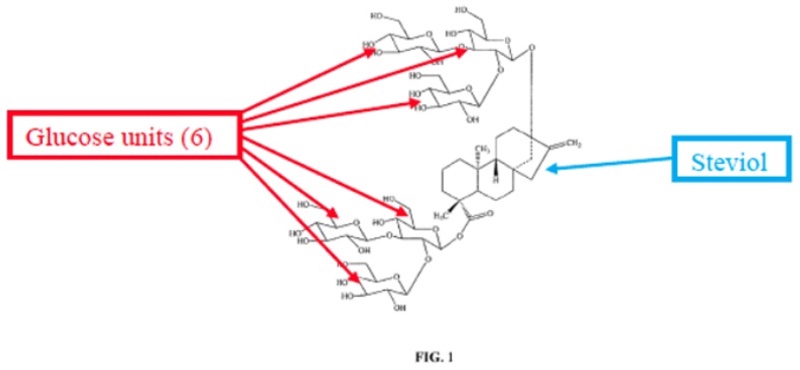
    To recap, PureCircle sued SweeGen for infringing U.S. Patent Nos. 9,243,273 (claims 1-14) and 10,485,257 (claims 1-7) over methods for making particular glucosylated forms of the natural sweetener steviol obtained from the Stevia rebaudiana plant.  The plant produces a variety of rebaudioside variants having various levels of glycosylation; the most predominant of these in the plant is termed "RebA" but this is not the most commercially valuable form.  That form, termed variably "RebX" and "RebM" contains six glucose residues on the steviol core, illustrated in the opinion by this diagram:

    Image
    Claim 1 of each of the asserted patents are relevant to the decision of both the District Court and the Federal Circuit:

    Claim 1 of the '257 patent:

    A method for adding at least one glucose unit to a steviol glycoside substrate to provide a target steviol glycoside, comprising contacting the steviol glycoside substrate with a recombinant biocatalyst protein enzyme comprising UDP-glucosyltransferase, wherein the target steviol glycoside is Rebaudioside X.

    Claim 1 of the '273 patent:

    A method for making Rebaudioside X comprising a step of converting Rebaudioside D to Rebaudioside X using a UDP-glucosyltransferase, wherein the conversion of Rebaudioside D to Rebaudioside X is at least about 50% complete.

    The District Court granted summary judgment against PureCircle, finding that claims 1-5 of the '257 patent and claims 1-11 and 14 of the '273 patent were invalid for reciting patent-ineligible subject matter under 35 U.S.C. § 101.  According to the Court, the claims were directed to the natural law of converting rebaudiosides, and specifically RebD, into RebM.  In the Court's view, "there is no dispute that the conversion of steviol glycosides and Reb D to Reb M using UGT enzymes is a natural process."  The Court found this characterization to be supported by disclosure in the specification, which was expressed as disclosing a "biocatalytic process," defined as "the use of natural catalysts, such as protein enzymes, to perform chemical transformations on organic compounds" (emphasis added).  The Court relied on Athena Diagnostics, Inc. v. Mayo Collaborative Services, LLC (Fed. Cir. 2019), for the proposition that "[s]ynthetically-created chemical compositions that are structurally and functionally identical to their naturally-occurring counterparts . . . are not patent eligible" and the admission in the specification that the recombinant enzymes were structurally and functionally "identical" to the naturally occurring enzymes.  The District Court rejected the distinction PureCircle attempted to draw for "method of preparation" claims analogous to CellzDirect and expressly with regard to any suggestion that such claims are per se patent eligible, as being inconsistent with precedent particularly the Supreme Court's rationale in Alice v CLS Bank (2014).

    The District Court also found that all asserted claims were invalid for failure to satisfy the written description requirement of 35 U.S.C. § 112(a), based on the parties' stipulation that the UGT enzyme recited for converting steviol glycosides and Reb D to Reb M was defined as "[a] type of enzyme that is capable of transferring a glucose unit from a uridine diphosphate glucose molecule to a steviol glycoside molecule."  From this, the Court held that the enzyme was functionally (as opposed to structurally) defined and thus invalid under Juno Therapeutics, Inc. v. Kite Pharma, Inc., 10 F.4th 1330, 1337 (Fed. Cir. 2021).  Pure Circle appealed.

    The Federal Circuit affirmed, in an opinion by Judge Dyk joined by Judges Schall and Stark.  The opinion first addressed the Section 112(a) grounds for invalidating all claims of the patents, reciting the requirement that, for a genus claim the required written description must disclose "either a representative number of species falling within the scope of the genus or structural features common to the members of the genus so that one of skill in the art can 'visualize or recognize' the members of the genus," the standard first set forth by Judge Lourie in Regents of the Univ. of California v. Eli Lilly & Co., 119 F.3d 1559, 1568–69 (Fed. Cir. 1997).  The panel agreed with the District Court's characterization of the '257 and '273 patent claims as being "genus claims using functional language."  SweeGen argued (echoing Sanofi's similar arguments for the enablement requirement in Amgen v. Sanofi) that the number of UGT enzymes based on the one expressly disclosed enzyme (UGT76G1) that would satisfy the functional definition was "at least one trillion" (using calculations recited in the panel's opinion), noting that there were 733 UGT enzymes known in 2012 from which various permutations of mutations could produce the cited astronomical number.  Accordingly, SweeGen argued, the common '257 and '273 patent specification did not disclose a representative number of species nor did they disclose any common structural feature(s).  Although PureCircle was able to argue that, rather than trillions of species there might be as many as 9,000 this argument was unpersuasive to both the District Court and the Federal Circuit; the Court opined that characterization of 9,000 species comprised "extensive trial and error testing" and the need thereof was contrary to finding that an adequate written description was provided in the specification, citing Novozymes A/S v. DuPont Nutrition Biosciences APS, 723 F.3d 1336, 1346 (Fed. Cir. 2013).  In addition, the Court was unconvinced by PureCircle's argument that the one disclosed UGT enzyme was sufficient to satisfy the written description requirement because it disclosed (purportedly inherently) the active site capable of catalyzing the conversion reaction(s).  The possibility that there may be other (unknown) enzymes capable of catalyzing the conversion reaction(s) and the absence of any express disclosure of the structure of UGT76G1 convinced the Federal Circuit that the situation here was analogous to the broad disclosure of scFv molecules in Juno v. Kite and thus that the written description requirement based on structural features was not satisfied.  And the opinion notes that as in Ariad v. Eli Lilly & Co.:

    Such claims merely recite a description of the problem to be solved while claiming all solutions to it and . . . cover any compound later actually invented and determined to fall within the claim's functional boundaries—leaving it to the pharmaceutical industry to complete an unfinished invention.

    The opinion also cites more recent cases, including AbbVie Deutschland GmbH & Co., KG v. Janssen Biotech, Inc., 759 F.3d 1285, 1300 (Fed. Cir. 2014), and Idenix Pharms. LLC v. Gilead Scis. Inc., 941 F.3d 1149, 1164 (Fed. Cir. 2019), in support of this conclusion.

    The convergence of the District Court's invalidity determinations based on Sections 101 and 112(a) arose in the opinion with regard to claim 14 of the '273 patent, which is limited to the expressly disclosed UGT76G1 species of UGT enzyme.  The Federal Circuit opinion turns in this regard to the Section 101 analysis, affirming the District Court's finding of invalidity for claim 14.  As set forth in the opinion, the Court held that "[t]o the extent that claim 14 claims a 'method for making Rebaudioside X comprising a step of converting Rebaudioside D to Rebaudioside X using a UDPglucosyltransferase' it claims a natural phenomenon," thus satisfying the first step of the Mayo/Alice formula for finding Section 101 invalidity.  In response to PureCircle's argument that the patentable distinction in this claim is that when in purified form the enzyme can achieve conversion of at least 50% of RebD to RebM (which is not achieved in the natural state), the opinion asserts that "[t]he problem with PureCircle's argument is that the 50% completion is itself an abstract idea."  Citing SAP Am., Inc. v. InvestPic, LLC, 898 F.3d 1161, 1167 (Fed Cir. 2018), the Federal Circuit asserts that "claim 14 of the '273 patent 'd[id] not specify how to achieve a particular purity or conversion percentage; rather, [it] only recite[s] the resulting percentages,'" quoting the District Court's opinion.  This portion of the opinion illustrates nicely the rhetorical gymnastics that the entire edifice of subject matter eligibility jurisprudence has created; after all, taken at face value this analysis introduces a requirement that the mechanistic details of how a chemical reaction catalyzed by an enzyme be disclosed, rather than merely demonstrating that the enzyme in the presence of starting compounds can produce the desired product.  Not surprisingly in view of this heretofore unknown requirement, the opinion notes that "PureCircle made no step two Alice/Mayo arguments before us or the district court" and thus affirmed the District Court's finding of invalidity for claim 14.

    The history of the Federal Circuit's explication of the Supreme Court's subject matter eligibility opinions is replete with decisions and rationales that are not for the faint-hearted, wherein methods for producing truck axles, Am. Axle & Mfg., Inc. v. Neapco Holdings LLC, 967 F.3d 1285, 1292 (Fed. Cir. 2020); electric car chargers, ChargePoint v. SemaConnect; garage door openers, Chamberlain Group v. Techtronic Industries; and digital cameras, Yu v. Apple (Fed. Cir. 2021), were considered abstract.  In each case, the temptation to characterize the application of the tortured calculus of subject matter eligibility as having reached its nadir has been tempting, but the capacity for even greater flights of analytical fancy seems to have no limit.  Sadly (for innovation, competitiveness, and the U.S. patent system), we have come very far from the simple rubric that "anything under the sun made by man" as a rational workable, subject matter eligibility standard.

    PureCircle USA Inc. v. SweeGen, Inc. (Fed. Cir. 2024)
    Nonprecedential disposition
    Panel: Circuit Judges Dyk, Schall, and Stark
    Opinion by Circuit Judge Dyk

    * Those four being subject matter eligibility, written description, enablement, and obviousness-type double patenting.

  • By Kevin E. Noonan –

    FDAEarlier this year, the U.S. Food and Drug Administration announced approval of Amgen's Wezlana (ustekinumab-auub) as an interchangeable biosimilar to Janssen Biotech's Stelara (ustekinumab).  The drug was approved for multiple inflammatory disorders:

    Adult patients with:

    • moderate to severe plaque psoriasis who are candidates for phototherapy or systemic therapy;
    • active psoriatic arthritis;
    • moderately to severely active Crohn's disease; and
    • moderately to severely active ulcerative colitis.

    Pediatric patients 6 years of age and older with:

    • moderate to severe plaque psoriasis who are candidates for phototherapy or systemic therapy; and
    • active psoriatic arthritis.

    Wezlana shares with Stelara a risk of increased infection, and has as side effects "nasopharyngitis, upper respiratory tract infection, headache, fatigue, nausea, vomiting, injection site erythema, vulvovaginal candidiasis/mycotic infection, bronchitis, pruritus, urinary tract infection, sinusitis, abdominal pain, influenza, fever and diarrhea."  The biosmilar showed "no clinically meaningful differences from" Stelara and satisfied the requirements for interchangeable status under § 351(k)(2)(B) of the Public Health Service Act (codified in 42 U.S.C. § 262(k)(2)(B)).

    This approval brings to 45 the number of approved biosimilar products of which five are interchangeable.

    Table              * Approved as interchangeable biosimilar

  • Holiday StarsThe authors and contributors of Patent Docs wish their readers and families a Happy Holidays!  It is also our hope that all of our readers, along with their families and friends, have a healthy and safe holiday.


  • By Kevin E. Noonan –

    Federal Circuit SealThe provisions of U.S. regulatory law regarding FDA approval for less than all the indications for which an innovator drug was approved under 21 U.S.C. § 355(j)(2)(A)(viii) (the so-called "skinny label) has in the recent past raised something of a kerfuffle before the Federal Circuit (see "GlaxoSmithKline LLC v. Teva Pharmaceuticals USA (Fed. Cir. 2022)").  In contrast, the patency of skinny label approvals under the patent statute was affirmed by the Federal Circuit in a December 7th decision in H. Lundbeck A/S v. Lupin Ltd.

    The case arose in ANDA litigation in which Lundbeck and assorted plaintiffs asserted U.S. Patent No. 9,278,096, directed to use of the antidepressant vortioxetine (Trintellix®) for treating patients who discontinued or reduced treatment with other antidepressants due to "sexually related adverse effects," and U.S. Patent No. 9,125,910 for treating patients with vortioxetine for cognitive impairment against all defendants, and U.S. Patent No. 9,101,626, directed to methods for making vortioxetine against defendant Lupin.  Takeda is the NDA holder for Trintellix® and the opinion notes that two patents not in suit, U.S. Patent No. 7,144,884 and 8,476,297 (on the drug compound) expire on June 17, 2026 and expired on October 2, 2022, respectively.  In contrast, the patents in suit expire on March 21, 2032 (the '096 patent) and June 15, 2027 (the '910 patent).  Defendants filed "Paragraph III" ANDAs on the '884 and '297 patents, which ANDAs are limited to treatment of major depressive disorder; this indication is not claimed in the '096 or '910 patents-in-suit.

    Claims 1 and 7 of the '096 patent are representative of claims for treating depression without or with reduced adverse sexual side effects with vortioxetine:

    1.  A method for the treatment of a disease selected from the group consisting of depression, anxiety, abuse and chronic pain, comprising the administration of a therapeutically effective amount of [vortioxetine] or a pharmaceutically acceptable salt thereof to a patient in need thereof, wherein said patient has previously received medication or is still receiving medication for the treatment of said disease, the medication is ceased or reduced or has to be ceased or reduced due to sexually related adverse events, and the medication is selected from the group consisting of selective serotonin reuptake inhibitors, selective noradrenaline reuptake inhibitors, noradrenaline/serotonin reuptake inhibitors, and tri-cyclics.

    6.  The method according to claim 1, wherein Compound I or a pharmaceutically acceptable salt thereof is administered to the patient in unit doses of about 1–50 mg.

    7.  The method according to claim 6, wherein the patient is administered between about 1 and 20 mg per day of the hydrobromic acid salt of Compound I orally.

    Claims 1, 3, and 6 of the '096 patent are representative of claims for treating cognitive impairment with vortioxetine:

    1.  A method of treating cognitive impairment involving decline in speed of processing, executive function, attention, or verbal learning and memory in a patient diagnosed with depression, the method comprising administering a therapeutically effective amount of [vortioxetine] or a pharmaceutically acceptable salt thereof to the patient, wherein . . . the method alleviates a symptom or complication of the cognitive impairment or delays the progression of the cognitive impairment.

    3.  The method of claim 1, wherein the depression is major depressive disorder.

    6.  The method of claim 3, wherein the method comprises administering a hydrobromide salt of [vortioxetine] to the patient.

    Plaintiffs asserted induced or contributory infringement against defendants, asking the District Court for an injunction until the '096 and '910 patents expired.  The District Court held that defendants' ANDAs "neither induced infringement of nor contributorily infringed" the '096 nor '910 patents, and denied the injunction.  Plaintiffs appealed this judgment.

    In addition, plaintiffs asserted the '626 patent against defendant Lupin, the opinion stating that claims 1 and 11 were representative; claim 1 recites:

    1.  A process for the preparation of [vortioxetine] or a pharmaceutically salt thereof, the process comprising reacting compound II . . ., with a compound of formula III . . ., and a compound [IV] . . ., in the presence of a solvent, a base and a palladium catalyst consisting of a palladium source and a phosphine ligand at a temperature between 60° C. and 130° C.

    The District Court construed the claims consistent with plaintiffs' interpretation of the word "reacting" and held Lupin's method of producing vortioxetine would infringe.  Lupin cross-appealed this judgment.

    The Federal Circuit affirmed, in an opinion by Judge Dyk joined by Judges Prost and Hughes.  Plaintiffs argued that an infringement action under § 271(e)(2)(A) "creates a separate cause of action that does not require a showing of direct, induced, or contributory infringement by the ANDA filer"; in other words filing an ANDA by itself is an act of infringement.  In the context of this lawsuit, Plaintiffs also asserted that "it makes no difference that the drug is proposed to be sold for a use not covered by the '096 and '910 patents because the drug could be prescribed for those patented uses."  The panel rejected this argument, stating that "'the use . . . claimed in a patent' under section 271(e)(2)(A) must be the use for which an applicant is seeking marketing approval" under their case law.**  The opinion cites Warner-Lambert Co. v. Apotex Corp., 316 F.3d 1348, 1365 (Fed. Cir. 2003), in support of this determination, the opinion stating that how a drug was used was a necessary factor in determining infringement.  This is because otherwise the NDA holder for a particular drug could extend its exclusivity "by regularly filing a new patent application claiming a narrow method of use not covered by its NDA, [which] would confer substantial additional rights on pioneer drug patent owners that Congress quite clearly did not intend to confer," citing Warner Lambert.  Despite the possibility of off-label use, that possibility does not override the basis in § 271(e)(2)(A) to be limited to preventing an ANDA filer from approval for uses subject to patent protection; here, defendants do not seek approval for the uses claimed in the '096 and '910 patents.  Such uses do not raise infringement liability under §§ 271(a), 271(b), or 271(c) and § 271(e)(2)(A) does not create infringement liability independently of these statutory bases for finding infringement, according to the Federal Circuit.

    Turning to the District Court's findings that defendants' ANDAs did not constitute infringement of claim 7 under § 271(b), the opinion cites that "instructions may not merely describe an infringing mode; they must 'evidence intent to encourage infringement,'" citing Takeda Pharms. U.S.A., Inc. v. West-Ward Pharm. Corp., 785 F.3d 625, 630–31 (Fed. Cir. 2015).  Plaintiffs' sole evidence for inducing infringement liability was the FDA-approved label, which does not induce infringement of the asserted claims of the '096 patent because it is limited to the indication for treating major depressive disorder (which indication the opinion notes predates the '096 patent).  The opinion expressly distinguishes this situation with that in GlaxoSmithKline LLC v. Teva Pharmaceuticals USA, Inc., 7 F.4th 1320, 1333 (Fed. Cir. 2021), where there was evidence of the existence of advertising or promotional activities and materials that encouraged infringement inter alia by off-label use stratagems.  The panel reiterates their interpretation of § 271(e)(2)(A) that "a patentee can[not] bar the sale of a drug for a use covered only by patents that will have expired simply by securing a new patent for an additional, narrower use," citing Warner-Lambert.  Further, the Court opined:

    [W]e do not see how, in the normal course, a label required to market the drug for a use covered by expired patents could demonstrate the required specific intent to encourage infringement of new patents covering different uses.

    The panel notes that there may be circumstances (related to safety, for example) where FDA requires a new patented method of use to be included on the label due to such safety concerns, citing for example AstraZeneca LP v. Apotex, Inc., 633 F.3d 1042, 1060– 61 (Fed. Cir. 2010) (instructions to lower a dose for safety reasons); Vanda Pharms. Inc. v. West-Ward Pharms. Int'l Ltd., 887 F.3d 1117, 1131 (Fed. Cir. 2018) (requiring a test and adjustment of drug dose accordingly); and Eli Lilly & Co. v. Teva Parenteral Medicines, Inc., 845 F.3d 1357, 1365, 1368–69 (Fed. Cir. 2017) (taking a supplement to reduce "potentially life-threatening toxicities").  That is not the case here according to the opinion.  Rather, these defendants had properly under the statute "carved out" the indications encompassed by the '096 patent claims, and accordingly the Court held that "[t]he district court correctly determined that, under these circumstances and consistent with our cases," the proposed ANDA labels "will not encourage, recommend, or promote an infringing use."

    The opinion concludes its considerations of the induced infringement issue by rejecting plaintiffs' argument that physicians could prescribe the approved drug based on their own "background knowledge together with information in the carved-out label," stating that "mere knowledge of possible infringement by others does not amount to inducement; specific intent and action to induce infringement must be proven," again based on the Warner=Lambert opinion.  Also rejected was plaintiffs' assertion of error by the District Court in "ignoring the lower doses recited in the '096 patent claims, while at the same time arguing with regard to claim validity that the skilled worker would have recognized the lower incidence of adverse sexual events that resulted at any of the approved dosages, the panel stating that "Plaintiffs cannot now fault the district court for crediting their own argument."

    With regard to contributory infringement, the panel likewise rejected plaintiffs' arguments, here because there is no liability for contributory infringement for selling an article that is "suitable for substantial noninfringing use" under the statute, 35 U.S.C. § 271(c).  The opinion states that the District Court properly found that vortioxetine had such substantial noninfringing uses over the claims of the '096 patent, for example, by prescribing the drug to "patients with no prior treatment, patients with prior treatment other than with the drugs referenced in the '096 patent, and in cases where the prior antidepressant was ceased or reduced for reasons other than sexually related adverse events (for example, due to poor efficacy)."  Similarly for the '910 patent, substantial noninfringing uses found sufficient to avoid contributory infringement include "prescription for treating MDD, prescription to patients without cognitive impairment, and prescription for purposes unrelated to cognition."  And plaintiffs' assertion that these uses may infringe other Lundbeck patents is not relevant, according to the Court, because the determination under § 271(c) relates and is limited to substantial noninfringing uses of the asserted patents.

    In Lupin's cross-appeal regarding the District Court's infringement determination of the '626 patent, the Court found no basis to adopt Lupin's narrow interpretation of the term "reacting" based on the term's plain meaning and rejected Lupin's assertion of the prosecution history for its contrary construction.  The Court found no error by the District Court either for its claim construction nor its infringement determination.

    The Court apportioned costs to the defendants in plaintiffs' appeal of the judgment of non-infringement of the '096 and '910 patents and to plaintiffs in defendant Lupin's appeal of the District Court's judgment of infringement of the '626 patent.

    Lundbeck A/S v. Lupin Ltd. (Fed. Cir. 2023)
    Panel: Circuit Judges Dyk, Prost, and Hughes
    Opinion by Circuit Judge Dyk

    * The caption in full reads as follows:

    H. LUNDBECK A/S, TAKEDA PHARMACEUTICAL COMPANY LIMITED, TAKEDA PHARMACEUTICALS U.S.A., INC., TAKEDA PHARMACEUTICALS INTERNATIONAL AG, TAKEDA PHARMACEUTICALS AMERICA, INC., Plaintiffs-Appellants

    v.

    LUPIN LTD., LUPIN PHARMACEUTICALS, INC., MACLEODS PHARMA USA, INC., MACLEODS PHARMACEUTICALS LTD., SANDOZ INC., SIGMAPHARM LABORATORIES, LLC, ZYDUS PHARMACEUTICALS (USA) INC., ALEMBIC GLOBAL HOLDING S.A., ALEMBIC PHARMACEUTICALS INC., ALEMBIC PHARMACEUTICALS LIMITED, CADILA HEALTHCARELTD., LEK PHARMACEUTICLS D.D.

    ** Defendants contended that this argument was waived by it not having been asserted at the district court.


  • By Kevin E. Noonan –

    Federal Circuit SealIn the shadow of its recent, precedent-challenging In re Cellect decision, the Federal Circuit illustrated the pedestrian application of its obviousness-type double patenting jurisprudence in affirming the Patent Trial and Appeal Board's rejection on ODP grounds in In re Institut Pasteur.

    The case arose in an appeal during ex parte prosecution of rejections on ODP grounds of claims directed to methods for treating pain using opiorphin, one of a number of preparations of peptides derived from human Basic Proline-rich Lacrimal Protein (BPLP) in Application No. 14/730,396 ("'396 Application").  Claim 17 is representative:

    17.    A method for treating pain comprising administering a dose of 10-300 mg/day of a peptide consisting of the sequence Gln-Arg-Phe-Ser-Arg (SEQ ID NO:2) or Glp-Arg-Phe-Ser-Arg (SEQ ID NO:55) for 7 days.

    The claims in the '396 patent were rejected over several claims of related U.S. Patent No. 9,403,871, claims 1 and 6 being representative:

    1.    A method for treating pain comprising administering an effective amount of an isolated peptide consisting of up to 15 amino acids to a human subject,
        wherein the peptide comprises the sequence Glu-Arg-Phe-Ser-Arg (SEQ ID NO: 3) or Glp-Arg-Phe-Ser-Arg (SEQ ID NO: 7),
        wherein the peptide exhibits an inhibitory property against a neutral endopeptidase or an aminopeptidase and
        wherein the peptide has the same amino acid sequence as that found within human Basic Proline-rich Lacrimal Protein (SEQ ID NO:2) or differs from the amino acid sequence found within SEQ ID NO:2 by two or less amino acid substitutions. . . .

    6.    The method of claim 1, comprising administering a dose of 10-100 mg of the peptide.

    (where for the biochemically curious the abbreviation "Glp" stands for pyroglutamate).

    The co-owned '871 patent was filed a little more than one year before the '396 application.  The basis for the ODP rejection asserted by the Examiner was that "it would have been 'obvious for one of ordinary skill in the art to treat chronic pain by the methods of claims [of the '871 patent] which would require treatment for several days, 7 included.'"  In Pasteur's earlier appeal to the PTAB, the Board agreed with the Examiner that "pain" as recited in the '871 patent includes "acute pain" and "chronic pain such as arthritis or inflammatory bowel disease."  It is important to note in view of this reasoning that there is a fine line to be drawn between assessing ODP based on the claims of a related patent having patentably indistinct claims and considering the teachings of the specification of such a related patent.  Here, the significance of the disclosure of such a related patent is in how the terms recited in the claims are interpreted (e.g., with regard to claims reciting "pain" to include "chronic pain" in view of how "pain" is construed in view of the specification).

    In addition, in the Board's view, the '871 recited a claim term for an "effective amount" of the peptide used in the claimed method that encompassed within its scope the 10-100 mg dosage recited in claim 6 of the '396 application.  Finally, with regard to the "7 day" limitation the Board held that chronic or persistent pain would be understood by the skilled worker to be subject to a 7-day course of treatment.

    Applicant's response to the Board's affirmance of this rejection in the earlier appeal was to continue prosecution by filing an amendment, exemplified in the opinion as follows:

    17.[] A method for treating pain in a human patient comprising administering a dose of 1 mg/kg to 2mg/kg at 10-300 mg/day of a peptide consisting of the sequence Gln-Arg-Phe-Ser-Arg (SEQ ID NO:2) or Glp-Arg-Phe-Ser-Arg (SEQ ID NO:55) to the patient for 7 days without inducing pharmacodependence or tolerance in the patient.

    These amendments were of no avail, the Examiner asserting an ODP rejection to these claims.  According to the Examiner, simple math yielded a daily dosage of 80-160mg for an average-sized  patient (80kg), which daily dosages were within the scope of the '871 patent claims used to support the earlier ODP rejection previously affirmed by the Board (and not appealed to the Federal Circuit).  As for the limitation to avoid pharmacodependence or tolerance to the drug, the Board held that this limitation simply reflected "[t]he discovery of a previously unappreciated property of a prior art composition, or of a scientific explanation for the prior art's functioning, [that] does not render the old composition patentably new to the discovered," citing Atlas Powder Co. v. Ireco, Inc., 190 F.3d 1342, 1347 (Fed. Cir. 1999).

    Not deterred, applicants filed a declaration by one of the inventors, who attested that "'opioid receptor agonists, such as morphine' are the 'most efficient drugs to alleviate severe pain' but their 'clinical usefulness has been limited by the development of tolerance and dependence that occurs after long-term treatment.'"  Further, the declarant attested that "'it was expected that opiorphin could induce tolerance and dependence – just as morphine does' and 'opiorphin's lack of the detrimental side effects of opioids – tolerance and dependence – was surprising and unexpected.'"  Thus, the declarant attested that the invention claimed in the '396 application "fulfill[ed] a long-felt need for efficient pain-controlling compounds without the detrimental side effects of opioids – tolerance and dependence."

    The Examiner was unimpressed, finding in the declaration admissions that the analgesic properties of opiorphin were known in the art at the recited dosages, despite acknowledging the declarant to attest that "further research found opirphin [sic] to have a minimal adverse morphine-associated effect and to produce analgesic potency, and concludes that this effect was surprising and unexpected."  For the Examiner, the declaration admits that "the instant method of treatment of pain uses the same drug and the same dose as taught by the '871 patent," and so "[t]he only remaining disputed difference between the scope of the instant claims and the claims of the '871 patent is the duration of the treatment."  The latter distinction had been before the Board previously and although further research had adduced evidence of the mechanism of pharmacodependence this was just an instance of discovery of new properties of the drug which knowledge did not render the claims patentable, according to the Examiner in maintaining the ODP rejection.  Finally, regarding the assertion that the claimed invention satisfied the objective indicia of non-obviousness, the Examiner's position was that these claims recited "an identical process of administering the same drug to treat the same pathology, which is expected to produce identical results" and the recited adjustments in dose and treatment time were "a finite number of identified, predictable solutions, and one of ordinary skill in the art would have recognized that the results of this adjustment are predictable."

    The Board affirmed, based on the inclusion of chronic pain in the methods claimed in the'871 patent and that "there is no dispute here that the '871 patent's claims teach treating chronic pain with the same drug, at the same dose, for the same duration as presently claimed."  Under these circumstances if this treatment regimen did not induce tolerance or pharmacodependence that was an inherent property of the treatment and did not render the '396 claims patentably distinct sufficient to overcome the ODP rejection.

    The Federal Circuit affirmed, in an opinion by Judge Clevenger, joined by Judges Taranto and Stoll.  The opinion notes that the Board had relied on its decision in the first appeal of these claims that addressed the limitations argued by Pasteur in this second appeal to be wanting.  The Federal Circuit considered the Board's decision to be supported by substantial evidence as a consequence, including "concessions" by Pasteur at oral argument regarding the identity of the drug and the dosage between the '871 patent claims and the '396 application claims.  The panel also held that the Board's conclusion that the lack of tolerance or pharmacodependence in the '396 application claims was an inherent property of the claimed method also was supported by substantial evidence.  With regard to the objective indicia, the opinion also finds substantial evidence supported the Board's conclusions of obviousness under the ODP doctrine.  In particular, the Federal Circuit agreed that the '396 application claims did not satisfy a long-felt need over the '871 patent claims because practice of the method claimed in the '871 patent would satisfy that need.

    Unlike the patentee in Cellect, of course, Pasteur will be able to bring these claims to grant by filing a terminal disclaimer.  However, this will result in a patent expiration date for these claims to be March 18, 2025 instead of (at a minimum) May 26, 2029 (subject to patent term adjustment for the time spent appealing the rejection before the Board and Federal Circuit).  These calculations provide ample explanation for Pasteur's efforts in overcoming the asserted ODP rejections without filing a terminal disclaimer.

    In re Institut Pasteur (Fed. Cir. 2023)
    Nonprecedential disposition
    Panel: Circuit Judges Taranto, Clevenger, and Stoll
    Opinion by Circuit Judge Clevenger

  • By Michael Borella

    ImageAfter two-and-a-half years of negotiation disrupted by the rise of generative models, the European Parliament and the European Council have reached a provisional understanding of how artificial intelligence (AI) should be regulated within the European Union (EU).  The goal is to promote the investment in and use of safe AI that honors fundamental human rights.

    As was the case for earlier proposals, AI systems are categorized based on the level of risk that they pose.  High risk AI will be more strictly governed than low risk AI.  For example, a high-risk AI system must undergo a fundamental rights impact assessment before being put into the market, and may also be subject to enhanced transparency requirements.

    AI capabilities viewed as unacceptable will be banned from the EU.  The latter include "cognitive behavioural manipulation, the untargeted scrapping of facial images from the internet or CCTV footage, emotion recognition in the workplace and educational institutions, social scoring, biometric categorization to infer sensitive data, such as sexual orientation or religious beliefs, and some cases of predictive policing for individuals."

    New in this agreement are a set of provisions addressing large, foundational models that can be used for multiple purposes (this includes the current wave of generative AI chatbots capable of producing text, images, and code), as well as where these models are integrated into other high-risk systems.

    Nonetheless, there are exceptions.  Member states are not prevented from using AI for military, defense, or national security purposes.  Also, the regulations will not affect AI systems used solely for research or non-professional reasons.

    Penalties for violation of the regulations would be based on a percentage of a company's annual revenue or a fixed amount, whichever is higher.  These quantities would vary based on the severity of the offense, from 7% or €35 million down to 1.5% or €7.5 million.  Lesser fines may be set forth for small and medium-sized businesses.

    The details of the regulations are yet to be finalized.  It may be weeks or months before the text of the regulations is completed, and even longer before it is ratified.

    The proposed legislation establishes the EU's lead in AI regulation.  The U.S. is currently nowhere near federal legislation setting forth restrictions on AI development or use.  While the Biden administration's recent executive order expressed many of the same concerns, it is questionable whether this directive will have any power if President Biden is not re-elected in November of 2024.

    Regardless, the EU's stance (and to some extent, that of the Biden administration) is that technology companies cannot be trusted to self-regulate in this space.  The dangers are too impactful and the field is too dynamic to leave much room for error.  This is in contrast to the "effective accelerationist" movement embraced by some in Silicon Valley, a rather oddball amateur philosophy (backed by an enormous amount of capital) that calls for unrestricted advancement in AI and can be summarized as "Don't regulate us, bro!"