• By Kevin E. Noonan

    Washington - Capitol #6"Solving" the problem of high prescription drug prices has been on the minds of our representatives in Congress lately, and the desire to "do something" about it has reached the point that just doing something (or being perceived as doing something) has become an end in itself (see "A Solution in Search of a Problem" and "More Ill-conceived Remedies from Congress Regarding Prescription Drug Costs").  The latest manifestation of this trend is a bill, entitled the "Terminating the Extension of Rights Misappropriated Act of 2019" or the "Term Act," introduced by Representative Hakeem Jeffries (D, NY-8), that would address the drug pricing problem by "prevent[ing] [] double patenting" of claims to patents for prescription drugs.

    How will the bill achieve its ends?  As set forth in Section 2(a) of the bill, it would amend 35 U.S.C. § 253 by introducing a new subsection (c) that reads:

    (c) DISCLAIMERS OF DRUG PATENT TERM.—

    (1) IN GENERAL.—Except as provided in paragraph (2), in a proceeding challenging the validity of patents under section 505(c) of the Federal Food, Drug, and Cosmetic Act (21 U.S.C. 355(c)) with respect to a drug, under section 351(l) of the Public Health Service Act (42 U.S.C. 262(l)) with respect to a biological product, or a federal district court proceeding involving patents that are the subject of an action under section 271(e)(2), the patentee shall be presumed to have disclaimed the patent term for each of the listed patents after the date on which the term of the first patent expires, subject to the exceptions provided for in subsection (2).

    (2) DEMONSTRATION OF DISTINCT INVENTIONS.—If a patentee demonstrates by a preponderance of the evidence that certain patents described in paragraph (1) cover patentably distinct inventions from the invention claimed in the first such patent to expire, no part of the term of any such patent shall be presumed to have been disclaimed, and all patent term extensions granted by the United States Patent and Trademark Office shall be respected, unless and to the extent the patentee expressly disclaims, in writing, the patent term for each such patent.

    35 U.S.C. § 253(c) (emphasis added).

    While a boon to generic and biosimilar companies, the provision's presumption ignores the reasons why there are various related patents in a portfolio, such as the workings of the U.S. Patent and Trademark Office with regard to imposing restriction requirements and encouraging continuation practice with its attendant requirement for terminal disclaimers.  Instead of these procedures, which differ in response to each individual application and how these inventions are claimed and examined, Rep. Jeffries would impose a presumption that the patentee would be required to rebut, this increasing uncertainty in patent protection for inventions already burdened with risk.

    The bill does not ignore the Patent Office, however, having provisions seemingly directed to "getting to the bottom" of the root causes of the perceived problem.  Section 2(b)(2) provides in this regard:

    (2) REVIEW.—The Director shall conduct a comprehensive review of the patent examination procedures of the Office to determine whether the Office—

    (A) is using best examination practices, guidance, and procedures to avoid the issuance of patents relating to the same drug, or biological product, that are not patentably distinct from one another, and not subject to an appropriate disclaimer of patent term; and

    (B) should develop and implement new practices, guidance, or procedures to—

    (i) improve examination of patent applications relating to the same drug or biological product; and

    (ii) reduce the improper issuance of patents that improperly extend the term of exclusivity afforded a new drug or biological product.

    (3) REPORT.—Not later than 1 year after the date of enactment of this Act, the Director shall submit to the Committee on the Judiciary of the House of Representatives a report that contains—

    (A) the findings from the review conducted under paragraph (2); and

    (B) any recommendations of the Director with respect to the review conducted under paragraph (2).

    The vigor with which the Patent Office instituted the various types of post-grant review proceedings created by the Leahy-Smith America Invents Act (inter partes review, post grant review, and covered business method patents review), and the enthusiasm with which the Office declared the existence of thousands of improvidently granted patents, no doubt played a part in persuading Rep. Jeffries that the Office would take up with equal relish an investigation of why it had so badly managed the examination procedures applied to patents on drug products.  But of course these are the same examination practices that the Office applies to all patents and patent applications; it is the perceived outcome that Rep. Jeffries doesn't like, and even that ignores the beneficial outcome of thousands of small molecule and biologic drugs developed in recent years that in many cases treat diseases heretofore resistant to therapeutic intervention.

    Whether the flurry of Congressional activity coalesces into law is both unpredictable and unlikely (contrary to the reassuring fantasies of Schoolhouse Rock), but perhaps that's fortunate.  There is nothing wrong with our elected officials seeking solutions to the real problems of affordable medical care in this country.  It is just tiresome that their solutions always seem aimed at hobbling the incentives and protections of innovators responsible for producing new drugs for old (and even new) diseases and ignoring the many other bases for the problems, just because those solutions are politically more difficult to achieve.

    Hat tip to Bob Stoll, former Commissioner of Patents, for bringing this bill to our attention.        

  • By Antony Craggs

    Since the introduction of the doctrine of equivalents in the UK in Actavis v Lilly, it has been questioned whether a claim can be extended by said doctrine (so that a product infringes the claim) where such an extension would render the claim obvious over the prior art at the priority date.  In Technetix v Teleste, HHJ Hacon has offered obiter guidance on the point.

    Background — Actavis v Lilly

    Actavis v Lilly introduced the following questions when assessing infringement:

    1. Does the variant infringe any of the claims as a matter of normal interpretation; and, if not,

    2. Does the variant nonetheless infringe because it varies from the invention in a way or ways which is or are immaterial?

    The latter question is further addressed by the following three questions:

    1. Notwithstanding that it is not within the literal meaning of the relevant claim(s) of the patent, does the variant achieve substantially the same result in substantially the same way as the invention, i.e. the inventive concept revealed by the patent?

    2. Would it be obvious to the person skilled in the art, reading the patent at the priority date, but knowing that the variant achieves substantially the same result as the invention, that it does so in substantially the same way as the invention?

    3. Would such a reader of the patent have concluded that the patentee nonetheless intended that strict compliance with the literal meaning of the relevant claim(s) of the patent was an essential requirement of the invention?

    In doing so, the approach to construction of the claims of patent (namely, purposive) remained the same but the scope of protection was broadened.  As validity was not in issue in the case, however, the nexus between validity and the doctrine of equivalents was not addressed.  This was a particularly acute issue because English law, prior to Actavis v Lilly, conflated the test of novelty and infringement, namely a claim lacked novelty if the prior publication disclosed subject-matter which, if performed, would necessarily infringe the claim.  In essence, the test for novelty elided construction with infringement, with the latter now including the doctrine of equivalents.

    Generics v Teva

    This issue was considered at first instance by Mr Justice Arnold in Generics v Teva.  He held that it was no longer the law that a claim lacked novelty if the prior publication disclosed subject-matter which, if performed, would necessarily infringe the claim.  Rather, the claim would only lack novelty if the prior publication disclosed subject-matter which fell within the claim in its proper construction.  It was not sufficient that the subject-matter would infringe the claim applying the doctrine of equivalents.  We await a more senior court to consider the issue.

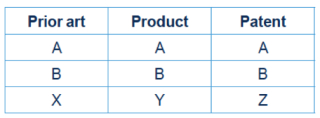
    This leaves a potential lacuna between validity and infringement.  This is best demonstrated as follows:

    Table
    Prior to Actavis v Lilly, if a patent's features were novel and inventive (feature Z over X), a patent was valid.

    Further, if a patent's features were not embodied in the alleged infringement (Z is not Y), a patent was not infringed.  It followed that under the above example, the patent would be valid but not infringed.

    The position potentially changes after Actavis v Lilly because the patent can now be infringed by a product which has an equivalent feature (Y is the equivalent of Z).  If Y is obvious over X (but Z is not obvious over X), the patent remains valid but is infringed by an "obvious" product.  This is an untenable position: it is a fundamental principle of patent law that a party must be free to do that which was either not new or obvious at the priority date.

    Gillette defence

    A Gillette defence may be the answer.  It is the latter half of the last sentence which is important.  This is because, in practice, a Gillette defence has been applied as a counterclaim challenging the validity of the patent, not as a stand-alone defence.  The rationale for this was two-fold:

    1. absent the doctrine of equivalents, a patent could not be valid and infringe a product which was obvious over the prior art (there was, therefore, no need for a stand-alone defence); and

    2. as a matter of public policy it was appropriate to address the validity of the patent (as a right in rem), rather than as a defence (as a right in personam.

    So is a new stand-alone defence needed?

    Technetix v Teleste

    In the case at hand, Technetix brought a claim against Teleste for infringement of its patent, GB 2,383,473 for a cable tap unit for receiving and delivering a cable television or Internet signal to subscribers.

    Teleste counterclaimed, challenging the validity of the patent.

    Following an adjournment of the trial (see Technetix v Teleste: Adjournment of Patent Trial), the claim was heard before the Intellectual Property Enterprise Court (IPEC) in November 2018.  The patent was held to be invalid, but the court provided its obiter comments on infringement.  This defence was fully pleaded on both sides and argued at the trial.

    HHJ Hacon declined to hold whether such a defence exists.  However, he offered a proposal as to how such a defence (if it exists) may operate.  Drawing on the Germany Federal Supreme Court in Formstein, he posited that a defence could be adopted in English law so that, if an accused product or process is an equivalent and for that reason is nominally within the scope of the claim, but the equivalent would have lacked novelty or inventive step over the prior art at the priority date, then it is deemed to fall outside the scope of the claim.

    HHJ Hacon noted that such a defence also exists under Dutch law, see Core Distribution Inc v Lidl Nederland GmbH, and was analogous to the principle of ensnarement in the USA.

    Applying this to the facts (on the assumption that the patent was valid), HHJ Hacon held that the patent was not infringed on a purposive construction, but would be under the doctrine of equivalents. Assuming a Formstein defence existed, he concluded that the defendant was entitled to the defence.

    Mr. Craggs is a partner and solicitor with D Young & Co

    This article was reprinted with permission from D Young & Co.

  • By Joshua Rich

    Supreme Court Building #2In a 6-3 decision, the Supreme Court today held that federal government agencies cannot avail themselves of America Invents Act (AIA) post-grant proceedings.  This decision was based on the Court's determination that the government is not a "person" as that term is used in relation to inter partes review (IPR), post-grant review (PGR), and covered business method (CBM) proceedings.  To parties accusing the federal government of infringing their patents, the decision means that they will be free of AIA post-grant challenges from the accused agency.  But more fundamentally, the decision serves as a Rorschach test for Supreme Court justices, showing how they feel about patents.

    The AIA created three types of post-grant proceedings to allow "a person who is not the owner of a patent" to petition the Patent and Trademark Office for the cancellation of issued patent claims.  First, IPRs allow such a person to seek to cancel claims for invalidity under § 102 or § 103 "on the basis of prior art consisting of patents or printed publications."  35 U.S.C. § 311.  Second, PGRs allow such a person to seek to cancel claims on any statutory grounds for invalidity.  35 U.S.C. § 321.  Third, a "person" who "has been sued for infringement of [a] patent or has been charged with infringement under [the] patent" — or is related to a party that has been sued or threatened — may bring a CBM review to invalidate claims of the asserted patent on any statutory grounds.  AIA § 18(a)(1).  These three proceedings have proven to be powerful alternatives to litigation, allowing potential infringers to invalidate patents and avoid infringement liability based on a preponderance of the evidence before the Patent Trial and Appeal Board (PTAB), rather than the clear and convincing evidence needed in litigation.

    In this case, Return Mail obtained a patent on methods of handling undeliverable mail, then offered a license to the U.S. Postal Service.  When negotiations broke down, the Postal Service petitioned for ex parte reexamination, which led to the cancellation of the initially issued claims but the issuance of new claims that the Patent Office deemed valid over the prior art.  Return Mail then sued the Postal Service in the Court of Federal Claims; in addition to asserting invalidity as a defense, the Postal Service petitioned for CBM review.  After the PTAB cancelled all of Return Mail's claims in the CBM review, Return Mail appealed based on the Postal Service not being a "person" eligible to petition for CBM review.

    A split Federal Circuit panel affirmed the PTAB's decision, finding that a number of factors including the structure of the Patent Act and the policies underlying the AIA suggested that the term "person" be read to include federal agencies.[1]  Judge Newman dissented, finding that long-standing precedent, the federal Dictionary Act, and the interplay between the benefit of AIA proceedings and the estoppel that generally arises from such proceedings (but would not apply against the Government in Court of Federal Claims cases) dictated that federal agencies not be "persons" permitted to bring AIA proceedings.[2]

    The Supreme Court granted certiorari, but in doing so disaggregated the issues of whether the Government would be a "person" in relation to AIA proceedings and whether estoppel would apply in Court of Federal Claims cases.[3]  Thus, the focus was to be primarily — if not exclusively — on the relevant statutes themselves.  At oral argument, however, the justices addressed numerous other issues.  Justices Breyer and Ginsburg appeared concerned that federal agencies could bring ex parte reexamination proceedings, but not more efficient AIA proceedings.[4]  Other justices, including Justice Kavanaugh, seemed concerned by the ability of one federal agency to appear in a quasi-litigation proceeding in front of another federal agency, when the executive branch is assumed to speak with one voice.[5]  In the end, however, the oral argument provided little insight into the Court's ultimate decision.

    Justice Sotomayor, writing for the Court, started from the presumption (as had Judge Newman) that the Government is a sovereign, not a "person."  That presumptive construction has a long pedigree in Supreme Court cases, reflects the common usage, and is also reflected in the general statutory definition for "person" in the Dictionary Act.  But there can be — and are — exceptions to the presumption, including in the Patent Act itself.  For example, under the Patent Act, federal agencies are "persons" expressly permitted to file patent applications, obtain patents, and can be sued for patent infringement.  And federal agencies have also been permitted to seek post-grant invalidation of patents, including through ex parte reexamination.  However, there are also uses of the term "person" in the Patent Act that clearly do not include federal agencies.

    The Court found that the inconsistent usage of the term "person" in the Patent Act meant that the general presumption should apply.  With regard to the AIA, both the text of the Act and the legislative history are silent on whether the government should be considered a "person."  The Court's majority believed that Congress's silence meant the presumption excluding the Government from that term should apply.  Finally, because the Government has advantages in actions brought in the Court of Federal Claims unavailable to private litigants defending against normal patent litigation (no injunctions, juries, or enhanced damages), the majority did not think it unfair that the Government would have to bear the burden of invalidating claims by clear and convincing evidence.

    Justice Breyer (joined by Justice Ginsburg and Justice Kagan) split from the majority on the importance of the instances in which the Patent Act uses the term "person," as well as the interpretation of the AIA's silence on the issue.  He asserted the uses of "person" that included federal agencies were more analogous to the use in relation to AIA review than the uses that excluded federal agencies.  He then looked to the purported purposes of AIA review (specifically, improving patent quality and eliminating invalid patents) rather than interpreting the statutory language to define the term.  That is, rather than basing his reasoning on what Congress actually said, he relied on his reading of what it intended.  Finally, he felt the availability of potentially large compensatory damages awards would make it unfair for federal agencies to bear that burden in litigation.  Notable in Justice Breyer's dissent, however, was that he did not rely on case law or the statutory language, instead focusing on his beliefs regarding the relevance of statutory provisions, the importance of policies underlying the statutes, and his view of potential litigation burdens.[6]

    Ultimately, the scope of the Supreme Court's decision is limited — closing the door to AIA review only for federal agencies — although it may prove to be important from time to time.  As the dissent points out, there have been cases with multimillion-dollar patent damages awards against the Government, and there is a potentially significant difference between the burdens of proof of invalidity in post-issuance proceedings (preponderance of the evidence) and Court of Federal Claims litigation (clear and convincing evidence).  To a party litigating against a federal agency, the Return Mail decision may deliver a different outcome.

    The real insight provided by the case, however, is into the Justices' attitudes toward patents.  Justice Sotomayor's majority opinion approached the case from the point of view that the Patent Act and AIA are federal statutes like all other federal statutes.  Her opinion seemed to view patents as conventional statutory constructs, and evinced no underlying hostility to their existence or validity.  In that vein, her opinion deemed the AIA to provide a balance between expedited resolution of validity issues and countervailing estoppel.  In contrast, Justice Breyer's dissent reflected his view that the intent of the AIA post-grant proceedings was to improve patent quality and eliminate invalid patents.  Thus, ultimately, Return Mail provides the most guidance through its insight into the Justices' views on the importance of patents.

    Return Mail, Inc. v. United States Postal Service (2019)
    Opinion by Justice Sotomayor, joined by Chief Justice Roberts and Justices Thomas, Alito, Gorsuch, and Kavanaugh; dissenting opinion by Justice Breyer, joined by Justices Ginsburg and Kagan

    [1] For a more extensive discussion of the Federal Circuit decision, see https://www.patentdocs.org/2018/10/supreme-court-to-decide-if-government-can-bring-aia-proceedings.html.

    [2] Id.

    [3] Id.

    [4] See https://www.patentdocs.org/2019/02/supreme-court-hears-oral-argument-in-return-mail-v-us-postal-service.html.

    [5] Id.

    [6] One other unusual aspect of Justice Breyer's dissent is that he relied heavily on lower court decisions, including establishing the burden of litigation in the Court of Claims based on a case brought by Hughes Aircraft in the Court of Federal Claims over 25 years ago.  Slip Op. at p. 7, citing Hughes Aircraft Co.v. United States, 31 Fed. Cl. 481, 488 (1994).

  • By Donald Zuhn

    District Court for the Eastern District of TexasIn April, in Intellectual Ventures II, LLC v. Sprint Spectrum, L.P., U.S. Magistrate Judge Roy S. Payne of the U.S. District Court for the Eastern District of Texas issued a Report and Recommendation that Defendants' Motion for Partial Summary Judgment that Certain Disputed References are Prior Art should be granted in part and denied in part.  In particular, Judge Payne recommended that summary judgment should be denied for four references (i.e., Hwang, Liebetreu, CATT, and LG) and granted for one reference (i.e., Yang).

    In arriving at his recommendation, Judge Payne noted that an important fact question in determining whether a reference qualifies as a printed publication under 35 U.S.C. § 102 is the public accessibility of the reference.  Citing Jazz Pharm., Inc. v. Amneal Pharm., LLC, 895 F.3d 1347 (Fed. Cir. 2018), for the proposition that "[a] reference is considered publicly accessible if it was 'disseminated or otherwise made available to the extent that persons interested and ordinarily skilled in the subject matter or art, exercising reasonable diligence, can locate it,'" Judge Payne pointed out that several factors are used by courts to determine whether a reference was publicly accessible.  Such factors include "how widely circulated the reference was, whether the reference was indexed in a manner that would have made it accessible to interested persons with a reasonable degree of effort, and whether the reference was distributed with a pledge or understanding that the contents would remain confidential"; another factor to be considered is the expertise of the target audience.

    Judge Payne addressed the Yang reference first, noting that Plaintiff Intellectual Ventures did not contest the public accessibility of this reference.  Judge Payne therefore concluded that the Yang reference was publicly accessible before the priority date of the asserted patents, and as a result, recommended that Defendants' Motion be granted with respect to this reference.

    Judge Payne next turned to the Hwang and Liebetreu references, which the Defendants (except for Nokia) argued were submissions to the March 2004 IEEE 802.16 Working Group Session #30 meeting, were publicly accessible by at least March 15, 2004, and thus qualified as prior art to U.S. Patent No. 8,953,641.  Despite Defendants' argument, however, Judge Payne determined that "fact questions remain as to whether the Hwang and Liebetreu references were publicly accessible before the relevant priority date," since "[b]oth references were filed on a website with somewhere between 4,000 to 10,000 references (by the estimate of the applicable Defendants' own witness) with the references listed primarily in chronological order."  Judge Payne also noted that "the Hwang reference was withdrawn, so it likely was not discussed at the meetings, making it even more difficult for this reference to be found."  Finding that "a question of fact exists as to whether these references were publicly available as it is unclear whether persons interested and ordinarily skilled in the subject matter would be able to locate these references using reasonable diligence," Judge Payne recommended that Defendants' Motion be denied with respect to the Hwang and Liebetreu references.

    Finally, Judge Payne addressed the CATT and LG references, which Defendants argued were publicly accessible by at least March 31, 2006, and thus qualified as prior art to U.S. Patent Nos. 8,682,357 and 9,532,330.  Finding that questions of fact remained as to the public accessibility of these references, Judge Payne recommended that Defendants' Motion also be denied with respect to the CATT and LG references.  In support of this recommendation, Judge Payne noted that "[w]hile the references were distributed by email to the working group and then placed on the 3GPP server, it remains unclear whether the references were indexed in a way that would allow persons interested and ordinarily skilled in the subject matter or art, exercising reasonable diligence, to locate the two references."  In response to Defendants' argument that indexing is not a prerequisite to finding that a reference qualifies as a printed publication, Judge Payne stated that "a failure to appropriately index may still create a question of fact as to whether a reference qualifies as a printed publication."  Moreover, Judge Payne noted that Intellectual Ventures' expert asserted that the CATT and LG references were not publicly available, and therefore, he indicated that "this suggests that summary judgment would be inappropriate."

    Judge Payne therefore recommended that Defendants' Motion for Partial Summary Judgment that Certain Disputed References are Prior Art should be denied for the Hwang, Liebetreu, CATT, and LG references, and granted for the Yang reference.

    Intellectual Ventures II, LLC v. Sprint Spectrum, L.P. (E.D. Tex. 2019)
    Report and Recommendation by Magistrate Judge Payne

  • By Kevin E. Noonan

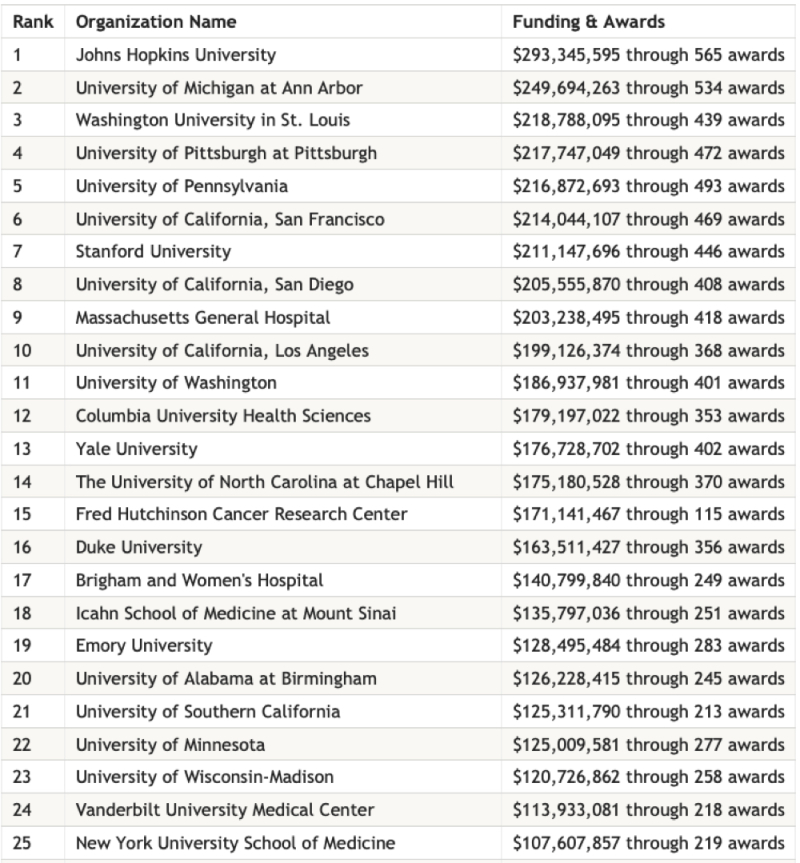
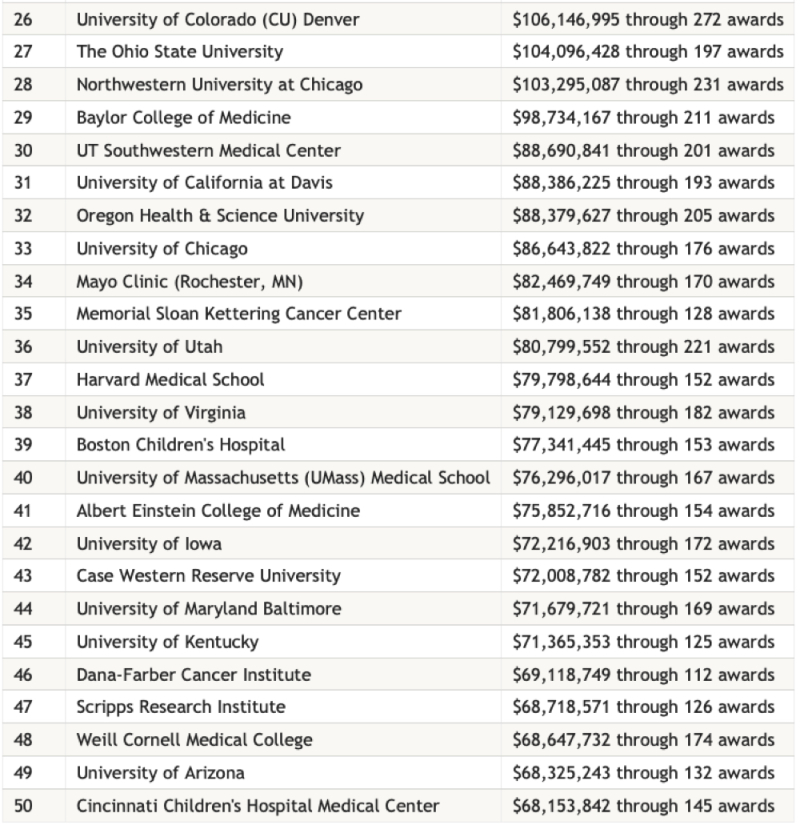
    GENGenetic Engineering News published the results of a study on Monday entitled "Top 50 NIH-Funded Institutions of 2019."  The report sets forth the context of these expenditures, with the Trump administration proposing large cuts in funding (12%, to a total outlay of $34.368 billion in Fiscal 2020) and Congress pushing back on any reductions (the House passed an appropriations bill allocating $41.084 billion, or a 5.12% increase and the Senate seems to be looking to follow suit).  And where does the money go?  The report states that 83% of that budget goes to fund extramural research, with FY2018 showing 47,000 grants awarded to 2,700 institutions in the amount of $26 billion.  This is in addition to supporting 6,000 scientists on the NIH campus.

    The remainder of the report shows the statistics for the 50 top "universities (including medical schools), research institutions, and teaching hospitals" for FY2019 through May 27th in dollars and number of grants awarded.  Not surprisingly, California has the most Federally granted institutions (7), with Massachusetts and New York ranking next with six apiece.  The report notes that these three states have 19 of the top 50 (38%) funded institutions.  Ohio is next with three institutions on the list, and seven states with two (Illinois, Maryland, Minnesota, North Carolina, Pennsylvania, Texas, and Washington).  Twenty-six states have no university or other research institution on the list, but the report notes that these states also receive a significant amount NIH research money.

    Top 50 NIH-Funded Institutions of 2019

    Table 1-25 Table 26-50

  • By Donald Zuhn

    District Court for the District of UtahIn April, in Xlear, Inc. v. STS Health, LLC, District Judge David Nuffer of the U.S. District Court for the District of Utah denied a motion for summary judgment filed by Defendant STS Health, LLC, finding that the asserted claims of U.S. Patent No. 6,054,143 "do not point to an ineligible subject matter."  In denying STS's motion, the District Court also noted that "even if it were necessary to analyze the '143 patent under step two of the Alice Framework, STS has not carried its burden under that step."

    Plaintiff Xlear initiated the dispute between the parties when it filed suit against STS for infringement of the '143 patent.  In response, STS filed a motion to dismiss, arguing that the asserted claims were directed to the naturally occurring product xylitol, which was administered using well-understood, routine, conventional activity previously engaged in by researchers in the field.  The District Court denied the motion, finding that the '143 patent did not claim the naturally occurring product xylitol/xylose, but rather was directed to a method for delivery of the xylitol/xylose to clean out the nasopharynx in a human.  The Court also found that STS had not presented evidence of similar applications of xylitol prior to the '143 patent.  STS then filed its motion for summary judgment that the asserted claims were invalid under 35 U.S.C. § 101 for failing to recite patent eligible subject matter, citing seven issued patents as evidence that the nasal administration of xylitol/xylose was well-known, conventional, and routine when Xlear filed the application that issued as the '143 patent.

    In dismissing STS's motion for summary judgment, the District Court noted that when it denied STS's motion to dismiss, the Court had determined that under step one of the Alice framework the asserted claims were directed to a process or method that is not a law of nature or natural phenomenon.  In particular, the Court found that "the '143 patent does not claim the discovery of xylitol/xylose or the product itself," and "does not claim the exclusive right to every application of xylitol/xylose," but rather, the asserted claims "focus on the process of practically applying xylitol/xylose to clean the nasopharynx."  The Court therefore noted that:

    Because it was determined that the claims do not point to an ineligible subject matter, it was unnecessary to proceed to the second step and determine "whether additional elements 'transform[ed] the nature of the claims' into a patent-eligible application."  The analysis in the Previous Order should have stopped after concluding that the claims of the '143 patent do not point to patent ineligible subject matter.  The Previous Order should not have stated that additional evidence was needed to resolve the second step of the Alice Framework.

    However, the Court also noted that STS's motion for summary judgment would have failed even if it had been necessary to analyze the '143 patent under step two of the Alice framework.  In support, the District Court cited the Federal Circuit's decision in Berkheimer v. HP, Inc. for the proposition that whether "something is well-understood, routine, or conventional to a skilled artisan at the time of the patent is a factual determination" that "goes beyond what was simply known in the prior art."  In particular, the Court noted that:

    STS has not shown how the seven cited patents teach the same invention as the '143 [patent].  The seven cited patents address the use of xylitol/xylose to aid in the absorption of other compounds through mucosal membranes, such as that found in the nose.  None of the cited patents address using xylitol/xylose to clean the nasopharynx.

    The Court also pointed out that notwithstanding the seven patents identified by STS, Xlear continued to argue that nasal administration of xylose/xylitol for cleaning the nasopharynx in a human was not conventional at the time of application, and the Court determined that "[t]he seven cited patents do not disprove that contention and STS has not demonstrated the absence of an underlying genuine issue of material fact that would permit deciding patent eligibility 'on summary judgment as a matter of law.'"

    The District Court concluded its opinion by noting that "[a]s the Previous Order determined under the first step of the Alice Framework, the claims of the '143 patent do not point to patent ineligible subject matter," and finding that "[t]he ‘143 Patent is therefore not invalid under § 101."  The Court therefore denied STS's motion for summary judgment.

    Xlear, Inc. v. STS Health, LLC (D. Utah 2019)
    Memorandum Decision and Order Denying Motion for Summary Judgment by District Judge Nuffer

  • By James Lovsin

    Under the Eleventh Amendment of the Constitution, States enjoy sovereign immunity from a wide variety of suits.  But there are exceptions, including congressional abrogation of immunity.  Twenty years ago, in Florida Prepaid Postsecondary Education Expense Board v. College Savings Bank, 527 U.S. 627 (1999), the Court struck down the Patent Remedy Act that abrogated state sovereign immunity from patent infringement:

    Any State, any instrumentality of a State, and any officer or employee of a State or instrumentality of a State acting in his official capacity, shall not be immune, under the eleventh amendment of the Constitution of the United States or under any other doctrine of sovereign immunity, from suit in Federal court by any person, including any governmental or nongovernmental entity, for infringement of a patent under section 271, or for any other violation under this title.

    35 U.S.C. § 296(a); see also id. § 271(h).

    The Court in Florida Prepaid held that Congress did not have the authority to abrogate immunity from patent infringement under various provisions in the Constitution, including the Patent Clause, Commerce Clause, and the Fourteenth Amendment.  Art. I, § 8, cl. 8; id. cl. 3; and § 5 of the 14th amend.

    Queen_Anne's_RevengeThis week, the Court granted to certiorari in Allen v. Cooper, No. 18-877 to consider the abrogation issue, again, in the context of copyright law.  In this case, Mr. Allen sued North Carolina for infringing his copyright in a documentary film related to the salvage of Blackbeard's ship, Queen Anne's Revenge.  The District Court denied the State's motion to dismiss for sovereign immunity, relying on the 1990 Copyright Remedy Act, which is substantially identical to the Patent Remedy Act:

    Any State, any instrumentality of a State, and any officer or employee of a State or instrumentality of a State acting in his or her official capacity, shall not be immune, under the Eleventh Amendment of the Constitution of the United States or under any other doctrine of sovereign immunity, from suit in Federal court by any person, including any governmental or nongovernmental entity, for a violation of any of the exclusive rights of a copyright owner provided by sections 106 through 122, for importing copies of phonorecords in violation of section 602, or for any other violation under this title.

    17 U.S.C. § 511(a).  In doing so, the District Court broke with the Fifth Circuit and several district courts throughout the country that have ruled the statute is invalid.

    The Fourth Circuit reversed.  The Fourth Circuit found that its "conclusion is required by Florida Prepaid."  895 F.3d 337, 351 (4th Cir. 2018).  As in Florida Prepaid, the Fourth Circuit ruled that Congress did not have the authority to abrogate immunity from copyright infringement under the Copyright Clause, Commerce Clause, and Section 5 of the Fourteenth Amendment.

    The Fourth Circuit rejected Allen's reliance on a 2006 Supreme Court case, Central Virginia Community College v. Katz, 546 U.S. 356, in which the Court upheld abrogation of state sovereign immunity under the Bankruptcy Clause.  According to the Fourth Circuit, Katz's holding "was made in a completely distinguishable context that was unique to the Bankruptcy Clause."  895 F.3d at 348.

    It is interesting that the Court decided to grant cert. in Allen v. Cooper.  Lower courts that have addressed copyright abrogation appear to have uniformly followed Florida Prepaid.  But the composition of the Court has significantly changed since Florida Prepaid was decided.  Florida Prepaid was decided by a 5-4 majority in 1999 and only one Justice from the majority, Justice Thomas, remains on the Court.  Similarly, only two of the dissenting Justices in Florida Prepaid remain on the Court, Justices Ginsburg and Breyer.

    The Court's grant of cert. in Allen v. Cooper also stands in contrast to the Court's denial of cert. in April in the tribal immunity case Saint Regis Mohawk v. Mylan Pharmaceuticals, No. 18-899.  There, the Federal Circuit ruled that the Tribe was not immune from inter partes review in the Patent Trial and Appeal Board.

    Given the Copyright Remedy Act and Patent Remedy Act are substantively identical, the Court's decision in Allen v. Cooper could have an impact on patent law.  States frequently participate in the patent system and are often litigants in district courts as well as the PTAB.

    The Federal Circuit is currently deciding such a state sovereign immunity case.  In Regents of University of Minnesota v. LSI Corp., No. 18-1559, the PTAB majority ruled that the State waived immunity from IPR by filing an infringement suit in district court.  In concurrence, another judge explained that states do not have any immunity from IPR.  The Court heard oral argument in Regents in March.

    Patent Docs will monitor Allen v. Cooper and provide updates the case progresses.

  • By Kevin E. Noonan

    ACLUIt is perhaps not surprising that several medical groups, as well as other organizations with little regard for the patent system, and their legal accomplice, the American Civil Liberties Union, would oppose the recent efforts to amend the subject matter eligibility section of the statute (35 U.S.C. § 101) to correct the imbalances caused by recent U.S. Supreme Court jurisprudence on the matter.  After all, one of the pillars of the current standard for (in)eligibility was the Court's decision in AMP v. Myriad Genetics, championed by the ACLU beginning with the District Court case challenging "gene patenting" (an effort, not inconsequentially, that has taken the place of Nazis marching through the predominantly Jewish suburb of Skokie, IL in the group's fundraising efforts).  This opposition has taken the form of a letter to Senators Coons (D-DE) and Tillis (R-NC) as well as Representatives Collins, Johnson, and Stivers setting forth these groups' views.

    Before getting into the substance of their allegations of the sky-falling effects of enactment of any revisions to the statutory status quo, two important realities need to be understood.  First, despite all the trumpeting and bally-hoo that ensued after the Supreme Court's Myriad decision was handed down, human genes remain patent-eligible.  Admittedly, the species of genes that can be patented has been limited, from genes isolated as they exist in the chromosome to a particular, processed form of the gene called "complementary DNA" or cDNA.  While this limitation can restrict the capacity for a small subset of human genes to be patented, the overwhelming majority of the ~30,000 genes present in the human genome remain patent eligible in the cDNA form.

    The second important (overlooked) fact is that most human genes are not patentable.  The reason for the distinction is that patent-eligibility is a categorical criterion, while patentability depends on the circumstances of the invention in light of the prior art.  The genomic sequence of the totality of human genes (as well as the ~80% of the genome that does not encode proteins) has been publicly available since the turn of the 21st Century, due in large part to such luminaries as Sir John Shulston who were motivated precisely to prevent (or forestall or at least retard) patenting of human genes.  And for those human genes for which patent applications were filed at that time, the statutory limit of patent term as 20 years from filing ensures that there are very few such patents that have not expired (or been abandoned); Myriad's BRCA gene patents, for example, are almost all expired or will be in short order.

    Thus, no matter what Congress may do, the historical fact is that the "gene age" is over and if there was ever a diminution of innovation, medical progress, or benefit to humanity occasioned by these patents, that time is truly past.

    This is not to say that the Supreme Court's precedent has not made mischief with regard to patenting "natural products" (see "Sherry Knowles Addresses Real World Impact of Myriad-Mayo Guidance at BIO Symposium"); how the Court's Myriad precedent has been interpreted, by both the Patent Office and the lower courts is a source of concern that is blithely ignored by the ACLU and their clients.

    Turning to the ACLU's letter, it is clear from the introductory sentence, stating that the signatories are "civil rights, medical, scientific, patient advocacy, and women's health organizations," that the ACLU turned its Rolodex to the groups it assembled for the Myriad case to once again raise an alarm over ephemeral consequences (and, sadly resulting in consequences these groups or at least their members would not have envisioned with approval; see "The ACLU, Working for the Man") that could result by enactment of the revisions suggested in the latest proposal.  The letter states that the proposed revisions to patent subject matter eligibility standards would "authorize patenting products and laws of nature, abstract ideas, and other general fields of knowledge" (they wouldn't, of course; they would just substitute per se, categorical standards to ones better suited to identifying that subject matter whose patenting would not "promote progress of the useful arts").

    But the ACLU and friends have expanded the litany of their worries from the Myriad days — the letter announces that they consider "[m]ost troubling[]" the prospect of "patenting of human genes and naturally-occurring associations between genes and diseases," which they claim "will prevent the discovery of novel treatments for diseases including cancer, muscular dystrophy, Alzheimer's disease, heart disease, and other rare and common diseases."  It would be understandable to think from this rhetoric that, before the Myriad decision no one ever discovered "novel treatments for diseases including cancer, muscular dystrophy, Alzheimer's disease, heart disease, and other rare and common diseases," when the truth of the matter is that, perhaps with the exception of Alzheimer's disease, the history of the past thirty years has been the discovery of treatments for such diseases, supported by the patent system to permit these treatments to come to market.  In addition, the letter claims, revising patent law as proposed would "create barriers to patients' access to potentially lifesaving genomic tests, eliminate access to confirmatory testing and dramatically increase the cost of tests that have benefited from innovation that led to reduced costs of DNA sequencing technology."  Sadly, of course, the true sequellae of the Myriad decision has been to permit corporate testing labs to expropriate the scientific advances which, as in Myriad, tend to come from academia and startup biotechnology companies; the even sadder reality is that access to medicine and diagnostic testing is thwarted by insufficient insurance coverage not patents.  Indeed, one of the reasons genetic diagnostic testing is (relatively) widely accepted (and reimbursed) is due to the success Myriad had in convincing skeptical insurance providers (public and private) in the late 1990's that something as frightening and serendipitous as cancer could be predicted with reliability at all (see "In Defense of Patenting").  And as for the letter's further allegation that the proposed revisions to statutory patent eligibility would "stymie competition for developing and improving diagnostic and medical tests, and increase the cost and hinder advancement of targeted therapeutics involving genomic markers" that would result in "higher costs for patients, payers, and the healthcare system overall," what will be stymied would be investment in such new technologies (except for those established businesses for whom innovation upsets their established channels of commerce and thus tend to avoid truly groundbreaking inventions).

    The letter goes on to provide an encomium for recent patent eligibility jurisprudence, highlighting the signal victory for the ACLU in Myriad and particularly noting the unanimity of the Supreme Court's decisions (which paradoxically does not necessarily demonstrate their correctness, erudition, or deep and penetrating thought concerning the patent issues at bar).  More troubling is the unsupported allegations that follow, that these decisions "have created a legal foundation that is promoting innovation across numerous sectors."  (It is worth noting that the only support for the assertion that human gene patent ineligibility should lead to lower cost diagnostic tests cited in the letter is an article by a journalist, written the day the Supreme Court handed down its Myriad decision.  One would think that the experience, putatively represented by the co-signers of the letter, six years after the Myriad decision, would yield ample, real-world evidence of this speculation but it's nowhere to be found in the letter.)

    In something of a factual (but not emotional or rhetorical) nonsequitur, the letter then recites the purported sins of Myriad, backed not by court findings but by allegations from an amicus brief from the American Medical Association and other medical groups.  (It is significant that plaintiffs and their ACLU counsel did not attempt to invalidate Myriad's patents for misuse or other misbehavior, but used allegations of misbehavior to drum up support for invalidating the patents on categorical grounds.)  Included in these allegations in the letter is the slander that "[t]he patents authorized Myriad to block all manner of scientific inquiry into the genes shutting down research at academic medical centers throughout the country," a statement belied by the more than 10,000 academic research papers that could be found in Medline and other databases having been published between 1997 (when the University of Utah or its licensee Myriad was granted the patents) and 2013 (when the Supreme Court invalidated a small subset of those patent claims).

    This false litany leads to a reiteration of the ACLU's Myriad rhetoric:  that there is a "fundamental truth" that "genes and other naturally occurring matter and relationships should never be granted to anyone as intellectual property."  But the consequence of taking that "truth" to its logical extreme is that nothing in the natural world, no matter how changed by human intervention, could be patented.  It is nothing less than hubris (and like much hubris, arising from ignorance) to think that only that which arises solely without reliance on the natural world deserves patent protection.  And the further roll call of intellectual luminaries and medical, religious, and interest groups recited as supporting the Myriad decision just shows that excellence and achievement in one field does not lead to wisdom is another (see William Shockley and Peter Duesberg as illustrative examples).

    As might have been expected, the ACLU's concern has been inflamed by language in the draft proposed legislation that the judicial exceptions (laws of nature, natural phenomena, and abstract ideas) and case law supporting them would be abrogated.  This tactic raises many more concerns that importuning the ACLU and its friends and supporters, the most worrisome of which being that the Supreme Court would, at best, decide that such abrogation was unconstitutional for being beyond the patenting powers granted to Congress in Article I and, at worst, give rise to even more stringent limitations on patent eligibility (no doubt applauded by the ACLU and their co-signers of this letter).  The reality is, of course, more measured and reasoned than that:  what is proposed is replacing the poorly defined, inconsistently applied, subjective, per se judicial (instead of statutory) "exceptions" with legislation, vetted through the political process and (with luck) capable of consistent, predictable application in ways that do not turn patenting into a lottery dependent on the whims of district court or appellate judges or, indeed, the Supreme Court.  (It is ironic that the letter casts the consequences of this legislation as creating uncertainty, when even the casual observer will find plainly evident that it has been the Supreme Court's recent decisions, and its unwillingness to revisit them, that has caused the greatest uncertainty that the legislation proposes to correct.)  The ACLU's letter castigates the proposed legislation for wiping out "one hundred and fifty years of case law" but of course that's the point; said more properly the legislation will remove the uncertainties created by this case law.

    The letter ends with the disingenuous suggestion that "[t]o the extent that there are problems with the current application of the law that must be solved, narrower paths to addressing them are preferable to rewriting current 101 standards and overturning over a century of precedent." Not only does the letter contain no hint regarding what those "narrow paths" might be, it is unlikely that any such path would be acceptable to the ACLU and their supporters.

    One thing is certain:  there are competing memes involved in the patent subject matter eligibility debate, and for the pro-patent proponents to prevail this time it will take more political savvy than was exhibited during the Myriad case.

  • By Hanns-Juergen Grosse* —

    EPOThe approach of the European Patent Office (EPO) to prohibition of double patenting is well established and may, at a first glance, also seem well founded.

    Broadly speaking, the prohibition of double patenting is meant to mean that two patents cannot be granted to the same applicant for one invention (in the same jurisdiction).  At a closer look, there is a plurality of facets, layers and aspects, producing an exhilarating spectrum of double patenting.

    Thus, double patenting may arise in three situations where European patent applications are filed by the same applicant:

    • Europeans patent applications filed on the same day;

    • Divisional and parent patent applications; or

    • A European patent application claiming priority in respect of another European patent application (internal priority).

    However, commentators on European patent practice have never stopped to stress that the European Patent Convention (EPC) does not prohibit double patenting.

    After the Examining Division decided to refuse European patent application EP 10 718 590.2 in accordance with the applicable Guidelines for Examination at the EPO (Guidelines), G IV, 5.4 under Art. 97(2) EPC in conjunction with Art. 125 EPC, allowing subordinate application of principles of procedural law generally recognised in the contracting states of the EPC, the applicant appealed the decision and auxiliary requested, as occasionally done, that the responsible Board of Appeal (BoA) refers a pivotal question to the Enlarged Board of Appeal (EBoA).

    The BoA did not, as usually done, discard the idea of referring the question to the EBoA, but also helped to develop the applicant's question into a two-tier question, and decided at the end of oral proceedings held on 07 February 2019 in appeal case T 318/14 to refer a detailed set of questions to the EBoA.

    What has happened?

    In earlier leading decisions G 1/05 and G 1/06, both relating to divisional patent applications, the EBoA said in passing that the principle of the prohibition on double patenting is based on the notion that an applicant has no legitimate interest in proceedings leading to the grant of a second patent for the same subject-matter if the applicant already possesses one granted patent for that subject-matter.  The Guidelines extrapolated therefrom that in case that two or more European applications from the same applicant designate the same state or states and the claims of those applications have the same filing date or priority date and relate to the same invention only one of the applications can be granted.

    However, for the present European patent application EP 10 718 590.2 claiming the internal priority of, and claiming the same subject matter as, an earlier European patent application, the applicant has a clear legitimate interest, as it is the filing date and not the priority date that is the relevant date for calculating the 20-year term of a patent.  Of course, it is common practise to file a European patent application establishing a priority date for a new invention, towards the end of one year after the priority date to file a PCT application claiming the priority in respect of the European patent application, and towards 31 months after the priority date to enter the regional phase of the PCT application before the EPO.

    The BoA agreed with the applicant that there is no uniform practice and even conflicting case law, and referred the following questions to the EBoA:

    1.  Can a European patent application be refused under Art. 97(2) EPC if it claims the same subject-matter as a European patent granted to the same applicant which does not form part of the state of the art pursuant to Art. 54(2) and (3) EPC?

    2.1  If the answer to the first question is yes, what are the conditions for such a refusal and are different conditions to be applied where the European patent application under examination was filed

    a) on the same date as, or

    b) as a European divisional application (Art. 76(1) EPC) in respect of, or

    c) claiming the priority (Art. 88 EPC) in respect of a European patent application on the basis of which a European patent was granted to the same applicant?

    2.2  In particular, in the latter case, does an applicant have a legitimate interest in the grant of the (subsequent) European patent application in view of the fact that the filing date and not the priority date is the relevant date for calculating the term of the European patent under Art. 63(1) EPC?

    For answers to the questions raised in T 318 /14, the EBoA may have to probe the real intentions of the legislators by going back to the archives and interpreting the Traveaux Préparatoires, the draft documents and minutes produced when the EPC was conceived back in the early 1970s.

    There will be plenty of fragments in need of attention, and plenty of leeway for interpretation.  However, it will be worth the efforts.

    * Dr. Grosse is a partner with D Young & Co

    This article was reprinted with permission from D Young & Co.