• By Kevin E. Noonan —

    Federal Circuit SealInterferences were rendered unnecessary with the passage of the Leahy-Smith America Invents Act in 2011, but they linger in disputes between patents and applications claiming priority to applications filed before the change to a "first-inventor-to-file" system.  The Federal Circuit recently upheld the Patent Trial and Appeal Board's priority determination in Chevron U.S.A. Inc. v. University of Wyoming Research Corp. in a decision based on the Board's construction of an undisputedly dispositive term.

    U.S. Interference No. 106,064 was declared between the University of Wyoming Research Corp. (over involved U.S. Patent No. 8,367,425 and Chevron U.S.A.'s Application No. 12/883,814).  The Count in the interference (which defines the interfering subject matter) was defined in the alternative as Claim 1 of the '814 application:

    1.  A method for determining asphaltene stability in a hydrocarbon-containing material having solvated asphaltenes therein, the method comprising the steps of:
        (a) precipitating an amount of the asphaltenes from a liquid sample of the hydrocarbon-containing material with an alkane mobile phase solvent in a column;
        (b) dissolving a first amount and a second amount of the precipitated asphaltenes by gradually and continuously changing the alkane mobile phase solvent to a final mobile phase solvent having a solubility parameter at least 1 MPa0.5 higher than the alkane mobile phase solvent;
        (c) monitoring the concentration of eluted fractions from the column;
        (d) creating a solubility profile of the dissolved asphaltenes in the hydrocarbon-containing material; and
        (e) determining one or more asphaltene stability parameters of the hydrocarbon-containing material.

    or

    Claim 5 of the '425 patent:

    5.  A method for determining asphaltene stability in a hydrocarbon-containing material having solvated asphaltenes therein comprising the steps of:
        (a) intentionally precipitating an amount of the asphaltenes from a liquid sample of the hydrocarbon-containing material with an alkane mobile phase solvent in a column that has a substantially chemically inert stationary phase established therein, wherein the substantially chemically inert stationary phase is substantially chemically inert relative to the precipitated asphaltenes;
        (b) dissolving a first amount and a second amount of the precipitated asphaltenes by changing the alkane mobile phase solvent to a final mobile phase solvent having a solubility parameter that is higher than the alkane mobile phase solvent;
        (c) monitoring the concentration of eluted fractions from the column;
        (d) creating a solubility profile of the dissolved asphaltenes in the hydrocarbon-containing material; and
        (e) determining one or more asphaltene stability parameters of the hydrocarbon-containing material;
        wherein said step of dissolving comprises the step of dissolving by gradually and continuously changing the alkane mobile phase solvent to a final mobile phase solvent having a solubility parameter that is at least 1 MPa0.5 higher than the alkane mobile phase solvent.

    Wyoming copied this claim to provoke the interference.  Wyoming was designated as the Junior Party in the interference as declared, the Board recognizing their earliest priority date as September 23, 2011 (the filing date of U.S. Application No. 13/243,782, now U.S. Patent No. 8,273,581) and Chevron as Senior Party, having the benefit priority to U.S. Provisional Application Nos. 61/242,280, filed 14 September 2009 and 61/312,765, filed 11 March 2010).  However, in its Decision on Motions, the Board granted Wyoming benefit of priority to U.S. Provisional Application 60/711,599 (filed Aug. 25, 2005), and U.S. Application No. 11/510,491 (filed Aug. 25, 2006), and declared Wyoming the Senior Party.  Chevron filed a Priority Statement establishing its earliest conception date (supported by evidence of diligence from conception to its earliest filing date) of March 1, 2009.  Accordingly, the Board held that Chevron was unable to establish its date of invention to be earlier than Wyoming's earliest priority date (the '599 application filing date) and entered judgment in favor of Wyoming.  This appeal followed.

    The Federal Circuit affirmed, in an opinion by Judge Schall joined by Judge Lourie; Judge Newman filed a dissenting opinion.  The basis of Chevron's appeal was that the Board had erred in determining that Wyoming was entitled to its earliest filing date based on an erroneous claim construction.  Specifically, Chevron contended that the Board had misconstrued the limitation "gradually and continuously changing the alkane mobile phase solvent to a final mobile phase solvent" to mean "the alkane mobile phase solvent is incrementally removed from the column over a period of time by continuously adding a final mobile phase solvent" (for the meaning of "gradually") and "without interruption" for the term "continuously."  Chevron urged that this limitation should be construed to mean "the amount of alkane mobile phase solvent fed into the column is incrementally decreased from 100% to 0% over a period of time without interruption while the amount of final mobile phase solvent fed into the column is incrementally increased from 0% to 100% over the same period of time," as Chevron had argued before the Board.  (Neither party disputed the construction given by the Board to the term "continuously.")  The panel recognized that the appeal concerned that "one, narrow issue" of claim construction, because there was no dispute that "Wyoming's '425 patent and the priority applications have written description support for the limitation under the Board's construction, but that they lack such support under the construction urged by Chevron."  Accordingly if the Board properly construed this term, Chevron was not entitled to priority for the Count.

    The Federal Circuit majority (as had the Board) based its decision affirming the Board on express disclosure in the '814 specification regarding the term "gradually":

    The term gradually as used herein shall be understood to mean that the alkane mobile phase solvent is incrementally removed from the column over a period of time by continuously adding a final mobile phase solvent having a solubility parameter at least 1 MPa0.5 higher than the alkane mobile phase solvent to the column.

    (And because the Board thus relied on intrinsic evidence, it did not consider the testimony of either of the parties' expert witnesses and the Court's review was de novo.)  On this basis, the Board (giving the limitation its broadest reasonable interpretation) held that the term "gradually and continuously changing" referred to the change of solvents in the column rather than at the inlet of the column (neglecting the physical reality that the introduction of the continuously changing solvent occurs, as it must, at the inlet, then proceeding through the column as chromatography continues).  Chevron for its part argued (before the Board and here) that the '814 specification contained several instances wherein the solvent change was described as occurring at the column inlet.  And Wyoming countered that these citations were directed to disclosure reciting where the solvent was gradually and continuously added not where the solvent was gradually and continuously changed.

    The panel majority agreed that the Board had properly construed the dispositive limitation under the broadest reasonable construction standard, particularly in view of the express definition of the term "gradually" in the '814 application specification.  The Court also found reliance to be supported by other disclosure in the specification in adjacent paragraphs.  The majority rejected Chevron's legal argument that the Board decision was contrary to the Federal Circuit's precedent from In re Suitco Surface, Inc., 603 F.3d 1255 (Fed. Cir. 2010), stating that unlike in that case here, the Board's construction was not "unreasonably broad" and was supported by express disclosure.  Because the majority found that the Board's construction was consistent with express disclosure and its own precedent regarding proper use of disclosure from the specification in construction under the broadest reasonable construction standard, the Federal Circuit affirmed the Board's priority determination in Wyoming's favor.

    Judge Newman dissented.  In the Judge's view, "[t]he Wyoming specification does not describe and does not support the claims copied from Chevron.  In its chain of applications Wyoming describes and claims a different method."  Thus the proper outcome would have been a determination that there was no interference in fact, particularly because the priority benefit accorded to Wyoming precludes Chevron's disclosure from being prior art to Wyoming's claims.  The Judge expressly disagrees with the majority's lack of consideration of the standard of the Court's "uniform precedent that requires that the interference count is construed in light of the application from which it arose; that is, Haemonetics Corp. v. Baxter Healthcare Corp., 607 F.3d 776, 781 (Fed. Cir. 2010) and Bicon, Inc. v. Straumann Co., 441 F.3d 945, 951 (Fed. Cir. 2006)."  As a consequence, in Judge Newman's view, the majority was able to ignore dispositive differences between the inventions claimed in the parties applications, namely that "Wyoming's method differed [from the claimed Chevron method] in that Wyoming required an abrupt and discontinuous solvent change" yet nevertheless granted priority to Wyoming.  These differences (or the consequences thereof) were for Judge Newman illustrated in each of the parties disclosures:

    Wyoming:

    WyomingChevron:

    Chevron
    And the Board understood these differences:

    The underlying facts in this situation are, for the most part, not in dispute.  [Wyoming's] example utilizes abrupt solvent input changes . . . , while [Chevron's] examples use solvent changes that are less so.

    Because "[w]hen claims are copied to provoke an interference, the copied claims are [to be] construed in light of the application from which the claims are copies" the Judge opines, citing Agilent Techs., Inc. v. Affymetrix, Inc., 567 F.3d 1366, 1375 (Fed. Cir. 2009).

    In addition, in light of these differences, Judge Newman believes that "Wyoming proved neither conception nor reduction to practice of the Count" (which is a function of the parties' priority status regarding Wyoming being declared the Senior Party and thus not having this burden).  But both the law and PTAB rules (specifically 37 C.F.R. § 41.202) contain that requirement which was not complied with here.  Seeing this as threshold issue, Judge Newman would have dissolved the interference and permitted both parties to have patents claiming their distinct inventions.

    Chevron U.S.A. Inc. v. University of Wyoming Research Corp. (Fed. Cir. 2020)
    Panel: Circuit Judges Newman, Lourie, and Schall
    Opinion by Circuit Judge Schall; dissenting opinion by Circuit Judge Newman

  • By Kevin E. Noonan —

    Federal Circuit SealIt has long been understood that claim construction can, and frequently is, dispositive in patent litigation.  This truism was the basis for the Federal Circuit affirming the District Court's decision against a generic drug producer in its recent decision in Par Pharmaceutical, Inc. v. Hospira, Inc.  And the case being decided on whether Hospira's formulation described in its ANDA would constructively infringe Par's patented formulation, the clear error standard of view also had a part to play in the outcome.

    These issues arose in ANDA litigation, wherein Plaintiffs asserted U.S. Patent Nos. 9,119,876 and 9,925,657 against Hospira over Par's Adrenalin® product (epinephrine) and methods for administering the drug (by injection).  Hospira asserted non-infringement and invalidity as defenses (the District Court ruled against Hospira on the latter and they were not on appeal).  The Par patents were directed to formulations that overcame deficiencies in prior art epinephrine formulations, principally short shelf life due to three different routes of degradation (oxidation, racemization, and sulfonation).  Claim 1 of the '876 patent is representative:

    A composition comprising:
        in the range of about 0.5 to 1.5 mg/mL of epinephrine and/or salts thereof,
        in the range of about 6 to 8 mg/mL of a tonicity regulating agent,
        in the range of about 2.8 to 3.8 mg/mL of a pH raising agent,
        in the range of about 0.1 to 1.1 mg/mL of an antioxidant,
        in the range of about 0.001 to 0.010 mL/mL of a pH lowering agent, and
        in the range of about 0.01 to 0.4 mg/mL of a transition metal complexing agent,
        wherein the antioxidant comprises sodium bisulfite and/or sodium metabisulfite.

    (where boldface type is used in the opinion to designate limitations relevant to Hospira's appeal).  After defining these limitations, the opinion set forth the District Court's construction of the word "about" as it was used for each limitation.  Specifically, the parties agreed that this term be given its plain and ordinary meaning, i.e., "approximately"; significantly for the Federal Circuit in this appeal, Hospira did not assert a contrary construction.

    The parties proffered expert testimony regarding the three limitations emphasized above.  Par's expert testified that the tonicity range — 6-8 mg/mL — could be satisfied for the court's infringement determination by 9 mg/mL sodium chloride (Hospira's concentration, although concentrations as low a 8.55 mg/mL were also used) because it would suffice for the intended purpose, i.e., "maintain[ing] the integrity of living cells following the injection of epinephrine into the bloodstream."  Hospira's expert only disputed his counterpart with regard to whether the skilled artisan would consider 9 mg/mL to fall within the range of "about" 6-8 mg/mL.

    For the transition metal complexing limitation, the District Court relied on evidence that citric acid was a known chelating agent, and that the amount of elemental impurities (metals) was represented by Hospira in its ANDA as being within international standards (specifically, the ICH Q3D guidelines).  The correspondence between this standard and the concentration of metal chelating agent recited in the claim was attested by Par's expert to fall within the claimed range.  Hospira's expert again did not contest Par's expert in general but did testify that the upper limit of the ICH Q3D guidelines were an inappropriate standard for the District Court to apply.  Rather, in his view the proper amount should be derived from Hospira's test batches, which he opined would require a much lower amount of citric acid as a chelator.

    The parties contested the concentration of the pH lowering agent, Hospira's ANDA specifying citric acid as a buffer (with its sodium citrate salt), which together are considered in the art to be pH raising (whereas it was undisputed that citric acid by itself is a pH lowering agent).  According to Par's expert, subtracting the amount of citric acid in Hospira's formulation left sufficient citric acid to fall within the range of Par's claimed pH lowering agent, "even while those same citric-acid molecules would be part of the buffer system (citric acid combined with sodium citrate) that would serve as a pH raising agent."  (Despite the apparent paradox it is helpful to remember that infringement is a question of fact and the Federal Circuit reviews factual determinations by the District Court in a bench trial for clear error.)  Hospira's expert disagreed with Par's expert, testifying (reasonably, on its face) that the citric acid molecules in the formulation should not be considered as both pH-lowering and pH raising components of the formulation.  Nevertheless, the District Court ruled in Par's favor, that Hospira's formulation would infringe Par's patent claims.  This appeal followed.

    The Federal Circuit affirmed, in an opinion by Judge Taranto, joined by Judges Dyk and Stoll.  Hospira addressed on appeal the District Court's determinations for each of the three limitations at issue.  The Federal Circuit in its opinion first affirmed the District Court's finding that Hospira's 9 mg/mL sodium chloride concentration in its formulation fell literally within Par's claim limitation of "about" 6-8 mg/mL.  The panel noted that when the term "about" is used, it "avoids a strict numerical boundary to the specified parameter," citing Cohesive Techs. v. Water Corp., 543 F.3d 1351 (Fed. Cir. 2008), relying on Pall Corp. v. Micron Separations, Inc., 66 F.3d 1211, 1217 (Fed. Cir. 1995).  The extent to which a claimed numerical range can extend outside that range when modified by "about" in a claim is limited to what the skilled worker would "reasonably consider" the claim would encompass according to the opinion, citing Monsanto Tech. LLC v. E.I. DuPont de Nemours & Co., 878 F.3d 1336, 1342 (Fed. Cir. 2018).  In cases like these, where no party argues for a narrower claim construction, the determination is governed by the Cohesive standard.  The elements of this standard include whether the accused infringing formulation differs from the claimed range by a "modest amount" (Conopco, Inc. v. May Dep't Stores Co., 46 F.3d 1556, 1562 (Fed. Cir. 1994)), and how critical the claimed range is to the purpose of the limitation (not the invention) itself.  Although recognizing the contribution of claim construction to a Court's decisions on this question, the Federal Circuit stated that "it is a question of technologic fact whether the accused device meets a reasonable meaning of 'about' in the particular circumstances," citing Modine Manufacturing Co. v. U.S. Int'l Trade Comm'n, 75 F.3d 1545, 1554 (Fed. Cir. 1996).  Here, the panel opined that the District Court had properly applied its precedent as set forth herein, and that its basis for the decision was dependent on expert testimony.  The District Court found Par's expert to be more persuasive than Hospira's, particularly to the extent that it was dependent on "the technological facts, the importance of the purpose of the limitation, and the limitation's noncriticality."  In contrast, the District Court found that Hospira's expert "did not provide a meaningful analysis of the technologic context or the function of the claimed amount of tonicity regulating agent."  On these facts the panel found no clear error.

    With regard to the transition metal complexing agent limitation, the Federal Circuit rejected Hospira's argument that the District Court should have focused on its proposed generic formulation rather than on what was set forth in its ANDA.  The panel found that the District Court correctly considered citric acid to be a transition metal complexing agent as recited in the claim, which was consistent with the expert testimony from both parties.  The opinion rejected Hospira's argument that it did not intend citric acid to function as a chelating agent, in light of testimony that citric acid actually does act as a chelating agent.  The standard for finding infringement in ANDA litigation under 35 U.S.C. § 271(e)(2) is what is described in the ANDA (the filing of which is, as the Court noted, the constructive act of infringement), citing Sunovion Pharm., Inc. v. Teva Pharm., USA, Inc., 731 F.3d 1271, 1279 (Fed. Cir. 2013).  And Hospira's reliance on the ICH Q3D standard for its ANDA supported the District Court's finding, not at least because this citation was added to the ANDA after the FDA requested "alternative information" in this regard.  The ANDA not being silent on this question the Federal Circuit held that the District Court had sufficient evidence for finding that Hospira's formulation literally corresponded to this limitation.

    Finally, with respect to pH-affecting properties of citric acid and buffers made therefrom, the Federal Circuit affirmed based on Hospira not having preserved a claim-construction argument on this issue.  Moreover, the Federal Circuit understood that the (identical) specifications of the '876 and '657 patents, in the panel's view "at least strongly suggest[ed] the opposite."  Because it had not challenged claim construction on this (or any other) point, the Federal Circuit held that the District Court had not clearly erred in concluding that Hospira's formulation infringed the claims as construed (which, inter alia, depended on the disclosures in the specification), and affirmed.

    Par Pharmaceutical, Inc. v. Hospira, Inc. (Fed. Cir. 2020)
    Panel: Circuit Judges Dyk, Taranto, and Stoll
    Opinion by Circuit Judge Taranto

  • ThanksgivingThe authors and contributors of Patent Docs wish their readers and families a Happy Thanksgiving.  It is also our hope that all of our readers, along with their families and friends, stay safe during the holiday.  Publication of Patent Docs will resume on November 28th.

  • By Kevin E. Noonan —

    Federal Circuit SealThe Federal Circuit has taken the occasion, in appeals from the Patent Trial and Appeal Board as well as district courts, to remand judgments whenever the Court believes that the record below is devoid of sufficient detail to properly assess the correctness of the decisions made below (see "Merck Sharp & Dohme Corp. v. Wyeth LLC (Fed. Cir. 2019)" and "NeuroGrafix v. Brainlab, Inc. (Fed. Cir. 2019)").  Recently, the Court took advantage of another opportunity to remind a district court of the need to provide ample factual bases for its decisions and avoid a "rush to judgment," in Ferring B.V. v. Allergan, Inc.

    The case involved the claims to patent ownership of a former consultant, Seymour Fein, for Ferring Pharmaceuticals.  Mr. Fein was a consultant for Ferring Pharmaceuticals for a little less than four years, until Ferring terminated his consulting agreement in November 2002.  During his contract, employment Mr. Fein was involved in a project involving desmopressin, a synthetic analog of naturally occurring arginine vasopressin that is a hormone related to water retention in humans.  In particular, desmopressin was used to treat sleep disruption caused by nocturia.  The compound had low bioavailability and a large range of absorption, and it was thought that increasing desmopressin doses (to reduce these aspects of use of the drug) could pose a safety issue.  A study performed by Ferring scientists starting in October 2000 supported the use of low doses and plasma concentrations of desmopressin as a clinically effective nocturia treatment.  However, the drug was also accompanied by hyponatremia (low blood sodium ion concentration), which can be life-threatening, and Mr. Fein was asked to consult on this problem as part of his consulting duties.  According to the opinion Mr. Fein suggested using low doses of desmopressin formulated "in a waterless orodispersible form (a 'melt') [and administered] sublingually through the mucosal membranes of the mouth" as a solution to the problem.  When tested, such a formulation showed double the bioavailability of previously marketed forms of the drug.  Clinical trials and a patent application filing by Ferring followed (but this application named no inventors).  Thereafter, Mr. Fein was not further involved with development of these formulations of the drug.  Instead, he was tasked with overseeing (until Ferring cancelled his consulting agreement) an intravenous desmopressin administration study, where he suggested improvements that permitted a greater weight range of participants.  When Ferring filed a PCT application claiming priority to the initial application, Mr. Fein was named as an inventor but his contract with Ferring was terminated shortly thereafter.

    Mr. Fein communicated with Ferring through his attorney for the next two years regarding his inventive contribution to embodiments of the invention encompassing sublingual desmopressin administration.  In his extensive correspondence, Mr. Fein informed Ferring that his consulting agreement contained no obligation that he assigned any inventions to Ferring and his inventive contribution to the invention claimed in Ferring's PCT application (as acknowledged by Ferring naming him as an inventor).  In response, Ferring informed Mr. Fein that it had "dropped" the sublingual administration feature of the claimed invention and hence Mr. Fein was no longer properly an inventor.  Mr. Fein acquiesced to Ferring's decision but informed the company that he was also an inventor of "the associated low dosage possibilities enabled by the sublingual administration route" which had not been specifically claimed in the pending application.  Somewhat aggressively, Mr. Fein notified Ferring that he intended to pursue patent protection on the sublingual administration route invention as well as "the associated low dosage possibilities" which he assumed Ferring would relinquish any claims thereto.  Ferring's response included its reasoning that it was not pursuing these aspects of the invention because they were in the public domain.  However, Ferring refused to provide a blanket disclaimer of ownership or inventorship by Ferring employees without reviewing any patent application Mr. Fein might thereafter file.

    Mr. Fein did file his application, PCT/US2003/014463, naming himself as sole inventor and claiming priority to the earlier-filed Ferring application.  The claims were directed to low dose desmopressin formulations not limited to a sublingual route of administration.  In response (the next day, according to the opinion), Ferring filed its own new PCT application, claiming priority to its earlier applications, that did not contain claims directed to desmopressin formulations for sublingual administration nor name Mr. Fein as an inventor.  According to the opinion, these various Ferring PCT applications resulted in eventual grant of U.S. Patent Nos. 7,569,429 and 7,947,654.  For his part, Mr. Fein conducted clinical trials and filed U.S. patent applications, which resulted in grant of U.S. Patent No. 7,799,761 containing claims reciting "pharmaceutical compositions comprising varying low doses of desmopressin administered by various routes of delivery" (not limited to sublingual delivery routes).  This prompted Ferring to write to inform Mr. Fein that it believed his patent applications contained proprietary and confidential information and that Mr. Fein was not entitled to the invention claimed in the '761 patent.  Continued correspondence between the parties failed to resolve these issues.  In the meantime, Mr. Fein took steps to commercialize the invention encompassed by the '761 patent claims and pursued further patent protection, including U.S. Patent Nos. 7,405,203 and 7,579,321.  In response, Ferring attempted without success to have the Patent Trial and Appeal Board re-examine the '203 patent.

    Ferring filed suit in the Southern District of New York to correct inventorship under 35 U.S.C. § 256 and for state law claims.  In that suit, co-defendant Allergan (joined by all co-defendants) moved for summary judgment that Ferring's claims under § 256 were barred by equitable estoppel and District Court Judge Sweet granted that motion.  The basis for summary judgment grant by the District Court was that "Ferring's inaction for over seven years" after Mr. Fein's correspondence (through his attorney) satisfied the "misleading conduct" prong of the equitable estoppel standard.  The Court understood the evidence to show that Ferring's response to Mr. Fein's assertion that he had invented low-dose desmopressin formulations "was not that the low dosage invention was Ferring's intellectual property, but that it was not patentable at all, and that Ferring would no longer be pursuing claims directed toward it."  Under the facts before it, the Court held that the reliance and prejudice prongs of the equitable estoppel standard were also satisfied and granted summary judgment accordingly.  Thereafter, the Court granted Ferring a stay and certified the judgment to permit Ferring to appeal.

    After Judge Sweet's unfortunate demise, the judge assigned to the case addressed co-defendant's counterclaims that Mr. Fein should be named as an inventor of Ferring's '429 and '654 patents, refusing to amend inventorship.  This appeal followed.

    The Federal Circuit vacated and remanded the decisions of the District Court, in an opinion by Judge O'Malley joined by Judges Reyna and Chen.  The panel rejected Ferring's challenges on the grounds that the District Court had misapplied the law, specifically with regard to consideration of pre-issuance conduct in MCV, Inc. v. King-Seeley Thermos Co., 870 F.2d 1568, 1572 (Fed. Cir. 1989), and the effect of differences in claim scope under Radio Sys. Corp. v. Lalor, 709 F.3d 1124 (Fed. Cir. 2013), and John Bean Techs. Corp. v. Morris & Assocs., Inc., 887 F.3d 1322 (Fed. Cir. 2018).  With regard to the latter argument, the panel "declined to adopt a bright-line rule that equitable estoppel cannot apply whenever the scope of the issued patent is different than what the parties discussed in communications leading to the allegedly misleading conduct" while recognizing that "differences in claim scope are relevant to the equitable estoppel inquiry."

    Nevertheless, the Court stated that such differences can give rise to material issues of fact that the remainder of its opinion addressed.  Specifically, Ferring argued that the District Court drew inferences in support of defendants regarding its misleading conduct that were not the only inferences that could be drawn.  The panel noted that most commonly a patentee objects to activities as infringing and then fails to file suit for years.  Under these circumstances the Court recited these elements of the equitable estoppel defense:

    (1) the patentee engages in misleading conduct that leads the accused infringer to reasonably infer that the patentee does not intend to assert its patent against the accused infringer; (2) the accused infringer relies on that conduct; and (3) as a result of that reliance, the accused infringer would be materially prejudiced if the patentee is allowed to proceed with its infringement action.

    And relevant to the issue before the Court, the opinion asserts that "[t]o justify summary judgment of equitable estoppel, any inference that a patentee made a misleading communication by omission or acquiescence 'must be the only possible inference from the evidence,'" citing SCA Hygiene Prods. Aktiebolag v. First Quality Baby Prods., LLC, 767 F.3d 1339, 1350 (Fed. Cir. 2014).  The panel did not believe the inference drawn by the District Court in defendants' favor, that Ferring purportedly acquiesced to sole inventorship by Mr. Fein, was not the only inference.  Thus, the Court opined that the District Court erred in concluding as a matter of law that Ferring's attempt to correct inventorship contradicted its earlier position as reflected in correspondence with Mr. Fein's attorney.  The error was the District Court's view that the scope of the claims discussed in that correspondence was commensurate with the scope of Mr. Fein's granted claims.  And by "fail[ing] to address material differences in the scope of Fein's issued patent claims as compared to the invention described in the [attorney] correspondence and Fein's application claims" the District Court abused its discretion.  Specifically, the panel understood (and believed the parties understood) that Ferring had "disavowed any ownership claim to the sublingual, transmucosal route of delivery of desmopressin and its associated low-dosage possibilities that Fein identified as his invention."  But those are not the claims Mr. Fein pursued.  "Instead, Fein pursued claims untethered to sublingual administration of desmopressin," according to the opinion (in fact the panel understood the claims to be untethered to any particular administration route).  And none of those claims are limited to sublingual administration.  Moreover, these claims were pursued despite Ferring's caution that they were not disavowing any claim to "other material" that could be in those applications.  Under these circumstances, the Court believed that "a reasonable factfinder could conclude that it would have been unreasonable for Fein to infer from Ferring's pre-2004 communications that Ferring intended to relinquish inventorship rights in the issued claims of the Fein patents."

    In addition, the opinion disagrees with the District Court's conclusion that Ferring was put on notice when Mr. Fein communicated his patent applications to them, because "that conclusion rested on an inadequate claim scope analysis."  In particular, the panel focused on "duration of action limitations" contained in "most of Fein's issued claims" that were "completely absent from Fein's application claims."  This was relevant because "Ferring based its § 256 claims in part on the very duration of action limitations the district court overlooked."

    The Court also disagreed with the District Court's conclusions because in the panel's view its interpretation of the significance of the correspondence was not the only reasonable one, and "[t]o justify summary judgment of equitable estoppel, any inference that a patentee made a misleading communication by omission or acquiescence 'must be the only possible inference from the evidence,'" citing A.C. Aukerman Co. v. R.L. Chaides Constr. Co., 960 F.2d 1020, 1042 (Fed. Cir. 1992) (en banc).  Much of the Federal Circuit's concern in this regard involved the usual "back-and-forth" between Fein and Ferring counsel in this correspondence which is open in retrospect to differing interpretations and is not sufficiently straightforward to justify the District Court's inferences or conclusions.  Accordingly, the Court stated "[i]n view of the varying reasonable interpretations of the [attorney] correspondence, we must vacate the district court's summary judgment of equitable estoppel and remand for further proceedings."

    Finally, the Federal Circuit addressed the issue of unclean hands.  Being an equitable remedy, defendants' assertion of equitable estoppel requires their own conduct to be without reproach.  In this case, Ferring contended that "the district court erred by ignoring evidence that Fein intentionally and deliberately copied Ferring's . . . clinical study protocol for use in his own clinical studies."  Ferring asserted several bases for its unclean hands allegations that the panel did not specifically address.  However, the opinion notes that for some of these arguments and evidence supporting them there was no discussion in the record and thus "[we have] no basis to infer that the district court considered Ferring's evidence" in this regard, which the Court found was another abuse of discretion.  The Court accordingly left correction of these errors to the District Court on remand.

    Ferring B.V. v. Allergan, Inc. (Fed. Cir. 2020)
    Panel: Circuit Judges O'Malley, Reyna, and Chen
    Opinion by Circuit Judge O'Malley

  • By Donald Zuhn —

    District Court for the Western District of PennsylvaniaEarlier this month, in Sherwin-Williams Co. v. PPG Industries, Inc., Special Master Henry M. Sneath issued a Report and Recommendation in the U.S. District Court for the Western District of Pennsylvania that a motion by Defendant PPG Industries, Inc. to partially exclude the opinions of Plaintiff Sherwin-Williams Co.'s expert witness should be granted.  In particular, the Special Master recommended that the opinions set forth in ¶¶ 94-117 of the expert's Rebuttal Report be excluded.

    Sherwin-Williams initiated the dispute between the parties by filing suit against PPG for infringement of certain claims of U.S. Patent Nos. 8,617,663; 8,835,012; 9,242,763; 9,415,900; and 9,862,854.  The asserted claims are directed to "[a] coating composition for a food or beverage can" that is substantially free of bisphenol A ("BPA").  PPG retained two experts, including Dr. Leon Perez, to opine on the invalidity of the asserted patents, and Sherwin-Williams retained two experts of its own, including Dr. F. Joseph Schork, to rebut the opinions of PPG's experts.

    PPG's experts opined that the asserted patents were invalid in view of U.S. Patent No. 5,714,539 (the '539 patent or Perez Patent).  In his Rebuttal Report, Dr. Schork opined that the '539 patent does not disclose a BPA-free coating, explaining that "Perez does not disclose a complete coating formulation," much less one that is BPA-free; that "Perez's lack of reference to BPA is not an affirmative disclosure of a composition that" is substantially free of BPA; that PPG did not to cite the '539 patent as prior art when prosecuting its own BPA-free coating patent; and that when PPG formulated the exemplary latexes disclosed in the '539 patent into coatings, PPG made coatings that contained BPA.

    PPG moved to partially exclude the testimony of Dr. Schork — in particular, ¶¶ 94-117 of Dr. Schork's Rebuttal Report — arguing, in part, that Sherwin-Williams was bound by its admission to the U.S. Patent and Trademark Office that the '539 patent discloses a BPA-free coating.  The '539 patent had been earlier cited by PPG in its requests for reexamination of two other Sherwin-Williams patents, and in those reexamination proceedings, the Examiner agreed with PPG and issued a rejection based on the '539 patent, stating that "[s]ince Perez makes no teaching as to the presence of bisphenol A or aromatic glycidyl ethers, it is the position of the examiner that they are not present."  Sherwin-Williams responded at the time (in 2012) that "Perez . . . is a BPA-free coating . . . ."  In a footnote of his Report and Recommendation, the Special Master notes that because the asserted patents claim priority to one of the reexamined patents, the prosecution of that reexamined patent, including the reexamination proceedings, are "considered part of the prosecution history of the Asserted Patents" (citing as support Texas Instruments Inc. v. U.S. Int'l Trade Comm'n, 988 F.2d 1165, 1173-75 (Fed. Cir. 1993), wherein the Federal Circuit stated that the prosecution history of a grandparent application created an estoppel of claim in a continuation application).  In the instant case, PPG argues that Sherwin-Williams' admission in the reexamination proceedings "is binding on Sherwin, and therefore any testimony to the contrary is irrelevant, misleading, and unreliable."

    Citing Procter & Gamble Co. v. Nabisco Brands, Inc., the Special Master notes that "[a] patentee's representations to the PTO during the prosecution of its patent application about the scope of the prior art is a binding admission and should 'be accepted at face value' during subsequent litigation over the patent."  711 F. Supp. 759, 770 (D. Del. 1989).  The Special Master also states that "[a]llowing Sherwin to change its position from August 2012 to Dr. Schork's opinions in February 2019 to the contrary would be severely prejudicial to PPG."  Sherwin-Williams countered that it should not be bound by the earlier admission regarding the '539 patent because it was relying, without the benefit of discovery, on PPG's representation during the reexamination that the '539 patent disclosed a BPA-free coating.  Sherwin-Williams also argued that the cases on which PPG relied in moving to exclude portions of Dr. Schork's Rebuttal Report "[do] not deal with a situation where the patentee's prosecution statement was based upon incomplete information and a misrepresentation by the accused infringer," explaining that "[w]ith the benefit of discovery, Sherwin now knows that PPG's statement to the Patent Office was at best misleading, and that Sherwin should not have relied on that statement."

    Because the reexaminations in which the admission was made were ultimately vacated by the Federal Circuit, without the issuance of a reexamination certificate, the Special Master also considered the question of whether the statements that Sherwin-Williams made to the USPTO regarding the '539 patent could be used in the instant litigation.  PPG argued that "the Federal Circuit, when discussing the 'collateral effect' on future litigation, was focused on the preclusive effect of allowing the examiner's cancellation decision itself regarding the Reexam Patents to have legal effect — not expungement of the entire underlying record."  Sherwin-Williams countered that "the plain language of [the Federal Circuit's opinion) demonstrates that the court vacated the entirety of the reexamination proceedings" (emphasis by Sherwin-Williams).  Sherwin-Williams therefore argued that "PPG's argument that Sherwin is 'estopped' based on the reexaminations is clearly inconsistent with the Federal Circuit's directive that the reexamination must have no 'collateral effect on other litigation.""

    While suggesting that "neither party can rely on the interim and thus now vacated examiner's or PTAB's decisions from the reexaminations in the invalidity analysis," the Special Master explains that "[t]he statements made by each party in the reexaminations are part of the underlying facts of the reexamination," and that "[t]hose statements were made to the USPTO and can be relied upon in this litigation for any relevant and legal purpose."  Thus, the Special Master concludes "that Sherwin's statement to the Patent Office about the Perez Patent disclosing BPA-free coatings is a binding admission."  The Special Master also notes that "[b]ecause it was an unfettered statement about a reference and it was not couched in relation to any specific patent claim, it is immaterial whether that statement by Sherwin was ultimately relied upon by the USPTO examiner, the PTAB, or the Federal Circuit," adding that:

    Sherwin's statement about the disclosure of the Perez Patent made to the USPTO in August 2012 is one that stands as an underlying fact from the reexamination proceedings.  Sherwin could have rejected or challenged the Patent Office's characterization of the Perez Patent's disclosure in 2012 during the reexaminations, but it did not.  Instead, it adopted the Patent Office's statements about the Perez Patent's disclosure – a fact that it admits was a mistake [citations omitted].

    The Special Master also notes that:

    It seems unfair that Sherwin gets another bite at characterizing the Perez Patent's disclosure over six years later in Dr. Schork's report, when it so clearly articulated its position in 2012 and PPG and its experts relied on that position from that point forward.  Just because the reexamination proceedings never ended in an adjudication one way or another on the parent patents' (in)validity, this statement was not erased by the mootness of the reexaminations.  Sherwin should be bound by its 2012 statement to the USPTO regarding the disclosure of the Perez Patent.  Dr. Schork's current opinions to the contrary would be unreliable, irrelevant, and confusing to the jury and highly prejudicial to PPG who has relied on that statement in the interim years.

    The Special Master therefore recommended that PPG's motion to exclude the opinions set forth at ¶¶ 94-117 of Dr. Schork's Rebuttal Report be granted.

    Sherwin-Williams Co. v. PPG Industries, Inc. (W.D. Pa. 2020)
    Report and Recommendation of the Special Master on PPG's Motion to Partially Exclude Testimony of Plaintiff's Expert Witness Dr. F. Joseph Schork

  • By Kevin E. Noonan —

    Federal Circuit SealVenue in patent cases has been a topic of recent Supreme Court (TC Heartland LLC v. Kraft Foods Group Brands LLC) and Federal Circuit (In re Cray) consideration.  Last month, the Federal Circuit again considered venue with regard to a motion to transfer and defendant's writ of mandamus challenging the District Court's denial of its transfer motion, in In re Nitro Fluids L.L.C.

    The issue arose when plaintiff Cameron International Corp. filed suit against Nitro Fluids, LLC in the Southern District of Texas in 2018 over three patents; the opinion notes that both parties are headquartered there, making venue proper under 35 U.S.C. § 1404(a).  The case lingered:  by early 2020 (pre-COVID), there had been no claim construction performed nor trial date set.  Cameron then filed suit against Nitro in 2020 in the Western District of Texas, raising patent infringement of two other patents and the same products. Nitro moved the Western District Court either to refuse jurisdiction or transfer to the Southern District for consolidation.  The Western District denied the motion.  In its reasoning, the District Court recognized that such motions are typically resolved under the first-to-file rule, wherein "the court in which an action is first filed is the appropriate court to determine whether subsequently filed cases involving substantially similar issues should proceed."  Save Power Ltd. v. Syntek Fin. Corp., 121 F.3d 947, 950 (5th Cir. 1997).  But the District Court recognized another principle, that such a motion can be denied when there are "sufficiently compelling circumstances" to avoid applying the rule, citing Mann Mfg., Inc. v. Hortex, Inc., 439 F.2d 403, 407 (5th Cir. 1971).  And those compelling reasons are determined by a balancing of the "traditional transfer factors" under 28 U.S.C. § 1404(a) and can result in denial of the transfer motion when they do not weigh in favor of transfer.

    The District Court supported its decision to deny the motion by saying that "two of the factors—the relative ease of access to sources of proof and the local interest in having localized interests decided at home— both favored transfer" while "the administrative difficulties flowing from court congestion weighed against transfer," and the "practical problems factor" weighed "heavily against transfer" because Cameron had filed a co-pending suit against another defendant in the Western District and that could raise inconsistent claim construction issues as a result.

    Nitro filed a petition for writ of mandamus to the Federal Circuit, to compel the Western District to either dismiss the action or transfer to the Southern District of Texas.  As noted in In re Cray, the standards for having a writ of mandamus granted are high:  only "exceptional circumstances" will suffice.  There are three general requirements for obtaining a writ:

    • The Petitioner must have no other "adequate means of obtaining the relief petitioned for (Cheney v. U.S. Dist. Court for Dist. of Columbia, 542 U.S. 367, 380 (2004))

    • The Petitioner's right to the writ (and the relief petitioned for) must be "clear and indisputable" (Id., citing Kerr v. U.S. Dist. Court for N. Dist. of Cal., 426 U.S. 394, 403 (1976))

    • The Court issuing the writ must be "satisfied that the writ is appropriate under the circumstances."

    The Federal Circuit granted the writ, in an order support by an opinion by Judge Reyna, joined by Judges Wallach and Chen.  The standard of review the Court applied was abuse of discretion, citing In re Genentech Inc., 566 F.3d 1338, 1348 (Fed. Cir. 2009), which  could result "on an erroneous view of the law or on a clearly erroneous assessment of the evidence," citing Cooter & Gell v. Hartmarx Corp., 496 U.S. 384, 405 (1990).

    The panel reviewed the District Court's decision under 5th Circuit law (albeit voicing the opinion in a footnote that Federal Circuit law would not result in a different conclusion here).  The Federal Circuit understood the basis for the District Court's decision to be that "the legal proposition that the first-to-file rule is only applicable when the balance of factors favors the first-filed court."  "That proposition," according to the panel, "is contrary to law."  Even worse, the panel believed that the cases the District Court cited in support of its decision show that the court "had the matter[] backwards."  The correct statement of the law according to the Court is that "[u]nless the balance of transfer factors favor keeping the case in the second-filed court, there are no compelling circumstances to justify such an exception," citing decisions from the 2nd, 11th, and 5th Circuits in support.  The opinion found "good reasons for making these adjustments from an ordinary § 1404(a) calculus."  For example, deference to plaintiff's choice of forum is usually to be respected in transfer motions.  But this deference is not owed to a party that has instituted "two substantially overlapping proceedings continue at the same time before two different courts."  And these typical transfer considerations also seek to avoid "potential interference in the affairs of another court" which is accomplished in instances such as the one before the Western District by requiring that "the balance of the transfer factors favor the second-filed court" before denying a transfer motion.

    Under the Court's analysis mandamus relief was warranted because "[t]he district court did not expressly resolve the critical issue of whether a balance of the factors favors the second-filed court."  Although the District Court had analyzed the different factors in the transfer calculus it did not (apparently) indicate "that those factors were important enough to warrant, on balance, favoring" denying the motion to transfer.  Perhaps more relevant, and specifically cited by the panel, was the District Court's assessment that for the "court congestion" factor the history of the first-filed action (showing little progress to trial after 2 years pendency) favored the Western District as being able to hear the case more expeditiously because the court has "patent-specific" orders resulting in quicker patent adjudications.  The proper focus of this factor, according to the opinion, was whether there is "an appreciable difference in docket congestion between the two forums" (and much of the factual bases for delay in the Southern District did not, in the panel's view, relate to "an appreciable difference" in trial scheduling).  While the opinion says the District Court "may be on stronger footing" in light of there being a related case brought by the same plaintiff against other defendants on the same patents, the panel considered the District Court's explanation of this factor to be "cursory" and that the court had not considered other alternatives (multidistrict litigation, for example).  For all these reasons the panel granted the writ, vacated the District Court's opinion and directed the Court to consider the transfer motion in light of this order.

    In re Nitro Fluids L.L.C. (Fed. Cir. 2020)
    Panel: Circuit Judges Reyna, Wallach, and Chen
    Order by Circuit Judge Reyna

  • By Kevin E. Noonan —

    Almost three weeks ago, on October 31st, Junior Party the University of California/Berkeley, the University of Vienna, and Emmanuelle Charpentier (collectively, "CVC") filed its priority motion in Interference No. 106,115, setting forth for the first time its earliest conception date (March 1, 2012) and evidence of that conception for practicing CRISPR in eukaryotic cells:

    Image 1
    In the remainder of its 50 page brief, CVC set out its arguments for serial events of conception (April 11, May 28, or June 28, 2012), when the invention encompassed by the Interference Court was serially reduced to practice (earliest date, August 9, 2012, and thereafter on October 31, November 1, 5, and 18, 2012), and its assertions that it pursued reduction to practice with the statutorily required diligence and never abandoned, suppressed, or concealed their invention.

    That evidence is critical, because mere assertions or uncorroborated testimony by the inventors is entitled to no weight in an interference.  Apator Miitors v. Kamstrup (Fed. Cir. 1996).  However, consistent with PTAB rules the affidavits, copies of laboratory notebooks and other evidence that corroborate CVC's explication of these events is not yet available on the PTAB website; the brief, however, discloses this table:

    Table
    Nevertheless, the story told in the brief in support of the priority motion is compelling.  The brief sets forth the initial conception by inventors Jennifer Doudna, Emmanuelle Charpentier, Martin Jinek, and Krzysztof Chylinski as the date when the concept of introducing the CRISPR system comprising Cas9 protein and a single-molecule guide RNA (comprising truncated crRNA and tracrRNAs covalently linked via a short polynucleotide spacer) into eukaryotic cells first arose.  The brief asserts that "only ordinary skill was needed to reduce [the invention] to practice."  As CVC argued in the first interference (No. 105,048), "the inventors had multiple, straightforward actual reductions to practice (ARTP) within a few months" and (as they did not have the opportunity to argue in the '048 Interference) "before Broad's accorded benefit date" (emphasis in brief).

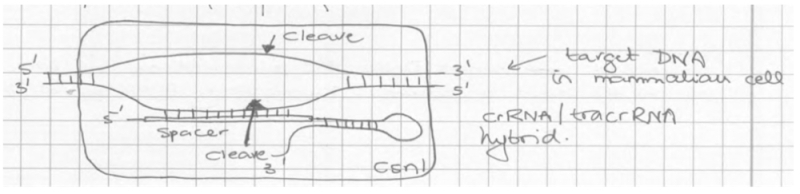
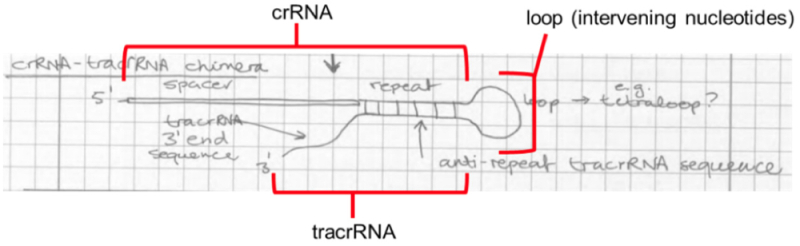
    The brief mentions the in vitro work done prior to March 1, 2012, which one of CVC's experts hailed as the "gold standard" for understanding the necessary components of the CRISPR_Cas9 system.  This work also presaged the use of first truncated and then single molecule guide RNA specifies for performing CRISPR. Turning to specifics and details, the brief tells the story of the months between their conception on March 1, 2012 and first actual reduction to practice on August 9, 2012.  According to their recounting of this origin story for eukaryotic CRISPR, Dr. Doudna sent Mr. Jinek an e-mail the very next day to write up in his laboratory notebook (Exhibit 4381) how CRISPR could be adapted for use in eukaryotic cells, including getting the disclosure signed and witnessed (introduced as evidence herein at Ex. 4349, ¶34; Ex. 4381, 63-65).  As for Jennifer Doudna, the brief explains that "Doudna so appreciated the significance of this invention that, for the first time in her career, she deliberately ensured it was promptly memorialized and witnessed" (Ex. 4350, ¶45).  The elements of the count set forth in Jinek's notebook are illustrated in this version of the notebook page set forth above:

    Image 2
    including embodiments where the crRNA and tracrRNA were fused and separated by a short look of intervening nucleotides.  The brief illustrates that this conception was "definite and permanent" by comparing the original design from Jinek's notebook dated March 1, 2012 with the (more refined) embodiment of the same components in the Jinek 2012 Science paper and the drawing in U.S. Provisional Application No. 61/757,640 (designated "P3").

    In further support for conception, the brief sets forth diagrams of the invention as disclosed in an Invention Disclosure Form (IDF) submitted on April 11, 2012 (Ex. 5105, 7, 9) containing this diagram:

    Image 3
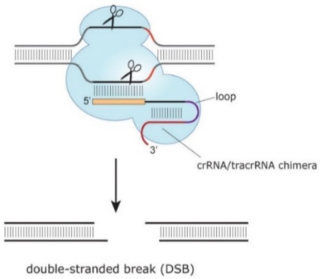
    which highlighted (in red) the NGG (PAM) sequence necessary for CRISPR alterations of specific DNA sequences as well as this diagram illustrating the components and their alignment needed for cleavage:

    Image 4
    The brief also sets forth further conception for practicing CRISPR in eukaryotic cells using the gene for green fluorescence protein (on May 28, 2012), human CTLA gene ("[b]y April 28 and no later than May 28, 2012") and in June 28, 2012 arranged for a colleague to practice eukaryotic CRISPR in zebrafish as evidenced by an e-mail (Ex. 4799).

    In support of expert testimony that the invention could be reduced to practice by nothing more than the exercise of ordinary skill, the brief then sets forth details of actual reduction to practice.  In the first successful experiment, the zebrafish rx3 gene was targeted; successful cleavage resulted in eyeless zebrafish that are otherwise normal.  (Not reproduced here are pictures of the resulting zebrafish; see Exs. 4913-4915.)  The brief sets forth in detail the course of these experiments from June 28th to August 9th, including toxicity testing of Cas9 protein in zebrafish and the use of alternative 20-nt target sequences and development of these RNA sequences for performing rx3-specific CRISPR in zebrafish:

    Image 5
    The fact that these experiments were performed by researchers other than the named inventors does not negatively impact their status as the sole true inventors, because under Genentech, Inc. v. Chiron Corp., 220 F.3d 1345, 1354 (Fed. Cir. 2000), work of others can inure to the inventor's benefit.

    Another example of actual reduction to practice occurred according to the brief on October 31, 2012 when (significantly) a first-year graduate student (whom the brief is certain to say was one of less than ordinary skill in the art having "with introductory lab skills") successfully performed CRISPR on the CLTA6 gene in human cells (Ex. 4353, ¶92; Ex. 4366, 31-33) using these RNA sequences:

    Image 6
    (These experiments were disclosed in the P3 application.)  This correspondence is important, because the PTAB has conferred priority to the P3 application in its decision on motions (see "PTAB Decides Parties' Motions in CRISPR Interference").

    Finally, the brief describes successful performance of CRISPR in human U2OS cells on November 1, 2012 targeting the CTLA6 gene, and then achieving CRISPR on this gene in human HEK293T cells on November 5th and 18th.

    The brief also uses scientific journal articles (including ones from the Broad inventors) to illustrate the routine nature of the experiments needed to practice CRISPR in eukaryotic cells using single-molecule RNA guide elements identical to the design set forth in Jinek's laboratory notebook.

    In view of the relative speed and ease with which these experiments demonstrated actual reduction to practice of eukaryotic CRISPR, one can only imagine the frustration the CVC inventors must have felt regarding the basis for the outcome of the '048 Interference and their chagrin in how unfortunate comments were considered out of context by the PTAB and Federal Circuit.

    At each step of this saga, the brief is careful to note that the invention disclosed in its evidence also corroborates the CVC inventors' conception and reduction to practice of all the limitations of Broad's half of the count.  And of course all of the evidence and testimony was corroborated by witnesses other than the inventors themselves.

    These recollections were interspersed with assertions regarding the pioneering nature of the inventors' work, their work is described as "groundbreaking," and of course the brief mentions the recent decision of the Nobel committee to award the Nobel Prize to Doudna and Charpentier alone.  And the brief also sets forth evidence that the CVC inventors appreciated all the potential obstacles used to great effect in convincing the PTAB (and the Federal Circuit) in the '048 Interference that there was no interference in fact between CVC's applications and the Broad's eukaryotic CRISPR patent.

    The brief also contains two statements from Broad scientists (or attributed to Broad scientists) meant to make it difficult for those scientists to argue prior conception and/or to support an argument that their conception was derived from CVC's invention.  These include this portion of the brief:

    According to Dr. Luciano Marraffini, who collaborated with Broad's Feng Zhang and co-filed Broad's first provisional application, the idea for sgRNA originated from the Jinek 2012 paper:

    The Doudna–Charpentier paper is when we all learned about the single-guide RNA.  That was online in June 2012 . . . .  In the end, after seeing the paper, we recognized the value of the single guide RNA.

    Dr. Shuailiang Lin, another collaborator of Zhang's and co-inventor on Broad's first provisional, independently confirmed this in a 2015 email he wrote to Dr. Doudna:

    After seeing your in virto [sic] paper, Feng Zhang and Le Cong quickly jumped to the project . . . .  We did not work it out before seeing your paper, it's really a pity.

    The brief concludes with evidence and testimony of diligence from conception and actual reduction to practice of eukaryotic CRISPR, and that CVC did not abandon, suppress, or conceal the invention.

    The Broad (whom as Senior Party is not obliged to do so) can file its Priority Motion on December 11th. Alternatively (or in addition) Broad can file an opposition on February 5, 2021.

  • By Michael Borella —

    USPTO SealOne of the more intellectually dishonest aspects of current patent eligibility law is that it allows one to ignore certain claim elements when evaluating claims under 35 U.S.C. § 101.  In Mayo v. Prometheus, it was stated that once one has identified a judicial exception to patentability (e.g., a law of nature, natural phenomena, or abstract idea) in a claim, further claim elements that are "well-understood, routine, conventional activity [that] when viewed as a whole, add nothing significant beyond the sum of their parts taken separately" essentially have no patentable weight in the eligibility inquiry.  This is despite the Court's acknowledgement that Diamond v. Diehr stood for the notion that claims "must be considered as a whole."[1]

    Further, the Supreme Court never dug into the details of whether or how this holding should be squared with prior art analyses under §§ 102 and 103.  The Mayo opinion asserted that "in evaluating the significance of additional steps, the § 101 patent-eligibility inquiry and, say, the § 102 novelty inquiry might sometimes overlap."  But the nature of this overlap was not explored.  Instead, in both Mayo and the subsequent Alice v. CLS Bank decision, the "well-understood, routine, conventional" test appears to allow judicial notice that certain claim features are so generic that one need not provide any factual evidence that this is the case.  The Federal Circuit has attempted to rectify this matter in Berkheimer v. HP, holding that — in at least some situations — the § 101 analysis involves underlying factual matters of whether elements are "well-understood, routine, conventional."

    And yet, the division of claims into "judicial exceptions" and "additional elements" can be tricky, as can knowing when one should ignore certain elements.  And the Federal Circuit has not provided clear guidance.  It is common to view a claim at a high level (and therefore ignore at least some of its elements) to declare the claim to be directed to a judicial exception.  In some cases, claims have been found to be directed to an exception because what they recite assumed to be known, and in other cases additional elements have been found to incorporate further exceptions that were subsequently ignored.

    The problem with this element-oriented, reductionist approach is that it obscures the actual invention being considered.  There was wisdom in Diehr's instruction to study the whole claim because inventions consisting of nothing but judicial exceptions and well-understood, routine, conventional additional elements are some of the most important to our current and future economy (e.g., cryptography, machine learning, quantum computing, diagnostic methods, analysis of genetic sequences).  The value is in the combination of these features, not the features in isolation.  Ignoring any claim element under § 101, without a very good reason,[2] does violence to the invention.

    As we will see, the printed matter doctrine is another avenue in which claim elements can be discounted.

    Bard launched an infringement action against AngioDynamics in the District of Delaware.  At issue were Bard's U.S. Patent Nos. 8,475,417, 8,545,460, and 8,805,478.  As a representative example, claim 1, of the '417 patent recites:

    An assembly for identifying a power injectable vascular access port, comprising:
        a vascular access port comprising a body defining a cavity, a septum, and an outlet in communication with the cavity;
        a first identifiable feature incorporated into the access port perceivable following subcutaneous implantation of the access port, the first feature identifying the access port as suitable for flowing fluid at a fluid flow rate of at least 1 milliliter per second through the access port;
        a second identifiable feature incorporated into the access port perceivable following subcutaneous implantation of the access port, the second feature identifying the access port as suitable for accommodating a pressure within the cavity of at least 35 psi, wherein one of the first and second features is a radiographic marker perceivable via x-ray; and
        a third identifiable feature separated from the subcutaneously implanted access port, the third feature confirming that the implanted access port is both suitable for flowing fluid at a rate of at least 1 milliliter per second through the access port and for accommodating a pressure within the cavity of at least 35 psi.

    The invention is directed to "vascular access ports, which are devices implanted underneath a patient's skin that allow medical providers to inject fluid into the patient's veins on a regular basis without needing to start an intravenous line each time."  Notably, "the FDA cautioned medical providers in 2004 and 2005 that they should not use vascular access ports for power injection unless the ports were specifically and identifiably labeled for such use."  Accordingly, Bard developed such identifying labels for its ports, which the Court described as follows:

    The primary identifying feature Bard developed was a radiographic marker in the form of the letters "CT" etched in titanium foil on the device.  This marker could be detected during an x-ray scan such as the "scout scan" typically performed at the start of a CT procedure.  Other identifiers incorporated into the device included a triangular shape and small bumps that were palpable through the skin.

    In any event, the District Court judge asked a magistrate to help determine whether the identifiable features of the claims should be given patentable weight in view of the printed matter doctrine.  The magistrate "determined that these limitations were not entitled to patentable weight because they were directed to the content of information that was not functionally or structurally related to the claimed ports."  The judge went with this conclusion.

    At the end of the trial, AngioDynamics filed a JMOL motion, and the judge asked the parties whether this printed matter issue was ripe for decision.  While the parties did not come to an agreement, the judge terminated the trial and granted the JMOL.  Among other rulings, the judge found the claims "invalid because they were directed to printed matter as ineligible subject matter and were not inventive."

    Regarding this § 101 issue, the Federal Circuit began its analysis by acknowledging that printed matter has long been held to fall outside the scope of patentable subject matter.  In particular, "printed matter encompasses any information claimed for its communicative content, and the doctrine prohibits patenting such printed matter unless it is functionally related to its substrate, which encompasses the structural elements of the claimed invention.  Thus, the main concern is whether "the printed matter merely informs people of the claimed information, or whether it instead interacts with the other elements of the claim to create a new functionality in a claimed device or to cause a specific action in a claimed process."

    As examples, the Court has previously decided that markings on dice have no functional relationship with the dice themselves.  On the other hand, digits printed on a circular band exploited the band's endless nature and made it useful for performing mathematical operations, and thus there was a functional relationship between the two.  Likewise, volumetric indicia on a measuring cup made the cup useful for measuring partial recipes.

    In this case, the parties stipulated that the claimed identifiable features constitute printed matter, but disagreed over whether these features are functionally related to the port.  Bard contended that "the information conveyed by the markers provides new functionality to the port because it makes the port self-identifying."  The Court did not buy into this point, as "mere identification of a device's own functionality is sufficient to constitute new functionality for purposes of the printed matter doctrine" would eviscerate the doctrine.

    Turning to the subject matter eligibility issue, the Court admitted that, since Alice, it had not "directly addressed whether a patent claim as a whole can be deemed patent ineligible on the grounds that it is directed to printed matter at step one and contains no additional inventive concept at step two."  But it found reason to do so here, as such a position is consistent with its prior holdings that "the mere conveyance of information that does not improve the functioning of the claimed technology is not patent-eligible subject matter under § 101.  Notably, the Court pointed to the claims found ineligible in Two-Way Media Ltd. v. Comcast Cable Commc'ns, LLC, Elec. Power Grp., LLC v. Alstom S.A., and Digitech Image Techs., LLC v. Elecs. for Imaging, Inc. as examples that stand for the principle that the processing of information does not improve the functioning on a computer.

    Applying these notions to Bard's claims, the Court found that "the focus of the claimed advance is not solely on the content of the information conveyed, but also on the means by which that information is conveyed."  Particularly, the claims address "a specific need for easy vascular access during CT imaging, and it is the radiographic marker in the claimed invention that makes the claimed port particularly useful for that purpose because the marker allows the implanted device to be readily and reliably identified via x-ray, as used during CT imaging.  With respect to the Alice framework, the Court concluded that there was insufficient evidence that "the use of a radiographic marker, in the ordered combination of elements claimed, was not an inventive concept."  Notably, "[e]ven if the prior art asserted by AngioDynamics demonstrated that it would have been obvious to combine radiographic marking with the other claim elements, that evidence does not establish that radiographic marking was routine and conventional under Alice."  Thus, in accordance with Berkheimer, not all obvious elements would also be routine and conventional.

    Therefore, the asserted claims are patent-eligible because they are not solely directed to printed matter.

    One of the subtle points of this case is that the Federal Circuit seems to be equating printed matter with the notion of an abstract idea under step one of Alice.  Therefore, if a claim includes printed matter, it would have to also include additional elements that amount to significantly more to be eligible.  One way of establishing that this is the case is if the printed matter, in combination with the additional elements, provides functionality that the additional elements on their own do not provide.

    But taking this a step further, printed matter doctrine provides more opportunities to ignore claim elements.  While that did not happen in this case, it would not be surprising for this holding to be expanded in a way that provides yet one more avenue for to do so.  It is conceivable that some courts could apply the doctrine to user interface claims in an attempt to establish that at least some of the displayed information therein is not related to the functionality of the computing system, thus rendering those claims ineligible.

    C R Bard Inc. v. AngioDynamics, Inc. (Fed. Cir. 2020)
    Panel: Circuit Judges Reyna, Schall, and Stoll
    Opinion by Circuit Judge Reyna

    [1] The Court attempted to synthesize this apparent contradiction between Mayo and Diehr by stating that "[b]ecause the approach we made explicit in Mayo considers all claim elements, both individually and in combination, it is consistent with the general rule that patent claims must be considered as a whole."  But in practice, the consideration of claim elements in combination was and is given short shrift. 

    [2] Elements that are redundant with other elements and preambles reciting intended use are examples in which parts of claims can be disregarded.

  • MBHB Logo 2McDonnell Boehnen Hulbert & Berghoff LLP will be offering a live webinar entitled "PTAB Top Stories 2020: Discretionary Denials, Motions to Amend, and Arthrex, Oh My!" on November 18, 2020 from 10:00 am to 11:15 am (CT).  In this presentation, MBHB attorneys James Lovsin and George "Trey" Lyons, III will take a look at four key topics concerning AIA Trial Proceedings that should be at the forefront of every PTAB practitioner's renewed focus this year, including:

    • Discretionary Denials: What are Patent Owner strategies for obtaining discretionary denials? What are Petitioner strategies for avoiding them?
    • Motions to Amend: What benefit (or not) does the Patent Owner get for participating in the motion to amend pilot program? Can the Petitioner rely on the PTAB to present its own grounds to oppose the motions to amend? What are strategies for § 101 challenges to motions to amend?
    • Constitutionality: What are the updates and potential outcomes/impacts from Supreme Court action in Arthrex?
    • Appealability: What procedural issues are reviewable after Thryv and Windy City?

    While there is no fee to participate, attendees must register in advance.  Those wishing to register can do so here.  CLE credit is pending for the states of California, Illinois, New Jersey, New York, North Carolina, and Virginia.

  • By Kevin E. Noonan —

    Federal Circuit SealSomewhat remarkably, there is no settled Federal Circuit precedent regarding where a patentee can bring suit against a generic competitor in Hatch-Waxman litigation under 35 U.S.C. § 271(e)(2).  While recognizing that this situation has arisen in large part to the disruption created by the Supreme Court in TC Heartland LLC v. Kraft Foods Grp. Brands LLC of prior Federal Circuit interpretations that venue was coincident with personal jurisdiction, last Thursday the Federal Circuit arrived at a decision regarding where proper venue does not lie in ANDA litigation, in Valeant Pharmaceuticals North America LLC v. Mylan Pharmaceuticals Inc.

    The issue arose in ANDA litigation brought in the District of New Jersey by Valeant Pharmaceuticals against a trio of Mylan entities:  Mylan Pharmaceuticals, Inc., (MPI) "a West Virginia corporation with a principal place of business in Morgantown, West Virginia"; Mylan Laboratories Ltd. (MLL), "Indian corporation with a principal place of business in Hyderabad, India"; and Mylan Inc., "a Pennsylvania corporation with a principal place of business in Canonsburg, Pennsylvania."  The underlying dispute involves Dow Pharmaceutical Sciences' anti-fungal drug Jublia® (efinaconazole) protected by nine Orange Book-listed patents.  Because geography is important to the venue issue, the opinion notes that MPI "executed" its ANDA in its West Virginia corporate headquarters and filed at the FDA in White Oak, Maryland.  Valeant's suit was supported by several allegations that venue was proper in New Jersey, including:

    • Each Mylan defendant "directly, or indirectly, develops, manufactures, markets, and sells generic drug products throughout the United States and in this judicial district, and this judicial district is a likely destination for Mylan's generic efinaconazole topical solution." . . .
    • Each Mylan defendant does business in New Jersey and is registered to do so. . . .
    • Each defendant has previously submitted to the jurisdiction of the court and has a place of business in New Jersey.
    • MPI applied for FDA approval of its generic drug, which will be "purposefully directed at, upon information and belief, New Jersey and elsewhere.  [MPI's] ANDA filings constitute formal acts that reliably indicate plans to engage in marketing of the proposed generic drugs."  And MPI plans to market and sell its generic drug in into New Jersey upon FDA approval[.]

    The Mylan defendants moved to dismiss under Fed. R. Civ. P. 12(b)(3) for improper venue (and under Rule 12(b)(6) as to the MLL and Mylan Inc. defendants for failure to state a claim).  Mylan did not dispute Valeant's assertions as set forth above; rather, the basis for the motion was that venue was improper under 28 U.S.C. § 1400(b) because none of the defendants resided in New Jersey, was incorporated there, or has "regular and established places of business" in the state, and no act of infringement occurred there.  Valeant argued in response that infringement under § 271(e)(2) was prospective, intended to address "planned future [infringing] conduct," an argument supported by Bristol-Myers Squibb Co. v. Mylan Pharmaceuticals Inc. from the District Court in Delaware.  And with regard to the (12)(b)(6) motion, Valeant argued that infringement liability under the statute was not limited to the ultimate ANDA filer in these situations, citing In re Rosuvastatin Calcium Patent Litig., 703 F.3d 511, 527–28 (Fed. Cir. 2012).

    The District Court granted the Mylan motions on improper venue grounds, based on Federal Circuit precedent in In re Cray and In re ZTE, for the principle that "requirements of the venue statute are specific, unambiguous, and not amenable to liberal construction based on policy concerns . . ." (although the opinion notes that the District Court did not address the (12)(b)(6) motion directly).

    The Federal Circuit affirmed in part, reversed in part, and remanded, in an opinion by Judge O'Malley joined by Judges Newman and Taranto.  The panel first considered as a "case of first impression" the question of the situs of proper venue in Hatch-Waxman litigation (in view of the TC Heartland decision).  The Court performed this analysis by first assessing where the infringing act occurred (a requirement expressly recited in the statute).  This raised the issue of the nature of the infringing act under § 271(e)(2), which specifies that it is an act of infringement to submit an ANDA for a drug protected by an Orange Book-listed patent.  While the litigation is focused on infringement vel non of a defendant's future approval and sale of a generic drug, the act of infringement set forth in the statute is an ANDA filing itself.  The effects on venue of these two infringing acts formed the basis for the Court's decision.

    Prior to TC Heartland, the opinion recounted, the Federal Circuit had found venue to be proper where personal jurisdiction against the defendant was proper, citing Acorda Therapeutics Inc. v. Mylan Pharmaceuticals Inc., 817 F.3d 755 (Fed. Cir. 2016), and VE Holding Corp. v. Johnson Gas Appliance Co., 917 F.2d 1574, 1584 (Fed. Cir. 1990), and thus considered "planned future acts" of infringement.  These precedents were overturned by TC Heartland according to the opinion, and thus the venue question before the Court in this case became unsettled.  The opinion noted that other cases involving venue questions post-TC Heartland (Cray, ZTE) were decided narrowly, given the specific statutory language.  Other attempts by the Court to address venue in ANDA cases (pre-TC Heartland) had recognized the issue that the statute recites "where the defendant has committed acts of infringement" (emphasis added) regarding "potential future acts" of infringement.  Cases like Bristol-Myers Squibb concluded that the statute was directed towards such future acts of infringement and not the administrative act of filing the ANDA and that thus venue was proper in a district in which infringing generic drugs were intended to be sold.  This precedent has been followed (Celgene Corp. v. Hetero Labs Ltd., No. 17-cv-3387-ES-MAH, 2018 WL 1135334, at *3 (D.N.J. Mar. 2, 2018)) and abjured (Galderma Labs., L.P. v. Teva Pharms. USA, Inc., 290 F. Supp. 3d 599, 606–09 (N.D. Tex. 2017)) in practice and here the Court resolved the issue by deciding that the District Court was correct that venue was improper in New Jersey under these circumstances in view of TC Heartland.

    The basis for this decision followed the (narrow) statutory construction rubrics followed in other post-TC Heartland venue cases, particularly the plain meaning of the language of the statute.  This includes the clear object that venue was proper where infringement had occurred (identified through the use of the present perfect verb tense by Congress, particularly in view of the statute's use of the present tense regarding "where the defendant resides" and "where the defendant . . . has a regular and established place of business").  This returned the opinion to the question of the act of infringement embodied in § 271(e)(2), which the panel identified as the act of submitting the ANDA.  The Court rejected Valeant's arguments to the contrary on the grounds that the venue statute should be narrowly construed and not affected by policy determinations.  Thus, arguments regarding the "artificiality" of infringement under § 271(e)(2) fell on deaf ears, even while the opinion conceded that the Supreme Court, the Federal Circuit itself, and district courts had termed § 271(e)(2) to recite an "artificial act of infringement," citing Eli Lilly & Co. v. Medtronic, Inc., 496 U.S. 661, 678 (1990); Acorda, 817 F.3d at 760; and Belcher Pharms., LLC v. Int'l Medication Sys., Ltd., 379 F. Supp. 3d 326, 330 (D. Del. 2019).  Despite this precedent, the opinion asserted that the statute evinced no such ambiguity; submitting an ANDA "is the infringing act" (emphasis in opinion) according to the Court, noting the paradox that the complementary section of the statute, § 271(e)(1) "declares certain very real acts of infringement to be non-infringing acts."  The panel also rejected any effects of the focus of Hatch-Waxman litigation on future approval and infringing generic drug sales, saying that "[t]he content of the litigation does not, however, turn potential future acts into past infringement" (and of course there is no post-litigation infringement in any case, either because approval is stayed until the patent(s) expire or they are found invalid, unenforceable, or not infringed).  And Valeant's arguments regarding Congressional intent foundered on the Supreme Court's understanding that Congress could have expressed differing intent when amending § 1400(b) in 1988 (post-Hatch-Waxman) or again when adopting a general venue statute in 2011.  Even arguments the Court clearly found appealing on policy grounds (the possibility that generic companies could "game" the system to avoid venue in some jurisdictions, and that innovator companies might need to bring and maintain suit in multiple districts) could not overcome the plain meaning of the statute in view of Supreme Court precedent.  Thus the opinion stated succinctly:

    Accordingly, we hold that, in Hatch-Waxman cases, venue is not proper in all judicial districts where a generic product specified in an ANDA is likely to be distributed.  It is proper only in those districts that are sufficiently related to the ANDA submission—in those districts where acts occurred that would suffice to categorize those taking them as a "submitter" under § 271(e).

    (It must be recognized, however, that in a footnote the opinion asserts: "The district court's suggestion that an act of infringement for purposes of this case may have occurred in the District of Maryland where the FDA received the ANDA is not challenged in this appeal.  While it may well be that the District of Maryland satisfies the test for venue that we have laid out here, we do not resolve that question.  We also do not define what all relevant acts involved in the preparation and submission of an ANDA might be, leaving those questions for other cases where the precise contours are presented and briefed.")

    Finally, the Federal Circuit reversed the District Court with regard to the MLL defendant, on the grounds that a foreign defendant can be sued in any judicial district, and remanded for the District Court to consider whether this defendant was sufficiently involved to overcome the motion to dismiss under Rule 12(b)(6).

    Valeant Pharmaceuticals North America LLC v. Mylan Pharmaceuticals Inc. (Fed. Cir. 2020)
    Panel: Circuit Judges Newman, O'Malley, and Taranto
    Opinion by Circuit Judge O'Malley