• By Donald Zuhn

    Federal Circuit SealLast month, the Federal Circuit affirmed an Order by the U.S. District Court for the Northern District of California, finding that Appellant Walter A. Tormasi lacked the capacity to sue under Federal Rule of Civil Procedure 17(b).  Mr. Tormasi had filed suit against Appellee Western Digital Corp., asserting that Western Digital had infringed claims 41 and 61-63 of U.S. Patent No. 7,324,301.



    Mr. Tormasi is an inmate in the New Jersey State Prison, which has a "no-business" rule prohibiting inmates from commencing or operating a business without prior approval from the Administrator (i.e., the chief executive officer of any State correctional facility within the New Jersey Department of Corrections).  Without the Administrator's prior approval, Mr. Tormasi formed an intellectual property holding company, Advanced Data Solutions Corp., appointing himself as Director, Chief Executive Officer, President, and Chief Technology Officer.  Mr. Tormasi then filed a patent application that issued as the '301 patent (which relates to the art of dynamically storing and retrieving information using nonvolatile magnetic random-access media, specifically hard disk drives).  Acting as Director, Mr. Tormasi transferred the rights in the patent application to himself in exchange for all shares of Advanced Data Solutions stock, then transferred the application back to himself, and then twice transferred the '301 patent to himself.  In January 2019, Mr. Tormasi filed suit against Western Digital for infringement of the '301 patent.  Western Digital moved to dismiss the suit for lack of standing and capacity to sue, and the District Court issued an Order, finding that Mr. Tormasi lacked capacity to sue in view of his violation of the no-business rule.

    On appeal, Mr. Tormasi asserted that his lawsuit could not be construed as an unpermitted business activity because he sought to enforce his personal intellectual property rights.  A majority of the Federal Circuit disagreed, stating that Mr. Tormasi's attempt to file the lawsuit as a personal action "merely repackages his previous business objectives as personal activities so he may sidestep the 'no business' regulation," and finding the "characterization of his suit as personal, as opposed to related to business, to be without merit."  The majority found that "[b]ecause New Jersey prohibits inmates from pursuing a business, and because of Mr. Tormasi's repeated attempts to profit as a business from the ['301] patent, the District Court did not err when it determined that Mr. Tormasi lacked the capacity to bring this suit for patent infringement."  The majority therefore affirmed the District Court's Order.

    Writing in dissent, Judge Stoll asserted that Mr. Tormasi had not waived his argument that the "no business" rule did not limit the scope of an inmate's capacity to sue under New Jersey law, as the majority had found.  Judge Stoll explained that Mr. Tormasi's argument that "imprisonment status or prison behavior is irrelevant to the capacity-to-sue standard," had "fairly preserved" his legal argument that the "no business" rule cannot generally limit the scope of an inmate's capacity to sue.  Judge Stoll, therefore, concluded that the "no business" rule should not have been at issue at all.

    Tormasi v. Western Digital Corp. (Fed. Cir. 2020)
    Nonprecedential disposition
    Panel: Circuit Judges Wallach, Chen, and Schall
    Opinion per curiam; dissenting opinion by Circuit Judge Stoll

  • By Kevin E. Noonan

    USPTO SealOn September 10th, the Patent Trial and Appeal Board rendered its decision on the parties' Motions in Interference No. 106,115 (see "PTAB Decides Parties' Motions in CRISPR Interference").  Perhaps the decision of most immediate significance was the Board's decision denying the Senior Party's (The Broad Institute, Harvard University, and the Massachusetts Institute of Technology, collectively, "Broad") Substantive Motion No. 1, that Junior Party Junior Party the University of California/Berkeley, the University of Vienna, and Emmanuelle Charpentier (collectively, "CVC") should be estopped in this interference by the PTAB's decision in the earlier 105,048 interference between these parties.  What follows is a description and analysis of the Board's reasoning.

    The Board is direct in denying Broad's Motion No. 1, saying they have not been persuaded by Broad's arguments.  Because the Board dissolved the '048 interference because there was no interference-in-fact, that judgment "neither cancel[ed] nor finally refuse[d] either parties' claims," citing its Judgment.  Accordingly, in the Board's view, "the resolution at the end of the '048 interference was that interference between the claims presented at that time did not deprive either party of its claims."  Broad's estoppel arguments are based on CVC losing rights to claims directed to eukaryotic embodiments of CRISPR; in the Board's view, the basis for its decision in the '048 Interference is contrary to Broad's characterization.

    Turning to specifics, the Board addressed Broad's contention that Rule 127(a)(1) mandated its request relief.  The Board disagreed, noting that "[t]he prior CVC claims did not interfere with Broad's claims, whereas Broad does not contest that the currently involved CVC claims do."  Accordingly, "it is not clear that the subject matter of the interference is the same, even if the subject matter of Broad's claims is the same."  Evidentiarily, the Board's decision states that "Broad fails to provide a sufficient comparison of the subject matter of the two interferences to persuade us that the current interference is, or will be, the same subject matter of the '048 interference and will raise the same issues."  Specifically, the Board notes that "Broad fails to compare the count in the current interference, or Broad's proposed counts, with either parties' claims in the prior interference" and that "the current count in the current interference recites a limitation on the RNA configuration that is not recited in the count of the '048 interference."  The Board finds further fault with the Broad's arguments in support of its motion in that "whether the prior count and the current count are drawn to the same subject matter is a disputed issue, which is not sufficiently addressed in Broad's Motion 1."

    Turning to Broad's argument that CVC is estopped under Rule 127(a)(1) because Junior Party did not request authorization to file a motion to add eukaryotic CRISPR embodiment claims in the '048 Interference, the Board agreed with CVC's argument that the first sentence of Rule 127(a)(1) does not mention estoppel, and that sentence is limited to decisions "disposing all issues of the proceeding."  A holding of no interference-in-fact, according to the Board, disposes of no issues other than whether there is an interference-in-fact and thus Rule 127(a)(1) does not apply.  Indeed, such a finding precludes the Board from deciding any other issue, states the opinion, citing Berman v. Housey, 291 F.3d 1345, 1352 (Fed. Cir. 2002).  Similarly unpersuasive was Broad's citation of PTO comments during the Notice-and-Comment period related to adoption of the current interference rules, because those comments were directed to interferences directed to the same subject matter and "Broad fails to persuade us that the current interference is for the same subject matter as the prior '048 interference."  And while not expressly agreeing with CVC, the Board cites the MPEP consistent with CVC's argument that "there is no losing party" resulting from a determination of no interference-in-fact.

    Interference estoppel by judgment, according to the Board's opinion, "rests on the principle that a 'judgment in an action precludes relitigation of claims or issues that were . . . raised in [the earlier] proceeding,'" citing  In re Deckler, 977 F.2d 1449, 1452 (Fed. Cir. 1992).  Stating the Board's basis for its decision most distinctly, the opinion states that "Broad has failed to persuade us that under 37 C.F.R. § 41.127(a)(1) CVC is estopped because Broad fails to persuade us that the subject matter of the current interference is the same as the subject matter of the prior '048 Interference."

    The opinion further asserts that the Board's application of its rules here are consistent with its responsibility under 37 C.F.R. § 41.1 "to secure the just, speedy, and inexpensive resolution of every proceeding before the Board."

    And with regard to CVC's putative obligation or responsibility to move to file a motion adding claims to eukaryotic CRISPR embodiments in the '048 Interference, the Board noted that CVC had no claims in condition for allowance during that interference.  "Because the patentability of such claims to CVC was not certain at the time of the '048 Interference, we agree with CVC that allowing ex parte examination to conclude was preferable" according to the Board, noting that Broad itself had "expressed this view" in response to CVC's request to file a preliminary motion to add a claim and substitute a count in the '048 interference.  "Under the facts and circumstances of this interference, where UC believes all of its current claims interfere with all of Broad's claims, there is no reason why UC should need to add a new claim.  If UC's claims in other applications are ultimately found to be allowable, UC may suggest additional interferences to the examiner" (emphasis in opinion).

    Under this reasoning the Board denied Broad's Motion No. 1 and then turned to the other motions filed by the parties, which will be discussed in future posts.

  • CalendarSeptember 22, 2020 – "The Race for a Coronavirus Vaccine: The Intersection of Science and IP Policy" (Morningside IP and IPWatchdog) – 12:00 pm (ET)

    September 22, 2020 – "Plausibility at the EPO – Exploring the Legacy of Dasatinib" (Mathys & Squire) – 6:00 to 7:00 pm (GMT Summer Time); 11:00 am to 12:00 pm (ET)

    September 23-24, 2020 – Program on Promoting Innovation and Supporting Pro-competitive Collaborations in Life Science Sector (U.S. Patent and Trademark Office and Department of Justice) – 1:00 to 5:20 pm ET

    September 23-24, 2020 – Summit on Biosimilars: Legal, Regulatory, and Commercial Strategies for the Innovator and Biosimilars Marketplace (American Conference Institute) – virtual conference

    September 23-24, 2020 – FDA Boot Camp (American Conference Institute) – virtual conference

    September 24, 2020 – "Latest Developments in the Patentability of AI- and Software-Based Inventions" (Fitch Even) – 12:00 pm to 1:00 pm (ET)

    September 29, 2020 – IPWatchdog Virtual CON2020 – The Future of Monetization – 12:45 pm (ET)

    September 29, 2020 – IPWatchdog Virtual CON2020 – What Can Armor on WWII Planes & Honeybees Tell Us about Innovation Strategy? – 2:00 pm (ET)

    September 29, 2020 – IPWatchdog Virtual CON2020 – Everyone Wants to Be a Unicorn – But What About Patents? – 2:15 pm (ET)

    September 30, 2020 – IPWatchdog Virtual CON2020 – Keynote: Louis Foreman, CEO, Enventys Partners, founder of Edison Nation – 12:05 pm (ET)

    September 30, 2020 – IPWatchdog Virtual CON2020 – How China is Changing the Global Patent System – 12:45 pm (ET)

    September 30, 2020 – IPWatchdog Virtual CON2020 – Solutions for the U.S. Patent System – 2:15 pm (ET)

  • The U.S. Patent and Trademark Office and Department of Justice will be holding a joint program on September 23-24, 2020 on how patents and copyrights drive value in the life science sector and the effects of collaborations and partnerships, with specific attention paid to the antitrust implications of different cooperation and licensing strategies.  The program will include ten sessions over two afternoons (1:00 to 5:20 pm ET):

    USPTO SealDay 1 sessions:

    • The roles of patents in research and development of therapeutics, diagnostics, and vaccines, particularly during pandemics
    • Update on USPTO guidance on the patentability of life science inventions
    • Life science patents in practice
    • Panel discussion: Are changes to U.S. patent law needed to better support innovation and in life sciences and the development of COVID-19 solutions?
    • Copyright and innovation in the life sciences
    • Panel discussion: How copyright can create incentives or barriers to building data or information pools, and related licensing

    Department of Justice (DOJ) SealDay 2 sessions:

    • Collaboration and licensing strategies
    • How do regulation and antitrust enforcement impact competition and incentives for innovation?
    • Competition and collaboration: Examining competitive effects and antitrust risks associated with collaborations
    • Academics' and economists' views on collaboration and competition

    Additional information regarding the program can be found here.

  • IPWatchdogMorningside IP and IPWatchdog and will be offering a webinar entitled "The Race for a Coronavirus Vaccine: The Intersection of Science and IP Policy" on September 22, 2020 at 12:00 pm (ET).  Jonathan L. Temte, Associate Dean for Public Health and Community Engagement, University of Wisconsin School of Medicine and Public Health; Melissa Brand, Assistant General Counsel and Director of Intellectual Property, Biotechnology Innovation Organization (BIO); Erika Lietzan, Associate Professor of Law, University of Missouri School of Law; and Gene Quinn of IPWatchdog will participate in a wide-ranging conversation on the topic of COVID-19 and the race toward a coronavirus vaccine, including the science, FDA processes involved, and intellectual property rights.

    There is no registration fee for this webinar.  However, those interested in registering for the webinar, should do so here.

  • Mathys & SquireMathys & Squire will be offering a webinar entitled "Plausibility at the EPO – Exploring the Legacy of Dasatinib" on September 22, 2020 from 6:00 to 7:00 pm (GMT Summer Time); 11:00 am to 12:00 pm (ET).  Anna Gregson and Stpehne Garner of Mathys & Squire LLP will review how the EPO case law has developed since the EPO Board of Appeal revoked Bristol-Myers Squib's dasatinib patent in 2017, and discuss if and how innovators should adjust their filing and drafting strategy in light of the EPO's post-dasatinib approach to plausibility.

    While there is no cost to participate in the program, those interested in attending the webinar can register here.

  • Fitch EvenFitch Even will be offering a webinar entitled "Latest Developments in the Patentability of AI- and Software-Based Inventions" on September 24, 2020 from 12:00 pm to 1:00 pm (ET).  Thomas F. Lebens and Zachary Van Engen of Fitch Even will provide an update on the latest legal developments in computer software patentability along with guidance on best practices for protecting software-related innovations, covering the following topics:

    • Ramifications of recent post-AliceFederal Circuit cases
    • Updated USPTO guidelines
    • Tips for patent application drafting
    • Tips for responding to office actions

    While there is no cost to participate in the program, advance registration is required.  Those interested in attending the webinar can register here.

  • By Donald Zuhn

    USPTO SealIn a notice published in the Federal Register (85 Fed. Reg. 58038) earlier today, the U.S. Patent and Trademark Office announced that it was implementing a deferred-fee provisional patent application pilot program in order to promote the expedited exchange of information about inventions designed to combat COVID–19.  In the notice, the Office states that it recognizes that its charge to issue high-quality patents to inventors goes hand-in-hand with the dissemination of important technical information, and that the free-flow of such information is now more important than ever in view of the urgent challenges posed by COVID–19.

    Applicants who participate in the pilot program will be allowed to defer payment of the provisional application filing fee (which is currently $280 for large entities) until the filing of a nonprovisional application claiming the benefit of the provisional application in exchange for permitting the Office to make the technical subject matter disclosed in the provisional application available to the public via a searchable collaboration database maintained on the Office's website.  In order to qualify for participation in the pilot program, the subject matter disclosed in the provisional application must concern a product or process related to COVID–19, and such product or process must be subject to approval by the U.S. Food and Drug Administration (FDA) for COVID-19 use.  According to the notice, a provisional application qualifies for participation in the pilot program if such FDA approval "has been obtained, is pending, or will be sought prior to marketing the subject matter for COVID–19."  The notice indicates that such approvals include an Investigational New Drug (IND) application, an Investigational Device Exemption (IDE), a New Drug Application (NDA), a Biologics License Application (BLA), a Premarket Approval (PMA), or an Emergency Use Authorization (EUA).  The notice also indicates that the subject requirement for participation in the deferred-fee provisional patent application pilot program is the same as that for participation in the COVID–19 prioritized examination pilot program, which was announced in May (see "USPTO Announces COVID-19 Prioritized Examination Pilot Program").

    The requirements to participate in the pilot program are as follows:

    1.  Applicants must submit a certification and request for participation in the program using form PTO/SB/452.

    2.  The submission must be in the English language.

    3.  The submission must include a provisional application cover sheet pursuant to 37 C.F.R. § 1.51(c)(1) (or an Application Data Sheet, which may serve as the provisional application cover sheet).

    4.  The submission (i.e., provisional application specification, including any drawings, claims, and/or abstract, provisional application cover sheet (or ADS), and form PTO/SB/452) must be filed electronically via the Office's Patent Center, and the specification must be filed in DOCX format to facilitate making the text searchable.

    5.  The submission must meet the requirements for a provisional application under 35 U.S.C. § 111(b)(1) and 37 C.F.R. § 1.53(c), except for the payment of the basic filing fee, which would be deferred under the pilot program.

    The notice indicates that a submission that does not include a legible specification in DOCX format will be handled as a provisional application and not a pilot program submission.  However, if a submission does not include a provisional application cover sheet or application size fee (if the latter is required), the Office will give Applicants an extendable two-month time period to submit the missing items.

    The technical subject matter of provisional applications accepted to the pilot program will be uploaded by the Office into a searchable public collaborative database, and the submission will be processed as a provisional application.  The notice states that the database will also publish the name of the inventor or the first named joint inventor, the provisional application filing date, and the date the submission was placed in the database, but will not publish the provisional application cover sheet.

    The notice explains that while a provisional application filing fee is a statutory requirement under 35 U.S.C. § 111(b)(3), the Director is authorized under that same section to allow Applicants to pay that fee after the filing date of the application.  However, the notice also explains that the basic filing fee under 37 C.F.R. § 1.16(d) must be paid by the Applicant in order to rely on the provisional application in a later-filed nonprovisional application.  Participants in the pilot program will receive a reminder from the Office 10 months after the provisional application filing date indicating that the basic filing fee must be paid not later than 12 months after the provisional application filing date in order to claim the benefit of the filing date of the provisional application in a nonprovisional application.

    In a section of the notice entitled "Prior Art Considerations," the Office states that "[a]n inventor's technical disclosure published in the collaboration database cannot be used against the inventor's own corresponding later-filed nonprovisional application in the United States, provided that the later-filed application is filed within one year of the public disclosure."  However, the notice also states that:

    Special care should be taken where foreign patent protection is desired.  Many foreign jurisdictions treat an inventor's public disclosure made within one year of filing as prior art against the inventor's own application unless that earlier disclosure is the subject of a proper priority claim in that jurisdiction.  For this reason, applicants should be aware of the prior art implications of their submissions.

    Making a submission under the program will result in a public disclosure of the technical subject matter via the Office's searchable collaboration database.  Thus, such a public disclosure may be citable as prior art under 35 U.S.C. 102(a)(1) as of the date it publishes.  In addition, the complete provisional patent application submitted under the program may become prior art under 35 U.S.C. 102(a)(2) as of the filing date, but only if there has been a proper benefit claim under 35 U.S.C. 119(e) in a later-filed nonprovisional application or international application and the later-filed application has been published or deemed published under 35 U.S.C. 122(b) or has issued as a U.S. patent.

    The notice also explains that "[t]here is no provision for withdrawal from the program," and that "[o]nce the technical subject matter of a program submission is made available to the public in the searchable collaboration database on the USPTO's website, that public availability cannot be revoked."

    The Office began accepting certifications and requests for participation in the pilot program today and will accept requests for the next 12 months, at which time the program may be extended or terminated by the Office.  The notice also indicates that depending on feedback and interest in the pilot program, the technological scope may be expanded beyond COVID–19 to other areas that are the focus of pioneering or rapid innovation.  Provisional applications filed prior to September 17, 2020 are not eligible for participation in the pilot program.

    The Office will accept public comments regarding the pilot program, but such comments must be received by November 16, 2020 to be considered by the Office.  Comments should be sent by e-mail and addressed to Covid19ProvisionalApplication@uspto.gov.

  • By Kevin E. Noonan

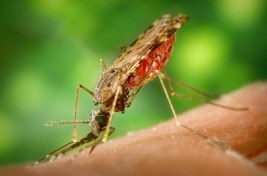
    Anopheles_albimanus_mosquitoThere are an estimated 219 million cases of malaria per year, leading to more than 400,000 deaths annually according to the World Health Organization.  Hemocytes (insect white blood cells) comprise the mosquito immune system and are the basis for immunity to malaria.  There are three known hemocyte types:  granulocytes (highly phagocytic cells of about 10 to 20 μm in diameter); oenocytoids (8- to 12-μm round cells that produce melanin involved in pathogen encapsulation); and prohemocytes (round cells (4 to 6 μm) with a high nuclear-to-cytoplasmic ratio and are thought to be precursors of the other two cell types).  These can be circulating in the hemolymph or resident in tissues like the gut epithelium (where the ookinete stage of the Plasmodium migrates).  Upon infection, hemocytes activate and kill Plasmodium parasite by complement activation.  Repeated infection is prevented by immunological memory termed "priming" in mosquitos; subsequent infections stimulate release of hemocyte differentiation factor into the hemolymph, which causes granulocyte induction.  This priming is effectuated by release of hemocyte differentiation factor (HDF), a combination of lipoxin 4 and evokin, which is a lipocalin carrier.

    Against this backdrop of basic mosquito biology, an international team* of researchers reported their results of an in-depth study of mosquito immune system in a paper published in Science entitled "Mosquito cellular immunity at single cell resolution."  Using single cell RNA sequencing techniques on individual hemocytes, these researchers analyzed transcriptomes from 5,383 Anopheles gambiae specimens, comparing transcriptomes of circulating hemocytes from mature adult female mosquitos fed either a sugar meal or with a blood meal from Plasmodium-infected or healthy mice.  Their results showed the following major cell clusters:  two from adipose tissue, one from muscle tissue, and six hemocyte clusters.  One adipose-tissue derived cluster expressed several immune-modulatory genes such as CAP-Gly domain containing linker proteins (CLIPs, including CLIPA1, -7, -8, -9, and -14), homeobox transcription factors LRIM1, -4A, -8A, -8B, -9, and -17, lectins (CTL4 and MA2), and Serpin 2 (SRPN2).  The other adipose-tissue derived cluster expressed high levels of vitellogenin, a canonical fat-body marker.  The six hemocyte clusters had diverse characteristics:

    • HC1 showed high mRNAs levels of prophenoloxidases, including PPO4 and PPO9, characteristic of oenocytoids, and contained low levels of leucine-repeat protein 8 (LRR8) mRNA.

    • HC2 showed low or absent PPO4 and high LLR8 levels; had a morphology typical of prohemocytes and granulocytes; expressed SPARC, cathepsin-L, and LRR8; had 73% fewer unique molecular identifiers (UMIs) (mean UMI of 413) than cells of the HC3 cluster; and were less differentiated and were thought to constitute prohemocytes.

    • HC3 showed low or absent PPO4 and high LLR8 levels; had a morphology typical of prohemocytes and granulocytes; expressed SPARC, cathepsin-L, and LRR8; had a greater number of UMI than cells of the HC2 (mean of 1516); and typical granulocyte morphology, with prominent pseudopodia and abundant granules.

    • HC4 showed low or absent PPO4 and high LLR8 levels; had a morphology typical of prohemocytes and granulocytes; shared markers with cells of the HC3 cluster; expressed cyclin B, aurora kinase, and other mitotic markers, which suggests that they are proliferating hemocytes — consistent with this hypothesis, cells in this cluster expressed mitotic markers consistent with proliferation in response to a blood meal which was also consistent with blood-feeding induced DNA synthesis; and a correlation analysis shows these cells to be granulocytes.

    • HC5 showed low levels of LLR8 and expressed no PPO4; expressed high levels of an uncharacterized transmembrane protein AGAP007318 (TM7318) and lipopolysaccharide-induced tumor necrosis factor–α transcription factor 3 (LL3); and showed two different morphologies, wherein TM7318-positive cells were present in low abundance (0.5% of granulocytes) that represented a novel, separate giant cell type (25 to 40 μm) they termed "megacytes".

    • HC6 showed low levels of LLR8 and no PPO4, were negative to HC4 and HC5 markers but expressed antimicrobial peptides such as defensin 1, cecropins 1, and C-type lysozyme; and also exhibited differential morphologies, whereas cells negative for TM7318 represented small granulocytes that expressed antimicrobial genes (AM Gran) (16.4% of granulocytes).

    The transcriptomes were further analyzed and these researchers found that granulocytes formed three major subclusters, one representing the basal state (Gran1) and the others represented by cells activated by blood meal (Gran2) and Plasmodium infection (Gran3).  Prohemocytes, on the other hand, clustered into two population subclusters (PHem1 and PHem2), wherein PHem2 seems to be an intermediate between PHem1 and Gran1.  The Gran1 cluster was linked to Gran2 and Gran3, with Gran3 being linked to dividing granulocytes.  Gran2 also linked to megacytes, and Gran1 linked to antimicrobial granulocytes, as shown in the accompanying figure:

    Fig 2DThe status of immunological cells in An. gambiae was compared with another insect vector species, Aedes aegypti, known to transmit dengue fever, yellow fever, chikungunya, and Zika virus.  When compared with transcriptomes of An. gambiae, cross-species correlation analysis revealed four different cell states, including a proliferating S-phase granulocyte cluster (AaHC6) without a clear An. gambiae equivalent. These researchers appreciated two clusters (AaHC1 and AaHC2) with conserved transcriptome signatures for oenocytoids (99 and 77% correlation, respectively, with AgHC1) and different granulocyte types, including antimicrobial peptide–expressing cells (94% with AgHC6) and proliferating granulocytes (87% with AgHC4).  Granulocytes expressed laminins, leucine-rich repeat proteins, scavenger receptors, Toll-like receptor 5, and the transcription factor Rel2.  However, megacytes (AgHC5) detected in An. gambiae lacked an obvious counterpart in Aedes, and their characteristic marker (TM7318) was present only in anophelines of the Cellia subgenus (unlike Aedes, these mosquitos are malaria vectors in Africa and Asia).

    The researchers summarized their results by saying:

    Together, these analyses suggest the existence of a proliferative, oligopotent cell population that can replenish the pool of granulocytes and differentiate into more specialized hemocytes, such as megacytes and antimicrobial granulocytes.

    And further:

    The conservation of diverse and molecularly well-defined hemocyte types between distantly related mosquito genera and the apparent absence of megacytes in our Ae. aegypti mosquito dataset raise questions as to how the immune systems of these mosquito species have evolved to limit their capacity to transmit parasites and arboviruses to humans.  This knowledge will ultimately underpin immunological strategies aimed at interrupting disease transmission by rendering mosquitoes resistant to such pathogens.

    * Wellcome Sanger Institute, Cambridge; Laboratory of Malaria and Vector Research, National Institute of Allergy and Infectious Diseases, National Institutes of Health USA; Zoology Department, Stockholm University; Departamento de Biología del Neurodesarrollo, Instituto de Investigaciones Biológicas Clemente Estable, Montevideo; Institute and Department of Physics, University of Cambridge; Molecular Infection Medicine Sweden, Molecular Biology Department, Umeå University

  • By Circuit Judge Paul R. Michel (Ret.) and John T. Battaglia —

    The esteemed authors of Patent Docs have written of the need to reconsider the Federal Circuit's approach to section 101 eligibility, given the court's latest expansion and en-banc vote on subject-matter eligibility in AAM v. Neapco (Fed. Cir. July 31, 2020).  Is It Time for Federal Circuit to Rethink Its Subject Matter Eligibility Jurisprudence? by Kevin E. Noonan, Ph.D., Patent Docs (Aug. 24, 2020).  Among other points, we agree that such a need exists and suggest that the first step should lie with correcting the Federal Circuit's decisions in Enfish and Affinity Labs—the precedents that set forth the Federal Circuit's interpretation of "directed to" in the Mayo-Alice "framework" for testing a patent claim's ineligibility.  See Enfish, LLC v. Microsoft Corp., 822 F.3d 1327, 1334-35 (Fed. Cir. May 12, 2016); Affinity Labs of Texas, LLC v. DirecTV, LLC, 838 F.3d 1253, 1257-58 (Fed. Cir. Sept. 23, 2016); 35 U.S.C. §101.

    To be sure, Enfish was (and largely remains) one of the rare Federal Circuit precedents that upheld the claims' eligibility.  But we are not concerned with particular outcomes; only legal reasoning and an even-handed rule of law.  And Enfish's analysis and resulting rule of law on §101 does not track even the Supreme Court's Mayo-Alice §101 framework, itself fraught with controversy.  More specifically, Mayo-Alice established the two-step "framework" to assess patent-eligibility:  step one asks whether the claim-at-issue "is directed to" an ineligible topic, such as an abstract idea or natural law; and if so, step two asks whether the claim's elements nevertheless add "something more" and demonstrate an "inventive concept" over what was "routine, conventional, or well-understood" at the time.  Alice Corp. Pty Ltd. v. CLS Bank Int'l, 134 S.Ct. 2347, 2355 (2014); Mayo Collaborative Servs v. Prometheus Labs, Inc., 132 S.Ct. 1289, 1298 (2012) (all emphases added unless otherwise noted).

    Enfish in particular interpreted Alice's "directed to" language, as used in step one.  With that backdrop, we analyze Enfish's transformation of what was once a one-step eligibility test into a framework that, at both steps of Mayo-Alice, delves into the claim's patentability or "patentable advances."

    I.  The Enfish Focus: What Does "Directed to" in Alice Step One Mean?

    In Enfish, the Federal Circuit applied the Mayo-Alice ineligibility framework to a patent claiming an improved "self-referential database" design for computers.  822 F.3d at 1333.  Microsoft had successfully challenged these claims as "abstract," persuading the district court to grant summary judgment of ineligibility.  Id. at 1330.  The Federal Circuit panel agreed these claims were sufficiently similar to claims deemed "abstract" in other precedents.  Id. at 1334-35.  But then it turned to the issue that resulted in the Federal Circuit's unique §101 rule:  Namely, the issue of interpreting Alice's step one "directed to" language.

        A.  Enfish Misinterprets "Directed to."

    Enfish started well enough.  It rejected the notion that "directed to" meant "involved," since such a broad interpretation would sweep in and put at risk myriad patent claims.  822 F.3d at 1335 ("That formulation plainly contemplates that the first step of the inquiry is a meaningful one, i.e., that a substantial class of claims are not directed to a patent-ineligible concept.  The 'directed to' inquiry, therefore, cannot simply ask whether the claims involve a patent-ineligible concept, because essentially every routinely patent-eligible claim involving physical products and actions involves a law of nature and/or natural phenomenon") (citation omitted) (emphasis in original).

    But then Enfish ceased any effort to deconstruct "directed to."  It didn't consider, for example, its own case law, the decisions for which have been using "directed to" for decades before Alice issued.  Nor did it consider how the Supreme Court's pre-Mayo-Alice precedents had applied the eligibility exceptions for §101.  If Enfish had, it would've fairly discerned that "directed to" and variations thereof meant the claim-at-issue was "in practical effect on" or "essentially" on an ineligible topic "itself"—such as the "formula itself" for computing an "updated alarm limit," Parker v. Flook, 437 U.S. 584, 587 (1978), or an "algorithm itself," Gottschalk v. Benson, 409 U.S. 63, 67-72 (1972); accord Diamond v. Diehr, 450 U.S. 175, 182 (1981).  The Supreme Court specifically re-affirmed these precedents in its 2012 Mayo opinion.  132 S.Ct. at 1298, 1302.

        B.  Enfish Relies on Dicta in Alice Step Two to Define the Different Test in Step One.

    Enfish took a different approach when interpreting step-one's "directed to" formulation.  Primarily, it latched onto a sentence of dicta at the tail-end of Alice.  In Enfish's reading, this Alice dicta "suggested that claims 'purport[ing] to improve the functioning of the computer itself,' or 'improv[ing] an existing technological process' might not succumb" to the abstract idea exception in step one.  822 F.3d at 1335 (citing "see" Alice, 134 S.Ct. at 2358-59).  Enfish admitted, however, that it was taking this "improved computer" dicta from the Alice Court's discussion on step two (the "inventive-concept" step) in order to define step one (the "directed to" ineligibility step).  Id.  But Enfish had a reason: "While it is true that the Court discussed improvements to computer-related technology in the second step of its analysis in Alice, …, that was because the Court did not need to discuss the first step of its analysis at any considerable length, …."  Id.

        C.  The Bottom Line: How Enfish Changed Alice Step One into a Test That Examines the Claim's     "Patentable Advance" Over the Prior Art.

    In sum, the Federal Circuit in Enfish took the following to answer what "directed to" means in Alice's step-one eligibility framework:  (1) a sentence of Alice dicta; (2) on a specific technology ("improvements in computer technology"); and (3) that Alice addressed only when discussing step two's "inventive-concept" test.  Based on those points, Enfish effectively extended Alice to conclude that this step-two dictum was now (1) binding; (2) on all technologies subject to a §101-ineligibility challenge; and (3) applicable to Alice's step-one "directed-to" test.  In doing all this, Enfish transformed Alice step one from a test that asked "whether the claims at issue are directed to" a patent-ineligible concept to the "inquiry [that] … look[s] at the 'focus of the claimed advance over the prior art' to determine if the claim's 'character as a whole' is directed to excluded subject matter."  Affinity Labs, 838 F.3d at 1257-58; accord Enfish, 822 F.3d at 1327, 1335; American Axle & Manufacturing LLC v. Neapco Holdings, –F.3d–, No. 18-1763, at *9 (Fed. Cir. July 31, 2020) (applying Enfish-Affinity Labs' "patentable advance" inquiry to claimed process for manufacturing auto-parts).

    II.  Enfish Couldn't Justify Its Step-One "Directed-to" Interpretation By Relying on Alice "Computer" Dicta in Step-Two's "Inventive Concept" Test.

    In our view, Enfish cannot reasonably rely on Alice step-two dicta—dicta focused on a specific technology, no less—to fashion what has become the Federal Circuit's across-the-board step-one test.  Dicta is of course non-binding.  And the terse Alice sentence on "computer" technology hardly seems like a sufficient foundation on which to substantially transform the Federal Circuit's step-one inquiry, applicable in all circumstances.

    These factors alone should've counseled against Enfish's approach.  Arguably as well, so too should have the differences between Alice's two steps, with one step focused on "ineligibility," the other on an "inventive-concept" test "analogous" to patentability.  Contrast, e.g., SAP Am., Inc. v. InvestPic, LLC, 898 F.3d 1161, 1163, 1167 (Fed. Cir. 2018) (addressing ineligibility of claimed calculation under Alice and explaining that, no matter how "new" or even ingenious that claimed mathematical calculation might be, it was "still an [ineligible] abstract idea") (emphasis in original) with Internet Patents Corp. v. Active Network, Inc., 790 F.3d 1343, 1346-48 (Fed. Cir. 2015) (explaining how step two's "inventive-concept" search requires an analysis "analogous to those of § 102 [anticipation] and §103 [obviousness]" and comparing claims to "the prior art").

    Moreover, the lone justification Enfish offered for such cross-step borrowing—its belief that Alice simply "didn't need to discuss the first step of its analysis at any considerable length"—seems to rest on speculation.  As we read it, the proper deduction is that Alice didn't discuss this "patentable advance" test (or anything similar) in its step-one eligibility analysis precisely because the Supreme Court doesn't consider such a "patentable advance" relevant to step one.  If anything, "claimed" or "patentable advances" are the stuff of Alice step two, and certainly for the Patent Act's substantive patentability requirements, 35 U.S.C. §§102-103.  But not for Alice step one.

    III.  Affinity Labs Solidifies the "Patentable Advance" Inquiry as Part of Step One—Without Discussion or Debate.

    Given Enfish's various pressure points, as described above, one would've thought subsequent cases would've tried to limit or distinguish Enfish, whether because it was technology-focused, predicated on dicta in a different step (step two), or otherwise so unique as to be limited to its facts.  See, e.g., Miller v. U.S. Steel Corp., 902 F.2d 573, 575 (7th Cir. 1990) (the "polite formula for overruling").  Not so.  Four months later, in Affinity Labs, the court effectively sealed Enfish's transformation of step one.  838 F.3d at 1257-58.

    Conclusion

    Whether in Enfish or another imminent case, the Federal Circuit was right to interpret "directed to," as used in Alice step one.  The problem is that Enfish and its subsequent cases (such as Affinity Labs) proceeded to make its "patentable advance" interpretation not just inconsistent with Alice's "directed to" step; but nearly unrecognizable in view of it.  And it is wholly unclear that Enfish did much to stem the ineligibility tide.  After all, a recent study documenting §101 outcomes at the Federal Circuit (in published post-Alice cases) concluded that, regardless of technology or other such distinctions, some 82.1% of claims before the Federal Circuit "succumb" (in Enfish's words) to Mayo-Alice step one.  See Lessons From a Quantitative Analysis of the Federal Circuit's Section 101 Decisions Since Alice, by C. Graham Gerst & Paul Choi, IP Watchdog (Sept. 2, 2020).  Accordingly, as to the Federal Circuit's "patentable-advance" interpretation and the reasoning and process that produced it, patent lawyers should ask the court to revisit and correct this misinterpretation.