• Federal Circuit Bar Association_2The Federal Circuit Bar Association (FCBA) will be offering a remote program entitled "Dispute Resolution Challenges: Innovation, Self-Help, and Judicial Systems" on April 22, 2021 from 10:00 am to 11:00 am (ET).  Sabine Age of Hayng Rokh Monegier will moderate a panel consisting of Roberta Carapeto of Licks Attorneys; Claudia Frost of Orrick, Herrington & Sutcliffe LLP; Greg Gramenopoulas of Finnegan, Henderson, Farabow, Garrett & Dunner LLP; Nick Matich of McKool Smith; and Claus Melarti of RPX.

    There is no registration fee for FCBA and EPLAW members and the registration for non-members is $75.  Additional information regarding the program can be found here.

  • By Kevin E. Noonan

    Federal Trade Commission (FTC) SealThe Federal Trade Commission (FTC) spent the better part of a decade attacking the practice of innovator drug companies settling ANDA litigation by providing payments to generic applicants challenging the validity of Orange Book-listed patents (see "The FTC's Thinking Does Not Make It So Regarding Reverse Payment Agreements"; "Federal Trade Commission Issues Report on Reverse Settlement Agreements in FY2010"; "FTC Releases Another Report on Reverse Payment Settlement Agreements in ANDA Litigation"; "The FTC Is at It Again").  These agreements were termed "reverse payment" settlements because unlike in most patent suits, the defendant secured a payment from the patentee (as part of its campaign, the FTC termed these "pay-for-delay" agreements).  The Commission persisted in its efforts despite most Federal Courts of Appeal deciding that, rather than being anticompetitive, the agreements frequently resulted in generic drugs coming to market much earlier than would be expected (see Valley Drug Co. v. Geneva Pharmaceuticals, Inc., 344 F.3d 1294 (11th Cir. 2003); Schering-Plough Corp. v. Federal Trade Commission, 402 F.3d 1056 (11th Cir. 2005); In re Tamoxifen Citrate Antitrust Litigation, 466 F.3d 187 (2d Cir. 2006); In re Ciprofloxacin Hydrochloride Antitrust Litigation, 544 F.3d 1323 (Fed. Cir. 2008); Arkansas Carpenters Health & Welfare Fund v. Bayer AG, 604 F.3d 98, 105 (2d Cir. 2010); and Federal Trade Commission v. Watson Pharmaceuticals, Inc. (11th Cir. 2012)).  One basis for the FTC's persistence was the belief that branded drug companies settled because they were aware that their patents were invalid and thus improperly tried to extend their "monopoly"; of course this position supposed not only that innovator drug companies were willing to contravene the antitrust laws but perhaps more importantly that the Commission's bureaucrats had a better understanding of the pharmaceutical industry than the executives making the decisions.  Persistence being what it is, the FTC finally prevailed in finding a Circuit Court (the Third) to accept its arguments (see "The Federal Trade Commission Finally Wins One"), leading to the Supreme Court deciding the issue in FTC v. Actavis.

    That decision was anything but a complete victory for the Commission's position.  Indeed, Justice Breyer wrote a relatively nuanced opinion holding, most importantly, that such settlements were not a per se antitrust violation (the FTC's original position).  Rather, the Court held that such agreements must be evaluated under the "rule of reason."  However, reasonableness (i.e., how tightly tethered to reality) of any such determination depends in larger part on the reasoner, and this characteristic (or flaw) is illustrated in the first full-fledged appellate affirmance of the FTC in a reverse payment settlement case, Impax Laboratories v. FTC, decided earlier this week.

    The case arose over a settlement between branded drug maker Endo against Impax over its extended-release oxymorphone opioid drug product, Opana ER.  The agreement, entered into before the Supreme Court's Actavis decision, included a number of facts that the FTC used to support its position that the agreement was anticompetitive.  Impax was the first filer, and thus its settlement created a "bottleneck" against later-filing generic competitors due to its 180 exclusivity period to which Impax was entitled as first filer.  In addition, Endo engaged in "product hopping," wherein it substituted out another Opana ER formulation (a "crush-resistant" form less amenable to abuse) and withdrew its original FDA approved drug from the market, which would have severely limited Impax's market share from sales of a generic version of the original formulation.  According to the 5th Circuit's opinion:

    But extending the period in which it could sell Opana ER without competition was just one of Endo' s priorities.  The drug maker had something else in the works:  It planned to move consumers to a new brand name drug that would not face competition for years.  Endo would remove the original Opana ER from the market, replace it with a crush-resistant version of the drug, and obtain new patents to protect the reformulated drug.  While Impax's generic would still eventually reach the market, it would not be therapeutically equivalent to Endo' s new branded drug and thus pharmacists would not be able to automatically substitute the generic when filling prescriptions.  This automatic substitution of brand drug prescriptions, promoted by state laws, is the primary driver of generic sales.  So, if Endo succeeded in switching consumers to its reformulated drug, which would be just different enough from the original formulation to preclude substitution, the market for Impax' s generic would shrink dramatically, preserving Endo's monopoly profits.

    The timing of the agreement was also a factor:  Endo and Impax were not able to come to an agreement until right before the expiration of the Hatch-Waxman 30-month stay of FDA approval (although it must be said that the 5th Circuit's opinion seemed not to appreciate the risks for Impax of "launching at risk" prior to a final determination in its favor in the ANDA lawsuit).

    Under the terms of the settlement agreement, Impax delayed its launch until January 1, 2013, 30 months later than any "at risk" launch scenario without the agreement.  Endo agreed not to bring its own branded generic to market in competition with Impax's product until after the 180-day exclusivity period had passed (July 1, 2013).  Endo also agreed to pay Impax a "credit" should its own Opana ER sales fall by 50% or more after the parties entered into the agreement and before Impax's generic entered the market (as a result, inter alia, of Endo's product hop).  Endo also broadly licensed its relevant patents to Impax, and entered into an agreement to co-develop a Parkinson's disease drug, funded in part by a $10 million payment to Impax with provisions for up to an additional $30 million depending on development of the new product.  As a consequence of Endo's product hop, Impax was entitled to and received $102 million in credits due to the shrinking market share of the original Opana ER formulation.  The product hop formulation proved to have its own safety concerns, however, and Endo withdrew it from the market in 2017.  The result is that "Impax's generic is the only extended-release oxymorphone available to consumers today."

    The FTC brought actions separately against Endo and Impax; Endo settled and Impax put up a fight.  While the Administrative Law Judge found that the agreement's procompetitive benefits outweighed any anticompetitive effects the Commission decided otherwise, leading to this appeal (in the form of a petition for the Court to overrule the Commission).

    The Fifth Circuit unanimously affirmed the Commission's decision and denied Impax's petition.  In doing so, it set forth and followed Justice Breyer's formula for applying the rule of reason to the facts provided in the agreement.  The Court gave deference to the Commission's factual findings and reviewed any legal judgments de novo.  The panel recognized the burden shifting inherent in applying the rule of reason.  First, the burden was on the Commission to show that the agreement had an anticompetitive effect.  Then Impax was empowered to demonstrate any procompetitive effects, and if so the Commission had the opportunity to establish that those procompetitive effects could have been achieved "through less anticompetitive means" (which provides at least some of the potential for mischief illustrated by this decision).  Finally, if the FTC should fail in this step a court is empowered to balance the anticompetitive effects against the procompetitive benefits.  Of course, if this balance rests on the anticompetitive side of the comparison the agreement is illegal.

    In applying these rubrics, the Court held that the FTC had established anticompetitive effects (or that the agreement "created the potential for anticompetitive effects," citing Doctor's Hosp. of Jefferson, Inc. v. Se. Med. All., Inc., 123 F.3d 301 (5th Cir. 1997)) of the agreement.  The Court considered "increased prices, decreased output, or lower quality goods" specifically or "[e]liminating potential competition" to be "by definition, anticompetitive," citing United States v. Falstaff Brewing Corp., 410 U.S. 526, 532-33 (1973).  Here, the size of the payment ($102 million) was sufficiently large that Impax did not challenge the FTC's determination that this aspect of the agreement was anticompetitive, and the Court agreed (the opinion also values Endo's agreement not to market a branded generic version of Opana ER to have provided an additional $24.5 million in "projected profits" to Impax).  Unlike other cases where such benefits as "avoided litigation costs" justified the reverse payment in view of the small sums of such payments ($3 million for example) here the significant amount of the direct payment ($102 million) was itself sufficient to satisfy the anticompetitive effect prong of the Supreme Court's analytical framework for the Commission and the Court.  Importantly, the Court rejected Impax's argument that it should consider the "strength" of the patent (i.e., the likelihood that it would have not been invalidated had the lawsuit gone to trial) based in part of the Supreme Court's rejection of this argument in its Actavis decision (although the decision is replete with the unjustified argument that the size of a reverse payment is an accurate gauge ("a strong inference") of the "weakness" of the underlying patent).  But the fact that, as it turned out, Impax is the only marketed generic version of extended release Opana is not relevant according to the opinion, based on the principle that "the impact of an agreement on competition is assessed as of 'the time it was adopted,'" citing Polk Bros. v. Forest City Enters., 776 F.2d 185, 189 (7th Cir. 1985).

    The panel then turned to Impax's evidence of procompetitive benefits.  While the Commission had conceded that certain provisions could have procompetitive effects, the fact that the agreement permitted Impax's generic drug to come to market nine months prior to patent expiry and that Endo licensed its other relevant patents did not outweigh the anticompetitive effect of the reverse payment.  The Court avoided ruling on this aspect of the Commission's decision because alternatively the Commission decided that any procompetitive benefits could have been achieved by a less restrictive alternative.  The concept is clear: "[a] restraint [of trade] is unreasonable when any procompetitive benefits it produces 'could be reasonably achieved through less anticompetitive means,'" under Ohio v. Am. Express, 138 S. Ct. 2274, 2284 (2018).  The policy justification is that this rule permits courts to "smoke out" anticompetitive practices or "pretextual justifications" for an unlawful restraint (a concept the Court finds in an academic paper rather than a judicial decision).  Following this logic, the opinion poses the question of whether "the good [could] have been achieved equally well with less bad."  The Commission based its decision that the parties could have come to a "less bad" agreement on "industry practice, economic analysis, expert testimony, and adverse credibility findings discounting the testimony of Impax's lead settlement negotiator."  The "less bad" alternative would have been, predictably, an earlier generic market entry date without the credits that led to the $102 million reverse payment (It should be kept in mind that this figure was not specifically contemplated when the agreement was negotiated; indeed, under different factual circumstances unlinked to the terms of the agreement there might have been no payment.)  The factual predicate for the Commission's determination included that "most settlements between brand and generic makers do not include reverse payments" (30% in settlements between 2004-2009; ironic in view of the FTC's purple prose regarding the scope of the "pay-for-delay" problem during those years).  In addition to adverse credibility determinations for Impax's chief negotiator, the Commission performed an ex post facto economic analysis that it would have been reasonable for Endo to permit earlier Impax market entry "if it could have kept the more than $100 million it ended up paying Impax."  Indeed that may have been the case, but at the time of the agreement (which the Court earlier in its opinion established as the timeframe for evaluating the competitiveness vel non of the agreement) this eventual payment may have been recognized as a risk but was not a certain cost of later Impax market entry.  Nevertheless, because this is a question of fact, the Court granted the Commission deference and thus found that Impax had not overcome the grounds the Commission asserted in favor of this conclusion.

    And this illustrates the analytical limitations of the Actavis inquiry into ANDA settlement agreements having reverse payment provisions.  Ultimately, far after the fact the FTC and its cadre of economists impose their conclusions on the parties' behavior which, as in this case, can be a mixture of ex ante and ex post analyses focused on the Commission's goal of preventing any agreement that can be cast as "pay-for delay."  While a worthwhile goal of influencing generic earliest generic drug entry, the Commission now as then has a blind spot to the economic realities under which parties in Hatch-Waxman litigation exist and come to these agreements.  The benefit in such agreements is almost always that a generic drug comes to market earlier than it would have if the parties had continued ANDA litigation to its outcome.  Sometimes the branded innovator will prevail in such litigations and sometimes they will not.  But the fact that sometimes the parties come to a commercially reasonable settlement reflects their considered evaluation of the risk under which each party operates and the consequences of prevailing or not.  Not all patents that are invalidated objectively should be nor are all patents that are upheld.  And there have been instances (remarkably few) where just what the Commission fears has come to pass (a true "pay for delay"), but in at least one instance even pre-Actavis that agreement was struck down as being anticompetitive.  The principal consequence of the Supreme Court's Actavis decision has been parties to ANDA litigation coming to settlement agreements less easily challenged by FTC or consumer groups (see "The Effects of the Actavis Decision on Reverse Payment Settlement Agreements in ANDA cases — Four Years After"), and in that way this decision is an anomaly due to the timing that the agreement was entered into prior to the refinement in the law by Actavis.  But this decision illustrates the sometime consequences of FTC's crusade against settlement agreements in ANDA litigation, which is not and has not always been in the public's interest.

  • By Kevin E. Noonan

    ToolGenSenior Party ToolGen Inc. has filed a protective order in each of Interference Nos. 106,126 (naming as Junior Party the Broad Institute, Massachusetts Institute of Technology, and Harvard University) and 106,127 (naming as Junior Party University of California/Berkeley, University of Vienna, and Emmanuelle Charpentier, collectively "CVC") ('126 protective order and '127 protective order).  The protective orders, patterned after the one entered by the Board for CVC in Interference No. 106,115 as Junior Party, protect from public disclosure ToolGen's priority statement until such time (if ever) that either of these interferences enter the Priority Phase (likely to be late this year).

    Each Protective Order requires that confidential information be labeled "PROTECTIVE ORDER MATERIAL" and that disclosure be limited to the Parties (including, for CVC: Caribou Biosciences, Inc.; Intellia Therapeutics, Inc.; CRISPR Therapeutics AG; ERS Genomics Ltd.; TRACR Hematology Ltd., and Howard Hughes Medical Institute, and for Broad: The United States Government (National Institute of Health (NIH)); and Editas Medicine, Inc.), their in-house counsel and their representatives; expert witnesses, under the proviso that such an expert is not "a competitor to any party, or a consultant for, or employed by, such a competitor with respect to the subject matter of the proceeding; and 'other employees,'" which expressly include anyone not otherwise expressly set forth in the Order, provided that they sign an undertaking agreeing therein to keep confidential whatever they learn know about ToolGen's priority statements and the factual predicates thereof.  ToolGen can oppose such disclosure but bears the burden of showing why the Board should restrict any such individual from access.  Also encompassed in the Protective Order are Office personnel and their staff, all of which are burdened by the same confidentiality provisions.

    These confidentiality restrictions govern what efforts at maintaining confidentiality are required for all encompassed by the Order.  Also, any submissions for which confidentiality should be maintained under the Order should be filed/served in redacted and non-confidential versions, with any redacted version having filed therewith a Motion to Seal, justifying the grounds for seal under the protective order.  The documents will remain sealed unless, "upon motion of a party and after a hearing on the issue, or sua sponte, the Board determines that some or all of the redacted information does not qualify for confidential treatment."

    Each Protective Order contains a document entitled a "Standard Acknowledgment for Access to Protective Order Material" that anyone obtaining access to such materials shall be compelled to sign to get access.                                                                                                     

  • By Donald Zuhn

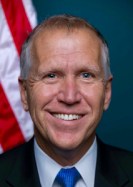
    Leahy  PatrickIn a letter sent to President Joseph Biden at the end of March, Sen. Patrick Leahy (D-VT), Chairman of the Senate Subcommittee on Intellectual Property, and Sen. Thom Tillis (R-NC), Ranking Member of the Subcommittee on Intellectual Property, asked the President to "prioritize the appointment of intellectual property officials within the Executive Branch over the coming weeks."

    Tillis  ThomSenators Leahy (at right) and Tillis (at left) note that "[e]nsuring that the intellectual property of creative artists, inventors and small businesses is meaningfully protected" constitutes a top priority for them, and point out that IP-intensive industries account for 45 million jobs and more than 38 percent of U.S. GDP.  Recognizing the importance of IP to the Nation's culture and economy, the Senators ask the President to "move expeditiously to fill key Executive Branch positions that promote and protect intellectual property rights at home and abroad."  Among those key positions for the Senators are the Under Secretary of Commerce for Intellectual Property and Director of the U.S. Patent and Trademark Office, the Intellectual Property Enforcement Coordinator, and the Chief Innovation and Intellectual Property Negotiator within the Office of the U.S. Trade Representative.

    The Senators close their letter by indicating that "IP-intensive industries are poised to continue to be an engine for growth," especially in view of the damage to the economy caused by the coronavirus, and expressing their commitment to with the President and his Administration "to swiftly confirm qualified nominees for these critical positions."

    President Biden's selection for Secretary of Commerce, former Rhode Island Governor Gina Raimondo, was confirmed by the Senate on March 2, 2021.  The Administration has yet to nominate an Under Secretary of Commerce for Intellectual Property.

  • By Kevin E. Noonan

    University of California-BerkleyLast December, Junior Party University of California/Berkeley, the University of Vienna, and Emmanuelle Charpentier (hereinafter, "CVC") filed its Substantive Motion No. 3 under 37 C.F.R. § 41.121(a)(1) asking for judgment of unpatentability for all claims in interference under 35 U.S.C. § 102(f) or (if post-AIA) 35 U.S.C. § 115(a) for "failure to name all inventors of the alleged invention" against Senior Party The Broad Institute, Massachusetts Institute of Technology, and Harvard University (hereinafter, "Broad") in Interference No. 106,115.  Recently, Broad filed its opposition to this motion.  At the time, Broad filed a responsive motion asking for leave to correct inventorship, and CVC recently filed its motion opposing Broad's attempt to effect a post hoc inventorship correction, the details of which are set forth herein.

    CVC begins its opposition brief by asserting that Broad has not established that it is entitled to this relief, as required under 37 C.F.R. § 41.121(b).  The basis of this argument comes first from the language of the statutes — 35 U.S.C. §§ 116 and 256 — permitting inventorship correction.  This language requires an applicant or patentee, respectively, provide proof of the facts surrounding the change and an identification of the inventors who should properly be named ("on application of all the parties and assignees, with proof of the facts and such other requirements as may be imposed").  Second, CVC argues that Broad did not provide consent for one of the individual — Shauiliang Lin — to be added as an inventor.  Third, CVC alleges that the motion is barred by laches and submitted in bad faith.  And finally, CVC argues that as a matter of jurisdiction the Director — not the Board — has sole authority to change inventorship and that there is no evidence that the Director has delegated this authority to the Board.

    CVC's first argument is a matter of applying the statutory requirements to Broad's motion.  CVC argues that Broad's motion is defective because the motion represents that all that is needed is to pay the appropriate fee and name the proper inventors.  This ignores the requirements set forth in the statutory language quoted above, according to CVC, citing Loken-Flack, LLC v. Novozymes Bioag, A/S, No. 105,996, 2015 BL 165619, *2-3 (P.T.A.B. May 27, 2015).  CVC asserts that Broad's motion is devoid of any evidence regarding the contribution the newly named individuals made to the claimed invention.  Because Broad as movant has the burden of showing it Is entitled to the relief requested under 37 C.F.R. § 41.121(b), CVC maintains that Broad needs to "explain how each (currently unidentified) person contributed to the conception of at least one claim of each of Broad's involved patents and application" and "provide evidence to support those assertions," citing Henkel Corp. v. Proctor & Gamble Co., No. 105,174, 2008 WL 5783337, at *20-25 (B.P.A.I. Mar. 28, 2008).  Moreover, CVC notes that Broad contends in its motion that it need not concede that inventorship is incorrect, which puts Broad in "the untenable position of, on the one hand, arguing that inventorship is correct and, on the other, having to affirmatively set forth why inventorship should be corrected," a situation of Broad's own making according to the brief.  And Broad's reliance on precedent is unavailing according to CVC because the circumstances here differ from those in that cited precedent.  CVC argues that while "Broad appears to believe that if CVC wins its motion on incorrect inventorship, then Broad automatically meets its burden to correct inventorship," this is an incorrect reading of the statute and precedent, due to "binding concessions" made with regard to statements presented to the European Patent Office under declaration in a related application.

    CVC's arguments regarding putative inventor Lin are straightforward, to the extent that the statute requires "all parties" to apply for the correction, citing Iowa State Univ. Research Found., Inc. v. Sperry Rand Corp., 444 F.2d 406, 410 (4th Cir. 1971), for the proposition that "when the Commissioner is asked to correct innocent errors of misjoinder or nonjoinder, all parties must apply for relief to comply with the requirements of the first and second paragraphs of § 256."  CVC further argues that the PTAB cannot waive this requirement, citing Chien Ming Huang v. Tzu Wei Chen Food Co., 849 F.2d 1458, 1460 (Fed. Cir. 1988).

    CVC's laches argument is based on the time — 8 years — between Broad's motion and when the "error" in inventorship arose (2013, when the Broad conducted "inventorship studies" on the patents in interference).  CVC asserts that the Board can impose laches as an equitable sanction under In re Stephen B. Bogese II, 303 F. 3d 1362 (Fed. Cir. 2002).  CVC also characterizes Broad's failure to correct inventorship in 2013 as "unreasonable behavior" supporting its resort to laches.  Broad's failure to effect the change in inventorship eight years ago that its motion seeks (improperly) from the PTAB now is the basis of CVC's bad faith allegation, alleging specifically that "to achieve a strategic advantage—and without any excuse—Broad ignored this knowledge" for the need to correct inventorship (although CVC does not set forth what "strategic advantage" Broad sought to achieve thereby).  CVC also disputes Broad's assertion that its intent is not at issue, stating that "[t]he intent of an interference party seeking a change of inventorship in the middle of the priority phase after submitting its priority brief is highly relevant" and "[g]iven the consequences such a change may have, the candor with which that change is solicited is paramount."  Directly seeking recourse to the duty of candor under 37 C.F.R. § 1.56, CVC asserts that:

    In the face of evidence that Broad intentionally misidentified the inventors of its involved patents and applications, as demonstrated by its own attorney's sworn declaration, and pursuant to the Federal Circuit's suggestion in Stark[v. Advanced Magnetics, Inc., 119 F.3d 1551, 1555 (Fed. Cir. 1997)], the PTAB should address whether there was bad faith in the original inventorship determination and deny Broad's motion.

    Finally, the brief asserts its jurisdictional argument that the Board is not competent to grant Broad's motion because that authority resides in the Director.  Citing Honeywell Int'l Inc. v. Arkema Inc., 939 F.3d 1345, 1349 (Fed. Cir. 2019) (which CVC concedes may be merely informative if not controlling), the brief argues that the proper procedural process would be for Broad to "(1) seek the Board's authorization to file a motion; (2) file the authorized motion, asking the Board to cede its exclusive jurisdiction to permit the Director's consideration of a certificate; and, (3) if the motion is granted, ask the Director to issue a certificate" (the Director then deciding whether to grant the certificate).Which of course Broad has not done.

    Broad has its opportunity to reply on April 19, 2021.

  • CalendarApril 14, 2021 – "Protecting Software Related to a Medical Device: A Case Law Review & Strategy" (Intellectual Property Owners Association) – 2:00 pm to 3:00 pm (ET).

    April 15, 2021 – "Patenting Antibody Pharmaceuticals at the EPO" (J A Kemp) – 2:30 to 3:30 pm BST (British Summer Time)

    April 15, 2021 – "Appellate Perspectives" (Federal Circuit Bar Association) – 1:00 to 2:00 pm (ET)

    April 16, 2020 – "Strategies for Federal Circuit, District Court, ITC, and PTAB" (UIC John Marshall Law School Center for Intellectual Property, Information & Privacy Law) – 7:40 am to 3:15 pm

    April 26-27, 2021 – Paragraph IV Disputes Conference (American Conference Institute)

  • Federal Circuit Bar Association_2The Federal Circuit Bar Association (FCBA) will be offering a remote program entitled "Appellate Perspectives" on April 15, 2021 from 1:00 to 2:00 pm (ET).  Nicholas Groombridge of Paul, Weiss, Rifkind, Wharton & Garrison LLP will moderate a panel consisting of Hon. Timothy Dyk, Circuit Judge, U.S. Court of Appeals for the Federal Circuit; Hon. Kathleen O'Malley, Circuit Judge, U.S. Court of Appeals for the Federal Circuit; Hon. Jimmie Reyna, Circuit Judge, U.S. Court of Appeals for the Federal Circuit; Hon. Klaus Bacher, Presiding Judge, 10th Civil Senate, Bundesgerichtshof (Germon Federal Court of Justice, FCJ); and Hon. Peter Meier-Beck, Presiding Judge, Antitrust Senate, Bundesgerichtshof (Germon Federal Court of Justice, FCJ).

    There is no registration fee for FCBA and EPLAW members and the registration for non-members is $75.  Additional information regarding the program can be found here.

  • IPO #2The Intellectual Property Owners Association (IPO) will offer a one-hour webinar entitled "Protecting Software Related to a Medical Device: A Case Law Review & Strategy" on April 14, 2021 from 2:00 pm to 3:00 pm (ET).  Christopher George of Hanley, Flight & Zimmerman, LLC; John Kind of Fenwick & West LLP; Jonathan Kwok of Hewlett Packard Enterprise; Ishir Mehta of Cantor Colburn LLP; and Ryan Phelan of Marshall, Gerstein & Borun LLP will review recent case law relating to software-related medical patents and provide strategy tips for preparing and prosecuting patent applications involving such technologies.

    The registration fee for the webinar is $150 for non-members or free for IPO members (government and academic rates are available upon request).  Those interested in registering for the webinar can do so here.

  • J A KempJ A Kemp will be offering a webinar entitled "Patenting Antibody Pharmaceuticals at the EPO" on April 15, 2021 from 2:30 to 3:30 pm BST (British Summer Time).  Vicki Allen and Andrew Bentham of J A Kemp will explore the basic principles of patenting of antibodies, and highlight recent trends in examination and strategies for drafting new cases and for addressing objections to existing applications.  The webinar will address the following topics:

    • Can broad antibody claims still be obtained?
    • Writing robust claims around specific antibody drug candidates
    • Inventive step when the target is known
    • What data to provide to support inventive step
    • USPTO and EPO practice: divergent or convergent?
    • Epitope/competition claims, combinations/cocktails, bispecifics and other non-traditional binder formats
    • Other routes to patentability

    Those wishing to register can do so here.

  • By Kevin E. Noonan

    Rothschild's GiraffeThe giraffe is the tallest extant terrestrial animal, and its iconic long neck (6 feet) provides advantages for foraging for food and detecting predators on the veldt over long distances.  As a consequence, however, the giraffe has a blood pressure two-fold higher than other ruminant animals needed to bring blood to the brain that is so far away from the animal's heart.

    An earlier (2016) study of giraffe genome and genome of the related okapi (Okapia johnstoni) was not optimal, being restricted to 17,210 genes identified by comparison to cattle (Bos taurus) genome.  Last Wednesday, a team of Chinese and Norse scientists published a paper entitled "A towering genome: Experimentally validated adaptations to high blood pressure and extreme stature in the giraffe," in Science Advances.  In this paper, the authors described their work on Rothschild's giraffe (Giraffa camelopardalis rothschildi), which provided a higher "completeness" for this genome than previous studies.  The analysis provided the sequence of a 2.44 Gb assembly covering about 98% of giraffe genomic DNA.  Using comparisons with genomic DNA of cattle, goat, and okapi (with sperm whale as "outgroup"), the authors reported an assemblage of a putative common ancestor between giraffe and cattle; this resulted in a prediction of an evolutionary history of 4 chromosome fissions and 17 fusions that has resulted in the 15 haploid chromosome complement of modern giraffes (albeit admitting the need for further analysis to understand the significance of this result).

    In this chromosomal complement these researchers discerned 101 genes under positive selection and 359 undergoing "rapid evolution," related to growth and development, nervous and visual systems, circadian rhythm, and blood pressure regulation.  One gene in particular was the focus this research:  the giraffe fibroblast growth factor receptor-like protein 1 (FGFRL1) gene was found to have seven non-synonymous mutations affecting the FGF binding domain, the most in any genetic sequence comparison to other ruminant mammals.  This gene was known to be involved in bone mineral density and hypertension resistance (thought to permit blood flow to the heights the giraffe's neck requires).  To investigate the relevance of these mutations to giraffe physiology, the researchers used CRISPR-Cas9 to introduce these mutations into the mouse FGFRL1 gene.  The resulting phenotype in these mice was found to be resistant to treatment with a high blood pressure-inducing drug (angiotensin II) while showing no developmental changes in cardiac structure; wildtype mice showed "significantly increased blood pressure" as a result of drug treatment.  These genetically altered mice also displayed significantly higher bone density as adults, with skeletal hypoplasia immediately postnatally.  Otherwise no deleterious effects were noted in these mice.  Together these results suggested these mutations could be responsible, at least in part, for the giraffe's characteristic long-necked phenotype.

    This genetic research also detected differences in genes involving cardiac development, blood vessel characteristics and increased glomerular filtration rate in giraffe kidney, as well as genes involved in platelet function (including the phosphatidylinositol metabolism genes PIP4K2A, ISYNA1, MTMR3, CDS1, and INPP1) and ion transport related to cardiac contraction.

    With regard to genetic adaptation of sensory genes (important for an herbivorous ungulate subject to predation by, inter alia, lions), these researchers found differences in genes related to eye development, vision, hearing, and balance.  Like other ruminants, giraffes have only two opsin genes, suggesting the absence of trichromatic color vision.  Perhaps curiously, the giraffe genome has lost 53 olfactory-related genes compared with the opaki, due to segmental deletion of sets of genes spatially clustered in the opaki genome, which these researchers speculated was a sensory "tradeoff" with their increased visual acuity.

    Giraffes are known to have sleep durations among the lowest of all mammals.  Consistent with this phenotype circadian rhythm genes are altered in giraffes, particularly having a translation stop codon in the PER1 gene involved in circadian rhythm maintenance.

    These researchers conclude their paper saying:

    Overall, these results show that pleiotropy is a plausible mechanism for contributing to the suite of co-adaptations necessary in the evolution of the giraffe's towering stature.  However, because of the complexity of cardiovascular and sensory systems, more research on the functional consequences of giraffe-specific genetic variants is needed.

    * School of Ecology and Environment, Northwestern Polytechnical University, Xi'an, China; Department of Orthopaedics, Xijing Hospital, The Fourth Military Medical University, Xi'an, China; College of Animal Science and Technology, Jilin Agricultural University, Changchun, China. BGI-Qingdao, BGI-Shenzhen, Qingdao, China; Shaanxi Key Laboratory for Animal Conservation, College of Life Sciences, Xi'an, China; Jiaxing SynBioLab. Co. Ltd., Jiaxing, China;  Research Center of Traditional Chinese Medicine, The Affiliated Hospital to Changchun University of Chinese Medicine, Changchun, China; Center for Evolutionary Hologenomics, GLOBE Institute, University of Copenhagen, Øster Voldgade, Copenhagen, Denmark; Norwegian University of Science and Technology, University Museum, 7491 Trondheim, Norway; Section for Computational and RNA Biology, Department of Biology, University of Copenhagen, Copenhagen, Denmark; Center for Excellence in Animal Evolution and Genetics, Chinese Academy of Sciences, Kunming, China.

    Image of Rothschild's giraffe (Giraffa camelopardalis rothschildi) at Murchison Falls NP, UGANDA by Bernard DUPONT, from the Wikimedia Commons under the Creative Commons Attribution-ShareAlike 2.0 Generic license.