
By Donald Zuhn —
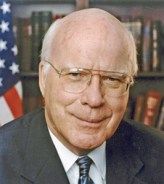 On Friday, Sen. Patrick
Leahy (D-VT) sent a letter to Dr. Francis Collins, the Director of the
National Institutes of Health (NIH), "to urge [the Director] to consider
using march-in rights under the Bayh-Dole Act to ensure greater access to
genetic testing for breast and ovarian cancer." The Bayh-Dole Act, which was enacted in 1980,
created a uniform patent policy among the many federal agencies that fund
research, enabling small business and non-profit organizations — including
universities — to retain title to inventions made under federally funded
research programs. In commemorating the
Act's 30th anniversary in 2010, the U.S. Patent and Trademark Office noted that
"[t]he legislation is credited with the creation of thousands of new
companies and billions of dollars of direct benefits to the U.S. economy"
(see "USPTO Recognizes 30th Anniversary of Bayh-Dole Act").
As a result of the concern
that U.S. taxpayers should not have to pay businesses for inventions that the
public has already paid for, legislators added a section to the Act that gave
the government "march-in" rights.
Recently, a handful of groups filed a petition with the NIH requesting
the agency to exercise these march-in rights over the anti-AIDS drug ritonavir,
exclusively sold by Abbott Laboratories (see
"Groups Petition for NIH Exercise
of March-in Rights over Abbott Laboratories' Norvir®,"
which includes a discussion of the statute and regulation governing the exercise of
the government's march-in rights under the Bayh-Dole Act, as well as a recent
history of requests that the government exercise such rights).
In
encouraging the NIH to exercise its march-in rights with respect to the
Myriad's BRCA test, Sen. Leahy (above right) indicates that:
Myriad's genetic test, which was developed with federally-funded research, is
truly important for public health. Myriad
is the only provider of this test because it is covered by patent protection. Unfortunately, testimony before the United
States Patent and Trademark (USPTO) revealed that Myriad does all of this
testing in-house, and charges between $3,000 and $4,000.
The
letter notes that while the Supreme Court determined last month in Association
for Molecular Pathology v. Myriad Genetics, Inc.
that a naturally occurring DNA segment is a product of nature and not patent
eligible merely because it has been isolated, the Court also held that cDNA is
patent eligible because it is not naturally occurring (albeit with the caveat,
which the letter does not address, that a "very short series of DNA may
have no intervening introns to remove when creating cDNA," and therefore,
"a short strand of cDNA may be indistinguishable from natural DNA"). "As a result," Sen. Leahy suggests
that "Myriad may continue to be the only company able to provide women
with the genetic testing they need to make important health care decisions."
 Sen.
Sen.
Leahy explains that because "the Bayh-Dole Act . . . gives the government
tools, known as 'march-in rights,' to provide greater access to the subject
invention in appropriate situations," "[t]he government can require
the patent holder to grant a license to the patent on reasonable
terms." He notes that "[i]f
the patent owner refuses, the government can directly license the patent in
limited circumstances, including if it 'is necessary to alleviate health or
safety needs which are not reasonably satisfied' by the patentee." Indicating that "Myriad's patents were based
in part on federally-funded research," and stating that the health
benefits and healthcare cost savings of genetic testing for breast and ovarian
cancer are clear, Sen. Leahy expresses "concern[] that the health needs of
the public are not reasonably satisfied by the patentee in this situation
because testimony presented to the USPTO made clear that many women are not
able to afford the testing provided by Myriad." He therefore encourages the Director to
consider using the government's march-in rights with respect to the Myriad's BRCA test.
Interestingly,
of the ten patents that Myriad recently asserted against Ambry Genetics (see "Myriad Genetics Files Suit
Against Ambry Genetics for Genetic Diagnostic Testing of BRCA Genes"),
only two (U.S. Patent Nos. 5,747,282 and 5,753,441) are assigned (on their
face) to the U.S. government (as well as to Myriad and the University of Utah
Research Foundation). Of the remaining
patents, one (U.S. Patent No. 5,709,999) is assigned to Myriad, the Centre de
Recherche du Chul (Sainte-Foy, Canada), and the Cancer Institute (Tokyo, Japan);
two (U.S. Patent Nos. 5,837,492 and 6,033,857) are assigned to Myriad, Endo Recherche,
Inc. (Sainte-Foy, Canada), HSC Research & Development Ltd. (Toronto,
Canada), and the Trustees of the University of Pennsylvania; three (U.S. Patent
Nos. 5,654,155, 5,750,400, and 6,051,379) are assigned to OncorMed, Inc.; one
(U.S. Patent No. 6,951,721) is assigned to Gene Logic Inc.; and one (U.S.
Patent No. 7,250,497) is assigned to Myriad alone. A search of the USPTO's Assignments on the
Web for Patents (AOTW-P) database indicates that Myriad assigned the '999,
'492, and '857 patents to the University of Utah Research Foundation, and that
the '155, '400, '379, and '721 patents are assigned to Gene Logic Inc. and
Myriad.
Patent Docs thanks Hal
Wegner for alerting the patent community to Sen. Leahy's letter.


 Patent Docs
Leave a reply to Donald Zuhn Cancel reply