
The
"Obvious to Try" Test Is Overused in Assessing Obviousness
 The
The
UK Court of Appeal Decision in Novartis AG vs Generics (UK) Ltd (trading as
Mylan), provides insight into the UK court's approach to judging the validity
of patents relating to enantiomers of biologically active compounds. UK
Patent No. 2,203,040 to Novartis AG (and the associated Supplementary
Protection Certificate (SPC)) protected rivastigmine, a drug used for the treatment of Alzheimer's
disease. The Court of Appeal held the patent to be invalid on the ground of obviousness
and criticised the over-reliance on the "obvious to try" test for
assessing obviousness.
The Patent
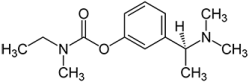 A chiral compound exists as two or more non-superimposable, mirror-image
chemical structures, the alternative structures being known as enantiomers. Rivastigmine is the (-)enantiomer of the chiral carbamate compound, N-ethyl-3-[(1-dimethylamino)ethyl]-N-methylphenyl-carbamate. UK Patent No. 2,203,040 claims rivastigmine. The compound is marketed in the UK by Novartis as Exelon®,
and is used for the treatment of
Alzheimer's disease.
The High Court Decision
The High Court assessed
whether it would have been obvious to a skilled person to select RA7,
resolve it into its individual enantiomers, and then use the (-) enantiomer as
a medicinal product for the treatment of Alzheimer's disease.
A racemic mixture (RA7),
a mixture of the (+) and (-) enantiomers of N-ethyl-3-[(1-dimethylamino)ethyl]-N-methylphenyl-carbamate,
was known at the priority date of
the Patent and had been identified as a potential treatment for Alzheimer's
disease.
The UK High Court therefore held that it would
have been obvious to select the racemic mixture, RA7, to resolve it
into its individual enantiomers,
and to use the claimed (-) enantiomer for the treatment of Alzheimer's disease. The Patent and associated SPC were
therefore found to be invalid.
The Court of Appeal
Decision
 On appeal, Novartis argued that the High Court erred in its
assessment of obviousness. Novartis argued that that it would not have been "obvious
to try" and resolve RA7 into the individual enantiomers, nor would there have been
any expectation that the claimed (-) enantiomer would possess improved biological
activity compared to the (+) enantiomer.
The Court of Appeal criticised over-reliance on the obvious to try test in assessing
inventive step. The Court of Appeal acknowledged that it might be appropriate
when assessing inventive step to ask whether it was obvious to try a particular
route with a reasonable expectation of success. However, the Decision
emphasized that such assessment is secondary to the statutory question of
whether an invention is obvious:
This is another case in which a
patentee defending his patent has attempted to analyse a single multi-faceted
question ("was the invention obvious?") by chopping it up into a
series of sub-questions, and then treating each of the sub-questions in
isolation. . . . [T]hat is the wrong approach.
In the present case it was
clear that the prior art disclosed a group of compounds, including RA7, that were potentially
useful in treating Alzheimer's disease. Biological data published in the prior
art also showed that RA7 was an obvious candidate for further
development. The skilled person was also well aware of the common practice at
the priority date to attempt to resolve racemic compounds at an early stage of the drug development process
and that there would likely be practical benefits associated with such
resolution.
On this evidence the Court
of Appeal upheld the judgement of the High Court and the patent was held
invalid.
Conclusions
Earlier UK Court of Appeal decisions
(Generics (UK) Limited v. Daiichi Pharmaceutical Co Ltd and H
Lundbeck A/S v. Generics (UK) Limited) held patents relating to the
biologically active enantiomers
escitalopram and levofloxacin were non-obvious. However, evidence in these cases indicated that there were particular
problems with resolving the enantiomers at the relevant priority date. The
evidence in the present case indicated that there were no problems encountered
in resolving RA7 and that resolution could be achieved using
conventional techniques.
The present Decision might
suggest that obtaining patent protection for single enantiomers in the UK is likely to prove difficult if the
enantiomer was easily resolved from a known racemic mixture. If data can be produced that demonstrate
practical difficulties with isolating an enantiomer from a racemic mixture or
an unexpected therapeutic effect associated with the claimed enantiomer then
objections of obviousness may be overcome.
This report comes from European Patent Attorneys at WP Thompson & Co., 55 Drury Lane, London UK. Further details and commentary can be obtained from Gill Smaggasgale, a partner at the firm.

 Patent Docs
Leave a comment