
By Kevin E. Noonan —
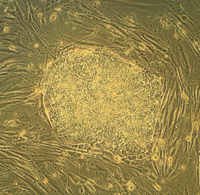 The European Court of Justice (ECJ) today rendered its decision regarding the patent-eligibility of human embryonic stem cells (hESCs) in Europe, and as widely expected has heeded the recommendation of the court's advocate general that hESCs are not patent-eligible subject matter (see "European Court of Justice Considers Embryonic Stem Cell Ban").
The case began in 2004, when Greenpeace sued in German federal court over a German patent to the University of Bonn involving methods for deriving neural cells from hESCs (DE 197568664 C1). While German laws regarding stem cell research have been characterized as the "most restrictive in Europe," such research is permitted provided that it is performed with pluripotent (rather than totipotent) cells, using cell lines imported from abroad and only cell lines that were made prior to May 2007. Nevertheless, Greenpeace argued that claims to methods for using hESCs were "immoral and against public order," provisions of European law generally that define subject matter not eligible for patent (there is no corresponding provision under U.S. law).
The German federal court ruled for Greenpeace in 2006, and the university appealed to the German supreme court. That court decided that it needed to refer the question to the ECJ, since German law was closely patterned on European Union guidelines for biotechnology patenting. In the "Questions referred" to the ECJ, the German court asked for clarification on the meaning of the term "human embryos" in Article 6(2)(c) of Directive 98/44/EC of the European Parliament and of the Council of 6 July 1998 on the legal protection of biotechnological inventions (OJ 1998 L 213, p. 13), and the expression "uses of human embryos for industrial or commercial purposes," specifically whether this includes any commercial exploitation within the meaning of Article 6(1) of the Directive, especially use for the purposes of scientific research. Finally, the court asked whether methods for producing hESCs or using them for technical purposes are unpatentable "even if the use of human embryos does not form part of the technical teaching claimed with the patent, but is a necessary precondition for the application of that teaching, (a) because the patent concerns a product whose production necessitates the prior destruction of human embryos or (b) because the patent concerns a process for which such a product is needed as base material."
On March 17, 2011, the ECJ advocate-general, Judge Yves Bot, rendered an opinion that stem cell patents were "contrary to ethics and public policy" because they required "industrial use" of human embryos. This recommendation was not binding on the ECJ, but it was expected that the court would agree with the advocate-general, since it is rare that such preliminary opinions are overruled.
In its decision, the ECJ cited the Directive on biotechnology as well as the relevant provisions of the TRIPS agreement and Articles 52(1) and 53 of the Convention on the Grant of European Patents relating to broad scope of patent protection (limited, inter alia, by consideration of ordre public or morality). The court also considered German law (Paragraph 2 of the Patentgesetz) as amended to comply with the Directive, and specifically the prohibition under German law of patenting "uses of human embryos for industrial or commercial purposes" and provisions of German law restricting the uses to which embryos can be put outside the patent context (such as laws against human "cloning"). Nonetheless, the court stated that:
It must be borne in mind that, according to settled case-law, the need for a uniform application of European Union law and the principle of equality require that the terms of a provision of European Union law which makes no express reference to the law of the Member States for the purpose of determining its meaning and scope must normally be given an independent and uniform interpretation throughout the European Union.
This is because, in part:
The lack of a uniform definition of the concept of human embryo would create a risk of the authors of certain biotechnological inventions being tempted to seek their patentability in the Member States which have the narrowest concept of human embryo and are accordingly the most liberal as regards possible patentability, because those inventions would not be patentable in the other Member States. Such a situation would adversely affect the smooth functioning of the internal market which is the aim of the Directive.
The court then contrasted the provisions of Article 6(1) of the Directive, which granted "the administrative authorities and courts of the Member States a wide discretion in applying the exclusion from patentability of inventions whose commercial exploitation would be contrary to ordre public and morality" with Article 6(2), which "allows the Member States no discretion with regard to the unpatentability of the processes and uses which it sets out, since the very purpose of this provision is to delimit the exclusion laid down in Article 6(1)." Finding that there is no express definition of the term "human embryo" in the Directive, the court's opinion states that it must consider the definition in "the context in which they occur and the purposes of the rules of which they form part," including that the preamble of the Directive delimits patenting by the principle that protecting biologically derived invention "must be consistent with regard for fundamental rights and, in particular, the dignity of the person." These and other considerations permit the court to conclude that the term "human embryo" should be "understood in a wide sense." Thus:
{A]ny human ovum must, as soon as fertilised, be regarded as a "human embryo" within the meaning and for the purposes of the application of Article 6(2)(c) of the Directive, if that fertilisation is such as to commence the process of development of a human being.
(In addition, the court puts into the "human embryo" category "cloned" ova (wherein the nucleus of a somatic cell is introduced into an enucleated ovum) and ova stimulated to divide parthenogenetically.) The court then considered the question of whether a "totipotent" or "pluripotent" human embryonic stem cell would fall within the definition of a human embryo, deciding that these cells' capacity to develop into many or all human tissues was sufficient for them to qualify as a "human embryo."
As to the second question, the court found that uses of hESCs for scientific research is encompassed by the Directive insofar as the use is subject to patent protection, because "clearly the grant of a patent implies, in principle, its industrial or commercial application." In making this determination the ECJ distinguished uses for "therapeutic or diagnostic" purposes directed to the embryo, which are entitled to patent protection under other provisions of the Directive. The court also answered the question of whether a process is patent-ineligible where the "purpose is not the use of human embryos, where it concerns a product whose production necessitates the prior destruction of human embryos or a process for which requires a base material obtained by destruction of human embryos," holding that such processes are patent-ineligible because "the removal of a stem cell from a human embryo at the blastocyst stage entails the destruction of that embryo":
Accordingly, on the same grounds as those set out in paragraphs 32 to 35 above, an invention must be regarded as unpatentable, even if the claims of the patent do not concern the use of human embryos, where the implementation of the invention requires the destruction of human embryos. In that case too, the view must be taken that there is use of human embryos within the meaning of Article 6(2)(c) of the Directive. The fact that destruction may occur at a stage long before the implementation of the invention, as in the case of the production of embryonic stem cells from a lineage of stem cells the mere production of which implied the destruction of human embryos is, in that regard, irrelevant.
For clarity, the court expressly set forth its decision as follows:
1. Article 6(2)(c) of Directive 98/44/EC of the European Parliament and of the Council of 6 July 1998 on the legal protection of biotechnological inventions must be interpreted as meaning that:
– any human ovum after fertilisation, any non-fertilised human ovum into which the cell nucleus from a mature human cell has been transplanted, and any non-fertilised human ovum whose division and further development have been stimulated by parthenogenesis constitute a 'human embryo';
– it is for the referring court to ascertain, in the light of scientific developments, whether a stem cell obtained from a human embryo at the blastocyst stage constitutes a 'human embryo' within the meaning of Article 6(2)(c) of Directive 98/44.
2. The exclusion from patentability concerning the use of human embryos for industrial or commercial purposes set out in Article 6(2)(c) of Directive 98/44 also covers the use of human embryos for purposes of scientific research, only use for therapeutic or diagnostic purposes which are applied to the human embryo and are useful to it being patentable.
3. Article 6(2)(c) of Directive 98/44 excludes an invention from patentability where the technical teaching which is the subject-matter of the patent application requires the prior destruction of human embryos or their use as base material, whatever the stage at which that takes place and even if the description of the technical teaching claimed does not refer to the use of human embryos.
The court's decision is the latest in a series of initiatives by individuals and groups with philosophical objections to patents involving biological materials, particularly material derived from human beings. These include the Public Patent (PUBPAT) Foundation's attempts to invalidate the Thomson hESC patents in the U.S. (unsuccessful with regard to U.S. Patent Nos. 5,843,780 and 6,200,806 and currently pending against U.S. Patent No. 7,029,913) as well as PUBPAT and the ACLU's challenge to human gene patenting in the AMP v. USPTO (Myriad) case. Opponents of such patents voice various arguments and rationales against patenting products of human biology, but ultimately the argument is the one raised in Europe, that there are moral objections to the practice. Such objections are sincerely held by many and it is neither possible nor productive to make arguments on these grounds: as it is in many public policy debates, these positions tend to be absolutes for some, not subject to merely reasoned argument. Perhaps the best rejoinder of the argument is to posit the situation if patent opponents prevail (which also comprises a part of the scientists' argument in their letter). Lack of patent protection will have two concrete and predictable consequences: lack of financial investment to translate basic scientific discoveries to useful commercial products, and (where possible) reducing or eliminating public disclosure of inventions (and where not possible, investment in other technologies). Neither outcome is conducive to reducing human morbidity or mortality or improving the human condition. It is hard to understand how advocating such an outcome can be considered the more moral position.
Even the possibility that the ECJ would adopt the Advocate General's position prompted several stem cell scientists in Europe to send a letter to the court, published in Nature on April 28th, setting forth the case for stem cell patenting. In the letter, the scientists expressed their "profound concern" in the capacities as "coordinators of multinational European stem-cell projects." They contended that stem cells are cell lines, not embryos, and that they were derived from "surplus in vitro fertilized eggs donated after fertility treatments" that could not be maintained "indefinitely." The existence of "more than 100" established stem cell likes make concerns about embryos "misplaced," they asserted, and warned that it may be "premature to suggest that human embryonic stem cells can be replaced" (by iPS cells, for example) in developing stem cell therapies. A stem cell ban in Europe would prevent scientists from "deliver[ing] clinical benefits without the involvement of biological industry," and such companies "must have patent protection as an incentive" to do their work in Europe. The consequence of the ECJ ruling as it has today, these scientists predicted, would result in "European discoveries [being] translated into applications elsewhere, at a potential cost to the European citizen."
The ECJ's decision is binding on the member states of the European Community. Thus, Europe represents a "living laboratory" for the proposition that patenting can retard innovation and that progress can be promoted in the absence of patent protection. Europe once before took the "moral" position against patenting a particular technology, namely biotechnology, 30 years ago. As a result, the rest of the world (predominantly the U.S.) was able to develop this technology without European competition, and companies such as Amgen, Genentech, Biogen, and many others became world leaders in translating the fruits of the biotech revolution into commercial products that improved the lives of millions. Stem cells now provide another opportunity for countries outside of Europe to take (or maintain) the lead in a new technology, regenerative medicine, that has the promise of being just as revolutionary and to provide just as dramatic an improvement in human welfare. But this opportunity will only exist if the rest of the world, particularly the U.S., once again ignores the siren song of any policy based on any particular version of morality, and continues to permit "anything under the sun made by man" to be patented.


 Patent Docs
Leave a reply to Kevin E. Noonan Cancel reply