
By James DeGiulio —
 Since 2009, we have been tracking the story surrounding Genzyme's enzyme replacement drug Fabrazyme, which started with a problem at Genzyme's manufacturing facilities and led to nationwide shortages of the drug. These shortages prompted Fabry patients to petition the Department of Health and Human Services to exercise march-in rights under the Bayh-Dole Act, which in December 2010 was denied (see "HHS Denies Request to Exercise Bayh-Dole 'March-in' Rights for Fabrazyme"). Now, rather than looking to the government for aid, Fabry patients are instead looking to the court system for relief as they have brought suit against Genzyme and Mt. Sinai Medical School for their rationing of Fabrazyme to Fabry patients. Fabrazyme, the only approved FDA treatment for Fabry disease, is currently being rationed by Genzyme until completion and regulatory approval of new manufacturing facilities, expected in the first half of 2011. Genzyme currently rations patient access to 50% of the FDA approved dosage and does not approve new patients for Fabrazyme treatment.
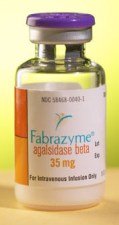 On March 9, the plaintiffs filed a complaint in the U.S. District Court for the Western District of Pennsylvania. The plaintiffs in the case are six named Fabry disease patients, who are bringing suit individually and as a class action. Plaintiffs allege that despite the rationing plan, neither Mt. Sinai nor Genzyme has ever shown that a reduced dose of Fabrazyme is either safe or efficacious for treating Fabry disease. The complaint relies heavily on a November 2010 study by the EMA that determined that the lowered dose of Fabrazyme may have adverse effects, including accelerated the course of patient deterioration, and concluded by recommending no less than a full dose for Fabry patients in Europe.
The complaint alleges several counts, including negligence in maintaining manufacturing facilities, negligence per se, strict liability, loss of consortium, breach of warranty, and deceptive trade practices. Of particular note, the fifth count is an implied cause of action, described as a "Violation of Bayh-Dole Act proscription of non-use or unreasonable use of publicly funded inventions." This count alleges that Defendants instituted the drug ban for some citizens and rationing to other citizens despite a statutory duty under the Bayh-Dole Act to ensure that Fabrazyme was made available to U.S. citizens at the required dose. This source of this statutory duty is rooted in the Bayh-Dole Act's specific prohibition against a contractor's non-use and unreasonable use of publically funded invention under 35 U.S.C. § 200. As a result of this violation, Plaintiffs allege that Defendants caused special injuries unique to the class arising out of the non-use and unreasonable use of the invention, because the plaintiffs have Fabry disease and rely on access to the publicly funded invention.
C. Allen Black, Jr., who represents the Fabry patients in this case, said in a press release that "for the first time, the courts will be asked to determine whether patients who are guaranteed access to tax-payer funded inventions under the Bayh-Dole act may recover individual damages under the statute when a contractor misuses the invention or withholds it from the public. Even though Fabrazyme® is covered by a patent, taxpayer dollars paid for it under the Bayh-Dole act (35 U.S.C. § 200 et seq.). The Bayh-Dole Act specifically requires that the public be protected against a patentee's nonuse or unreasonable use of inventions paid for with tax dollars."
Fabry patients have requested compensation and punitive damages for lack of adequate treatment and Genzyme's failure to take adequate precautions including keeping a reserve inventory and providing second sources of manufacturing.


 Patent Docs
Leave a reply to 6 Cancel reply