
By Kevin E. Noonan —
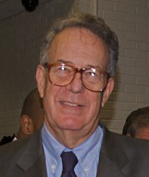 In the otherwise unremarkable case of Intervet Inc. v. Merial Ltd., the Federal Circuit reversed the District Court's claim construction on two terms and remanded for further consideration. What has made this case a little more remarkable is that Judge Dyk (at right) took the occasion to sua sponte raise the issue of patent-eligibility for isolated DNA molecules. It would be remarkable enough that an appellate court judge would be motivated to question an issue that had been sub silentio affirmed through for the last 20 years in his own court. It is even more remarkable that the District Court opinion below was on summary judgment, based on attorney argument and affidavit testimony untested by cross-examination. What is most remarkable is that the opinion is replete with departures from both factual and legal realities, and is made without the benefit of either briefing or argument.
The opinion begins with the statement that claim 32 at issue in U.S. Patent No. 6,368,601 "broadly encompasses '[a]n isolated DNA molecule comprising a nucleotide sequence encoding an epitope which is specific to PCV-2 and not specific to PCV-1.'" The claim reads as follows:
32. An isolated DNA molecule comprising a nucleotide sequence encoding an epitope which is specific to PCV-2 and not specific to PCV-1.
As with most chemical compound claims, this claim recites a compound having specific structural features, being directed to a DNA molecule that encodes an epitope (after all, "a gene is but a chemical compound, albeit a complex one"). Judge Dyk does not raise what would be a legitimate issue regarding this claim: whether the specification provides a description of a sufficient number of species of epitope to broadly claim the genus of nucleic acids encoding said epitopes, to satisfy the written description requirement for all nucleic acids encoding all epitopes (disclosed and undisclosed) that are specific for PCV-2 and not PCV-1. Another genuine issue is whether it would require undue experimentation for the skilled worker to practice the invention throughout its scope in view of the broad genus recited by the claim.
Instead, the dissent notes that "[n]either the district court nor the parties provided a precise definition of 'isolated" DNA,'" precisely because that is a term of art in this technological field and was not a claim term in dispute between the parties either in the district court or on appeal. The dissent then mentions several examples of the scientific processes entailed in "isolating" a nucleic acid from a cell, including separating it from the other cellular components (proteins, lipids, etc.), "selectively amplifying or cloning" the DNA, which the dissent notes "were performed by a method well known in the art." The hint of an underlying objection under 35 U.S.C. § 112 arises again when the dissent notes that "[t]hus under the majority's claim construction, claim 32 covers DNA sequences that were not in fact isolated by the inventor and are distinct from the five isolated strains disclosed in the '601 patent."
Up to this point the dissent appropriately raises issues that perhaps should be considered by the District Court on remand. However, the dissent then goes on to state that "[t]he question is whether the isolated DNA molecule, separate from any applications associated with the isolated nucleotide sequence (for example, the production of a vaccine) is patentable subject matter." It is ironic that the genuine issue facing genomics, genetic diagnostics, and personalized medicine is to what extent are the applications associated with genetic sequences (i.e., methods) patent-eligible? This question provides the factual underpinnings of the AMP v. USPTO case (which is not referenced in the dissent but exerts its dark presence in the argument), since the plaintiffs' complaint was not about who "owns" their DNA (although that is the inflammatory face turned to the public, despite the clear prohibition on any such ownership provided by the 13th Amendment), but to what extent should Myriad's method claims (the application of the genetic information seemingly outside Judge Dyk's consideration or concern) preclude infringers from practicing patented genetic diagnostic tests? The dissent ignores this question in favor of noting that neither the Federal Circuit nor the Supreme Court has ever "directly decided the issue of the patentability of isolated DNA molecules,"[1] while recognizing the several cases where the Court "upheld the validity of several gene patents." Indeed, the dissent seems to think that the question has "evaded judicial review."
Next, the dissent wades into waters usually reserved for the Supreme Court in its musings about patent law, where cases and principles from these cases are admixed to arrive at a result. The dissent conjoins two strains of Supreme Court dicta to produce a question of whether "natural products" are patent-eligible. First, the dissent notes the language from Diamond v. Chakrabarty, "reaffirmed" in Bilski v. Kappos, that "laws of nature, physical phenomena, and abstract ideas" are not "patentable" (although it might make the discussion clearer to say they are not patent-eligible, to avoid conflating this threshold question with patentability requirements of utility, novelty, and non-obviousness). The slide from this principle to the proposition that "natural products" are not patent-eligible (something that has equally evaded judicial scrutiny) comes next: "[j]ust as the patentability of abstract ideas would preempt others from using ideas that are in the public domain . . . so too would allowing the patenting of naturally occurring substances preempt the use by others of substances that should be freely available to the public." This principle is supported by further dicta, that "a new mineral discovered in the earth or a new plant found in the wild is not patentable subject matter. Likewise, Einstein could not patent his celebrated law that E=mc2, nor could Newton have patented the law of gravity," citing Chakrabarty.
It is important to analyze the conflating of the two principles here. The first are abstract "laws of nature," like E=mc2, or Newton's law of gravity. These are unpatentable for a great many reasons, not the least of which is they are intangible ideas (Newton's law described gravity, but it is not gravity — gravity is a "natural phenomenon" that exists whether Newton or anyone else has a law to describe it). Unlike these abstractions, DNA, genes, and other natural products are tangible objects that are different in kind from the "laws of nature, physical phenomena, and abstract ideas" that the Supreme Court has found to be outside the realm of patent-eligible subject matter (if only because the expression of ideas is encompassed by the Copyright Clause of the Constitution and not the Patent Clause).
Inevitably, the dissent also contains a discussion of Funk Brothers Seed Co. v. Kalo Inoculant Co., 333 U.S. 127 (1948), to support the idea that "natural products" are unpatentable. This involves a misreading (common enough in analyses of this decision), particularly this portion quoted verbatim in the dissent (with emphasis added):
The qualities of these bacteria, like the heat of the sun, electricity, or the qualities of metals, are part of the storehouse of knowledge of all men. They are manifestations of laws of nature, free to all men and reserved exclusively to none. He who discovers a hitherto unknown phenomenon of nature has no claim to a monopoly of it which the law recognizes. If there is to be invention from such a discovery, it must come from the application of the law of nature to a new and useful end.
This passage is interpreted in the dissent, as it has elsewhere, to support the idea that "natural products" are not patent-eligible. The majority opinion in Funk Brothers was written by Justice Douglas, no supporter of patents. However, he chose his words more carefully than is usually appreciated; he was not saying that the specific combination of the bacteria was unpatentable, but that the qualities of these bacteria that permitted them to be co-cultivated was unpatentable. The claims at issue in Funk Brothers attempted to "pre-empt" this principle for all combinations of all strains of this bacteria, and that was the basis for the Court's finding the subject matter not to be patent-eligible. This is most clearly shown in Justice Frankfurter's concurring opinion, where he states this reasoning explicitly (with emphasis added):
Insofar as the court below concluded that the packaging of a particular mixture of compatible strains is an invention and as such patentable, I agree, provided not only that a new and useful property results from their combination, but also that the particular strains are identifiable and adequately identified. I do not find that Bond's combination of strains satisfies these requirements. The strains by which Bond secured compatibility are not identified and are identifiable only by their compatibility. . . . [The patentee] appears to claim that since he was the originator of the idea that there might be mutually compatible strains and had practically demonstrated that some such strains exist, everyone else is forbidden to use a combination of strains whether they are or are not identical with the combinations that Bond selected and packaged together. It was this claim that, as I understand it, the District Court found not to be patentable, but which, if valid, had been infringed. . . . The consequences of such a conclusion call for its rejection. Its acceptance would require, for instance in the field of alloys, that if one discovered a particular mixture of metals, which when alloyed had some particular desirable properties, he could patent not merely this particular mixture but the idea of alloying metals for this purpose, and thus exclude everyone else from contriving some other combination of metals which, when alloyed, had the same desirable properties. In patenting an alloy, I assume that both the qualities of the product and its specific composition would need to be specified. The strains that Bond put together in the product which he patented can be specified only by the properties of the mixture.
Seemingly unmindful of this reasoning, the dissent combines the "holding" of Funk Brothers that "natural products" are not patent-eligible with the distinction from Chakrabarty that a genetically-engineered bacterium was patent-eligible to arrive at the conclusion that "it appears that in order for a product of nature to satisfy section 101, it must be qualitatively different from the product occurring in nature, with 'markedly different characteristics from any found in nature.'" From that, it is easy for the dissent to find "mere isolation" does not satisfy this "test," analogizing isolating a DNA molecule to patenting leaves from a tree because "the leaves do not occur in nature in their isolated form."
This is not analysis, and ignores the multiple ways in which isolation of a gene is distinct from plucking a leaf from a plant. The real question, which transcends the dissent's facile analogy, is whether a compound that is contained within the leaf is (or should be) patent-eligible. There is little rational basis for saying it is not or should not be, since it certainly "promotes the progress" for a pharmaceutical company to explore and identify plants having medicinal properties, isolate the chemicals responsible for those properties, and produce useful drugs therefrom. "Isolation" of such molecules entails much less human activity than does isolating a nucleic acid, since the medicinal molecule isolated from the leaf is identical in every way to the molecule as it exists in the leaf. This is not true for isolated DNA molecules, which differ in many ways, including chemical structure, from the gene as it resides in the chromosome.
What is identical between the DNA as isolated and claimed and the DNA as it resides in the chromosome are the portions thereof that comprise its coding sequence, that is the genetic information encoded thereby. This identity might perhaps support the dissent's argument, except that the genetic information is not what is patented. The District Court evaded this distinction by holding that an isolated gene is "the physical embodiment of the genetic information," disregarding the fact that a purified enzyme could just as easily be characterized as the "physical embodiment of the chemical reaction." Because of this fundamental judicial legerdemain, the District Court was able to ignore the reality that the only philosophical basis for challenging DNA patenting, the "sanctity" or "ownership" of an individual's genetic information, does not fall within the scope of the patent claim.
Much has been made in some quarters regarding Chief Judge Rader's public statements regarding the gene patenting issue, comments that in at least one instance have been taken (willfully) out of context. It would appear to be more improper for a member of the Court to voice his views where, as here, there was no basis in the issues presented to the Court, nor briefing on the issue, nor argument from the parties, that could inform the Court regarding these issues. This issue is too important, to the biotechnology industry and to extending the benefits of the past decade of human genomic research into the future, for proponents of gene patenting and society to miss the opportunity for a full and complete argument before the Court.
[1] If the dissent's position is that no subject matter is patent-eligible unless and until the Federal Circuit or the Supreme Court holds it to be so, the Court is going to be very busy making these determinations.


 Patent Docs
Leave a reply to Kevin E. Noonan Cancel reply