
Congressman Becerra Once Again Tries to Ban Gene
Patenting by Statute
By Kevin E. Noonan —
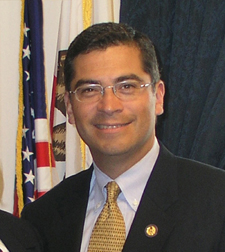 When last we encountered Congressman Xavier Becerra
(D-CA), he was rumored to be headed for a post as U.S.
Trade Representative (see "Proponent of Gene Patent Ban to Leave Congress"). That seems to have fallen through,
because the Congressman remains as the chief legislative threat to gene
patenting. He has introduced
anti-gene patenting legislation in the past (see "The Continuing Threat to Human Gene Patenting"), spurred on by the late Michael
Crichton's unrealistic warnings about the purported "threat" (see "Science Fiction in The New York Times"). His latest bill that he is planning to introduce is even broader (and ironically itself imposes
a greater threat to "the progress of science and the useful arts"
than the gene patents is seeks to ban).
The proposed bill goes even further than his earlier bill by banning patenting of all genes (animal, vegetable, and from
microorganisms). The text, under
the innocuous title "The
Genomic Research and Accessibility Act" (also the title of
the bill he introduced in the 110th Congress), is simple:
SEC. 2. PROHIBITION ON PATENT ON GENETIC MATERIAL.
(a) IN GENERAL.—Chapter
10 of title 35, United States Code, is amended by adding at the end the following
new section:
''§
106. Prohibition on patent on genetic material
"Notwithstanding
any other provision of law, no patent may be obtained for—
''(1)
a nucleotide sequence or its complementary sequence;
"(2)
any function or correlation of any nucleotide sequence or its complementary sequence;
or
''(3)
the naturally-occurring products that any nucleotide sequence or its complementary
sequence specifies.''
Fortunately,
there is a savings provision for patents already granted (no doubt based on
fears of the lawsuits over governmental takings that might ensue without it; see "'Takings'
by Congress and the Courts"):
(c) APPLICABILITY.—The amendment made by subsection (a) shall not apply to any
patent issued before the date of the enactment of this Act.
While
similar in format, the earlier bill was specifically directed towards human
genetic material. But like
the earlier bill, it is not limited to banning
DNA patenting. The prohibition is to "a nucleotide sequence, or its
functions or correlations, or the naturally occurring products it specifies." If passed, this bill would ban not only DNA patenting itself but also a patent
on "the naturally-occurring products [a nucleic acid] specifies." This would ban patenting of all naturally-occurring proteins
produced by any means. This would include proteins such as blood clotting
Factor VIII, erythropoietin, hemoglobin, albumen, and human growth hormone, to
name only a few. It would also ban any diagnostic assay depending on the
identification of genetic polymorphisms such as single nucleotide polymorphisms
(SNPs), no matter how deduced. This would render unpatentable not only
existing polymorphism-based assays but those yet to be developed. In
short, the bill would eliminate patent protection for the molecules that are
expected to provide the "pipeline" of new drugs for the next twenty
years. (It would not, paradoxically, render unpatentable recombinant
cells and organisms used to produce useful quantities of these gene products
that could otherwise not be obtained in useful quantities.)
The expansion
of the scope of this bill is troubling, since it would not only ban human gene
patenting but all gene patenting. Such a ban would preclude from patentability a wide array of biologic
products, including vaccines, as well as genes for beneficial improvement in
crops such as resistance to insect predators. The ban on patenting "the naturally-occurring products that any nucleotide
sequence or its complementary
sequence specifies" would
also preclude protection for any genetically-engineered crop or foodstuff.
No
doubt emboldened by the recent District Court decision in AMP v. USPTO on the
Myriad patents (see "Round One Goes to the ACLU"), Congressman Becerra has sent a letter to his colleagues to
garner support (and co-sponsors) of his bill. The letter is the same recitation of half-truths and
falsehoods that have characterized this debate for years, but the Congressman
and his friends never tire of reciting them. These include:
That proprietary rights over the
most basic element of an individual's genetic identity should not be
enforceable.
And
they are not. No one owns "your"
genes. Indeed, no one would want to: it has been known for more
than forty years that any particular copy of a gene in an individual in a
population is likely to contain at least one polymorphism that does or could
(under the right environmental conditions) affect its function. More
importantly, claims to nucleic acids require that they are "isolated"
or "isolated and purified," and thus "your" DNA is outside
the scope of any such claims. In
addition, the genes encompassed by these patents are structurally altered
compared with their existence within an individual's chromosomes, and are in a
form not produced other than by the hand of man.
Allowing patents on
natural human biology and natural human medical phenomena imposes real and
severe limits on scientific research, learning and the free flow of
information.
The letter references "studies" that have "demonstrated that research has been delayed,
limited, or even stopped due to concerns about gene patents." Actually, no. Study after study intending to show a widespread negative
effect of gene patents on basic research have consistently found little or no
effect. Indeed, a PubMed search
for scientific journal articles reciting "BRCA1" or "BRCA2"
uncovers more than 7,000 such publications. There is no evidence that basic scientific research is
impeded; patent infringement by hospitals and physicians (i.e., commercial use
rather than basic research) is what has been impeded, as it should be.
Gene patents have
an equally harmful effect on the practice of medicine by granting exclusivity
of practice to medical procedures or clinical diagnostic tests.
The
issue is what is the alternative? What Congressman Becerra doesn't appreciate, or chooses to ignore, is
that patents have finite terms, a requirement for an enabling disclosure
coincident with the scope of the claims, and (for now) the best mode of
practicing the invention. Banning
diagnostic tests doesn't require a gene patenting ban, after all: as shown in Bilski, the law is capable of
distinguishing between a method claim and a composition claim. And whether the ban encompasses
isolated nucleic acids or not, banning genetic diagnostics isn't going to
liberate them for general public use, it will drive the technology and the
information to be protected as a trade secret — which never expires, never gets
into the public domain, and (if done correctly) is resistant to reverse
engineering.
The
letter even cites the recent SACGHS (Secretary's Advisory Committee on Genetics, Health and Society) Report for the
Department of Health and Human Services (HHS) entitled "Gene Patents and
Licensing Practices and Their Impact on Patient Access to Genetic Tests"
in favor of its position, citing one of the main passages regarding what the committee
expected to find:
Trends in patent law appear . . . to pose
serious obstacles to the promise of these developments [in genetic research
and clinical practice]. Patenting has moved upstream; instead of covering only
commercial products, patents can now control foundational research discoveries,
claiming the purified form of genes. Fragmented ownership of these patents on
genes by multiple competing entities substantially threatens clinical and
research use.
Despite
these sentiments (alternatively, prejudices), as with most studies, the reality
and experience of the research community does not support the presumption that
non-commercial use has been impeded to any significant extent by permitting
genes to be patented.
The
Congressman has been unsuccessful before, and despite Judge Sweet's decision
there is no general ban on gene patenting today. And unless and until the Federal Circuit or the
Supreme Court so rules, there is no such prospect for a ban; perhaps that is
why this otherwise undistinguished Congressman is again pushing his radical
agenda. As we have said before, political Cassandras and opportunists do us
no service with their misinformed cries that the sky is falling; we listen to
them at our peril.


 Patent Docs
Leave a reply to EG Cancel reply