
Common Sense, Perhaps, But Whose?
By Kevin E. Noonan —
The Supreme Court in KSR International Co. v. Teleflex Inc. established a standard (such as it is) of "common sense" in evaluating whether an invention is obvious. If the Court had been careful to follow the statute, it might have stressed more carefully that the answer to the question "whose common sense" must be the person of ordinary skill in the art. Perhaps it was the contempt they obviously felt for the invention at issue — an electronic controller for adjusting the position of a gas pedal in a vehicle — but as a consequence of the KSR decision the "common sense" at issue is all too frequently a lay judge's view of what would be obvious.
 This is what happened at the District Court in Bayer's suit against Barr for filing an ANDA on Bayer's Yasmin® contraceptive. Bayer's patent-in-suit, U.S. Patent No. 6,787,531, claims a pharmaceutical composition of an oral contraceptive comprising a combination of drospirenone and ethinylestradiol. Claim 1 of the '531 patent is representative of the claimed formulation:
1. A pharmaceutical composition comprising from about 2 mg to about 4 mg of micronized drospirenone particles, about 0.01 mg to about 0.05 mg of 17-alpha-ethinylestradiol, and one or more pharmaceutically acceptable carriers, the composition being in an oral dose form exposed to the gastric environment upon dissolution, and the composition being effective for oral contraception in a human female.
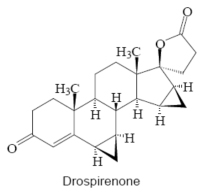 This combination as an oral contraceptive was not new; the formulation was. Bayer found that, despite the fact that drospirenone was known to be acid labile and to isomerize into an inactive form under acidic conditions (such as those encountered in the stomach), the combination could be advantageously formulated using micronized drospirenone (which increased absorbsion of the drug but was expected to also increase the rate of isomerization) and by not coating the drospirenone with an enteric coating (the conventional way of protecting an acid-labile compound from stomach acid in oral drug formulations). Barr's position was that the use of micronization to improve drug absorbsion and the use of enteric coatings to protect acid-labile drugs were "routinely considered" by drug formulators in making drugs for oral administration, and that Bayer's claims were thus obvious.
Bayer introduced testimony relating to how the invention was made, specifically relating to the surprising findings that formulating the drug in ways that should have increased isomerization (micronizing the acid-labile drospirenone and dispensing with the enteric coating) in fact had the opposite effect. According to this testimony, the reason for this paradoxical result is that the micronized drug was absorbed more rapidly than it isomerized in vivo, and enteric coatings made the effectiveness of the drug more variable; it was uncontested that the drug had to be 99% effective to be useful as a contraceptive. This testimony (supported by documentary evidence) established that Bayer scientists had originally prepared formulations that were unmicronized and enterically-coated, and that they were successful only when they changed direction and prepared the formulation that was the subject of the '531 patent. In short, the entirety of Bayer's evidence from the scientists that developed the formulation was that the results were surprising and unexpected, circumstances that traditionally have been sufficient to overcome a prima facie obviousness determination.
The District Court Judge, the Honorable Peter Sheridan, disregarded this evidence on the grounds that it was not reasonable to him that Bayer's scientists would have changed direction as abruptly as they purportedly did in their formulation work. Moreover, the Court relied on a prior art treatise not particularly directed to oral contraceptives (Aulton, 1988, Pharmaceutics: The Science of Dosage Form Design) and a number of scientific journal articles relating to in vitro and in vivo acid-lability of spirenone (not drospirenone but a related compound), in deciding that the invention would have been obvious. In addition, the Court cited three studies (including both in vitro and in vivo arms) with the related drug spirenone that purported to show the absence of spirenone isomers in blood samples from experimental animals or human volunteers administered tableted spirenone. In vitro studies on drospirenone, on the other hand, showed that 80% of the drug had isomerized in a 0.1N HCl solution at room temperature. The Court found that spirenone and drospirenone were related "as close[ly] as fraternal twins" and thus imputed the behavior of spirenone to drospirenone despite the evidence that they differed at least in their in vitro properties.
The District Court explained its reasoning as follows:
The prior art states the in vitro studies are unreliable unless they are correlated to in vivo testing (Aulton, McGilveray). Unlike Nickisch, a person of ordinary skill in the art would conduct such testing. Decisions about drug dose form are then made based upon the in vitro/in vivo testing. That is, the decision whether to micronize and/or enteric coat comes second. In this case, Bayer argues that the person of ordinary skill in the art would reverse this process ("put the cart before the horse"). This does not make sense. Justice Kennedy in KSR observed that in analyzing an obviousness defense, the court must use its common sense. KSR, 127 S. Ct. at 1732. In this instance, Bayer's alleged exception to the in vitro/in vivo correlation rule (that it does not apply to acid sensitive drugs) does not ring true. A person of ordinary skill in the art must precisely know and verify the characteristics and chemical reactions of a drug in order to evaluate its therapeutic value in humans. To follow McGinity's alleged exception for acid-sensitive drugs can only lead to sketchy, imprecise formulation results and an increased risk of injury to users.
 The Federal Circuit affirmed, in a decision by Judge Mayer joined by Judge Friedman
; Judge Newman dissented. The majority based its decision on the portion of the KSR opinion regarding when an invention that is obvious to try is also obvious:
When there is a design need or market pressure to solve a problem and there are a finite number of identified, predictable solutions, a person of ordinary skill has good reason to pursue the known options within his or her technical grasp. If this leads to the anticipated success, it is likely the product not of innovation but of ordinary skill and common sense. In that instance the fact that a combination was obvious to try might show that it was obvious under § 103.
As these principles have been explicated by the Federal Circuit (most recently in In re Kubin), the proper analysis is to be found in In re O'Farrell, and moreover the two O'Farrell scenarios constitute the only way that something that is obvious to try is not also obvious:
First, an invention would not have been obvious to try when the inventor would have had to try all possibilities in a field unreduced by direction of the prior art. When "what would have been 'obvious to try' would have been to vary all parameters or try each of numerous possible choices until one possibly arrived at a successful result, where the prior art gave either no indication of which parameters were critical or no direction as to which of many possible choices is likely to be successful" an invention would not have been obvious. O'Farrell, 853 F.2d at 903. This is another way to express the KSR prong requiring the field of search to be among a "finite number of identified" solutions. 550 U.S. at 421; see also Procter & Gamble, 566 F.3d at 996; Kubin, 561 F.3d at 1359. It is also consistent with our interpretation that KSR requires the number of options to be "small or easily traversed." Ortho-McNeil Pharm., Inc. v. Mylan Labs., Inc., 520 F.3d 1358, 1364 (Fed. Cir. 2008).
Second, an invention is not obvious to try where vague prior art does not guide an inventor toward a particular solution. A finding of obviousness would not obtain where "what was 'obvious to try' was to explore a new technology or general approach that seemed to be a promising field of experimentation, where the prior art gave only general guidance as to the particular form of the claimed invention or how to achieve it." O'Farrell, 853 F.2d at 903. This expresses the same idea as the KSR requirement that the identified solutions be "predictable." 550 U.S. at 421; see also Procter & Gamble, 566 F.3d at 996-97; Kubin, 561 F.3d at 1359-60.
Here, the majority analyzed the facts as found by the District Court to arrive at this application of the O'Farrell tests:
At this point, a person having ordinary skill in the art has reached a crossroads where he must choose between two known options: delivery of micronized drospirenone by a normal pill following the spirorenone analogy in the Krause series, or delivery of drospirenone by an enteric-coated pill following the Nickisch teaching that the drug needs to be protected from the stomach. This is a finite number of identified, predictable solutions. See KSR, 550 U.S. at 421. The prior art would have funneled the formulator toward these two options; he would not have been required to try all possibilities in a field unreduced by the prior art, thus avoiding the first pitfall of O'Farrell, 853 F.2d at 903. Additionally, the prior art was not vague in pointing toward a general approach or area of exploration, but rather guided the formulator precisely to the use of either a normal pill or an enteric-coated pill, thus avoiding the second pitfall of O'Farrell. Id. Because the selection of micronized drospirenone in a normal pill led to the result anticipated by the Krause series, the invention would have been obvious. See KSR, 550 U.S. at 421.
This is not on its face an unreasonable assessment of the prior art. However, like the District Court, it ignores, indeed it disregards, the affirmative evidence of what did happen in favor of the majority's reconstruction of what could have happened. While this might be an acceptable analytic method in the absence of the kind of evidence asserted by Bayer, in this case it results in the substitution of the Court's "common sense" for the facts.
Judge Newman's dissent focused on this error (emphasis added):
I do not share their view that it would have been obvious to do that which was indisputably unobvious to the experienced formulation scientists whose assignment was to formulate the known product drospirenone. The evidence showed, without contradiction, that it was known that micronized drospirenone rapidly degraded at the acidity of stomach acid. The evidence showed, without contradiction, that the Bayer scientists working in this field believed that the product required an enteric coating in order to prevent degradation in the stomach, upon ingestion as an oral contraceptive. Yet my colleagues, employing their own expertise, hold that since the scientists working in this field turned out to be mistaken, it would have been obvious that it was not necessary to take steps to prevent acid degradation. The court discounts the testimony of the scientists themselves, ignores the knowledge concerning this product and its instability in acid, ignores the textbook teachings, and finds that this unlikely process obviously should have been tried. That is not the law of obviousness.
Unfortunately, it is what the law of obviousness has become. Judge Newman also pointed out that even KSR requires a reasonable expectation of success, whereas what the majority thought would be obvious was actually an experiment that the prior art taught should fail:
The law does not hold it "obvious to try" experiments that contravene conventional knowledge, and that are not deemed reasonably likely to succeed. . . . The Court in KSR International Co. v. Teleflex Inc., 550 U.S. 398 (2007) explained that the standard for "obvious to try" is whether there was a "reasonable expectation of success" at the time. It was undisputed that there was not.
* * *
The district court stated that
micronization was a "viable" option, and that although success was "uncertain," the invention was obvious to try. However, "viability" is not the standard. "Viability" implies that the experiment may or may not succeed. What the law requires is not guesswork, not dumb luck, but a reasonable degree of predictability of success. My colleagues depart from the statutory standard, in ruling that persons of ordinary skill would have conducted experiments that were expected to fail.
* * *
The exercise of judicial expertise to override the clear evidence of how persons of skill in this field actually behaved, is inappropriate.
Judge Newman is too polite to say it, but decisions such as these are not only contrary to the statute, but are a form of judicial tyranny, where the law is what the court says it is (despite undisputed evidence to the contrary and a statutory standard for assessing such evidence). The Supreme Court's KSR decision let loose this avenue for judges rather than scientists having the common sense that matters in deciding obviousness. While a judge's judgment may be sufficient or even necessary in some circumstances, obviousness has a statutory basis and requirements for satisfying the statute. Judges substituting their common sense for the common sense of the person of ordinary skill in the art is not a result required by the KSR decision but it has certainly been encouraged by the Federal Circuit's jurisprudence since KSR. Only a return to a faithful interpretation of the statute and the exercise of the Federal Circuit's expertise in applying patent law to the scientific facts can reverse this current trend. It cannot happen too soon.
Bayer Schering Pharma AG v. Barr Laboratories, Inc. (Fed. Cir. 2009)
Panel: Circuit Judges Newman, Frieman, and Mayer
Opinion by Circuit Judge Mayer; dissenting opinion by Circuit Judge Newman


 Patent Docs
Leave a reply to Noise above Law Cancel reply