
By Kevin E. Noonan —
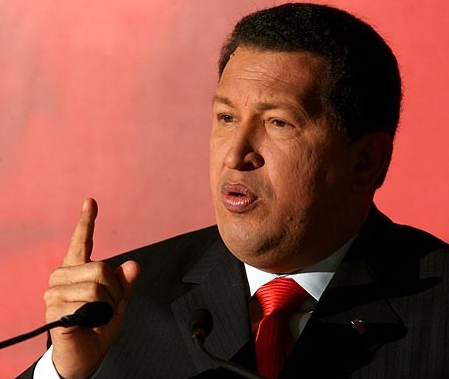 A great deal has been written over the past week about Venezuela's new patented drug policy. Last Saturday, President Hugo Chavez (at right) announced that his government would "shake up" Venezuela's intellectual property laws, particularly with respect to patents on medicines. As reported by Reuters and the Associated Press, Sr. Chavez drew a distinction between "a song [which] is intellectual property" and "an invention or scientific discovery [that] should be knowledge for the world, especially medicine." In characteristically dramatic fashion, he went on to say "[t]hat a laboratory does not allow us to make a medicine because they have a patent, no, no, no."
 The details and scope of the policy (besides a general intent to prevent foreign, predominantly Western, drug companies from enforcing patents in Venezuela) was not announced. However, Commerce Minister Eduardo Saman (at left), formerly head of Venezuela's patent agency (SAPI), said that the revised policies "should be compatible with the international treaties that we have signed and respect and honor." He justified the new policies by saying that "[p]atents have been a barrier to production, and we cannot allow them to be barriers to medicine, to life, to agriculture."
A contrary view was voiced by Edgar Salas, president of the Venezuelan pharmaceutical business chamber, who predicted that preventing foreign pharmaceutical companies from enforcing patents in Venezuela would result in these companies refusing to import their drugs into the country. For a country that imports most of its pharmaceuticals this could be a huge problem. On the other hand, Venezuela's position as an oil producer gives it significant leverage in obtaining goods from abroad. For example, in 2002, the U.S. alone exported $4.4 billion in goods to Venezuela and yet the country ran a trade surplus, exporting $15.1 billion (mostly from the sale of oil) to the U.S.
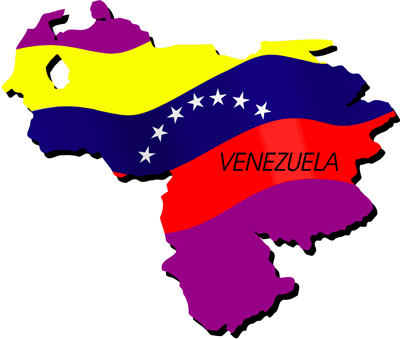 This latest move by Sr. Chavez is keeping with his anti-capitalist, anti-Western policies and rhetoric, and thus should come as no surprise. The "international treaties" referenced by Sr. Saman include, of course, the Trade-related Aspects of Intellectual Property Rights (TRIPS) provisions of the General Agreement on Tariffs and Trade (GATT), and Venezuela's participation in the World Trade Organization (WTO), under the 1994 Marrakesh Agreement. Venezuela was one of the earliest nations in the Organization, becoming a member on January 1, 1995. Sr. Chavez has threatened to leave the Organization, accusing it of neocolonialism and imposing trading practices unfair to developing nations. And a blanket ban on permitting or enforcing pharmaceutical patents would be a violation of TRIPS.
But TRIPS in practice has not been the panacea for drug patents that its drafters might have intended (see "The Law of Unintended Consequences Arises in Applying TRIPS to Patented Drug Protection in Developing Countries"; "Worldwide Drug Pricing Regime in Chaos"; "More on the Global Drug Patenting Crisis"). This outcome is due in large part to WTO member countries taking advantage of treaty provisions that permit (or can be co-opted to permit) nationalistic interpretations like Sr. Chavez now proposes. For example, TRIPS itself permits treaty signatory nations to include provisions for compulsory licenses in the face of extreme medical emergencies. The WTO adopted the Doha Declaration of 2001 that has reduced the consequences for disrespecting foreign patent rights even further. Specifically, the Declaration provides:
Article 4. The TRIPS Agreement does not and should not prevent Members from taking measures to protect public health. Accordingly, while reiterating our commitment to the TRIPS Agreement, we affirm that the Agreement can and should be interpreted and implemented in a manner supportive of WTO Members' right to protect public health and, in particular, to promote access to medicines for all.
In this connection, we reaffirm the right of WTO Members to use, to the full, the provisions in the TRIPS Agreement, which provide flexibility for this purpose.Article 5. Accordingly and in the light of paragraph 4 above, while maintaining our commitments in the TRIPS Agreement, we recognize that these flexibilities include:
(a) In applying the customary rules of interpretation of public international law, each provision of the TRIPS Agreement shall be read in the light of the object and purpose of the Agreement as expressed, in particular, in its objectives and principles.
(b) Each Member has the right to grant compulsory licenses and the freedom to determine the grounds upon which such licenses are granted.
(c) Each Member has the right to determine what constitutes a national emergency or other circumstances of extreme urgency, it being understood that public health crises, including those relating to HIV/AIDS, tuberculosis, malaria and other epidemics, can represent a national emergency or other circumstances of extreme urgency.
(d) The effect of the provisions in the TRIPS Agreement that are relevant to the exhaustion of intellectual property rights is to leave each Member free to establish its own regime for such exhaustion without challenge, subject to the MFN and national treatment provisions of Articles 3 and 4.Article 6. We recognize that WTO Members with insufficient or no manufacturing capacities in the pharmaceutical sector could face difficulties in making effective use of compulsory licensing under the TRIPS Agreement. We instruct the Council for TRIPS to find an expeditious solution to this problem and to report to the General Council before the end of 2002.
Several developing countries have used the compulsory licensing provisions of TRIPS as modified by the Doha Declaration to grant compulsory licenses for anti-AIDS drugs (see "The Law of Unintended Consequences Arises in Applying TRIPS to Patented Drug Protection in Developing Countries"). Thailand has gone even further, imposing compulsory licenses for drugs such as Plavix® that do not readily fall within the definition of drugs for treating a public health crisis or nat
ional emergency (see "Thailand Continues Its Compulsory Licensing Practices"). So it is unlikely that Venezuela will be unable to fashion a justification for whatever policies it adopts that will permit Sr. Chavez to fulfill his commitment to abolish drug patents in his country while permitting Sr. Saman to maintain that those policies "respect and honor" the "international treaties that [Venezuela has] signed."
Venezuela thus becomes the latest example of a developing country able to use the provisions of GATT and the auspices of the WTO to receive the benefits of reduced tariffs on their exports while avoiding the political repercussions of enforcing drug patents owned by foreign nationals. Even without Sr. Chavez's anachronistically Marxist rhetoric, it is hard to fathom a political leader of a country like Venezuela staking political power on protecting foreign interests. Patent protection in any country will be enforced only when such protection benefits the society itself, suggesting that Western patent holders would be better served to support local industries that could partner with them to make the case for patent rights with their governments (see "A Modest Proposal Regarding Drug Pricing in Developing Countries"). Sadly, with few exceptions, Western pharmaceutical companies have not availed themselves of such opportunities. As a consequence, the political calculus strongly favors leaders like Sr. Chavez, and we can expect similar actions, with luck devoid of the florid rhetoric, from other developing countries until the situation changes.
For information regarding this and other related topics, please see:
• "U.S. Continues Efforts to Protect Patent Rights Abroad," April 29, 2008
• "Thailand Continues Its Compulsory Licensing Practices," March 11, 2008
• "More on the Global Drug Patenting Crisis," August 14, 2007
• "EU Trade Commissioner Sends Warning Letter to Thailand," August 13, 2007
• "Pharma Sanity Lacks Global Reach," July 13, 2007
• "Worldwide Drug Pricing Regime in Chaos," May 9, 2007
• "The Law of Unintended Consequences Arises in Applying TRIPS to Patented Drug Protection in Developing Countries," May 1, 2007
• "A Modest Proposal Regarding Drug Pricing in Developing Countries," May 2, 2007


 Patent Docs
Leave a reply to AnonymousAgent Cancel reply