
By Kevin E. Noonan —
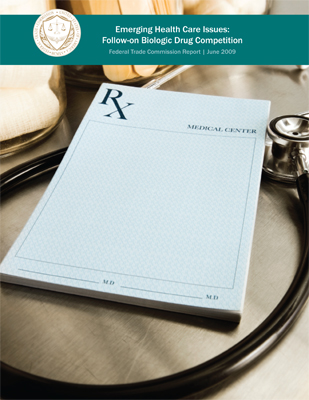
 Last week, the Federal Trade Commission issued a report on follow-on biologics ("Emerging Health Care Issues: Follow-on Biologic Drug Competition"). As many patent practitioners did a few years ago when the FTC issued a report on patent reform, many in the biotech and pharma community, generics companies, and Congress are asking "What is the FTC camel's nose doing in our tent?"
The report is extensive, covering the likely market impact of follow-on biologics (FOB) competition, the effects of patent protection and market incentives in the face of FOB introduction, the potential impact of a Hatch-Waxman-like pre-approval patent resolution process, and how market exclusivity for FOBs would affect market competition. The report also contains several recommendations, many of which appear to be at odds with the experiences and realities of biologic drug development. These include:
 1. Competition between a biologic drug and an FOB is much more likely to resemble brand-to-brand competition than the dynamics of brand-generic competition under the Hatch-Waxman regime. The Commission reached this conclusion after consultation with "[p]ioneer manufacturers, potential FOB manufacturers and payors," who were "virtually unanimous" in this prediction. The report notes that in both the U.S. and Europe, the existence of FOBs "has not resulted in steep price discounting or rapid acquisition of market share" by FOB producers; in a footnote, the report states that certain drugs that would rightly be considered FOBs (such as insulin) have "traditionally" been regulated by the FDA under FDCA. The reasons put forth by the Commission for this state of affairs include:
b) These costs in turn will require "large companies with substantial resources" to enter the FOB space. In addition, the report speculates that only "2 or 3" companies will attempt to produce FOBs (compared with 10+ generic entrants for small molecule generic drugs), and only for biologic drugs with sales "in excess of $250 million."
c) Acquisition of market share for FOBs will be inhibited by the lack of "automatic substitution" for pioneer biologic drugs, in contrast to the rapid increase in market share, and reduced drug prices, seen with small molecule drugs. FOBs will not be designated as "therapeutically equivalent" (due presumably to the scientific differences noted earlier in the report), and thus will not be automatically substituted by pharmacies. This will require FOB manufacturers "to market their products and negotiate individual contracts with purchasers."
d) The report also anticipates that physicians and patients will have a stronger resistance to substituting FOBs than they have shown for generic drugs, due again to the differences in equivalencies. The report speculates that this may initially restrict the FOB market to newly-diagnosed patients.
e) The nature of the diseases for which biologic drugs are prescribed may also be a factor, according to the report. Patients treated with biologic drugs frequently are suffering from "severe, chronic diseases and sometimes fatal conditions." Biologic drugs are frequently infused or injected, and involve special medical services or devices that require specialty training to be administered properly. This drug delivery route, which the report characterizes as involving "clinics, hospitals, doctor's offices or other medically supervised setting[s]" would require inventory restocking and personnel retraining to adopt an FOB, and thus would present additional costs rather than immediate cost savings.
f) With regard to reimbursement, the current regime does not incentivize FOB use. Rather than being available directly to patients, biologics drugs are "typically delivered to patients by healthcare providers as part of medical treatments" such as dialysis or chemotherapy, and thus are reimbursed as part of the medical treatment rather than as a pharmaceutical benefit. This eliminates many of the incentives (such as differential co-pay requirements) that have been used successfully to incentivize patients, physicians, and pharmacists to adopt lower-cost generic drugs. The report also notes the influence of the reimbursement methodologies used by the Centers for Medicaid and Medicare Services (CMS) as influencing these considerations.
g) The report provides the following scenario for FOB competition with a pioneer biologic drug:
2. The report also finds that the existing incentives for brand-to-brand competition — namely, patent protection and market-based pricing — are "likely" to support FOB competition and biologic drug innovation. The report acknowledges that an "FOB pathway" under FDA administration is "likely" to provide an efficient means for bringing FOBs to market, in view of the time and cost savings in the presently-contemplated schemes. The report poses the question of whether provisions of proposed FOB legislation that delay FOB market entry (and thus "restrict competition") are necessary. The report concludes that the evidence the FTC has examined indicates that there are "no economic arguments" suggesting that "such provisions are necessary to foster pioneer drug innovations or entry of interchangea
ble FOBs." Importantly, the report asserts that "[m]arket experience" indicates that the traditional incentives of patent protection and market exclusivity are sufficient to support FOB competition, and that "[i]t is likely that FOB competition similarly will develop without any special legislative incentives."
The report actually goes further than merely asserting that FOB legislation may be unnecessary; it goes on to say:
In expanding on this topic, the report includes the following specific recommendations:
b) The report also sees no need for any ANDA-like mechanisms to resolve patent disputes between pioneer biologic drug manufacturers and FOB producers prior to FDA approval of FOBs. The report contends that patent infringement litigation, or the threat thereof, will be a sufficient disincentive to inhibit FOB companies from entering the market prior to patent expiry, even if they have obtained FDA approval. The reasoning behind this conclusion resides in the Commission's belief that the Hatch-Waxman ANDA scheme has resulted in "extensive litigation, unintended consequences and delayed generic entry." The report also bases this conclusion on the need for the ANDA provisions (particularly the 30-month stay of FDA approval) to protect innovator drug companies from "judgment-proof" generics companies, because the market share (and revenues) lost by the innovator would be impossible to recover from a generic infringer even if the innovator prevailed in litigation. The report's conclusion that only established biologics drug manufacturers will be able to enter the FOB space renders these considerations moot, and hence the report concludes there is no need for protection over and above the threat of patent infringement liability. The report's resistance to extending the pre-approval provisions of Hatch-Waxman to FOBs is also grounded in the Commission's disillusionment over their implementation in the small molecule arena, including reverse payment schemes.
c) The report also opines that FOB manufacturers are "unlikely to need additional incentives to develop interchangeable FOB products" beyond market-based pricing. As with the ANDA provisions, the report finds that the 180-day market exclusivity provisions of Hatch-Waxman are also unnecessary in the FOB context. For small molecules, the expected precipitous drop in drug prices that attends market entry by several generic manufacturers would preclude the first ANDA filer from recouping its development and litigation costs, and thus disincentive a generic company from being the first to challenge innovator patents. This provides the justification for the 180-day exclusivity period, according to the report. No such considerations are associated with FOBs, the report asserts, because it is unlikely that there will be the precipitous drop in biologics drug pricing upon FOB market entry (due to the limitations on interchangeability, etc. as discussed above).
 Reaction to FTC report was swift and negative. The Biotechnology Industrial Organization (BIO) released a statement by Jeff Joseph, BIO Vice President of Communications. He said the FTC report was "based upon fundamentally flawed or highly selective assumptions" and a "lack of true understanding of the necessary conditions to drive future biomedical breakthroughs." He noted that "two-thirds of the future clinical pipeline . . . resides in small biotech companies" that have no profits and rely heavily on private investment for R&D. These companies are "particularly susceptible to negative changes in investment incentives." He urged Congress to adopt "a more balanced approach" than the proposals in the FTC report. The statement also provided a link to a detailed rebuttal of the findings in the FTC report.
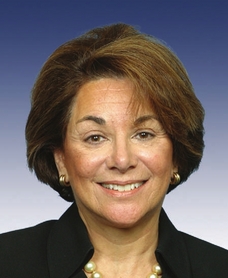 Congre
ss wasn't too happy, either. Rep Eshoo (D-CA; at left) also termed the report "flawed," reminding FTC representatives at a hearing last Thursday that "we have no experience with the similarity standard that will be used" to approve FOBs. Adopting the recommendations in the report, particularly those relying solely on the threat of patent litigation to forestall "free-riding" on innovator investment, could open the door to "designing around" patents protecting biologics drugs in a way not contemplated in the report, according to the Congresswoman. Another member of Congress, Rep. Inslee (D-WA), called the report "fantastically unrelated to the realities" of venture capital investment in high-risk technologies like biotech. He warned that, if the FTC was wrong in its assumptions, "you've cut off the development of new drugs."
The report was prepared by staff members from the Bureau of Competition in the Office of Policy Coordination, the Office of Policy Planning, and the Bureau of Economics, based in part on a panel discussion and submissions from a roundtable held last November. The Commission directs inquiries to Michael S. Wroblewski, Deputy Director of the Office of Policy Planning (mwroblewski@ftc.gov)


 Patent Docs
Leave a reply to FDA Releases Draft Guidance Reducing Stringency for Biosimilar Approval – Patent Docs – imd369 Cancel reply