
By Kevin E. Noonan —

Rick Weiss gets it when it comes to the value of patents. "Patents assure an inventor a period of time, generally 20 years, to exclude others from using the invention, in return for a full explication of that invention by the patent holder," he says. "The assurance that competitors can be blocked from freely copying inventions during this period of exclusivity is a powerful stimulus to capital investment, which is a key enabler of the inventive process." He also understands that "full and public description" of an invention, the quid pro quo of the patent system, "fuels a faster pace of innovation than would occur through other means of market exclusivity, such as trade secrets, which in turn boosts broad-based economic growth and prosperity."
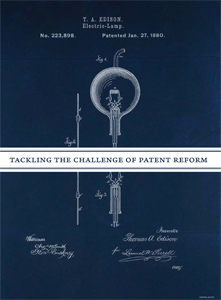
Which is why Mr. Weiss' Report ("Tackling the Challenge of Patent Reform: Recommendations for the Obama administration and Congress"), authored as the result of a series of roundtable meetings of "expert stakeholders from a wide array of business, legal and academic disciplines," is a little disappointing. The Report was published by the Center for American Progress and Science Progress and is timely, since the roundtable discussions were held just last October. Perhaps because of the intentionally competing interests of the stakeholders involved, and the participation of patent academics, the Report does not hew to the realities of the patent system with the faithfulness Mr. Weiss himself evinces in the Report's introductory paragraphs.
For example, while the Report asserts that "the widespread characterization of the PTO as 'broken'" is an overstatement, in the next breath it states that there is "broad consensus today that the U.S. system for protecting intellectual property is burdened with too many patents of questionable quality and validity." While properly articulating the current conventional wisdom, there is little evidence to back up the claim. Generally, the patents that are mentioned in this regard are frivolous (methods for playing with cats or swinging on a swing), which are the 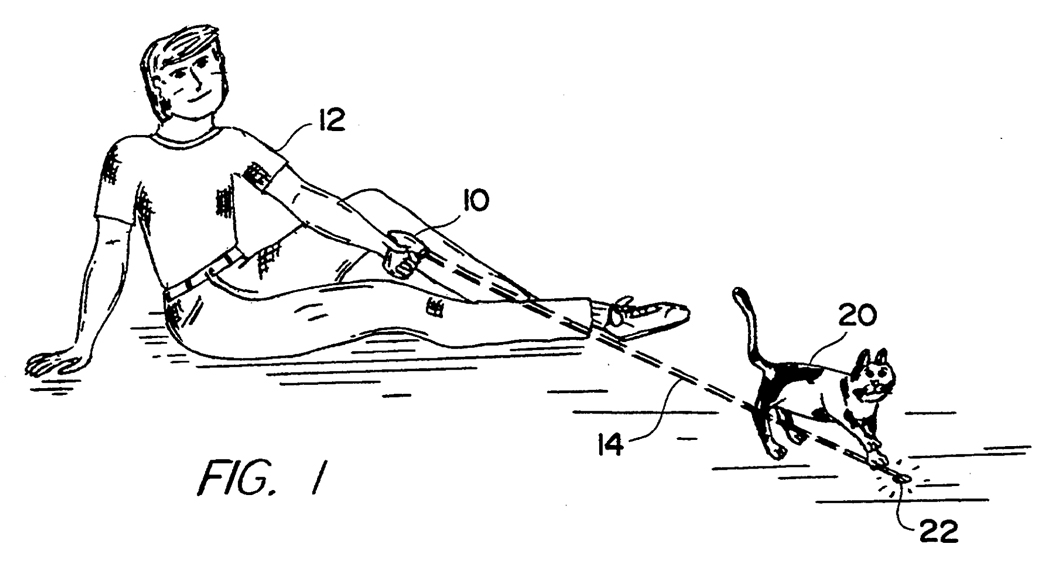
patent equivalent of a vanity publication. While déclassé compared with patents for more "serious" technologies, there is no good argument that the patent system is harmed in any way by their having been issued. Other complaints about "bad" patents tend to be either philosophical (for opponents of human gene patents, for example) or political (by industries that would rather expropriate than license technology developed by others).
The Report also suffers from accepting the existence of the alphabet soup of government and other groups calling for patent reform as evidence that reform is needed ("where there's smoke, there's got to be fire"). But such uncritical acceptance ignores the potent political forces behind these various groups and reports, as well as ignoring the inability for any such group constituted to investigate whether reform is needed to conclude that it is not. And the fact that Congress last performed a major rewrite of the patent statute almost 60 years ago disregards major changes in 1984, 1988, 1996, and 2000, all of which adapted U.S. patent law to international trends and treaties and changed in fundamental ways how patents are obtained and enforced.
Turning to the recommendations, those directed towards the Patent Office are the most sound. There are four:
1. Solidify the budget, and control revenues and expenses, including:
• Demanding that a greater share of patent-processing fees be paid earlier in the examination process,
• Increasing those fees that the PTO is authorized to set,
• Retaining funds left over from prior years, and
• Total and permanent halt to PTO fee diversion.
2. Hire and retain the best patent staff:
• Adjust production goals to be more realistic,
• Improve the information infrastructure, including giving examiners access to "outside" experts, and
• Developing objective measures of patent quality, including considering not only the frequency with which patents are improvidently granted, but also how frequently they are improvidently denied.
3. Improved communication between applicants and the Office:
• Seek "early and extensive" input from the public on rules packages,
• Offer better access to the public of PTO management and economic information, especially statistics relating to PTO performance, and
• Open the Public Policy Advisory Committee meetings to the public and webcast them (two things the Office is doing for the first time this Friday; see PTO notice for more details).
4. Improve the information available to PTO staff:
• Encourage "interested" third party "experts" to participate in programs like the "peer-to-patent" program, which the Report recommends be scaled up.

The Report also discusses the pros and cons of converting the Office to a government-owned corporation (like the Post Office), as a way to better compete with the private sector, but concludes that the Office can accomplish its objectives if kept "wholly" within the Federal government.
Finally, the Report recommends that executive management and business skills may be more important for the new Director than legal skills. What it doesn't say, and what is evident to anyone watching the many failures of the Rogan/Dudas administrations under the former presidency, is that the new Director should understand how the patent process works, to better understand how it is not working (insofar as it is not) and to appreciate the difference between changes that will improve U.S. patents and those that merely improve Office statistics or its image.
As promising as these recommendations are, the Report then sets forth a series of recommendations that seem bizarre. Citing the "significant threat posed by patent trolls to the integrity and stability of the patent system (a charge that might as well have been written, and may have been, by representatives from the Coalition for Patent Fairness), the Report recommends that the Patent Office should "initiate a study assessing various approaches to understanding and resolving the patent troll issue." The possible "remedies" proposed include an "awarding of legal fees to successful defendants (a 'losers pay' rule); more strict adherence to Rule 11 requirements (which set the bar height for the filing of patent infringement suits) by the courts; and a requirement that all patent assignments and licenses be registered with the PTO, including ongoing declaration of assignments and licenses to and by the patent-holder's upward and downward affiliates." The first two of these recommendations are outside the scope of the Patent Office and are entirely inappropriate; they also presuppose that a patent "troll" is imbued with lesser patent rights than a practicing entity, a proposition that has no basis in U.S. patent law. (Indeed, all the Supreme Court's eBay decision changed in this regard is to require a court to decide whether the balance of the equities and the public interest was served by granting an injunction to a non-practicing entity; it did not preclude NPEs from having an injunction granted under appropriate circumstances.)
The Report contains a few additional recommendations that are more in keeping with its overall thoughtful and reasonable tone, including changing restriction/election practices to prevent inventions that require "the integrated use of many independent pieces" from being considered to be multiple inventions. Worksharing and deferred examination are also considered as ways to reduce pendency. But unfortunately, the Report adheres to discredited notions that continuations are an abuse of the system and recommends that they should be "studied" to determine "whether continuations as practiced today are in keeping with the public policy principles underpinning the patent system." And it also seems to have missed recent reports that inter partes reexamination has become a robust tool, since the Report characterizes these proceedings as "seldom used and therefore ineffective."
The Report recommends (albeit with much less thorough discussion) that Congress reconsider patent reform legislation, and specifically highlights changing the U.S. to a "first to file" system and "updating" the inequitable conduct doctrine. With regard to inequitable conduct, the Report envisions concomitantly increasing the burden on applicants to provide the Patent Office with search results and other information on the relevant art, while at the same time protecting such disclosure from being characterized as inequitable conduct unless there was evidence of intentional failure to disclose the art. Moreover, the inequitable conduct defense would be limited to those cases where at least one claim had been found invalid, presumably on the basis of such uncited prior art. In addition, the Report recommends that such reform legislation provide avenues for the public to provide art, with commentary to the Office (analogous to "observations" that can be filed in the European Patent Office with regard to pending EPO applications).
The Report also holds applicants accountable for some of the current perceived deficiencies in patent law. Principal among these is what can kindly be termed applicant overreaching: presenting claims that are broader than the underlying disclosure. Of course, like beauty, the correspondence between claim scope and disclosure may be in the eye of the beholder; certainly, it is a question with sufficient complexity and political overtones that calls for restricting "exaggerated claims" may be the province of businesspeople wishing to practice a patented technology and looking for any opportunity to argue that their attempts at designing around are not expressly disclosed in a patent specification. Just as important as preventing overreaching is the principle that a patentee should not have its patent right unduly proscribed so as to make patent protection less valuable than the patentee is entitled to expect.
Finally, the Report notes with approval judicial action to "correct" the perceived "worst" abuses of the current patent regime, including the Supreme Court's decisions in eBay Inc. v. MercExchange, L.L.C.; Quanta Computer, Inc. v. LG Electronics, Inc.; MedImmune, Inc. v. Genentech, Inc.; and KSR Int'l Co. v. Teleflex Inc., as well as Federal Circuit decisions including SanDisk Corp. v. STMicroelectronics, Inc. and In re Bilski. The Report also notes that procedural and jurisdictional decisions in the 5th Circuit, such as In re Volkswagen, may be correcting the "venue" problems addressed in the proposed legislation that failed in the last Congress. But the Report accepts the IT industry's contentions that damages awards are out of line, citing the example of a patented semiconductor component and whether infringement damages should be calculated based on the price of the semiconductor component or the laptop of which it is a (crucial) part.

"The time is ripe for positive change in the U.S. patent system," Mr. Weiss (at right) states in his conclusion. Would that he had presented any compelling evidence that this assertion is actually so. For a little historical perspective, consider the following:
n10 The President has appointed a Commission on the Patent System. Executive Order No. 11215, 30 Fed. Reg. 4661 (April 10, 1965). It is hoped that its studies may develop more efficient administrative procedures and techniques that will further expedite dispositions and at the same time insure the strict application of appropriate tests of patentability.
This quote is taken from the Supreme Court's decision in Graham v. John Deere Co., from 1966. It would be good for everyone, including Congress, to remember the adage plus ça change, plus c'est la même chose when assessing the pressing need for patent reform.
• "Science Progress Article Addresses Global Patent Protection," January 28, 2009
• "Science Progress Tackles Patent Reform," January 21, 2009


 Patent Docs
Leave a reply to Kevin E. Noonan Cancel reply