
By Donald Zuhn —
Last week, the Federal Circuit affirmed a finding of exceptionality and award of $16.8 million in attorneys fees by the District Court for the Southern District of New York in a case involving two Hatch-Waxman challenges to U.S. Patent No. 4,687,777.
The challenges to the '777 patent had been initiated by Defendants-Appellants Mylan Laboratories, Inc., Mylan Pharmaceuticals, Inc., and UDL Laboratories, Inc. (Mylan) on the one hand, and Defendants-Appellants Alphapharm Pty., Inc. and Genpharm, Inc. (Alphapharm) on the other. Seeking approval to market a generic version of the antidiabetic agent, 5-{4-[2-(5-ethyl-2-pyridyl)ethoxy]benzyl}-2,4-thiazolidinedione, commonly referred to as pioglitazone, both Mylan and Mylan filed Abbreviated New Drug Applications (ANDAs) with the FDA.
Plaintiffs-Appellees Takeda Chemical Industries, Ltd. and Takeda Pharmaceuticals North America, Inc. (Takeda) market pioglitazone, which is covered by Takeda's '777 patent, under the trademark Actos®. In response to the ANDAs filed by Mylan and Alphapharm, Takeda filed suit against the Defendants-Appellants, alleging that they had infringed claims 1, 2, and 5 of the '777 patent.
As discussed in a previous Patent Docs post, asserted claim 1 of the '777 patent recites a compound of the formula:
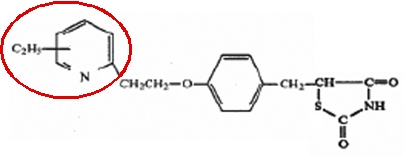
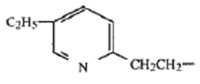
The critical portion of this formula is the ethyl-substituted pyridyl ring (circled), which encompasses four possible compounds in which the ethyl substituent (C2H5) is located at one of four available positions on the pyridyl ring, generating 3-, 4-, 5-, and 6-ethyl compounds. Asserted claim 2 covers pioglitazone, which is referred to as a 5-ethyl compound because the ethyl substituent is attached to the 5-position of the pyridyl ring:
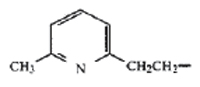
When Mylan and Alphapharm filed their ANDAs, they made certifications pursuant to 21 U.S.C. § 355(j)(2)(A)(vii)(IV) — known as Paragraph IV certifications — that the '777 patent was invalid for obviousness. At trial, Alphapharm argued that the claimed compounds would have been obvious at the time of their invention in view of a prior art compound known as "compound b," which was disclosed in Takeda's U.S. Patent No. 4,287,200 and in Sohda et al., 1982, Chem. Phar. Bull. 30: 3580. Compound b possesses a pyridyl ring in which a methyl (CH3) group is attached to the 6-position:
Mylan, on the other hand, argued that Takeda had committed inequitable conduct in procuring the '777 patent (Mylan also presented a revised obviousness argument). The District Court, however, determined that Mylan and Alphapharm had failed to meet their burden of proving invalidity or inequitable conduct by clear and convincing evidence. In separate appeals, the Federal Circuit affirmed the District Court's judgment of validity and enforceability (see "Takeda Chem. Indus., Ltd. v. Alphapharm Pty., Ltd. (Fed. Cir. 2007)" for a discussion of Alphapharm's appeal).
Contending that Mylan and Alphapharm had lacked a good faith basis to make their Paragraph IV certifications, and had engaged in litigation misconduct, Takeda moved against Mylan and Alphapharm for an award of attorneys fees. The District Court granted Takeda's motion, awarding Takeda $11.4 million from Mylan and $5.4 million from Alphapharm, with interest. Explaining its finding of exceptionality and award of attorneys fees, the District Court stated that Alphapharm's certification letter was "so devoid of merit and so completely fail[ed] to establish a prima facie case of invalidity that it must be described as 'baseless.'" In particular, the Court noted that while Alphapharm focused on compound b at trial, its certification letter had focused on two other compounds and contained scientific errors. In addition, the Court pointed to Alphapharm's "utter failure" to explain why a skilled artisan would even select compound b as a lead compound. The Court similarly noted that Mylan's focus also changed at trial, with Mylan revising its certification argument of obviousness and emphasizing a new inequitable conduct claim, an argument the Court found to be unsupported and frivolous (the Court noted that Mylan's certification letter also contained scientific errors).
Despite support from the Generic Pharmaceutical Association, which filed an amicus brief arguing that the failure to reverse the District Court's finding of exceptionality would have a chilling effect on future ANDA patent challenges, the Federal Circuit affirmed the District Court's determination that the case was exceptional and its award of attorneys fees.

With respect to Alphapharm, the Federal Circuit determined that "[g]iven the district court's familiarity with the parties and the issues and its thorough discussion of Alphapharm's certification letter and litigation strategy, we cannot say that the court committed clear error in finding that this was an exceptional case due in part to the misconduct of Alphapharm."
With respect to Mylan, the Federal Circuit determined that:
The CAFC also agreed with the District Court regarding the merits of Mylan's inequitable conduct claim, noting that Mylan had failed to present any evidence that Takeda hid or misrepresented any information to the Patent Office. Thus, the Federal Circuit concluded that:
Panel: Circuit Judges Lourie, Rader, and Bryson
Opinion by Circuit Judge Lourie; opinion concurring in part and concurring in the result in part by Circuit Judge Bryson

 Patent Docs
Leave a reply to Silence Dogood Cancel reply