• Spruson & FergusonSpruson & Ferguson will be offering a webinar entitled "Practical Insights into Patent Term Extensions in Australia" on October 21, 2021 at 4:00 pm (ET).  Daniel Sieveking and Elizabeth Barrett of Spruson & Ferguson will provide a summary of various criteria regarding patent term extension (PTE) eligibility and the PTE application process in Australia, and also provide practical recommendations arising from recent decisions, including two recent decisions of the Australian Federal Court:  Ono Pharmaceutical Co. Ltd v Commissioner of Patents [2021] FCA 643, and Merck Sharp & Dohme Corp. v Sandoz Pty Ltd [2021] FCA 947.

    While there is no cost to participate in the program, those interested in attending the webinar can register here.

  • By Kevin E. Noonan

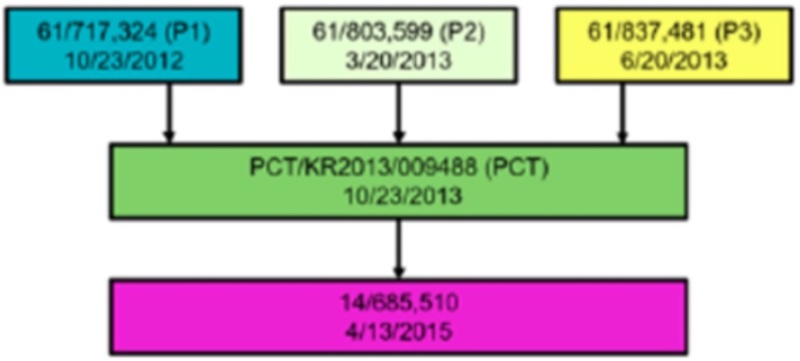
    ToolGenOn May 20th, Senior Party ToolGen filed its Substantive Motion No. 1 for benefit of priority to U.S. Provisional Application No. 61/837,481, filed June 20, 2013 ("P3" or "ToolGen 5 P3"), or alternatively, International Application No. PCT/KR2013/009488, filed October 23, 2013 ("PCT").  Junior Party the Broad Institute, Harvard University, and the Massachusetts Institute of Technology (collectively, "Broad") filed its Opposition to this motion, and on September 24th ToolGen filed its Reply.

    As set forth in ToolGen's motion, the Board had granted ToolGen the benefit of its U.S. Provisional Application No. 61/717,324, filed October 23, 2012 ("P1"), resulting in ToolGen having an earlier priority date than Broad.  ToolGen submitted this motion to be accorded benefit of priority to two later-filed, related applications:  U.S. Provisional Application No. 61/837,481, filed June 20, 2013 ("P3" or "ToolGen 5 P3"), or alternatively, International Application No. PCT/KR2013/009488, filed October 23, 2013 ("PCT").  In its motion, ToolGen explains that it is submitting this motion contingent on the Board granting CVC's Substantive Motion No. 2, which attacks ToolGen's entitlement to priority to the P1 priority document in Interference No. 106,127.  The brief sets out graphically the relationship of these priority documents:

    Image
    The brief then set out the basis for ToolGen's claim of priority, specifically its arguments for satisfaction of the written description and enablement requirements under 35 U.S.C. § 112(a) regarding two embodiments falling within the scope of the Interference Count.

    In its Opposition, Broad asked the Board to defer consideration of ToolGen's Motion, properly pointing out that Broad (unlike CVC in the '127 Interference) has not challenged ToolGen's benefit of priority to its P1 provisional application.  Accordingly, Broad asserted that ToolGen's motion is premature and "completely irrelevant" at this time.  Broad further asserted that this motion may "potentially" become relevant "only if multiple contingencies in this and other proceedings—that may or may not ever come to pass—do actually arise."  These include that:

    1) the PTAB finds ToolGen is not entitled to the benefit of its P1 application in the co-pending 127 Interference,

    2) Broad requests and is granted permission to file a motion here challenging ToolGen's benefit to P1 based on estoppel from that determination in the 127 Interference, and

    3) the PTAB grants Broad's motion, depriving ToolGen here of benefit of its P1.

    Broad's justification included that the Board considering this motion under these circumstances would be "waste of judicial resources" as well as improperly constituting an advisory opinion.  The interference rules provide that the Board has discretion to defer consideration of motions under 37 C.F.R. § 41.125 as applied in Berman v. Housey, 291 F.3d 1345, 1352 (Fed. Cir. 2002).  Broad urged the Board to exercise that discretion regarding ToolGen's Preliminary Motion No. 1.  Broad's brief explicated in further detail the contingent nature of the circumstances needing to arise for ToolGen's motion to be timely, in support of its opposition and request for the Board to defer consideration thereof.

    Broad argued that priority to either of ToolGen's U.S. Provisional Application No. 61/837,481, filed June 20, 2013 ("P3" or "ToolGen P3"), or alternatively, International Application No. PCT/KR2013/009488, filed October 23, 2013 ("PCT"), would never be relevant because "ToolGen will be unable to beat Broad's dates of [conception and reduction to practice]" if Broad is granted priority in the '115 Interference.  This argument also sounds in representations made by ToolGen during prosecution regarding what was needed to provide a skilled worker with a reasonable expectation of success:

    Rather, the only thing that would have alleviated the unpredictability in the art and allayed the concerns of one of ordinary skill at this time would have been the actual demonstration of a Type II Cas9 system successfully introducing site-specific double-stranded breaks in a target nucleic acid sequence within a eukaryotic, e.g., mammalian, cell . . . [emphasis in brief].

    Here, Broad resurrects an argument made in Interference No. 106,115, that eukaryotic CRISPR is an invention for which conception can only be shown by successful reduction to practice (under a theory of "simultaneous conception and reduction to practice" first enunciated thirty years ago regarding conception of a nucleic acid encoding a particular protein; see Amgen v. Chugai, Fed. Cir. 1990).

    In its Reply, ToolGen boldly asks the Board to dismiss rather than defer its Preliminary Motion No. 1 should the Board deny CVC's Preliminary Motion No. 1 in co-pending Interference No. 106,126 to deny ToolGen priority benefit to its U.S. Provisional Application No. 61/717,324, filed October 23, 2012 ("P1").  In addition, ToolGen raises the procedural requirement that decisions on Motions must be decided prior to initiation of the Priority Phase.  And finally, ToolGen argues that should the contingency arise and the Board grant CVC's motion and deny ToolGen priority benefit to its P1 provisional application the Board should grant its Preliminary Motion No. 1 because Broad's opposition was procedural in nature and not on the merits.

    Regarding the many contingencies Broad identifies in its Opposition, ToolGen argues that Broad has not brought a motion or advanced an argument to deny ToolGen the benefit of priority to its P1 application.  And at this point Broad should not be permitted to benefit from the Board deferring the priority benefit issue until after the priority phase has begun because that would be procedurally improper according to ToolGen, relying on 37 C.F.R. § 41.121(a)(1), the Standing Order at 6:22-24 and Hum. Genome Scis., Inc. v. Genentech, Inc., 589 F. Supp. 2d 512, 514 (D. Del. 2008), dismissed 368 F. App'x 116 (Fed. Cir. 2009).  And to the extent any contingency resulting in ToolGen's loss of priority benefit to the P1 application should arise, ToolGen argues, its Preliminary Motion No. 1 was not addressed on the merits in Broad's Opposition and thus its Motion No. 1 is unopposed.

  • By Kevin E. Noonan

    Federal Circuit SealThe Supreme Court's decision in United States v. Arthrex, Inc., 141 S. Ct. 1970 (2021), at the end of its last term resulted in many cases with pending certiorari petitions that were based on Appointment Clause challenges to be remanded to the Federal Circuit, and many (if not most) of those were remanded back to the Patent Trial and Appeal Board.  The decision handed down by the Federal Circuit on Tuesday in Snyders Heart Valve LLC v. St. Jude Medical, LLC is an exception, the Court considering the appeal on the merits and reversing the Board's determination that St. Jude had shown by a preponderance of the evidence that challenged claims 1–3, 8, 9, 22, 23, 31–35, 37–39, and 45 of U.S. Patent No. 6,821,297 were invalid as being either anticipated by U.S. Patent No. 5,855,601 to Bessler or obvious over the '601 patent "in combination with other prior art references."

    This is the second appeal of several IPRs between the parties; in an earlier case, St. Jude Medical, LLC v. Snyders Heart Valve LLC (Fed. Cir. 2020), the Board found Snyders' U.S. Patent No. 6,540,782, directed to an artificial heart valve and systems for introducing the valve, to be neither anticipated over U.S. Patent No. 5,957,949 nor rendered obvious over a combination of the '949 patent with U.S. Patent No. 4,339,831 to Johnson and U.S. Patent No. 5,413,599 to Imachi.  The Federal Circuit affirmed this decision.  In the same appeal, the Federal Circuit reversed the Board's finding that certain of the challenged claims of the '782 patent were anticipated by the Bessler '601 patent based on erroneous claim construction.

    In this case, the Court proceeded to a decision on the merits because "all parties agree[d] that Snyders ha[d] waived its Appointments Clause challenge and that remand to the Patent Office for Director review is not proper."  But the parties differed, with Snyder asking the Court to reverse based on its decision in the earlier appeal and St. Jude asking that the case be remanded to the Board for its reconsideration in the first instance in view of the intervening Federal Circuit decision.

    The Court agreed with Snyders and rendered a decision reversing the PTAB on the same basis that the Board's unpatentability decision was reversed in the earlier appeal, in a decision by Judge O'Malley joined by Judges Newman and Taranto (this was the same panel that heard the earlier appeal; there, Judge Taranto wrote the unanimous opinion).  The panel reiterated in brief their reasons for reversing the Board in its earlier decision, which bears at least a synopsis here.  According to that earlier opinion, the '782 patent disclosed and claimed an artificial heart valve that can be administered using a catheter (thereby forgoing open heart surgery) and can be placed without removing the patient's damaged valve.  The opinion asserted that the claimed artificial valve has three components: "a valve element, a frame, and a band."  System claims for introducing the valve recite components for installing the artificial valve comprising "a holder, a manipulator, and an ejector."

    Claim 1 of the '782 patent is representative of the artificial heart valve claims at issue:

    1.  An artificial valve for repairing a damaged heart valve having a plurality of cusps separating an upstream region from a downstream region, said artificial valve comprising:
    flexibly resilient frame sized and shaped for insertion in a position between the upstream region and the downstream region, the frame having a plurality of peripheral anchors for anchoring the frame in the position between the upstream and the downstream region and a central portion located between the plurality of peripheral anchors;
        a band attached to the frame limiting spacing between adjacent anchors of said plurality of peripheral anchors; and
        a flexible valve element attached to the central portion of the frame and adjacent the band, said valve element being substantially free of connections to the frame except at the central portion of the frame and adjacent the band, said valve element having an upstream side facing said upstream region when the frame is anchored in the position between the upstream region and the downstream region and a downstream side opposite the upstream side facing said downstream region when the frame is anchored in the position between the upstream region and the downstream region, said valve element moving in response to a difference between fluid pressure in said upstream region and fluid pressure in said downstream region between an open position in which the element permits downstream flow between said upstream region and said downstream region and a closed position in which the element blocks flow reversal from said downstream region to said upstream region, wherein the valve element moves to the open position when fluid pressure in said upstream region is greater than fluid pressure in said downstream region to permit downstream flow from said upstream region to said downstream region and the valve element moves to the closed position when fluid pressure in said downstream region is greater than fluid pressure in said upstream region to prevent flow reversal from said downstream region to said upstream region [relevant claim limitations in italics].

    Relevant to the Court's decision in this appeal, and with regard to the Board's decision on the second IPR challenging claims of the '782 patent, the Federal Circuit found error in the Board's construction of the term "how the frame is sized and shaped," which Snyders had argued was incorrect because "it covers frames sized and shaped for installation with the native valve removed, rather than only with the troubled native valve remaining in place."  With regard to this limitation, the Board had found that "'[t]he claim language does not require the frame be sized and shaped for insertion into a damaged heart valve,' but 'only that the frame is sized and shaped for insertion in a position between the upstream region and the downstream region.'"  This was error in the panel's view because the Board did not consider the further disclosure in the '601 patent that the native valve was required to be replaced, which the challenged '782 patent claims expressly did not require.  The panel opinion found support for the argument that structural features of the claimed artificial valve were consistent with this lack of a requirement for native valve removal in the plain meaning of the claim language, as well as express disclosure to that effect in the '782 specification.  Specifically, the specification disclosed that "the frame is sized and shaped for insertion between the plurality of cusps C of the damaged heart valve in a position between an upstream region and a downstream region" (emphasis in opinion).  The significance for the Court was that this language indicated that the term "sized and shaped" "is not meant to refer only to placement in a position between the upstream and downstream regions, but also to fitting between the cusps of the intact native valve."  This interpretation is consistent, according to the opinion, with further disclosure in the '782 specification of the benefit of not needing to remove the native heart valve as an improvement over the prior art and in particular the deficiencies in the '601 patent in this regard.  Because the '601 patent did not meet the "size and shape" limitation as construed by the Federal Circuit, the panel reversed the Board's determination that the '782 patent claims were invalid for anticipation.

    In this appeal, the Court rejected St. Jude's argument for remand that there were differences between the '782 and '297 patents relevant to the Court's decision.  The opinion states that "[t]he claims and written descriptions in the two patents are the same in all relevant respects" and accordingly the Court's construction of the "sized and shaped" limitation in the claims of the '782 patent govern proper construction of the claims of the '297 patent at issue here.  Even though the Court recognized that the written descriptions in the two specifications are not identical the Court asserted that "all portions of the '782 written description which we found 'resolve[] the interpretive question' of the proper construction of the 'sized and shaped' limitation appear in the '297 patent's written description."  The Court dismissed St. Jude's other obviousness arguments as being "vague" or that they did not overcome Snyders' arguments to the contrary based on the structure of the replacement valves or that the arguments were directed to limitations other than the "sized and shaped" limitation that the Court considered dispositive.  The panel concluded that:

    [A]s in [the panel's earlier decision], our rejection of the Board's claim construction of 'sized and shaped for insertion' precludes an unpatentability finding as to the challenged claims of the '297 patent.  St. Jude relied only on its now rejected claim construction argument before the Board.  It never disputed Snyders' assertion that Bessler requires removal of the native valve before insertion of its valve.  Thus, St. Jude has not preserved any argument on which it might prevail.

    On this basis the Federal Circuit reversed the Board invalidity findings.

    Snyders Heart Valve LLC v. St. Jude Medical, LLC (Fed. Cir. 2021)
    Nonprecedential disposition
    Panel: Circuit Judges Newman, O'Malley, and Taranto
    Opinion by Circuit Judge O'Malley

  • IPO #2The Intellectual Property Owners Association (IPO) will offer a one-hour webinar entitled "Protecting, Licensing and Enforcing AI Intellectual Property" on October 12, 2021 from 2:00 pm to 3:00 pm (ET).  Frank DeCosta of Finnegan, Henderson, Farabow, Garrett & Dunner, LLP; Andrea Lynn Evensen of Siemens Corporation; and Brian Welle of IBM will walk through an invention disclosure to discuss strategies and best practices for protecting, licensing, and enforcing IP rights covering AI.  The panel will also consider the trade-offs of available forms of IP protection for AI including patents, trade secrets, and copyrights.  Among the topics that will be discussed will be claiming strategies, disclosure obligations, maintaining secrecy, reverse engineering, infringement detection, and eligible subject matter.

    The registration fee for the webinar is $150 for non-members or free for IPO members (government and academic rates are available upon request).  Those interested in registering for the webinar can do so here.

  • IIPLAThe International Intellectual Property Law Association (IIPLA) will be offering a live webinar by J. Baron Lesperance of Remenick PLLC on "Using Customs to Protect Your Intellectual Property" on October 14, 2021 from 10:00 am to 11:00 am (EST).

    Those wishing to register for the webinar can do so here.

  • IPWatchdogIPWatchdog and Dennemeyer and will be offering a webinar entitled "The Future of IP: Megatrends in Times of Upheaval" on October 14, 2021 at 12:00 pm (ET).  Cornelia Peuser of Dennemeyer Consulting GmbH and Gene Quinn of IPWatchdog, Inc. will discuss the results of a study conducted by Dennemeyer, and also discuss the coronavirus crisis and how it was a catalyst for existing megatrends, how governments see IP framework as a relevant foundation for sustained innovation, professionalized IP management, and how it drives outsourcing, and the formula for successful digitalization.

    There is no registration fee for this webinar.  However, those interested in registering for the webinar, should do so here.

  • By Kevin E. Noonan

    Federal Circuit SealThe International Trade Commission can more readily provide injunctive relief against an adjudged infringer than a district court, under appropriate conditions (i.e., with regard to an infringing product or a product made by infringing a claimed method).  In September, the Federal Circuit affirmed an exclusion order by the Commission in Jennewein Biotechnologie GmbH v. International Trade Commission (Glycosyn LLC joined as an Intervenor based on its patent being the basis for the exclusion order), based on importation of a product made by a patented method, which relied in part on an application of the doctrine of equivalents in establishing infringement (something that has become more common of late; see, e.g., Ajinomoto Co. v. International Trade Commission).

    The matter arose when Glycosyn filed a complaint before the ITC under 19 U.S.C. § 1337 for importing milk oligosaccharaides (particularly, fucosyllactose or 2'-FL) made using methods claimed in its U.S. Patent No. 9,970,018.  Claim 1 is representative of the patented methods:

    1.  A method for producing a fucosylated oligosaccharide in a bacterium, comprising providing an isolated E. coli bacterium comprising,
        (i)  a deletion or functional inactivation of an endogenous β-galactosidase gene;
        (ii)  an exogenous functional β-galactosidase gene comprising a detectable level of β-galactosidase activity that is reduced compared to that of a wildtype E. coli bacterium, wherein the level of β-galactosidase activity comprises between 0.05 and 200 units;
        (iii)  an inactivating mutation in a colanic acid synthesis gene; and
        (iv)  an exogenous lactose-accepting fucosyltransferase gene;
        culturing said bacterium in the presence of lactose;
    and
        retrieving a fucosylated oligosaccharide from said bacterium or from a culture supernatant of said bacterium.

    Relevant limitations were that the bacterium has an inactivated colonic acid synthase gene and that the endogenous β-galactosidase gene (lacZ) is deleted or inactivated and an exogenous lacZ gene had been added to produce low-level ("between 0.05 and 200 Miller units") β-galactosidase activity; this enzymatic activity would degrade residual lactose that would be difficult and expensive to eliminate in the final product, while being expressed at a level low enough not to "significantly diminish the intracellular lactose pool."

    Important cell characteristics resulting from these genetic manipulations included: (1) an increased intracellular guanosine diphosphate (GDP)-fucose pool; (2) an increased intracellular lactose pool; and (3) a fucosyltransferase, resulting in an apparently delicate metabolic balance.

    The basis for Glycosyn's ITC complaint was Jennewein's importing 2'-FL made by the process claimed in the '018 patent.  Two of the strains express lacZα and lacZΩ, two gene fragments that when expressed together produce active β-galactosidase, with expression of the lacZΩ fragment being under temperature regulatory control (i.e., the gene is expressed at 42°C but not at 30°C).

    The ALJ construed the limitations "'β-galactosidase activity comprises between 0.05 and 200 units' to mean 'β-galactosidase activity is measurable at between exactly 0.05 and exactly [200] Miller Units, as defined in Miller'"; "functional β-galactosidase gene" to mean "a functional sequence of DNA that encodes β-galactosidase;" and the term "exogenous" to have its plain and ordinary meaning.  The ALJ did not impose any temporal limits on the claimed activity ("the claimed activity need only be met 'at some point in time'").  Under this construction, the ALJ held that the two accused strains that expressed the lacZα and lacZΩ fragments infringed while a third strain (that only expressed the lacZα fragment) and did not use lactose to produce 2'-FL did not have sufficient evidentiary findings to adjudicate whether it infringed or not.

    The Commission reviewed the ALJ's findings and concluded that the two strains that expressed lacZα and lacZΩ fragments infringed under the doctrine of equivalents, and that the third, lacZα-expressing strain did not infringe.  This appeal followed.

    The Federal Circuit affirmed, in an opinion by Judge Chen joined by Judges Lourie and Bryson.  The panel expressly rejected Jennewain's three arguments:

    (1) [that] Jennewein's [two strains adjudged to infringe did not] satisfy the claim limitation requiring that "the level of β-galactosidase activity comprises between 0.05 and 200 units"; (2) [that] Jennewein's [two strains adjudged to infringe did not] satisfy the "exogenous functional β-galactosidase gene" claim limitation; and (3) that the ITC erred in holding that "the level of β-galactosidase activity comprises between 0.05 and 200 units" claim limitation does not require the β-galactosidase activity to occur "within the claimed range at substantially all times during 2'-FL production and retrieval."

    As for Jennewein's first argument, the Federal Circuit assessed the Commission's decision under the substantial evidence standard appropriate for questions of fact such as infringement.  The panel held that the evidence presented to the Commission was sufficient under this standard to withstand Jennewein's appeal, and in particular that no negative control strain was needed when performing the Miller assay to determine β-galactosidase activity.  There was no evidence of "background" lactose being produced in these cells or that any other enzymatic pathway produced this sugar other than the combination of the lacZα and lacZΩ fragments to produce functional (albeit barely) β-galactosidase (and thus that there was nothing to control for), according to the Court.  The panel agreed that any β-galactosidase activity detected at the lower temperature (30°C) was due to "leakage" in the temperature control of lacZΩ fragment expression, according to unrebutted expert (Glycosyn's)) testimony as well as other controls performed as part of the Miller assay.

    The Court also was not convinced by Jennewein's quantitative arguments that showed the two negative control strains having higher Miller values than the accused strains.  Because the negative control strains should only have "background" β-galactosidase activity levels these results were anomalous for the panel, leading them to conclude that these strains were "not valid" as negative controls.  That the two control strains had different Miller levels also suggested to the Court that there was something amiss.  (There were also communications between Jennewein and a third party hired to assess infringement that undercut Jennenwein's arguments in this regard, to the effect that the control strains were "not suitable.")

    The Federal Circuit found that Jennewein's strains satisfied the "exogenous functional β-galactosidase gene limitations" under the substantial evidence standard, at least under the doctrine of equivalents.  Jennewein based its arguments on the endogenous nature of the lacZα β-galactosidase gene fragment but the Federal Circuit agreed with the Commission (supported by substantial evidence) that the (barely) functional β-galactosidase gene was exogenous because the lacZΩ fragment was exogenous.  (The lacZΩ fragment itself is exogenous to the E. coli genome, having originated according to the opinion in a prophage.)

    Finally, the panel agreed with the Commission that there was no temporal aspect recited in the claims and rejected Jennewein's argument that the Commission erred by not requiring Glycosan to establish that "the modified bacterium's level of β-galactosidase activity be 'within the claimed range substantially throughout 2'-FL production and retrieval'" based on the Commission's claim construction.  In reaching this conclusion, the Federal Circuit reviewed the Commission's claim construction de novo because the Commission had relied solely on intrinsic evidence, using the rubrics set forth in Phillips v. AWH Corp., 415 F.3d 1303, 1312 (Fed. Cir. 2005) (en banc), finding no error.

    Jennewein Biotechnologie GmbH v. International Trade Commission (Fed. Cir. 2021)
    Panel: Circuit Judges Lourie, Bryson, and Chen
    Opinion by Circuit Judge Chen

  • By Michael Borella

    Federal Circuit SealCosmoKey asserted U.S. Patent No. 9,246,903 against Duo in the U.S. District Court for the District of Delaware, alleging infringement.  The District Court found the patent's claims to be ineligible under 35 U.S.C. § 101 because they were directed to an abstract idea and lacked an inventive concept.  On review, the Federal Circuit reversed, and provided a small glimmer of clarity illuminating the ever-elusive contours of the "inventive concept."

    The Claimed Invention

    Two-factor authentication is the current state-of-the-art when it comes to providing secure remote access to information and software applications.  In short, a user first registers their mobile device with an authentication entity.  When the user remotely logs on to a secure site (e.g., with a userid and password), the authentication entity transmits a challenge to the registered mobile device.  The user then either responds to this challenge (e.g., with a second password or some other form of identity verification), or provides information from the challenge (e.g., a numeric code) into the secure site.  If the provided credentials are correct, the user gains access to the site.  Doing so allows the authentication entity and the secure site to verify the user's identity in two ways — based on what they know (the userid and password) and the devices to which they have physical access.

    The '903 patent purports to improve on these procedures by having the secure site maintain an authentication function that is normally inactive.  When a user attempts to log in, the authentication function is activated for a short period of time.  During this period of time, the user must cause their mobile device to transmit a message to the authentication entity.  Advantageously, this does not require the user to enter credentials.

    According to the '903 patent, this "provides an authentication method that is easy to handle and can be carried out with mobile devices of low complexity [and] it is a particular advantage of the invention that the mobile device does not have to have any specific hardware for capturing or outputting information." 

    Claim 1 of the '903 patent recites:

    A method of authenticating a user to a transaction at a terminal, comprising the steps of:
        transmitting a user identification from the terminal to a transaction partner via a first communication channel,
        providing an authentication step in which an authentication device uses a second communication channel for checking an authentication function that is implemented in a mobile device of the user,
        as a criterion for deciding whether the authentication to the transaction shall be granted or denied, having the authentication device check whether a predetermined time relation exists between the transmission of the user identification and a response from the second communication channel,
        ensuring that the authentication function is normally inactive and is activated by the user only preliminarily for the transaction,
        ensuring that said response from the second communication channel includes information that the authentication function is active, and
        thereafter ensuring that the authentication function is automatically deactivated.

    The Patent-Eligibility Test

    In Alice Corp. v. CLS Bank Int'l, the Supreme Court set forth a two-part test to determine whether claims are directed to patent-eligible subject matter under § 101.  One must first decide whether the claim at hand involves a judicially-excluded law of nature, a natural phenomenon, or an abstract idea.  If so, then one must further decide whether any element or combination of elements in the claim is sufficient to ensure that the claim amounts to significantly more than the judicial exclusion.  But elements or combinations of elements that are well-understood, routine, and conventional will not lift the claim over the § 101 hurdle.  While this inquiry is generally carried out as a matter of law, factual issues can come into play when determining whether something is well-understood, routine, and conventional.

    Last year, the Federal Circuit provided a major clue as to how to think about part two of Alice in practice.  In Dropbox Inc. v. Synchronoss Techs. Inc. the Court wrote that "an inventive concept exists when a claim recites a specific, discrete implementation of the abstract idea where the particular arrangement of elements is a technical improvement over the prior art."  This suggests that in order for a claim that is otherwise directed to an abstract idea to be successful under § 101, it should have three qualities: specificity, a technical solution that it provides, and some degree of novelty.  More particularly, there should be a nexus between these three qualities — specificity, technical character, and novelty should appear in the same claim element or at least be explicitly linked in some fashion in the recitation of the claim.

    District Court Proceedings

    In the District Court, Duo moved for judgment on the pleadings under Rule 12(c), alleging that "the claims are directed to the abstract idea of authentication and do not recite any patent-eligible inventive concept."  The District Court granted the motion.

    Applying part one of the Alice test, the District Court agreed with Duo, finding the claims focused on "the verification of identity to permit access to transactions."  Based on Federal Circuit precedent, the District Court concluded that authentication, in and of itself, was an abstract idea.

    Applying part two, the District Court found that the claims and the specification merely taught generic computer functionality to carry out this abstract idea.  Particularly, the District Court wrote that "the detection of an authentication function's activity and the activation by users of an authentication function within a pre-determined time relation were well-understood and routine, conventional activities previously known in the authentication technology field."

    Federal Circuit Majority Opinion

    The Federal Circuit acknowledged that it had previously found claims directed to authentication to be abstract.  But the Court also noted that it had "held claims directed to specific verification methods that depart from earlier approaches and improve computer technology eligible under § 101."

    Considering the District Court's part one analysis, the Federal Circuit disagreed with that body's characterization of the invention.  Instead, the Court opined that "the claims and written description suggest that the focus of the claimed advance is activation of the authentication function, communication of the activation within a predetermined time, and automatic deactivation of the authentication function, such that the invention provides enhanced security and low complexity with minimal user input."  However, the Court further noted that it need not resolve the tension between its view of the claims and that of the District Court, because the claims met the requirements of part two.

    The Court centered its attention on the purported technical advance — that the invention provides authentication using low-complexity processes and devices.  In view of this, the claims "recite a specific improvement to authentication that increases security, prevents unauthorized access by a third party, is easily implemented, and can advantageously be carried out with mobile devices of low complexity."  Moreover, the Court found that the invention solved a technical problem in the field of computer networks using steps that were not conventional — notably, the last four steps of claim 1.

    Thus, given the posture of the case — a 12(c) motion for which all reasonable inferences are to be drawn in favor of CosmoKey — the Court ruled that the claims as interpreted through the specification recite an inventive concept that goes beyond any alleged abstract idea therein.  Consequently, the Federal Circuit reversed the District Court's § 101 ruling.

    Judge Reyna's Concurrence

    Judge Reyna concurred with the majority's decision to reverse the District Court, but took issue with how the majority focused on part two of the Alice test without completing part one.  He believes that doing so violates the premises set forth in Alice.  In detail, he wrote:

    Step two is rendered superfluous and unworkable without step one.  Without the benefit of a step-one analysis, we are hobbled at step two in reasonably determining whether additional elements transform the nature of the claim into a patent-eligible application of the abstract idea.  And by skipping step one, we create a risk that claims that are not directed to an abstract idea might be deemed to "fail" at step two.

    This disagreement over whether step one is necessary or otherwise guides the exercise of step two is somewhat surprising.  As we have noted in a previous analysis, the Court actually looks for the same factors in both step one and step two — novelty, specificity, and a technical character.  Thus, the Alice test is better thought of as a one-part affair with these three factors than having two distinct components.  In view of this, and in contrast to Judge Reyna's position, whether the eligibility evaluation takes place under part one or part two does not matter — the outcome should be the same.

    Judge Reyna's own Court is responsible for any confusion in the application of Alice.  It has had over seven years to interpret and set forth a clear set of guidelines for the § 101 inquiry.  But it has not.  Until this changes, arguments over what questions should be asked in each part of Alice are likely to continue.

    In the mean time, this case reiterates the notion that a clearly established and specifically claimed technical improvement over the prior art is an inventive concept.

    CosmoKey Solutions GmbH v. Duo Security LLC (Fed. Cir. 2021)
    Panel: Circuit Judges O'Malley, Reyna, and Stoll
    Opinion by Circuit Judge Stoll; concurring opinion by Circuit Judge Reyna

  • By Kevin E. Noonan

    University of California-BerkleyOn May 20th, Junior Party the University of California, Berkeley; the University of Vienna; and Emmanuelle Charpentier (collectively, "CVC") filed its Substantive Preliminary Motion No. 3 in Interference No. 106,127 (which names ToolGen as Senior Party), asking the Patent Trial and Appeal Board to add claims in ToolGen's U.S. Patent No. 10,851,380* to this interference, pursuant to 37 C.F.R. §§ 41.121(a)(1)(i) and 41.208(a)(2) and Standing Order ¶ 208.3.2.  On July 5th ToolGen filed its Opposition.  On August 27th, CVC filed its Reply.

    In its Motion No. 3, CVC argued that the only difference between the language of the Count and the claims in the '380 patent is that those claims require the addition of two guanine residues ("GG") positioned before the crRNA portion of the sgRNA sequence.  CVC argued that these species of sgRNA (the fusion of crRNA and tracrRNA) recited in the '380 patent claims were solely a consequence of using the T7 phage RNA polymerase to produce sgRNA, and that in vitro RNA production using T7 RNAP promoters was well-known in the art ("for decades"; emphasis in brief) at the priority date of the '380 patent; these arguments are supported by testimony from CVC's expert, Dr. Scott Bailey and this method of producing sgRNA and relevant prior art disclosing the use of T7 RNAP and promoters recognized by the polymerase was set forth in the brief.

    CVC argued that the distinction of including two guanine residues in crRNA and sgRNA comprised thereof is not enough to distinguish the claims of the '380 patent from the Count in this interference (to which CVC argues these claims correspond) because "including a 5'-GG would have been obvious over Count 1 in view of [CVC's] Jinek 2012" reference as illustrated above, which reliance is permitted under Desjardins v Wax, Interference No. 105,915, Paper 127, 17-20 (P.T.A.B. Jan. 21, 2014).  Regarding motivation to combine the teachings of the Jinek reference in this regard with the more general teachings of producing an sgRNA for eukaryotic CRISPR, CVC argued that such motivation is supported by the method's "low cost, efficiency, and accuracy," and because "Jinek 2012 had already used the method to generate RNAs that effectively cleave eukaryotic DNA sequences (e.g., GFP) in CRISPR-Cas9 systems (i.e., ToolGen knew the method would be successful in eukaryotic CRISPR).  This success also would have provided the requisite reasonable expectation of success to complete a prima facie case of obviousness and hence for the '380 claims to properly be determined to correspond to the Count in this interference.

    ToolGen argued in its opposition that the claims of the '380 patent do not correspond to Count 1 of this interference and that CVC's motion did not comply with the requirements of 37 C.F.R. §§ 41.202 and 41.203.  With regard to the substantive question, ToolGen's brief focused on whether the Count would render those claims obvious (because the lack of the two guanine residues positioned before the crRNA portion of the sgRNA sequence in the Count precludes anticipation, i.e., each and every limitation in the claim is not found therein).  And, ToolGen contended, Count 1 alone cannot render the '380 patent claims obvious (and CVC did not so argue).  Thus, the issue was whether the combination of the language of the Count and the disclosure of the Jinek 2012 reference raises a prima facie obviousness case, which ToolGen maintained it does not.  ToolGen's reasoning was that, at the priority date of the '380 patent (October 23, 2012), "(1) a POSA would not have been motivated to combine Count 1 and Jinek; (2) a POSA would not have had an expectation of success in implementing the CRISPR/Cas9 system of independent claim 1 in eukaryotic cells; and (3) the claims of the '380 patent exhibit superior properties and advantages that a POSA would have found surprising or unexpected."  ToolGen's reasoning reiterated in part the argument raised in its opposition to CVC's Preliminary Motion No.2, that Jinek describes uses of prokaryotic CRISPR-Cas9 in a "non-cellular, experimental environment," citing the Board's decision in Interference No. 105,048 and the Federal Circuit's affirmance thereof.  Further, ToolGen argued that the Jinek 2012 reference does not describe any experiments using CRISPR in eukaryotic cells nor introduction of CRISPR complexes into such cells.  Finally, ToolGen cited the PTO's determination during prosecution of the '380 patent that Claim 1 of the '380 patent was non-obvious over the Jinek 2012 reference which is binding here they contended, citing Harris Corp. v. Fed. Exp. Corp., 502 F. App'x 957, 968 (Fed. Cir. 2013), and Glaxo Grp. Ltd. v. Apotex, Inc., 376 F.3d 1339, 1348 (Fed. Cir. 2004).

    ToolGen also challenged CVC's contention that the skilled worker would have been motivated to combine the teachings of the Jinek 2012 reference with the subject matter of Count 1 in support of a prima facie obviousness case.  The basis for this argument was that "nothing in the prior art—cited by CVC or otherwise—'suggest[s] the desirability' of RNA transfection—a method necessitated by Jinek—as a method of introducing sgRNA (or 'guide RNA') into eukaryotic cells as of the priority date" (emphasis in brief), citing In re Fulton, 391 F.3d 1195, 1200 (Fed. Cir. 2004), and Forest Labs., LLC v. Sigmapharm Labs., LLC, 918 F.3d 928, 22 934 (Fed. Cir. 2019).  This argument was based on the limitation recited in Count 1 to a method for "introducing into [a] eukaryotic cell" a CRISPR-Cas9 complex comprising an sgRNA.  Jinek's disclosure in limited to a method for preparing RNA by in vitro transcription (emphasis in brief) and this RNA would be understood by the skilled worker to be introduced into eukaryotic cells using RNA transfection techniques, ToolGen asserts, which were not routinely employed in the art.  And ToolGen argued the Jinek 2012 reference provided no disclosure (being "entirely silent" on the question) regarding RNA transfection that would overcome these limitations in the prior art (this argument being supported by copious citations to that art).

    ToolGen also argued that the prior art, including the Jinek 2012 reference, did not disclose any reason to introduce two guanine residues before the crRNA portion of the sgRNA sequence, asserting that it was the '380 patent inventors who first discovered that doing so resulted in greater specificity.  Accordingly, ToolGen stated, "as of the priority date, a POSA would have understood the Jinek method as having inherent limitations, i.e., the requirement of one or more guanines at the 5' end, without any known benefit."  Indeed, ToolGen made the case that the state of the prior art would have preferred using eukaryotic promoters, such as the U6 promoter, as part of a DNA plasmid encoding sgRNA as the preferred method for producing (rather than introducing using RNA transfection methods fraught with known difficulties) sgRNA in a eukaryotic cell for achieving CRISPR in such a cell.  (After all, ToolGen noted that CVC's own application, filed three months after the '380 patent's priority date, utilized plasmids encoding sgRNA expressed using a eukaryotic promoter to produce RNA in a eukaryotic cell.)

    ToolGen next turned to CVC's argument that the skilled worker would have had a reasonable expectation of success in combining the Jinek 2012 reference with the limitations of Count 1 to achieve CRISPR in a eukaryotic cell.  ToolGen bluntly asserts such a POSA would not have had such a reasonable expectation of success because it had been established by the Board, and affirmed by the Federal Circuit, "that as of 5 December 2012—two months after the priority date—a POSA 'would not have reasonably expected success' in implementing CRISPR/Cas9 in eukaryotic cells" by any means.  ToolGen refers to "a similar argument" made by CVC in Interference No. 106,115 (against Broad) and CVC's reliance on the Board distinguishing its decision in the '048 interference as meaning that "[e]xpectation of success in eukaryotes would not be in doubt" as of the priority date.  CVC is incorrect, ToolGen argued, because it ignored the distinctions regarding the limitations in Count 1 (which under 37 C.F.R §41.207(b) is considered prior art) and the "problematic nature of RNA transfection as of the priority date" arising in the context of this interference.  Under the prior art presumption regarding the Count, ToolGen argued, "to interpret §41.207(b) as providing for an assumption of a reasonable expectation of success—as CVC suggests—would be inconsistent with the plain language of the rule and Board precedent" and "such an interpretation would effectively nullify the requisite obviousness analysis of §41.207(b)."  Nor does the routine nature of producing RNA in vitro using T7 promoter and polymerase support a reasonable expectation of using such RNA to achieve CRISPR in eukaryotic cells as CVC argues in its Motion No. 3, ToolGen asserted.

    Finally, in this regard ToolGen contended that the invention claimed in Claim 1 of the '380 patent "exhibits superior properties and advantages that a POSA would have found surprising and unexpected as of the priority date."  Specifically, these include that having two guanine residues positioned before the crRNA portion of the sgRNA "discriminated off-target sites effectively," an improvement over a recognized drawback.  ToolGen relied on the non-obviousness of Claim 1 of the '380 patent in support of its contention that Claims 2-10 are also non-obvious when considered in view of the Jinek 2012 reference in combination with the limitations recited in Count 1 and thus the Board should deny CVC's motion to designate them as corresponding to the Count and including them in this interference.

    In its Reply, CVC argues legal and evidentiary errors by ToolGen in reiterating the arguments made in CVC's Preliminary Motion No. 3. Ironically, CVC relies extensively on the Board's decision in the '115 Interference (Regents of the Univ. of Cal. v. The Broad Inst., Inc., Interference No. 106,115, 13 Paper 877, 66 (P.T.A.B. Sept. 10, 2020)) in support of its arguments that the '380 patent claims would have been obvious over the combination of the Jinek reference and Count 1.  Further, CVC argues that ToolGen improperly ignored (or at least did not rebut) its argument that direct methods for introducing CRISPR into eukaryotic cells (microinjection and RNA transfection) were known in the art and consistent with in vitro production of sgRNA by T7 RNA polymerase, which produces the added GG dinucleotides characteristic of ToolGen's methods claimed in the '380 patent.  CVC's arguments depend at their core on the legal fiction that the Count is in the prior art under Rule 207(b)2), because under those circumstances the issue is one CVC contends is no different from the factual predicate the Board applied in the '115 interference.  Under these circumstances CVC reiterates earlier arguments in its Motion that the combined teachings of Jinek and the Count would render obvious ToolGen's '380 patent claims because synthesizing sgRNA using T7 polymerase (and thus having the resulting sgRNA comprise the GG dinucleotide at its 5' end) and using microinjection or RNA transfection were known in the art and would have created a reasonable expectation of success.

    CVC cites (undoubtedly with ironic satisfaction) the PTAB's refutation of similar arguments by Senior Party Broad in the '115 Interference that relied on the Board's decision in the '048 Interference:  "We are not persuaded by Broad's argument because the issue in the prior ['048] interference was whether a CRISPR-Cas9 system would have been expected to work in a eukaryotic cell. That issue is assumed under the framework of 37 C.F.R. § 41.207(b)(2), wherein Count 1 is presumed to be prior art to the Broad claims" (emphasis in brief).  And the fact that ToolGen overcame citation of the Jinek 2012 reference during ex parte prosecution is irrelevant, CVC argues, because those arguments did not concern obviousness in view of the recitations in Count 1 being considered part of the prior art.  Accordingly, CVC contends that "the PTAB should reject ToolGen's argument because it is fundamentally no different than Broad's failed argument in the '115 Interference."

    CVC rebuts ToolGen's arguments regarding whether the skilled worker would have used plasmid-based methods for producing sgRNA in a eukaryotic cell by citing Apple Inc. v. Samsung 10 Electronics Co., Ltd., 816 F.3d 788, 801-802 (Fed. Cir. 2016), for the rubric that "a motivation to use the teachings of a particular prior art reference need not be supported by a finding that that feature be the 'preferred, or the most desirable.'"  CVC also argues that ToolGen's reference to which method of producing sgRNA and introducing CRISPR-Cas9 into a eukaryotic cell were more advantageous is also irrelevant in view of the teaching in the Jinek 2012 reference that "production and introduction of in vitro-transcribed RNA as described in Jinek 2012 was well-established, quick, cost-effective, and accurate."  Moreover, CVC cites expert testimony (from their own experts and, perhaps grudgingly, from ToolGen's expert) that introducing RNA into a eukaryotic cell by RNA transfection or microinjection were "routine" and "fairly standard" methods (supported, CVC notes, by "the pre-2012 availability of various commercial transfection reagents advertised as being appropriate for RNA transfection").

    CVC also contradicts ToolGen's arguments regarding unexpected results on the basis that "there can be no unexpectedly superior results for a claimed species when a previously-disclosed genus to which the species 1belong demonstrates those same results," citing AbbVie, Inc. v. Mathilda and Terence Kennedy Inst. of Rheumatology Trust, 764 F.3d 1366, 1380 (Fed. Cir. 2014).

    Finally, CVC argues that its Motion was procedurally proper under 37 C.F.R. §§ 41.202 and 41.203 and that ToolGen's arguments to the contrary improperly apply the law with regard to having a new interference declared rather than having a claim of another patent designated as corresponding to the Interference Count (citing several Board decisions in other interferences having that effect).  But just in case the Board agrees with ToolGen's argument that CVC's priority showing was deficient, CVC asks the Board to use its discretion under Rule 41.104(b) in this case to waive any such requirement based on the priority case CVC has asserted in its other pleading which apply in this instance as well.

    * '830 Patent Claims CVC Asserts Correspond to the Count in the '127 Interference

    1.  A method of introducing a site-specific, double-stranded break at a target nucleic acid sequence in a eukaryotic cell, the method comprising introducing into the eukaryotic cell a Type II Clustered Regularly Interspaced Short Palindromic Repeats (CRISPR)/Cas system, wherein the CRISPR/Cas system comprises: a) a nucleic acid encoding a Cas9 polypeptide comprising a nuclear localization signal, wherein the nucleic acid is codon-optimized for expression in eukaryotic cells, and b) a guide RNA that hybridizes to the target nucleic acid, wherein the guide RNA is a chimeric guide RNA comprising a CRISPR RNA (crRNA) portion fused to a trans activating crRNA (tracrRNA) portion, wherein the guide RNA comprises two guanines at its 5' end, and there are no additional nucleic acid residues between the two guanines at the 5' end and the crRNA portion of the guide RNA; whereby a site-specific, double stranded break at the target nucleic acid sequence is introduced.

    2.  The method of claim 1, wherein the nuclear localization signal is located at the C terminus of the Cas9 polypeptide.

    3.  The method of claim 1, wherein the eukaryotic cell is a mammalian cell.

    4.  The method of claim 3, wherein the mammalian cell is a human cell.

    5.  The method of claim 1, wherein the nucleic acid encoding the Cas 9 polypeptide is codon-optimized for expression in mammalian cells.

    6.  The method of claim 1, wherein the target nucleic acid sequence is a genomic sequence located at its endogenous site in the genome of the eukaryotic cell.

    7.  The method of claim 1, wherein the nucleic acid encoding the Cas9 polypeptide is a vector.

    8.  The method of claim 1, wherein the Cas9 polypeptide is a Streptococcus pyogenesCas9 polypeptide.

    9.  The method of claim 1, wherein the nucleic acid encoding the Cas9 polypeptide is introduced into the eukaryotic cell before introducing the guide RNA into the eukaryotic cell.

    10.  The method of claim 1, wherein the Cas9 polypeptide is a StreptococcusCas9 polypeptide.

  • CalendarOctober 5, 2021 – "Celebrate Hispanic Heritage Month" (Intellectual Property Owners Association Education Foundation) – 5:00 pm to 6:00 pm (ET).

    October 5-21, 2021 – Hatch-Waxman and BPCIA Virtual Proficiency Series (American Conference Institute)

    October 7, 2021 – "Green Technologies – Patenting Trends and Technology Development" (J A Kemp) – 16:00 BST (British Summer Time)

    October 8, 2021 – "International IP Practice" (Center for Intellectual Property, Information & Privacy Law at the University of Illinois Chicago School of Law, the World Intellectual Property Organization, and Kuhnen & Wacker) – 7:15 am to 3:15 pm (CDT) on 

    November 9-10, 2021 – Paragraph IV Disputes Conference (American Conference Institute) – 8:00 am until 6:00 pm (EST) on November 9 and 7:50 am until 5:15 pm (EST) on November 10, 2021