•     By Kevin E. Noonan

    Federal_circuit_seal
    The Federal Circuit decided the Integra Lifesciences I, Ltd. v. Merck KGaA case last week on remand from the Supreme Court, which had (in)famously overturned the CAFC last year.  In its earlier decision, the Federal Circuit had affirmed the District Court’s finding that Merck’s activities did not fall within the ambit of 35 U.S.C. § 271(e)(1)’s infringement exemption for activities "reasonably related to the development and submission of information under a Federal law which regulates the manufacture, use, or sale of drugs or veterinary biological products," relying in its decision on Congress’ intentions to balance the interests of patent-holders and generic drug companies, as evidenced by the legislative history of the statute.

    The Court set forth the procedural status of the case before it:

    Thus the [Supreme] Court expressly rejected the three legal grounds mentioned by the district court as its reasons for sustaining the jury verdict: the ground that the purpose of an IND application is to establish safety for administration to humans, such that experiments not directed to human safety do not have the protection of §271(e)(1); the ground that only studies that meet the "good laboratory practices" protocol can be submitted to the FDA, thereby excluding the Scripps studies from §271(e)(1); and the ground that experiments not included in an IND are not subject to the safe harbor of §271(e)(1), whereby the Scripps experiments using other RGD peptides would be infringing.  However, the [Supreme] Court did not undertake to review the accused experiments on the correct construction of §271(e)(1), the [Supreme] Court observing that this had not yet been done through the standard appellate process.  We thus review the issues presented on appeal, with application of the correct law.

    Merck
    On remand, the Federal Circuit’s decision was written by Judge Newman and joined by Judge Prost, and joined only in part by Judge Rader (who wrote the original Federal Circuit opinion reversed by the Supreme Court).  The Federal Circuit first recited the sixteen Home_tsri_logo
    experimental categories that were undisputedly performed by Merck (and co-defendants) Scripps Research Institute, along with co-defendant Dr. David Cheresh.  These were (with Merck’s statement of the purpose of the experiment in parentheses):

    • αvβ3 receptor binding assay (efficacy);
    • angiogenesis chick chorioallantoic membrane (CAM) assay (efficacy, mechanism of action, and pharmacokinetics);
    • angio-matrigel tests (efficacy and mechanism of action);
    • cell adhesion assay (efficacy);
    • chemotaxis assay (efficacy and mechanism of action);
    • chick embryo pharmacokinetics assay (pharmacokinetics);
    • fluorescence-activated cell sorting (FACS) analysis (mechanism of action and efficacy);
    • rabbit pharmacokinetics assay (pharmacokinetics);
    • tumor growth in severe combined immunodeficiency (SCID) mouse (efficacy, mechanism of action, pharmacology);
    • tumor growth nude mouse assay (efficacy, pharmacology, pharmacokinetics, and mechanism of action);
    • mice retina vascuole assay (efficacy, mechanism, pharmacology, and pharmacokinetics);
    • rabbit cornea assay (pharmacokinetics and efficacy);
    • mouse retina IF vasculogenesis assays (pharmacokinetics);
    • rabbit arthritis experiments (efficacy, pharmacology, pharmacokinetics, safety and mechanism of action);
    • mice arthritis experiments (efficacy); and
    • chick CAM tumor growth with melanoma cells (efficacy and mechanism of action).

    Integra
    Integra reiterated, as it had before the Supreme Court to no avail, that more than half of the experiments (specifically, the angiogenesis chick CAM assay and the tumor growth chick CAM assay) performed by Merck et al. had nothing to do with either human safety or efficacy, and thus were not properly within the scope of the § 271(e)(1) exemption.  However, since the Supreme Court had interpreted the statute to encompass experiments directed towards "efficacy, mechanism of action, pharmacology, or pharmacokinetics," which Integra conceded were the types of experiments at issue, this argument was unavailing.  Moreover, Integra was hampered by the lack of any evidence on the record that it had challenged the scientific veracity of these experiments, a failing that is understandable since it could not have anticipated the expansive reading of the § 271(e)(1) exemption set out by the Supreme Court and (arguably) not explicitly supported by the plain meaning of the statute or its legislative history (see Integra Lifesciences I, Ltd. v. Merck KGaA (Fed. Cir. 2003); "Merck v. Integra: The Supreme Court Misses a Golden Opportunity").

    The key fact, according to the Federal Circuit, was that "all of the challenged experiments were performed after the discovery that a cyclic RGD peptide inhibited angiogenesis."  This knowledge provides a bright line that distinguishes "research" or "discovery" (that may not fall within the exemption) from experiments directed towards "efficacy, mechanism of action, pharmacology, or pharmacokinetics" that do.

    Finally, the parties and the majority agreed with the Supreme Court that this case did not involve "research tools" as defined by the National Institutes of Health as:

    tools that scientists use in the laboratory including cell lines, monoclonal antibodies, reagents, animal models, growth factors, combinatorial chemistry and DNA libraries, clones and cloning tools (such as PCR), methods, laboratory equipment and machines.

    64 Fed. Reg. 72090, 72092 n.1 (Dec. 23, 1999), and thus did not provide an opportunity for the Federal Circuit to decide whether research tools fall within the scope of the § 271(e)(1) exemption.

    In dissent, Judge Rader agreed with the result for two of the patents-in-suit (U.S. Patent Nos. 4,792,525 and 5,695,997) and disagreed as to two other Integra patents (U.S. Patent Nos. 4,879,237 and 4,789,734), basing his distinction on whether the latter two patents claimed research tools that were explicitly not encompassed by the Supreme Court’s opinion.  Judge Rader based his more limited reading Supreme_court_building_2_2
    of the Supreme Court’s Merck decision on the following passages from the Court’s opinion:

    At least where a drugmaker has a reasonable basis for believing that a patented compound may work, through a particular biological process, to produce a particular physiological effect, and uses the compound in research that, if successful, would be appropriate to include in a submission to the FDA, that use is ‘reasonably related’ to the [exemption criteria]."

    [Merck] at 207 (emphases added).  [T]he Court reiterates repeatedly that its decision affects "a patented compound in experiments that are not themselves included in a ‘submission of information’" and "uncertainties" in "selection of a specific drug" and "the use of patented compounds in preclinical studies."  [Merck] at 207-208 (emphases added).  . . .

    We therefore need not – and do not – express a view about whether, or to what extent, § 271(e)(1) exempts from infringement the use of "research tools" in the development of information for the regulatory process.

    [Merck] at 205 n.7 (emphasis added).

    Judge_rader
    Judge Rader’s dissent construed claims from both the ‘237 and ‘734 patents, which in his view were clearly limited to laboratory methods and reagents and were in no way related to obtaining information to submit to the FDA for regulatory purposes.

    The dissent sets forth a reasonable hypothetical that illustrates Judge Rader’s concerns:

    A hypothetical example will help illustrate the importance of protecting research tool patent rights.  Suppose a university professor or small independent research company invents and obtains a patent for a novel and extremely useful research tool.  This invention represents the work of a lifetime for its inventors and perhaps most of the research budget for the university department or the small company – perhaps millions of dollars in investment.  The only use of the invention tests other pharmaceutical compounds for effectiveness in fighting cancer.  The invention does not itself fight cancer, but instead simply identifies the cancer fighting characteristics in other compounds.  This patented invention would, of course, be of great use to the pharmaceutical industry.  It would also benefit the public by identifying cancer treatments.  The patent system of course would wish to protect this invention and give incentives for more investment in developing this kind of valuable research tool.

    . . . [The majority’s] overbroad interpretation could obliterate all value for the hypothetical invention discussed above and with it the incentives for development of these inventions outside of the pharmaceutical industry itself.  The pharmaceutical industry itself, of course, still needs these tools and will invest in their development, but outside that community, research tools will have no value.  In other words, this opinion could shift all control of research and the patented tools that facilitate research to the insular pharmaceutical industry.  Universities and independent researchers will have to understand that their work on research tools is likely to amount only to a charitable (but nondeductible) gift to the pharmaceutical industry.

    The university professor or small company might expect a reward for the lifetime of labor and investment that produced the research tool.  The inventor might also hope to use that reward to further his pioneer research.  These benefits to the public and that inventor would flow from the patent’s right to exclude that would produce reasonable royalties.  However, under today’s opinion, the exemption would swallow that lifetime of labor and investment because the nature of the use itself, without any concern for the object of the patented invention, would be the gauge upon which the exemption would be measured. . . .  In effect, any use of the hypothetical invention would automatically translate to non-infringement based on this court’s expansive application of 35 U.S.C. § 271(e)(1).

    The Supreme Court explicitly avoided rendering a decision about the extent to which the exemption extends to research tools.  The Federal Circuit’s decision, merely to apply the Supreme Court’s Merck decision without explicating its application to the claims of each patent-in-suit or (as Judge Rader would prefer) remanding for the District Court to make fact-finding determinations in view of the Supreme Court’s interpretation of § 271(e)(1), makes this hypothetical and undesirable outcome more likely in Judge Rader’s view.

    Judge Rader’s dissent suggests that there are proper roles for each institution – the Federal Circuit and the Supreme Court – to play in making determinations regarding the scope and meaning of patent law.  Judge Rader’s dissent can be seen as delegating to the High Court statutory interpretation, as it has recently done in KSR INt’l Co. v. Teleflex Inc. and in the Merck case.  The Federal Circuit would then implement these interpretations; the Supreme Court has explicitly endorsed this role for the Federal Circuit with regard to how prosecution history estoppel acts to limit the extent to which a patentee is entitled to rely on the doctrine of equivalents in Warner-Jenkinson Co. v. Hilton-Davis Chem. Co. and Festo Corp. v. Shoketsu Kinzoku Kogyo Kabushiki Co. (see Patent Docs report).  Instead, Judge Rader’s dissent accuses the majority of abdicating this role in this case, perhaps in response to the unprecedented string of reversals and criticisms the Federal Circuit has endured in recent years from the Supreme Court (see "Is It Time for the Supreme Court to Stop Flogging the Federal Circuit?").  It would be unfortunate indeed if 25 years of the Federal Circuit’s work in improving the consistency of U.S. patent law (which was the asserted Congressional purpose of establishing the CAFC) were to be diminished by efforts of the current members of the Court to avoid additional criticism.  The Federal Circuit’s strength is its focus on patent law that stems from its exclusive jurisdiction and the experience and expertise that is its result.  A measured appreciation of the Federal Circuit’s expertise, and frank deference to that expertise even by the Supreme Court in appropriate circumstances, would ensure that each court – the Federal Circuit and the Supreme Court – play its proper role.  A return to this arrangement might preserve the improvements in U.S. patent jurisprudence that underlie, in significant part, the important place that intellectual property protection now occupies in the U.S. economy.

    Although this case was not heard en banc, amicus curiae briefs were filed by:  the Association of the Bar of the City of New York, Bavarian Nordic A/S, Consumer Project on Technology, Electronic Frontier Foundation, and Public Knowledge, Eli Lilly & Company, Bar Association of the District of Columbia, and Wyeth.

    Integra Lifesciences I, Ltd. v. Merck KGaA (Fed. Cir. 2007)
    Panel: Circuit Judges Newman, Rader, and Prost
    Opinion by Circuit Judge Newman; dissenting-in-part and concurring-in-part opinion by Circuit Judge Rader

    Additional information regarding this case can be found at Orange Book Blog and Patently-O.

  •     By Robert Dailey —

    Uspto_seal
    The United States Patent and Trademark Office (USPTO) and the Japan Patent Office (JPO) announced on Monday that the two offices had launched a free service that permits the offices to exchange patent application priority documents.  A similar document exchange service already exists between the USPTO and the EPO (see "Priority Document Exchange Update").

    The new service will relieve applicants of the burden of providing certified copies of foreign applications when priority is claimed under the Paris Convention (codified at 35 USC § 119(a)-(d)).  Applicants now may simply file a form (Form PTO/SB/38) that requests that the USPTO retrieve an electronic copy of the Japanese application from the JPO.  Submission of the form will satisfy any obligation to submit a certified copy of the Japanese application.

    The USPTO may still require applicants to submit English-language translations of portions of the Japanese application, if necessary.

    Also, the JPO has instituted a reciprocal service for Japanese applications that claim priority to US applications.  Use of this reciprocal service requires filing of Form PTO/US/39.

    Robert Dailey, Ph.D., is a physical chemist and regular Patent Docs
    contributor.  Dr. Dailey, who recently completed his studies at the
    University of North Carolina School of Law and passed the patent
    registration exam, will be joining MBHB this fall.

    For additional information on this topic, please see:

    • "JPO to Join USPTO and EPO in Priority Document Exchange Program," July 11, 2007
    • "Patent Office Announces Simplification of Priority Document Exchange," June 7, 2007
    • "USPTO’s Advice Concerning Priority Document Exchange (PDX) Program," April 24, 2007
    • "EFS-Web Document Indexing and Priority Document Exchange," January 30, 2007
    • "Priority Document Exchange Update," January 19, 2007
    • "USPTO Implements Priority Document Exchange," January 18, 2007
    • "Private PAIR 7.0 and PDX Presentation," December 20, 2006
    • "$$$ in Applicants’ Pockets!" November 24, 2006

  •     By Kevin E. Noonan

    The Federal Circuit addressed the contours of federal court declaratory judgment jurisdiction in light of the recent U.S. Supreme Court holding in MedImmune,Inc. v. Genentech, Inc. in a decision last week in Benitec Australia, Ltd. v. Nucleonics, Inc.   Although the Federal Circuit’s application of the law was uneventful, it was the dissent, by Judge Dyk, that suggested another front may be opening in the Court’s decade-long effort to facilitate invalidating patents improvidently granted or to hold unenforceable patents obtained through inequitable conduct.

    Main_logo
    The case involved a patent infringement suit brought against Nucleonics by Benitec over U.S. Patent No. 6,573,099.  The case is noteworthy also because it is one of the first to be brought over a relatively new area of biotechnology, RNA interference (RNAi), or as the Federal Circuit termed it, "gene silencing" technology.  Benitec’s infringement case became mooted by the Supreme Court’s "expansive" reading of the safe harbor exemption to infringement found in 35 U.S.C. § 271(e)(1), in the Court’s Merck KGaA v. Integra Life Sciences decision (see "Merck v. Integra: The Supreme Court Misses a Golden Opportunity"), since Nucleonics was practicing the technology well within the confines of the Supreme Court’s explication of the boundaries of the safe harbor.  Indeed, Benitec moved that its infringement case be dismissed, and the District Court granted the motion.  However, during discovery in the case prior to the motion to dismiss, Nucleonics became aware that the patent failed to name all of the rightful inventors and allegedly also uncovered evidence that this failure was not without deceptive intent.  Nucleonics initiated two different re-examination proceedings against the ‘099 patent, and amended its answer to assert counterclaims of invalidity and unenforceability.

    Homelogo
    The District Court dismissed Nucleonics’ counterclaims on the basis that the court did not have jurisdiction under the Declaratory Judgments Act, because the grounds for Benitec’s infringement case had evaporated in view of the Merck decision.  The District Court also found Nucleonics’ unchallenged assertions that it "intended" to perform research on veterinary and animal husbandry applications of RNAi technology, actions that would fall within an exception to the § 271(e)(1) exemption on infringement, to be insufficient to support continued declaratory judgment jurisdiction.

    The Federal Circuit first acknowledged that the Supreme Court "disapproved" of its prior "reasonable apprehension of imminent suit" test in the MedImmune decision (see "MedImmune, Inc. v. Genentech, Inc. (2007)").  The Federal Circuit, however, distinguished any application of that decision to imply disapproval of its own extensive jurisprudence of holding as moot counterclaims of invalidity or unenforceability after a finding of non-infringement.  While recognizing the strong public policy behind a judicial determination of invalidity or unenforceability in appropriate circumstances, the CAFC held that the requirements of Article III jurisdiction contained in the Declaratory Judgments Act, even when interpreted under the Supreme Court’s MedImmune decision, included that there be an underlying dispute between the parties to trigger jurisdiction (In distinguishing the dissent’s citation of Cardinal Chemical, the majority found that decision to be directed to Federal Circuit appellate jurisdiction, while this decision concerned the Article III basis for the trial court’s jurisdiction).  The Federal Circuit further distinguished its own post-MedImmune decisions, such as SanDisk Corp. v. STMicroelectronics, Inc. (see "Is It Time for the Supreme Court to Stop Flogging the Federal Circuit?"), where the patentee averred it did not intend to initiate suit (as opposed to promising or covenanting not to do so), with the situation in this case, where Nucleonics’ actions fell within the statutory safe harbor.  The Federal Circuit was also unpersuaded by Nucleonics’ proposed animal-related (and putatively infringing) activities, since Nucleonics did not establish that it in fact had actually entered into any agreements or performed any acts that were in fact infringing.  The CAFC held that MedImmune had not absolved declaratory judgment plaintiffs from the burden of establishing that there was an underlying controversy between the parties that created a cause of action for the declaratory judgment defendant.  Because Nucleonics had "not made a showing of ‘sufficient immediacy and reality’ to support declaratory judgment jurisdiction," the Federal Circuit affirmed dismissal of Nucleonics’ declaratory judgment counterclaims.

    Judge Dyk dissented, and the basis for his dissent is the interesting portion of the opinion.  In Judge Dyk’s view, dismissal might have been appropriate had the case been filed under the circumstances (factual and jurisprudential) existing at present.  However, in a case where a patentee brings an infringement suit that is countered by declaratory judgment counterclaims of invalidity or unenforceability, voluntary withdrawal of the complaint by the patentee should not preclude jurisdiction on the counterclaims, unless the patentee can show no future possibility of a controversy over patent validity, which in his view Benitec had not done.

    The basis for this dissenting opinion is the Supreme Court’s Cardinal Chem. Co. v. Morton  Int’l, Inc. case, where the Supreme Court overturned the Federal Circuit’s practice of finding invalidity counterclaims mooted by a jury verdict of non-infringement.  In Cardinal Chemical, the Court was concerned that "declining jurisdiction over invalidity counterclaims ‘creates [the] potential for relitigation and imposes ongoing burdens on competitors who are convinced that a patent [is] invalid’."  In this case, Judge Dyk noted that, as in SanDisk, the patentee plaintiff did not promise or covenant not to sue; indeed, Benitec’s dismissal was limited to acts prior to the filing of its motion to dismiss, and further limited to acts falling under the § 271(e)(1) exemption.  Thus, in his view there continued to be a basis for future controversy between the parties (and possibly a current controversy based on animal-related research).  Equally important is the likelihood that the plaintiff was motivated by a desire to avoid a finding that its patent was invalid or unenforceable.  "[T]here is an important public interest in protecting the legal system against manipulation by parties, especially those prone to involvement in repeat litigation, who might contrive to moot cases that otherwise would be likely to produce unfavorable precedents" citing Hart and Wechsler, The Federal Courts and the Federal System 204 (5th ed. 2003).  Judge Dyk also voiced a concern that uncertainty about whether Nucleonics would be subject to reinstatement of Benitec’s patent infringement suit in the future would impinge on its ability to attract investment in its technology.

    The concerns voiced by Judge Dyk in his dissent echo concerns in other Federal Circuit cases over the negative effect of invalid patents or those obtained by inequitable conduct on innovation and the competency of the patent system.  They also mirror the assertions by some that the Patent and Trademark Office has issued invalid patents or that patent practitioners engage in inequitable conduct to obtain patents.  Although evidence supporting these allegations is either scanty or subject to interpretation or debate, the fact that Judge Dyk (and perhaps other Circuit Judges) may share these concerns amounts to yet another reason for patentees to worry about the continued viability of the U.S. patent system to protect their interests.

    Benitec Australia, Ltd. v. Nucleonics, Inc. (Fed. Cir. 2007)
    Panel: Circuit Judges Rader and Dyk and District Judge Whyte
    Opinion by District Judge Whyte; dissenting opinion by Circuit Judge Dyk

    Additional information regarding this case can be found at Patently-O.

  •     By Sherri Oslick

    Gavel_22
    About
    Court Report:  Each week we will report briefly on recently filed
    biotech and pharma cases, and a few interesting cases will be selected
    for periodic monitoring.


    Sanofi-Aventis U S LLC et al. v. Sun Pharmaceutical Industries, Limited et al.

    2:07-cv-13107; filed July 24, 2007 in the Eastern District of Michigan

    Sanofi-Aventis U S LLC et al. v. Sun Pharmaceutical Industries, Limited et al.
    3:07-cv-03411; filed July 23, 2007 in the District Court of New Jersey

    Sanofi-Aventis U.S. LLC et al. v. Mayne Pharma Ltd. et al.
    3:07-cv-03409; filed July 23, 2007 in the District Court of New Jersey

    The complaints in these cases are substantially identical.  Infringement of U.S. Patent No. 5,338,874 ("Cis oxalato (trans 1-1,2-cyclohexanediamine) PT(II) Having Optically High Purity," issued August 16, 1994) following a paragraph IV certification as part of defendants’ filing of an ANDA to manufacture a generic version of plaintiffs’ Eloxatin® (oxaliplatin for injection, used to treat colorectal cancer).  View the Michigan Sun complaint here.


    Teva Pharmaceuticals Industries, Ltd., et al. v. Zambon, S.A., et al.

    3:07-cv-03438; filed July 23, 2007 in the District Court of New Jersey

    Declaratory judgment of infringement of U.S. Patent Nos. 6,699,997 ("Carvedilol," issued March 2, 2004), 6,710,184 ("Crystalline Solids of Carvedilol and Processes for Their Preparation," issued March 23, 2004), 7,056,942 ("Carvedilol," issued June 6, 2006), and 7,126,008 (same title, issued October 24, 2006) based on defendants’ filing of a DMF (drug master file) with the FDA for the manufacture of carvedilol (the active ingredient in GSK’s Coreg®, used to treat congestive heart failure).  View the complaint here.


    Cancer Research Technology Ltd. et al. v. Barr Laboratories Inc. et al.

    1:07-cv-00457; filed July 20, 2007 in the District Court of Delaware

    Infringement of U.S. Patent No. 5,260,291 ("Tetrazine Derivatives," issued November 9, 1993) following a paragraph IV certification as part of Barr’s filing of an ANDA to manufacture a generic version of plaintiffs’ Temodar® (temozolomide, used to treat brain tumors).  View the complaint here.


    Sepracor Inc. et al. v. Glenmark Pharmaceuticals, Ltd. et al.

    2:07-cv-03385; filed July 20, 2007 in the District Court of New Jersey

    Infringement of U.S. Patent Nos. 7,214,683 ("Compositions of Descarboethoxyloratadine," issued May 8, 2007) and 7,214,684 ("Methods for the Treatment of Allergic Rhinitis," issued May 8, 2007) following a paragraph IV certification as part of Glenmark’s filing of an ANDA to manufacture a generic version of Sepracor’s Clarinex® (desloratidine, used to treat allergies).  View the complaint here.


    Infosint S.A. v. Forest Pharmaceuticals, Inc.

    1:07-cv-06525; filed July 19, 2007 in the Southern District of New York

    Infringement of U.S. Patent Nos. 6,458,973 ("Process for the Preparation of 5-Carboxyphthalide," issued October 1, 2002) and 6,703,516 (same title, issued March 9, 2004) based on Forest’s sale of Celexa® (citalopram hydrobromide, used to treat depression) and Lexapro® (escitalopram oxalate, used to treat depression and generalized anxiety disorder), manufactured in accordance with the claimed methods.  View the complaint here.


    Mayne Pharma Ltd. v. Sanofi-Aventis U.S. LLC

    3:07-cv-00424; filed July 18, 2007 in the Eastern District of Virginia

    Declaratory judgment of non-infringement and invalidity of U.S. Patent No. 6,306,902 ("Oxaliplatin Formulations," issued October 23, 2001) in conjunction with Mayne’s filing of an ANDA to manufacture a generic version of Eloxatin® (oxaliplatin for injection, used to treat colorectal cancer).  View the complaint here.

  •     By Donald Zuhn

    On July 23, 2007, the Federal Circuit affirmed by a 2-1 vote a District Court judgment that U.S. Patent No. 5,081,154 (the ‘154 patent) was invalid for double patenting.  The Federal Circuit also vacated the District Court’s holding that the ‘154 patent and U.S. Patent No. 5,001,161 (the ‘161 patent) were unenforceable based on inequitable conduct, and remanded the case.

    Astrazeneca_large
    Plaintiffs AstraZeneca AB, Aktiebolaget Hässle, and AstraZeneca LP (AstraZeneca) own the ‘161 and ‘154 patents.  The lone claim of the ‘161 patent recites "[a] pharmaceutical composition comprising metoprolol succinate together with a sustained release pharmaceutically acceptable carrier," and the lone claim of the ‘154 patent recites "[m]etoprolol succinate."  AstraZeneca markets metoprolol succinate, the salt of metoprolol with succinic acid, in "extended release" form under the trademark Toprol-XL®.  Toprol-XL® is used for treating angina, hypertension, and congestive heart failure.

    0100186108805
    Seeking approval to market generic metoprolol succinate, Defendants KV Pharmaceutical Co. (KV), Andrx Pharmaceuticals, LLC, and Andrx Corp. (Andrx), and Eon Labs, Inc. (Eon) filed separate Abbreviated New Drug Applications (ANDAs) with the FDA.  In response, AstraZeneca sued the Defendants for infringement of the ‘161 and ‘154 patents, bringing suit against KV in the Eastern District of Missouri and suing Andrx and Eon in separate actions in Delaware.  The three suits were consolidated in the Eastern District of Missouri.

    Andrx_2
    All three Defendants moved for summary judgment of invalidity of the ‘161 and ‘154 patents based on double patenting and invalidity of the ‘161 patent based on anticipation.  Andrx also moved for summary judgment of unenforceability of the ‘161 and ‘154 patents based on inequitable conduct (KV and Eon subsequently joined this motion).  AstraZeneca moved for partial summary judgment of validity of the ‘154 patent.

    The basis of the Defendants’ double patenting motion was U.S. Patent No. 4,780,318 (the ‘318 patent), which, along with the ‘161 and ‘154 patents, could be traced back to the filing of a Swedish patent application in 1984.  Thirteen years before that filing, an AstraZeneca employee named Toivo Nitenberg synthesized metoproplol succinate.  Eleven years after Nitenberg’s discovery, an AstraZeneca employee named Lars Lilljequist – possibly at the direction of AstraZeneca employees Curt Appelgren and Christina Eskilsson – synthesized a number of metoprolol salts, including metoproplol succinate.

    In 1983, Appelgren and Eskilsson left AstraZeneca to join Lejus Medical AB (Lejus), the assignee of the ‘318 patent.  One year later, Lejus filed a Swedish patent application describing "delayed and extended release dosage forms of pharmaceutical compositions, including metoprolol succinate."  In 1985, Lejus filed a U.S. patent application claiming the benefit of the Swedish application.

    After noticing the publication of the Swedish application, AstraZeneca initiated a transfer of ownership action with the Swedish Patent Office, contending that Nitenberg, and not Appelgren and Eskilsson, had invented metoproplol succinate.  AstraZeneca and Lejus settled the ownership dispute, with Lejus agreeing to divide out claims to metoproplol succinate and pharmaceutical compositions containing metoproplol succinate from the 1985 U.S. filing and assign the divided claims to AstraZeneca.  The settlement agreement, however, continued to list Appelgren and Eskilsson as inventors of the divided metoproplol succinate claims, since the agreement merely resolved the issue of ownership and not the issue of inventorship.  Lejus subsequently filed a continuation-in-part application of the 1985 U.S. filing (containing only the undivided claims), which issued as the ‘318 patent.

    Claim 6 of the ‘318 patent recites an improved release oral pharmaceutical composition having (i) "a core comprising the therapeutically active compound," (ii) "a first inner layer coating on the core," and (iii) "a second outer layer coating on the inner layer."  Claim 8 specifies that the therapeutically active compound of claim 6 may be one of eleven compounds including metoproplol succinate.

    The District Court granted both of the Defendants’ summary judgment motions and denied AstraZeneca’s motion.  With respect to the double patenting motion, the District Court determined that the ‘154 patent claimed a genus of the species claimed by the ‘318 patent, and since the ‘318 patent issued before the ‘154 patent, the ‘154 patent was "void for double patenting because it is not patentably distinct f[ro]m" claim 8 of the ‘318 patent.

    The Federal Circuit cited its decision in In re Emert as dictating that it affirm the District Court’s finding of double patenting, and stated that AstraZeneca had "offer[ed] no convincing reason why Emert does not apply."  In comparing Emert and the instant case, the Federal Circuit observed that "in this case, Claim 1 of the ‘154 Patent claiming a compound (A1) is an obvious variation of Claim 8 of the ‘318 Patent claiming a composition comprised of one compound of an enumerated list (A1, A2, A3, etc.), an inner layer (B), and an outer layer (C)," and therefore that "it would have been an obvious variation of Claim 8 of the ‘318 Patent to omit the inner layer (B) and the outer layer (C)."  Citing the Supreme Court’s decision in KSR Int’l Co. v. Teleflex Inc., the Federal Circuit also noted that "the omission of the known elements from the composition in this case is ‘the product not of innovation but of ordinary skill and common sense.’"

    Judge Schall, dissenting from the majority’s holding of invalidity by reason of obviousness-type double patenting, stated that "[a]nything less than a compound . . . having (i) a core with any one of eleven possible compounds, one of them being metoprolol succinate; (ii) an inner coating; and (iii) an outer coating . . . is not what is claimed," and "[i]n contrast, what is claimed by claim 1 of the ‘154 patent is a single compound: metoprolol succinate."  Thus, for Judge Schall, since "[a] double patenting analysis turns on what is claimed," and "the compound metoprolol succinate has not ‘been claimed twice,’" the majority should have reversed the District Court’s finding of invalidity.

    In response to the District Court’s policy argument that if the ‘161 and ‘154 patents were found valid, "they would prevent the public from using the earlier issued invention of claim 8 of the ‘318 patent upon its expiration because they completely encompass claim 8 as to metoprolol succinate," Judge Schall countered that:

    Allowance of claim 1 of the ‘154 patent to metoprolol succinate will not result in the improper extension of the patent for the invention claimed in the ‘318 patent.  That is because in this case, each patent is capable of being practiced by itself, without infringing the other.  The public can practice the invention in claim 8 of the ‘318 patent when it expires by using any of the ten active ingredients recited in the claim other than metoprolol succinate.  While some may find it desirable to use metoprolol succinate as the active ingredient in claim 8 of the ‘318 patent, and those individuals will be unable to do so until the ‘154 patent expires, that does not result in the "extension" of claim 8 in the ‘318 patent, or in any recognized form of double patenting.

    In re Metoprolol Succinate Patent Litigation (Fed. Cir. 2007)
    Panel: Circuit Judges Mayer, Schall, and Gajarsa
    Opinion by Circuit Judge Gajarsa; dissent in part by Circuit Judge Schall

    Additional information regarding this case can be found at the Orange Book Blog and Patently-O.

  • Calendar_21
    September 18-19, 2007 – Pharma/Biotech Patent Boot Camp (American Conference Institute) – San Francisco, IL***

    September 24-25, 2007 – Biosimilars 2007 (Scherago International, Inc.) – George Washington University, Washington, D.C.

    September 26-27, 2007 – Advanced Forum on Biotech Patents (American Conference Institute) – Boston, MA***

    October 12, 2007 – Intellectual Property Law Summit 2007 (West LEGALWorks and Intellectual Property Law Association of Chicago) – Chicago, IL

    October 25-26, 2007 – Biotech and Pharma Public-Private Partnerships Forum (American Conference Institute) – Washington, D.C.***

    ***Patent Docs is a media sponsor of this conference or CLE.

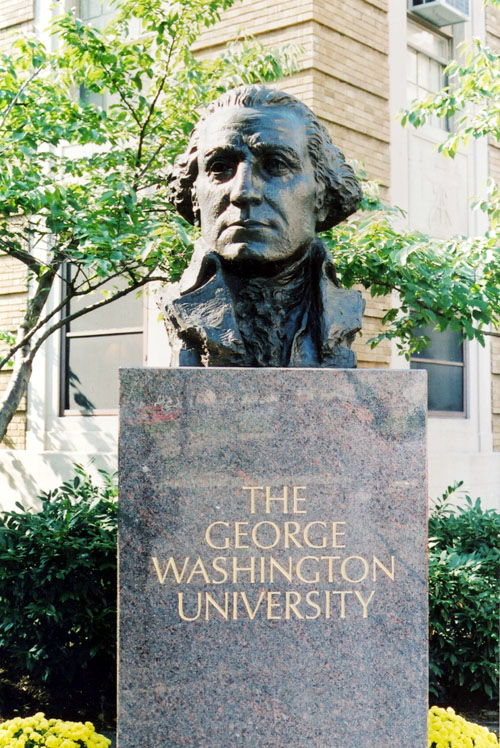
  • George Washington University Scherago International, Inc. has organized the Biosimilars 2007 conference to be held on September 24-25, 2007 at George Washington University in Washington, D.C.  The conference is intended to "air the issues" and "raise the questions" regarding legislation under consideration in Congress that would provide the Food and Drug Administration (FDA) with the authority to regulate biosimilars, as well as the application and use of biosimilars.

    Among those scheduled to speak at the Conference are:

    • Rep. Henry Waxman (D – CA)
    • Tom DiLenge, Biotechnology Industry Organization (BIO)
    • Dr. Takao Hayakawa, Japan Pharmaceuticals and Medical Devices Agency (PMDA)
    • Dr. Janet Woodcock, FDA
    • Dr. Scott Gottlieb, American Enterprise Institute (AEI)
    • Dr. Ajaz Hussain, Sandoz, Inc.
    • Dr. Steve Miller, Express Scripts
    • Dr. Tina Morris, U.S. Pharmacopeia
    • Dr. Curtis Meuse, National Institute of Standards and Technology (NIST)
    • Dr. Keith Webber, FDA Center for Drug Evaluation and Research (CDER)
    • Dr. Ganesh Venkataraman, Momenta Pharmaceuticals
    • Dr. Robin Thorpe, National Institute for Biological Standards and Control (NIBSC)
    • Dr. Steven Kozlowski, FDA Center for Drug Evaluation and Research (CDER)
    • Juana Hughes, Merck Serono Latin America
    • Alejandro Torrendell, Merck Serono Latin America

    The organizers plan to add additional speakers, so attendees are encouraged to check the conference website as the conference program is finalized.

    The registration fee ranges from $500 (university, government, or non-proft attendees) to $1,300 (industry attendees), for those registering prior to September 1, 2007.  Those interested in registering for the conference can do so here.

  • IPLAC West LEGALWorks and the Intellectual Property Law Association of Chicago (IPLAC) are co-sponsoring the Intellectual Property Law Summit 2007 to be held on October 12, 2007 in Chicago, Illinois.

    Circuit Judge Richard Linn of the U.S. Court of Appeals for the Federal Circuit will be providing the keynote address, and Chief Judge James F. Holderman of the U.S. District Court for the Northern District of Illinois will be the luncheon keynote speaker.  District Court Judges Matthew F. Kennelly (N.D. Ill.), James L. Robart (W.D. Wash.), and James M. Rosenbaum (D. Minn.) will be participating in a panel discussion entitled "A View from the Bench: Judges Speak Out on Patent Litigation."  Also speaking will be Andrew Ramer, President of Ocean Tomo Auctions.

    West_legalworks_2
    According to West LEGALWorks, the conference will cover such issues as:

    • Identifying the right licensing strategy for your company
    • Impact of KSR, MedImmune, eBay and other key decisions on your patent portfolio
    • Latest news on patent auctions
    • Advantages of an ITC action over litigation in U.S. courts
    • Common mistakes to avoid when litigating an IP infringement case
    • Key areas where IP lawyers inadvertently find themselves in ethical troubles 

    A complete brochure for this conference, including an agenda and list of speakers can be downloaded here.

    The registration fee ranges from $795 (non-IPLAC members) to $695 (IPLAC members).  Those interested in registering for the conference can do so here or by calling 800-308-1700 or 212-337-8444.

  • Washington - Jefferson Memorial American Conference Institute (ACI) will be holding a forum on Biotech and Pharma Public-Private Partnerships on October 25-26, 2007 in Washington, D.C.  The conference will provide a framework for overcoming issues that arise in bridging the innovation gap between industry and academia/government.  In particular, ACI's faculty of experts from big pharma, small biotech, NIH and other government agencies, and research institutions will offer presentations on the following topics:

    • 810l08was
      Valuing early-stage IP in industry/research institution deals.
    • Managing critical IP protection and commercialization issues in industry/academia collaborations.
    • Licenses with research institutions and the government: Solving the key problems that confront the deal.
    • Federally owned IP: Incorporating government R&D collaborations into your partnership strategy.
    • Federally funded IP: Assessing the state of and use of it in grants, contracts, cooperative agreements, and the Bayh-Dole Act.
    • Foundations and industry: Managing partnerships between them and increasing the sophistication level of the deal.
    • Examining new funding alternatives for biopharmaceutical R&D.
    • Recognizing, managing, and resolving individual and institutional conflicts of interest.
    • Making the collaboration work: Creating and maintaining the good relationship.

    The agenda for the Biotech and Pharma Public-Private Partnerships conference can be found here.  A complete brochure for this conference, including an agenda, list of speakers, and registration form can be downloaded here.

    American_conference_institute_aci
    The registration fee ranges from $1,395 (government and academic rate) to $1,995 (regular rate).  Those registering on or before August 31, 2007 will receive a $200 discount off the registration fee.  Those interested in registering for the conference can do so here or by calling 1-888-224-2480.

    Patent Docs is a media sponsor of ACI's Biotech and Pharma Public-Private Partnerships conference.

  •     By Donald Zuhn

    Ranbaxy_logo
    Ranbaxy Laboratories Ltd. announced today (July 26, 2007) that it had reached an agreement with GlaxoSmithKline in which GlaxoSmithKline would dismiss its patent infringement suit against Ranbaxy.  GlaxoSmithKline had asserted its U.S. Patent No. 4,957,924, directed to Valacyclovir Hydrochloride, against Ranbaxy, which received final approval to market a generic version of the drug from the FDA in early February 2007.  GlaxoSmithKline markets Valacyclovir Hydrochloride tablets under the trademark Valtrex®.  Valtrex®, which is used to treat herpes virus infection, has total annual sales of $1.3 billion.  Under the agreement, Ranbaxy will enter the U.S. market in late 2009 and will receive a license to GlaxoSmithKline’s U.S. Patent Nos. 5,879,706 and 6,107,302.

    Gsk_logo_lge