•     By Donald Zuhn

    Shapiro_robert
    Last week, we reported on a campaign being initiated by Insmed Inc. to raise public awareness regarding the importance of establishing a regulatory pathway in the U.S. for follow-on biologics.  As part of the campaign, Insmed commissioned a study by economist Dr. Robert J. Shapiro (at right) to determine the cost benefits to patients and healthcare providers from the establishment of a follow-on biologics market in the U.S.  Earlier today, Dr. Shapiro held a conference call with a handful of biotech and pharma bloggers to provide a briefing on his report, entitled "The Potential American Market for Generic Biological Treatments and the Associated Cost Savings."

    Dr. Shapiro, who served as Under Secretary of Commerce in the Clinton Administration and who is the current chairman of Sonecon, LLC, a private firm advising U.S. and foreign businesses, governments, and non-profit organizations, concludes in his report that "generic versions of the top 12 categories of biologic treatments with patent protections that have expired or that are due to expire in the near future could save Americans $67 billion to $108 billion over 10 years and $236 billion to $378 billion over 20 years."  During the conference call, Dr. Shapiro reiterated that the cost savings to patients and health care providers from a European-style follow-on biologics regulatory pathway would be "very, very large."

    Congress_2
    While acknowledging that Congress could craft a regulatory pathway that places many barriers in the way of the biogenerics, he did not think Congress would do so in view of the healthcare financing burdens it was facing.  Moreover, in order for the cost savings detailed in Dr. Shapiro’s report to be realized, it was imperative that Congress create an "expedited" pathway in which biogeneric companies would not be required to conduct full clinical trials, but rather would only have to show that a follow-on biologic meets the standard of "profound" or "effective similarity" with respect to the corresponding brand name biologic.  According to Dr. Shapiro, if biogenerics were required to perform full clinical trials, fewer biogenerics would attempt to enter the market, and the reduced competition would result in far less cost savings.  However, with a fairly expedited regulatory pathway in place, Dr. Shapiro predicted cost savings of at least 35%, if not more.

    Dr. Shapiro dismissed a conclusion reached by other researchers that the barriers to entering the biologics market would be large for biogenerics, since biologics are much more expensive to manufacture than small molecule therapeutics.  Instead, Dr. Shapiro contended that the barriers would actually be smaller than others predict since biogenerics have alternatives to erecting costly biologics manufacturing facilities, including outsourcing to foreign producers, partnering with European biogenerics, or using now idle U.S. plants.  However, when reminded about the problems Chinese companies have been having in providing safe chemicals, Dr. Shapiro conceded that "whatever the price savings are, they’re not enough if the [foreign-produced] product is not safe."

    Although Dr. Shapiro recognized that data exclusivity was an "important issue" and noted that he had written about this issue in the past, he stated that he did not take any data exclusivity provisions into consideration in preparing his report.  Interestingly, when asked to identify the largest obstacle that Congress would face in creating a regulatory pathway for follow-on biologics, Dr. Shapiro responded that it would be designing a pathway that establishes both the safety and effectiveness of follow-on biologics, and not selecting an acceptable data exclusivity period.  Nevertheless, Dr. Shapiro was confident that Congress would be able to overcome the "fairly unique challenges" that creating a follow-on biologics — as opposed to small molecule — regulatory pathway presented.

    For additional information on this and other related topics, please see

    • "BIO CEO Provides Update on Patent Reform and Follow-on Biologics Legislation – Part II," February 14, 2008
    • "Insmed Announces National Awareness Campaign Regarding Follow-on Biologics," February 13, 2008
    • "Millennium Pharmaceuticals Spent $1.28 Million on Lobbying in 2007," February 8, 2008
    • "Biologics Legislation Faces Unresolved Issues," December 28, 2007
    • "BIO CEO Provides Briefing on Follow-On Biologics and Patent Reform," September 18, 2007
    • "Biotechs Facing New Challenges," August 13, 2007
    • "Three New Biosimilars Pass EMEA Test," July 26, 2007
    • "European Medicines Agency Releases Paper on Biosmiliar Medicines," July 23, 2007
    • "Senate Committee Passes Biologics Legislation," July 5, 2007

  •     By Kevin E. Noonan

    Senate_floor
    In discussing the patent "reform" bill waiting to be brought to the floor for a vote in the Senate (S. 1145), various stakeholders have availed themselves of their right to petition the government for redress in opposition to the bill, and Patent Docs has published, supported, and encouraged those efforts (see "U.S. Senate Mailbox Filling with Letters against Passage of Patent ‘Reform’ Bill").  Just coming into focus recently, flying "under the radar" of the major changes to U.S. patent law contained in the bill, are two provisions nicely illustrating the benefits that can accrue to companies and industries that understand the political process.  And in both cases the effects will be increased costs to the public that have little to do with "reforming" U.S. patent law.

    The first of these is the antithesis of reform:  it is a "get out of jail free" card to the banking industry, absolving them of responsibility for infringing electronic check cashing patents.  Shamelessly, these provisions are another example of a cynical use of the emotions and patriotism surrounding the terrorist tragedy of September 11, 2001, wrapping the flag around a provision that would shift the costs of infringement from the banks who reaped the benefits, to U.S. taxpayers who will pay the estimated $1 billion judgment.

    The amendments are made to § 287 by adding new subsection (d)(1), reading in pertinent part:

    § 287.  Limitation on damages and other remedies; marking and notice

    * * *

    (d)(1) With respect to the use by a financial institution of a check collection system that constitutes an infringement under subsection (a) or (b) of section 271, the provisions of sections 281, 283, 284, and 285 shall not apply against the financial institution with respect to such a check collection system.
    (2) For the purposes of this subsection —
        (A) the term ”check” has the meaning given under section 3(6) of the Check Clearing for the 21st Century Act (12 U.S.C. 5002(6));
        (B) the term ”check collection system” means the use, creation, transmission, receipt, storing, settling, or archiving of truncated checks, substitute checks, check images, or electronic check data associated with or related to any method, system, or process that furthers or effectuates, in whole or in part, any of the purposes of the Check Clearing for the 21st Century Act (12 U.S.C. 5001 et seq.);
        (C) the term ”financial institution” has the meaning given under section 509 of the Gramm-Leach-Bliley Act (15 U.S.C. 6809);
        (D) the term ”substitute check” has the meaning given under section 3(16) of the Check Clearing for the 21st Century Act (12 U.S.C. 5002(16)); and
        (E) the term ”truncate” has the meaning given under section 3(18) of the Check Clearing for the 21st Century Act (12 U.S.C. 5002(18)).

    The amendment shall apply to any civil action for patent infringement pending or filed on or after the date of enactment of this Act.

    And that’s the rub.  Despite the fact that the Federal Reserve proposed an electronic check imaging processing, archival, and retrieval system in 1994, and the architecture and design specifications for the system were issued by the American National Standard for Financial Image Interchange in 1996, and that the Federal Reserve implemented a pilot program in 1999, the Senate report points out that the importance of "this evolving technology . . . became particularly noted in the days after September 11, 2001, when transporting paper checks by airplane was impossible for several days," citing a 2006 law review article by Mark Hargrave (Check 21: A Year in the Life, 38 UCC L.J. 3 Art. 3 (2006) (notwithstanding the illogic of a few days inconvenience as the impetus for electronic check processing)).  The Senate report then accused "several inventors" with seeking patents "in 1999 and 2000 . . . on what the government was already doing" with regard to imaging, storing, and transferring paper checks for processing electronically.  The report also notes that the Check Clearing for the 21st Century Act of 2003 requires "all banks to recognize and accept the digital images of checks it receives from other banks" using technology "developed by the Federal government."  These "facts" then provide the justification for immunizing the banking industry from patent infringement liability for using patented technology to comply with the law.

    Washington_post
    The facts appear to be different from the reasons stated for the record in the Senate report on S. 1145.  As reported last Friday by Jeffrey H. Birnbaum in The Washington Post (see "Lawmakers Move to Grant Banks Immunity Against Patent Lawsuit"; free registration required) the impetus for this amendment came from Senator Jeff Sessions (R-Ala) (below at right), and is directed specifically at DataTreasury, a small company from Melville, New York that is owned by the inventor of the check imaging technology, Claudio Ballard.  The patents at issue, U.S. Patent Nos. 5,910,988 and 6,032,137, have priority dates of August 27, 1997 and May 19, 1998, more than two years earlier that the accusations found in the Senate report.  Moreover, there is no evidence that Mr. Ballard used technology "developed by the Federal government"; indeed, The New York Times reported in 2004 that Mr. Ballard accused officials at J.P. Morgan Chase of expropriating his ideas (see "Small Company Is Specializing in Suing Banks").  Although accused by defendant banks of obtaining these patents by Seessions_jeff
    inequitable conduct for failure to disclose invalidating prior art, the patents were found to be valid after a re-examination by the U.S. Patent and Trademark Office (ironically, the kind of "second look" procedure touted as being a panacea for "bad" patents by those supporting the "opposition" provisions of S. 1145) initiated by a litigation defendant, First Data.  In the re-examination certificates issued by the Office, the patentability of claims 1-25 of the ‘988 patent and claims 1-43 of the ‘137 patent were wholly affirmed without amendment, and the patentees were granted additional claims in each patent.

    Datatreasury
    And it isn’t as if DataTreasury is unwilling to license its technology.  According to the Post, J.P. Morgan Chase and Merrill Lynch have already done so (as did Affiliated Computer Services and RDM Corp. four years ago according to the Times article).  But other defendants, including Bank of America, Wells Fargo, Wachovia, and Citigroup have not, and they are at risk of an estimated $1 billion in infringement liability.  Faced with this liability, the banking industry, through its lobbying group The Financial Services Roundtable, approached Senator Sessions "because of his long-standing antipathy to plaintiff’s attorneys" according to the Post.  (When taking the side of Goliath in a David v. Goliath battle, it can be useful for a politician like Senator Sessions to have David’s lawyers to blame.)  Thus, at the behest of banking giants, their lobbyists worked with Senator Sessions to "rush" Judiciary committee members with a 3-page summary of the amendment produced by the lobbyists but distributed by Senator Session’s staff.  This is not surprising, since the political action committees of financial institutions made up the largest category of donors to the Senator, accounting for $52,300 in recent donations (equal to one-fourth of all PAC contributions to the Senator as of June, 2007).

    The Senator, for his part, not only denies the banking industry has undue influence on this legislation but places the blame squarely on DataTreasury.  His spokesman, Stephen Boyd, said this portion of the law "is designed to protect banking institutions complying with post-9/11 security requirements from the abusive practices of patent trolling trial lawyers seeking personal enrichment, which ultimately will be paid for by checking account customers across America."

    Cbo_logo_blue
    But the Senator’s concern for the "checking account customers across America" seems to have blinded him to the reality that the damages DataTreasury is owed by the infringing banks will be paid by the taxpayers of America.  As reported today by the Congressional Budget Office (CBO), the $1 billion dollars Senator Sessions has saved the banking industry is likely to constitute a "taking" under the Fifth Amendment’s "takings clause," a taking for which DataTreasury can obtain recompense from the Federal Treasury (i.e., you and me).  The CBO report states that "the likelihood of litigation alleging a taking of private property is very high; based on Supreme Court precedents, there is a high likelihood that the federal government will have to pay damages; and there is a strong basis for estimating those damages."  How much?  The CBO states:

    we estimate that the expected value of the federal government’s liability under section 14 would total about $1 billion, representing a royalty of 0.5 cents per check on more than 200 billion checks cleared by financial institutions that would be authorized to infringe on the rights of patent holders under the bill.  Depending on the outcome of the likely litigation against the government, the cost could be substantially more.

    Indeed, this is one of the reasons the Bush Administration opposes S. 1145; a Commerce Department letter to Senator Leahy from Assistant Secretary Nathaniel F. Wienecke, asserted the administration’s position that "[l]imiting patent holders’ rights and remedies in this instance could reduce innovation in this technology area.  The Administration does not support exceptions to patent protection based on a particular technology" (see "Department of Commerce Sends Letter on Patent Reform to Senator Leahy").

    And as for the accusation that DataTreasury is a "patent troll," the Post article reports Ballard’s contention that the predatory behavior of the banks, which would rather steal his invention than license it, reduced his company from 100 employees to only 2, and almost destroyed his small business.  These facts might explain why the amendment was "rushed" through the Judiciary Committee, "in minutes and without opposition" and also without giving DataTreasury notice or an opportunity to tell its side of the story (which might otherwise be called the truth).  Further evidence of the "backroom" politics of the measure is the fact that it does not name DataTreasury as its (only) target.  Surely, if the facts were as the banking industry and Senator Sessions contend, the decency of giving Mr. Ballard and DataTreasury a hearing would not have unduly importuned the committee or prevented them from making an informed decision on the bill.

    The other provision in the bill, Section 13, permits the U.S. Patent and Trademark Office to extend deadlines for taking certain actions.  The amendment is to Section 2 of the Patent Act:

    § 2.  Powers and duties

    * * *

    (e) DISCRETION TO ACCEPT LATE FILINGS IN CERTAIN CASES OF UNINTENTIONAL DELAY.–
        (1) IN GENERAL.– The Director may accept any application or other filing made by —
            (A) an applicant for, or owner of, a patent after the applicable deadline set forth in this title with respect to the application or patent; or
            (B) an applicant for, or owner of, a mark after the applicable deadline under the Trademark Act of 1946 with respect to the registration or other filing of the mark,
    to the extent that the Director considers appropriate, if the applicant or owner files a petition within 30 days after such deadline showing, to the satisfaction of the Director, that the delay was unintentional.
        (2) TREATMENT OF DIRECTOR’S ACTIONS ON PETITION.– If the Director has not made a determination on a petition filed under paragraph (1) within 60 days after the date on which the petition is filed, the petition shall be deemed to be denied.  A decision by the Director not to exercise, or a failure to exercise, the discretion provided by this subsection shall not be subject to judicial review.
        (3) OTHER PROVISIONS NOT AFFECTED.– This subsection shall not apply to any other provision of this title, or to any provisions of the Trademark Act of 1946, that authorizes the Director to accept, under certain circumstances, applications or other filings made after a statutory deadline or to statutory deadlines that are required by reason of the obligations of the United States under any treaty.
        (4) DEFINITIONS.– In this subsection, the term ”Trademark Act of 1946” means the Act entitled ”An Act to provide for the registration and protection of trademarks used in commerce, to carry out provisions of certain international conventions, and for other purposes”, approved July 5, 1946 (15 U.S.C. 1051 et seq.) (commonly referred to as the Trademark Act of 1946 or the Lanham Act).

    The_medicines_company
    These provisions would apply to cases like the celebrated case from the Northern District of California (Aristocrat Tech. Australia v. International Gaming Tech.), where a Federal District Court judge held it outside the scope of the Patent Office’s statutory authority to permit an applicant to file a U.S. national phase application based on a PCT application one day after the 30-month deadline date, a decision now before the Federal Circuit for review.  It also would permit The Medicines Company to seek a 1,773 day patent term extension for its heart medication Angiomax, which has been denied because the application for extension under 35 U.S.C. § 156 was filed one day late.  TMC has tried to have this deficiency cured ex post facto before, with a bill introduced by Congressman William Jenkins (R-TN) in 2006 that failed to be considered in the wake of vocal opposition by consumer groups, generics companies, and others.  That bill would have permitted the Office to accept a patent term extension application if the application was filed no more than 5 days late and the applicant showed that the delay was unintentional.

    All of this makes even more puzzling the moral tone (and choice of venue) for the ranking committee members, Senators Leahy and Hatch (R-UT) in their op-ed piece in The Washington Times last Friday (see "Meaningful Patent Reform").  Not unexpected were the paeans to the need for reform, the changes in technology, the failure of Congress to "modernize" patent law since 1952 (conveniently ignoring "major" revisions in at least 1984, 1988, 1995, and 1999), the extensive hearings and testimony (which was hardly uniform, at least in ways reform should be implemented), and the bipartisanship of the Senators’ goals.  In view of the features discussed above, however, it is a little disquieting to read that the Senators believe that their patent "reform" bill is ultimately about fairness:  fairness in how courts apportion damages, fairness to patentees so that patent infringement does not become "the cost of doing business," fairness in how the Patent Office grants patents, and fairness in the judicial process, whether to prevent abuse of the inequitable conduct defense or to prevent the consideration of venue to be solely "where the plaintiff has the best chance of winning."  These words ring a little hollow in view of the facts, as do the Senators’ excoriation of those who "would like to play political football with the bill to pursue other agendas," seemingly because all the agendas that count are through playing.

    The Senators say "Now is the time."  We agree:  now is the time to defeat this bill.  Write your Senators.

    For additional information on this and other related topics, please see:

    • "BIO CEO Provides Update on Patent Reform and Follow-on Biologics Legislation – Part I," February 14, 2008
    • "BIO Report Indicts "Patent Reform" Proponents," February 13, 2008
    • "Millennium Pharmaceuticals Spent $1.28 Million on Lobbying in 2007," February 8, 2008
    • "Patent Reform and Infringement Damages: Some Economic Reasoning," February 5, 2008
    • "Department of Commerce Sends Letter on Patent Reform to Senator Leahy," February 4, 2008
    • "Biotech and Pharma Opposition to Senate Patent Reform Bill," February 3, 2008
    • "The Letters Keep Coming Over the Senate Transom," January 30, 2008
    • "U.S. Senate Mailbox Filling with Letters against Passage of Patent ‘Reform’ Bill: An Update," January 23, 2008
    • "U.S. Senate Mailbox Filling with Letters against Passage of Patent ‘Reform’ Bill," January 18, 2008
    • "Patent Reform Discussed on Senate Floor," December 21, 2007
    • "Enjoined New Rules and Patent Reform Finally Appearing on Biotech Industry’s Radar," December 20, 2007
    • "Chinese IP Judge Discusses Implications of U.S. Patent Reform Bill and Two Congressmen Heed Warning," December 17, 2007
    • "IPO President Seeks Deletion of Patent Reform Provision," December 12, 2007
    • "Senate May Act on Patent ‘Reform’ Bill in the New Year," December 2, 2007
    • "The Wall Street Journal Gets It Half Right," November 5, 2007
    • "BIO CEO Provides Briefing on Follow-On Biologics and Patent Reform," September 18, 2007
    • "Patent ‘Reform’ Bill Passes House of Representatives," September 9, 2007
    • "Reversal in Microsoft Case Weakens Patent Reform Argument," August 7, 2007
    • "San Francisco Chronicle Opines on Patent Reform," August 6, 2007
    • "Patent Reform Bill to Be Delayed?" June 12, 2007
    • "Senate Judiciary Committee Holds Hearing on Patent Reform," June 10, 2007
    • "Could Creating a U.S. ‘Utility Model’ Patent Fulfill the ‘Need’ for Patent Law Reform?" May 21, 2007

  •     By Sherri Oslick

    Gavel_32
    About
    Court Report:  Each week we will report briefly on recently filed
    biotech and pharma cases, and a few interesting cases will be selected
    for periodic monitoring.


    Nycomed GmbH et al. v. Apotex Inc. et al.

    1:08-cv-00827; filed February 7, 2008 in the Northern District of Illinois

    Infringement of U.S. Patent No. 6,780,881 ("Freeze-dried Pantoprazole Preparation and Pantoprazole Injection," issued August 24, 2004) (licensed to Wyeth) following a paragraph IV certification as part of Apotex’s filing of an ANDA to manufacture a generic version of Wyeth’s PROTONIX I.V. (pantoprazole sodium injection, used to treat gastroesophageal reflux disease).  View the complaint here.


    Novartis Corp. et al. v. Teva Pharmaceuticals USA, Inc.

    2:08-cv-00686; filed February 7, 2008 in the District Court of New Jersey

    Infringement of U.S. Patent No. 6,162,802 ("Synergistic Combination Therapy Using Benazepril and Amlodipine for the Treatment of Cardiovascular Disorders and Compositions Therefor," issued December 19, 2000) following a paragraph IV certification as part of Teva’s filing of an ANDA to manufacture a generic version of Novartis’ Lotrel® (amlodipine besylate/benazepril hydrochloride, used to treat hypertension).  View the complaint here.  [NB: Novartis and Teva are already involved in a litigation over this product; this action is directed to a different dosage strength.]


    Orion Corp. v. Sun Pharmaceutical Industries Ltd.

    3:08-cv-00720; filed February 7, 2008 in the District Court of New Jersey

    Infringement of U.S. Patent No. 5,446,194 ("Pharmacologically Active Catechol Derivatives," issued August 29, 1995) following a paragraph IV certification as part of Sun’s filing of an ANDA to manufacture a generic version of Orion’s Stalevo® (marketed by Novartis in the U.S.) (entacapone, levodopa, and carbidopa mixture, used to treat Parkinson’s disease).  View the complaint here.

  •     By Thieu Hai Yen —

    Vietnam
    For applicants and patent practitioners seeking protection for medical use inventions in Vietnam, recent developments in Vietnamese patent practice would likely be of great interest.  This article is intended to provide readers with information concerning these developments.

    When the Vietnamese patent system was first established, medical use claims were not permitted.  With the advent of the Civil Code 1995, a general ground for excluding medical use inventions from patent protection was provided.  The prohibition against medical use inventions was in fact based on the political will of the local government to provide the comparatively poor national population with access to medical treatment and inexpensive drugs.  This is why patent protection for medical use inventions, even if for only a limited period of time, was initially not permitted under Vietnamese patent law.

    Consequently, claims to inventions relating to methods of treating, preventing, or diagnosing diseases in animals or human beings were rejected in Vietnam.  This constituted a significant obstacle for applicants in this field, most of which are large pharmaceutical corporations.

    As the Vietnamese patent system developed, medical inventions patent practitioners and applicants began to search for other claim formats with which to secure a certain scope for these inventions.  Following much debate on this controversial topic, the Vietnamese National Office of Intellectual Property (NOIP) decided to follow the practice of the European Patent Office (EPO) in allowing second medical use claims, also known as "Swiss-style" claims (i.e., "Use of a compound in the manufacture of medicaments for treating certain diseases").

    Strictly speaking, neither use claims nor second medical use claims constituted a statutory class of invention under Vietnamese patent law at the time, and therefore, in contrast with EPO case law, there was no ground for allowing such claims under Vietnamese patent law.  Instead, the ground for such protection was based on a provision under the PCT Guideline for Examination, and a provision under Ordinance 308/DK issued by the Vietnamese National Office of Industrial Property (which was subsequently replaced by the NOIP).  These provisions, though mainly addressing the issues of unity, allowed for a possible grouping of inventions in one patent application, wherein compounds, processes, and uses of known compounds for a different purpose were named.

    Over the years, the controversy over medical use inventions continued, but the established practice of pharmaceutical patent prosecution in Vietnam was to amend patent claims relating to medical methods into second medical use format (Swiss-style claims).  In this way, numerous patents containing such claims were granted under the Civil Code 1995.

    Vietnam_flag
    However, within one year of implementation of the new Intellectual Property Code of Vietnam ("the IP Code"), which was promulgated by the Vietnamese National Assembly in 2005, and which went into effect on July 1, 2006, the Vietnamese NOIP once again started to reject claims directed to use inventions, including second medical use inventions.  The grounds for these new rejections can be found in the IP Code’s definition of an invention, which states that an "Invention is a technical solution, in the form of a product or a process, to resolve a specific problem by utilizing the laws of nature" (Article 4.12).  Also, the new Circular 01-2007/TT-BKHCN of the Ministry of Science and Technology, containing detailed guidance for implementation of the IP Code, provides that "a subject-matter of a patent application should be regarded as incompatible with the title of protection applied for [invention] if this subject-matter is not a technical solution, in particular failing to be either a product or a process" (Article 25.3).  Consequently, all patent applications with claims relating to medical uses, in particular, or to uses, in general, are now subject to rejection as early in the patent prosecution process as the stage of examination as to form.

    Certainly, the way the Vietnamese NOIP is treating use inventions has triggered a bitter debate regarding the meaning of a "technical solution," as well as to the pros-and-cons of rejecting such claims.  In this regard, it has been observed that the above quoted provisions of the new patent law in Vietnam, which are now applied for the rejection of use claims and medical use claims, have been construed by the NOIP in a manner that is too strict, thereby unduly hurting the interests of many patent applicants.  Furthermore, such a hasty and rigid construction of these legal provisions could well lead to undue implementation of the law as well as an incorrect application of the Vietnamese National Assembly’s intent.  This is especially true considering that Vietnam has just joined the World Trade Organization (WTO), and that the legal system should facilitate, not thwart, investment into Vietnam.  Moreover, despite the fact that the Vietnamese law belongs to the civil system, the totality of the precedents in rejecting and allowing medical use claims should not be ignored.

    Thieu Hai Yen is a patent attorney with the intellectual property law firm TRUNG THUC JSC. in Hanoi, Vietnam.

  • Calendar_31
    February 25-26, 2008 – Pharma/Biotech Patent Claim Drafting and Prosecution (American Conference Institute) – New York, NY***

    February 25-26, 2008 – Strategic Intellectual Property Planning (American Conference Institute) – Scottsdale, AZ

    March 12, 2008 – Biotechnology, Chemical & Pharmaceutical Art Group Customer Partnership Meeting (U.S. Patent and Trademark Office)

    March 30-April 1, 2008 – Advanced Courses (Patent Resources Group) – Bonita Springs, FL

    March 31-April 1, 2008 – Document Management, E-Discovery, and Litigation Readiness (American Conference Institute) – New York, NY

    April 3-5, 2008 – Advanced Courses (Patent Resources Group) – Bonita Springs, FL

    April 7, 2008 – Successful Mulitlateral Patents (Law Seminars International) – Arlington, VA

    April 10-12, 2008 – 23rd Annual Intellectual Property Law Conference (American Bar Association) – Arlington, Virginia

    April 25, 2008 – Patent Claim Construction (Law Seminars International) – Atlanta, GA

    April 30-May 1, 2008 – Pharma/Biotech Collaborative Agreements (American Conference Institute) – San Francisco, CA

    June 17-20, 2008 – BIO International Convention (Biotechnology Industry Organization) – San Diego, CA

    ***Patent Docs is a media sponsor of this conference or CLE.

  • Brochure Law Seminars International (LSI) will be holding a Patent Claim Construction workshop on April 25, 2008 in Atlanta, GA.  The workshop will provide information on:

    • New federal case law developments in claim construction.
    • U.S. Patent and Trademark Office rule changes.
    • Ways for prosecutors to create patents worthy of litigation.
    • Tips for making the patent easier for litigators to defend.
    • The Markman hearing demonstrated.
    • Claim construction litigation strategies from plaintiff and defendant perspectives.
    • Trying your case on the issues remaining after claim construction.
    • Setting up effective roles and work relationships for company personnel, outside experts, and litigation counsel.

    In particular, LSI's faculty will offer presentations on the following topics:

    — New federal case law developments in claim construction; Implications of Patent Office rule changes:

    • Recent Supreme Court and Federal Circuit cases;
    • Prospective legislation allowing interlocutory review;
    • Other pending issues.

    — Ways for prosecutors to create patents worthy of litigation; Tips for making the patent easier for litigators to defend:

    • Outside counsel perspective;
    • Drafting an application to comply with today's standards;
    • Minimizing the chance that allowed claims will be infringed;
    • Making sure to use plain language and get the results you want.

    — Demonstrative Markman hearing:

    • A mock Markman hearing:  Trying the case for appeal;
    • How the various issues play out from both sides of the table.

    — Claim construction litigation strategies from plaintiff and defendant perspectives…

    • Pros and cons of evidentiary hearings;
    • Foundations of successful summary judgment motions;
    • What to do after the claim construction ruling;
    • Defense strategies for getting constructions that tee-up winning summary judgment motions or at trial;
    • Selling constructions having examples:  "Non-limitations," "claim as a whole" limitations, and drawings;
    • Use of experts, tutorials, and special masters.

    — Trying your case on the issues remaining after claim construction:

    • Effective and ineffective strategies (starting at the trial level);
    • Differences in approaches for appellant versus respondent;
    • Application of waiver and/or estoppel to new claim construction arguments on appeal;
    • Role of deference.

    — Case management:  Setting up the most effective roles and work relationships for company personnel, outside experts, and litigation counsel:

    • Perspectives on finding the optimal structure for the litigation team;
    • Tips for working through issues as they arise;
    • In-house and outside counsel perspectives.

    The agenda for the Patent Claim Construction workshop can be found here.  A complete brochure for this workshop, including an agenda, list of speakers, and registration form can be downloaded here.

    LSI - Law Seminars International - blue The registration fee is $347.50 for students and new employees,$545 for government employees, or $695 for all other attendees. Those interested in registering for the conference can do so here, by calling 1-800-854-8009, or by faxing a registration form to 1-206-567-5058.

  • Brochure Law Seminars International (LSI) will be holding a Successful Multilateral Patents workshop on April 7, 2008 in Arlington, VA.  The workshop will provide information on:

    • Successful patent preparation and prosecution with the EPO, the JPO, Australia, and China.
    • Update on multilateral initiatives:  USPTO, EPO, JPO, and others.
    • Selecting foreign jurisdictions most appropriate for patent applications.
    • Drafting the specification and claims in a multilateral patent application.
    • Litigating patents overseas and country-specific considerations.

    In particular, LSI's faculty will offer presentations on the following topics:

    — Focus on Europe:  Successful preparation and prosecution:

    • Formal requirements for the description and claims in the EPO;
    • EPO operational issues;
    • The problem/solution approach to inventive step.

    — Focus on Japan:  Successful preparation and prosecution:

    • How the JPO determines lack of inventive step;
    • How the description and claims should be drafted for success.

    — Focus on Australia:  Successful preparation and prosecution:

    • Preparing specifications and claims to maximize patent protection in Australia;
    • Tips and strategies for expediting Australian patent prosecution.

    — Focus on China:  Successful preparation and prosecution:

    • Perspectives and suggestions on patent prosecution in China;
    • The current patent system and development trends of patent law in China

    — Update on multilateral initiatives:  USPTO, EPO, JPO, and others:

    • Current trilateral activities directed toward harmonizing application format;
    • Status of pilot programs for sharing priority documents and search results;
    • New procedures under consideration and their impact on patent practice;
    • Activity at WIPO.

    — Managing multilateral patent procurement:

    • Selecting foreign jurisdictions most appropriate for patent applications corresponding to a prior U.S. case;
    • Ensuring consistent claim coverage across multiple countries;
    • Management systems;
    • Managing outside counsel.

    — Drafting the specification and claims in a multilateral patent application:

    • Can a U.S. application be drafted for later successful foreign prosecution with essentially no changes in the specifications?
    • Proposed form introduced;
    • Interactive panel addressing benefits and drawbacks;
    • Drafting issues;
    • Multiple jurisdiction claims.

    — Litigating patents overseas:  Country-specific considerations:

    • Pre-filing considerations, discovery issues, trial procedures, remedies, and cultural issues of litigating patents in the UK, Germany, France, Netherlands, Japan and China.

    The agenda for the Successful Multilateral Patents workshop can be found here.  A complete brochure for this workshop, including an agenda, list of speakers, and registration form can be downloaded here.

    LSI - Law Seminars International - blue The registration fee is $347.50 for students and new employees,$545 for government employees, or $695 for all other attendees. Those interested in registering for the conference can do so here, by calling 1-800-854-8009, or by faxing a registration form to 1-206-567-5058.

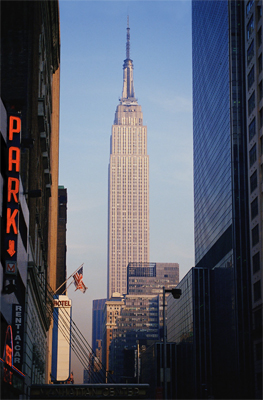
  • New York #3 American Conference Institute (ACI) will be holding its 4th Annual Life Sciences Counsel Guide to Document Management, E-Discovery, and Litigation Readiness conference from March 31 to April 1, 2008 in New York, NY.  The conference will provide information on:

    • Balancing the management of documents and electronic records preserved for regulatory and compliance purposes with day-to-day document preservation protocols.
    • Streamlining legacy document management systems and record retention policies during mergers, acquisitions, and collaborations.
    • Reinforcing utmost data security of highly sensitive stored electronic information pertaining to products, patients, and the company.
    • Minimizing the risk of failing to find, preserve, and disclose potentially discoverable data during litigation.
    • Reviewing the performance of your IT solutions to ensure cost efficiency and optimization across business units.

    In particular, ACI's faculty will offer presentations on the following topics:

    857l08nyc
    • Judicial roundtable:  Tips, traps, and techniques for dealing with e-discovery one year later.
    • E-discovery rules and procedures:  Practical implications.
    • Minimizing risk through a balanced document management approach:  Reassessing the company’s document management policies to address organization and efficiency.
    • Reconciling disparate data retention policies to foster an integrated system for meeting the company’s business, regulatory, and operational needs.
    • Revising (or developing) consistent and efficient protocols, playbooks, and other proactive strategies to streamline the e-discovery process.
    • Learning from experience:  What’s working and what’s not in managing life science records.
    • Converting the company’s e-document management system from a cost center to a business and litigation resource tool.
    • Preserving confidentiality of patient, product, and company information while compiling, redacting, and producing proprietary information during discovery.
    • Utilizing to your advantage evolving standards for e-discovery in the document production process to your advantage.
    • Designing, implementing, and maintaining document management policies that survive multi-jurisdictional and international discovery of scientific e-data.
    • Navigating the ethical gray areas in life sciences e-discovery.

    The agenda for the Document Management, E-Discovery, and Litigation Readiness conference can be found here.  A complete brochure for this conference, including an agenda, list of speakers, and registration form can be downloaded here.

    American_conference_institute_aci_2
    The registration fee ranges from $2,195 (for private practice attorneys) to $2,495 (for consultants and service providers).  Those registering on or before February 29, 2008 will receive a $200 discount off the registration fee.  Those interested in registering for the conference can do so here, by e-mailing CustomerService@AmericanConference.com, by calling 1-888-224-2480, or by faxing a registration form to 1-877-927-1563.

  • San Francisco #4 American Conference Institute (ACI) will be holding a conference on Structuring, Negotiating, and Managing Pharma/Biotech Collaborative Agreements from April 30 to May 1, 2008 in San Francisco, CA.  The conference will provide information on:

    • Incorporating new laws and trends into business strategies to ensure successful and lucrative collaborations.
    • Negotiating and drafting favorable exclusivity and termination provisions.
    • Protecting rights relating to future developments and improvements.
    • Evaluating viable deal and compensation structures.
    • Minimizing risks through effective due diligence.
    • Ensuring effective alliance management through workable governance processes.
    • Anticipating the potential impact of merger and acquisition activity on your intellectual property and collaboration strategies.
    • Negotiating hotly contested issues with universities and collaborating effectively with government agencies and nonprofits.
    • Avoding the top pitfalls of international deals.

    In particular, ACI's faculty will offer presentations on the following topics:

    • Factoring emerging trends in biotech/pharma collaborations into your dealmaking strategy.
    • Negotiating exclusivity, rights to improvements and other critical terms to maximize profits and protect intellectual property.
    • Selecting the most viable and profitable compensation structure.
    • Incorporating international business strategies into collaborative agreements.
    • Minimizing business and intellectual property risks through effective due diligence.
    • Limiting the potential for litigation:  Best drafting practices after MedImmune.
    • Alliance management:  Establishing governance structures for a successful collaboration.
    • Successfully negotiating collaborative research agreements with academic institutions.
    • Accessing government technologies and working with nonprofits in the global health field.
    • Addressing the critical importance of termination provisions.
    • Doing the deal in reverse:  Overcoming challenges in negotiating out licensing by pharma.
    • Negotiating agreements in light of the recent surge of merger and acquisition activity.

    An additional master class entitled: "The “Win-Win” Collaborative Agreement: Practical and Ethical Negotiating and Drafting Strategies" will be offered on May 2, 2008.  The master class will walk conference attendees through the key aspects of negotiating and drafting that are essential to successful agreements, use actual deals and hypothetical examples to demonstrate how to negotiate terms and draft clauses that anticipate and adapt to change and accommodate competing interests, and address ethical questions that arise during such negotiations.

    The agenda for the Pharma/Biotech Collaborative Agreements conference can be found here.  A complete brochure for this conference, including an agenda, list of speakers, and registration form can be downloaded here.

    American_conference_institute_aci
    The registration fee ranges from $2,195 (conference alone) to $2,795 (conference and master class).  Those registering on or before February 29, 2008 will receive a $300 discount off the registration fee and those registering on or before April 4, 2008 will receive a $200 discount off the registration fee.  Those interested in registering for the conference can do so here, by calling 1-888-224-2480, or by faxing a registration form to 1-877-927-1563.

  •     By Donald Zuhn

    Greenwood_jim_2
    Earlier today, Patent Docs participated in a conference call with Jim Greenwood (at right), the President and CEO of the Biotechnology Industry Organization (BIO).  Mr. Greenwood, who represented Pennsylvania’s Eighth District in the U.S. House of Representatives from January 1993 through January 2005 prior to his BIO appointment, had invited the press and a handful of biotech and pharma bloggers to participate in the conference call, where he provided a briefing on the prospects for passage of biologics legislation and patent reform legislation in this Congress.  Mr. Greenwood expressed the hope, in view of the time and effort expended in "educating" legislators to the intricacies of these issues, that progress can be made with respect to both pieces of legislation in order to avoid having to retrace steps were the legislation left to the next Congress and administration.

    I000026
    With respect to follow-on biologics, Mr. Greenwood quickly dispelled any notion that BIO or its membership stood in opposition to the passage of follow-on biologics legislation, stating that "Congress ought to act," and noting that BIO had been actively encouraging both houses of Congress to report a bill.  Mr. Greenwood contended that securing passage of a suitable follow-on biologics bill was important because biologics innovators could have difficulty fending off generics with just their patents alone, which might provide no protection, or only weak protection, against biosimilars.  According to Mr. Greenwood, BIO found H.R. 1956, which was introduced by Rep. Jay Inslee (D-WA; at left) last April, to be an acceptable bill.  Mr. Greenwood noted that Eshoo_2
    another potentially suitable bill could soon be introduced by Rep. Anna Eshoo (D-CA; at right).  Rep. Eshoo’s bill, which is said to be a compromise between "generics-friendly" legislation written by Rep. Henry Waxman (D-CA) and Rep. Inslee’s "brand-friendly" legislation, recently picked up the support of Rep. Joe Barton (R-TX), the top Republican on the House Energy & Commerce Committee (see "Barton Backs Eshoo’s Biosimilars Plan").

    Whichever bill BIO ultimately backs, Mr. Greenwood stressed the importance of striking a fair balance between the demands of the brand names and those of the generics, stating that "if you give companies incentives to create new drugs, they will."  Mr. Greenwood acknowledged that the sticking point with regard to passage of follow-on biologics legislation would continue to be the period of data exclusivity.  When asked whether BIO would be satisfied with splitting the difference between a 12-year exclusivity period backed by the generics industry and the 14-year period of Rep. Inslee’s bill, Mr. Greenwood expressed skepticism that generics would support a 12-year period, stating that "if the generics were at 12, we would have a Valentine’s Day love fest."

    Biotechnology_industry_organizati_2
    In addition to providing Mr. Greenwood with an opportunity to once again address patent reform and follow-on biologics legislation (Patent Docs readers will recall that Mr. Greenwood had addressed both topics in a conference call last September; see "BIO CEO Provides Briefing on Follow-On Biologics and Patent Reform"), the session with the media also provided BIO with an opportunity to present a number of its position papers on the topics.  In a paper entitled "BIO Principles on Follow-On Biologics," the organization outlined principles that Congress should recognize when crafting a follow-on biologics bill.  Among the key principles that BIO lists are the following:

    • Ensure patient safety by mandating that follow-on biologics approval be based on the same rigorous standards of safety, purity, and potency that are applied by Food and Drug Administration (FDA) to the approval of innovator drugs, and assigning follow-on biologics a non-proprietary name that is readily distinguishable from that of the innovator drug.

    • Because biologics are more complex than small molecule drugs, follow-on biologics legislation should recognize the scientific differences between the two classes of molecules.  For example, small manufacturing differences between a follow-on biologic and innovator drug can, in contrast with small molecule drugs, result in significant safety or effectiveness differences.

    • Preserve incentives for innovation by providing "substantial" non-patent data exclusivity, during which time follow-on biologics manufacturers could not rely on the FDA’s prior approval of innovator biologics to support approval of the follow-on manufacturer’s own products.  According to the BIO position paper, such data exclusivity is necessary because of the biologics industry’s "heavy dependence on access to significant amounts of high-cost public and private investment capital, and the high risks and costs involved in the development of new biologic medicines."

    In a companion piece to this article, Kevin Noonan discussed Mr. Greenwood’s comments on patent reform legislation.

    For additional information on this and other related topics, please see

    • "Insmed Announces National Awareness Campaign Regarding Follow-on Biologics," February 13, 2008
    • "Millennium Pharmaceuticals Spent $1.28 Million on Lobbying in 2007," February 8, 2008
    • "Biologics Legislation Faces Unresolved Issues," December 28, 2007
    • "BIO CEO Provides Briefing on Follow-On Biologics and Patent Reform," September 18, 2007
    • "Biotechs Facing New Challenges," August 13, 2007
    • "Three New Biosimilars Pass EMEA Test," July 26, 2007
    • "European Medicines Agency Releases Paper on Biosmiliar Medicines," July 23, 2007
    • "Senate Committee Passes Biologics Legislation," July 5, 2007