•     By Donald Zuhn

    Obama Change
    Last week, we reviewed prior Patent Docs reports discussing some aspects of President-elect Barack Obama's technology platform, including his positions on patent issues and follow-on biologics (see "A Second Look at President-elect Obama's Technology Platform").  We also reported on the response by some in the patent community to last week's election (see "Reaction to Historic Presidential Election").  While the results of presidential election — and shake-up in Congress — will almost certainly have a significant impact on U.S. patent policy and the creation of a follow-on biologics regulatory pathway, the election results will also impact biotech and pharma research.  No area of the biotech industry is likely to see swifter and more pronounced change than that portion of the industry which is focused on stem cell research.

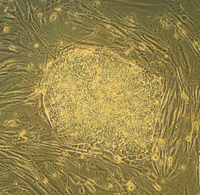
    Human Embryonic Stem Cell
    On Monday, the Washington Post confirmed what many of the President-elect's supporters already knew:  an Obama Administration will be good for stem cell research (see "Stem cell supporters await their Obama moment").  According to the Post, John Podesta, the co-chair of the President-elect's transition team and President Clinton’s Chief of Staff from 1998 to 2001, stated that the President-elect plans to quickly reverse President Bush's 2001 directive limiting federal funding of human embryonic stem cell research.  Geron Corp. CEO David Greenwood and Parkinson's Action Network CEO Amy Comstock Rick expect that as a result of the policy reversal, the industry will see a surge in funding.  The Post notes, however, that for the next few months the industry will have to deal with the Bush Administration's status quo, since President Bush is expected to make no changes in his current stem cell policy.  Addressing the current stem cell climate, White House Press Secretary Dana Perino asserted that "scientists from all over the world, and especially here in our country, have shown their innovation and their abilities to do embryonic stem cell research and make huge leaps in achievement without destroying embryos."

    While things look far better for stem cell researchers from a policy standpoint, the Associated Press reported today that stem cell researchers will be facing a new obstacle in 2009:  a lack of funding resulting from the current financial crisis (see "Obama election no panacea for stem cell industry").  The true impact of the financial crisis on stem cell research is hard to gauge, however, since the AP report notes that federal funding restrictions have led to much duplicative spending (as one example, the article cites Harvard's Stem Cell Institute, which purchases one set of equipment for use in federally funded research and another set of equipment for use in non-federally funded research).  In addition, a reversal of the Bush Administration's stem cell policy might lure back stem cell research that moved to China or Singapore.  Any reemergence of the U.S. stem cell industry, however, will depend on an influx of investment dollars, as funding in this country has declined by 65% since 1999.  According to the AP report, one possible group of investors may be drugmakers, who are looking for ways to deal with the loss of patent protection on approximately $24 billion worth of drugs in 2009.

    Human embryonic stem cells image: Ryddragyn, Wikipedia Commons

  •     By Donald Zuhn

    Epitomics
    Last month, Epitomics Inc. announced that the U.S. Patent and Trademark Office has issued U.S. Patent No. 7,431,927, which is directed to monoclonal antibodies that neutralize TNF-alpha activity.  The Burlingame, California-based biotech company also announced that the USPTO has issued U.S. Patent No. 7,429,487, which is directed to a rabbit-derived immortal B-lymphocyte capable of fusion with a rabbit splenocyte to produce a hybrid cell that produces an antibody.  The '927 and '487 patents are Epitomics' second and third U.S. patents; the company is also named as an assignee on three U.S. patent application publications.

    According to Epitomics' press release on the '927 patent, the patent is directed to "a broad grouping" of anti-TNF-alpha antibodies and further bolsters the company's patent portfolio of TNF-alpha-neutralizing antibodies.  These antibodies can be used for treating cancer and a variety of inflammatory diseases, including Crohn's disease (adult and pediatric), ulcerative colitis, rheumatoid arthritis, ankylosing spondylitis, psoriatic arthritis, and psoriasis.  Epitomics' statement noted that the anti-TNF-alpha antibodies of the '927 patent exploit the company's unique humanization technology that allows amino acids in the antibody's antigen-binding region to be substituted without significant loss in antibody activity.  Epitomics CEO Dr. Guo-Liang Yu stated that as a result of the company's humanization technology, the '927 patent was "unlike any other antibody patent."  Dr. Yu added that Epitomics was "pleased the USPTO recognized the uniqueness of [the company's] amino-acid substitution technology."  Epitomics' press release also noted that a government report determined that the global market for anti-TNF-alpha therapies is expected to reach $12 billion by 2015.

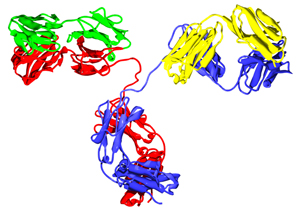
    Antibody
    In Epitomics announcement regarding the '487 patent, the company stated that the patent "which covers the next generation of cells for producing rabbit monoclonal antibodies[,] further establishes Epitomics' unique position as the rabbit monoclonal antibody company."  The company's press release describes the production of monoclonal antibodies as involving the fusion of spleen cells from an animal with a fusion partner — an immortalized B-lymphocyte — to produce hybridomas that produce antibodies.  According to the Epitomics' press release, the '487 patent encompasses any rabbit-derived fusion partner that does not produce immunoglobulin heavy chain, as well as methods of using the rabbit-derived fusion partner to produce monoclonal antibodies.  Epitomics notes that the '487 patent is significant because a hybridoma produced using the claimed fusion partner has increased antibody production, and no contamination from the immunoglobulin heavy chain of the fusion partner.  Dr. Yu added that the '487 patent was important because "rabbit monoclonal antibodies demonstrate significant advantages over mouse antibodies in every meaningful category:  affinity, specificity, and bioavailability."

    The '927 patent issued from U.S. Application No. 11/090,105, filed March 24, 2005.  Independent claims 1 and 4 of the '927 patent recites:

    1.  A monoclonal antibody comprising:
    a)  a variable domain comprising:
    i.  a heavy c[ha]in var[i]able domain comprising a CDR1 region identical to amino acid residues 30-34 of SEQ ID NO: 31, a CDR2 region identical to amino acid residues 49-64 of SEQ ID NO: 31 and a CDR3 region identical to amino acid [residues] 97-109 of SEQ ID NO: 31; and
    ii.  a light chain variable domain comprising a CDR1 region identical to amino acid residues 23-33 of SEQ ID NO: 75, a CDR2 region identical to amino acid residues 49-55 of SEQ ID NO: 75 and a CDR3 region identical to amino acid residues 88-99 of SEQ ID NO: 75; or
    b)  a variant of said variable domain of part a) that is otherwise identical to said variable domain except for up to 4 amino acid substitutions in said CDR regions;

    wherein said monoclonal antibody neutralizes TNF-alpha activity.

    4.  A monoclonal antibody comprising:
    a heavy chain variable domain comprising a CDR1 region identical to amino acid residues 30-34 of SEQ ID NO: 31, a CDR2 region identical to amino acid residues 49-55 of SEQ ID NO: 75 and CDR3 region identical to amino acid residues 97-109 of SEQ ID NO: 31[;] and
    a light chain var[i]able domain comprising a CDR1 region identical to amino acid residues 23-33 of SEQ ID NO: 75, CDR2 region identical to amino acid resi[d]ues 49-55 SEQ ID NO: 75 and a CDR3 region identical to amino acid residues 88-99 of SEQ ID NO: 75;
    wherein said monoclonal antibody neutralizes TNF-alpha activity.

    The '487 patent issued from U.S. Application No. 11/476,277, filed June 27, 2006, which claims the benefit of U.S. Provisional Application No. 60/697,014, filed July 5, 2005.  Independent claim 1 of the '487 patent recites:

    1.  A rabbit-derived immortal B-lymphocyte capable of fusing with a rabbit splenocyte to produce a hybrid cell that produces an immunoglobulin, wherein immunoglobulin heavy chain mRNA expression of said rabbit derived immortal B-lymphocyte is not detectable by RT-PCR and said rabbit-derived immortal B-lymphocyte does not detectably express immunoglobulin heavy chain.

  •     By Sherri Oslick

    Gavel_2About
    Court Report:  Each week we will report briefly on recently filed
    biotech and pharma cases, and a few interesting cases will be selected
    for periodic monitoring.


    Bayer Healthcare LLC v. Norbrook Laboratories Limited et al.

    2:08-cv-02556; filed November 6, 2008 in the District Court of Kansas

    Infringement of U.S. Patent No. 5,756,506 ("Single High Dose Fluoroquinolone Treatment," issued May 26, 1998) following the equivalent of a Paragraph IV certification as part of Norbrook's filing of its ANADA (Abbreviated New Animal Drug Application) to manufacture a generic version of Bayer's BAYTRIL® 100 (enrofloxacin injection, used for the treatment of bovine respiratory disease in beef and non-lactating dairy cattle).  View the complaint here.


    Purdue Pharma Products LP et al. v. Impax Laboratories Inc.

    1:08-cv-00827; filed November 4, 2008 in the District Court of Delaware

    Infringement of U.S. Patent No. 6,254,887 ("Controlled Release Tramadol," issued July 3, 2001) following a Paragraph IV certification as part of Impax's amendment of its ANDA (adding additional dosage forms) to manufacture a generic version of plaintiffs' Ultram® ER (tramadol hydrochloride, used to treat moderate to moderately severe chronic pain).  View the complaint here.


    Abbott Laboratories et al. v. Biovail Laboratories International SRL et al.

    1:08-cv-06274; filed November 3, 2008 in the Northern District of Illinois

    Infringement of U.S. Patent Nos. 6,277,405 ("Fenofibrate Pharmaceutical Composition Having High Bioavailability and Method for Preparing It," issued August 21, 2001), 7,037,529 (same title, issued May 2, 2006), and 7,041,319 ("Fenofibrate Pharmaceutical Composition Having High Bioavailabilty," issued May 9, 2006) following a Paragraph IV certification as part of Biovail's filing of an ANDA to manufacture a generic version of Abbott's Tricor® (fenofibrate, used in the treatment of increased triglyceride levels).  View the complaint here.


    Sequenom Inc. v. Ibis Biosciences Inc.

    1:08-cv-00813; filed October 30, 2008 in the District Court of Delaware

    Infringement of U.S. Patent Nos. 6,300,076 ("DNA Diagnostics Based on Mass Spectrometry," issued October 9, 2001), 6,500,621 (same title, issued on December 31, 2002), and 7,419,787 ("Mass Spectrometric Methods for Detecting Mutations in a Target Nucleic Acid," issued September 2, 2008) based on Ibis' manufacture and sale of its Ibis T5000 Biosensor System.  View the complaint here.

  • CalendarNovember 10-11, 2008 – Patent Litigation 2008 (Practising Law Institute) – Atlanta, GA

    November 11-13, 2008 – 4th Biosimilars conference (Visiongain) – Philadelphia, PA

    November 12-14, 2008 – Structuring, Negotiating and Managing Pharma/Biotech Collaborative Agreements (American Conference Institute) – New York, NY

    November 17-18, 2008 – Pharmaceutical and Biotech Patent Opinion Writing*** (American Conference Institute) – Boston, MA

    November 17-18, 2008 – Patent Litigation 2008 (Practising Law Institute) – New York, NY

    November 19-20, 2008 – Paragraph IV on Trial*** (American Conference Institute) – New York, NY

    December 1, 2008 – 19th Annual Conference on U.S. Patent and Trademark Office Law and Practice (PTO Day) (Intellectual Property Owners Association) – Washington, DC

    December 2, 2008 – Patent Interferences Rules & Practice (Intellectual Property Owners Association) – Washington, DC

    December 8-9, 2008 – Pharmaceutical and Biotech Patent Opinion Writing*** (American Conference Institute) – Atlanta, GA

    January 3-7, 2009 – 26th Annual National CLE Conference (Law Education Institute) – Vail, CO

    January 12-13, 2009 – Pharmaceutical and Biotech Patent Opinion Writing*** (American Conference Institute) – San Diego, CA

    January 20-21, 2009 – Bio/Pharmaceutical Summit on Legal and Regulatory Product Lifecycle
    Strategies
    *** (Center for Business Intelligence) – Baltimore, MD

    January 27-28, 2009 – ITC Litigation (American Conference Institute)*** – Washington, DC

    January 28-29, 2009 – 6th National Conference on Pharma/Biotech IP Due Diligence (American Conference Institute) – New York, NY

    January 29-30, 2009 – Commercialization of Life Sciences Inventions (Law Seminars International) – Phoenix, AZ

    ***Patent Docs is a media partner of this conference or CLE

  • Skiing
    Law Education Institute, Inc. (LEI) will be holding the 26th Annual National CLE Conference on January 3-7, 2009 in Vail, Colorado.  The Intellectual Property program of the conference, which will be held at the Vail Marriott Mountain Resort, will offer presentations on a number of topics, including:

    • In-house analysis — Strategic considerations for filing a patent law suit;
    • Proving obviousness and non-obviousness in a post-KSR world;
    • Strategies for initiating patent infringement actions:  Cease & desist letters, DJ actions, and preliminary injunctions;
    • Corporate counsel panel:  Patent issues that keep corporate counsel awake at night;
    • Is there a disconnect between the Supreme Court and the Federal Circuit?
    • Patent law in China — Recent developments;
    • When and how to file an ITC action in patent cases;
    • The continued concern with inequitable conduct in patent cases;
    • Inter partes reexamination:  Recent trends and strategic considerations;
    • The state of patent exhaustion after Quanta;
    • Little known but crucial prior art issues — What you don't know can hurt you;
    • Patent legislation and PTO new rules update;
    • View from the FTC:  IP and antitrust;
    • View from the trenches:  Perspectives on modern IP practice from leading in-house counsel;
    • View from the tower:  The academic perspective on cutting-edge IP issues; and
    • Order in the court:  Best practices in IP litigation procedure.

    Law Education Institute (LEI)
    An agenda and list of speakers for the Intellectual Property program of the conference can be found here.  A complete brochure for the Intellectual Property program, including an agenda, list of speakers, and registration form can be downloaded here.

    The registration fee for the conference is $745.  Those registering before November 17, 2008 will receive a $100 discount off the registration fee.  Those interested in registering for the conference can do so by calling either 1-303-860-0608 or 1-888-860-2531.

  •     By Christopher P. Singer

    In an October 31, 2008 press release, the U.S. Patent and Trademark Office announced the development of a work sharing plan between five major intellectual property offices.  The representatives of the five offices, including Dr. Jung-Sik Koh, Commissioner of the Korean Intellectual Property Office (KIPO); Alison Brimelow, President of the European Patent Office (EPO); Takashi Suzuki, Commissioner of the Japan Patent Office (JPO); Tian Lipu, Commissioner of the State Intellectual Property Office of the People's Republic of China (SIPO); and Jon Dudas, Director of the USPTO, adopted a unified vision statement for the initiative:  "The elimination of unnecessary duplication of work among the offices, enhancement of patent examination efficiency and quality, and guarantee of the stability of patent right."  The group also laid the framework for ten "Foundation Projects" that are designed to harmonize the search and examination environment in each office and to standardize the information sharing process.  Through these projects the offices hope to facilitate work sharing by building mutual trust in each office's work product, and enhancing search and examination quality.

    According to the press release, each office will oversee the implementation of two Foundation Projects.  The offices agreed that as an initial step they would exchange detailed proposals regarding each of the ten Foundation Projects, and identify areas of agreement and discuss specific details of implementation no later than the end of April 2009.  The Foundation Projects split between the offices as follows:

    EPO
    EPO-EPC
    • Common Documentation Database — which has a goal of bringing together a common set of relevant patent and non-patent literature from around the world to assist patent examiners in their prior art searches.
    • Common Approach for a Hybrid Classification — which has a goal of enabling joint and efficient updating of patent classification and facilitate the reuse of work among the patent offices

    JPO
    JPO logo_jpo
    • Common Application Format — which has a goal of facilitating the filing procedure of each office by using a Common Application Format; and by using electronic or digitized patent application filing (in XML format) and subsequent processing and publication in XML format.
    • Common Access to Search and Examination Results — which has a goal of enabling examiners to find one-stop references in the dossier information of other offices, such as search and examination results.  Another goal of this project is to conduct the priority document exchange (PDX) to reduce the cost of ordering copies of priority documents for applicants and the administrative costs of electronic processing for offices.

    KIPO
    KIPO #2
    • Common Training Policy — which has a goal of standardizing the training of patent examiners at each office, helping examiners to produce equivalent results of search and examination at the five offices.
    • Mutual Machine Translation — which has a goal of helping the offices overcome the language barrier of patent information and allow greater access to each office's patent information.

    SIPO
    SIPO
    • Common Rules for Examination Practice and Quality Control — which has a goal of performing patent examinations at a similar standard and quality through common rules of examination practice and quality control.
    • Common Statistical Parameter System for Examination — which has a goal of establishing a system of common statistical parameters for all examinations at the five offices; and to conduct statistical tasks and exchange information on examination practices under common rules and parameters, building on the work of the Trilateral statistical working group.

    USPTO
    USPTO Seal
    • Common Approach to Sharing and Documenting Search Strategies — which has a goal of promoting repeated use of searches by enabling the patent examiners of each office to understand each other's search strategy.
    • Common Search and Examination Support Tools — which has a goal of establishing a system of common search and examination tools to facilitate work-sharing.

  •     By Donald Zuhn

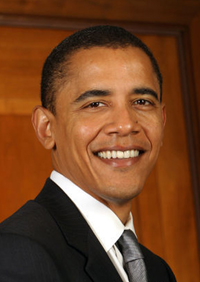
    Obama, Barack #1
    Yesterday, as President-elect Barack Obama addressed hundreds of thousands of Chicagoans in Grant Park and millions of viewers around the world, we took a look back at a number of prior Patent Docs reports that discussed some aspects of the President-elect's technology platform, including his positions on patent issues and follow-on biologics (see "A Second Look at President-elect Obama's Technology Platform").  Not surprisingly, a number of organizations and members of the patent community issued statements and comments today in the aftermath of Tuesday's historic election.

    BIO Congratulates President-elect

    Biotechnology Industry Organization (BIO)
    In a statement released by the Biotechnology Industry Organization (BIO), President and CEO Jim Greenwood congratulated Senator Obama on his victory on behalf of BIO's more than 1,200 member biotechnology companies, academic institutions, state biotechnology centers, and related organizations.  Mr. Greenwood, who represented Pennsylvania's Eighth District in the U.S. House of Representatives from January 1993 through January 2005, also congratulated all newly elected and returning members of Congress, governors, and other elected officials across the U.S.

    The BIO President noted that President-elect Obama would "enter office facing a daunting array of complex challenges threatening the well-being of our nation and the environmental health of our planet," and that "[b]iotechnology is uniquely suited to help provide answers to these challenges."  Mr. Greenwood also noted that "[b]iotechnology is one of the most promising sectors of America's burgeoning innovation economy," and pledged that BIO would work with the President-elect and the 111th Congress "to ensure that we have the proper public policies that promote and facilitate continued innovation."  He also asserted that the U.S. "must maintain strong protections for intellectual property — the key to an innovation economy — while enhancing patent quality and the objectivity, predictability, and transparency of the patent system."  Mr. Greenwood concluded by stating that "[t]ogether, we can implement the public policies necessary to help heal, fuel, feed and clean our nation."

    IPO Discusses Timetable for USPTO Shake-up

    IPO #2
    In its e-mail newsletter on Wednesday, the Intellectual Property Owners Association (IPO) predicted that "[i]f tradition holds," Senator Obama's election would lead to the departure of Undersecretary of Commerce and Director of the U.S. Patent and Trademark Office Jon Dudas by January 2009.  The IPO noted that "[a]n outgoing President normally asks his appointees to submit their resignations by January 19, the day before the inauguration of the new President and resignations normally are accepted."  The IPO newsletter also noted that Deputy Director Margaret Peterlin had already announced her resignation earlier this year (see "Deputy Director Peterlin Announces Resignation").  However, the IPO stated that Commissioner for Patents John Doll and Commissioner for Trademarks Lynne Beresford were appointed for five-year terms, and that it was not known whether the Obama administration would reappoint them when their terms expire.

    Professor Wegner: Patent Practitioners Actively Involved in Obama Campaign

    Barner, Sharon
    Harold Wegner, a partner at Foley & Lardner LLP and professor at George Washington University Law School, noted in a Wednesday newsletter to his e-mail subscribers that "[s]everal Foley members, particularly in Washington, D.C., and Chicago, have been actively involved with the Obama campaign."  In particular, Prof. Wegner mentioned that Chicago-based Foley partner Sharon Barner (at left) has been both "actively involved" in the Senator Obama's campaign and, in addition, has "the longest association with President-elect Obama of any of the Foley team members involved in the Obama campaign."  For those in the patent community who have been worried that the President-elect might be getting his patent advice solely from law school professors, Prof. Wegner's disclosure should come as a welcome relief.

  •     By Donald Zuhn

    Obama, Barack #2
    Like many Americans, we spent Tuesday evening watching the presidential election returns come in, and now that Senator Barack Obama has been elected the 44th president of the United States, we thought it would be a good idea to take a look back at some of our previous reports discussing some aspects of President-elect Obama's technology platform.

    "Presidential "Debate" on U.S. Patent Policy," October 14, 2008

    On the eve of the third, and final, presidential debate, we focused on a panel discussion, sponsored by the Colorado Bar Association, that took place in Denver on August 28, 2008.  The panel discussion brought together two representatives from each of the candidates' campaigns to address patent, copyright, and antitrust issues.  Representing Senator Obama's campaign were Professor Arti Rai, from the Duke University School of Law (and a former classmate of Senator Obama's at Harvard Law School), and Associate Professor Christopher Sprigman, from the University of Virginia School of Law.

    "Follow-on Biologics in the News," September 23, 2008

    We discussed reports from Forbes.com and the Pharmaceutical Business Review indicating that Senator Barack Obama would place the passage of a follow-on biologics regulatory pathway at the top of his health care agenda.  Forbes.com also noted that Obama supported making the exclusivity period as short as possible for biotech drugs, and intended to put an end to the "reverse payment" practice, in which innovators pay generic drug manufacturers to delay introduction of generic drugs.

    "Mitt Romney on Patents: A Reason for Thanksgiving," November 21, 2007

    On Thanksgiving Eve 2007, we summarized the patent platforms for a number of Democratic and Republican presidential candidates.  With respect to Senator Obama's patent platform, we noted that his official campaign website at the time contained the following passage:

    Reform the Patent System:  A system that produces timely, high-quality patents is essential for global competitiveness in the 21st century.  By improving predictability and clarity in our patent system, we will help foster an environment that encourages innovation.  Giving the Patent and Trademark Office (PTO) the resources to improve patent quality and opening up the patent process to citizen review will reduce the uncertainty and wasteful litigation that is currently a significant drag on innovation.  With better informational resources, the Patent and Trademark Office could offer patent applicants who know they have significant inventions the option of a rigorous and public peer review that would produce a "gold-plated" patent much less vulnerable to court challenge.  Where dubious patents are being asserted, the PTO could conduct low-cost, timely administrative proceedings to determine patent validity.  As president, Barack Obama will ensure that our patent laws protect legitimate rights while not stifling innovation and collaboration.

    Interestingly, Senator Obama's official campaign website currently contains a modified version of the above passage:

    Reform the Patent System:  A system that produces timely, high-quality patents is essential for global competitiveness in the 21st century. By improving predictability and clarity in our patent system, we will help foster an environment that encourages innovation. Giving the Patent and Trademark Office (PTO) the resources to improve patent quality and opening up the patent process to citizen review will reduce the uncertainty and wasteful litigation that is currently a significant drag on innovation. As president, Barack Obama will ensure that our patent laws protect legitimate rights while not stifling innovation and collaboration.

    The difference?  The following two sentences concerning the "gold-plated" patent concept have been removed from the November 2007 version of his patent policy:

    With better informational resources, the Patent and Trademark Office could offer patent applicants who know they have significant inventions the option of a rigorous and public peer review that would produce a "gold-plated" patent much less vulnerable to court challenge.  Where dubious patents are being asserted, the PTO could conduct low-cost, timely administrative proceedings to determine patent validity.

    "Law Professors Back USPTO in Tafas v. Dudas Appeal," October 23, 2008

    Last month, we reported on one of two amicus briefs filed in support of Defendants-Appellants the U.S. Patent and Trademark Office and USPTO Director Jon Dudas (thirteen other amicus briefs were filed in support Plaintiffs-Appellees Dr. Triantafyllos Tafas, SmithKline Beecham Corp., SmithKline Beecham plc, and Glaxo Group Ltd.).  The Brief Amici Curiae of Intellectual Property and Administrative Law Professors in Support of Appellants was signed by Stanford Law School Professor Mark Lemley (an Obama advisor) on behalf of eleven other law professors, including Prof. Arti Rai of Duke Law School (who was also listed on the brief's cover page with Prof. Lemley).

    White House #1
    Election Postscript:  Patent Docs has learned that when it comes to patent policy, President-elect Obama has the ear of more than just a handful of law school professors, and that the President-elect will also be listening to patent practitioners.  If true, that should make many in the patent community a little happier about Senator Obama's historic victory.

  •     By Kevin E. Noonan

    In the excitement of the Federal Circuit's en banc decision in In re Bielski, handed down last Thursday, it could be understandable that another opinion from the Federal Circuit reviewing a Patent Office determination of unpatentability, In re Alonso, might go unnoticed.  Unfortunately, this decision continues the Federal Circuit's practice of expanding the scope of the written description requirement of 35 U.S.C. § 112, first paragraph, as it is applied to biotechnology inventions, and appears to be in direct conflict with the Court's earlier decision in Noelle v. Lederman.

    The invention relates to U.S. Patent Application No. 08/469,749 filed by Dr. Kenneth Alonso and relating to antibody reagents and methods for treating neurofibrosarcomas.  The rejected claim recites as follows:

    92.  A method of treating neurofibrosarcoma in a human by administering an effective amount of a monoclonal antibody idiotypic to the neurofibrosarcoma of said human, wherein said monoclonal antibody is secreted from a human-human hybridoma derived from the neurofibrosarcoma cells.
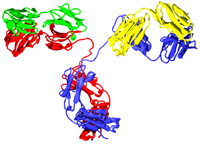
    Antibody
    (The opinion sets forth in a footnote the evidence in the specification that infusion of a human patient with 100 mg of an expressly-disclosed monoclonal antibody resulted in clearance of lung metastases within 24 hours and regression of the primary brain tumor within seven days.)  The examiner rejected claim 92 on non-enablement and lack of adequate written description grounds; the examiner asserted with regard to the written description rejection:

    Applicant is reminded that the disclosure only describes the preparation of a single Mab produced by the hybridoma cell line HB983.  However, the claims are directed toward a much larger genus of molecules (i.e., Mabs that bind to a neurofibrosarcoma), not a specific Mab identified by the deposited hybridoma.  . . .  The crux of the rejection is whether or not applicant has provided sufficient support for the broadly claimed genus of therapeutic antibodies.  As set forth in the rejection, the skilled artisan would reasonably conclude that applicant was clearly not in possession of the claimed genus of compounds.  Applicant should direct the claim language toward the only described embodiment (e.g., a Mab produced by hybridoma HB983).

    The Board affirmed rejection on written description grounds, but reversed the enablement rejection, and Dr. Alonso appealed.

    Federal Circuit Seal
    The Federal Circuit's decision, heard by Chief Judge Michel, Circuit Judge Mayer, and District Judge Richard G. Stearns from the District of Massachusetts, affirmed the rejection.  In the opinion (curiously, written by Judge Stearns), the Court set forth the familiar litany of Regents of the Univ. of Cal. v. Eli Lilly & Co., 119 F.3d 1559 (Fed. Cir. 1997); Vas-Cath Inc. v. Mahurkar, 935 F.2d 1555 (Fed. Cir. 1991); Enzo Biochem, Inc. v. Gen-Probe Inc., 323 F.3d 956 (Fed. Cir. 2002), and Univ. of Rochester v. G.D. Searle & Co., Inc., 358 F.3d 916 (Fed. Cir. 2004).  The most relevant citation, however, was In re Gartside, 203 F.3d 1305 (Fed. Cir. 2000), reciting the "substantial evidence" standard (consisting of "relevant evidence that 'a reasonable mind might accept as adequate to support a conclusion'"), since satisfaction of the written description requirement is a question of fact.  The Court cited the analytical basis for the Board's decision:

    [W]hether the single monoclonal antibody described in the Specification is representative of the genus of monoclonal antibodies required to practice the claimed treatment method.  That, in turn, depends on whether or not the antibodies (and the antigens they bind) would have been expected to vary substantially within the genus.  The greater the variation in the genus, the less representative any particular antibody would be.

    The Board relied on evidence that the genus of antibodies immunologically-reactive to neurofibrosarcoma cells would "vary substantially" throughout the genus, due to "considerable antigenic 'heterogeneity'," both between tumors from different individuals as well as different (metastatic) tumors from the same patient.  In addition, the "efficacy" of antitumor therapy (a fact seemingly more related to operability and enablement than written description) is expected to be related to "idiotypic change in the original tumor" according to a scientific journal article by Dr. Alonso himself.  The Board synthesized this evidence to conclude:

    [F]or purposes of satisfying the written description requirement, it is not enough merely to disclose a method of making and identifying compounds capable of being used to practice the claimed invention.  That is, it is not enough to describe[] the procedure for making a human-human hybridoma from neurofibrosarcoma, and teach how to determine whether a given antibody, specific to a patient's neurofibrosarcoma, will function in the claimed method.  We find that the single antibody described in the Specification is insufficiently representative to provide adequate written descriptive support for the genus of antibodies required to practice the claimed invention.

    The Federal Circuit found that this conclusion was supported by substantial evidence.  The opinion cites both Noelle v. Lederman and University of Rochester v. G.D. Searle as supporting this conclusion, despite the fact that the Rochester case is most readily distinguished because it (admittedly) disclosed zero members of the genus of specific COX-2 inhibitors necessary to practice the methods claimed in the Rochester patents (indeed, there was no evidence that inhibitors having COX-2 but not — or sufficiently reduced — COX-1 inhibitory activity even existed).  Rather, the opinion here analogizes the assertions in the Rochester opinion that the specification there failed to satisfy the written description requirement because that patent did not disclosed "which peptides, polypeptides, and small organic molecules have the desired characteristics of selectively inhibiting [COX-2]."  The analogy here is Dr. Alonso's failure to disclose the structure of any neurofibrosarcoma-specific antigens, which analogy appears to disregard the significant distinctions between actual antigens expressed by these tumor cells and hypothetical inhibitors specific for COX-2.

    The opinion also distinguished Noelle v. Lederman (albeit sub silentio) by noting that Dr. Alonso's specification did not identify or characterize any neurofibrosarcoma cell-specific antigens, merely disclosing the existence of one antigen characterized by its molecular weight.  Dr. Alonso's "specification teaches nothing about the structure, epitope characterization, binding affinity, specificity, or pharmacological properties common to the large family of antibodies implicated by the method," contrasting this "sparse disclosure" with the "detailed method of making the antibodies" that Dr. Alonso disclosed.

    Unfortunately for Dr. Alonso, but perhaps fortuitously for the rest of us, there were a number of further distinctions Dr. Alonso raised before the Federal Circuit that the opinion asserts were not raised before the Board, and hence waived.  These include the biological facts that the "well-known correlation between the structure and function of neurofibrosarcoma-specific antibodies," the shared function between members of the subgenus of antibodies raised against a specific patient's tumor, the "well-known correlation between human antibody structure and antibody function," and that monoclonal antibodies are necessarily specific for the neurofibrosarcoma against which they are raised.  The opinion suggests that these factors might satisfy the written description requirement by showing, instead of a representative number of members of a genus, "'relevant identifying characteristics,' such as 'complete or partial structure, other physical and/or chemical properties, functional characteristics when coupled with a known or disclosed correlation between function and structure, or some combination of such characteristics,'" citing Enzo, 323 F.3d at 964 (emphasis in original).

    The Federal Circuit's written description jurisprudence has traveled far from the rational bases that founded its decision in Eli Lilly and other early cases.  There, the CAFC rightly found that the inherent uncertainty of isolating genes, being chemical compounds albeit complex ones, necessitated that an applicant show actual possession of the isolated molecule before deserving patent protection for it.  As the case law has developed, however, it has turned more and more surely to requiring a "representative number of species," or its twin, the "relevant identifying characteristics," that in many cases are not justified to the same extent as in the DNA/gene cases.  In those early cases there was not only the uncertainty of possession but the possibility that the results obtained based on, for example, an isolated protein would not predictably yield a nucleic acid encoding it; one ready example is blood clotting Factor VIII, which is encoded by a much larger than predicted transcript because it is produced initially as a preprotein that had not been observed in blood or tissues.

    These considerations do not apply to technologies, like monoclonal antibody production, that are well-known and produce predictable results.  And despite the considerations operating in Rochester that preclude a patentable distinction between compound and method claims, the reality is that Dr. Alonso provided a fully characterized plurality of antigens — the neurofibrosarcoma cell, which despite its heterogeneity is a particularly well-characterized type of cancer c
    ell — that could be used to reliably produce specific monoclonal antibodies.  The question must be asked whether disclosing two, five, ten, twenty, or one hundred "species" of antibodies would be more readily convincing to the skilled worker that Dr. Alonso was more in "possession" of a method to treat neurofibrosarcomas than is the case based on the one antibody showing such striking results.  A better question is how greatly will innovation be harmed in the therapeutic antibody arts (an area frankly robust in the number of new therapeutics) by decisions like Alonso that impose arbitrary requirements for fulfilling the written description requirement.

    In re Alonso (Fed. Cir. 2008)
    Panel: Chief Judge Michel, Circuit Judge Mayer, and District Judge Stearns
    Opinion by District Judge Stearns

    Antibody image: Tom Vickers, Wikipedia Commons

  •     By Sherri Oslick

    IP Australia #2
    Applicants filing a PCT application with the U.S. Patent and Trademark Office as the Receiving Office now have another option for their selection of an International Search Authority (ISA) — IP Australia, the Australian Patent Office.  Previously, Applicants were limited to the USPTO, the European Patent Office (EPO), or the Korean Intellectual Property Office (KIPO).

    A PCT applicant filing through the USPTO may chose IP Australia as the ISA provided the following conditions are met:

    • the application is submitted in the English language; and
    • the application does not contain one or more claims relating to mechanical engineering or analogous fields of technology as defined by certain International Patent Classification classes.

    USPTO Seal
    The search fee for IP Australia acting as an ISA for international applications received by the USPTO is $1,514.  This is in comparison to $200 for KIPO acting as the ISA, $1,800 for the USPTO acting as the ISA, and $2,665 for the EPO acting as the ISA.

    For additional information regarding this topic, please see:

    USPTO Notice regarding arrangement between IP Australia and USPTO