•     By Donald Zuhn

    IPO Continues to Support 14-Year Exclusivity Period

    IPO #2 The Intellectual Property Owners Association (IPO), reporting on last week's announcement that the White House believes a 7-year data exclusivity period "strikes the appropriate balance between innovation and competition," reminded its members today that the IPO Board adopted a resolution in September 2008 supporting legislation that "promotes continued innovation by providing at least 14 years of data exclusivity for an innovator’s biological product with additional periods of exclusivity available for new indications and/or for approval for use in the pediatric population" (see "Follow-on Biologics in the News – No. 1" for the complete text of the IPO resolution).

    More on OMB Letter to Rep. Waxman

    White House #2 According to a Bloomberg report, the letter sent by Office of Management and Budget (OMB) officials to Rep. Henry Waxman (D-CA) last week in which the White House backed a 7-year data exclusivity period (see "White House Recommends 7-Year Data Exclusivity Period for Follow-on Biologics"), also called the 7-year period a "generous compromise."  The report speculated that this choice of language was likely influenced by President Obama's request earlier this year that Congress pass follow-on biologics legislation providing an exclusivity period "generally consistent" with that provided for small molecule therapeutics under the Hatch-Waxman Act.  Bloomberg also reported that the letter from the OMB stated that the White House was conducting "a serious review of FDA's existing authorities" to ensure that the agency can quickly begin approving follow-on biologics once legislation is passed.

    Amgen The report also included a statement from Amgen Inc. spokesperson David Polk, who contended that "[w]ithout a fair and sustainable cycle of investment and returns in innovative R&D, biotech discovery will be stifled," adding that the company looked forward to working with Congress on follow-on biologics legislation that "strikes a necessary balance."

    Japan Approves First Follow-on Biologic

    Sandoz On the same day that the White House delivered its follow-on biologics letter to Rep. Waxman, a Reuters report noted that Japan had approved its first follow-on biologic, Somatropin, a generic version of human growth hormone from Novartis AG's generic unit Sandoz.  Somatropoin, a biosimilar of Pfizer Inc.'s Genotropin, has been approved in Japan for the same range of diseases as Genotropin, including the treatment of growth hormone deficiency in children and growth disturbance associated with Turner's syndrome or chronic renal insufficiency.  In Europe and the U.S., the drug has already been approved as Omnitrope (see "Congressional Fact-finding on Follow-on Biologics" and "Three New Biosimilars Pass EMEA Test").

    San Jose Mercury News Backs Eshoo Bill

    San Jose Mercury News In an editorial in last Wednesday's edition of the San Jose Mercury News, the Silcon Valley newspaper voiced support for Rep. Anna Eshoo's (D-CA) follow-on biologics bill (H.R. 1548), which provides up to 14.5 years of data exclusivity and currently has 108 co-sponsors.  Rep. Henry Waxman's (D-CA) competing bill (H.R. 1427) provides up to 5.5 years of data exclusivity and has 12 co-sponsors.  In discussing its endorsement of the Eshoo bill, the editorial states that:

    Legislation in Congress could determine whether [biotech] research goes forward or stalls in Silicon Valley and other biotech centers.

    The issue is essentially patent protection:  the length of time companies have to at least try to recover the $1 billion or more in investment it can take to bring one of these drugs to market.  For each biologic breakthrough, other companies are waiting to introduce biosimilars — basically, generics — at lower prices.

    The dilemma goes to the heart of President Barack Obama's goal for comprehensive health care reform: Can the nation continue to spark health care innovation at the same time it guarantees access to affordable medical care, including medication?  Can it save the billions of dollars a year we know is wasted in the current system without undercutting incentives for excellence?  Health care reform will fail if it stalls research and medical progress.  When Congress takes up regulation of biosimilars later this year, it needs to shore up the incentive for promising biologics research.

    The editorial calls the Eshoo bill "smart, science-based legislation that puts a premium on patient safety and encouraging further innovation."  Noting that "[h]olding down cost is a worthwhile goal," the newspaper argues that "these medicines won't exist in the first place if research dries up, or if safety issues crop up with the biosimilars."  As for lowering costs, the editorial contends that
    "as their use increases and more new drugs come onto the market to attack debilitating diseases, savings will kick in."

    Teva Unveils "Man on the Street" Videos

    Teva As part of Teva's "Year of Affordable Healthcare" campaign, which the company describes on the campaign's website as "a nationwide call for increased access to affordable healthcare for American citizens [that] coincides with the 25th anniversary of the landmark Hatch-Waxman Act," Teva has released the first in a series of "man on the street" videos in which Washington, DC residents were asked to comment on U.S. healthcare, and particularly on the need for follow-on biologics.

  •     By Christopher P. Singer

    NBPR In June 29, 2009 press release, the U.S. Patent and Trademark Office announced that it has agreed with the National Board of Patents and Registration of Finland (NBPR) to establish a Patent Prosecution Highway (PPH) program.  As mentioned in prior posts regarding other participant Offices, the motivation behind the PPH is to leverage fast-track patent examination in participant offices so that applicants can obtain corresponding patents faster and more efficiently in each participant country.  PPH agreements are cooperative initiatives that streamline the patent system and promote expeditious, inexpensive, and high-quality patent protection throughout the world.  The U.S.-Finnish PPH is the USPTO's tenth PPH program among various foreign patent and trademark offices.  The pilot period will begin on July 6, 2009, and continue for a period of one year.  Additional information regarding participation in the PPH program in Finland can be found at the at bot the USPTO website and the NBPR website.

    Pph_network

  •     By Sherri Oslick

    Gavel_2About
    Court Report:  Each week we will report briefly on recently filed
    biotech and pharma cases, and a few interesting cases will be selected
    for periodic monitoring.


    Dey, L.P. et al. v. Teva Parenteral Medicines, Inc. et al.

    1:09-cv-00087; filed June 23, 2009 in the Northern District of West Virginia

    • Plaintiffs: Dey, L.P.; Dey, Inc.
    • Defendants: Teva Parenteral Medicines, Inc.; Teva Pharmaceuticals USA, Inc.; Teva Pharmaceutical Industries Ltd.

    Infringement of U.S. Patent Nos. 6,667,344 ("Bronchodilating Compositions and Methods," issued December 23, 2003), 6,814,953 (same title, issued November 9, 2004), 7,348,362 ("Bronchodilating β-Angonist Composition and Methods," issued March 25, 2008), and 7,462,645 (same title, issued December 9, 2008) following a Paragraph IV certification as part of Teva's filing of an ANDA to manufacture a generic version of Dey's Perforomist® (formoterol fumarate inhalation solution, used to treat bronchoconstriction in patients with chronic obstructive pulmonary disease).  View the complaint here.

    University of Iowa et al. v. Abbott Laboratories et al.
    3:09-cv-00099; filed June 22, 2009 in the Southern District of Iowa

    • Plaintiffs: University of Iowa; University of Iowa Research Foundation
    • Defendants: Abbott Laboratories; Abbott Bioresearch Center, Inc.; Abbott Biotechnology Ltd.

    Infringement of U.S. Patent Nos. 5,168,062 ("Transfer Vectors and Microorganisms Containing Human Cytomegalovirus Immediate-Early Promoter-Regulatory DNA Sequence," issued December 1, 1992) and 5,385,839 (same title, issued January 31, 1995) based on Abbott's manufacture and sale of its Humira® (adalimumab, used to treat rheumatoid arthritis, juvenile idiopathic arthritis, psoriatic arthritis, ankylosing spondylitis, Crohn's disease and plaque psoriasis).  View the complaint here.


    Medicis Pharmaceutical Corp. v. Glenmark Generics Inc., USA et al.

    2:09-cv-03010; filed June 16, 2009 in the District Court of New Jersey

    • Plaintiff: Medicis Pharmaceutical Corp.
    • Defendants: Glenamrk Generics Inc., USA; Glenmark Generics Ltd.

    Infringement of U.S. Patent Nos. 6,765,001 ("Compositions and Methods for Enhancing Corticosteroid Delivery," issued July 20, 2004) and 7,220,424 (same title, issued May 22, 2007) following a Paragraph IV certification as part of Glenmark's filing of an ANDA to manufacture a generic version of plaintiff's Vanos® (fluocinonide cream, used to relieve inflammation and itching caused by certain skin conditions that respond to corticosteroids).  View the complaint here.

  • CalendarJune 29-30 – Product and Pipeline Enhancement for Generics (Marcus Evans) – Washington, DC

    July 6, 2009 – Prior Art & Obviousness 2009: The PTO & CAFC Perspective on Patent Law Sections 102 & 103 (Practising Law Institute) – New York, NY

    July 8, 2009 – Markman Hearings and Claim Construction in Patent Litigation (Practising Law Institute) – New York, NY

    July 14-15, 2009 – Pharma/Biotech Collaborative Agreements (American Conference Institute) – San Francisco, CA

    July 15, 2009 – Cost-Effective Patent Strategies (Law Seminars International) – Seattle, WA

    July 15, 2009 – Corporate Intellectual Property Conference (Law Bulletin Publishing Company) – Chicago, IL

    July 18-21, 2009 – National Association of Patent Practitioners (NAPP) 2009 Annual Meeting – San Diego, CA

    July 20, 2009 – Buying, Selling and Licensing Patents: Strategies for Turning Your Patent Portfolios into Revenue Streams (Law Seminars International) – Washington, DC

    July 21-22, 2009 – FDA Boot Camp*** (American Conference Institute) – Chicago, IL

    July 23-24, 2009 – Advanced Patent Prosecution Workshop 2009: Claim Drafting & Amendment Writing (Practising Law Institute) – New York, NY

    July 30 – August 4, 2009 – 2009 Annual Meeting (American Bar Association) – Chicago, IL

    August 17-18, 2009 – Advanced Patent Prosecution Workshop 2009: Claim Drafting & Amendment Writing (Practising Law Institute) – San Francisco, CA

    September 1, 2009 – Prior Art & Obviousness 2009: The PTO & CAFC Perspective on Patent Law Sections 102 & 103 (Practising Law Institute) – San Francisco, CA

    ***Patent Docs is a media partner of this conference or CLE

  •     By Donald Zuhn

    Office of Management & Budget - OMB Reuters reports that the White House sent a letter to Rep. Henry Waxman (D-CA), the Chairman of the House Energy and Commerce Committee, on Thursday stating that a follow-on biologics regulatory pathway providing a 7-year data exclusivity period would "strike[] the appropriate balance between innovation and competition."  According to the Reuters report, the letter was signed by Peter Orszag, Director of the Office of Management and Budget (OMB), and Nancy-Ann DeParle, director of the Office of Health Reform.

    Three follow-on biologics bills have been introduced in the 111th Congress so far:  H.R. 1427, which was introduced by Rep. Waxman on March 11 and which provides up to 5.5 years of data exclusivity; H.R. 1548, which was introduced by Rep. Anna Eshoo (D-CA) on March 18 and which provides up to 14.5 years of data exclusivity; and S. 726, which was introduced by Sen. Charles Schumer (D-NY) on March 26 and which is the Senate companion to H.R. 1427.  With respect to the two House bills, a search of thomas.gov indicates that H.R. 1427 currently is backed by 12 co-sponsors and H.R. 1548 enjoys the support of 107 co-sponsors.

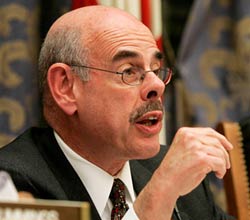
    Waxman, Henry According to the Reuters report, Rep. Waxman (at left) stated that the Obama administration "has made clear that the president does not support the lengthy monopoly periods sought by the drug industry and instead wants a bill, as I do, that will bring real competition and will not unduly prolong the monopolies on biotech drugs."

    Biotechnology Industry Organization (BIO) In a statement issued by the Biotechnology Industry Organization (BIO), President and CEO Jim Greenwood said that while BIO "continues to support strongly the development of a pathway for the review and approval of biosimilars," the organization was "extremely concerned that the seven years of data exclusivity called for by the administration in the letter points to a risky short cut to biosimilars."  He added that BIO "believe[s] this abbreviated period will undermine the incentives necessary for continued biotech research into breakthrough medicines and cures for diseases such as cancer, multiple sclerosis, Alzheimer's and HIV/AIDS as well as unmet medical needs," and that "any pathway to biosimilars should provide a fair period of time for innovators to protect their proprietary data from competitors in order to promote the continued development of breakthrough medicines, therapies and cures."

    Greenwood, Jim Mr. Greenwood (at left) stated that BIO "continue[s] to believe that fourteen years of data exclusivity will strike the appropriate, reasonable and fair balance between our common desire to expand access to breakthrough biotech medicines and the need to preserve the protections necessary to promote further biomedical advances."  He also noted that the bill providing such a period, H.R. 1548, enjoyed the support of more than 100 House co-sponsors as well as the support of "more than 105 patient advocacy, physician, academic and innovator groups."

    Mr. Greenwood said that BIO was "disappointed the administration chose to base its policy upon the Federal Trade Commission (FTC) report," which he argued "was based upon highly selective assumptions and has been rejected by many members of Congress as fundamentally flawed" (see "No One Seems Happy with Follow-on Biologics According to the FTC").  The BIO release asserts that "[f]ollowing the recommendations in the report will place at risk the more than 7.5 million high wage, high-quality American jobs supported by the biotech industry and jeopardize our nation’s global competitive advantage in biomedical innovation."

    For additional information on this and other related topics, please see:
    • "Future Drug Sales Predictions Highlight Importance of Follow-on Biologics Legislation," June 21, 2009
    • "AEI Believes Advantages of Longer Data Exclusivity Period Outweigh Disadvantages," June 18, 2009
    • "No One Seems Happy with Follow-on Biologics According to the FTC," June 14, 2009
    • "Uncertain Future for Waxman Follow-on Biologics Bill," June 9, 2009
    • "CHI CEO on Patent Reform and Follow-on Biologics Legislation," April 28, 2009
    • "Follow-on Biologics in the News – No. 3," April 27, 2009
    • "Amgen VP Makes Case for Longer Exclusivity Period in Follow-on Biologics Legislation," April 22, 2009
    • "Third Follow-on Bioligics Bill Introduced in 11th Congress," April 1, 2009
    • "Second Follow-on Biologics Bill Is Introduced in House," March 18, 2009
    • "Waxman Introduces Follow-on Biologics Bill," March 11, 2009
    • "Former House Ways and Means Economist Claims 7-Year Data Exclusivity Period Is Sufficient," November 20, 2008
    • "BU Economics Professor Releases Report on the Impact of Marketing Exclusivity on Biologics Innovation," Sptember 18, 2008

  •     By Kevin E. Noonan

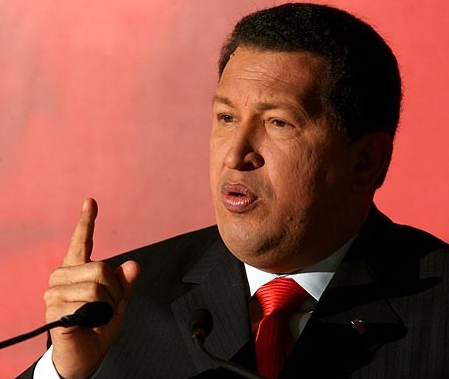
    Chavez, Hugo A great deal has been written over the past week about Venezuela's new patented drug policy.  Last Saturday, President Hugo Chavez (at right) announced that his government would "shake up" Venezuela's intellectual property laws, particularly with respect to patents on medicines.  As reported by Reuters and the Associated Press, Sr. Chavez drew a distinction between "a song [which] is intellectual property" and "an invention or scientific discovery [that] should be knowledge for the world, especially medicine."  In characteristically dramatic fashion, he went on to say "[t]hat a laboratory does not allow us to make a medicine because they have a patent, no, no, no."

    Saman, Eduardo The details and scope of the policy (besides a general intent to prevent foreign, predominantly Western, drug companies from enforcing patents in Venezuela) was not announced.  However, Commerce Minister Eduardo Saman (at left), formerly head of Venezuela's patent agency (SAPI), said that the revised policies "should be compatible with the international treaties that we have signed and respect and honor."  He justified the new policies by saying that "[p]atents have been a barrier to production, and we cannot allow them to be barriers to medicine, to life, to agriculture."

    A contrary view was voiced by Edgar Salas, president of the Venezuelan pharmaceutical business chamber, who predicted that preventing foreign pharmaceutical companies from enforcing patents in Venezuela would result in these companies refusing to import their drugs into the country.  For a country that imports most of its pharmaceuticals this could be a huge problem.  On the other hand, Venezuela's position as an oil producer gives it significant leverage in obtaining goods from abroad.  For example, in 2002, the U.S. alone exported $4.4 billion in goods to Venezuela and yet the country ran a trade surplus, exporting $15.1 billion (mostly from the sale of oil) to the U.S.

    Venezuela This latest move by Sr. Chavez is keeping with his anti-capitalist, anti-Western policies and rhetoric, and thus should come as no surprise.  The "international treaties" referenced by Sr. Saman include, of course, the Trade-related Aspects of Intellectual Property Rights (TRIPS) provisions of the General Agreement on Tariffs and Trade (GATT), and Venezuela's participation in the World Trade Organization (WTO), under the 1994 Marrakesh Agreement.  Venezuela was one of the earliest nations in the Organization, becoming a member on January 1, 1995.  Sr. Chavez has threatened to leave the Organization, accusing it of neocolonialism and imposing trading practices unfair to developing nations.  And a blanket ban on permitting or enforcing pharmaceutical patents would be a violation of TRIPS.

    But TRIPS in practice has not been the panacea for drug patents that its drafters might have intended (see "The Law of Unintended Consequences Arises in Applying TRIPS to Patented Drug Protection in Developing Countries"; "Worldwide Drug Pricing Regime in Chaos"; "More on the Global Drug Patenting Crisis").  This outcome is due in large part to WTO member countries taking advantage of treaty provisions that permit (or can be co-opted to permit) nationalistic interpretations like Sr. Chavez now proposes.  For example, TRIPS itself permits treaty signatory nations to include provisions for compulsory licenses in the face of extreme medical emergencies.  The WTO adopted the Doha Declaration of 2001 that has reduced the consequences for disrespecting foreign patent rights even further.  Specifically, the Declaration provides:

    Article 4.  The TRIPS Agreement does not and should not prevent Members from taking measures to protect public health. Accordingly, while reiterating our commitment to the TRIPS Agreement, we affirm that the Agreement can and should be interpreted and implemented in a manner supportive of WTO Members' right to protect public health and, in particular, to promote access to medicines for all.
        In this connection, we reaffirm the right of WTO Members to use, to the full, the provisions in the TRIPS Agreement, which provide flexibility for this purpose.

    Article 5.  Accordingly and in the light of paragraph 4 above, while maintaining our commitments in the TRIPS Agreement, we recognize that these flexibilities include:
        (a) In applying the customary rules of interpretation of public international law, each provision of the TRIPS Agreement shall be read in the light of the object and purpose of the Agreement as expressed, in particular, in its objectives and principles.
        (b) Each Member has the right to grant compulsory licenses and the freedom to determine the grounds upon which such licenses are granted.
        (c) Each Member has the right to determine what constitutes a national emergency or other circumstances of extreme urgency, it being understood that public health crises, including those relating to HIV/AIDS, tuberculosis, malaria and other epidemics, can represent a national emergency or other circumstances of extreme urgency.
        (d) The effect of the provisions in the TRIPS Agreement that are relevant to the exhaustion of intellectual property rights is to leave each Member free to establish its own regime for such exhaustion without challenge, subject to the MFN and national treatment provisions of Articles 3 and 4.

    Article 6.  We recognize that WTO Members with insufficient or no manufacturing capacities in the pharmaceutical sector could face difficulties in making effective use of compulsory licensing under the TRIPS Agreement. We instruct the Council for TRIPS to find an expeditious solution to this problem and to report to the General Council before the end of 2002.

    Several developing countries have used the compulsory licensing provisions of TRIPS as modified by the Doha Declaration to grant compulsory licenses for anti-AIDS drugs (see "The Law of Unintended Consequences Arises in Applying TRIPS to Patented Drug Protection in Developing Countries").  Thailand has gone even further, imposing compulsory licenses for drugs such as Plavix® that do not readily fall within the definition of drugs for treating a public health crisis or nat
    ional emergency (see "Thailand Continues Its Compulsory Licensing Practices").  So it is unlikely that Venezuela will be unable to fashion a justification for whatever policies it adopts that will permit Sr. Chavez to fulfill his commitment to abolish drug patents in his country while permitting Sr. Saman to maintain that those policies "respect and honor" the "international treaties that [Venezuela has] signed."

    Venezuela thus becomes the latest example of a developing country able to use the provisions of GATT and the auspices of the WTO to receive the benefits of reduced tariffs on their exports while avoiding the political repercussions of enforcing drug patents owned by foreign nationals.  Even without Sr. Chavez's anachronistically Marxist rhetoric, it is hard to fathom a political leader of a country like Venezuela staking political power on protecting foreign interests.  Patent protection in any country will be enforced only when such protection benefits the society itself, suggesting that Western patent holders would be better served to support local industries that could partner with them to make the case for patent rights with their governments (see "A Modest Proposal Regarding Drug Pricing in Developing Countries").  Sadly, with few exceptions, Western pharmaceutical companies have not availed themselves of such opportunities.  As a consequence, the political calculus strongly favors leaders like Sr. Chavez, and we can expect similar actions, with luck devoid of the florid rhetoric, from other developing countries until the situation changes.

    For information regarding this and other related topics, please see:

  •     By Donald Zuhn

    Oxford Gene Technology (OGT) Last month, the Federal Circuit affirmed the judgment of the District Court for the Central District of California granting Defendant-Appellee Oxford Gene Technology's motion to dismiss for lack of personal jurisdiction.  Oxford filed the motion to dismiss after Plaintiff-Appellant Autogenomics filed suit against Oxford seeking a declaratory judgment of invalidity, unenforceability, and non-infringement with respect to U.S. Patent No. 6,054,270.

    The '270 patent, which is owned by Oxford, relates to oligonucleotide microarrays for the analysis of polynucleotides.  Oxford is a British biotechnology company that is organized under the laws of England and Wales; which is not registered to do business in California; and which has no California facilities, assets, employees, or agents.  Autogenomics, meanwhile, is a biotechnology company that is organized under the laws of California, and which uses microarray technology in its business.

    Autogenomics In July 2007, Autogenomics filed a declaratory judgment action against Oxford asking the California District Court to find claims 9 and 10 of the '270 patent invalid or unenforceable, and not infringed.  In support of the District Court having personal jurisdiction over Oxford, Autogenomics alleged that Oxford had several contacts with California, including:

    • Licensing negotiations between the parties — In 2006, Oxford contacted Autogenomics regarding the '270 patent, and Autogenomics expressed an interest in licensing the patent.  Autogenomics, however, believed eleven references raised "serious issues with regard to novelty and obviousness."  Oxford asserted that the '270 patent was valid over the references, and two Oxford representatives subsequently traveled to California to meet with representatives of Autogenomics.  The parties were unable to agree on license terms.

    • Licenses — Oxford entered into non-exclusive licenses with about ten California companies.

    • Agilent agreement — Oxford and Agilent Technologies (a California company) entered into "a collaborative agreement giving [Oxford] access to Agilent's microarray platform, confirming [Oxford] as an Agilent Certified Service Provider, and appointing Agilent as an OEM supplier for [Oxford] designed microarrays."

    • Conferences — Oxford attended three conferences in California between 2003 and 2007.

    • Sales — Oxford sold 20 microarrays to a California company in April 2006.

    • Publication — Oxford published an application note, describing a microarray product, on the Nature.com website.

    Oxford responded to Autogenomics' suit by filing a motion to dismiss, contending that the District Court lacked general or specific personal jurisdiction over it.  The District Court granted Oxford's motion, ruling that it lacked general jurisdiction because Oxford's contacts with California were insufficient to be the equivalent of having a physical presence within the state, and that it lacked specific jurisdiction because the declaratory judgment action did not arise from or relate to most of the contacts alleged by Autogenomics.  The District Court also denied Autogenomics' request to conduct jurisdictional discovery.  Autogenomics appealed these determinations to the Federal Circuit.

    Federal Circuit Seal A divided panel, with Judge Moore writing for the majority, determined that the District Court had correctly ruled that it lacked general or specific personal jurisdiction over Oxford, and that the District Court did not abuse its discretion in denying jurisdictional discovery to Autogenomics.  With regard to general personal jurisdiction, the majority found that Oxford lacked the types of contacts with California that qualify as "continuous and systematic general business contacts."  In particular, the majority noted that Oxford has no actual physical presence or license to do business in California, and that it was not reasonable to infer, as Autogenomics had suggested, that Oxford's conference booths were, in effect, "mobile offices."  The Federal Circuit determined that "ultimately, [Oxford's participation in] four conferences over five years constitute only sporadic and insubstantial contacts."  Stating that "[a]ll of the contacts alleged by Autogenomics, even in combination, are insufficient evidence of continuous and systematic contacts," the majority concluded that the District Court lacked general personal jurisdiction over Oxford.

    As for specific personal jurisdiction, the majority began by discussing the Court's 2008 decision in Avocent Huntsville Corp. v. Aten Int'l Co., noting that:

    Avocent explained that the contacts material to the specific jurisdiction analysis in a declaratory judgment action are not just any activities related to the patent-at-issue.  Rather, the relevant activities are those that the defendant "purposefully directs . . . at the forum which relate in some material way to the enforcement or the defense of the patent."  Id. at 1336.  Thus, courts must examine the jurisdictional facts for conduct whereby the patentee "may be said to purposefully avail itself of the forum and to engage in activity that relates to the validity and enforceability of the patent."  Id.

    Thus, in accord with Avocent, "only enforcement or defense efforts related to the patent rather than the patentee's own commercialization efforts are to be considered for establishing specific personal jurisdiction in a declaratory judgment action against the patentee."  While the majority was also "concerned that foreign patentees like Oxford may engage in significant commercialization and licensing efforts in a state while benefiting from the shelter of the Avocent rule," the Court noted that it was "nonetheless bound by Avocent."  That being said, the majority observed that under 35 U.S.C. § 293, "[j]urisdiction over foreign patentees like Oxford continues to be available in the United States District Court for the District of Columbia."

    With respect to the facts of the instant case, the majority dis
    agreed with Autogenomics' contention that the Agilent agreement was sufficient to establish specific jurisdiction over Oxford, stating that "there is nothing in evidence, nor would it be a reasonable inference, to suggest that this agreement involves the '270 patent or is 'analogous to a grant of a patent license.'"  The Federal Circuit also concluded that Autogenomics' argument that Oxford had granted an exclusive license to Incyte Pharmaceutics Inc. (a California company), in view of the numerous non-exclusive licenses that Oxford had granted, "cannot be a reasonable inference."  The majority therefore determined that the District Court also lacked specific personal jurisdiction over Oxford.

    In the last portion of the opinion, the majority dispensed with Autogenomics' final argument:  that the District Court abused its discretion in denying Autogenomics's request for jurisdictional discovery.  The Federal Circuit noted that "[i]n this case, there is no denial of a motion for jurisdictional discovery for us to review because there was no formal motion for jurisdictional discovery."  The Court also noted that "Autogenomics did not make . . . a showing that further discovery would elucidate the facts necessary to prove that the court had personal jurisdiction," adding that "[o]nly now, on appeal, does Autogenomics explain how discovery could help establish the court's jurisdiction."  The majority concluded, therefore, that the District Court acted within its discretion by denying Autogenomics' request for jurisdictional discovery.

    Judge Newman Judge Newman (at left) begins her dissent by declaring that "[t]he Federal Circuit again restricts United States parties from access to our courts when a United States patent is owned by a foreign entity."  With respect to Oxford's contacts with California, Judge Newman noted that:

    Oxford owns several United States patents, including the patent that is the subject of this declaratory action, and is exercising its United States patent rights through approximately ten licensees in California.  Autogenomics states that Oxford has entered into a manufacturing venture with the California company Agilent, whereby Agilent serves as a California-based supplier of microarrays designed by Oxford.  Oxford's employees have personally exhibited the Oxford technology at trade shows in California and publicized the availability of licenses for Oxford's United States patents.  The record shows sale of Oxford microarray products to at least one customer in California.  Oxford employees traveled to California and negotiated with Autogenomics in that forum.  In addition, California is the primary site of Autogenomics' business, the forum in which the accused infringing activities are conducted, and in which Oxford's threatened enforcement of its patent would occur.

    Judge Newman also noted that "[n]o other forum has been asserted by Oxford to be more convenient; indeed, the entire relationship between Oxford and Autogenomics has been in the California forum, which is a primary locus of the biotechnology industry in which both parties are engaged."  With regard to the majority's reliance on Avocent (where Judge Newman also dissented) she stated that "if Avocent is read to bar this suit, it is in conflict with precedent of this court and the Supreme Court."  As for the majority's statement that Autogenomics could bring suit in the District of Columbia, Judge Newman stated that:

    It is not explained why a California plaintiff should have to resort to a distant forum, which is not alleged to have meaningful contacts with either party, to resolve a dispute that centers upon actions by both the plaintiff and the foreign patentee in the state of California.  I take note that Oxford has not suggested transfer to the District of Columbia; the Oxford position is that it cannot be sued.

    Autogenomics, Inc. v. Oxford Gene Technology Ltd. (Fed. Cir. 2009)
    Panel: Circuit Judges Newman and Moore and District Judge Gettleman
    Opinion by Circuit Judge Moore; dissenting opinion by Circuit Judge Newman
  •     By Suresh Pillai

    Caraco Motion for Summary Judgment in Prandin® Case Denied

    Novo Nordisk The U.S. District Court for the Eastern District of Michigan has denied a motion for summary judgment brought by Caraco Pharmaceutical Laboratories Ltd. and Sun Pharmaceutical Industries Ltd. (the majority shareholder of Caraco) in their patent suit with Novo Nordisk over Prandin®, a drug for the treatment of diabetes.  Novo Nordisk originally filed suit in 2005 following Caraco's ANDA filing with the U.S. Food and Drug Administration in which Caraco sought to market a generic version of Prandin®.  The patent-in-suit, U.S. Patent No. 6,677,358, covers a method for treating Type II diabetes using repaglinide in combination with metformin.  In 2007, following the filing of the suit, the FDA granted tentative approval to Caraco to manufacture and market a generic repaglinide product.  In 2008, however, Caraco submitted an amended ANDA in which, Novo claimed, Caraco stipulated to infringement of the '358 patent.

    Caraco Pharmaceutical Laboratories In December 2008, Caraco filed its motion for summary judgment, contending that an FDA ruling that Caraco need not reference the Novo patented repaglinide-metformin combination at launch effectively nullified Caraco's stipulation of infringement of the '358 patent.  While the District Court disagreed with Caraco's contention, the Court did not issue a written opinion.


    Injunction Granted in Crescendo Suit Against Ethicon

    Ethicon Endo The U.S. District Court for the Southern District of Ohio has granted a temporary injunction sought by Ethicon Endo-Surgery Inc. (a subsidiary of Johnson & Johnson) that prevents a former Ethicon employee from selling or licensing patent applications for ultrasonic surgical blade technology in the wake of a jury awarding the company $2.1 million in damages.  In the original suit, a jury found the employee and former inventor at Ethicon, Jean M. Beaupre, in breach of an invention assignment agreement entered into between the inventor and his former employer — Beaupre had assigned U.S. Patent Publication Nos. 2006/0100652 and 2007/0016236, and a provisional application ("Balanced ultrasonic curved blade") to Crescendo Technologies LLC.  Beaupre had worked for Ethicon for eight years prior to founding Crescendo.  The jury also found Crescendo liable for tortious interference.

    Although the jury awarded damages to Ethicon, it failed to determine which party owns the rights to the applications-in-suit.  The temporary injunction will remain in effect until the District Court has determined ownership.


    Summary Judgment Awarded in Sanofi-Aventis Eloxatin® Generic Suit

    Sandoz The U.S. District Court for the District of New Jersey has awarded summary judgment to generic drug drug manufacturers Sandoz, Inc., Mayne Pharma Inc., Teva Pharmaceutical Industries Ltd., and Hospira Inc. in their patent infringement dispute with Sanofi-Aventis US LLC over Eloxatin®, a colon cancer drug.  Sanofi originally filed suit in 2007, alleging that the generic drug companies had infringed U.S. Patent No. 5,338,874, Sanofi's patent covering HPLC-derived oxaliplatin, the active ingredient in Eloxitan® (see "Court Report," July 30, 2007).  Sanofi had licensed this patent to another plaintiff in the suit, Debiopharm SA.  Sanofi's suit followed Sandoz's ANDA filing with the FDA in which Sandoz sought to manufacture and market generic Eloxatin®.  Included in the ANDA was a Paragraph IV certification stating that both the '874 patent and another Sanofi patent, U.S. Patent No. 5,716,988, were invalid and noninfringed.  Sanofi then filed suit, disputing the claim, and the generic manufacturers filed their motion for summary judgment.

    Sanofi-Aventis_large The District Court concluded that the patents-in-suit were not infringed because the products made by the defendants were not derived from the method of production disclosed in the '874 patent.  However, the Court denied the defendants' motion for summary judgment of invalidity on the grounds that, in light of the noninfringement finding, such a determination would be moot.

  •     By Donald Zuhn

    Kappos, David Last Thursday, the White House announced that President Obama had selected David Kappos (at right), the Vice President and Assistant General Counsel of Intellectual Property Law at IBM, to head up the U.S. Patent and Trademark Office.  In the days since that announcement, a number of patent organizations and trade groups have released statements commenting on Mr. Kappos' nomination.  While many of these organizations ordinarily find it difficult to agree on almost any patent-related issue, they seem to have reached consensus on President Obama's selection — and the news is good for Mr. Kappos who, once confirmed, will take over as Undersecretary of Commerce for Intellectual Property and Director of the U.S. Patent and Trademark Office.

    Biotechnology Industry Organization (BIO) In a statement released last Friday, Biotechnology Industry Organization (BIO) President and CEO Jim Greenwood commended President Obama for "making a strong choice in his nomination of David Kappos," adding that the organization believed Mr. Kappos would "bring a thoughtful perspective to the Department of Commerce and the USPTO."  Mr. Greenwood noted that Mr. Kappos "has a long history of industry experience, providing a point of view and insights we have always thought to be highly valuable in this position."  Mr. Greenwood stated that BIO looked forward to working with Mr. Kappos in the coming years, and urged the Senate "to move quickly" to consider Mr. Kappos' nomination, since the Office "needs a confirmed leader as soon as possible."

    Coalition for Patent Fairness The Coalition for Patent Fairness, which has been at odds with BIO on a number of patent-related issues, released its own statement regarding the Kappos nomination on Friday.  The CPF applauded President Obama's selection of Kappos, contending that "Mr. Kappos has the background and experience needed to lead the U.S. Patent Office at a time when it faces significant operational challenges in an ever-evolving competitive global marketplace."  The CPF also stated that it looked forward to the opportunity to work with Mr. Kappos, concluding that the group "support[ed] President Obama's call for reforms to the US patent system that will spur innovation and job creation."

    IPO #2 The Intellectual Property Owners Association (IPO), where Mr. Kappos currently serves as Vice President of the Board of Directors (the second highest position in the association), issued a statement congratulating Mr. Kappos on his selection.  Praising the President for the nomination, IPO Executive Director Herb Wamsley stated that "Dave Kappos is exceptionally well qualified to lead the USPTO during this time of difficult challenges for the agency."

    Innovation Alliance The Innovation Alliance, a coalition of small and medium-sized technology companies, issued a press release congratulating Mr. Kappos on his nomination.  The group stated that it "look[ed] forward to working with [Mr. Kappos] in what will be a very difficult, but important effort to revitalize the PTO, which all agree is under funded and overburdened," taking the opportunity to request that Congress provide the Patent Office with the funds it needs "to upgrade its technology, improve the patent application process, and attract and retain professional talent."  The Innovation Alliance pledged to "work with Mr. Kappos, the Administration and Congress in achieving these goals, and making sure that our nation's strong patent protections continue to work for all sectors of the U.S. economy," and urged the Senate "to move forward with a speedy confirmation."

    Coalition for 21st Century Patent Reform The Coalition for 21st Century Patent Reform called Mr. Kappos' nomination "very welcome news for our Coalition members and all innovators,
    researchers and manufacturers."  In its statement, the group asserted that Mr. Kappos "will be an advocate for inventors and
    the protection of the nation's patents and advancements," adding that his appointment would also be "beneficial for the continued progress" of the Senate patent reform bill (S. 515).

  •     By Bradley Crawford

    EPO-EPC In the first post in this series, background information from Mr. Enrique Molina Galan's  presentation at BIO 2009 was reported.  The focus of this post is on the second part of his talk, where Mr. Molina Galan described the European Patent Office's role in fostering innovation.

    In his talk, Mr. Molina Galan noted the need for balancing the needs of innovators with those of the public, and the need to balance patent protection against disclosure.  In particular, he mentioned the incentive to innovate, the return on investment, and better market position on one hand are weighed against the sharing of knowledge, which can lead to "innovation leaps" in the other.  As he made clear, the key to ensure the right balance is for the European Patent Office to apply high standards, which is entirely consistent with the mission statement of the European Patent Office:

    As the Patent Office for Europe, we support innovation, competitiveness and economic growth across Europe through a commitment to high quality and efficient services delivered under the EPC.

    Quality can be fostered by the applicant via submission of an enabling disclosure, an undisputed inventive contribution, and claim scope that is commensurate with the contribution to the relevant art.  These will lead to the granting of a patent with a high presumption of validity.  Quality can be fostered by the European Patent Office via the use of highly skilled examiners, thorough and consistent procedures, comprehensive search documentation, and rigorous controls coupled with a commitment to improve.  Efficiency can be fostered by minimizing procedural delays, minimizing legal uncertainty as early as possible, and handing the ever increasing workload.

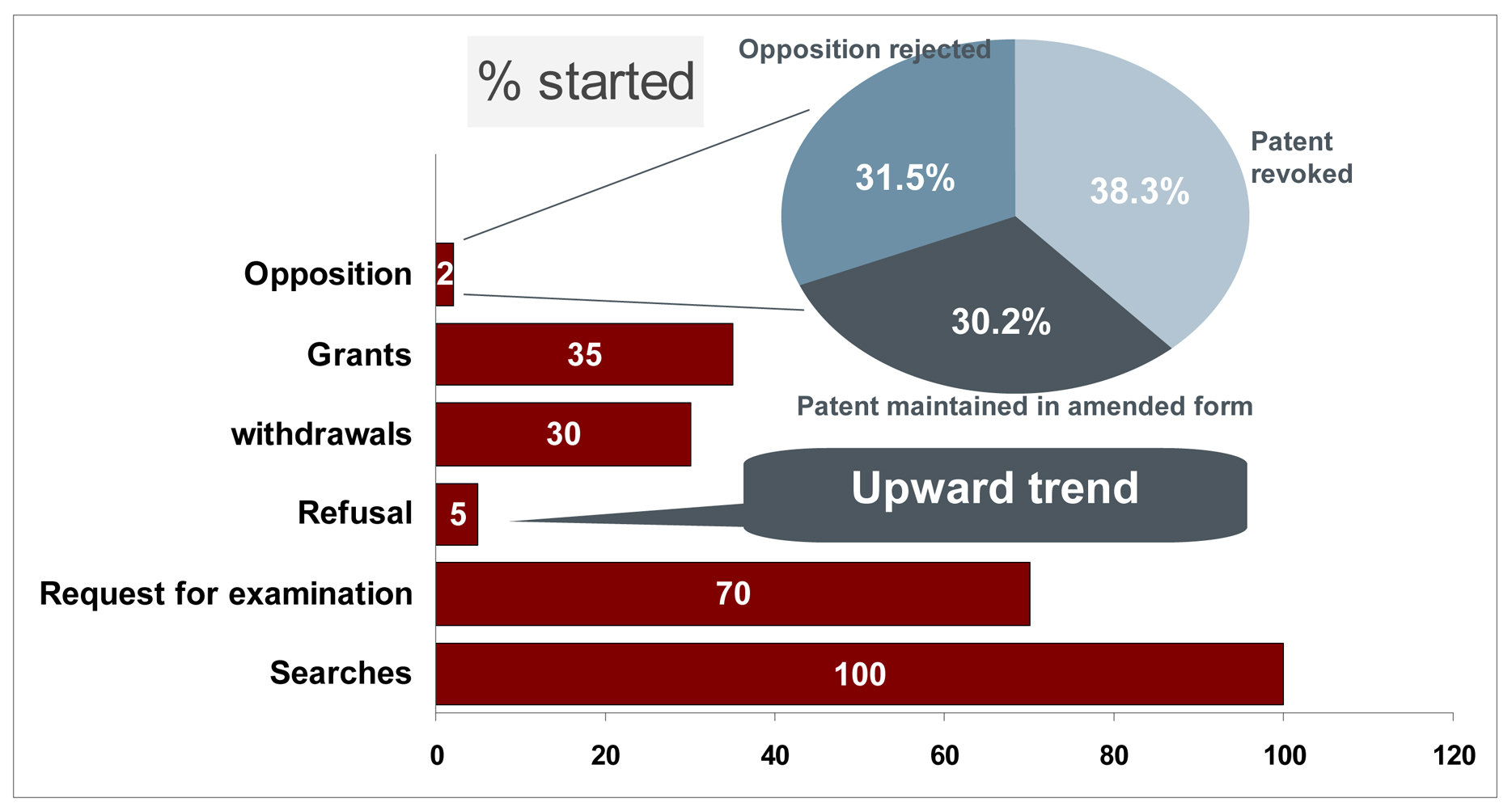
    After briefly discussing the European Patent Grant Procedure, a slide entitled "fate of the biotech applications from search to grant" was shown (slide shown below).  This slide shows that for every 100 biotech EP applications that were searched, about 70 proceeded to examination.  Of the 70 that were examined, 35 were granted, 30 were abandoned or withdrawn, and 5 were refused.  Mr. Molina Galan stated that this last number was showing a slight increase.  Two of the initial hundred applications were the subject of an opposition after grant.  The end results of the opposition were as follows:  about a third of the oppositions were rejected, about a third of the patents were revoked, and in about a third of the cases, the patent was maintained in amended form.

    Slide 16

    As mentioned above, the European Patent Office's workload has been increasing.  According to Mr. Molina Galan, the gap between the number of new applications and the number of finished applications is currently growing at a rate of 37,500 applications per year; it would take 750 examiners, working at full capacity to handle this work load.  Of course, each year, an additional 750 examiners would have to be hired in order to handle this ever increasing workload.

    In an effort to align patent quality standards to the needs of today's society, the European Patent Office has instituted a "Raising the Bar" campaign.  Legislative measures supporting this initiative and aimed at improving the quality of the incoming patent applications and streamlining the grant proceedings will take effect on April 1, 2010.  The key features of those amendments to the Implementing Regulations to the EPC are as follows.

    Early enforcement of the EPC Rules on the admissible number of independent claims per category:

    • When appropriate, the search can be restricted to one independent claim per category.
    • If a meaningful search is not possible, the applicant will be invited to clarify the subject matter to be searched.
    • Examination will be limited to the searched subject matter.
    • A response to the search opinion issued by the EPO will become mandatory.
    • Amendments and their basis in the application as filed shall be clearly identified.
    • Applicants will have fewer opportunities to amend the claims on their own initiative.  Further amendments with the consent of the examining division remain possible.
    • The sanction for not observing the respective time limits will, as a rule, be the deemed a withdrawal of the application.  The available remedy is further processing or, in a few cases, re-establishment of rights.

    The European Patent Office is also instituting a new rule regarding the deadline for filing a divisional application.  Under the current rules, a divisional may be filed at any time before the European patent is granted.  Under the new rules, all divisional applications must be filed either within a period of two years from the first communication by the examining division in respect of the earliest application for which such a communication has been issued or within two years of receiving a lack of unity objection.

    As previously mentioned, the new rules take effect on April 1, 2010.  However, the European Patent Office has yet to finalize its rules regarding the day to day implementation of the above rules.  In the next post in this series, possible results and consequences of the new rules will be discussed.

    Patent Docs thanks Mr. Molina Galan for his time, the comments that he provided regarding the above post, and for granting permission to make the slides from his BIO 2009 presentation publicly available.  To view the slides, click here.

    EPC States