• San Diego American Conference
    Institute (ACI) will be holding its Hatch-Waxman Boot Camp conference on May
    24-25, 2010 in San Diego, CA.  ACI
    faculty will help attendees:

    • Understand the
    interplay of the PTO and FDA in the patenting of drugs and biologics;
    • Learn about the
    essentials of the FDA approval process and its link to biopharmaceutical
    patents;
    • Develop an
    in-depth and practical knowledge of Hatch-Waxman protocols, including: Orange
    Book listings, bioequivalency, exclusivities, the 30-month stay, and the safe
    harbor;
    • Navigate the
    intricacies of patent term adjustment and patent term restoration;
    • Comprehend how
    the introduction of biosimilars will change industry dynamics; and
    • Recognize how
    pre-commercialization concerns relative to CMS approval and Medicare/Medicaid
    formulary selection are influencing the patenting and approval of drugs and
    biological products.

    In particular,
    ACI's faculty will offer presentations on the following topics:

    Brochure • Key agencies overview:
     Understanding the jurisdiction and
    interplay of the FDA and PTO in the patenting of drugs and biologics;
    • Identifying and
    comprehending pre-commercialization concerns relative to small molecules and biologics;
    • Exploring the
    link between the FDA approval process and the patenting of drugs and biologics;
    • Patent and IP
    overview for drugs and biologics:  Hatch-Waxman,
    trade dress, and more;
    • How the dynamics
    of follow-on biologics will change the Hatch-Waxman landscape;
    • Orange Book
    listings, de–listings and related challenges;
    • Bioequivalence
    and the "same active ingredient" vis-a-vis patentability;
    • An in-depth look
    at 180-day exclusivity;
    • Comprehending the
    intricacies of non-patent/regulatory exclusivity;
    • Assessing patent
    protections afforded under the safe harbor; and
    • Examining
    pharmaceutical patent extensions:  Patent
    Term Adjustment and Patent Term Restoration.

    A post-conference
    workshop, entitled "Follow–On Biologics: The Master Class," will be
    offered from 9:00 am to 12:30 pm on May 26, 2010.

    A complete brochure
    for this conference, including an agenda, list of speakers, and registration
    form can be obtained here.

    ACI - American Conference Institute The registration
    fee for this conference is $2,195 (conference alone) or $2,795 (conference and
    workshop).  Those registering by April
    23, 2010 will receive a $100 discount, and those registering by March 26, 2010
    will receive a $300 discount. 
    Those interested in registering for the conference can do so here,
    by calling 1-888-224-2480, or by faxing a registration form to 1-877-927-1563.

    Patent Docs is a media partner of ACI's Hatch-Waxman Boot Camp conference.

  • Strafford #1 Strafford
    will be offering a webinar entitled "Obviousness Standard for Patents
    Post-KSR: Strategies to Withstand USPTO Obviousness Rejections and
    Attacks on Patent Validity" on April 14, 2010 from 1:00 – 2:30 PM (EST).  Ronald Cahill of Nutter McClennen &
    Fish, Karen Canaan of CanaanLaw; and Kevin Meek of Baker Botts, will review how
    the obviousness standard has been applied by the court and the USPTO since the
    Supreme Court's decision in KSR v.
    Teleflex
    , and outline best practices for patent counsel to avoid
    obviousness rejections and defend against attacks on patent validity.  The panel will review the following
    questions:


    How have the Graham v. John Deere
    factors been applied following the KSR
    decision?

    Under what circumstances has the obvious-to-try standard supported a finding of
    obviousness — and when has it worked to nullify such a finding?

    What are the steps that patent applicants can take to stand up to obviousness
    rejections?

    The
    registration fee for the webinar is $297 ($362 for registration and CLE
    processing). 
    Those registering by March 19, 2010 will
    receive a $50 discount
    . 
    Those interested in registering for the webinar, can do so here.

  •     By Suresh Pillai

    DC District Court Remands Pfizer PTA Suit to USPTO

    Pfizer Last week, the U.S. District Court for the District of Columbia remanded
    Pfizer Inc.'s challenge of the USPTO's calculation of patent term adjustment
    (PTA) back to the U.S. Patent and Trademark Office.  This action by
    the District Court, following the Federal Circuit's decision in Wyeth v. Kappos, suggests that the agency will now be responsible
    for reconsideration of all patent term adjustments requested for patents that
    issued prior to March 2.  Pfizer
    had originally filed suit in December seeking to have the District Court change
    the patent term by increasing the USPTO's calculated PTA from 100 days to 207
    days for U.S. Patent No. 7,544,362.  Although Pfizer had previously unsuccessfully petitioned the USPTO to
    reconsider its PTA determination, that petition was considered under the USPTO's pre-Wyeth formula for calculations.

    USPTO Seal In the wake of the Wyeth decision, the
    USPTO has established an interim procedure to recalculate PTA in accordance with the
    Federal Circuit's decision in Wyeth.  As part
    of the implementation of this interim procedure, the USPTO announced that for all patents that issued before March 2 (but after August 1, 2009), the agency will process
    recalculation requests for no fee (see "USPTO Announces Interim Procedure for Requesting PTA Recalculations")
    .

    Read the Joint Motion to Remand here and the District Court's Order here.


    Settlement in ADHD Patent Infringement Suits Announced

    Celgene The U.S. District Court for the District of New
    Jersey has signed off on orders to stay patent infringement litigation among
    plaintiffs Celgene Corp. and Novartis AG against defendants KV Pharmaceutical Co.
    and IntelliPharmaCeutics Corp. over defendants' alleged infringement of plaintiffs' patents covering
    treatments for attention deficit hyperactivity disorder (ADHD).  Celgene originally filed suit against
    KV in 2007 after KV's filing of an Abbreviated New Drug Application (ANDA) with the
    FDA in which KV sought regulatory approval to market and manufacture a generic
    version of Celgene's blockbuster drug, Ritalin® (see "Court Report,"
    October 14, 2007).  In its complaint, Celgene alleged
    that KV's proposed generic infringed two Celgene patents, U.S. Patent Nos.
    5,837,284 and 6,635,284.

    Novartis Celgene also filed a concurrent
    complaint with Novartis, Celgene's exclusive licensee, against
    IntelliPharmaCeutics over IntelliPharmaCeutics' efforts to market a generic
    version of Focalin® XR (see "Court Report," October 14, 2007).  Celgene and Novartis alleged that, in
    addition to the patents-in-suit in the KV litigation, IntelliPharmaCeutics
    infringed U.S. Patent Nos. 5,908,850,
    6,355,656,
    and 6,528,530.  In both cases, the defendants
    filed counterclaims alleging that all patents-in-suit were invalid and
    unenforceable.  Terms of the
    settlement have not been disclosed.

    Read the District Court's Order here and Court's Order and Stipulation here.


    Sanofi/Sun Deal over Generic Eloxatin® Deemed
    Enforceable

    Sanofi-Aventis_large The U.S. District Court for the District of New
    Jersey has ruled that Sanofi-Aventis' agreement with Sun Pharmaceutical Industries Ltd. resolving an
    ongoing patent dispute over the colon cancer drug Eloxatin® was enforceable
    in spite of Sanofi's efforts to have the District Court declare the contrary.  The agreement puts an end to litigation
    between the two companies over Sun's alleged infringement of Sanofi's HPLC
    method of synthesizing optically pure oxaliplatin (covered by U.S. Patent No.
    5,338,874,
    the active ingredient in Eloxatin® (see "Court Report," July 30,
    2007).  The parties had first entered into a
    letter of intent in January 2009, with Sanofi confirming on June 16 that Sun
    had fully executed Sun's portion of the written settlement agreement.  Sanofi, however, failed to obtain the
    remaining 20% of signatures needed to complete the agreement.  The District Court determined that
    Sanofi's actions were sufficient to render the agreement binding
    on both parties (see "Biotech/Pharma Docket," October 7, 2009).

    Sun Pharma Sanofi's efforts to negate the
    agreement came on the heels of the Court's granting of summary judgment to four
    other parties (Sandoz Inc.,
    Mayne Pharma Inc.,
    Hospira Inc.,
    and Teva Pharmaceutical Industries Ltd.),
    having concluded that the parties all used methods for obtaining purification
    of oxaliplatin that differed from that disclosed in the '874 patent.  The Court concluded that because these
    resolutions reduced the value of Sanofi's settlement agreement with Sun, Sanofi
    neglected to turn over a signed copy.  However, because all essential terms of the agreement were set forth in
    the original January 2009 letter of intent and term sheet, the Court concluded
    that the contract was still enforceable.

    Read the District Court's Opinion here.

  •     By
    Donald Zuhn

    Human Embryonic Stem Cell (Wikipedia Commons) On
    Tuesday, Representative Diana DeGette (D-CO) introduced legislation (H.R. 4808)
    that would amend the Public Health Service Act to provide for human embryonic
    stem cell research.  H.R. 4808
    would codify President Obama's Executive Order 13505, which permitted federal
    funding of research conducted with human embryonic stem cell lines.  It was therefore fitting that the bill
    was introduced on the one-year anniversary of the President's reversal of
    limits imposed by the Bush Administration on embryonic stem cell research (see "President Obama to Lift Stem
    Cell Limits on Monday
    " and "President Obama Reaffirms Faith in Science").

    House of Representatives Seal Rep.
    DeGette and bill co-sponsor Rep. Michael Castle (R-DE), who joined the
    President for last year's announcement concerning the stem cell Executive Order,
    introduced two stem cell bills (H.R. 872
    and H.R. 873)
    in the House last year.  While the
    text of the new bill has not yet been made available, both Rep. DeGette and Rep. Castle issued
    press releases regarding the legislation.

    DeGette, Diana In
    Rep. DeGette's press release,
    the Congresswoman said the Stem Cell Research Advancement Act would
    "ensure a lasting ethical framework overseeing stem cell research at the
    National Institutes of Health." 
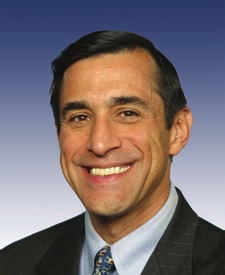
    Rep. DeGette (at right) noted that since President Obama issued his Executive Order,
    the NIH had approved 43 stem cell lines. 
    According to the Congresswoman's press release, H.R. 4808 would provide strong
    ethical requirements for embryonic stem cell research, require the NIH to
    maintain guidelines on all human stem cell research and review those guidelines
    at least every three years, ban the use of federal funding for human cloning
    under the NIH guidelines, and require a biennial report to Congress on stem cell
    research.

    Castle, Michael In his own press release, Rep.
    Castle (at left) stated that he "continue[s] to share in the view of so many
    scientists that stem cell research holds great promise for alleviating the
    suffering of the 100 million American patients living with devastating diseases
    for which there are no good treatments or cures."  While noting that "[t]he
    President's Executive Order lifted restrictions that allowed important research
    to move forward," Rep. Castle contended that "Congress must act to
    ensure that an over-arching ethical framework is signed into law."

    Other
    co-sponsors of the bill include Rep. Tammy Baldwin (D-WI), Lois Capps (D-CA),
    Russ Carnahan (D-MO), Charles Dent (R-PA), Gene Green (D-TX), Mark Kirk (R-IL),
    James Langevin (D-RI), and Ed Perlmutter (D-CO).  On Wednesday, H.R. 4808 was referred to the House Committee
    on Energy and Commerce, where Rep. DeGette is the Vice Chair and Rep. Baldwin,
    Capps, and Green are members.

  •     By
    Donald Zuhn

    Senate Seal On
    Tuesday, Senator Mary Landrieu (D-LA) introduced legislation (S. 3089) that would
    require the Office of Advocacy of the Small Business
    Administration (SBA) to conduct a study and report on the
    effects of changes to U.S. patent law that would result from enactment of the
    Patent Reform Act of 2009.  In
    particular, Senator Landrieu's bill would require the Chief Counsel for
    Advocacy of the SBA to conduct a study of the effects on small business
    concerns of changing from a first-to-invent to a first-to-file invention
    priority system, including how the change would affect the ability of small
    business concerns to obtain patents and the costs and benefits of the change to
    small business concerns.

    Landrieu, Mary When
    introducing the bill, Senator Landrieu (at left) stated that as Chair of the Senate
    Committee on Small Business and Entrepreneurship, she wanted "to ensure that Congress'
    reform [of the U.S. patent system] will create a patent regime that will not
    unduly burden small businesses and independent inventors, but instead, enhance
    their success as innovators in the U.S. economy."  Noting that "[s]mall businesses
    represent 99.7 percent of all employers, employing 1/2 of the U.S. labor
    force," Senator Landrieu declared that "[a]t a time when our Nation's
    economy is under stress, we need the help of small businesses in creating new
    jobs and economic opportunities." 
    She contended that "[o]ne measurable way of tracking the rate of
    small business innovation in the U.S. is by analyzing patent statistics,"
    and pointed out that "small businesses in the technology sector produce 13
    times more patents per employee than large businesses."  As a result of the importance of
    patents to small businesses, and the importance of small businesses to the American economy,
    the Senator introduced S. 3089 as a way "to properly track and understand
    how changes to the U.S. patent system will impact our small innovators."

    After
    being introduced, the bill was referred to the Committee on Small Business and
    Entrepreneurship.  The text of the
    bill as introduced reads as follows:

    SECTION 1. STUDY AND REPORT OF PATENT LAW
    CHANGES.

        (a)
    Definitions.–In this section–
            (1)
    the term "Chief Counsel'" means the Chief Counsel for Advocacy of the
    Small Business Administration; and
            (2)
    the term "small business concern'' has the meaning given that term under
    section 3 of the Small Business Act (15 U.S.C. 632).
        (b)
    Study.
            (1)
    IN GENERAL.–The Chief Counsel, in
    consultation with the Director of the United States Patent and Trademark Office,
    shall conduct a study of the effects of changing from a first-to-invent to a
    first-to-file invention priority system under patent law under title 35 of the
    United States Code.
            (2)
    AREAS OF STUDY.–The study conducted
    under paragraph (1) shall include examination of the effects of changing from a
    first-to-invent to a first-to-file invention priority system, including
    examining–
                (A)
    how the change would affect the ability of small business concerns to obtain
    patents;
                (B)
    whether the change would create or exacerbate any disadvantage for applicants
    for patents that are small business concerns relative to applicants for patents
    that are not small business concerns; and
                (C)
    the costs and benefits to small business concerns of the change.
        (c)
    Report.–Not later than 18 months
    after the date of enactment of this Act, the Chief Counsel shall submit to the
    Committee on Small Business and Entrepreneurship and the Committee on the
    Judiciary of the Senate and the Committee on Small Business and the Committee
    on the Judiciary of the House of Representatives a report regarding the results
    of the study under subsection (b).

    Patent
    Docs
    thanks David Boundy
    for alerting us to Senator Landrieu's new bill.

  •     By
    Donald Zuhn

    AUTM Last
    month, the Association of University Technology Managers (AUTM) released its U.S. licensing survey for
    FY2008.  According to a GenomeWeb Daily News report,
    a majority of the academic and research institutions that answered the survey
    indicated that they filed more patent applications and were involved in more
    start-ups during the fiscal year ending June 30, 2008.  However, survey respondents also indicated that they secured
    fewer patents, entered into fewer licensing agreements, and saw the
    introduction of fewer new products during the survey period.

    With
    respect to application filings, the survey showed that respondents disclosed
    20,115 inventions in FY2008, which constituted a more than 1% increase from the
    19,827 inventions disclosed in FY2007, and a more than 6% increase from the
    18,874 inventions disclosed in FY2006. 
    Start-ups by survey respondents were also up, albeit slightly, from
    3,381 in FY2007 to 3,388 in FY2008.

    As
    for patent grants, the survey showed that the number of patents issued to
    survey respondents dropped from 3,622 in FY2007 to 3,280 in FY2008 — a 9%
    decline.  (With respect to the AUTM survey, the high water mark for issued
    patents came in FY2003, when respondents secured 3,933 patents.)  The most recent survey also showed a 9% drop
    in new products introduced, down from 686 in FY2007 to 648 in FY2008, and a 5%
    decline in licenses, down from 4,354 in FY2007 to 4,144 in FY2008.

    The
    AUTM FY2008 U.S. Licensing Survey can be obtained here
    (at a cost of $60).

  •     By Juan Serrano —

    Back in 2003, Mexico enacted linkage regulations to avoid the granting of marketing authorizations in violation of patent rights.  The system created by these regulations is far less elaborate than the one set forth by the Hatch-Waxman act in the U.S., as there is no extension/term restoration, and there is no possibility for Paragraph IV-type applications.

    Mexican Patent Office - Instituto Mexicano de la Propiedad Industrial This system was intended to be simple:  two provisions were added to the health and IP law regulations establishing that the Mexican Patent Office (IMPI) is bound to publish a specific gazette every six months, listing those patents in force that cover allopathic drugs.  The regulatory authority (COFEPRIS) has to observe the patents listed in this gazette, request information from IMPI if necessary, and deny applications for marketing authorizations which would invade patent rights.

    COFEPRIS Nevertheless, controversy arose from the moment the provisions were enacted.  IMPI immediately stated that the linkage benefit would only be applicable to patents covering active ingredients per se, and therefore formulation patents were not to be listed nor observed by COFEPRIS.  Thus, the first gazette was published including only active ingredient patents.

    R&D Pharma companies decided to challenge this criteria through individual constitutional actions before Mexican District Courts, arguing that a correct interpretation of linkage provisions should cause for all pharmaceutical product patents to be published.  Most courts agreed on this, resulting in over 40 decisions in favor of patent holders over a period of six years.  The vast majority of these cases were handled by the Mexican IP Firm Olivares & Cia.

    As two Circuit Courts issued opposing decisions, indicating that the linkage system was indeed limited only to active ingredient patents, the case was brought to the attention of the Mexican Supreme Court, which recently made its decision public.

    Mexico Seal In a closely contested 3-2 decision, the Supreme Court determined that product patents, including those covering pharmaceutical formulations are to be included in the Gazette.  The Court also made reference to the co-related obligation by COFEPRIS to observe these patents.

    Even though this decision is only mandatory for Courts, and not for administrative authorities, we expect that both IMPI and COFEPRIS will observe it, which is a step in the right direction for a strong IP system in Mexico.

    Additional information regarding this topic can be obtained here.

    Juan Serrano is a Mexican Attorney with a Master of Laws Degree from the University of Toronto.  He can be contacted at jls@olivares.com.mx.

  •     By Donald Zuhn

    Senate Seal On
    February 25th, Senate Judiciary Committee Chairman Patrick Leahy (D-VT)
    announced that the Committee had reached a "tentative agreement in
    principle" regarding patent reform legislation (see "Chairman Leahy Announces 'Tentative Agreement in
    Principle' on Patent Reform Bill
    ").  Chairman Leahy noted that the Committee
    would release details regarding the bill "in the coming days" and
    after consultation with House legislators.  Last week, the Chairman fulfilled that pledge by unveiling a
    Manager's Amendment to the Committee's bill (S. 515).

    In
    a press release
    posted on Chairman Leahy's website, the Senator noted that "[w]ith this
    agreement, we are closer than ever to advancing patent reform legislation
    through the Senate."  The
    Manager's Amendment was the product of nearly eleven months of negotiation by Chairman
    Leahy and Senators Orrin Hatch (R-UT), Jeff Sessions (R-AL), Chuck Schumer
    (D-NY), Jon Kyl (R-AZ), and Ted Kaufman (D-DE).

    While
    acknowledging that the agreement "may not be everything that everyone
    wants," Chairman Leahy said the bill still "makes important reforms
    to the outdated patent system."  He
    hoped that Senate leaders would "soon schedule floor time for this
    important legislation." 
    Senator Sessions urged the Senate "to consider and act on this
    legislation."  Observing that "[t]his
    bill doesn't include all the changes I originally sought," Senator Hatch
    stated that Congress still needed to "come together to reform our patent
    system."

    According
    to the press release, the Manager's Amendment includes changes to first-window
    post-grant review, inter partes
    review, willfulness, interlocutory appeals, Patent and Trademark Office
    funding, and supplemental examinations, while retaining the following previously
    negotiated provisions:

    (1) the transition to a
    first-inventor-to-file system; (2) important changes to improve patent quality,
    including by allowing third parties to comment on pending patent applications;
    (3) a new, first-window post-grant review proceeding to weed out patents that
    should not have issued; (4) the gatekeeper compromise on damages; (5) the
    compromise on venue; (6) fee-setting authority for the PTO to address its back-log
    problem; (7) amendments to best mode; (8) the new district court pilot program;
    and (9) increased incentives for government laboratories to commercialize
    inventions.

    With
    respect to the changes to the bill since it was reported out of Committee last
    April (see "Senate 'Patent
    Reform' Bill (S. 515) Voted out of Judiciary Committee
    "),
    the release lists the following amendments:

    First-window post-grant review:  Shortens the window from 12 months to 9 months, and raises
    the threshold for instituting a proceeding to a showing that it is "more
    likely than not" that at least one claim is unpatentable.

    Inter partes review:  (1)
    Slightly raises the threshold for instituting an IPR to a "reasonable
    likelihood" that the challenger would prevail in invalidating a claim of
    the patent; (2) creates additional safeguards to prevent a challenger from
    using the administrative process to harass patent owners; and (3) inserts "reasonably
    could have raised" estoppel, preventing a challenger from raising in court
    an argument that reasonably could have been raised during an inter partes
    review that the challenger instituted.

    Willfulness:  Codifies the recent
    case law on willfulness, which requires willfulness to be demonstrated by clear
    and convincing evidence that the infringer acted with objective recklessness,
    and adds additional substantive and procedural safeguards for alleged
    infringers, including (1) requiring willfulness to be pled with particularity;
    (2) preventing mere knowledge of the patent to support a finding of
    willfulness; (3) requiring specificity in pre-suit notifications;  (4) upon motion, prohibiting increasing
    damages where there is a determination that a "close case" on
    infringement, validity or enforceability exists; (5) permitting a party to
    request the damages and willfulness phases be sequenced to occur after the
    infringement stage; and (6) failing to obtain advice of counsel may not be used
    to show willfulness or inducement.

    Interlocutory appeals: 
    Removes the provision that would have required the Federal Circuit to
    accept interlocutory appeals of claim construction determinations.

    PTO Funding:  Requires that
    the PTO to reduce fees by 50% for small entities and by 75% for the new
    classification of "micro-entities" created by the bill.

    Supplemental Examinations:  Permits
    a patent holder to provide additional, potentially material prior art regarding
    the patent to the PTO.  If the PTO
    considers the information and determines it has no effect on patentability,
    that additional information cannot serve as the basis for an inequitable
    conduct claim later in court.  The
    information must be presented to the PTO and any reexamination must be completed
    prior to litigation.

    Biotechnology Industry Organization (BIO) In
    a statement
    issued by the Biotechnology Industry Organization (BIO), BIO President and CEO
    Jim Greenwood said "[t]he new manager's amendment contains many positive
    changes to the underlying patent reform legislation reported out of the Senate
    Judiciary Committee last April, which BIO supported."  Mr. Greenwood added that "the
    latest amendment makes several important and well-crafted improvements to the
    overall bill," and "represents a significant step forward towards
    meaningful patent reform that will help sustain America's global leadership in
    innovation and spur the creation of high-wage, high-value jobs in our nation's
    innovation economy."

    AIPLA The
    American Intellectual Property Law Association (AIPLA) released a statement on
    Friday in which the group supported the Senate bill, calling it "a
    carefully crafted compromise." 
    The AIPLA also stated that "[t]he bill is a significant step forward
    in improving U.S. patent law," adding that "[m]any of its provisions,
    including the adoption of a first-inventor-to-file system and the expansion of
    post-grant review options, will aid in strengthening the system as a
    whole."  The AIPLA was
    particularly pleased with the Committee's decision to "maintain the
    constructive judicial gatekeeper function for determining royalty damages,
    incorporate more definite standards for finding willful infringement, and aid
    in determining appropriate venue in patent litigation."  AIPLA Executive Director Q. Todd
    Dickinson said the bill "maintains a balanced, carefully crafted
    compromise recognizing the divergent interests of the U.S. patent
    community."

    Innovation Alliance The
    Innovation Alliance, a coalition of small and medium-sized technology
    companies, issued a press release
    providing the text of a
    letter the group sent to Chairman Leahy and Senator
    Sessions, the Committee's Ranking Member. 
    In the letter, the coalition stated that "[t]he legislation as
    originally proposed included elements that would benefit only a portion of the
    U.S. patent community and harm much of the rest, and it did not include other
    elements that would benefit the system as a whole."  The group also contended that "a
    series of decisions from the U.S. Supreme Court and the Court of Appeals for
    the Federal Circuit has addressed virtually all of the substantive issues that
    originally prompted calls for patent legislation, including remedies, venue,
    and patentability standards." 
    However, the group concluded that "[t]he manager's amendment to S.
    515 as reported by the Judiciary Committee (GRA10134) . . . addresses much of
    what we believe to be the most problematic provisions."  According to the group's letter, the
    Manager's Amendment incorporates several important changes to the post-grant
    review provisions, including:

    • Precluding validity challenges in
    court on any grounds that were raised or that reasonably could have been raised
    during a prior inter partes review
    before the U.S. Patent and Trademark Office;

    Subjecting both inter partes review
    and post-grant review challenges to a heightened threshold showing;

    Clearly laying the burden of proof that a patent is invalid on the challenger
    in any inter partes review or
    post-grant review, correctly adopting the presumption that a patent granted by
    the USPTO is valid; and

    Imposing a deadline on inter partes
    review and post-grant review proceedings, mandating that they be completed
    within a one-year deadline, subject to an extension of no more than six months.

    The
    coalition contends that "[t]hese changes should help to minimize the
    potential for repeated and abusive challenges to the validity of patents before
    both the USPTO and U.S. courts as a means to stifle competition from
    competitors and smaller innovative entities that are so crucial to the future
    of our nation's economy."  As
    a result of the above changes, and the Senate Judiciary Committee's decision to retain the gatekeeper
    damages provision, the Innovation Alliance noted that it would "not oppose
    the passage in this Congress of the manager's amendment announced [March 4]
    (GRA10134)."

  •     By Kevin E. Noonan

    New York Times Policy arguments based solely on outcome rather
    than process are rarely effective when put into practice.  This is because the desired benefits of
    the outcome blind the policymaker to the question of whether the desired outcome
    can be achieved without considering the effects (intended or otherwise) by the
    process.  This effect can be seen,
    for example, in the Federal Trade Commission's crusade to ban "reverse
    payment"-containing settlements of ANDA litigation.  The desired outcome is cheaper drug
    prices as soon as possible.  However, against the "per se" illegal stance of the FTC,
    several regional Courts of Appeal, as well as the Federal Circuit, have
    assessed the reasonableness of such settlements and found instances where such
    agreements are, and are not, anticompetitive — something an outright ban cannot
    accommodate.  Indeed, according to
    some of these analyses, generic drug entry would be delayed, and unnecessary
    drug costs incurred, by the ban advocated by the FTC.

    The same type of goal-oriented thinking is
    evidenced in an Op-Ed piece (where else?) in The New York Times ("Biologics Boondoggle").  (The Times has previously voiced its
    objections to the length of the data exclusivity period; see "Follow-on Biologics News Briefs – No. 11"
    ).  Today's piece was written by Anthony D.
    So, director of the Program on Global Health and Technology Access at Duke
    University, and Samuel L. Katz, a professor and chairman emeritus of Duke's Pediatrics
    department.  Their goal, like the
    FTC's, is to hasten the availability of generic drugs, in their case biologic
    drugs, to increase patient access and reduce costs.  And, like the FTC, they have a "simple" solution —
    limit the data exclusivity period of biologic drugs to 5 years, the same period
    "enjoyed" by conventional, small molecule drugs.  But this position ignores most of the
    evidence that this is not a sufficient period to maintain innovation in
    biologic drug development, and reduces to greed (never expressly stated) the
    motivations of the biotechnology industry in advocating for the 12-year period
    contained in both the House and Senate versions of the healthcare reform bill.

    The position also ignores the evidence, ironically
    in a peer-reviewed scientific paper (not an op-ed piece) by their colleague,
    Professor Henry Grabowski, that the "proper" data exclusivity term is
    between 14 and 17 years (see "Professor Grabowski's Economic Analysis of data Exclusivity for Follow-on Biologic Drugs")
    , and that the 12-year period is a compromise from the
    term that the data indicates is necessary.  It also ignores the current situation, where the data
    exclusivity period is unlimited since there are no follow-on biologic
    provisions under current U.S. law.  Also ignored is the reality that the data exclusivity period is one of
    the few provisions of the two versions of the healthcare bill that are in
    agreement (a fault shared with
    President Obama; see
    "Snatching
    Defeat from the Jaws of Victory?
    "
    ), or that the term could be easily reduced if it turns out to
    be longer than necessary.

    Further, unlike other entrants in this debate (even
    the FTC), the article contains no compelling economic arguments.  Besides bemoaning the high costs of
    biologic drugs, the only mention in the piece about the economics of biologic
    drugs, generic or otherwise, is the assertion that biologic drugs cost about
    the same to bring to market as conventional drugs (without any citation to the
    basis for this statement other than "according to studies cited by the pharmaceutical
    industry's own trade association").  There is also reference to
    the high prices of these drugs, such as Herceptin® for breast cancer, Humira®
    for Crohn's disease, and Cerezyme® for Gaucher's disease.  The prices are high, but these drugs
    are used to treat life-threatening illnesses (in the Gaucher's disease example,
    a lethal childhood disease); while there may be a debate to be had on whether
    our society can afford to treat these diseases (or ethically afford not to),
    their cost is not the best way to frame the debate (and, according to the FTC's
    report, the savings achieved by follow-on biologic drugs won't be that
    significant anyway, reducing the costs by no more than 30%, in contrast to the
    80-90% reductions seen with conventional drugs; see "No One Seems Happy with Follow-on Biologics According to the FTC")
    .

    Also not ignored are allegations about excessive "monopoly
    protection" (using a buzzword that always signals an intent to inflame
    rather than illuminate), or that biologic drug makers can extend their "monopoly"
    by making minor changes in the drugs (which would not preclude the generic
    biologic drug maker from using the innovator's data to obtain approval for the
    original version of the drug), or that the 12-year data exclusivity period for
    biologics will be used to bootstrap a longer data exclusivity period for conventional
    drugs (again, with no attribution except a statement that "GlaxoSmithKline
    has already called for 14 years of exclusivity for conventional drugs";
    regardless of anything GSK might wish, changing the data exclusivity period for
    conventional drugs is not part of any follow-on biologics legislation
    introduced either as stand-alone legislation (H.R. 1427 or 1548 or S. 726 ) or
    as part of the healthcare bill (H.R. 3590)).  As such, the suggestion is an irrelevancy, except to once
    again increase the sense of "urgency" the writers seem to want to
    engender to provoke the public to adopt their position.

    That position is clearly expressed in the
    last paragraph of their piece:

    Congress should allow biologics no more
    than five years of protection.  That would provide drug makers plenty of
    incentive for innovation, and still protect consumers from the high prices that
    extended monopolies allow.  Striking the right balance will ensure that
    Americans can afford the most effective medicines available.

    Providing cheaper drugs is an admirable goal, for
    many reasons — improved access to these drugs, sound economics, or just plain
    thrift.  But cheaper drugs come
    with a price in the real world, and part of that price is to make drug
    development less attractive for investment and investors.  That may sound cold-blooded, but anyone
    who has a 401k account wants her investments to be profitable, so the public
    should understand the need for some assurance of a return on investment.  The current economic downturn cannot
    blind us to the folly of killing the golden goose of biologic drug development,
    and nothing will cook that goose more quickly and more certainly than creating
    a climate inimical to investment in these drugs.  That isn't a goal anyone wants.

  •     By
    Sarah Fendrick

    USPTO Seal In
    order to assess the burden of patent-related paperwork, the U.S. Patent and Trademark Office has retained ICF
    International (ICF) to conduct an independent study.  As described in a notice in the Federal Regster (75 Fed. Reg. 8649), the overall objectives of the study included:

    (1)  Develop an independent, publicly vetted, objectively based estimate of the total
    cost of paperwork for patent applicants;
    (2)  Develop recommendations for continued improvement in the accuracy of burden
    estimates made by the USPTO in the future; and
    (3)  Identify opportunities to reduce applicant burdens.

    As
    a result of the study, the ICF provided a Methodology report that recommends methodologies
    independently developed by ICF that aim to set forth the most efficient and
    effective mechanisms to address each of the stated objectives. 
    The
    Methodology Report is posted on the UPSTO website (
    http://www.uspto.gov).

    The
    USPTO is inviting public comment on ICF’s Methodology Report.  Comments must be submitted by April 10,
    2010, and can be submitted electronically to
    pra_study_comments@uspto.gov
    or by mail addressed to:  Mail Stop Comments — Patents, Commissioner for
    Patents, P.O. Box 1450, Alexandria, VA
    22313–1450,
    marked to the attention of Raul Tamayo.