• Mathys & SquireMathys & Squire will be offering a "UPC Masterclass: Participation Decision Making with Example Case Studies" on April 21, 2021 at 6:00 pm (London time).  Chris Hamer and Andreas Wietzke of Mathys & Squire LLP will discuss all relevant aspects including the pros and cons of the UPC from the perspective of patent applicants, in-house counsel, and decision makers, and look at example case studies covering a range of industries, portfolio sizes and markets, as well as potential approaches.

    While there is no cost to participate in the program, those interested in attending the webinar can register here.

  • By Donald Zuhn –-

    Federal Circuit SealEarlier today, the Federal Circuit reversed the Final Written Decision, and reconsideration of that decision, by the U.S. Patent and Trademark Office Patent Trial and Appeal Board, which determined that claims 1-24 of U.S. Patent No. 8,952,138 were unpatentable under 35 U.S.C. § 103(a).

    The '138 patent is directed to methods for refolding proteins at high concentrations using a controlled reduction-oxidation (redox) reaction.  Claim 1, the lone independent claim, is set forth below:

    1.  A method of refolding a protein expressed in a non-mammalian expression system and present in a volume at a concentration of 2.0 g/L or greater comprising:
        (a) contacting the protein with a refold buffer comprising a redox component comprising a final thiol-pair ratio having a range of 0.001 to 100 and a redox buffer strength of 2 mM or greater and one or more of:
            (i) a denaturant;
            (ii) an aggregation suppressor; and
            (iii) a protein stabilizer; to form a refold mixture;
        (b) incubating the refold mixture; and
        (c) isolating the protein from the refold mixture.

    This appeal arose from a challenge of the '138 patent in an inter partes review by Petitioners Apotex Inc. and Apotex Corp.  In its Final Written Decision, the Board construed the term "final thiol-pair ratio" as meaning "the relationship of the reduced and oxidized redox species used in the redox component of the refold buffer as defined by the [following] equation":
                        [reductant]2
                        [oxidant]

    Based on this construction, the Board determined that the Petitioners had demonstrated that claims 1-24 were unpatentable over U.S. Patent Publication No. 2007/0238860 in view of Hevehan and Clark, 54 Biotechnology & Bioengineering 221 (1997).  Amgen appealed the Board's construction and determination of unpatentability, Apotex declined to participate in the appeal, and the USPTO intervened to defend the Board's decision.

    On appeal, Amgen argued that the Board misconstrued the term "final thiol-pair ratio" because the claim "language makes clear that the redox component is a distinct volume from the refold buffer, and it is that redox component [rather than the refold buffer] that comprises the claimed 'final thiol-pair ratio'" (emphasis in Appellant's brief).  According to the opinion, the Office "assume[d] that the only way to give meaning to the word 'final' in 'final thiol-pair ratio' and make sense of the '138 patent's claims and specification is to understand 'final thiol-pair ratio' in the context of the ultimate solution—i.e., the refold mixture—rather than specific ingredients therein—e.g., the redox component."

    The panel agreed with Amgen, noting that "[a] straightforward reading of the claim language indicates that the 'final thiol-pair ratio' is an attribute of the redox component."  The opinion also notes that the '138 patent specification distinguishes between the terms:

    • "final thiol-pair ratio" — "In various embodiments the redox component has a final thiol-pair ratio" (emphasis in opinion);
    • "buffer thiol-pair ratio" – "As used herein, the term 'buffer thiol-pair ratio' is defined by the relationship of the reduced and oxidized redox species used in the refold buffer . . ." (emphasis in opinion); and
    • "system thiol-pair ratio" — "The buffer thiol-pair ratio is, however, only one component in determining the total system thiol-pair ratio in the total reaction" (emphasis in opinion).

    In view of the claim language and disclosure in the specification, the panel determined that:

    [T]he specification clearly and exclusively describes "final thiol-part ratio" as an attribute of the redox component.  If claim 1 covered a [thiol-pair ratio] calculated in the refold buffer—as the Board construed and analyzed claim 1—claim 1 would have recited a "buffer thiol-pair ratio" rather than "final thiol-pair ratio."

    The opinion states that "[t]he Board's construction, which treats the claimed 'final thiol-pair ratio' as an attribute of the redox component in the refold buffer rather than of the redox component independent of the refold buffer, is inconsistent with the plain language of claim 1 and the specification and is therefore unreasonably broad" (emphasis in opinion).  The panel, therefore, held that the Board misconstrued the term "final thiol-pair ratio," and reversed the Board's decision, holding that Apotex had failed to demonstrate that claims 1-24 of the '138 patent were unpatentable under § 103(a).

    Amgen Inc. v. Vidal (Fed. Cir. 2022)
    Nonprecedential disposition
    Panel: Circuit Judges Chen, Schall, and Stoll
    Opinion by Circuit Judge Chen

  • By Kevin E. Noonan

    Federal Circuit SealU.S. patent law grants patent owners the right to grant licenses to their patents in analogy to landlords granting rents to real property as a license to use without obtaining ownership.  35 U.S.C. §§ 261-262.  But the complexities that can ensue, both in what is licensed and when it is licensed (and when those licenses expire) can be daunting to the extent that the parties don't always agree.  Such a case was decided by the Federal Circuit in Roche Diagnostics Corp. v. Meso Scale Diagnostics, LLC.

    The technology relates to immunoassays that use in electrochemiluminescence (ECL) and certain patents to that technology.  As stated at the beginning of the Federal Circuit's majority opinion, "Meso doesn't own these patents."  Nevertheless, Roche filed a declaratory judgment action to have the court confirm its right to practice the claimed invention in the face of Meso's assertions that it held an exclusive license to them from a prior owner, IGEN International, Inc.  These rights stem from Meso's origins in a joint venture between IGEN and Mesoscale Technologies.  Meso was to perform a Research Program in ECL technology and was granted a license for the intellectual property arising therefrom (although as the opinion explains the scope of that license is at issue in this case).  Roche is also an IGEN licensee, having obtained licenses originally obtained by Boehringer Mannheim GmbH upon its acquisition of that company by Roche (those licenses being limited to certain clinical fields of use relevant to the issues here).  IGEN and Roche terminated those licenses and entered into new ones in 2003, granting Roche a non-exclusive license to ECL technology that contained field-of-use restrictions to "human patient diagnostics" but also permitted "incidental" out-of-field use subject to a 65% royalty rate.  Roche paid IGEN $1.4 billion for the new license.  Coincident with this new license IGEN transferred its ECL technology to a new venture, BioVeris.  Then, in 2007, a Roche subsidiary acquired BioVeris for about $600 million and, Roche contended, with this acquisition all field-of-use restrictions ceased.

    Not so fast, said Meso, who filed suit alleging that Roche breached the terms of the 2003 license by abrogating the field-of use restrictions.  This lawsuit, in Delaware Chancery Court, was unsuccessful, because that court held Meso was not a party to that license and that only BioVeris (now owned by a Roche subsidiary) could enforce the field-of-use restrictions.  Nevertheless, Meso was sufficiently persistent that Roche filed this DJ action to have determined once and for all the status of the license and any attendant field-of-use restrictions on its ability to sells ECL-reliant equipment without incurring patent infringement liability.

    At trial, a jury found Meso had an exclusive license to the asserted patent claims, and that Roche directly infringed claim 33 of U.S. Patent No. 6,808,939 and induced infringement of claim 1 of U.S. Patent No. 5,935,779 and claims 38 and 44 of U.S. Patent No. 6,165,729.  Adding insult to injury (short term, as it turned out), the jury also found that Roche's infringement was willful; the jury awarded $137,500,000 in infringement damages.  The trial court granted Roche's JMOL on the jury's willfulness determination and denied Meso's motion for enhanced damages, as well as rendering judgment of non-infringement on three other patents for which Meso did not assert compulsory counterclaims.  This appeal followed.

    The Federal Circuit affirmed-in-part, reversed-in-part, vacated-in-part, and remanded, in an opinion by Judge Prost joined by Judge Taranto; Judge Newman dissented but only with regard to the jury's verdict of direct infringement of claim 33 of the '939 patent.  The opinion sets forth relevant provisions of the licenses; with regard to the license between IGEN and Meso the panel recognized two "prongs" of licensed technology arising from this provision:

    2.1.  IGEN Technology.  IGEN hereby grants to [Meso] an exclusive, worldwide, royalty-free license to practice the IGEN Technology to make, use and sell products or processes (A) developed in the course of the Research Program, or (B) utilizing or related to the Research Technologies; provided that IGEN shall not be required to grant [Meso] a license to any technology that is subject to exclusive licenses to third parties granted prior to the date hereof. In the event any such exclusive license terminates, or IGEN is otherwise no longer restricted by such license from licensing such technology to [Meso], such technology shall be, and hereby is, licensed to [Meso] pursuant thereto [emphasis in license term].

    Meso asserted that its rights to the asserted patents stem from "prong (A)" of this license term, wherein the claimed technology "was developed in the course of the Research Program."  The parties disagreed over the meaning of the word "developed" in this phrase, Roche contending it limited the licensed patents to those claiming newly invented technology while Meso's interpretation was without that limitation.  The jury ultimately agreed with Meso and the District Court held that choice was one "between two reasonable views" in denying Roche's JMOL on this issue.  (The jury also found Roche liable for inducement of infringement for technology falling under "prong B" but the Federal Circuit did not address this verdict because it reversed on other grounds discussed below.)

    Roche reiterated its arguments before the Federal Circuit with insufficient avail to persuade a majority of the panel members.  In addition to arguing the plain meaning of the word, Roche also asserted a "course of conduct" interpretation, to the extent that all the other parties to these agreements (Roche, IGEN, and BioVeris) had sold products that would have fallen within Meso's license throughout the period between 2003 and 2007 without Meso objecting.  While agreeing that Roche's arguments "have considerable heft," the technology involved was claimed in the '779 and '729 patents (which predated the Research Program), for which the jury had found Roche liable for inducing infringement under 35 U.S.C. § 271(b) and which the panel unanimously agreed was erroneous.  With regard to the jury's direct infringement verdict on the asserted '939 patent claim, this technology did not predate the Research Program.  Moreover, the panel majority held that Roche had not preserved its argument that the evidence adduced in support of infringement was inadequate because it was relegated to a footnote.  Accordingly, the majority affirmed the jury verdict that Roche directly infringed the '939 patent under 35 U.S.C. § 271(a).

    Turning to Roche's liability for induced infringement, the Federal Circuit reversed because it found an absence of intent as well as an absence of an "inducing act" that would support liability.  Citing the standards the Supreme Court enunciated in Global-Tech Appliances, Inc. v. SEB S.A., 563 U.S. 754, 765–66 (2011), the panel agreed with Roche that the District Court erred in applying a negligence standard ("known or should have known") rather than requiring a showing of specific intent (or "willful blindness") for finding inducement.  And under this proper standard, the Federal Circuit held the jury's finding of infringement liability for inducement was "unsupportable."

    A part of the panel's rationale was that the inducement finding (and the specific intent required to support it) was inconsistent with the District Court's grant of JMOL on willfulness, which is also assessed by a specific intent standard.  In that JMOL grant the District Court stated that "at no time did Roche have a subjective intent to infringe (or induce infringement of) Meso's patent rights."  (In a footnote, the Court noted that Meso had not cross-appealed the District Court's JMOL on willfulness.  But somewhat curiously there was no mention in the opinion of the difference in the standard of proof between inducement, a preponderance, and willful infringement, clear and convincing evidence, and whether this difference should make a difference in the Court's conclusion.)  The basis for the District Court's finding on willfulness was "Roche's reasonable interpretation of the contract provisions, [under which] Roche had no liability to Meso for patent infringement."  A similar rationale underpinned the District Court's denial of Meso's motion for enhanced damages, wherein "[t]he evidence demonstrates that Roche had a good faith belief in its reasonable interpretation of the relevant contract provisions [and it also relied on Roche's] good faith, reasonable belief that the [BioVeris] acquisition meant the elimination of field-of-use restrictions—and, hence, no possibility of patent liability."

    In a related issue, the Federal Circuit agreed with Roche that it had not committed any "inducing acts" within the "patent damages limitation period" under 35 U.S.C. § 286.  The Court rejected Meso's argument that Roche's acts of inducement that arose during that period were continuing during the period where inducing acts would be subject to liability.  But as the panel notes "[t]he district court did not cite any points of authority for this 'continuing-impact' standard, and neither does Meso," and contrary authority, specifically Standard Oil Co. v. Nippon Shokubai Kagaku Kogyo Co., 754 F.2d 345 (Fed. Cir. 1985), was both persuasive and controlling.

    Finally, with regard to damages the Federal Circuit vacated and remanded on the principle that damages at trial had been imposed for direct infringement of the '939 patent and inducement of infringement on the '779 and '729 patents.  In view of the Federal Circuit's decision that Roche was not liable for inducing infringement, Roche was entitled to a new damages trial under Omega Pats., LLC v. CalAmp Corp., 920 F.3d 1337, 1350 (Fed. Cir. 2019).  In addition, the panel explicated the errors by the District Court in its apportionment calculus (or lack of it) regarding the extent to which the jury erred in arriving at the $137,500,000 damages award under Georgia-Pacific Corp. v. U.S. Plywood-Champion Papers, Inc., 446 F.2d 295 (2d Cir. 1971).

    On Meso's cross-appeal regarding the three patents recited in Roche's DJ motion that the District Court held were not infringed because Meso did not state a compulsory counterclaim, the Federal Circuit agreed with Meso that while such an outcome might be appropriate for a future action involving these same patents the compulsory counterclaim doctrine does not bar assertion of these patents in the same proceeding.  Thus, the Federal Circuit vacated and remanded for trial on these patents.

    Judge Newman's dissent was based on her determination that Roche owned the '939 patent by virtue of their acquisition in the 2007 purchase from IGEN through BioVeris and thus Roche could not infringe its own patents.  In her view, Meso has no rights to control the use of these patents outside the Research Program and she would reverse the District Court's denial of JMOL on the jury's verdict of direct infringement against Roche.

    Roche Diagnostics Corp. v. Meso Scale Diagnostics, LLC (Fed. Cir. 2022)
    Panel: Circuit Judges Newman, Prost, and Taranto
    Opinion by Circuit Judge Prost; dissenting opinion by Circuit Judge Newman

  • By Kevin E. Noonan

    Broad InstituteOn March 16th, Junior Party the Broad Institute, Harvard University, and MIT (collectively, Broad) filed its Opposition to Substantive Preliminary Motion No. 1 filed on December 3rd by Senior Party Sigma-Aldrich.

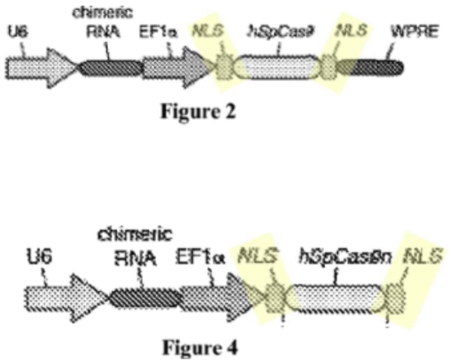
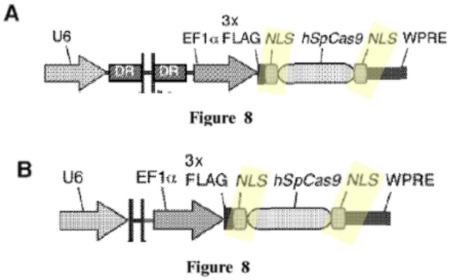
    To recap, Sigma-Aldrich's Substantive Preliminary Motion No. 1 asked the Board to deny Broad benefit of its U.S. Provisional Application No. 61/736,527, filed December 12, 2012 (termed "P1"), pursuant to 37 C.F.R. § 41.121(a)(1) and S.O. ¶¶ 121 and 208.4.2.  The basis for Sigma-Aldrich's motion was that this application does not disclose a constructive reduction to practice of an embodiment within the scope of the Count of the interference as declared.  Sigma-Aldrich specifically contended that the P1 application does not show that Broad's inventors had achieved a CRISPR-Cas9 system that cleaved a targeted DNA molecule and altered the expression of the gene product of that cleaved molecule.  Sigma-Aldrich argued that Broad merely identified the existence of CRISPR-mediated DNA cleavage in a eukaryotic cell and did not establish changes in gene expression as a result of such cleavage.  Sigma-Aldrich further argued that Broad's P1 application did not disclose introducing Cas9 protein into a eukaryotic cell with only one linked nuclear localization signal ("NLS") that resulted in CRISPR-mediated gene editing, Sigma-Aldrich asserting that all of the P1 disclosure involved Cas9 modified with 2 NLS sequences, as illustrated by Figures from that application:

    Image 1


    Image 2
    Broad's Opposition begins by asking the Board to dismiss Sigma-Aldrich's Motion No. 1 as moot in the event that the Board grants Broad's Motion No 1 to change the Count.  Barring that, Broad contends that the prior art's facility for altering gene expression in eukaryotic cells with zinc-finger nucleases ("ZFNs") and transcription activator-like effector nucleases ("TALENs") rendered it within the ordinary skill in the art to alter gene expression in eukaryotic cells using CRIPSR (although this argument seems inconsistent with Broad's arguments regarding the routine nature vel non of genetic manipulation in eukaryotic cells made elsewhere).  Broad argues that CRISPR provided something those earlier methods had not, a system that could be "easily and quickly designed, in practice, to specifically modify any sequence of any genome; having more than one technology available will help achieve this goal" (emphasis added).  Broad's argument is that its inventors' achievement of CRISPR-mediated cleavage in eukaryotic cells was enough to provide the skilled artisan with the ability to modify gene expression as well.  Broad contends that these assertions are supported by disclosure in P1 as well as its manuscript submitted on October 5, 2012, and statements made by the manuscript's reviewers.  In these arguments, Broad asserts that disclosure of CRISPR for "mammalian genome engineering" would be understood by the skilled worker to include gene expression alterations.  Broad further asserts that Sigma-Aldrich's position is inconsistent with positions taken by CVC and ToolGen in their interferences against Broad (which is more properly understood to be the case because those parties did not pursue expressly this aspect of CRISPR technology in eukaryotic cells rather than being a concession about what Broad's P1 application disclosed).

    Broad argues that the Board should grant Sigma-Aldrich's Motion No. 1 only if it establishes that P1 does not show possession of either half of the Count of this interference as declared, pursuant to 37 C.F.R. §§ 41.121(b), 41.208(b); S.O. ¶ 121.3; Bd.R. 201; and S.O. ¶ 208.4.2, as well as the holding in Kubota v. Shibuya, 999 F.2d 517, 521 (Fed. Cir. 1993).  According to Broad, Sigma-Aldrich fails because its possession of an invention falling within the scope of the Count requires P1 to disclose "a eukaryotic CRISPR-Cas9 system capable of programmable, generalizable, site-specific DNA cleavage (this phrase, italicized here, is repeated like a mantra throughout the brief), including for both donor template integration (which can be used for inserting sequences into the DNA) and multiplexing (introducing multiple concurrent breaks in DNA to cause large deletions)" and that Sigma-Aldrich does not challenge possession of this invention.  Broad points to over a dozen instances in the P1 specification that it contends disclose that its CRISPR-Cas9 invention can alter gene expression.  Broad also argues that the term "altering expression" should be construed broadly to include altering the sequence of the gene as well as altering gene expression levels (the latter meaning being the one Sigma-Aldrich contends is the correct one here).  The focus of Broad's argument is that the skilled worker would understand its disclosure of "a programmable, generalizable system that would induce site-specific cleavage of DNA in a eukaryotic cell" would show possession of embodiments that alter expression of specific eukaryotic genes without demonstration or even express disclosure of such embodiments based, in part, on "prior work with systems such as ZFNs and TALENs."

    Broad's arguments in this regard present something of an inverse déjà vu for anyone following the CRISPR interference saga.  Broad argues that Sigma is wrong in its "flawed premise that a POSA would need working examples with assays showing measurements of the level of altered gene expression, e.g., altered levels of protein expression, to find possession" (emphasis in brief) and that based on the "inherent complexities and unpredictability of the eukaryotic processes that impact gene expression," a POSA would not have found possession, "particularly without any demonstrated showing of DNA cleavage resulting in alteration of the targeted gene's expression."  The skilled worker would know how to adapt CRISPR for these purposes, Broad now argues in its Opposition, whether P1 discloses "working examples of a specific assay or not."  Broad asserts in support of this argument the comments of "impartial reviewers" of its scientific manuscript submitted October 5, 2012 (which, to be fair, is a document that is not identical to P1 and is not subject to the same standards of disclosure as P1).  Broad further asserts what is expressly disclosed in P1 (creation of insertion/deletion gene alterations using CRISPR, as well as specific insertions and deletion) in support of its argument for possession.  Broad argues that the P1 disclosure contains working examples showing altered gene expression (while stating in the same rhetorical breath that it is unnecessary for showing possession).  Such examples are the same examples cited above (indels, insertions, deletions) which, one supposes, would alter gene expression with regard to what sequences are expressed (provided the target is transcriptionally active) rather than the levels at which they are expressed.

    Broad further asserts that Sigma-Aldrich failed to address whether the phrase "whereby expression of at least one gene product is altered" is an affirmative limitation (because inter alia a Board decision that it is not would decide the matter in Broad's favor).  And Broad asserts as an independent basis for opposition that the term "altering gene expression" should be not limited to changing gene expression levels, which Broad contends is "an overly narrow and erroneous understanding of what altering expression means" under a broadest reasonable interpretation standard (an argument that could have traction with the Board), citing a portion of Broad's P1 specification that imperfectly supports this construction (while strenuously arguing that Sigma-Aldrich's interpretation of other portions of the P1 specification that seems to support its position would not be so understood by the skilled worker).

    Broad also challenges Sigma-Aldrich's contention that P1 does not show possession of the "other" half of the Count, which requires a Cas9 protein having a single NLS sequence.  Broad argues that "a working example with one NLS was not necessary once Zhang B1 disclosed: (1) a functional eukaryotic CRISPR-Cas9 system to accomplish donor template integration, and (2) the use of a Cas9 with "one or more nuclear localization sequences" with disclosure of numerous embodiments in which the Cas9 "comprises one or more nuclear localization sequences of sufficient strength to drive accumulation of said CRISPR enzyme in a detectable amount in the nucleus of a eukaryotic cell."  Broad relies on deposition testimony from its expert, Dr. Seeger, that the disclosure in Figure 1B "showed that the system functioned in the eukaryotic cells with both one and two NLS" and further language in the P1 specification that CRISPR-Cas9 complexes provided by the invention comprise Cas9 protein comprising "one or more nuclear localization sequences."  Further, Broad contends, "the "'written description requirement does not demand either examples or an actual reduction to practice' in every case," citing Ariad Pharms., Inc. v. Eli Lilly and Co., 598 F.3d 1336, 1352 (Fed. Cir. 2010).  Broad asserts that, despite disclosure of nothing more than nuclear localization in P1 Sigma-Aldrich has not satisfied its burden of showing that a working example of a Cas9 construct comprising a single NLS was necessary and thus that the Board should deny Sigma-Aldrich's motion with regard to the single NLS limitation portion of the Count.

  • By Donald Zuhn

    Department of the TreasuryA General License issued on March 2, 2022 by the Office of Foreign Assets Control ("OFAC") of the U.S. Department of the Treasury authorizes "U.S. persons . . . to pay taxes, fees, or import duties, and purchase or receive permits, licenses, registrations, or certifications" for a limited time when such activities relate to transactions involving the Central Bank of the Russian Federation ("Bank of Russia") and to the extent that such activities would otherwise be prohibited by Directive 4 under Executive Order (E.O.) 14024.  According to the General License, transactions that "are ordinarily incident and necessary to such persons' day-to-day operations in the Russian Federation" are authorized "through 12:01 a.m. eastern daylight time, June 24, 2022."

    Directive 4 of the OFAC, which was issued on February 2, 2022, indicates that "the Director of the Office of Foreign Assets Control has determined, in consultation with the Department of State, that the Central Bank of the Russian Federation, the National Wealth Fund of the Russian Federation, and the Ministry of Finance of the Russian Federation are political subdivisions, agencies, or instrumentalities of the Government of the Russian Federation."  As a result, the Directive states that:

    [T]he following activities by a United States person are prohibited, except to the extent provided by law, or unless licensed or otherwise authorized by the Office of Foreign Assets Control:

    any transaction involving the Central Bank of the Russian Federation, the National Wealth Fund of the Russian Federation, or the Ministry of Finance of the Russian Federation, including any transfer of assets to such entities or any foreign exchange transaction for or on behalf of such entities.

    The Directive also prohibits the following:

    (1) any transaction that evades or avoids, has the purpose of evading or avoiding, causes a violation of, or attempts to violate any of the prohibitions of this Directive; and (2) any conspiracy formed to violate any of the prohibitions of this Directive.

    A recent report in The National Law Review notes that the Directive and General License discussed above "will essentially prevent any payment of fees to Rospatent (the Russian patent office)" (see Ryan Cagle, "Russian Sanctions Create Patent Risks," National Law Review, March 31, 2022).  Thus, Applicants prosecuting applications before Rospatent or paying annuities on Russian patents may have to make some difficult decisions regarding the prosecution of those applications and maintenance of those patents in the coming months.  According to the National Law Review report, applications being prosecuted before the Eurasian Patent Organization (EAPO) may not raise the same issues at this time as "financial transactions for the EAPO (AO UniCredit Bank and AO Raiffeisenbank) are not included in the U.S. sanctions."

    Hat tip to MBHB partner and Patent Docs contributor Joshua Rich for alerting us to General License No. 13.

    For additional information regarding this and other related topics, please see:

    • "USPTO News Briefs," April 4, 2022
    • "USPTO Provides Advice Regarding Dealings with Rospatent," March 22, 2022
    • "Georgian and Estonian Patent Offices Join Other IP Offices in Expressing Support for Ukraine," March 13, 2022
    • "Several Law Firms Close Russian Offices," March 13, 2022
    • "Russia Permits Uncompensated Use of Certain Patents without Patentee Consent," March 11, 2022
    • "Lithuanian Patent Office and EUIPO Join Other Patent Offices in Expressing Support for Ukraine," March 10, 2022
    • "USPTO Terminates PPH with Rospatent and Terminates Engagement with NCIP," March 10, 2022
    • " Life Sciences Business Leaders Call for Immediate and Complete Economic Disengagement from Russia," March 9, 2022
    • "PRH Joins Other Patent Offices in Expressing Support for Ukraine," March 9, 2022
    • "USPTO Terminates Engagement with Rospatent and EAPO," March 7, 2022
    • "Ukrpatent Continues Normal Operations Despite Russian Aggression," March 6, 2022

  • CalendarApril 12, 2022 – "Introduction to Artificial Intelligence" (Black Hills IP) – 12:00 pm (CT)

    April 26-27, 2022 – Paragraph IV Disputes Conference (American Conference Institute) – New York City

  • Black Hills IPAs part of its Data Science Webinar Series, Black Hills IP will be offering a webinar entitled "Introduction to Artificial Intelligence" on April 12, 2022 at 12:00 pm (CT).  Manjeet Rege, Director of the Center for Applied Artificial Intelligence at the University of St. Thomas, and Thomas Marlow, Chief Technology Officer, Black Hills IP will discuss the following topics:

    • What is Deep Learning?
    • What AI can or cannot do?
    • Limitations of AI: Misuses of AI and Deep Fakes

    While there is no cost to participate in the program, those interested in attending the webinar can register here.

  • By Donald Zuhn

    USPTO Launches New Patent Search Tool

    USPTO SealIn a press release issued earlier this year, the U.S. Patent and Trademark Office announced the launch of a new Patent Public Search tool.  The Office notes that the new patent search tool, which is based on the Patents End-to-End (PE2E) search tool that USPTO Examiners use to identify prior art, will provide for convenient and robust full-text searching of U.S. patents and published patent applications.

    The tool combines the capabilities of the Public-Examiner's Automated Search Tool (PubEAST), Public-Web-based Examiner's Search Tool (PubWEST), Patent Full-Text and Image Database (PatFT), and Patent Application Full-Text and Image Database (AppFT), all of which are scheduled to be retired in September.  Previously, stakeholders could only access PubEAST and PubWEST at a USPTO facility, but with the launch of the new tool, anyone with internet access can perform such searches.

    The Office notes that the following benefits are provided by the new search tool:

    • Layouts: Multiple layouts with multiple tools to provide more data at once
    Highlighting: Multi-color highlighting that can be viewed across multiple gadgets and turned on or off
    Tagging: Ability to tag documents into multiple groups that can be renamed and color coordinated
    Notes: Ability to add notes to an image with options to include tags, relevant claims, and highlights
    Quality: Robust full-text searching of U.S. patents and published applications
    Familiar usability: Same searching syntax as PubEAST and PubWEST

    With the launch of the new search tool, the Office has also launched a Patent Public Search webpage, which includes FAQs, training resources, and other information to help users work with the new search tool.  Questions concerning the Patent Public Search tool can be directed to the Public Search Facility at psf@uspto.gov.


    USPTO Further Extends COVID-19 Prioritized Examination Pilot Program

    In a notice published last month in the Federal Register (87 Fed. Reg. 17073), the U.S. Patent and Trademark Office announced a third extension of the modified COVID-19 Prioritized Examination Pilot Program.  Requests to participate in the pilot program that are compliant with the program's requirements and are filed on or before June 30, 2022, will be accepted in the pilot program.

    The Office implemented the COVID-19 Prioritized Examination Pilot Program in May 2020.  The pilot program allows applicants that qualify for small or micro entity status to request prioritized examination without paying the fees typically associated with such prioritized examination.  To qualify for the pilot program, the claims of an application must cover a product or process related to COVID–19, and such product or process must be subject to an applicable FDA approval for COVID–19 use.  Such approvals may include, for example, an Investigational New Drug (IND) application, an Investigational Device Exemption (IDE), a New Drug Application (NDA), a Biologics License Application (BLA), a Premarket Approval (PMA), or an Emergency Use Authorization (EUA).  In September 2021, the Office extended the program to December 31, 2021, and modified the program to remove the limit on the number of patent applications that could be accepted under the pilot program.  In December 2021, the Office extended the pilot program again, this time to Match 31, 2022.

    In its latest notice on the pilot program, the Office indicates that as of February 7, 2022, 225 patents had issued from applications granted prioritized status under the program.  The Office also notes that the average total pendency of applications in the program, from filing date to issue date, was 298 days, and that the shortest pendency from filing date to issue date was 75 days.


    USPTO Publishes Notice of Termination of Global PPH with Rospatent

    Last month, the U.S. Patent and Trademark Office announced that it would no longer grant requests to participate in the Global Patent Prosecution Highway (GPPH) at the USPTO when such requests are based on work performed by Rospatent as an Office of Earlier Examination under the GPPH, with the change taking effect on March 11 (see "USPTO Terminates PPH with Rospatent and Terminates Engagement with NCIP").  The USPTO also noted that in pending cases in which it had already granted special status under the GPPH to applications based on work performed by Rospatent, the Office would be removing that status and returning those applications to the regular processing and examination queue.  Earlier today, the change in the GPPH with Rospatent that the Office announced last month was published in the Federal Register (87 Fed. Reg. 19486).

  • USPTO SealAs part of its series offering entrepreneurs and businesses an overview on how to protect their intellectual property in Mexico, the U.S. Patent and Trademark Office will be holding a webinar entitled "Diversifying your market or supply chain: Patent protection" on April 6, 2022, and a webinar entitled "Diversifying your market or supply chain: Enforcement" on May 18, 2022.  Both webinars will be held from 12:00 pm to 1:30 pm (MT).  The Mexico IP series is being offered in four parts, with USPTO experts leading the sessions that will focus on various subjects, including tips for applying for trademark registration and the protection of patents and copyrights, and how to enforce your IP rights in Mexico's administrative, civil, and criminal systems.  Information regarding the other webinars in the series can be found here.

    Those interested in registering for the webinar can do so here

  • IPWatchdogIPWatchdog and Volpe Koenig will be offering a webinar entitled "Jurassic Patents: Patenting in the Life Sciences and Protecting Innovation" on April 7, 2022 at 12:00 pm (ET).  Douglas J. Bucklin of Volpe Koenig; Rachel Elsby of Akin Gump; Kae Gruner of Acella Pharmaceuticals, LLC; and John White of the PCT Learning Center will explore the patent, regulatory, and enforcement issues that parties face in the life sciences and will explore strategies for protecting life sciences innovations for the future.

    There is no registration fee for this webinar.  However, those interested in registering for the webinar, should do so here.