• By James DeGiulio

    Roche Succeeds in Blocking Release of Cobalt's Generic Boniva

    Roche Hoffman-La Roche successfully secured a preliminary injunction against Cobalt Pharmaceuticals in the patent suit over the bone-loss drug Boniva, thus preventing Cobalt from launching a generic version of the drug.

    Cobalt Pharmaceuticals Apotex and Cobalt filed Abbreviated New Drug Applications (ANDAs) for generic ibandronate, the active ingredient in Boniva.  In September 2007, Roche sued Apotex and Cobalt in the U.S. District Court for the District of New Jersey for infringement of U.S. Patent Nos. 6,143,326, 6,294,196, 7,192,938, 4,927,814, and 7,410,957 (see "Court Report," September 30, 2007).  Eventually, a total of six lawsuits were consolidated into two pretrial proceedings, and the claims relating to the '326, '196, and '938 patents were settled.  In August, the District Court granted summary judgment to Roche, finding that Apotex's ANDA literally infringes the '814 patent.  The defendants maintain that the '814 patent is unenforceable due to inequitable conduct.

    On November 10, Judge Stanley R. Chesler enjoined Cobalt from making or selling a generic version of Boniva until the Court rules on the validity of the two remaining patents (the '814 and '957 patents).  Judge Chesler found that Roche had shown that it was likely to succeed on the merits because the patent was likely to remain valid and enforceable.  The judge also found that Roche was likely to suffer irreparable harm without an injunction since the damage it would sustain to its existing business without an injunction was far more severe than Cobalt's loss of its market opportunity for the generic.  In balancing the hardships, Judge Chesler found that the public interest favored patent enforcement over the availability of low-cost generic drugs.  The District Court ordered Roche to pay a bond of $10 million, far less than the $557 million bond requested by Cobalt.  Judge Chesler's Opinion can be found here.


    Allergan Fails to Secure New Trial in Zymar Case

    Allergan After a bench trial earlier this year resulted in Allergan's patent covering the pinkeye drop Zymar being found obvious, Allergan moved for a new trial.  On November 3, Allergan's motion was denied.

    Apotex #1 In 2007, Allergan, the co-owner of U.S. Patent No. 6,333,045, filed suit in the U.S. District Court for the District of Delaware against Apotex after Apotex filed an ANDA covering a generic version of Allergan's 0.3% gatifloxacin opthalmic solution (see "Court Report," December 9, 2007).  A bench trial was held in January 2010, and the District Court found that Apotex had shown claim 7 to be obvious in view of a 1989 reference and two patents.  Allergan subsequently moved for a new trial.

    On November 3, Judge Sue L. Robinson denied the motion filed by plaintiffs Allergan, Senju, and Kyorin requesting a new trial or an amendment of the Court's invalidity judgment.  At issue was the principle of the inverse relationship between solubility and precipitation, with Allergan arguing that defendants had not sufficiently established this principle.  Judge Robinson refused to grant a new trial regarding the validity of claim 7 based solely on defendants' failure of proof with respect to a basic principle of science.  Since the issue did not generate much attention during discovery, Judge Robinson ordered that the record of the litigation be opened so the parties can present additional testimony regarding the validity of the claim at issue.  The District Court's Memorandum Order can be found here.


    Novo Nordisk's PrandiMet Suit with Actavis Dismissed

    Novo Nordisk Novo Nordisk and Actavis have moved to dismiss a patent infringement suit over Actavis' plan to bring a generic version of the diabetes drug PrandiMet to market.

    Actavis In October 2009, Novo Nordisk brought suit in the U.S. District Court for the Southern District of New York against Actavis, alleging infringement of U.S. Patent No. 6,677,358 following Actavis' ANDA filing (see "Court Report," November 8, 2009).  After Novo Nordisk brought the lawsuit, Actavis amended the ANDA and withdrew its Paragraph IV certification.

    On November 4, Judge Paul G. Gardephe signed off on a Stipulation and Order of Dismissal of the action and all claims and counterclaims.  According to the Order, Actavis' ANDA contains no Paragraph IV certification relating to the '358 patent, and thus, subject matter jurisdiction no longer exists.  Actavis will provide Novo Nordisk with copies of all future submissions to the FDA relating to the '358 patent, including any amendments to its ANDA certification.  Judge Gardephe's Stipulation and Order of Dismissal can be found here.

  • By Donald Zuhn

    Genetic Alliance In an amicus brief filed in Association of Molecular Pathology v. U.S. Patent and Trademark Office, Genetic Alliance adds its name to the list of groups supporting reversal of the District Court's decision that the claims of several patents on BRCA1 were invalid as encompassing non-statutory subject matter.  The not-for-profit, tax-exempt health advocacy organization also indicates its opposition to the "wholesale abolition of patents on isolated DNA molecules and their use in diagnostic methods."  The group opens the brief by noting that:

    [It] not only wants diagnostic tests to be developed and made widely available, but also wants effective treatments to be developed.  It recognizes the importance of patents in providing incentives for investment in the discovery and commercialization of diagnostics, drugs, and other treatment modalities.  The wholesale invalidation of all patents on isolated DNA molecules (and potentially all compounds isolated and purified from natural sources), which is the logical consequence of the decision on appeal, would impede the investment, development, and commercialization of effective products and treatments for genetic diseases.

    In the first part of the brief, Genetic Alliance argues that the District Court's opinion "suffers from several legal errors."  In particular, the brief states that the opinion "errs in stating that any compound from a natural source that is isolated and purified without chemical change cannot be patented."  The brief notes, however, that this is dictum because the claimed isolated DNA molecules are man-made compositions that differ chemically from native DNA in genes in the human body.  The brief then contends that the opinion "applies the wrong test for determining whether a man-made composition having a chemical structure related to, but different from, a natural substance falls within an exception to § 101," announcing "a 'requirement' that such claimed subject matter is unpatentable unless it is 'markedly different' from the composition in nature," which the brief argues is not the standard articulated in Diamond v. Chakrabarty.  The brief accuses the District Court of "[d]eparting from established law," by declaring by "judicial fiat" that nucleotide sequences constitute "a new exception to § 101."  The brief also contends that the opinion errs in holding that claims directed to diagnostic methods are unpatentable.

    With respect to the brief's assertion that the District Court applied the wrong test for assessing the patent-eligibility of the claimed BRCA DNA molecules, Genetic Alliance first notes that "[l]ike any other chemical entity, isolated DNA molecules are patent-eligible compositions of matter unless they fall into a recognized exception to § 101."  Pointing to the District Court's derivation of a "requirement" from Chakrabarty that the claimed subject matter must be "markedly different" from what occurs in nature, the brief counters that "none of the other cases that the Opinion cites [including Chakrabarty] refer to a claimed composition as 'markedly different,' let alone describe that as a 'requirement' for patentability."  The brief contends instead that "to meet the Chakrabarty test a composition or manufacture related to a natural product must be (1) non-naturally occurring, (2) a product of human activity, and (3) ha[ve] a distinctive name, character, and use."

    As for the District Court's "markedly different" requirement, the brief quotes a portion of the Chakrabarty opinion in which the Supreme Court compared Chakrabarty's patentable bacterium to the unpatentable bacteria in Funk Bros. Seed Co. v. Kalo Inoculant Co.:

    Here, by contrast [to Funk Bros.], the patentee [Chakrabarty] has produced a new bacterium with markedly different characteristics from any found in nature and one having the potential for significant utility.  His discovery is not nature's handiwork, but his own; accordingly it is patentable subject matter under § 101."

    While noting that the words "markedly different" appear in the above passage, the brief contends that the words are "found within an analysis showing that Chakrabarty's bacterium is patent-eligible because it is non-naturally occurring, a product of human intervention, and has a distinctive character and use" (emphasis in original).  The brief calls the District Court's use of the "markedly different" requirement "unprecedented," and argues that the determination of whether a claimed composition is "markedly different" from a related, naturally occurring composition is "highly subjective."

    Applying the three-prong test that Genetic Alliance derives from Chakrabarty, amicus concludes that the claimed DNA molecules:  (1) are not found in nature (which, according to the brief, the District Court recognized), (2) "are all made by scientists and require substantial human intervention to prepare them," and (3) have properties and uses that differ in kind from genes in the body.  On this last point, the brief describes those properties and uses as follows:

    Isolated DNA molecules can be used in research as targets for discovering new drugs and as tools for manufacturing protein drugs.  Isolated human DNA molecules can be used to produce human proteins in entirely different species, such as yeast or bacteria.  Isolated copies of DNA molecules can be sequenced for diagnosis.  The small, claimed DNA molecules (primers and probes), which do not exist in nature and do not code for any protein (only a small string of amino acids), are useful as chemical reagents, research tools, and as diagnostic and biological probes.  Isolated DNA molecules can be used in gene therapy. DNA in genes inside the body cannot directly be used in any of these ways.

    The brief next takes issue with the District Court's conclusion that isolated DNA molecules are "products of nature," arguing that the District Court's opinion "inappropriately discounts" that "the isolated DNA molecules claimed in the BRCA patents are different chemicals from native DNA in genes, are made by human intervention, and have different uses than DNA in genes."  The brief states that:

    There is no precedent for dismissing the significance of evidence that the claimed molecules are man-made, have different chemical structures from DNA in genes, and have different utilities.  In essence, the Opinion decides that for patent eligibility under § 101, the presence of information-carrying nucleotide sequences overrides all other considerations.

    With respect to the District Court's discussion of the information-carrying aspect of nucleotide sequences, the brief contends that:

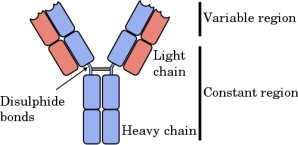
    Apparently agreeing that all chemical compounds carry "information," the Opinion distinguishes patentable compounds as those in which the information is about their "own molecular structure," whereas information in DNA is directed to other molecules (proteins).  But other kinds of patentable macromolecules contain "information" directed to other molecules.  For example, antibodies, which are patentable subject matter, inherently contain "information" about the structure of other molecules (antigens), which reflects antibodies' primary function (binding to antigens) and makes them able to interact with antigens.

    Returning to the Chakrabarty case, the brief asserts that if modified bacteria of Chakrabarty was found to be patent-eligible, then the isolated DNA molecules of the instant case are most certainly patent-eligible.  Summarizing the claimed invention in Chakrabarty, the brief states that:

    The plasmids used by Chakrabarty occur naturally in certain strains of bacteria — they were not produced by the inventor (except in one case in which two naturally occurring plasmids were fused by exposure to UV light).  The plasmids were transferred from one bacterium to another by the naturally occurring process of conjugation.  The resulting patentable bacterium (containing a number of plasmids) did not exist in nature.  However, the plasmids contained in the patent-eligible bacterium all exist in nature and function identically whether in their original bacterium host or in Chakrabarty's engineered bacteria.

    (emphasis in original).  Thus, the brief concludes that "the genetic manipulation, purification, and change in structure required to engineer isolated cDNA molecules (as in the BRCA patents) result in molecules that differ far more in structure and function from native DNA than did Chakrabarty's patentable bacterium compared to bacteria found in nature."

    Like other amici, Genetic Alliance argues that if isolated DNA molecules are to be deemed patent-ineligible, such determination is for Congress and not the courts.  Noting that "[t]he PTO has granted thousands of patents claiming isolated DNA sequences and their use, and the courts have adjudicated disputes regarding DNA patents, without questioning their patent eligibility," the brief advises the Federal Circuit "not [to] change this almost universally accepted interpretation of the patent statute without a clear and certain signal from Congress."  The brief then discusses how a holding of patent-ineligibility for isolated DNA molecules "would render portions of 35 U.S.C. § 103(b), § 271(e)(1), and § 271(g) meaningless, violating the statutory canon against interpreting a statutory provision in a manner that would render another provision superfluous."

    As for the District Court's finding that "'purification of a product of nature, without more, cannot transform it into patentable subject matter' under § 101," the brief requests that the Federal Circuit "expressly repudiate this standard," stating that "[n]atural compounds that are purified and isolated, but are not altered chemically, have repeatedly been found to be patentable because '[the claimed] compounds . . . do not exist in nature in pure form.'"  The brief then concludes with a discussion of why the diagnostic method claims at issue are patent-eligible under § 101, arguing that the method claims require a transformation of matter into a different state or thing and that the method claims do not preempt the idea that mutations in the BRCA genes may increase cancer risk.

    Nine amicus briefs have been filed in the AMP v. USPTO appeal (of which Patent Docs is aware):

    • Alnylam Pharmaceuticals, Inc., in support of Defendants-Appellants, supporting reversal (brief)
    • Biotechnology Industry Organization (BIO) and the Association of University Technology Managers, supporting reversal (brief)
    • Genetic Alliance, supporting reversal, but not in support of either party (brief)
    • The Intellectual Property Owners Association (IPO), in support of neither party (brief)
    • United States, in support of neither party (brief)
    • American Intellectual Property Law Association (AIPLA), in support of reversal, but in support of neither party (brief)
    • Christopher M. Holman and Robert Cook-Deegan, in support of neither party (brief)
    • Rosetta Genomics, Ltd., Rosetta Genetics, Inc., and George Mason University, in support of Defendants-Appellants, supporting reversal (brief)
    • Gilead Sciences, Inc. and BioGenerator, in support of Defendants-Appellants and urging reversal (brief)

    For additional information regarding this and other related topics, please see:

    • "BIO and AUTM File Joint Amicus Brief in AMP v. USPTO," November 9, 2010
    • "AIPLA Submits Amicus Brief in AMP v. USPTO," October 3, 2010
    • "IPO Files Amicus Brief in AMP v. USPTO," November 2, 2010
    • "AMP v. USPTO — Briefing Update," November 1, 2010
    • "DOJ Tries to Be All Things to All Constituencies in Myriad Amicus Brief," October 31, 2010
    • "Myriad Files Appeal Brief in AMP v. USPTO," October 28, 2010

  • By James DeGiulio

    FDA Last week, the Food and Drug Administration began gathering information on how to implement the new biosimilar approval pathway of the Biologics Price Competition and Innovation Act (see "FDA Planning to Hold Public Hearings on Biosimilar Approval Pathway").  Several issues came to light during the first day of testimony, and the FDA was charged with balancing several divergent positions, the most pressing being weighing patient safety and the lowering of costs.  At the center of the issue are the standards that the FDA will require for clinical testing of biosimilars.  At the hearing, there was a decisive split on how flexible the standards should be.  Some testimonials proposed that the only way to be sure that a drug is safe is through extensive clinical trials, while others argued that dangerous and expensive clinical tests are not required because they will be based on drugs that are already proven safe.

    Patient safety was the main argument for a strict clinical testing standard.  Seth Ginsberg, president of the patient advocacy group Global Healthy Living Foundation, spoke on patient safety at the hearing and was backed by many of the drug companies in attendance.  Jim Shehan, a vice president of Novo Nordisk Inc., suggested that both comparative non-clinical and clinical testing of biosimilars is necessary to truly ensure patient safety.

    Amgen The need for clinical trials was echoed in a press release issued by Amgen, where Senior Vice President of Research and Development Dr. Joe Miletich urged members the FDA to establish approval standards that ensure patient safety and follow a science-based approach.  Dr. Miletich emphasized a need for clinical studies with patients, noting that changes in structure, formulation, or impurities can have a significant impact on patients that cannot always be observed with non-clinical analytical studies.  Dr. Miletich outlined three key recommendations that the FDA should consider as it moves forward:

    1.  Use well-designed clinical trials to establish biosimilarity;

    2.  Ensure the product manufacturer and lot number is known for all administered biologics; and

    3.  Set scientific and practical criteria for interchangeability.

    Sanders, Bernie Critics of a clinical testing standard that may be too extensive pointed to the high costs of repeating unnecessary clinical trials, as well as the ethical questions of repeating potentially dangerous trials in humans.  A representative for Senator Bernie Sanders warned that excessive human trials of biosimilar drugs violates the Declaration of Helsinki.  In an effort to avoid repeating human trials, Senator Sanders (at right) has offered an amendment to the statute which will require generics makers to pay a fee for access to clinical data.  The concern is that a biosimilar applicant will be forced to repeat clinical trails to answer questions of safety and efficacy that have already been answered.

    Patent Docs will continue to report on the details of the FDA biosimilar hearings as they become available.

  • By Kevin E. Noonan

    Biotechnology Industry Organization (BIO) On October 29, the Biotechnology Industry Organization (BIO) and the Association of University Technology Managers (AUTM) filed an amici curiae brief in AMP v. USPTO (the Myriad case).  Fittingly (in view of the interest, financial and otherwise, of their members in patented genetic technologies), the brief is focused on the patent-eligibility of isolated DNA (it expressly does not reach the patent-eligibility of the method claim invalidated by the District Court).  The brief also makes clear to the Federal Circuit the adverse consequences should it not reverse the District Court's decision striking down Myriad's licensed patents on the BRCA1 and BRCA2 genes.

    AUTM The brief states three grounds for the Court to decide that isolated DNA is patentable subject matter under 35 U.S.C. § 101.  First, amici argue that isolated DNA molecules are "man-made compositions of matter" that are not naturally occurring.  Second, that isolated DNA molecules are chemical compounds ("A gene is but a chemical compound, albeit a complex one"), which have "new and distinctive properties and uses compared to naturally-occurring DNA."  Finally, the brief argues that the District Court erred when it based its decision on the putatively unique properties of DNA (as the "physical embodiment of [genetic] information") that distinguishes it from all other biological molecules, specifically by treating DNA as "mere information" rather than as a chemical compound.

    Isolated DNA molecules are "unquestionably" compositions of matter under the statute, the brief argues.  The District Court erred in treating these molecules as being "'merely' purified forms of naturally-occurring substances."  This is error, the brief argues, because isolated DNA molecules are "new, man-made chemical compositions that do not occur in nature."  The District Court also erred because, even if isolated DNA could be considered "purified versions of naturally-occurring DNA, the process of isolation requires such a level of human intervention," i.e., the "hand of man," and "so alters their character and use as to make [isolated DNA molecules] patentable" (or more accurately, patent-eligible), they argue.  Finally, the District Court erred in being "led astray [indeed!] by the comparison of DNA to information, 'a common metaphor that is useful in conveying complex science to laypersons [or district court judges], but that does not change the fact that DNA remains a chemical compound, not an alphabet or a language.'"  Isolated DNA (again) is a chemical compound, "developed by human ingenuity using complex scientific expertise and equipment" and hence certainly patent-eligible subject matter according to these amici.

    Isolated DNA is not merely "isolated" from biological sources, the brief argues, but instead such molecules are "entirely different man-made molecules that do not occur in nature."  Moreover, the process of "isolating" DNA transforms it into a "new and different article" having "distinctive form, properties and uses."  The brief notes that the District Court "appeared to assume" that isolating DNA was "merely the 'purification' of naturally-occurring substances."  This is factually incorrect, in view of the chemical differences between DNA as it occurs in a chromosome and as it exists after its isolation.  The brief nicely illustrates the structure of "native DNA" and the structure of genes in the chromosomal context.

    Chromosome
    "[C]ritically," according to the brief, "at no point in the process of protein production — or at any other point in an organism's natural life — are genes excised or uncoupled from the rest of the chromosome."  That is, "genes do not naturally exist as stand-alone molecules or separate chemical compounds."  Thus, DNA as it exists in isolation does not exist, even in "unpurified" form, in nature.  The brief illustrates the difference by contrasting the isolated BRCA1 gene, consisting of about 80,000 bp (of which only about 16,000 bp are coding sequence), with chromosome 17 (the chromosomal location of the BRCA1 gene) that comprises about 80 million bp (and about 1200-1500 genes in that chromosome).  The process of excising a gene like the BRCA1 gene from a chromosome creates a "new and separate chemical compound that does not exist in nature" according to the brief.  These structural differences are even greater when the isolated DNA is cDNA rather than chromosomal DNA, since these molecules are solely the product of human intervention and manipulation; the brief notes and debunks the assertions below that the existence of pseudogenes somehow constitutes a "natural" counterpart of man-made cDNA, based in part on sequence differences between such pseudogenes and cDNA.  At least one of the bases for the Court's errors below was it "compared the claimed molecules to naturally-occurring nucleotide sequences, rather than to naturally-occurring DNA molecules" (emphasis in original).  Treated as a chemical compound, isolated human chromosomal DNA and cDNA are non-naturally occurring chemical compounds, the brief argues, and this was the proper basis for the Patent Office to determine that isolated human DNA was patent-eligible subject matter.

    The brief distinguishes two 19th Century Supreme Court cases used by the District Court to support its decision, by arguing that the District Court misconstrued their holdings.  In both American Wood-Paper Co. v. Fiber Disintegrating Co., 90 U.S. (23 Wall.) 566, 595 (1874), and Cochrane v. Badische Anilin & Soda Fabrik, 111 U.S. 293, 311 (1884), the brief argues that the Court rejected patentability of the claimed products because they were not novel, not (as the District Court held) that "products of nature" are not patent-eligible:  "[n]either opinion suggested . . . that a man-made molecule that did not previously exist was unpatentable subject matter," they argue.  Indeed, this point could have been made even more forcefully, since the Court in the Wood Paper Pulp cases expressly stated that it was not deciding this question:

    It is insisted, however, that the paper pulp which had been produced before the invention of Watt & Burgess was not pure cellulose, that it was only approximately pure, and from this it is argued that the pure article obtained from wood by their process is a different and new product, or manufacture.  Whether a slight difference in the degree of purity of an article produced by several processes justifies denominating the products different manufactures, so that different patents may be obtained for each, may well be doubted, and it is not necessary to decide.

    Id. at 594 (emphasis added).

    The brief is carefully to point out that the issue here is patent-eligibility, and that patentability is dependent on satisfaction of the other requirements of patentability, citing cases where the Federal Circuit has held isolated DNA to be unpatentable for want of novelty (In re Gleave, 560 F.3d 1331 (Fed. Cir. 2009)), obviousness (In re Kubin, 561 F.3d 1351 (Fed. Cir. 2009)), lack of utility (In re Fisher, 421 F.3d 1365 (Fed. Cir. 2005)), or failure to satisfy the written description requirement (Regents of Univ. of Cal. v. Eli Lilly & Co., 119 F.3d 1559 (Fed. Cir. 1997)).  In the process, the brief sub silentio reinforces the point that in all these cases the Court never questioned that isolated DNA was patent-eligible under 35 U.S.C. § 101.

    The brief also sets forth a history of patent-eligibility of "products of nature," including Louis Pasteur's yeast (U.S. Patent No. 141,072), aspirin (obtained from coal tar), adrenaline (Parke-Davis & Co. v. H.K. Mulford Co., 189 F. 95, 103 (C.C.S.D.N.Y. 1911)), vitamin B12 (Merck & Co. v. Olin Mathieson Chem. Corp., 253 F.2d 156, 164-165 (4th Cir. 1958), prostaglandins (In re Merz, 97 F.2d 599, 601 (C.C.P.A. 1938)), and human blood clotting Factor VIII (Scripps Clinic & Research Found. v. Genentech, Inc., 666 F. Supp. 1379, 1389 n.6 (N.D. Cal. 1987)), and distinguishes American Fruit Growers, Inc. v. Brogdex Co., 283 U.S. 1, 12-13 (1931), as being related to the definition of a "manufacture" under the statute rather than defining patent-eligibility for "products of nature."  "[I]n addition to creating a whole new chemical composition that does not exist in nature . . . [isolating DNA] imparts new utilities and functions unavailable from native DNA," the brief argues, illustrating these "new utilities" by gene therapy and recombinant production of BRCA1 and BRCA2 proteins.  None of these utilities are available for native DNA, and thus "this is not a situation in which natural substances 'serve the ends nature originally provided and act quite independently of any effort of the patentee'" amici argue, citing (and distinguishing) Funk Bros. Seed Co. v. Kalo Inoculant Co., 333 U.S. 127, 131 (1948).

    The brief criticizes the basis of the District Court's decision that the utility of isolated DNA molecules is ""primarily a function of the nucleotide sequence identity between native and isolated BRCA1/2 DNA," stating that this similarity "is no more attributable to its similarity to native DNA than the utilities insulin, penicillin, vitamin B12, adrenaline, or other drug preparations are due to their similarity to their naturally-occurring counterparts."  The brief gets to the gist of the District Court's error:  this similarity between native and isolated DNA "could be made about essentially any biotechnology product."  The salient fact is that isolated DNA is useful because it is isolated:  the brief argues not that isolated DNA has the same utilities as native DNA but just to a greater degree, but that "native DNA cannot be used for such purposes at all" (emphasis in original).  The brief argues that this is the "'character' and 'use" that distinguishes isolated DNA molecules from native DNA for purposes of patentability."

    Finally in this portion of the brief, amici argue again that the District Court erred by ignoring the "chemical nature of DNA" and focusing on DNA as a "physical embodiment of information."  The District Court misapplied this metaphor for fact, by "likening DNA's nucleotide sequence as 'information,'" citing numerous parts of the District Court's opinion.  "DNA as information" is an analogy, not an identity the brief argues, saying (again) that "DNA is a chemical compound."  "The description of [the biological functions of DNA, such as transcription and translation] as a relaying of 'information' may be useful as a pedagogical tool," amici argue, "but it does not differentiate DNA from any other chemical compound."

    The brief's arguments about the adverse consequences of affirming the District Court's decision to ban isolated DNA from patent eligibility are contrasted with the lack of any evidence that permitting isolated DNA to be patented has had any negative effects on the "progress" of science.  The brief forcefully argues that patents on isolated DNA in fact promote innovation:  the U.S. biotechnology industry "consists largely of small firms that are engaged in foundational research and dependent on private investment, not product revenues, to fund their work."  For such companies, patent protection is "essential" in order for them to obtain the private investment they need.  The brief recites a number of "biotechnology success stories," including Amgen's successful production of recombinant erythropoietin, as evidence of such public benefit, as well as advances in the production of EPO and other therapeutic proteins, gene therapy, vaccination, genetic testing, agriculture, food safety, industrial and environmental biotechnology, and future "unforeseeable discoveries" as reasons to uphold patent-eligibility of isolated DNA.  To negate patent-eligibility, on the other hand, would have "far-reaching negative consequences," and failure to reverse the District Court would "cast a cloud of uncertainty over thousands of similar patents and compromise the ability of biotechnology firms to pursue groundbreaking discoveries in human healthcare, renewable energy, and sustainable agriculture" and would also harm university technology transfer efforts.  The brief cites numerous empirical studies, from industry (Ernst & Young, Beyond Borders: Global Biotechnology Report 34 (2009)) to academe (Grabowski, Follow-On Biologics, 7 Nature Reviews Drug Discovery 479, 482 (2008)) for the importance of patent protection in bringing new biotechnology inventions to market.  Patents are particularly important for getting early-stage companies through the "valley of death" — the time after proof of concept but before regulatory approval or commercialization — because patents "are typically the only assets those firms possess that are sufficiently stable and valuable to attract the large amounts of capital they need to exploit promising research toward new drugs and diagnostics," citing Barfield & Calfee, Biotechnology and the Patent System 27 (2007), and Grabowski et al., The Market for Follow-On Biologics, 25 Health Affairs 1291, 1299 (2006).  As in other briefs, amici here exemplify the potential for negative consequences of a DNA patenting ban using President Clinton's and Prime Minister Blair's gaffe at suggesting patenting DNA might be curtailed, with a resulting $50 billion loss in value for genomics and other DNA patent-reliant companies.  Importantly, the brief also argues that this shake in investor confidence would not be limited to DNA-dependent companies, since the District Court's misguided "product of nature" patent ban extends to "a wide variety of natural substances that have been isolated and purified," which would be "to the detriment of the biotechnology industry and the public.

    Patents on isolated DNA in fact benefit the public, amici argue, by promoting commercialization of basic scientific discovery into useful (indeed, in some instances lifesaving) diagnostic and therapeutic advances.  Permitting patents on isolated DNA, as the U.S. Patent and Trademark Office and the Federal Circuit have done over the past thirty years, has had no negative effects on innovation or progress in the medical or biological sciences, the brief argues.  Indeed, the brief notes that every attempt to detect any such negative effects on innovation (the "tragedy" of the anticommons) has met with failure, as in each and every case there is no evidence that there has been any tragedy or indeed any appreciable negative effects.  These efforts to find a "tragedy" resulting from patenting isolated DNA have extended from academia (Walsh et al., Patents, Material Transfers and Access to Research Inputs in Biomedical Research 3 (Sept. 20, 2005) ("patenting does not seem to limit research activity significantly, particularly among those doing basic research"), through the Federal Trade Commission (citing Emerging Health Care Issues 32 (2009)), National Research Council, Reaping the Benefits of Genomic and Proteomic Research 134 (2006), and (unmentioned) to the SAGHHS report.  And anecdotal reports of specific instances when companies like Myriad enforced or threatened to enforce its patent rights must not confuse "the ordinary assertion of patent rights against commercial competitors with limits on basic research"; specifically, "Myriad appears to have never asserted its patents based on genetic testing research, but only against substantial direct commercial competitors," citing Holman, The Impact of Human Gene Patents on Innovation and Access, 76 UMKC L. Rev. 295, 347 (2007).

    The brief takes on the principle confounding issue in this debate, the conflating of failure in the U.S. healthcare system and inequities in its distribution, with the limited exclusive rights granted by patents:

    The stories of the individual Plaintiffs in this case help explain why members have pushed so hard to encourage insurance companies with restrictive reimbursement policies to pay for important therapeutics and diagnostics and to establish company-sponsored plans that provide products and services to patients who cannot afford them.  A106-107, A149-150 (discussing patients whose insurance companies would not pay for genetic testing).  Plaintiffs' effort to abolish patents on isolated DNA molecules, however, is misdirected and shortsighted.  It mistakes problems in the insurance system for problems in the patent system and will harm rather than help patients in the long run.

    It is easy to argue after an invention has already been discovered and disclosed that the public would be better off if it were not patented.  It is just as easy to single out a particular invention and argue with the benefit of hindsight that patent protection was not necessary for its discovery and development.  Such facile arguments ignore the long-term benefits that the public derives from providing patent protection in exchange for the disclosure of new and useful discoveries.

    The advances made by the U.S. biotechnology industry under current law were not inevitable, and the industry's future success depends on the ability continue attracting private investors willing to shoulder the substantial risk financing research and development.  In the life sciences, early-stage hold roughly two-thirds of the future clinical pipeline.  Boston Consulting Group, Rising to the Productivity Challenge 6 & Ex. 4 (2004).  Without patent protection for isolated DNA molecules, many companies would be unable to see those projects through to completion.  The list of potentially life-enhancing therapeutics and diagnostics that die in the pipeline as a result might never be known.  But their absence would be acutely felt by patients.

    If there is a need to strike a different balance between the public interest in strong patent rights that promote innovation and making diagnostic tests accessible to patients that cannot afford them, that is a balance that Congress, not the courts, should make "based on sound evidence and with due regard to the reliance interest of existing patentholders, rather than by the courts based an anecdotal evidence about one particular patent-holder."

    In its Statement of Interest, BIO asserts that represents "over 1100 companies, academic and biotechnology centers" that "undertake research and development of biotechnological healthcare, agricultural, environmental and industrial products."  The "vast majority" of BIO members are "small companies that have yet to bring a product to market or attain profitability, and thus rely heavily on venture capital and other private investment."  This has made "critical" patenting on isolated DNA molecules to attract such investment "necessary for development of innovative diagnostic, environmental, renewable energy, and agricultural products."  AUTM, according to the Statement, is "the largest association of university technology transfer professionals, with members from over 350 universities, research institutions, teaching hospitals, and government agencies worldwide, as well as hundreds of companies involved with managing and licensing innovations derived from academic and nonprofit research."  Its interests in the outcome of this case are self-evident:  universities own overwhelmingly numbers of patents on isolated DNA.

    Image from National Human Genome Research Institute, Chromosome, <http://www.accessexcellence.org/RC/VL/GG/nhgri_PDFs/chromosome.pdf>

    For additional information regarding this and other related topics, please see:

    • "AIPLA Submits Amicus Brief in AMP v. USPTO," October 3, 2010
    • "IPO Files Amicus Brief in AMP v. USPTO," November 2, 2010
    • "AMP v. USPTO — Briefing Update," November 1, 2010
    • "DOJ Tries to Be All Things to All Constituencies in Myriad Amicus Brief," October 31, 2010
    • "Myriad Files Appeal Brief in AMP v. USPTO," October 28, 2010

  • By Kevin E. Noonan

    Abbott Laboratories #1 Abbott has filed its reply brief in Therasense, Inc. v. Becton, Dickinson & Co., and it is timely to discuss this brief on the eve of oral argument before the en banc Federal Circuit.

    The brief begins by noting the many areas of agreement between the parties, the U.S. Patent and Trademark Office, and several of the amicus briefs submitted to the Court.  These are all directed generally to the proposition that the inequitable conduct doctrine is not being applied properly or consistently by the Federal Circuit, and that corrective action is needed.  Citing portions of briefs from Bayer, the USPTO, and amicus the ABA, Abbott asserts that the inequitable conduct doctrine has "strayed beyond its origins in 'egregious cases,'" defined as patent procurement by "lying, cheating or stealing"; that it "harms . . . the patent examination process" because it motivates applicants to "bury the PTO in prophylactic disclosures"; and that it "diminishes 'respect for the legal profession and the patent system itself'" due to the propensity of inequitable conduct allegations to call into question the honesty of applicants and their counsel.

    The brief also finds common ground between the parties, the USPTO and "almost all amici" as to what should be done.  For the intent prong, the brief advocates a return to the standards enunciated by the court in Kingsdown Medical Consultants, Ltd. v. Hollister Inc., 863 F.2d 867 (Fed. Cir. 1988).  Specifically, the brief argues that the "knew or should have known" standard be rejected, and that litigants arguing inequitable conduct should be required to show that an inference of intent to deceive be "the single most reasonable inference able to be drawn from the evidence," citing Star Scientific, Inc. v. R.J. Reynolds Tobacco Co., 537 F.3d 1357, 1366 (Fed. Cir. 2008).  As for materiality, there is much less consensus, but "[a]lmost everyone" agrees that the Court should reject the "reasonable examiner standard," which the brief declares "overbroad" and contends "fails to provide meaningful guidance" to applicants and provokes them to file "mounds of information with questionable materiality."  Regarding the "balancing" portion of the method by which the Court assesses inequitable conduct, "[v]irtually everyone" agrees that the "materiality-intent balancing" (by which it seems the brief means using a greater showing of materiality to be "balanced" by a lesser showing of intent) should be abandoned, and specifically states that the reasoning used in cases such as Aventis Pharma S.A. v. Amphastar Pharms., Inc., 525 F.3d 1334, 1344 (Fed. Cir. 2008) should be "retired."  The brief argues that only after both intent and materiality have been established by clear and convincing evidence should a court be permitted to "balance" all the equities to decide whether the conduct merits the remedy of unenforceability.

    Having set forth the areas of agreement, the brief then discusses the disagreements between the parties and amici.  First and foremost is the proper standard for materiality, with Abbott and some of the amici arguing for a "return" to "but-for" causation as the test, citing Norton v. Curtiss, 433 F.2d 779, 794 (C.C.P.A. 1971).  This standard "reflects Supreme Court precedent, historic practice, and the standards in other areas of intellectual property," rather than the PTO's Rule 56 "standard," which the brief argues "has no basis in law and would continue the deleterious practices everyone urges the Court to remedy."

    The brief cites the Court itself for recognizing the problem with its inequitable conduct jurisprudence, citing the many recent instances where members of the Court have echoed Judge Nichols' complaint that inequitable conduct has become "a plague on the patent system" in Burlington Indus.., Inc. v. Dayco Corp., 849 F.2d 1418 (Fed. Cir. 1988).  That situation had been remedied by the Kingsdown decision, but adherence to the "specific intent to deceive" standard adopted by the en banc Court has greatly declined in the interim, appellants argue.  This standard is accepted "[a]lmost without exception" according to the brief, citing Bayer, the USPTO, the ABA, the AIPLA, and the Federal Circuit Bar Association's briefs for this consensus.  "Near-universal agreement" is also shown for several "corollaries":  these include abandonment of the "knew or should have known" standard used, inter alia, in Critikon, Inc. v. Becton Dickinson Vascular Access, Inc., 120 F.3d 1253, 1256 (Fed. Cir. 1997).  Moreover, the brief argues that the proper standard for a "specific intent to deceive" is that:  "at the time of the alleged misrepresentation, the applicant (1) knew of the information, (2) knew it was material to issuance, (3) deliberately decided to withhold or misrepresent it, and (4) intended to deceive the PTO to obtain the patent," citing Star Scientific, 537 F.3d at 1366 (emphasis in original).  Star Scientific is also cited approvingly for the principle that mere inference cannot sustain a party's clear and convincing evidence burden unless that inference is "the single most reasonable inference able to be drawn from the evidence."  Id.  And the patentee need not provide any evidence or "good faith explanation" to rebut an inference of intent to deceive unless and until the party alleging inequitable conduct has proffered clear and convincing evidence to the contrary.  In particular, the brief argues that "lack of a good faith explanation" cannot be sufficient to establish "culpable intent," citing M. Eagles Tool Warehouse, Inc. v. Fisher Tooling Co., 439 F.3d 1335, 1341 (Fed. Cir. 2006), whereas "a sufficiently plausible explanation should defeat the charge, citing Abbott's own opening brief.  Intent "can be inferred from circumstantial evidence" (illuminating the applicant's "contemporaneous subjective mental state"), whereas materiality depends on fact — evidence of the "information's objective importance or impact."  In practice, the problem is that courts have taken to using high levels of materiality to infer deceptive intent, which the brief argues must be insufficient unless "the patentee appreciated the materiality of the information contemporaneous to the time of the alleged misconduct" and "knowingly withheld it."

    Regarding the "but-for" test, the brief argues that "in every other area of intellectual property law, misconduct before the agency will not invalidate property rights unless it was the but-for cause of the agency's decision."  Here the brief takes on one key area of disagreement with appellees, who have argued that the Court should use the PTO's Rule 56.  The brief disagrees with the distinction raised by Bayer that Supreme Court precedent — specifically, the canonical Supreme Court precedent of Keystone Driller Co. v. General Excavator Co., 290 U.S. 240 (1933); Hazel-Atlas Glass Co. v. Hartford-Empire Co., 322 U.S. 238, 250-51 (1944); and Precision Instrument Mfg. Co. v. Automotive Maintenance Machinery Co., 324 U.S. 806, 814 (1945) — is based in the equitable concept of "unclean hands" rather than in common-law fraud.  What is required under both fraud and unclean hands standards is "proof of causation before property rights will be destroyed," says the brief.  The facts of the three Supreme Court cases that are the genesis of the inequitable conduct doctrine certainly concern egregious behavior that amount to fraud; as the brief notes, "[t]hose cases speak for themselves."  The application of the doctrine in Norton expanded the "types of covered misconduct," according to the brief (emphasis in original) but not the fraud standard:  the Norton Court's definition of materiality was that "if the Patent Office had been aware of the complete or true facts, the challenged claims would not have been allowed" — which sounds very much like a "but-for" standard.  And the brief argues that this standard is consistent with other Supreme Court precedent, particularly Corona Cord Tire Co. v. Dovan Chemical Corp., that "refus[ed] to lift even the presumption of validity based on false affidavits that were not 'the basis for' or 'indispensible to the granting of the patent,'" 276 U.S. 358, 373-74 (1928).  The brief also distinguishes the textual grounds cited by appellees for arguing that inequitable conduct is broader than fraud (specifically, the dicta in Precision regarding "fraud or other inequitable conduct"), saying that this statement was made with regard to the public's interest in proper patent procurement and not establishing a standard for rendering unenforceable patents for conduct that "had no impact" on whether a patent was granted.  For Abbott, the phrase is properly interpreted as "fraud and fraud-like conduct."  The brief also strongly argues that the "unclean hands" standard has, by appellees' reading, no standard (being "not bound by formula") and that a large part of the problems in how the Court currently applies the inequitable conduct doctrine can be laid at the door of just such a lack of clear standards.  Even there the brief argues appellees are wrong:  citing the Restatement (Second) of Torts for the proposition that "collateral" misdeeds are insufficient to invoke equity:  "'[c]ollateral misdeeds . . . are not presently material' and will not bar relief."

    The brief further distinguishes Morton Salt Co. v. G.S. Suppiger Co., 314 U.S. 488 (1942), cited by appellees for the proposition that "injury to the public" is sufficient to invoke equitable principles since there can be no injury to the public unless a patent has granted as the result of the misdeeds (i.e., "if the patent would have granted anyway").  And the brief notes that, despite one of the questions presented by the en banc Court being for "briefing on related areas of law," appellees "scarcely address the issue" based on purported differences between patent law and other related areas of law (specifically, trademarks and copyrights).  But these purported differences are in fact similarities, the brief argues, setting forth parallels between the law and citing Supreme Court approval of using law as developed in one area of intellectual property law to illuminate others, citing Sony Corp. of Am. v. Univ. City Studios, Inc., 464 U.S. 417, 439 (1984); eBay Inc. v. MercExchange L.L.C., 547 U.S. 388, 391-93 (2006); and Morton Salt.

    Turning to appellees' proposal that the Court adopt the PTO's Rule 56, the brief declares it "contrary to law," arguing that the PTO lacks substantive rulemaking authority and thus is not competent to define inequitable conduct as recited in 35 U.S.C. § 282 since Congress has not delegated this authority to the Office.  The brief also notes the impracticality of reversing the precedential axis between the PTO and the Court, including that the Court would have to change its standards if the Office did (especially in view of the fact that the Office has changed the Rule 56 standard three times since 1950; if the Court is to adopt any PTO standard, the brief argues it should be the "fraud-based" one extant in 1952 when the Patent statute was enacted).

    The brief also discusses not only appellees' misguided arguments (by its lights) but how the Federal Circuit has misapplied the "balancing test" by permitting "balancing" to be done before the finding of inequitable conduct, on the grounds that "[t]he more material the omission or misrepresentations, the less intent that must be shown to elicit a finding of inequitable conduct."  Aventis, 525 F.3d at 1344 (emphasis added in the brief).  This has resulted in a "'sliding scale' where intent to deceive may be inferred from materiality" or where "proof of one may substitute for the other."  "That tends to dilute the threshold requirements for both materiality and intent, leading to imprecision and unpredictability," the brief argues, whereby "courts end up balancing 'relatively weak evidence' of one element against 'strong evidence' of the other to 'find that on balance, inequitable conduct had occurred,'" citing Dippin' Dots, Inc. v. Mosey, 476 F.3d 1337, 1346 (Fed. Cir. 2007).  The only way for this to be remedied, according to appellants, is for the en banc Court to hold that "courts balance the equities only when deciding whether to impose the unenforceability remedy, after all elements of inequitable conduct are shown."

    Turning to the case at bar, the brief argues that appellees should not profit from a verdict imposed by the District Court using standards that even they agree were improper.  Specifically, the District Court used the "knew or should have known" standard from Aventis to find intent regarding attorney Pope.  The District Court expressly "balanced" the evidence of materiality and intent rather than require both be established by clear and convincing evidence, "an approach virtually everyone disavows."  Further, the brief argues, there was no independent evidence of intent to deceive, which was all inferred from the materiality of the withheld evidence — and on the question of materiality the brief argues the District Court's decision reflects "the court's disagreement with [attorney] Pope's and [declarant] Sanghera's views on materiality.  Under these circumstances, appellants argue that the Federal Circuit cannot affirm, arguing that "[t]his Court cannot impose its own "discretion as if [it] were the first-line court of equity," citing Acumed LLC v. Stryker Corp., 483 F.3d 800, 811-12 (Fed. Cir. 2007).  Citing Judge Linn's dissent from the panel decision, the brief argues that there was an "equally reasonable (if not more reasonable) inference" that the inconsistencies between applicant's arguments to the PTO and the EPO were "immaterial," and that it was an abuse of discretion for the District Court to hold the patent-in-suit unenforceable under these circumstances.  The brief attacks the District Court's conclusion that there was evidence of intent to deceive, citing evidence of the objective reasonableness of declarant Sanghera's statements and attorney Pope's arguments.  The brief maintains that the only defect in either was failure to submit to the PTO the briefs submitted to the EPO.  Moreover, appellants argue that the relevant portions of the withheld EPO briefs were not material as being attorney argument, which has never been held to be material information.  Accordingly, the District Court's decision was both substantively incorrect and an abuse of discretion and should be reversed, appellants argue.

    The Federal Circuit will sit en banc to hear argument on Tuesday.

    For additional information regarding this topic, please see:

    • "Appellees File Reply Brief in Therasense v. Becton Dickinson," October 27, 2010
    • "Bayer Submits Brief in Therasense v. Becton Dickinson," October 20, 2010
    • "PhRMA Files Amicus Brief in Therasense Case," August 22, 2010
    • "PTO Files Amicus Brief in Therasense Case," August 19, 2010
    • "American Bar Association Files Amicus Brief in Therasense Case," August 17, 2010
    • "Therasense, Inc. v. Becton, Dickinson & Co. — Briefing Schedule Update," August 8, 2010
    • "BIO Files Amicus Brief in Therasense Case," August 8, 2010
    • "Pharma and Software Companies File Joint Amicus Brief in Therasense Case," August 3, 2010
    • "IPO Files Amicus Brief in Therasense Case," August 2, 2010
    • "Abbott Files Brief in Therasense Case," July 28, 2010
    • "CAFC Sets Date for Oral Argument En Banc in Inequitable Conduct Appeal," June 9, 2010
    • "Therasense, Inc. v. Becton, Dickinson & Co. — Briefing Schedule Update," May 16, 2010
    • "Therasense, Inc. v. Becton, Dickinson & Co. Briefing," May 13, 2010
    • "Federal Circuit Grants En Banc Review in Therasense v. Becton Dickinson," April 28, 2010

  • Northamerica2010_logo Tech Transfer Summit Ltd. will be holding the North American and European portions of its Tech Transfer Summit on November 22-23, 2010 in Toronto, Canada and on December 13-14, 2010 in Strasbourg, France.  The Summit focuses on dialogue, partnering, licensing and technology transfer between public sector research technology transfer offices and senior industry licensing and business development executives, and serves as an international think-tank for technology transfer professionals, researchers, business angels, Government funding bodies, venture capitalists, financiers and financial service providers, and the legal profession in the biotechnology and life sciences sectors.

    Europe2010_logo A full program for the North American and European legs of the Tech Transfer Summit, including an agenda of each event's sessions and list of speakers can be obtained here (North America) or here (Europe).

    The registration fee for the Tech Transfer Summit North America is CDN $400 (Academia), CDN $550 (Start-ups), or CDN $800 (Industry).  Details regarding registration for the North American event can be found here.  The registration fee for the Tech Transfer Summit Europe is EUR 400 (Academia), EUR 500 (Start-ups), or EUR 650 (Industry).  Details regarding registration for the European event can be found here.

    Patent Docs is a sponsor of the Tech Transfer Summit.

  • By Sherri Oslick

    Gavel About Court Report:  Each week we will report briefly on recently filed biotech and pharma cases.

    Astellas US LLC et al. v. Nycomed U.S. Inc.
    1:10-cv-08274; filed November 2, 2010 in the Southern District of New York

    • Plaintiffs:  Astellas US LLC; Astellas Pharma Inc.
    • Defendant:  Nycomed U.S. Inc.

    Astellas US LLC et al. v. Nycomed U.S. Inc.
    2:10-cv-05599; filed October 27, 2010 in the District Court of New Jersey

    • Plaintiffs:  Astellas US LLC; Astellas Pharma Inc.
    • Defendant:  Nycomed U.S. Inc.

    The complaints in these cases are substantially identical.  Infringement of U.S. Patent Nos. 5,665,727 ("Use of 11,28-dioxa-4-azatricyclo[22.3.1.04,9 ]octacos-18-ene Derivatives and Pharmaceutical Compositions Containing Them," issued September 9, 1997) and 5,385,907 ("Ointments Containing FK-506 or Derivatives Thereof," issued January 31, 1995) following a Paragraph IV certification as part of Nycomed's filing of an ANDA to manufacture a generic version of Astellas' Protopic® (tacrolimus ointment, used to treat moderate to severe eczema).  View the New York complaint here.


    Daiichi Sankyo Co., Ltd. v. Kappos

    1:10-cv-01862; filed November 1, 2010 in the District Court of the District of Columbia

    Review and correction of the patent term adjustment calculation made by the U.S. Patent and Trademark Office for U.S. Patent No. 7,335,765 ("Nucleoside and Oligonucleotide Analogues," issued February 26, 2008).  View the complaint here.


    Daiichi Sankyo Inc. et al. v. Lupin Ltd. et al.

    1:10-cv-00935; filed November 2, 2010 in the District Court of Delaware

    • Plaintiffs:  Daiichi Sankyo Inc.; Genzyme Corp.
    • Defendants:  Lupin Ltd.; Lupin Pharmaceuticals Inc.

    Infringement of U.S. Patent Nos. 5,607,669 ("Amine Polymer Sequestrant and Method of Cholesterol Depletion," issued March 4, 1997) and 5,693,675 ("Alkylated Amine Polymers," issued December 2, 1997) following a Paragraph IV certification as part of Lupin's filing of an ANDA to manufacture a generic version of plaintiffs' Welchol® (colesevelam hydrochloride, used to treat primary hyperlipidemia and type 2 diabetes mellitus).  View the complaint here.


    Eli Lilly and Company v. Teva Parenteral Medicines, Inc. et al.

    1:10-cv-01376; filed October 29, 2010 in the Southern District of Indiana

    • Plaintiff:  Eli Lilly and Company
    • Defendants:  Teva Parenteral Medicines, Inc.; APP Pharmaceuticals, LLC; Pliva Hrvatska D.O.O.; Teva Pharmaceuticals USA Inc.; Barr Laboratories, Inc.

    Infringement of U.S. Patent No. 7,772,209 ("Novel Antifolate Combination Therapies," issued August 10, 2010) following a Paragraph IV certification as part of defendants' filing of an ANDA to manufacture a generic version of Lilly's Alimta® (pemetrexed for injection, used to treat malignant pleural mesothelioma and locally advanced or metastatic non-small cell lung cancer).  View the complaint here.


    Fresenius Medical Care Holdings, Inc. v. Lupin Ltd. et al.

    1:10-cv-11856; filed October 29, 2010 in the District Court of Massachusetts

    • Plaintiff:  Fresenius Medical Care Holdings, Inc.
    • Defendants:  Lupin Ltd.; Lupin Pharmaceuticals, Inc.

    Infringement of U.S. Patent No. 6,576,665 ("Encapsulated Calcium Acetate Caplet and a Method for Inhibiting Gastrointestinal Phosphorous Absorption," issued June 10, 2003) following a Paragraph IV certification as part of Lupin's filing of an ANDA to manufacture a generic version of Fresenius' PhosLo® GelCaps (calcium acetate, used to treat renal failure).  View the complaint here.


    Pfizer Inc., et al. v. Actavis Inc. et al.

    1:10-cv-08197; October 29, 2010 in the Southern District of New York

    • Plaintiffs:  Pfizer Inc.; Pfizer Ltd.; Pfizer Ireland Pharmaceuticals
    • Defendants:  Actavis Inc.; Actavis Pharma Manufacturing Pvt. Ltd. LLC; Amneal Pharmaceuticals LLC; Apotex Inc.; Apotex Corp.; Mylan Inc.; Mylan Pharmaceuticals Inc.

    Infringement of U.S. Patent No. 6,469,012 ("Pyrazolopyrimidinones for the Treatment of Impotence," issued October 22, 2002) following a Paragraph IV certification as part of defendants' filing of an ANDA to manufacture a generic version of Pfizer's Viagra® (sildenafil citrate, used to treat erectile dysfunction).  View the complaint here.


    Hoffman-La Roche Inc. v. Dr. Reddys Laboratories, Ltd. et al.

    2:10-cv-05623; filed October 27, 2010 in the District Court of New Jersey

    • Plaintiff:  Hoffman-La Roche Inc.
    • Defendants:  Dr. Reddys Laboratories, Ltd.; Dr. Reddy's Laboratories, Inc.

    Infringement of U.S. Patent No. 7,718,634 ("Method of Treatment Using Bisphosphonic Acid," issued May 18, 2010) following a Paragraph IV certification as part of an amendment to Dr. Reddy's ANDA to manufacture a generic version of Roche's Boniva® (ibandronate sodium, used to treat post-menopausal osteoporosis).  View the complaint here.

  • Calendar

    November 8, 2010 – Advanced Patent Licensing 2010: Current Developments and Best Practices (Practising Law Institute) – New York, NY (Groupcasts to be held in Atlanta, Philadelphia, Pittsburgh, and Mechanicsburg, PA)

    November 8-9, 2010 – Patent Litigation 2010 (Practising Law Institute) – Atlanta, GA

    November 9, 2010 – "The Ethical Ramofications of Therasense" (Catholic University of America Columbus School of Law and Federal Circuit Bar Association Charitable and Educational Fund) – 4:00 pm to 5:30 pm (EST)

    November 15-16, 2010 – European Pharmaceutical Regulatory Law Boot Camp*** (American Conference Institute) – New York, NY

    November 15-16, 2010 – Patent Litigation 2010 (Practising Law Institute) – New York, NY (Groupcasts to be held in Philadelphia, Pittsburgh, and Mechanicsburg, PA)

    November 30 to December 1, 2010 – 12th Advanced Forum on Biotech Patents (American Conference Institute) – Boston, MA

    December 6, 2010 – 21st Annual Conference on USPTO Law and Practice (PTO Day) (Intellectual Property Owners Association and U.S. Patent and Trademark Office) – Washington, DC

    December 7-8, 2010 – Developing IP Strategies for Crystalline Forms*** (International Quality & Productivity Center) – London, England

    December 8-9, 2010 – Paragraph IV Disputes*** (American Conference Institute) – San Francisco, CA

    January 26-27, 2011 – The Life Sciences Lawyer's Guide to Patent Term Adjustment and Patent Term Extensions*** (American Conference Institute) – New York, NY

    ***Patent Docs is a media partner of this conference or CLE

  • Catholic University of America The Catholic University of America Columbus School of Law and Federal Circuit Bar Association Charitable and Educational Fund will be holding a panel discussion entitled "The Ethical Ramofications of Therasense" from 4:00 pm to 5:30 pm (EST) on November 9, 2010.  A panel of experts will discuss the Therasense case shortly after the Federal Circuit hears oral argument en banc, including the effects of a subsequent decision on innovation, prosecution, licensing, and litigation, as well as the ethical ramifications of the decision.

    Panelists for the program will include Rohit K. Singla of Munger, Tolles & Olson, LLP, counsel for Plaintiffs-Appellants Therasense and Abbott; Rachel Krevans of Morrison and Foerster, counsel for Defendant-Appellee Bayer Healthcare; and Jim Badke of Ropes & Gray, counsel for Defendants-Appellees Becton, Dickinson and Nova Biomedical.  Also invited is Raymond T. Chen, Solicitor, United States Patent and Trademark Office, counsel for amicus curiae USPTO.  The Honorable Paul R. Michel, retired Chief Judge of the U.S. Court of Appeals for the Federal Circuit will moderate the discussion.

    Those wishing to attend the panel discussion should follow the registration instructions provided here.  Information and pricing for a web telecast of the discussion can be found here.

  • By James DeGiulio —

    Sanofi and BMS Awarded $442M in Plavix Patent Suit

    Apotex #1 Apotex has been ordered to pay $442.2 million in damages to sanofi-aventis and Bristol-Myers Squibb Co. for infringing their patent covering the blood thinner Plavix.

    Sanofi-Aventis_small Sanofi sued Apotex in the U.S. District Court for the Southern District of New York in 2002, shortly after the generics maker filed an Abbreviated New Drug Application (ANDA) to market a generic version of clopidogrel bisulfate, the active ingredient in Plavix.  Apotex asserted that U.S. Patent No. 4,847,265 was invalid due to obviousness, but both the District Court and the Federal Circuit ruled against Apotex, upholding the patent claims (see "Sanofi-Synthelabo v. Apotex, Inc. (Fed. Cir. 2008)").  The Federal Circuit denied Apotex's request for rehearing, and the U.S. Supreme Court denied Apotex's petition for certiorari in November 2009.  Apotex sought to stay the District Court infringement action in April, pending the results of the reexamination by the U.S. Patent and Trademark Office, but this motion was denied.  In June, the USPTO denied Apotex's second request for reexamination after finding no substantial new question of patentability (see "Biotech/Pharma Docket," July 8, 2010).  Only the damages portion of the case remained unresolved.

    Bristol-Myers Squibb #2 On October 19, Judge Sidney H. Stein granted the plaintiffs' request for half of Apotex's net sales of the drug during the three-week period of infringement in August 2006, as well as prejudgment interest.  Both sides agreed that the net sales during that three-week period totaled $884.4 million.  Judge Stein noted that Sanofi had lowered the price for branded Plavix, not produced a generic, which was relevant in the damage calculation per the settlement agreement.  Further, the District Court rejected Apotex's contention that it was not liable for prejudgment interest, since the parties' settlement agreement did not restrict interest awards.  Judge Stein's Order can be found here.


    Novartis and Watson End Enablex Patent Suit

    Novartis Novartis has ended its patent infringement suit against Watson over Watson's plans to market a generic version of Enablex.

    Watson Pharmaceuticals Novartis sued Watson in the U.S. District Court for the District of Delaware in April 2009, claiming infringement of U.S. Patent No. 6,106,864 covering darifenacin, the active ingredient in the overactive bladder drug Enablex (see "Court Report," May 3, 2009).  Watson has yet to file an answer to Novartis' complaint or any dispositive motions.

    On October 27, Judge Sue L. Robinson approved the dismissal of the case without prejudice.  Details of the settlement were not revealed.  Judge Robinson's Order can be found here.


    Hikma Pharmaceuticals and Mutual Pharmaceutical Settle Patent Suit over Colcrys

    Hikma Hikma Pharmaceuticals and Mutual Pharmaceutical have agreed to settle a lawsuit over the gout treatment Colcrys, after Hikma agreed to stop selling its own competing colchicine medication until receiving regulatory approval from the Food and Drug Administration.

    Mutual obtained FDA approval for Colcrys in July 2009 for the treatment of gout, and subsequently filed suit against Hikma the next month in the U.S. District Court for the Central District of California.  The lawsuit claimed Hikma and co-defendants Watson, Vision Pharma, Qualitest Pharmaceuticals, and Excellium Pharmaceutical violated the Lanham Act by advertising their drugs in competition with Colcrys.  Mutual's colchicine drug was the only drug that had FDA approval, and Mutual claimed the defendants' advertisements were likely to confuse patients about the unapproved status of the competing products and their interchangeability with Colcrys.  The case was transferred to the District Court for the District of New Jersey in October 2009.

    On October 19, Judge Garrett E. Brown Jr. of the District of New Jersey signed off on a stipulation of dismissal between Hikma and Mutual.  Hikma agreed to stop selling colchicine tablets until it receives approval for its new drug application from the FDA, which in September ordered unapproved versions off the market.  Judge Brown's Order can be found here.