By Donald Zuhn —
 Reflecting upon the events of the past twelve months, Patent Docs presents its fourth annual list of top biotech/pharma patent stories. For 2010, we identified a dozen stories that we covered on Patent Docs last year that we believe had (or are likely to have) the greatest impact on biotech/pharma patent practitioners and applicants. On Sunday, we counted down stories #12 to #9, and on Monday we covered stories #8 to #5. Today, we will present our top four stories of 2010. As with our other lists (2009, 2008, and 2007), links to our coverage of these stories (as well as a few links to articles on related topics) have been provided in case you missed the articles the first time around or wish to go back and have another look. As always, we love to hear from Patent Docs readers, so if you think we left something off the list or disagree with anything we included, please let us know.
#4 — Gene Patenting Debate Rages On
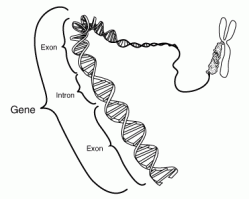 Gene patenting has been a hotly debated topic for as long as Patent Docs has been covering developments in biotech patent law. In fact, only two days after Patent Docs began posting new content, Chicago-Kent College of Professor of Law Lori Andrews and the late Michael Critchton published an article in the November 11, 2006 issue of Parade magazine, in which the two advocated for a Genetic Bill of Rights that would have included a prohibition on gene patents (see "Gene Patenting in the News Again"). In response, Patent Docs countered with an article refuting the factual misstatements in the Andrews-Critchton article (see "In Support of Gene Patents"). The debate between gene patenting proponents and opponents has been so heated that the issue has made three of our four top stories lists (coming in at #4 last year and at #12 in 2007). And this year — perhaps making up for omitting the story from our 2008 list — we have given the story two of the top four spots (one for the debate and one for the AMP v. USPTO case).
In 2010, Patent Docs reported on anti-gene patenting articles that appeared in a number of major publications, including the Los Angeles Times, The Boston Globe, Newsweek, Nature Biotechnology, and The Huffington Post. The gene patenting animus extended to television, where "60 Minutes" took a less than fair and balanced look at the issue only days after the District Court ruled against Myriad in the AMP v. USPTO case. During the "60 Minutes" segment, which clocked in at just over thirteen and a half minutes, correspondent Morley Safer devoted about three and a half minutes to an interview with Lisbeth Ceriani and Genae Girard (who were recently diagnosed with breast cancer and who are plaintiffs in the AMP v. USPTO case), and about a minute and a half each to Prof. Andrews, Dr. Aubrey Milunsky (Co-Director for the Center for Human Genetics and Professor of Human Genetics, Pediatrics, Pathology, and Obstetrics & Gynecology at the Boston University School of Medicine), Patent Docs author Dr. Kevin Noonan, and Chris Hansen (Senior National Staff Counsel for the American Civil Liberties Union (ACLU) and co-counsel for plaintiffs in AMP v. USPTO). Only Dr. Noonan represented gene patenting proponents. A decidedly more balanced examination of the issue was presented on PBS' "Newshour" program, and a piece that may (or may not) have been supportive of Dr. Noonan's position appeared on Comedy Central's "Colbert Report."
Gene patenting opposition was not, however, confined to the Fourth Estate. A report issued by the Secretary's Advisory Committee on Genetics, Health and Society (SACGHS), which was charged with advising the Secretary of Health and Human Services on human health and societal issues raised by the development and use of genetic technologies, determined that gene patents and licensing practices concerning such patents did not have an adverse impact on patient access to genetic tests, but nevertheless included a number of controversial recommendations, including exempting gene patents from infringement liability. In April, reports indicated that Congressman Xavier Becerra (D-CA) was ready to reintroduce his anti-gene patenting bill (Rep. Becerra introduced a similar bill in 2007). Rep. Becerra's plans to reintroduce the bill never materialized, perhaps as a result of the District Court's decision in AMP v. USPTO. Finally, in Intervet v. Merial, which the Federal Circuit decided in August, Judge Dyk took the occasion to sua sponte question the patent-eligibility for isolated DNA molecules.
For information regarding this and other related topics, please see:
• "'At-Home' Testing for BRCA Gene Mutations," October 13, 2010
• "The Financial Times' Take on Gene Patenting," August 30, 2010
• "Uh-oh: It Looks Like Judge Dyk Has Been Drinking the ACLU's Kool-Aid®," August 11, 2010
• "Intervet Inc. v. Merial Ltd. (Fed. Cir. 2010)," August 10, 2010
• "Facts, Perhaps the Antidote to the Anti-gene Patenting Plague," July 18, 2010
• "Huffington Post Provides Latest Anti-gene Patenting Soapbox," July 14, 2010
• "European Gene Patent Scope Limited by Landmark EU Court Ruling," July 8, 2010
• "Australian Senate to Release Gene Patenting Findings Next Week," June 8, 2010
• "Nature Biotechnology and More Anti-gene Patenting Myths," May 31, 2010
• "MPEG LA Announces Formation of Gene Patent Pool," April 21, 2010
• "The Fantastical Economics of the Gene Patenting Debate," April 18, 2010
• "'Colbert Report' Enters Gene Patenting Fray," April 18, 2010
• "He's Baaack!: Congressman Becerra Once Again Tries to Ban Gene Patenting by Statute," April 8, 2010
• "'60 Minutes' and 'Newshour' Take Different Approaches to Covering Gene Patenting Story," April 5, 2010
• "'60 Minutes' Examines Gene Patenting Issue on Sunday, April 4th — Patent Docs Author Kevin Noonan to Appear on Program," April 2, 2010
• "BIO Sends Letter on SACGHS Report to HHS Secretary Sebelius," February 11, 2010
• "Debating Gene Patents – Round Four," February 10, 2010
• "Newsweek = Newspeak on Gene Patenting," February 8, 2010
• "BIO Comes out Swinging against SACGHS Report," February 4, 2010
• "Everybody Knows — The Boston Globe Weighs in on Gene Patenting," February 1, 2010
• "Like Peas in a Pod," January 12, 2010
#3 — Fate of Diagnostic Method Claims to Be Determined
 In June, the Supreme Court issued its long-awaited decision in Bilski v. Kappos, agreeing with the Federal Circuit that Bilski's claims to methods for "hedging" risk in commodities trading are not patent-eligible subject matter. One day after issuing its decision in Bilski v. Kappos, the Supreme Court granted certiorari, vacated the Federal Circuit's decision below, and remanded to the appellate court two cases concerning medical diagnostic claims: Prometheus Laboratories, Inc. v. Mayo Collaborative Services and Classen Immunotherapies, Inc. v. Biogen Idec. A little more than two weeks ago, the Federal Circuit dispensed with one of these two cases, determining in Prometheus Laboratories, Inc. that the claims at issue were directed to patent-eligible subject matter. Practitioners and applicants now await the Federal Circuit's decisions in Classen Immunotherapies, Inc. and AMP v. USPTO, which should further explicate the metes and bounds of patent-eligible subject matter with respect to diagnostic method claims.
For information regarding this and other related topics, please see:
• "Patent Eligibility and In re Grams," December 28, 2010
• "Prometheus Laboratories, Inc. v. Mayo Collaborative Services (Fed. Cir. 2010)," December 20, 2010
• "An Application of the Abstract Idea Exclusion to Patent Eligibility," December 8, 2010
• "Patenting Information," December 1, 2010
• "IPO Submits Commentary on USPTO Bilski Interim Guidance," October 6, 2010
• "Prometheus Labs. v. Mayo Collaborative Services — Briefing Schedule," September 14, 2010
• "USPTO Issues Memo to Examiners on Bilski Decision," July 15, 2010
• "AMP v. USPTO after Bilski v. Kappos," July 6, 2010
• "Bilski v. Kappos: What Effects on Biotechnology Patents?" July 1, 2010
• "Reaction to Bilski v. Kappos," June 29, 2010
• "Bilski v. Kappos (2010)," June 28, 2010
• "Laboratory Corp. of America Holdings v. Metabolite Laboratories, Inc. (Fed. Cir. 2010)," March 17, 2010
#2 — Biosimilar Regulatory Pathway Enacted
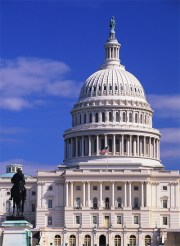 The year began with the Obama administration reportedly pushing for a lower data exclusivity period than the 12-year period contained in both the House and Senate versions of the health care reform bill (readers may recall that the Senate bill was passed on Christmas Eve in 2009). The four-year fight over an appropriate data exclusivity period continued through President Obama's "open, bipartisan" health care reform summit at the White House in February to the House's surprising vote agreeing to the Senate version of the Patient Protection and Affordable Care Act (PPACA) in March. The bill returned to the Senate before finally landing on the President's desk, where the legislation was signed into law on March 23. In November, the Food and Drug Administration held two days of public hearings on the approval pathway for biosimilar biological products that was created when President Obama signed the PPACA into law. With a biosimilar regulatory pathway in place, the question now is who will be the first to take advantage of the pathway.
For information regarding this and other related topics, please see:
• "EMA Publishes Guidelines for Biosimilar Antibodies – Part II," December 2, 2010
• "EMA Publishes Guidelines for Biosimilar Antibodies – Part I," November 30, 2010
• "Wrapping up the Issues from the FDA Hearings on Biosimilars," November 21, 2010
• "Clinical Trial Requirements Are Top Issue at FDA Hearings on Biosimilars," November 10, 2010
• "Pfizer and Biocon Sign Global Commercialization Agreement on Biosimilars," October 27, 2010
• "Guidelines for Biosimilar Antibodies in Europe Due in November," October 3, 2010
• "FDA Planning to Hold Public Hearings on Biosimilar Approval Pathway," September 29, 2010
• "Follow-on Biologics News Briefs – No. 13," September 21, 2010
• "House Passes Health Care Reform Bill — Biosimilar Regulatory Pathway Makes Cut, Pay-for-Delay Ban Does Not," March 22, 2010
• "New York Times Provides Soapbox for Data Exclusivity Critics," March 8, 2010
• "President's Health Care Plan Includes Pay-for-Delay Ban and Biosimilar Regulatory Pathway," February 24, 2010
• "PhRMA Representative Questions Follow-on Biologics Paper," February 18, 2010
• "Follow-on Biologics News Briefs – No. 12," January 31, 2010
• "Law Professors Contend that Data Exclusivity Is Secondary Issue in Follow-on Biologics Debate," January 25, 2010
• "Governors Write President in Support of 12-Year Data Exclusivity Period," January 20, 2010
• "Data Exclusivity Follow-up: More of the Same," January 18, 2010
• "Snatching Defeat from the Jaws of Victory?" January 17, 2010
#1 — District Court Rules in Favor of Plaintiffs in AMP v. USPTO
 No story received more attention on Patent Docs in 2010 than the Association of Molecular Pathology v. U.S. Patent and Trademark Office case. In March, Judge Robert W. Sweet of the Southern District of New York surprised some biotech practitioners and applicants by ruling in favor of the plaintiffs, granting partial summary judgment that the claims of several patents on BRCA1 were invalid as encompassing non-statutory subject matter. Myriad Genetics and the Directors of the University of Utah Research Foundation appealed the decision to the Federal Circuit in June. Patent Docs has provided extensive coverage of the briefing in the appeal (and will continue to do so in the coming months). A total of 29 amicus briefs were filed, fifteen in support of Defendants-Appellants and/or reversal, twelve in support of Plaintiffs-Appellees and/or affirmance, and two which remain to be determined (Patent Docs has not yet obtained copies of the last two briefs). Regardless of the Federal Circuit's decision in the case, it is almost certain to make our top stories list in 2011.
For information regarding this and other related topics, please see:
• "AMP v. USPTO — Briefing Update II," December 16, 2010
• "Amicus Briefs in AMP v. USPTO: Alynylam Pharmaceuticals, Inc.," December 15, 2010
• "The Relevance of Patent Exhaustion in the Myriad Genetics Case," December 14, 2010
• "AMP v. USPTO — Briefing Update," December 14, 2010
• "Amicus Briefs in AMP v. USPTO: University of New Hampshire School of Law," December 12, 2010
• "Amicus Briefs in AMP v. USPTO: Rosetta Genomics & George Mason University," December 8, 2010
• "Academic Amici Refute ACLU Falsehoods in Gene Patenting Debate," December 7, 2010
• "Amicus Briefs in AMP v. USPTO: Genetic Alliance," November 10, 2010
• "BIO and AUTM File Joint Amicus Brief in AMP v. USPTO," November 9, 2010
• "AIPLA Submits Amicus Brief in AMP v. USPTO," November 3, 2010
• "IPO Files Amicus Brief in AMP v. USPTO," November 2, 2010
• "AMP v. USPTO — Briefing Update," November 1, 2010
• "DOJ Tries to Be All Things to All Constituencies in Myriad Amicus Brief," October 31, 2010
• "Myriad Files Appeal Brief in AMP v. USPTO," October 28, 2010
• "AMP v. USPTO — Briefing Schedule Update," August 22, 2010
• "FCBA Submits Amicus Brief on Motion for Recusal in AMP v. USPTO," August 9, 2010
• "Appellees Move for Recusal of Chief Judge Rader in AMP v. USPTO Appeal," July 19, 2010
• "AMP v. USPTO after Bilski v. Kappos," July 6, 2010
• "Myriad Appeals AMP v. USPTO Decision," June 16, 2010
• "AMP v. USPTO: What Everyone Else Is Saying – Part II," June 8, 2010
• "AMP v. USPTO: What Everyone Else Is Saying," April 6, 2010
• "'60 Minutes' and 'Newshour' Take Different Approaches to Covering Gene Patenting Story," April 5, 2010
• "'60 Minutes' Examines Gene Patenting Issue on Sunday, April 4th — Patent Docs Author Kevin Noonan to Appear on Program," April 2, 2010
• "AMP v. USPTO: What the Parties Are Saying About the Decision," April 1, 2010
• "Caught in a Time Warp: The (In)validity of BRCA1 Oligonucleotide Claims," March 30, 2010
• "Round One Goes to the ACLU," March 29, 2010
• "USPTO Asks out of Gene Patenting Case (Again)," January 19, 2010