• By Kevin E. Noonan

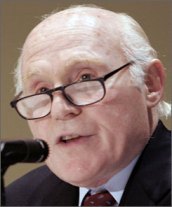
    Will, George George Will, conservative icon, wrote an Op-Ed piece in The Washington Post last week extolling the virtues (and the necessities) of innovation and government support for it ("Rev the scientific engine").

    He takes issue with some of his conservative brethren that, in view of what he terms the "excesses" of the various economic stimulus packages of the past few years, now oppose government expenditures that would support "innovation."  What America needs is "internal improvements," he says, in the form of support for scientific and engineering research and education.  He notes the decline in such support in the form of declining federal government support for research in engineering and the physical sciences, which dropped by more than 50% between 1970-1995 (which he characterizes as "America has been consuming its seed corn") and state support for science education, which was at its lowest levels since before Ronald Reagan was President before the economic meltdown at the end of the Bush administration.  (Curiously he fails to mention that the American technological Renaissance occurred during the Clinton administration.)  He also notes that countries like South Korea (38%) and China (47%) award a far higher percentage of their undergraduate degrees in science than does the U.S. (16%).

    Washington Post He argues that "[t]he prerequisites for economic dynamism are ideas" in this century, as much as roads and canals were necessities earlier in our history.  However, he sees a risk in an era of ("curdled") populism, that there will be political resistance to supporting the "elites" (at least scientific ones) that are responsible for the breakthrough discoveries that must be made for research to translate to economic benefits.  This is because "[n]inety-nine percent of the discoveries are made by 1 percent of the scientists," he says, citing Nobel Laureate Julius Axelrod.  As a consequence, as part of making intelligent, pro-prosperity choices, Mr. Will argues that Congressional Republicans should be "defending research spending that sustains collaboration among complex institutions — corporations' research entities and research universities."  This is because "[r]esearch, including in the biological sciences, that yields epoch-making advances requires time horizons that often are impossible for businesses, with their inescapable attention to quarterly results."

    Along the way he cites Margaret Thatcher and Abraham Lincoln (who was, after all, a Republican), but most tellingly he cites Richard Levin from Yale for an important economic point:  "Would Japan's growth have lagged since 1990 'if Microsoft, Netscape, Apple and Google had been Japanese companies'"?  Culturally, the last twenty years have seen the world change from one in which everyone had a Walkman® to one where everyone has an iPod®, and where Amgen, Genentech, Biogen-Idec, and dozens of other U.S. companies drove the biotechnology revolution.  Mr. Will credits investment for driving this prosperity, and in citing Lincoln he acknowledges (however tacitly) the importance of patents in supporting such investment.  His point is not to defend the patent system but to support government support for research; unstated but nonetheless true is that one cannot thrive without the other.

  • By Kevin E. Noonan

    Eshoo, Anna Members of Congress (Rep. Anna G. Eshoo (D-CA) (at right), Rep. Jan Inslee (D-WA), and Rep. Joe Barton (R-TX)) who sponsored the follow-on biologics portion of the comprehensive health care reform bill past year (Patient Protection and Affordable Care Act (H.R. 3590, now P.L. 111-148)) have sent a letter to the Food and Drug Administration, purportedly to explain the "legislative intent" of the data exclusivity provisions of the bill.

    Those provisions read as follows:

    SEC. 7002. APPROVAL PATHWAY FOR BIOSIMILAR BIOLOGI CAL PRODUCTS.

    (a) LICENSURE OF BIOLOGICAL PRODUCTS AS BIO- SIMILAR OR INTERCHANGEABLE.—Section 351 of the Public Health Service Act (42 U.S.C. 262) is amended—

    (7) EXCLUSIVITY FOR REFERENCE PRODUCT.—

    ''(A) EFFECTIVE DATE OF BIOSIMILAR APPLICATION APPROVAL.—Approval of an application under this subsection may not be made effective by the Secretary until the date that is 12 years after the date on which the reference product was first licensed under subsection (a).

    This portion of the bill would preclude a biosimilar application from being approved "until the date that is 12 years after the date on which the reference product was first licensed."  This provision has been described by several commentators as providing a 12-year "market exclusivity" term for innovator biologic drugs.  Not so, say these MOCs; responding to the following question posed by the Agency in public hearings regarding implementation of the new law:

    What factors should the agency consider in determining whether a modification to the structure of the licensed reference biological product results in a change in safety, purity, or potency, such that a subsequent Biologic License Application (BLA) may be eligible for a second 12-year period of marketing exclusivity?

    FDA Their letter states that P.L.111-148 does not provide a market exclusivity period.  Instead, the bill provides 12 years of data exclusivity.  The differences between these two types of exclusivity are "significant and critical," because the intent of these legislators was to "prohibit[] the FDA from allowing another manufacturer to rely on the data of an innovator to support approval of another product."  The law was not intended to "prohibit or prevent another manufacturer from developing its own data to justify FDA approval of a similar of competitive product."  This interpretation would encourage biologic drug competitors (presumably using the innovator's FDA submission as a roadmap) to submit their own data in support of an independent biologic license application (BLA) pursuant to Sec. 351 of the Public Health Service Act.

    The letter also emphasizes that the bill prohibits "evergreening" by innovators, specifically that "no product, under any circumstances, can be granted 'bonus' years of data exclusivity for mere improvements on a product."  New products, termed "next generation" by the letter's signatories, are not within the definition of evergreening — such a new product (having "significant changes in safety, purity or potency") is considered a "new biologic [that] will receive its own 12-year period of data exclusivity" (emphasis in original).  However the letter positively asserts that while its authors "care deeply about patient access to biologics," they "also care about the advancement of science and our ability to treat the most complex diseases."  Thus, they warn that "[a]ny proposal to limit the definition of a 'new' product, and thus one which is entitled to its own period of data exclusivity has the potential to stifle innovation and negatively impact patient care," which they oppose.

    While certain to be helpful in guiding the agency on interpreting the statute according to Congressional intent, the letter is not in any way binding on how the Agency decides to promote its regulations.  There is a long tradition of skepticism by legal scholars and judges about the validity of any "intent" asserted for Congress in passing legislation.  And executive agencies have the capacity (indeed, the duty) to interpret their enabling statutes and are granted (by courts) substantial deference in these determinations.  So while the letter from these members of Congress is certainly deserving of consideration, stakeholders and their opinions, as well as Agency expertise, are likely to play an even more important role in shaping the eventual contours of follow-on biologic drug policy.

  • By Donald Zuhn

    Biotechnology Industry Organization (BIO) A survey commissioned by the Biotechnology Industry Organization (BIO) shows that 89% of respondents believe patents provide the protection, time, and funding researchers to work on major technological discoveries, and therefore, are a "good thing."  The survey also showed that while 51% respondents had reservations about DNA-based patents, those respondents could support them because such patents allow biotech companies to work on treatments and cures for deadly diseases.

    The results of the survey were summarized in the December issue of BIO's e-newsletter BIOtech NOW.  The survey, which was conducted by Public Opinion Strategies, assessed the views of 400 "elite" voters, which were defined as voters having a college degree, a household income of more than $75,000, and who closely follow current events.

    According to the article in BIOtech NOW, the survey highlighted the need for DNA patent proponents to explain to the public that:

    • further research can still take place during the life of the patent;
    • when the patent expires, it's freely available to the public;
    • the opposition has already inserted "gene patents" and "human gene patents" into the vernacular of this debate, terms that produce the negative reactions;
    • it would be helpful to adopt alternative terms, such as "genome sequence patents," "DNA-based patents" or "DNA patents."

  • By Sherri Oslick

    Gavel About Court Report:  Each week we will report briefly on recently filed biotech and pharma cases.

    Aventis Pharma S.A. et al. v. Accord Healthcare Inc. USA
    1:11-cv-00018; filed January 6, 2011 in the District Court of Delaware

    • Plaintiffs:  Aventis Pharma S.A.; Sanofi-Aventis U.S. LLC
    • Defendant:  Accord Healthcare Inc. USA

    Infringement of U.S. Patent Nos. 5,714,512 ("Compositions Containing Taxane Derivatives," issued February 3, 1998) and 5,750,561 (same title, issued May 12, 1998) following a Paragraph IV certification as part of Accord's filing of an ANDA to manufacture a generic version of Aventis' Taxotere® (docetaxel, used to treat breast, lung, prostate, gastric, and head and neck cancers).  View the complaint here.


    App Pharmaceuticals, LLC v. Navinta LLC et al.

    3:11-cv-00063; filed January 6, 2011 in the District Court of New Jersey

    • Plaintiff:  APP Pharmaceuticals, LLC
    • Defendants:  Navinta LLC; Sandoz Inc.; Sandoz AG

    Infringement of U.S. Patent Nos. 5,670,524 ("Methods and Compositions for the Treatment of Pain Utilizing Ropivacaine," issued September 23, 1997) and 5,834,489 (same title, issued November 10, 1998) following defendants' filing of an ANDA to manufacture a generic version of APP's Naropin® (ropivacaine hydrochloride injection product, used for the production of regional or local anesthesia for surgery and for acute pain management).  View the complaint here.


    Pronova BioPharma Norge AS v. Apotex Corp. et al.

    1:11-cv-00012; filed January 5, 2011 in the District Court of Delaware

    • Plaintiff:  Pronova BioPharma Norge AS
    • Defendants:  Apotex Corp.; Apotex Inc.

    Infringement of U.S. Patent No. 7,732,488 ("Pharmaceutical Composition Comprising Low Concentrations of Environmental Pollutants," issued June 8, 2010) following a Paragraph IV certification as part of Apotex's filing of an ANDA to manufacture a generic version of Pronova's Lovaza® (omega-3-acid ethyl esters, used to reduce triglyceride levels in adult patients with very high triglyceride levels).  View the complaint here.

  • Calendar

    January 11, 2011 – Gene Patenting — Defining a Potentially Pivotal Moment in Biotech (Foley & Lardner LLP) – 12:00 to 1:00 pm (EST)

    January 12, 2011 – New USPTO Guidelines and the Obviousness Standard for Patents (Strafford) – 1:00 – 2:30 PM (EST)

    January 21, 2011 – Patents, Innovation and Job Creation: A Virtuous Circle (Innovation Alliance) – Washington, DC

    January 25, 2011 – Understanding Obviousness in a Post-KSR World:  Practical Applications for Compliance with the Recent USPTO Guidelines (Technology Transfer Tactics) – 1:00 – 2:30 PM (EST)

    January 26-27, 2011 – The Life Sciences Lawyer's Guide to Patent Term Adjustment and Patent Term Extensions*** (American Conference Institute) – New York, NY

    January 31 – February 1, 2011 – Medical Device Patent Litigation*** (American Conference Institute) – New York, NY

    February 16-17, 2011 – Life Sciences Collaborative Agreements and Acquisitions*** (American Conference Institute) – New York, NY

    ***Patent Docs is a media partner of this conference or CLE

  • New York #2 American Conference Institute (ACI) will be holding a conference on Medical Device Patent Litigation from January 31 to February 1, 2011 in New York, NY.  Topics of discussion at the conference will include:

    • Satisfying the four-prong test set forth in eBay and obtaining a permanent injunction;
    • Effectively opposing injunction requests;
    • Developing an unassailable reasonable royalty analysis;
    • Contesting the plaintiff's proffer of "comparable" licenses;
    • Recognizing the implications of Hatch-Waxman regulations on medical device patent litigation; and
    • Enforcing and challenging the validity of method patents in the device context post-Bilski.

    Brochure In particular, ACI's faculty will offer presentations on the following topics:

    • Positioning your case for success — Early case strategies and tactical considerations;
    • Asserting invalidity defenses and advancing persuasive infringement claims;
    • Balancing risks and navigating the interplay between re-examination and litigation;
    • Presenting an effective Markman case — Winning strategies for managing a pivotal point in patent litigation;
    • Injunctive relief: Strategies for obtaining and opposing injunctions;
    • Developing a damages case and defenses in the wake of recent federal circuit decisions: Calculating and proving damages and minimizing damages liability;
    • View from the Bench: Judicial perspectives on medical device patent litigation;
    • Managing and reducing costs associated with patent litigation;
    • Patent litigation for drug and device combination products: Preparing for the intersection between medical devices and Hatch-Waxman litigation;
    • Successfully asserting and challenging claims of inequitable conduct in the crowded field of medical device patents; and
    • Restructuring patent marking practices following the recent surge of false marking litigation.

    A pre-conference workshop on "FDA Regulatory Process Primer: Understanding Regulatory Processes for Devices and Their Interplay with Patent Litigation," will be offered from 8:00 to 11:30 am on January 31, 2011, and a post-conference workshop on "Settlement and Licensing Strategies — Developing a Solid Licensing Plan and Drafting Sound Licensing Agreements," will be offered from 9:00 am to 12:00 pm on February 2, 2011.

    The agenda for the Pharma/Biotech Collaborative Agreements conference can be found here.  A complete brochure for this conference, including an agenda, detailed descriptions of conference sessions, list of speakers, and registration form can be obtained here.

    ACI - American Conference Institute The registration fee for the conference is $2,295 (conference alone), $2,895 (conference and one workshop), or $3,495 (conference and both workshops).  Those registering by January 11, 2011 will receive a $200 discount.  Those interested in registering for the conference can do so here, by calling 1-888-224-2480, or by faxing a registration form to 1-877-927-1563.

    Patent Docs is a media partner of ACI's Medical Device Patent Litigation conference.

  • Foley & Lardner Foley & Lardner LLP will be hosting a web conference entitled "Gene Patenting — Defining a Potentially Pivotal Moment in Biotech" on Tuesday, January 11, 2011 from 12:00 to 1:00 pm (Eastern).  The web conference will be moderated by Harold C. Wegner of Foley & Lardner LLP, and will include the following panelists:  Patent Docs author Kevin Noonan, Ph.D. of McDonnell Boehnen Hulbert & Berghoff LLP; Associate Professor Joshua D. Sarnoff of DePaul University College of Law; Hans Sauer, Ph.D., Associate General Counsel for Intellectual Property for the Biotechnology Industry Organization (BIO); and Jacqueline D. Wright Bonilla, Ph.D. of Foley & Lardner LLP.

    Issues to be discussed will include:

    • Is DNA a 35 U.S.C. § 101 "composition of matter"?

    • What exactly is a "gene patent," and what does it mean to assert that such technology is patent-ineligible?

    • Are other statutory requirements (such as non-obviousness) more appropriate gatekeepers for obtaining patents directed to this subject matter?

    • Does the Justice Department's distinction supporting patent-eligibility of some DNA compositions, but not isolated "product-of-nature" DNA, make legal and scientific sense?

    • What practical implications would a decision based on the DOJ distinction have for the biotech industry?

    • What alternate claim forms will be open?

    • Would an anti-eligibility ruling violate the Trade-Related Aspects of Intellectual Property Rights (TRIPS)?

    • Will the Federal Circuit dismiss the case for lack of jurisdiction under Medimmune v. Genentech?

    Those interested in attending the conference can do so here.  Additional information regarding the web conference can be found here.

  • Innovation Alliance The Innovation Alliance will be sponsoring a conference on "Patents, Innovation and Job Creation: A Virtuous Circle" on Friday, January 21, 2011 from 9:00 am to 1:35 pm at The Newseum, located at 555 Pennsylvania Ave., N.W. in Washington, DC.  The conference will provide discussions with inventors, entrepreneurs, business leaders, and industry experts on the economic value of patents and a vigorous USPTO.

    The agenda for the conference is as follows:

    • 9:00 — Address by Retired Federal Circuit Chief Judge Paul Michel

    • 9:45 — Panel on Job Creation and Innovation: How an Idea Can Create Jobs and Economic Growth — to be moderated by IPWatchdog's Gene Quinn

    • 11:15 — Panel on Patents in the Modern Innovation Economy — to be moderated by Kim Hart of Politico.com

    • 1:00 — Keynote Address by U.S. Patent and Trademark Office Director David Kappos

    Confirmed panelists include Robert Alt, The Heritage Foundation; Gregory J. Junemann, IFPTE, AFL-CIO; Lisa Kuuttila, STC.UNM; Bill Jones, Cummins-Allison Corp.; Harry J. Leonhardt, Amylin Pharmaceuticals; William J. Merritt, InterDigital; Hank Nothhaft, Tessera; and John Swart, Exemplar Genetics.

    Those interested in attending the conference should RSVP to info@innovationalliance.net.

  • By Donald Zuhn

    EPO Last month, the European Patent Office (EPO) announced that in some circumstances, applicants would be exempted from filing a copy of search results under amended Rule 141(1) EPC.  Prior to the EPO's announcement, the new rule would have required applicants to provide a copy of the results of any search that was carried out on a priority application when filing a European application or when entering the regional phase in Europe, and If the results were unavailable upon filing, to provide the results "without delay after such results have been made available" (see "EPO Prepares to Roll out New Prior Art Search Disclosure Rules").  The requirement to provide search results applies to European and international applications filed on or after January 1, 2011.

    Pursuant to the EPO's recent announcement, applicants will be exempted from providing search results for a priority application when (1) the EPO drew up a certain type of search report on that application, or (2) the application is a first filing in Japan, the United Kingdom, or the United States.  The EPO explained that under amended Rule 141(2) EPC, a copy of the search results under Rule 141(1) EPC is deemed to be duly filed if it is available to the EPO and will be included in the file of the European patent application under conditions determined by the President of the EPO.  The notice indicates that in October, the President of the EPO decided that the EPO would include a copy of certain search results in the file of a European patent application where the EPO had drawn up the search report, thus exempting applicants in such cases from filing the search results themselves.  According to an earlier notice from the EPO, only the following search reports will apply:  European search reports under Article 92 EPC, international search reports under Article 15(1) PCT, international-type searches under Article 15(5) PCT, and search reports made on behalf of a national office on a national application in Belgium, Cyprus, France, Greece, Italy, Luxembourg, Malta, Netherlands, and Turkey.

    The second class of exempted applications is likely more relevant to U.S. practitioners and applicants.  The EPO noted that the Japan Patent Office (JPO), the United Kingdom Intellectual Property Office (UKIPO), and the United States Patent and Trademark Office (USPTO) had each agreed to provide the EPO with electronic copies of search results produced by their offices and covered by Rule 141(1) EPC.  As a result, the President of the EPO determined that the EPO would include these search results in the file of a European patent application, thus exempting applicants claiming the priority of a first filing made in Japan, the United Kingdom, or the United States from filing copies of the search results themselves.

    In a release posted on the Marks & Clerk website, the European IP firm notes that if an EP application claims priority from one or more applications filed with an office other than the USPTO, JPO, or UKIPO, search results will still need to be filed with the EPO.  In addition, the notice indicates that under amended Rule 141(1) EPC, the actual document issued by the patent office (as opposed to a list of references cited) must be filed with the EPO.

  • By Donald Zuhn

    Fireworks Reflecting upon the events of the past twelve months, Patent Docs presents its fourth annual list of top biotech/pharma patent stories.  For 2010, we identified a dozen stories that we covered on Patent Docs last year that we believe had (or are likely to have) the greatest impact on biotech/pharma patent practitioners and applicants.  On Sunday, we counted down stories #12 to #9, and on Monday we covered stories #8 to #5.  Today, we will present our top four stories of 2010.  As with our other lists (2009, 2008, and 2007), links to our coverage of these stories (as well as a few links to articles on related topics) have been provided in case you missed the articles the first time around or wish to go back and have another look.  As always, we love to hear from Patent Docs readers, so if you think we left something off the list or disagree with anything we included, please let us know.


    #4 — Gene Patenting Debate Rages On

    Gene Gene patenting has been a hotly debated topic for as long as Patent Docs has been covering developments in biotech patent law.  In fact, only two days after Patent Docs began posting new content, Chicago-Kent College of Professor of Law Lori Andrews and the late Michael Critchton published an article in the November 11, 2006 issue of Parade magazine, in which the two advocated for a Genetic Bill of Rights that would have included a prohibition on gene patents (see "Gene Patenting in the News Again").  In response, Patent Docs countered with an article refuting the factual misstatements in the Andrews-Critchton article (see "In Support of Gene Patents").  The debate between gene patenting proponents and opponents has been so heated that the issue has made three of our four top stories lists (coming in at #4 last year and at #12 in 2007).  And this year — perhaps making up for omitting the story from our 2008 list — we have given the story two of the top four spots (one for the debate and one for the AMP v. USPTO case).

    In 2010, Patent Docs reported on anti-gene patenting articles that appeared in a number of major publications, including the Los Angeles Times, The Boston Globe, Newsweek, Nature Biotechnology, and The Huffington Post.  The gene patenting animus extended to television, where "60 Minutes" took a less than fair and balanced look at the issue only days after the District Court ruled against Myriad in the AMP v. USPTO case.  During the "60 Minutes" segment, which clocked in at just over thirteen and a half minutes, correspondent Morley Safer devoted about three and a half minutes to an interview with Lisbeth Ceriani and Genae Girard (who were recently diagnosed with breast cancer and who are plaintiffs in the AMP v. USPTO case), and about a minute and a half each to Prof. Andrews, Dr. Aubrey Milunsky (Co-Director for the Center for Human Genetics and Professor of Human Genetics, Pediatrics, Pathology, and Obstetrics & Gynecology at the Boston University School of Medicine), Patent Docs author Dr. Kevin Noonan, and Chris Hansen (Senior National Staff Counsel for the American Civil Liberties Union (ACLU) and co-counsel for plaintiffs in AMP v. USPTO).  Only Dr. Noonan represented gene patenting proponents.  A decidedly more balanced examination of the issue was presented on PBS' "Newshour" program, and a piece that may (or may not) have been supportive of Dr. Noonan's position appeared on Comedy Central's "Colbert Report."

    Gene patenting opposition was not, however, confined to the Fourth Estate.  A report issued by the Secretary's Advisory Committee on Genetics, Health and Society (SACGHS), which was charged with advising the Secretary of Health and Human Services on human health and societal issues raised by the development and use of genetic technologies, determined that gene patents and licensing practices concerning such patents did not have an adverse impact on patient access to genetic tests, but nevertheless included a number of controversial recommendations, including exempting gene patents from infringement liability.  In April, reports indicated that Congressman Xavier Becerra (D-CA) was ready to reintroduce his anti-gene patenting bill (Rep. Becerra introduced a similar bill in 2007).  Rep. Becerra's plans to reintroduce the bill never materialized, perhaps as a result of the District Court's decision in AMP v. USPTO.  Finally, in Intervet v. Merial, which the Federal Circuit decided in August, Judge Dyk took the occasion to sua sponte question the patent-eligibility for isolated DNA molecules.

    For information regarding this and other related topics, please see:

    • "'At-Home' Testing for BRCA Gene Mutations," October 13, 2010
    • "The Financial Times' Take on Gene Patenting," August 30, 2010
    • "Uh-oh: It Looks Like Judge Dyk Has Been Drinking the ACLU's Kool-Aid®," August 11, 2010
    • "Intervet Inc. v. Merial Ltd. (Fed. Cir. 2010)," August 10, 2010
    • "Facts, Perhaps the Antidote to the Anti-gene Patenting Plague," July 18, 2010
    • "Huffington Post Provides Latest Anti-gene Patenting Soapbox," July 14, 2010
    • "European Gene Patent Scope Limited by Landmark EU Court Ruling," July 8, 2010
    • "Australian Senate to Release Gene Patenting Findings Next Week," June 8, 2010
    • "Nature Biotechnology and More Anti-gene Patenting Myths," May 31, 2010
    • "MPEG LA Announces Formation of Gene Patent Pool," April 21, 2010
    • "The Fantastical Economics of the Gene Patenting Debate," April 18, 2010
    • "'Colbert Report' Enters Gene Patenting Fray," April 18, 2010
    • "He's Baaack!: Congressman Becerra Once Again Tries to Ban Gene Patenting by Statute," April 8, 2010
    • "'60 Minutes' and 'Newshour' Take Different Approaches to Covering Gene Patenting Story," April 5, 2010
    • "'60 Minutes' Examines Gene Patenting Issue on Sunday, April 4th — Patent Docs Author Kevin Noonan to Appear on Program," April 2, 2010
    • "BIO Sends Letter on SACGHS Report to HHS Secretary Sebelius," February 11, 2010
    • "Debating Gene Patents – Round Four," February 10, 2010
    • "Newsweek = Newspeak on Gene Patenting," February 8, 2010
    • "BIO Comes out Swinging against SACGHS Report," February 4, 2010
    • "Everybody Knows — The Boston Globe Weighs in on Gene Patenting," February 1, 2010
    • "Like Peas in a Pod," January 12, 2010


    #3 — Fate of Diagnostic Method Claims to Be Determined

    Prometheus Laboratories In June, the Supreme Court issued its long-awaited decision in Bilski v. Kappos, agreeing with the Federal Circuit that Bilski's claims to methods for "hedging" risk in commodities trading are not patent-eligible subject matter.  One day after issuing its decision in Bilski v. Kappos, the Supreme Court granted certiorari, vacated the Federal Circuit's decision below, and remanded to the appellate court two cases concerning medical diagnostic claims:  Prometheus Laboratories, Inc.  v. Mayo Collaborative Services and Classen Immunotherapies, Inc. v. Biogen Idec.  A little more than two weeks ago, the Federal Circuit dispensed with one of these two cases, determining in Prometheus Laboratories, Inc. that the claims at issue were directed to patent-eligible subject matter.  Practitioners and applicants now await the Federal Circuit's decisions in Classen Immunotherapies, Inc. and AMP v. USPTO, which should further explicate the metes and bounds of patent-eligible subject matter with respect to diagnostic method claims.

    For information regarding this and other related topics, please see:

    • "Patent Eligibility and In re Grams," December 28, 2010
    • "Prometheus Laboratories, Inc. v. Mayo Collaborative Services (Fed. Cir. 2010)," December 20, 2010
    • "An Application of the Abstract Idea Exclusion to Patent Eligibility," December 8, 2010
    • "Patenting Information," December 1, 2010
    • "IPO Submits Commentary on USPTO Bilski Interim Guidance," October 6, 2010
    • "Prometheus Labs. v. Mayo Collaborative Services — Briefing Schedule," September 14, 2010
    • "USPTO Issues Memo to Examiners on Bilski Decision," July 15, 2010
    • "AMP v. USPTO after Bilski v. Kappos," July 6, 2010
    • "Bilski v. Kappos: What Effects on Biotechnology Patents?" July 1, 2010
    • "Reaction to Bilski v. Kappos," June 29, 2010
    • "Bilski v. Kappos (2010)," June 28, 2010
    • "Laboratory Corp. of America Holdings v. Metabolite Laboratories, Inc. (Fed. Cir. 2010)," March 17, 2010


    #2 — Biosimilar Regulatory Pathway Enacted

    Washington - Capitol #3 The year began with the Obama administration reportedly pushing for a lower data exclusivity period than the 12-year period contained in both the House and Senate versions of the health care reform bill (readers may recall that the Senate bill was passed on Christmas Eve in 2009).  The four-year fight over an appropriate data exclusivity period continued through President Obama's "open, bipartisan" health care reform summit at the White House in February to the House's surprising vote agreeing to the Senate version of the Patient Protection and Affordable Care Act (PPACA) in March.  The bill returned to the Senate before finally landing on the President's desk, where the legislation was signed into law on March 23.  In November, the Food and Drug Administration held two days of public hearings on the approval pathway for biosimilar biological products that was created when President Obama signed the PPACA into law.  With a biosimilar regulatory pathway in place, the question now is who will be the first to take advantage of the pathway.

    For information regarding this and other related topics, please see:

    • "EMA Publishes Guidelines for Biosimilar Antibodies – Part II," December 2, 2010
    • "EMA Publishes Guidelines for Biosimilar Antibodies – Part I," November 30, 2010
    • "Wrapping up the Issues from the FDA Hearings on Biosimilars," November 21, 2010
    • "Clinical Trial Requirements Are Top Issue at FDA Hearings on Biosimilars," November 10, 2010
    • "Pfizer and Biocon Sign Global Commercialization Agreement on Biosimilars," October 27, 2010
    • "Guidelines for Biosimilar Antibodies in Europe Due in November," October 3, 2010
    • "FDA Planning to Hold Public Hearings on Biosimilar Approval Pathway," September 29, 2010
    • "Follow-on Biologics News Briefs – No. 13," September 21, 2010
    • "House Passes Health Care Reform Bill — Biosimilar Regulatory Pathway Makes Cut, Pay-for-Delay Ban Does Not," March 22, 2010
    • "New York Times Provides Soapbox for Data Exclusivity Critics," March 8, 2010
    • "President's Health Care Plan Includes Pay-for-Delay Ban and Biosimilar Regulatory Pathway," February 24, 2010
    • "PhRMA Representative Questions Follow-on Biologics Paper," February 18, 2010
    • "Follow-on Biologics News Briefs – No. 12," January 31, 2010
    • "Law Professors Contend that Data Exclusivity Is Secondary Issue in Follow-on Biologics Debate," January 25, 2010
    • "Governors Write President in Support of 12-Year Data Exclusivity Period," January 20, 2010
    • "Data Exclusivity Follow-up: More of the Same," January 18, 2010
    • "Snatching Defeat from the Jaws of Victory?" January 17, 2010


    #1 — District Court Rules in Favor of Plaintiffs in AMP v. USPTO

    ACLU No story received more attention on Patent Docs in 2010 than the Association of Molecular Pathology v. U.S. Patent and Trademark Office case.  In March, Judge Robert W. Sweet of the Southern District of New York surprised some biotech practitioners and applicants by ruling in favor of the plaintiffs, granting partial summary judgment that the claims of several patents on BRCA1 were invalid as encompassing non-statutory subject matter.  Myriad Genetics and the Directors of the University of Utah Research Foundation appealed the decision to the Federal Circuit in June.  Patent Docs has provided extensive coverage of the briefing in the appeal (and will continue to do so in the coming months).  A total of 29 amicus briefs were filed, fifteen in support of Defendants-Appellants and/or reversal, twelve in support of Plaintiffs-Appellees and/or affirmance, and two which remain to be determined (Patent Docs has not yet obtained copies of the last two briefs).  Regardless of the Federal Circuit's decision in the case, it is almost certain to make our top stories list in 2011.

    For information regarding this and other related topics, please see:

    • "AMP v. USPTO — Briefing Update II," December 16, 2010
    • "Amicus Briefs in AMP v. USPTO: Alynylam Pharmaceuticals, Inc.," December 15, 2010
    • "The Relevance of Patent Exhaustion in the Myriad Genetics Case," December 14, 2010
    • "AMP v. USPTO — Briefing Update," December 14, 2010
    • "Amicus Briefs in AMP v. USPTO: University of New Hampshire School of Law," December 12, 2010
    • "Amicus Briefs in AMP v. USPTO: Rosetta Genomics & George Mason University," December 8, 2010
    • "Academic Amici Refute ACLU Falsehoods in Gene Patenting Debate," December 7, 2010
    • "Amicus Briefs in AMP v. USPTO: Genetic Alliance," November 10, 2010
    • "BIO and AUTM File Joint Amicus Brief in AMP v. USPTO," November 9, 2010
    • "AIPLA Submits Amicus Brief in AMP v. USPTO," November 3, 2010
    • "IPO Files Amicus Brief in AMP v. USPTO," November 2, 2010
    • "AMP v. USPTO — Briefing Update," November 1, 2010
    • "DOJ Tries to Be All Things to All Constituencies in Myriad Amicus Brief," October 31, 2010
    • "Myriad Files Appeal Brief in AMP v. USPTO," October 28, 2010
    • "AMP v. USPTO — Briefing Schedule Update," August 22, 2010
    • "FCBA Submits Amicus Brief on Motion for Recusal in AMP v. USPTO," August 9, 2010
    • "Appellees Move for Recusal of Chief Judge Rader in AMP v. USPTO Appeal," July 19, 2010
    • "AMP v. USPTO after Bilski v. Kappos," July 6, 2010
    • "Myriad Appeals AMP v. USPTO Decision," June 16, 2010
    • "AMP v. USPTO: What Everyone Else Is Saying – Part II," June 8, 2010
    • "AMP v. USPTO: What Everyone Else Is Saying," April 6, 2010
    • "'60 Minutes' and 'Newshour' Take Different Approaches to Covering Gene Patenting Story," April 5, 2010
    • "'60 Minutes' Examines Gene Patenting Issue on Sunday, April 4th — Patent Docs Author Kevin Noonan to Appear on Program," April 2, 2010
    • "AMP v. USPTO: What the Parties Are Saying About the Decision," April 1, 2010
    • "Caught in a Time Warp: The (In)validity of BRCA1 Oligonucleotide Claims," March 30, 2010
    • "Round One Goes to the ACLU," March 29, 2010
    • "USPTO Asks out of Gene Patenting Case (Again)," January 19, 2010