Supreme Court Sets Limits on the Bayh-Dole Act
By Kevin E. Noonan —
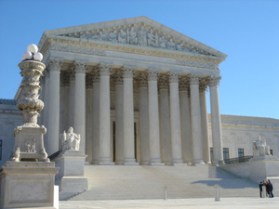 The Supreme Court today handed down its opinion in Board of Trustees of the Leland Stanford Junior University v. Roche Molecular Systems, Inc. The opinion begins (and could have ended) with a recitation of a fundamental premise of U.S. Patent Law: "[s]ince 1790, the patent law has operated on the premise that rights in an invention belong to the inventor." The question here, according to the Court, is whether Congress acted to overrule that principle for federally funded inventions under the Bayh-Dole Act and automatically vest title in the federal contractor. The Court's opinion is that it does not.
 The dispute arose when a research scientist at Stanford, who had signed (as part of his employment agreement) an agreement to assign to Stanford all federally funded inventions, performed research at Cetus and, as a condition for performing that work, signed an agreement to assign any inventions to the company. This work resulted in methods for detecting HIV virus in patient samples, which are used to assess the effectiveness of AIDS treatments. Stanford later obtained several patents on these inventions and sued Roche Molecular Systems (who had acquired Cetus) when the company marketed a diagnostic test that incorporated these methods. The Federal Circuit below made a distinction between an "agreement to assign" to Stanford and the agreement to Cetus, which read that the scientists "will assign and hereby assigns" all inventions to the company. For the appellate court, the language that the scientist "agreed to assign" to Stanford amounted to a promise to assign inventions not yet made and thus, under contract law, was insufficient to divest Cetus of title under the "will assign and hereby assigns" language of that agreement.
 The Supreme Court affirmed, in an opinion by Chief Justice Roberts joined by all but Justices Breyer and Ginsberg (Justice Sotomayor filed a concurring opinion). In doing so, the Court did not pass judgment on the Federal Circuit's interpretation of contract law, however, but focused on the preclusive effect, if any, of the Bayh-Dole Act on the inventor's interests in the invention. The Court recited the several provisions of the Patent Act that require that an inventor is entitled to a patent (subject to the specific provisions of the Act; § 101); that the inventor must sign an oath or declaration attesting to inventorship (§ 115); and that a patent is issued to the inventor or the inventor's assignee (§§ 151, 152, and 261). The primacy of the inventor as patentee is supported by precedent cited by the Court, including Gayler v. Wilder, 10 How. 477, 493 (1851); Solomons v. United States, 137 U.S. 342, 346 (1890); United States v. Dubilier Condenser Corp., 289 U.S. 178, 188 (1933), and under treaty, according to the Court. While much of this same precedent supports the right of an inventor to assign rights to an invention to another, the patent right, ultimately, "must trace back to the inventor." Mere employment is not enough to convey title to an invention from the employee to the employer, "unless there is an agreement to the contrary," and thus the issue before the Court was whether (or which of) the agreements was effective in transferring title.
The Court characterizes the position taken by Stanford and the U.S. as amicus curiae, to be that Congress altered this traditional relationship regarding title to inventions made using monies from the Federal Government. The Court rejected this view, saying that when Congress intended to do so in the past it had done so expressly. The Court cited statutory provisions regarding nuclear energy (42 U.S.C. § 2182), NASA (51 U.S.C. § 20135(b)(1)) and the Department of Energy (42 U.S.C. § 5908) as examples of such express vesting of title of private patents to the U.S. Such express language is "notably absent" from the Bayh-Dole Act, according to the Court, which stated that:
Nowhere in the Act is title expressly vested in contractors or anyone else; nowhere in the Act are inventors expressly deprived of their interest in federally funded inventions. Instead, the Act provides that contractors may "elect to retain title to any subject invention." 35 U. S. C. §202(a).
The Court noted that, under § 201(e), "[a] 'subject invention' is defined as 'any invention of the contractor conceived or first actually reduced to practice in the performance of work under a funding agreement.'" The Court explicitly rejected Stanford's reading of the phrase "invention of the contractor" to perform the vesting function, saying that to do so would "assume that Congress subtly set aside two centuries of patent law in a statutory definition" and would render the phrase "of the contractor" superfluous. By this interpretation, the Act is limited to those inventions "owned by or belonging to the contractor," which would require assignment from the inventor to the university in order to be satisfied. While noting that Stanford's reading of the phrase "the invention of the contractor" to mean "all inventions made by the contractor's employees is 'plausible in the abstract,'" the opinion expressly rejected the analogy with the products of other employees in other contexts (such as automobile manufacturing), saying that "patent law has always been different." The Court rejected the idea that employment is enough, absent an agreement, to vest ownership of a patented invention. The language of the Act specifying that the contractor can elect to retain title supports this view, in the Court's opinion, saying that "you cannot retain something unless you already have it," citing as an example Alaska v. United States, 545 U.S. 75, 104 (2005). In the Court's opinion, "[t]he Bayh-Dole Act does not confer title to federally funded inventions on contractors or authorize contractors to unilaterally take title to those inventions; it simply assures contractors that they may keep title to whatever it is they already have."
 The opinion contains two other important statements. First (and in a footnote), the Court rejects the dissent's assertion that Executive Order 10096 acts to vest title in the government, saying that this Executive Order applies to federal employees, and that recipients of federally funded contracts are not federal employees. Second, the Court rejected the interpretation that § 210 of the statute, which states that "it 'take[s] precedence over any other Act which would require a disposition of rights in subject inventions . . . that is inconsistent with' the Act" displaces the inventor's rights in favor of the university. This can happen only with regard to "subject inventions," which the Court interprets to mean "inventions of the contractor," i.e., only after an inventor has assigned rights in the invention to the university. This argument leads to the second statement: the Court finds that the Act is limited to the "order of priority rights between the Federal Government and a federal contractor in a federally funded invention that already belongs to the contractor. Nothing more." The Court says that this interpretation is supported by the absence of any provisions regarding third parties "that have neither sought nor received federal funds" such as Roche. The absence of such remedies "would be deeply troubling," according to the opinion, "[i]n a world in which there are frequent collaboration between private entities, inventors and federal contractors." The opinion also states that Stanford's interpretation would vest title in inventions "even if the invention was conceived before the inventor became a University employee, so long as the invention's reduction to practice was supported by federal funding," and that title would vest in the university "even if only one dollar of federal funding was applied towards the invention's conception or reduction to practice."
Finally, the opinion reviews other portions of the Act, such as § 202(d), which relate to the inventor "retaining" rights to the subject invention if the university declines to retain title. The use of the word "retention" in the statute "would be odd," says the Court, if the inventor did not have rights in the invention to retain.
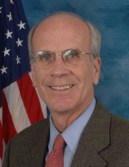
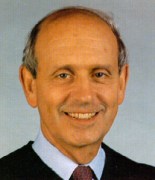 Justice Breyer's (at right) dissent is based on his belief that the answer to the question presented to the Court "turns on matters that have not been fully briefed (and are not resolved by the opinion of the Court)." In an opinion further supporting the Justice's role as this Court's Justice Douglas when it comes to patents (going so far as citing Heller and Eisenberg's discredited (by experience) "tragedy of the anticommons" article published more than a dozen years ago), the dissent sets forth a dichotomy. On the one hand, the Justice writes, patents "help to elicit useful inventions and research and [] assure public disclosure of technological advances." On the other hand, patents "sometimes mean unnecessarily high prices or restricted dissemination . . . [that] sometimes discourage further innovation and competition by requiring costly searches for earlier, related patents or by tying up ideas, which, were they free, would more effectively spur research and development."
The dichotomy is given historical personification, between Jefferson discussing the "embarrassment of an exclusive patent" and Madison favoring a "'patent monopoly'" as "'compensation for' a 'community benefit.'" Accordingly, the Justice is concerned about situations where the public must "pay twice" for inventions produced using federal funding. In support of these concepts, he cites statutory provisions form before Bayh-Dole was enacted, which it should be recognized reflect a situation that the Act was intended (in part) to change, because it limited the capacity for publicly supported research to be commercialized. Justice Breyer recognizes these pubic policy concerns — he states in his opinion that the desire to "encourage those institutions to commercialize inventions that otherwise might not realize their potentially beneficial public use" constitutes "a special public policy reason" expressly recited in the Act (§ 200).
These concerns inform Justice Breyer's reticence to join the majority in permitting an inventor to assign an invention made using federal funds to a third party, "thereby taking that invention out from under the Bayh-Dole Act's restrictions, conditions, and allocation rules." To do so would be "inconsistent with the Act's basic purposes" and could "significantly undercut the Act's ability to achieve its objectives." The detriment to the public would be to permit a situation where an invention for which the public has paid would "avoid the Act's . . . restrictions and conditions" and (paradoxically) "makes the commercialization and marketing of such an invention more difficult" due to questions about title like the ones raised in this case.
Justice Breyer's dissent concentrates on the contract law interpretations of the Federal Circuit and, since he disagrees with them, would use that as the basis for reversing the decision below and remanding. He notes that the Federal Circuit had relied upon an earlier opinion of that Court, FilmTec Corp. v. Allied-Signal, Inc., 939 F. 2d 1568 (1991), for the principle that "'[o]nce the invention is made and [the] application for [a] patent is filed, . . . legal title to the rights accruing thereunder would be in the assignee [i.e., Cetus] . . . , and the assignor-inventor would have nothing remaining to assign.'" In Justice Breyer's opinion, this makes "too much of too little," since the scientist's agreement with Stanford "conveyed equitable, but not legal, title," and that under the circumstances of this case, equitable title would be all that the scientist could have conveyed to Cetus as well (relating to "present assignment of future inventions"). And "as between these two claims in equity," Justice Breyer would vest title in Stanford, because its equitable interest arose first and Stanford thereafter obtained express assignment of the inventions.
In Justice Breyer's view, the FilmTec case was decided with "no explanation for what seems a significant change in the law" and its application to this case "undercuts the objectives of the Bayh-Dole Act." Indeed, the Justice characterized the Federal Circuit's decision as producing "a technical trap for the unwary."
Justice Breyer is careful to note that his views are 'tentative" because these issues were not briefed and were not the basis for the Court's decision. However, although he doesn't believe the majority opinion "forecloses" these issues being raised by "similarly situated part[ies]" in a future case, since he believes they are important, he dissents. Justice Sotomayor writes separately to concur because she, too, believes that these issues need to be considered when again properly raised.
The real world consequences of the Court's decision today should be minimal, provided the Court is correct regarding the "common practice among parties operating under the Act." These include policies to obtain assignments from inventor-employees and requirements (or at least expectations) from funding agencies that such assignments will be routinely obtained (the Court cited policy provisions promulgated by the NIH). While this may be true, for university clients it is important to review such policies, not only to ensure they are in compliance with federal funding agency requirements but that university personnel (professors, students, and researchers) are aware of their obligations. The Court's decision may not have, in fact, increased the burden on universities to protect these inventions, but it increases the vigilance that technology transfer offices and university officials must exercise in order to prevent loss of rights to third parties. And it should not escape our notice that the Court's emphasis on the primacy of the inventor as a Constitutional limit on the powers of Congress in the exercise of the patent grant suggests that attempts to change U.S. Patent Law to a "first to file" system may not meet the standard set forth by the Supreme Court today.
Board of Trustees of the Leland Stanford Junior University v. Roche Molecular Systems, Inc. (2011)
Opinion of the Court by Chief Justice Roberts, joined by Justices Scalia, Kennedy, Thomas, Alito, Sotomayor, and Kagan
Concurring opinion by Justice Sotomayor
Dissenting opinion by Justice Breyer, joined by Justice Gisburg

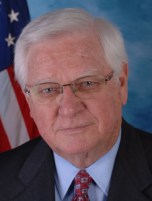
 The letters in question raise legitimate questions. As noted in an earlier Patent Docs post, Representatives Harold Rogers (R-KY) and Paul Ryan (R-WI) object to provisions of the House "patent reform" bill (H.R. 1249) by citing Constitutional concerns (transferring appropriation authority from Congress to the Executive) and partisanship (characterizing this change as being contrary to "the new Republican majority's commitment to restraining spending, improving accountability and transparency, and reducing the nation's unparalleled deficits and debt" and saying that "it would be both irresponsible and unwise to allow the PTO to operate solely under the authority of bureaucrats and White House political appointees," conveniently forgetting that the Bush White House ended fee diversion from 2004-2008).
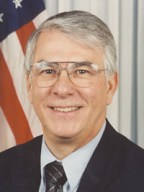
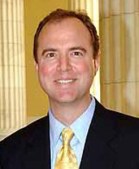 On the other hand, Rep. Adam Schiff (R-CA) (at left) writes to oppose the "First to File" system set forth in Section 2 of the bill. Rep. Schiff writes that this change will be "counterproductive" because it will hurt "the most creative inventors in our economy and lead to rushed patent filings." In support of this proposition, he notes that "[t]he driving force of innovation comes from small, agile firms that marshal creative energies in exciting and productive ways" and that "[i]t is precisely these small firms" that will be hurt by this change, in his opinion. Rep. Schiff cites the need for such small companies "to do additional market research, talk to venture capitalists or investors, develop their idea further and a myriad of other necessities" that the current system permits and a "first to file" regime will inhibit. He also ties the need for outside patent counsel to prepare applications that will ultimately be discarded as a misuse of resources that would otherwise be used for "hiring and actual act[s] of invention."