• CalendarJune 14, 2022 – "The Hand of History—The Mind of the Inventor" (U.S. Patent and Trademark Office) – Session 2: Television

    June 15, 2022 – Proud Innovation series — "How to transform your idea into reality" (Office of Innovation Outreach of the U.S. Patent and Trademark Office) – 3:00 pm to 4:05 pm (ET)

    June 21, 2022 – "The Hand of History—The Mind of the Inventor" (U.S. Patent and Trademark Office) – Session 3: Automobiles and Aviation

    June 22, 2022 – Proud Innovation series — "Making your passion profitable" (Office of Innovation Outreach of the U.S. Patent and Trademark Office) – 3:00 pm to 4:05 pm (ET)

    June 28-29, 2022 – Summit on Biosimilars & Innovator Biologics: Legal, Regulatory, and Commercial Strategies for the Innovator and Biosimilars Marketplace (American Conference Institute) – Boston

    June 28, 2022 – UPC Masterclass — Session 3: "The UPC Approach to Damages Actions and Compensation Claims" (Hoffmann Eitle)

    June 28, 2022 – "The Hand of History—The Mind of the Inventor" (U.S. Patent and Trademark Office) – Session 4: Toys, umbrellas, and more

    June 30, 2022 – UPC Masterclass — Session 3: "The UPC Approach to Damages Actions and Compensation Claims" (Hoffmann Eitle)

    July 8, 2022 – UPC Masterclass — Session 4: "The New Regime on the Revocation of European Patents/ The 'Long-arm Jurisdiction'" (Hoffmann Eitle)

  • Proud InnovationThe Office of Innovation Outreach (OIO) of the U.S. Patent and Trademark Office will be hosting the Proud Innovation series on June 15 and June 22, 2022 from 3:00 pm to 4:05 pm (ET) each day.  The USPTO's Proud Innovation series celebrates LGBTQIA+ inventors, entrepreneurs, and small business owners who use their intellectual property to bring new ideas to market.

    The series will consist of two panel discussions:

    • June 15 — Part one of the series will feature a panel discussion on "How to transform your idea into reality" — Theodore 'TJ' Ronningen of Ohio State University will moderate a panel consisting of Arianna T. Morales of General Motors R&D Center, Suma Reddy of Future Acres, and David Taubenheim of NVIDIA, who will discuss how their education and experiences help them improve technology, rethink challenges, and transform new ideas into realities.

    • June 22 — Part two of the series will feature a panel discussion on "Making your passion profitable" — Phillip Bailey of the Wisconsin LGBT Chamber of Commerce will moderate a panel consisting of Ana Maria Hernandez Marti of Equal Love, Jake Kenyon of Kenyarn, LLC, and Robin Williams of Bowtie Behavior, who will talk about what it takes to turn individual passions into entrepreneurial successes.

    Additional information regarding each part of the program can be found here and here.

    More information regarding the Proud Innovation series can also be obtained by contacting ProudInnovation@uspto.gov.

  • By Kevin E. Noonan

    University of California-BerkleyCaptioned disarmingly as a Notice of Related Proceedings under 37 C.F.R. § 41.8(a)(1) and ¶ 8.2 of the Standing Order, Junior Party the University of California/Berkeley, the University of Vienna, and Emmanuelle Charpentier (collectively, "CVC") somewhat boldly asserted in its June 6th filing that the Board no longer had jurisdiction over its applications-in-interference in Interference Nos. 106,127 and 106,132.  The legal basis for this challenge (framed, appropriately, as a request), is that CVC appealed the Board's decision in favor of granting priority to Broad Institute and colleagues in Interference No. 106,115 (see "PTAB Grants Priority for Eukaryotic CRISPR to Broad in Interference No. 106,115").  CVC's appeal of that determination and the Federal Circuit's docketing of that appeal, over "all of the same Junior Party applications and claims as those involved in [these] interference[s]," takes away the Board's authority in each of these interferences, citing In re Allen, 115 F.2d 936, 939 (C.C.P.A. 1940), In re Grier, 342 F.2d 120, 123 (C.C.P.A. 1965), In re Graves, 69 F.3d 1147, 1149-50 (Fed. Cir. 1995), and 37 C.F.R. § 41.35(b)(2) in support of this proposition.  Accordingly, CVC states, no longer having jurisdiction "the PTAB may not issue a judgment with respect to Junior Party's involved applications in this interference."

    Neither ToolGen (in the '127 Interference) nor Sigma-Aldrich (in the '132 Interference) have yet responded.

  • By Donald Zuhn

    USPTO SealIn a notice published last week in the Federal Register (87 Fed. Reg. 33750), the U.S. Patent and Trademark Office announced the implementation of the Climate Change Mitigation Pilot Program, "which is designed to positively impact the climate by accelerating the examination of patent applications for innovations that reduce greenhouse gas emissions" and "encourage research, development and innovation in the climate space."  Applications accepted under the pilot program will be advanced out of turn (i.e., accorded special status) for a first action on the merits.  Applications accepted under the pilot program will not, however, have to comply with all of the requirements of the accelerated examination program (e.g., the requirement for an examination support document or the petition fee under 37 C.F.R. § 1.17(h)) or the prioritized examination program (e.g., the prioritized examination fee or processing fee).

    The Office started accepting petitions to make special under the pilot program on June 3, 2022, and petitions will continue to be accepted under the pilot program until June 5, 2023 or when the Office has accepted 1,000 grantable petitions, whichever occurs first.  The notice indicates that questions regarding a specific petition to make special should be directed to the Office of Petitions.

    In order to participate in the pilot program, an Applicant must satisfy the following requirements:

    • File a nonprovisional patent application that is ready for examination (including a specification, drawings, if necessary, at least one claim, and payment of all fees associated with the filing of the application).  The application must claim a product and/or process that mitigates climate change by reducing greenhouse gas emissions.  The notice states that a claimed invention covers a product or process that mitigates climate change "when an application includes a claim that would correspond to one or more of the technical concepts within subclass Y02A, Y02B, Y02C, Y02D, Y02E, Y02P, Y02T or Y02W in the Cooperative Patent Classification (CPC) system," and provides an example of an eligible claim being one to a process to capture or dispose of methane, which would correspond to Y02C 20/20.  The notice also indicates that the full schedule of Y02 class can be found here.  When the petition is filed and throughout the pendency of the application, the application cannot contain more than 3 independent claims or more than 20 total claims and cannot contain any multiple dependent claims.  The application or national stage entry must be electronically filed using Patent Center, and the specification, claims, and abstract must be submitted in DOCX format.

    • File a petition to make special under the pilot program along with (a) a noncontinuing original utility nonprovisional application or entry into the national stage under 35 U.S.C. § 371 (that has been electronically filed), or within 30 days of the filing date or entry date of the application, or (b) an original utility nonprovisional application claiming the benefit of an earlier filing date under 35 U.S.C. §§ 120, 121, 365(c), or 386(c) of only one prior nonprovisional application or only one prior international application designating the United States (that has been electronically filed), or within 30 days of the filing date of such application.  The notice defines a "noncontinuing application" as an application that is not a continuation, divisional, or continuation-in-part application filed under the conditions specified in 35 U.S.C. §§ 120, 121, 365(c), or 386(c) and 37 C.F.R. § 1.78.

    • Certify that (1) the claimed invention covers a product or process that mitigates climate change; (2) the product or process is designed to reduce greenhouse gas emissions; (3) the Applicant has a good faith belief that expediting patent examination of the application will likely have a positive impact on the climate; and (4) the inventor or any joint inventor has not been named as the inventor or a joint inventor on more than four other nonprovisional applications in which a petition to make special under the pilot program has been filed.

    • Use Form PTO/SB/457 to comply with the petition and certification requirements.  The PTO/SB/457 form must be filed electronically using Patent Center, and form must be filed using the document description indicated on the form.

    Not file the application with a nonpublication request.  If the application was previously filed with a nonpublication request, then a rescission of the nonpublication request must be filed no later than the time the petition to make special is filed.

    • File an Application Data Sheet with the petition (unless previously filed with the application).

    If a petition to make special under the pilot program does not comply with the above requirements, the Office will (in some circumstances) notify the Applicant of the deficiency and give the Applicant the longer of one month or 30 days to correct the deficiency (the deadline to respond to the notice is not extendable).  The reply to that notice must be filed via Patent Center.  Petitions filed for applications that do not contain an eligible claim; that claim the benefit of two or more prior filed applications that are nonprovisional U.S. applications and/or international applications; or that were not filed within at least 30 days of a qualifying application will be dismissed without the opportunity to correct the deficiency.

    If a petition under the pilot program is granted, the Office notes that the accepted application will be placed on an Examiner's special docket until a first office action on the merits has been issued, and after the first action on the merits has been issued, the application will no longer be treated as special during examination and will be placed on the Examiner's regular amended docket.

    The notice indicates that if the Examiner makes a telephone restriction requirement, the Applicant must make an election without traverse to an invention that meets the program's eligibility requirements.  If the Applicant refuses to make an election, then the special status of the application will be terminated.  The notice also indicates that if an amendment in response to a first action is filed that is not fully responsive, the Examiner may, at their discretion, provide a shortened statutory period of 2 months for the Applicant to supply a fully responsive reply.  The notice states that while "[t]here is no provision for withdrawal from the pilot program," an Applicant may abandon an application that has been granted special status under the pilot program in favor of a continuing application.  The continuing application would have to independently qualify for participation in the pilot program, however.


  • By Donald Zuhn

    USPTO Terminates Rospatent as ISA and IPEA for International Applications

    RospatentIn a News Brief issued last week, the U.S. Patent and Trademark Office announced that it had notified the Russian Federal Service for Intellectual Property, ​Patents and Trademarks (Rospatent) of the USPTO's intent to terminate ​its agreement concerning Rospatent functioning as an International Searching Authority (ISA) and International Preliminary Examining Authority (IPEA) for international applications received by the USPTO as a Receiving Office under the Patent Cooperation Treaty (PCT).  The USPTO noted that the termination will take effect on December 1, 2022.  In announcing the termination, the USPTO suggested that "[i]n the interim, applicants filing international applications under the PCT are advised to exercise caution before selecting Rospatent as an ISA or IPEA."

    Patent Docs readers will recall that in March, the USPTO announced the termination of engagement with Rospatent (and also with the Eurasian Patent Organization (EAPO) and National Center of Intellectual Property (NCIP) in Belarus), and then announced that it would no longer grant requests to participate in the Global Patent Prosecution Highway (GPPH) at the USPTO when such requests were based on work performed by Rospatent as an Office of Earlier Examination under the GPPH, and then advised Applicants filing international applications under the Patent Cooperation Treaty (PCT) to exercise caution before selecting Rospatent as an International Searching Authority (ISA) or International Preliminary Examining Authority (IPEA).


    USPTO Unveils New Patent Quality Metrics Webpage

    In a Patent Alert email distributed to stakeholders last week, the U.S. Patent and Trademark Office announced the launch of a new quality metrics webpage (see below), which shares the metrics that the Office uses to gauge patent examination quality.  In unveiling the new webpage, the Office noted that it is committed to "advancing a patent system that works for the public good," and as such was "focusing on [its] mission to issue robust and reliable patents that incentivize and protect innovation and investments."  The Office declared that "[t]he first step in that process is looking at patent quality, processes, and perceptions."  According to the Office's email, the new webpage reveals how the Office assesses the quality of its processes and measures stakeholder perceptions.  The Office notes that moving forward, it will use the data on the webpage, as well as internal, Patent Public Advisory Committee, and other stakeholder input, to guide patent examination improvements.  The Office also noted that it is soliciting and considering quality measures and changes, and asked that feedback or questions about the Office's patent quality metrics be sent to qualitymetrics@uspto.gov or patentquality@uspto.gov.  The quality metrics webpage can also be accessed through the Office's Patents Data Visualization Center webpage.

    USPTO webpage
    USPTO Reopens Facilities to the Public

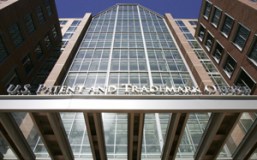
    USPTO Building FacadeIn a News Brief distributed to stakeholders last month, the U.S. Patent and Trademark Office announced that it had entered Phase 3 and had reopened its facilities to the public.  The Office noted that on May 25, it had "fully reopened all locations to employees and resumed some in-person events and appointments for the public."  The Office noted that visitors should review its health questionnaire prior to entering one of the Office's locations, and may not enter facilities if they answer "yes" to any of the following questions on the questionnaire:

    1.  In the last 10 days, have you tested positive for COVID-19 or been told by a healthcare provider that you are presumed positive?
    2.  In the last 48 hours, have you experienced any of the below symptoms that cannot be explained by something other than COVID-19?
    3.  If you have recently traveled (internationally or domestically), are you currently subject to any federal, state, tribal, or local quarantine or isolation requirements (requirements may vary depending on your vaccination status)?
    4.  In the last 10 days, have you been in close contact (6 feet or closer for a cumulative total of 15 minutes over a 24-hour period) with an individual who tested positive or is presumed positive for COVID-19, or has any health official or medical provider informed you that you have potentially been exposed to COVID-19? [The last question applies to visitors who "are not up to date on [their] COVID-19 vaccinations and have not had COVID-19 within the last 90 days".]

    The Office noted that its continues to monitor local conditions for all of its locations as determined by the Center for Disease Control's (CDC) COVID-19 community levels, and that such levels can be low, medium, or high.  In communities with low or medium transmission levels, wearing a mask in the Office's buildings is optional, and in communities with high transmission levels, wearing a mask in the Office's buildings is mandatory.  The Office's locations are:  Alexandria, VA; Dallas, TX; Denver, CO; Detroit, MI; and San Jose, CA.  Additional information on the USPTO's COVID-19 protocols can be found at the Office's COVID-19 webpage.

  • CalendarJune 7, 2022 – "Strategies for Protecting and Managing Data" (Intellectual Property Owners Association) – 2:00 pm to 3:00 pm (ET)

    June 7, 2022 – "The Hand of History—The Mind of the Inventor" (U.S. Patent and Trademark Office) – Session 1: Wireless Telecommunications Networks

    June 9, 2022 – "Freedom to Operate" (J A Kemp) – 16:00 pm to 17:00 pm (GMT)

    June 9, 2022 – "IP Developments in Russia: What You Need to Know" (Intellectual Property Owners Association) – 12:00 pm to 1:00 pm (ET)

    June 10, 2022 – Ethics in the Practice of IP Law (Center for Intellectual Property, Information & Privacy Law at the University of Illinois Chicago School of Law) – 11:45 am to 3:45 pm

    June 14, 2022 – "The Hand of History—The Mind of the Inventor" (U.S. Patent and Trademark Office) – Session 2: Television


    June 21, 2022 – "The Hand of History—The Mind of the Inventor" (U.S. Patent and Trademark Office) – Session 3: Automobiles and Aviation

    June 28-29, 2022 – Summit on Biosimilars & Innovator Biologics: Legal, Regulatory, and Commercial Strategies for the Innovator and Biosimilars Marketplace (American Conference Institute) – Boston

    June 28, 2022 – UPC Masterclass — Session 3: "The UPC Approach to Damages Actions and Compensation Claims" (Hoffmann Eitle)

    June 28, 2022 – "The Hand of History—The Mind of the Inventor" (U.S. Patent and Trademark Office) – Session 4: Toys, umbrellas, and more

    June 30, 2022 – UPC Masterclass — Session 3: "The UPC Approach to Damages Actions and Compensation Claims" (Hoffmann Eitle)

    July 8, 2022 – UPC Masterclass — Session 4: "The New Regime on the Revocation of European Patents/ The 'Long-arm Jurisdiction'" (Hoffmann Eitle)

  • J A KempJ A Kemp will be offering a webinar entitled "Freedom to Operate" on June 9, 2022 from 16:00 pm to 17:00 pm (GMT).  Amanda Simons and Lucy Barnes of J A Kemp will provide a general guide to the Freedom To Operate (FTO) process from deciding when/whether to perform an FTO all the way to deciding how to deal with potential risks identified in an FTO.  The webinar will address the following topics:

    • When is an FTO appropriate
    • Searching considerations and costs (should the search include aspects like manufacturing methods/formulations and what sequences should be searched)
    • Evaluating potential FTO risks – key points of claim interpretation, other factors to consider such as applicant identity and expiry date
    • Processes for continued monitoring of FTO risks and potential modes of dealing with FTO risks

    There is no registration fee for this webinar.  However, those interested in registering for the webinar, should do so here.

  • IPO #2The Intellectual Property Owners Association (IPO) will offer a one-hour webinar entitled "Strategies for Protecting and Managing Data" on June 7, 2022 from 2:00 pm to 3:00 pm (ET).  Carl Kukkonen, III of Jones Day; William Mansfield of LexisNexis; Stephen Mortinger of IBM; Hugh Pasika of Thermo Fisher Scientific; and Caroline Pinkston of Hewlett Packard Enterprise will provide strategies and best practices for sharing and protecting your business' data; discuss considerations when licensing data including who owns the data, where it can be stored, whether it can be manipulated, what it can be used for; and discuss when to choose an open data model vs. a closed model.

    The registration fee for the webinar is $150 for non-members or free for IPO members (government and academic rates are available upon request).  Those interested in attending the webinar should register here.

  • USPTO SealThis month, the U.S. Patent and Trademark Office will be holding a four-part webinar series entitled "The Hand of History—The Mind of the Inventor".  The interactive webinar series will feature several installments moderated by USPTO Historian Adam Bisno, who has assembled a group of historians with stories to tell about specific inventors, their patents, and the crucial role of invention in economic progress.  The webinar series will offer the following sessions:

    • Session 1: Wireless Telecommunications Networks — June 7
    • Session 2: Television — June 14
    • Session 3: Automobiles and Aviation — June 21
    • Session 4: Toys, umbrellas, and more — June 28

    Those interested in registering for any of the webinars in the series can do so here

  • IPO #2The Intellectual Property Owners Association (IPO) will offer a one-hour webinar entitled "IP Developments in Russia: What You Need to Know" on June 9, 2022 from 12:00 pm to 1:00 pm (ET).  Janet Cord of Ladas & Parry LLP, amd Mark P. Mathison P.E. and Jason M. Vogel of Kilpatrick Townsend & Stockton LLP will provide updates related to protection and enforcement of IP in Russia, including the impact of sanctions on the maintenance of Russian IP and developments in Russian laws and in Russian courts impacting IP owners, and discuss how IP owners should proceed in these uncertain and unprecedented times.

    The registration fee for the webinar is $150 for non-members or free for IPO members (government and academic rates are available upon request).  Those interested in attending the webinar should register here.