• Strafford #1Strafford
    will be offering a webinar/teleconference entitled "CLS Bank v. Alice Corp.: Navigating Patent
    Eligibility of Software-Related Inventions Absent Clear Guidance" on
    July 10, 2013 from 1:00 – 2:30 pm (EDT). 
    Michael L. Kiklis and Stephen G. Kunin of Oblon Spivak McClelland Maier
    & Neustadt will examine the CLS Bank v. Alice Corp. decision and its
    impact on patent eligibility for software-related inventions. The panel will
    also discuss what counsel to companies need to do to get patent protection for
    inventions implemented in computer software. 
    The panel will review the following questions:


    What does the Federal Circuit's
    decision mean for patent eligibility for software-related inventions?
    • How can patent litigation defendants take
    advantage of patent eligibility's lack of certainty?
    • What best practices should counsel employ to
    protect software-related inventions?

    The
    registration fee for the webinar is $297 ($362 for registration and CLE processing).  Those registering by June 14, 2013 will
    receive a $50 discount.  Those interested
    in registering for the webinar, can do so here.

  • Merck Canada Inc and Merck
    Sharp & Dohme Ltd v Sigma Pharmaceuticals plc

    Prior
    to their accession to the European Patent Convention, several states did not
    allow patent protection for pharmaceutical products.  To address this, a special derogation known as
    "The Specific Mechanism" was put in place.  This Specific Mechanism allows the holder of
    a patent or a supplementary protection certificate (SPC) for a pharmaceutical
    product filed at a time when such protection could not be obtained in a
    qualifying state to prevent importation and marketing of the product in member
    states where the product enjoys protection, even if the product was put on the
    market in the qualifying state for the first time by him or with his consent.  This
    mechanism also applied to the patentee's beneficiary.

    Any
    person intending to import or market a pharmaceutical product has to
    demonstrate to the relevant national authority that one month's notification was
    given to the holder or his beneficiary before he can obtain the necessary
    notification.

    Phama XLPharma
    XL (a company related to Sigma Pharmaceuticals) had given a notification to MSD
    BV (a company in the Merck group) relating to the importation of Merck's asthma
    product Singulair from Poland.  No reply
    was received and so Pharma XL applied for and received the necessary parallel
    importation license, after which Sigma began importing and selling Singulair.  It was only later that Merck wrote to Pharma
    XL, objecting to the importation and sale and claiming that such acts were
    infringements of the patent rights.

    Various
    arguments were presented by Sigma at the first instance hearing, including that
    the derogation provisions are inapplicable unless and until the patent holder
    demonstrates his intention to exercise the option and that Merck was estopped
    from asserting its rights having failed to respond to the notification.  Merck argued that the notification was
    insufficient as it had not been sent by the parallel importation licence holder
    to the patent proprietor or his beneficiary.  The judge found in favour of Merck, and so
    Sigma appealed.

    MSDThe
    Court of Appeal considered a number of issues during proceedings.  It was held that the lack of response was not
    a basis for estoppel, as the notification from Pharma XL did not impose on
    Merck a positive duty to respond.  Merck had no reason to be aware of Sigma's
    misunderstanding that it did not object to Singulair being on the market and there
    was no action by Merck that fostered this misunderstanding.  Further, there was no contractual obligation
    to respond to the notification and in general, taking no action does not
    prevent proceedings from being brought at a later date.

    However,
    there were three issues on which a decision was not reached.  The first issue related to Sigma's argument
    that the derogation provisions are inapplicable if the patent holder does not
    demonstrate his intention to exercise the option.  Sigma referred to an earlier case (Generics and Harris v Smith Kline and French),
    which related to a similar derogation regarding importation from Spain and
    Portugal.  This decision emphasised that
    the proprietor "may rely on the
    rights granted by the patent" and that the "derogating provisions are
    therefore inapplicable unless the proprietor of the patent demonstrates his
    intention to exercise that option."  The Specific Mechanism was modelled on this
    previous derogation and so it was said to have the same essential meaning, which
    also explains the purpose of the notification requirement.

    However,
    Merck highlighted that the wording does not oblige the patent holder to reply
    and suggested that the decision was not relevant, as it related to a patent
    open for licenses of right.  Further, Merck argued that a patent holder would
    always wish to assert his rights and so demonstrating intention should not be
    necessary.  The judge agreed with Merck's linguistic analysis of the derogation,
    but indicated that it should be considered in the light of the overall
    objectives (as outlined in the earlier case) and that such analysis did not
    explain the purpose of the notification requirement.  Further, there may be situations in which the
    patent holder would not object to parallel imports.  He therefore indicated his agreement with
    Sigma's arguments.

    The
    second issue related to the identity of the person who sends the notification.  In this case, Sigma was the potential
    infringer, but Pharma XL sent the notification.  The judge indicated that he did not believe
    this to be problematic in this case, particularly as Sigma and Pharma XL are
    members of the same group of companies, with Pharma XL being in charge of
    regulatory affairs and Sigma dealing with imports.  Further, Pharma XL would be obliged to
    disclose the identity of the importer and so the proprietor could still have taken
    action.

    The
    third issue related to the identity of the person to whom the notification was
    sent.  MSD BV was not the patent
    proprietor or his beneficiary, although it was a related company.  However, the individual to whom the notification
    was sent acted in patent matters for the group as a whole and so had the
    authority to assert the patent and had the notification been sent elsewhere, it
    would have been passed to this individual for a decision.  Further, 90% of the numerous notifications
    received a year are sent to this individual and are then acted upon.  The judge therefore suggested that there was a
    real issue as to the meaning of the term "beneficiary."

    The
    Court of Appeal decided to refer the above three issues to the Court of Justice
    of the European Union, on the grounds that the law is not acte clair, that the Specific Mechanism has not been considered
    previously by the Court of Justice and  that it will continue to be relevant until
    2019.  The parties have been invited to draft questions for the court's consideration.

    This
    report comes from European Patent Attorneys at WP
    Thompson & Co.
    , 55 Drury Lane, London UK.  Further details and
    commentary can be obtained from Gill Smaggasgale,
    a partner at the firm.

  • European Union (EU) FlagFollowing on from their
    previous challenge to the adoption of the unitary patent system on the basis of
    the concept of enhanced cooperation, and as eventually dismissed by the Court
    of Justice of the European Union (CJEU), Spain and has launched further
    challenges; this time directed to Regulations underpinning the Unitary Patent
    System.

    The further challenges have
    been directed at the unitary patent Regulation, and the translation Regulation.

    The unitary patent Regulation is objected to as:

    • Having been established
    on the basis of a right granted by the EPO — being a body not subject to
    judicial review;

    • Lacking legal basis due
    to the absence of measures guaranteeing uniform protection, and not being
    supported by an act of the European Union;

    • Representing a misuse of
    power through the use of enhanced cooperation;

    • An infringement of the
    provisions of the TFEU, and being contrary to the Meroni case-law, concerning
    the delegation of powers within the EU, in relation to the renewal fee
    provisions;

    • A misapplication of the
    Meroni case-law in relation to the delegation of powers concerning
    administrative tasks to the EPO.

    Turning to the translation Regulation, this is objected to as:

    • Infringing the principle
    of non-discrimination due to the potential detriment of non-English, French or
    German speaking persons;

    • Lacking legal basis due
    to its manner of regulating translation requirements in the event of a dispute;

    • Infringing the principle
    of legal certainty;

    • Misapplying of the Maroni
    case-law in delegating aspects of compensation and translation to the EPO;

    • Infringing the principle
    of the autonomy of the EU due to the Regulation's introduction being dependent
    upon entry into force of the UPC Agreement.

    Initial opinion is that the
    likelihood of at least some aspects of these actions succeeding is good, and
    that this is likely to open the door to further negotiation between the member
    states of the EU.

    This report comes
    from European Patent Attorneys at WP
    Thompson & Co.
    , 55 Drury Lane, London UK.  Further details and
    commentary can be obtained from Gill Smaggasgale,
    a partner at the firm.

    For additional information regarding this topic please see:

    • "Member States Sign Agreement to Establish Unified Patent Court," February 21, 2013
    • "Parliament Approves EU Unitary Patent Package," December 19, 2012
    • "European Parliament
    Adopts Draft Regulations on Unitary Patent
    ," December 12, 2012
    • "Unitary Patent & Unified Patent Court," December 12, 2012
    • "Progress for Single European Patent and Litigation System," November 12, 2012
    • "EU Patent Is Finally Born," July 2, 2012
    • "European Parliament Approves Enhanced Cooperation Procedure to Create Unified EP Patent System," March 1, 2011
    • "Several EU Members Push for Unified Patent System," December 30, 2010
    • "Europe Takes Step Closer to Single EU Patent and Patent Court," February 24, 2010

  • By Donald Zuhn

    USPTO SealIn April, the U.S. Patent
    and Trademark Office published a notice in the Federal Register (78 Fed. Reg.
    21788
    ) proposing
    changes to the rules of practice for consistency with the Patent Law Treaty
    (PLT) and title II of the Patent Law Treaties Implementation Act of 2012
    (PLTIA), which amends the Title 35 to implement the provisions of the PLT.  The
    PLT, which harmonizes and streamlines formal procedures pertaining to the filing and
    processing of patent applications, only applies to applications that can be filed as international
    applications under the Patent Cooperation Treaty (PCT), and therefore, does not
    apply to design, plant, provisional, or reissue applications.

    Although the PLT entered
    into force on April 28, 2005, and was ratified by the Senate on December 7,
    2007, because the PLT is not a self-executing treaty it did not enter into
    force in the U.S. until the PLTIA was enacted on December 18, 2012 — the
    PLTIA, however, does not take effect until December 18, 2013, or one year after the date
    of enactment.  The PLTIA will apply to any
    patent issued before, on, or after December 18, 2013, and to any application pending
    on or filed after December 18, 2013.  The
    PLTIA, however, will have no effect with respect to any patent that is the
    subject of litigation in an action commenced before December 18, 2013.

    According to the notice,
    there are three notable changes resulting from the PLT and PLTIA, which
    involve:

    (1) The filing date requirements for a patent
    application; (2) the restoration of patent rights via the revival of abandoned applications
    and acceptance of delayed maintenance fee payments; and (3) the restoration of
    the right of priority to a foreign application or the benefit of a provisional
    application via the permitting of a claim to priority to a foreign application
    or the benefit of a provisional application in a subsequent application filed
    within two months of the expiration of the twelve-month period . . . for filing
    such a subsequent application.

    With respect to the filing date
    requirements, the Office is proposing changes to the rules to provide (a) that
    a claim is not required for a nonprovisional application to be entitled to a filing date, and (b) to allow for the filing
    of a nonprovisional application "by reference" to a previously filed application
    in lieu of filing the specification and drawings.  Under the revised rules, when a
    nonprovisional application is filed without at least one claim or without
    referencing a previously filed application in lieu of submitting the
    specification and drawings, the applicant will be given a period of time to
    provide one or more claims or a copy of the specification and drawings of a previously
    filed application.

    To prevent an applicant
    from taking advantage of the opportunities to delay the examination process
    provided by the PLT and PLTIA (i.e.,
    by filing an application without at least one claim or without referencing a previously
    filed application), the Office is also proposing changes to the rules to provide
    for a reduction of patent term adjustment (PTA) if an application is not in
    condition for examination within eight months of its filing date (or date of
    commencement of national stage in an international application).

    With respect to the first change resulting from the PLT and PLTIA, the notice indicates that:

    An application
    whose disclosure satisfies only the requirements of 35 U.S.C. 111(a) to be entitled
    to a filing date may nonetheless not meet the requirements of 35 U.S.C. 112 and 113 necessary for
    the applicant to be entitled to a patent for any claimed invention presented in
    the application, or even for the application to effectively serve as a priority
    or benefit application for an application subsequently filed in the United
    States or abroad.  Therefore, the ability
    to file an application without a claim or drawing should be viewed as a
    safeguard against the loss of a filing date due to a technicality and not as a best
    practice.

    With regard to the second
    change resulting from the PLT and PLTIA, the Office is proposing changes to the rules to provide for the revival
    of abandoned applications and acceptance of delayed maintenance fee payments
    solely on the basis of "unintentional" delay.  The notice indicates that the PLTIA
    eliminates patent law provisions relating to the revival of abandoned
    applications or acceptance of delayed maintenance fee payments on the basis of
    a showing of "unavoidable" delay. 
    In particular, the PLTIA amends 35 U.S.C. §§ 122(b)(2)(B)(iii), 133, 151,
    364(b), and 371(d) to delete the reference to an unavoidable standard.

    As for the third notable
    change, the Office is proposing changes to the
    rules to allow an applicant to restore the right to priority to a prior-filed
    foreign application or a provisional application if a subsequent application
    (nonprovisional or international application) is filed after the
    expiration of the twelve-month period set forth in 35 U.S.C. § 119(a) or (e),
    but within two months from the expiration of the twelve-month period,
    provided that the delay in filing the subsequent application was unintentional.

    The Office's notice
    provides a detailed discussion of the specific rules changes at pages
    21792-800, and a listing of the revised rules at pages 21803-09.  For additional information regarding the
    proposed rules changes, readers are encouraged to consult the 22-page Federal
    Register notice
    .

    Written comments regarding
    the proposed rules changes can be submitted until June 10, 2013 by e-mail to AC85.comments@uspto.gov;
    by regular mail addressed to:  Mail Stop
    Comments — Patents, Commissioner for Patents, P.O. Box 1450, Alexandria, VA
    22313–1450, marked to the attention of Robert W. Bahr, Senior Patent Counsel,
    Office of Patent Examination Policy; or via the Federal eRulemaking Portal.

  • By
    Andrew Williams

    Washington - White House #2On
    February 14, 2013, President Obama stated in reference to non-practicing Patent
    Assertion Entities ("PAEs") (aka "Patent Trolls") "they
    don't actually produce anything themselves.  They're just trying to essentially leverage and hijack somebody else's
    idea and see if they can extort some money out of them . . . ."  See
    Patent Assertion and U.S. Innovation ("Patent Assertion Report"),
    Executive Office of the President, June 2013, page 2.  Of course, when anybody equates the patent
    system to extortion, it is pretty certain nothing good can come of it.  And, earlier today, the White House helped
    prove that maxim by releasing its Fact Sheet: White House Task Force on
    High-Tech Patent Issues
    – Legislative Priorities & Executive Actions.  This Fact Sheet provided seven different
    legislative recommendations and five executive actions, which we detail
    below.  In addition, at approximately the
    same time, the National Economic Council and the Council of Economic Advisors
    released the Patent Assertion Report, apparently to provide the justification
    for the President's recommendations and actions.  Finally, Gene Sperling reported on the
    subject in a blog post entitled "Taking on Patent Trolls to Protect
    American Innovation
    ," found on the White House blog.

    The
    President's release of his Fact Sheet comes at a time when several new bills
    have already been introduced in Congress.  The most recent bill was introduced in the House by Representative Goodlatte
    on May 23, 2013 as a discussion draft, and is the most comprehensive of the
    group.  Patent Docs will report on this
    bill in a future post.  Whether any of
    these bills will get any traction this year is unclear, and unlikely.  In fact, they appear to stem from previous remarks
    made by the President, so it is unclear who is steering this bus.  Nevertheless, it does appear that public
    sentiment for the patent system, and non-practicing PAEs in particular, is at a
    low point.  For example, the WBEZ program
    "This American Life" featured an episode this past weekend entitled "When
    Patents Attack . . . Part 2!"  The
    program focused almost exclusively on a single patent case stemming from the
    program's investigation of Intellectual Ventures.  From that single case, the program
    extrapolated all the perceived problems to be indicative of the entire patent
    system, leaving the uninitiated to probably question why we even have a patent
    system in the first place.  And,
    unfortunately, the story was incredibly one-sided, with the "reporters"
    choosing to interview a software engineer on the merits of the patent system,
    but conveniently neglecting to speak to a patent attorney on the same
    subject.  The timing of the episode also seems
    a little more than coincidental, considering that the President's Fact Sheet
    was released days later, and the examples and anecdotes presented in the Patent
    Assertion Report are similar to those related in the episode.  Nevertheless, with all of this public
    exposure on the "evils" of the patent system, it is possible that
    Patent Reform, Take 2, may be just around the corner.

    The
    real "evil" that is addressed by the President and the Patent
    Assertion Report is that of non-practicing PAEs.  Interestingly, the Patent Assertion Report goes
    to great length to explain that non-practicing "patent intermediaries"
    can play a useful role in a successful patent system.  Such intermediaries can create liquidity in
    the intellectual property market, helping inventors and manufacturers get
    together so that patented inventions can be commercialized.  However, as the Patent Assertion Report
    explains, the problem is when patent intermediaries step over the line and
    emerge as patent trolls.  In case it wasn't
    clear from the name, patent trolls are to be viewed as evil, hindering
    innovation by focusing on aggressive litigation instead of research and
    development.  Of course, as with any
    line, determining where it actually is drawn can be problematic.  Even more difficult is crafting legislation
    to selectively target non-practicing PAEs without entangling the "good"
    patent intermediaries, much less all patent holders, whether practicing or not.

    The
    good news (at least for many readers of this blog) is that the biotech and pharmaceutical industries appear to be out of
    the cross-hairs of these initiatives.  In
    fact, the Patent Assertion Report touts these industries as an example of how
    the current system can be effective.  For
    example, in discussing the evils of functional claiming, the report highlights
    the pharmaceutical industry as getting it right ("For example, several
    patents have been awarded for the function of reducing cholesterol; each patent
    covers a different chemical compound — a different means of providing that
    function."  Patent Assertion Report at page 8).  Nevertheless, because of the difficulty in
    making legislative and executive initiatives non-discriminatory, it is also important
    for those in these fields to pay attention to what is currently happening in
    Washington.

    As
    for the specific legislative recommendations that "would have immediate
    effect of some major problems innovators face," the President's Fact Sheet
    suggested:

    1.         Require patentees and applicants to disclose
    the "Real Party-in-Interest
    "

    2.         Permit
    more discretion in awarding fees to prevailing parties in patent cases

    3.         Expand
    the PTO's transitional program [to include a broader range of
    computer-enabled patents]

    4.         Protect
    off-the-shelf use by consumers and businesses

    5.         Change
    the ITC standard for obtaining an injunction

    6.         Use
    demand letter transparency to help curb abusive suits, and

    7.         Ensure
    the ITC has adequate flexibility in hiring

    Several
    of the newly introduced bills already address some of these concerns, so it
    will be interesting to see if the additional recommendations are incorporated
    into this already existing legislation.

    The
    White House also promises that it is taking executive action starting now on
    five initiatives.  Of course, most of
    these require some action on behalf of the Patent Office, and it is unclear
    whether there has been coordination on these issues.  These initiatives are:

    1.         Making
    "Real Party-in-Interest" the New Default

    2.         Tightening
    Functional Claiming

    3.         Empowering
    Downstream Users

    4.         Expanding
    Dedicated Outreach and Study, and

    5.         Strengthen
    Enforcement Process of Exclusion Orders

    Patent Docs
    will continue to report on any updates regarding these initiatives and
    legislative recommendations.

  • By
    Andrew Williams

    Aventis PharmaceuticalsCan
    the claim term "substantially pure" mean two different things when
    the specification uses the same term to refer to both an intermediate compound
    and a final drug product in a specification?  The Federal Circuit recently answered the question in the affirmative,
    in Aventis Pharma. Inc. v. Amino
    Chemicals Ltd.
    , depending of course on the context that the term is used in
    the claims.  The Court also focused on
    the claim term "substantially pure regioisomer," instead of the
    truncated "substantially pure" from the lower court's decision, and determined
    that the term required "largely but not wholly the para-regioisomer of the
    intermediate of the structure shown, as compared to the meta isomer."  Judge Bryson in dissent, however, found it
    more compelling that the patentees appeared to use the term "substantially
    pure" interchangeably in both the specification and the prosecution
    history when referring to both the intermediate and final drug products.  Therefore, he would have affirmed the lower
    court's claim construction of "substantially pure" to require "at
    least 98% purity with respect to all impurities."

    The
    technology at issue in this case was the process for producing large quantities
    of fexofenadine, the active ingredient of Allegra® and Allegra-D®
    24 hour.  The prior art process of making
    piperidine derivatives such as fexofenadine was inefficient because it required
    purification steps after the derivatives were fully formed, and this added to
    the both the cost and the time to obtain a pharmaceutically acceptable final
    product.  Dr. Thomas E. D'Ambra overcame
    this problem by using piperidine and cyclopropylketone ("CPK")
    intermediates earlier in the reaction.  The CPK intermediate could take on at least two conformations, para-CPK
    and meta-CPK:
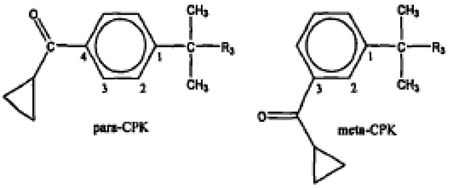
    FIG1
    but
    it was the para-CPK that gave rise to the biologically active piperidine
    derivatives.  The molecule could also
    adopt the ortho-CPK form, but it was rarely produced and was of little
    biological efficacy.  These different conformations
    are referred to as regioisomers.  The
    prior art processes used a "Friedel-Crafts" reaction, which produced
    a statistical admixture for the "second mixture of aromatic regioisomers"
    of 67% meta-isomers and 33% para-isomers.  The final products (third mixture) were then obtained by converting
    these intermediates, although the ratio of the regioisomers persisted.  It was therefore nearly impossible to
    completely separate the para-isomers to pharmaceutical purity.  Dr. D'Ambra's use of CPK intermediates made
    it possible to obtain "substantially pure regioisomers" of para-CPK,
    and consequently a subsequent "substantially pure" para-piperdine
    derivative end product.

    Claim
    1 of the patent-in-suit, U.S. Patent No. 5,750,703 ("the '703 patent"),
    provides (with the claim term highlighted):

    1.  A process of
    preparing a piperidine derivative compound of the formula:

    FIG2wherein

    R1 is
    hydrogen or hydroxy;

    R2 is
    hydrogen;

    or R1 and R2
    taken together form a second bond between the carbon atoms bearing R1
    and R2;

    R3 is –COOH or –COOR4
    ;

    R4 has 1 to 6 carbon atoms;

    A, B, and D are
    the substituents of their aromatic rings, each of which may be different or the
    same, and are selected from the group consisting of hydrogen, halogens, alkyl, hydroxy,
    alkoxy, or other substituents,

    said process comprising:

    providing a substantially pure regioisomer of the following formula:
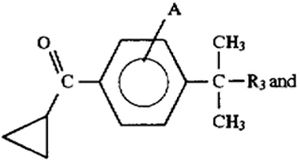
    FIG3converting the substantially pure regioisomer to the
    piperidine derivative compound with a piperidine compound of the formula:
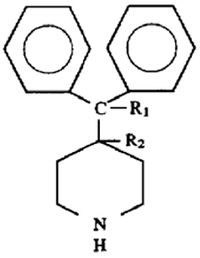
    FIG4Even
    a casual reading of this claim revels that the term "substantially pure"
    only modifies the intermediate regioisomer and not the final product.  However, the specification uses the same term
    in reference to the final product of the prior art process, and a divisional
    patent, U.S. Patent No. 5,578,610 ("the '610 patent") has claims
    drawn to substantially pure piperdine derivative compounds.

    Amino ChemicalsThe
    procedural history of this case was complex and involved dozens of parties in
    twenty different lawsuits.  The
    defendants had filed a Drug Master File that was referenced in the Abbreviated
    New Drug Applications of Mylan Pharmaceuticals Inc. and Teva Pharmaceuticals
    USA Inc. to market generic versions of antihistamines containing
    fexofenadine.  Upon submission of the
    ANDAs, Aventis timely brought suit alleging, among other things, infringement
    of the '703 patent.  At the claim
    construction phase, the lower court construed the term "substantially pure"
    to mean "at least 98% purity with respect to all impurities."  As a result, Aventis stipulated that it could
    not prove infringement, and so the District Court entered final judgment to
    allow Aventis to appeal the claim construction ruling.

    In
    reversing the lower court's decision, the Federal Circuit highlighted that
    claims "must be construed in light of the appropriate context in which the
    claim term is used" (citing Toro
    Co. v. White Consol. Indus., Inc.
    , 199 F.3d 1295 (Fed. Cir. 1999)).  In fact, the Court pointed out that the same
    claim term can have different constructions within the claims and the
    specification.  However, for the patent-in-suit,
    the term "substantially pure" was only used in the claims to refer to the CPK intermediate.  The Court apparently discounted the use of
    the term in the claims of the related '610 case, in reference to the final
    piperidine derivative end products.  Nevertheless, what was important was how one skilled in the art would
    understand that term in the context of the claims, and such a skilled artisan
    would not have expected that an intermediate would have the same purity as the
    final end product.  After all, the
    improvement was to provide a piperidine derivative end product of higher
    regioisomeric purity with less extensive purification, and requiring a
    consistent construction of this term ignored the distinct contexts in which the
    terms are used.  As a result, the Court
    held that the proper construction of "substantially pure" required
    different interpretations depending on whether it was modifying the intermediate
    or the end product.

    In
    coming to this conclusion, the Court had to address the District Court's
    reliance on the intrinsic record that Judge Bryson found persuasive in dissent.  First, as Judge Bryson pointed out, the
    specification stated:

    Although the second mixture of regioisomers [an intermediate] and the third
    mixture of regioisomers [the final piperidine derivative product] can be
    analyzed by HPLC experiments, a practical separation to obtain gram quantities
    of substantially pure regioisomers has not been achieved.

    Each mixture (including the first [also an intermediate]), would be expected to
    contain 33% of the para isomer and 67% of the meta isomer.  Since these
    components are inseparable, it has not been possible to obtain either of the
    regioisomers in each mixture in substantially pure form.

    '703
    patent at col. 4 ll. 16-24.  This was at
    least part of the evidence that the patentee supposedly used the terms
    interchangeably.  However, as was pointed
    out, this use was only in reference to the prior art — the patentee did not
    refer to his own piperidine derivative end products as substantially pure in
    the specification.

    More
    difficult to reconcile were comments made by the patentee during an
    interference proceeding in the related '610 patent case.  In a filing in that case, the patentee wrote "[w]hen
    read in light of the specification, one skilled in the art would have
    understood that the phrase 'substantially pure,' as used in claims
    1-17 of [the '610 patent], to mean that the subject compound has a pharmaceutical
    grade purity and is in a form purer than that attained by the prior art."  Most of claims 1-17 recite a substantially
    pure piperidine derivative end product.  However, claim 12 of the '610 patent recites "a piperidine
    derivative compound produced by a process comprising: providing a substantially
    pure regioisomer . . . ."  Therefore, different claims from claims 1-17 of the '610 patent contain
    the "substantially pure" claim term to refer to both the intermediate
    and the end product.  Nevertheless, the
    Federal Circuit's opinion found this to be of little help.  It pointed out that the focus of the
    interference proceeding was interpreting claims in reference to the piperidine
    end product, and so the comments were only in regards to the "subject compound"
    of the interference — the end product.  And, since the Court had already determined that the "substantially
    pure" should have different interpretations, it found no justification for
    applying the definition provided for this term from the interference.

    Finally,
    having found the lower court's construction incorrect, the Federal Circuit
    performed its own claim construction.  It
    noted that the term "substantially" is often not amenable to
    numerical boundaries.  It was clear from
    the '703 patent that the regioisomeric purity should be greater than 67%
    (because this was the purity in the prior art process), but it did not need to
    be as high as 98%.  So, the Court
    borrowed a construction of the term from Ecolab,
    Inc. v. Envirochem, Inc.
    , 264 F.3d 1358 (Fed. Cir. 2001), in which "largely
    but not wholly" was used as a flexible approach.  Therefore, the Court adopted the definition of
    "largely but not wholly the para regioisomer of the intermediate of the
    structure shown, as compared to the meta isomer."  The case was reversed and remanded to
    determine the other issues in the case consistent with this claim construction.

    MBHB
    represented Aventis in the above appeal.  To the extent that this case
    summary contains any opinions, the opinions would be of Dr. Williams and not
    Aventis or MBHB.

    Aventis Pharmaceuticals
    Inc. v. Amino Chemicals Ltd.
    (Fed. Cir.
    2013)

    Panel:
    Circuit Judges Newman, Bryson, and Reyna
    Opinion
    by Circuit Judge Reyna; dissenting opinion by Circuit Judge Bryson

  • By Sherri Oslick

    Gavel About Court Report:  Each week we will report briefly on recently filed biotech and pharma cases.

    Takeda Pharmaceutical Co. et al. v. Impax Laboratories, Inc.
    3:13-cv-02416; filed May 29,
    2013 in the Northern District of California

    • Plaintiffs:  Takeda
    Pharmaceutical Co., Ltd.; Takeda Pharmaceuticals U.S.A., Inc.; Takeda
    Pharmaceuticals America, Inc.
    • Defendant:  Impax
    Laboratories, Inc.

    Takeda Pharmaceutical Co. et al. v. Sandoz Inc.
    3:13-cv-02418; filed May 29,
    2013 in the Northern District of California

    • Plaintiffs:  Takeda
    Pharmaceutical Co., Ltd.; Takeda Pharmaceuticals U.S.A., Inc.; Takeda
    Pharmaceuticals America, Inc.
    • Defendant:  Sandoz Inc.

    Takeda Pharmaceutical Co. et al. v. TWi Pharmaceuticals, Inc.
    3:13-cv-02420; filed May 29,
    2013 in the Northern District of California

    • Plaintiffs:  Takeda
    Pharmaceutical Co., Ltd.; Takeda Pharmaceuticals U.S.A., Inc.; Takeda
    Pharmaceuticals America, Inc.
    • Defendant:  TWi
    Pharmaceuticals, Inc.

    The complaints in these cases
    are substantially identical. 
    Infringement of U.S. Patent No. 8,173,158 ("Methods of Treating
    Gastrointestinal Disorders Independent of the Intake of Food," issued May
    8, 2012) following a Paragraph IV certification as part of defendants' filing
    of an ANDA to manufacture a generic version of Takeda's Dexilant®
    (dexlansoprazole, used for the treatment of all grades of erosive esophagitis,
    maintaining healing of esophagitis, and treating heartburn associated with
    symptomatic non-erosive gastroesophageal reflux disease).  View the Impax
    complaint here.


    Eli Lilly and Company et al.
    v. Perrigo Co. et al.

    1:13-cv-00851; filed May 24,
    2013 in the Southern District of Indiana

    • Plaintiffs:  Eli Lilly and
    Company; Eli Lilly Export S.A.; Acrux DDS Pty Ltd.
    • Defendants:  Perrigo Co.;
    Perrigo Israel Pharmaceuticals Ltd.

    Infringement of U.S. Patent
    Nos. 8,435,944 ("Method and Composition for Transdermal Drug Delivery,"
    issued May 7, 2013), 8,419,307 ("Spreading Implement," issued April
    16, 2013), and 8,177,449 (same title, issued May 15, 2012) following a
    Paragraph IV certification as part of Perrigo's filing of an ANDA to
    manufacture a generic version of Eli Lilly's Axiron® (testosterone metered
    transdermal solution, used to treat males for conditions associated with a
    deficiency or absence of endogenous testosterone).  View the complaint here.

  • CalendarJune
    5-7, 2013 – Advanced Forum on Biosimilars (American Conference
    Institute) – New York, NY

    June 5, 2013 – Bowman
    v. Monsanto
    : Practical Implications of the Supreme
    Court's Ruling
    (Law
    Seminars International) – 2:00 – 3:00 pm (Eastern)

    June 6, 2013 – New
    USPTO Rules of Conduct
    (Intellectual Property Owners Association) – 2:00 – 3:00 pm
    (ET)

    June 9-11, 2013 – IP Business Congress (Intellectual Asset
    Management) – Boston, MA

    June 11, 2013 – Preventing Chinese Trade Secret
    Theft: The Obama Administration's Strategy on Mitigating the Theft of U.S.
    Trade Secrets
    (McDonnell
    Boehnen Hulbert & Berghoff LLP) – 10:00 to 11:15 am
    (CT)

    June 12, 2013 – Post-Grant Patent Proceedings Before the PTAB (Strafford) – 1:00 – 2:30 pm (EDT)

    June 12-14, 2013 – Fundamentals of Patent Prosecution
    2013: A Boot Camp for Claim Drafting & Amendment Writing
    (Practising
    Law Institute) – New York, NY

    July 15-16, 2013 – Global Patenting Strategy and Practice (American Conference
    Institute) – New
    York, NY

    July 15-19, 2013 – Patent Law Summer
    Intensive
    (Benjamin N. Cardozo School of Law) – New York, NY

    June 25, 2013 – AIA Impact on Section 103 and Non-Obviousness:
    Navigating Timing Changes, Post-AIA Treatment of KSR, and Secondary Considerations to Meet Patent Validity
    Requirements
    (Strafford) – 1:00 – 2:30 pm (EDT)

    June 25-26, 2013 – Maximising
    Pharma Patents
    (C5 (UK)) – London, England

    July
    10-12, 2013 – Fundamentals of Patent Prosecution
    2013: A Boot Camp for Claim Drafting & Amendment Writing
    (Practising
    Law Institute) – San Francisco, CA

    July 31 to August 2, 2013 – Advanced Patent Law Seminar (Chisum Patent Academy) – Seattle, WA

    August 5-7, 2013 – Advanced Patent Law Seminar (Chisum Patent Academy) – Seattle, WA

    ***Patent Docs is a media partner of this conference or CLE

  • IPO #2The
    Intellectual Property Owners Association (IPO) will offer a one-hour webinar on
    the "New
    USPTO Rules of Conduct" on June 6, 2013 beginning at 2:00 pm
    (ET).  A panel consisting of Glenn Barrett, Counsel and Patent Group
    Coordinator for ExxonMobil Research and Engineering Company; Bradley Forrest of
    Schwegman Lundberg & Woessner; and James Silbermann, Office of Enrollment
    & Discipline at the U.S. Patent and Trademark Office will consider:


    The ethical quandary lawyers may face
    because of conflicts between the rules' requirement for full disclosure to the
    USPTO and the obligation of confidentiality to clients;
    • The ethics implications of the new Supplemental
    Examination proceeding created by the AIA;
    • The AIA's elimination of the best mode invalidity
    defense in litigation and the implications for practice before the USPTO;
    • The duty of patent prosecutors to research the
    ownership of patents and patent applications to avoid client
    conflicts-of-interest; and
    • New requirements for financial record-keeping.

    The
    registration fee for the webinar is $120 (government and academic rates are
    available upon request).  Those
    interested in registering for the webinar can do so here.

  • LSI - Law Seminars International - blueLaw
    Seminars International (LSI) will be offering a one-hour telebriefing entitled "Bowman
    v. Monsanto
    : Practical Implications of the Supreme
    Court's Ruling" on June 5, 2013 from 2:00 – 3:00 pm (Eastern).  Jeffrey
    I.D. Lewis of Patterson Belknap Webb & Tyler LLP will moderate a
    panel including James W. Dabney of Fried, Frank, Harris, Shriver & Jacobson
    LLP, and Randy M. Stutz, Senior Counsel and Director of Special Projects for
    the American Antitrust Institute.  The
    panel will sort through exactly what issues the Supreme Court did and did not
    resolve in this much-anticipated decision, and discuss the practical impacts of
    the case, including what limits now exist on the patent protections afforded
    genetically modified seeds and how the case fits into the broader scope of
    Supreme Court patent decisions.  Among
    the topics to be covered are:


    How patent law exhaustion interacts with the scope of patent protection for
    self-replication inventions;

    Immediate impacts of the opinion on patent rights and competition;

    How Bowman fits into the broader
    scope of Supreme Court patent decisions;

    Limitations on patent protections for GMO seeds; and

    Key issues left unresolved by the Court.

    A
    Q&A will follow the presentation and last for up to 30 minutes.

    The
    registration fee is $150 per caller and $100 for each additional person on the
    same line who desires continuing education credit.  Those interested in registering for the
    telebriefing, can do so here.