• By Donald Zuhn

    Genetic AllianceOn June 13, the Genetic
    Alliance announced the launch of
    an initiative to fill the public information gap caused by the lack of
    available genetic information for the BRCA1 and BRCA2 genes.  According to the Genetic Alliance statement, the Free the Data! initiative, which also includes the University of
    California San Francisco (UCSF) and InVitae Corporation
    among its primary founders, will eventually be expanded to provide other types
    of genetic information in open, searchable databases, including the National
    Center for Biotechnology Information's database, ClinVar.  Not coincidentally, the consortium announced
    the launch of the initiative on the same day that the Supreme Court was issuing
    its decision in Association for Molecular Pathology v. Myriad Genetics, Inc.,
    holding that a naturally occurring DNA segment is a product of nature and not
    patent eligible merely because it has been isolated, and determining that cDNA
    is patent eligible (with one caveat) because it is not naturally occurring (see
    Patent Docs
    posts here
    and here).

    InvitaeThe Genetic Alliance, which
    describes itself as "the world's
    leading nonprofit health advocacy organization committed to transforming health
    through genetics and promoting an environment of openness centered on the
    health of individuals, families, and communities," is a network of more
    than 1,200 disease-specific advocacy organizations, and thousands of
    universities, private companies, government agencies, and public policy
    organizations.  In announcing the launch
    of the Free the Data! initiative, the
    consortium also took the opportunity to applaud the Supreme Court decision
    eliminating gene patents.  Sharon Terry,
    president and CEO of the Genetic Alliance, noted however that the Supreme Court's
    "ruling against gene patentability doesn't immediately provide broad
    access to BRCA 1 and 2 mutations or place them in a public database that will
    allow for better diagnosis and care," and that the initiative will "enable[]
    individuals to contribute their information publicly . . . through a customized
    portal that can be used by all patients and their clinicians in order to
    improve care."

    Free the Data!According to the Genetic
    Alliance's announcement, the consortium is inviting individuals "to share
    their genetic variation on their own terms and with appropriate privacy
    settings, in a public database so that their families, friends, and clinicians
    can better understand what the mutation means."  The consortium has created a dedicated
    website
    where individuals can
    upload their BRACAnalysis® reports. 
    Before uploading a report, contributors must check a box to confirm that
    they are "the owner of the attached report and wish to anonymously
    contribute the variant in it to the ClinVar public database maintained by the
    NCBI."  The site also provides
    instructions for masking the contributor's name and any identifiable
    information without obscuring the test results or interpretation of the
    results.

    For additional reports on
    the initiative, please see:

    • "A New High-Tech, Grass-Roots Effort to Fight
    Breast Cancer
    ," Slate, June 25,
    2013
    • "Coalition Launches Open BRCA Sharing Site,
    Seeks to 'Liberate' Test Data
    ," GenomeWeb
    Daily News
    , June 14, 2013

  • By Donald Zuhn

    Supreme Court Building #3It has been just over two
    weeks since the Supreme Court issued its decision in Association for Molecular Pathology v. Myriad Genetics, Inc., holding that a naturally occurring DNA segment is a product of nature and not
    patent eligible merely because it has been isolated, and determining that cDNA
    is patent eligible (with one caveat) because it is not naturally occurring (see Patent Docs posts here and here).  Although the Supreme Court has marched on,
    issuing decisions in Federal Trade Commission v. Actavis, Inc.
    and Mutual Pharmaceutical Co. v. Bartlett,
    a review of the initial reaction to the Court's decision in Myriad, given its
    potential impact, is certainly warranted.

    MyriadIn a statement
    issued by Myriad Genetics, the company noted that the Supreme Court had "upheld
    its patent claims on complementary DNA, or cDNA," but also "ruled
    that five of Myriad's claims covering isolated DNA were not patent eligible."  Myriad indicated that despite the Court's
    decision on isolated DNA, the company still had "more than 500 valid and
    enforceable claims in 24 different patents conferring strong patent protection
    for its BRACAnalysis® test," and that "[i]mportantly, the Court noted
    that many of Myriad's unchallenged claims are method claims applying knowledge
    about the BRCA 1 and BRCA 2 genes." 
    Myriad president and CEO Peter D. Meldrum expressed the company's belief
    that "the Court appropriately upheld our claims on cDNA, and underscored
    the patent eligibility of our method claims, ensuring strong intellectual
    property protection for our BRACAnalysis test moving forward."

    ACLUThe American Civil
    Liberties Union (ACLU), which along with the Public Patent Foundation (PUBPAT)
    had filed suit against Myriad, released a statement
    focusing on the Court's decision regarding isolated DNA.  Noting that the Court had "unanimously
    invalidated patents on two genes associated with hereditary breast and ovarian
    cancer," the ACLU contended that the patents had allowed Myriad "to
    control access to the genes, known as BRCA1 and BRCA2, thereby giving them the
    right to limit others from doing research or diagnostic testing of the genes,"
    which "made it difficult for women to access alternate tests or get a
    comprehensive second opinion about their results."  In summarizing the impact of the decision,
    PUBPAT Executive Director Daniel B. Ravicher stated
    that "[b]ottom line, diagnostic genetic testing is now free from any
    patent threat, forever, and the poor can now have their genes tested as freely
    as the rich."

    ACMG The American College of
    Medical Genetics and Genomics (ACMG), one of the plaintiffs in the suit,
    applauded the Court's decision in a statement
    calling the result "a thrilling victory for patients."  The ACMG, however, noted that its "preferred
    outcome would have gone even further and found that any form of a gene is not
    patentable because it is the information content that is naturally occurring
    regardless of whether its genomic or cDNA."  The ACMG expressed "hope that [the
    decision that human genes are not patentable] will eventually include cDNA also."

    Biotechnology Industry Organization (BIO)In a statement
    issued by the Biotechnology Industry Organization
    (BIO), the biotech trade group indicated that the Court "summarily ruled that so-called cDNA remains
    eligible for patenting."  Noting
    that "cDNA is the commercially most important form of DNA used in
    biotechnology," BIO suggested that the Court's decision "offers
    urgently-needed certainty for research-driven companies that rely on cDNA
    patents for investment in innovation." 
    However, BIO asserted that the decision "represents a troubling
    departure from decades of judicial and Patent and Trademark Office precedent
    supporting the patentability of DNA molecules that mimic naturally-occurring
    sequences," adding that "the Court's decision could unnecessarily
    create business uncertainty for a broader range of biotechnology inventions."

    The biotechnology trade
    group also observed that "[t]he United States is now the only developed
    country to take such a restrictive view of patent eligibility, signaling an
    unjustified indifference towards our global economic and scientific leadership
    in the life sciences."  BIO
    suggested that patents on isolated DNA molecules have not "stifled
    research, harmed patients, or interfered with medical care, as numerous
    independent studies have repeatedly confirmed over the years."  Instead, "[t]he past 25 years have seen
    an unprecedented explosion of research and scientific publication on the human
    genome and the genomes of bacterial and viral pathogens."

    AIPLA #1The American Intellectual
    Property Law Association (AIPLA) expressed concern about the impact of the
    Court's decision in a statement distributed by e-mail.  The AIPLA indicated that "by holding
    that cDNA molecules are eligible for patent protection but a sequence of DNA
    molecules isolated from their natural state by known techniques is not,"
    the Court had "continued to cut back on the scope of technologies
    eligible for patent protection."  While
    acknowledging that "human genes as they exist in the body are not eligible
    for patent protection," the group argued in its amicus brief that "the DNA molecules claimed here are
    compositions of matter that are both structurally and functionally different
    from human genes, and those differences are man-made."

    AIPLA President Jeffrey I.
    D. Lewis noted that the group was "concerned that, while the Supreme Court
    has recognized the importance of patent protection to the health industry, [the
    Myriad decision] may throw into
    question patent protection for important technology that is critical to
    improving health for the public, and that has become the cornerstone of the
    biotech industry."  He also noted
    that "the opinion in the case is remarkably short given the complex legal
    and scientific questions that were raised [and] it fails to clarify in any
    meaningful way the difference needed to change natural material into man-made
    material that is eligible for patent protection."  While "[i]t remains to be seen how
    innovation will be affected by this new development," Mr. Lewis suggested
    that the decision "may even backfire on its proponents, leading to increased
    secrecy in research and reduced collaboration, so critical in today's research
    environment."


    FierceBiotechFierceBiotech
    reported
    that:

    Despite the shrill alarms that have been
    sounded over the case, there's widespread feeling that the ruling itself won't
    have a dramatic impact on biotechnology. 
    Myriad has a well established position in the market at this point, and
    has been improving the quality of its test. 
    And just because others can use the same sequences without fear of
    violating patents, it's unlikely that there will be a rush to offer competing
    tests given the expense and technology required to develop them.

    AMAThe American Medical
    Association (AMA), which joined with other health care organizations to file an
    amicus brief in the case, indicated
    in its statement
    that the group welcomed an end to human gene patents.  Noting that it "has long advocated for a
    clear prohibition against human gene patents," the AMA called the Court's
    "unanimous rejection of patenting human genes . . . a clear victory for
    patients that will expand medical discovery and preserve access to innovative
    diagnosis and treatment options." 
    The group said it was "pleased that the [J]ustices saw through the
    flawed premise that resulted in Myriad's exclusive patent awards and affirmed
    that human genes are products of nature and not patent eligible."

  • By Sherri Oslick

    Gavel About Court Report:  Each week we will report briefly on recently filed biotech and pharma cases.

    Alpex Pharma
    S A et al. v. Zydus Pharmaceuticals USA Inc. et al.

    1:13-cv-01143;
    filed June 26, 2013 in the District Court of Delaware

    • Plaintiffs: 
    Alpex Pharma S A; Citius Pharmaceuticals LLC; Prenzamax LLC
    • Defendants: 
    Zydus Pharmaceuticals USA Inc.; Cadila Healthcare Ltd.

    Infringement
    of U.S. Patent No. 6,149,938 ("Process
    for the Preparation of a Granulate Suitable to the Preparation of Rapidly
    Disintegrable Mouth-Soluble Tablets and Compositions Obtained Thereby,"
    issued November 21, 2000) following a Paragraph IV certification as part
    of Zydus' filing of an ANDA to
    manufacture a generic version of Alpex's Suprenza® (phentermine hydrochloride,
    used to treat obesity).  View the
    complaint here.


    Alza
    Corp. et al. v. Osmotica Kereskedelmi es Szolgaltato Kft

    1:13-cv-04668;
    filed June 26, 2013 in the Northern District of Illinois

    • Plaintiffs:
    Alza Corp.; Janssen Pharmaceuticals, Inc.
    • Defendant:
    Osmotica Kereskedelmi es Szolgaltato Kft

    Alza
    Corporation et al. v. Osmotica Kereskedelmi es Szolgaltato Kft et al.

    1:13-cv-01126;
    filed June 24, 2013 in the District Court of Delaware

    • Plaintiffs:
    Alza Corp.; Janssen Pharmaceuticals Inc.
    • Defendants:
    Osmotica Kereskedelmi es Szolgaltato Kft; Osmotica Pharmaceutical Corp.;
    Norwich Pharmaceuticals Inc.

    The
    complaints in these cases are substantially identical.  Infringement of U.S. Patent No. 8,163,798 ("Methods
    and Devices for Providing Prolonged Drug Therapy," issued April 24, 2012)
    following a Paragraph IV certification as part of Osmotica's filing of an ANDA
    to manufacture a generic version of Alza's Concerta® (methylphenidate
    hydrochloride, used to treat attention deficit hyperactivity disorder).  View the Delaware complaint here.


    Sandoz Inc.
    v. Amgen Inc. et al.

    3:13-cv-02904;
    filed June 24, 2013 in the Northern District of California

    • Plaintiff: 
    Sandoz Inc.
    • Defendants: 
    Amgen Inc.; Hoffman-La Roche Inc.

    Declaratory
    judgment of non-infringement, invalidity, and unenforceability of U.S. Patent
    Nos. 8,063,182 ("Human TNF Receptor Fusion Protein," issued November
    22, 2011) and 8,163,522 ("Human TNF Receptor," issued April 24, 2012)
    based on Sandoz's development of a biologic drug containing etanercept that
    would compete with Amgen's Enbrel® (etanercept, used to treat rheumatoid
    Arthritis, polyarticular juvenile idiopathic arthritis, psoriatic arthritis,
    ankylosing spondylitis, and plaque psoriasis). 
    View the complaint here.


    Pegasus
    Laboratories, Inc. v. Wedgewood Village Pharmacy, Inc.

    4:13-cv-00630;
    filed June 24, 2013 in the Western District of Missouri

    • Plaintiff: 
    Pegasus Laboratories, Inc.
    • Defendants: 
    Wedgewood Village Pharmacy, Inc.

    Infringement
    of U.S. Patent Nos. 5,747,476 ("Treatment of Equine Protozoal Myeloencephalitis"
    issued May 5, 1998), 6,255,308 (same title, issued July 3, 2001), and 6,448,252
    (same title, issued September 10, 2002), licensed to Pegasus, based on
    Wedgewood's marketing and sale of a sulfadiazine and pyrimethamine product for
    treating horses with Equine Protozoal Myeloencephalitis caused by sarcocystic
    neurona.  View the complaint here.


    Janssen
    Products, L.P. et al. v. Lupin Ltd. et al.

    2:13-cv-03891;
    filed June 24, 2013 in the District Court of New Jersey

    • Plaintiffs: 
    Janssen Products, L.P.; Janssen R&D Ireland
    • Defendants: 
    Lupin Ltd.; Lupin Pharmaceuticals Inc.

    Infringement
    of U.S. Patent Nos. 7,700,645 ("Pseudopolymorphic Forms of a HIV Protease
    Inhibitor," issued April 20, 2010), 7,126,015 ("Method for the
    Preparation of Hexahydro-furo-[2,3-b]furan-3-ol," issued October 24, 2006),
    and 7,595,408 ("Methods for the Preparation of
    (3R,3aS,6aR)hexahydro-furo[2,3-b]furan-3-ol," issued September 29, 2009) following
    a Paragraph IV certification as part of Lupin's filing of an ANDA to manufacture
    a generic version of Janssen's Prezista® (darunavir, used to treat human
    immunodeficiency virus (HIV-1) infection). 
    View the complaint here.


    Pfizer et al.
    vs. Alkem Laboratories, LTD

    1:13-cv-04628;
    filed June 24, 2013 in the Northern District of Illinois

    • Plaintiffs: 
    Pfizer Inc.; UCB Pharma GmbH
    • Defendant: 
    Alkem Laboratories, Ltd.

    Pfizer Inc. et
    al. v. Alkem Laboratories Ltd.

    1:13-cv-01110;
    filed June 21, 2013 in the District Court of Delaware

    • Plaintiffs: 
    Pfizer Inc.; UCB Pharma GmbH
    • Defendants: 
    Alkem Laboratories Ltd.

    Pfizer Inc. et
    al. v. Sandoz Inc.

    1:13-cv-01111;
    filed June 21, 2013 in the District Court of Delaware

    • Plaintiffs: 
    Pfizer Inc.; UCB Pharma GmbH
    • Defendants: 
    Sandoz Inc.

    The
    complaints in these cases are substantially identical.  Infringement of U.S. Patent Nos. 6,858,650 ("Stable
    Salts of Novel Derivatives of 3,3-Diphenylpropylamines," issued February
    22, 2005), 7,384,980 ("Derivatives of 3,3-Diphenylpropylamines,"
    issued June 10, 2008), 7,855,230 (same title, issued December 21, 2010),
    7,985,772 (same title, issued July 26, 2011), and 8,338,478 (same title, issued
    December 25, 2012) following a Paragraph IV certification as part of Alkem's
    filing of an ANDA to manufacture a generic version of Pfizer's Toviaz®
    (fesoterodine fumarate, used to treat the symptoms of overactive bladder).  View the Delaware Alkem complaint here.


    Par
    Pharmaceutical Inc. et al. v Breckenridge Pharmaceutical Inc.

    1:13-cv-01114;
    filed June 21, 2013 in the District Court of Delaware

    • Plaintiffs: 
    Par Pharmaceutical Inc.; Alkermes Pharma Ireland Ltd.
    • Defendant: 
    Breckenridge Pharmaceutical Inc.

    Infringement
    of U.S. Patent Nos. 6,592,903 ("Nanoparticulate Dispersions Comprising a
    Synergistic Combination
    of a Polymeric Surface Stabilizer and Dioctyl Sodium Sulfosuccinate,"
    issued July 15, 2003) and 7,101,576 ("Nanoparticulate Megestrol
    Formulations," issued September 5, 2006) following a Paragraph IV
    certification as part of Breckenridge's filing of an ANDA to manufacture a
    generic version of Par's Megace ES® (megestrol acetate, used for the treatment
    of appetite loss, severe malnutrition, or unexplained, significant weight loss
    in AIDS patients).  View the complaint here.


    Endo
    Pharmaceuticals Inc. v. Ranbaxy Laboratories Ltd. et al.

    1:13-cv-04343;
    filed June 21, 2013 in the Southern District of New York

    • Plaintiff: 
    Endo Pharmaceuticals Inc.
    • Defendants: 
    Ranbaxy Laboratories Ltd.; Ranbaxy Inc.; Ranbaxy Pharmaceuticals Inc.

    Infringement
    of U.S. Patent Nos. 7,851,482 ("Method for Making Analgesics," issued
    December 14, 2010), 8,309,122 ("Oxymorphone Controlled Release
    Formulations," issued November 13, 2012), and 8,329,216 (same title,
    issued December 11, 2012) following a Paragraph IV certification as part of
    Ranbaxy's filing of an ANDA to manufacture a generic version of Endo's Opana®
    ER CRF (oxymorphone hydrochloride, crush-resistant formulation, used to treat
    moderate to severe pain in patients requiring continuous, around-the-clock
    opioid treatment for an extended period of time).  View the complaint here.


    Kremers Urban
    Pharmaceuticals, Inc. v. Rea et al.

    3:13-cv-00399;
    filed June 21, 2013 in the Eastern District of Virginia

    • Plaintiff: 
    Kremers Urban Pharmaceuticals, Inc.
    • Defendants: 
    Teresa Stanek Rea; United States Patent and Trademark Office

    Reversal of
    the revival by the U.S. Patent and Trademark Office of the application that
    granted as U.S. Patent No. 6,469,035 ("Methods of Pretreating
    Hyperlipidemic Individuals with a Flush Inhibiting Agent Prior to the Start of
    Single Daily Dose Nicotinic Acid Therapy to Reduce Flushing Provoked by
    Nicotinic Acid," issued October 22, 2002), listed in the Orange Book for AbbVie's
    Niaspan® (niacin extended-release tablets, used to treat hypercholesterolemia),
    and therefore a declaration that the patent is invalid.  View the complaint here.

  • CalendarJuly 1-2, 2013 – TTS Europe (TTS Ltd. and Wellcome Trust) – London, UK

    July 10, 2013 – New USPTO Professional Conduct
    Rules
    (Law
    Seminars International) – 2:00 to 3:00 pm (Eastern)

    July 10, 2013 – CLS Bank v. Alice Corp.: Navigating Patent
    Eligibility of Software-Related Inventions Absent Clear Guidance
    (Strafford) – 1:00 to 2:30 pm (EDT)

    July
    10-12, 2013 – Fundamentals of Patent Prosecution
    2013: A Boot Camp for Claim Drafting & Amendment Writing
    (Practising
    Law Institute) – San Francisco, CA

    July 11, 2013 – Biotechnology Patents at the U.S. Supreme
    Court: 2012-2013 Term
    (McDonnell
    Boehnen Hulbert & Berghoff LLP) – 10:00 to 11:15 am
    (CT)

    July 15-16, 2013 – Global Patenting Strategy and Practice (American Conference
    Institute) – New
    York, NY

    July 15-19, 2013 – Patent Law Summer
    Intensive
    (Benjamin N. Cardozo School of Law) – New York, NY

    July 17-18, 2013 – Legal
    and Regulatory Summit on Generic Drugs
    (American Conference
    Institute) – New York, NY

    July 28-30, 2013 – 2013 Annual Meeting & Conference (National Association of Patent Practitioners) – San
    Diego, CA

    July 31 to August 2, 2013 – Advanced Patent Law Seminar (Chisum Patent Academy) – Seattle, WA

    August 5-7, 2013 – Advanced Patent Law Seminar (Chisum Patent Academy) – Seattle, WA

    August 8, 2013 – Analyzing and Adapting to the Supreme Court's
    Myriad Ruling
    (Technology
    Transfer Tactics) – 1:00 to 2:00 pm
    (Eastern)

    September 18, 2013 – Conflicts in Patent Prosecution: Avoiding the
    Ethical Pitfalls Minimizing Risks of Malpractice Liability and Ethics Sanctions
    (Strafford) – 1:00 to 2:30 pm (EDT)

    ***Patent Docs is a media partner of this conference or CLE

  • LSI - Law Seminars International - blueLaw
    Seminars International (LSI) will be offering a one-hour telebriefing entitled
    "New USPTO Professional Conduct
    Rules" on July 10, 2013 from 2:00 – 3:00 pm (Eastern).  Patent Docs contributor Andrew Williams of McDonnell Boehnen Hulbert &
    Berghoff LLP will provide an introduction and overview of the new rules from a
    practitioner's perspective and William
    R. Covey, Deputy General Counsel and Director for the Office of Enrollment and
    Discipline at the U.S. Patent and Trademark Office will provide the USPTO's
    perspective on the new rules. 
    Among the topics to be covered are:


    Perspectives on the promulgation of these new rules

    Practical insights into the new requirements and enforcement

    Important differences unique to practice before the USPTO

    A
    Q&A will follow the presentation and last for up to 30 minutes.

    The
    registration fee is $150 per caller and $100 for each additional person on the
    same line who desires continuing education credit.  Those interested in registering for the
    telebriefing, can do so here.

  • Technology
    Transfer Tactics will be offering a webinar entitled "Analyzing and Adapting to the Supreme Court's
    Myriad Ruling" on August 8, 2013 from 1:00 – 2:00 pm
    (Eastern).  Patent Docs author Dr. Kevin Noonan of McDonnell Boehnen Hulbert
    & Berghoff LLP will help clarify and assess the effects of the Myriad decision for IP and research
    commercialization professionals, and provide guidance on how to adapt and
    preserve or even enhance the value of gene-based technologies.  The webinar will cover the following topics:


    Clearing the cobwebs: What's eligible, what's not, and what's in no-man's land

    Impact on patented technologies — what now?

    How to guide researchers with an eye on subject matter eligibility

    Making adjustments to claim drafting strategy

    Dealing with existing licenses, and impact on future licensing strategy

    How the Myriad decision will force
    changes at the USPTO

    Assessing the potential impact on stem cell and other gene-based research

    Unanswered questions still to be decided by interpreting courts, and where to
    place your bets

    The
    registration fee for the webinar is $197. 
    Those interested in registering for the webinar, can do so here.

    Technology Transfer Tactics

  • Strafford #1Strafford
    will be offering a webinar/teleconference entitled "Conflicts in Patent Prosecution: Avoiding the
    Ethical Pitfalls Minimizing Risks of Malpractice Liability and Ethics Sanctions"
    on September 18, 2013 from 1:00 – 2:30 pm (EDT).  Stephen T. Schreiner of Goodwin Procter will
    provide guidance to IP counsel on the conflicts issues that often arise in
    patent prosecutions, and outline best practices to identify and address the
    risks — and to minimize conflicts that can lead to malpractice liability and
    ethical violations.  The webinar will
    review the following questions:


    What policies and practices should counsel have in place to identify potential
    conflicts in patent prosecutions?

    What steps can patent prosecutors take to minimize the risk of subject matter
    conflicts?

    How should patent counsel respond after identifying conflicts?

    The
    registration fee for the webinar is $297 ($362 for registration and CLE
    processing).  Those registering by August
    23, 2013 will receive a $50 discount. 
    Those interested in registering for the webinar, can do so here.

  • By Kevin E. Noonan

    Supreme Court Building #1The old adage "Bad cases make bad law" is invoked when the facts of a case lead a court to rule in favor of the particular entities before it rather than applying the law consistently.  (Although anyone familiar with recent Supreme Court patent jurisprudence would perhaps not be amiss in thinking the adage should be adapted to "Bad analogies make bad law.")  The current Court (or at least a 5-member majority) showed on Monday that it could be immune to these equities in reversing a $21 million judgment to a New Hampshire woman disfigured as a consequence of taking a generic formulation of sulindac, a non-steroidal anti-inflammatory drug (or NSAID).  Once again, the Court waded into the waters of drug regulatory law and the interplay between the provisions of the Federal Food, Drug, and Cosmetic Act (FDCA) and Hatch-Waxman Act and state, common law products liability sounding in tort, with the Court deciding that state law was preempted (to the detriment of the patient's recovery for the "tragic circumstances" of her disfigurement).

    The case arose from administration of a generic version of Clinoril (the branded version of the drug sulindac):

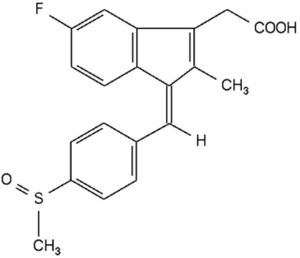
    Sulindac
    made by Mutual Pharmaceutical to Respondent Karen L. Bartlett.  Ms. Bartlett suffered a known — albeit rare — side effect of sulindac administration (as well as other NSAIDs), toxic epidermal necrolysis, a skin hypersensitivity reaction.  The consequences for Ms. Bartlett were "horrific" according to the Court:  "[s]ixty to sixty-five percent of the surface of respondent's body deteriorated, was burned off, or turned into an open wound.  She spent months in a medically induced coma, underwent 12 eye surgeries, and was tube-fed for a year.  She is now severely disfigured, has a number of physical disabilities, and is nearly blind."  Significant for the Court's decision, at the time she was administered the drug, the drug label did not contain any specific warning regarding this type of side effect (although the FDA required the package insert to contain a warning regarding the risk of developing this condition); the Agency later required this warning to be on the drug label.

    Ms. Bartlett sued in an action eventually transferred to Federal court under state law claims characterized by the Court as "both failure-to-warn and design-defect claims," but the District Court dismissed the former cause of action following her physician's admission that he had not read either the label or package insert.  Ms. Bartlett prevailed on her design defect claim, which under New Hampshire law "requires manufacturers to ensure that the products they design, manufacture, and sell are not 'unreasonably dangerous.'"  According to the Court:

    New Hampshire imposes design-defect liability only where "the design of the product created a defective condition unreasonably dangerous to the user," citing Vautour v. Body Masters Sports Industries, Inc., 147 N. H. 150, 153, 784 A. 2d 1178, 1181 (2001); Chellman v. Saab-Scania AB, 138 N. H. 73, 7, 637 A. 2d 148, 150 (1993).  To determine whether a product is "unreasonably dangerous," the New Hampshire Supreme Court employs a "risk-utility approach" under which "a product is defective as designed if the magnitude of the danger outweighs the utility of the product."  Vautour, supra, at 154, 784 A. 2d, at 1182 (internal quotation marks omitted).  That risk-utility approach requires a "multifaceted balancing process involving evaluation of many conflicting factors."  Ibid. (internal quotation marks omitted); see also Thibault, supra, at 809, 395 A. 2d, at 847 (same).

    While the set of factors to be considered is ultimately an open one, the New Hampshire Supreme Court has repeatedly identified three factors as germane to the risk-utility inquiry:  "the usefulness and desirability of the product to the public as a whole, whether the risk of danger could have been reduced without significantly affecting either the product's effectiveness or manufacturing cost, and the presence and efficacy of a warning to avoid an unreasonable risk of harm from hidden dangers or from foreseeable uses."  Vautour, supra, at 154, 784 A. 2d, at 1182; see also Price, supra, at 389, 702 A. 2d, at 333 (same); Chellman, supra, at 77-78, 637 A. 2d, at 150 (same).

    Moreover, according to the Court this form of liability, while being "strict" product liability is not "absolute" liability; the distinction is that the former imposes a "duty of care" on manufacturers as opposed to the latter form of liability, which is a way states can "spread the risk" of injury due to design or manufacturing defects.  This distinction is relevant, because the Court's determination that Mutual was under a common law-defined duty in New Hampshire implicated the three ways the company could comply with state law, and how two of the three were impossible under Federal law.

    Supreme Court SealThe Court's opinion, by Justice Alito joined by Chief Justice Roberts and Justices Scalia, Kennedy, and Thomas, found that Mutual could comply with its state-law imposed duty either by making chemical changes to the drug or changing the drug label (here, by including the more stringent warnings from the package insert on the label, as the FDA was later to do).  The majority found that changing sulindac chemically was impossible both for reasons of "basic chemistry" (i.e., there is little that could be changed in the molecule without changing it into a different molecule) and FDA regulatory law, which required the generic compound to be a copy of the branded drug and to have certain pharmacological properties in common with the branded embodiment.  21 U. S. C. §§ 355(j)(2)(A)(ii), (iii) and (iv), 21 U. S. C. §§ 355(j)(8).  The impossibility of changing the label is a direct consequence of the FDA requirement that a generic drug have the same label as the branded version.  § 355(j)(2)(A)(v).  And a generic drug manufacturer is barred from unilaterally changing either the drug itself, its formulation or its label.  21 CFR § 314.70(b)(2)(i).  Thus, in this case there was a direct conflict between what was required to comply with the state-imposed duties under its tort law and the requirements of Federal drug regulatory law.

    Under these circumstances, the Court held that Federal law prevails and preempts state tort liability, citing Maryland v. Louisiana, 451 U. S. 725, 746 (1981), for the principle that "[u]nder Supremacy Clause, state laws that require a private party to violate federal law are pre-empted and, thus, are 'without effect.'"  And the Court rejected the third possibility open to Mutual, which was to stop selling generic sulindac in New Hampshire, saying that if this were the law "impossibility preemption" would be "all but meaningless," citing its recent opinion in PLIVA, Inc. v. Mensing, 564 U. S. ___ (2011), a case involving state law liability on "failure to warn" grounds.  The Court expressly rejected this alternative in the PLIVA case, saying that "[a]dopting the [appellate court's] stop-selling rationale would mean that not only PLIVA, but also the vast majority — if not all — of the cases in which the Court has found impossibility pre-emption, were wrongly decided."

    That, of course, would never do.  As a consequence, Ms. Bartlett is without a remedy against the generic drug manufacturer, an outcome the majority regrets but does not use to come to a different conclusion:

    This case arises out of tragic circumstances.  A combination of factors combined to produce the rare and devastating injuries that respondent suffered:  the FDA's decision to approve the sale of sulindac and the warnings that accompanied the drug at the time it was prescribed, the decision by respondent's physician to prescribe sulindac despite its known risks, and Congress' decision to regulate the manufacture and sale of generic drugs in a way that reduces their cost to patients but leaves generic drug manufacturers incapable of modifying either the drugs' compositions or their warnings.  Respondent's situation is tragic and evokes deep sympathy, but a straightforward application of pre-emption law requires that the judgment below be reversed.

    Four Justices dissented.  Justice Breyer, joined by Justice Kagan, writes that there is a fourth alternative, that is for a company to shoulder the burden of "paying a sizable damages" award as a remedy in instances where a rare side effect causes harm to a patient.  This opinion is informed, in part, by an amicus brief submitted by two former FDA Commissioners, who inform the Court that "the FDA has long believed that state tort litigation can 'supplemen[t] the agency's regulatory and enforcement activities.'"  Justice Sotomayor, joined by Justice Ginsburg, is more vociferous, accusing the majority of unnecessarily crafting a rule that "immunize[d] generic drug manufacturers from state-law failure-to-warn claims" in PLIVA v. Mensing and, here, "unnecessarily and unwisely extend[ing] its holding in Mensing to pre-empt New Hampshire's law governing design-defects with respect to generic drugs."  "Of greater consequence," the Justice writes:

    [T]he Court appears to justify its revision of respondent Karen Bartlett's state-law claim through an implicit and undefended assumption that federal law gives pharmaceutical companies a right to sell a federally approved drug free from common-law liability.  Remarkably, the Court derives this proposition from a federal law that, in order to protect consumers, prohibits manufacturers from distributing new drugs in commerce without federal regulatory approval, and specifically disavows any intent to displace state law absent a direct and positive conflict.

    The majority has gone astray, according to the dissent, for failing to apply the "two cornerstones of our pre-emption jurisprudence":  to discern the "purpose of Congress" in enacting the statute, and to require a "clear and manifest" Congressional intention to supersede the "historic police powers of the States" as embodied in the type of common law tort liability at issue in this case.  The Justice sees this decision as being in contrast to the Court's (correct) decision in Wyeth v. Levine, where state tort law liability was not preempted by Federal drug regulatory law.  State tort law is a complement to Federal drug law in protecting consumers, a situation Congress has not seen fit to alter or correct:

    Congress' preservation of a role for state law generally, and common-law remedies specifically, reflects a realistic understanding of the limitations of ex ante federal regulatory review in this context.  On its own, even rigorous preapproval clinical testing of drugs is "generally . . . incapable of detecting adverse effects that occur infrequently, have long latency periods, or affect subpopulations not included or adequately represented in the studies," citing Kessler & Vladeck, A Critical Examination of the FDA's Efforts to Preempt Failure-to-Warn Claims, 96 Geo. L. J. 461, 471 (2008); see National Academies, Institute of Medicine, The Future of Drug Safety: Promoting and Protecting the Health of the Public 37-38 (2007).

    Her dissent also notes that "the FDA, which is tasked with monitoring thousands of drugs on the market and considering new drug applications, faces significant resource constraints that limit its ability to protect the public from dangerous drugs," citing Levine, 555 U. S., at 578-579, and n. 11, and that "[t]ort suits can help fill the gaps in federal regulation by 'serv[ing] as a catalyst' to identify previously unknown drug dangers," citing Bates v. Dow Agrosciences LLC, 544 U. S. 431, 451 (2005).

    Under these circumstances this dissent finds the facts of this case to be far from the "strict standard for impossibility" that should be required for Mutual to avoid state law tort liability.  And as in Justice Breyer's dissent, Justice Sotomayor did not see Mutual's alteratives to be limited to those "impossible" under Federal law:

    A manufacturer of a drug that is unreasonably dangerous under New Hampshire law has multiple options:  It can change the drug's design or label in an effort to alter its risk-benefit profile, remove the drug from the market, or pay compensation as a cost of doing business.  If federal law or the drug's chemical properties take the redesign option off the table, then that does not mean the manufacturer suddenly has a legal obligation under state law to improve the drug's label.  Indeed, such a view of state law makes very little sense here because even if Mutual had strengthened its label to fully account for sulindac's risks, the company might still have faced liability for having a defective design.  . . .  When a manufacturer cannot change the label or when doing so would not make the drug safe, the manufacturer may still choose between exiting the market or continuing to sell while knowing it may have to pay compensation to consumers injured by its product.

    While these alternatives may be "unwelcome" from a manufacturer's prospective, "it is a choice that a sovereign State may impose to protect its citizens from dangerous drugs or at least ensure that seriously injured consumers receive compensation."

    Ironically, the majority, usually so quick to rely upon Federalism (or "states' rights") principles in other contexts finds state tort law liability to be preempted while the traditionally "liberal" members of the Court would hew to basic Federalism principles in permitting states to protect their citizens under common law tort law.  While the majority "saves for another day the question whether a true absolute-liability state-law system could give rise to impossibility pre-emption," it seems that states adopting an "absolute liability" regime that imposes no affirmative duties contrary to Federal law but merely "spreads the risk" might be one way for the states to regain their traditional right to employ the sovereign police powers to impose tort liability that would escape the wide latitude of preemption embodied in the Court majority's decision.

    Mutual Pharmaceutical Co. v. Bartlett (2013)
    Opinion by Justice Alito, joined by Chief Justice Roberts and Justices Scalia, Kennedy, and Thomas; dissenting opinion by Justice Breyer, joined by Justice Kagan; dissenting opinion by Justice Sotomayor, joined by Justice Ginsburg

  • By Michael Borella

    UltramercialIt has been just over a month since the Federal Circuit's fractured
    en banc ruling in CLS Bank Int'l v. Alice Corp. regarding
    patent-eligibility of computer-implemented inventions under 35 U.S.C. § 101.  Last week, the Court decided another § 101
    case, Ultramercial, Inc. v. Hulu, LLC.  Of interest is that the panel for the latter included
    the authors of the two main opposing opinions in CLS Bank — Judge Lourie and Chief Judge Rader.  However, instead of throwing down, the judges
    agreed that the claims at issue met the requirements of § 101, even if they
    disagreed on the rationale for this conclusion.

    This action began when Ultramercial sued Hulu, YouTube, and
    WildTangent for infringement of U.S. Patent No. 7,346,545.  Hulu and YouTube were eventually dismissed
    from the case.  On a 12(b)(6) motion, the
    District Court held that the '545 patent does not claim patent-eligible subject
    matter.  On appeal, the Federal Circuit
    reversed and remanded.  However, that
    decision was vacated by the Supreme Court. 
    Back in the Federal Circuit again, Chief Judge Rader authored the
    majority opinion, joined by Judge O'Malley, once again reversing the District
    Court.  Judge Lourie concurred in the
    outcome.

    Claim 1 of the '545 patent recites:

            A method for distribution
    of products over the Internet via a facilitator, said method comprising the
    steps of:
            a first step of receiving, from a
    content provider, media products that are covered by intellectual property
    rights protection and are available for purchase, wherein each said media
    product being comprised of at least one of text data, music data, and video
    data;
            a second step of selecting a
    sponsor message to be associated with the media product, said sponsor message
    being selected from a plurality of sponsor messages, said second step including
    accessing an activity log to verify that the total number of times which the
    sponsor message has been previously presented is less than the number of
    transaction cycles contracted by the sponsor of the sponsor message;
            a third step of providing the
    media product for sale at an Internet website;
            a fourth step of restricting general
    public access to said media product;
            a fifth step of offering to a
    consumer access to the media product without charge to the consumer on the
    precondition that the consumer views the sponsor message;
            a sixth step of receiving from the
    consumer a request to view the sponsor message, wherein the consumer submits
    said request in response to being offered access to the media product;
            a seventh step of, in response to
    receiving the request from the consumer, facilitating the display of a sponsor
    message to the consumer;
            an eighth step of, if the sponsor
    message is not an interactive message, allowing said consumer access to said
    media product after said step of facilitating the display of said sponsor
    message;
            a ninth step of, if the sponsor
    message is an interactive message, presenting at least one query to the
    consumer and allowing said consumer access to said media product after
    receiving a response to said at least one query;
            a tenth step of recording the
    transaction event to the activity log, said tenth step including updating the
    total number of times the sponsor message has been presented;
            and
            an eleventh step of receiving
    payment from the sponsor of the sponsor message displayed.

    First, Chief Judge Rader noted that it is rare for a patent to
    be dismissed in the pleading stage, because issued patents enjoy a presumption
    of validity.  Thus, factual allegations
    of patent-ineligibility must be viewed in the most favorable light for the
    patentee.  Indeed, there must be "clear
    and convincing evidence of ineligibility," and consequently, "12(b)(6)
    dismissal for lack of eligible subject matter will be the exception, not the
    rule."  Chief Judge Rader also noted
    that the various § 101 analyses propounded by the judges of the Federal Circuit
    generally require some degree of factual inquiry.  As a result, the presence of these factual
    issues would normally "render dismissal under Rule 12(b)(6) improper."

    Turning to the history of title 35, Chief Judge Rader
    emphasized, like he did in CLS Bank, that
    Congress intended § 101 to be read expansively. 
    Congress made no exceptions to patentable subject matter — those were
    introduced by the courts.  Particularly,
    the well-known exceptions of abstract ideas, laws of nature, and natural
    phenomena were introduced to "prevent the monopolization of the basic
    tools of scientific and technological work."

    Following his 'broad statute with narrow exceptions'
    interpretation of § 101, Chief Judge Rader addressed the patentability of
    abstract ideas with respect to software and business method claims.  He noted that "a process need not use a
    computer, or some machine, in order to avoid abstractness."  In rejecting the machine-or-transformation
    test for § 101 eligibility in Bilski v. Kappos, Chief Judge Rader believes that the Supreme Court was attempting to
    allow the patent laws to accommodate new and future technologies of the
    information age.

    Chief Judge Rader further indicated that, in doing so, the
    Supreme Court has set forth a number of guidelines.  These include the principles that (i) a claim
    that recites an abstract idea can be valid as long as the claim is directed to
    an application of the idea, and (ii) determining if this is the case requires
    consideration of the claim as a whole to ascertain whether the claim includes meaningful
    limitations restricting it to such an application.  Factors determining whether a limitation is
    meaningful were spelled out by Chief
    Judge Rader's concurrence-in-part and dissent-in-part in CLS Bank, and he revisits them
    here.

    One of Chief Judge Rader's challenges in both CLS Bank and this case was to synthesize
    two opposing notions originally set forth by the Supreme Court in Parker v. Flook and Diamond v. Diehr, respectfully.  On one hand, Flook indicated
    that the § 101 inquiry should treat claimed abstract ideas as "a familiar
    part of the prior art."  On the
    other hand, Diehr held that "[t]he
    question therefore of whether a particular invention is novel is wholly apart
    from whether the invention falls into a category of statutory subject matter."  The Supreme Court's most recent ruling on
    patent-eligible subject matter, Mayo v. Prometheus, seems to defer more to Flook
    than Diehr in this regard.  For example, in Prometheus, the Justices stated that "in evaluating the
    significance of additional steps, the §101 patent-eligibility inquiry and, say,
    the §102 novelty inquiry might sometimes overlap."

    However, Chief Judge Rader reads Diehr into Prometheus to
    conclude that the Supreme Court was not actually suggesting that a novelty or
    non-obviousness analysis need be performed in a § 101 review.  Instead, he believes that:

    [T]he Supreme Court's reference to "inventiveness"
    in Prometheus can be read as shorthand for its inquiry into whether
    implementing the abstract idea in the context of the claimed invention
    inherently requires the recited steps.  Thus, in Prometheus, the Supreme Court
    recognized that the additional steps were those that anyone wanting to use the
    natural law would necessarily use.  If, to implement the abstract concept, one
    must perform the additional step, or the step is a routine and conventional
    aspect of the abstract idea, then the step merely separately restates an
    element of the abstract idea, and thus does not further limit the abstract
    concept to a practical application.

    Thus, Chief Judge Rader seems to be advocating that the "inventive
    concept" and "meaningful limitations" tests involve limited
    consideration of prior art.  This
    consideration would determine whether the non-abstract-idea features of a claim
    are essential, routine, or conventional facets of a recited abstract idea.

    Applying this notion to computer-implemented inventions, he
    notes that mere reference to a general purpose computer in the claims falls
    into the essential, routine, or conventional category.  On the other hand, Chief Judge Rader suggests
    that if "the claims tie the otherwise abstract idea to a specific way of
    doing something with a computer, or a specific computer for doing something . .
    . they likely will be patent eligible." 
    He also notes that "meaningful limitations may include the computer
    being part of the solution, being integral to the performance of the method, or
    containing an improvement in computer technology."  Such limitations would avoid pre-emption of a
    claimed abstract idea.

    Turning finally to Ultramercial's claim, Chief Judge Rader held
    that the District Court erred in "requiring the patentee to come forward
    with a construction that would show the claims were eligible."  Instead, he indicated that, given the
    procedural posture of the case, the District Court "should either have
    construed the claims in accordance with Markman,
    required the defendant to establish that the only plausible construction was
    one that, by clear and convincing evidence rendered the subject matter
    ineligible (with no factual inquiries), or adopted a construction most
    favorable to the patentee."  In
    analyzing the claims, Chief Judge Rader opted for the latter approach.

    In determining whether the claim encompassed an abstract idea,
    the parties agreed the claimed idea that "advertising can be used as a
    form of currency" is abstract, and focused their dispute on whether the
    claims include meaningful limitations to overcome this abstractness.  Chief
    Judge Rader answered this question in the positive, observing that some steps
    of claim 1 "plainly require that the method be performed through computers,
    on the internet, and in a cyber-market environment."  As a result, he found that the complexity of
    such a computer implementation involved "no risk of preempting all forms
    of advertising, let alone advertising on the Internet" and met the
    requirements of § 101.

    Thus, despite a recitation of "the Internet" being
    the only concrete structure in the claim, a combination of the claim's many
    specific limitations, and the procedural requirement of construction most
    favorable to the patentee, led to the conclusion that the claim was
    patent-eligible.  Notably, Chief Judge
    Rader posited that the claim requires "controlled interaction with a
    consumer over an Internet website, something far removed from purely mental
    steps."

    In concurring, Judge Lourie wrote separately to advocate "faithfully
    follow[ing] the Supreme Court's most recent guidance regarding patent
    eligibility in [Prometheus] and . . .
    the plurality opinion of five judges from this court in CLS Bank."  Judge Lourie
    agreed that the claims included the abstract idea of "using advertising as
    an exchange or currency."

    However, he disagreed with Chief Judge Rader's focus on the
    complexity of the computer implementation of the claimed method, since a
    specific implementation is not recited. 
    Instead, Judge Lourie found that "the added limitations in these
    claims represent significantly more than the underlying abstract idea of using
    advertising as an exchange or currency and, as a consequence, do not preempt
    the use of that idea in all fields."  And he left it at that, with no further substantive analysis or
    discussion.

    So . . . now what?  In a sense,
    this case is a valuable data point.  It
    demonstrates how a claim that encompasses an abstract idea can include
    sufficient "inventive concept" and "meaningful limitations"
    to satisfy the judges who disagreed so fiercely in CLS Bank.  But what
    analytical technique should be used to evaluate such a claim?  Do we turn to Chief Judge Rader's approach,
    which seems limited to the facts of this case, or to Judge Lourie's approach,
    which is conclusory at best?

    One point seems clear, however. 
    The Federal Circuit is not going to abandon the "inventive concept"
    and "meaningful limitations" tests — the progeny of Prometheus — any time soon.

    Ultramercial,
    Inc. v. Hulu, LLC
    (Fed. Cir. 2013)

    Panel: Chief Judge Rader and Circuit Judges Lourie and O'Malley
    Opinion by Chief Judge Rader; concurring opinion by Circuit
    Judge Lourie

  • By
    Andrew Williams

    WyethWhen
    is it undue experimentation in practicing the full scope of a claim that contains
    a genus of chemical compounds and a functional limitation of activity, when the
    specification provides a method to assess the claimed functional activity (and
    it can be routinely performed by one skilled in the art)?  The Federal Circuit tackled this problem on
    Wednesday in the Wyeth v. Abbott Laboratories
    case, in which the Court affirmed a lower court's grant of summary judgment of
    non-enablement.  It was unclear from the
    decision how many compounds were encompassed by this genus, but Abbott alleged
    that there were tens of thousands, and Wyeth's expert appeared to acknowledge
    that the number would be "significantly smaller" than "millions
    of compounds."  Nevertheless, it was
    decisive to the Court that there were no suggestions in the patents at issue as
    to which substitutions in the compound would be preferable, that there was no
    guidance or predictions about any particular substitutions, and that the
    unpredictability in the art would have required the testing of each compound to
    see if it fell within the functional limitations of the claim.  And, even though the Court acknowledged that undue
    experimentation is a matter of degree, synthesizing and screening tens of
    thousands of compounds qualified as "excessive" and therefore was
    found to be undue.  The only other hint
    as to what amount of effort might or might not also qualify as "excessive"
    was that the Court noted that "it would take technicians weeks to complete
    each of these assays."  Nevertheless, to affirm a grant of summary judgment with so many factual
    issues to consider, not the least of which was whether one skilled in the art would
    consider such experimentation to be undue, this was apparently not a close case
    for the Court.

    As
    always, it is important to consider the claims at issue.  The two patents were U.S. Patent Nos.
    5,516,781 and 5,563,146, and claim 1 of the '781 patent is representative:

    1.  A method of treating restenosis
    in a mammal resulting from said mammal undergoing a percutaneous transluminal
    coronary angioplasty procedure which comprises administering an antirestenosis
    effective amount of rapamycin to said mammal orally, parenterally,
    intravascularly, intranasally, intrabronchially, transdermally, rectally, or
    via a vascular stent impregnated with rapamycin.

    The
    technology at issue in this case was the use of balloon catheters to open
    blocked arteries, where the balloons are guided to the site of accumulated
    plaque and inflated to crush the plaque.  However, such a procedure can cause injury to the arterial wall,
    resulting in the thickening of the walls, in a process known as restenosis.  Therefore, treating restenosis is essentially
    a renarrowing of the artery.  Rapamycin
    can refer to a class of compounds, but the patent only refers to a single species
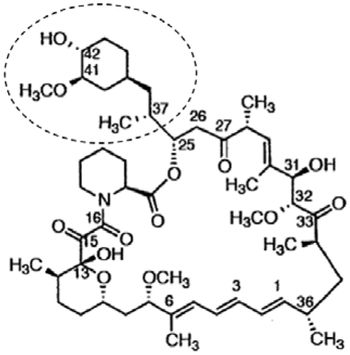
    called sirolimus, which is naturally produced by a bacterium called Streptomyces hygroscopicus.  Sirolimus is a macrocyclic triene ring, with
    the following structure:

    FIG
    This
    compound was known in the art, so the patents do not even contain this
    structure, instead referring to a patent that discloses and claims rapamycin (although
    again only the sirolimus compound).  Nevertheless, even though the patents only refer to this one compound,
    the District Court adopted Wyeth's broad construction of "a compound
    containing a macrocyclic triene ring structure produced by Streptomyces hygroscopicus, having immunosuppressive and
    anti-restenotic effects."  Therefore, any substituent beyond the C-37 position (the dashed
    circle) can be used to modify the structure and still fall within the scope of
    this definition.  Wyeth likely sought
    such a construction because the defendants separately market stent products
    that elute everolimus and zotarolimus, which have the same macrocyclic ring,
    but different constituents at the C-42 position.  The likely real problem that the Court had
    with this case, therefore, was that it appeared as if Wyeth was trying to assert
    its patents against currently used compounds that were not specifically taught
    in the patent disclosure (which itself only mentioned one species).

    Abbott Laboratories #1The
    enablement question turned on the fact that not all species of the rapamycin
    genus were immunosuppressive and anti-restenotic.  Wyeth's expert did point out, however, that
    one skilled in the art would know that you could not just add anything to
    ring.  If so, the number of possible
    species would be in the millions, and might approach infinite.  However, to have the claimed functional
    effects, the compound would need to be permeable across cell membranes.  This limits the practical size of compounds
    to below 1,000-1,200 Daltons (for comparison, sirolimus is approximately 914
    Daltons).  Even though there was some
    confusion at the oral hearing, the Court understood that this would limit the
    number of compounds to the tens of thousands.  More importantly, because the patents in suit did not disclose any other
    species of this genus, there was no disclosure of which substituents would be
    preferable, or any predictions as to which substituents would be active.  The only teaching along these lines was the
    inclusion of assays to determine immunosuppressive and anti-restenotic activity,
    which the Court accepted would be routine for one skilled in the art.  Nevertheless, even though routine, testing
    tens of thousands of compounds would be excessive, and therefore the amount of
    experimentation was found to be undue.

    The
    opinion was straightforward, and provides some guidance as to how many species
    of a generic compound could cause undue experimentation if the disclosure
    provides no guidance as to which substituents would fit the functional
    limitation.  However, what was not clear
    from the opinion or the oral argument was whether one skilled in the art would
    have considered such testing to be undue, or at least whether this question should
    have been decided at trial.  Also, it was
    unclear just how many species of the tens of thousands were, in fact,
    inoperative.  It was suggested that only
    around seven had been identified as active, but no mention was made of the
    species that were found to be inactive.  This could be because the Court believed this fact was irrelevant,
    especially in view of the unpredictability in the art.  However, it would be interesting to know
    whether the decision would have been different if all known species were
    active.  And, if so, what if only half of
    the species were active?  The take home
    lesson is if you are drafting and prosecuting such claims, provide as much
    detail about the substituents as possible, and claim varying scopes of generic
    structures.  Of course, Wyeth was stuck
    with its disclosure from 1992, and so they were between a rock and a hard place
    (because the defendants were not selling the species that they disclosed).

    The
    really troubling aspect of this case came during oral argument, but did not
    make it into the opinion.  This issue related
    to grant of summary judgment for lack of written description with regard to two
    routes of administration, specifically transdermally and rectally.  Apparently, the inventors testified that they
    did not know how to administer the compound via these routes, and it was
    unclear whether anyone else in the art knew at the time.  Judge Moore, who wrote the opinion, questioned
    from the bench whether the point of the written description requirement was to
    demonstrate that the inventor possessed the invention.  And, if the inventor admits to not possessing
    a particular aspect of the invention, Judge Moore asked, can the specification
    truly be described?  She then carried
    this line of thought to its logical, if not absurd, conclusion, that if a
    synthetic chemist does not know how to administer drugs to patients, how can
    they ever be entitled to method of treatment claims?  She wondered if a formulator should also be
    included in the inventive entity, especially considering the fact that in this
    case both parties agreed that the definition of a person skilled in the art
    would also include a formulator.  Of
    course, Wyeth's counsel cautioned against such draconian approach to
    pharmaceutical patent claims.  Nevertheless,
    because the Court did not comment on the written description found in the
    specification, it is unclear whether Judge Moore was simply musing, or whether
    we can expect to see closer scrutiny of pharmaceutical method-of-treatment
    claims from her (or the Court in general), especially if such claims contain
    specific administration routes as limitations.

    Wyeth v. Abbott Laboratories (Fed. Cir. 2013)
    Panel: Circuit Judges Moore, Bryson, and Wallach
    Opinion by Circuit Judge Moore