• By Sherri Oslick

    Gavel About Court Report:  Each week we will report briefly on recently filed biotech and pharma cases.

    UCB Inc. et
    al. v. Teva Pharmaceuticals USA Inc. et al.

    1:13-cv-01148;
    filed June 28, 2013 in the District Court of Delaware

    • Plaintiffs: 
    UCB Inc.; UCB Pharma GmbH; Research Corporation Technologies Inc.; Harris FRC
    Corp.
    • Defendants: 
    Teva Pharmaceuticals USA Inc.; Teva Pharmaceutical Industries Ltd.

    UCB, Inc. et
    al. v. Zydus Pharmaceuticals (USA), Inc. et al.
    1:13-cv-04021;
    filed June 28, 2013 in the District Court of New Jersey

    • Plaintiffs: 
    UCB, Inc.; UCB Pharma GmbH; Research Corporation Technologies, Inc.; Harris FRC
    Corp.
    • Defendants:  Zydus Pharmaceuticals (USA), Inc.; Cadila Healthcare Ltd.

    The
    complaints in these cases are substantially identical.  Infringement of U.S. Patent No. RE38,551 (""Anticonvulsant
    Enantiomeric Amino Acid Derivatives," issued July 6, 2004) following a
    Paragraph IV certification as part of defendants' filing of an ANDA to
    manufacture a generic version of UCB's Vimpat® (lacosamide, used as adjunctive
    therapy in the treatment of partial-onset seizures in people with epilepsy aged
    17 years and older).  View the Teva complaint here.


    Pfizer Inc. et
    al. v Lupin Ltd

    1:13-cv-01153;
    filed June 28, 2013 in the District Court of Delaware

    • Plaintiffs: 
    Pfizer Inc.; UCB Pharma GmbH
    • Defendant: 
    Lupin Ltd.

    Pfizer Inc. et
    al. v Zydus Pharmaceuticals (USA) Inc.
    1:13-cv-01154;
    filed June 28, 2013 in the District Court of Delaware

    • Plaintiffs: 
    Pfizer Inc.; UCB Pharma GmbH
    • Defendant: 
    Zydus Pharmaceuticals (USA) Inc.

    Pfizer Inc. et
    al. v Accord Healthcare Inc. USA

    1:13-cv-01155;
    filed June 28, 2013 in the District Court of Delaware

    • Plaintiffs: 
    Pfizer Inc.; UCB Pharma GmbH
    • Defendant:  Accord
    Healthcare Inc. USA

    Pfizer Inc. et
    al. v. Amerigen Pharmaceuticals Inc., et al.
    1:13-cv-01156;
    filed June 28, 2013 in the District Court of Delaware

    • Plaintiffs: 
    Pfizer Inc.; UCB Pharma GmbH
    • Defendants: 
    Amerigen Pharmaceuticals Inc.; Amerigen Pharmaceuticals Ltd.

    Pfizer Inc. et
    al. v. Amneal Pharmaceuticals LLC

    1:13-cv-01157;
    filed June 28, 2013 in the District Court of Delaware

    • Plaintiffs: 
    Pfizer Inc.; UCB Pharma GmbH
    • Defendant:  Amneal
    Pharmaceuticals LLC

    Pfizer Inc. et
    al. v. Impax Laboratories Inc.

    1:13-cv-01158;
    filed June 28, 2013 in the District Court of Delaware

    • Plaintiffs: 
    Pfizer Inc.; UCB Pharma GmbH
    • Defendant:  Impax
    Laboratories Inc.

    The
    complaints in these cases are substantially identical.  Infringement of U.S. Patent Nos. 6,858,650 ("Stable
    Salts of Novel Derivatives of 3,3-Diphenylpropylamines," issued February
    22, 2005), 7,384,980 ("Derivatives of 3,3-Diphenylpropylamines,"
    issued June 10, 2008), 7,855,230 (same title, issued December 21, 2010),
    7,985,772 (same title, issued July 26, 2011), and 8,338,478 (same title, issued
    December 25, 2012) following a Paragraph IV certification as part of defendants'
    filing of an ANDA to manufacture a generic version of Pfizer's Toviaz®
    (fesoterodine fumarate, used to treat the symptoms of overactive bladder).  View the Lupin
    complaint here.


    Astrazeneca
    AB et al. v. Mylan Pharmaceuticals et al.

    3:13-cv-04022;
    filed June 28, 2013 in the District Court of New Jersey

    • Plaintiffs: 
    Astrazeneca AB; Astrazeneca LP; KBI-E Inc.; Pozen, Inc.
    • Defendants: 
    Mylan Pharmaceuticals; Mylan Laboratories Ltd.; Mylan, Inc.

    Infringement
    of U.S. Patent Nos. 5,714,504 ("Compositions," issued February 3,
    1988), 6,369,085 ("Form of S-omeprazole," issued April 9, 2002),
    6,875,872 ("Compounds," issued April 5, 2005), 7,411,070 ("Form
    of S-omeprazole," issued August 12, 2008), 7,745,466 (same title, issued
    June 29, 2010), 5,948,789 ("Process For Synthesis Of Substituted
    Sulphoxides," issued September 7, 1999), and 6,926,907 ("Pharmaceutical
    Compositions for the Coordinated Delivery of NSAIDs," issued August 9,
    2005) following a Paragraph IV certification as part of Mylan's filing of an
    ANDA to manufacture a generic version of AstraZeneca's Vimovo® (naproxen and
    esomeprazole magnesium, used to relieve the signs and symptoms of
    osteoarthritis, rheumatoid arthritis, and ankylosing spondylitis, and to
    decrease the risk of stomach (gastric) ulcers in patients at risk of developing
    stomach ulcers from treatment with non-steroidal anti-inflammatory drugs
    (NSAIDs)).  View the complaint here.


    Merck, Sharp
    & Dohme Corp. et al. v. Cipla USA, Inc. et al.

    1:13-cv-04017;
    filed June 27, 2013 in the District Court of New Jersey

    • Plaintiffs: 
    Merck, Sharp & Dohme Corp.; Bristol-Myers Squibb Co.
    • Defendants: 
    Cipla USA, Inc.; Cipla Ltd.

    Infringement
    of U.S. Patent Nos. 6,639,071 ("Crystal Forms of
    (-)-6-chloro-4-cyclopropylethynyl-4-trifluoromethyl-1,4-dihydro-2H-3,1-benzoxazin-2-one,"
    issued October 28, 2003) and 6,939,964 (same title, issued September 6, 2005)
    following a Paragraph IV certification as part of Cipla's filing of an ANDA to
    manufacture a generic version of BMS' Sustiva® (efavirenz, used to treat HIV
    infection).  View the complaint here.


    Par
    Pharmaceutical, Inc. et al. v. Breckenridge Pharmaceutical, Inc.

    2:13-cv-04000;
    filed June 27, 2013 in the District Court of New Jersey

    • Plaintiffs: 
    Par Pharmaceutical, Inc.; Alkermes Pharma Ireland Ltd.
    • Defendants: 
    Breckenridge Pharmaceutical, Inc.

    Infringement
    of U.S. Patent Nos. 6,592,903 ("Nanoparticulate Dispersions Comprising a
    Synergistic Combination of a Polymeric Surface Stabilizer and Dioctyl Sodium
    Sulfosuccinate," issued July 15, 2003) and 7,101,576 ("Nanoparticulate
    Megestrol Formulations," issued September 5, 2006) following a Paragraph
    IV certification as part of Breckenridge's filing of an ANDA to manufacture a
    generic version of Par's Megace ES® (megestrol acetate, used for the treatment
    of appetite loss, severe malnutrition, or unexplained, significant weight loss
    in AIDS patients).  View the complaint here.


    United
    States Department of Health and Human Services et al. v. Lupin Ltd.

    2:13-cv-04039;
    filed June 27, 2013 in the District Court of New Jersey

    • Plaintiffs:  United States Department of Health and Human Services; Board of
    Trustees of the University of Illinois
    • Defendant: 
    Lupin Ltd.

    Infringement
    of U.S. Patent No. 7,470,506 ("Fitness Assay and
    Associated Methods," issued December 30, 2008), licensed to Janssen
    following a Paragraph IV certification as part of Lupin's filing of an ANDA to
    manufacture a generic version of Janssen's Prezista® (darunavir, used to treat
    human immunodeficiency virus (HIV-1) infection).  View the complaint here.

  • CalendarJuly 15-16, 2013 – Global Patenting Strategy and Practice (American Conference
    Institute) – New
    York, NY

    July 15-19, 2013 – Patent Law Summer
    Intensive
    (Benjamin N. Cardozo School of Law) – New York, NY

    July 16, 2013 – FTC v. Actavis: Practical Implications of the Landmark
    Supreme Court Decision
    (Law
    Seminars International) – 3:00 to 4:00
    pm (Eastern)

    July
    17, 2013 – European biotech patent law update (D
    Young & Co) – 4:00 am, 7:00 am, 12:00 pm (EDT)

    July 17,
    2013 – The Myriad
    Decision: Practical Implications for
    Biotechnology Companies Protecting IP Assets
    (Law
    Seminars International) – 3:00 to 4:00 pm (Eastern)

    July 17-18, 2013 – Legal
    and Regulatory Summit on Generic Drugs
    (American Conference
    Institute) – New York, NY

    July 22, 2013 – IP & Diagnostics Symposium (Biotechnology
    Industry Organization) – Alexandria, VA

    July 24, 2013 – AIA and Patent Prosecution: Navigating the
    Ethical Grey Areas
    (Strafford) – 1:00 to 2:30 pm
    (EDT)

    July 28-30, 2013 – 2013 Annual Meeting & Conference (National Association of Patent Practitioners) – San
    Diego, CA

    July 30,
    2013 – Are We Innovators, or Are We
    Trolls: The Slippery Slope of Defining A Patent Troll
    (McDonnell
    Boehnen Hulbert & Berghoff LLP) – 10:00 to 11:15 am (CT)

    July 31 to August 2, 2013 – Advanced Patent Law Seminar (Chisum Patent Academy) – Seattle, WA

    August 5-7, 2013 – Advanced Patent Law Seminar (Chisum Patent Academy) – Seattle, WA

    August 8, 2013 – Analyzing and Adapting to the Supreme Court's
    Myriad Ruling
    (Technology
    Transfer Tactics) – 1:00 to 2:00 pm
    (Eastern)

    August 8-11,
    2013 – 2013 Annual Meeting (American Bar
    Association) – San Francisco, CA

    August 21, 2013 – Inducement to Infringe in Hatch-Waxman Litigation: Lessons from Commil USA v. Cisco Systems and Bayer Schering v. Lupin for Pharma
    Patents
    (Strafford) – 1:00 to 2:30 pm (EDT)

    August
    22, 2013 – What are the Implications of CLS
    Bank Int'l v. Alice Corp
    . on Computer-Implemented Inventions?
    (McDonnell
    Boehnen Hulbert & Berghoff LLP) – 10:00 to 11:15 am (CT)

    September 17-18, 2013 – FDA Boot Camp (American Conference
    Institute) – Boston, MA

    September 18, 2013 – Conflicts in Patent Prosecution: Avoiding the
    Ethical Pitfalls Minimizing Risks of Malpractice Liability and Ethics Sanctions
    (Strafford) – 1:00 to 2:30 pm (EDT)

    ***Patent Docs is a media partner of this conference or CLE

  • Boston SkylineAmerican Conference
    Institute (ACI) will be holding the next session of its FDA Boot Camp
    conference on September 17-18, 2013 in Boston, MA.  ACI faculty will help attendees:

    • Master the basics
    of the application and approval processes for drugs, biologics, and devices
    • Comprehend the
    structure of the FDA and the roles of the three major agency centers:  CDER, CBER, and CDHR
    • Develop a
    practical working knowledge of clinical trials for drugs and biologics and the
    clearance process for devices
    • Learn how devices
    are classified, monitored, and regulated
    • Appreciate the
    complexities of pharmaceutical IP and the regulatory balance between brand name
    and generic products
    • Recognize the
    pivotal role of labeling in the drug and biologics approval process
    • See the
    importance of cGMPs to the post-approval regulatory process
    • Navigate the
    protocols of adverse events monitoring, signal detection, product withdrawals,
    and recalls

    BrochureIn particular,
    ACI's faculty will offer presentations on the following topics:

    • The Basics: Understanding and Working with
    the FDA — Jurisdiction, Functions, Organization, and Operations
    • The Nature of the Approval Process
    • Understanding the Clinical Trial Process for
    Drugs and Biologics
    • Obtaining and Challenging Market Exclusivity
    for Drug Products and Biologic Products: IP Protection, Data Exclusivity,
    Trademark and Brand Protection, Hatch-Waxman, BPCIA, and More:
    • Part 1 — Overview of Patent and Trademark
    Issues
    • Part 2 — Hatch-Waxman and BPCIA Overview
    • Drugs and Biologics: Labeling
    • cGMPs: Drugs and Biologics (Current Good
    Manufacturing Practices)
    • Adverse Events Monitoring, Pharmacovigilance
    and Risk Management
    • Medical Devices: Classifications, the
    Essentials of the Premarket Review Process, and Post-Market Requirements and
    Concerns
    • Recall Guidance for Drugs, Biologics, and
    Medical Devices: What You Need to Know

    A pre-conference
    workshop on the "Fundamentals of FDA Regulatory Law" and
    "Resolving Ethical Challenges Encountered During the Drug Approval
    Process" will be offered on September 16, 2013 from 1:00 to 5:00 pm.  The first part of the workshop will provide a
    basic overview of FDA regulations and will prepare attendees for the in-depth
    discussions that will take place throughout the conference, and explore ethical
    issues that may arise in the context of communications with FDA on behalf of
    clients.  The second part of the workshop
    will explore ethical issues that may arise in the context of communications
    with FDA on behalf of clients.

    Two post-conference
    master classes will be offered on September 18, 2013.  The first master class, entitled
    "Hatch-Waxman and BPCIA: Overview of Biosimilars and Life Cycle Planning
    for Drugs and Biologics," will provide an in-depth overview of biosimilars
    as well as analyses of bioequivalence and exclusivities and their role in
    patent and product life cycle management. 
    The second master class, entitled "Post-Approval Marketing Guidance
    and Preemption Protocols," will address issues that arise post-approval,
    including advertising, promotion, and off-label promotion and enforcement, as
    well as preemption fundamentals.

    An agenda for the
    conference can be found here.  A complete brochure for this conference,
    including an agenda, detailed descriptions of conference sessions, list of
    speakers, and registration form can be obtained here.

    ACI - American Conference InstituteThe registration
    fee is $2,295 (conference alone), $2,895 (conference and workshop or conference
    and one master class), or $3,295 (conference, workshop, and one master class).  Those registering by July 19, 2013 will
    receive a $300 discount and those registering by August 16, 2013 will receive a
    $200 discount.  Patent Docs readers who reference the discount code "PD
    200" will receive $200 off the current price tier when registering.  Those interested in registering for the
    conference can do so here,
    by e-mailing CustomerService@AmericanConference.com, by calling 1-888-224-2480,
    or by faxing a registration form to 1-877-927-1563.

    Patent Docs is a media partner of ACI's FDA Boot Camp conference.

  • LSI - Law Seminars International - blueLaw
    Seminars International (LSI) will be offering a one-hour telebriefing on "The Myriad
    Decision: Practical Implications for
    Biotechnology Companies Protecting IP Assets" on July 17,
    2013 from 3:00 to 4:00 pm (Eastern).  Dr.
    Barbara R. Rudolph of Finnegan
    Henderson Farabow Garrett & Dunner LLP will moderate a panel that
    includes Jennifer L. Swize of Jones Day
    and Courtenay C. Brinckerhoff of Foley
    & Lardner LLP.  The panel will
    discuss the Myriad decision and the possible implications for patent
    procurement, patent litigation, the biotechnology industry, and the future of
    medical research.  Among the topics to be
    covered are:


    Impact of the Myriad Decision on
    patents for genetic research

    How the decision distinguishes between natural and synthetic gene sequences

    Legal and business implications for the biotech industry

    New strategies for protecting DNA-based intellectual property moving forward

    A
    Q&A will follow the presentation and last for up to 30 minutes.

    The
    registration fee is $150 per caller and $100 for each additional person on the
    same line who desires continuing education credit.  Those interested in registering for the
    telebriefing, can do so here.

  • Strafford #1Strafford
    will be offering a webinar/teleconference on "Inducement to Infringe in Hatch-Waxman Litigation: Lessons from Commil USA v. Cisco Systems and Bayer Schering v. Lupin for Pharma
    Patents" on August 21, 2013 from 1:00 to 2:30 pm (EDT).  Thomas
    L. Irving, Dr. David P. Frazier, and Robert F. Shaffer of Finnegan Henderson
    Farabow Garrett & Dunner provide patent counsel with guidance on
    claim and label language; to proactively coordinate patent, regulatory and
    clinical personnel; and to maintain consistency between claims and likely or
    actual label language throughout patent prosecution and label negotiation with
    the FDA.  The webinar will review the
    following questions:


    What can be learned from the AstraZeneca v. Apotex, Bayer Schering v.
    Lupin
    , and Commil USA v. Cisco Systems Inc. decisions?

    What are the best approaches to maintain consistency between claims and likely
    or actual label language?

    What steps can be taken to maintain the coordination of patent, regulatory and
    clinical personnel throughout the patent prosecution and label negotiation with
    the FDA?

    The
    registration fee for the webinar is $297 ($362 for registration and CLE processing).  Those registering by July 26, 2013 will
    receive a $50 discount.  Those interested
    in registering for the webinar, can do so here.

  • D Young & CoD
    Young & Co will be offering its next European biotech patent law update on July
    17, 2013.  The 45-minute webinar will be
    offered at three times: 4:00 am, 7:00 am, 12:00 pm (EDT). D Young & Co
    European Patent Attorneys Robert Dempster and Simon O'Brien will provide an
    essential update and live Q&A on EPO biotechnology case law.

    While
    there is no fee to participate, attendees must register in advance.  Those wishing to register can do so here.

  • MBHB Logo 2McDonnell
    Boehnen Hulbert & Berghoff LLP will be offering a live webinar entitled
    "What are the Implications of CLS
    Bank Int'l v. Alice Corp
    . on Computer-Implemented Inventions?" on August
    22, 2013 from 10:00 am to 11:15 am (CT). 
    MBHB attorney Rory P. Shea will cover the potential implications of the CLS
    Bank
    decision on claims directed to computer-implemented inventions.  Topics to be covered include:


    A review of the CLS Bank
    decision and the takeaways from that decision
    • A review of how courts are interpreting and
    applying the CLS Bank decision since it was handed down
    • A discussion of how the CLS Bank decision
    may impact the prosecution and litigation of claims directed to
    computer-implemented inventions going forward

    While
    there is no fee to participate, attendees must register in advance.  Those wishing to register can do so here.  CLE credit is pending for the states of California,
    Georgia, Illinois, North Carolina, New Jersey, New York and Virginia.

  • By Donald Zuhn

    Washington - Capitol #5On June 28, Rep. Allyson
    Schwartz (D-PA) introduced legislation (H.R. 2605)
    to amend the Internal Revenue Code of 1986 to allow a deduction for "patent
    box" profit from the use of U.S. patents (and foreign patents in certain
    circumstances).  The bill, also known as
    the Manufacturing Innovation in America Act of 2013, is identical to legislation
    that Rep. Schwartz introduced last year. 
    The term "patent box"
    refers to a tax incentive that provides a reduced tax rate on profits derived
    from products that incorporate patents.  The
    tax incentive is known as a "patent box" because there is a box for patent profits to
    check on the tax form.

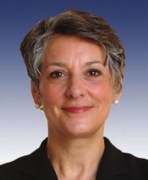
    Schwartz, AllysonIn a press release
    that was issued when the legislation was introduced last year, Rep. Schwartz
    (at left) noted that while the U.S. "leads the world in innovation and research and
    development,  . . . our current tax code
    fails to reflect the challenges of a competitive global economy, especially as
    it relates to domestic manufacturing." 
    According to Rep. Schwartz, the legislation she introduced would "further
    incentivize innovation, research and development, and manufacturing in the
    United States [by] reduc[ing] business taxes by more than half, to a 10 percent
    rate, for companies that manufacture patented products in the United States,"
    thereby "lead[ing] to both U.S. and foreign companies bringing jobs back
    to the United States, as well as the creation of new jobs."  Her co-sponsor last year, Rep. Charles
    Boustany, Jr. (R-LA) — who has yet to sign on to the bill this year — noted
    last year that:

    As the global economy continues to grow, the
    emergence of tools, such as ‘Patent Boxes,’ seek to drive domestic research and
    development while creating cutting-edge technologies.  Aimed to retain home-grown innovation, these
    tools allow for countries to promote domestic talent and incentivize companies
    to expand.  America should look toward
    engaging in this practice as well.  This
    tax rate reduction will lead to job creation across the country in sectors
    ranging from life-saving medical technology development, to next-generation
    energy technologies.

    Biogen IdecBiogen Idec Vice-President
    Lynne Sullivan indicated that the "legislation takes an important step
    towards making the U.S. corporate tax system globally competitive, and will
    drive domestic job growth in research and development and high-tech
    manufacturing."

    Rep. Schwartz explained
    that the bill would provide a 10% tax rate on the sale of qualifying patented products
    by American businesses.  Among the
    business sectors that she expects to benefit from the legislation are the
    pharmaceutical and biotechnology sectors. 
    According to Rep. Schwartz, in order for a company to qualify for the
    reduced tax rate, the company must have a U.S. patent, and a substantial
    portion of the patents covering the product must be the result of research and
    development performed in the U.S.  The
    legislation specifies that a foreign patent may also be treated as a
    "qualified patent" under the bill if the foreign patent is "for
    the same or substantially similar invention or application" as a U.S.
    patent that the taxpayer holds or exclusively licenses, and provided that the
    taxpayer holds or exclusively licenses the foreign patent.  The bill's definitions of patent box profit,
    IP profit, routine profit, allocation method, patent gross receipts, and qualified
    patent property fall well outside the scope of this blog, so readers (and tax
    attorneys) who are interested in obtaining more details should consult the bill
    itself
    .

    Noting that "[o]ur
    global economic competitors — including China, France, Spain and soon the
    United Kingdom — have tax rates varying from 5 to 10 percent on the income
    generated from patents or other types of intellectual property," Rep.
    Schwartz believes that H.R. 2605 would fix "an outdated tax code that
    doesn't reflect our 21st century innovation economy," and encourage
    companies who conduct research an product development in the U.S. to also establish
    manufacturing operations in this country, rather than overseas.

    After being introduced, the
    bill was referred to the House Committee on Ways and Means.

  • By
    Kevin E. Noonan

    MyriadA day after Myriad
    Genetics sued Ambry Genetics for patent infringement, the company filed
    suit in the District of Utah, Central Divisions against Gene by Gene Ltd. (Case
    No. 2:13-cv-00643-EJF; complaint).  The complaint is nearly identical
    to Myriad's complaint against Ambry Genetics, and once again Myriad is joined
    by the University of Utah Research Foundation, the Trustees of the University
    of Pennsylvania, HSC Research and Development Limited Partnership, and
    Endorecherche Inc.

    This Complaint
    alleges that:

    Defendant, through its DNA Traits division, began offering its BRCA1 and BRCA2 analysis
    as part of its testing menu on June 13, 2013.  Defendant offers stand-alone
    tests comprising full gene sequencing and analyses for the BRCA 1 and BRCA 2
    genes.

    Defendant is infringing, contributing to the infringement of, and/or inducing
    others to infringe
    [each of the nine asserted patents] by making, manufacturing, promoting,
    marketing, advertising, distributing, offering for sale and selling and/or
    causing to be offered or sold BRCA1 and BRCA2 products that infringe at least
    the following claim of
    [each of the patents in suit] literally and/or under the doctrine of
    equivalents [].

    The specific claims
    Myriad alleges are infringed include the following:  claim 6 of U.S. Patent No. 5,709,999; claims 6, 16 and 17 of  U.S. Patent No. 5,747,282; claims 7, 8,
    12, 23, and 26 of U.S.
    Patent No. 5,753,441; claims 29 and 30 of U.S. Patent No. 5,837,492; claim 4 of U.S. Patent No. 6,033,857; claims 2, 3 and 4 of U.S. Patent No. 5,654,155; claims 2, 3,
    4, 5, 6, and 7 of U.S.
    Patent No. 5,750,400; claim 5 of U.S. Patent No. 6,951,721; and claims 3, 4, 5, 6, 7, 8, 11, 14,
    17, 18, 19 of U.S. Patent No. 7,250,497.  Missing from the complaint against Gene by Gene are allegations of
    infringement of claims 32 and 33 of U.S. Patent No. 6,051,379
    asserted in the complaint Myriad filed yesterday against Ambry Genetics.

    Gene by GeneOnce again, Myriad
    and its co-plaintiffs request judgment of patent infringement, an injunction,
    an accounting and damages, delivery for destruction of all "products"
    that infringe any of the asserted claims, a finding of willful infringement,
    and a request for attorneys' fees, enhanced damages and costs of suit, as well
    as a jury trial.

    The genetic
    diagnostics community awaits the identity of the next of its members who
    announced plans to market BRCA gene testing that Myriad decides to sue.  It appears that Myriad is serious about
    protecting its intellectual property until the company's patents expire over
    the next few years.

  • By Alison Baldwin

    Fresenius Medical CareJust before the July 4th
    holiday, the Federal Circuit issued its ruling in Fresenius USA, Inc. v. Baxter International, Inc. ("Fresenius
    II
    ").  The Federal Circuit framed
    the question at issue as:  "Whether under the reexam statute, the
    cancellation of claims by the PTO is binding in pending district court
    infringement litigation."  But the
    question likely at issue for most practitioners in reviewing the case is "When
    is the district court's determination considered 'final'?"

    The case has a long history dating
    back to 2003 when Fresenius filed suit seeking a declaratory judgment of
    invalidity of three Baxter patents, including claims 26-31 of the U.S. Patent No.
    5,247,434 patent (the only patent and claims relevant to the present
    discussion).  In 2007, the District Court
    granted Baxter's motion for JMOL, finding that Fresenius has presented
    insufficient evidence to support the jury's verdict of invalidity of the '434
    patent.  Fresenius Med. Care Holdings, Inc. v. Baxter Int'l, Inc., No.
    03-CV-1431, 2007 WL 518804 (N.D. Cal. Feb. 13, 2007).  The Federal Circuit  affirmed the District Court on the issue of
    validity with respect to the '434 patent, but vacated the District Court's
    injunction and post verdict royalty awards and remanded the case back to the District Court regarding those issues.  Fresenius USA, Inc. v. Baxter Int'l, Inc.,
    582 F.3d 1288 (Fed. Cir. 2009) ("Fresenius I").  In March of 2012, the District Court awarded
    Baxter post verdict damages at a reduced royalty rate and entered final
    judgment.  Fresenius USA, Inc. v. Baxter Int'l, Inc., No. 03-CV-1431, 2012 WL
    761712 (N.D. Cal. Mar. 8, 2012).

    BaxterHowever, the execution of this
    final judgment was stayed by the District Court, because while the litigation
    was ongoing in the District Court, an ex parte reexamination of the '434 patent
    was occurring in parallel in the U.S. Patent Office.  In 2005, two years after filing the
    declaratory judgment case in the District Court, Fresenius also filed a request
    for ex parte reexamination of the same claims of the '434 patent.  In December 2007, the examiner entered a
    final rejection finding claims 26-31 of the '434 patent invalid as
    obvious.  This determination was affirmed
    by the Board of Patent Appeals and Interferences in March of 2010.  Ex
    parte Baxter, Int'l, Inc
    ., No. 2009-006493, 2010 WL 1048980 (B.P.A.I. Mar.
    18, 2010).  The BPAI determination was affirmed
    by the Federal Circuit in May 2012.  In
    re Baxter Int'l, Inc.
    , 678 F.3d 1357 (Fed. Cir. 2012).  Thus,
    we now have Baxter prevailing before the District Court and Fresenius prevailing
    at the USPTO, setting the stage for the present appeal to determine which party
    would ultimately prevail.  For the majority of the
    panel, the winner is Fresenius.  For
    Judge Newman, the winner should have been Baxter.

    Much of the discussion by the
    Court focuses on the history of the reissue and reexamination statutes.  However, everyone (even Baxter and dissenting
    Judge Newman) agrees that in general, when a claim is cancelled through reissue
    or reexamination, the patentee loses any cause of action based on that claim,
    and any pending litigation in which the claims are asserted becomes moot.  Where the real dispute lies is whether or not
    the USPTO's cancellation of claims 26-31 of the '434 patent should be given
    weight at this point in the District Court litigation.

    The majority held that the USPTO's
    cancellation of the '434 patent claims rendered the District Court's judgment
    moot because neither the 2007 entry of judgment by the District Court, the remand
    decision by the Federal Circuit in Fresenius
    I
    , nor the District Court's 2012 entry of judgment was "sufficiently
    final."  Fresenius II at 20.  The
    Court distinguished the finality of a judgment for purposes of determining res judicata from the finality of a
    judgment for purposes of immunity from the effect of the final judgment in the
    PTO proceedings.  Id. at 19.  While the District
    Court's 2007 judgment was final for purposes of appeal and might have been
    given preclusive effect in another infringement case between the parties, the Court held that "it was not sufficiently final to preclude application of
    the intervening final judgment" in a reexamination proceeding.  Id.  Furthermore, while the Federal Circuit's
    decision in Fresenius I affirmed the
    validity of the '434 patent, the Court held that this was also not sufficiently
    final to provide immunity from the intervening final judgment of the
    reexamination because the issue of post-judgment damages had been remanded back
    to the District Court.  Id. at 20.  The Court followed a traditional analysis of
    finality wherein if any issue of law or fact remains, such as the issue of
    post-judgment damages in this case, then the decision is not final for purposes
    of preclusion.  Id. at 20-21.

    In her dissent, Judge Newman
    took issue with the majority's view of finality.  In her opinion, the Federal Circuit's
    decision in Fresenius I resolved all
    issues of patent validity and created judicial finality.  Fresenius
    II
    (Dissent at 12).  Judge Newman
    opined that finality and preclusion should be imposed as to issues that were
    finally decided in full and fair litigation.  Id. at 16.  "[T]he issue of validity of the '434
    patent had been raised, litigated, and decided, with full participation of the
    accused infringer; it cannot be relitigated."  Id.
    at 14.  The majority would agree, the
    issue of validity of the '434 patent cannot be relitigated — but, in their
    view, it can definitely still be trumped.

    Fresenius USA, Inc. v. Baxter
    International, Inc.
    (Fed. Cir. 2013)

    Panel: Circuit Judges Newman,
    Dyk, and Prost
    Opinion for the Court by Circuit Judge Dyk; dissenting opinion by Circuit Judge
    Newman