• CalendarJuly 22, 2013 – IP & Diagnostics Symposium (Biotechnology
    Industry Organization) – Alexandria, VA

    July 22, 2013 – Patent-Eligible Subject Matter After CLS Bank and Ultramercial: Implications
    of Two Key Federal Circuit Decisions
    (Law
    Seminars International) – 3:00
    to 4:00 pm (Eastern)

    July 24, 2013 – AIA and Patent Prosecution: Navigating the
    Ethical Grey Areas
    (Strafford) – 1:00 to 2:30 pm
    (EDT)

    July 28-30, 2013 – 2013 Annual Meeting & Conference (National Association of Patent Practitioners) – San
    Diego, CA

    July 30,
    2013 – Are We Innovators, or Are We
    Trolls: The Slippery Slope of Defining A Patent Troll
    (McDonnell
    Boehnen Hulbert & Berghoff LLP) – 10:00 to 11:15 am (CT)

    July 31, 2013 – Battling Patent Trolls: Leveraging New
    Executive Orders, AIA and Other Tools
    (Strafford) – 1:00
    to 2:30 pm (EDT)

    July 31 to August 2, 2013 – Advanced Patent Law Seminar (Chisum Patent Academy) – Seattle, WA

    August 5-7, 2013 – Advanced Patent Law Seminar (Chisum Patent Academy) – Seattle, WA

    August 8, 2013 – Analyzing and Adapting to the Supreme Court's
    Myriad Ruling
    (Technology
    Transfer Tactics) – 1:00 to 2:00 pm
    (Eastern)

    August 8-11,
    2013 – 2013 Annual Meeting (American Bar
    Association) – San Francisco, CA

    August 21, 2013 – Inducement to Infringe in Hatch-Waxman Litigation: Lessons from Commil USA v. Cisco Systems and Bayer Schering v. Lupin for Pharma
    Patents
    (Strafford) – 1:00 to 2:30 pm (EDT)

    August
    22, 2013 – What are the Implications of CLS
    Bank Int'l v. Alice Corp
    . on Computer-Implemented Inventions?
    (McDonnell
    Boehnen Hulbert & Berghoff LLP) – 10:00 to 11:15 am (CT)

    September 17-18, 2013 – FDA Boot Camp (American Conference
    Institute) – Boston, MA

    September 18, 2013 – Conflicts in Patent Prosecution: Avoiding the
    Ethical Pitfalls Minimizing Risks of Malpractice Liability and Ethics Sanctions
    (Strafford) – 1:00 to 2:30 pm (EDT)

    ***Patent Docs is a media partner of this conference or CLE

  • Strafford #1Strafford
    will be offering a webinar/teleconference entitled "Battling Patent Trolls: Leveraging New
    Executive Orders, AIA and Other Tools" on July 31, 2013 from 1:00
    to 2:30 pm (EDT).  Scott A. McKeown of Oblon Spivak McClelland
    Maier & Neustadt and Scott Marks, Senior Intellectual Property Counsel for
    St. Jude Medical will discuss recent developments and new tools to battle
    so-called patent trolls, including recent executive orders, the America Invents
    Act (AIA), and state and congressional action. The panel will discuss the
    impact of these efforts and offer best practices for combating patent trolls
    before and during litigation.  The
    webinar will review the following questions:


    How are the executive orders anticipated to impact patent troll litigation?

    How can counsel act to proactively minimize the threat of patent troll
    litigation?

    What defense strategies are effective in combatting patent trolls in
    litigation?

    The
    registration fee for the webinar is $297 ($362 for registration and CLE processing).  Those interested in registering for the
    webinar, can do so here.

  • LSI - Law Seminars International - redLaw
    Seminars International (LSI) will be offering a one-hour telebriefing on "Patent-Eligible Subject Matter After CLS Bank and Ultramercial: Implications
    of Two Key Federal Circuit Decisions" on July 22, 2013 from 3:00
    to 4:00 pm (Eastern).  Eric L. Sophir of Dentons will
    moderate a panel that includes Thomas
    W. Krause, Special Counsel for Intellectual Property Litigation, Solicitor's
    Office, U.S. Patent and Trademark Office; Michael B. Chernoff, Director of
    Legal Services, Patent Operations, Accenture; and Benjamin Lee, Legal Counsel,
    Twitter.  The panel will assess
    the implications of the CLS Bank and Ultramercial
    decisions and provide practical guidance for assessing patent-eligibility of an
    invention, particularly software and business methods patents.  Among the topics to be covered are:


    Impact of the decisions on applications and challenges to software and business
    methods patents

    Current test for assessing patent-eligibility under Section 101

    When and how the Abstract Idea Exception may apply

    Strategies for drafting claims for examination at the U.S. Patent &
    Trademark Office

    Predictions on future handling of this issue by the courts

    A
    Q&A will follow the presentation and last for up to 30 minutes.

    The
    registration fee is $150 per caller and $100 for each additional person on the
    same line who desires continuing education credit.  Those interested in registering for the
    telebriefing, can do so here.

  • By
    Kevin E. Noonan

    Generic  Pharmaceutical Association (GPhA)Earlier
    this month, the Generic Pharmaceutical Association (GPhA) held a press
    conference to announce the release of a study of the effects of reverse
    payment settlement agreements in ANDA litigation.  Such agreements have long been vilified by
    the Federal Trade Commission and have been the subject of extensive litigation
    that culminated in a decision by the U.S. Supreme Court last month that
    mandated these agreements are to be evaluated for antitrust liability under the
    "rule of reason" (see "Federal Trade Commission v. Actavis, Inc. (2013)").  In its decision the Supreme Court
    rejected the FTC's position that these agreements should be presumptively illegal
    or, in the alternative, subject to so-called "quick look" rule of
    reason assessment.

    The
    study, commissioned by the GPhA and performed by the IMS (Intercontinental
    Marketing Services) Institute for Healthcare Informatics (an independent
    research organization with branches in the U.S., China, and India), should
    provide solid support for parties to such agreements should the FTC come
    calling with allegations of anticompetitive behavior.  (The likelihood of such inquiries is enhanced
    by the provisions of the Medicare Prescription Drug, Improvement, and
    Modernization Act of 2003 (Public Law 108-17) that require parties to ANDA
    settlements to submit these settlements to the FTC for review.)  The bottom line:  settlements of ANDA
    litigation in 33 different drug molecules resulted in a savings to consumers of
    $25.5 billion from 2005-2012, and are projected to provide an additional $61.7
    billion through patent expiry for patents listed in the Orange Book for these
    drugs.  About one third ($8.3 billion) of
    the 2005-2012 total were savings to the Federal government.

    The
    methodology used by IMS calculated the average brand and generic drug costs
    over time from IMS National Sales Perspective, described as the "industry
    standard" for pharmaceutical costs that captures 100% of the market; the
    volume of brand and generic drug activity was calculated from the National
    Prescription Audit, a measure of "dispensed" prescriptions from
    retail, long-term care pharmcies and prescription mail services; and dates of
    brand patent expiry were obtained from the FDA Orange Book.  The GPhA identified 65 molecules subject to
    ANDA settlement agreements, and 32 of these molecules were excluded from the
    study because the generic had not yet launched, there was insufficient data for
    other reasons, or the "calculated" generic price was not less than the branded
    drug price.

    In
    addition to the cost savings, the study found that generic drugs were brought
    to market an average of 81 months (6.75 years) before patent expiry (i.e., the
    date a branded drug maker could have enjoyed the patent "monopoly rents"
    so often disparaged by the FTC in suits and public statements about these
    agreements (see "FTC Releases Another Report on Reverse Payment Settlement Agreements in ANDA Litigation").

    The
    GPhA issued the following statement regarding the results from this study:

    "For years, opponents of
    pharmaceutical patent settlements with consideration have stated that
    settlements create a cost for consumers, the government and others.  This new
    analysis provides the most current, complete and transparent estimate of the
    impact of patent settlements on health costs, and it shows that the opposite is
    true," said Ralph G. Neas, President and CEO of the Generic Pharmaceutical
    Association.  "In particular, the new analysis estimates that patent
    settlements — including those with consideration — have led to billions in
    savings.  For example, the settlement involving Lipitor alone will save $22
    billion over the next four years.  This is critical for lawmakers to understand,
    because any further restrictions on settlements will put these savings at risk."

    The
    GPhA also noted that Department of Labor statistics show that drug expenditures
    have declined for the first time in 55 years during the time that branded and
    generic drug makers have entered into reverse payment settlement agreements.

    The
    IMS Healthcare Institute states that its objectives include "[t]o provide
    key policy setters and decision makers in the global health sector with unique
    and transformational insights into healthcare dynamics derived from granular
    analysis of information."  While the
    implications of its results may be disputed because the GPhA commissioned the study,
    the data speak for themselves.  It seems
    likely that these statistics will provide objective evidence of pro-competitive
    consequences of these settlements that both parties (branded and generic) will be
    able to use (persuasively) when and if the FTC challenges these settlements,
    either before the Commission or before the courts, or if private parties bring
    such challenges.  In view of the several
    bills introduced in this and other Congresses that would render such
    settlements illegal, it can be hoped that the study is presented to
    policymakers (in both the legislative and executive branches) so that laws and
    policies are developed that account for the facts, rather than the presumptions
    and prejudices, that surround such settlement agreements.

    For additional information regarding this topic, please see:

    • "Impact of Patent Settlements on Drug Costs: Summary of Findings," July 9, 2013

  • Brassica oleracea var. botrytis (Broccoli)Following the issuance of decision G2/07 in
    connection with the "Broccoli" patent, which discussed whether plant
    breeding methods were excluded from patentability as essentially biological
    processes for the production of plants, the Technical Board of Appeal in
    proceedings T83/05 have now referred further questions to the Enlarged Board of
    Appeal, relating to whether the exclusion of Article 53(b) extends to the
    products of essentially biological processes.

    The issue of whether the exclusion of Article 53(b)
    prohibits the allowability of the patent's product claims was only raised during
    appeal proceedings and not during opposition proceedings.  However, as the
    respondent had consented to the examination of the objection and as the
    objection was relevant to the maintenance of the patent, the Technical Board of
    Appeal decided to consider it.  Further, similar questions had been referred to
    the Enlarged Board of Appeal regarding the "Tomato" case, which are
    currently pending as case G2/12.

    The Technical Board of Appeal suggested that the
    product claims were not excluded under Article 53(b), as the plants were not
    defined by a multitude of characteristics resulting from a given genotype or
    combination of genotypes but only by a particular trait, which is not
    sufficient to define a plant variety without providing further information
    about the genotype.

    PBLHowever, the essentially biological process claims
    of the application would cover plants which are produced by the excluded
    process.  Further, the subject-matter of a product-by-process claim extends to
    products which are structurally identical to the products produced by the
    process but are produced by a different process, though no alternative processes
    are disclosed in the application.  A product claim generally provides protection
    for the process of making the product and so the product claims discussed in
    this case would protect any act of making the claimed plants, including those
    processes excluded from patentability.

    In response to this argument, the respondent raised
    the possibility of including a disclaimer to waive a part of the prerogatives
    of the owner of a product patent, namely the essentially biological process for
    producing the plant itself.  This disclaimer was not deemed to be a usual
    disclaimer (which excludes part of the subject-matter defined in the claim) and
    the Technical board of Appeal indicated that it was doubtful whether such a disclaimer
    would be allowed.

    The questions to be referred are:

    1.  Can the
    exclusion of essentially biological processes for the production of plants in
    Article 53(b) EPC have a negative effect on the allowability of a product claim
    directed to plants or plant material such as plant parts?

    2.  In
    particular:

    • (a) Is a product-by-process
    claim directed to plants or plant material other than a plant variety allowable
    if its process features define an essentially biological process for the
    production of plants?

    • (b) Is a claim directed to
    plants or plant material other than a plant variety allowable even if the only
    method available at the filing date for generating the claimed subject-matter
    is an essentially biological process for the production of plants disclosed in
    the patent application?

    3.  Is it of
    relevance in the context of questions 1 and 2 that the protection conferred by
    the product claim encompasses the generation of the claimed product by means of
    an essentially biological process for the production of plants excluded as such
    under Article 53(b) EPC?

    4.  If a claim
    directed to plants or plant material other than a plant variety is considered
    not allowable because the plant product claim encompasses the generation of the
    claimed product by means of a process excluded from patentability under Article
    53(b) EPC, is it possible to waive the protection for such generation by "disclaiming"
    the excluded process?

    This
    report comes from European Patent Attorneys at WP
    Thompson & Co.
    , 55 Drury Lane, London UK.  Further details and
    commentary can be obtained from Gill Smaggasgale,
    a partner at the firm.

    Image of Brassica oleracea var. italica, Location: Maui, Foodland Pukalani (above) by Forest & Kim Starr, from the Wikipedia Commons under the Creative Commons Attribution 3.0 Unported license.

  • By Donald Zuhn

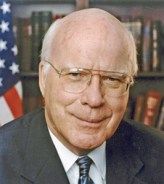
    Leahy, PatrickOn Friday, Sen. Patrick
    Leahy (D-VT) sent a letter to Dr. Francis Collins, the Director of the
    National Institutes of Health (NIH), "to urge [the Director] to consider
    using march-in rights under the Bayh-Dole Act to ensure greater access to
    genetic testing for breast and ovarian cancer."  The Bayh-Dole Act, which was enacted in 1980,
    created a uniform patent policy among the many federal agencies that fund
    research, enabling small business and non-profit organizations — including
    universities — to retain title to inventions made under federally funded
    research programs.  In commemorating the
    Act's 30th anniversary in 2010, the U.S. Patent and Trademark Office noted that
    "[t]he legislation is credited with the creation of thousands of new
    companies and billions of dollars of direct benefits to the U.S. economy"
    (see "USPTO Recognizes 30th Anniversary of Bayh-Dole Act").

    As a result of the concern
    that U.S. taxpayers should not have to pay businesses for inventions that the
    public has already paid for, legislators added a section to the Act that gave
    the government "march-in" rights. 
    Recently, a handful of groups filed a petition with the NIH requesting
    the agency to exercise these march-in rights over the anti-AIDS drug ritonavir,
    exclusively sold by Abbott Laboratories (see
    "Groups Petition for NIH Exercise
    of March-in Rights over Abbott Laboratories' Norvir®
    ,"
    which includes a discussion of the statute and regulation governing the exercise of
    the government's march-in rights under the Bayh-Dole Act, as well as a recent
    history of requests that the government exercise such rights).

    In
    encouraging the NIH to exercise its march-in rights with respect to the
    Myriad's BRCA test, Sen. Leahy (above right) indicates that:

    Myriad's genetic test, which was developed with federally-funded research, is
    truly important for public health.  Myriad
    is the only provider of this test because it is covered by patent protection.  Unfortunately, testimony before the United
    States Patent and Trademark (USPTO) revealed that Myriad does all of this
    testing in-house, and charges between $3,000 and $4,000.

    The
    letter notes that while the Supreme Court determined last month in Association
    for Molecular Pathology v. Myriad Genetics, Inc
    .

    that a naturally occurring DNA segment is a product of nature and not patent
    eligible merely because it has been isolated, the Court also held that cDNA is
    patent eligible because it is not naturally occurring (albeit with the caveat,
    which the letter does not address, that a "very short series of DNA may
    have no intervening introns to remove when creating cDNA," and therefore,
    "a short strand of cDNA may be indistinguishable from natural DNA").  "As a result," Sen. Leahy suggests
    that "Myriad may continue to be the only company able to provide women
    with the genetic testing they need to make important health care decisions."

    National Institutes of HealthSen.
    Leahy explains that because "the Bayh-Dole Act . . . gives the government
    tools, known as 'march-in rights,' to provide greater access to the subject
    invention in appropriate situations," "[t]he government can require
    the patent holder to grant a license to the patent on reasonable
    terms."  He notes that "[i]f
    the patent owner refuses, the government can directly license the patent in
    limited circumstances, including if it 'is necessary to alleviate health or
    safety needs which are not reasonably satisfied' by the patentee."  Indicating that "Myriad's patents were based
    in part on federally-funded research," and stating that the health
    benefits and healthcare cost savings of genetic testing for breast and ovarian
    cancer are clear, Sen. Leahy expresses "concern[] that the health needs of
    the public are not reasonably satisfied by the patentee in this situation
    because testimony presented to the USPTO made clear that many women are not
    able to afford the testing provided by Myriad."  He therefore encourages the Director to
    consider using the government's march-in rights with respect to the Myriad's BRCA test.

    Interestingly,
    of the ten patents that Myriad recently asserted against Ambry Genetics (see "Myriad Genetics Files Suit
    Against Ambry Genetics for Genetic Diagnostic Testing of BRCA Genes
    "),
    only two (U.S. Patent Nos. 5,747,282 and 5,753,441) are assigned (on their
    face) to the U.S. government (as well as to Myriad and the University of Utah
    Research Foundation).  Of the remaining
    patents, one (U.S. Patent No. 5,709,999) is assigned to Myriad, the Centre de
    Recherche du Chul (Sainte-Foy, Canada), and the Cancer Institute (Tokyo, Japan);
    two (U.S. Patent Nos. 5,837,492 and 6,033,857) are assigned to Myriad, Endo Recherche,
    Inc. (Sainte-Foy, Canada), HSC Research & Development Ltd. (Toronto,
    Canada), and the Trustees of the University of Pennsylvania; three (U.S. Patent
    Nos. 5,654,155, 5,750,400, and 6,051,379) are assigned to OncorMed, Inc.; one
    (U.S. Patent No. 6,951,721) is assigned to Gene Logic Inc.; and one (U.S.
    Patent No. 7,250,497) is assigned to Myriad alone.  A search of the USPTO's Assignments on the
    Web for Patents (AOTW-P) database indicates that Myriad assigned the '999,
    '492, and '857 patents to the University of Utah Research Foundation, and that
    the '155, '400, '379, and '721 patents are assigned to Gene Logic Inc. and
    Myriad.

    Patent Docs thanks Hal
    Wegner for alerting the patent community to Sen. Leahy's letter.

  • By Donald Zuhn

    Washington - Capitol #3Last week, Rep. Hakeem
    Jeffries (D-NY) introduced the "Patent Litigation and Innovation Act of
    2013" (H.R. 2639)
    in the House.  The bill, which would add procedural
    requirements for patent infringement suits, is related to the "Patent
    Abuse Reduction Act of 2013" (S. 1013), which was introduced in the Senate
    in May (see "Congress Continues Efforts to
    "Reform" U.S. Patent Law
    ").

    Like
    S. 1013, H.R. 2639 would require a party alleging infringement to include in
    its complaint, counterclaim, or cross-claim an identification of each patent,
    and each claim of each patent, allegedly infringed, as well as a specific
    identification of each accused instrumentality alleged to infringe the claim,
    the party alleging infringement would also be required to provide "a
    description of the principal business of the party alleging infringement"
    and to identify co-owners, assignees, and exclusive licensees of the asserted
    patent.  Unlike the Senate version of the
    bill, the House version would not require a party alleging infringement to
    include a list of other complaints (of which the party alleging infringement
    has knowledge) asserting the same patents; whether the asserted patents are subject
    to any licensing term or pricing commitments through any agency, organization,
    standard-setting body, or other entity or community; or the identity of any
    person having a direct financial interest in the outcome of the action.

    In
    addition, while S. 1013 would limit discovery prior to claim construction
    "to information necessary for the court to determine the meaning of the
    terms used in the patent claim, including any interpretation of those terms used
    to support the claim of infringement," H.R. 2639 would permit a court to
    stay discovery "if the court determines that a ruling relating to the
    construction of terms used in a patent claim asserted in the complaint in the
    action is required."  The House bill
    also includes provisions for a stay of action against secondary parties, which
    would allow a court to "grant a motion to stay all or part of the action
    as to a secondary party with respect to infringement related to a primary party
    in the same or another action concerning the same apparatus, product, feature,
    device, method, system, process, function, act, service, or other
    instrumentality, in whole or in relevant part, of the disputed patent of the
    primary party" provided that certain conditions are met.

    Jeffries, HakeemIn
    addition, the House bill provides provisions for sanctions for abusive
    litigation.  In particular, the
    legislation would require a court, upon final adjudication of "any civil
    action arising under any Act of Congress relating to patents," to "include
    in the record specific findings regarding compliance by each party and each
    attorney representing any party with each requirement of Rule 11(b) of the
    Federal Rules of Civil Procedure as to any complaint, responsive pleading, or
    dispositive motion."

    A
    statement released on Rep. Jeffries' website
    noted that the new legislation "represents a bipartisan effort to promote
    American innovation and job creation in the technology ecosystem by addressing
    the growing problem of abusive patent litigation."  Rep. Jeffries (above left) suggested that the legislation
    was needed because of "[t]he explosion of patent troll activity [that] diverts
    resources away from research and development, hinders innovation and stifles
    entrepreneurship."  Co-sponsor Rep. Blake Farenthold
    (R-TX) stated that "Americans need to know they are safe from abusive
    litigation when they buy a product off the shelf and use it for its intended
    purpose," adding that "[t]he solutions proposed in [H.R. 2639] will
    deter patent trolls without impeding the rights of responsible intellectual
    property holders."

    After being introduced, the
    bill was referred to the House Committee on the Judiciary.

  • By Sherri Oslick

    Gavel About Court Report:  Each week we will report briefly on recently filed biotech and pharma cases.

    Aptalis Pharma US Inc. et al.
    v. Mylan Pharamaceuticals, Inc. et al.

    3:13-cv-04158; filed July 5,
    2013 in the District Court of New Jersey

    • Plaintiffs:  Aptalis Pharma US
    Inc.; Aptalis Pharma Canada Inc.
    • Defendants:  Mylan
    Pharamaceuticals, Inc.; Mylan Inc.

    Infringement of U.S. Patent
    Nos. 8,217,083 ("Mesalamine
    Suppository," issued July 10,
    2012) and 8,436,051 (same title, issued May 7, 2013) following a Paragraph IV
    certification as part of Mylan's filing of an ANDA to manufacture a generic
    version of Aptalis' Canasa® (mesalamine rectal suppository product, used to
    treat active ulcerative proctitis).  View
    the complaint here.


    Novartis AG et al. v. Accord
    Healthcare, Inc. USA et al.

    1:13-cv-01013; filed July 3,
    2013 in the District Court of the District of Columbia

    • Plaintiffs:  Novartis AG;
    Novartis Pharmaceuticals Corp.
    • Defendants:  Accord
    Healthcare, Inc. USA; Intas Pharmaceutical Ltd.

    Infringement of U.S. Patent
    Nos. 6,025,391 ("Enteric-Coated Pharmaceutical Compositions of
    Mycophenolate," issued February 15, 2000), 6,172,107 ("Entric-Coated
    Pharmaceutical Compositions," issued January 9, 2001), and 6,306,900 (same
    title, issued October 23, 2001) following a Paragraph IV certification as part
    of Accord's filing of an ANDA to manufacture a generic version of Novartis'
    Myfortic® (mycophenolate sodium, used for the prophylaxis or prevention of
    organ rejection in patients receiving allogeneic renal transplants,
    administered in combination with cyclosporine and corticosteroids).  View the complaint here.


    Purdue Pharma L.P. et al. v.
    Teva Pharmaceuticals USA, Inc.

    1:13-cv-04606; filed July 2,
    2013 in the Southern District of New York

    • Plaintiffs:  Purdue Pharma
    L.P.; P.F. Laboratories, Inc.; Purdue Pharmaceuticals L.P.; Grunenthal GmbH
    • Defendant:  Teva
    Pharmaceuticals USA, Inc.

    Infringement of U.S. Patent
    Nos. 8,337,888 ("Pharmaceutical Formulation Containing Gelling Agent,"
    issued December 25, 2012) and 8,309,060 ("Abuse-Proofed Dosage Form,"
    issued November 13, 2012) following a Paragraph IV certification as part of
    Teva's filing of an ANDA to manufacture a generic version of Purdue Pharma's
    OxyContin® (controlled release oxycodone hydrochloride, used to treat
    pain).  View the complaint here.


    Alpex Pharma, S.A. et al. v.
    Zydus Pharmaceuticals USA, Inc. et al.

    1:13-cv-04076; filed July 1,
    2013 in the District Court of New Jersey

    • Plaintiffs:  Alpex Pharma,
    S.A.; Citius Pharmaceuticals, LLC.; Prenzamax, LLC
    • Defendants:  Zydus
    Pharmaceuticals USA, Inc.; Cadila Healthcare Ltd.

    Infringement of U.S. Patent
    No. 6,149,938 ("Process for the Preparation of a Granulate Suitable to the
    Preparation of Rapidly Disintegrable Mouth-Soluble Tablets and Compositions
    Obtained Thereby," issued November 21, 2000) following a Paragraph IV
    certification as part of Zydus' filing of an ANDA to manufacture a generic
    version of Alpex's Suprenza® (phentermine hydrochloride, used to treat
    obesity).  View the complaint here.


    Trivitis, Inc. v. Primus
    Pharmaceuticals, Inc.

    3:13-cv-00352; filed July 1,
    2013 in the District Court of Nevada

    Infringement of U.S. Patent
    No. 6,562,864 ("Catechin Multimers as Therapeutic Drug Delivery Agents,"
    issued May 13, 2003) based on Primus' manufacture and sale of its Limbrel
    product (flavocoxid and citrated zinc bisglycinate, used for the clinical
    dietary management of the metabolic processes of osteoarthritis).  View the complaint here.

  • By Nicole Reifman

    Smith & NephewLast week, in Smith & Nephew, Inc. v. Rea, the
    Federal Circuit reversed a decision of the Patent Trial and Appeal
    Board, finding U.S. Patent No. 7,128,744 (the '744
    patent), which is owned by Synthes, to be obvious.  Smith & Nephew originally
    submitted a request for reexamination of the '744 patent, which was granted.  Upon review under reexamination, the Examiner
    found all of the claims of the patent to be obvious.  Synthes appealed the Examiner's decision to the
    Patent Trial and Appeal Board, which reversed the Examiner's decision with respect to certain
    claims (claims 1-23 and 32).  Smith &
    Nephew then appealed the Board's decision to the Federal Circuit.  Despite the
    deferential standard of review (substantial evidence) to be applied for a
    Board decision, the Federal Circuit found claims 1-23 and 32 to be
    obvious.

    Both parties and
    the Court treated claim 1 as representative for all claims under appeal.  Claim 1 is related to a bone plating system designed
    to improve the stability of a bone fracture in a long bone.  The claimed system includes a plate with a shaft
    portion that runs along the outside of a fractured bone, and a flared head
    portion to accommodate the wider portion of the bone near a joint.  Predrilled
    holes are formed on both the shaft and the head portions of the plate.  The dispute in the case focused on the
    structure of the holes in the head portion of the plate; in particular, whether it would have
    been obvious at the time of the invention to design a bone plate in which all
    of the holes in the plate's head portion were conically tapered and at least
    partially threaded, as required by claim 1.

    DePuySynthesA number of prior
    art references were applied.  First, the
    Court found that a prior art Synthes condylar buttress plate disclosed most of
    the limitations of claim 1 of the '744 patent, including a head portion of a
    plate with at least three screw holes.  An
    article by Kenneth Koval and an FDA submission by Synthes (dubbed the K982222
    reference) each disclosed modifying the Synthes prior art plate to include
    partially threaded holes to engage the threads on the head of a locking
    screw.  A Synthes patent, U.S. Patent No.
    5,709,686 (the '686 patent) disclosed anchor holes that were all partially
    threaded and intended to accommodate either locking screws or compression
    screws.  Another article, by N.P. Haas,
    disclosed holes in the head portion of a plate that were both conically tapered
    and partially threaded; however, unlike the other prior art plates, the Haas
    plate merely stabilized the femur and did not contact, let alone, compress,
    bone fragments directly.

    The Board found
    that these prior art references did not teach or suggest the exclusive use of
    conical, partially threaded holes in a condylar buttress plate because it was
    not believed that conical, partially threaded holes could be used with non-locking
    (compression) screws to provide compression against a bone.  The Court held that the Board erred in its
    analysis, since claim 1 of the '744 patent does not require that the screws
    drilled into the head holes provide compression ("the patentability of the
    invention . . . turns on the structure of the holes, not the special nature of the
    non-locking screw"), and, contrary to Synthes' suggestion that compression is
    needed in the head portion of the plate, the specification of the '744 patent
    indicated that locking screws are sometimes used in all of the threaded holes
    of the head portion of the plate.

    The Court also found
    the Board erred in determining the prior art showed that using a compression
    screw in a conical, partially threaded hole would cause the screw to undesirably
    protrude above the line of the plate.  The
    Court pointed to a chamfer disclosed in the Haas reference that could be used
    to countersink a screw head so that it does not sit above the top surface of
    the plate.  The Board had disregarded
    the Haas chamfer because a drawing in Haas showed the chamfer to be too narrow
    to prevent protrusion of a compression screw.  The Court held that the Board erred in disregarding the Haas chamfer, and that the chamfer should
    not be limited to the narrow one shown in the drawing, as chamfers are "conventional features in the art and can be sized to accommodate screw threads
    of varying heights."  The Court also
    reasoned that a person of ordinary skill in the art would not have necessarily
    selected a "rounded-bottom head" that would stick out from the plate, but would
    have chosen an appropriately shaped screw for the plate holes.

    Finally, the Court
    held that the Board erred in relying on distinguishing the partially threaded,
    partly conical, holes discussed in the '686 patent from the fully conical
    threaded holes in the Haas reference for obviousness.  The Court noted that the '744 patent discloses
    that partially threaded holes, regardless of shape, could provide compression,
    and held that "a person of skill could adjust a plate hole's geometry — whether
    conical, cylindrical, or otherwise — to fit any standard screw without
    sacrificing compression."

    Thus, the Court
    held that the motivation to combine the holes in the Haas reference with the
    prior art condylar plates was there:  the use of threads in all of the holes
    offers flexibility to the surgeon to choose either locking or non-locking
    (compression) screws in any of the holes in the head portion of the plate.

    The Court additionally
    held that the Board should have considered two other prior art references that the Board had discounted because the Examiner had not relied on the references in making his rejections.  The
    fact that the Examiner had incorporated Smith & Nephew's arguments by
    reference (which included the two references) allowed for Board review of those
    references.  The Court held that the two
    references were "clearly probative" regarding whether it was known at the time
    of the invention that non-locking screws could be used in threaded holes.

    Thus, the Court,
    despite taking a deferential approach to the Board's findings due to the substantial evidence standard of review, concluded that the Board erred in
    its decision, and reversed the Board's decision for claims 1-23 and 32.  In addressing the deference owed
    the Board, The Court noted that it did not dispute the Board's resolution of the factual
    questions of the case, and that the Board's decision was "mainly the result of
    the [Board's] analytical errors," as discussed above.

    Smith &
    Nephew, Inc. v. Rea
    (Fed. Cir. 2013)

    Panel: Circuit
    Judges Dyk, Bryson, and Wallach
    Opinion by Circuit
    Judge Bryson

  • ABA JournalThe ABA Journal has begun
    work on its 7th annual list of the 100 best legal blogs (or blawgs) and has
    announced that it is seeking the advice of its readers, via the ABAJournal.com
    website, on which blogs to include on this year's Blawg 100.  Last year, Patent Docs was honored to be included among five blogs selected in
    the IP Law category of the Blawg 100 (see "ABA Journal Announces 2012 Blawg 100").

    Readers interested in
    nominating a particular blog for the 7th annual Blawg 100 should use the ABA
    Journal's blawg 100 amici form.  Additional information about the Blawg 100
    can also be found on the blawg 100 amici
    form
    .  The form requires that anyone making a
    nomination provide a name, employer or law school, city, and e-mail
    address.  The ABA Journal requires this
    information in order to discourage:

    • Bloggers who nominate
    their own blogs or nominate blogs to which they have previously contributed
    posts.
    • Wives and husbands who
    nominate their spouses' blogs.
    • Employees of law firms
    who nominate blogs written by their co-workers.
    • Public relations
    professionals in the employ of lawyers or law firms who nominate their clients'
    blogs.
    • Pairs of bloggers who
    have clearly entered into a gentlemen's agreement to nominate each other.

    Vote_rec_blueThe ABA Journal, however,
    welcomes comments (up to 500 words in length) from readers who do not fall into
    the above categories.

    Nominations must be
    submitted no later than 7:00 pm (ET) on Friday, August 9, 2013.