• Chicago #5American Conference
    Institute (ACI) will be holding its next Paragraph IV Disputes conference on October
    3-4, 2013 in Chicago, IL.  The conference
    will allow attendees to:

    • Devise strategies
    relative to the use of new PTO proceedings such as IPR in Hatch-Waxman
    litigation;
    • Understand how new 271(e)(1) controversies
    under Claussen and Momenta may undo Roche v. Bolar;
    • Decipher the implications of the Watson case for pharmaceutical patent
    settlements;
    • Assess how contradictory findings in the
    federal courts and PTO relative to obviousness will impact primary compound and
    composition claims;
    • Formulate a plan of action for Markman hearings in view of the ongoing
    intra-circuit discord at the CAFC on claim construction;
    • Identify new challenges to market as well as
    regulatory exclusivities;
    • Appreciate how FDASIA, the GAIN Act, and
    Generic User Fees Act will influence FDA regulatory redress in Hatch-Waxman
    matters;
    • Evaluate Orange Book-listed method of treatment
    patents in view of new rulings on inducement and divided infringement; and
    • Anticipate damages quantifications for at
    risk launches vis-à-vis Protonix.

    BrochureIn particular,
    ACI's faculty will offer presentations on the following topics:

    • Identifying patents which may be ripe for
    challenges of invalidity and non infringement: Offensive and defensive
    strategies for brand names and generics;
    • Use of IPR and other PTO proceedings in a
    Paragraph IV challenge: Strategies for brand names and generics in navigating
    new proceedings in alternate and parallel forums which may change the rules of
    the Hatch-Waxman endgame;
    • The start of the Paragraph IV litigation
    countdown: The Paragraph IV certification and notice letter;
    • Obviousness in review: Formulating assertions
    and defenses in view of new substantive and procedural developments in the
    Federal courts and PTO;
    • Advanced strategies for drafting and
    perfecting pleadings and effectively using dispositive motions in Paragraph IV
    disputes;
    • Of customs and courts: The importance of
    mastering the requirements of local patent rules in Paragraph IV disputes;
    • A view from the Bench;
    • The end of Roche v. Bolar?
    Understanding how new 271(e) (1) controversies may alter the course of brand
    name and generic strategies in Paragraph IV litigation relative to safe harbor
    research exceptions;
    • Mastering regulatory maneuvers in Paragraph
    IV disputes: Seeking relief from the FDA in the course of Hatch-Waxman
    litigation;
    • New exclusivity challenges for brand names
    and generics;
    • Pay-for-delay and settlement drafting update;
    • Continuing claim construction conundrums
    impacting Markman strategies;
    • Evolving theories of inducement and divided
    infringement in Paragraph IV litigation concerning method treatment patents;
    Protonix — Case study of an
    at risk launch: Pros and cons analysis of launching at risk and survey of new
    developments in seeking injunctive relief and damages; and
    • Inequitable conduct: Ethical considerations for Paragraph IV matters
    before the PTO and district court.

    In addition, two pre-conference
    workshops will be offered on October 2, 2013. 
    The first, entitled "Hatch-Waxman and BPCIA Master Class —
    Perfecting Your IP and Regulatory IQ of Small and Large Molecules" will
    take place from 8:30 am to 12:00 pm, and the second, entitled "Post-Grant
    Review and Inter Partes Review Boot Camp: Essential Considerations for Brand
    Names and Generics Regarding the Use of These PTO Procedures in Paragraph IV
    Scenarios" will take place from 2:00 to 5:30 pm.

    The agenda for the Paragraph
    IV Disputes conference can be found here.  More information regarding the workshops and
    master class can be found here.  A complete brochure for this conference,
    including an agenda, detailed descriptions of conference sessions, list of
    speakers, and registration form can be obtained here.

    ACI - American Conference InstituteThe registration
    fee for the conference is $2,295 (conference alone), $2,895 (conference and one
    workshop), or $3,495 (conference and two workshops).  Those registering by September 9, 2013 will
    receive a $200 discount.  Patent Docs readers who reference the
    discount code "PD 200" will receive $200 off the current price tier
    when registering.  Those interested in
    registering for the conference can do so here,
    by e-mailing CustomerService@AmericanConference.com, by calling 1-888-224-2480,
    or by faxing a registration form to 1-877-927-1563.

    Patent Docs is a media partner of the Paragraph IV Disputes conference.

  • Chicago-Kent College of LawIIT Chicago-Kent
    College of Law will be holding the Supreme Court IP Review (SCIPR) conference on
    September 26, 2013 at the IIT Chicago-Kent College of Law in Chicago, IL.  The conference will provide intellectual
    property practitioners, jurists, legal academics, and law students with a
    review of IP cases from the U.S. Supreme Court's 2012 Term, a preview of cases
    on the docket for the 2013 Term, and a discussion of cert. petitions to watch.

    The conference will
    cover the six IP cases decided during the 2012 Term:

    Association for Molecular Pathology v.
    Myriad Genetics, Inc.
    (patentability of human DNA sequences) — panel
    including Patent Docs author Dr.
    Kevin Noonan

    Bowman v. Monsanto Company (patent
    exhaustion in second generation of genetically modified seeds)
    Kirtsaeng v. John Wiley & Sons, Inc.
    (international copyright exhaustion)
    Already, LLC v. Nike, Inc. (impact of
    covenant-not-to-sue on declaratory judgment jurisdiction in trademark cases)
    Gunn v. Minton (Federal Circuit
    jurisdiction over patent malpractice claims)
    FTC v. Actavis, Inc. (antitrust and
    reverse payments to settle patent litigation)

    The Honorable Diane
    Wood, Circuit Judge, U.S. Court of Appeals for the Seventh Circuit will deliver
    the keynote address.

    A complete agenda for the conference, including a list of speakers, can
    be found here.  Additional information about the conference can be found here.  Those interested in attending Friday's
    sessions can do so here.  The registration fee is $35 (general public),
    $15 (outside academics and students), or free (Chicago-Kent faculty and
    students).

  • Nederlandsch OctrooibureauMcDonnell
    Boehnen Hulbert & Berghoff LLP will be hosting a live onsite seminar entitled
    "The European Unitary Patent:
    Strategic Considerations for a New Era" on September 16, 2013 from 9:30
    am to 10:30 am (CT) at its Chicago, IL office. 
    Nederlandsch Octrooibureau ("NLO") patent attorneys Paul
    Clarkson and Caroline Pallard will explain the upcoming changes in the European
    Patent System, explore the consequences such changes may have for U.S. clients
    with patent portfolios within this jurisdiction, and look at the enforcement
    possibilities within the new regime and the strategies that U.S. clients may
    wish to consider in
    MBHB Logo 2order to maximize the effectiveness of their IP
    investments.

    While
    there is no fee to participate, attendees must register in advance.  Those wishing to register can do so here.  CLE credit is pending for Illinois.

  • By Donald Zuhn

    Consumer WatchdogLast month, Consumer
    Watchdog filed its opening brief in an appeal of a Board decision affirming the
    patentability of U.S. Patent No. 7,029,913,
    arguing that the claims of the '913 patent are invalid because they cover
    ineligible subject matter and were anticipated and obvious.  The appeal arises from an inter partes reexamination of the '913
    patent that Consumer Watchdog, which describes itself as a not-for-profit
    public charity dedicated to providing a voice for taxpayers and consumers in
    special interest-dominated public discourse, government and politics, filed
    in 2006.  The '913 patent, which is
    assigned to the Wisconsin Alumni Research Foundation (WARF), has three
    claims.  According to the Consumer
    Watchdog brief, independent claim 1 (as amended by WARF during the
    reexamination) recites:

    1. (Amended) A replicating in vitro cell
    culture of pluripotent human embryonic stem cells derived from a
    pre-implantation embryo, wherein the stem cells (i) will proliferate in an in vitro
    culture for over one year in an undifferentiated state without the application
    of exogenous leukemia inhibitory factor, (ii) maintain a karyotype in which the
    chromosomes are euploid through prolonged culture, (iii) maintain the potential
    to differentiate to derivatives of endoderm, mesoderm, and ectoderm tissues
    throughout the culture, and (iv) are inhibited from differentiation when
    cultured on a fibroblast feeder layer.

    WARFAfter the Patent Office
    granted Consumer Watchdog's request for an inter
    partes
    reexamination (Control No. 95/000,154), the Examiner determined that
    the pending claims were allowable, and Consumer Watchdog appealed to the
    Board.  The Board reversed, designating
    four news grounds of rejection (one anticipation rejection and three different
    obviousness rejections), and WARF responded by filing a request to reopen
    prosecution along with an amendment and a declaration.  The Examiner determined that the claims were
    patentable over the Board's rejections, and the Board affirmed.  Consumer Watchdog's appeal to the Federal
    Circuit followed.

    In addition to arguing that
    the '913 patent is invalid as anticipated or obvious in view of the references on which the Board based its new grounds of rejection, Consumer
    Watchdog also argues that the claims of the '913 patent are invalid under §
    101.  In particular, the brief states:

    As a threshold
    matter, the claims of the '913 patent are invalid under 35 U.S.C. § 101 for
    claiming subject matter that is not patent eligible.  Specifically, the claimed hES [human
    embryonic stem] cell culture falls within the "product of nature"
    exception to statutory subject matter. 
    It is within the Court's discretion to address this issue despite the fact
    that the Board failed to address it below, and is especially appropriate in
    light of the recent Supreme Court ruling on Section 101 in Ass'n. for Molecular Pathology v. Myriad Genetics, Inc.. 2013 U.S.
    LEXIS 4540 (June 13, 2013).

    Noting that "[t]he
    Supreme Court restated [in June] that discovery and isolation of a product that
    occurs in nature does not render that product patent eligible under Section 101,"
    the brief attempts to draw analogies between its appeal and the Myriad case.  For example, the brief states that "[a]s
    in AMP, the '913 patent's claims are
    drawn to neither a method of preparation nor a scientific application of the
    claimed composition."  The brief
    also suggests that:

    The '913 patent's
    requirement that the claimed culture of cells be in vitro is analogous to the
    claim limitation in AMP that the DNA be "isolated."  But here there is not even a chemical change
    between ES cells in an in vivo embryo and ES cells in an vitro culture as there
    is between human DNA in vivo and isolated DNA in vitro.

    Human Embryonic Stem CellThe brief also notes that
    "[t]he '913 patent does not in any way distinguish the claimed ES cells
    from those that exist in nature," adding that "if the claimed ES cells
    were not the same as natural ES cells, the claimed invention would offer very little
    benefit for medical research."  As the brief argues, "WARF did not create or alter the properties
    inherent in stem cells any more than Myriad created or altered the genetic
    information encoded in the DNA it claimed."

    Although "[t]he Board never
    considered whether the claims to hES cells are patent eligible subject
    matter," the brief contends that "the Court may still consider whether
    the claims here are invalid under Section 101 because, 'a court may consider an
    issue antecedent to . . . and ultimately dispositive of the dispute before it,
    even an issue the parties fail to identify and brief,'" citing U.S. Nat'l Bank v. Indep. Ins. Agents,
    508 U.S. 439, 447 (1993).  With respect to the issue of patent eligibility, the brief states that "[c]onsideration of the 101 question is especially
    appropriate in light of the fact that the Supreme Court's recent AMP decision came after the Board's
    decision here."

    WARF now has until August
    12 to file its opening brief in the appeal.

  • By
    Andrew Williams

    The
    mainstream media continues its attack on the patent system.  This problem has become significant, because
    the average American does not appear to understand the purpose (and benefits)
    of the patent system.  With all of the
    misinformation being reported, it is no wonder that lay people have the
    perception that the patent system is "broken."  This blog has reported in the past about NPR's
    criticisms of the patent system, which have occurred on such shows as "This
    American Life" and podcasts as "Planet Money" (see "When NPR Podcasters Hit the Patent System").  We pointed out that one of the downsides of
    these various reports was that the NPR hosts and reporters did not appear to
    understand the patent system.  But, on
    the plus side (if it can be considered as such), these reporters did not hide
    the fact that they did not understand the system, and they certainly did not
    profess to be patent law experts.

    WIREDA
    different tone has been taken in an article recently published on Wired.com by
    Patrick Hall entitled "Patent Law Broken, Abused to Stifle Innovation."  Mr. Hall's article is written from the
    perspective of an "expert" in the field, beginning with the axiomatic
    proposition that the system is not only broken, but that its abuse is stifling
    innovation.  However, a review of this
    article with even a minimal understanding of the patent system suggests that not
    only is Mr. Hall not actually an expert on the subject, but that he may even
    lack an understanding of even the most basic tenets of U.S. patent law.  This would not be so disconcerting but for
    the fact that his piece was published on a site that has a wide-reaching
    readership, and there was no indication or suggestion provided that the opinions
    expressed were just that — opinions by someone who appears to believe that software
    patents are "bad."

    To
    be fair, the focus of Mr. Hall's article is almost entirely on software patents
    (even though he does appear to suggest that mechanical patents, such as those
    that would cover automobiles, are absurd).  This software focus on its own might not be of much interest to the
    readership of this blog.  However, the
    provided "recommendations," and the criticisms provided as a whole,
    are not limited to software patents, and therefore could impact pharmaceutical,
    chemical, and biotech patents.  Moreover,
    the more public bashing that software and business-method patents take can only
    result in a detriment to the patent system as a whole, especially when this is
    the only exposure to the system that most Americans ever receive.

    USD478999S1Mr.
    Hall's piece begins with the assumption that the patent system is broken.  However, any support for this proposition was
    anecdotal at best.  For example, the
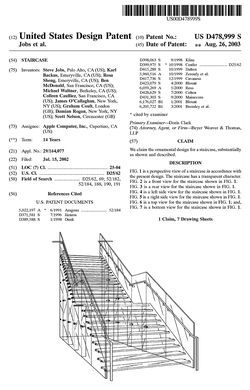
    article complained that Apple received a patent for its glass staircase in
    2003.  No explanation was given as to why
    such a patent was undeserved, but the clear implication was that there is a
    problem if companies are receiving patents on staircases.  No patent numbers were provided, so we are
    left assuming that the article was referring to Design Patent No.
    D478,999.  If Mr. Hall understood the
    difference between utility and design patents, it was not included in his
    article.  As explained on the Patent Office
    website
    , "[a] design patent protects only the appearance of the article
    and not structural or utilitarian features."  So, "a 'utility patent' protects the way
    an article is used and works (35 U.S.C. 101), while a 'design patent' protects
    the way an article looks (35 U.S.C. 171)."  Id.  Therefore, instead of the
    absurd proposition that Apple has patented the staircase, as the article
    suggests, Apple has instead simply protected the way its staircases look.

    Mr.
    Hall's article also cited three "absurd" patents as evidence of a
    broken system:  the motorized ice cream cone, the banana suitcase, and the gas
    grabber (we are not supposed to ask about this last one).  There is apparently support for the
    proposition that these patents are absurd — they were all featured on the "Patently
    Absurd" website
    .  But, Mr. Hall's article did not explain why
    he thought these patents were absurd (other than the fact that absurdity must
    be self-evident).  Looking at the first
    example, the motorized ice cream cone, it would appear at first glance that this
    is a patent to a novelty product.  But, is
    the article suggesting that novelty products are undeserving of patent
    protection?  And a simple web search reveals
    that at least someone was marketing such a device at some point (it was even
    featured on Katie Lee and Hoda, a video for which can be found with the same
    web search).  Is Mr. Hall suggesting a
    new category of inventions that are not patent eligible?  But fear not, if you want to create your own
    motorized ice cream cone, you can do so without threat of suit from U.S. Patent
    No. 5,971,829 — that patent expired for failure to pay a maintenance fee around
    2011.  Of course, this highlights one of
    the points that Mr. Hall's article fails to address — obtaining and maintaining
    a patent can be an expensive proposition, and that if a patent is truly "absurd,"
    it is unlikely someone is going through the cost and effort of obtaining or
    enforcing one.

    US0549160AAs
    one of the most puzzling examples of how the "current" patent system
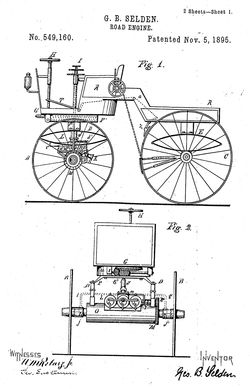
    is broken, Mr. Hall's article cites U.S. Patent No. 549,160, which issued in
    1895 to George Selden.  This patent
    claims a "road-locomotive" with "a liquid hydrocarbon gas-engine
    of the compression type," or as the article puts it, an automobile.  As with the other examples, the article does
    not explain why a car should be underserving of patent protection.  But all is well, according to article,
    because Henry Ford allegedly successfully challenged this "absurd"
    patent in 1911.  Except that isn't quite
    what happened.  A simple Internet search
    that digs a little deeper than the Wikipedia page for Selden's patent reveals
    that his patent was never found to be invalid.  It is true that his patent was surrounded by controversy, but that was
    because his application was filed in 1879.  Mr. Selden was apparently able to keep his application pending for close
    to 20 years, until others had gotten into the business.  It appears that Mr. Selden was using a "submarine"
    patent more than half a century before Jerome Lemelson.  Mr. Selden's downfall occurred not because
    his patent was determined to be invalid, but rather the type of combustion
    engines that automobile manufacturers were using at the turn of the century
    were different than those use in 1879.  Therefore, Mr. Ford successfully appealed a finding of infringement.  Of course, such a "submarine"
    patent is not feasible anymore, both because almost every application is published
    after filing, and more importantly, the expiration date of patents are now limited
    by the filing date.  Therefore, under the
    patent system that actually exists today, Mr. Selden would have only have been
    able to assert his patent for a couple of years.  Not surprisingly, these subtleties are missing from Mr. Hall's article.

    EFFMr.
    Hall's article culminates with "seven simple changes" to fix the
    patent system.  However, the article
    makes statements and assumptions about the patent system that are incorrect,
    but a layperson reading the article would have no idea that this is the case.  The starting point for these seven "fixes"
    were similar proposals for software patents offered by the "Defend
    Innovation
    " initiative of the Electronic Frontier Foundation ("the
    EFF").  Without taking a position on
    the EFF's proposals, we note that Mr. Hall's article's exposition on these
    fixes is not limited to software patents.  In fact, it is in the article's expounding of these proposals that the most
    confusion would be introduced for those unfamiliar with the patent system.  For example, the EFF has suggested that
    software patents be required to provide an example of the software code for
    each claim.  Patents already have a
    requirement that the claims be sufficiently enabled and described, in order to
    satisfy 35 U.S.C. § 112.  Mr. Hall's
    article, however, provides no indication that such a requirement exists.  Instead, the following question is posed:  "[d]o
    I deserve a patent for a hovering skateboard that I cannot create?"  The article gets the answer right ("Absolutely
    not"), but posing the question in the first place suggests to the reader
    that there is currently no enablement requirement.  Such a reader is therefore left with the
    impression that the Patent Office is issuing patents on "ideas" that the inventor has no idea how to implement.

    As
    another example, the EFF has suggested that all patents and licenses be made public.  In fact, such a proposal to require the
    recordation of real parties-in-interest has been included in many of the legislative
    proposals that have been recently proposed (see "Congress Continues Efforts to "Reform" U.S. Patent Law").  However, Mr. Hall's article suggests that this proposal is necessary because,
    without it, no one would know that a particular patent existed.  "Otherwise," the article asks, "how
    can innovators know if they are infringing on a patent."  Such reporting leaves the lay-reader with the
    impression that issued patents (or even published applications) are not
    publically available.  Not only is this
    incorrect, it is counter to the purpose behind the patent system — to provide a
    period of exclusivity in exchange for the disclosure of an invention.

    Many
    of the other proposals are simply unworkable or impractical.  For example, the EFF had suggested a patent
    term for software patents no longer than five years from the date that the
    application was filed.  It is unclear how
    they derived that the ideal term for software patents is five years, but at
    least the EFF recognized that this proposal might cause a problem with
    international treaties.  Mr. Hall's
    article ignored this complication, and instead expanded the original proposal
    by suggesting that "[p]atent lengths should reflect the speed of
    innovation within individual industries."  No guidance is provided, however, as to how this "speed of
    innovation" is to be calculated.  In
    fact, if his proposal was codified, then there is no reason that the converse should
    not be applied — that industries with slower innovation speeds be given patent
    terms longer than the current twenty years from filing date.  More importantly, Mr. Hall's article does not
    take into account the logistical nightmare of how to categorize into which
    industry a particular patent falls — and who would be responsible for that
    determination.

    The
    final proposal in the article is perhaps the most ironic.  The article reiterates the EFF's request that
    Congress hold hearings to determine whether software patents are beneficial to
    society.  However, the starting point of
    this article already assumed this conclusion — that the system is broken, and
    is being abused to stifle innovation.  But if
    this is true, why should Congress waste its time with such a
    study?  Maybe the article's underlying
    premise is not as strong as it would lead the readers to believe.  The article refers to scholarly studies that
    apparently have concluded that patents do not, in fact, protect economically
    useful inventions.  However, no such study
    is cited or even mentioned.  Making such
    statements without providing support is irresponsible journalism.

    Mr.
    Hall's article concludes with the statement that "[o]nly countries with
    enlightened legal institutions can sustain long-term economic growth, facilitate
    innovation, and benefit from the genius of resourceful creators."  On this point, the article is probably
    correct.  Nevertheless, this article
    provides mostly unsupported statements as fact, which leads the reader to
    assume that our country does not have such a legal institution.  There is nothing wrong with Mr. Hall having
    such an opinion, or even his putting his opinion on the internet.  However, when a media outlet such as
    Wired.com posts such an article, without disclaimer or qualification, it
    invites the reader to assume that the piece represents reality.  It is no wonder that public outrage over the
    patent system is mounting.  Instead, the
    mainstream media needs to apply a balanced approached to the issues, present
    the merits and weaknesses of both sides, and allow the readers to reach an
    informed conclusion for themselves.  Of
    course, this is probably too much to ask.

  • By
    Kevin E. Noonan

    MyriadEarlier
    this month, Myriad Genetics filed patent infringement lawsuits against Ambry
    Genetics (on July 9th) and Gene-by-Gene (on July 10th).  Filed with the complaint in the Ambry lawsuit
    was a Motion for Preliminary Injunction, and the brief supporting this motion
    sheds light on the arguments Myriad will assert in its lawsuit (against Ambry
    and, presumably Gene-by-Gene as well).

    In
    its introduction, Myriad reminds the Utah District Court what is at stake:  that
    the company had invested "over $500 million dollars" in developing
    and commercializing its BRCA1 and BRCA2 genetic diagnostic tests.  These tests have "revolutionized patient
    care and provided medical diagnosis and treatment options never thought
    possible," providing a test "of superior reliability and accuracy"
    and that "has saved, and continues to save, countless lives."  Myriad continues to have many claims in its
    franchise (515 in 24 patents), including the ones specifically recited in its
    complaint.  Finally, Myriad takes the
    position (one not completely supported by the Supreme Court's express language)
    that the Court "found that, unlike isolated human genes, synthetic DNA is
    man-made and is not a product of nature.  Plaintiffs' remaining patent claims
    covering BRCA1 and BRCA2 gene testing, including those at issue here, pertain
    to synthetic DNA or methods-of-use, which were not affected by the Court's
    decision, and remain valid and enforceable."

    The
    Statement of Facts provides access to the company's background on its website
    and recites one important aspect of Myriad's business:  as a result of its 16 years and one million
    patients tested, Myriad has "an extensive database of genetic variant
    information . . . [that] has allowed Myriad Genetics to further improve its
    test quality by ensuring that over 97% of the patients tested with BRACAnalysis®,
    who receive a report identifying a genetic variation, will be informed as
    to the clinical significance of the variant."  And the company emphasizes the pioneering
    nature of its work:

    Myriad Genetics has also invested heavily in creating from scratch the
    market for breast/ovarian cancer genetic testing, including conducting
    extensive clinical studies in support of medical industry guidelines regarding
    hereditary cancer predisposition testing, developing a market of insurance
    reimbursement, both public and private, for such testing, and promoting
    physician and patient education surrounding the importance of hereditary cancer
    awareness and testing.

    Ambry GeneticsThis
    section of the brief also references Ambry's activities specifically relevant
    to Myriad's patented technology (in particular, four tests identified as
    BreastNext, BRCAPlus, CancerNext and OvaNext) and Ambry's announcement that it
    would begin to provide BRCA testing.  This announcement contained the information
    that Ambry would offer its BRCA tests for $2,280 (compared with Myriad's
    $4,040), a "significant" price drop, and asserted that "[w]hile
    Ambry's tests do not offer the accuracy, quality and reliability of Myriad
    Genetics' integrated BRACAnalysis® test, they present a significant
    competitive threat as third-party payors, rather than patients and their
    health-care providers, frequently decide where testing will be performed and
    such payors are often not well-informed about the competitive quality of such
    tests."

    Turning to the nature of the testing, Myriad tells the District Court
    that the difference in its claimed probes and PCR primers are that they
    comprise "synthetically created complementary DNA molecules" that
    differ from the genomic DNAs claimed in the claims invalidated by the Supreme
    Court because "they
    are not naturally occurring,[ r]ather, they are synthetic, laboratory-created
    DNA carefully designed by man to achieve specific performance metrics."  (While this is one interpretation of the Court's decision it is not the only one; indeed, the Court's basis for
    distinguishing patent-eligible cDNA and patent-ineligible genomic DNA was not on
    the basis of it being synthetic versus naturally occurring but that cDNA cannot be
    found in nature, a subtle but real difference.)  Nevertheless, Myriad contends
    that "[c]reating synthetic DNA sharing sequence similarity with any
    particular gene requires an application of detailed knowledge from the discovery
    of that gene's structure," thereby placing its primers in that portion of
    the opinion that indicates that "applications" of the knowledge of
    the BRCA genes may be patent-eligible.

    The
    legal section of the brief sets forth the requirements for obtaining a
    preliminary injunction:  that there is a likelihood (not a certainty) that the
    patentee would be successful on the merits of the patent infringement suit;
    that the harm the patentee would suffer from infringement would be "irreparable"
    and not adequately compensated by money damages; that the balance of the
    hardships between the parties favors granting the injunction; and that the
    injunction would be in the public interest.  The brief proceeds to set forth arguments for each of these prongs
    (albeit thinly for the hardship balance).

    Myriad's
    arguments for the likelihood it will succeed on the merits depend in large
    part but not entirely on Section III of the Supreme Court's decision regarding
    the availability of patent protection to Myriad based on applications of its
    discovery of the human BRCA genes:

    [T]his case does not involve patents on new applications of knowledge
    about the BRCA1 and BRCA2 genes.  Judge Bryson [of the Federal Circuit] aptly
    noted that, "[a]s the first party with knowledge of the [BRCA1 and BRCA2]
    sequences, Myriad was in an excellent position to claim applications of that
    knowledge.  Many of its unchallenged claims are limited to such
    applications
    ."  Id. at 2120 (citing Ass'n for Molecular
    Pathology
    , 689 F. 3d at 1349) (emphasis added).

    Other
    arguments include reference to its earlier (in the 1997 timeframe) "cease
    and desist" activities against the University of Pennsylvania and other
    academic labs, and that those earlier enforcement efforts "settled within
    a year of filing."  "Not one of those infringers raised a serious
    contention as to the validity of Myriad's patents, and their quick exit from
    the market is indicative of the validity of those patents," according to
    this section of the brief.

    Additionally,
    Myriad takes advantage of the ACLU's decision to focus its efforts on the
    isolated DNA claims, rather than the genetic diagnostic method claims, to
    assert that this failure supports the statutory presumption that the claims the
    company are now asserting are valid.

    Turning
    to claims for probes and primers, the brief takes away any sting or
    disapprobation that could be associated by losing at the Court, stating that "there
    was nothing untoward about Myriad having sought and obtained patent protection
    over these newly discovered and isolated genes.  Myriad's actions were
    consistent with decades of patent practice and patent law, which the Supreme
    Court refined with its decision."  Further, the brief asserts that the Court's decision "reject[ed]
    the argument that any synthetic DNA sharing any sequence similarity to natural
    DNA is ineligible for patenting, despite the fact '[t]he nucleotide sequence of
    cDNA is dictated by nature, not by the lab technician'":

    That may be so, but the lab technician unquestionably creates something new
    when cDNA is made.  cDNA retains the naturally occurring exons of DNA, but it is
    distinct from the DNA from which it was derived.  As a result, cDNA is not a "product
    of nature" and is patent eligible under §101, except insofar as very short
    series of DNA may have no intervening introns to remove when creating cDNA.  In
    that situation, a short strand of cDNA may be indistinguishable
    from natural DNA.  Id. at 2119 (emphasis added).

    Thus,
    according to Myriad, all the claims it is now asserting "either require
    the use of inventive DNA synthesized in a laboratory based upon knowledge about
    the BRCA1 and BRCA2 genes (e.g., gene-specific probes, primers and
    arrays) [] or pertain to such synthetic DNA compositions themselves, and
    these compositions are patent-eligible under the Court's Myriad decision."

    Finally,
    addressing the patent eligibility of genetic diagnostic method claims the brief
    bootstraps the (undisturbed) Federal Circuit decision that Claim 20 of Myriad's
    '282 patent (relating to drug screening methods) are patentable, analogizing
    the rationale for that decision (the non-naturally occurring nature of the
    recombinant cells recited in that method) to Myriad's argument that the primers
    and probes in its asserted claims are patent eligible under the Court's Myriad decision.  (This argument does not
    address evidence that the primer and probe claims are invalid under other
    sections of the statute, inter alia, § 102
    or § 103; see "Academic Amici Refute ACLU Falsehoods in Gene Patenting Debate".)  The Court's Mayo decision is distinguished in
    a footnote:  "Myriad discovered a new biomarker, created new reagents and
    techniques that could now analyze this new biomarker, and invented new methods
    of determining a patient's risk of breast and ovarian cancer using these
    reagents and techniques."

    The
    brief then sets forth Myriad's evidence that Ambry is infringing the asserted
    claims.  The specific acts Myriad asserts
    are infringing are three:  "(1) preparation of synthetic DNA samples for
    BRCA1 and BRCA2 sequencing and analysis; (2) sequencing of BRCA1 and BRCA2; and
    (3) large rearrangement analysis of BRCA1 and BRCA2."  Myriad asserts that the process(es) used by
    Ambry begin with DNA isolated from a patient sample that is fragmented and BRCA
    gene sequences enriched (using "RainDance PCR Target Enrichment") and
    then PCR amplified with BRCA gene-specific (exon-specific) primers to produce
    synthetic DNA molecules that can then be sequenced.  Conceding that the primers and probes used in
    these processes "use natural DNA as inspiration," Myriad argues that "the
    primer molecules themselves are entirely man-made; they are synthesized in a
    laboratory" which is enough in Myriad's view to make these compositions
    patent-eligible.  Moreover, the amplified PCR fragments are themselves "100%
    synthetic" insofar as they are produced in a laboratory and do not exist
    in nature per se.

    Myriad's brief then sets out claim charts for many of its
    asserted claims (and makes arguments for all claims Myriad is asserting in the
    litigation).

    Claim Chart BRCA1

    Claim Chart BRCA2
    Myriad
    also addresses the extent to which practice of "new" sequencing
    methods fall within the scope of its claims from several sequencing generations
    ago.  The answer for Myriad is simple:  the sequence of the BRCA gene exons "includes nucleotide position numbers
    2201, 2731, 2430, 4427, 3232, 3667, and 4956" (the positions of mutations
    indicative of a risk for breast or ovarian cancer), and thus are
    infringing.  And the brief reminds the District Court that Ambry also performs traditional Sanger sequencing (the state of the
    art when the Myriad patents were filed).
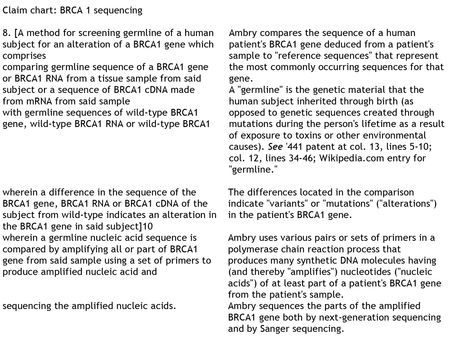
    Claim Chart BRCA1 Sequencing

    Claim Chart BRCA1 Sequenecing #2
    Finally,
    the brief addressed Ambry's large rearrangement analysis, which involves either
    "(1) multiplex ligation-dependent probe amplification ('MLPA') analysis or
    (2) chromosomal 'microarray' analysis."  The MPLA assay requires the use
    of "synthetic BRCA1 and BRCA2-specific probes" which are entitled to
    the same patent-eligibility status that Myriad argues the District Court should confer
    on synthetic DNA primers.  The
    chromosomal microarray analysis "necessarily requires hybridization of the
    synthetic DNA created from a patient's sample DNA to a BRCA1- or BRCA
    2-specific probe" which should infringe a patent-eligible claim according
    to the same rationale.

    On
    balance, Myriad's arguments are based almost in their entirety on the
    patent-eligibility and patentability of its claimed primers and probes and
    methods of use thereof.  These arguments
    are certainly open to different interpretations and Myriad's success, in its preliminary
    injunction motion and at trial will depend on how the Utah District Court (and
    presumably the Federal Circuit) will interpret the Supreme Court's decision in
    this regard.  Myriad's assertion of this
    interpretation of the Court's Myriad
    decision also suggests that the company may once again be the impetus for the
    Supreme Court to revisit the scope of its "product of nature" patent
    ineligibility doctrine.

    The brief's arguments regarding the
    remaining prongs are much less specific for genetic diagnostic patenting.  Regarding the irreparable injury prong,
    Myriad recites "at a minimum" the following harms it anticipates
    would arise from the Court denying its motion:  "(1) price erosion and the
    loss of the benefit of Myriad's established pricing strategy; (2) the loss of
    market share; (3) reputational injury; and (4) loss of the benefit of the
    remaining limited term of patent exclusivity and Myriad's business plans for
    that period, as well as the inability to fully obtain its reliance interest
    obtained by disclosing its discovery and investing hundreds of millions of
    dollars to commercialize that discovery in exchange for a limited exclusive
    right," citing Federal Circuit precedent on the relevance of these
    factors.  Robert Bosch LLC v. Pylon
    Mfg. Corp
    ., 659 F.3d 1142, 1152-54 (Fed. Cir. 2011) (however, this was a
    decision in the context of a permanent injunction, where infringement had been
    established).  Ambry's purported cost for
    its test ($2,280) is "deeply discounted" from Myriad's cost ($4,040;
    a 46% discount).  Myriad identifies the
    fact that "third-party payors (such as insurers and/or HMO's) are
    primarily responsible for deciding whether they will reimburse or pay for
    testing, rather than the physician or the patient" to raise the risk of
    price erosion, because "[t]hose payors will exert pressure on Myriad to
    lower its prices in response to Ambry, and Myriad would be forced to do so in
    some instances" (and this could get worse if other competitors entered the
    marketplace).  In addition, Myriad argues that it is not the only entity that would be
    harmed:  the brief asserts that Myriad has paid about $57 million to licensors,
    which include universities and research hospitals, for whom losing this revenue
    stream "will [negatively] impact their ability to fund ongoing
    programs and new endeavors."

    Myriad's arguments regarding market share have some
    of the flavor of marketing itself:  "[t]hrough its hard work and dedication, Myriad was
    able to finalize this invention, secure licenses from the patent owners, and
    develop a superior BRCA1 and BRCA2 test that not only created the market from
    scratch, but exhibits superior methodology and unparalleled reliability."  Ambry's activities amount to "free-riding"
    on this effort, and Myriad will lose market share from Ambry's lower prices not
    due to any advantages or benefits to patients but because "Ambry's
    significantly discounted prices will result in some third-party payors
    insisting that patients choose Ambry over Myriad solely because of cost and
    regardless of the fact that Myriad offers a superior, far more reliable
    product, and even if patients or physicians prefer to use Myriad."  The evidence of the superiority of Myriad's
    tests are based on the information Myriad has acquired from "over
    1,000,000 patients tested" and the consequence that "Myriad []
    provide[s] a clinically meaningful result for over 97% of the variants
    identified, as opposed to approximately 70% using the publicly available
    database."  (The argument regarding
    relative quality of the Myriad and Ambry tests are further developed in the
    public interest section of the brief.)  These
    considerations are relevant to the irreparable harm prong of the test because "Myriad
    has set its prices to reflect the higher quality of Myriad's test, including
    the significant investments made in discovering the sequences of the BRCA1 and
    BRCA2 genes, developing necessary technology to perform testing, building the
    market and analyzing and characterizing variants in a proprietary database"
    that results in these advantageously superior patient diagnostic outcomes.

    Finally,
    regarding reputational harm, the brief asserts that "Myriad's years of
    experience and its built-in quality checks, including the fact that it has
    developed proprietary DNA base calling software, have resulted in a near
    perfect accuracy rate.  Ambry's failure rate, in contrast, may be as high as 4%  . . . Myriad has been able to further improve
    its test quality by ensuring that its percentage of 'variants of unknown
    significance' is less than 3%, compared to 25% to 30% in public databases."  Ambry's entry into the marketplace creates a
    risk to Myriad, because "[i]f Ambry is allowed to continue selling its
    tests, which have a higher error rate than Myriad's and will result in many
    more 'variants of unknown significance,' consumers will receive inconclusive or
    even flatly incorrect results from those tests.  However, because consumers
    generally are not well-informed about the different test providers, in part
    because third-party payors often select the provider based on cost, those
    consumers are likely to associate those flawed results with Myriad."  This outcome would be avoided if Ambry and
    others are kept from the marketplace until Myriad's patents have expired,
    because Myriad "has had no time or opportunity to distinguish its BRACAnalysis®
    test and associated testing quality from competitors as it would if its
    competitors were barred from entry until the patents' expiration."  Myriad has relied on its patent exclusivity
    to have the time to "finalize" its strategy for distinguishing its
    tests from competitors but "is not prepared to implement those plans
    immediately, which it would need to do in order to combat the effect of Ambry's
    testing."  And Myriad's is not the only reputation at risk, because
    permitting Ambry's less accurate testing to be used on patients "would
    also indirectly damage the reputation of the other patent owners, several of
    which are respected research universities or hospitals."

    The
    "balance of the hardships" section of the brief is the shortest, amounting
    to no more than an assertion that Ambry will suffer no harm, while the harm to
    Myriad will be to "[a] significant part" of its business.

    Finally,
    the public interest section directly addressed the contrast between public
    benefits that may be derived from lower prices and the public detriment that
    Ambry's purportedly lower quality tests would produce.  "While competition may serve the public
    interest in the short term, the mere existence of a lower-priced, lower quality
    option available from an infringer does not necessarily advance the broader
    public interest," according to Myriad.  In addition, "the public has a greater interest in acquiring new
    technology through the protections provided by the Patent Act than it has in
    buying 'cheaper knock-offs'."

    The
    argument that Ambry's testing poses a risk to the public is Myriad's first and
    foremost argument.  "[T]he public
    interest at issue goes far beyond incentivizing invention.  Precluding Ambry
    from selling its less accurate test is critical, as allowing Ambry to proceed
    results in significant public risk over the status quo where Myriad provides
    testing of very high quality, accuracy and affordability."  Moreover:

    As discussed above, Myriad used its years in the market to perfect its
    testing processes.  This work resulted in a near-perfect accuracy rate.  Ambry's
    published accuracy rate of 96-99% means that as many as 4% (or 1
    in 25) of patients tested with Ambry products will receive either a false
    negative or a false positive.  The false negative result, of course is of the
    utmost concern.  Assuming such an error rate, allowing Ambry into the market
    will result in more patients believing incorrectly that they are not at
    elevated risk, and not taking preventative measures that they otherwise would
    take.  Conversely, a patient receiving a false positive may well elect
    preventative measures such as surgery when in fact there is no elevated risk.  This untenable result can and should be avoided by issuance of an injunction.

    According
    to Myriad, the public interest requires patients to receive Myriad's tests "because
    of Myriad's exclusive access to its proprietary and extensive database of known
    genetic variants when making a comparison with a patient test sample,"
    which permits Myriad to provide "definitive" results for more than
    97% of patients, as compare with 70-75% of patients whose risk for breast or
    ovarian cancer are assessed using Ambry's tests.  And, ironically in view of the "second
    opinion" genetic testing aspects of AMP
    v. Myriad
    (and Congressional attention), Myriad argues that:

    Thus, Ambry will inform 25-30% of patients tested that they have a
    genetic variant, but will give them no further information about the clinical
    implications of that variant.  Because insurance will not reimburse for a
    second, repetitive test, most patients will not be able to be tested
    again.  Thus, those patients and their
    medical providers will be left to guess at an appropriate course of treatment.  Some patients, knowing they have a genetic variant of unknown significance,
    will assume the worst and undertake unnecessary prophylactic measures,
    including potentially surgery, even though the underlying variant may be
    benign.  Allowing Ambry to proceed with its intent to enter the marketplace
    would be injurious to the public interest, and Ambry should be enjoined from
    doing so.

    For better or worse, we live in a
    world that Myriad made.  In 1997, genetic diagnosis of cancer risk was in
    its infancy; traditional genetic linkage analysis had been successfully
    performed for diseases like Huntington's disease and other rare genetic
    diseases.  While some academic researchers had identified genes involved
    in cancer, these were typically loss-of-function mutations in several (~5-6)
    genes.  BRCA gene analysis was different, because it predicted with ~90%
    certainty that an affected woman would develop breast or ovarian cancer.  These biological consequences suggested radical prophylactic methods for
    prevention, each of which involved medical and personal costs.

    Myriad was thus in the position of
    having to convince doctors that their test was beneficial and was sufficiently
    predictive to justify both the diagnosis and the treatment.  It also
    required that Myriad establish a network of genetic counselors capable of interpreting
    the genetic information and counseling affected women (and in the context of
    there being the "variations on unknown significance" that occurred at
    much higher frequency then than it does 16 years later).  And it required
    Myriad to lobby governments and private payers that the cost of Myriad's test
    was justified by the lower medical costs of prevention (which were not
    inconsiderable) than treatment of breast or ovarian cancer (because the
    personal costs were not the payers' problem and the alleviation of which not
    their perceived responsibility).

    Myriad asserts that it spent about
    half a billion dollars to establish its business including all these ancillary
    costs on top of the scientific and technology costs.  Myriad did not spend
    this money due to altruism; like it or not, basing a society on the principle
    of "from each according to her abilities, to each according to her needs"
    was tried, famously, in the Twentieth Century with disastrous results.  But if we turn the clock back and let major medical centers in New York,
    and Boston, and San Francisco, and New Haven, and Bethesda develop BRCA testing,
    is there any hope or realistic expectation that women in Appalachia, or Oklahoma, or rural communities
    throughput the country would have had better, or even equivalent access to such
    testing?

    Myriad says it has tested over one
    million women.  Is the fact that in our Imperfect healthcare system some
    women have not been able to get tested enough to desire a world where either
    that number or the demographic distribution thereof is significantly lower?  That outcome is hardly an example of
    promoting progress.

  • By Andrew Williams

    Teva #2A
    claim term that can have different meanings or values depending on the method
    used to measure it renders the claim indefinite because it is impossible for a
    potential infringer to discern the boundaries of the claim.  This is because it is not possible to
    determine whether potential infringing activity will fall within the scope of
    the claims.  This principle of patent law
    was reaffirmed by the Federal Circuit last week in Teva Pharmaceuticals USA, Inc. v. Sandoz, Inc.  The Court held that because the claim term "molecular
    weight" can be calculated at least three different ways, resulting in
    three different values, the asserted claims that included this value were
    invalid as indefinite.  However, the
    Court also held that at least some of the claims that included this term, but
    which explained in the claim how to calculate "molecular weight," were
    correctly found to be definite.  In
    addition, the Court determined that there was insufficient evidence to overturn
    the lower court's determinations that the asserted claims were enabled, not
    obvious, and infringed.  The impact,
    therefore, was that Teva's injunction of the various ANDA filers was
    maintained, but the issue of the length of the injunction was remanded to the lower
    court.

    CopaxoneAs
    with most ANDA cases, it is important to have a grasp of the technology to
    understand the issues involved in this case.  The drug at issue in this case was Copaxone®, which is marketed by Teva
    for treating multiple sclerosis.  The
    active ingredient is copolymer-1, or glatiramer acetate, which is a polypeptide
    product that consists of four different amino acids (alanine, glutamic acid,
    lysine, and tyrosine).  Copolymer-1,
    however, is a mixture of individual polymer molecules with different
    constituent ratios, and different molecular weights.  Therefore, it is often expressed as "average
    molecular weight."  However,
    statistically speaking, there are at least three ways to calculate average
    molecular weight:  peak average molecular weight (Mp), number average molecular weight (Mn), and weight average
    molecular weight (Mw).  One way to measure "molecular weight"
    of these molecules is to use Size Exclusion Chromatography (SEC).  A simplistic way to think about SEC is as a technique
    that utilizes a column "sieve" that allows different size (or weight)
    molecules to leave (elute) the column at different times.  If the column is calibrated, you can
    determine the size or weight of the molecules in question depending on when
    they elute from the column.  The peak
    average molecular weight (Mp)
    is the molecular weight of the most abundant molecule in the sample, which
    occurs as the highest peak in the elution profile.  The number average molecular weight (Mn) is the combined total
    mass of all of the molecules in the sample divided by the total number of
    molecules.  Judge Moore, writing for the
    three-judge panel, chose to not define weight average molecular weight (Mw), instead referring to it
    as "still another average molecular weight measure that is calculated
    differently from Mp and Mn."  For readers that are curious, weight average
    molecular weight (Mw) is
    similar to number average molecular weight, except instead of dividing the
    sample by total number of molecules, you take into account the weight fraction
    of each molecule.  Therefore, the larger
    the molecule, the more "weight" it will have in the value.

    There
    is a second way to express molecular weight, which was used in the
    patents-in-suit in the so-called "Group II" claims.  Claim 1 of U.S. Patent No. 6,054,430 is representative
    of these Group II claims:

        1. Copolymer-1 having over 75% of its molar fraction within the molecular
    weight range from about 2 kDa to about 20 kDa, prepared by a process comprising
    the steps of:
        reacting protected copolymer-1 with hydrobromic acid to form
    trifluoroacetyl copolymer-1 having over 75% of its molar fraction within the
    molecular weight range from about 2 kDa to about 20 kDa, wherein said reaction
    takes place for a time and at a temperature predetermined by test reaction, and
        treating said trifluoroacetyl copolymer-1 having over 75% of its molar
    fraction within the molecular weight range from about 2 kDa to about 20 kDa
    with aqueous piperidine solution to form copolymer-1 having over 75% of its
    molar fraction within the molecular weight range from about 2kDa to about
    20kDa.

    In
    this case, the molecular weight is not expressed as a statistical measure, but
    rather the percentage of copolymer-1 molecules that fall within a defined
    range.  As a result, the measurement is
    not dependent on the type of calculation performed because it requires a
    determination of the actual values.

    Sandoz #1The
    procedural posture of this case is typical for an ANDA case (notwithstanding
    the fact that there appear to be generic companies on both sides of the "V").  Teva holds the NDA for Copaxone®, for which
    eight patents are listed in the Orange Book.  Several companies separately submitted Abbreviated New Drug Applications
    (ANDAs) to market generic versions of this drug.  Teva sued these companies for patent
    infringement, and at least seven of the eight Orange Book listed patents were
    asserted.  All seven of these patents
    shared the same specification, because they descended from the same parent, U.S. Patent No. 5,800,808 ("the '808 patent"), which was also asserted in
    this case.  This is significant because
    the '808 patent was filed on May 22, 1995, and therefore has a later expiration
    date than all of the other patents (seventeen years from date of issuance, or
    Sept. 1, 2015, instead of May 24, 2014, the expiration date of the remaining
    patents).  Thus, when the Court
    determined the claims of the '808 patent to be indefinite, it remanded the case
    to the lower court to determine the impact this would have on the length of the
    injunction.  As for the lower court's
    findings, it defined the term "molecular weight" in the Group I
    claims as peak average molecular weight (Mp),
    and rejected the argument that the term was insolubly ambiguous.  It also held that all of the asserted claims
    were infringed, and that they were not invalid for obviousness or lack of
    enablement.  The ANDA filers
    appealed.

    Indefiniteness

    The
    Appellants challenged the lower court's determination that "molecular
    weight" could be defined, because one of skill in the art would not
    understand which measurement (Mp,
    Mw, Mn, or something else) should
    be used.  The specification of the
    patents-in-suit was silent as to which measurement was appropriate, other than
    to describe the use of SEC (which can be used to obtain all three values).  Statements made in the prosecution history
    compounded the problem.  In response to
    an indefiniteness rejection in one of the patents, the patentees said that "[o]ne
    of ordinary skill in the art, upon reviewing the specification, would
    understand that 'average molecular weight' refers to the molecular weight at
    the peak of the molecular weight distribution curve," or Mp.  However, in response to an identical
    rejection in an earlier related application, the patentees said that ""[o]ne
    of ordinary skill in the art could understand that kilodalton units implies
    [sic] a weight average molecular weight," or Mw.

    Teva
    argued that one skilled in the art would have understood that average molecular
    weight could only be Mp.  Teva asserted that use of SEC without more
    suggests Mp because
    determining Mn and Mw required additional
    calculations.  The Court appeared
    skeptical of this argument, because SEC can be used to calculate all three
    values.  Teva also downplayed the
    prosecution history by explaining that a skilled artisan would recognize that
    the statement in the earlier application was false — because "kilodalton
    units" does not imply weight average.  Teva appears to have alleged that the second statement rectified the
    earlier misstatement.  However, there is
    no indication that the patentees in the later application retracted the earlier
    statement.  Therefore, the Court was left
    with two contradictory statements that could not be rectified.  As such, the claims in Group I were held to
    be indefinite.

    However,
    the claims in Group II survived the invalidity challenge.  The Appellants argued that the claim term "molecular
    weight" was the same in all of the asserted claims, and therefore they
    should all rise and fall together.  However, the Federal Circuit pointed out that the use of the term "molecular
    weight" in these claims was not in reference to an average, but rather to
    a range, as shown in the representative claim above.  Therefore, because the claim had exact values
    instead of statistical measures, the scope was readily ascertainable.

    Enablement

    Appellants
    also alleged that the claims were not enabled because the specification did not
    specify how the SEC column should be calibrated, and therefore either
    self-standards or universal calibration could be used.  They argued that copolymer-1 is complex and
    exhibits an unpredictable behavior.  In
    fact, they pointed to Teva's difficulties in identifying an appropriate
    calibration method.

    The
    Federal Circuit found no clear error with the fact finding of the lower
    court.  The lower court weighed the
    testimony of the experts, and found Teva's expert to be more convincing.  Moreover, there was no evidence that Teva's
    own alleged difficulties were based on faulty measurements as opposed to
    regulatory or scale-up issues.  As a
    result, the lower court's determination was affirmed.

    Obviousness

    Appellants
    also challenged the lower court's holding that the patents at issue would not
    have been obvious in view of the prior art.  The closest prior art reference disclosed compounds with a molecular
    weight higher than 10 kDa.  Appellants
    alleged that there was no evidence that copolymer-1 with a molecular weight
    less than 10 kDa exhibits an improved toxicity profile over the prior art.  However, the Federal Circuit found no error
    with the District Court's determination that there was a preference in the
    prior art for higher molecule weight compounds, and therefore it taught away
    from the claimed invention.  Also, the
    Court noted that Copaxone® was coextensive with the asserted claims.  Therefore, a nexus was presumed for purposes
    of the undisputed commercial success of the drug product, and Appellants had
    not rebutted this presumption.  As a
    result, because the Appellants failed to establish the obviousness of the
    claimed invention, the Federal Circuit affirmed.

    Infringement

    Finally,
    Appellants challenged the finding of infringement.  First, they challenged the Court's
    construction of the term "approximately" in relation to the molar
    ratio of the amino acid subunits. 
    However, "approximately" was not a claim term, but instead it
    was found in a claim term definition. 
    The term at issue was "copolymer-1" and the District Court
    construed it to mean "a mixture of polypeptides composed of alanine,
    glutamic acid, lysine, and tyrosine in a molar ratio of approximately 6:2:5:1."  As such, the application of the term "approximately"
    was part of the infringement analysis, not of claim construction, and therefore
    the standard of review was clearly error.

    Mylan #1In
    making the infringement analysis, the lower court determined that a ratio of
    6:2:5:1 was equivalent to a percentage ratio of 42.9%, 14.3%, 35.7%, and
    7.1%.  In comparison, Mylan's ratio was
    42.7%, 14.4%, 33.6%, 9.2% (the ratio for Sandoz was comparable, so only Mylan's
    product will be discussed here).  The
    court calculated that this aggregate difference was only 4.5%.  As compared with the prior art, which
    tolerated aggregate differences of 12%, it found the accused products to fall
    within the scope of the claims. 
    Appellants asserted that the relative proportions were important, not
    the aggregate.  Therefore, because Mylan's
    ratios were 4.6:1.6:3.7:1.0, the ratio of lysine to tyrosine was 3.7:1.0, and
    therefore deviated more than 16% from the ratio of 5.0:1.0.  The Federal Circuit agreed with Teva,
    however, that Appellants were performing a "mathematical sleight of hand."  In essence, they were normalizing the ratio
    to the least abundant amino acid, tyrosine, which will skew the results.  Ultimately, the Federal Circuit found that
    the lower court did not clearly err by looking at the aggregate percentage
    difference and finding it less than 5% from the ideal.

    Finally,
    Appellants asserted that the Teva had disclaimed copolymer-1 compositions having
    Mw greater than
    10kDa.  The basis for this assertion was
    that the patentees had compared the pending claims to a reference describing
    copolymer-1 with a minimum molecular weight of 10 kDa, stating that the
    then-pending claims cover copolymer-1 having a molecular weight of about 5 to 9
    kDa.  Somewhat ironically, the Federal
    Circuit found that there was no a clear disavowal of the claim scope, because
    it was unclear that the patentees were referring to Mw.  Therefore,
    for almost the same reason that some of the claims were found to be indefinite,
    the Court found that there was no disavowal, and therefore infringement
    determination was affirmed.

    Teva
    Pharmaceuticals USA, Inc. v. Sandoz, Inc.
    (Fed. Cir. 2013)

    Panel:  Chief Judge Rader, Circuit Judge Moore, and
    District Judge Benson
    Opinion
    by Circuit Judge Moore

  • By Sherri Oslick

    Gavel About Court Report:  Each week we will report briefly on recently filed biotech and pharma cases.

    Cornerstone
    Therapeutics Inc. et al. v. Exela Pharma Sciences LLC et al.

    1:13-cv-01275;
    filed July 24, 2013 in the District Court of Delaware

    • Plaintiffs: 
    Cornerstone Therapeutics Inc.; Cornerstone Biopharma Inc.; EKR Therapeutics LLC
    • Defendants: 
    Exela Pharma Sciences LLC; Exela Pharmsci Inc.; Exela Holdings Inc.

    Infringement
    of U.S. Patent Nos. 7,612,102 ("Pre-mixed, Ready-to-Use Pharmaceutical
    Compositions," issued November 3, 2009) and 7,659,291 ("Methods of
    Treatment with Pre-Mixed, Ready-to-Use Pharmaceutical Compositions,"
    issued February 9, 2010) following a Paragraph IV certification as part of
    Exela's filing of a supplemental NDA (under § 505(b)(2) of the Food, Drug and
    Cosmetic Act) to manufacture a generic version of EKR's Cardene® I.V. Premixed
    Injection (nicardipine hydrochloride premixed injection for intravenous
    administration, used for the short-term treatment of hypertension when oral
    therapy is not feasible or not desirable). 
    View the complaint here.


    Merck &
    Cie et al. v. Watson Laboratories, Inc. et al.

    2:13-cv-01309;
    filed July 24, 2013 in the District Court of Nevada

    • Plaintiffs: 
    Merck & Cie; Bayer Pharma AG; Bayer Healthcare Pharmaceuticals, Inc.
    • Defendants: 
    Watson Laboratories, Inc.; Actavis, Inc.

    Merck &
    Cie et al. v. Watson Laboratories Inc. et al.

    1:13-cv-01272;
    filed July 23, 2013 in the District Court of Delaware

    • Plaintiffs: 
    Merck & Cie; Bayer Pharma AG; Bayer HealthCare Pharmaceuticals Inc.
    • Defendants: 
    Watson Laboratories Inc.; Actavis Inc.

    The
    complaints in these cases are substantially identical.  Infringement of U.S. Patent No. 6,441,168 ("Stable
    Crystalline Salts of 5-methyltetrahydrofolic Acid," issued August 27,
    2002) following a Paragraph IV certification as part of Watson's filing of an
    ANDA to manufacture a generic version of Merck's Beyaz® (drospirenone,
    17α-ethinyl estradiol, and levomefolate calcium, used for oral
    contraception).  View the Delaware complaint here.


    AbbVie Inc. v.
    Roxane Laboratories, Inc.

    2:13-cv-00708;
    filed July 18, 2013 in the Southern District of Ohio

    Infringement
    of U.S. Patent Nos. 8,268,349 ("Solid Pharmaceutical Dosage Form,"
    issued September 18, 2012) and 8,399,015 (same title, issued March 19, 2013)
    following a Paragraph IV certification as part of Roxane's filing of an ANDA to
    manufacture a generic version of AbbVie's Norvir® (ritonavir, used to treat
    human immunodeficiency virus (HIV) infection). 
    View the complaint here.


    Cumberland
    Pharmaceuticals Inc. v. Akorn Inc.

    1:13-cv-01232;
    filed July 12, 2013 in the District Court of Delaware

    Infringement
    of U.S. Patent No. 8,148,356 ("Acetylcysteine Composition and Uses
    Therefor," issued April 3, 2012) following a Paragraph IV certification as
    part of Akorn's filing of an ANDA to manufacture a generic version of
    Cumberland's Acetadote® (N-acetylcysteine 
    injection, used to prevent or lessen hepatic injury after ingestion of a
    potentially hepatotoxic quantity of acetaminophen).  View the complaint here.


    Alcon
    Pharmaceuticals Ltd et al. v. Lupin Ltd. et al.

    1:13-cv-01230;
    filed July 12, 2013 in the District Court of Delaware

    • Plaintiff: 
    Alcon Pharmaceuticals Ltd; Alcon Research Ltd.
    • Defendants: 
    Lupin Ltd.; Lupin Pharmaceuticals Inc.

    Infringement
    of U.S. Patent No. 8,450,311 ("Pharmaceutical Compositions Containing a
    Fluoroquinolone Antibiotic Drug," issued May 28, 2013) following a
    Paragraph IV certification as part of Lupin's filing of an ANDA to manufacture
    a generic version of Alcon's Moxeza® (moxifloxacin hydrochloride, used to treat
    bacterial conjunctivitis).  View the
    complaint here.


    Everett
    Laboratories, Inc. v. Acella Pharmaceuticals, LLC

    1:13-cv-04294;
    filed July 12, 2013 in the District Court of New Jersey

    Infringement
    of U.S. Patent No. 6,863,904 ("Compositions and Methods for Prophylactic
    and Therapeutic Supplementation of Nutrition in Subjects," issued March 8,
    2005) based on Acella's manufacture and sale of its Choice-Tabs, an alleged
    copy of Everett's Strovite® One (prescription-only nutritional
    supplement).  View the complaint here.


    Aptalis
    Pharma US Inc. et al. v. Sandoz Inc
    .
    3:13-cv-04290;
    filed July 12, 2013 in the District Court of New Jersey

    • Plaintiffs: 
    Aptalis Pharma US Inc.; Aptalis Pharma Canada Inc.
    • Defendant: 
    Sandoz Inc.

    Infringement
    of U.S. Patent Nos. 8,217,083 ("Mesalamine Suppository," issued July
    10, 2012) and 8,436,051 (same title, issued May 7, 2013) following a Paragraph
    IV certification as part of Mylan's filing of an ANDA to manufacture a generic
    version of Aptalis' Canasa® (mesalamine rectal suppository product, used to
    treat active ulcerative proctitis).  View
    the complaint here.


    Pegasus
    Laboratories, Inc. v. Weatherford Compounding Pharmacy

    2:13-cv-02333;
    filed July 10, 2013 in the District Court of Kansas

    Pegasus
    Laboratories, Inc. v. Diamondback Drugs, LLC

    2:13-cv-02334;
    filed July 10, 2013 in the District Court of Kansas

    The
    complaints in these cases are substantially identical.  Infringement of U.S. Patent Nos. 5,747,476 ("Treatment
    of Equine Protozoal Myeloencephalitis" issued May 5, 1998), 6,255,308
    (same title, issued July 3, 2001), and 6,448,252 (same title, issued September
    10, 2002), licensed to Pegasus, based on defendants' compounding and sale of a
    sulfadiazine and pyrimethamine producted used for the treatment of horses with
    EPM, similar to Pegasus' ReBalance® product. 
    View the Weatherford complaint here.

  • CalendarJuly 28-30, 2013 – 2013 Annual Meeting & Conference (National Association of Patent Practitioners) – San
    Diego, CA

    July 29-30, 2013 – TTS North America*** (TTS Ltd., the University of California, San Francisco,
    and BayBio) – San Francisco, CA

    July 30,
    2013 – Are We Innovators, or Are We
    Trolls: The Slippery Slope of Defining A Patent Troll
    (McDonnell
    Boehnen Hulbert & Berghoff LLP) – 10:00 to 11:15 am (CT)

    July 31, 2013 – Battling Patent Trolls: Leveraging New
    Executive Orders, AIA and Other Tools
    (Strafford) – 1:00
    to 2:30 pm (EDT)

    July 31 to August 2, 2013 – Advanced Patent Law Seminar (Chisum Patent Academy) – Seattle, WA

    August 5-7, 2013 – Advanced Patent Law Seminar (Chisum Patent Academy) – Seattle, WA

    August 8, 2013 – Analyzing and Adapting to the Supreme Court's
    Myriad Ruling
    (Technology
    Transfer Tactics) – 1:00 to 2:00 pm
    (Eastern)

    August 8-11,
    2013 – 2013 Annual Meeting (American Bar
    Association) – San Francisco, CA

    August 21, 2013 – Inducement to Infringe in Hatch-Waxman Litigation: Lessons from Commil USA v. Cisco Systems and Bayer Schering v. Lupin for Pharma
    Patents
    (Strafford) – 1:00 to 2:30 pm (EDT)

    August
    22, 2013 – What are the Implications of CLS
    Bank Int'l v. Alice Corp
    . on Computer-Implemented Inventions?
    (McDonnell
    Boehnen Hulbert & Berghoff LLP) – 10:00 to 11:15 am (CT)

    August 29, 2013 – AIA Impact on Section 102 and Prior Art:
    Navigating the Expanded Scope of Prior
    Art and the AIA Exceptions
    (Strafford) – 1:00 to 2:30 pm
    (EDT)

    September 15-17, 2013 – 41st IPO Annual Meeting (Intellectual
    Property Owners Association) – Boston, MA

    September 17-18, 2013 – FDA Boot Camp*** (American Conference
    Institute) – Boston, MA

    September 18, 2013 – Conflicts in Patent Prosecution: Avoiding the
    Ethical Pitfalls Minimizing Risks of Malpractice Liability and Ethics Sanctions
    (Strafford) – 1:00 to 2:30 pm (EDT)

    September 23-24, 2013 – International Congress on
    Paragraph IV Litigation
    *** (Momentum) – New York, NY

    ***Patent Docs is a media partner of this conference or CLE

  • TTS North AmericTTS Ltd., the University of California, San Francisco,
    and BayBio will be holding its 2013 edition of TTS North America this Monday
    and Tuesday, July 29-30, 2013, at the University
    of California, San Francisco, Mission Bay Campus in San Francisco, CA.  The TTS Global Initiative is the leading
    international meeting for biotech sector Industry-academia licensing,
    partnering, and technology transfer.  The
    TTS North America is the flagship summit of this key international initiative
    and community of leading technology transfer, licensing, IP, and early stage
    biotech innovation and venture professionals world wide.

    A full program for
    TTS North America, including an agenda of each event's sessions and list of
    speakers can be obtained herePatent
    Docs
    author Dr. Kevin Noonan of McDonnell Boehnen Hulbert & Berghoff
    LLP will provide a presentation entitled "KOL Insight: The most important
    emerging trends & developments in biotech IP and their significance for
    TTOs and early stage biotech," and will also participate on a panel on
    "What crucial new developments in IP law and US legislation are of
    greatest concern to TTOs and early stage biotech and their investors?"

    The registration
    fee for TTS North America is $599
    (academic Innovators, university or Institute Technology Transfer Officers,
    non-governmental or non-profit organizations, and start-ups) or $999 (multinational, corporate, legal
    & consulting, and government).  Patent Docs readers who register using
    the Code CJS13 and select the "Academic Rate" will be able to secure
    a registration fee of $399.  Details regarding registration for the event
    can be found here.

    Patent Docs and McDonnell Boehnen Hulbert & Berghoff LLP are partners of TTS
    North America.